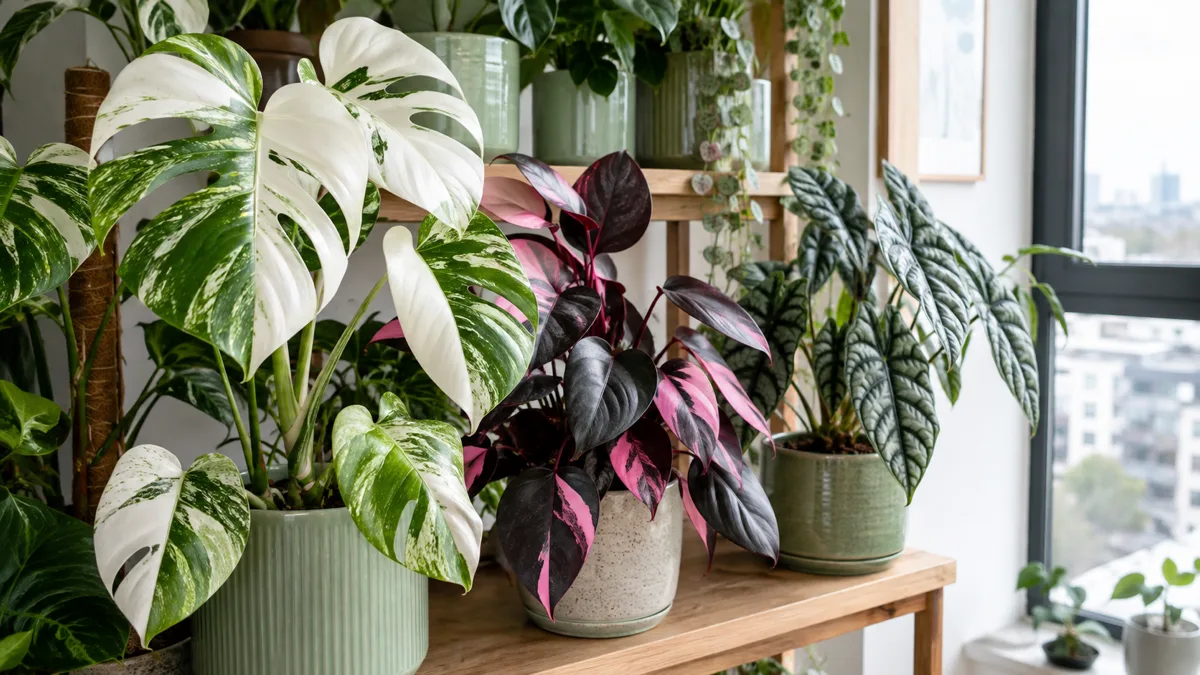
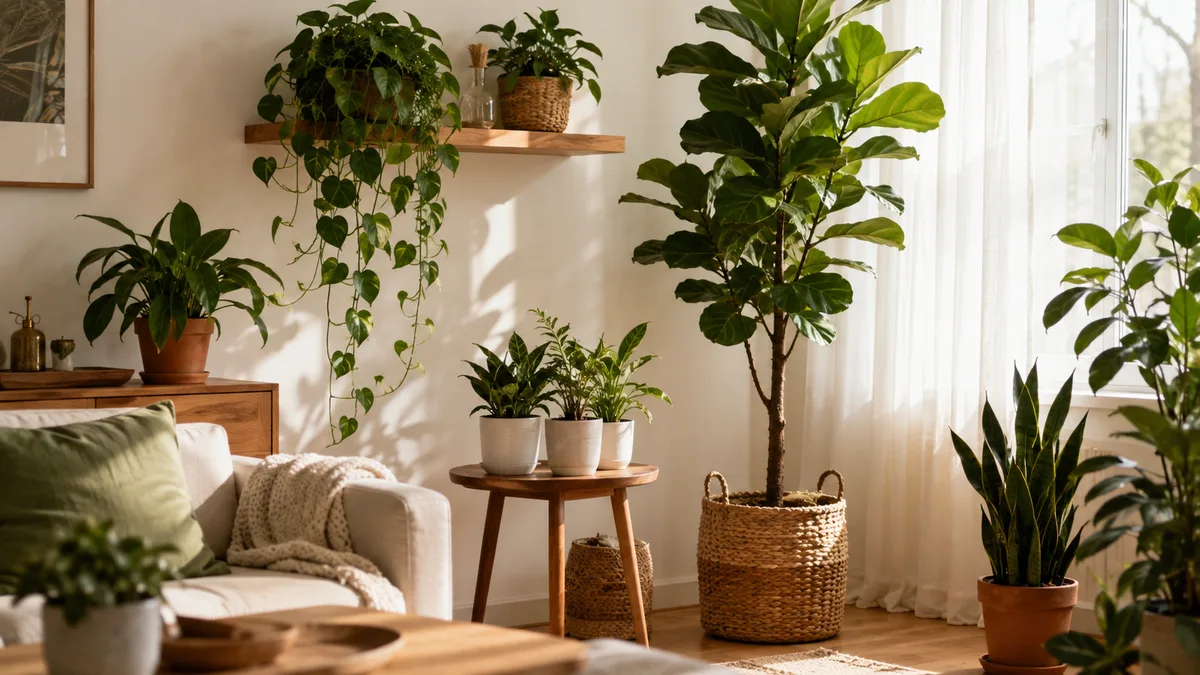
A shelf of houseplants is a collection. An urban jungle is a room that makes you forget you are inside a city apartment.
The difference is not how many plants you buy. It is how you layer them from floor to ceiling, which species you choose for each height tier, and whether you build a maintenance routine that can handle the density without casualties.
These fifteen ideas cover every step from picking the first five anchor plants to scaling a single shelf into a full room transformation.
Five tall anchors, three tiers of fillers and trailers, humidity tricks, a weekly maintenance plan, and the scaling path from one shelf to a living room canopy. Jump to the step you need.
- 1What It Actually Looks Like
- 2Five Anchor Plants
- 3Fast-Growing Fillers
- 4Trailing Plants
- 5Height Layering
- 6Containers That Disappear
- 7Small-Space Tricks
- 8Humidity Management
- 9Light Mapping
- 10Watering at Scale
- 11Weekend Maintenance
- 12Common Mistakes
- 13Jungle on a Budget
- 14Furniture and Decor
- 15Scaling to a Full Room
What an Urban Jungle Actually Looks Like
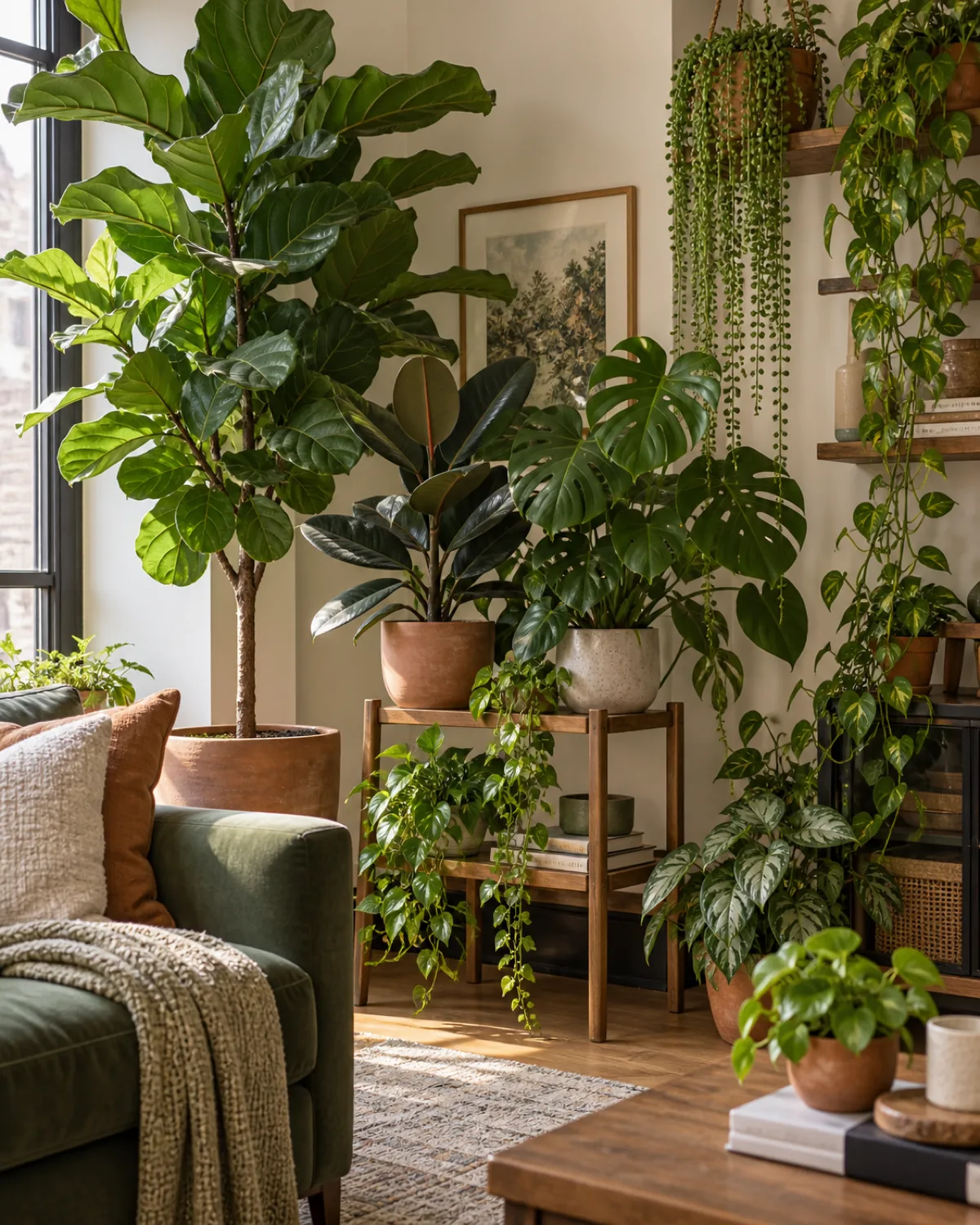
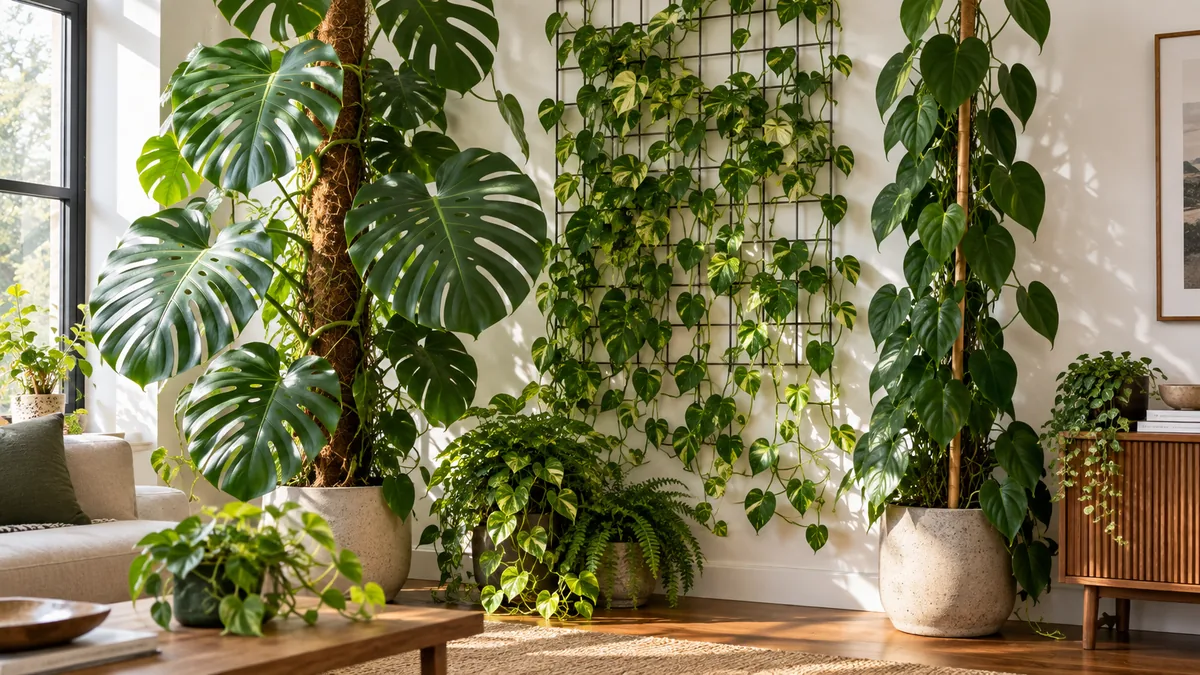
Walk into a room that qualifies and the first thing you notice is not any single plant. It is a wall of green at multiple heights that makes the architecture feel secondary.
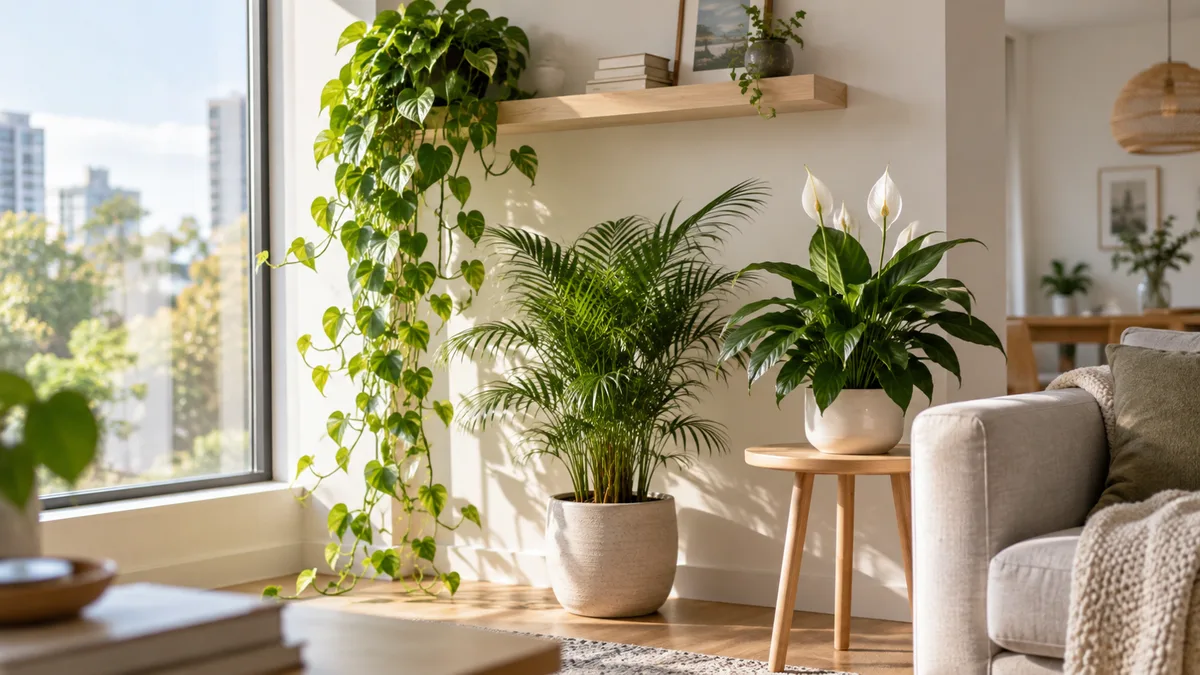
An urban jungle is density with intention. The plants overlap in layers the way trees, shrubs, and ground cover do in an actual tropical forest. Floor-level pots hold tall broadleaf species. Shelves and tables carry mid-height foliage. Trailing vines close the vertical gaps between those layers.
What separates this from a cluttered collection:
- Every height tier has at least two plants
- Leaf shapes vary from broad and architectural to fine and trailing
- Containers share a palette rather than competing for attention
- There is still a walkable path through the room
The density looks effortless, but it follows a structure. The next fourteen sections break down how to build that structure from scratch.
Starting Your Urban Jungle With Five Anchor Plants
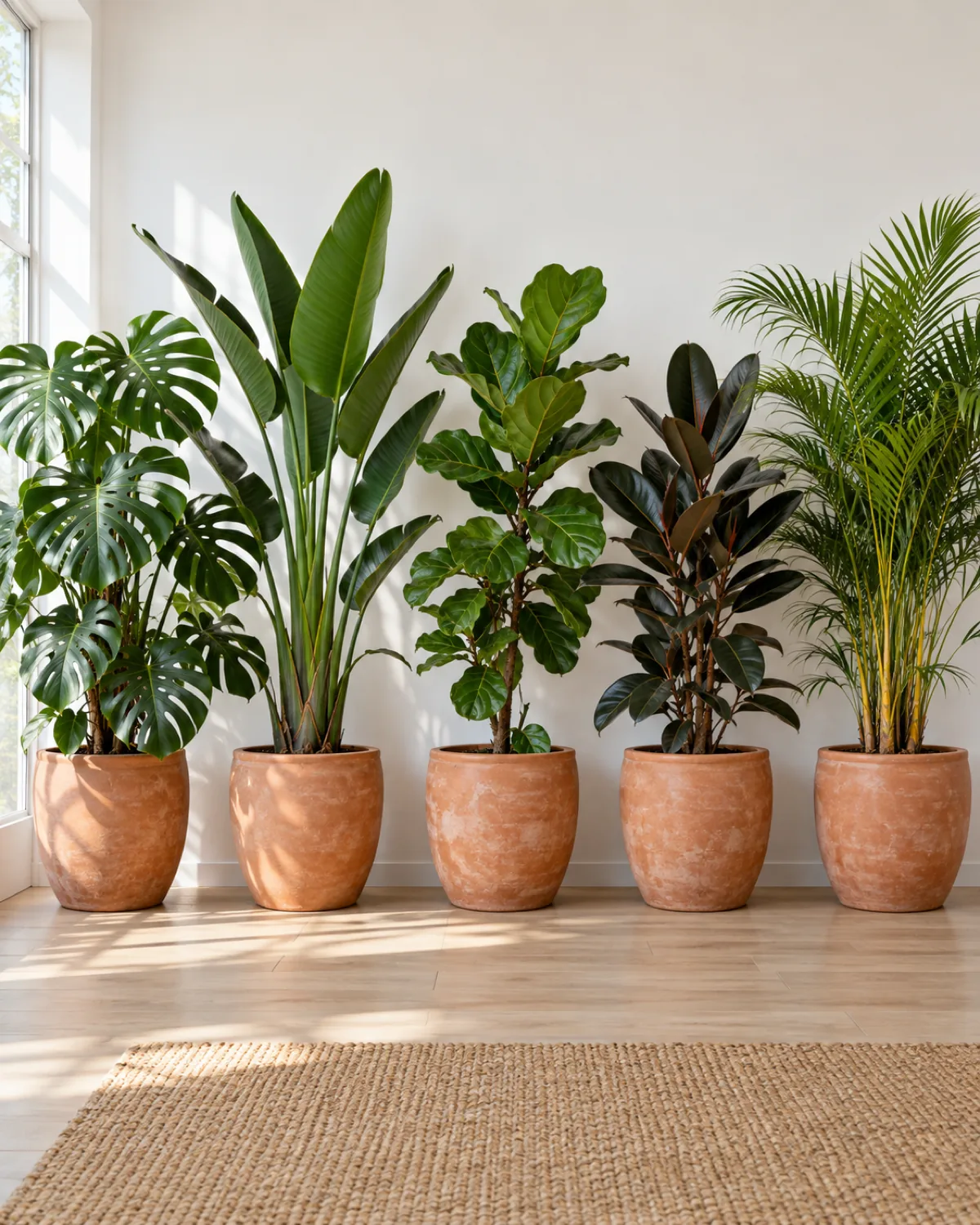
The canopy sets the mood. Start with five tall plants that reach at least four feet and have broad or dramatic foliage that reads from across the room.
These five cover the widest range of leaf shape while tolerating similar indoor conditions:
- Monstera deliciosa: split-leaf drama, bright indirect light, fast grower
- Bird of paradise: tall upright paddle leaves, statement silhouette
- Fiddle-leaf fig: broad violin-shaped leaves, architectural
- Rubber plant: glossy dark ovals, tolerates lower light than the others
- Areca palm: feathery fronds, softens the heavier broadleaf shapes
Place them against the wall nearest your strongest light source. They form the back row of your jungle. Every other plant will layer in front of and below them.
Do not start with the mid-level fillers. Without tall anchors behind them, a shelf of small pothos looks like a windowsill collection, not a jungle.
Fast-Growing Fillers That Build Volume Quickly
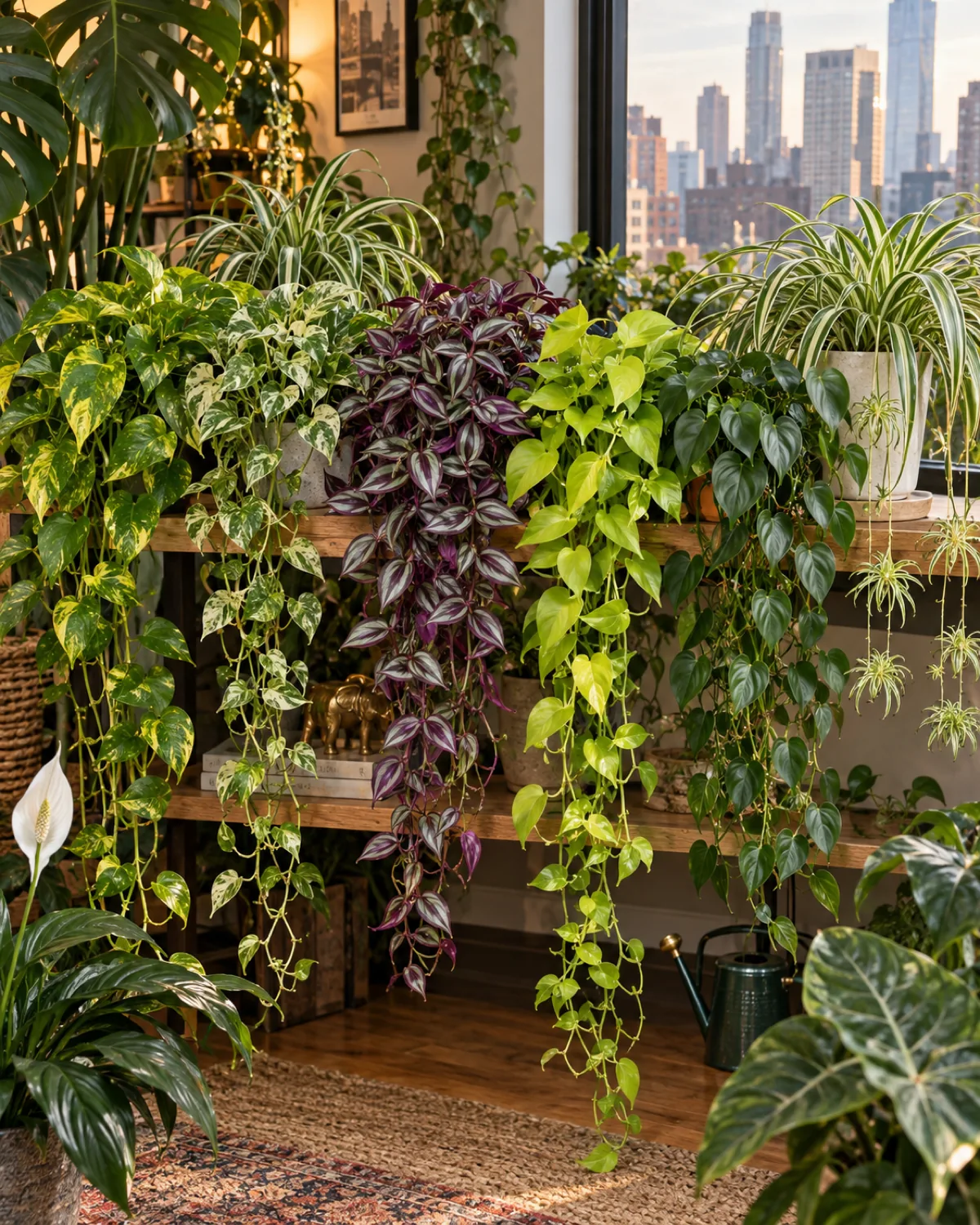
Once the anchors are in place, the jungle still has a visible gap between the top of the tall pots and the lower edge of the furniture line. Fillers close that gap within a few months.
The fastest volume builders for the mid-tier:
- Golden pothos: grows 12+ inches per month in summer, trails from shelf edges, handles low to bright indirect light
- Tradescantia zebrina: 8 to 10 inches per month, best on a tabletop or in a hanger, needs bright indirect light to hold its color
- Spider plant: moderate vine growth but offsets fast, works on shelves or hanging, tolerates low light
- Heartleaf philodendron: 10+ inches per month, trails from shelf edges, handles low to bright indirect light
Buy these in four-inch pots. Within one growing season they will look like they have been in your apartment for years. The trailing varieties pull double duty: they fill the mid-layer and spill downward to connect with the floor tier.
A single golden pothos cutting in water roots in under two weeks. Start six cuttings now and you have six new plants by next month at zero cost.
Trailing Plants That Complete the Canopy
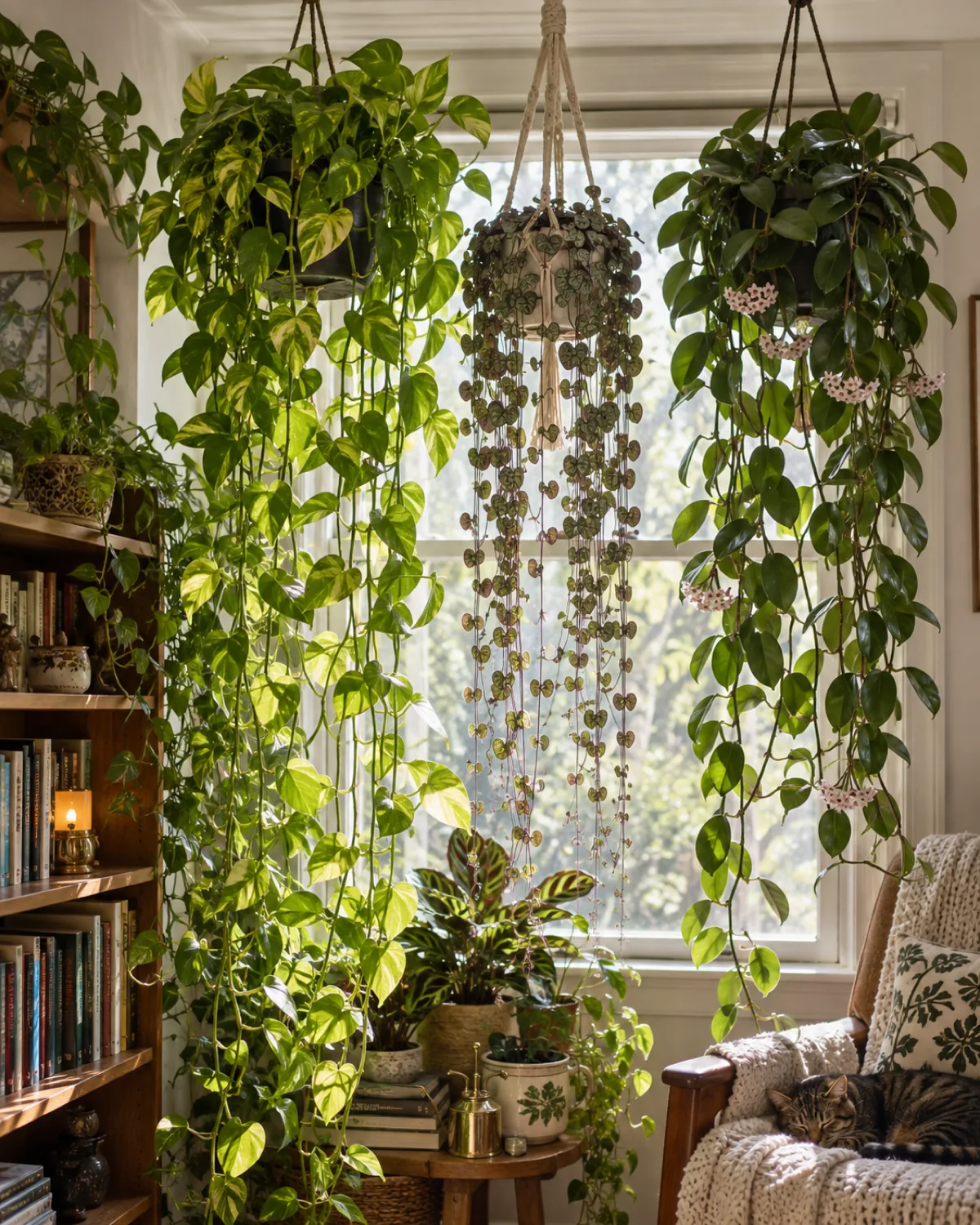
A real jungle canopy has no empty vertical space. Trailing plants are the species that close the last visual gaps between your shelves, hangers, and the ceiling.
Three trailing strategies that work in apartments:
- Shelf spillers: set a pothos or string of hearts at a shelf edge so the vines cascade down the face of the furniture
- Macrame hangers: suspend a trailing hoya or pothos at window height so the vines drop into the mid-tier below
- Wall-mounted hooks: a command hook behind a bookcase holds a small trailing pot that fills the dead zone between the shelf top and the ceiling
The species that trail longest without losing leaves near the base:
- Golden pothos — vines can reach six feet indoors
- Hoya carnosa — slow but thick waxy trails that never go bare
- String of hearts — fine delicate cascades, works in narrow vertical gaps
Train the vines along a wall with clear adhesive hooks if they grow past the furniture edge. A single vine pinned in an arc across a blank wall adds more jungle atmosphere than buying another upright plant.
Layering Heights Like a Real Jungle Floor
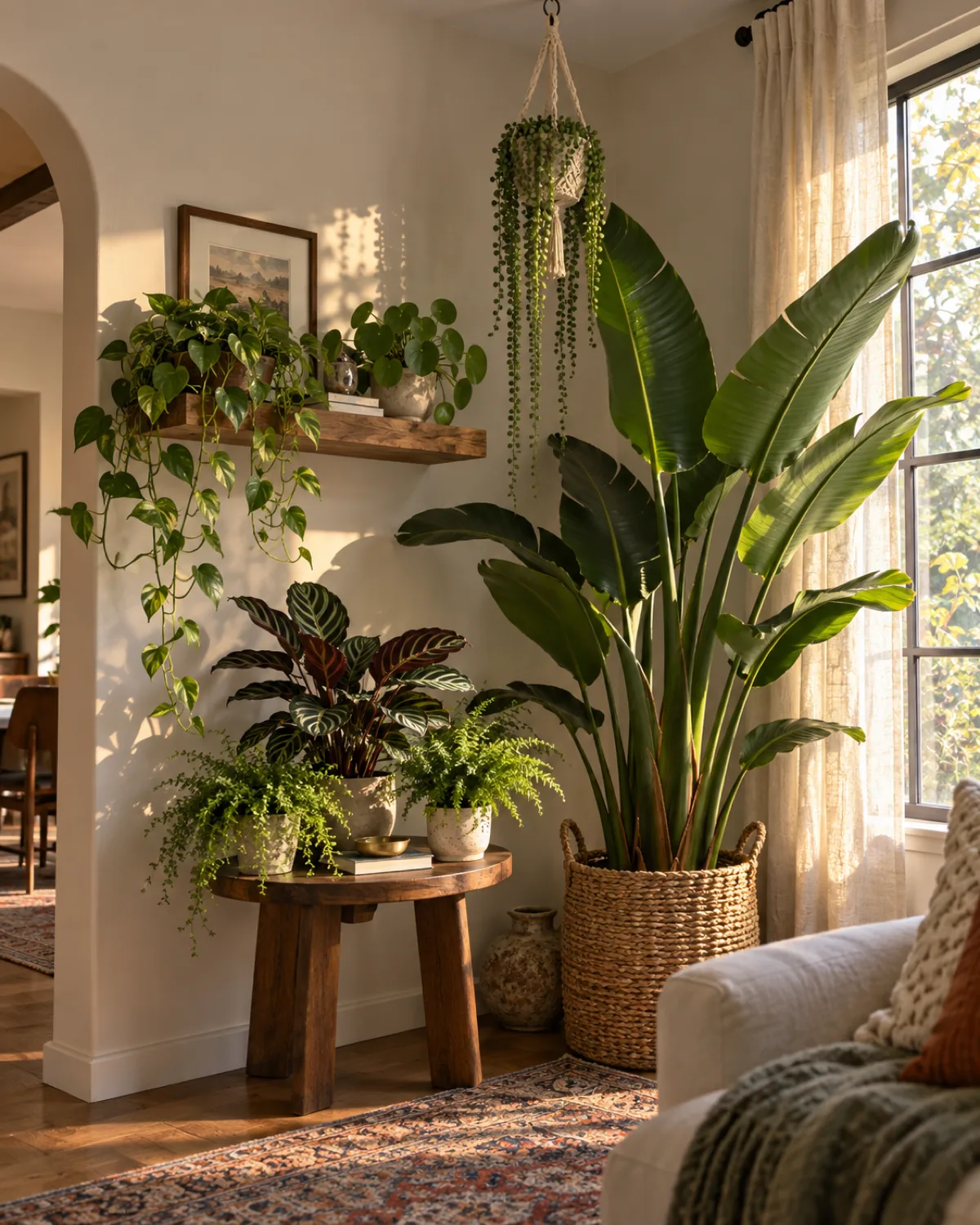
The layering principle that makes a jungle look thick is the same one ecologists describe in tropical forests. Four height tiers, each with different species:
- Floor tier (0–18 inches): tall indoor plants in large pots, the structural backbone
- Table tier (18–36 inches): medium plants on stands, side tables, or low shelves
- Shelf tier (36–60 inches): smaller plants and trailing species on wall-mounted shelves or bookcases
- Ceiling tier (60+ inches): hanging plants from hooks, brackets, or macrame
Three rules that make layering work:
- Stagger the depths, not just the heights — a plant two feet from the wall in front of a plant against the wall creates the illusion of a deeper space
- Use odd-number groupings at each tier — three pots on a shelf reads more natural than two or four
- Do not line up the tiers in a staircase — offset them so the eye moves in a zigzag rather than a straight diagonal
The goal is to eliminate any sightline where you see bare wall from floor to ceiling. When every vertical strip of the room has at least two overlapping plant layers, the jungle effect clicks.
Containers That Disappear Into the Green
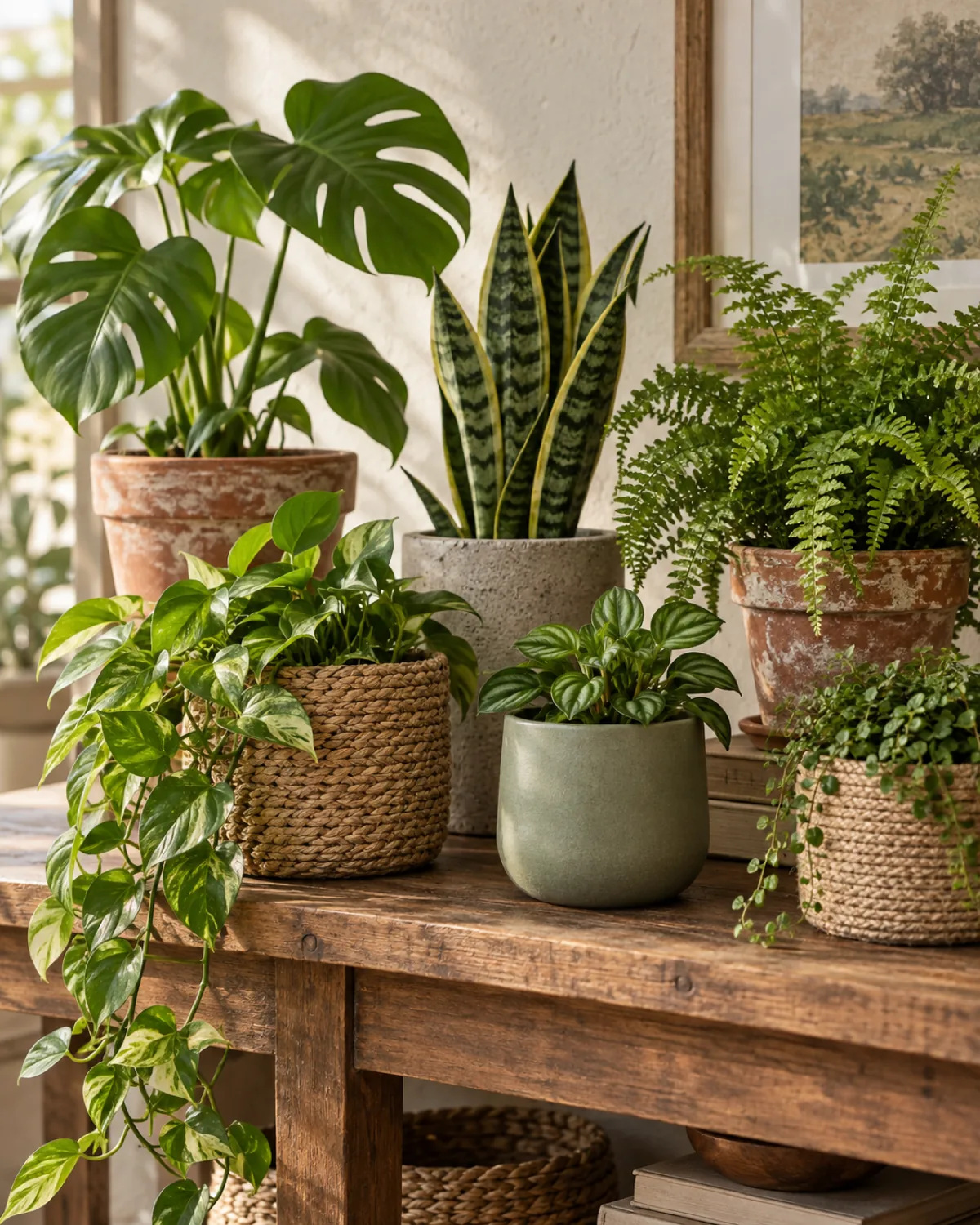
In a single-plant setup the pot is a design statement. In an urban jungle the pot should vanish behind the foliage.
Container choices that do this well:
- Unglazed terracotta: the natural clay ages to match any plant palette, wicks moisture, costs almost nothing
- Woven baskets: seagrass, jute, or rattan covers the nursery pot and reads as organic texture rather than a designed object
- Matte ceramics in earth tones: sage, cream, charcoal, or terracotta colors that sit below the visual volume of the leaves
What to avoid:
- Glazed pots in bright colors — they compete with the foliage instead of supporting it
- Matching sets of identical pots — the eye picks up the repetition and the room looks staged rather than wild
- Metallic or mirrored planters — they reflect light and pull attention away from the plants
The sweet spot is coordinated, not matching. Three or four materials from the same warm neutral family look collected over time rather than bought in a set.
Small-Space Urban Jungle Tricks
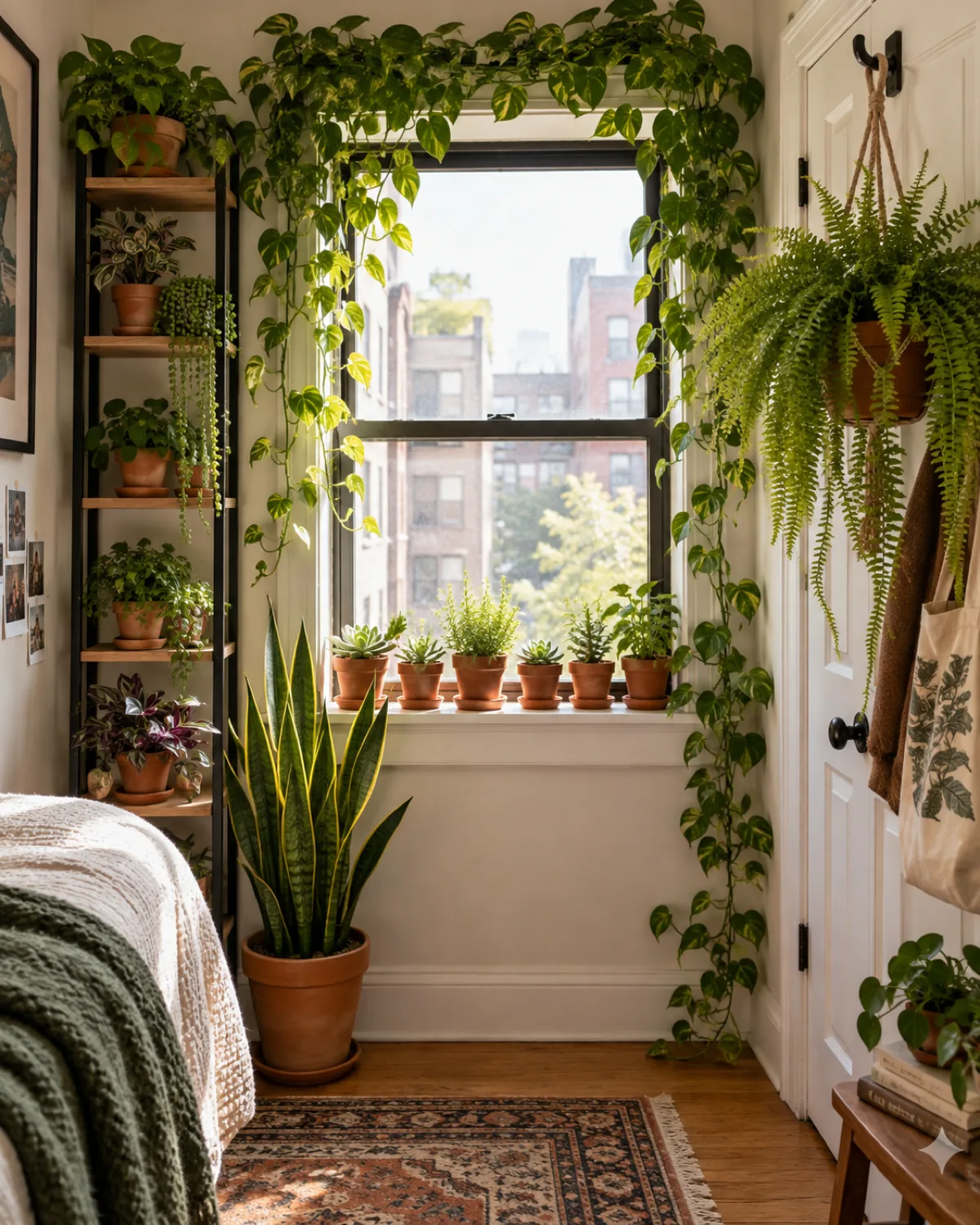
A three-hundred-square-foot studio can still hold an urban jungle. The constraint is floor space, not plant count.
Vertical solutions that trade no floor area:
- Floating shelves on every available wall: two shelves stacked at different heights hold six to eight plants each
- Window ledge forests: a row of small indoor plants across a deep sill adds density at the room's brightest point
- Over-door hanging: a hook on the back of a door supports a trailing fern or pothos with zero footprint
- Wall-mounted planters: a vertical garden panel on one wall holds ten to fifteen small plants in the space of a painting
- Under-table trailing: a trailing plant on the floor under a console table fills dead space and adds an unexpected layer
The floor rule for small spaces: one tall anchor plant per room, placed in the corner nearest the window. That single tall plant sets the jungle frame. Everything else goes vertical.
Mirrors behind a plant shelf double the visual density without adding a single pot. An eighteen-inch round mirror behind three trailing plants makes the cluster look twice as deep.
Humidity Management for Dense Plant Collections
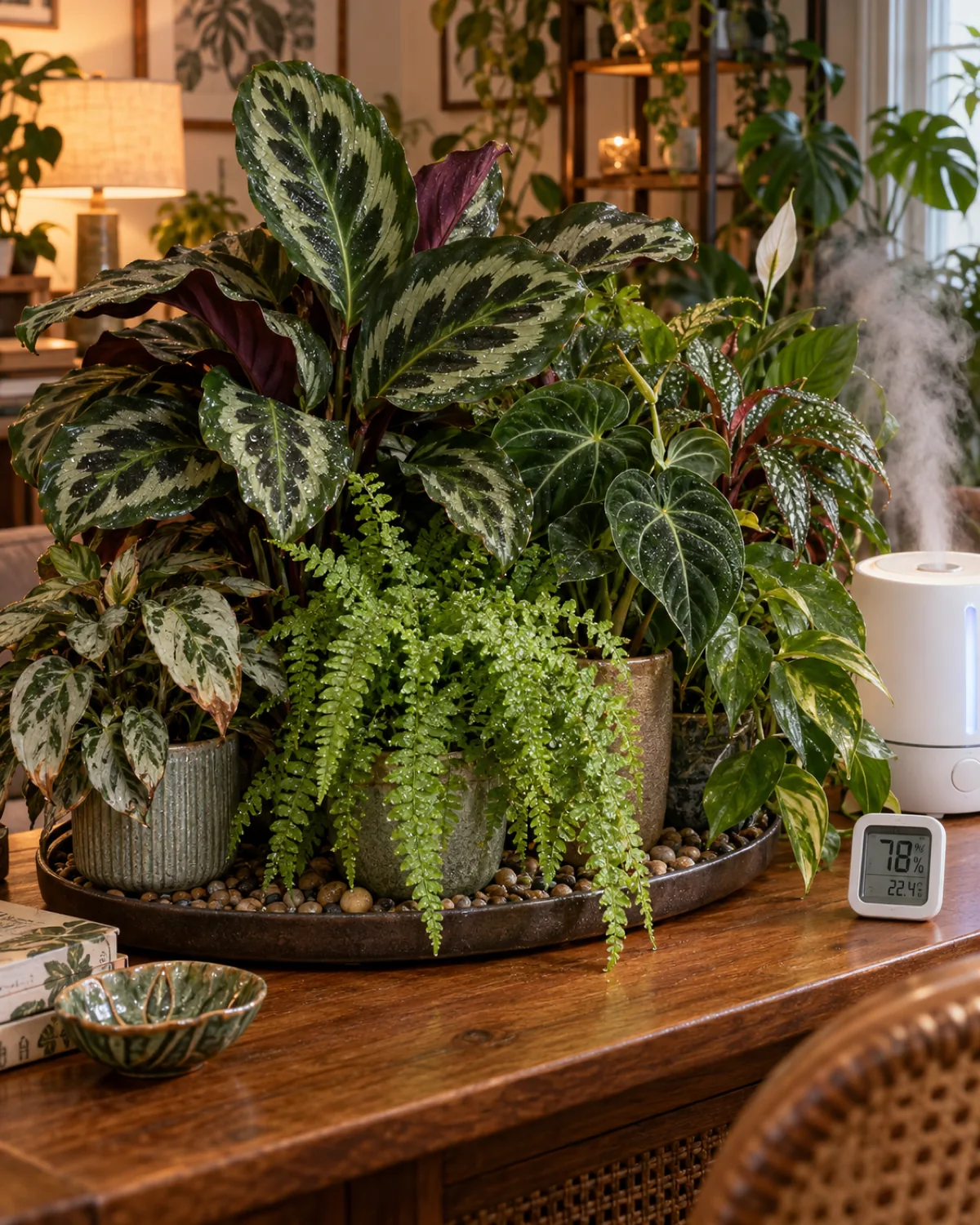
A dense plant cluster creates its own microclimate. Leaves transpire moisture, and when thirty plants share a corner, the local humidity can sit ten to fifteen percentage points higher than the rest of the room.
That is good for most tropical species. But it also introduces risks:
- Mold on soil surfaces: especially in winter when airflow drops
- Fungal leaf spots: standing water on leaves in humid, stagnant air
- Pest breeding: fungus gnats thrive in consistently moist conditions
Three tools to manage the balance:
| Tool | Purpose | Placement |
|---|---|---|
| Pebble trays | Raise local humidity 5–10% without wetting leaves | Under the densest cluster |
| Humidifier | Controlled humidity boost in dry climates or winter | Two to three feet from the cluster, pointed at the group |
| Small fan | Airflow to prevent mold and strengthen stems | Opposite the cluster, set to the lowest speed |
A hygrometer on the shelf tells you whether you actually need the humidifier. Most tropical houseplants are comfortable between 40 and 60 percent. Below 40, the humidifier helps. Above 60, the fan matters more.
The plants that struggle most in dense clusters are the ones that need dry air between waterings — succulents, cacti, and ZZ plants. Keep those in a separate, more open zone.
Light Mapping for Jungle Layers
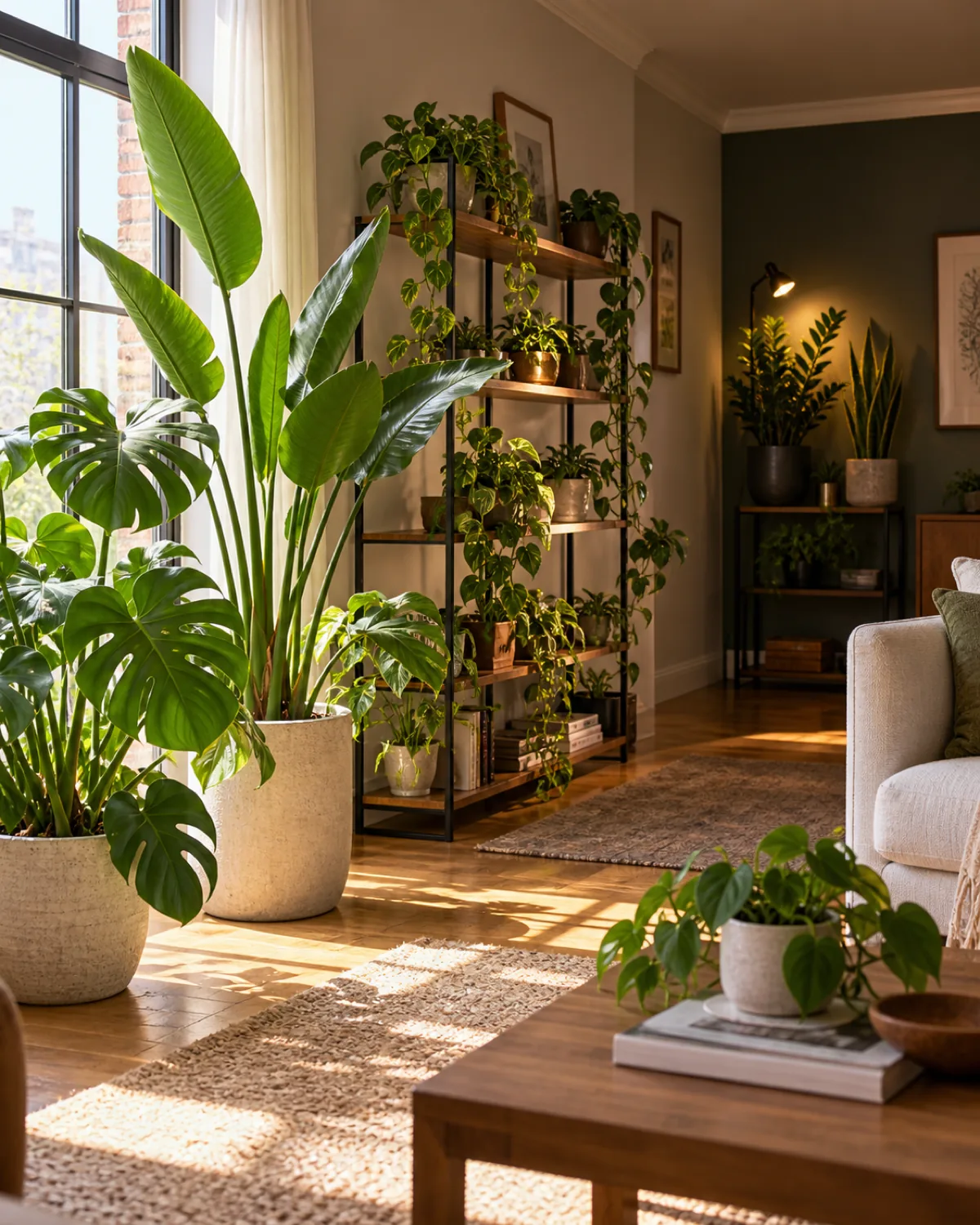
Dense plant layering means the plants in the back get less light than the ones in front. Treating the whole cluster as one light zone kills the interior plants.
Map three zones instead:
- Zone A (0–3 feet from window): bright indirect light, 400+ foot-candles. Place monstera, bird of paradise, fiddle-leaf fig, croton, and any variegated species here.
- Zone B (3–6 feet): medium light, 150–400 foot-candles. Philodendron, pothos, ferns, calathea handle this well.
- Zone C (6+ feet or north-facing walls): low light, under 150 foot-candles. Only snake plants, ZZ plants, and cast iron plants reliably survive here long-term.
A grow light on a timer extends Zone A deeper into the room. A single full-spectrum LED bar mounted under a shelf can turn a dark bookcase into a viable plant station.
Rotate plants a quarter turn weekly so all sides get light. In a dense arrangement this also prevents the interior-facing leaves from yellowing and dropping while the window-facing side stays lush.
Watering a Dense Collection Without Drowning
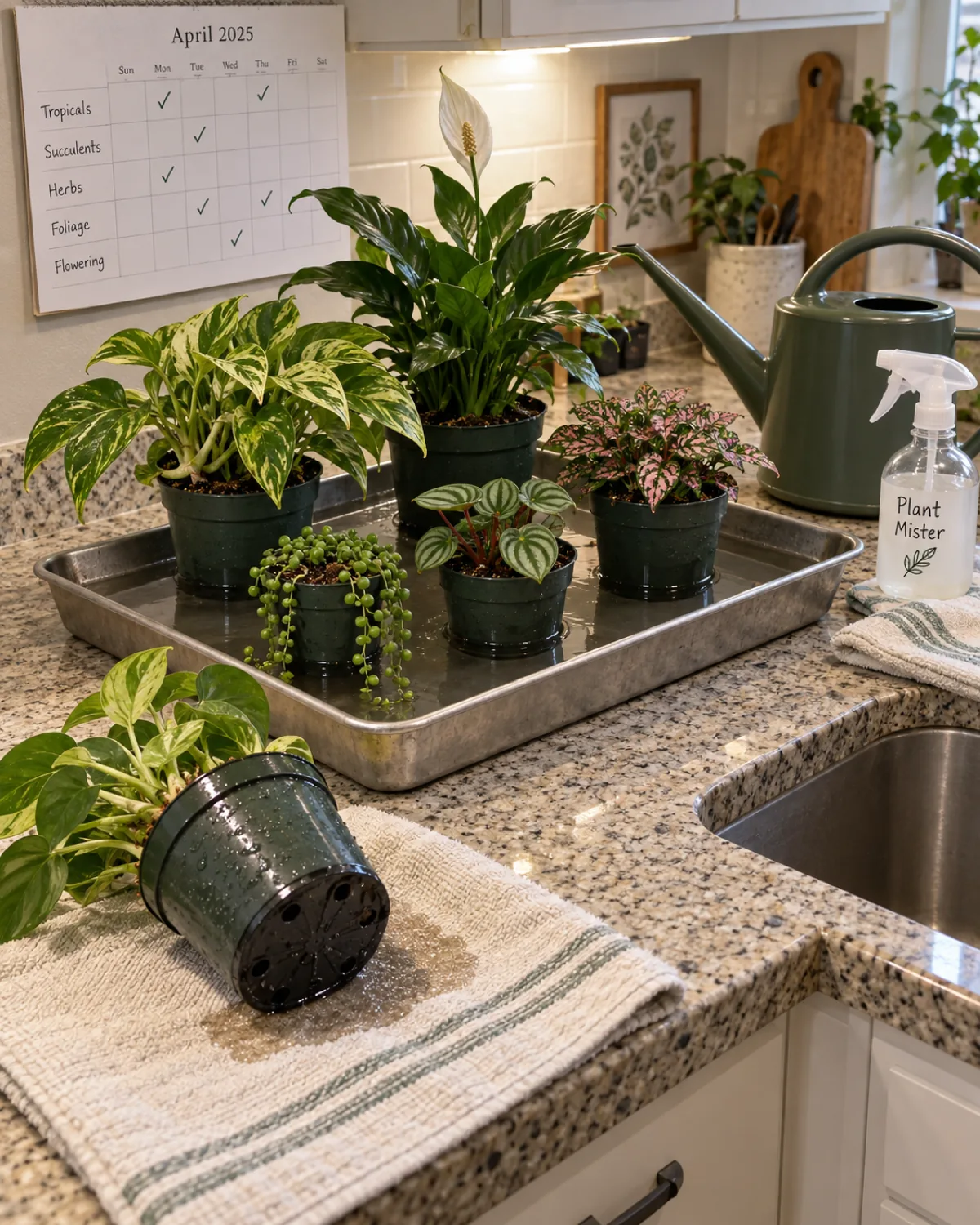
Watering three plants takes two minutes. Watering thirty plants with the same method takes half an hour and soaks the floor.
A system that scales:
- Group plants by water frequency: tropicals that want weekly watering on one shelf, drought-tolerant species on another
- Bottom-water the thirsty group: set nursery pots in a large tray of water for twenty minutes, then lift and drain
- Top-water the individuals: plants in decorative cachepots that cannot sit in a tray get individual attention with a long-spout can
- Skip the mister: misting thirty plants does not meaningfully raise humidity, it just wets the leaves and invites fungal spots
The touch test still beats the calendar. Push a finger an inch into the soil. Dry means water. Moist means wait. This does not change at scale, but at scale you learn which shelf dries out on Tuesday and which lasts until Friday.
A drip tray under every pot is not optional in a dense setup. One overwatered pot dripping onto the plant below it can cascade into root rot across an entire shelf.
The Weekend Jungle Maintenance Routine
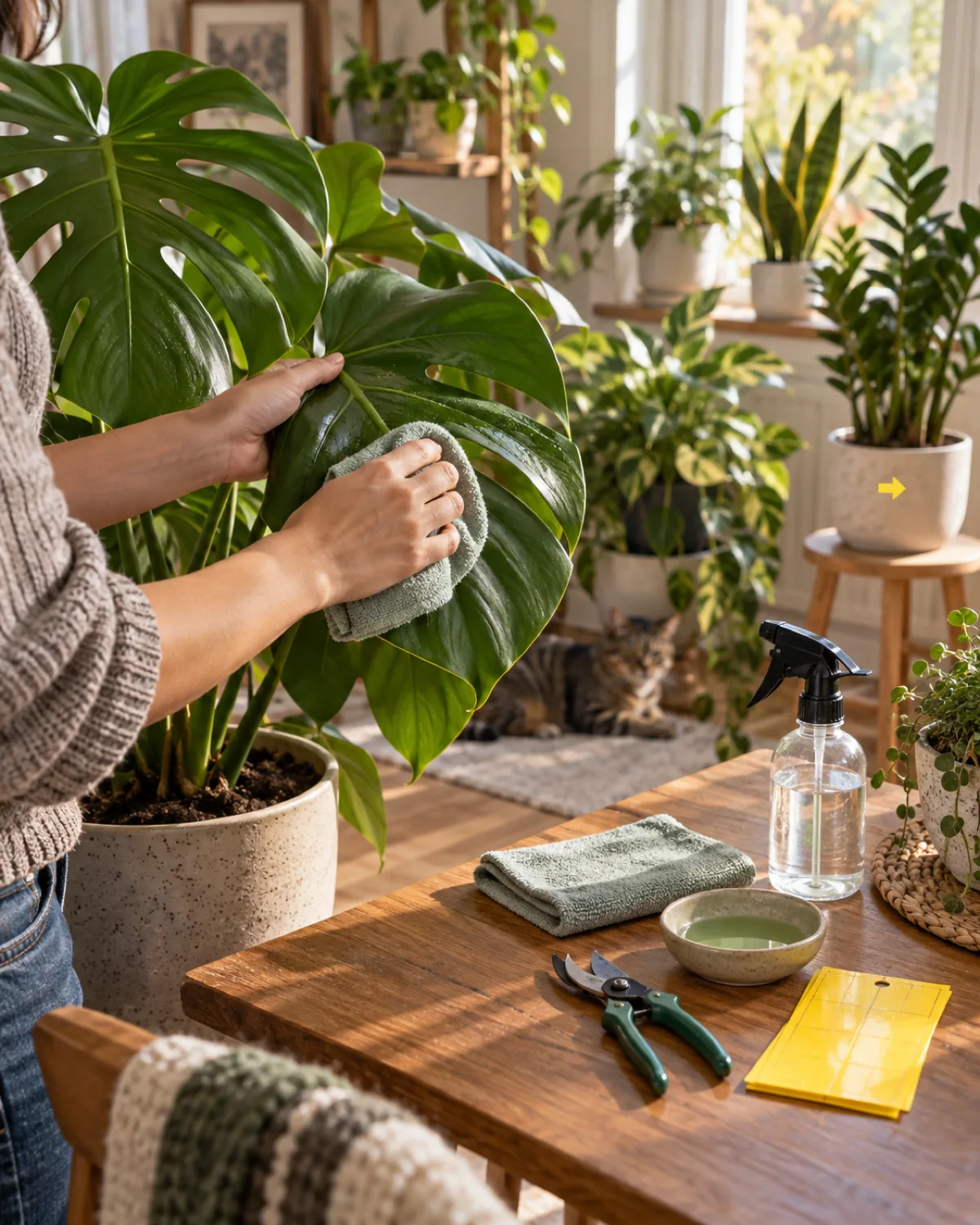
A thirty-plant collection needs about forty-five minutes per week. Splitting it into a fixed Saturday routine keeps the task from feeling open-ended.
The Saturday checklist:
- Dust the large leaves: a damp cloth on each monstera, rubber plant, and fiddle-leaf fig leaf. Dusty leaves photosynthesize less.
- Inspect for pests: flip three to five leaves per plant, check the stems, look at the soil surface. Dense clusters hide infestations longer.
- Rotate every pot a quarter turn: prevents one-sided growth, especially on the interior-facing plants
- Prune anything leggy: cut trailing vines back to a node to encourage bushier regrowth. Root the cuttings for free plants.
- Check soil moisture: finger test each pot, water the ones that need it, skip the rest
Monthly additions:
- Fertilize with a balanced liquid feed at half strength during the growing season
- Wipe down shelves and trays to prevent mineral buildup
- Repot any plant that has roots circling the bottom of the drainage hole
The routine gets faster as you learn the collection. After a few months you know which plants dry out first, which ones attract spider mites, and which ones never need rotating because they sit in even light.
Common Urban Jungle Mistakes That Kill Plants
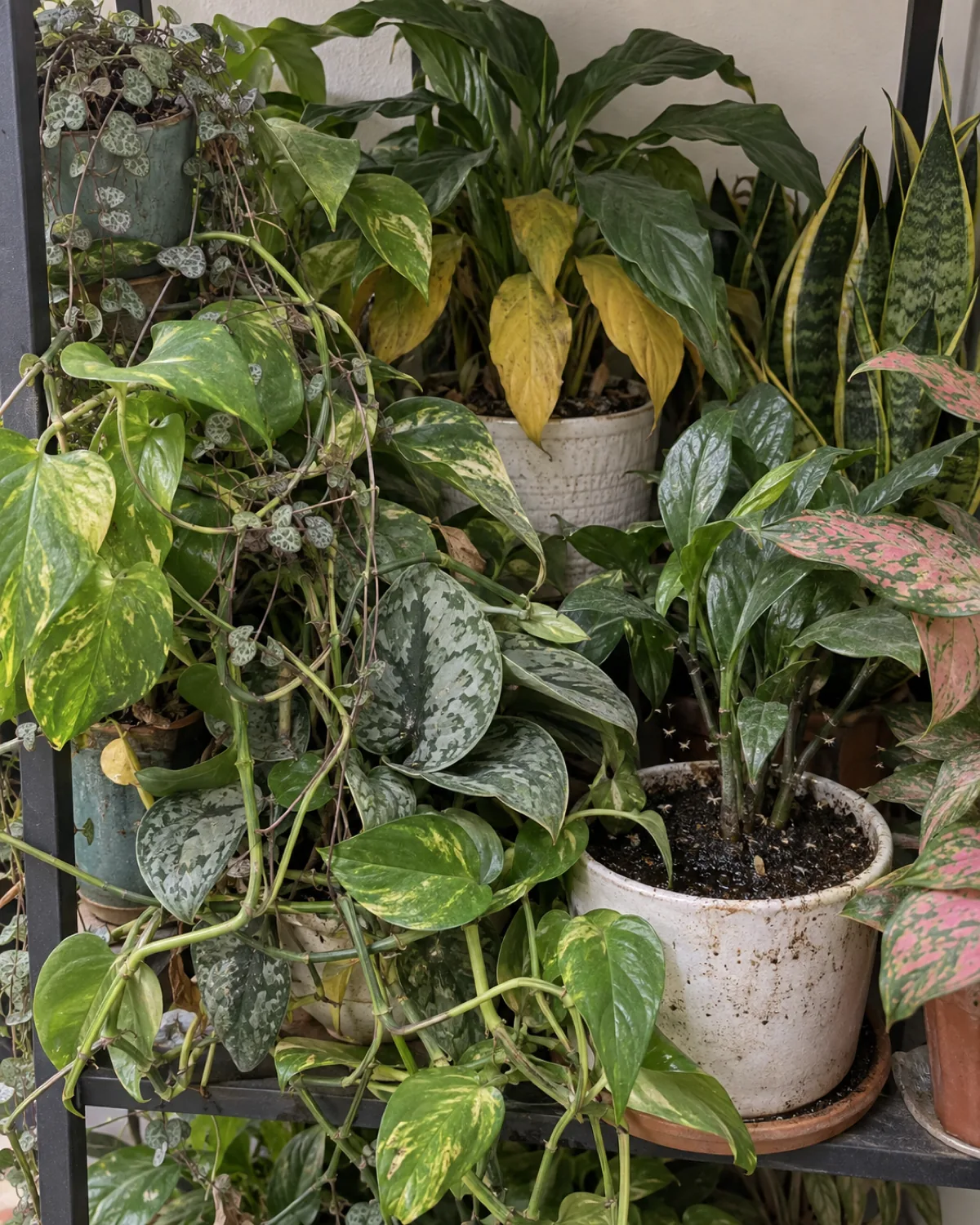
Dense does not mean suffocated. These are the mistakes that turn an urban jungle into a plant graveyard:
- No airflow between pots: leaves pressed against each other trap moisture and create micro-environments where fungal diseases thrive. Leave at least two inches between pot rims.
- Ignoring pest spread: a spider mite colony on one plant jumps to the entire shelf in a week when the leaves touch. Quarantine new plants for two weeks before adding them to the cluster.
- Matching shade plants with sun lovers: a peace lily in the back of a shelf does fine in low light. A croton next to it does not. Zone your plants by light need, not by pot size.
- Overwatering the whole shelf: it is tempting to water every pot on Saturday. But the snake plant at the end of the row does not dry out at the same rate as the fern next to the humidifier.
- Skipping drainage: decorative pots without holes look good until root rot takes out three plants in the same month. Use nursery pots inside cachepots and always lift to drain.
The single biggest mistake is treating the jungle as one organism. It is thirty individual plants that happen to share a room. Each one still needs its own light, water, and attention.
Urban Jungle on a Budget
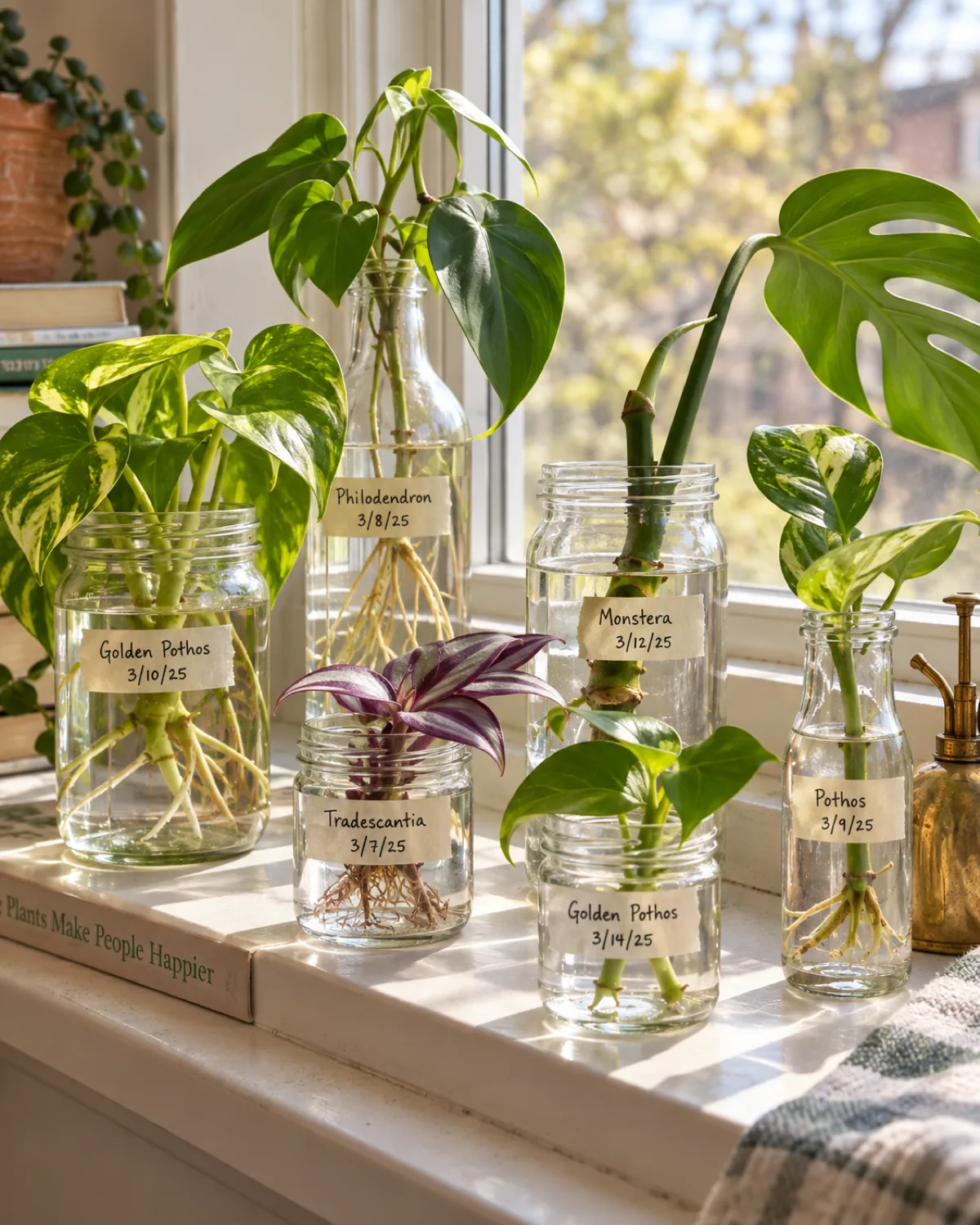
A mature urban jungle looks expensive. Building one does not have to be.
The cheapest sources of new plants:
- Propagation from your own collection: every trailing plant you already own is a factory for new plants. Cut a six-inch vine section with at least two nodes, root it in water, pot it up in three weeks.
- Plant swaps: local plant swap groups trade cuttings for free. One monstera cutting is worth three pothos cuttings in most swap economies.
- Nursery markdown shelves: the sad-looking clearance plants at the back of the garden center are often just dehydrated. A five-dollar markdown fiddle-leaf fig that gets regular water recovers in a month.
- Start small and let fast growers fill: a four-inch pothos costs three dollars and reaches three feet in one growing season. A four-inch tradescantia does the same in half the time.
The pots are the hidden expense. Thrift stores sell ceramic planters for a dollar or two. Woven baskets from discount home stores cover nursery pots and cost less than glazed ceramics.
A realistic budget for a twenty-plant jungle from scratch: sixty to eighty dollars if you start with small plants and propagate aggressively. Half that if you have friends who share cuttings.
Styling Beyond Plants: Furniture and Decor
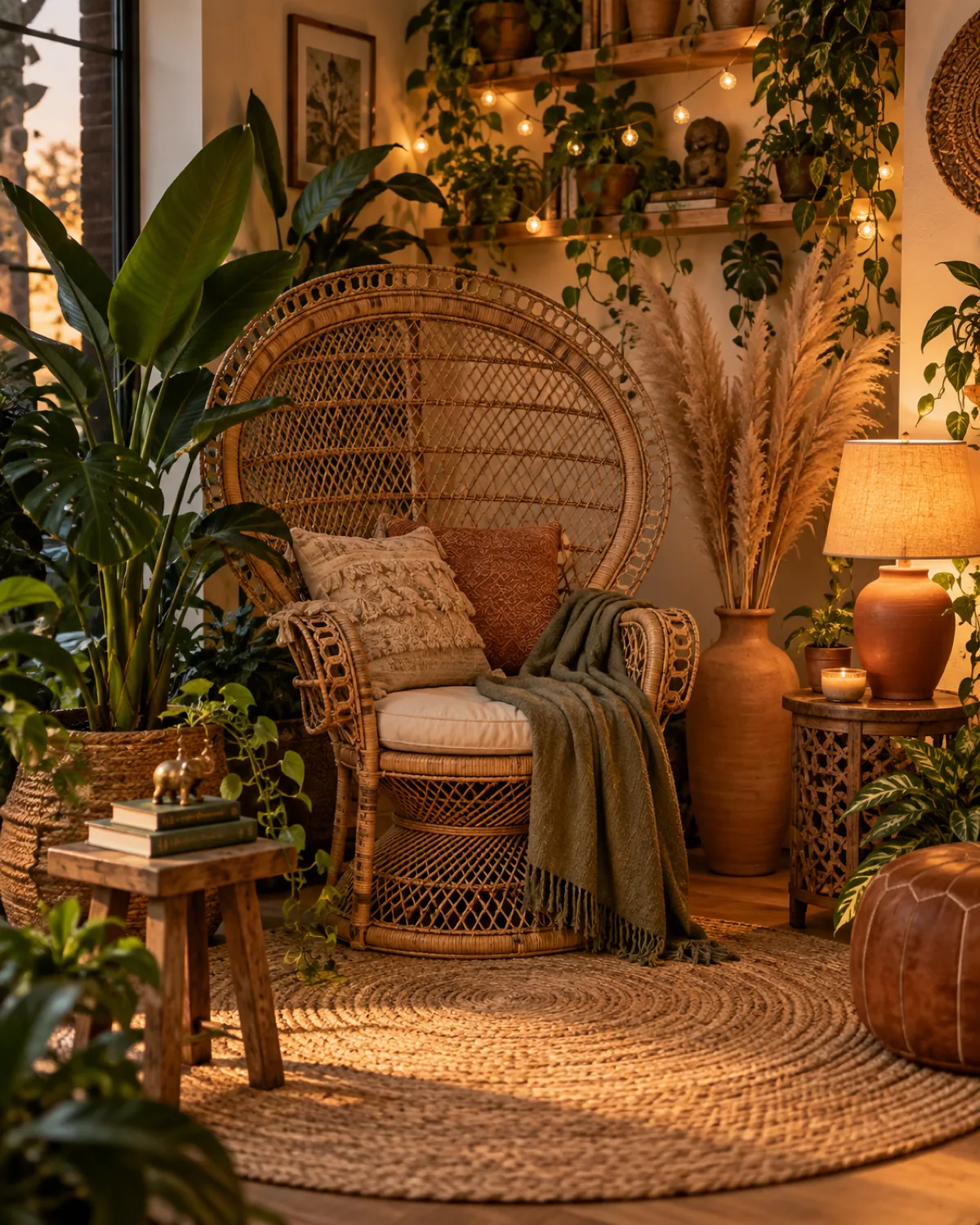
The non-plant elements in the room determine whether the jungle looks intentional or accidental.
Materials that reinforce the urban jungle atmosphere:
- Natural wood: open-grain shelving, a teak plant stand, a reclaimed wood bench. The warm tones ground the green.
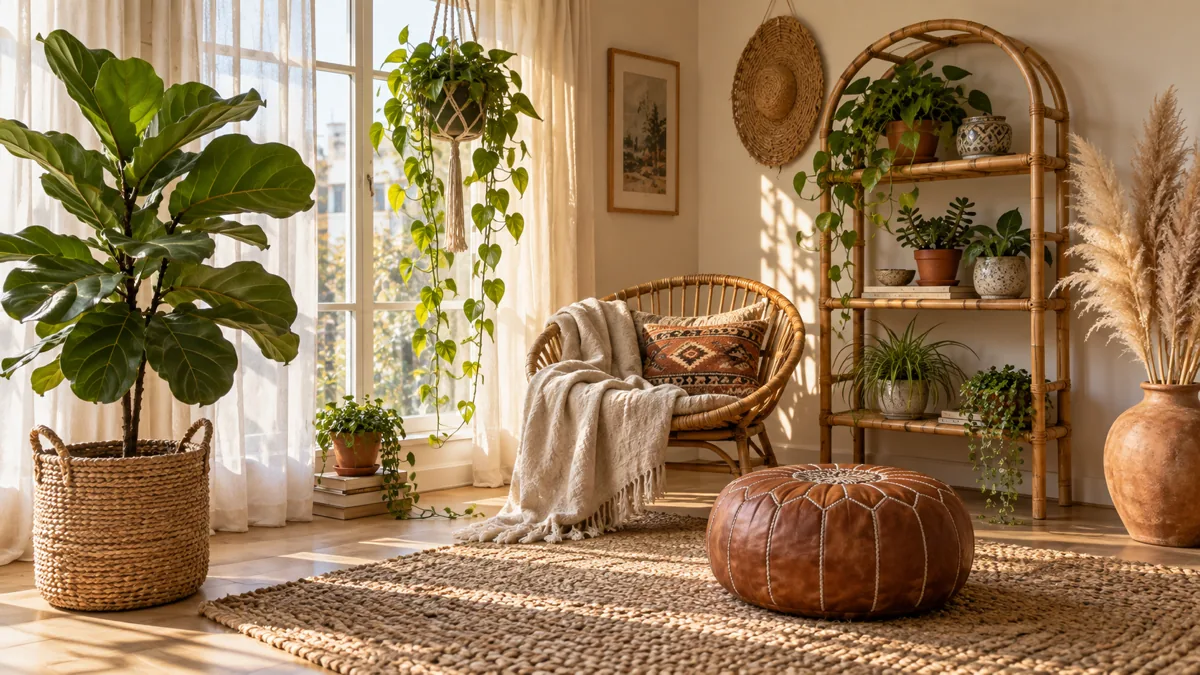
- Rattan and wicker: a peacock chair, a rattan side table, or woven wall baskets echo the organic texture of the plants
- Jute and linen: a jute rug under the plant corner, linen curtains filtering the window light
- Warm lighting: a floor lamp with a warm-white bulb or a string of warm fairy lights woven through the shelves. Overhead fluorescent light kills the mood instantly.
What to avoid:
- Chrome, glass, and high-gloss surfaces — they clash with the organic texture palette
- Bright-colored accent walls — the plants are the color. A white or warm cream wall lets the green dominate.
- Too much decor — three accessories per shelf maximum. The plants are the decor. Books, a ceramic, and a candle support the mood without competing.
A jungle corner that includes a reading chair, a side table with a lamp, and a small stack of books becomes a usable space, not just a display. Functional jungle spaces get maintained because you spend time in them.
Quick Reference
15 urban jungle essentials to save
- 1Build density through layers, not just plant countFour height tiers with two to three plants each looks more jungle-like than fifteen plants on one surface.
- 2Start with five tall anchor plants near the best windowMonstera, bird of paradise, fiddle-leaf fig, rubber plant, and areca palm form the structural canopy.
- 3Fill the mid-layer with fast-growing trailing speciesPothos and philodendron grow a foot per month and close gaps faster than buying new plants.
- 4Hang trailing plants from every elevated surfaceA single vine spilling from a shelf edge does more for the jungle effect than three upright pots on the same shelf.
- 5Stagger depths, not just heightsA plant two feet from the wall in front of one against the wall creates a deeper, more natural canopy.
- 6Use coordinated earth-tone containersTerracotta, woven baskets, and matte sage ceramics disappear behind the foliage instead of competing with it.
- 7Go vertical in small spacesFloating shelves, over-door hooks, and wall-mounted planters add density without costing floor area.
- 8Group tropical plants for shared humidityA dense cluster raises local humidity ten to fifteen percent, but add a fan to prevent mold in stagnant air.
- 9Map three light zones from window to wallBright indirect near the window, medium three to six feet back, low light beyond six feet. Place species accordingly.
- 10Bottom-water in batches to save timeSet nursery pots in a tray of water for twenty minutes, then drain. Scales to twenty plants in the time it takes to top-water five.
- 11Commit to a forty-five-minute Saturday routineDust leaves, inspect for pests, rotate pots, prune leggy growth, and water the dry ones. The checklist beats improvisation.
- 12Leave two inches between pot rims for airflowDense does not mean suffocated. Touching leaves trap moisture and spread pests between plants overnight.
- 13Propagate instead of buyingA twenty-plant jungle from scratch costs under eighty dollars if you root cuttings from your first five plants.
- 14Use natural wood, rattan, and warm lightThe furniture and decor should feel organic. Chrome and glass clash with the lush green palette.
- 15Scale from one shelf to a full room graduallyAdd one tier at a time. The jungle looks best when every layer is established before you expand to the next wall.
kultivy.com
Scaling Up: From One Shelf to a Full Room
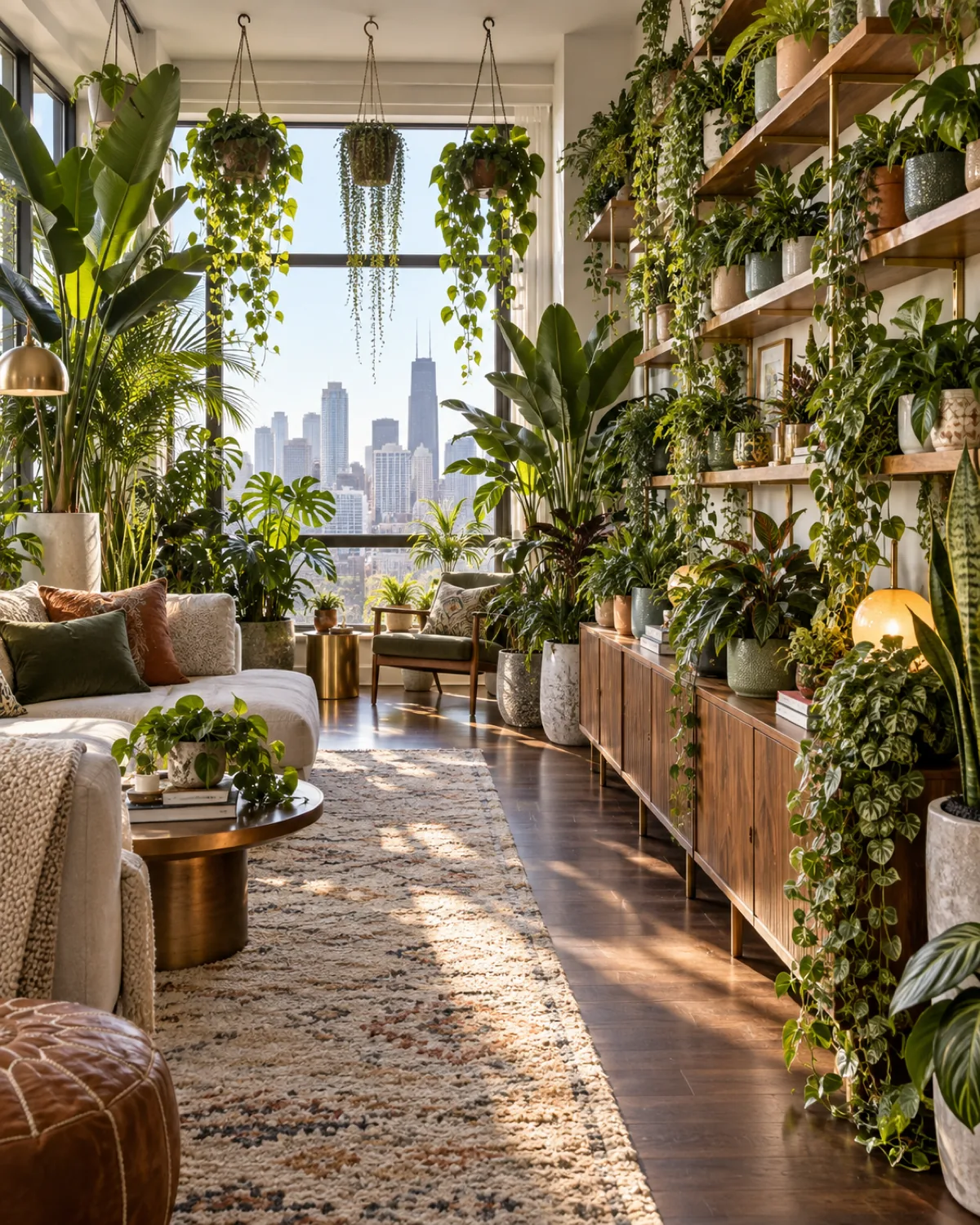
The jump from a plant corner to a full room jungle is a progression, not a weekend project.
The scaling path that works:
- Stage 1: The windowsill: three to five small plants on the sill closest to good light. This tests whether you can keep a group alive before investing more.
- Stage 2: The corner: add a tall anchor plant on the floor and a shelf above the sill. You now have three tiers in one corner.
- Stage 3: The wall: extend the shelf across the full wall. Add trailing plants and a second anchor. The corner becomes a green wall.
- Stage 4: The room: spread to a second wall. Add ceiling hooks. The room now has overlapping layers visible from every angle.
When to stop adding:
- You cannot walk through the room without brushing against leaves
- The maintenance routine takes more than an hour per week
- The plants in the back of the shelves are not getting enough light even with grow lights
- New plants are going onto surfaces that do not get direct or supplemental light
The editing phase is where most urban jungles actually improve. Removing three struggling plants and replacing them with one healthy one in the right spot improves the look more than adding five new pots.
An urban jungle is never finished. Plants grow, seasons shift, and the light changes. The reward is that the room looks different every month without you changing the furniture or repainting the walls.

Mara writes plant care and styling guides at Kultivy, focusing on practical advice for people who want their indoor plants to actually thrive. Every recommendation in this guide comes from documented care protocols and real growing conditions, not assumptions about what might work. More about Kultivy.