Most fiddle leaf figs people buy as a five-foot statement tree spend the next six months slowly browning, dropping leaves from the bottom, and getting blamed for being fussy. The plant is almost always fine. The room is wrong.
Ficus lyrata is an open-canopy tree from tropical West Africa, not a corner accent. What keeps it healthy indoors is mostly the opposite of what beginners give it: the brightest spot in the apartment, deep soaks with long dry-outs, a free-draining mix, and no moving it.
If a fiddle is your first houseplant, the easy houseplants list is a much softer landing. Otherwise the sections below cover what turns a brown-spotted fiddle into a tree.
Ficus lyrata is the statement floor tree most beginners buy and most beginners slowly lose. The thirteen sections below cover the exact light, the deep-then-drain watering rhythm, the no-move-it rule, and the brown-spot decoder that turn a struggling fiddle into a six-foot indoor tree.
- 1Light, the brightest spot you own
- 2Watering, deep soak then bone-dry
- 3Soil, a chunky free-draining mix
- 4The no-move-it rule
- 5Best spot, a tall draft-free window
- 6Brown spots decoded
- 7Leaf drop, why it really happens
- 8Pet safety, fiddle is toxic
- 9Propagation and notching
- 10Repotting, one size up only
- 11Pests, mealybugs, mites, thrips
- 12Varieties, Bambino to Audrey
- 13Long term, full-trunk indoor tree
Light: a fiddle wants the brightest spot you have, real direct sun included
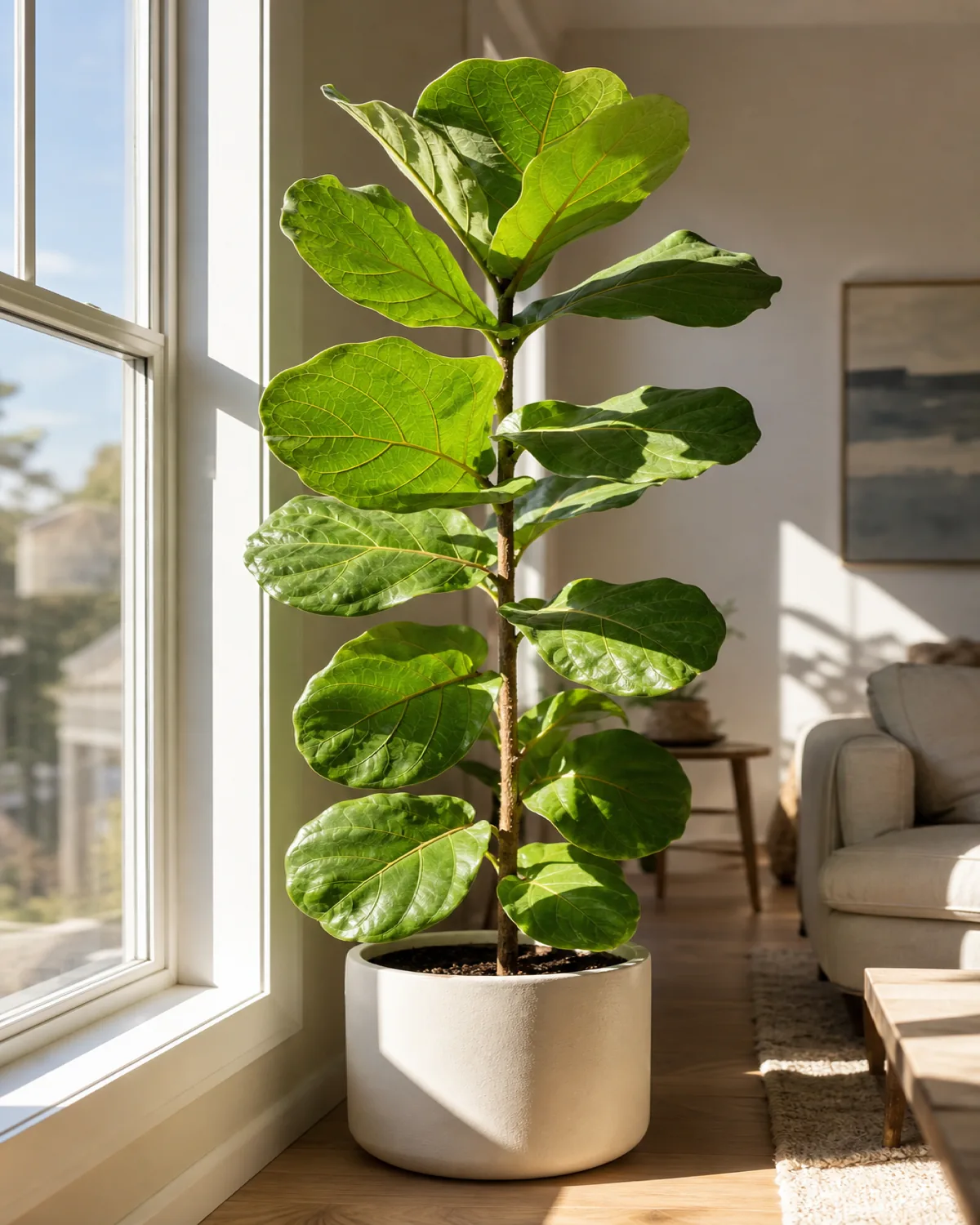
“Bright indirect” is the line that quietly kills most fiddles. A fiddle reads typical indirect-light advice as starvation. It evolved under an open tropical canopy that drops several hours of direct sun on the leaves a day, not the soft north-window glow most aroids prefer.
A monstera is happy two or three feet back from a bright window. A fiddle wants to sit right in the window.
- Direct sun is welcome, especially morning east or afternoon south through clear glass, as long as nothing else (curtain, blind, building) blocks the path.
- An unobstructed south window is the gold standard, with east a close second when the morning sky is clear.
- Below “very bright indirect” is starvation, brown new leaves and slow growth almost always trace back to a room that is too dim.
Watering: deep soak, then let the top three inches go bone dry before the next drink
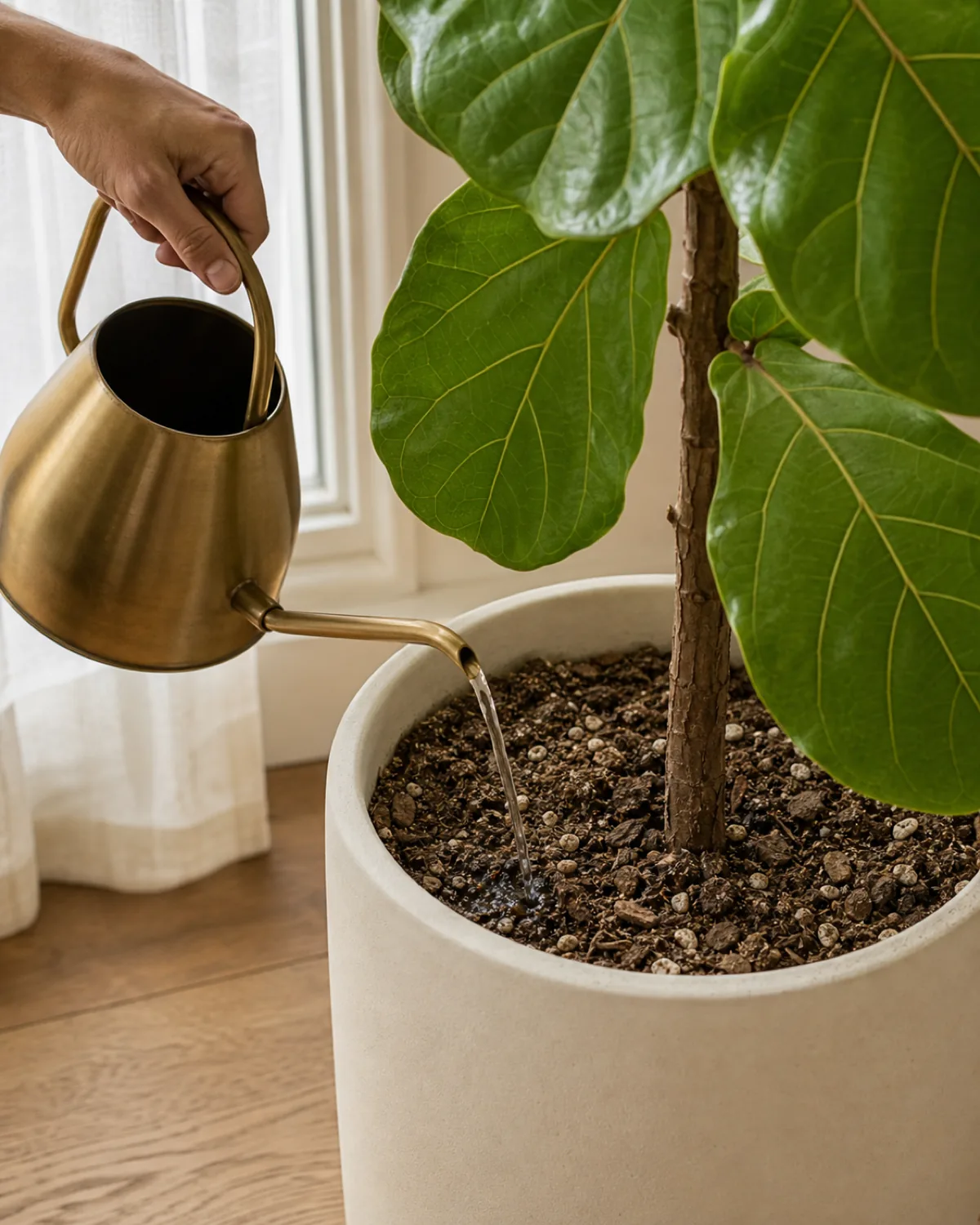
A fiddle prefers a feast-or-famine watering rhythm. Half cups poured on a weekly schedule keep the lower root ball permanently damp and slowly rot the roots from the bottom up. That is the single most common reason a fiddle browns and drops leaves.
The rule that actually works: push a finger three inches into the chunky mix. If the soil at the fingertip is bone dry, water deeply until water drains out the bottom. If the soil is damp, wait another two or three days and check again.
- Push a finger three inches in, then decide, not a schedule, not a moisture meter that tests only the top inch.
- Soak until water drains out the bottom, half waterings leave the lower root ball wet.
- Winter gap stretches by a week or more, cool roots in damp soil rot fast, and a slow fiddle drinks less.
Soil that drains in seconds, not minutes: a chunky aroid-style mix
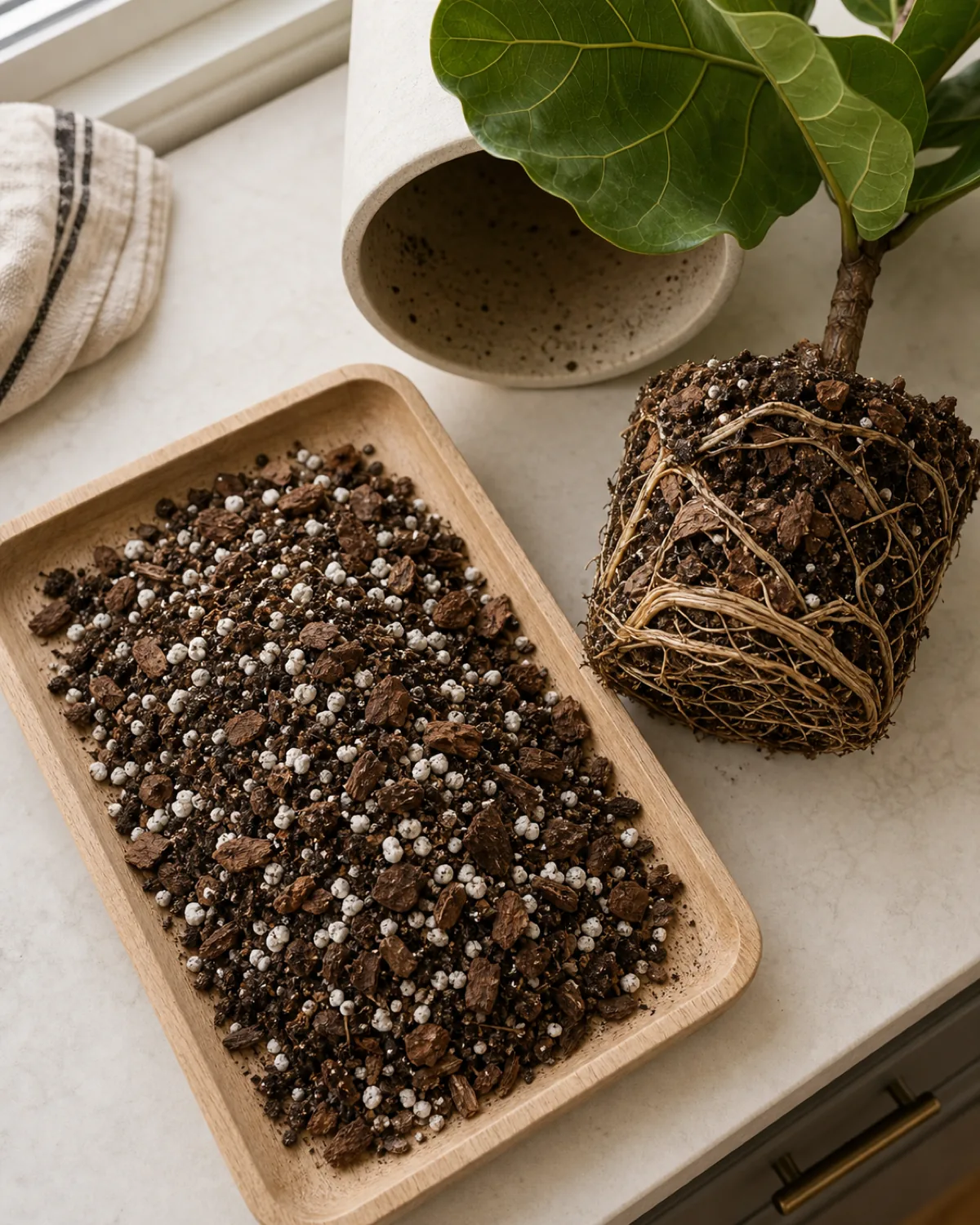
Standard indoor potting mix straight from the bag stays wet for days around fiddle roots, which gives bacterial root rot a head start before the top of the soil ever feels dry. The mix has to drain in seconds.
A reliable blend is roughly three parts indoor potting soil, one part orchid bark, and one part perlite, all loosely tumbled together so air pockets stay open. The bark and perlite keep water moving past the roots instead of sitting around them.
- Three to one to one indoor mix, bark, and perlite, eyeball it by volume in a tray, no precision required.
- The mix should pour, not clump, if you can squeeze it into a clay-like ball, add more bark and perlite.
- Repotting is the moment to fix soil, not after, do the swap when you next move pot sizes.
Most fiddle problems trace back to one of four blind spots. Start with whichever situation describes yours, then circle back to the rest later.
The number one rule beginners break: do not move it, even an inch
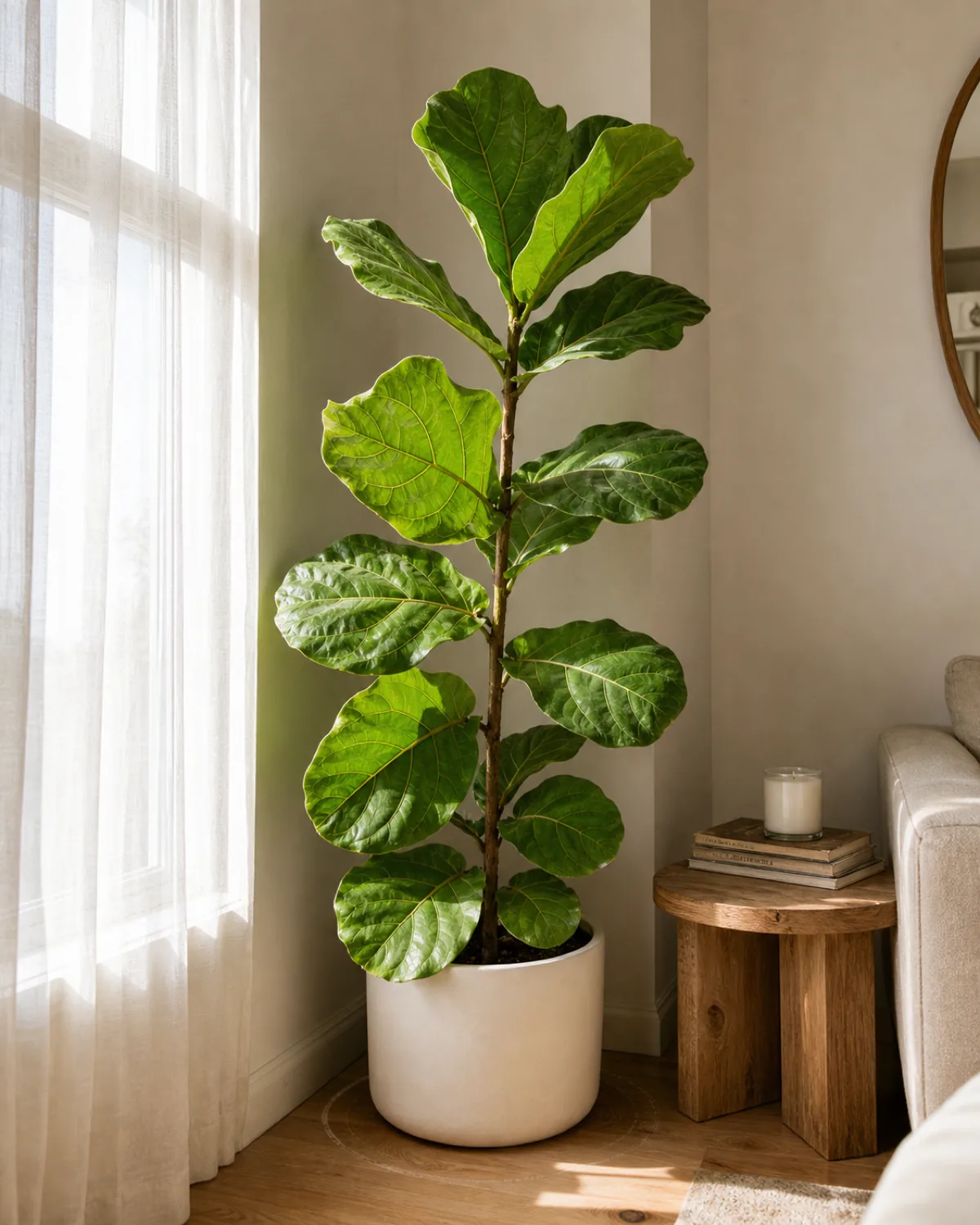
A fiddle is famously dramatic about a new location. Even a move across the same room often triggers a dropped leaf within a week. The plant is not being fussy on purpose. Each leaf is oriented for the exact light and humidity microclimate it grew up in, and a sudden change reads as a threat.
Pick the right spot once, settle the plant, and resist every urge to rotate it across the room or relocate it for parties. Tiny in-place quarter turns every few weeks are fine and actually help keep the leaves even.
- Choose the final spot before you bring it home, not after, scout the room first.
- In-place quarter turns are fine, helping the plant keep an even canopy as it grows.
- Block out the impulse to “give it a change”, it does not want a change, it wants a settled spot.
Best spot in a real home: a south or unobstructed east window with no draft
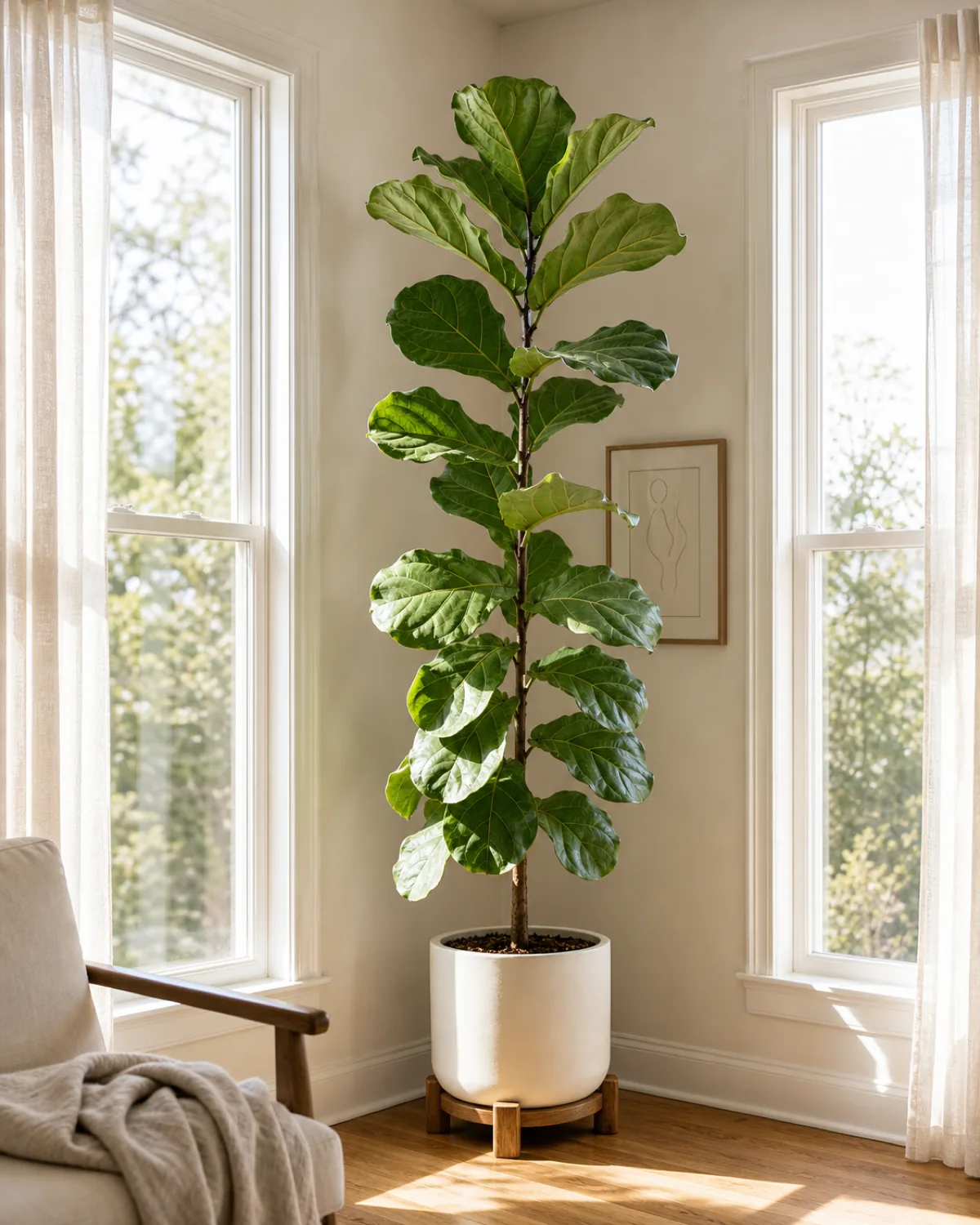
The best fiddle spots in most homes are the same: a corner between a tall south window and a tall east window with no curtain between glass and plant. Floor-to-near-ceiling windows are even better, since the plant gets light along its full height instead of only at the top.
The other half of “best spot” is what is missing from the spot. Heater vents, air-conditioning returns, an exterior door that opens onto winter air, and even a window that frosts overnight all qualify as drafts and trigger leaf drop. A fiddle in a perfect light spot with a cold draft will still fail.
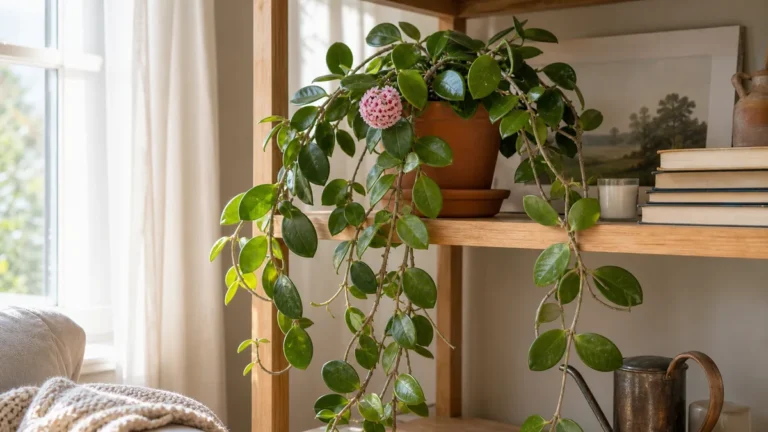
A high floor plant near a tall window is also a styling decision, the same way a trailing plant works at eye level on a styled shelf or open corner.
- Tall south or unobstructed east window, the brightest spot you have wins.
- No heater vent, no AC return, no door, audit the draft path before you place the plant.
- Floor-to-near-ceiling windows are ideal, light reaches the lower half of the trunk instead of only the top leaves.
Brown spots decoded: bacterial vs sunburn vs dry edges vs root rot
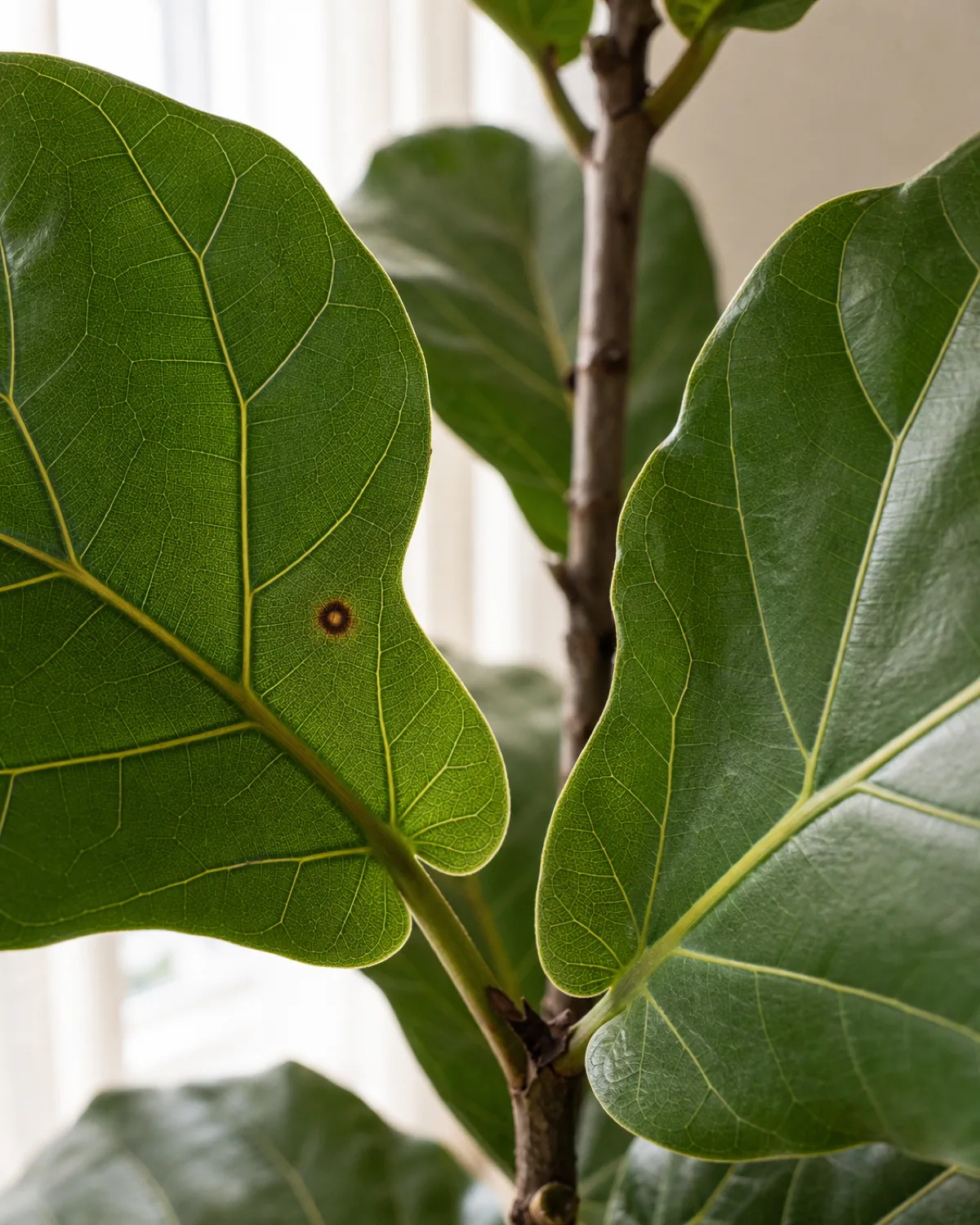
The brown spot panic almost always sends people the wrong direction. Most people see brown and water less, or water more, or move the plant. All three can make the problem worse. The fix depends on which kind of brown spot is on the leaf.
A leaf can show two different problems at once, which is part of why fiddle brown spots feel so confusing. Diagnose one cause per spot, not both.
- Dark-haloed brown spot near the center of the leaf, almost always bacterial or root rot from wet roots, dry the plant out fast.
- Pale tan crispy patch only at the outer edge or tip, dry air or under-watering, soak deeply and check the watering rhythm.
- Bleached pale-tan patch on the lit side of a leaf, window scorch from a recent move closer to the glass, pull the plant six inches back.
- Small black pinpoint spots scattered along the veins, often pest damage, flip the leaf and check the underside.
Most fiddle disasters trace back to one of four moves people skip. Hold these four and a healthy Ficus lyrata will keep its leaves and slowly grow into a tree.
Why a fiddle drops leaves: a draft, soggy soil, or a recent move (rarely “thirst”)
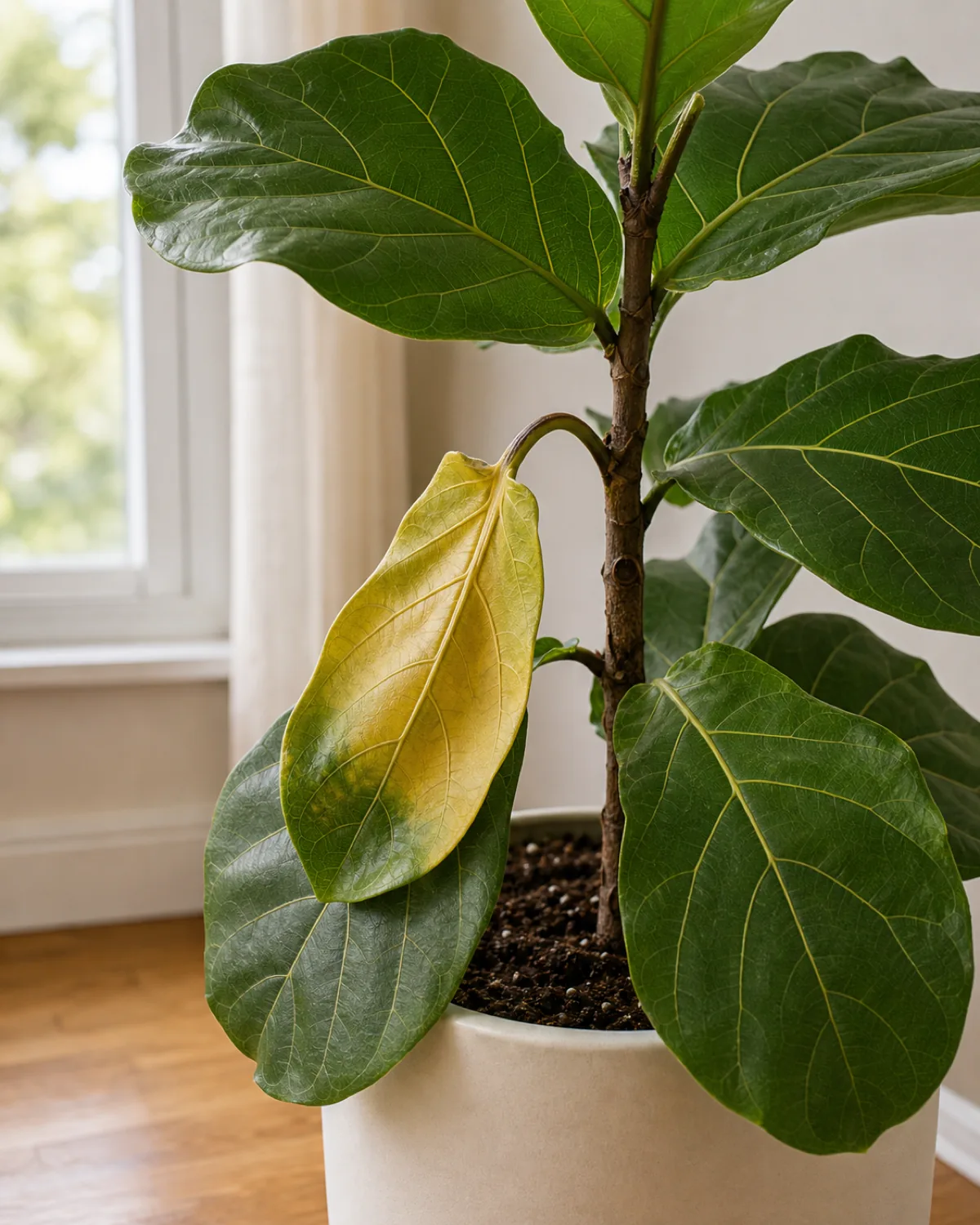
The instinct when a leaf droops and yellows is to water. With a fiddle that almost always makes things worse. Leaf drop is usually a stress reaction, not thirst. The most common triggers are a cold draft, wet roots, or a recent change of location.
Healthy leaves above and below a single drooping leaf are a useful clue. They tell you the plant overall is fine, the leaf is shedding a stressed lower leaf to protect the canopy. Find the trigger before changing the water rhythm.
- Lift the pot first, if it is heavy and the soil is damp, the problem is wet roots, not dry.
- Check the draft path, anything from a heater vent to a leaky window can be the trigger.
- One leaf dropping at a time is normal, fiddles shed a lower leaf when stressed, the canopy keeps going.
Pet safety: Ficus lyrata is toxic to cats and dogs
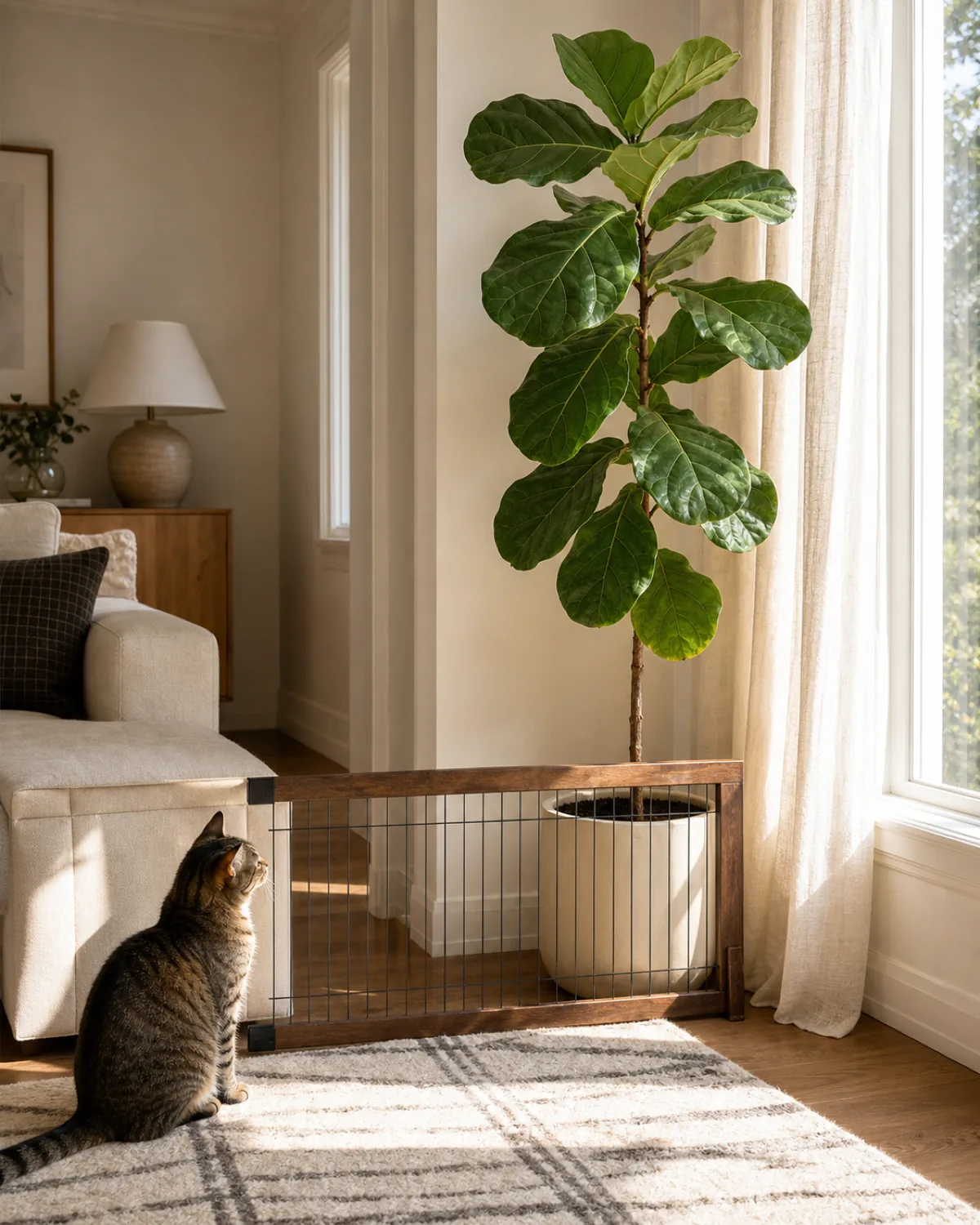
A fiddle is on the ASPCA toxic list for both cats and dogs. The latex sap that oozes from a cut stem contains proteolytic enzymes that irritate the mouth and stomach. A pet that chews a leaf usually drools, vomits, or refuses food for a few hours, sometimes longer.
Unlike pet-safe trailing picks such as a hoya carnosa, a fiddle on the floor in a home with a curious cat or dog needs a real barrier between the plant and the floor. A low pet gate or a heavy ottoman blocking the corner is enough.
- ASPCA toxic for cats and dogs, the latex causes mouth irritation and GI upset.
- Floor placement is the risk, raised pots or fenced corners keep curious pets away from the lower leaves.
- Wash the sap off skin too, the latex can irritate human hands, wear gloves when notching or pruning.
Propagation: stem cuttings root in water in 4 to 6 weeks (and notching grows side branches)
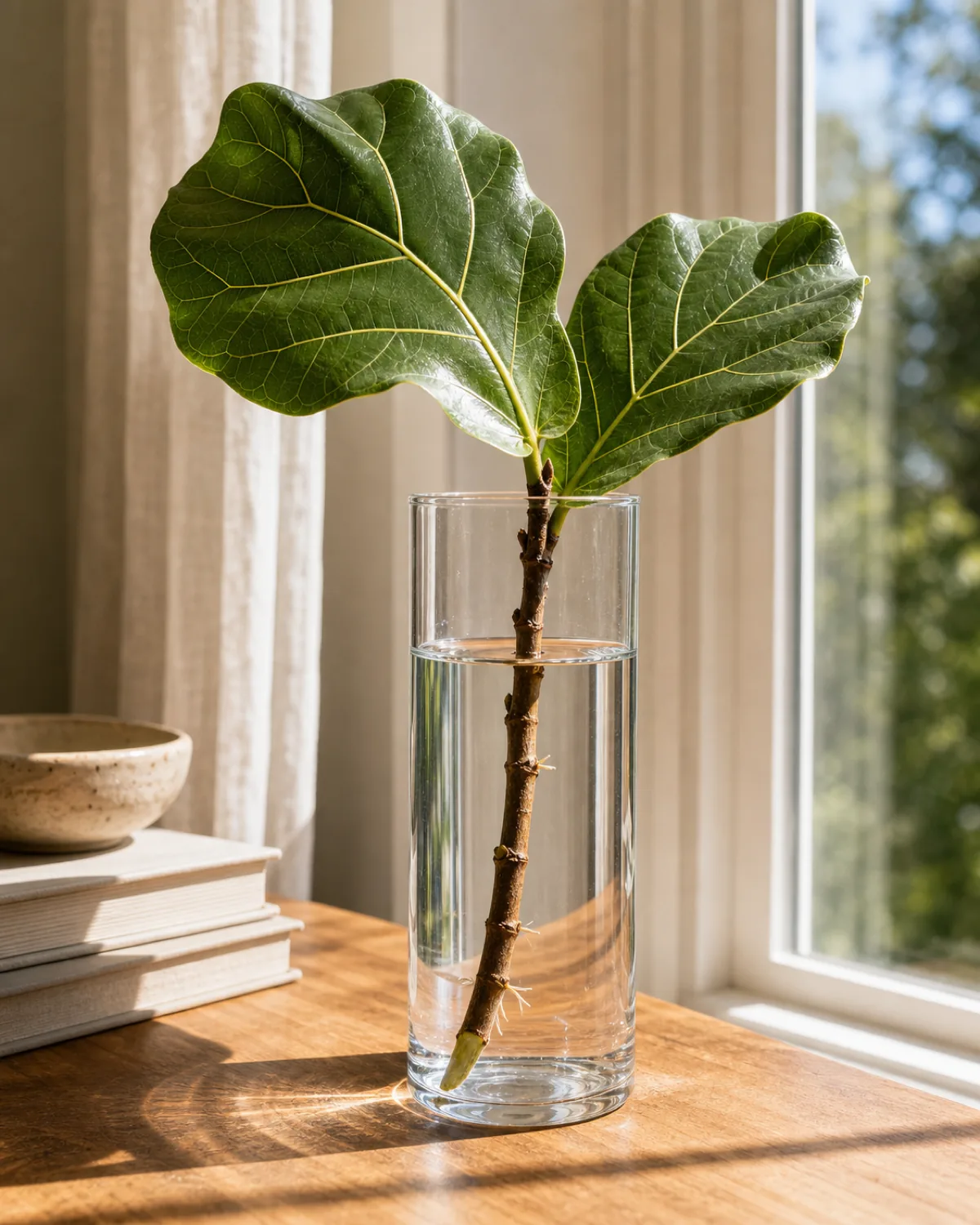
A ten-inch fiddle cutting roots in plain water in four to six weeks. Snip a healthy branch tip with a clean diagonal cut just below a node, strip the lower leaves so only two upper leaves remain, and sit the cutting in a tall clear vase of fresh water in bright indirect light. Change the water weekly.
Notching is the under-used trick. Cut a small upward angled slit through the bark on the trunk just above a node and the plant usually grows a new side branch from that node, which is how fiddles avoid the bare-trunked look as they get tall.
- Two-leaf cutting in plain water, four to six weeks to roots, change water weekly, pot up when roots reach two inches.
- Notching the trunk forces a new side branch, ideal for filling out a leggy lower trunk.
- A monstera roots faster and more forgivingly if you want quick wins, see the monstera care guide for the comparison.
Fiddle Leaf Fig Care: The Quick Reference
- 1Light: the brightest spot you own, direct sun includedA tall south window or an unobstructed east window with no curtain is the threshold. Pure indirect light slowly starves a fiddle.
- 2Water: deep soak, then top three inches bone dryReal soaks until water drains out the bottom, then wait. Calendar watering rots roots and triggers brown spots faster than anything else.
- 3Soil: chunky indoor mix with bark and perliteRoughly three parts indoor potting soil, one part orchid bark, one part perlite. The mix should drain in seconds, not minutes.
- 4Do not move it, even an inchA fiddle reads any new spot as a survival threat and often drops a leaf within a week. Pick the right spot once and leave it alone.
- 5Best spot: a tall south or unobstructed east window, no draftsAvoid the path of a heater vent or an open AC return. Cold drafts cause silent leaf drop within days.
- 6Brown spots are four different problemsDark-haloed = bacterial / root rot, pale crispy edge = dry air, bleached lit-side patch = window scorch, even tan rim = under-watered.
- 7Leaf drop is almost never thirstCold draft, soggy soil, or a recent move trigger leaf drop. Watering more makes it worse, not better.
- 8Pet safety: fiddle is ASPCA toxic to cats and dogsFicus latex contains proteolytic enzymes. Block floor access with a gate or pick a pet-safe alternative like a parlor palm or spider plant.
- 9Propagate: stem cuttings root in water in 4 to 6 weeksA 10 inch cutting with two upper leaves and a clean diagonal cut roots in plain water. Notching the trunk forces a new side branch.
- 10Repot: only when truly root-bound, one size up maxRoots circling the surface or water rushing through without soaking are the signals. Never jump from a 10 inch to a 14 inch.
- 11Pests: mealybugs, spider mites, and thripsInspect leaf undersides monthly. White fuzz at petiole joints means mealybugs. Pale silver streaks on veins mean thrips.
- 12Varieties: Bambino, Compacta, Suncoast, AudreyBambino is the dwarf for small apartments. Compacta packs leaves densely. Audrey (Ficus benghalensis) has whiter veins and a more upright open habit.
- 13Long term: a 6 foot indoor tree, full lower trunkRotate small in-place turns to keep growth even, and notch the trunk to force side branches so it does not go bald at the bottom.
kultivy.com
Repot only when really root-bound, and never jump more than one size
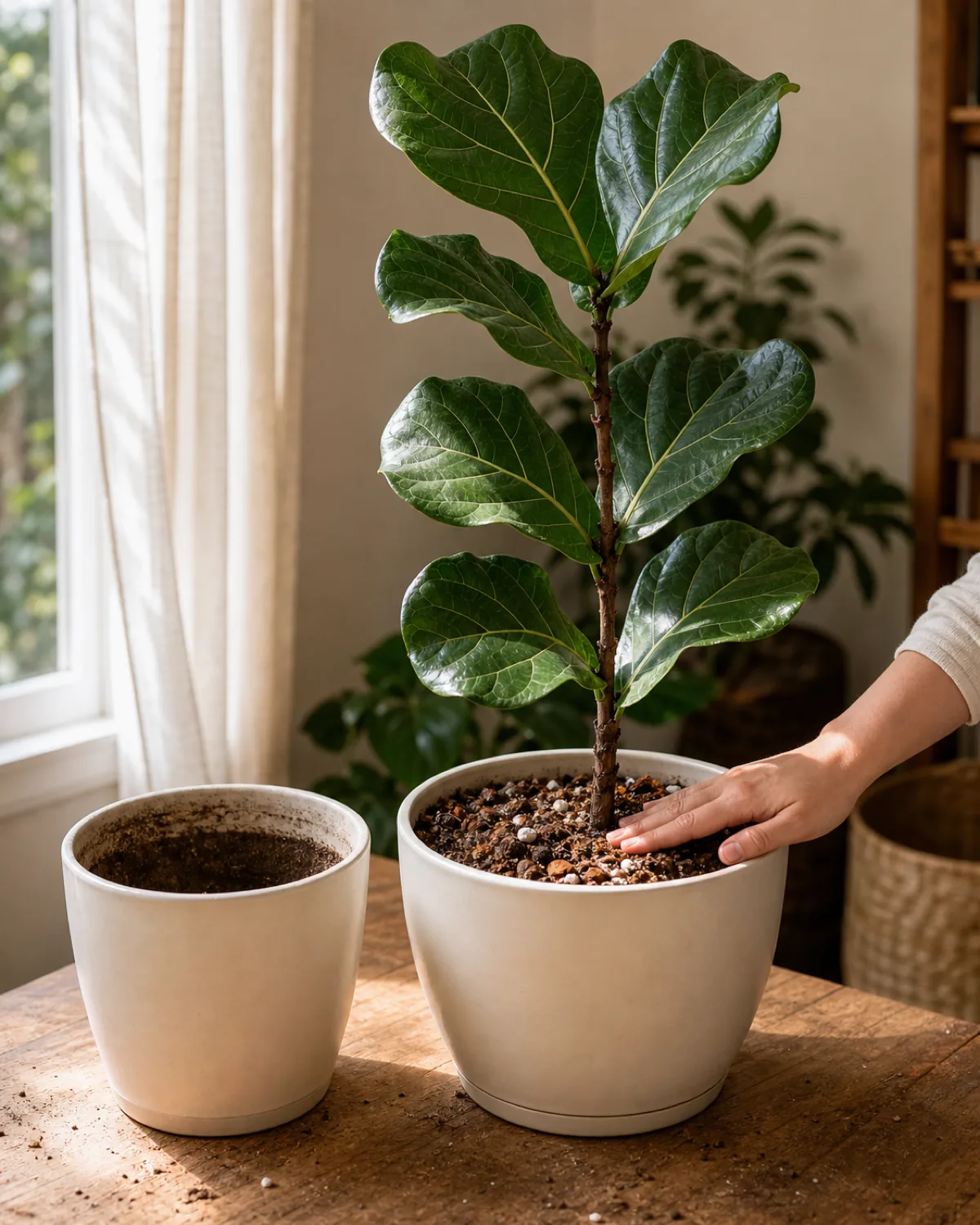
The instinct to up-pot a fiddle every spring will quietly stall the plant for two years. Roots in a too-big pot sit in damp soil with no roots around it, which rots faster and harder than a snug pot ever does.
Wait until you see real root-bound signs: roots circling the surface, roots pushing out the drainage hole, or water rushing through the pot in seconds without soaking in. Then go up exactly one pot size, never more. A ten-inch pot graduates to a twelve, not a fourteen.
- Real signs only, surface roots, drainage-hole roots, or water rushing through.
- One size up only, even when the plant looks like it could use much more room.
- Refresh the chunky mix at the same time, this is the moment to fix soil drainage.
Pests: mealybugs, spider mites, and thrips love a stressed fiddle
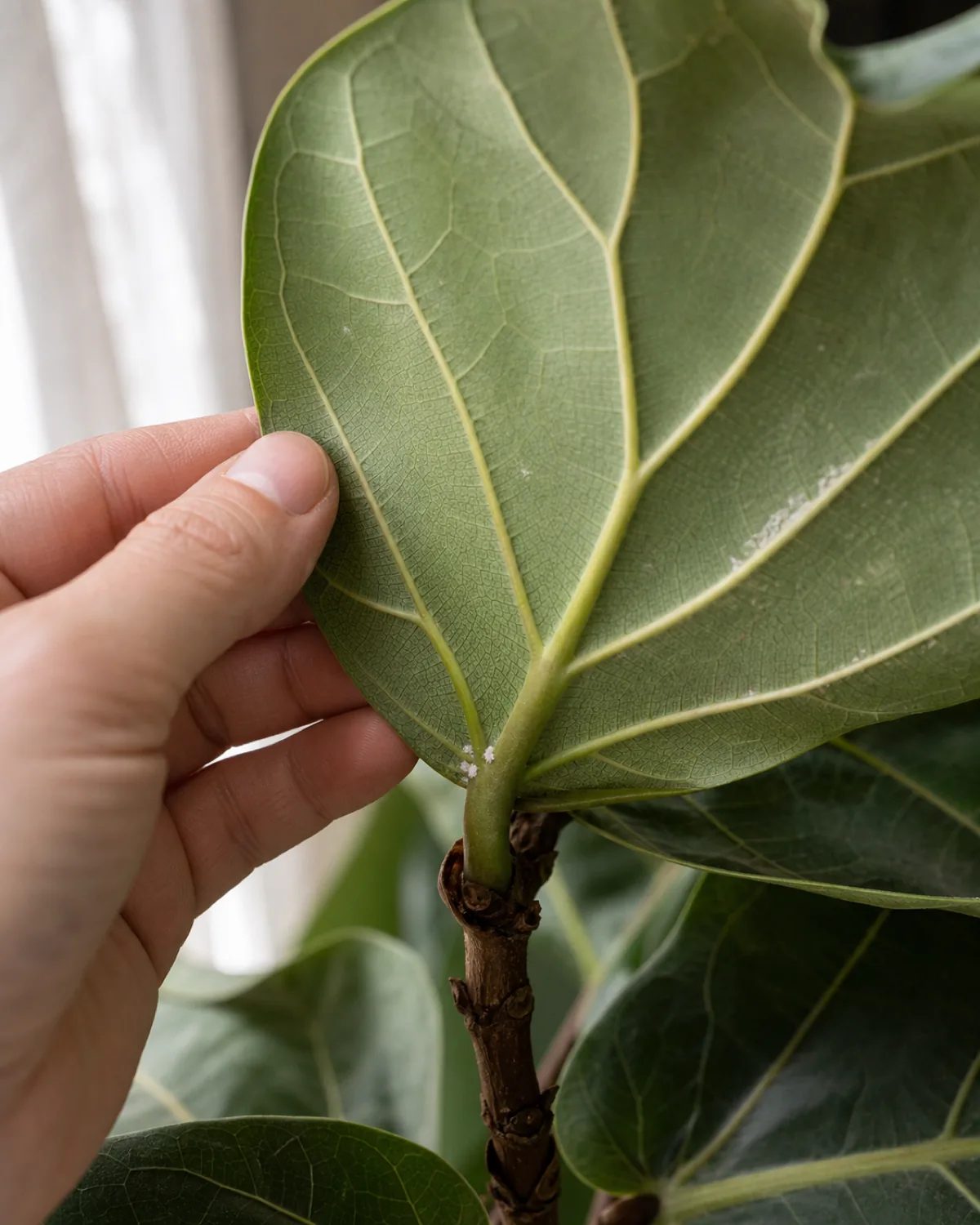
A healthy fiddle in good light shrugs off most pests. A stressed fiddle (wet roots, low light, recent move) is a pest magnet. The three usual suspects are mealybugs, spider mites, and thrips, and each leaves a different signature on the leaf underside.
A monthly leaf-flip check is the cheapest pest control there is. Catching one cluster early beats fighting an outbreak across the whole canopy.
- White fuzz at petiole joints, mealybugs, dab with a cotton swab in seventy percent isopropyl, recheck weekly.
- Pale silvery streaks along the veins, thrips, wipe leaves and treat with insecticidal soap on both sides.
- Fine webbing or tiny pale stippling all over the underside, spider mites, raise humidity and rinse the leaves in a lukewarm shower.
Varieties worth knowing: Bambino, Compacta, Suncoast, and the cousin Audrey
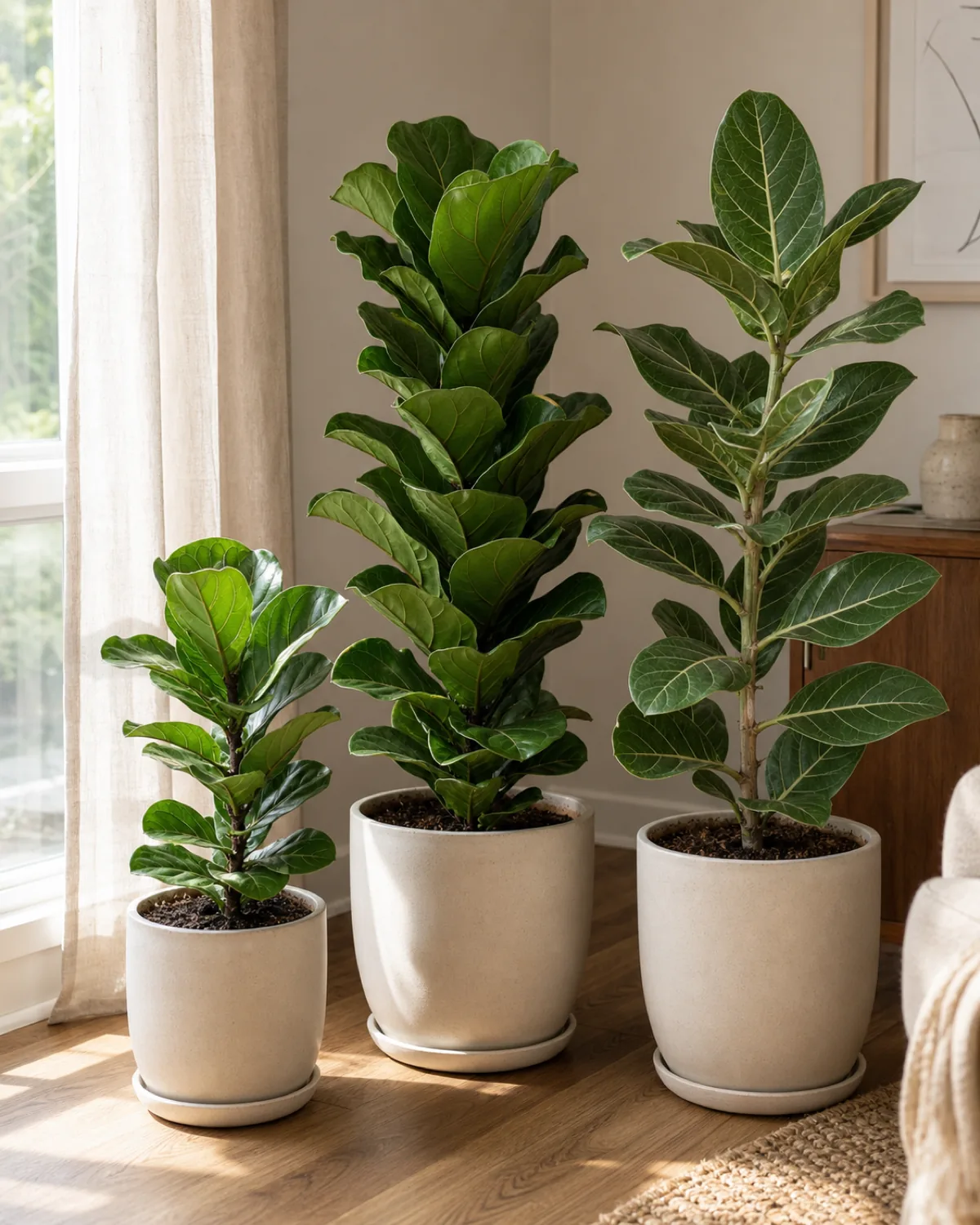
Not every “fiddle” at the nursery is the same plant, and the variety matters more than the price tag for a small space. The four most common picks fit very different rooms.
The care rules are otherwise nearly identical across all four, so the choice comes down to footprint and how dense or open you want the canopy to look.
- Bambino, the dwarf, stays around three feet, with smaller rounded slightly-curled leaves on a short compact stem, the apartment-friendly pick.
- Compacta, the densely packed full-size variety, four to six feet with leaves stacked tightly up the trunk and almost no bare lower stem.
- Suncoast, a standard form with slightly thicker leaves bred for the U.S. nursery trade, the most common big-box pick.
- Audrey (Ficus benghalensis), not lyrata at all but a close cousin, with whiter and more prominent veins and a more upright open habit, the easier-to-please alternative.
Long term: how a fiddle becomes a 6-foot indoor tree without going bald at the bottom
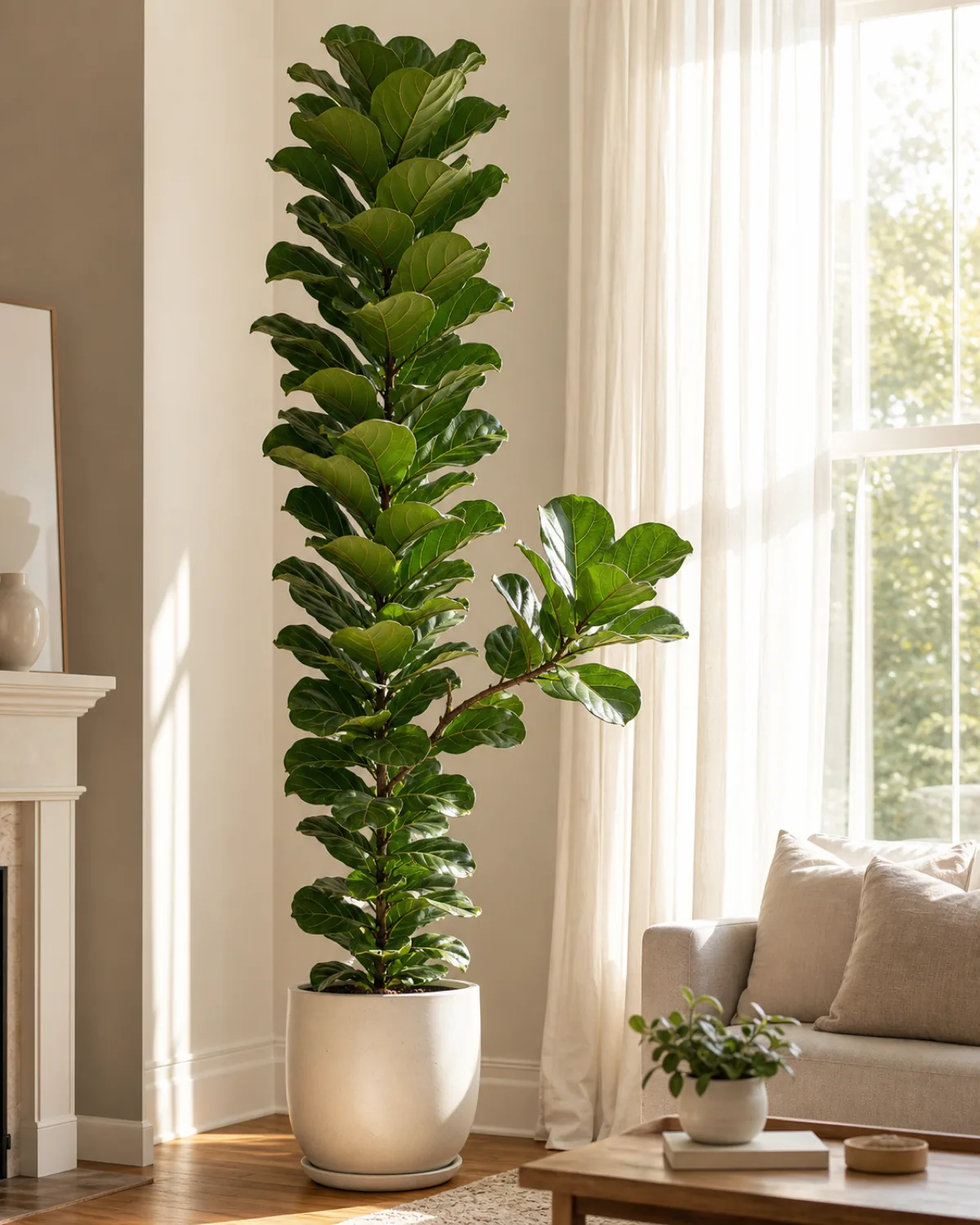
A fiddle that gets the right light, the right pot, the right rhythm, and is left alone in the right corner turns into a six-foot indoor tree in three to five years. The trick to keeping it full all the way down, instead of a bare lower trunk with leaves only at the top, is mostly a few notches and a slow rotation.
Notch the trunk just above a node when you see the lower trunk start to lose leaves to age. The plant usually pushes a new side branch from that node within a few weeks, and the canopy fills back in.
- Notch the trunk just above a node, a small upward angled slit through the bark forces a new side branch.
- Tiny in-place quarter turns every few weeks, keeps the canopy even and prevents the back from balding.
- Resist a bigger pot when the plant looks healthy, snug roots and a free-draining mix outlast a roomy pot every time.
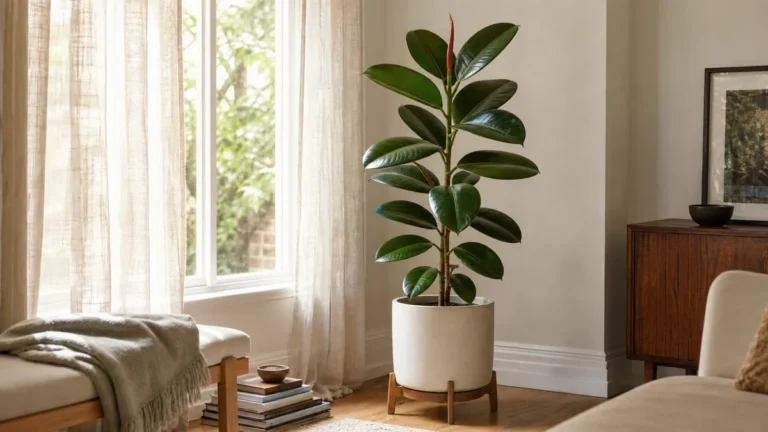
If you want to style the floor space around a mature fiddle (low chairs, a folded throw, a stack of design books), the plant shelf and corner ideas guide has more on layering eye-level greenery without crowding the tree.

Mara Quinn edits Kultivy, where she shares houseplant care, propagation, beginner-friendly plant picks, and plant-styling ideas for anyone who wants their indoor plants to actually thrive. Every guide is image-led and reviewed for clarity, usefulness, image accuracy, and Pinterest-to-page alignment before it goes live. Visit the About page.