A rubber plant looks like the easiest big statement plant in the shop, and mostly it is. Then a month in, the bottom leaves start dropping one by one. Almost every time the cause is the same habit, and it is the opposite of the one people assume.
A rubber plant (Ficus elastica) is a fast-growing tropical tree with thick, glossy, leathery oval leaves and a woody trunk. It wants bright light, a deep drink only once the soil has dried, and to be left alone. Overwatering, not underwatering, is what makes it shed leaves.
If a rubber plant turns out fussier than you wanted, the easy houseplants list is a much softer landing. Otherwise the sections below cover what keeps the leaves glossy and the lower leaves on the plant.
A rubber plant is the glossy statement tree most beginners buy and most beginners slowly overwater. The thirteen sections below cover the let-it-dry watering, the bright light, the glossy-leaf upkeep, and the leaf-drop decoder that turn a balding Ficus elastica into a full, mirror-shine indoor tree.
- 1Light, bright indirect
- 2Water, let the top dry
- 3Soil, chunky and draining
- 4Wipe the glossy leaves
- 5The red sheath decoded
- 6Why it drops lower leaves
- 7Best spot, a bright window
- 8Pet safety, toxic latex
- 9Propagation by air-layering
- 10Pruning to branch
- 11Repotting, keep it snug
- 12Pests, scale first
- 13Long term and varieties
Light: bright indirect is ideal, and a green rubber plant takes medium light in stride
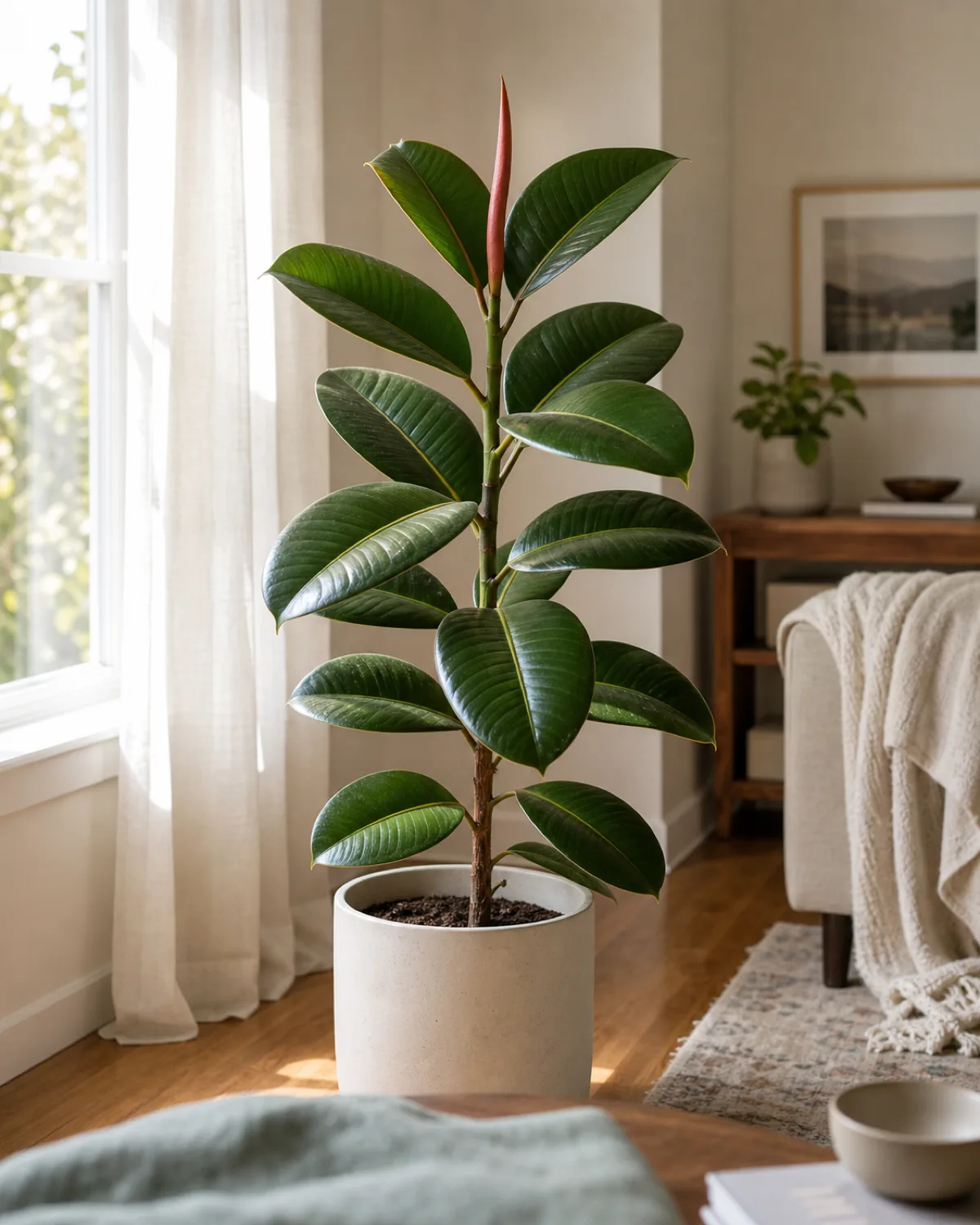
Light is where a rubber plant is far more forgiving than its reputation suggests. A solid deep-green variety like Robusta holds its color and keeps growing in plain bright indirect light, and it tolerates a medium spot well back from a window better than most large-leaved plants.
Its cousin the fiddle leaf fig demands the brightest direct sun you own, while a green rubber plant takes medium light in stride.
The exception is the variegated types. A creamy Tineke or a near-black Ruby needs noticeably brighter light to hold its color, because the pale or red parts of each leaf carry less chlorophyll and have to work harder. Move a variegated rubber plant too dark and it slowly reverts to plain green.
- A green Robusta is happy in bright indirect light or a medium spot a few feet from a window.
- A variegated Tineke or Ruby wants the brightest indirect spot you have, or the markings fade.
- Legginess with big gaps between leaves means the light is too low, so move it closer to the glass.
Watering: let the top two inches dry, because soggy soil drops leaves fast
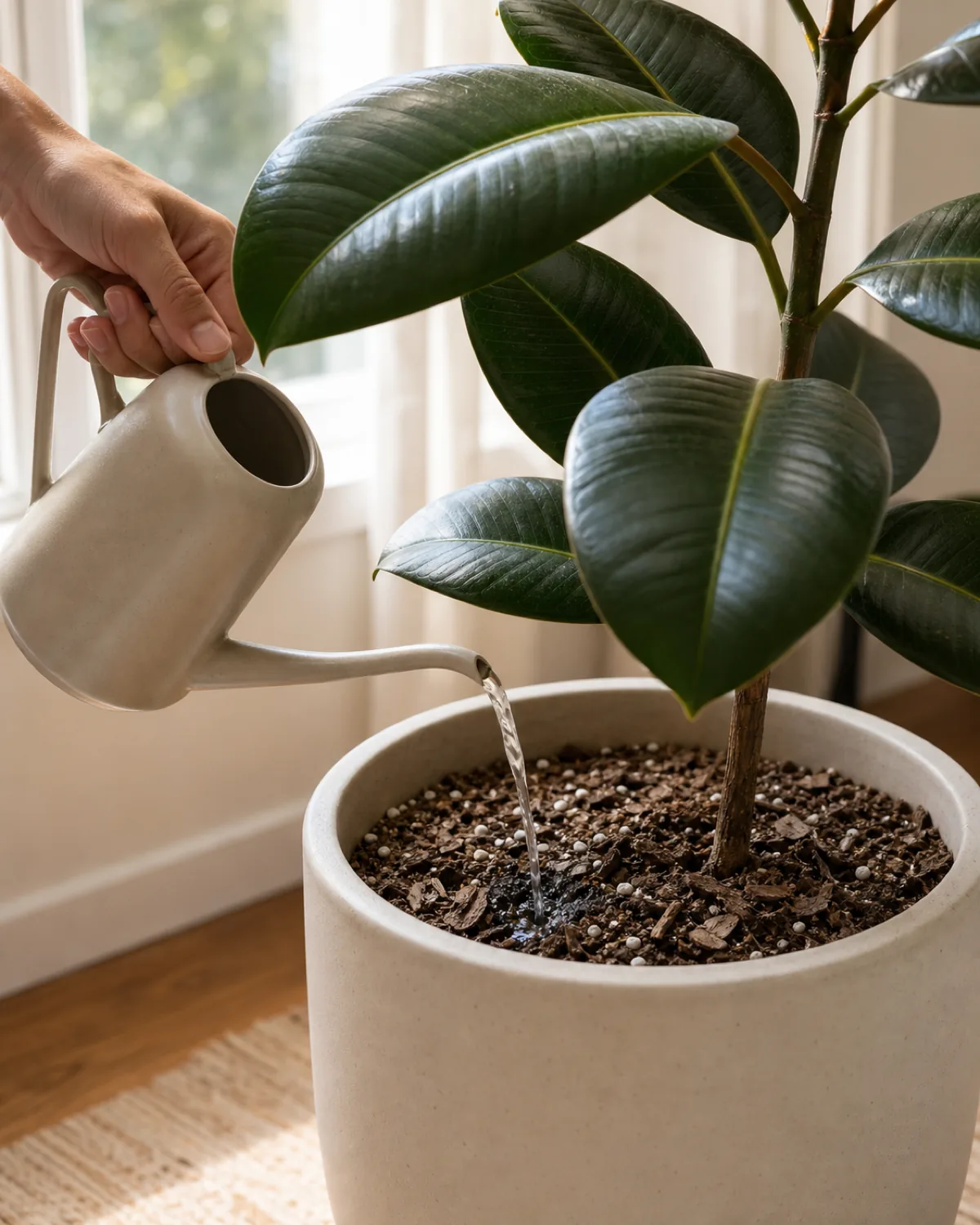
Watering is the make-or-break habit, and the instinct to keep the soil moist is exactly wrong. A rubber plant stores water in its thick leaves and woody stem, so it would far rather be a little too dry than too wet. Constantly damp soil suffocates the roots, and the plant responds by yellowing and dropping its lower leaves, usually the first sign people misread as needing more water.
What works is to let the top two inches of soil dry out completely before you water again, then water deeply until it runs from the drainage hole. In bright light that is often weekly in summer and every two to three weeks in winter, but you go by the soil, not the calendar.
- Push a finger two inches in and only water when it comes out dry.
- Water deeply until it drains, then empty the saucer so the roots never sit in water.
- Yellow lower leaves usually mean too much water, not too little, so back off and let it dry.
Soil: a chunky, fast-draining mix that never stays wet
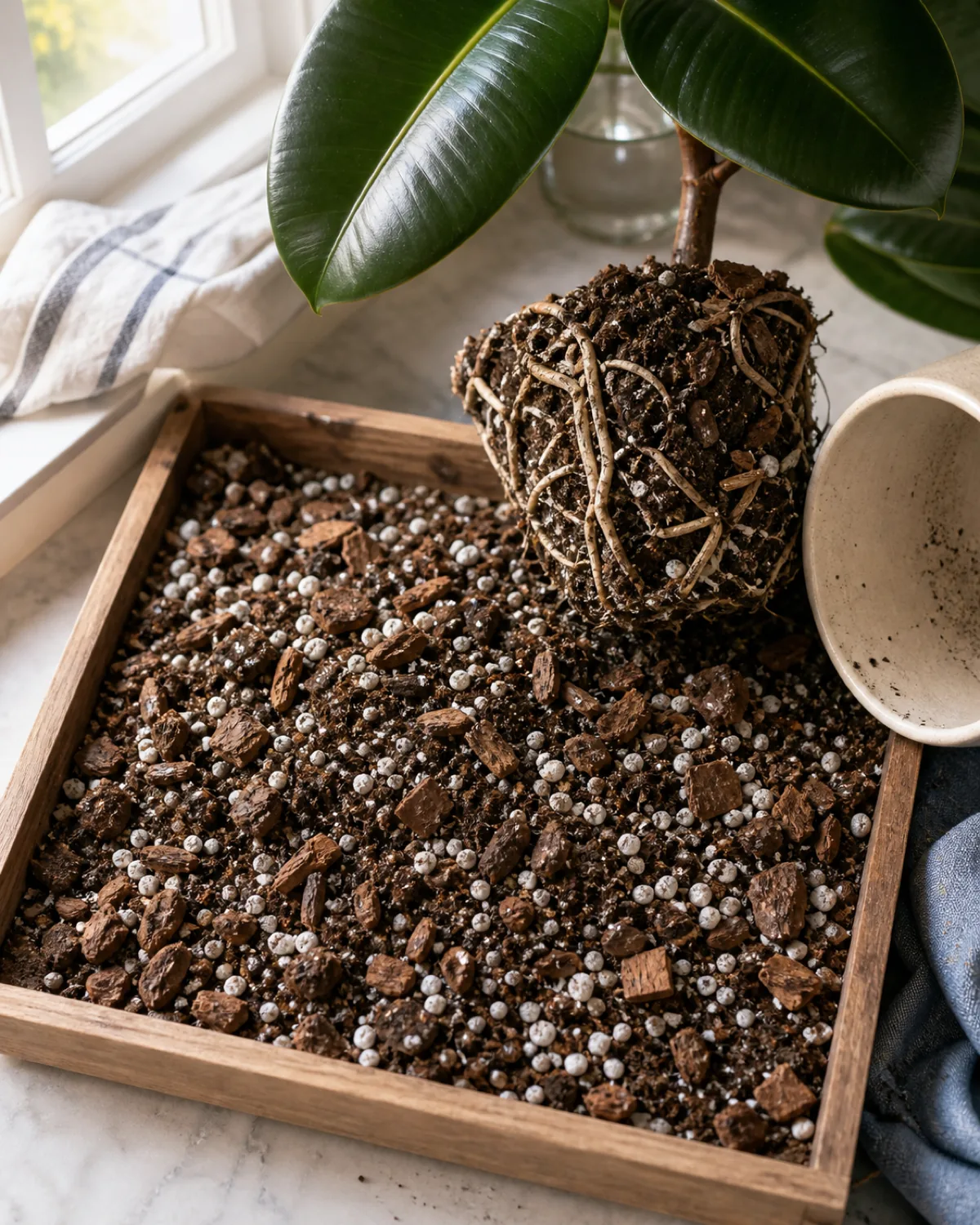
Because the whole watering strategy depends on the soil drying out, the mix underneath matters as much as the schedule. A dense, peaty bagged soil holds water like a sponge and keeps the roots wet for days, which is the same problem as overwatering even when you water correctly. The roots need air pockets between drinks.
A chunky, free-draining blend solves it. Roughly two parts indoor potting soil to one part orchid bark and one part perlite gives the roots structure to grip and channels for water to run through, so the top dries on schedule and the bottom never turns to mud.
- Aim for a two-to-one-to-one mix of potting soil, orchid bark, and perlite.
- Always use a pot with a drainage hole, since no mix saves roots sitting in trapped water.
- Refresh the top inch of mix each spring to keep it open and draining freely.
Most rubber plant problems trace back to one of four blind spots. Start with whichever situation describes yours, then circle back to the rest later.
The glossy-leaf rule beginners skip: wipe the big blades clean
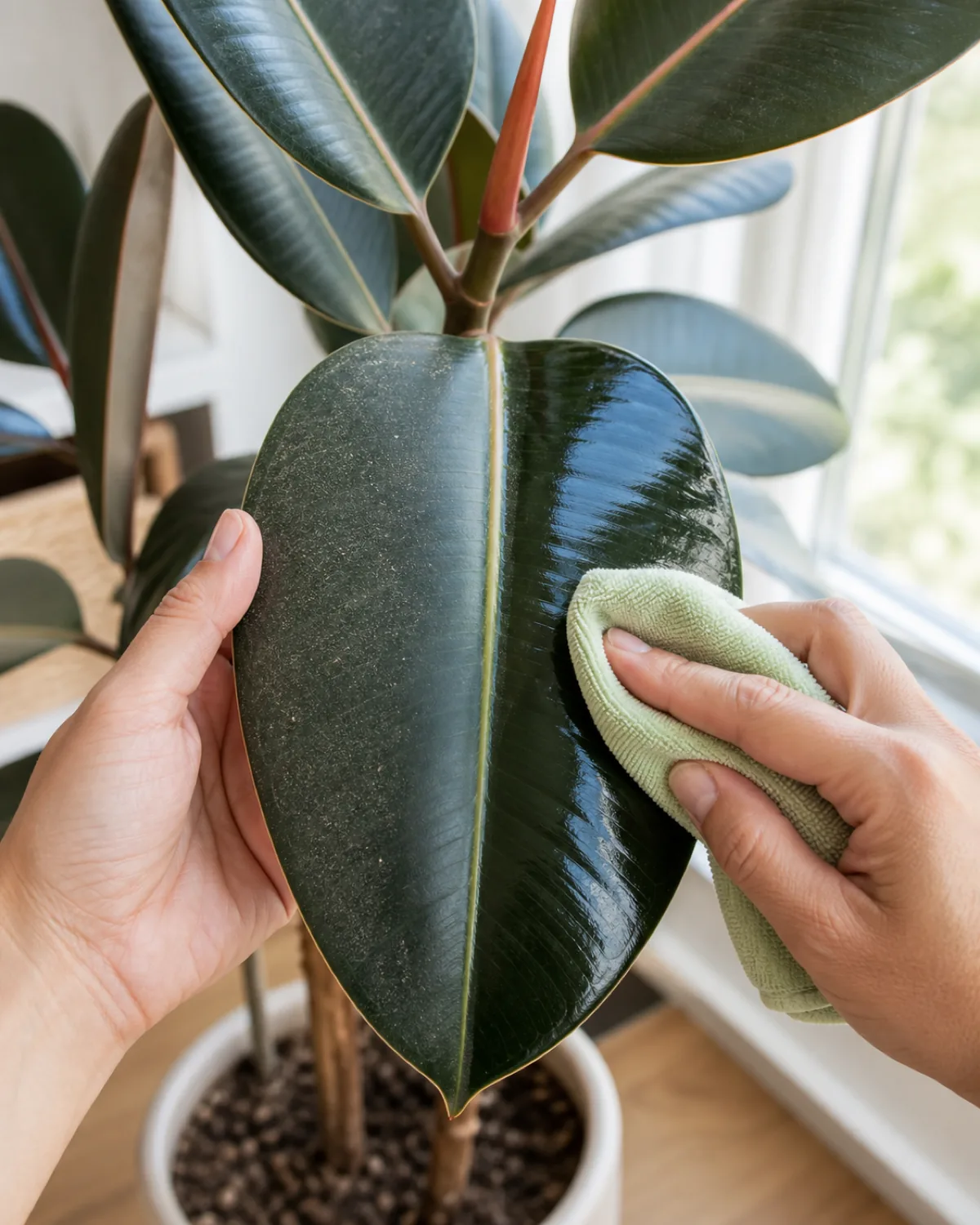
The glossy leaves are the entire appeal of a rubber plant, and they are also big flat surfaces that collect a surprising amount of household dust. A film of dust does two things: it dulls the mirror shine that makes the plant look expensive, and it physically blocks light from reaching the leaf, which slows growth on a plant that lives and dies by how much light those big blades can catch.
Wiping is the one piece of maintenance that pays off instantly. A soft damp cloth across the top of each leaf, supporting the underside with your other hand, restores the gloss in seconds and keeps the leaves working at full capacity.
- Wipe each leaf with a soft damp cloth every few weeks, supporting it from underneath.
- Skip the leaf-shine sprays, which leave a residue that clogs the leaf pores over time.
- A quick lukewarm shower rinses a big plant faster than wiping leaf by leaf.
The red sheath decoded: that spear at the top is a new leaf, not a flower
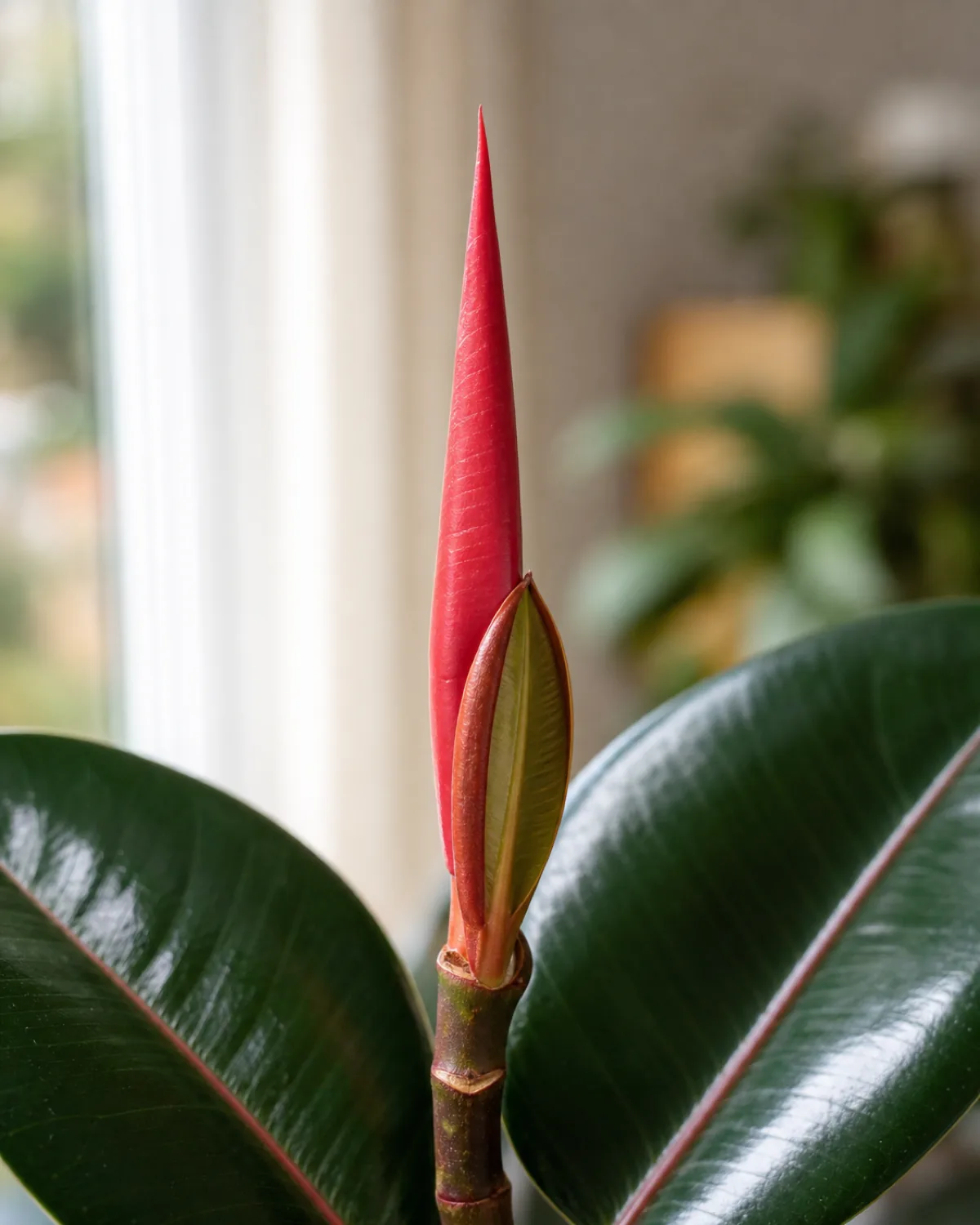
Sooner or later a bright red, pointed spike appears at the very top of the stem, and it worries a lot of first-time owners who think it is a flower bud or a pest. It is neither. That red sheath is the protective casing around a brand-new leaf, and seeing one is the best sign of a happy, actively growing rubber plant.
Leave it completely alone. Over a week or two the sheath unfurls on its own, the new leaf slides out tender and slightly bronze, and the empty red casing dries and drops off. Pulling the sheath early can damage the soft leaf still forming inside.
- A red spear at the top means healthy new growth, so take it as good news.
- Never peel or pull the sheath, even when it looks dry, since the leaf inside is fragile.
- No new spears for months usually points to low light or the dormant cool season.
Why a rubber plant drops its lower leaves: overwatering, cold, or a sudden move
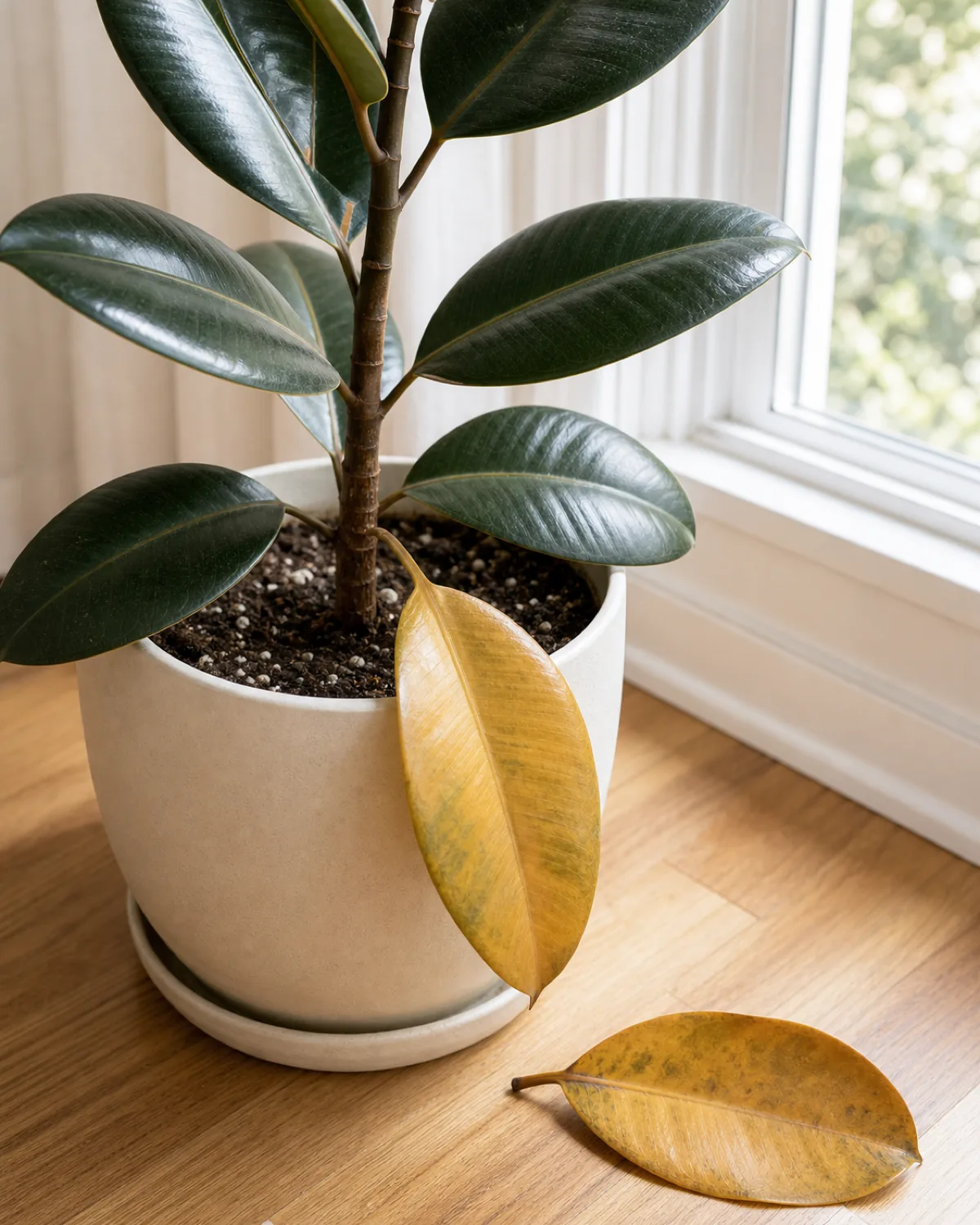
Leaf drop is the panic moment with a rubber plant, and the reason it feels alarming is that the plant often sheds a perfectly healthy-looking leaf overnight. There are only three common triggers, and reading which one you have keeps you from making it worse by overcorrecting.
What helps is to look at the leaf and the conditions together before you change anything. A rubber plant that loses one or two lower leaves while pushing new growth up top is adjusting, not dying, and the worst thing you can do is start watering more out of worry.
- Yellowing leaves that drop from the bottom up almost always mean overwatering, so let the soil dry.
- Sudden drop of firm green leaves points to a cold draft or a chilly window in winter.
- A wave of leaves after you moved or repotted it is transplant shock, and it passes if you leave it be.
Most rubber plant disasters trace back to one of four moves people skip. Hold these four and a Ficus elastica keeps its glossy leaves and grows into a full indoor tree.
Best spot in a real home: a bright window, no cold drafts or heat vents
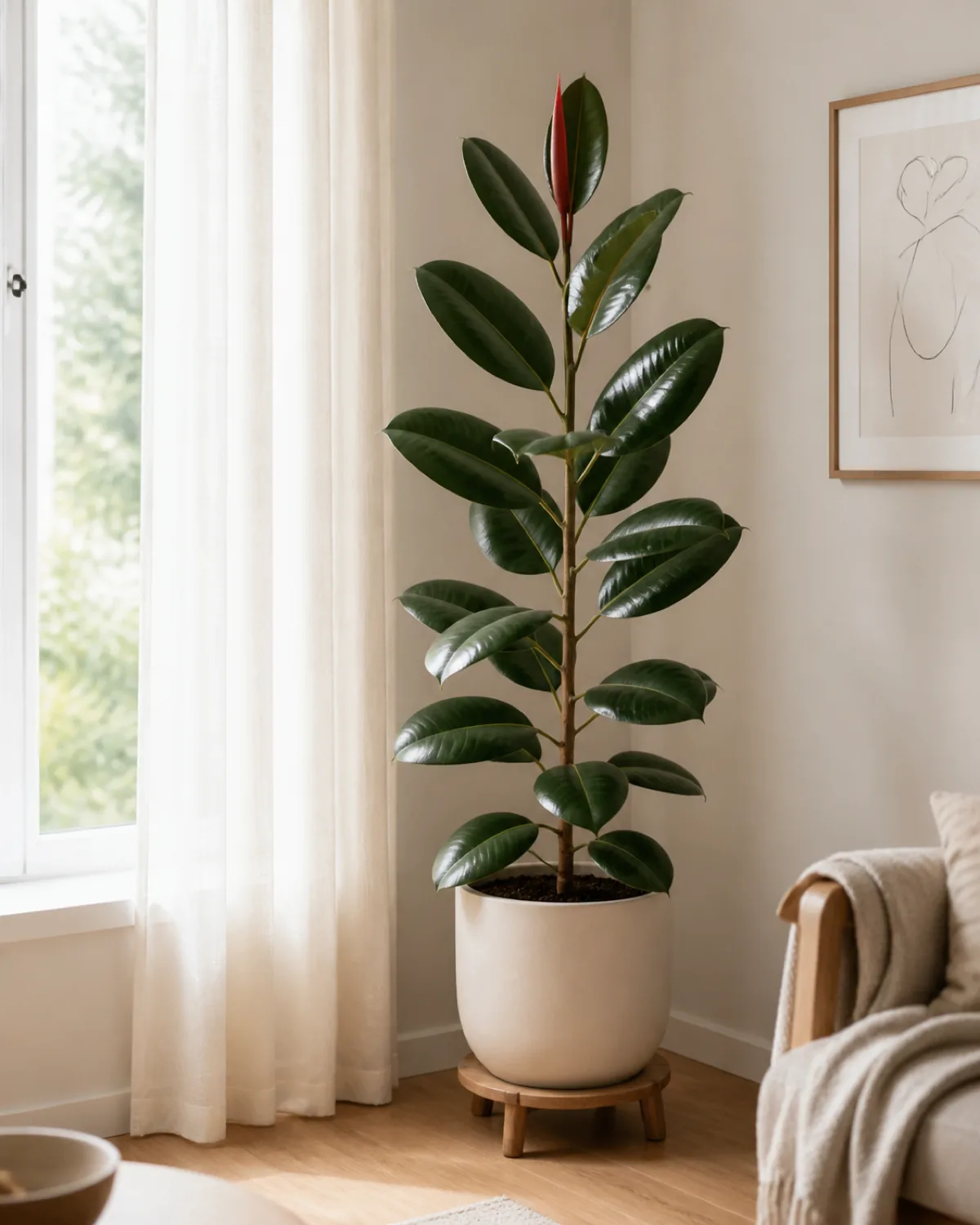
The ideal spot pulls together everything above: bright light without scorching midday sun, steady warmth, and no cold or hot air blasting the leaves. A few feet from a bright east or south window is close to perfect, giving a rubber plant the light it wants while a sheer curtain takes the edge off the hottest hours.
What you are avoiding matters as much as what you are aiming for. Keep it away from a drafty entry door, a single-pane window that goes cold at night, and the dry blast of a heating or air-conditioning vent, all of which trigger the leaf drop from the last section.
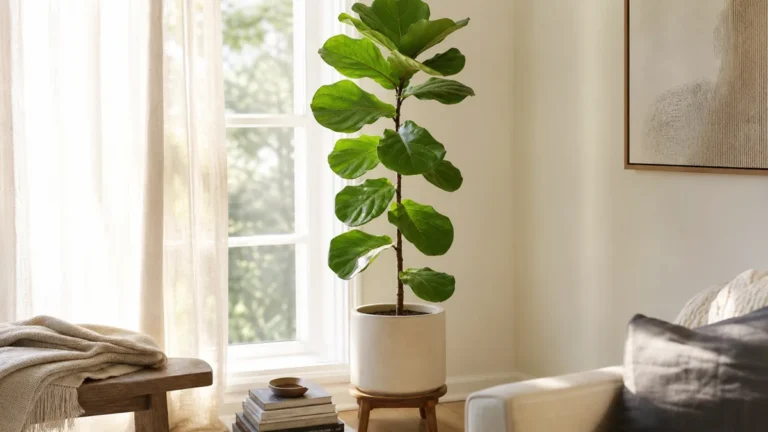
As a floor-standing statement plant it reads very differently from the eye-level greenery in these plant shelf and corner ideas, so give it room to be the anchor of the corner.
- A few feet from a bright east or south window is the reliable sweet spot.
- Keep it clear of drafts and vents, including cold windows and heating registers.
- Rotate the pot a quarter turn weekly so it grows evenly instead of leaning to the light.
Pet safety: a rubber plant is toxic, and the latex sap is the issue
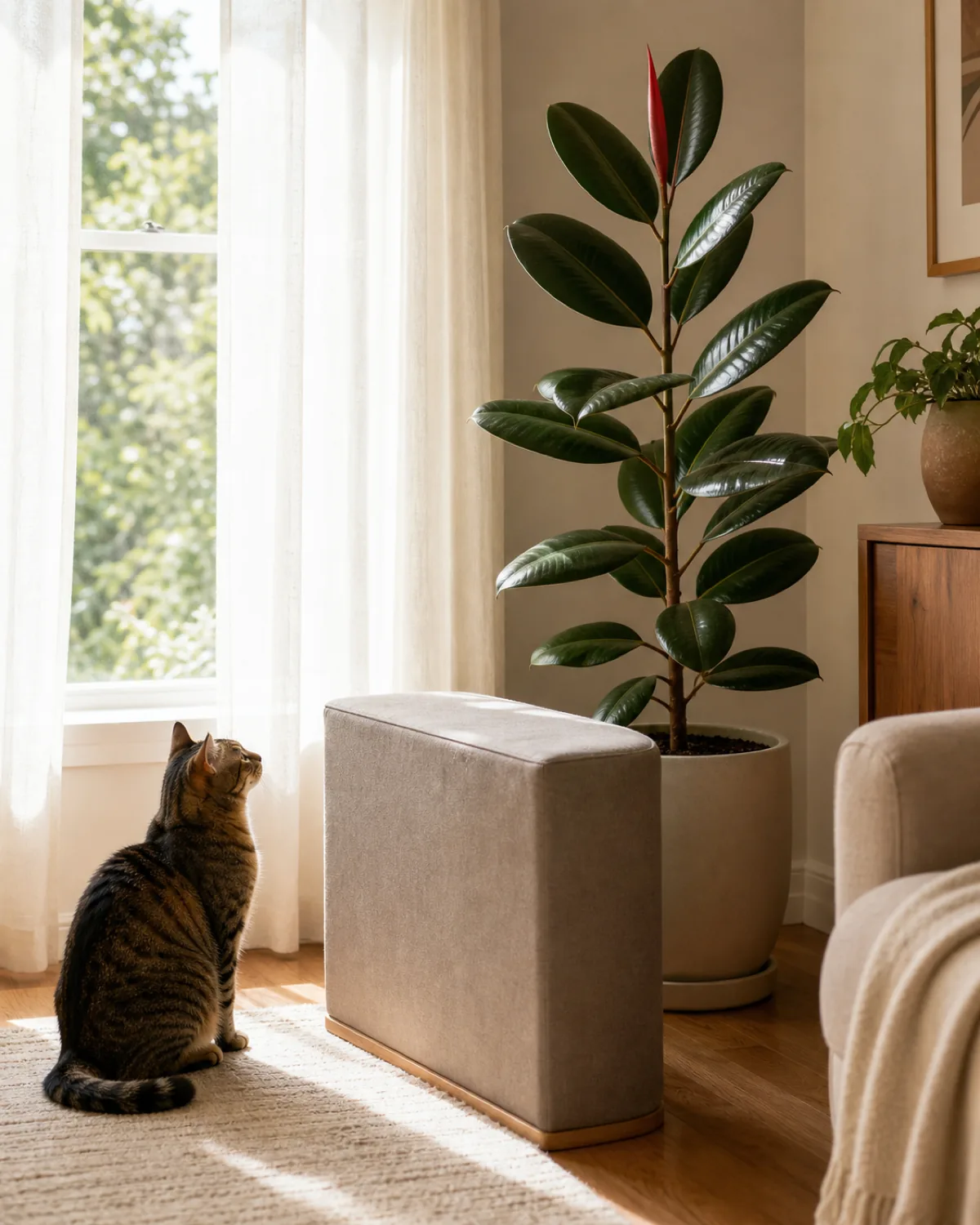
A rubber plant is not pet-safe, and it is worth being clear about why. Ficus elastica contains a milky white latex sap throughout its leaves and stems, and the ASPCA lists it as toxic to cats and dogs. A pet that chews a leaf can get mouth and stomach irritation, drooling, and vomiting, and the sap can irritate bare human skin too.
It is rarely a serious emergency, but it is a real one, so placement is the simple answer. Keeping a rubber plant up off the floor, behind a barrier, or in a room your pets do not roam removes the temptation entirely.
- Place it out of reach of cats and dogs, or behind a gate if floor access is a problem.
- Wear gloves when pruning, since the latex sap irritates skin and stains.
- Call your vet if a pet chews a leaf and you see persistent drooling or vomiting.
Propagation: stem cuttings root, but air-layering is the reliable way
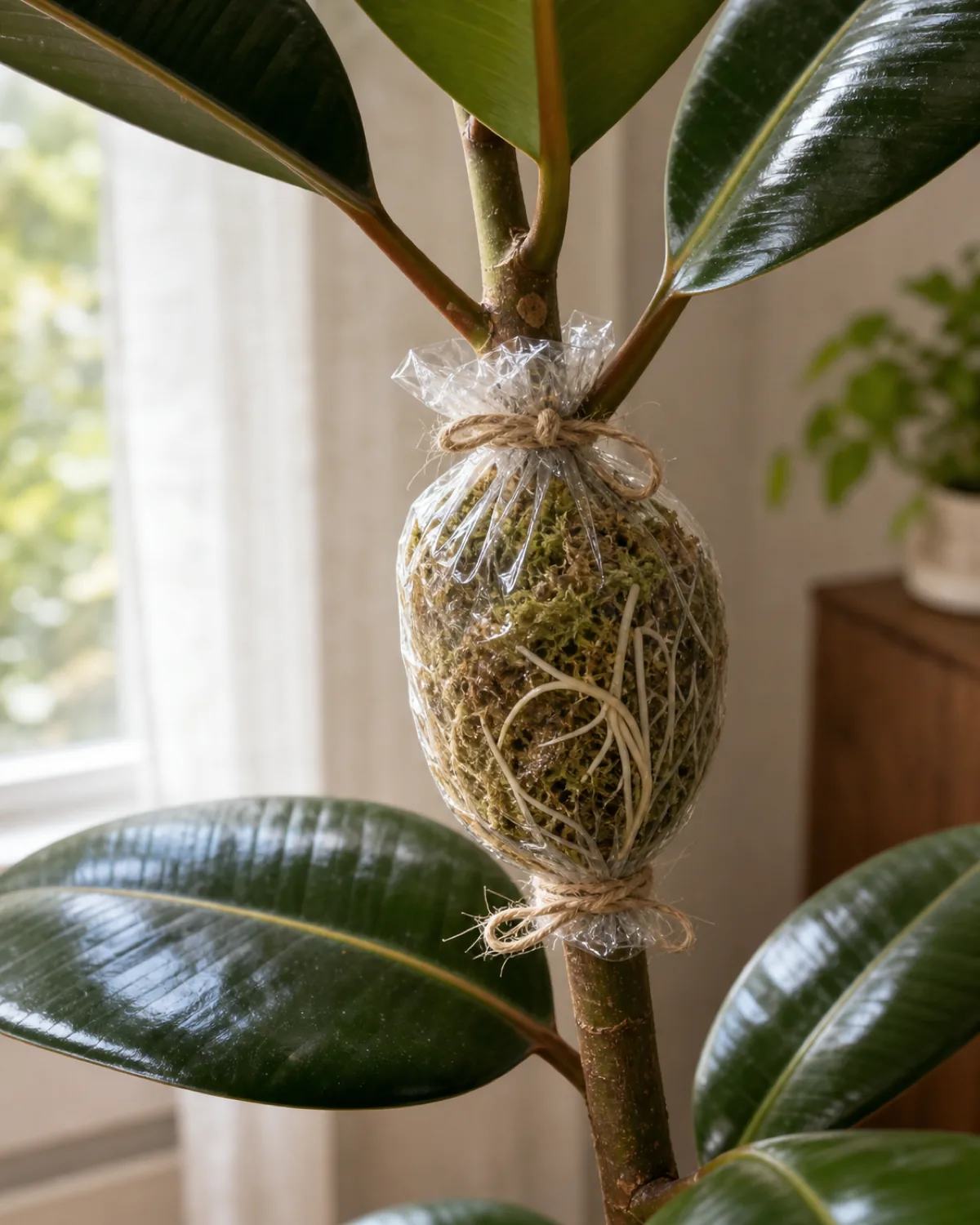
Propagating a rubber plant is where its woody nature changes the game. A simple stem-tip cutting can root in water or moist soil, but the thick semi-woody stems are slow and prone to rotting before roots form, so the success rate is lower than the snip-and-water plants.
A monstera roots in a glass of water almost overnight, while a rubber plant’s woody stem is far slower, which is why air-layering wins.
Air-layering roots the new plant while it is still attached to the parent, so it never has to survive on its own without roots. You nick the stem, pack the spot in damp sphagnum moss, wrap it in clear plastic, and wait for roots to fill the moss before you cut it free and pot it up.
- For a quick try, root a top cutting with two or three leaves in moist soil under a loose bag.
- For near-certain success, air-layer a section of stem in damp moss wrapped in clear plastic.
- Cut the air-layer free only once roots fill the moss, then pot it in the chunky mix.
Rubber Plant Care: The Quick Reference
- 1Light: bright indirect, brighter for variegatedA green Robusta takes medium light in stride. A creamy Tineke or red Ruby needs the brightest indirect spot, or the markings fade to plain green.
- 2Water: let the top two inches dry firstA rubber plant would rather be dry than wet. Soggy soil is the fastest way to drop the lower leaves. Water deeply, then empty the saucer.
- 3Soil: a chunky, fast-draining mixTwo parts potting soil, one part orchid bark, one part perlite. Always a pot with a drainage hole so the roots never sit in water.
- 4Wipe the big glossy leaves cleanDust dulls the shine and blocks light. A soft damp cloth restores the gloss in seconds. Skip leaf-shine sprays, which clog the pores.
- 5The red spear is a new leaf, not a flowerThat pointed red sheath at the top is the casing around fresh growth. Leave it alone and it unfurls on its own. Pulling it damages the leaf.
- 6Leaf drop is usually overwateringYellow leaves from the bottom up mean too much water. Sudden drop of firm green leaves means a cold draft. A wave after a move is shock.
- 7Best spot: a few feet from a bright windowA bright east or south window without scorching midday sun. Keep it clear of cold drafts and heating or air-conditioning vents.
- 8Pet safety: a rubber plant is toxicThe milky latex sap irritates cats, dogs, and skin, and the ASPCA lists it as toxic. Keep it out of reach and wear gloves when pruning.
- 9Propagate: air-layering beats a water cuttingThe thick woody stem roots slowly and rots easily in water. Air-layer a stem section in damp moss wrapped in plastic for near-certain success.
- 10Prune the tip to force a bushier shapeCut just above a node in spring to make it branch. Catch the milky latex with a cloth, wear gloves, and use the tip as a cutting.
- 11Repot only when root-bound, one size upEvery two to three years. A too-big pot stays wet and rots roots. Keeping it snug also slows down a fast grower. Spring is the window.
- 12Pests: scale is the number oneSmall brown domes stick along the stems and leaf midribs, leaving a sticky shine. Scrape, dab with alcohol, and treat with insecticidal soap.
- 13Long term: a glossy six-foot indoor treeBright light and a branching prune prevent legginess. Robusta is the easy green pick, Tineke and Ruby bring variegation with brighter light.
kultivy.com
Pruning to branch: cut the top to force side shoots, and manage the latex
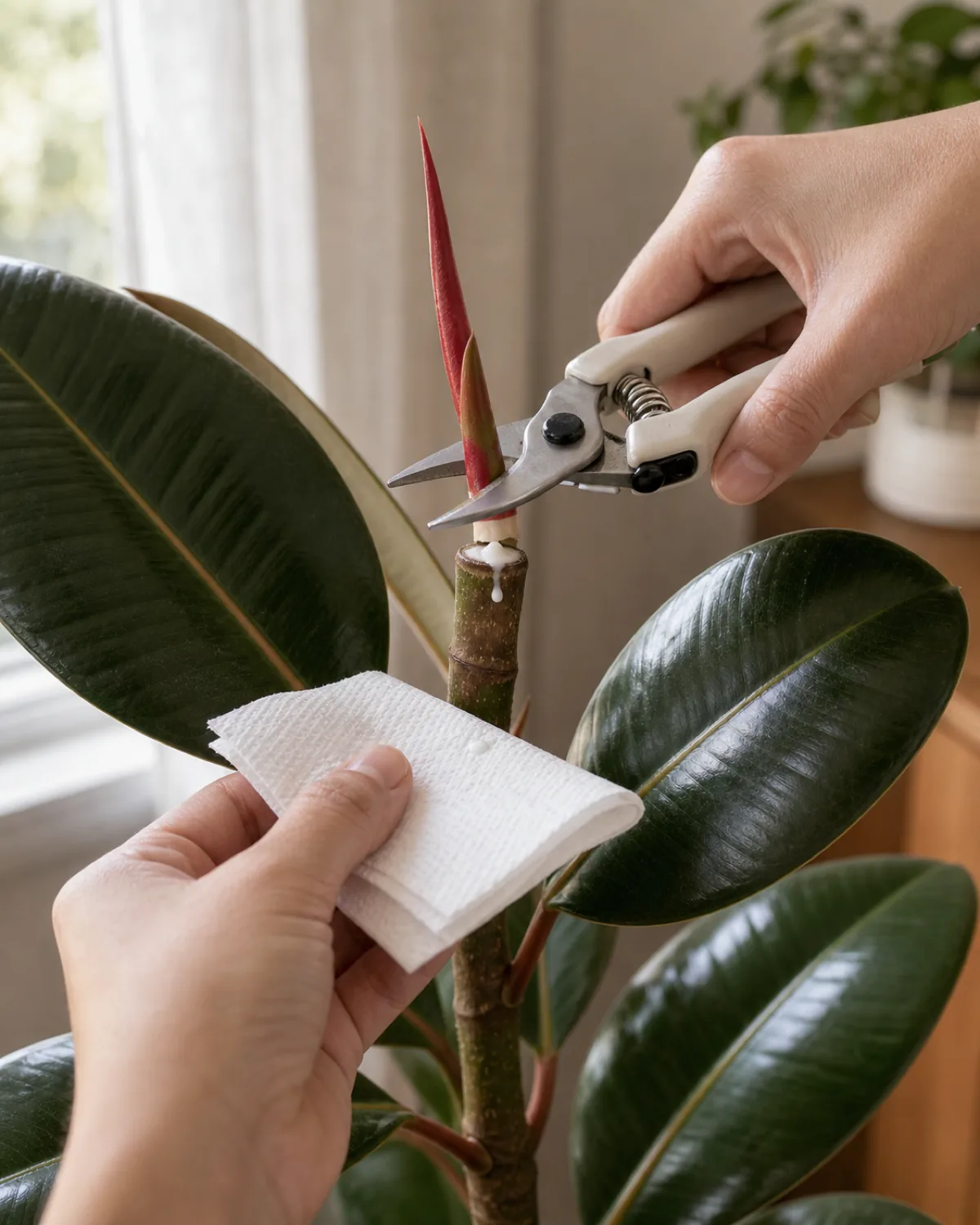
Left alone, a rubber plant tends to grow as a single tall stalk, and people who want a fuller, bushier shape eventually have to make it branch. The only way to do that is to cut the growing tip, which breaks the plant’s apical dominance and prompts it to push two or more side shoots from the buds just below the cut.
The one thing to plan for is the sap. Cutting a rubber plant releases a steady ooze of milky white latex that can stain floors and irritate skin, so the right move is to keep it controlled rather than be surprised by it.
- Cut just above a leaf node in spring with clean, sharp shears to trigger branching.
- Hold a cloth or paper towel under the cut to catch the latex, and wear gloves.
- Use the removed tip as a cutting so the pruning does double duty as propagation.
Repotting: only when root-bound, and keep it slightly snug
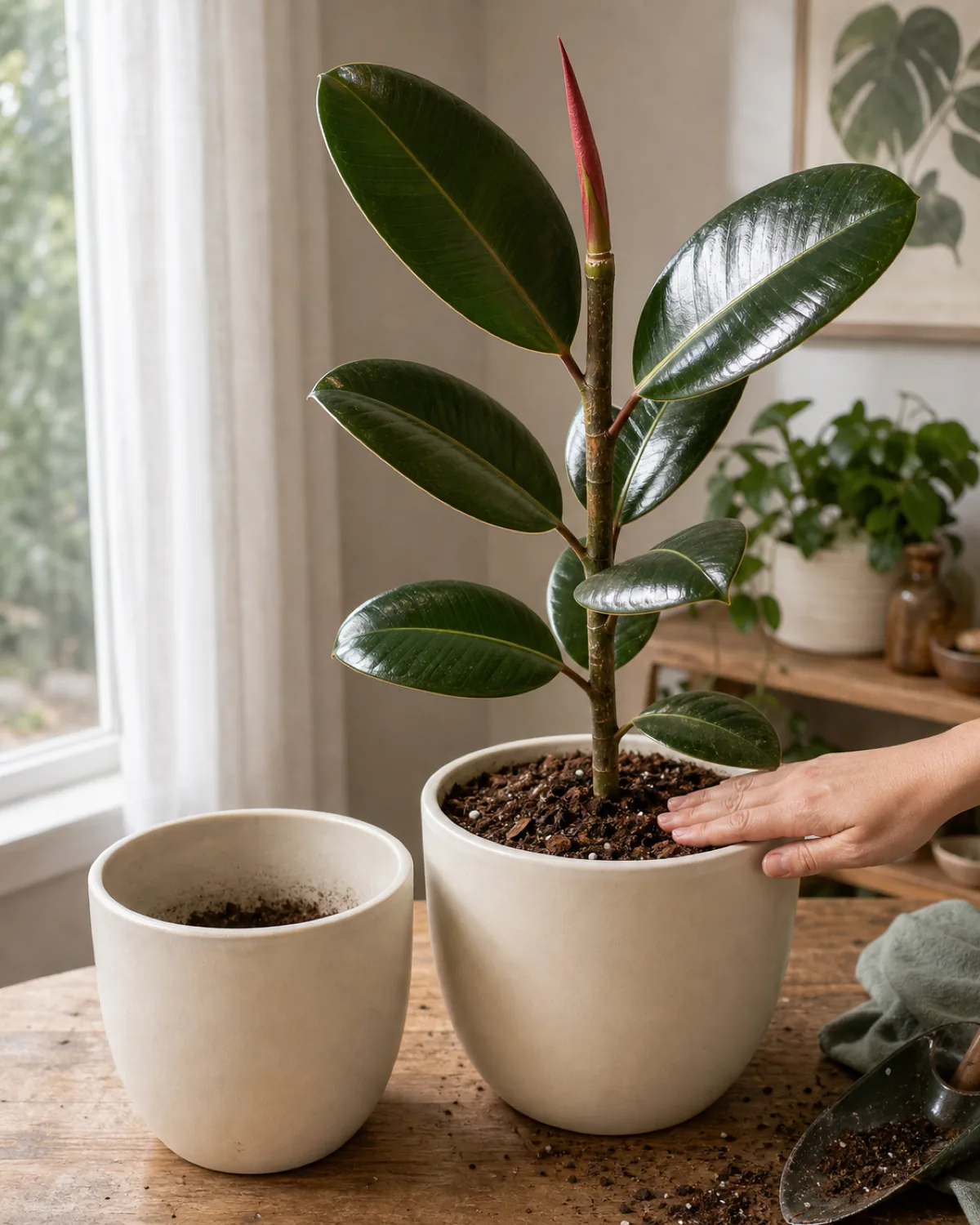
Rubber plants do not need frequent repotting, and rushing it usually backfires. A root-bound rubber plant is not in distress, and a pot that is too large holds a big reservoir of wet soil around roots that cannot drink it fast enough, which loops straight back to the overwatering and leaf drop problem.
Repot only when you see roots circling the surface or poking from the drainage hole, usually every two to three years, and step up just one pot size. Keeping it slightly snug also has a useful side effect: it gently slows down a fast grower that can otherwise hit the ceiling sooner than you want.
- Repot only when the roots are genuinely circling the pot, every two to three years for most plants.
- Step up just one pot size, never jumping to a much larger container.
- Spring is the best time, when the plant is actively growing and recovers fastest.
Pests: scale is the number one rubber plant problem
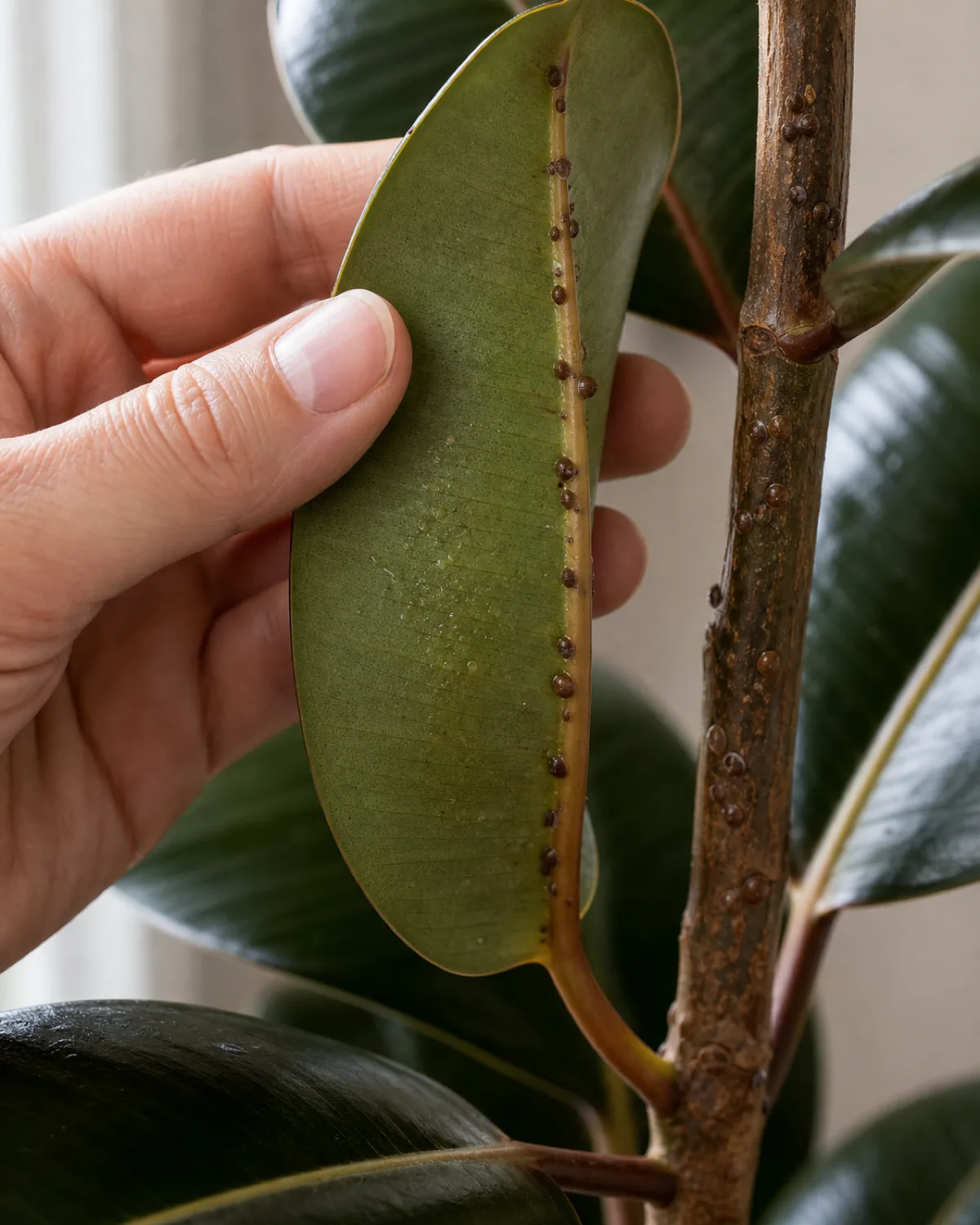
If a rubber plant has a signature pest, it is scale. These tiny insects hide as small brown or tan domes stuck flat along the stems and the central midrib on the underside of the leaves, where their hard shells make them easy to mistake for part of the plant. The first clue is often a sticky shine on the leaves below them, which is the honeydew they excrete.
Catching scale early keeps it from spreading across those big leaves. Mealybugs as white cottony tufts and spider mites in dry air are the runners-up, but scale is the one to inspect for routinely on a rubber plant.
- Scout the stems and leaf undersides for small brown domes, especially along the midrib.
- Scrape scale off and dab with rubbing alcohol, then treat the plant with insecticidal soap or neem.
- A sticky film on the leaves or floor is an early warning to look closer for scale.
Long term: a glossy indoor tree, and the varieties that get there differently
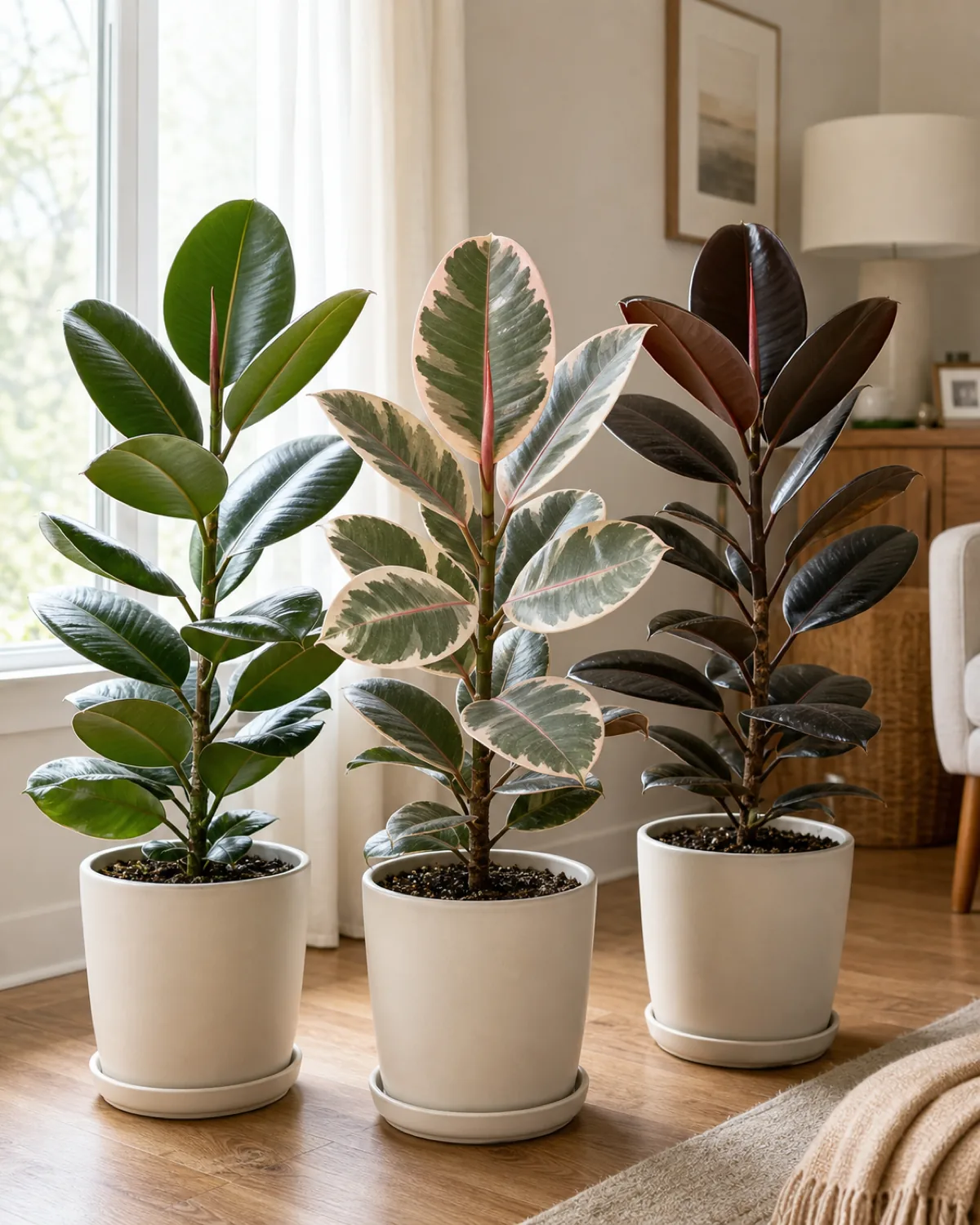
Give a rubber plant bright light, the let-it-dry watering rhythm, and the occasional prune, and it grows into a glossy six-foot indoor tree within a few years. The main long-term risk is legginess, a bare lower stem with leaves only at the top, which comes from too little light or never pruning, and which the cut-to-branch move from earlier reverses.
Which variety you grow shapes the look you end up with. Robusta is the bulletproof deep-green workhorse, Tineke and the pink-blushed Ruby bring the variegation but ask for brighter light to keep it, Burgundy or Abidjan reads almost black in good light, and Melany stays compact with smaller leaves for tighter spaces.
- Prevent legginess with bright light and a branching prune every year or two.
- Choose Robusta for an easy deep-green tree, or a variegated type if you can give it bright light.
- Feed monthly through spring and summer with a balanced houseplant fertilizer at half strength.

Mara Quinn edits Kultivy, where she shares houseplant care, propagation, beginner-friendly plant picks, and plant-styling ideas for anyone who wants their indoor plants to actually thrive. Every guide is image-led and reviewed for clarity, usefulness, image accuracy, and Pinterest-to-page alignment before it goes live. Visit the About page.