My first pothos lived above the kitchen sink for two years and barely grew. The vines stayed thin and the new leaves came in plain green instead of yellow-and-green.
The day I moved it to a bright bedroom window, it pushed out a new leaf a week. That is the whole secret: more light than you think, less water than feels right.
A pothos is one of the most forgiving houseplants you can grow, which is why people end up with leggy, pale ones. Here is what it actually needs to thrive.
Pothos care really comes down to two rules: enough indirect light to keep the variegation, and water only when the top of the soil dries. Jump to whatever you are dealing with right now.
- 1How much light it needs
- 2How often to water
- 3The best soil and pot
- 4The best spot for it
- 5Why the leaves turn yellow
- 6Why it is losing variegation
- 7Why the vines are leggy
- 8Propagate in water
- 9Make it trail long and full
- 10When and how to repot
- 11Pests to watch for
- 12Is it safe around pets?
- 13Varieties + how to style it
How much light a pothos needs
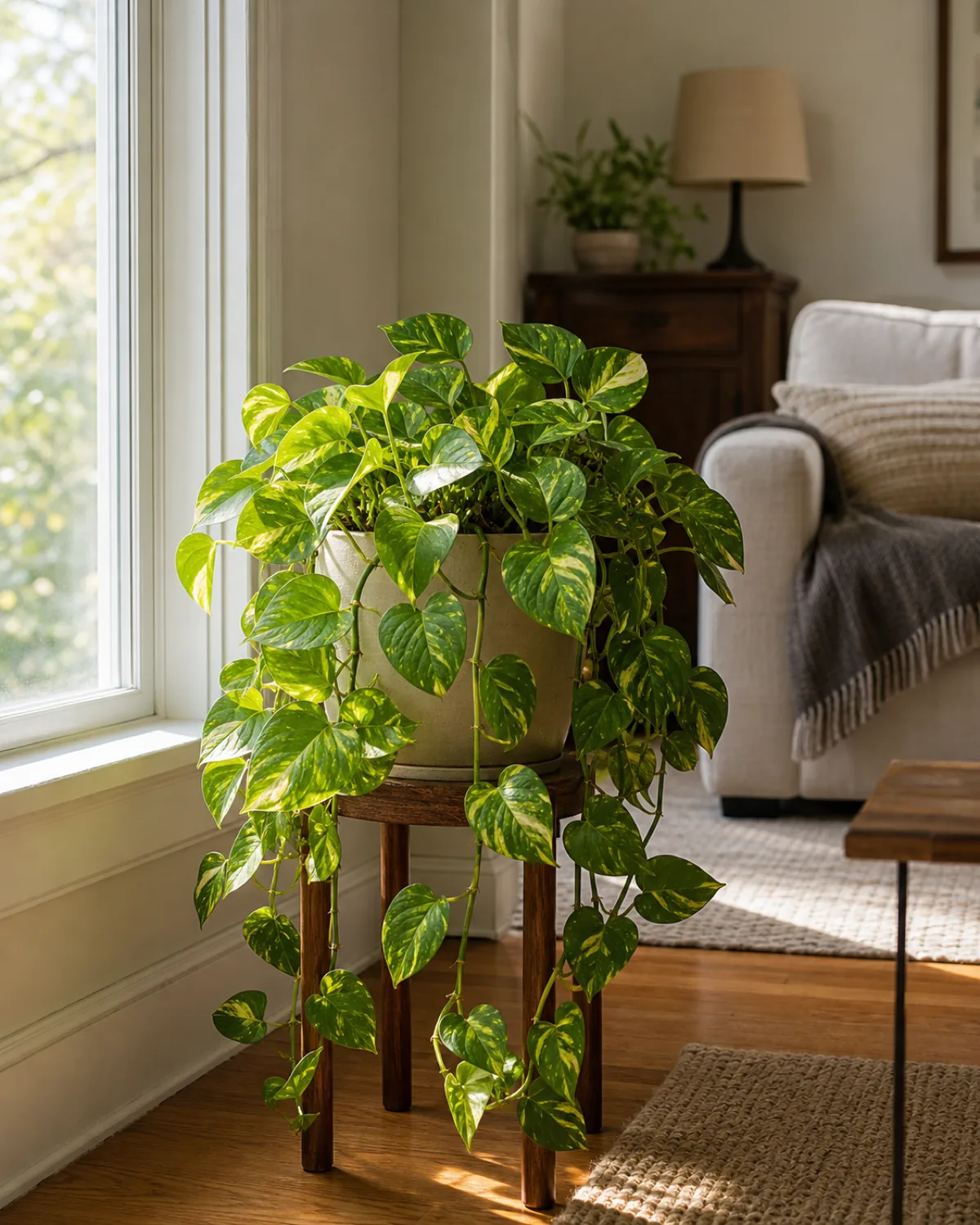
Light is where a pothos quietly tells you what kind of plant you are going to have. It is famous for surviving low light, and it will, but a pothos in low light slowly turns into a plant most people would not recognize: thin, pale, and plain green. In bright indirect light, the variegated types push out new leaves with strong yellow or cream markings every week or two.
- Bright indirect light is the sweet spot. A few feet from an east or north window grows the fullest, most colorful vine.
- A dim corner keeps it alive but plain. Marble queen and n’joy slowly revert toward solid green to feed themselves.
- Keep it off a hot, direct sill. Harsh midday sun through glass can bleach the leaves or scorch the edges.
How often to water (let the top dry first)
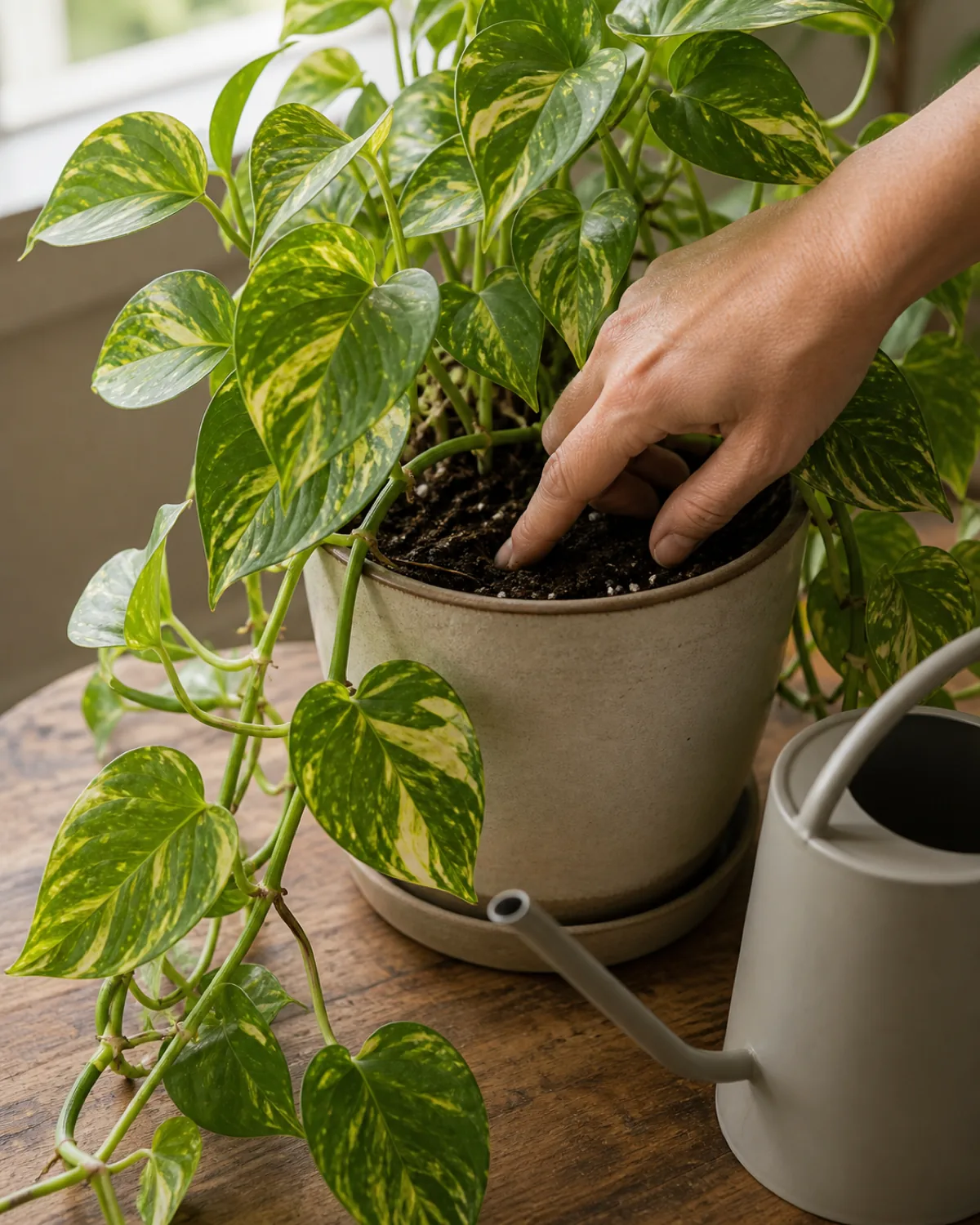
If you remember one watering rule about pothos, make it this: wait until the top of the soil is actually dry before you reach for the watering can. The leaves give you a clear second signal, too. They droop dramatically when the plant is properly thirsty and perk back up within a few hours of a drink, which makes pothos one of the easiest plants to read.
- Check the top inch or two with your finger. Water only when it feels dry, then water until it runs out the bottom.
- Stretch it in winter. Growth slows, the soil stays wet longer, and watering every two to three weeks is usually plenty.
- When in doubt, wait. A thirsty pothos bounces back in a day; a soggy one rots quietly from the roots up.
The best soil and pot
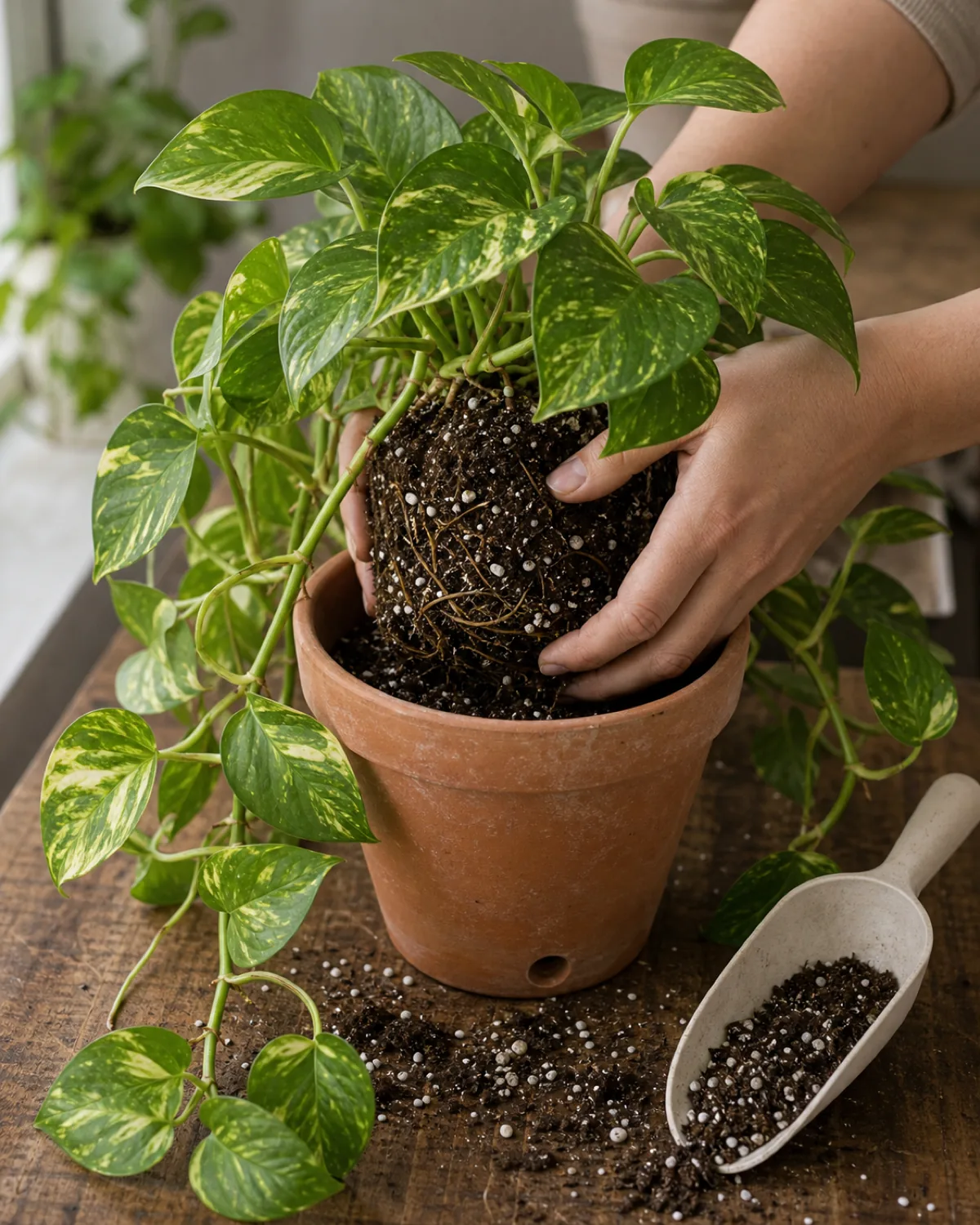
Soil and pot do half of the watering work for you when you set them up right. Pothos is forgiving about both, but it rots quickly in a dense, soggy mix or a pot that has nowhere for water to escape. The goal is for water to run through, not pool around the roots.
- Use a well-draining houseplant mix. Loosen a standard mix with a generous handful of perlite or orchid bark.
- Pick a pot with a drainage hole. Without one, water collects at the bottom and slowly rots the roots.
- Terracotta is the safest choice. The unglazed clay wicks excess moisture and is genuinely hard to overwater in.
Almost every pothos problem comes down to light, water, or how it is shaped. Pick what is happening with yours and start there.
The best spot for it (and where it really shines)
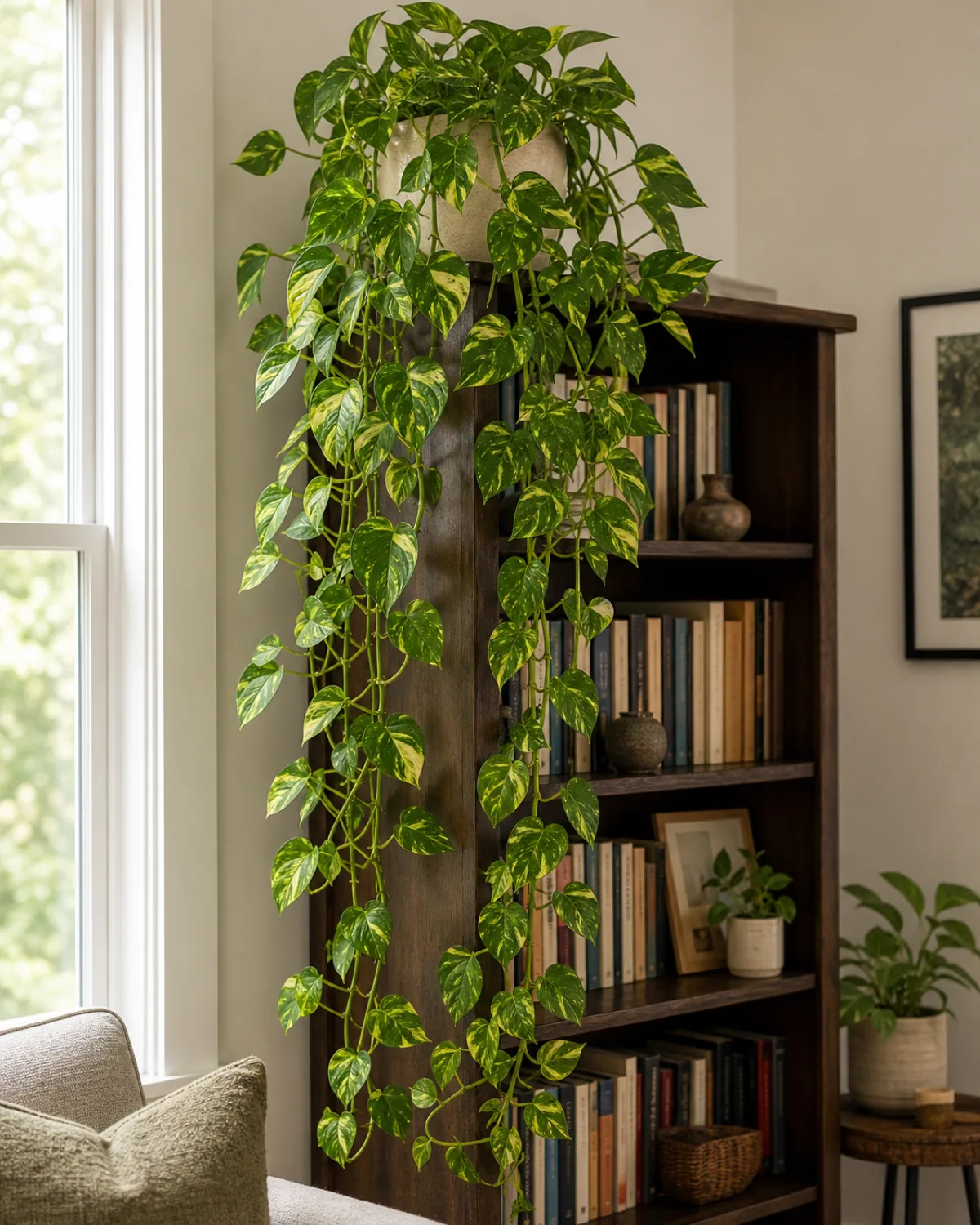
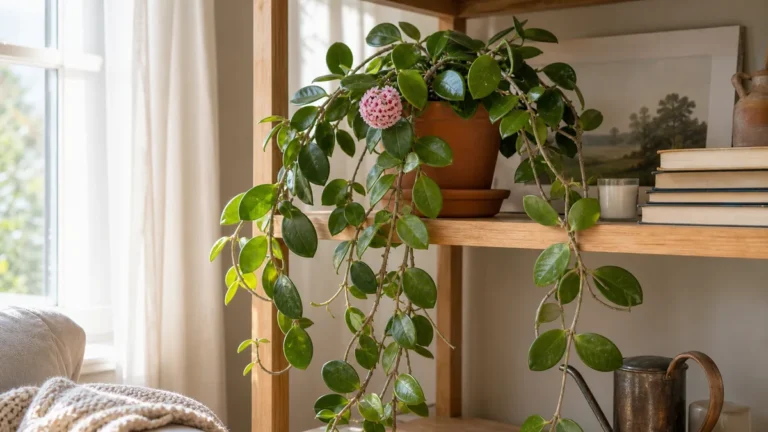
Pothos earns its reputation as an “anywhere plant” because there are so many spots it will tolerate, but a few spots make it look incredible. It loves places most other houseplants quietly hate: humid bathrooms, fluorescent-lit offices, the dim end of a hallway with one window. It is also, hands down, the best trailing plant for the top of a shelf.
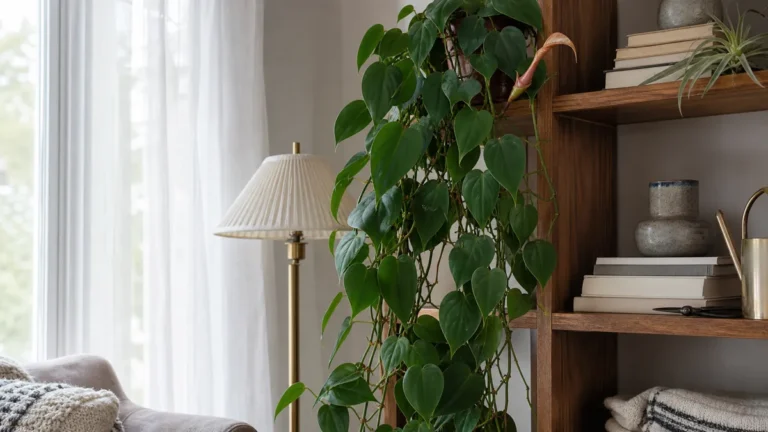
- Top of a bookshelf or a cabinet works beautifully. The vines cascade down and soften the whole piece.
- Bathrooms and kitchens are great too. The extra humidity from showers and sinks suits it well.
- Offices and dim rooms are fine. It tolerates fluorescent light, so it travels well to a desk.
Why the leaves are turning yellow
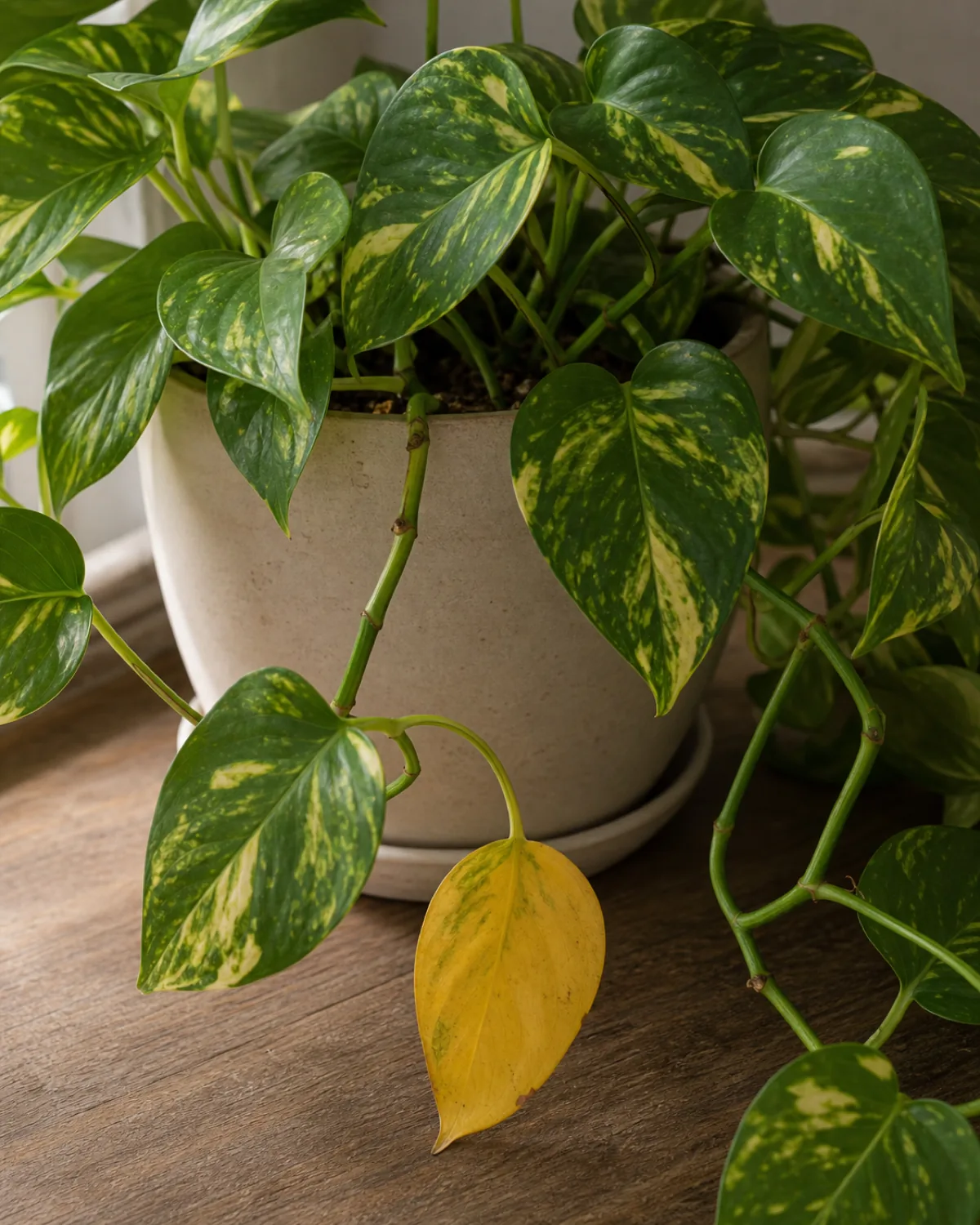
Yellow leaves on a pothos look alarming, but they almost always tell a single story: the plant is sitting in soil that is too wet. The pattern matters, though. One yellow leaf at the base of an older vine is normal aging and nothing to panic about; several soft yellow leaves at once point to a watering problem you can actually fix.
- Check the soil first. Soggy or sour-smelling soil and several yellow leaves together mean it is time to ease off watering.
- One old yellow leaf is fine. A single yellowing leaf at the base of a long vine is just the plant retiring it.
- Cold drafts can yellow new leaves. A vent or a leaky window blowing cold air across it shows up in fresh growth.
Why the new leaves are smaller or solid green
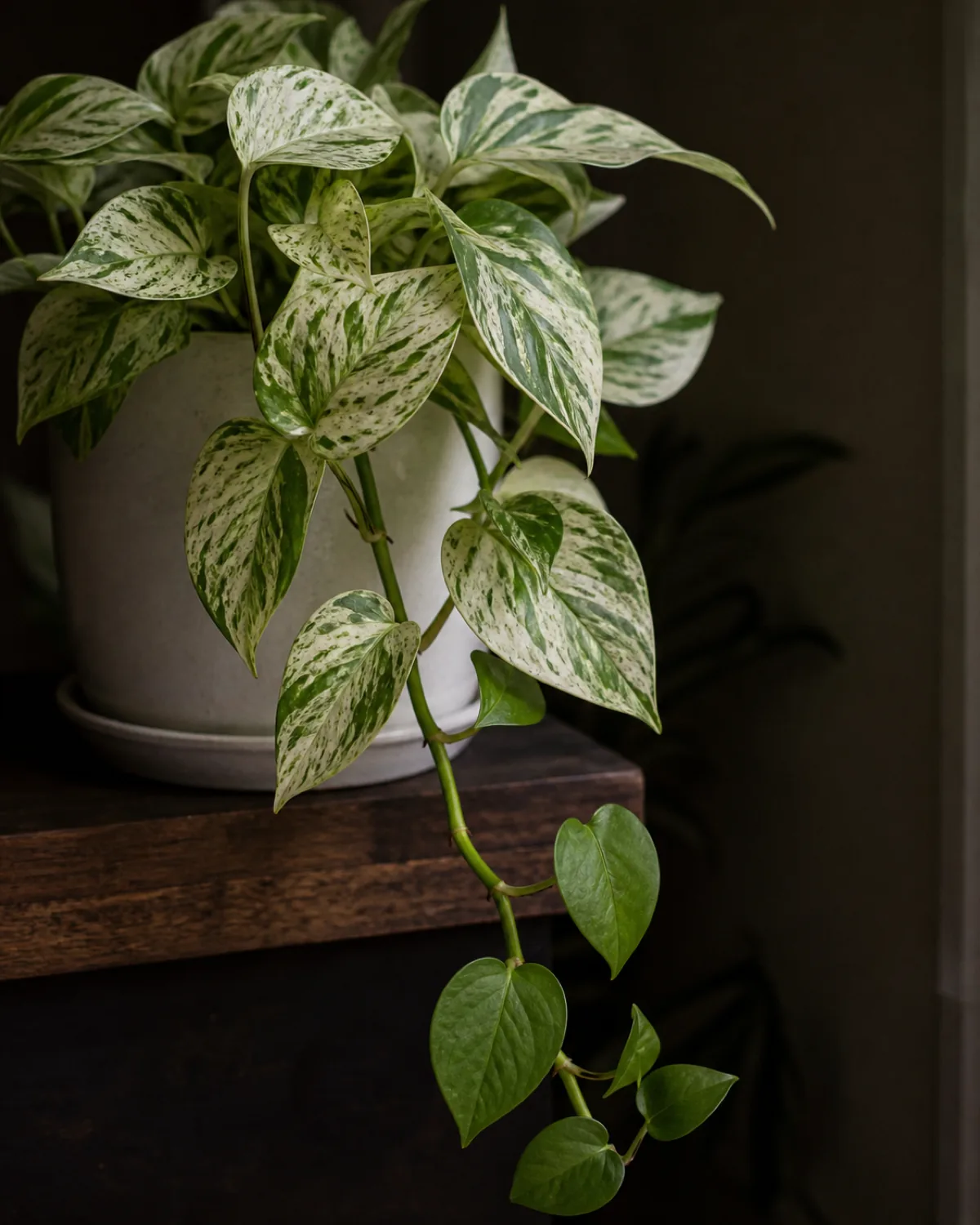
This is the most pothos-specific problem on the list, and it catches almost everyone with a variegated plant. The variegation, the yellow, cream, or white markings, is really just decoration that costs the plant energy. When light gets too low, the plant drops it to feed itself, and the newest leaves come in smaller and plain green.
- Move it brighter. A spot a few feet from a window often brings the variegation back on the next round of growth.
- Prune the solid-green runner. Cut back to the last leaf with variegation so new growth comes from a colored node.
- Be patient. Variegation returns on new leaves, not old ones; expect a few weeks before you see the change.
A pothos is one of the easiest houseplants you can own once you get four things right. These four rules are what make the steps below work instead of leaving you with a thin, pale vine.
Why the vines are leggy with big gaps between leaves
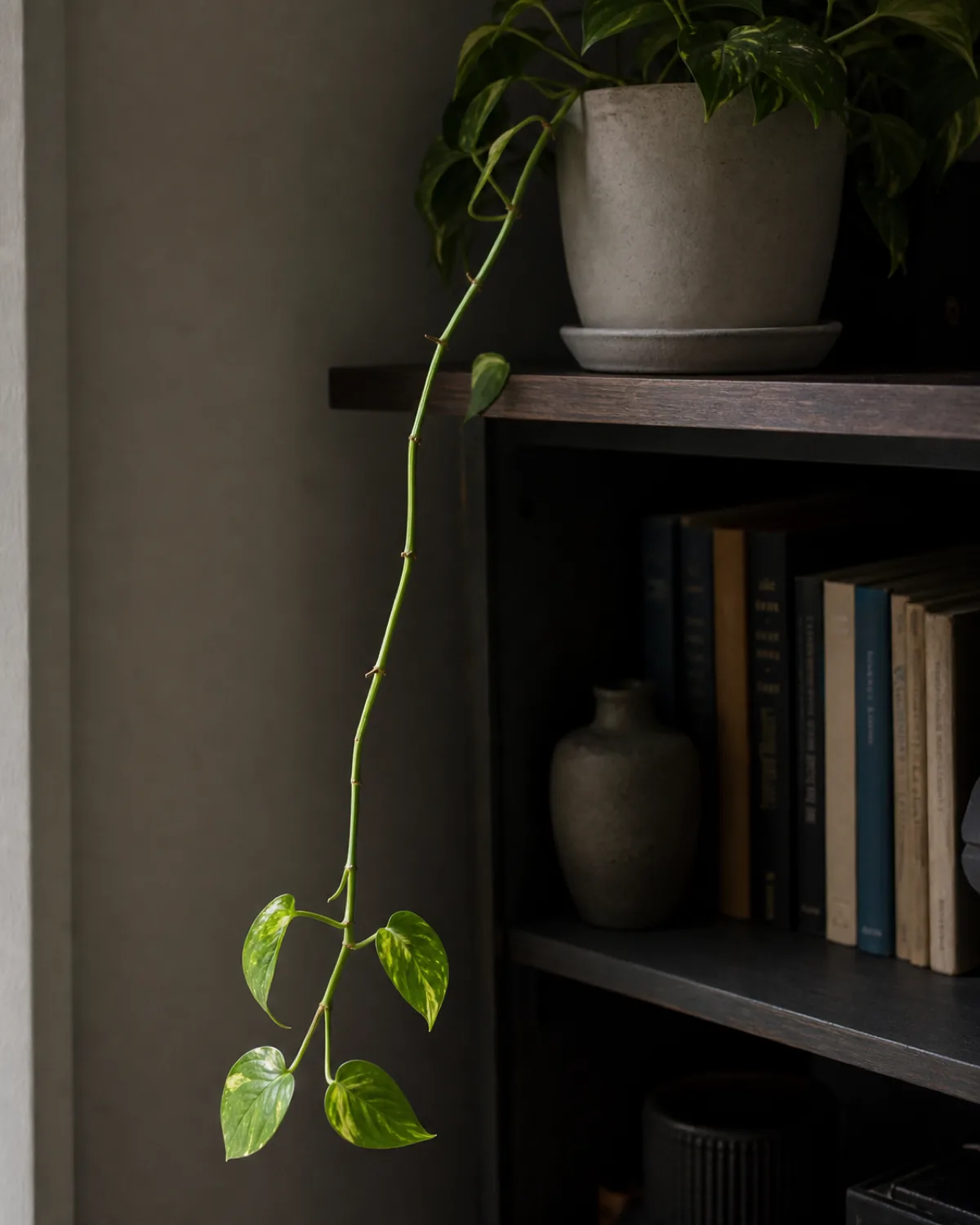
A leggy pothos, with long bare stems and only a few small leaves clustered at the tip, is a pothos that has been quietly reaching for light. The plant is trying to climb out of the dim spot it is in, so it stretches stems instead of growing leaves. Fixing it is mostly about light, with a small leap of faith on the scissors.
- Move it to brighter light first. No amount of pruning will fix legginess if the new growth is still starved for light.
- Pinch the growing tips. Snipping a vine just above a node forces it to branch instead of stretching further.
- Tuck cuttings back into the pot. The next section covers how, and it is the fastest way to refill a thin plant.
How to propagate a pothos in water (almost can’t fail)
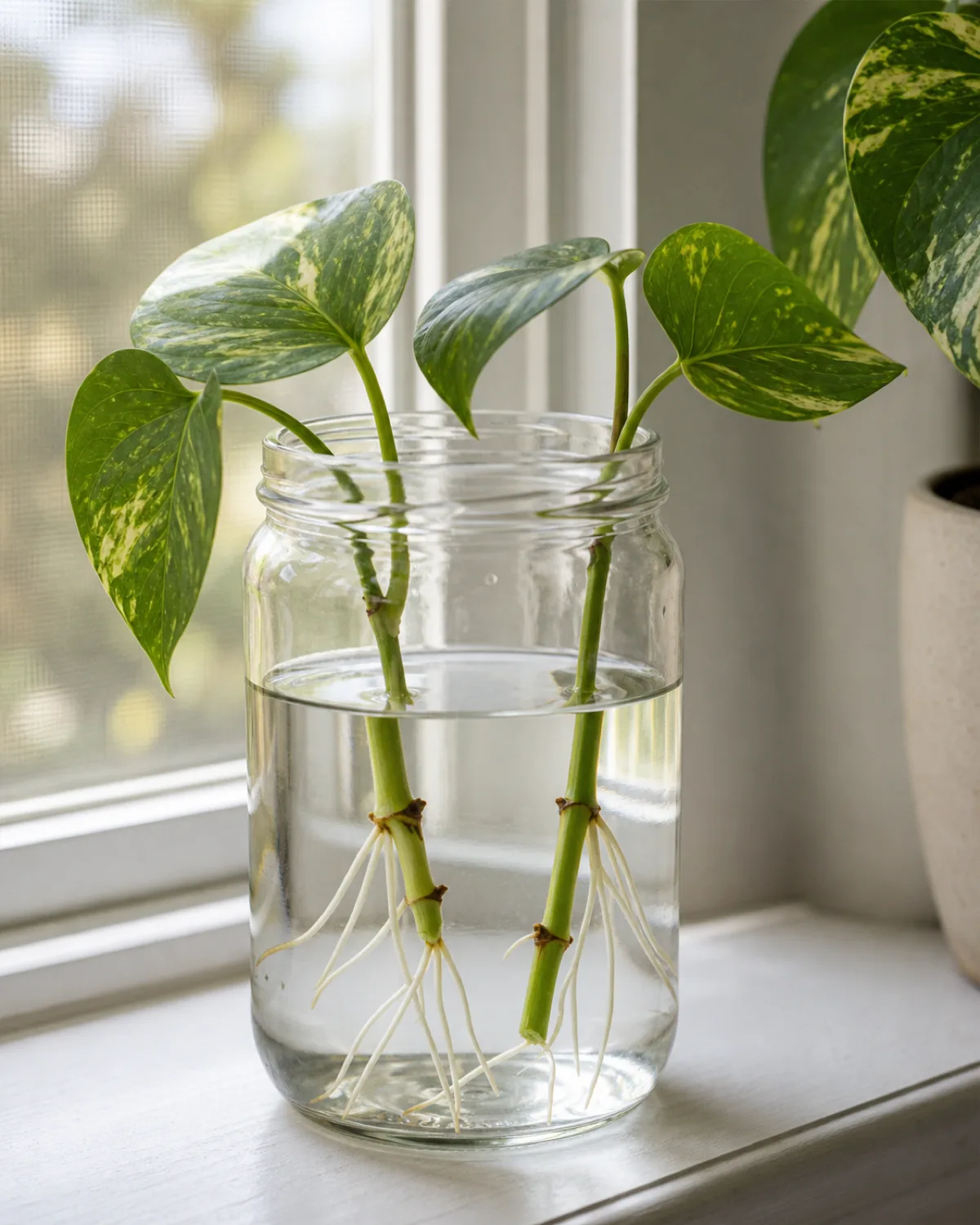
Water propagation is the reason every plant person you know has a pothos. It is so reliable that it is the cutting most plant shops use to teach beginners how to root anything at all. The whole trick is in one detail: the cut has to include a node, the little brown bump on the stem where a leaf meets it.
- Cut just below a node. A clean snip a quarter-inch under the bump gives the roots a place to grow from.
- Drop it in water with the node submerged. A clear glass jar on a bright windowsill is all you need.
- Pot up at two to three inches of roots. Refresh the water weekly until then, and use a small pot with fresh mix.
How to make it trail long and full
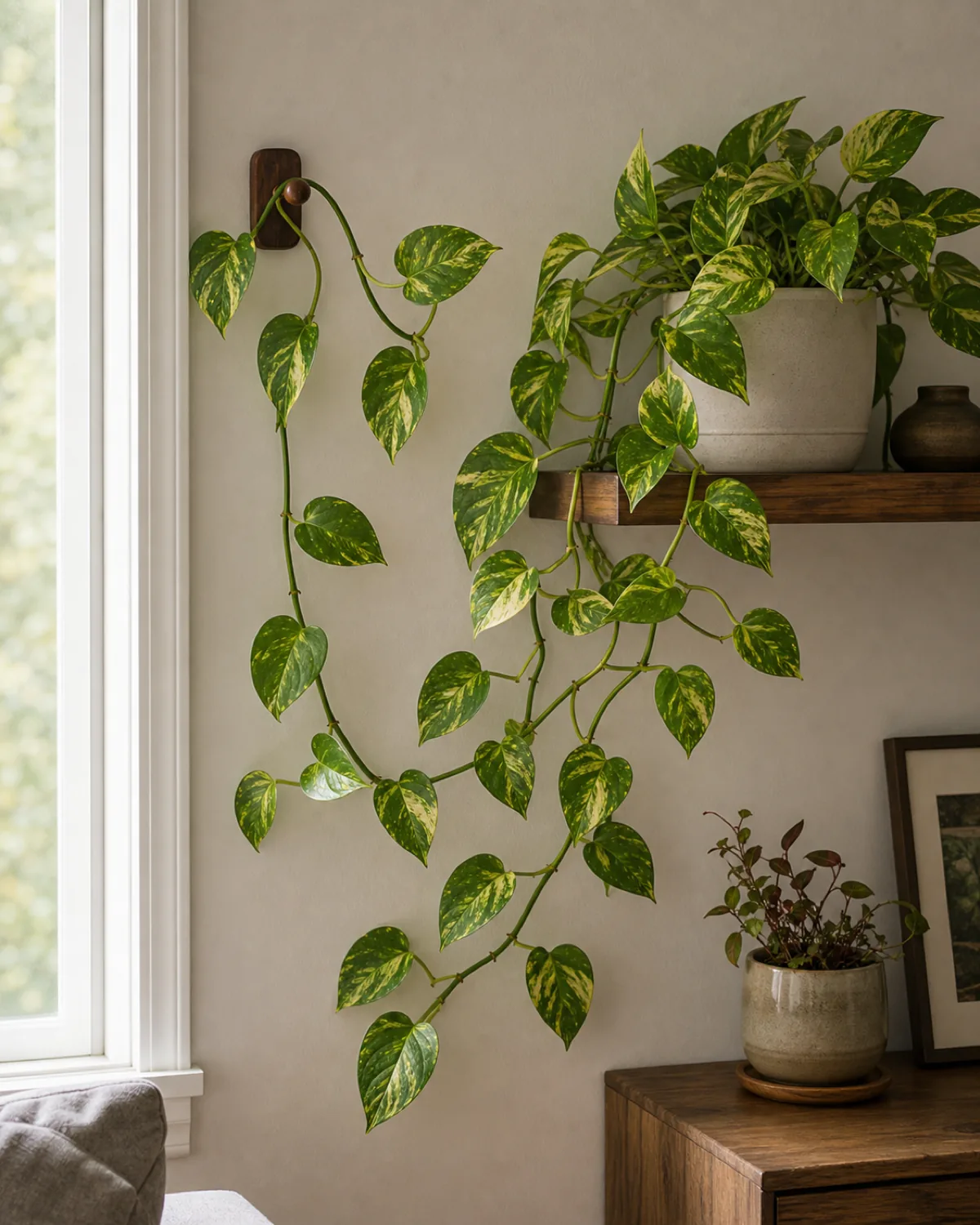
A long, full trailing pothos is not just one plant that grew patiently for years; it is almost always a plant that got pruned, propagated, and stuffed back into its own pot. Once you see how it is done, a thin store-bought pothos turns into a full curtain within a few months instead of a year or two.
- Tuck rooted cuttings back into the parent pot. Three or four new vines crammed in fills out a sparse plant fast.
- Train vines along a shelf or hook. Small adhesive hooks or a curtain rod guide vines exactly where you want them.
- Pinch the bare runners. Snipping a leggy stem above a node forces side branching for a denser look.
Pothos Care: The Quick Checklist
- 1Bright indirect light is the sweet spotA few feet from a window grows the fullest, most variegated vine; dim light keeps it alive but plain.
- 2Water when the top inch is drySoggy soil rots the roots; the leaves droop dramatically when thirsty and rebound within hours.
- 3Well-draining mix and a drainage holeA regular houseplant mix with extra perlite in a pot that drains keeps the roots healthy.
- 4It thrives in bathrooms and officesHumidity, fluorescent light, and east or north windows all suit it; a top shelf shows it off.
- 5Yellow leaves usually mean too much waterA single yellow leaf at the base is normal aging; multiple soft yellow leaves point to soggy roots.
- 6Solid-green new leaves mean too little lightA variegated pothos reverts to plain green to feed itself; move it brighter and prune back to color.
- 7Leggy vines are a light problemLong bare stems with tiny leaves at the tip come from low light; pinch and move it brighter.
- 8Water propagation almost can’t failCut below a node, drop it in a glass with the node submerged, and roots show in one to three weeks.
- 9Tuck cuttings back to make it fullRe-pot rooted cuttings into the parent pot, train vines along a shelf or rod, and pinch the tips.
- 10Repot every 1 to 2 yearsUp one pot size with fresh mix when the roots circle the bottom; spring is the best time.
- 11Watch for mealybugs and mitesMealybugs hide in leaf joints; spider mites appear in dry air; wipe leaves and use insecticidal soap.
- 12Mildly toxic to petsCalcium oxalate makes pets that chew the leaves drool and gag; hang it or place it high.
- 13Then style itA trailing pothos softens a shelf or corner; see our plant styling guide for ideas.
kultivy.com
When and how to repot
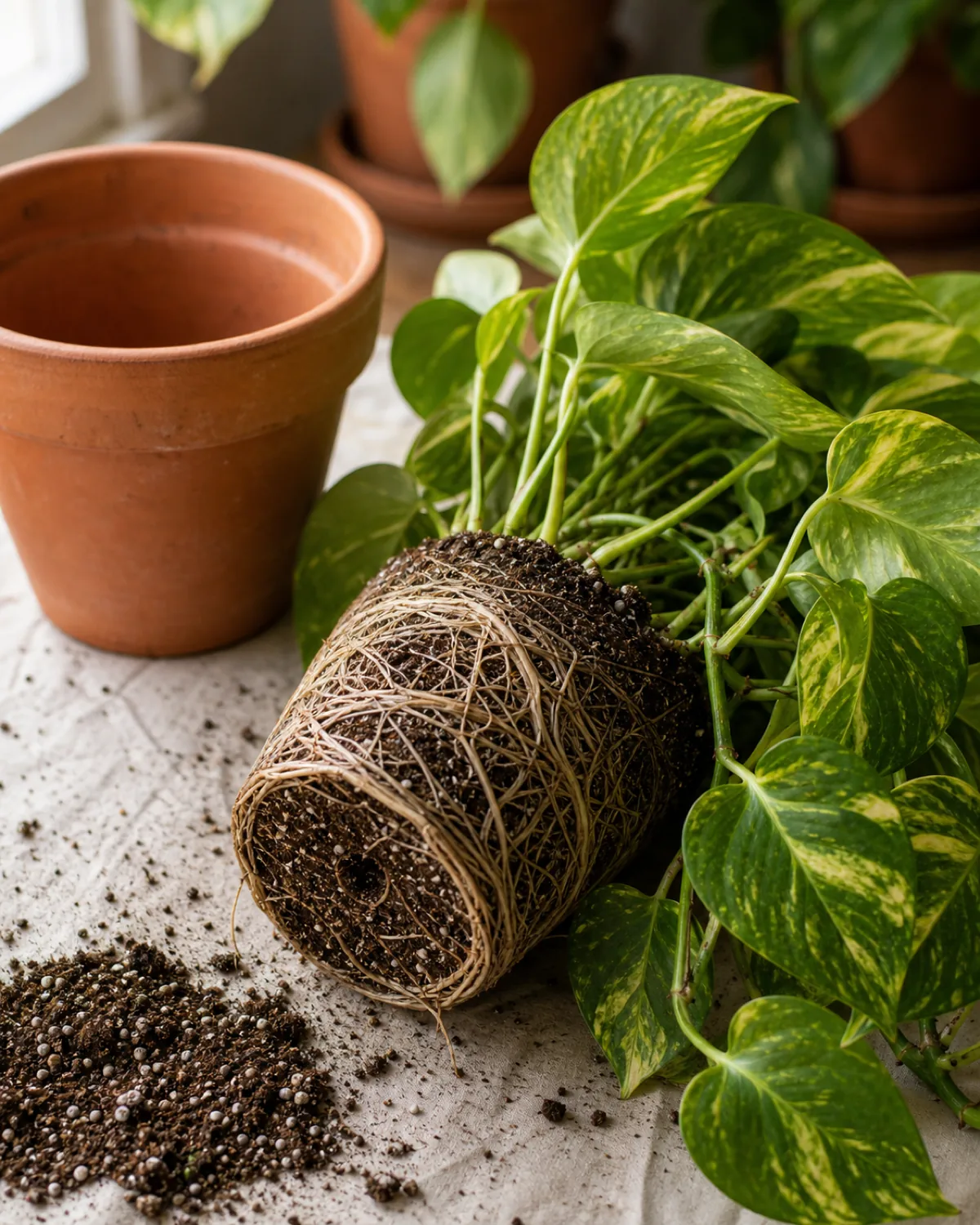
Pothos grows faster than people expect, so repotting comes around more often than with most houseplants. The signal is in the roots, not the leaves. When you tip the pot and the roots circle the bottom in a dense mat, the plant is asking for more room and fresh mix to dig into.
- Repot every one to two years. Or sooner if water runs straight through and the roots are already circling the bottom.
- Go up one pot size. A pot that is too big stays wet between waterings and works against the roots.
- Spring is the best time. Repotting just before active growth lets the plant settle in and recover fastest.
Common pests and a fix
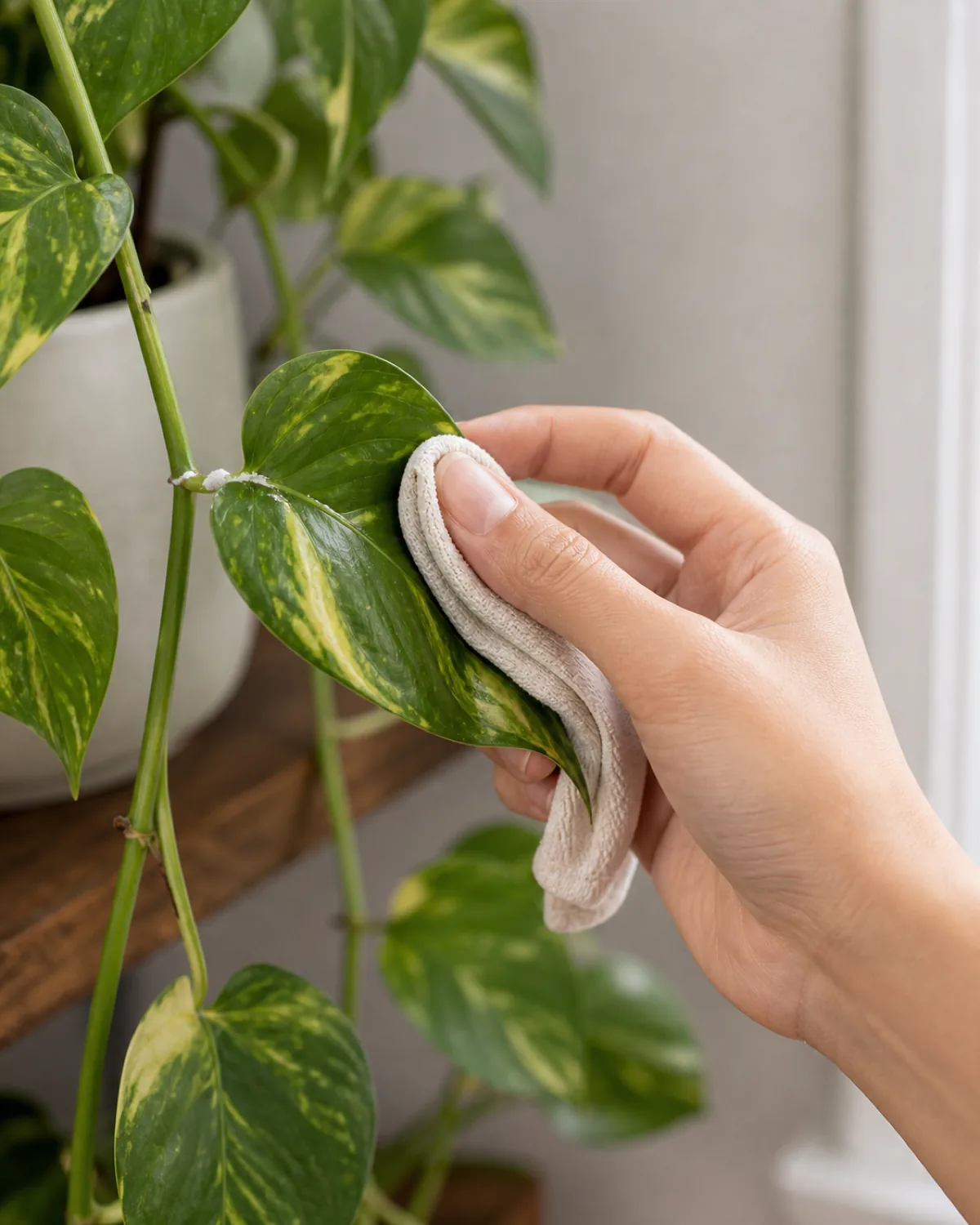
Pothos is mostly easy on the pest front, but a few characters do show up. Mealybugs are the classic offender. They look like small white cottony bumps hiding in the joints where the leaf meets the stem. Spider mites turn up in dry indoor air and leave fine webbing on the undersides of the leaves.
- Wipe the leaves clean once a month. A damp cloth pulls off dust and catches mealybugs before they spread.
- Treat infestations with insecticidal soap. Spray the leaves, joints, and stems thoroughly, then repeat in a week.
- Isolate the plant. Keep it away from your other houseplants until you have not seen a new bug in two weeks.
Are pothos toxic to pets?
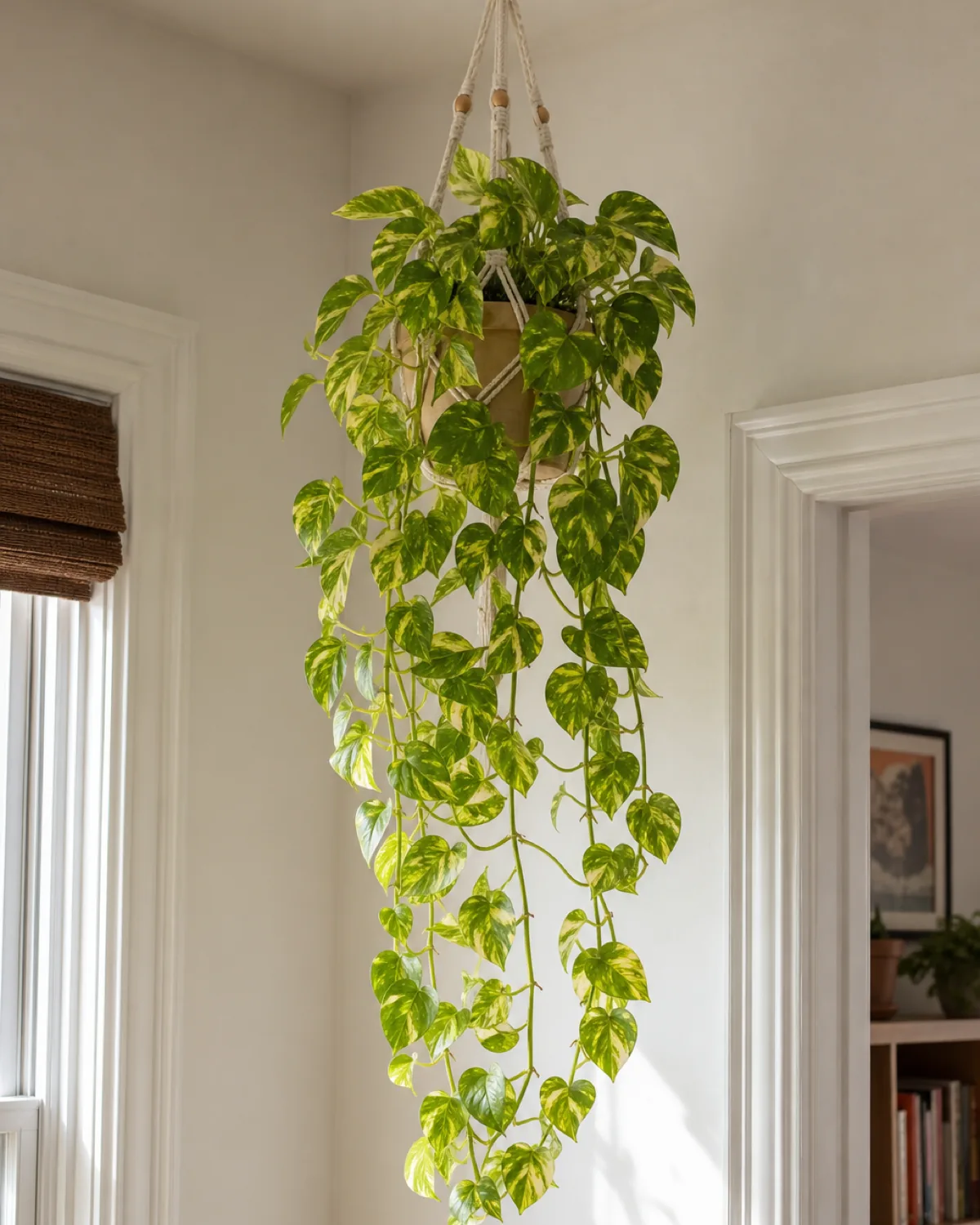
One honest note before you set a pothos somewhere a pet can reach: it is mildly toxic to cats and dogs. The leaves contain tiny calcium-oxalate crystals that irritate a pet’s mouth and stomach if they chew on them. It is rarely an emergency, but it is worth planning around with placement, not by hoping for the best.
- Hang it or set it up high. A macrame hanger, a tall shelf, or a wall hook keeps the vines above pet height.
- Mind any low-hanging vines. A trailing pothos that brushes the floor is exactly what a curious cat goes after.
- Call your vet if a pet chews some. Better to ask than to guess, even with a mild toxin.
Pothos varieties and how to style them
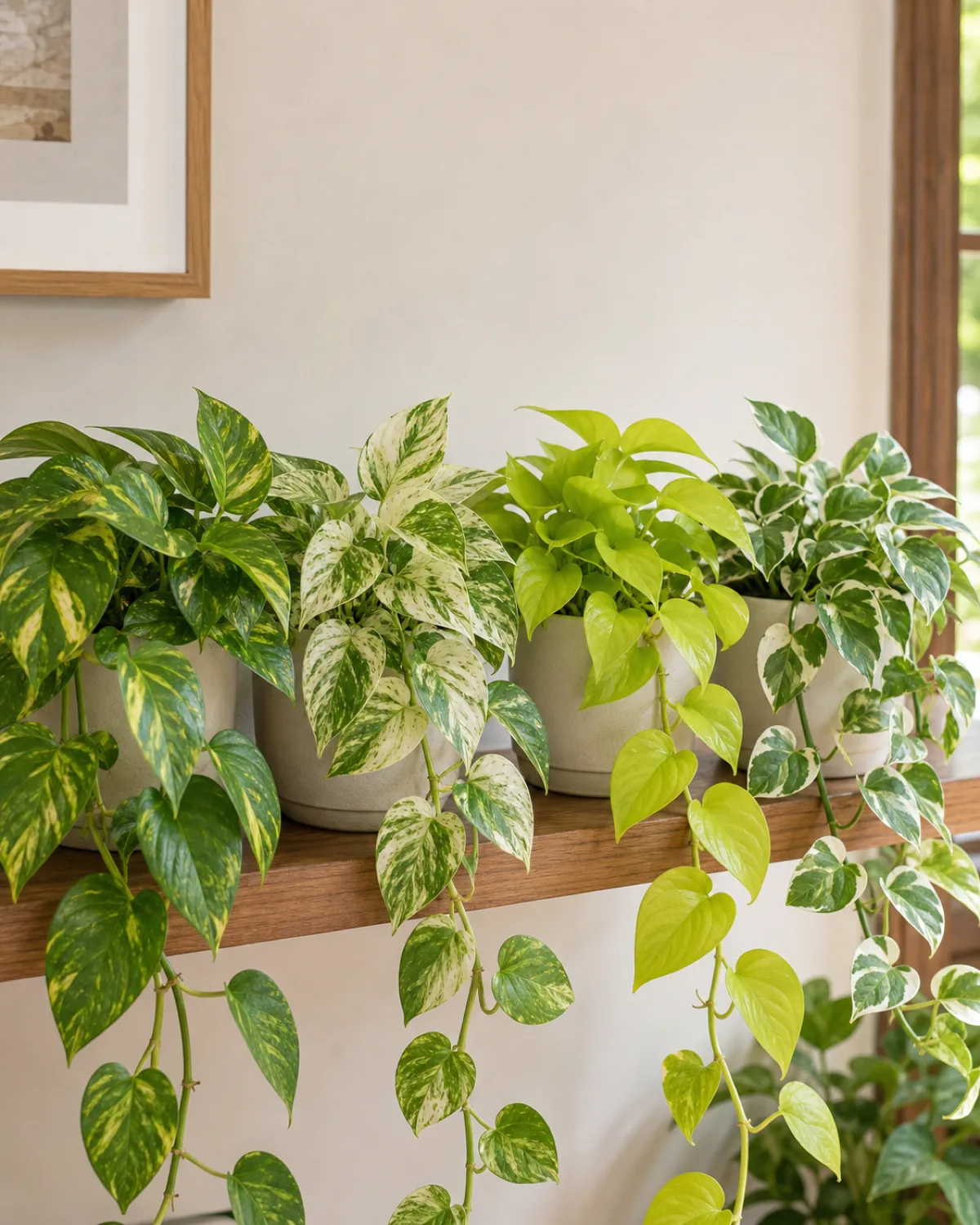
Once you can keep one pothos thriving, the fun part is that “pothos” is really a small family of looks. The care is the same across all of them, but each variety reads differently in a room. Picking the right one for a spot is most of the design work.
- Know the main varieties. Golden has yellow marbling, marble queen has cream-and-green streaks, neon is bright chartreuse, and n’joy has small white-edged leaves.
- Match the variety to the spot. Neon glows in a dim corner, golden warms up a wood shelf, and marble queen brightens a dark wall.
- Style it once it’s thriving. See our plant shelf and corner ideas for ways to show off a trailing pothos.
Give it bright indirect light, water it only when the top of the soil is dry, and a pothos will trail for years with very little fuss. Once it is full and you want a leafier aroid to fuss over next, our monstera care guide is a natural step up.

Mara Quinn edits Kultivy, where she shares houseplant care, propagation, beginner-friendly plant picks, and plant-styling ideas for anyone who wants their indoor plants to actually thrive. Every guide is image-led and reviewed for clarity, usefulness, image accuracy, and Pinterest-to-page alignment before it goes live. Visit the About page.