Somewhere between the trailing pothos everyone already owns and the philodendron beside it in the shop, most people give up telling them apart. Then the vine stretches bare between leaves and the guesswork gets expensive.
A heartleaf philodendron (Philodendron hederaceum) is a fast, forgiving climbing vine with thin, matte, velvety heart-shaped leaves. New growth comes in coppery-red from a papery sheath — the giveaway that it is not a pothos.
If it still feels fussier than hoped, the easy houseplants list is a softer landing. Otherwise the sections below cover identification, light, water, and training it to climb.
Heartleaf philodendron is the trailing vine most beginners confuse with pothos. The thirteen sections below cover the real identification tell, the droop-test watering, why vines go leggy, and how to prune and propagate it into a full, bushy plant.
- 1Philodendron vs pothos
- 2Light, leaf size and spacing
- 3Watering, the droop test
- 4Soil, a chunky aroid mix
- 5Yellow leaves decoded
- 6Why new leaves stay small
- 7Legginess explained
- 8Pruning for fullness
- 9Propagation in water
- 10Aerial roots explained
- 11Training it to climb
- 12Pests, mites and mealybugs
- 13Pet safety and varieties
Philodendron vs pothos: how to actually tell them apart
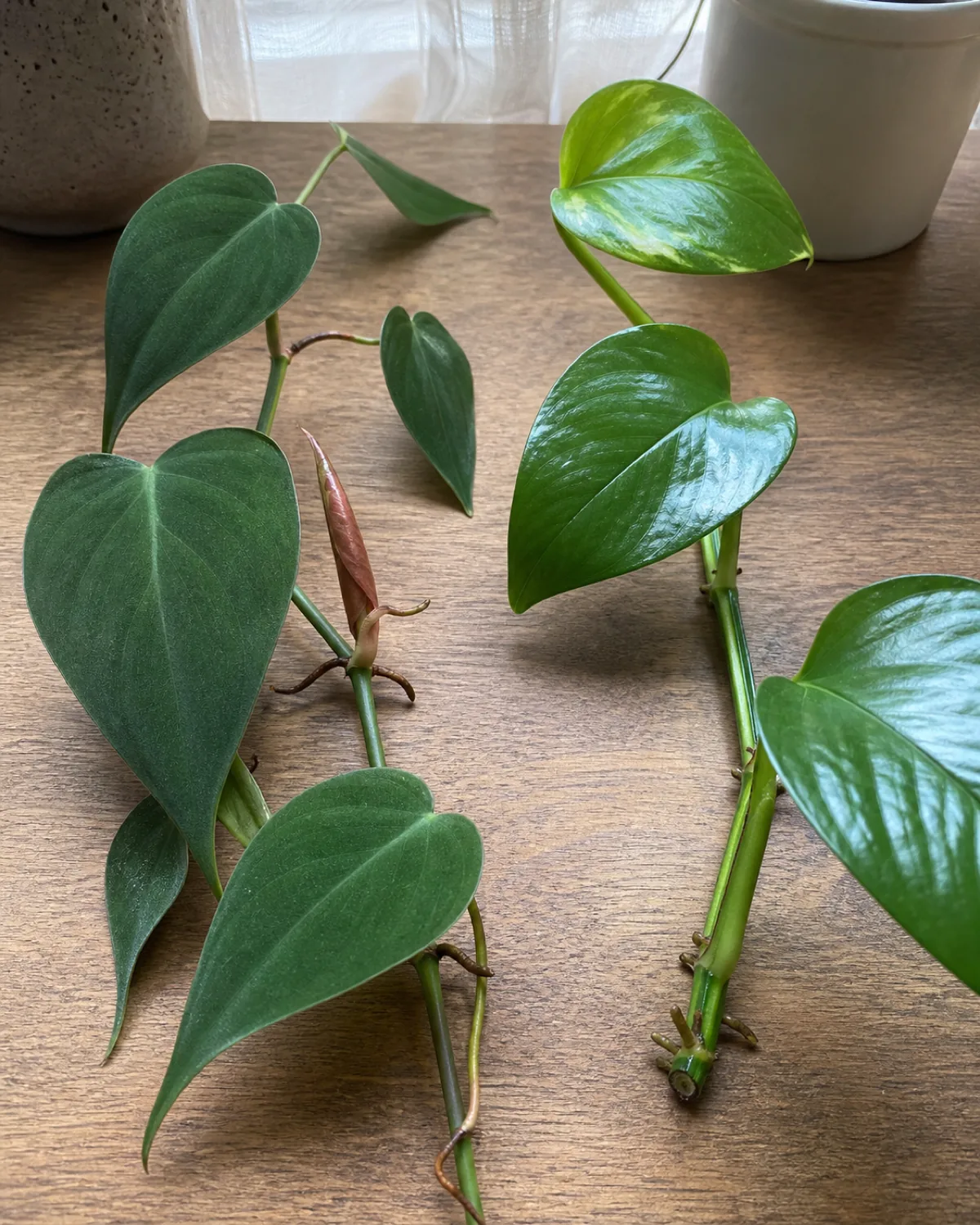
This is the single most common houseplant mix-up, and the two plants are not even in the same genus. A heartleaf philodendron has thinner, matte or velvety leaves with a more pointed, elongated heart shape, and its petiole (the leaf stem) is round in cross-section. A pothos leaf is thicker, waxier, and glossier, with a petiole that has a visible groove running down the top.
The fastest tell is brand-new growth. A philodendron unfurls a coppery or bronze-red leaf from a thin, papery sheath called a cataphyll, which browns and drops off once the leaf opens. A pothos has no cataphyll at all — its new leaf just emerges pale yellow-green, already unrolled.
For the plant most people confuse it with, the pothos care guide covers the same care angles from the other side of this comparison.
- Matte, velvety leaf with a round petiole points to philodendron; glossy, waxy leaf with a grooved petiole points to pothos.
- A coppery-red new leaf in a papery sheath is a philodendron trademark that pothos never shows.
- When in doubt, check the newest leaf, not the older ones, since it is the clearest signal.
Light: bright indirect controls leaf size and spacing, not variegation
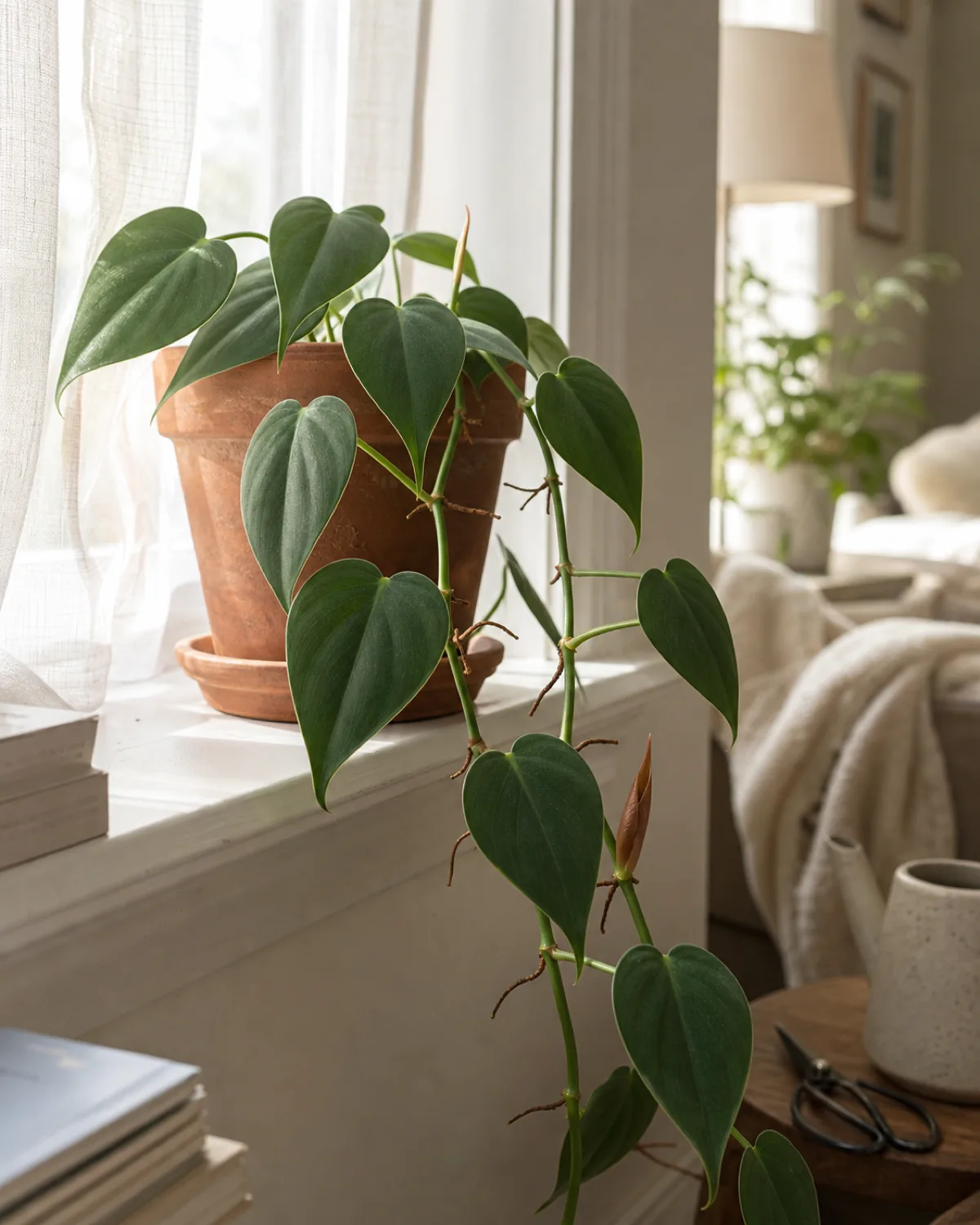
Bright indirect light is what produces the biggest, most tightly spaced heart-shaped leaves down the length of the vine. A philodendron in a dim corner still survives, which is part of why it has a reputation as nearly indestructible, but the leaves shrink and the gaps between them stretch out as the plant reaches for more light.
Where pothos uses light mainly to hold onto its variegation, a philodendron uses it to control leaf size and spacing. A few feet back from an east or north window is the easiest bright-but-gentle spot, and a sheer curtain protects it from harsh midday sun on a south or west sill.
- Bright indirect light gives the biggest leaves closest together on the vine.
- Low light is tolerated, not ideal, and shows up first as smaller, more spaced-out leaves.
- Direct midday sun scorches the thin leaves, so filter it with a curtain if that is the only window you have.
Watering: the earlier, more dramatic droop that means thirsty
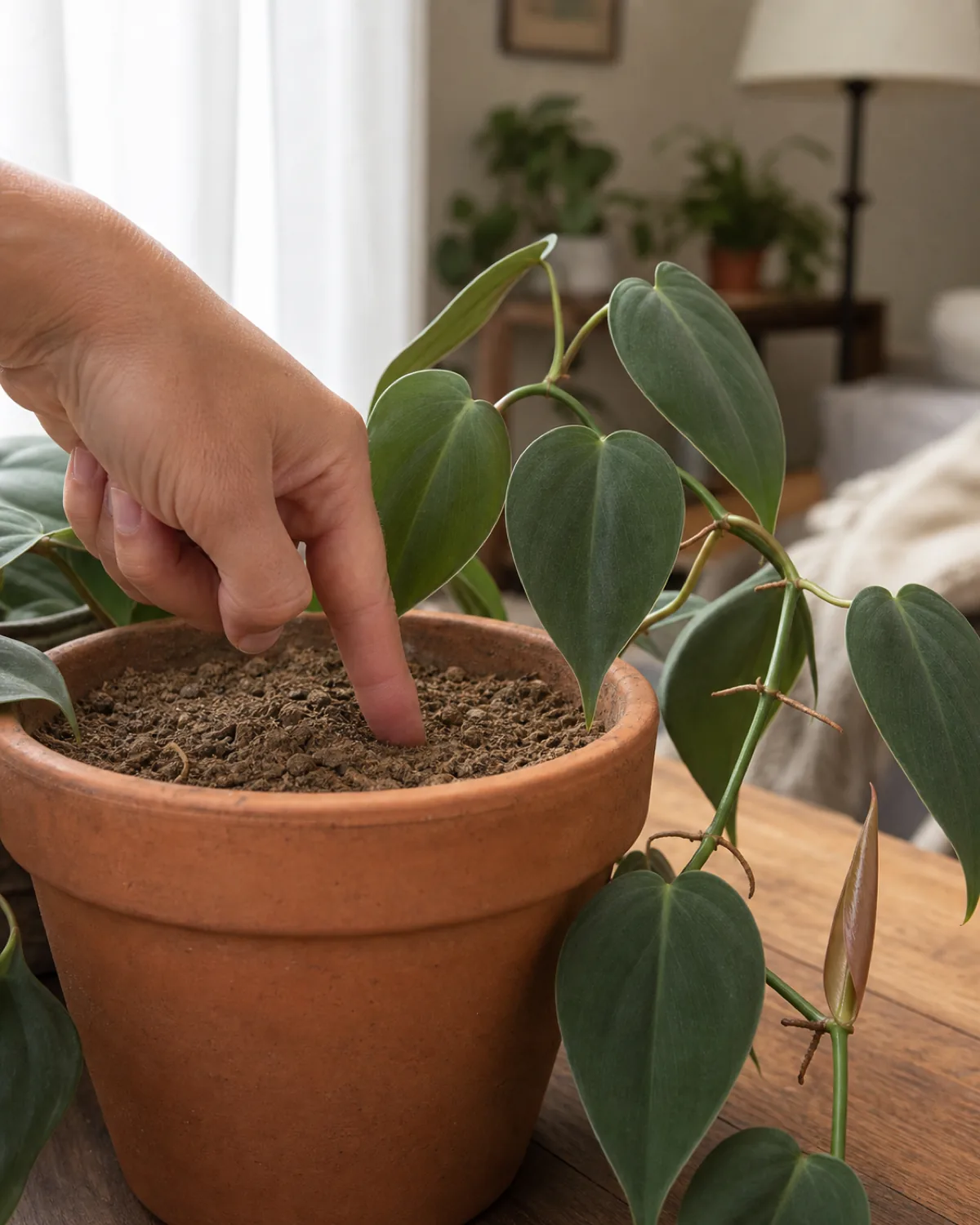
Water a heartleaf philodendron once the top inch or two of soil has dried out, then water thoroughly until it runs from the drainage hole. A thirsty plant droops noticeably across the whole vine and perks back up within a few hours of a drink, the same trademark check pothos owners use.
Philodendron leaves are thinner than pothos leaves and hold less water in reserve, so the droop tends to show up a little sooner and a little more dramatically. Treat an early, obvious droop as a normal cue rather than a crisis — it is the plant’s built-in reminder, not a sign something is wrong.
- Check the top one to two inches of soil before watering, not the calendar.
- A dramatic droop that recovers within hours is the plant asking for water, not a symptom of disease.
- Water thoroughly until it drains, then let the pot finish draining before setting it back on a saucer.
Most philodendron questions trace back to one of four situations. Start with whichever one describes yours, then circle back to the rest later.
Soil and pot: a chunky aroid blend that keeps roots from rotting
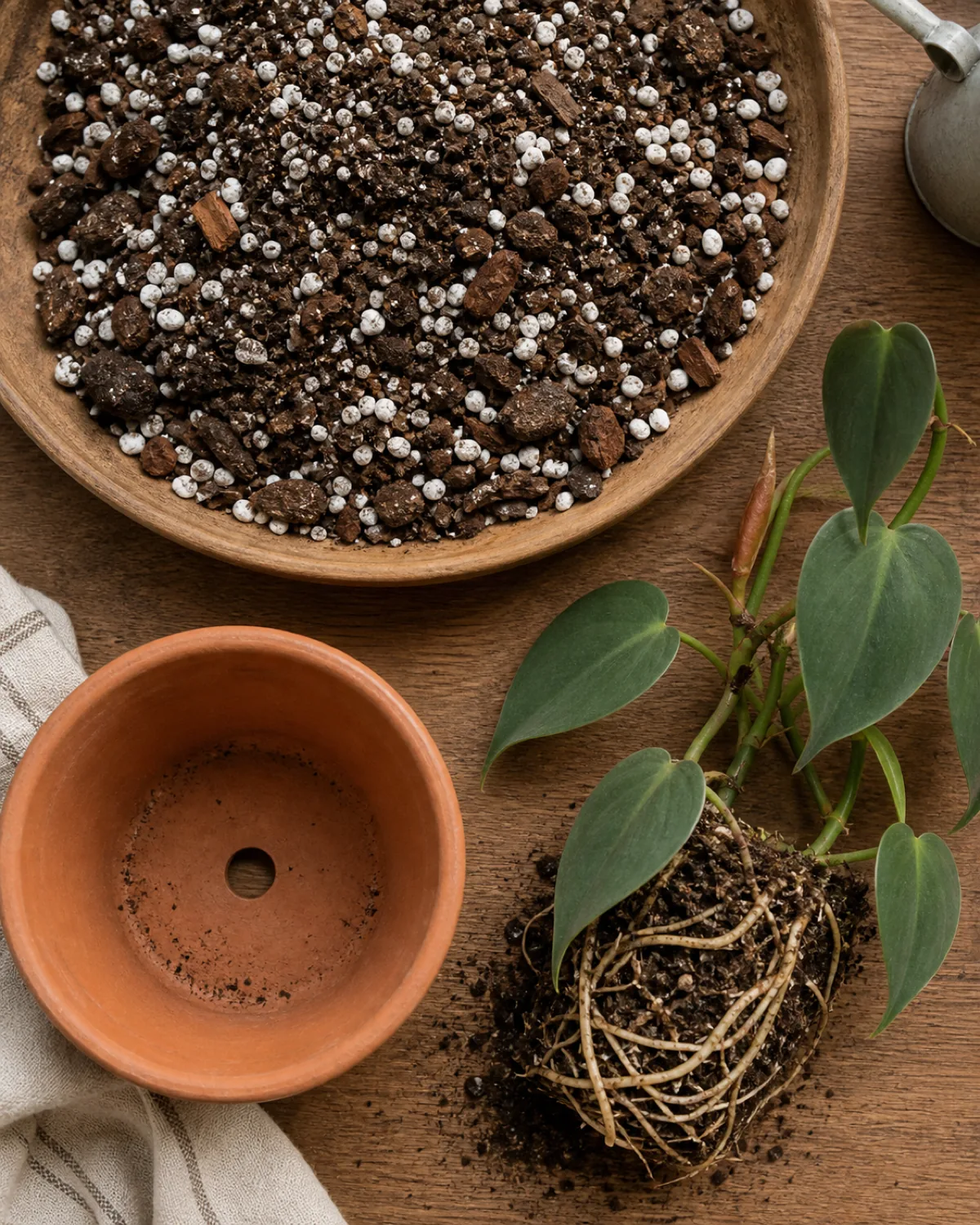
A well-draining aroid mix keeps a philodendron’s roots healthy. A simple blend of houseplant potting soil, perlite, and a handful of orchid bark gives the roots the air pockets they need between waterings, instead of sitting in dense, compacted soil that holds water too long.
Always use a pot with a drainage hole. In a soggy, poorly draining mix, philodendron roots rot fast, and rot is far harder to reverse than a missed watering.
- Mix potting soil with perlite and a little orchid bark for a chunky, fast-draining blend.
- Always choose a pot with a drainage hole, no exceptions for a plant this prone to root rot.
- Refresh the top inch of mix once a year to keep it from compacting over time.
Yellow leaves: soggy roots versus one normal aging leaf
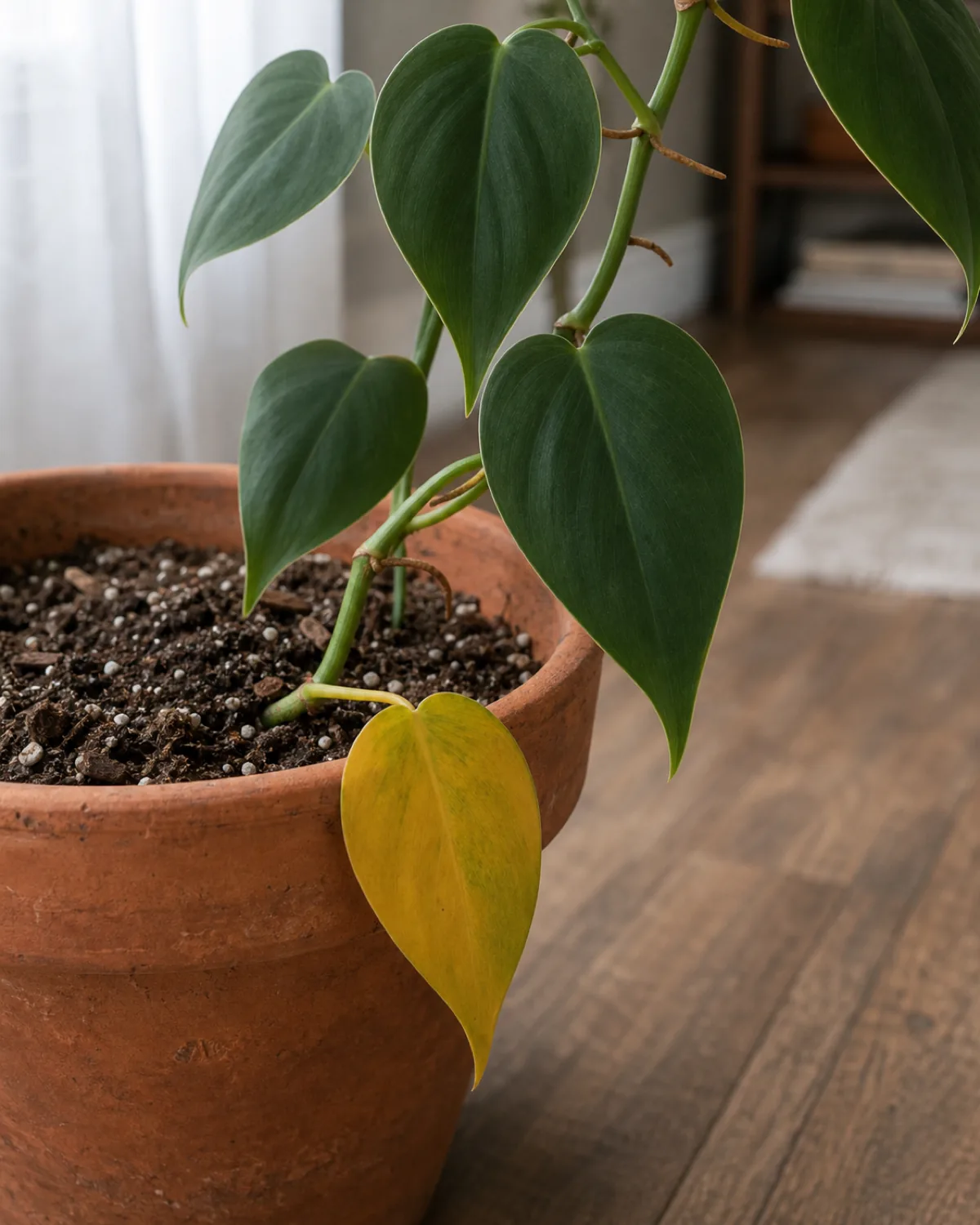
Overwatering is the most common cause of yellow leaves on a philodendron. Soggy roots cannot breathe, and the plant responds by yellowing and dropping leaves, usually starting near the base of the vine.
That said, one yellow leaf on an older, lower part of a vine that is otherwise healthy and pushing new growth is often just normal aging, not a problem. The distinguishing check is the stem at the soil line — if it feels mushy or looks dark and soft, that points to rot, not age, and it is worth easing off the water and checking the roots.
- Multiple yellowing leaves from the base up usually means the soil has stayed wet too long.
- One yellow leaf on an otherwise healthy, growing vine can be normal leaf aging.
- A soft, dark, mushy stem near the soil line signals rot — check the roots and repot into fresh, dry mix.
Why the new leaves are small or the vine looks stringy
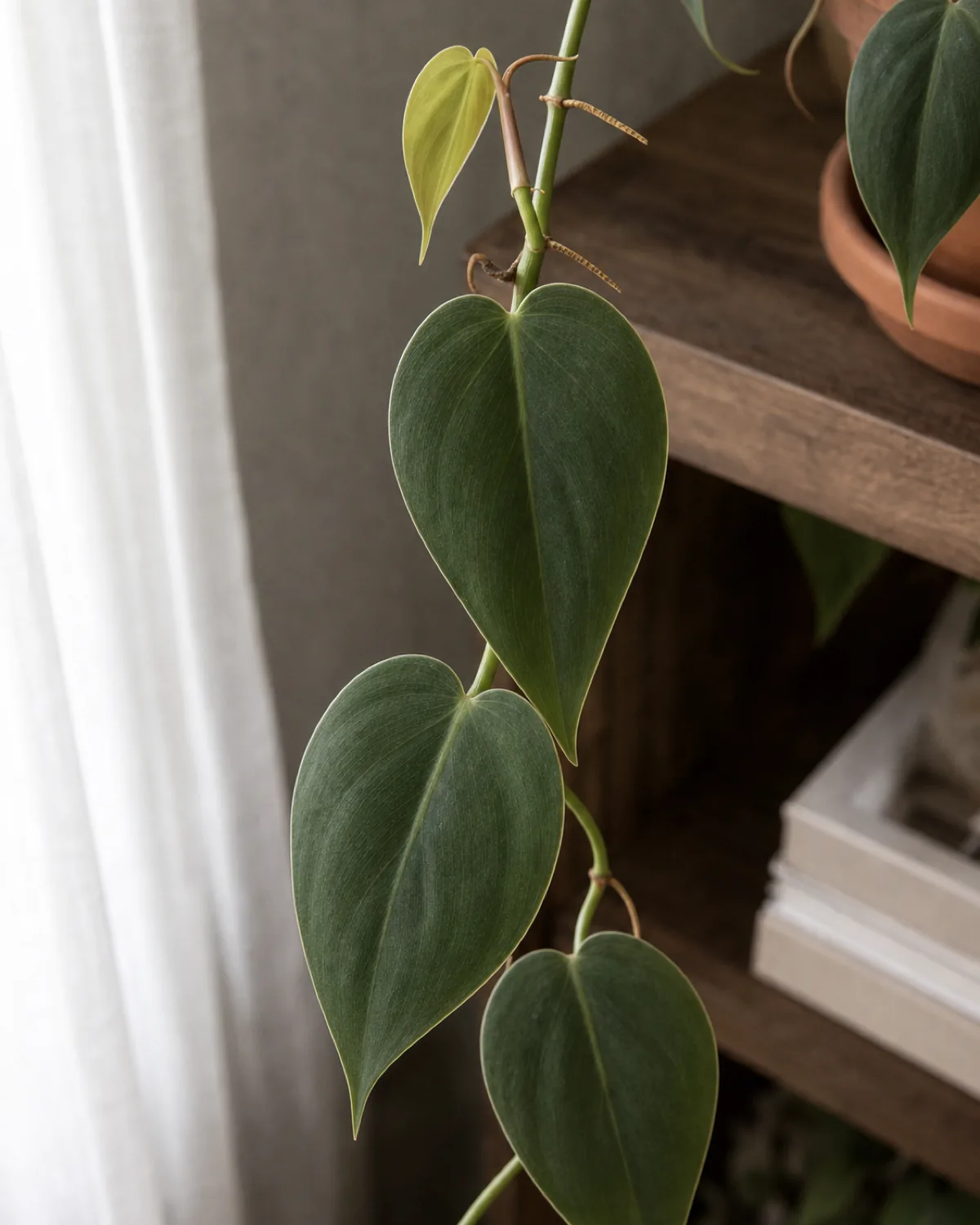
New leaves that stay noticeably smaller than the older leaves on the same vine almost always point to insufficient light, not a feeding problem. The plant is conserving energy rather than pushing full-sized growth, so it produces smaller leaves and stretches the vine thinner in the process.
Moving the plant closer to a bright window is usually enough. New leaves size back up within a few growth cycles once the plant is getting the light it needs, without any change to watering or fertilizer.
- Small new leaves next to bigger old ones is a light problem first, not a fertilizer problem.
- Move it brighter rather than feeding it more to correct undersized new growth.
- Give it a few new leaves’ worth of time to see the size recover after the move.
Most philodendron disappointments trace back to one of four moves people skip. Hold these four and a heartleaf philodendron stays dense from base to tip instead of turning into a bare, dangling vine.
Legginess: why a philodendron stretches faster than a pothos
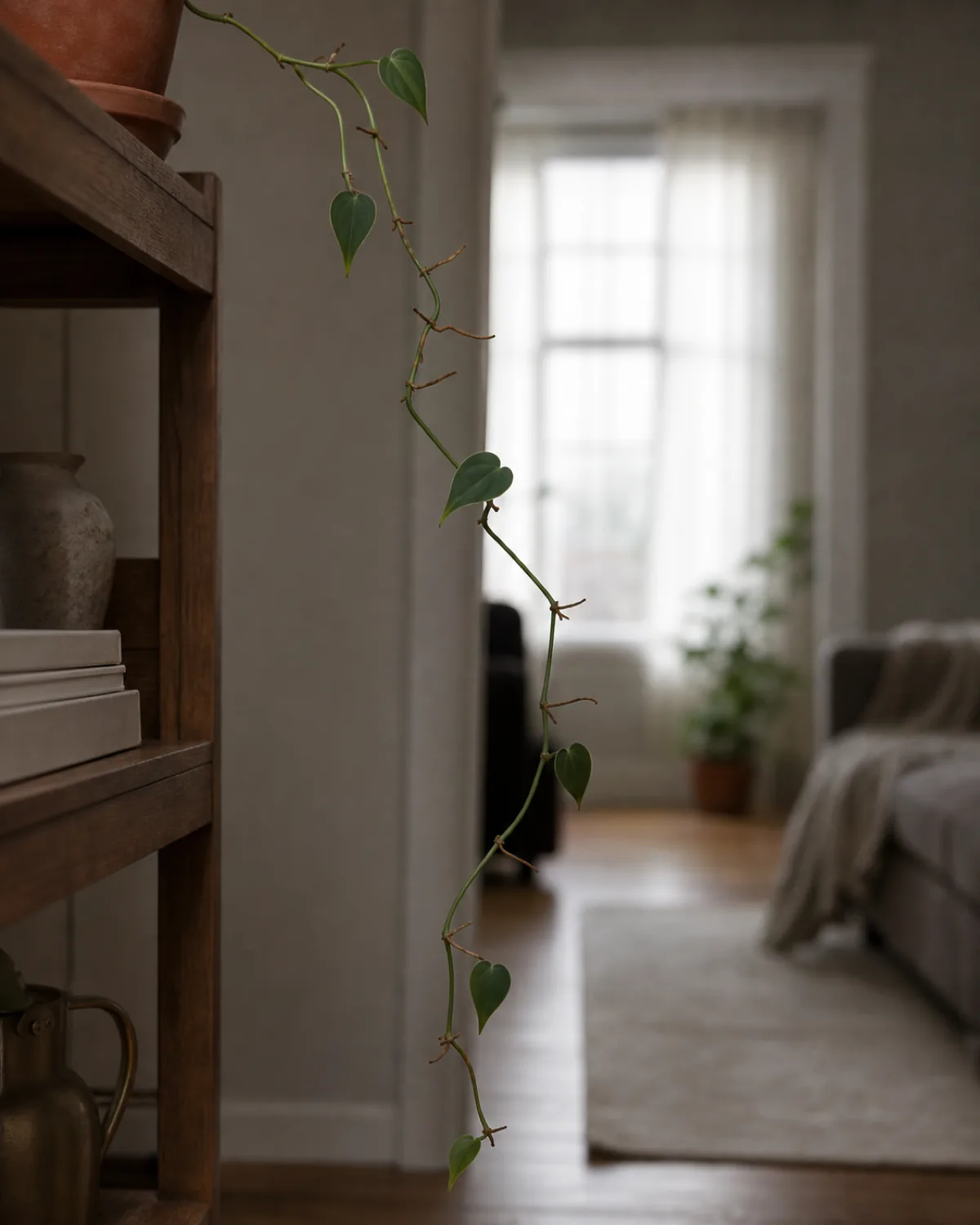
A leggy vine — long stretches of bare stem with tiny leaves only at the tip — is etiolation from low light, the same underlying lever behind a leggy pothos. A philodendron stretches into this shape faster than pothos does, because it is a natural climber built to reach out for something to grab onto, and low light makes that reaching behavior more extreme.
What helps is the same as with small new leaves: move it brighter. A leggy vine can also be pruned back hard, which is covered next.
- Wide bare gaps between leaves with tiny leaf tips signals low light.
- Philodendron legs out faster than pothos because it is actively searching for something to climb.
- Brighter light stops new legginess, but existing bare stem needs a prune (see below) to fix.
How to prune it into a fuller plant
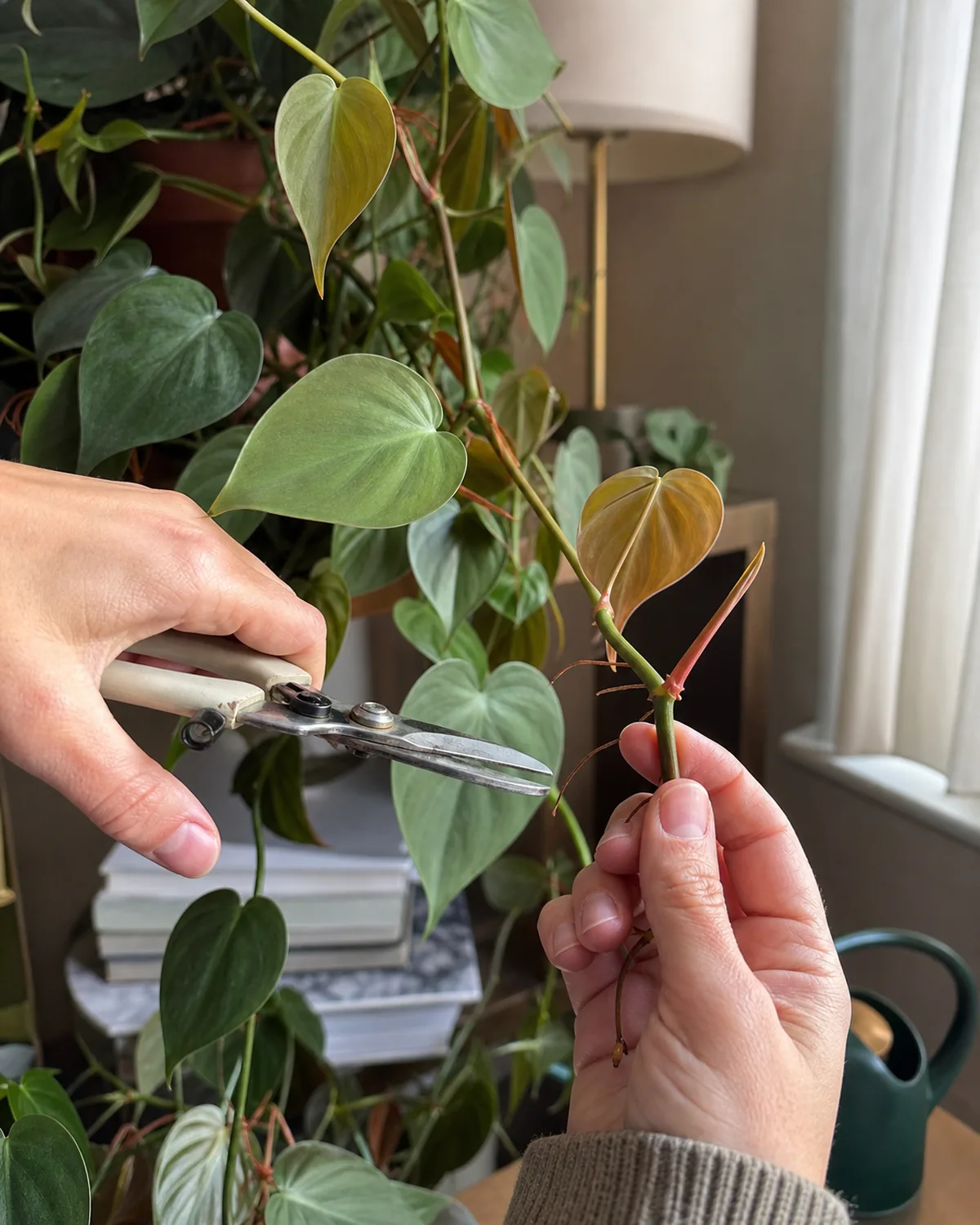
Cutting a leggy vine just above a leaf node prompts the plant to branch from that point instead of continuing to grow as one long, bare stem. A single pruning cut can turn a stringy, sparse vine into two or more fuller growth points over the following weeks.
The cutting itself is not waste. Every node-bearing section removed in a prune can be rooted into a brand-new plant, covered in the next section.
- Cut just above a leaf node on the bare, leggy section of the vine.
- Expect branching, not just regrowth, from the buds just below the cut.
- Save every cutting with a node — it can be propagated instead of discarded.
How to propagate a philodendron cutting in water
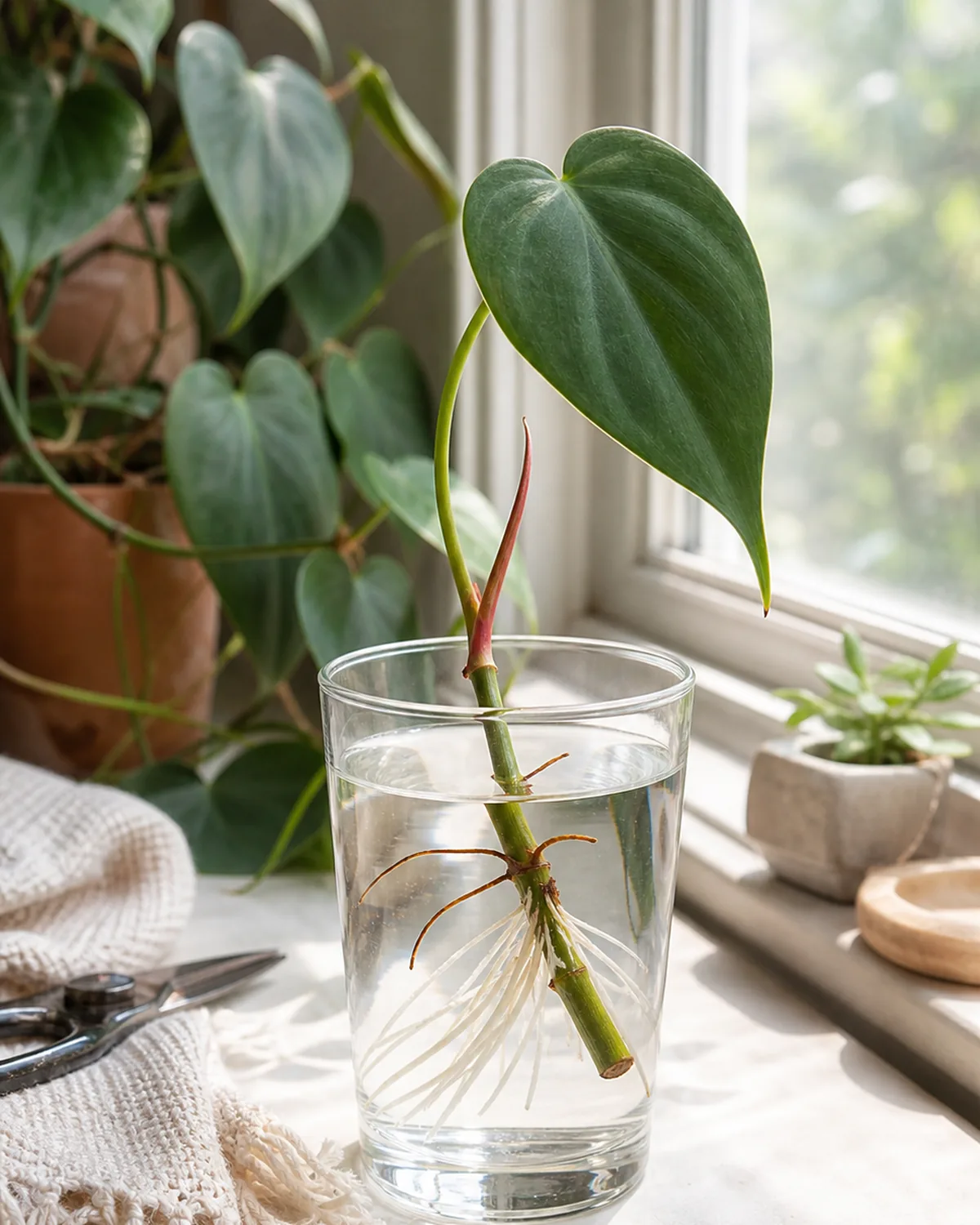
Cut a four to six inch section of vine with at least one leaf node, strip off the bottom leaf so no foliage sits underwater, and submerge the node in a glass of water. Roots typically appear within two to four weeks.
Philodendron propagation is faster and more forgiving than most other climbing aroids because almost any node roots on contact with water — not only nodes that already carry a visible aerial root. Compare that to monstera, which only reliably roots from a node plus its own aerial root; a philodendron node with no aerial root in sight still roots on its own timeline.
- Cut 4-6 inches with at least one node, and strip the lowest leaf before submerging.
- Submerge only the node, keeping remaining leaves above the waterline.
- Pot it into soil once roots are 1-2 inches long, the same size threshold used for most vining aroids.
Philodendron Care: The Quick Reference
- 1Philodendron vs pothos: check the new leafA philodendron unfurls a coppery new leaf from a papery sheath; a pothos new leaf is pale yellow-green with no sheath. Philodendron leaves are thinner and more matte too.
- 2Light: bright indirect for tight leaf spacingMore light means bigger leaves packed closely together. Low light means small leaves and long bare stretches of stem between them.
- 3Water: on the droop, not the calendarA thirsty vine droops noticeably and perks back up within hours of a drink. Let the top inch or two of soil dry out first.
- 4Soil: a chunky, fast-draining aroid mixPotting soil plus perlite and a little orchid bark. Always a pot with a drainage hole so roots never sit in water.
- 5Yellow leaves: check for mush before blaming ageOne yellow leaf at the base of an old vine is normal aging. Several yellowing leaves with a soft, dark stem base means overwatering.
- 6Small new leaves mean not enough lightNew leaves that stay small while older ones are bigger is the plant conserving energy. Move it closer to a bright window.
- 7Legginess: a climber reaching for something to grabLong bare stretches with tiny leaves at the tip is etiolation, and philodendron stretches faster than pothos because it is a natural climber.
- 8Prune above a node to force branchingCut a leggy vine just above a leaf node. The plant branches at that cut instead of just growing longer.
- 9Propagate almost any node in waterCut a 4-6 inch section with a node, strip the bottom leaf, submerge the node. Roots appear in 2-4 weeks, often faster than other aroids.
- 10Aerial roots are for climbing, not a problemThe wiry brown roots at stem nodes help the plant anchor onto bark in the wild. Leave them, tuck them into the soil, or train them onto a pole.
- 11Climbing grows bigger leaves than trailingA moss pole or bark support triggers noticeably larger, more mature leaves than the same vine left to hang.
- 12Pests: spider mites and mealybugsFine speckling and faint webbing signal spider mites in dry air; check leaf joints for mealybugs. Wipe leaves monthly and treat with insecticidal soap.
- 13Pet safety: mildly toxic, hang it up highCalcium oxalate crystals irritate cats and dogs if chewed. Heartleaf, Brasil, Micans, and Lemon Lime are the common varieties.
kultivy.com
What those long, wiry aerial roots are (and what to do with them)
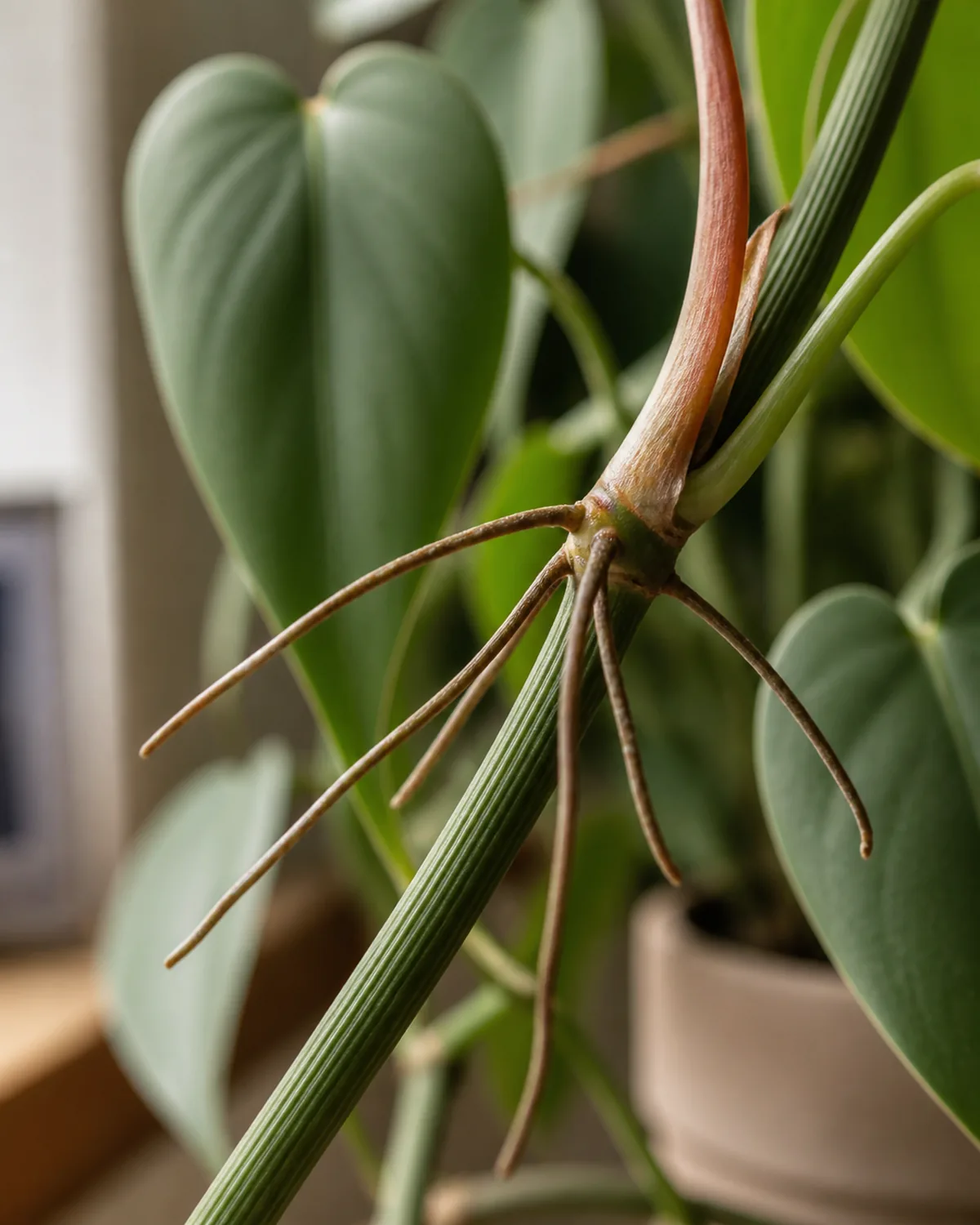
The thin, wiry brown roots growing from stem nodes are the plant’s natural climbing and anchoring mechanism, the same structure it would use in the wild to grip bark and tree trunks on its way up toward brighter light. They are completely normal and not a sign of stress.
Left alone they do no harm. Tucked back toward the soil they sometimes root into the pot themselves. Given a moss pole or bark support to grip, they anchor the vine and help it climb into the larger, more mature leaf shape covered next.
- Wiry brown roots at the nodes are normal climbing anatomy, not a pest or a problem.
- Leave them alone or tuck them toward the soil if the look bothers you.
- Give them a pole or bark support to grip if you want the plant to climb.
How to train it to climb instead of trail
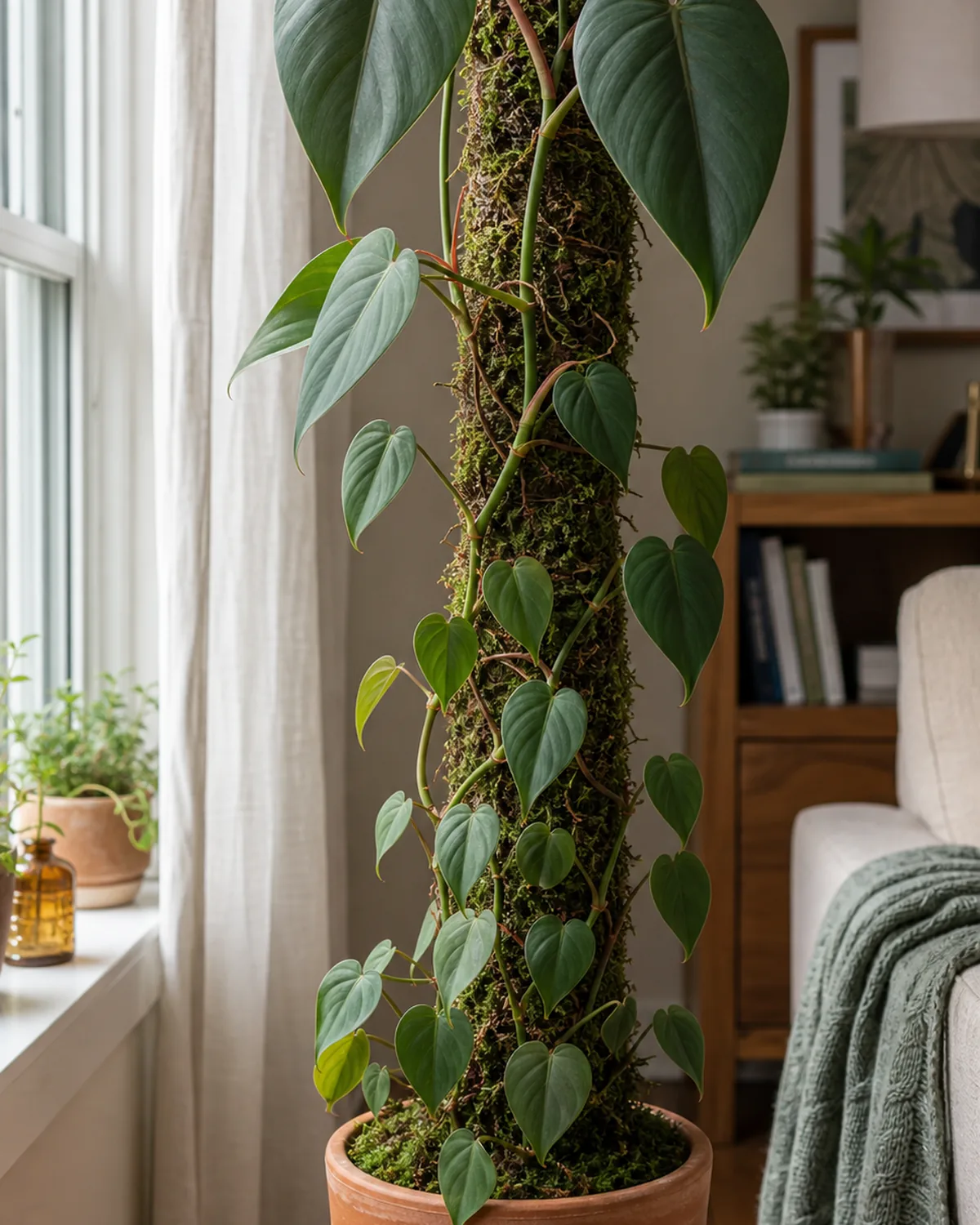
A heartleaf philodendron is a natural climber, not just a trailer, and letting it climb changes how it grows. A vine trained up a moss pole or bark support consistently produces larger, more mature-shaped leaves than the same vine left to hang loose over the edge of a shelf, because climbing triggers a different, more mature growth phase in the plant.
Loosely tie new growth to the support every few inches until the aerial roots take hold, and mist the moss pole occasionally so the aerial roots have something damp to grip. For anyone who prefers the trailing look instead, these plant shelf and corner ideas cover training it up a shelf or letting it cascade.
- A moss pole or bark support triggers larger, more mature leaves than trailing alone.
- Loosely tie new growth to the support until the aerial roots grip on their own.
- Keep the moss pole lightly damp so the aerial roots have something to hold onto.
Spider mites and mealybugs: the two pests to check for monthly
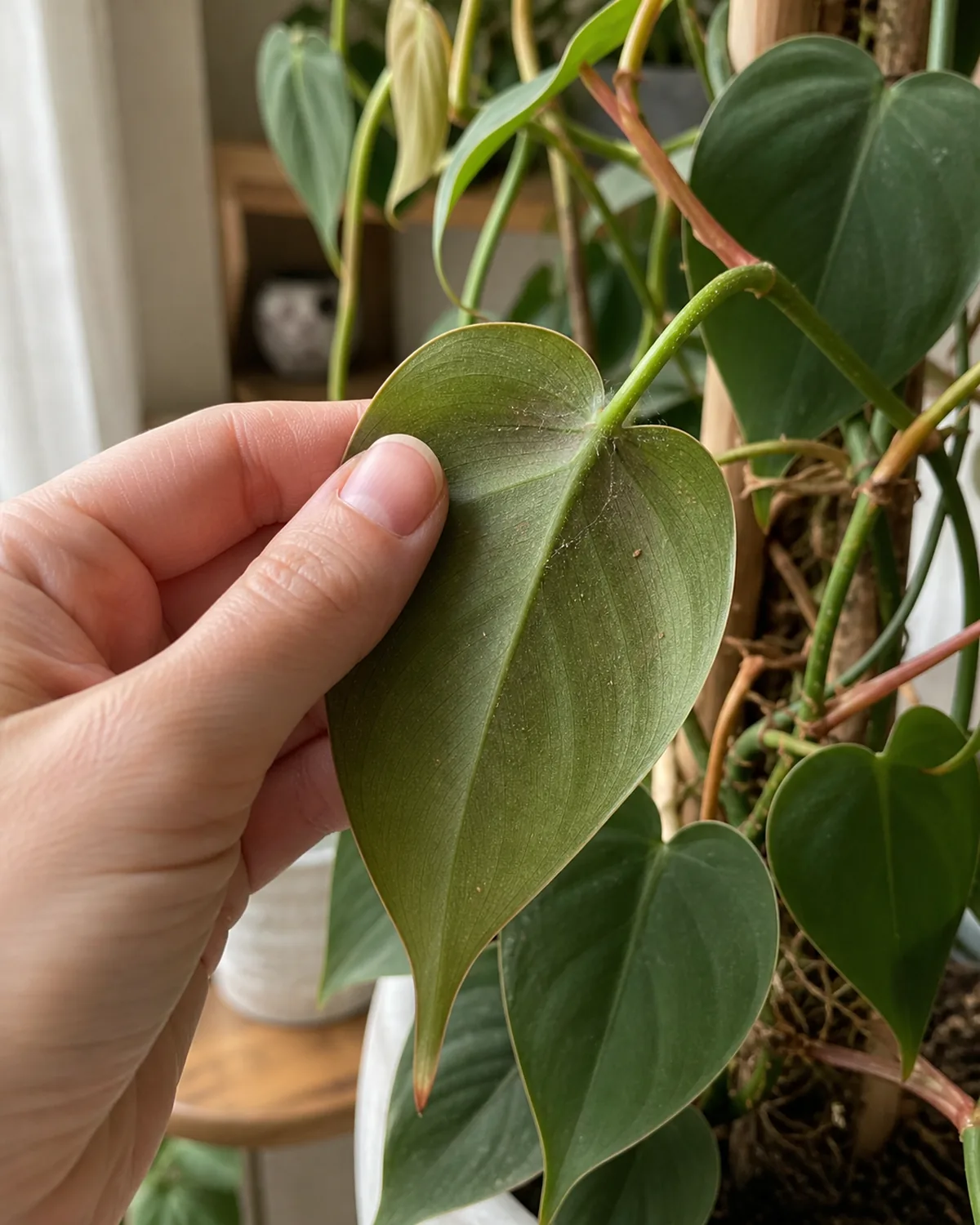
Spider mites show up most often in dry indoor air, appearing as fine speckling on the leaves and faint webbing near the stem before an infestation is obvious at a glance. Mealybugs tend to tuck themselves into leaf joints and along stems as small white cottony clusters.
A monthly wipe-down of the leaves catches both early, and any real infestation responds well to insecticidal soap or a diluted neem oil spray applied to the whole plant, not just the visible pests.
- Fine speckling with faint webbing points to spider mites, worse in dry air.
- Small white cottony clusters in leaf joints point to mealybugs.
- Wipe leaves monthly and treat infestations with insecticidal soap or neem oil.
Is philodendron toxic to pets, and what are the common varieties?
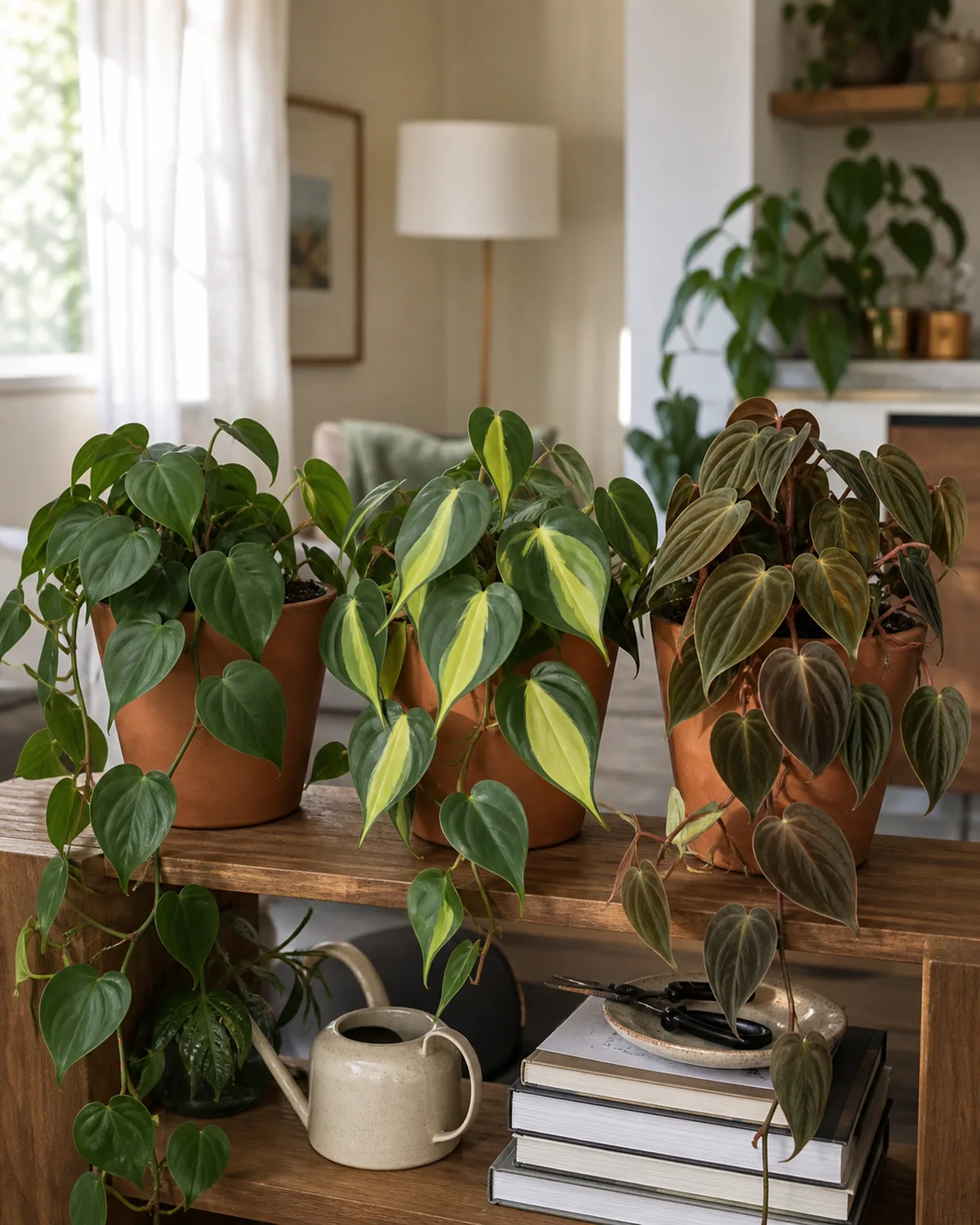
Honestly: a heartleaf philodendron is mildly toxic to cats and dogs, since its leaves contain calcium oxalate crystals that irritate the mouth and stomach if chewed. Hang it or keep it up high, out of easy reach, especially given how eagerly it trails and climbs into low spots.
Classic heartleaf is the plain, solid-green trailing form most people picture first. ‘Brasil’ adds a lime-yellow center stripe down each leaf, and ‘Micans’ has velvety, iridescent bronze-green leaves with a texture unlike any of the others. ‘Lemon Lime’ is chartreuse from base to tip.
Newer to houseplants and want something just as forgiving with a completely different growth habit — a rosette instead of a vine? See the pilea peperomioides guide.
- Mildly toxic to cats and dogs — keep it up high or in a room pets don’t roam.
- Heartleaf, Brasil, Micans, and Lemon Lime are the most common varieties, each with a distinct leaf look.
- All share the same care routine in this guide regardless of variety.

Mara Quinn edits Kultivy, where she shares houseplant care, propagation, beginner-friendly plant picks, and plant-styling ideas for anyone who wants their indoor plants to actually thrive. Every guide is image-led and reviewed for clarity, usefulness, image accuracy, and Pinterest-to-page alignment before it goes live. Visit the About page.