The first time someone hands you a small pilea peperomioides, you notice the shape first. A single slender stem, a handful of round disc-shaped leaves on long petioles, each petiole joined at the center of the leaf back like a tiny green parasol.
That sculptural single-stem look is exactly why it earned its run of nicknames: Chinese money plant, UFO plant, pancake plant, friendship plant. It is also easy enough for new plant owners and genuinely safe around cats and toddlers.
Most owner problems come down to two small things — too little light, which leans the stem sideways and shrinks the discs, and a too-large pot that rots the rhizome before any pups appear. Sort those out and the friendship-plant nickname earns itself.
A pilea peperomioides is one of the rare sculptural single-stem houseplants that is also genuinely pet-safe and reliably hands out free pups from underground rhizomes. Most owner mistakes come down to two things — not enough light, and a pot that is too big. Jump to whichever question matters most today.
- 1How much light it actually needs
- 2How often to water
- 3Why the leaves cup, curl, or dome
- 4The right soil mix and a snug pot
- 5The best spot for the sculptural habit
- 6Why it is leaning or stretching tall
- 7How to root the underground pups
- 8Safe for cats, dogs, and kids?
- 9When and how to repot
- 10Pests and a fix
- 11Normal vs warning yellowing
- 12The varieties worth knowing
- 13Long-term thriving tips
How much light a pilea peperomioides actually needs (and why bright indirect keeps the discs flat and round)
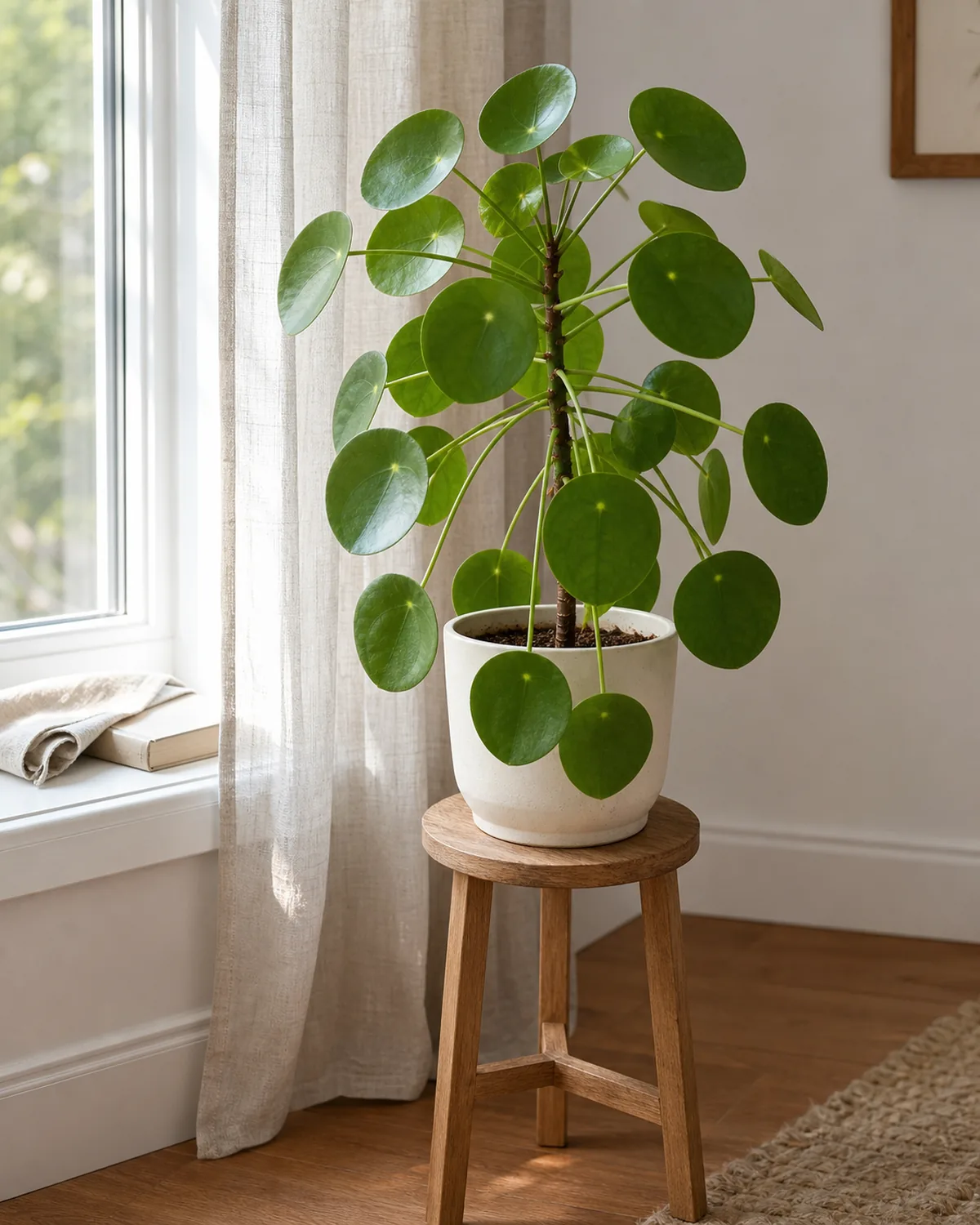
Bright indirect light all day grows the largest, flattest, most perfectly round disc leaves and reliably triggers the underground rhizome pups beside the parent stem. Medium light grows it slowly with smaller darker discs. Direct hot afternoon sun bleaches and crisps the thin peltate leaf edges, and deep low light stretches the stem, shrinks the leaves, and tilts the whole plant dramatically.
Compared to a ZZ plant, which tolerates a windowless corner, pilea needs real brightness to keep its sculptural shape.
- A spot two to three feet back from a south or east window is the sweet spot for big flat discs.
- A sheer-curtained west window works once the curtain softens the afternoon glare.
- Skip a north-facing room without a supplemental light; the stem will lean within weeks.
How often to water (and why a pilea wilts dramatically before it gets really thirsty)
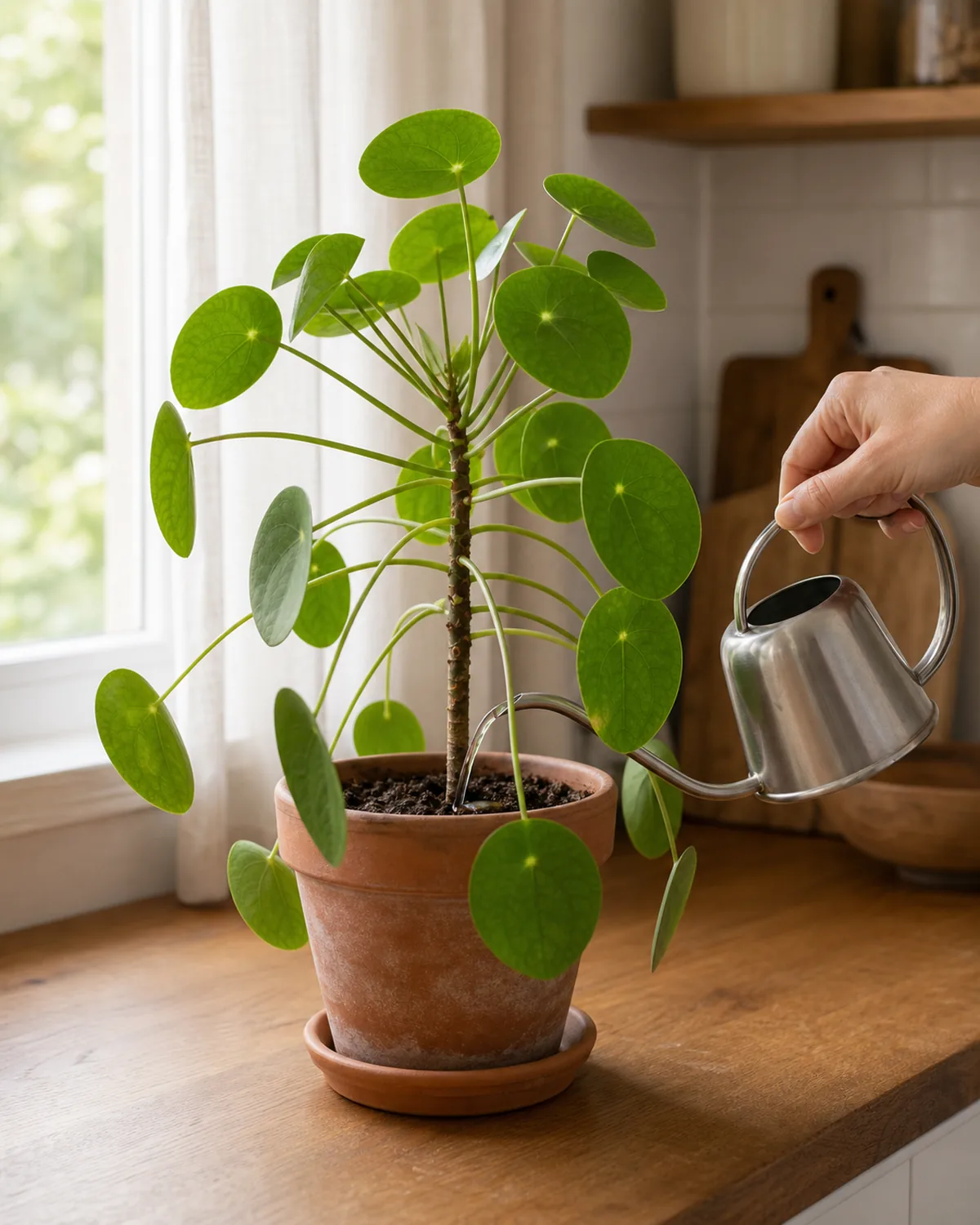
Water deeply when the top inch of soil is dry, typically every 7 to 10 days in summer and every 10 to 14 days in winter. The slender stem and petioles store a little water but not much, so a pilea visibly droops and the petioles soften within a day or two of going dry. A good drink re-perks it within hours, which is part of why beginners love it.
Compared to a ZZ rhizome that holds weeks of moisture or a snake plant that holds three to four weeks, pilea wants more frequent water — but never soggy soil, because cold wet feet rot the roots fast.
- Pour at the soil line, not on the disc leaves. Water sitting on the discs spots them.
- Empty the saucer after every watering. Standing water at the base is the fastest way to rhizome rot.
- Cut watering by a third in winter when growth slows and the soil holds moisture much longer.
Why the leaves are cupping, curling, or doming (the light direction signal)
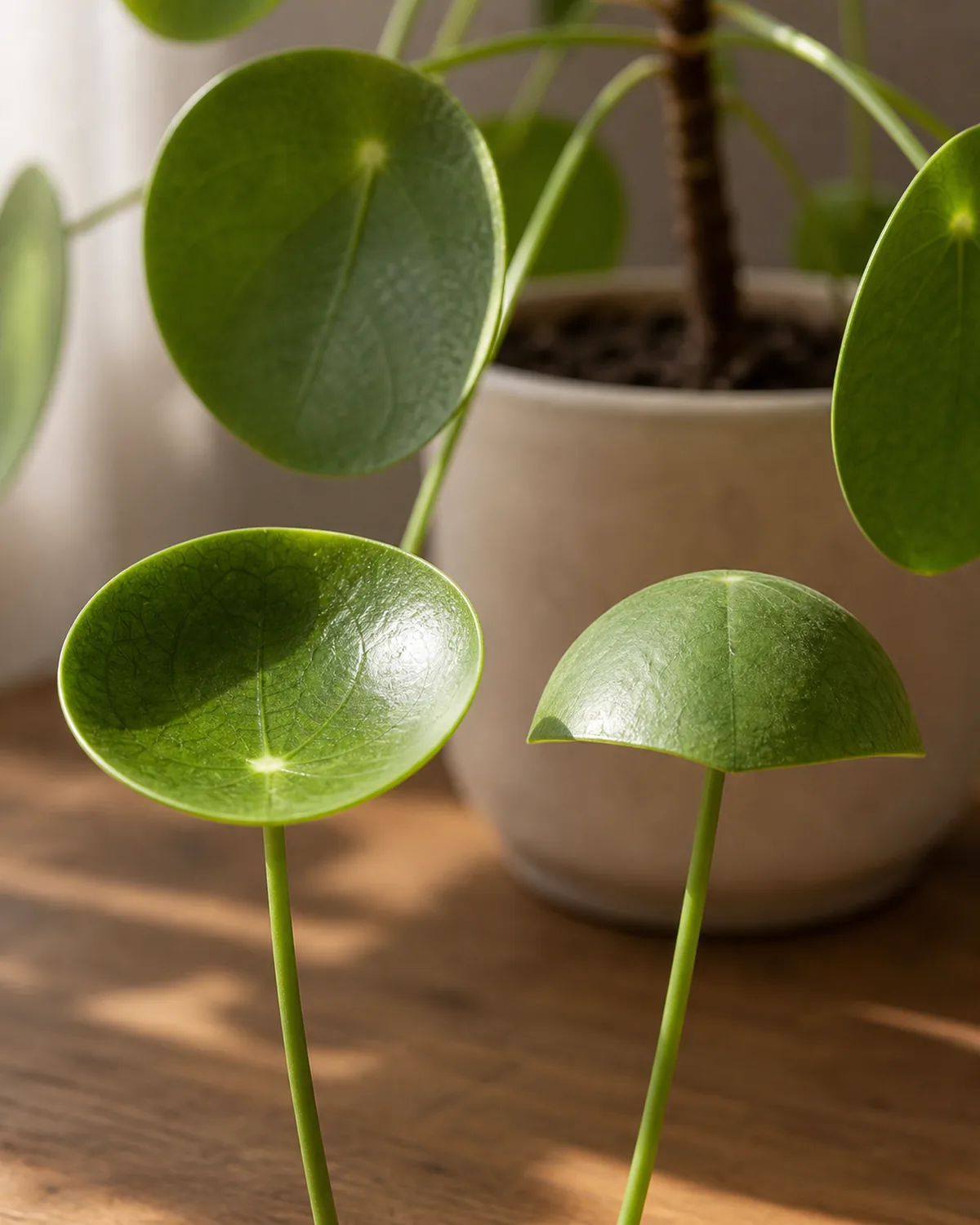
The number one cause of cup-shaped (bowl-up) or dome-shaped (bowl-down) pilea leaves is uneven or too-strong light. Discs curl up when the leaves are stretching toward a light source from one side, and curl down when they are getting too much direct sun and trying to protect themselves.
Rotate the pot a quarter turn every week or two so all leaves stay flat and round, and pull the plant a foot back from a south or west window if the discs are doming. The signal is pilea-specific: brown tips, yellow leaves, and droop all mean other things on this plant.
- Rotate weekly so every disc sees the same light over a month.
- Pull back a foot from the window if the discs are doming downward; that is sunburn defense.
- Move closer to the window if the discs are cupping upward; that is light-hunger.
A new pilea rarely has one big problem — it has one specific question. Find the one that matches your plant today and start there.
The pot-size mistake that quietly kills more pileas than anything else
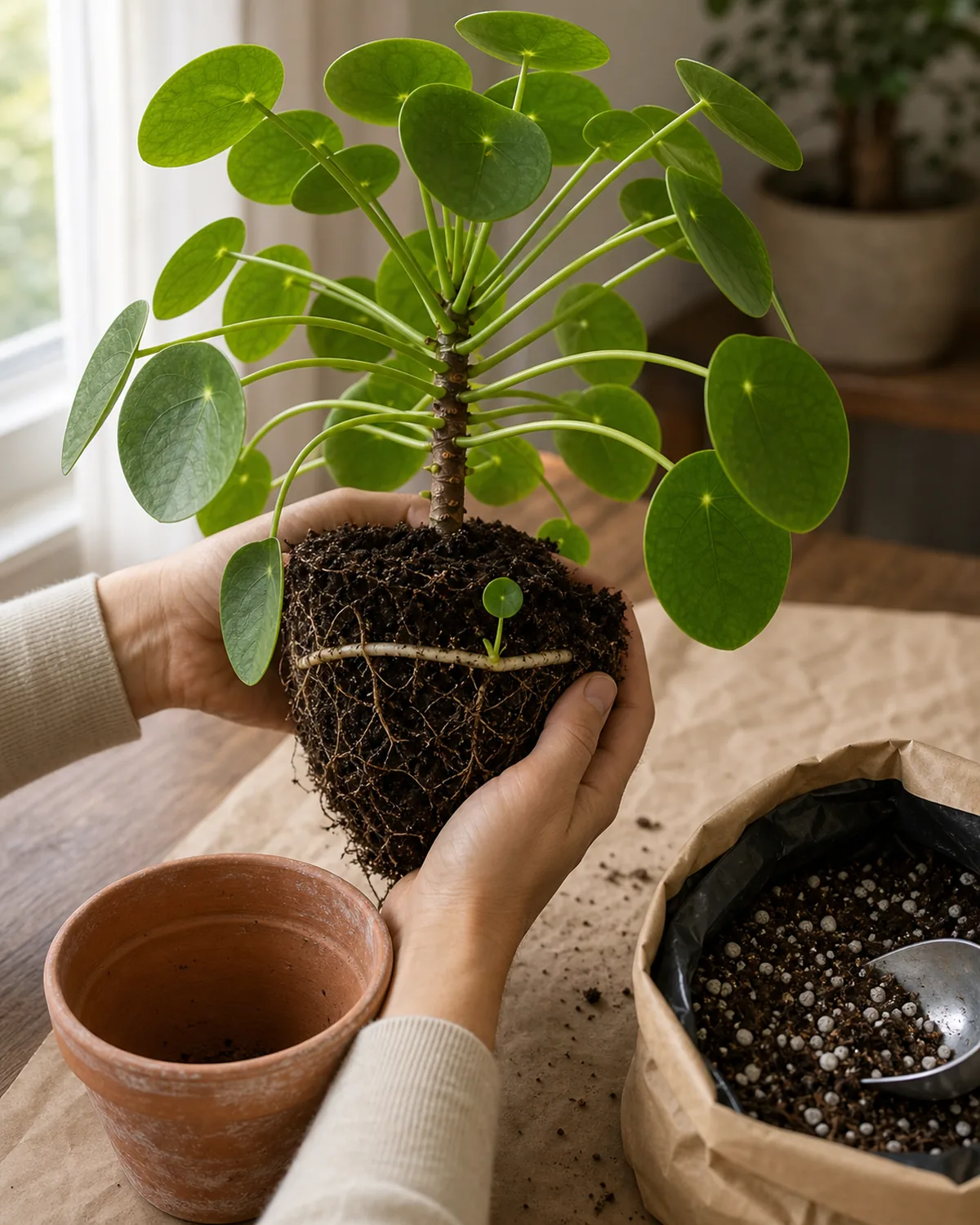
The most common cause of a dead pilea is not underwatering, not bad light, and not pests. It is a pot that was two or three sizes too big from the start.
The thin pale rhizome runs horizontally just under the soil surface, and a pot more than an inch wider than the rootball leaves a ring of cold wet soil around it that the small root system cannot drink. Winter overwatering on top of that loose volume rots the rhizome before any leaf shows trouble.
Pilea is not fussy about the soil itself. A standard houseplant mix amended with extra perlite or pumice drains the way the rhizome wants. Terracotta with drainage wicks excess moisture between waterings, and a pot only one inch wider than the rootball forces the roots to use every bit of soil they sit in.
The best spot for it (and how to show off the sculptural disc-leaf habit)
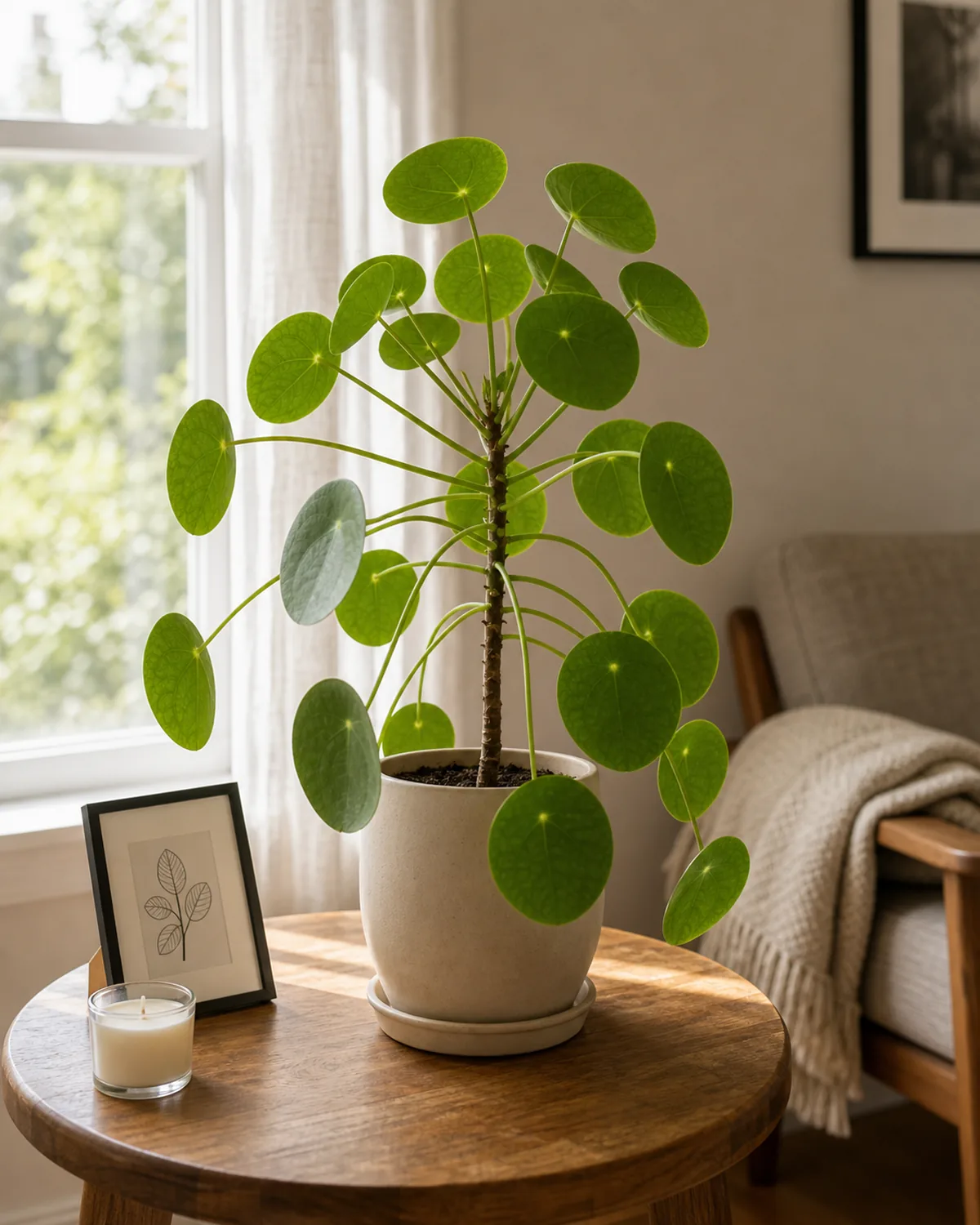
Pilea is the rare houseplant whose architecture reads as sculpture. A side table two to three feet back from a south or east window, an open shelf at eye level, or a small plant stand where the round discs catch side light all let the single-stem habit shine. A quiet bedroom side table within a few feet of a bright window also works beautifully.
Style it as a single-statement piece on a styled console rather than crammed in with other foliage. Our plant shelf and corner ideas guide covers the kinds of sculptural single-stem perches that flatter a pilea.
- An open shelf at eye level lets you see the peltate underside-center petiole attachment.
- A small side table with one art print and a candle reads as gallery composition.
- A slim plant stand beside an armchair works when no horizontal surface is free.
Why your pilea is leaning sideways or stretching tall (and the etiolation fix)
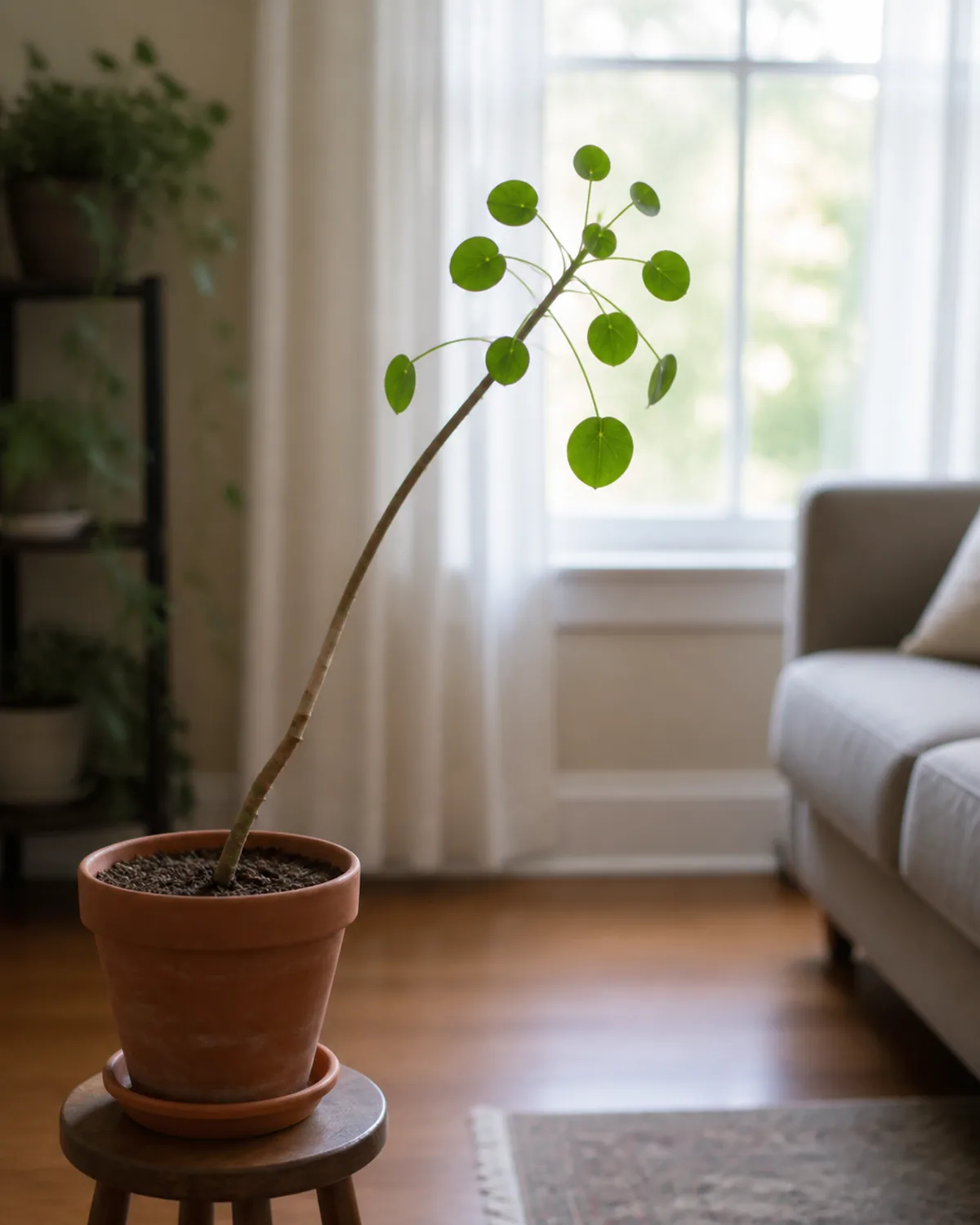
A leaning, stretched-out pilea with a long bare lower stem and shrinking top leaves means one thing — not enough light. The plant is reaching for a brighter spot, and no amount of fertilizer, water, or repotting will reverse the existing bare stem.
Move it closer to a window with several feet of unobstructed bright indirect light, rotate weekly, and accept that the lower stem is now permanent. The cure for a tall leaning plant is light plus a fresh start: pinch off the top growing point to start a bushier new plant in water, while the base sends up new pups from the rhizome below.
- Move closer to the brightest window you have before doing anything else.
- Cut the top growing point to root in water for a new plant, since the bare stem will not refill.
- Wait for new pups from the underground rhizome at the base; they appear within a few months in good light.
A pilea is forgiving once you know what it actually wants. Four small habits keep the disc leaves flat and round, the underground pups coming, and the rhizome safe from rot.
How to root the underground pups (the friendship-plant tradition)
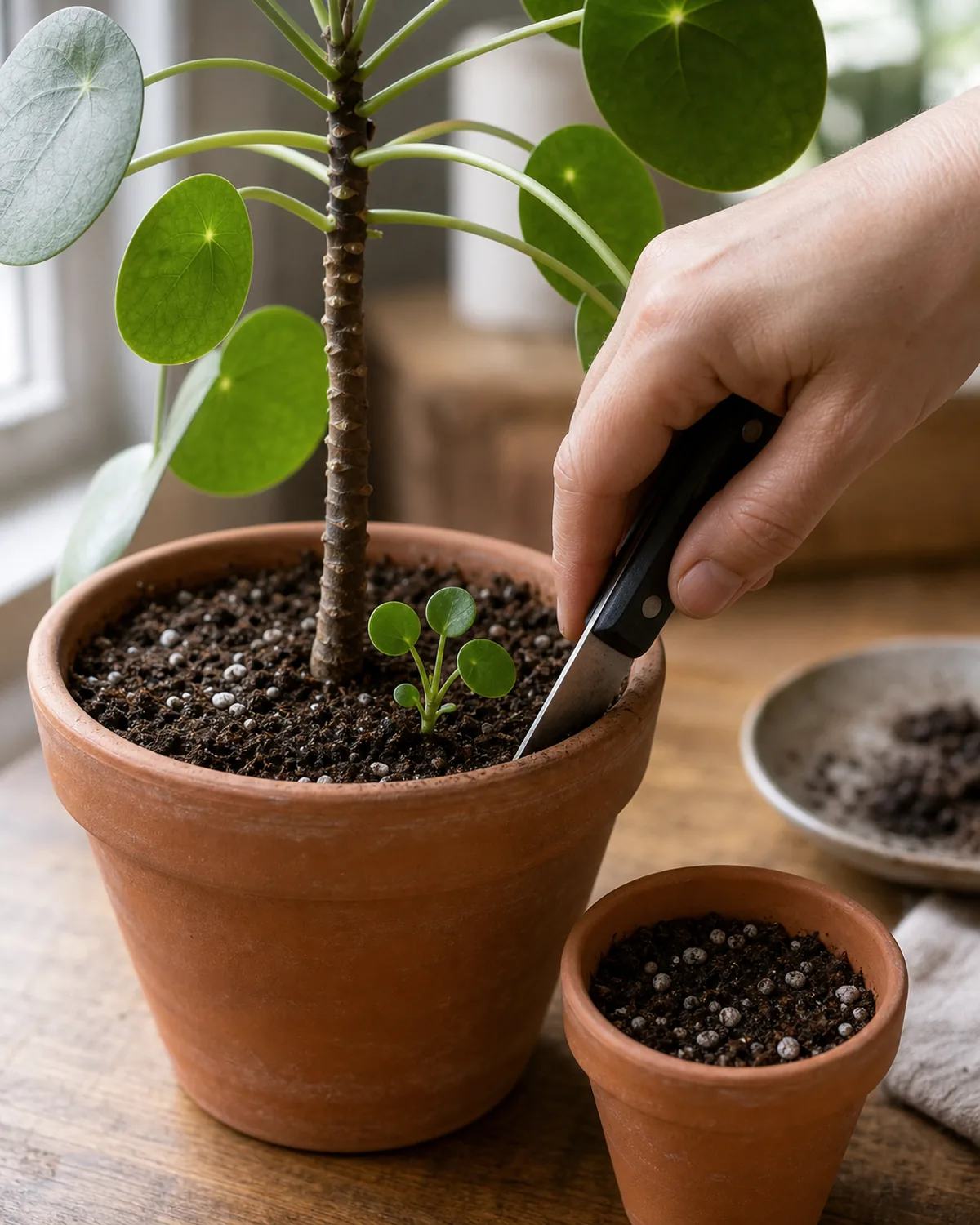
Pilea sends up small baby plants directly out of the soil beside the parent, from an underground rhizome that runs horizontally just under the surface. Once a pup has two or three leaves of its own and is an inch or two tall, slide a clean knife straight down beside it, sever the rhizome cleanly, lift the pup with its own small roots, and pot it up in a tiny pot of the same mix.
This is where the friendship-plant nickname comes from — pilea hands out free plants reliably enough to gift them through the year. Unlike a spider plant, which throws baby plantlets out into mid-air on arching stolons, a pilea sends its pups up from underground rhizomes beside the parent. Same generosity, opposite direction.
- Wait until the pup has two or three of its own leaves before separating.
- Slide the knife straight down beside the pup so you sever the rhizome cleanly, not the parent roots.
- Pot the pup in a tiny pot of the same mix; a too-big pot stalls it the same way it stalls the parent.
Are pilea peperomioides safe for cats, dogs, and kids? (the pet-safe answer)
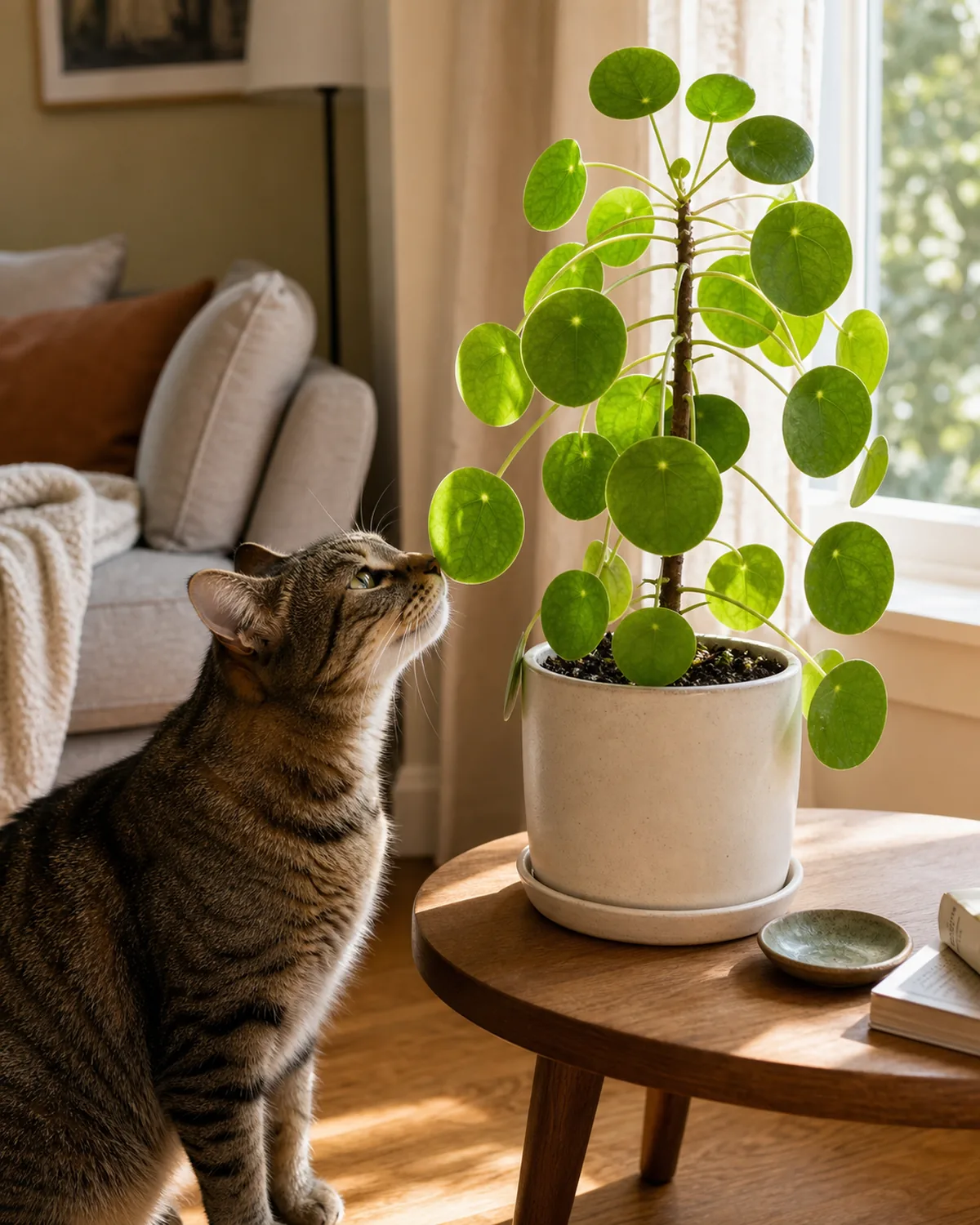
Pilea peperomioides is on the ASPCA non-toxic list for cats and dogs, and is considered safe around kids. The sap is plain, with no calcium oxalate crystals and no irritating latex, so an investigative bite or a paw-batted leaf is harmless beyond the usual mild stomach upset any houseplant chew can cause.
A worthwhile detail: the species name matters. A different unrelated plant sometimes also called “money plant” — the jade plant, Crassula ovata — is mildly toxic to pets. Pilea peperomioides, with its peltate round leaves on a single upright stem, is the safe one.
That makes it a much better pick for households with curious pets than a ZZ plant, peace lily, monstera, or pothos, all of which contain calcium oxalate.
- Place it where curious pets can reach it on purpose. A low side table beats a hanging pot for a safe target.
- Check the species name if you are gifted a “money plant”; jade and pilea are not interchangeable for pet safety.
- Style it beside known-safe houseplants like a spider plant for a cat-friendly corner.
When and how to repot (and why one pot size up is enough)
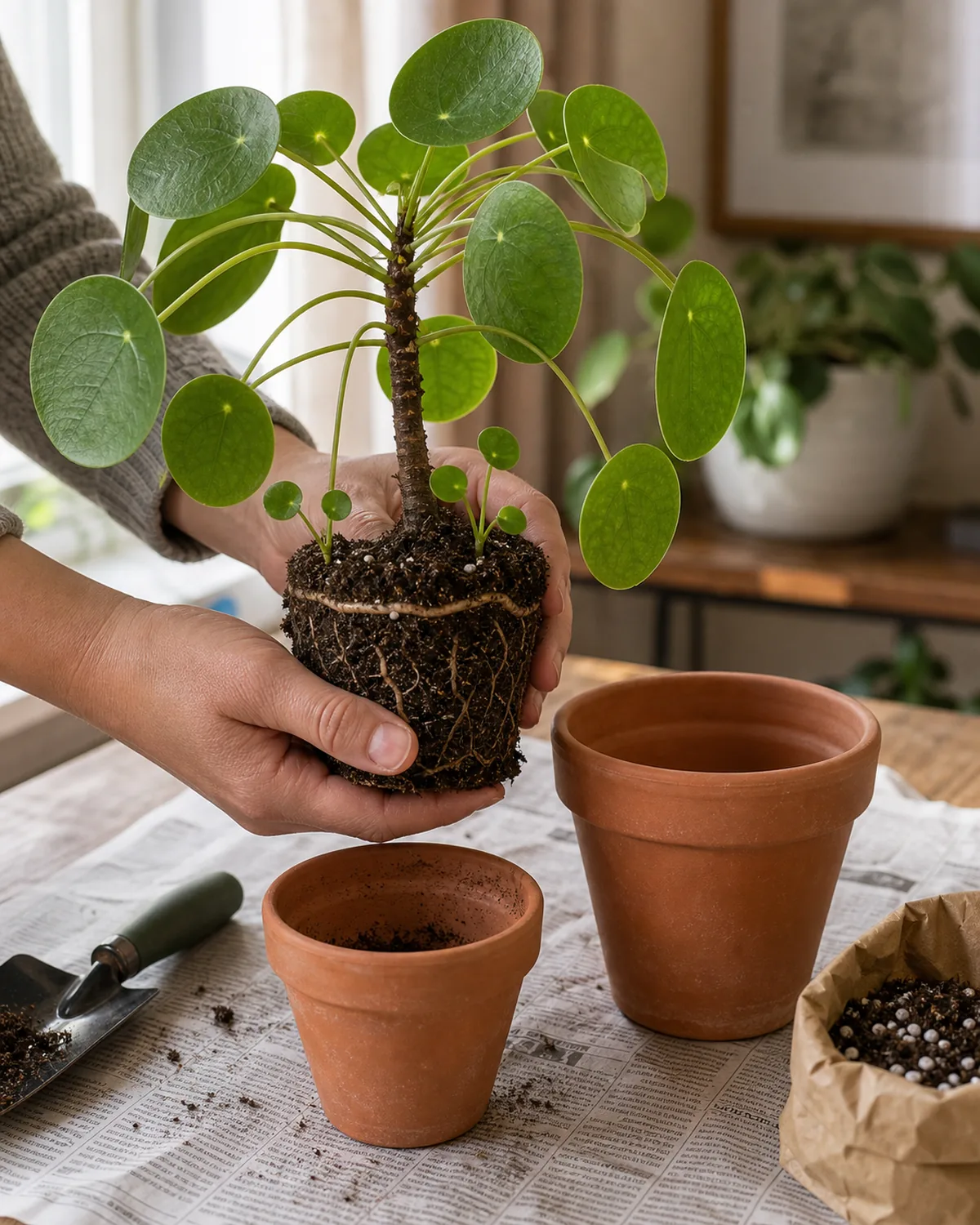
Repot every one to two years in spring, or sooner if pups are crowding the soil surface or roots are circling the bottom. Size up only one inch in pot diameter — a four-inch pot moves to a five, not a six.
Pilea hates a pot that holds wet soil far from the roots, so resist the urge to size up two pots at once. Use the chance to lift and separate any pups for new small pots.
- Repot in spring so the plant has the full growing season to settle in.
- Refresh the soil with fresh perlite-rich mix, since old soil compacts and holds water badly.
- Separate pups during the repot rather than digging a settled plant up twice in one season.
Pilea Peperomioides Care: The Quick Checklist
- 1Bright indirect keeps the discs flat and roundSouth or east window two to three feet behind a sheer curtain; harsh direct sun crisps the thin peltate leaf edges.
- 2Water when the top inch driesEvery 7 to 10 days in summer, every 10 to 14 days in winter; the slender stem stores days, not weeks, of moisture.
- 3Leaf curl tells you about light directionCupping up equals not enough light, doming down equals too much direct sun. Rotate the pot weekly to even out the discs.
- 4A snug pot beats a roomy oneGo up one inch in pot diameter at most. Terracotta with drainage protects the thin rhizome from cold wet feet.
- 5Style it as a single sculptural statementA side table, an open shelf at eye level, or a slim plant stand — pilea reads best as a single-stem piece, not crammed in a cluster.
- 6A leaning plant means not enough lightMove closer to the brightest window, pinch the top to root a fresh cutting, and let the underground rhizome send up new pups.
- 7Pups pop up from the soil beside the parentWait until a pup has two or three leaves, then slide a knife straight down beside it and pot it up. Friendship plant earns its name.
- 8Genuinely safe around cats, dogs, and toddlersOn the ASPCA non-toxic list with plain sap and no calcium oxalate. A rare pet-safe pick among popular houseplants.
- 9Repot every 1 to 2 years, one size upIn spring, when pups crowd the surface or roots circle the bottom. A four-inch pot goes to a five, not a six.
- 10Pests are mostly fungus gnats and mitesLet the soil dry out for gnats, yellow sticky trap nearby. Shower the plant for mites, insecticidal soap for heavier infestations.
- 11One bottom yellow leaf at a time is normalMany leaves yellowing at once means root rot from cold wet soil. Lift, inspect the rhizome, snip the soft parts, repot dry.
- 12Pick a variety by leaf markingPlain species is the fastest, Mojito splashed cream-and-green, Sugar silvery sheen, White Splash irregular cream sectors. Care is identical.
- 13Divide and gift the pups every springSharing pups keeps the parent tidy and signals the rhizome to push out new ones through the season.
kultivy.com
The pests a pilea attracts (and why fungus gnats are the number one signal)
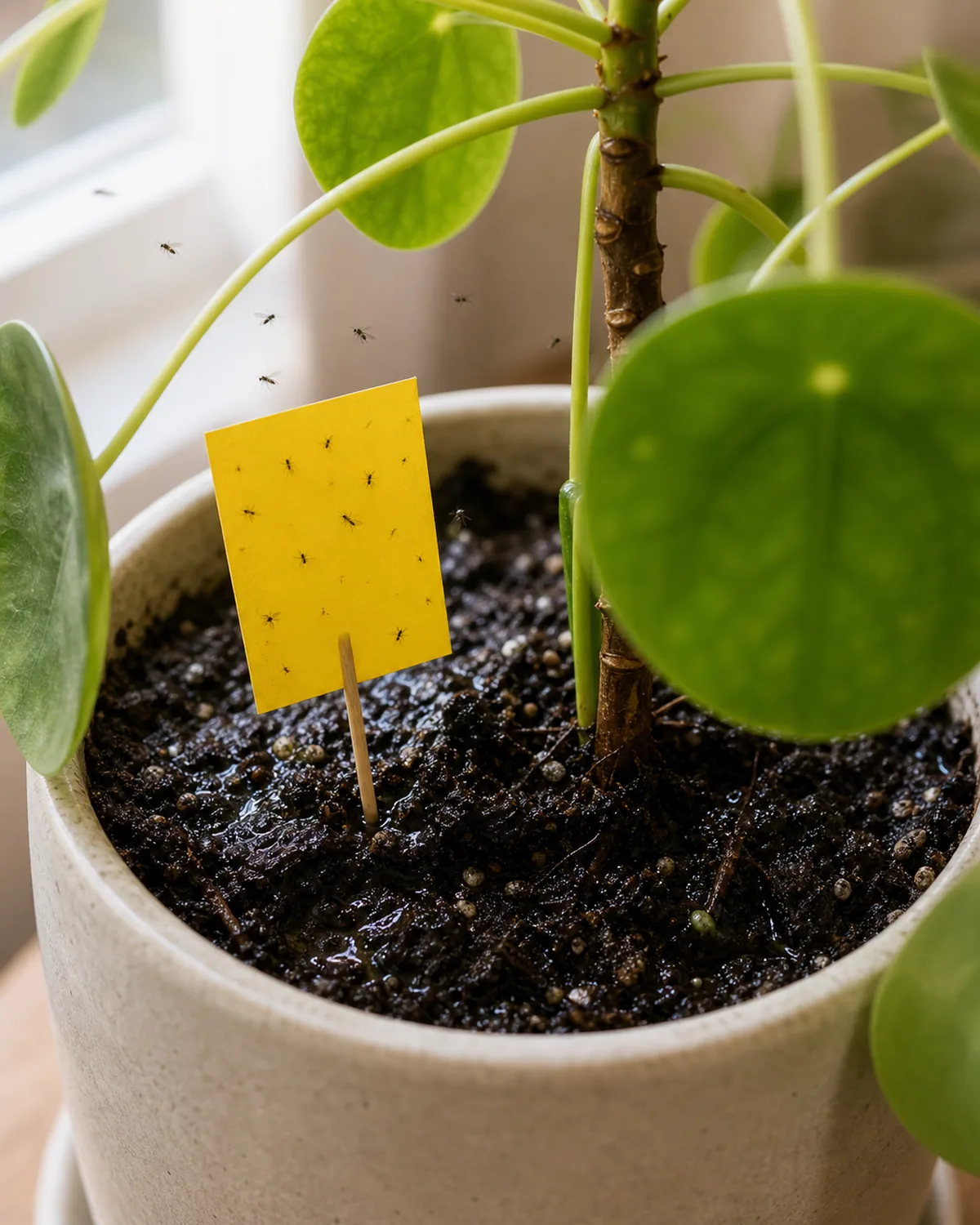
The number one pilea pest is fungus gnats — and that is a signal, not just a nuisance. Gnats only breed in chronically wet soil, so a gnat outbreak means the watering schedule is wrong before the rhizome shows any rot. Let the soil dry out completely before the next watering, slide a yellow sticky trap card into the pot, and the population collapses within ten days.
Spider mites turn up in very dry winter air, leaving fine pale specks on the underside of the round discs. Rare scale or mealybug shows up at the stem joints where the petioles meet the central stem. Rinse the plant in the shower for mites, dab scale with a cotton swab of rubbing alcohol, and treat heavier infestations with insecticidal soap.
- Treat fungus gnats as a watering audit first. Dry the soil out before reaching for any spray.
- Check disc undersides every couple of weeks in heating season for the first pale specks of mites.
- Inspect stem joints when you spot a single scale bump — they cluster fast where the petioles meet the stem.
Why a leaf is yellowing and dropping off (and the difference between normal and a warning)
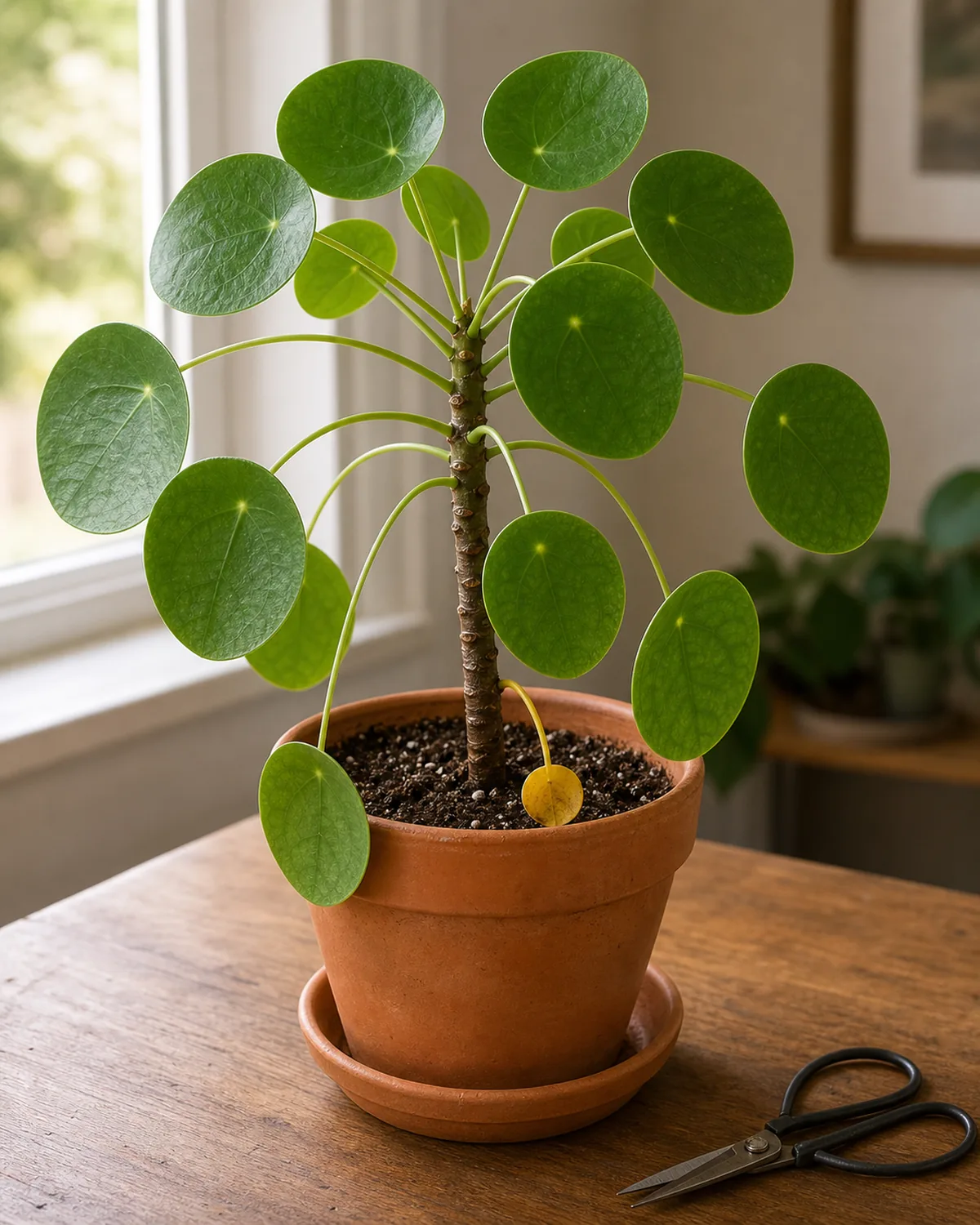
Losing the very lowest, oldest disc leaf on the stem every few weeks as the plant grows taller is normal. Pilea sheds spent lower leaves on its own as the stem extends — one yellow leaf at a time, near the soil line, with everything above it crisp and green.
Sudden mass yellowing or droopy yellowing across many leaves at once is a different story and almost always means overwatering and incoming root rot. Back off water, check the rhizome and roots for mushy darker sections, snip any black soft rhizome with a clean blade, and repot dry.
- One yellow bottom leaf at a time is fine. Snip it off with clean scissors and move on.
- Many leaves yellowing at once is root rot. Lift the plant the same day and inspect the rhizome.
- Cold wet soil triggers most cases. A winter overwatering is the fastest path to losing a parent plant.
The varieties worth knowing (‘Mojito’, ‘Sugar’, ‘White Splash’, and the standard species)
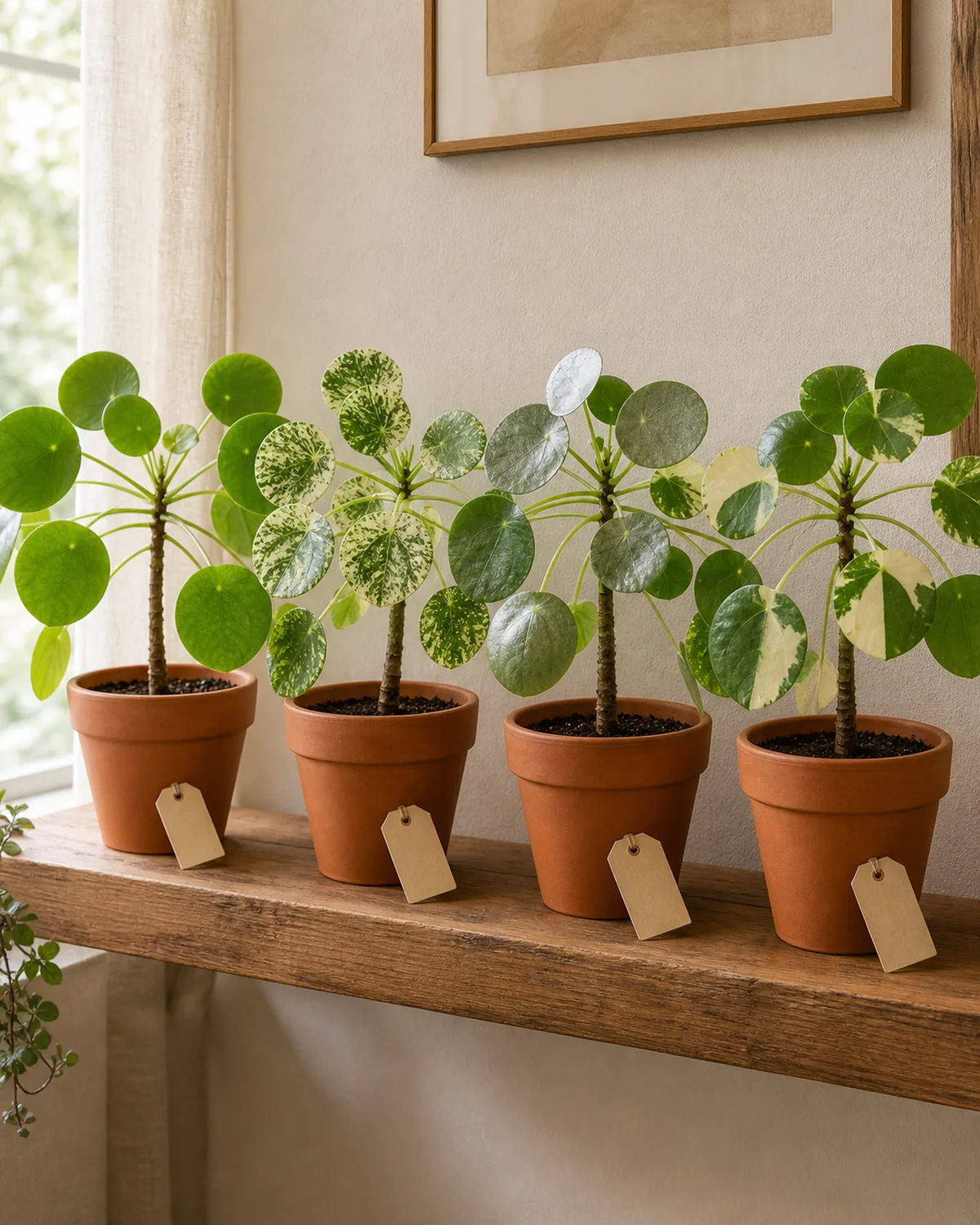
Four versions cover almost every pilea peperomioides for sale. The standard species has plain solid green round discs on the upright stem — by far the most common form. Mojito adds splashed and speckled cream-and-green variegation across the discs.
Sugar carries a subtle silvery-metallic sheen on the leaves, which catches side light beautifully. White Splash shows irregular cream sectors on otherwise green discs and is prized by collectors. The variegated forms grow more slowly and want slightly brighter light to hold their pattern.
- The plain species for the easiest care and the fastest pups.
Mojitofor a sculptural showpiece when you can give it brighter light and patience.White Splashfor collectors willing to chase a slower-growing variegated form.
A few quick tips for keeping a pilea peperomioides thriving long term
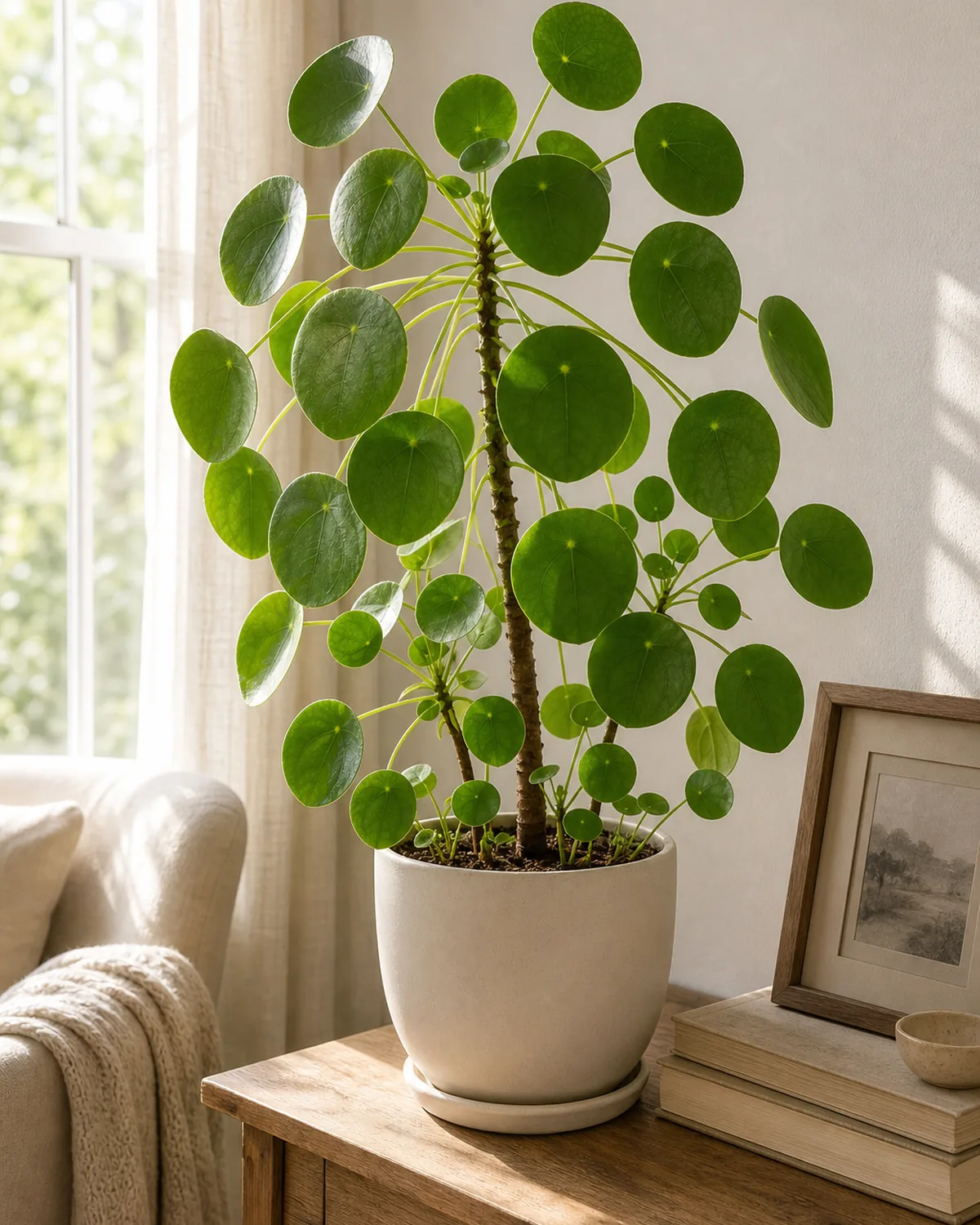
A pilea that is still throwing pups at year three is doing a handful of small things right. Give it the brightest indirect spot you can find. Rotate the pot every week or two to keep all the discs flat and round. Water deeply when the top inch is dry, then let it dry again. Never let it sit in a saucer of water. Divide and gift the underground pups every spring.
Pinch off the top growing point if you want a bushier multi-stemmed look instead of a single tall sculpture. Once you have a thriving parent and a steady supply of pups, our plant shelf and corner ideas guide is a good next read for finding each new plant a sculptural perch.

Mara Quinn edits Kultivy, where she shares houseplant care, propagation, beginner-friendly plant picks, and plant-styling ideas for anyone who wants their indoor plants to actually thrive. Every guide is image-led and reviewed for clarity, usefulness, image accuracy, and Pinterest-to-page alignment before it goes live. Visit the About page.