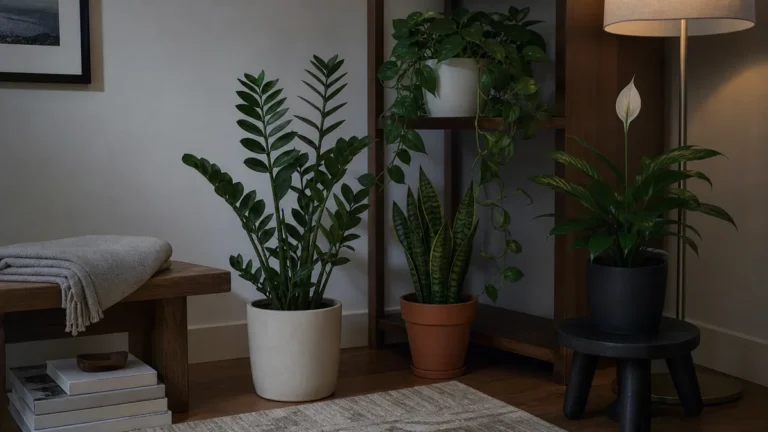
Most hanging plants people try at home end up looking limp, leggy, or half-bald within six months. The real question is rarely the plant; it is whether the species was a strong cascading trailer to begin with, the hook can hold a wet basket, and the spot gets enough light.
The thirteen picks below are the indoor trailers that reliably cascade, drape, or dangle in a real home, sorted by visual drama, ease of care, and pet safety so you can match the right plant to the corner you actually have.
If you are new to hanging anything alive from your ceiling, the easy-houseplants list covers a few of these picks in more beginner context.
A great hanging plant has to do three things at once, cascade reliably, fit the light you actually have, and stay safely on its hook. The thirteen picks below are sorted by visual drama, ease of care, and pet safety so you can match the right trailer to the corner you want to fill.
- 1Pothos, fastest forgiving cascade
- 2Heart-leaf philodendron, darker, softer
- 3Spider plant, only one with babies
- 4String of hearts, most photogenic
- 5String of pearls, beautiful, beginner trap
- 6String of dolphins, rare collector
- 7Burro’s tail, heavy succulent rope
- 8English ivy, cool-room trailer
- 9Boston fern, lush bathroom hanger
- 10Hoya carnosa, slow, fragrant bloomer
- 11Tradescantia zebrina, fastest color
- 12String of turtles, tiny patterned cascade
- 13Mistletoe cactus, soft jungle drape
Pothos, the forgiving classic that cascades fastest
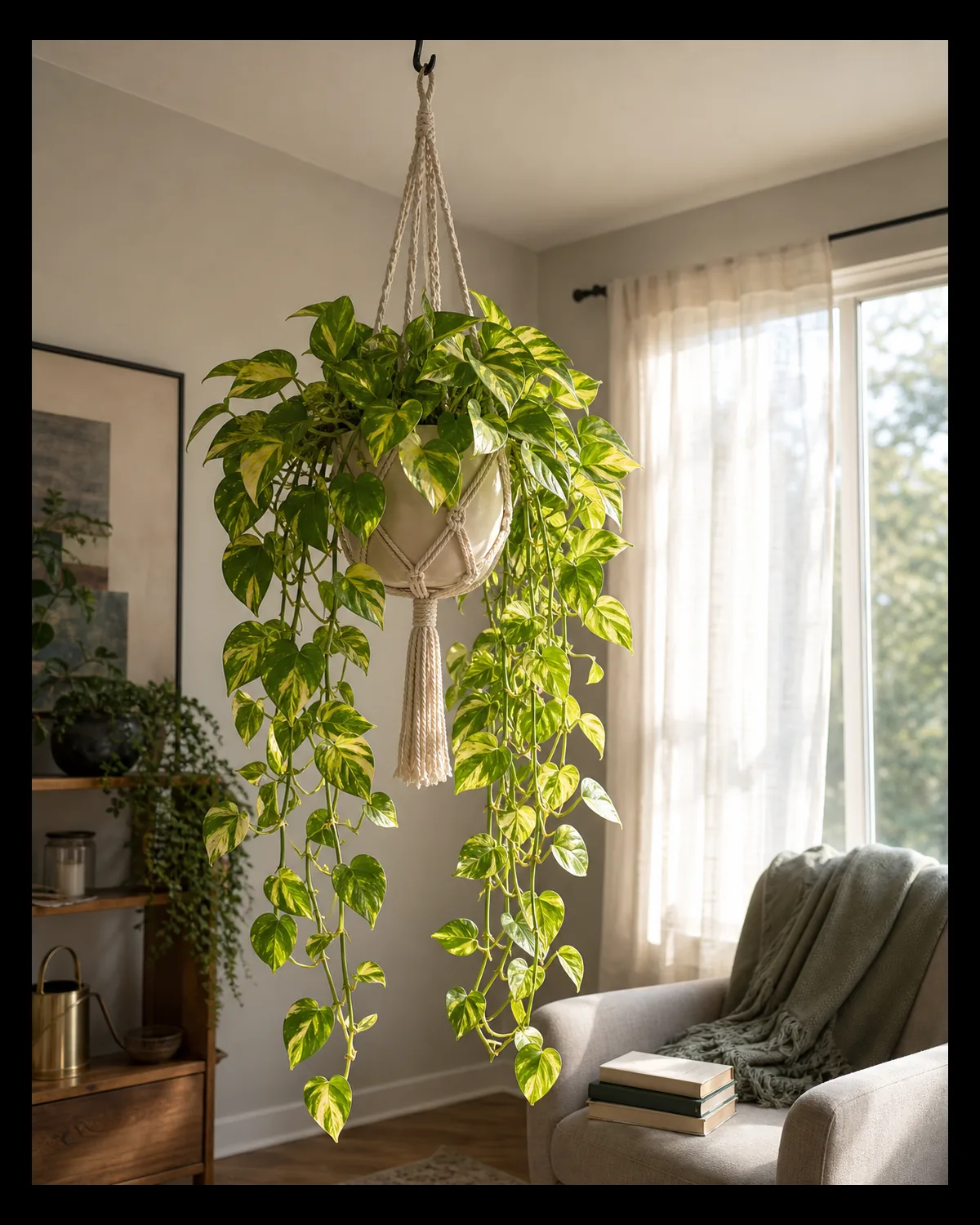
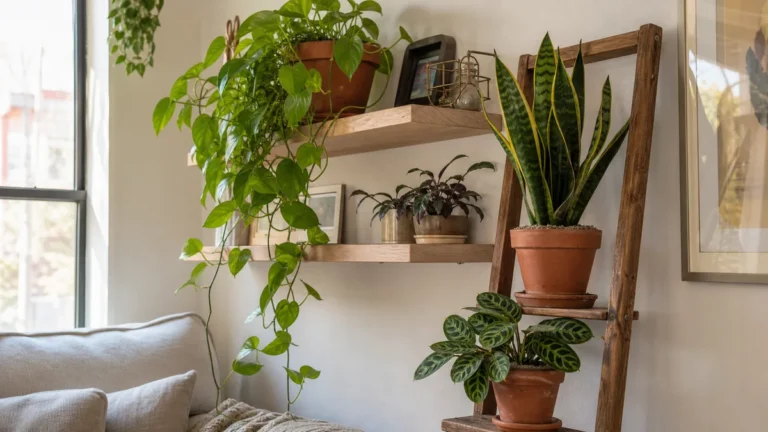
Golden, marble queen, neon, and N’Joy pothos throw long heart-leaf vines from a hanging basket. In bright indirect light they grow three to six feet in a year and hold their cream or yellow variegation; in lower light the vines stay green and the leaves get smaller, but they still cascade.
We listed pothos as one of the calmer bedroom plant picks too, for the same low-fuss reason it leads this list. Pothos is mildly toxic to cats and dogs, so hang it out of reach if you have curious climbers.
- Light: bright indirect ideal; tolerates medium light at the cost of slower, less variegated growth.
- Water: deeply when the top inch is dry; aim for every seven to ten days in summer, less in winter.
- Hanging note: the lightest fast trailer here, almost any sturdy ceiling hook will hold it for years.
Heart-leaf philodendron, the softer, darker pothos look-alike
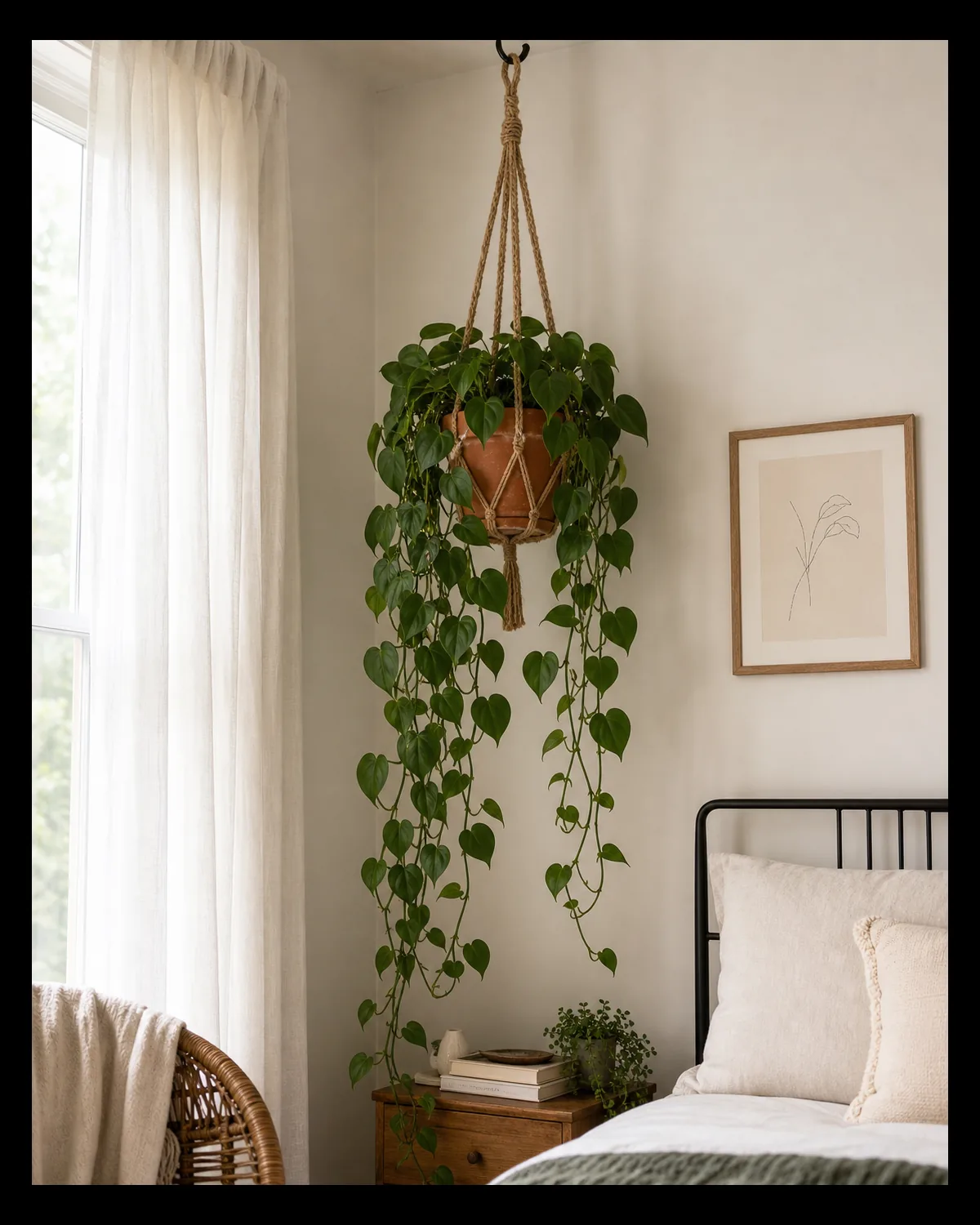
Heart-leaf philodendron has smaller, thinner, deeper-green heart-shaped leaves than a pothos vine and tolerates lower light better. The vines stay more uniform and less leggy if you pinch the tips back monthly, which is the move that keeps a philodendron basket full from top to bottom instead of bare at the crown.
It loves humidity but copes with average rooms, which makes it a strong first hanging plant if pothos feels overused. Like pothos, it is toxic to pets if chewed.
- Light: bright indirect to medium; one of the more low-light tolerant trailers on this list.
- Water: when the top inch dries; a touch more thirsty than pothos but still very forgiving.
- Hanging note: pinch tips every four to six weeks to keep the cascade thick from the basket down.
Spider plant, the only hanging plant that throws babies
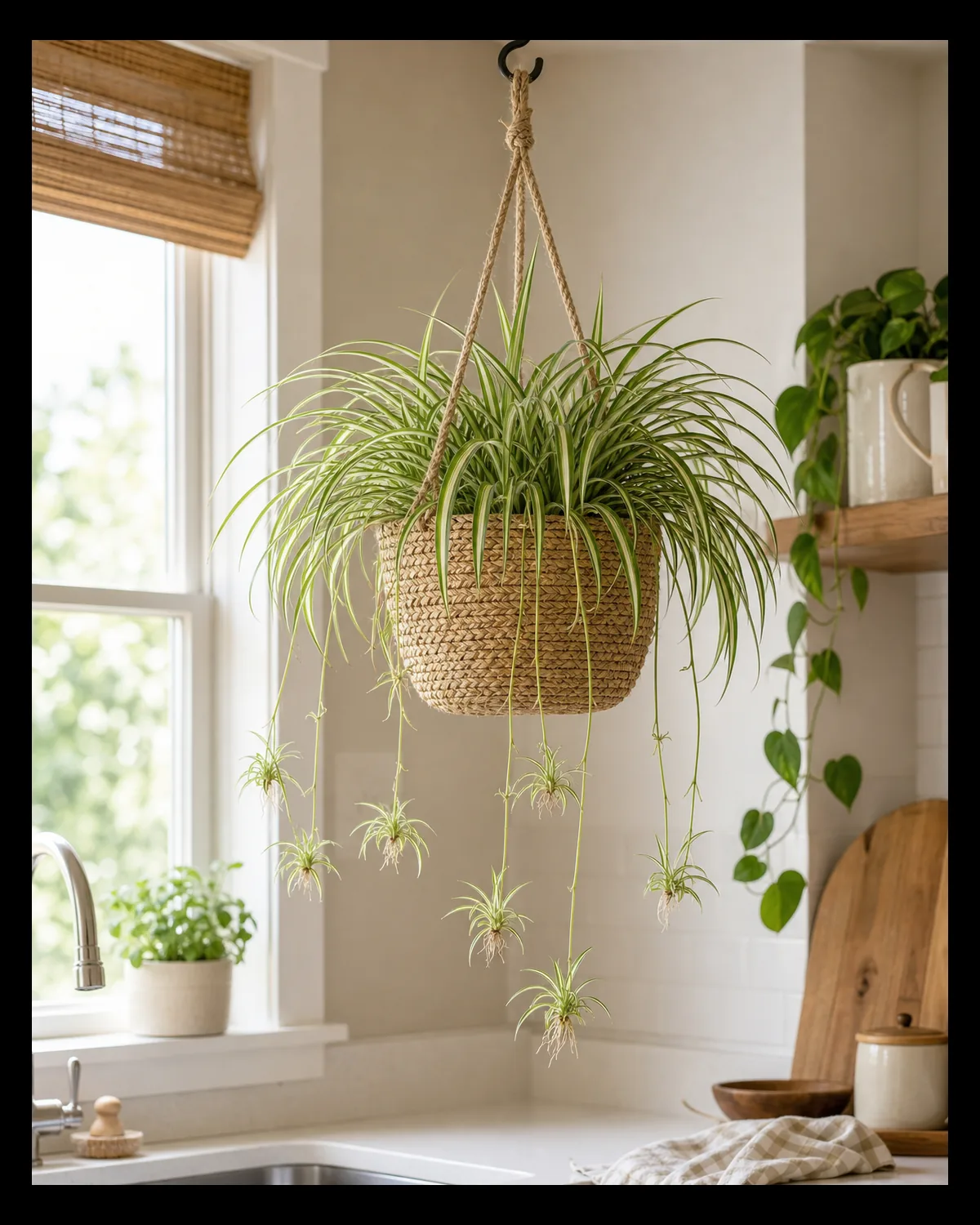
Spider plant has arching grass-like variegated leaves that form a rosette, then send out long wiry stolons that dangle baby plantlets in mid-air over the edge of a hanging basket. No other common trailer has that exact visual signature. Bright indirect light maximizes the babies; a slightly root-bound pot encourages more stolons through the season.
It is one of the few ASPCA non-toxic hanging picks, which makes it the safest choice for households with curious cats. The full spider plant care walkthrough covers feeding, brown tips, and pup propagation in depth.
- Light: bright indirect for the most babies; tolerates medium light without stolons.
- Water: keep evenly moist; brown tips usually signal fluoride or chloride in tap water.
- Hanging note: a mature plant with babies gets heavy, use a hook into a stud.
The best hanging plant for you is rarely the one with the most likes on Pinterest. Match the pick to the light, the ceiling, and the household, start with whichever situation describes yours.
String of hearts, the most delicate and photogenic trailer
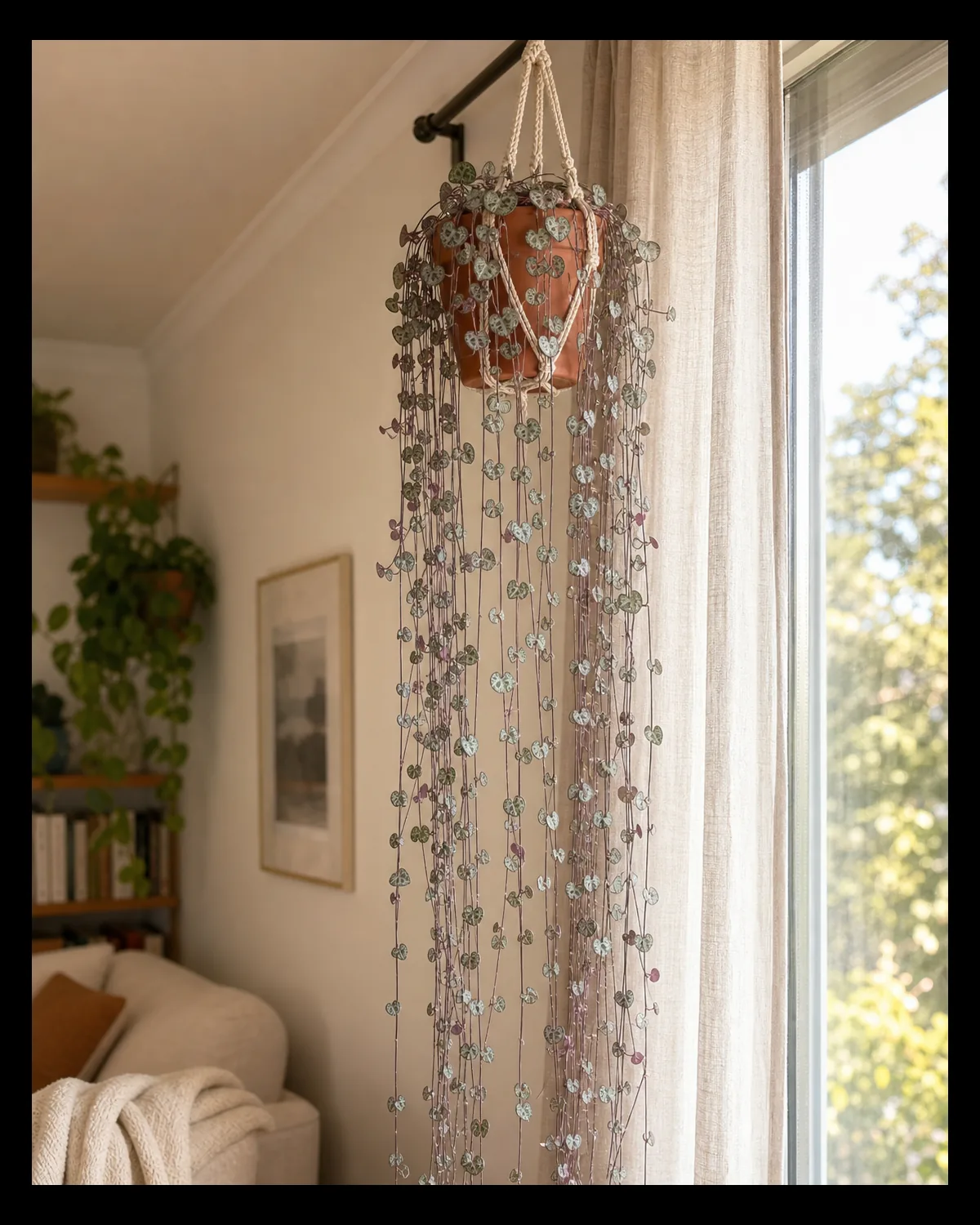
Ceropegia woodii sends thin wiry purple-tinged stems down three to four feet from a high hook, with small heart-shaped silver-marbled leaves spaced along each strand. Given enough bright indirect light or a little gentle morning sun, it cascades almost like falling string lights.
Insufficient light shows up as bald gaps along the strand rather than leggy stretch. Water it the way you water a succulent, deep soak, then dry for two to three weeks, and never let the strands sit wet against the pot rim, because the crown rots fast.
- Light: very bright indirect; a little direct morning sun is fine and triggers more color.
- Water: succulent style, deep soak, then dry two to three weeks; fewer waterings in winter.
- Hanging note: the most aesthetic shelf-edge or curtain-rod pick on the entire list.
String of pearls, beautiful and the one most beginners kill
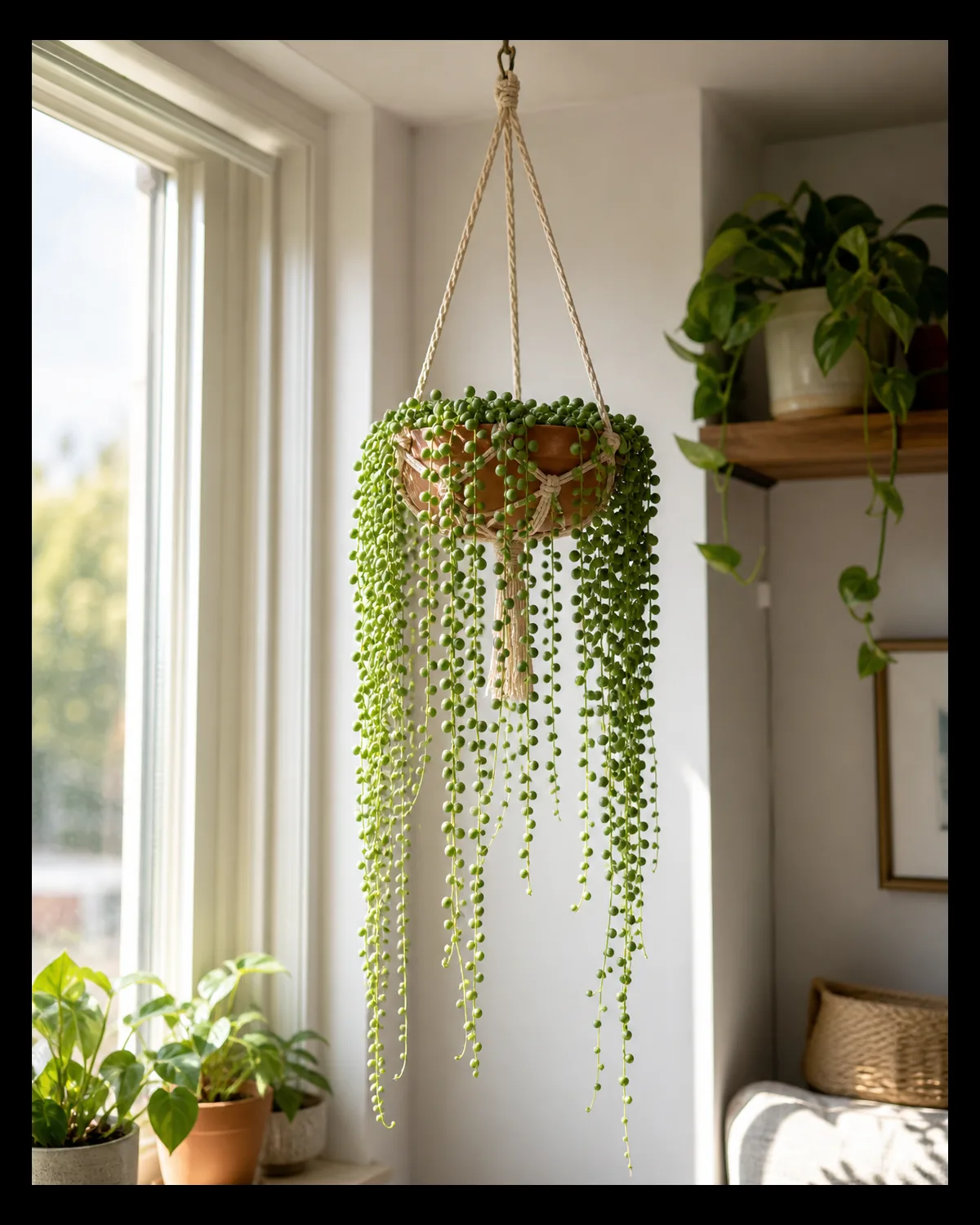
Senecio rowleyanus sends down pendant green bead-strands that look like falling water. It needs the brightest indirect light in your house, a sunny west or south window with the basket a foot or two back, and a fast-draining gritty cactus mix.
The most common mistake is potting it too large and watering on a schedule. Strands shrivel into raisins if it dries too long, then turn translucent and rot if you panic-soak. It is toxic to pets, so hang it genuinely out of reach with no climbable furniture nearby.
- Light: brightest indirect you can give it; tolerates a couple of hours of direct morning sun.
- Water: deep soak when strands look slightly less plump; dry two to three weeks.
- Hanging note: shallow pot, gritty mix, no saucer, wet feet kill it within a week.
String of dolphins, the rare collector cascade
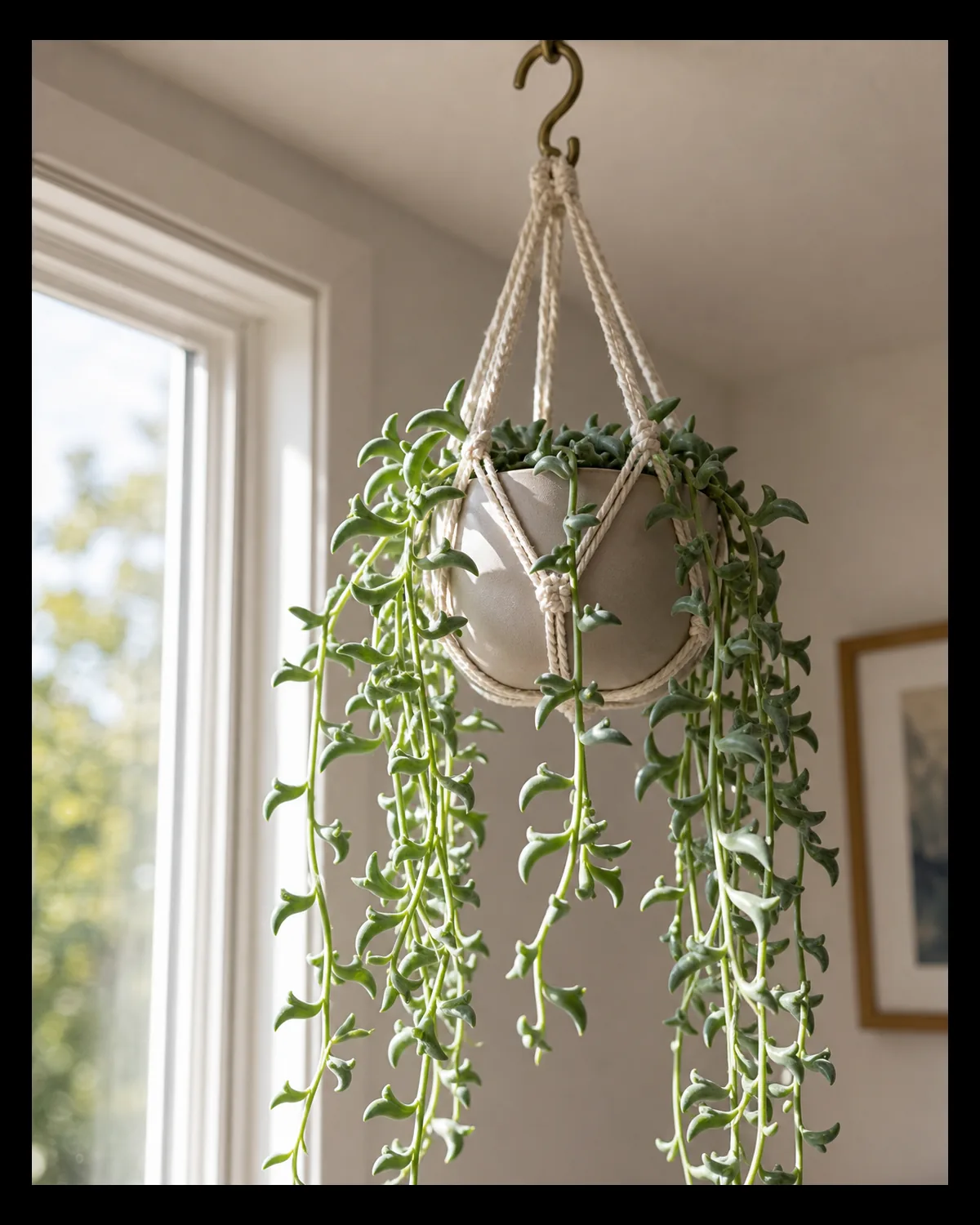
Senecio peregrinus has succulent leaves that curve into tiny leaping-dolphin shapes along trailing stems. Care is almost identical to string of pearls, bright indirect light, gritty mix, careful watering, and it is slightly more forgiving of an occasional miss.
It is a slower grower, around a foot a year rather than a foot a month like a pothos, so expect it to fill in over seasons rather than weeks. Pricier and harder to find but more durable than its pearl cousin. Toxic to pets.
- Light: very bright indirect; a little direct sun pulls more dolphin shape into new leaves.
- Water: deep soak, then long dry stretch, closer to a succulent than a vine.
- Hanging note: a collector statement piece rather than a fast room-filler.
Most hanging-plant problems come from one of four blind spots. Fix these and almost any picked-correctly trailer will fill a basket within a season.
Burro’s tail, the heavy succulent rope
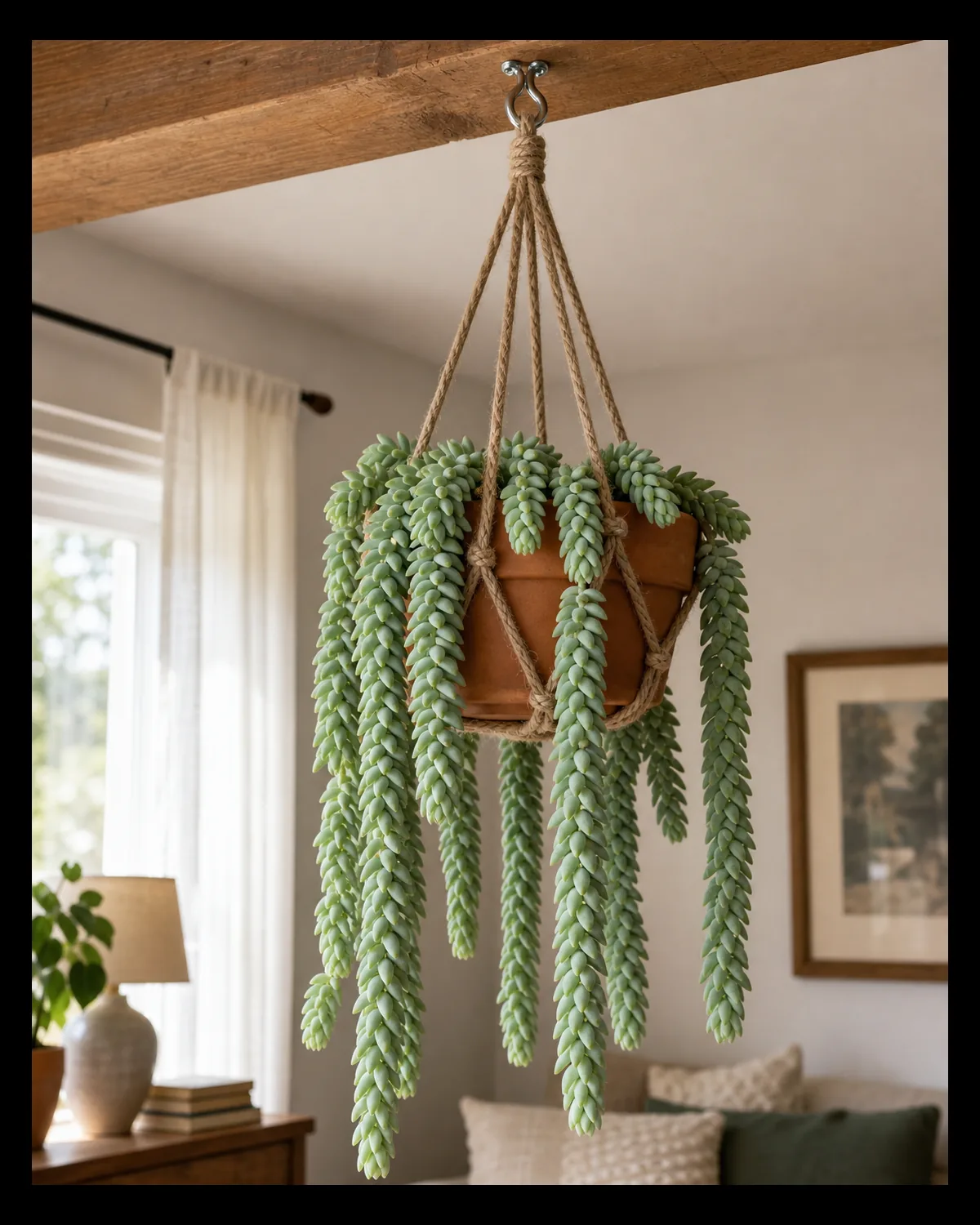
Sedum morganianum forms thick ropy cascades of plump blue-green leaves that look like braided chains. A mature plant easily weighs several pounds, which means it has to go on a proper hook into a ceiling joist, not a thumbtack-style hook in drywall.
It wants very bright indirect light or a few hours of direct sun, and prefers a deep watering followed by a complete dry-out. The catch, every accidental brush knocks plump leaves off. Save them on the soil surface, because each leaf roots into a tiny new plant. Non-toxic to pets, but the weight and brittleness mean it is not the right pick for a high-traffic doorway.
- Light: very bright indirect or a few hours of direct sun.
- Water: deep soak, then dry completely; leaves shrivel before rot sets in.
- Hanging note: the heaviest plant on this list, hook into a stud or joist, no exceptions.
English ivy, the cool-room trailer that climbs if you let it
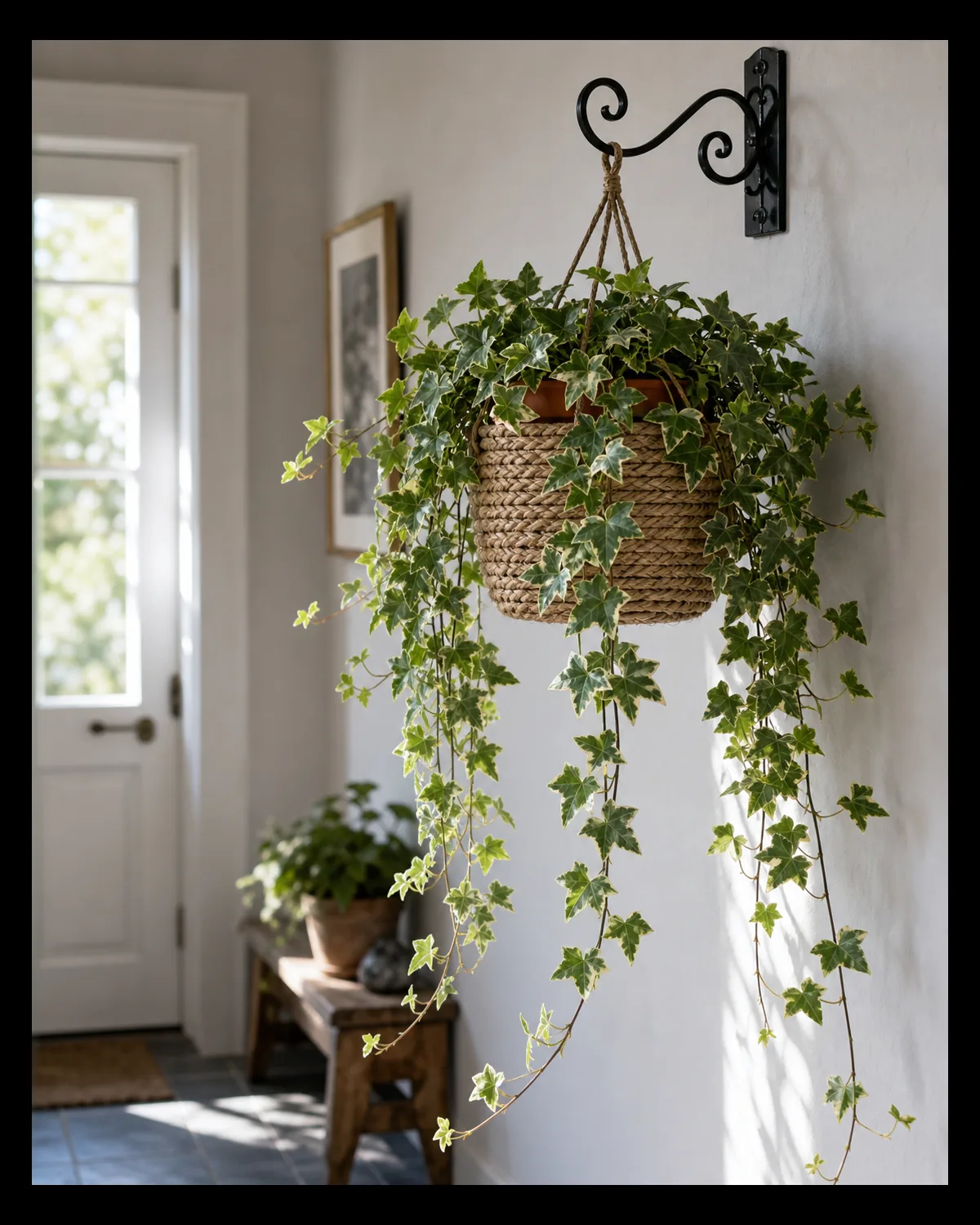
Hedera helix has lobed, often variegated, classic ivy leaves on long flexible vines. It is happiest in a cool bright room, an unheated entryway or a bright bathroom window in winter, and dislikes hot, dry living rooms where it dries out fast and attracts pests.
Keep the soil evenly moist and never let it go bone dry. The trick to keeping it pest-free is a regular leaf wash, because spider mites find ivy within weeks in a warm dry home. We also called out ivy in the bedroom picks list for the same cool-room reason it works in entries. Toxic to pets if chewed.
- Light: bright indirect to medium; tolerates cool rooms most other trailers refuse.
- Water: keep evenly moist; never let it bone-dry.
- Hanging note: wipe or shower the leaves monthly to prevent spider mites.
Boston fern, the lush bathroom hanger
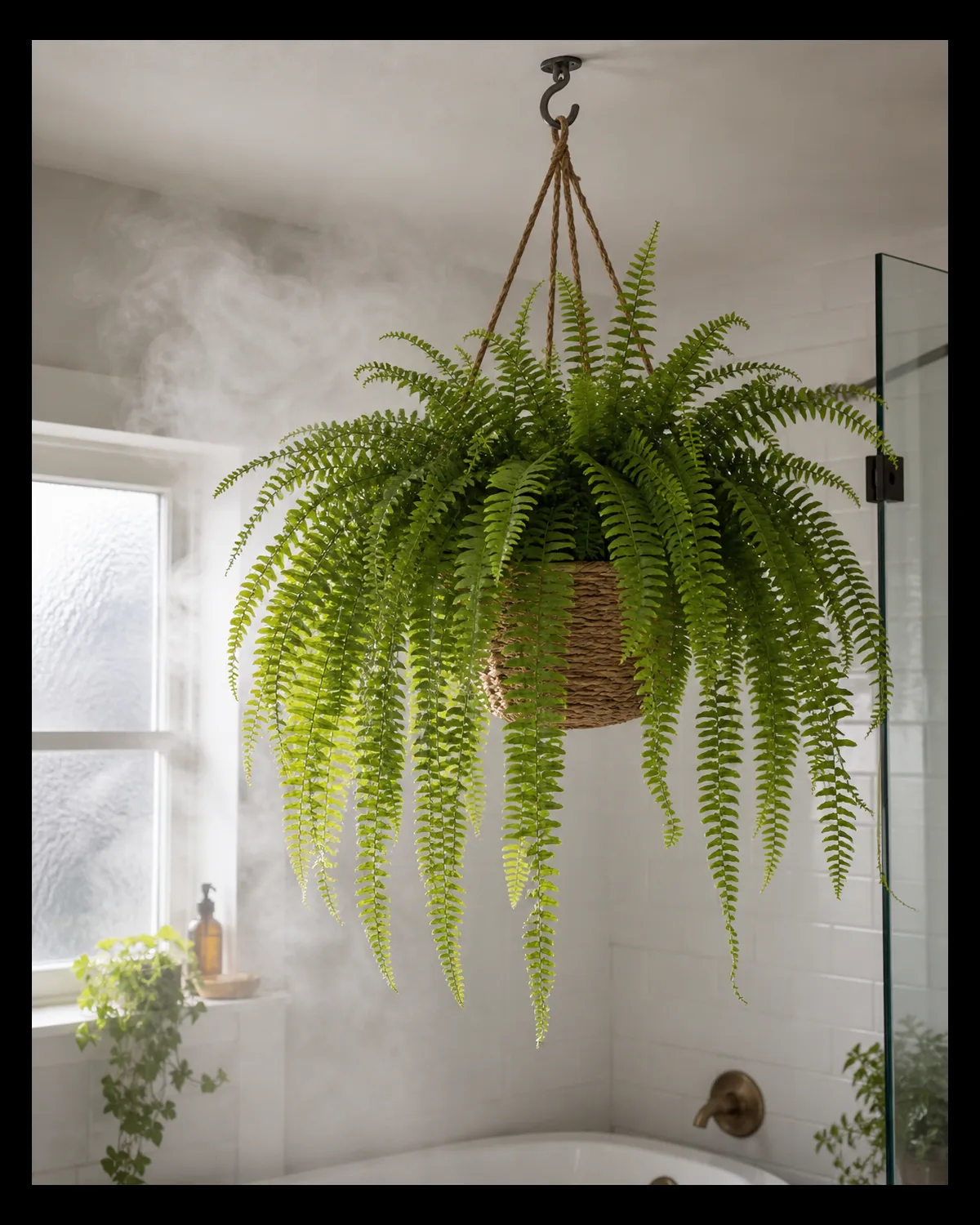
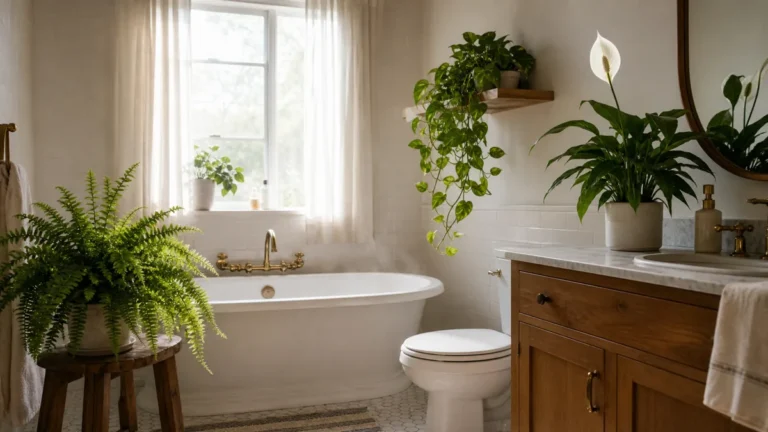
Nephrolepis exaltata has bright-green pinnate fronds that arch out and over the edge of a basket in a soft fluffy cascade. It is the most genuinely humidity-dependent plant on this list, and a steamy bathroom near a frosted window is its happiest spot.
Keep the soil evenly moist, never dry, never soggy, and watch for brown crispy frond tips as the first humidity-too-low signal. Non-toxic to pets, which makes it one of the few safe trailing options for a household with curious cats. It is the only fern on this list because most other ferns prefer an upright crown rather than a cascade.
- Light: bright indirect; tolerates lower light if humidity stays high.
- Water: even moisture at all times; brown tips mean humidity is too low, not water.
- Hanging note: take it down to the tub or sink to water, water on leaves invites rot.
Hanging Plants: The Quick Pick List
- 1Pothos is still the fastest forgiving cascadeHeart-leaf variegated vines, three to six feet in a year, tolerates medium light, pet-toxic, hang out of reach.
- 2Heart-leaf philodendron is the darker, softer pothosSmaller deeper-green heart leaves, more uniform cascade, more shade-tolerant than pothos, also pet-toxic.
- 3Spider plant is the only one that makes babiesArching striped leaves plus dangling plantlets on wiry stolons. ASPCA non-toxic, the safest pick for cat households.
- 4String of hearts is the most photogenic strandThin wiry purple-tinged stems, tiny silver-marbled hearts, easy to grow to floor length from a high hook.
- 5String of pearls is beautiful and the most-killedRound bead-strands, brightest indirect light, gritty cactus mix, shallow pot, deep soak then dry for two weeks.
- 6String of dolphins is the rare collectorLeaping-dolphin succulent leaves, same care as pearls, slightly more forgiving, slower grower.
- 7Burro’s tail is the heaviest rope cascadePlump blue-green rice-grain leaves stacked in ropy strands. Hook into a joist; brittle to any brush.
- 8English ivy loves cool roomsLobed often-variegated leaves; perfect for an unheated entryway or bright bathroom. Watch for spider mites.
- 9Boston fern is the lush bathroom hangerBright-green pinnate fronds; humidity-dependent; brown tips signal humidity too low, not water.
- 10Hoya carnosa is the slow eventual bloomerThick waxy oval leaves on woody vines; root-bound and bright indirect light unlock fragrant pink stars after a few years.
- 11Tradescantia zebrina is the fastest colorPurple-and-silver striped leaves, doubles in a month in good light; pinch hard or the top goes bald.
- 12String of turtles is the tiny patterned detailRound green-and-silver turtle-shell leaves on slow trailing stems; precision cascade, not room-filler.
- 13Mistletoe cactus is the unexpected jungle drapeSoft spineless pencil-stems, bright indirect light, non-toxic, decent humidity, the conversation-piece cascade.
kultivy.com
Hoya carnosa, the slow trailer that eventually blooms
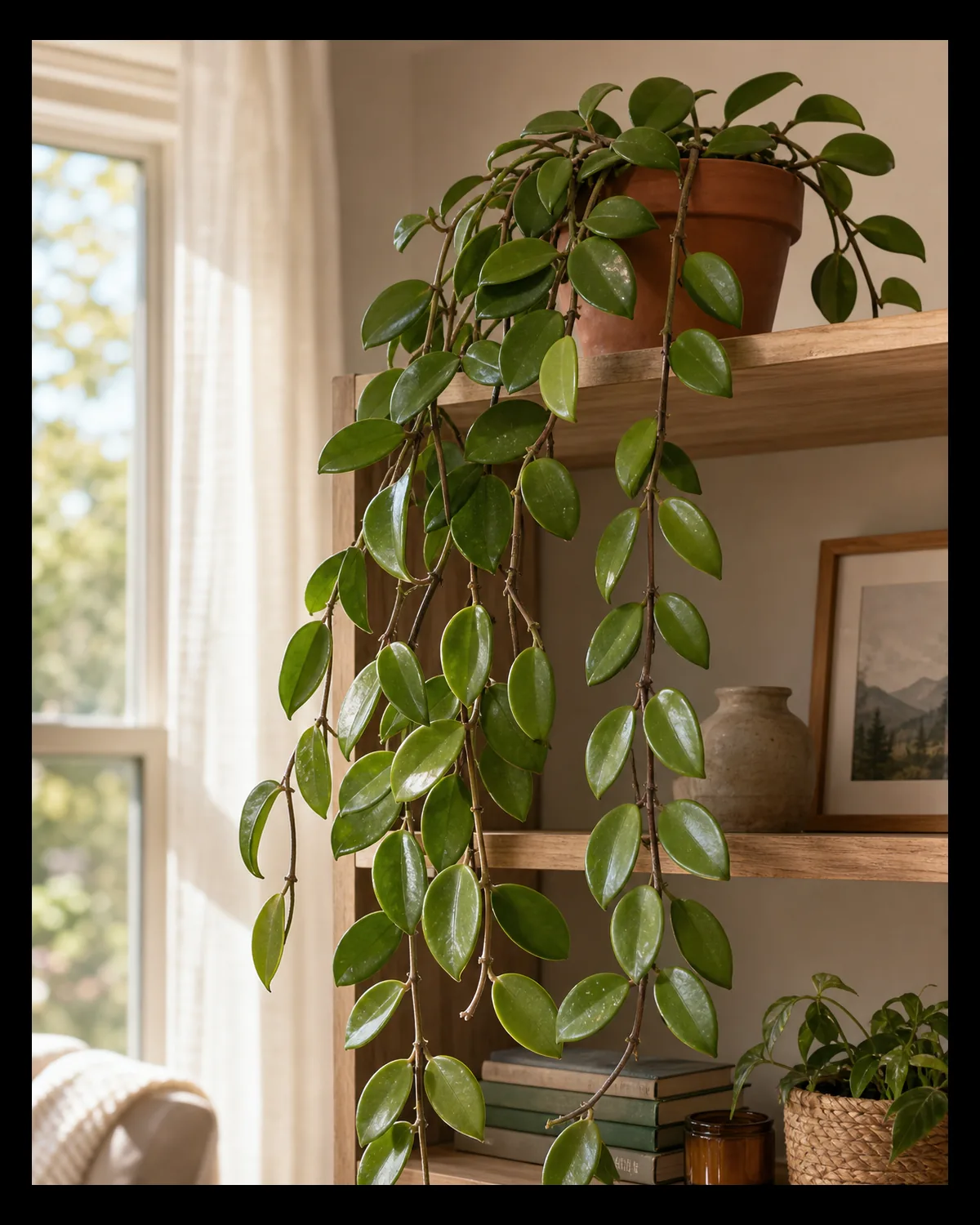
Hoya carnosa has thick waxy succulent leaves on long woody vines. It is one of the most forgiving trailers here and is closer to a succulent than a true vine in its watering needs.
Given bright indirect light, a slightly root-bound pot, and a few years of patience, it rewards you with clusters of fragrant porcelain-pink star flowers. Non-toxic to pets, slow growing, and tolerant of skipped waterings, which makes it a great first hanging plant for anyone who travels often.
- Light: bright indirect; some direct sun helps trigger eventual blooms.
- Water: deep soak when soil dries out; can go two to three weeks between waterings.
- Hanging note: do not repot too often, hoya wants the rootball cramped to bloom.
Tradescantia zebrina, the fastest, most colorful trailer
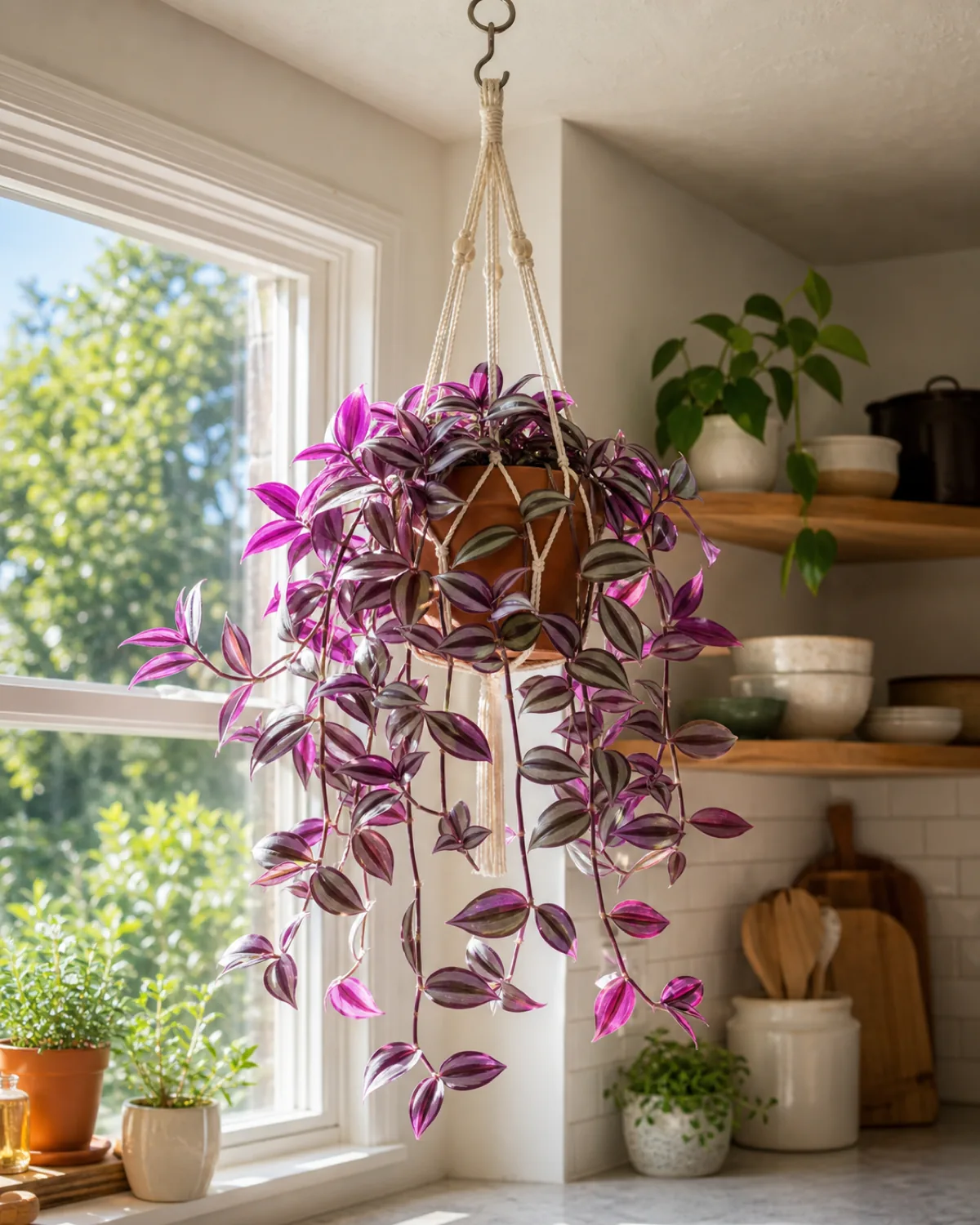
Tradescantia zebrina, often called wandering dude or inch plant, has soft pointed leaves striped in bright purple and silver, on stems that can double in length in a single month in good light. It needs bright indirect with some direct morning sun to keep the purple, in low light the color fades to plain green and the plant goes leggy.
Pinch the tips every three to four weeks or it goes bald at the top of the basket and only the bottom strands stay full. The sap is mildly irritating to pets, so hang it up rather than on a counter edge.
- Light: bright indirect with some direct morning sun; purple fades in low light.
- Water: water deeply when the top inch dries; less in winter.
- Hanging note: aggressive pincher, without it, the top of the basket goes bald.
String of turtles, the tiny patterned cascade
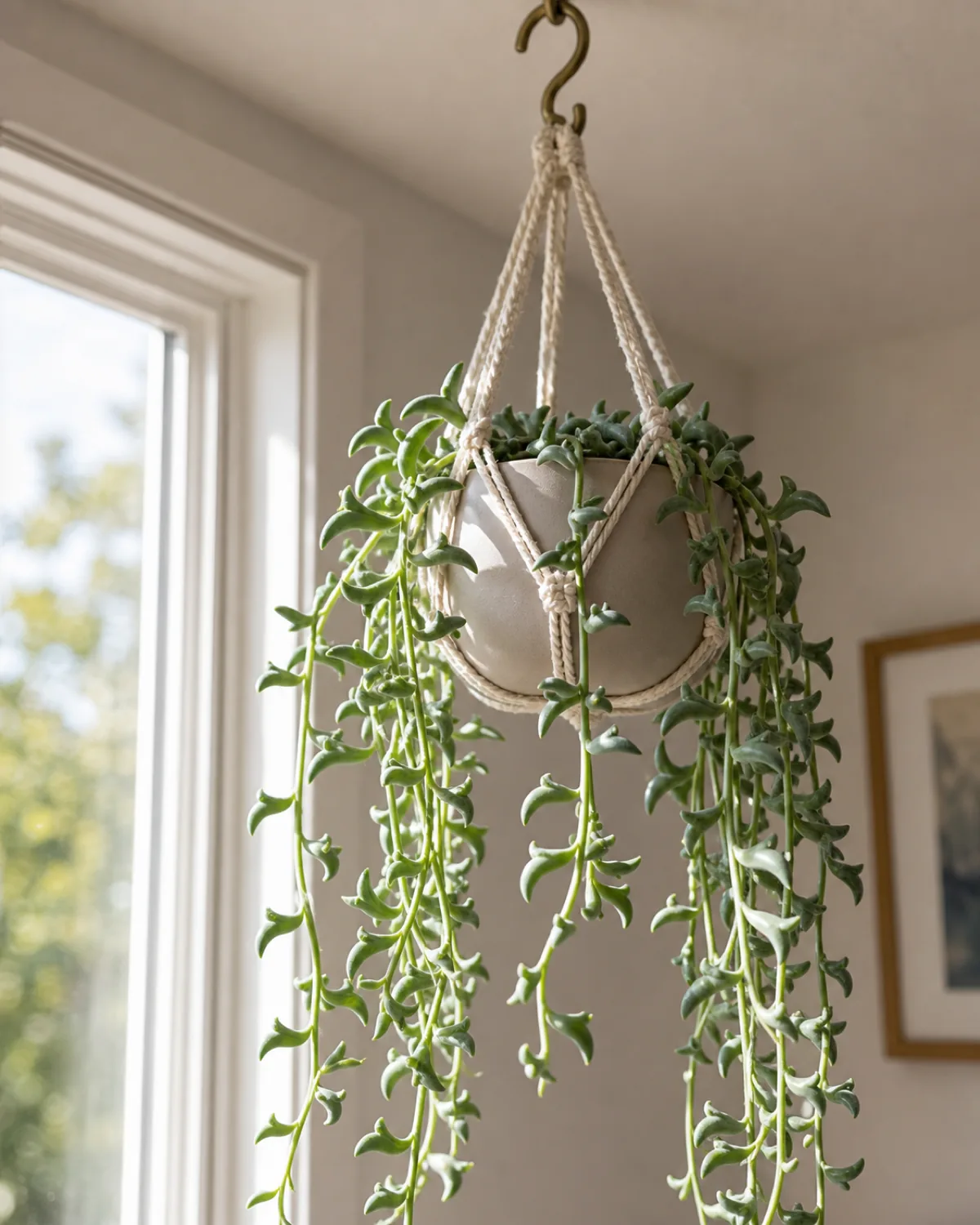
Peperomia prostrata, sold as string of turtles, has small round leaves with green-and-silver turtle-shell markings on thin trailing stems. It grows slowly to about one to two feet, never a giant cascade, but the up-close detail is unmatched on this list.
It prefers medium to bright indirect light, and direct sun bleaches out the pattern within weeks. Water it the way you water a succulent and let it dry seven to ten days between drinks. Non-toxic to pets. The shelf-edge or bedside-table hanging pick for readers who like small and precise over big and dramatic.
- Light: medium to bright indirect; direct sun bleaches the leaf pattern.
- Water: succulent style, deep soak, then seven to ten days dry.
- Hanging note: a slow precision pick, not a fast room-filler.
Mistletoe cactus, the unexpected jungle cactus that drapes
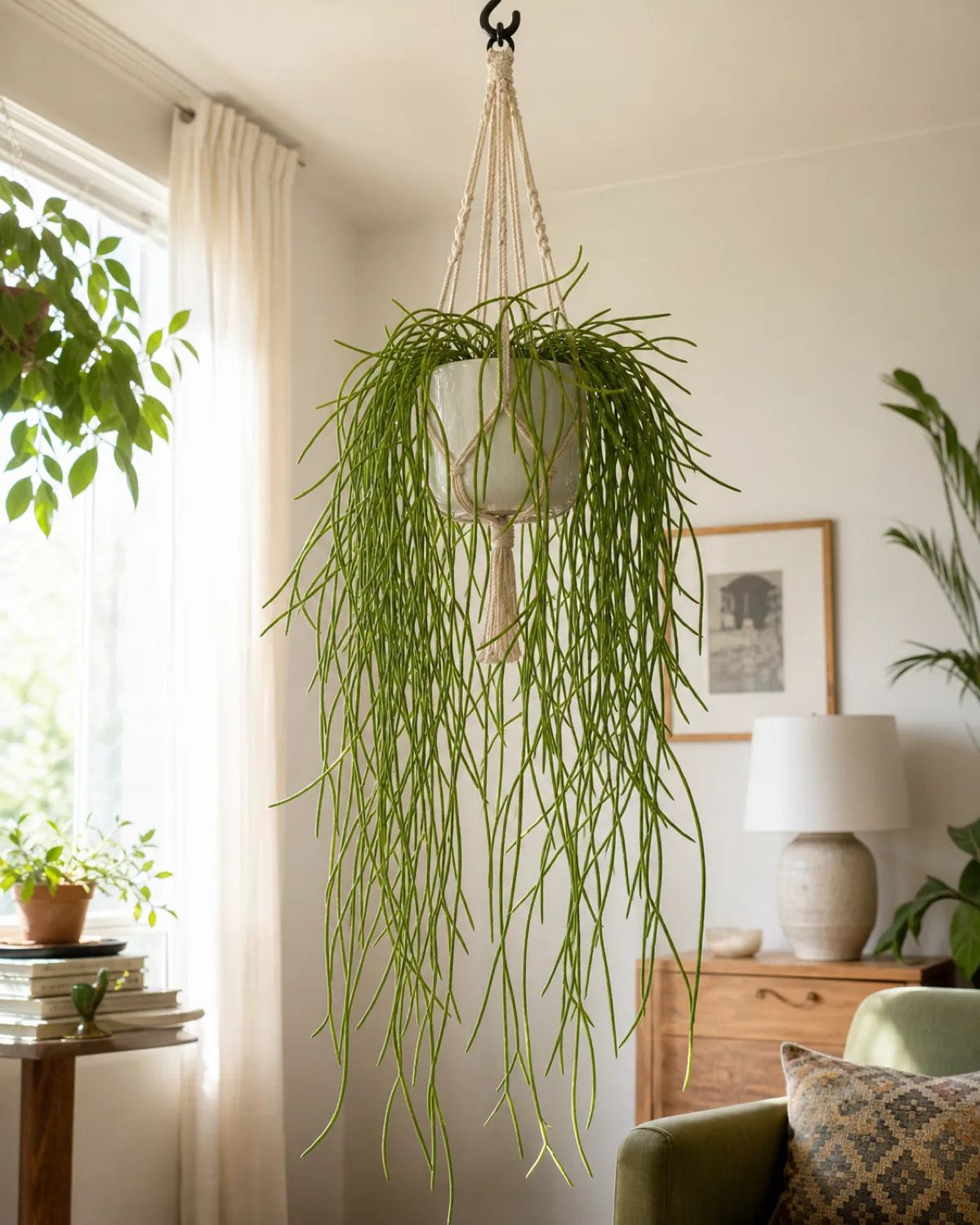
Rhipsalis baccifera is a jungle epiphyte, not a desert cactus, with thin soft pencil-like succulent stems that form a wild floppy cascade up to several feet long. It wants bright indirect light, regular watering when the top inch dries, and decent humidity.
It has no spines, the stems are soft to the touch, and it is non-toxic to pets. A great conversation-piece hanger for readers tired of generic pothos or spider plant choices. If hanging is not the right answer for your room, the plant shelf and corner styling guide covers eye-level options instead.
- Light: bright indirect; no harsh direct sun.
- Water: when the top inch dries; closer to a tropical schedule than a cactus one.
- Hanging note: gentle stems, keep it where nothing brushes against the cascade.

Mara Quinn edits Kultivy, where she shares houseplant care, propagation, beginner-friendly plant picks, and plant-styling ideas for anyone who wants their indoor plants to actually thrive. Every guide is image-led and reviewed for clarity, usefulness, image accuracy, and Pinterest-to-page alignment before it goes live. Visit the About page.