My first peace lily lived in a dim hallway corner for almost a year. It looked healthy, but it never flowered, and one morning the whole plant had collapsed over the edge of the pot like it had given up.
I watered it deeply, and within an hour every leaf rose back up. A week later, I moved it closer to a north window, and the first white spathe in months emerged.
A peace lily is one of the most beginner-friendly flowering houseplants, but it has a few quirks worth knowing. Here is what it actually needs to thrive and bloom.
Peace lily care really comes down to three things: enough indirect light to keep it blooming, a steady watering rhythm guided by the leaves, and knowing the dramatic droop is almost always thirst, not death. Jump to whatever you are dealing with right now.
- 1How much light it needs
- 2How often to water
- 3The best soil and pot
- 4The best spot for it
- 5Why it is dramatically drooping
- 6Why the leaf tips are brown
- 7Why the leaves are yellow
- 8How to make it bloom again
- 9What the green-fading flower means
- 10Repot and divide a clump
- 11Pests to watch for
- 12Is it safe around pets?
- 13Varieties to actually buy
How much light a peace lily needs
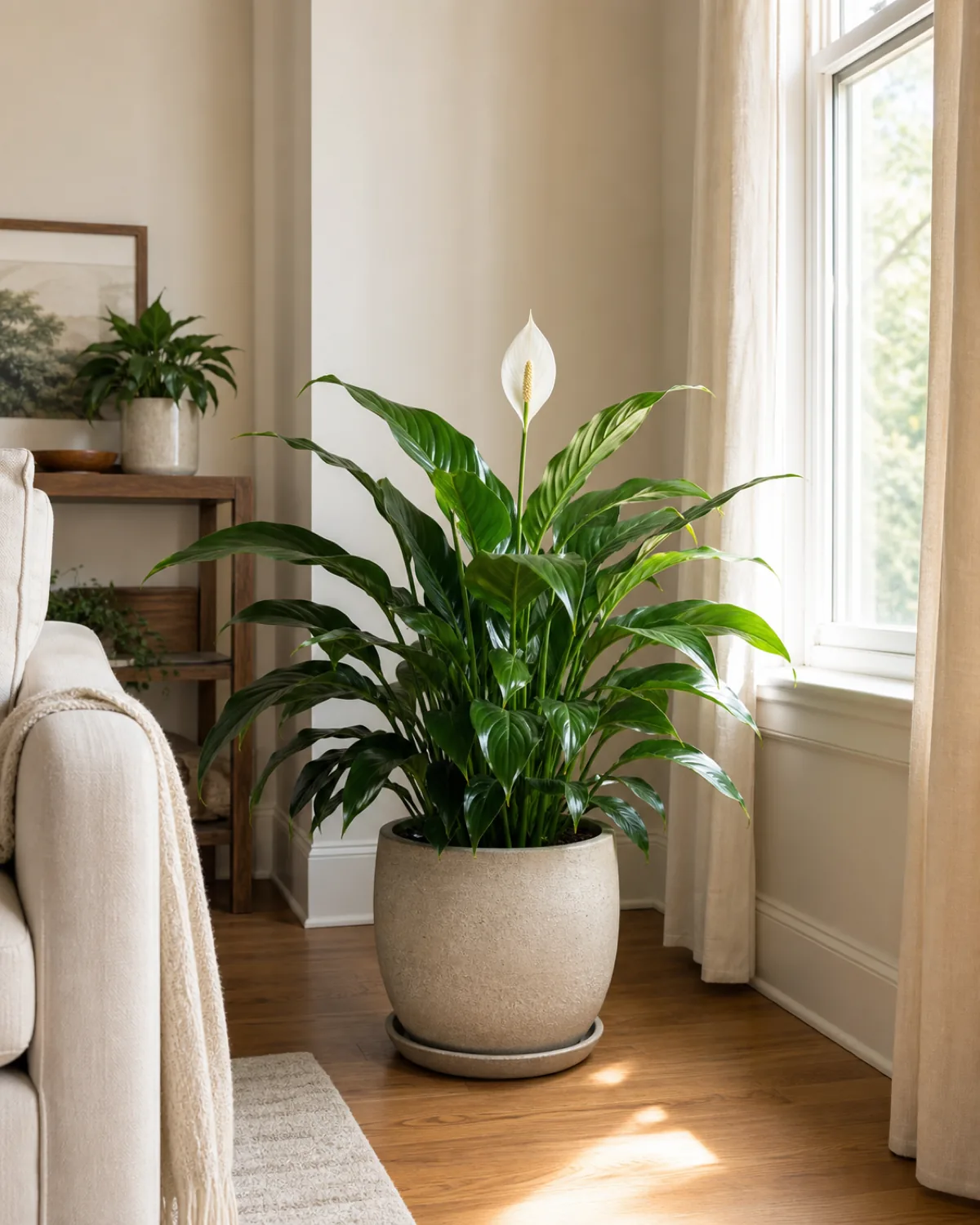
Light is the quiet difference between a peace lily that just exists and one that actually blooms. The plant survives in dim corners, which is how it got its low-light reputation, but it only puts out spathes with steady bright indirect light. The dark glossy leaves also scorch fast in direct sun, so the goal is bright but filtered.
- Bright indirect light is the bloom sweet spot. A few feet back from a north or east window gives steady spathes through the year.
- A dim corner keeps it alive but quiet. It will look healthy and green, but new flowers stop showing up.
- Skip a sunny south sill. Harsh direct sun bleaches the spathes and crisps the edges of the leaves.
How often to water (let the leaves tell you)
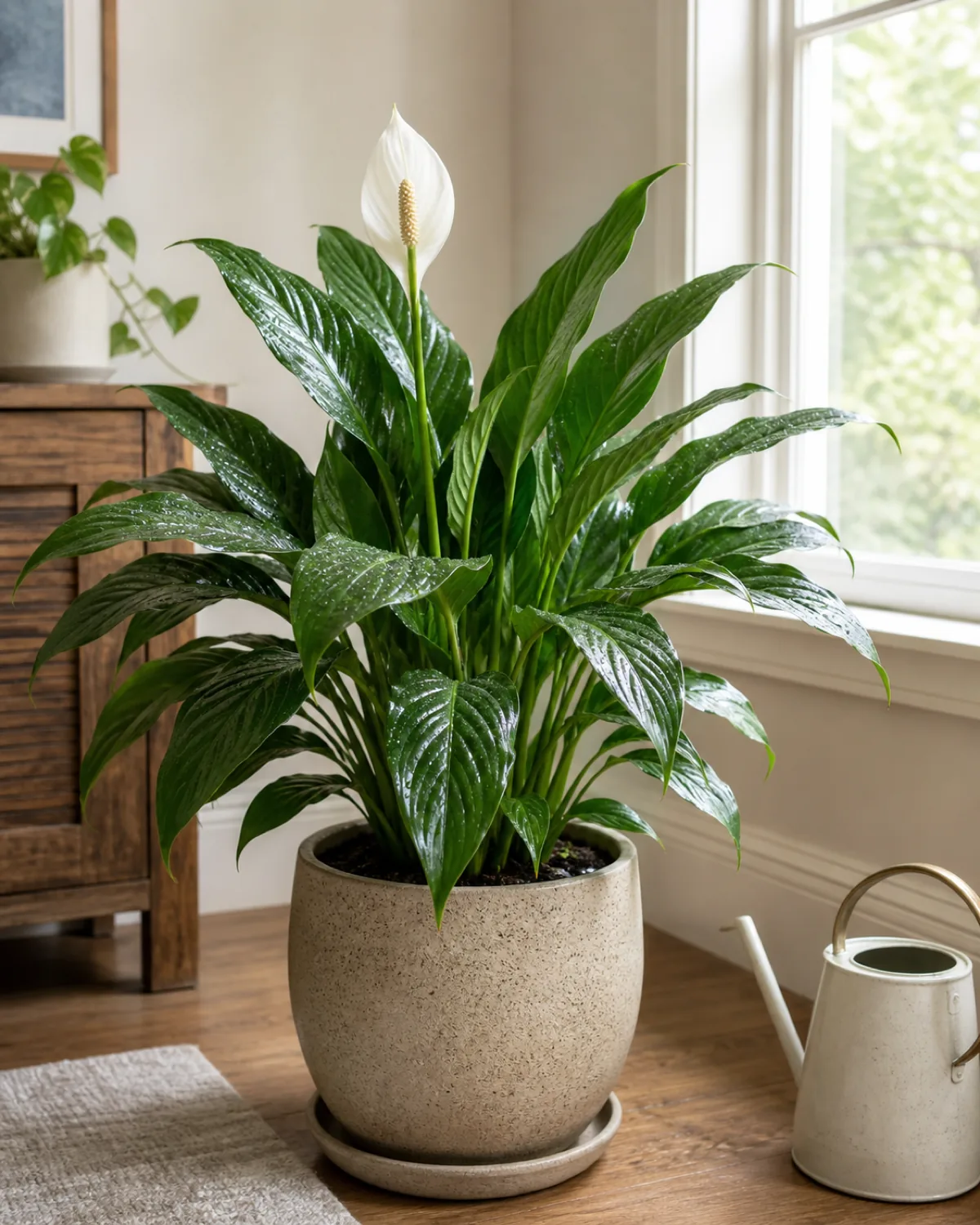
The peace lily has the most generous watering signal of any common houseplant. When the soil dries out, the whole plant droops dramatically, and an hour or two after a deep watering it rises back up like nothing happened. That is the cue to use. Once a week works for most rooms, less in winter. Unlike a snake plant, which can wait a month, a peace lily wants you to pay closer attention.
- Water when the leaves start to flag. A slight droop and a dry top inch of soil mean it is time.
- Water deeply, then drain. Pour until water runs out the bottom, then tip out anything that pools in the saucer.
- Ease off in winter. Growth slows and the soil stays wet longer, so wait the extra few days between drinks.
The best soil and pot
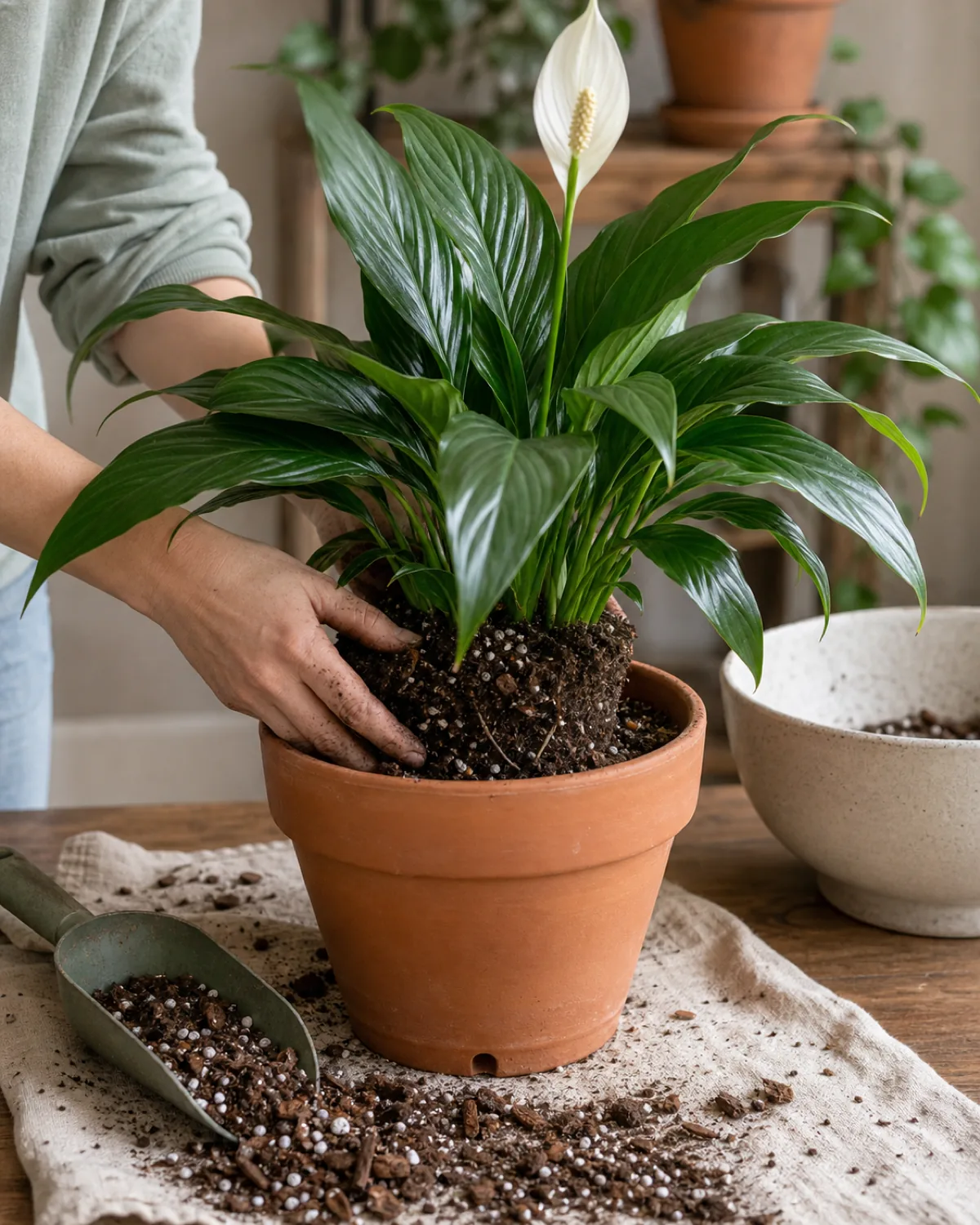
Soil and pot do half of the watering work for you when you set them up right. Peace lily is forgiving about both, but it rots quickly in a dense, soggy mix, and it dislikes being bone dry between waterings. The goal is a mix that drains in seconds and a pot that lets the water actually leave.
- Use a standard houseplant or aroid mix. Loosen it with a handful of perlite or orchid bark for airflow.
- Pick a pot with a drainage hole. Without one, water collects at the bottom and rots the roots quietly.
- Plastic or terracotta both work. Plastic holds moisture a little longer; terracotta dries faster and is harder to overwater in.
Almost every peace lily problem comes down to light, water, or where you put it. Pick what is happening with yours and start there.
The best spot for it
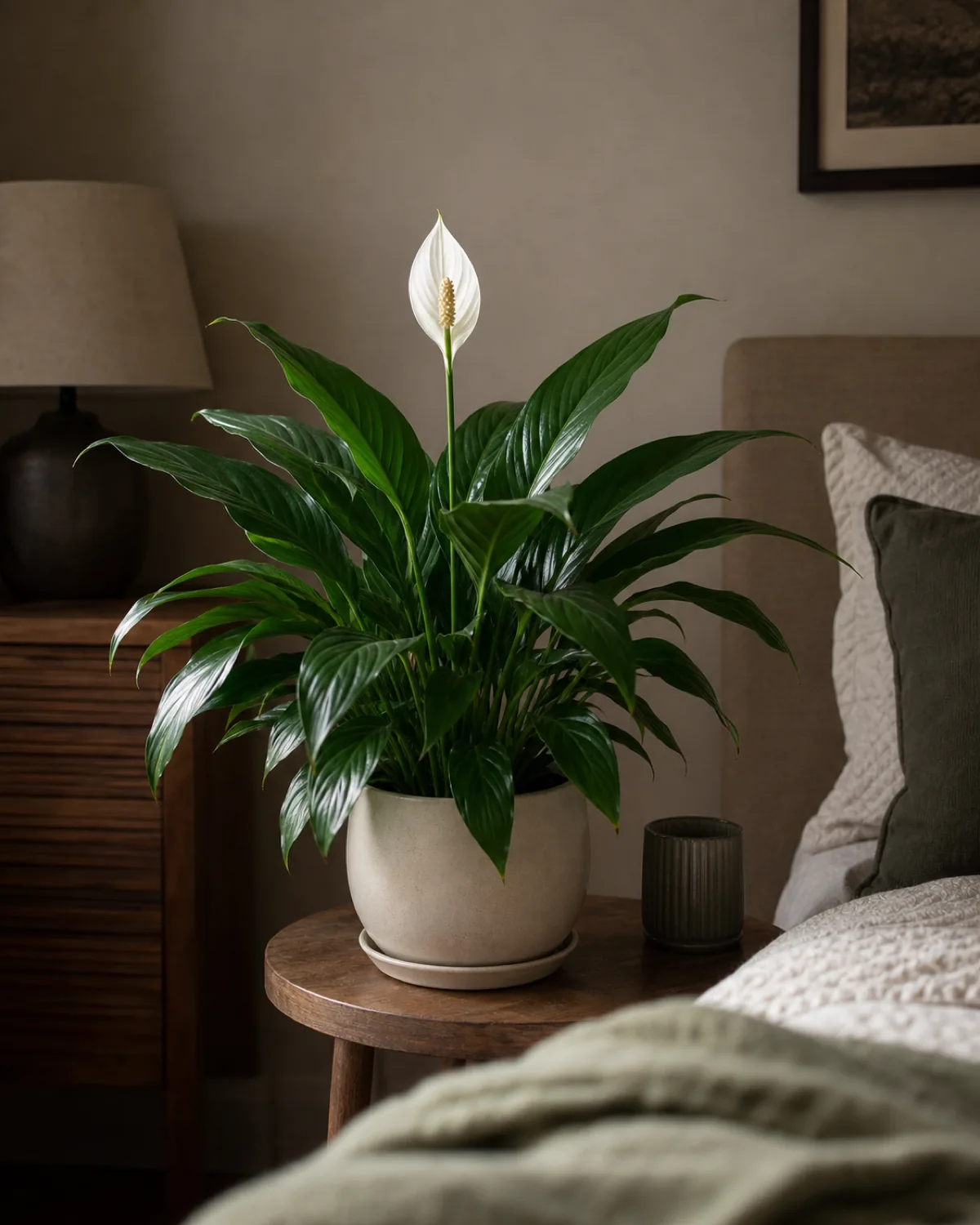
Peace lily is the rare flowering plant that earns its keep in spots where almost nothing else blooms. It thrives in places most houseplants quietly hate: north-facing windows, steamy bathrooms, kitchen counters with indirect light, the dim end of a hallway with one decent light source. A low side table in a calm corner is the classic placement, and there are more ideas in our plant styling guide.
- A north or east window is ideal. Steady indirect light without the burn of direct sun is the sweet spot.
- Bathrooms suit it well. The extra humidity from showers keeps the leaves glossy and the tips intact.
- A calm low-light corner works too. Expect fewer flowers, but the foliage will still look beautiful.
Why it is dramatically drooping (and how to bring it back)
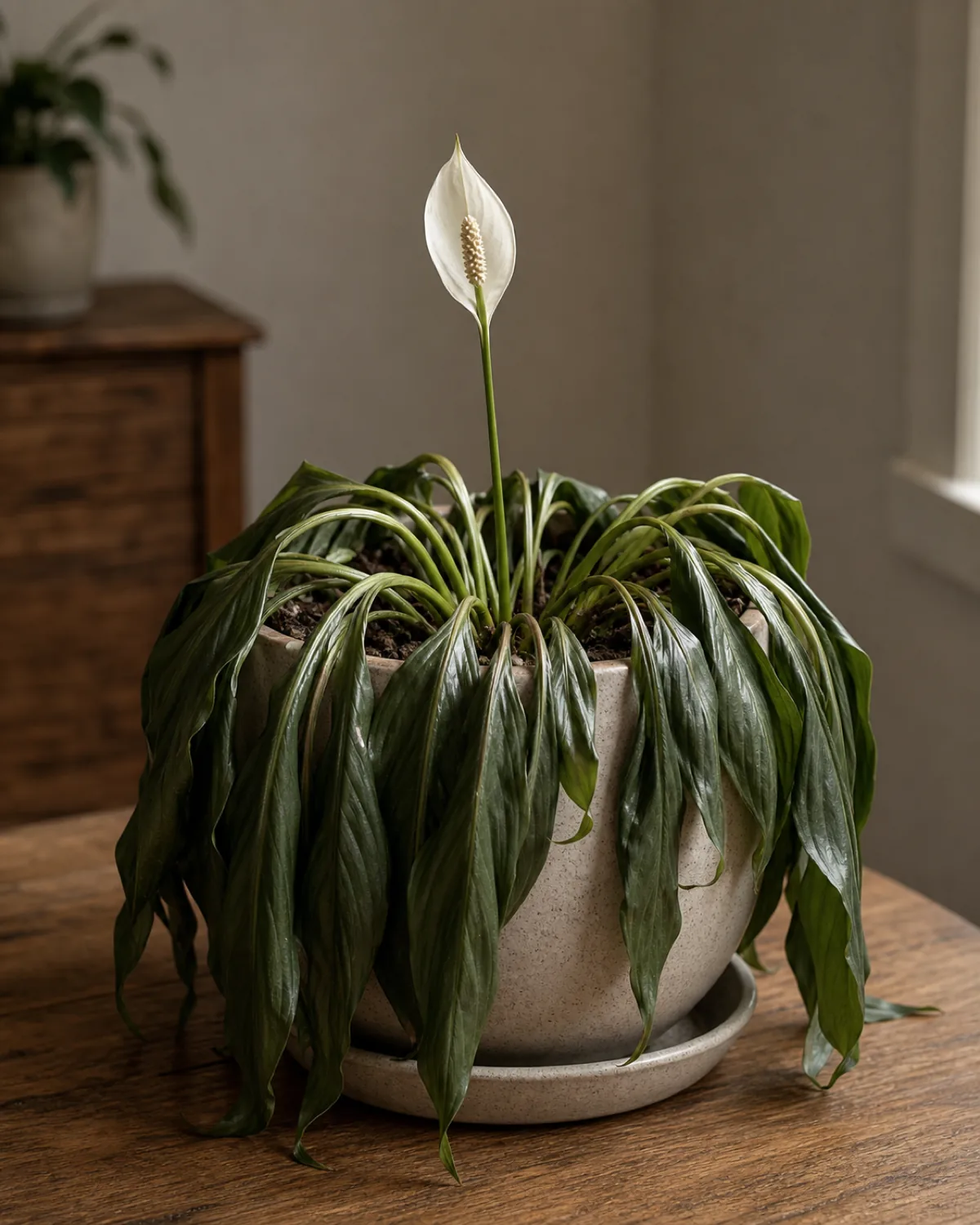
The first time you see a peace lily droop, it looks like the plant has died overnight. It has not. The number one cause of a fully collapsed peace lily is thirsty soil, and a deep watering brings most of them back within an hour or two. The plant looks more dramatic than it actually is, which makes the recovery feel like magic the first time.
- Water deeply and wait. Pour slowly until water runs out the bottom, then check back in an hour to see the leaves rise.
- Persistent droop means root rot. If the leaves stay limp a day after watering, the roots are rotted, not thirsty.
- Cold drafts can also cause it. A vent or window blowing cold air across the plant shows up as a soft, slow droop.
Why the leaf tips are turning brown
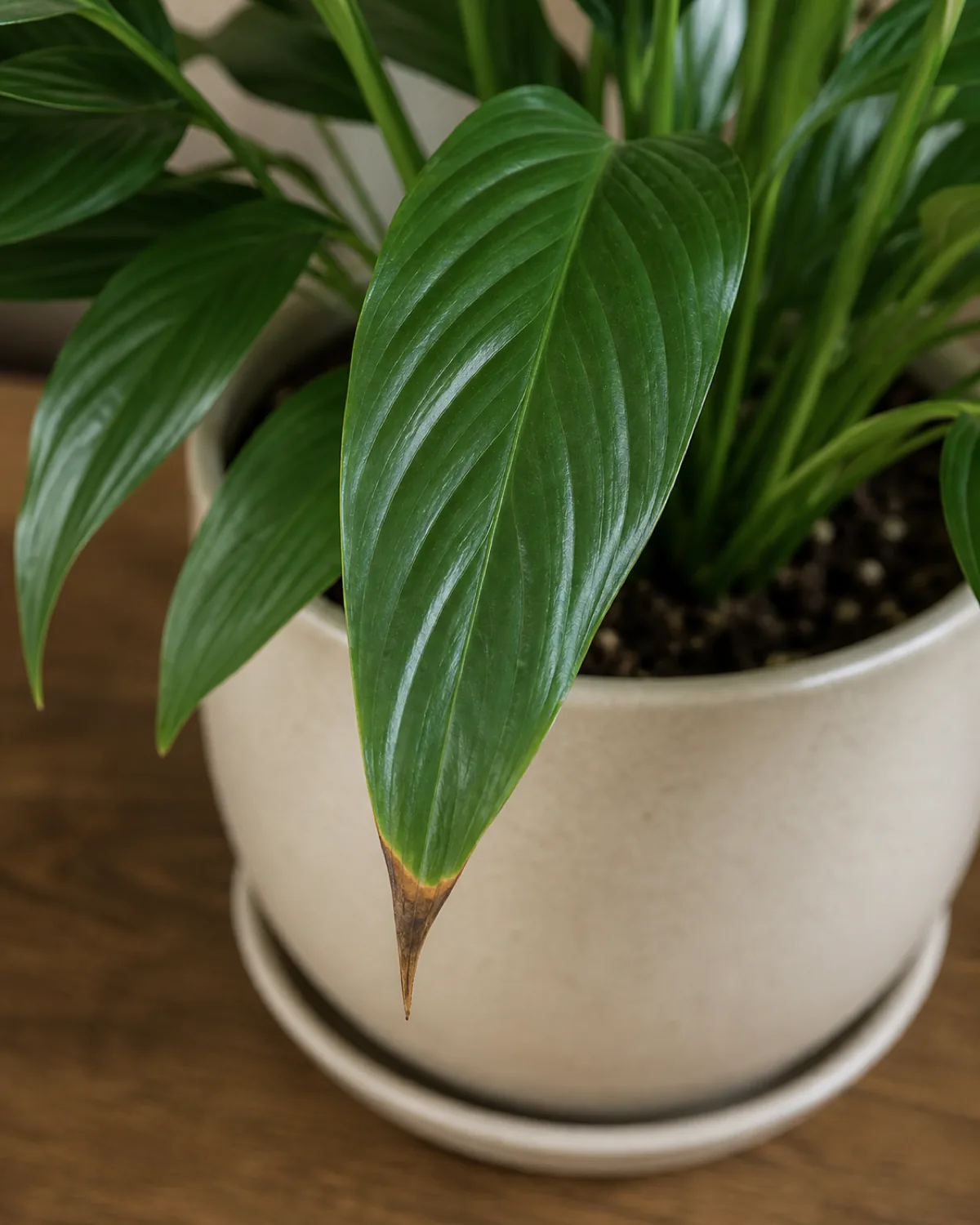
Crispy brown leaf tips are the most common peace lily complaint, and they are almost never a serious sign. The two usual causes are water quality and dry indoor air.
Tap water in many cities carries chlorine, fluoride, and minerals that the leaves cannot push back out, so they build up at the tip and dry the edge. Forced-air heating does the same thing in winter by pulling humidity out of the room.
- Switch to filtered or rested tap water. Letting tap water sit uncovered overnight lets chlorine off-gas before you pour it.
- Group it with other plants for humidity. A small cluster of houseplants raises the local air moisture noticeably.
- Trim the brown tips at a slight angle. Snip just inside the dry edge with clean scissors so the leaf still looks natural.
A peace lily is one of the most forgiving flowering houseplants you can own once you get four things right. These four rules are what make the steps below work instead of leaving you with a quiet green plant that never throws a single white spathe.
Why the leaves are yellow
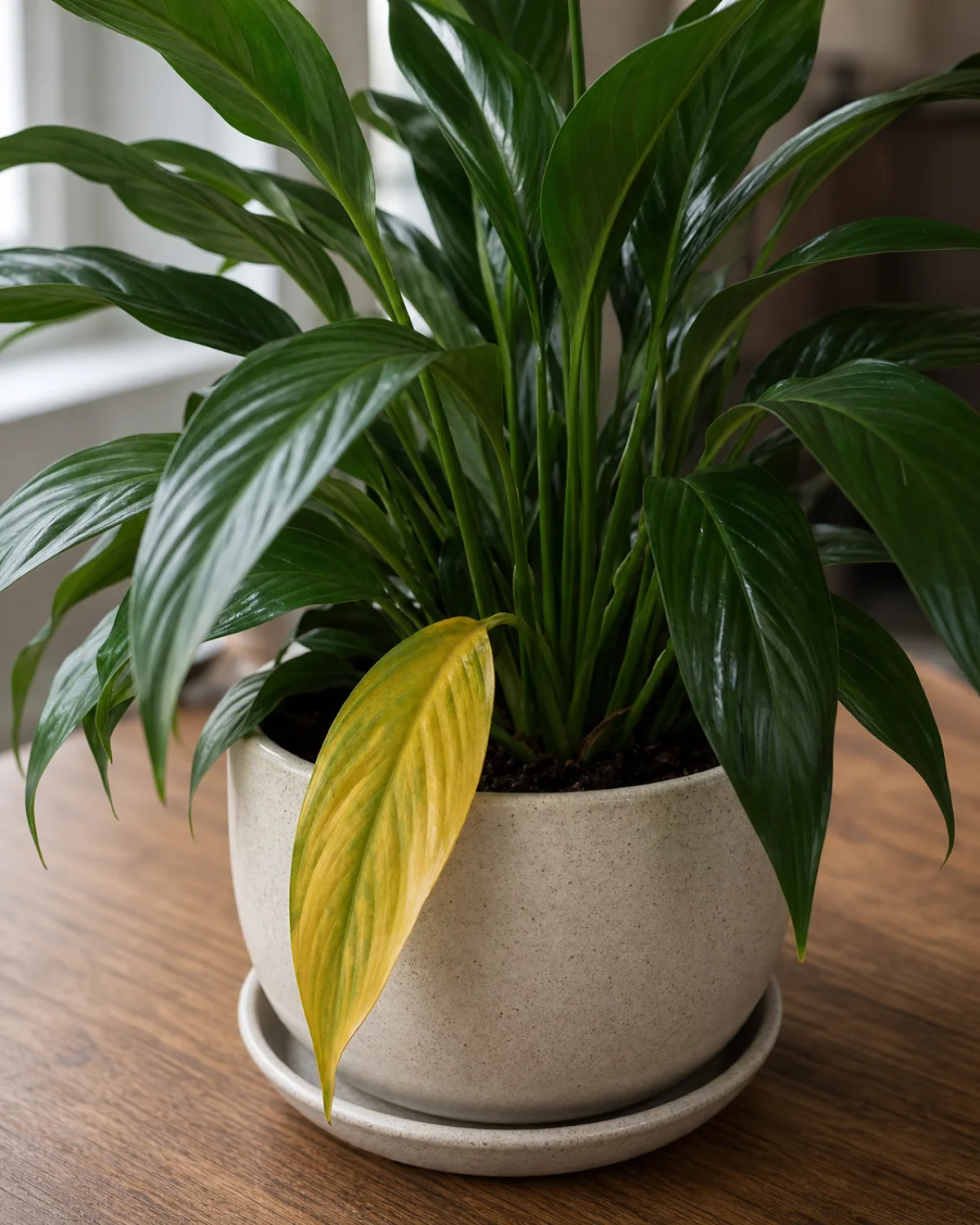
Yellow leaves on a peace lily look alarming, but they almost always tell one of three stories. Overwatering is the most common: the roots cannot breathe, and the older leaves yellow first. Too much direct light bleaches the leaves to a pale yellow-green. And a single old leaf at the base of the clump yellowing on its own is just the plant retiring it, the same way a tree drops a leaf in fall.
- Check the soil first. Soggy soil and several yellow leaves together mean it is time to ease off watering.
- One old yellow leaf is normal. A single yellowing leaf at the outside of the clump is just natural aging.
- Move it out of direct sun. Pale yellow-green leaves with a faded look point to too much harsh light.
How to make it bloom again
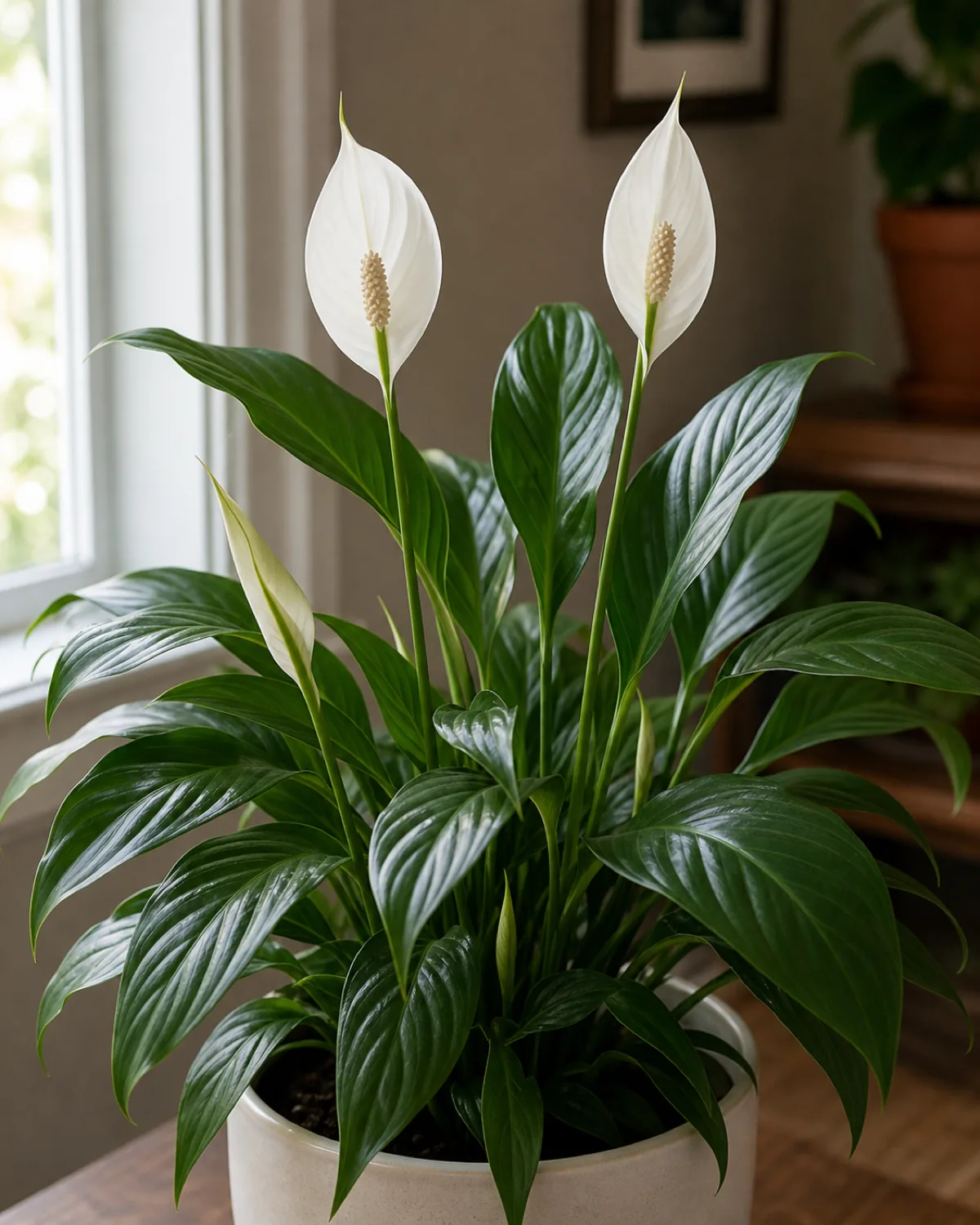
The most common peace lily question, by a wide margin, is why it stopped flowering. The answer is rarely about fertilizer and almost always about three quiet conditions: enough light, a mature plant, and a pot that is on the snug side. A peace lily that just came home from the shop with three open spathes was grown under perfect nursery light. Recreating that at home brings the flowers back.
- Move it brighter first. A spot a few feet from a north or east window often does more than any feed.
- Let it get slightly root-bound. Peace lily blooms more reliably when it is a little crowded in its pot.
- Use a diluted high-phosphorus feed in spring. A balanced houseplant fertilizer at half strength every few weeks can nudge new spathes.
What the green-fading flower means
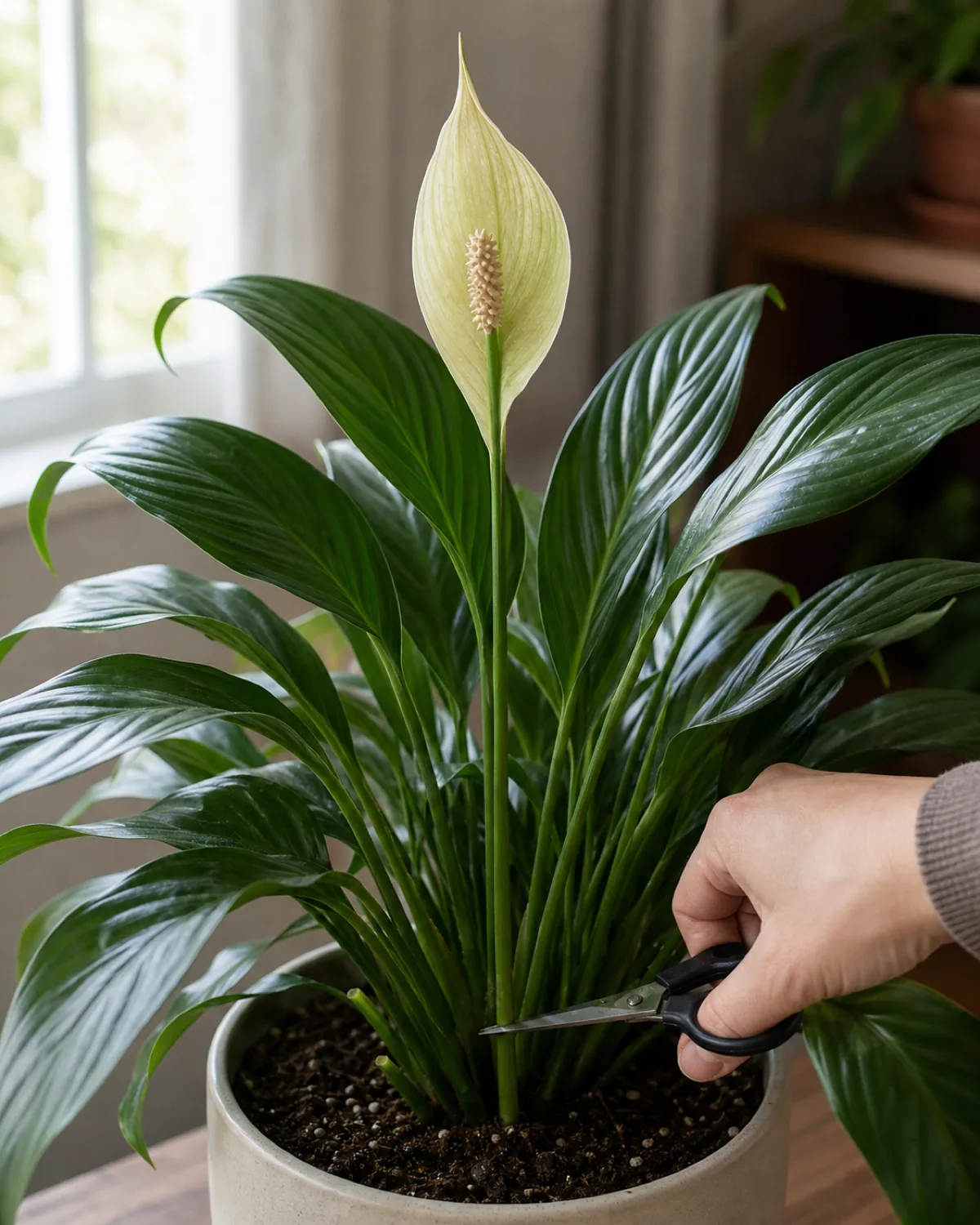
A peace lily spathe is not a long-lived flower. It opens creamy white, lasts a few weeks at peak, then gradually ages to pale green and finally brown. People often try to save it with feed or more water, but there is nothing to save. The plant is finished with that flower and is ready to put energy into the next one if the conditions are right.
- Cut the stalk all the way down. Follow it past the leaves to the base and snip just above the soil with clean scissors.
- Do not pinch off just the spathe. A bare green stalk left behind keeps drawing energy and looks worse than no flower.
- Expect a few weeks before the next one. New spathes come from the base, not from the cut stalk.
Peace Lily Care: The Quick Checklist
- 1Bright indirect light is the bloom sweet spotA few feet from a north or east window grows the most spathes; a dim corner keeps it alive but quiet.
- 2Water when the leaves start to flagThe dramatic droop check is the most reliable schedule; a deep watering brings the plant back in an hour.
- 3Well-draining aroid mix and a drainage holeHouseplant mix with extra perlite in a pot that drains is the safest combination.
- 4It thrives in low-light corners and bathroomsA north window, a steamy bathroom, or a kitchen counter with indirect light all suit it.
- 5A wilted plant is almost always thirstyWater deeply and most peace lilies rise again in one to two hours; persistent droop after water means root rot.
- 6Crispy brown tips point to water qualityTap water minerals and dry indoor air cause them; switch to filtered water and trim tips at a slight angle.
- 7Multiple yellow leaves usually mean too much waterA single old leaf yellowing at the base is normal aging; widespread yellow points to soggy roots.
- 8It blooms with light, age, and a snug potBright indirect light plus maturity plus slightly root-bound roots is the real flowering trigger.
- 9Green-fading spathes are normalThe white bract naturally ages to green and then brown; cut the whole stalk to the base.
- 10Repot every 1 to 2 years and divideSpring is best; splitting a mature clump into two or three smaller plants is the easiest propagation.
- 11Watch for fungus gnats in damp soilLet the soil dry slightly between drinks, use a yellow sticky stake, and wipe leaves to discourage mites.
- 12Mildly toxic to petsCalcium oxalate causes mouth irritation if a pet chews a leaf; keep it on a high stand.
- 13Pick a variety that fits the roomSweet Chico for small spaces, Mauna Loa as the classic, Sensation for big rooms, Domino for variegation.
kultivy.com
When and how to repot (and the divide-it shortcut)
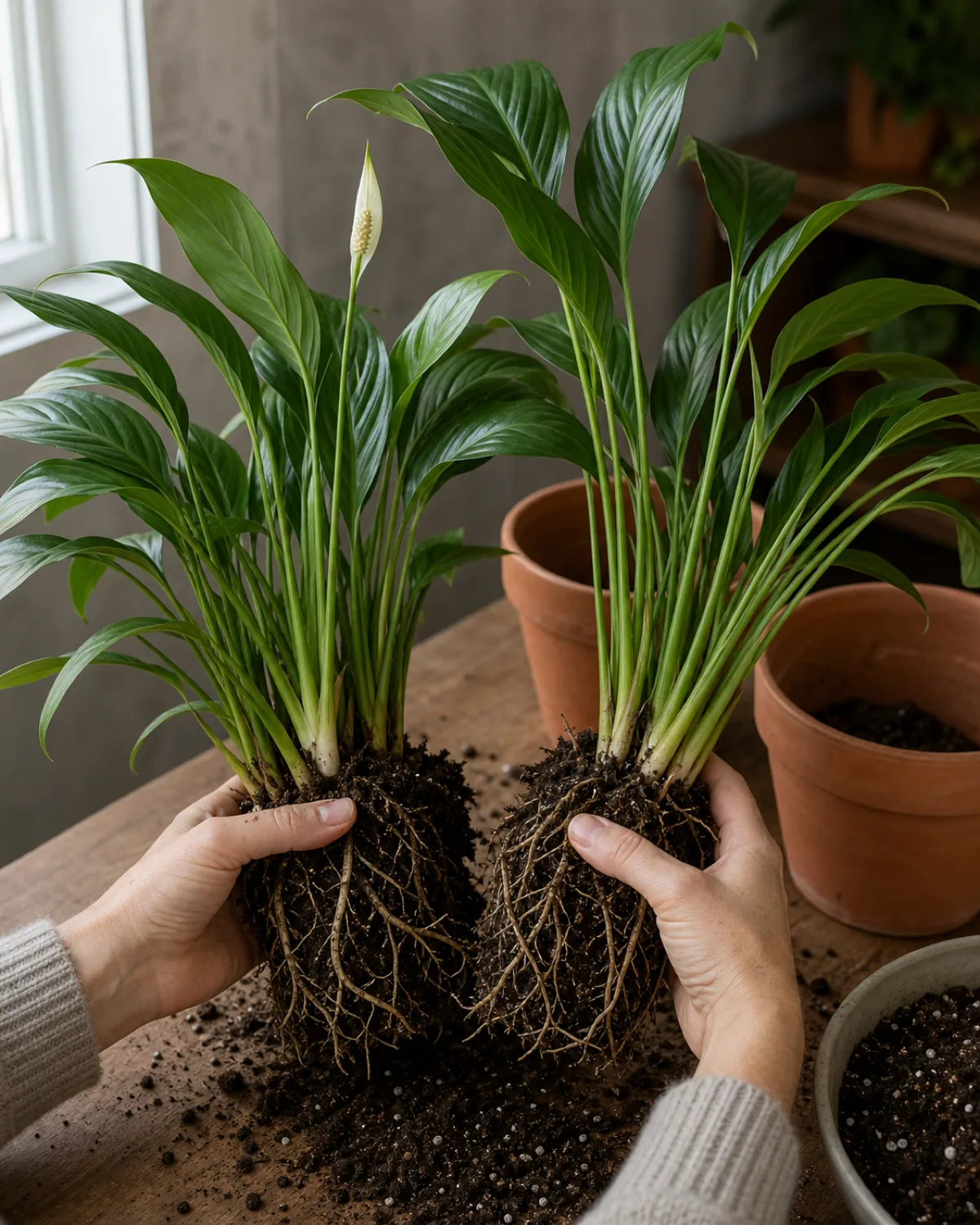
Peace lily grows slowly compared to a pothos or a monstera, so repotting comes around less often. Every one to two years is the usual rhythm, and the signal is the rootball circling the pot, not the leaves. The bonus when you repot a mature plant: you can gently split the clump into two or three smaller plants and give one away. It is the easiest peace lily propagation there is.
- Repot every one to two years. Or when roots circle the bottom and water runs straight through the pot.
- Spring is the best time. Repotting just before active growth lets the plant settle in and recover fastest.
- Divide a mature clump by hand. Tease the rootball apart so each piece has roots and several leaves, then pot each up.
Common pests and a fix
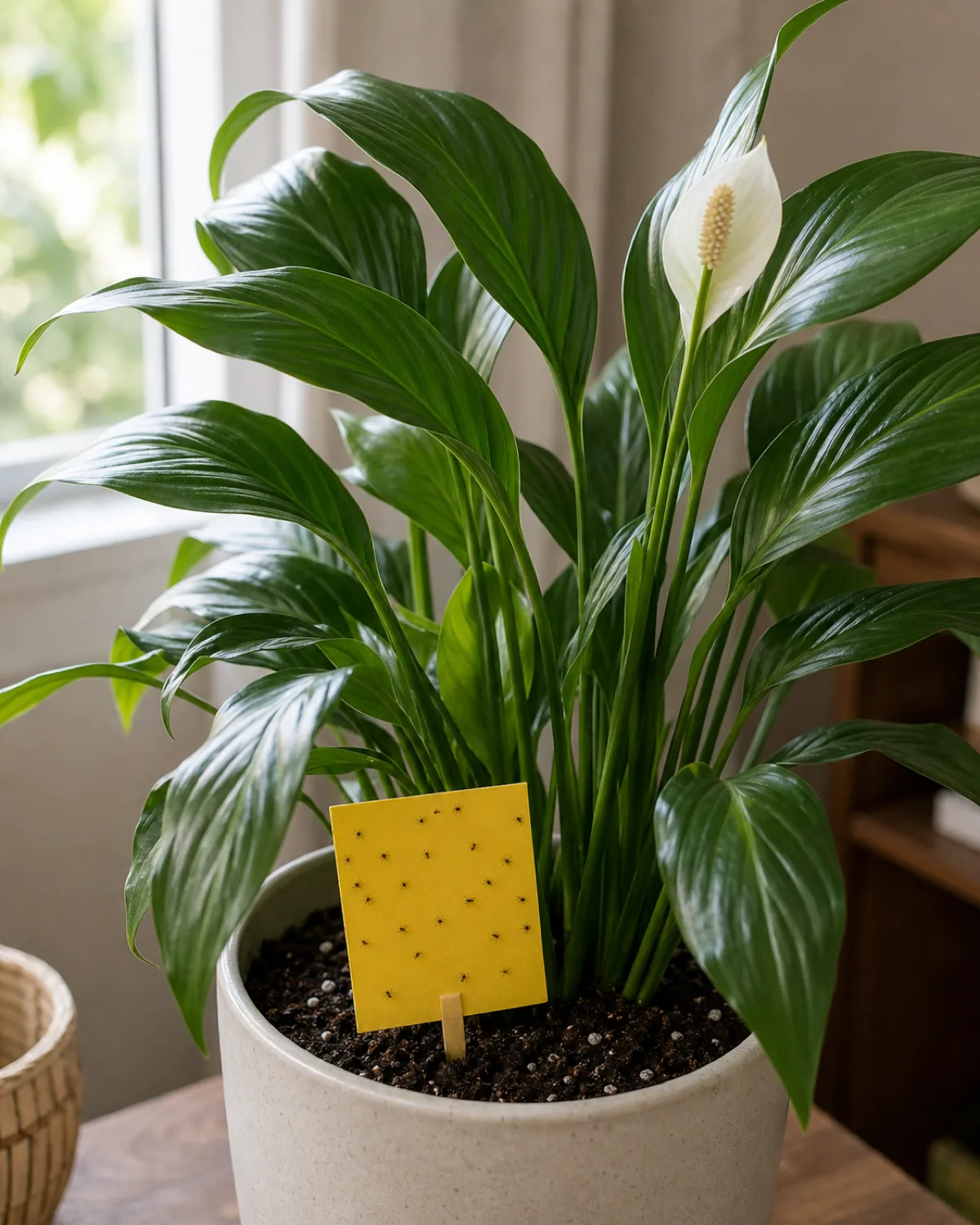
Peace lily is mostly low on pests, but fungus gnats are the recurring nuisance because the plant likes consistently damp soil and that is exactly what gnats want too. They are tiny dark flies you usually see crawling out of the soil or hovering around it. Spider mites can also show up in dry indoor air, leaving fine webbing on the undersides of the leaves.
- Let the top inch dry between waterings. Cutting the wet surface time alone breaks the gnat life cycle.
- Use a yellow sticky stake in the pot. Adult gnats stick to it and stop laying eggs in the soil.
- Wipe the leaves and watch for mites. A damp cloth catches dust and mites; treat heavier infestations with insecticidal soap.
Are peace lilies toxic to pets?
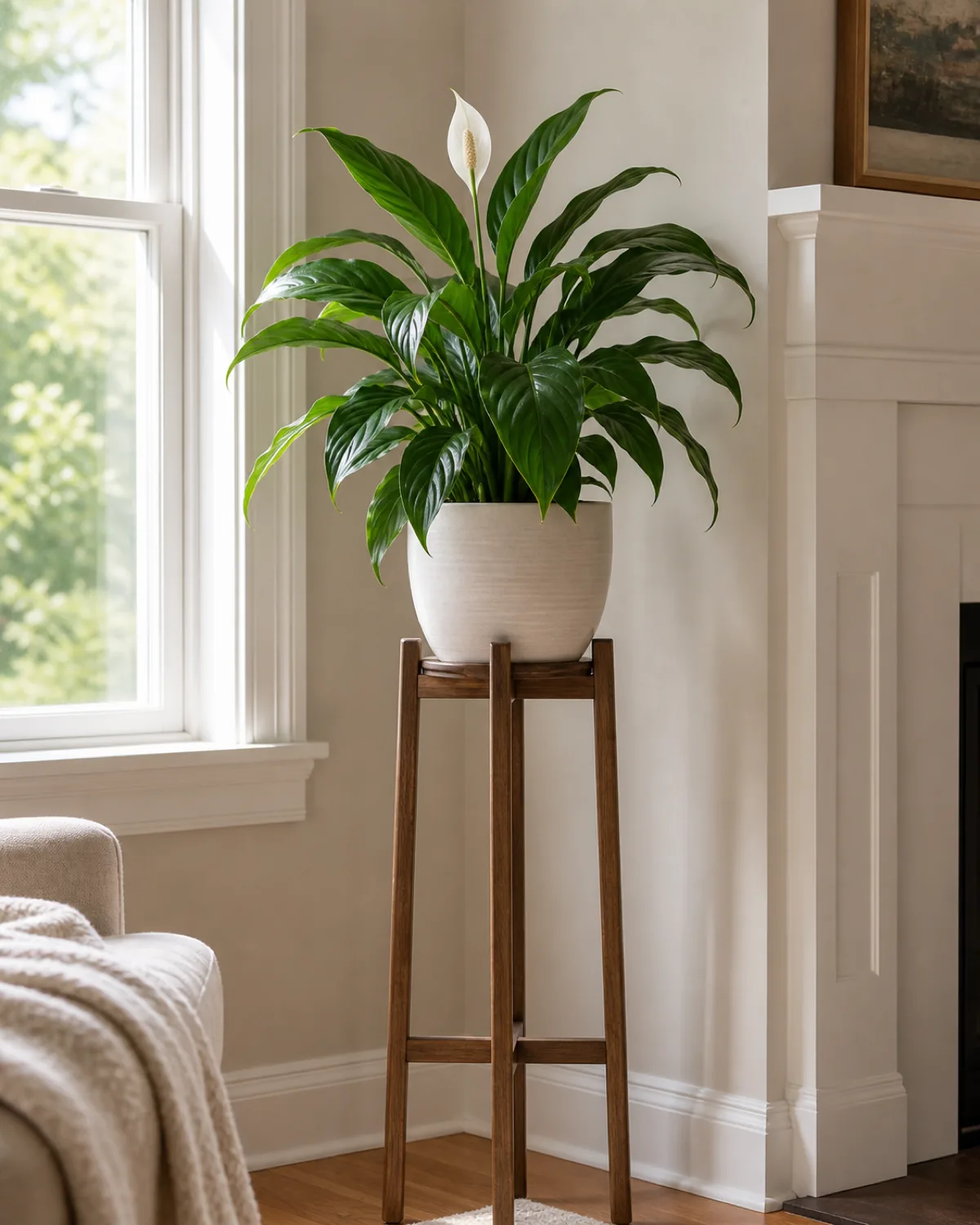
One honest note before you set a peace lily somewhere a pet can reach: it is mildly toxic to cats and dogs, like most aroids. The leaves contain tiny calcium-oxalate crystals that irritate a pet’s mouth and throat if they chew on it. It rarely causes serious harm, but it does cause drooling and discomfort, so it is worth planning around with placement rather than hoping for the best.
- Set it on a high stand or shelf. A tall plant stand or a corner shelf keeps the leaves above curious pets.
- Skip the floor pot for cat households. A peace lily on the ground next to a chewer is asking for an unpleasant evening.
- Call your vet if a pet chews some. Better to ask than to guess, even with a mild toxin like this one.
Peace lily varieties and which one to actually buy
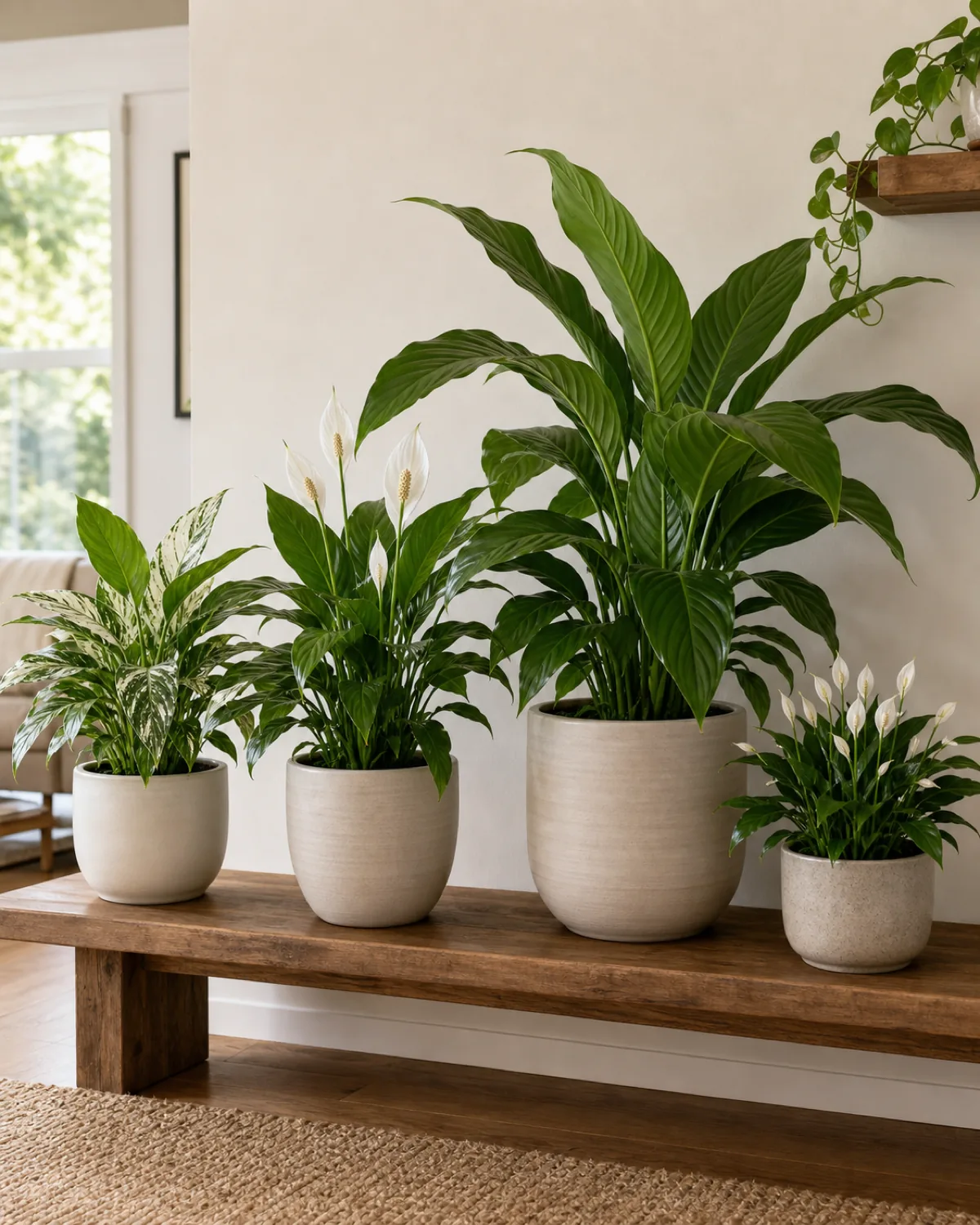
Once you can keep one peace lily blooming, the fun part is realizing “peace lily” is really a small family of plants in different sizes. The care is the same across all of them, but each variety has a clear best room. Picking the right one for a spot is most of the design work, and it is worth getting right because peace lily is a slow-growing plant that you live with for years.
- Mauna Loa is the classic. Mid-size, glossy dark green leaves, reliable spathes; this is what most shops sell.
- Sweet Chico is best for small rooms. Compact and bloom-happy for a desk, a bedside table, or a tight bathroom.
- Sensation suits a big space. Three to four feet across with huge leaves; this one anchors a large room.
- Domino is for variegation lovers. White-splashed leaves trade some flowering for a striking foliage pattern.
A peace lily rewards a few clear habits with long, quiet blooming: bright indirect light, watering when the leaves flag, and trimming spent spathes at the base. Once you have one happy, if you want a leafier aroid challenge with splits and climb, our monstera care guide is a natural step up.

Mara Quinn edits Kultivy, where she shares houseplant care, propagation, beginner-friendly plant picks, and plant-styling ideas for anyone who wants their indoor plants to actually thrive. Every guide is image-led and reviewed for clarity, usefulness, image accuracy, and Pinterest-to-page alignment before it goes live. Visit the About page.