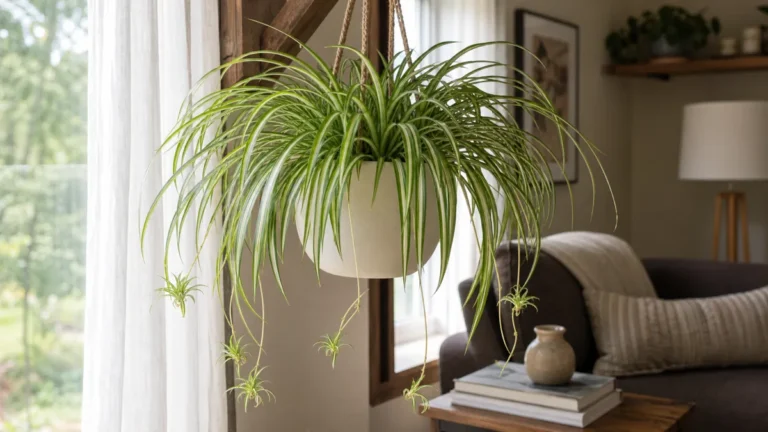
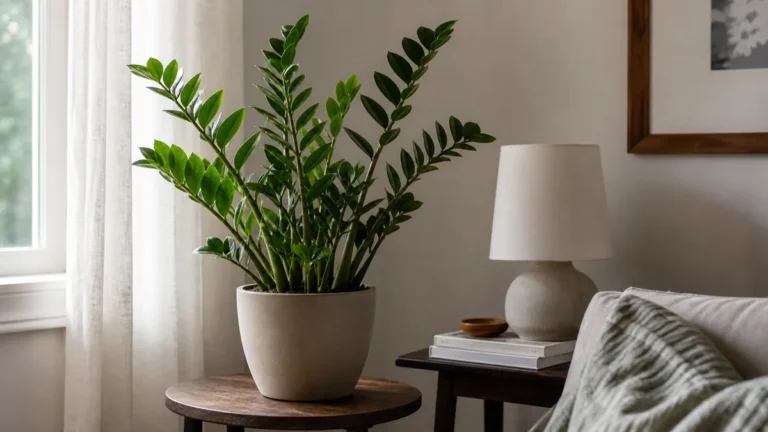
Most calatheas people bring home spend the next month developing crispy brown edges and getting labeled a diva. The plant is not being dramatic — it is reacting to three things at once: the wrong water, dry apartment air, and too much sun.
A calathea (now reclassified as Goeppertia) is a rainforest understory plant from tropical South America, used to filtered light, constant humidity, and soft rainwater. Indoors it wants the opposite of a cactus: no direct sun, no hard tap water, and never a dry, drafty corner.
If a calathea turns out to be fussier than you bargained for, the easy houseplants list is a much softer landing. Otherwise the sections below cover exactly what stops the crispy edges and keeps the patterns bold.
A calathea is the patterned showpiece most beginners buy and most beginners slowly crisp. The thirteen sections below cover the soft water, the high humidity, the bright indirect light, and the crispy-edge decoder that turn a browning calathea into a lush, vividly patterned prayer plant.
- 1Light, bright indirect only
- 2Water, distilled not tap
- 3Humidity, 50 to 60 percent
- 4Crispy brown edges decoded
- 5Soil, airy and evenly damp
- 6The prayer-plant movement
- 7Best spot, a humid bathroom
- 8Pet safety, calathea is safe
- 9Propagation by division
- 10Repotting, one size up
- 11Pests, spider mites first
- 12Varieties, orbifolia to ornata
- 13Long term, bold patterns for years
Light: bright indirect only, because direct sun bleaches the patterns
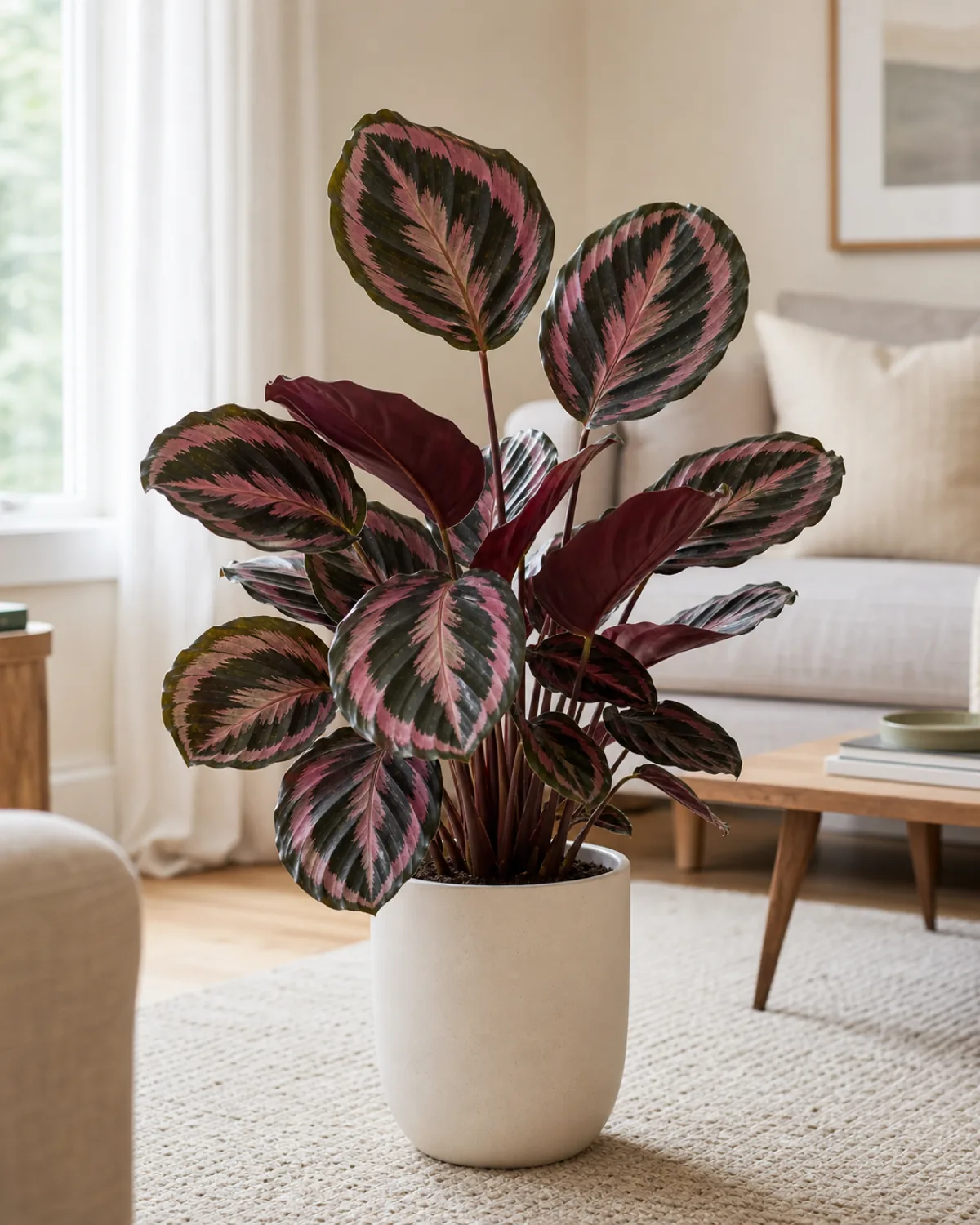
The patterns are the whole point of a calathea, and direct sun is what destroys them. A few hours of hot window light bleaches the silver and rose markings to a flat pale green and scorches the leaf edges at the same time. This is the exact opposite of a fiddle leaf fig, which wants the brightest direct spot you own.
What a calathea actually wants is bright, filtered, indirect light all day. A calathea is one of the patterned picks on the low-light plant list, but it loses its contrast in a dim corner, so aim for bright shade, not darkness.
- A few feet back from an east or north window is the sweet spot, where light is bright but never lands directly on the leaves.
- A south or west window needs a sheer curtain between the glass and the plant, or the markings fade within weeks.
- Faded flat patterns mean too much light, while leggy stretching toward the window means too little.
Watering: use distilled, rain, or filtered water, never straight tap
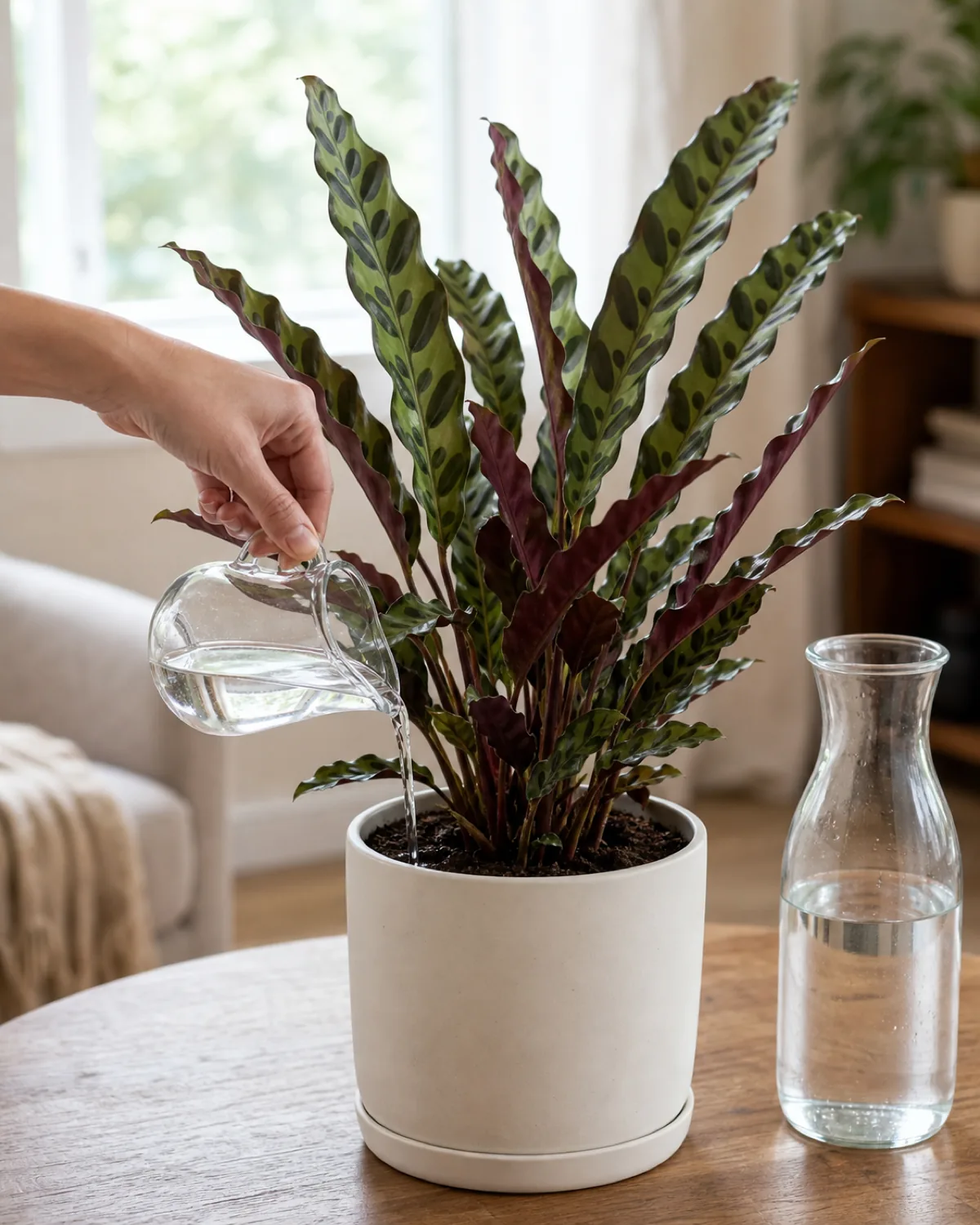
Tap water is the single most common reason a calathea browns. The fluoride, chlorine, and dissolved mineral salts in most municipal water accumulate in the leaf tissue and burn the edges from the outside in. A spider plant browns at the tips from the same thing, but a calathea reacts far more dramatically, crisping along the entire edge of every leaf.
What you change is the water itself, not the schedule. Distilled water, collected rainwater, or tap water left out overnight to off-gas chlorine all work. The goal is to keep the mix evenly damp, like a wrung-out sponge, never bone dry and never waterlogged.
- Switch to distilled or rainwater first, before you change anything else about the watering routine.
- Water when the top inch is just dry, keeping the deeper soil lightly moist at all times.
- Filtered fridge water is a decent backup, though it still carries some minerals, so distilled is safest.
Humidity is not optional: a calathea wants 50 to 60 percent
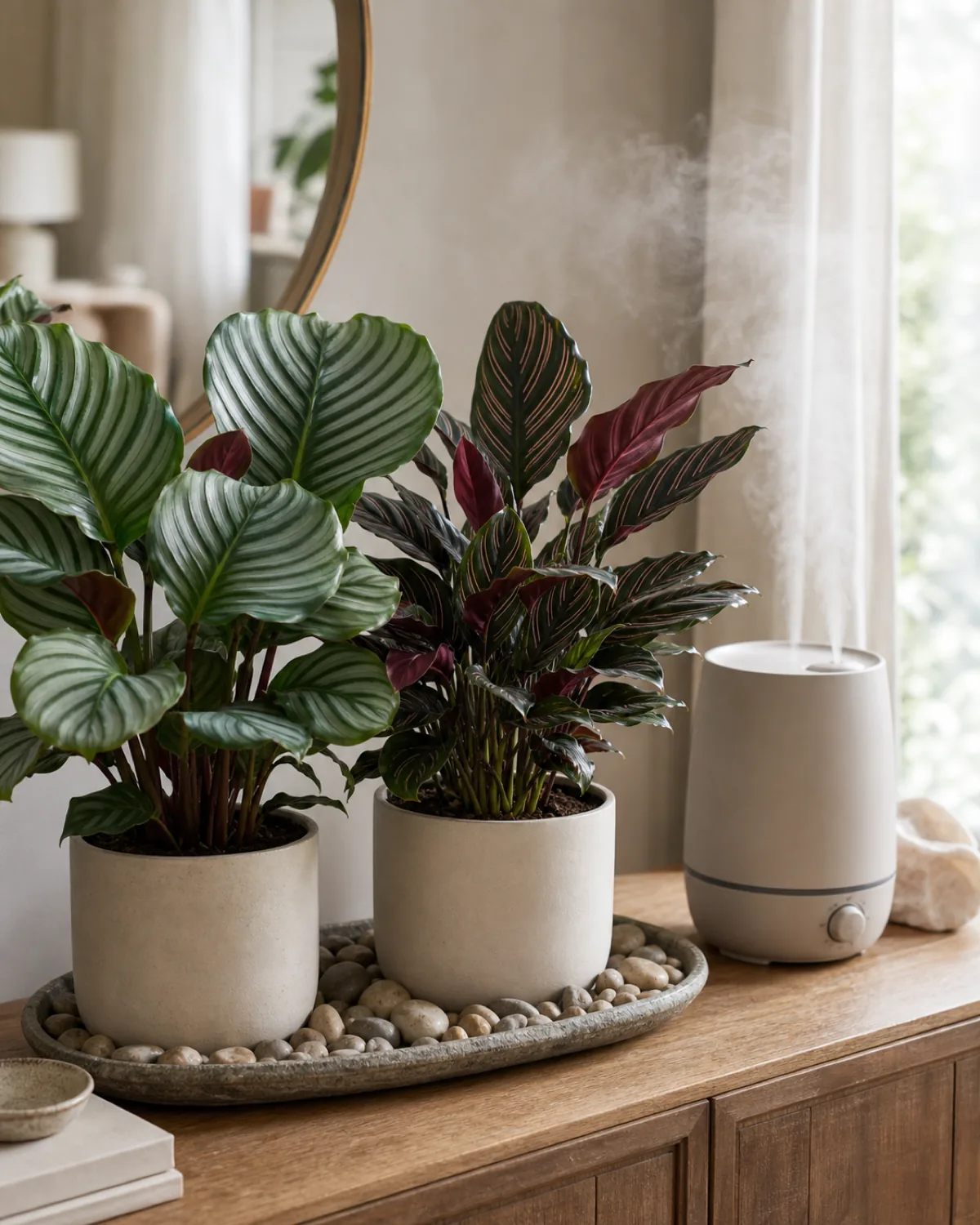
Dry indoor air is the second half of the crispy-edge problem, and it is the one most people skip. A calathea evolved on a humid rainforest floor and reads the 30 percent humidity of a heated or air-conditioned apartment as a drought, even when the soil is perfectly damp. The edges crisp regardless of how carefully you water.
Raising the humidity to 50 to 60 percent is what finally stops it. Grouping calatheas together, setting the pot on a wide pebble tray, or running a small humidifier nearby all raise the local moisture in the air around the leaves, which is what the plant actually responds to.
- A small humidifier is the most reliable fix, especially in winter when the heat is running.
- Group plants together or use a pebble tray, since clustered foliage holds a humid pocket of air.
- Skip the daily misting myth, which barely moves humidity and can invite leaf spotting on the markings.
Most calathea problems trace back to one of four blind spots. Start with whichever situation describes yours, then circle back to the rest later.
Crispy brown edges decoded: minerals vs dry air vs over-feeding vs drought
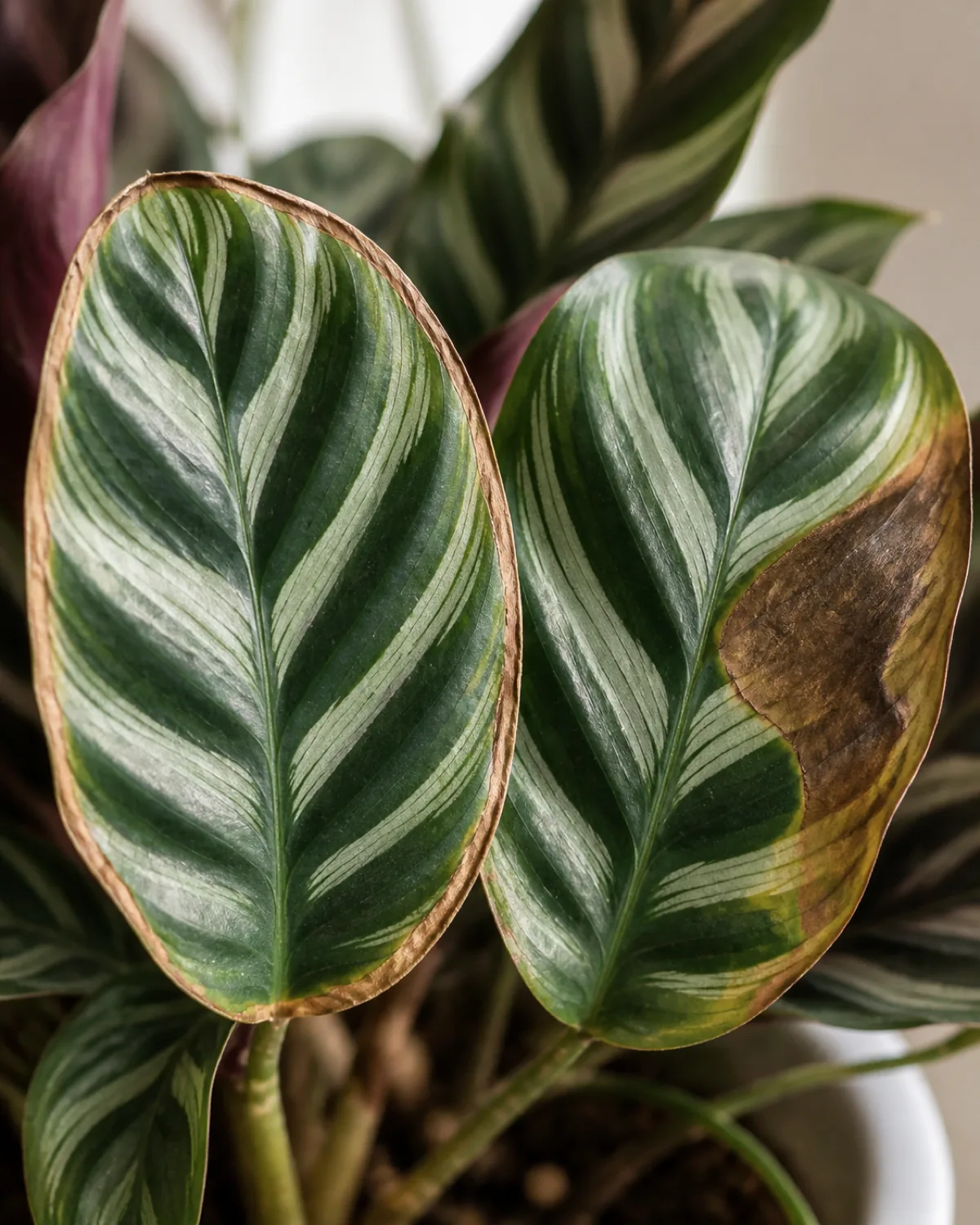
Crispy brown edges send most people straight to the watering can, which often makes it worse. Browning on a calathea has four different causes, and three of them have nothing to do with how much you water. The pattern of the browning tells you which one you are dealing with.
A single leaf can show more than one cause at once, which is part of why calathea browning feels so maddening. Read the edge first, then change exactly one thing and wait.
- A thin uniform brown rim around every leaf is almost always tap-water minerals or low humidity, so switch to distilled water and raise the humidity.
- A larger dry brown patch spreading in from one side usually means the soil dried out too far between waterings.
- Brown spots with a yellow halo plus a white crust on the soil point to over-fertilizing, so flush the pot and feed at quarter strength.
- Older outer leaves browning slowly while new growth is perfect is normal aging, not a problem to fix.
Soil: a light, airy mix that stays evenly damp but never soggy
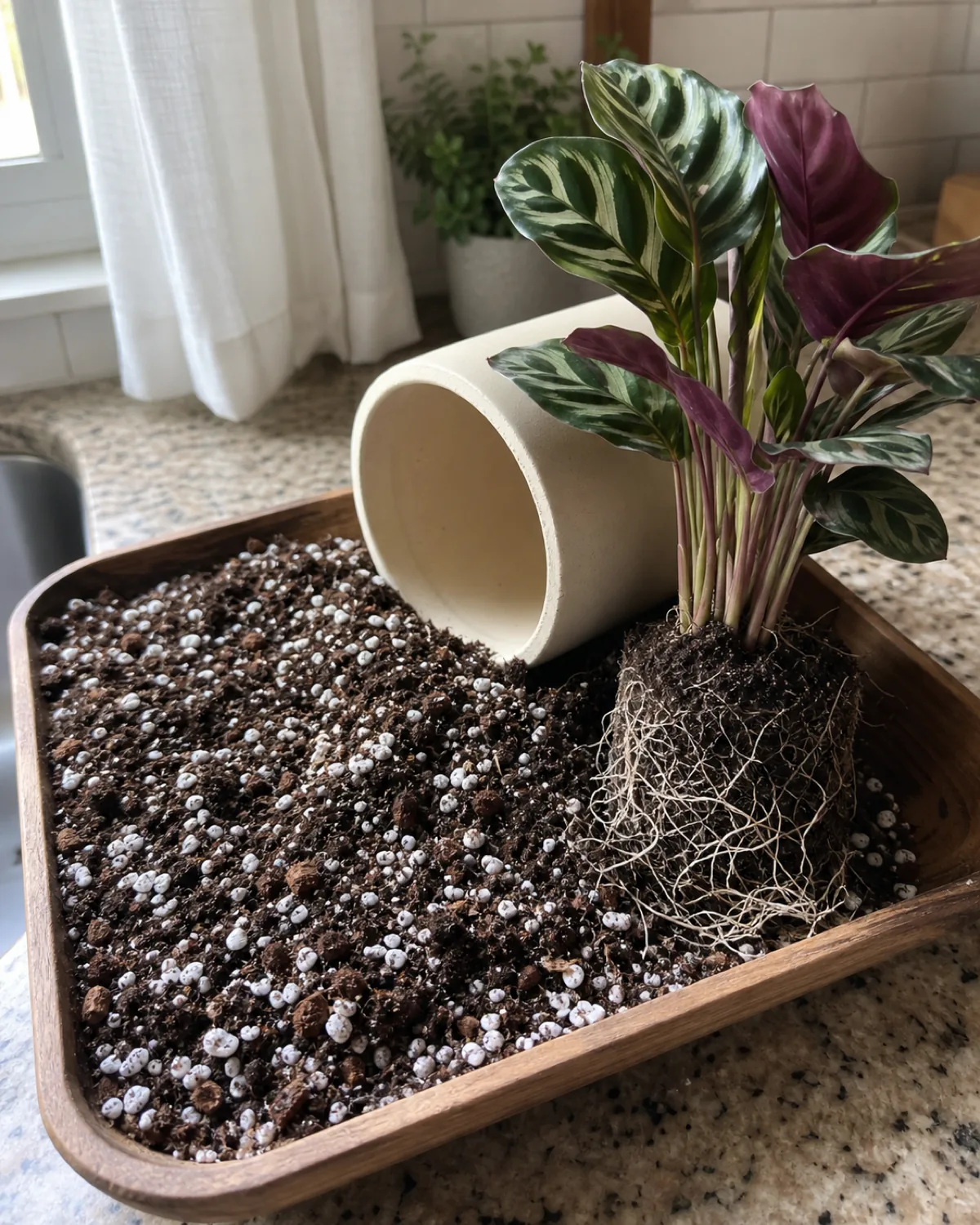
A calathea wants soil that holds moisture without turning to mud. Dense potting soil straight from the bag stays wet too long around the shallow roots and invites rot, while a fast-draining cactus mix dries out far too quickly and crisps the edges. The mix has to thread the needle between the two.
A reliable blend is roughly two parts peat-based or coco-coir potting mix, one part perlite, and a handful of fine orchid bark for air pockets. That combination stays evenly damp like a wrung-out sponge while still letting excess water drain away from the roots.
- Two parts potting mix, one part perlite, a little fine bark, eyeballed by volume in a tray.
- It should feel spongy and hold a loose shape, not pack into a dense wet clay ball.
- Always use a pot with a drainage hole, since a calathea in standing water rots within days.
The prayer-plant movement: why the leaves rise at night and lower by day
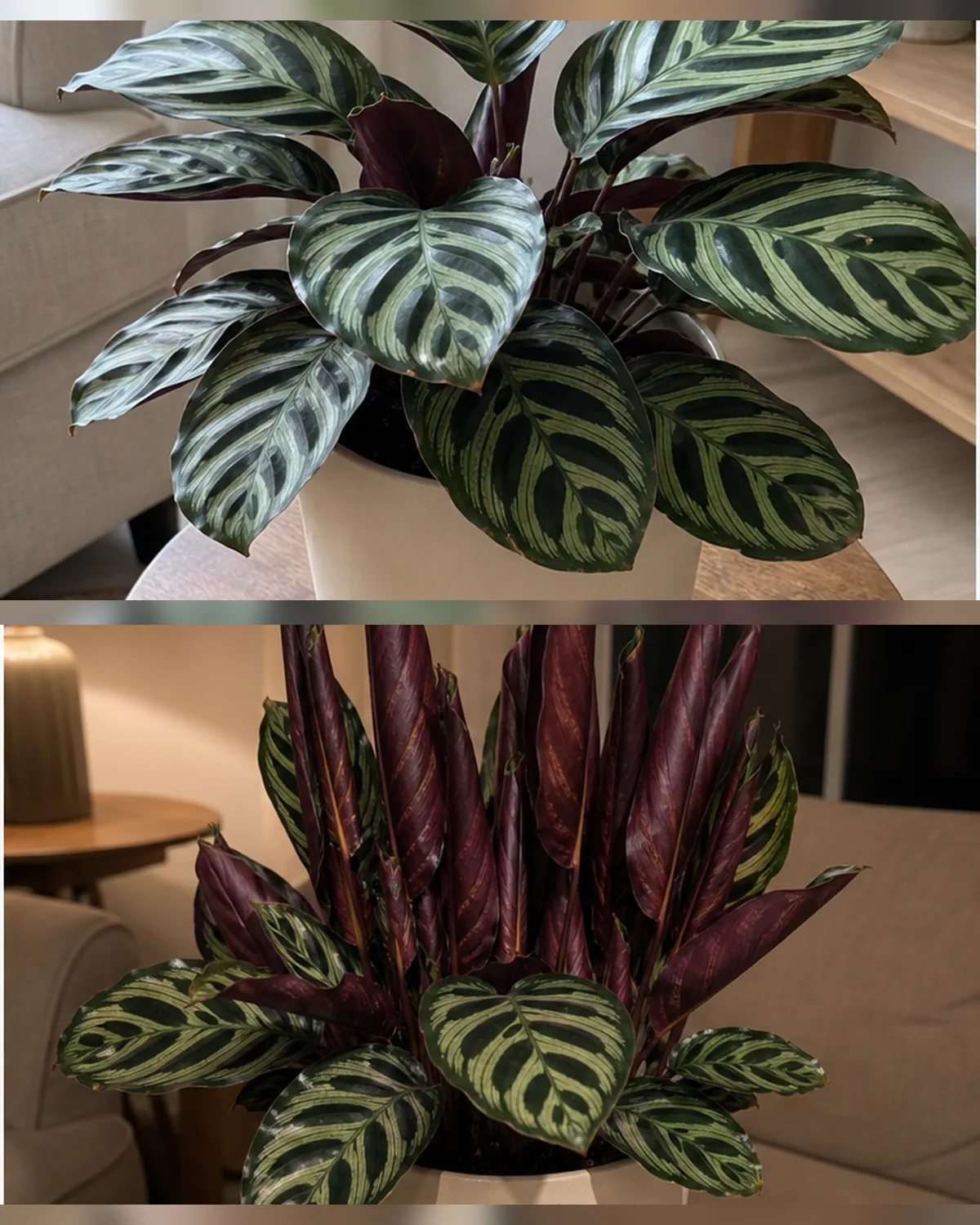
A healthy calathea folds its leaves up at night and lowers them flat during the day, a daily rhythm called nyctinasty that gives the whole Marantaceae family the nickname prayer plant. You can sometimes hear the leaves rustle as they shift in the evening.
The movement comes from a swollen joint at the base of each leaf, the pulvinus, that pumps water in and out to raise and lower the blade as the light changes.
Because the movement tracks the plant’s overall health, stuck leaves are a useful early signal. A calathea that stays flat and open at night, or stays clamped tightly upright all day, is usually telling you something about light or water before any browning shows up.
- Leaves praying upward all day often mean too little light or that the plant is thirsty.
- Leaves staying flat and limp at night can signal overwatering or roots that are sitting too wet.
- A normal daily open-and-close rhythm is the single best sign a calathea is genuinely happy.
Most calathea disasters trace back to one of four moves people skip. Hold these four and a calathea keeps its bold patterns and opens and closes its leaves every day.
Best spot in a real home: a bright, steamy bathroom or kitchen
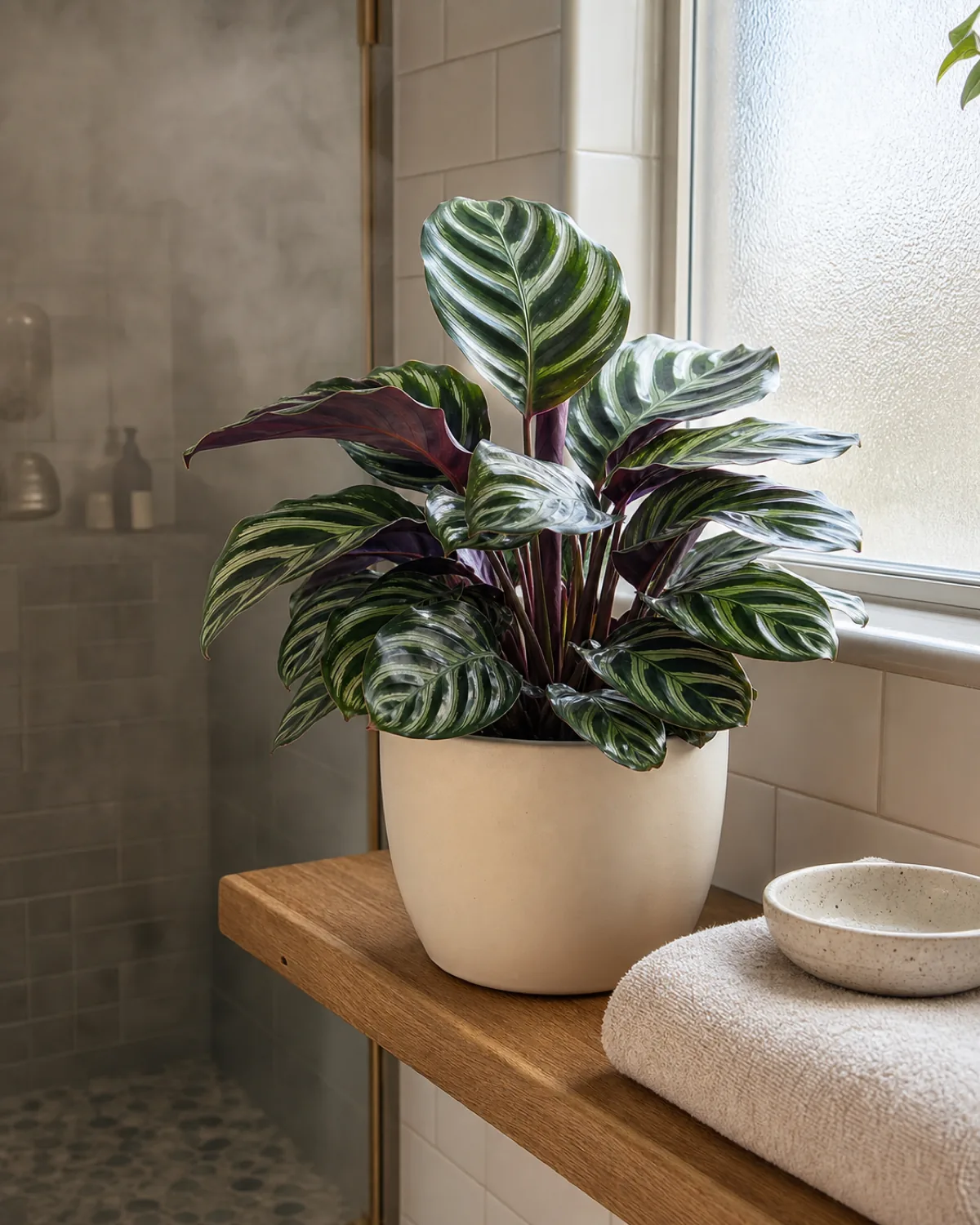
The best calathea spots in most homes solve light and humidity at the same time. A bright bathroom is one of the best calathea spots in the house, the same reason it makes most bathroom-plant lists: the daily shower steam keeps the air humid while a frosted or north window gives bright, filtered light with no direct sun.
A kitchen near the sink is the runner-up for the same reasons, with cooking steam and dishwashing raising the local humidity. The spot to avoid everywhere is the path of a heating vent or an air-conditioning return, where the moving dry air crisps the edges faster than anything else in the house.
- A bright bathroom with a frosted or north window gives steam plus filtered light in one spot.
- A kitchen counter near the sink is the next best humid, bright option.
- Keep it out of the draft from any vent, since moving dry air is a calathea’s worst enemy.
Pet safety: a calathea is non-toxic to cats and dogs
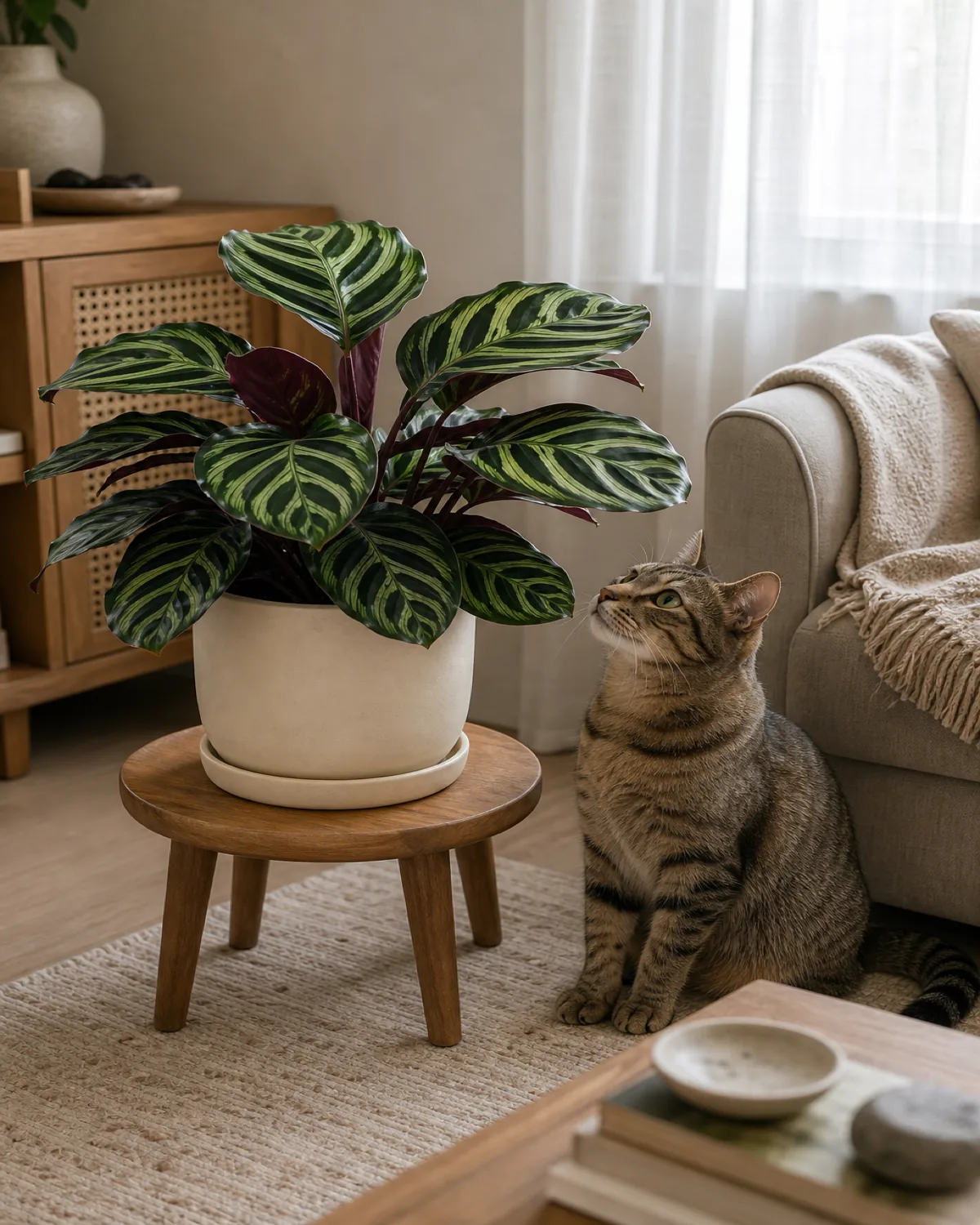
A calathea is one of the genuinely pet-safe statement plants, listed by the ASPCA as non-toxic to both cats and dogs. Unlike a fiddle leaf fig, whose latex sap is toxic, a calathea can sit on the floor or a low stand within easy reach of a curious cat or dog with no barrier and no worry.
That makes a calathea one of the easiest recommendations for a home with pets and small children, where a lot of the most dramatic foliage plants are off the table. A nibbled leaf will not poison a pet, though as with any plant a big mouthful can still cause a mild stomach upset.
- ASPCA non-toxic for cats and dogs, so no barrier or raised shelf is needed.
- Safe within reach on the floor or a low stand, unlike toxic statement plants.
- A chewed leaf is harmless, though a large amount can still cause mild, passing stomach upset.
Propagation: a calathea only multiplies by division, not from cuttings
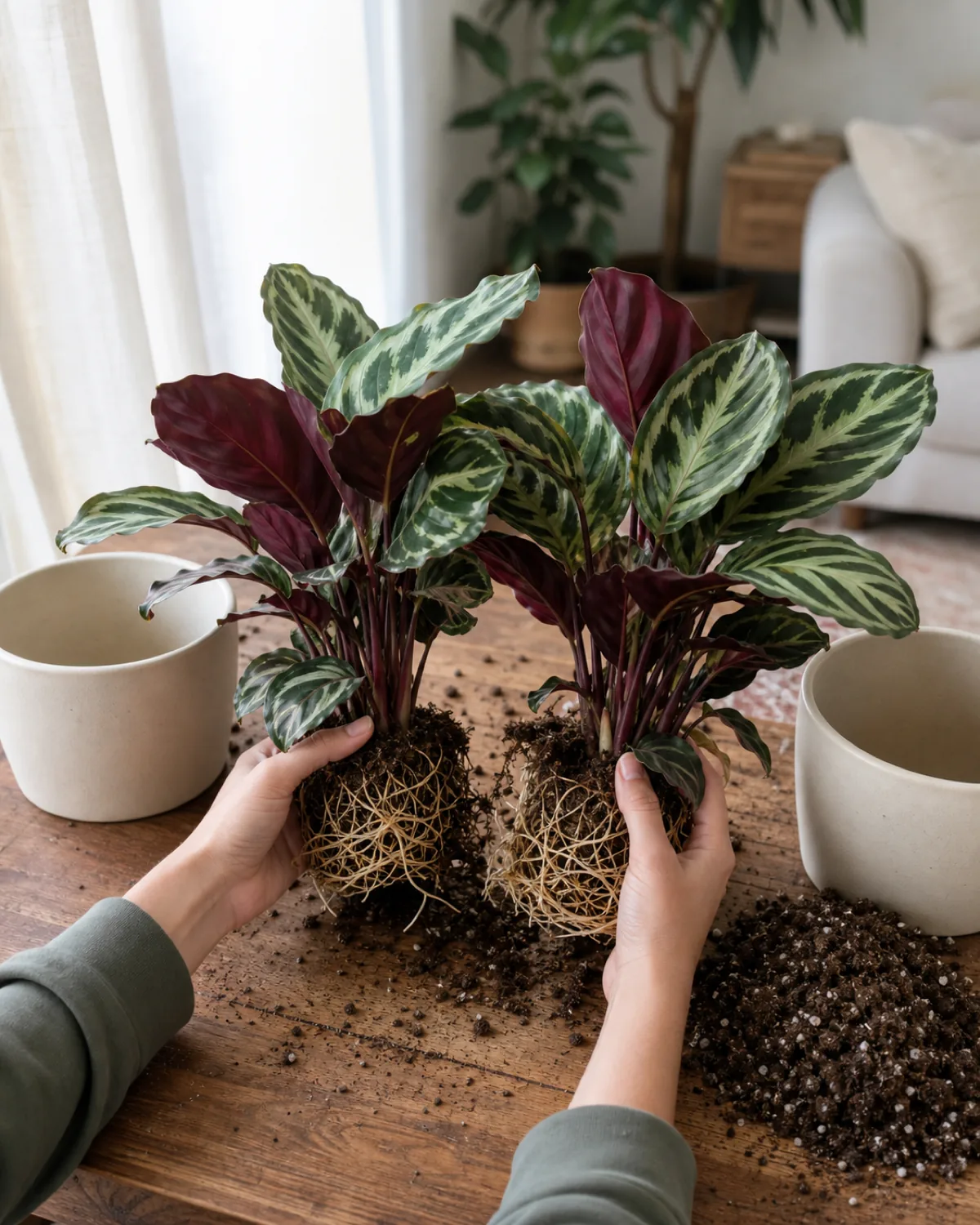
A calathea cannot be propagated from a stem or leaf cutting the way a pothos or a spider plant can. There are no nodes along a trailing stem to root, because the plant grows in a clump of leaves rising straight from the soil. The only way to make more calatheas is to divide the root clump.
The time to do it is at repotting, in spring, when the plant is already out of its pot. Gently tease the root ball apart into sections, making sure each division has both healthy roots and several leaves of its own, then pot each piece into its own small container of the same damp, airy mix.
- Divide at repotting in spring, while the plant is already lifted out and the roots are exposed.
- Each division needs roots and several leaves, or it will not establish on its own.
- Expect a sulk for a week or two, since calatheas dislike root disturbance and recover slowly.
Calathea Care: The Quick Reference
- 1Light: bright indirect only, never direct sunDirect sun bleaches the silver and rose patterns flat and scorches the edges. A few feet back from an east or north window is the sweet spot.
- 2Water: distilled, rain, or filtered, never straight tapFluoride, chlorine, and salts in tap water cause the crispy brown edges. Keep the mix evenly damp like a wrung-out sponge.
- 3Humidity: 50 to 60 percent is not optionalDry air crisps the edges even with perfect watering. A small humidifier, a pebble tray, or grouped plants all raise it.
- 4Crispy edges are four different problemsThin uniform rim = tap water / low humidity, one-sided dry patch = dried out, yellow halo + crusty soil = over-fed, slow outer-leaf browning = normal aging.
- 5Soil: light, airy, evenly damp but never soggyRoughly two parts peat or coco mix, one part perlite, a little fine bark. Always a pot with a drainage hole.
- 6The prayer movement is a health gaugeLeaves rise at night and lower by day. Stuck-up leaves often mean low light or thirst, stuck-flat at night can mean overwatering.
- 7Best spot: a bright, steamy bathroom or kitchenShower or cooking steam plus a frosted or north window gives humidity and filtered light at once. Keep it out of any vent’s draft.
- 8Pet safety: calathea is ASPCA non-toxicSafe for cats and dogs within easy reach on the floor or a low stand. No barrier needed, unlike a toxic fiddle leaf fig.
- 9Propagate: by division only, not cuttingsA calathea grows in a clump with no rootable stem nodes. Split the root ball at repotting, each piece with roots and leaves.
- 10Repot: every one to two years, one size upMove up only when roots fill the pot. A too-big pot stays wet and rots the shallow roots. Spring is the window.
- 11Pests: spider mites are the number oneDry air invites them. Check leaf undersides for fine webbing and pale stippling, rinse in a lukewarm shower, raise humidity.
- 12Varieties: orbifolia, medallion, rattlesnake, ornataOrbifolia is the most forgiving starter. White fusion is the showstopper and the single fussiest pick.
- 13Long term: consistency keeps the patterns boldHold humidity through winter, trim crispy edges along the leaf shape, refresh soil every year or two and divide.
kultivy.com
Repotting: every one to two years in spring, and divide while you are in there
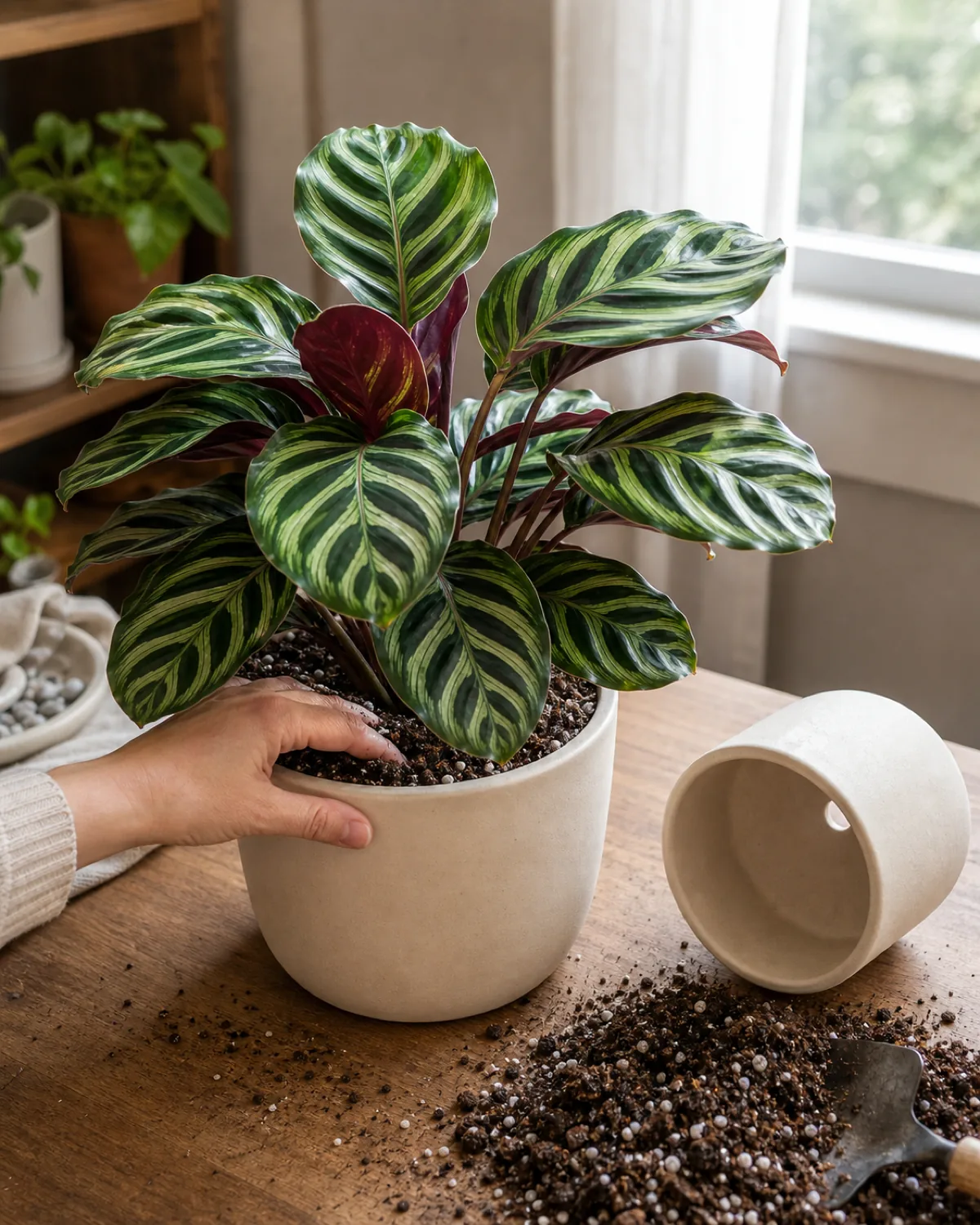
A calathea does not need frequent repotting, and a pot that is too big actually works against it by holding a reservoir of wet soil with no roots in it, which rots fast. Most calatheas are happy in the same snug pot for a year or two and only need moving up when the roots have genuinely filled it.
Wait for real root-bound signs, then go up just one pot size in spring, which doubles as the moment to divide the clump if you want more plants. Use fresh, airy, moisture-retentive mix and a pot with a drainage hole, and water it in with distilled water.
- Repot only when roots fill the pot, every one to two years for most calatheas.
- Go up a single pot size, since a too-large pot stays wet and rots the shallow roots.
- Spring is the window, giving the plant a full growing season to settle and recover.
Pests: spider mites are the number one calathea pest
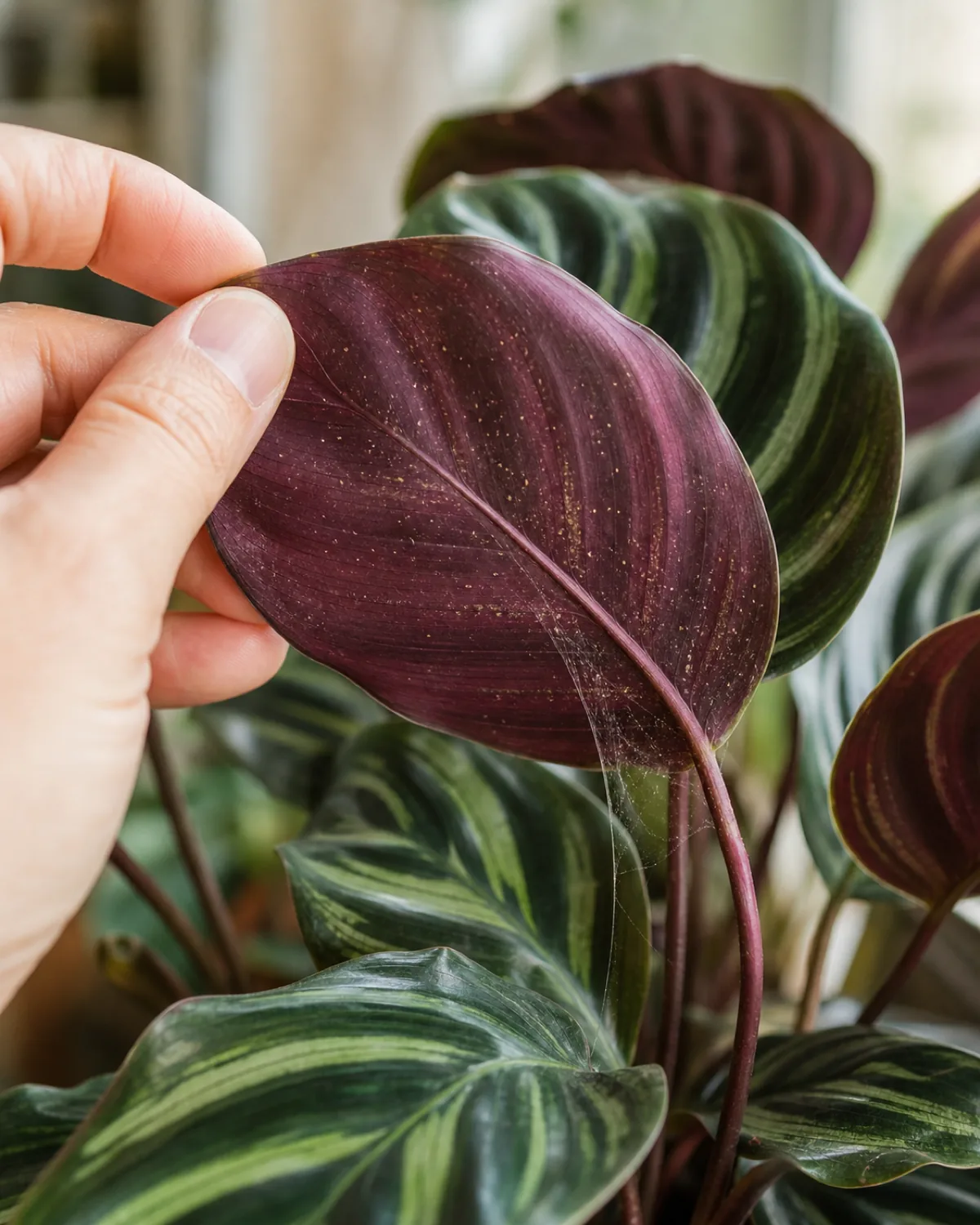
Spider mites are the pest a calathea attracts more than any other, and dry air is what invites them. The same low humidity that crisps the edges creates the warm, dry conditions spider mites love, so a calathea kept too dry often ends up fighting both problems at once. They are tiny and easy to miss until the fine webbing shows up.
The early signs live on the leaf underside, which is worth a check whenever you water. Catching one cluster of stippling early is far easier than clearing an outbreak that has spread across every patterned leaf in the plant.
- Fine webbing and pale stippling on the underside are the telltale spider-mite signs, so flip the leaves to check.
- Rinse the plant in a lukewarm shower and raise humidity, since mites cannot tolerate the moisture a calathea wants anyway.
- Watch for fungus gnats too, whose larvae thrive in the constantly damp soil if it ever stays soggy.
Varieties worth knowing: orbifolia, medallion, rattlesnake, pinstripe, and white fusion
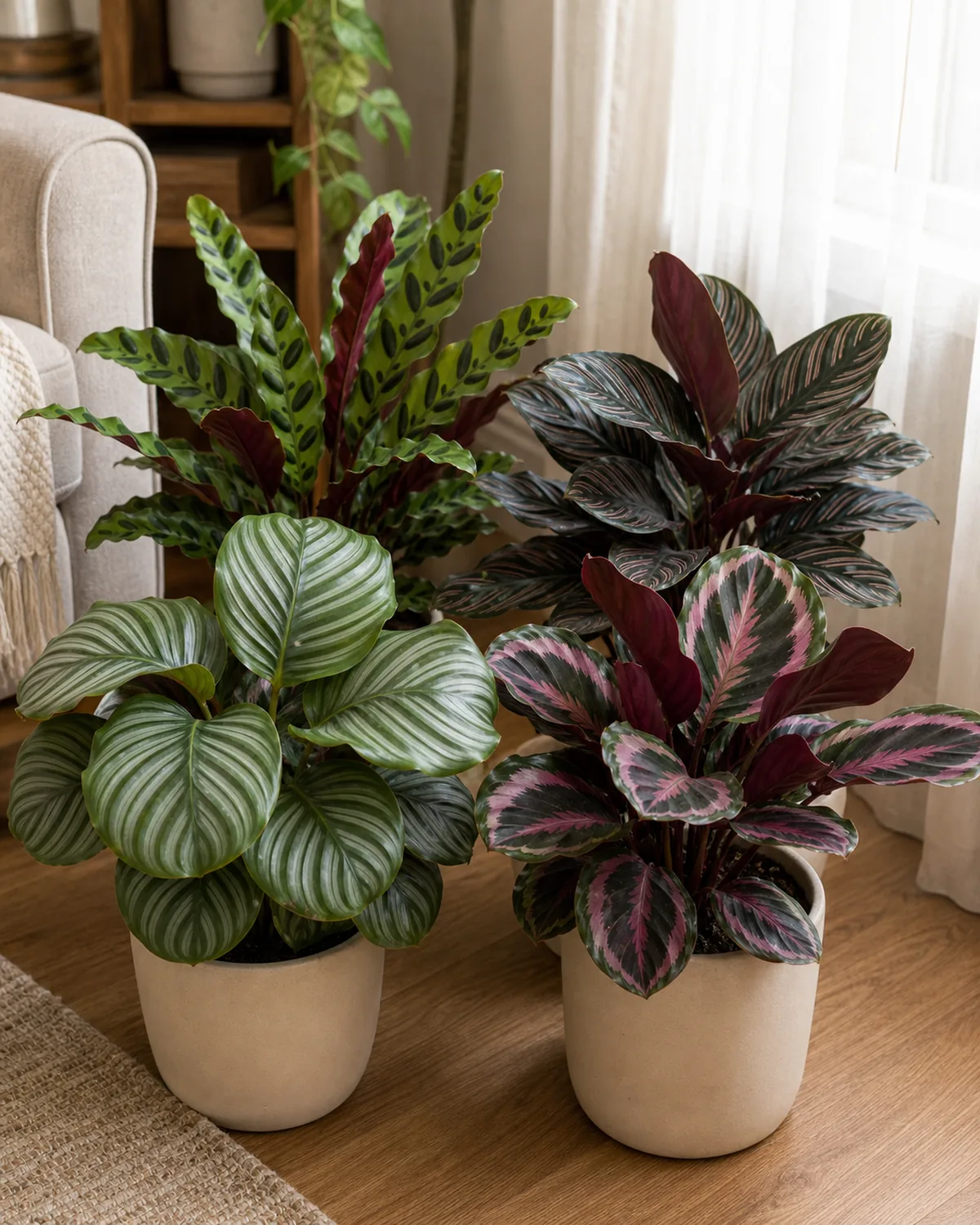
Calathea is a huge group, and the variety changes the look far more than the care. The markings range from bold silver stripes to rose-painted centers to thin pink pinstripes, but nearly all of them want the same bright indirect light, soft water, and high humidity. The choice comes down to leaf shape and pattern.
A few are noticeably fussier than the rest, which is worth knowing before you fall for a photo. White fusion in particular, with its dramatic cream variegation, is one of the most demanding houseplants you can buy and not a good first calathea.
- Orbifolia, large rounded leaves with broad silver-green stripes, the most forgiving and a great starter calathea.
- Medallion, oval rose-painted leaves with deep maroon undersides, the classic patterned showpiece.
- Rattlesnake (lancifolia), long wavy-edged leaves with dark brushstroke markings and purple undersides.
- Pinstripe (ornata), dark leaves with fine pink pinstripes, striking but thirsty for humidity.
- White fusion, cream, green, and lavender variegation, the showstopper and the single fussiest pick.
Long term: keeping the patterns bold and the plant full for years
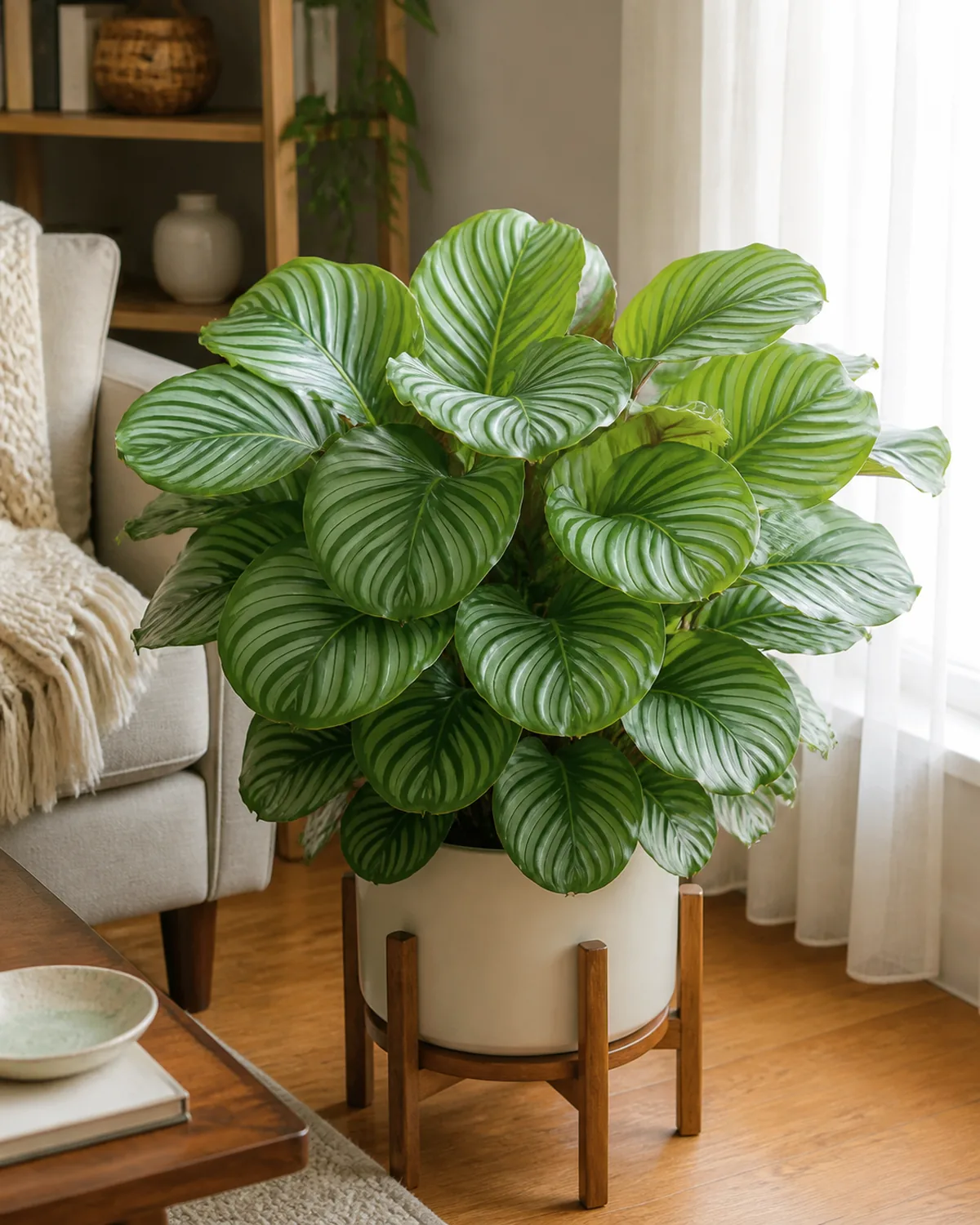
A calathea that gets soft water, steady humidity, bright indirect light, and an evenly damp mix stays full and vividly patterned for years and slowly builds into a dense clump of leaves. The plants that decline almost always trace back to the same short list: hard tap water, dry winter air, or a spot with too much sun.
The long-term trick is consistency rather than intervention. A calathea rewards a stable routine and resents change, so once you find a humid, bright-shade spot and a soft-water rhythm that works, the best thing you can do is leave it there and keep the conditions even through the seasons.
- Hold the humidity through winter, when indoor heating is the most common cause of a slow decline.
- Trim crispy edges with clean scissors, following the natural leaf shape so the trim disappears.
- Refresh the soil every year or two, which resets drainage and gives you the chance to divide.
Get those three things right and a calathea stops being a diva and becomes one of the most rewarding patterned plants you can grow indoors, opening and closing its leaves every day as a small, reliable sign it is genuinely thriving.

Mara Quinn edits Kultivy, where she shares houseplant care, propagation, beginner-friendly plant picks, and plant-styling ideas for anyone who wants their indoor plants to actually thrive. Every guide is image-led and reviewed for clarity, usefulness, image accuracy, and Pinterest-to-page alignment before it goes live. Visit the About page.