Fresh herbs within arm's reach while you cook is not a farmhouse fantasy. A sunny windowsill, a wall-mounted planter, or even a bookshelf with clip-on grow lights can produce basil, rosemary, and thyme year-round in any apartment.
The difference between a thriving indoor herb garden and a collection of dying supermarket pots is matching the setup to your actual conditions — your light, your available space, and how often you remember to water.
These twelve setups cover every combination of those three variables, from the simplest windowsill row to hydroponic systems that handle watering for you.
Each setup is matched to a specific space, light level, and maintenance style. Jump to any idea below.
- 1Sunny windowsill herb row
- 2Wall-mounted vertical planter
- 3Countertop tiered herb stand
- 4Mason jar herb garden
- 5Hanging herb basket
- 6Indoor hydroponic herb system
- 7Mediterranean herb cluster
- 8Tea and tisane herb collection
- 9Self-watering herb planter
- 10Herb spiral planter
- 11Grow light herb shelf
- 12Bathroom herb garden
Sunny windowsill herb row
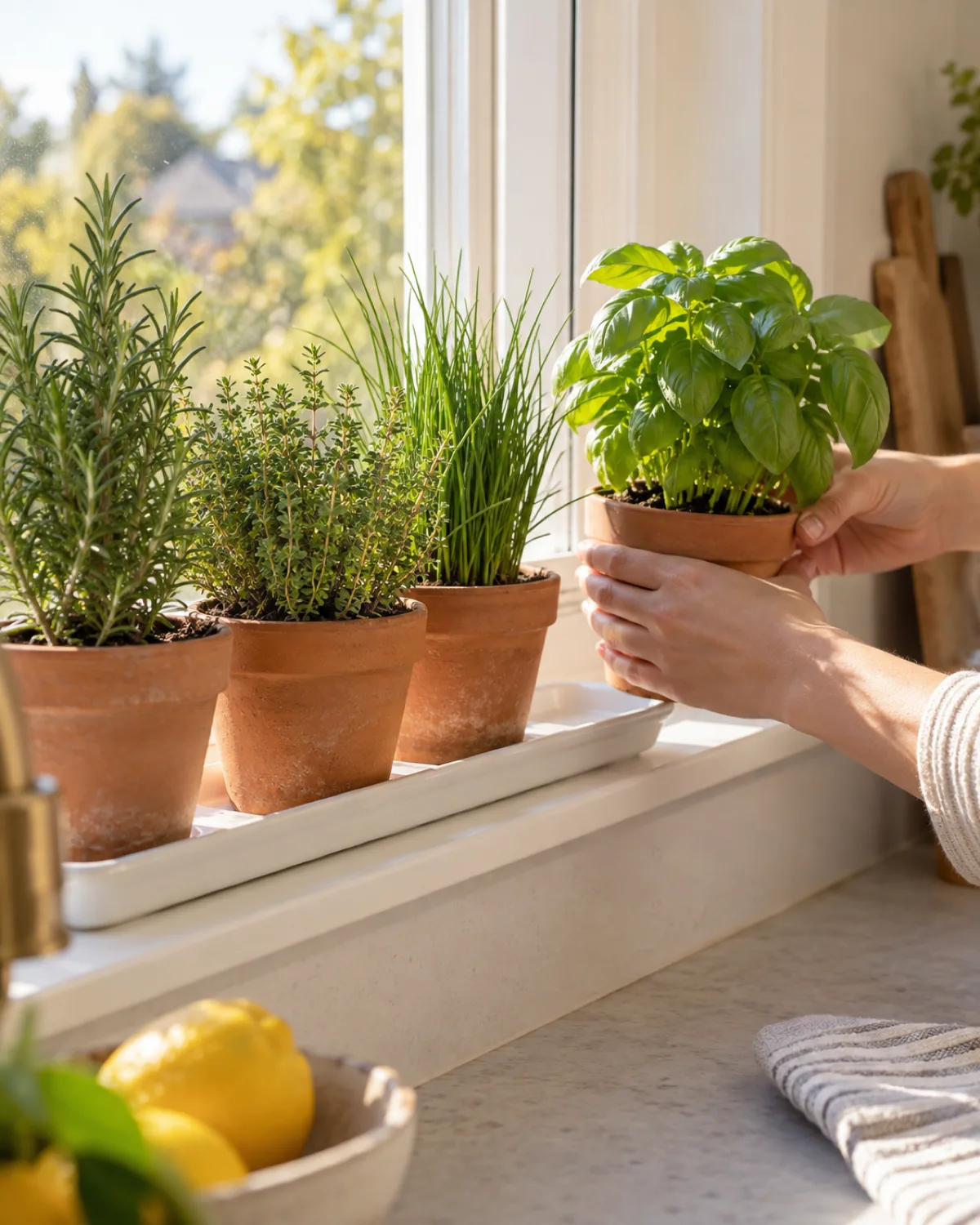
A south-facing windowsill delivering six or more hours of direct sunlight is the simplest indoor herb garden setup because it replicates what most culinary herbs evolved to need — unobstructed Mediterranean sun. Basil, rosemary, thyme, and oregano all thrive in this position with no supplemental lighting.
Line four to six pots in four-inch or six-inch terracotta on a single drip tray. Terracotta breathes, which prevents the waterlogged roots that kill more indoor herbs than any other cause. The tray catches runoff and protects the sill from water stains.
- Rotate each pot a quarter turn every week so all sides receive even light and the stems grow straight instead of leaning toward the glass
- South-facing delivers the most hours of direct light; west-facing works for afternoon sun but east-facing is borderline for sun-loving herbs like basil
- Windowsill temperature drops sharply at night in winter — pull pots back two inches from cold glass to avoid chilling tropical herbs like basil
This is the starter setup. If it works, every other idea on this list is a variation on the same principle — light, drainage, and access.
Wall-mounted vertical herb planter
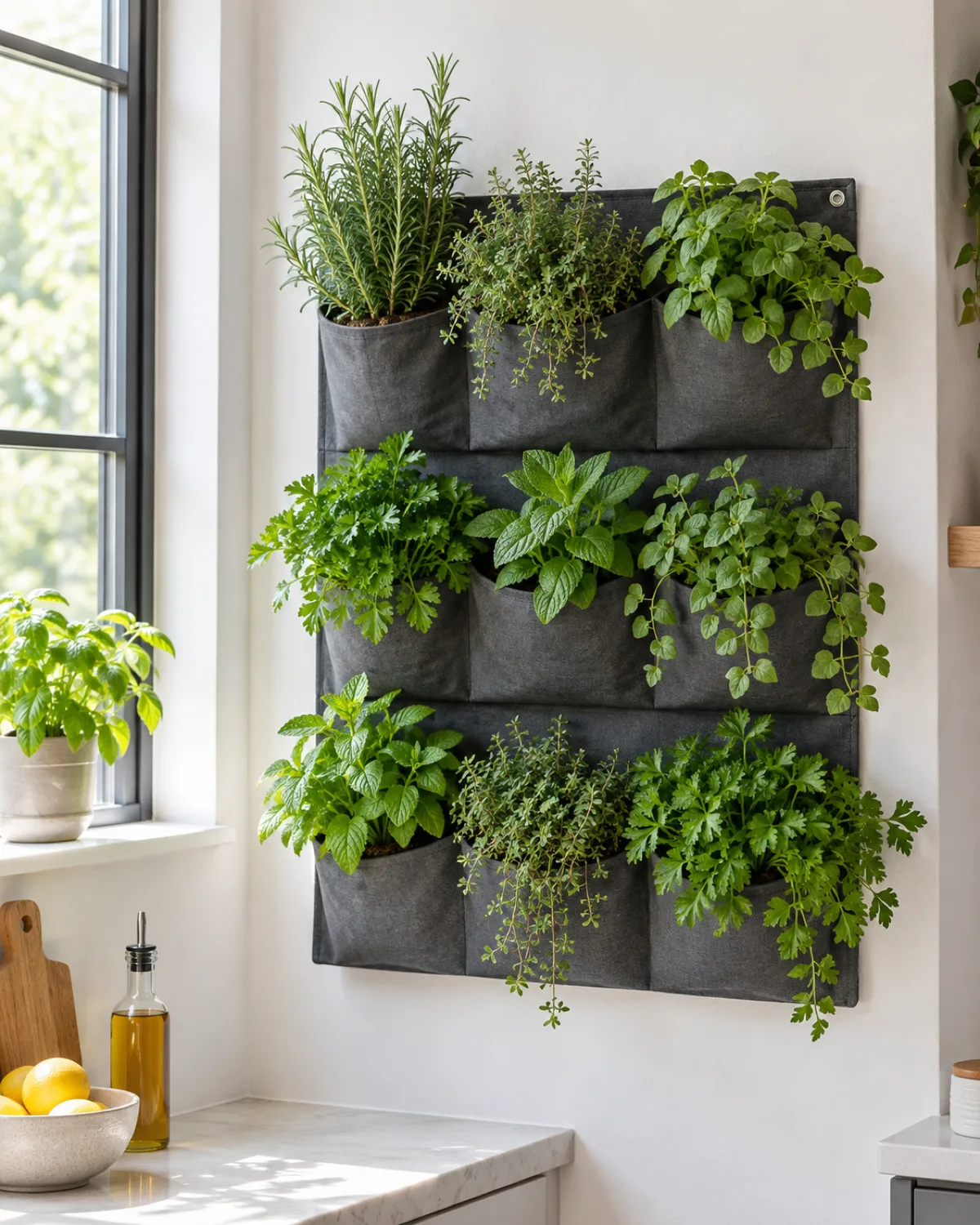
Vertical planters mount directly to the wall and hold herbs in stacked pockets or rail-mounted pots, freeing every inch of counter and windowsill space. In a small kitchen where counter real estate is already claimed by the toaster and coffee maker, going vertical is the only way to fit an herb garden.
The critical design consideration is drainage. Water poured into the top pocket drains through to the middle, then the bottom — so bottom pockets sit in accumulated runoff from every pocket above them. This means drought-tolerant herbs like rosemary and thyme belong at the top, while moisture-loving parsley and cilantro go at the bottom where they benefit from the extra water.
- Mount the planter on a stud, not drywall alone — a fully watered vertical planter is surprisingly heavy, and drywall anchors pull out over weeks
- Position within three feet of a window or directly under a cabinet-mounted grow light
- Trailing herbs like oregano and creeping thyme look best in the lowest pockets where they can cascade downward
The planter itself becomes a visual feature on the wall, which makes this setup work double duty as kitchen decor.
Countertop tiered herb stand
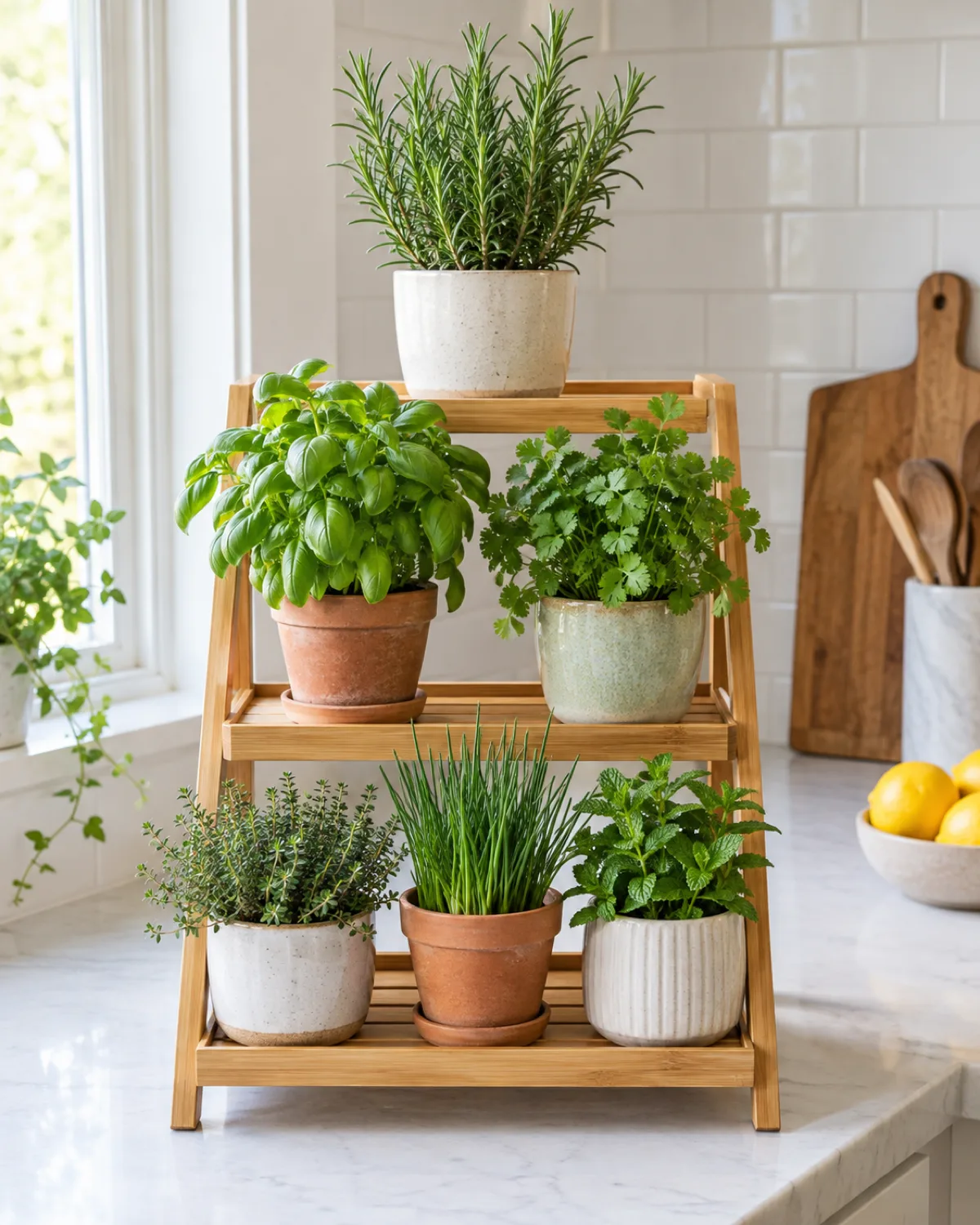
A tiered stand stacks three levels of herbs on a single countertop footprint, tripling your growing capacity without spreading horizontally. The A-frame or staircase shape also creates natural light stratification — the top tier catches the most window light, the bottom sits partly in shadow.
Use that stratification intentionally. Sun-loving rosemary and basil go on the top tier where light is strongest. Parsley and cilantro, which tolerate partial shade and bolt slower in cooler conditions, go on the shaded bottom tier. Middle tier gets the intermediate herbs — thyme, chives, oregano.
- Bamboo and wood stands absorb drips better than metal and do not rust; wipe up standing water weekly to prevent mold underneath the pots
- Place the stand within arm's reach of the cutting board so you actually use the herbs during cooking — convenience determines whether the garden gets neglected
- Avoid blocking the back row's light by turning the stand perpendicular to the window rather than parallel
Pair with under-cabinet LED strips if the stand sits more than four feet from the nearest window. Even a cheap warm-white strip makes the difference between leggy stretched stems and compact bushy growth.
Mason jar herb garden
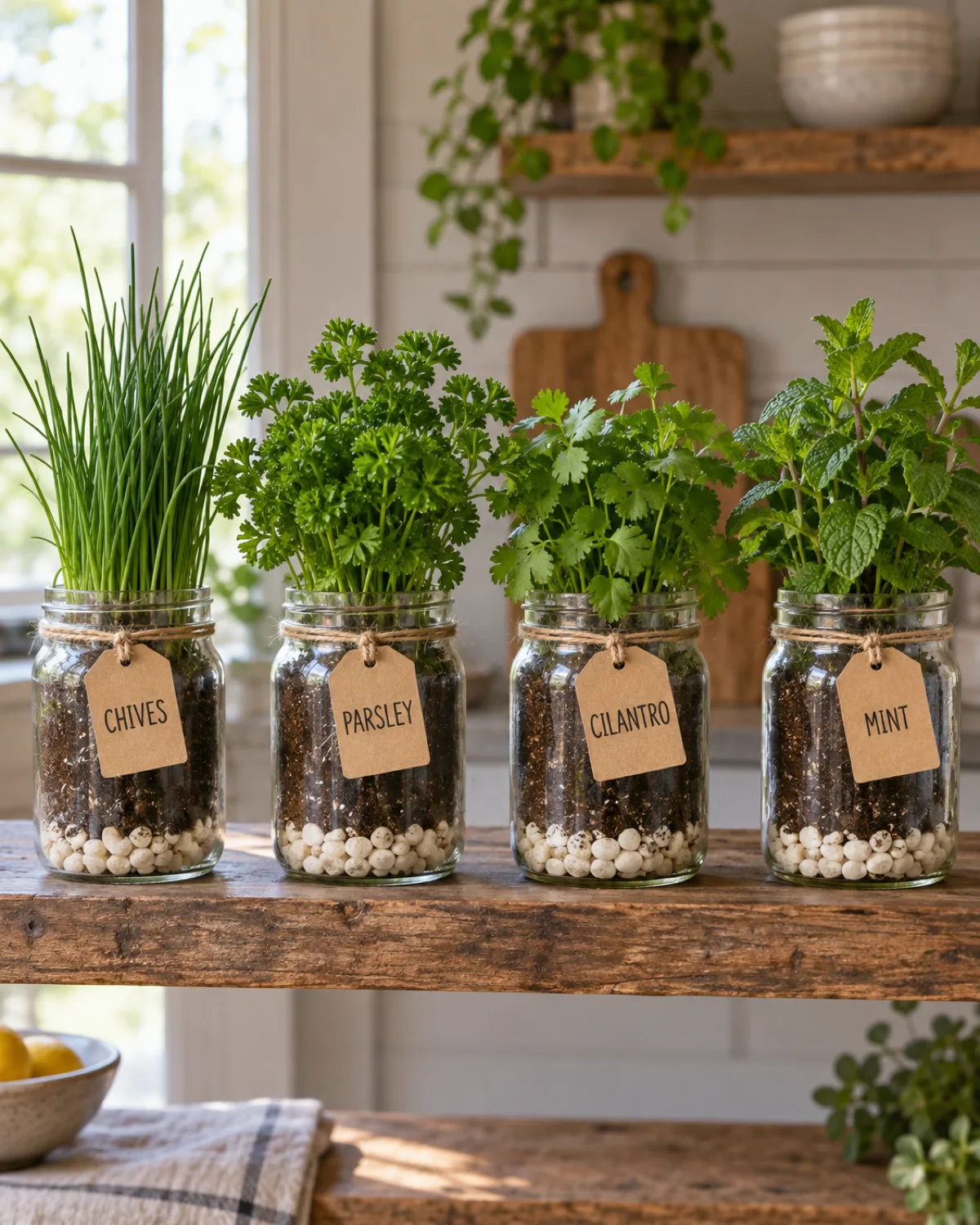
Mason jars cost nothing if you already have them, and the clear glass creates a visual charm that purpose-built planters cannot match — you can see the roots, monitor the soil moisture through the glass, and catch overwatering before it becomes root rot.
The trade-off is drainage. Jars have no holes, so you must create a drainage layer at the bottom: one inch of small pebbles or LECA clay balls, topped with a thin layer of activated charcoal to prevent the stagnant water from going sour. Water sparingly and tip the jar gently after watering to drain excess out the top.
- Best for small herbs with shallow root systems — chives, parsley, cilantro, mint — rather than deep-rooted rosemary or sage
- Drill a drainage hole in the bottom with a masonry bit if you want to convert jars into proper pots; place on saucers to catch runoff
- Label each jar with chalkboard paint, washi tape, or handwritten kraft tags to identify herbs that look similar as seedlings
The clear glass means roots are exposed to light, which most herbs dislike. If roots start turning green with algae, wrap the jar sides with burlap or kraft paper to block light while keeping the farmhouse aesthetic.
Every indoor herb garden starts with three questions: how much light do you have, how much space can you spare, and how often will you remember to water.
Hanging herb basket
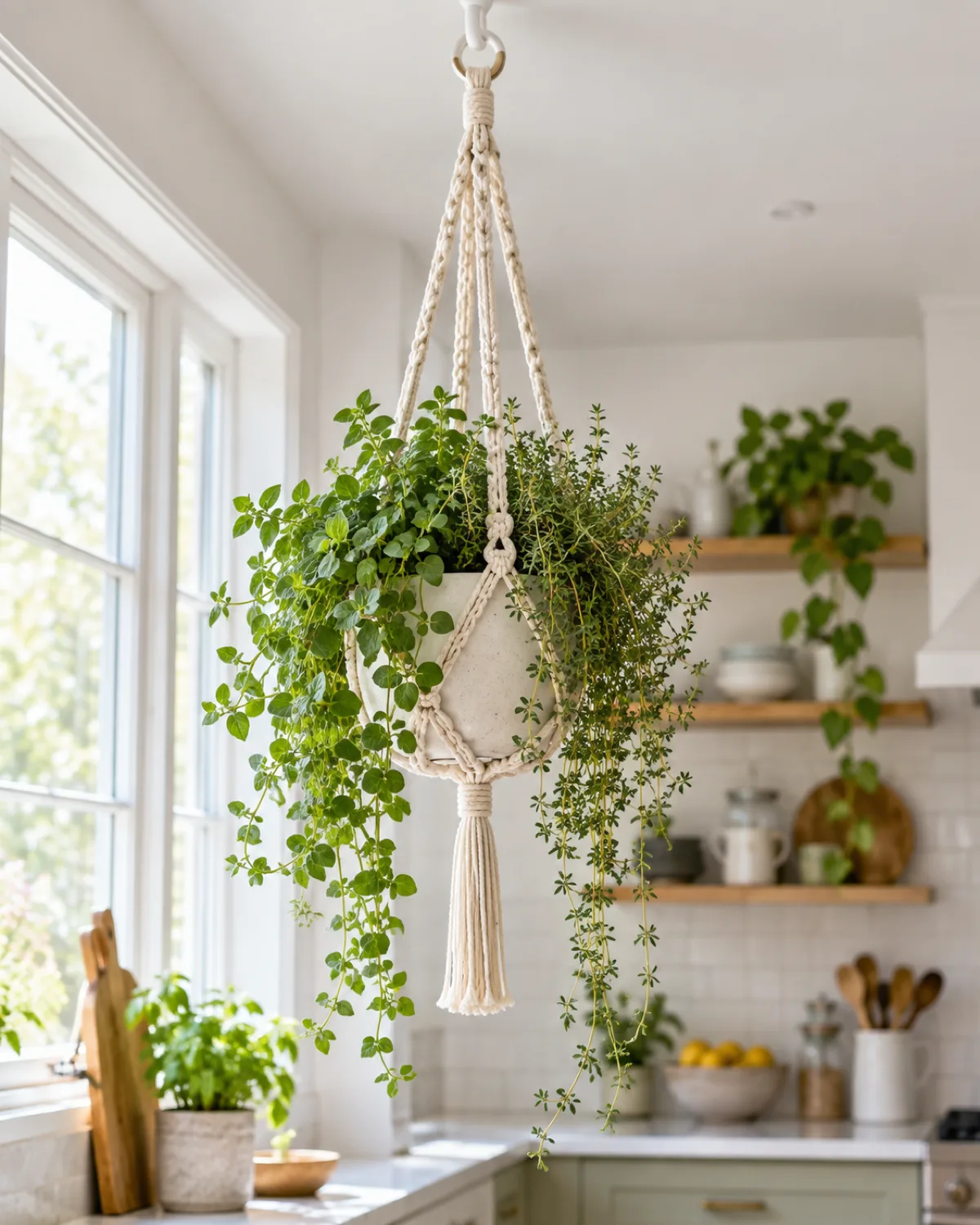
Ceiling hooks and wall brackets lift herbs completely off surfaces, which is the best solution when every counter, shelf, and windowsill is already occupied. Trailing herbs like oregano, thyme, and creeping rosemary cascade over the edges of the hanging pot, creating a living chandelier effect near the kitchen window.
The practical challenge is watering. Water drips down after you pour — onto the counter, floor, or whatever sits below. Two approaches solve this:
- Take the entire basket down to the sink, water thoroughly, let it drain for ten minutes, then rehang — this is the most reliable method but requires a hook you can easily reach
- Use a few ice cubes on the soil surface instead of liquid water; they melt slowly and the soil absorbs moisture gradually with almost no drip-through
Macramé hangers in cotton or jute fit the kitchen aesthetic better than wire baskets. Hang within arm's reach so harvesting does not require a step stool — inconvenient access is why most hanging herb gardens get abandoned within a month.
Position the basket where it gets at least four hours of bright light, ideally near but not directly above the stove where rising heat could dry out the soil within hours.
Indoor hydroponic herb system
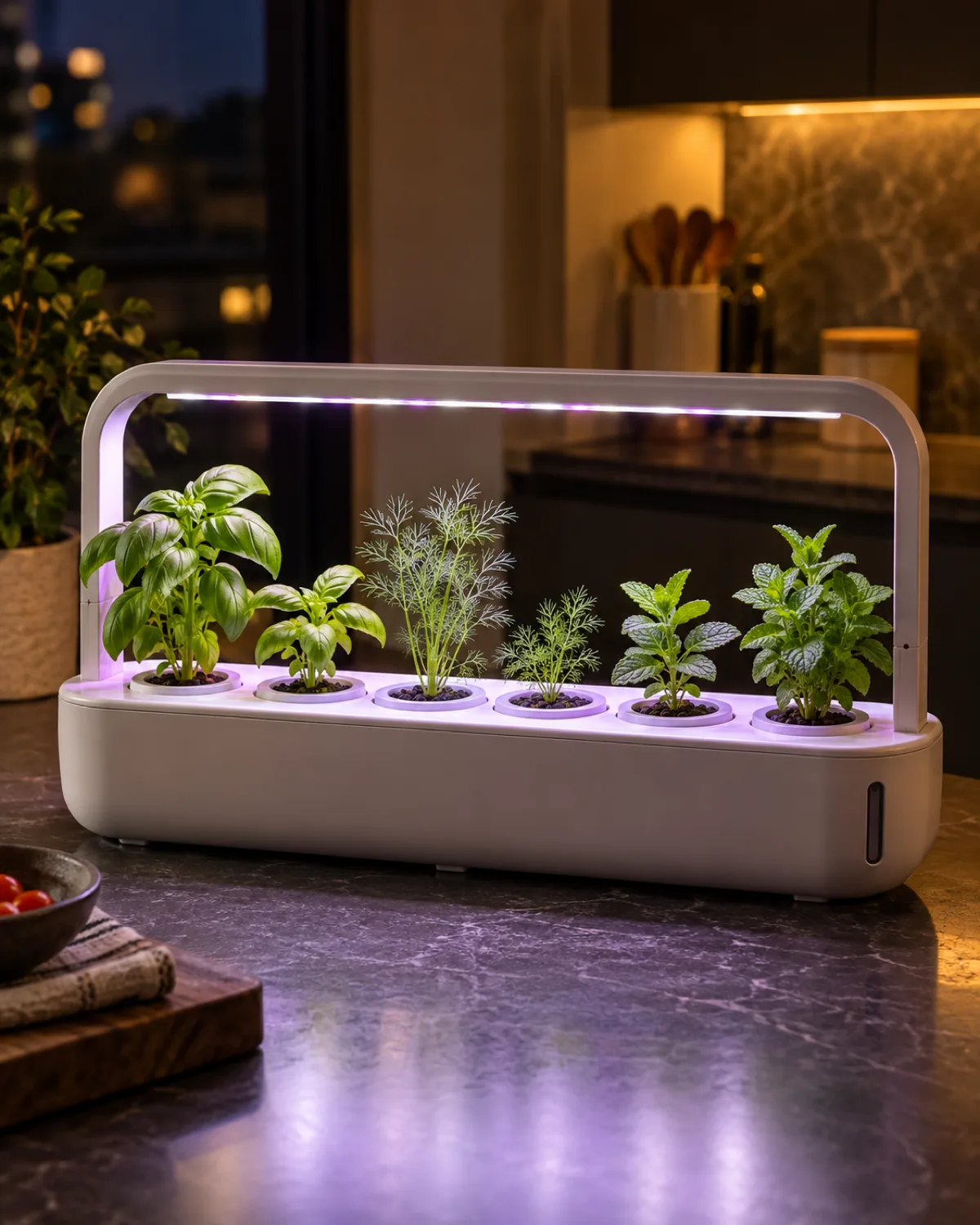
Hydroponic countertop units eliminate the two most common reasons indoor herbs die — inconsistent watering and insufficient light. The pump circulates nutrient solution to the roots automatically, and the built-in LED panel provides the exact spectrum herbs need regardless of window access.
Herbs grow two to three times faster hydroponically than in soil because the roots receive oxygen and nutrients simultaneously without the resistance that soil particles create. A basil plant that takes six weeks to reach harvest size in a pot reaches the same size in two to three weeks in a hydroponic unit.
- AeroGarden, Click and Grow, and similar units use proprietary seed pods — check ongoing pod costs before buying the unit, since the consumables often exceed the hardware cost within a year
- DIY Kratky method jars (a mason jar with a net pot and nutrient solution) achieve the same results at a fraction of the cost for anyone willing to set them up manually
- No soil means no fungus gnats — a significant advantage in kitchens where gnats are attracted to fruit bowls and compost bins
The trade-off is aesthetics. Most hydroponic units are plastic with visible LED panels that look more laboratory than kitchen. Place them in a functional spot rather than a decorative display area. Our grow lights guide covers the light spectrum details.
Mediterranean herb cluster
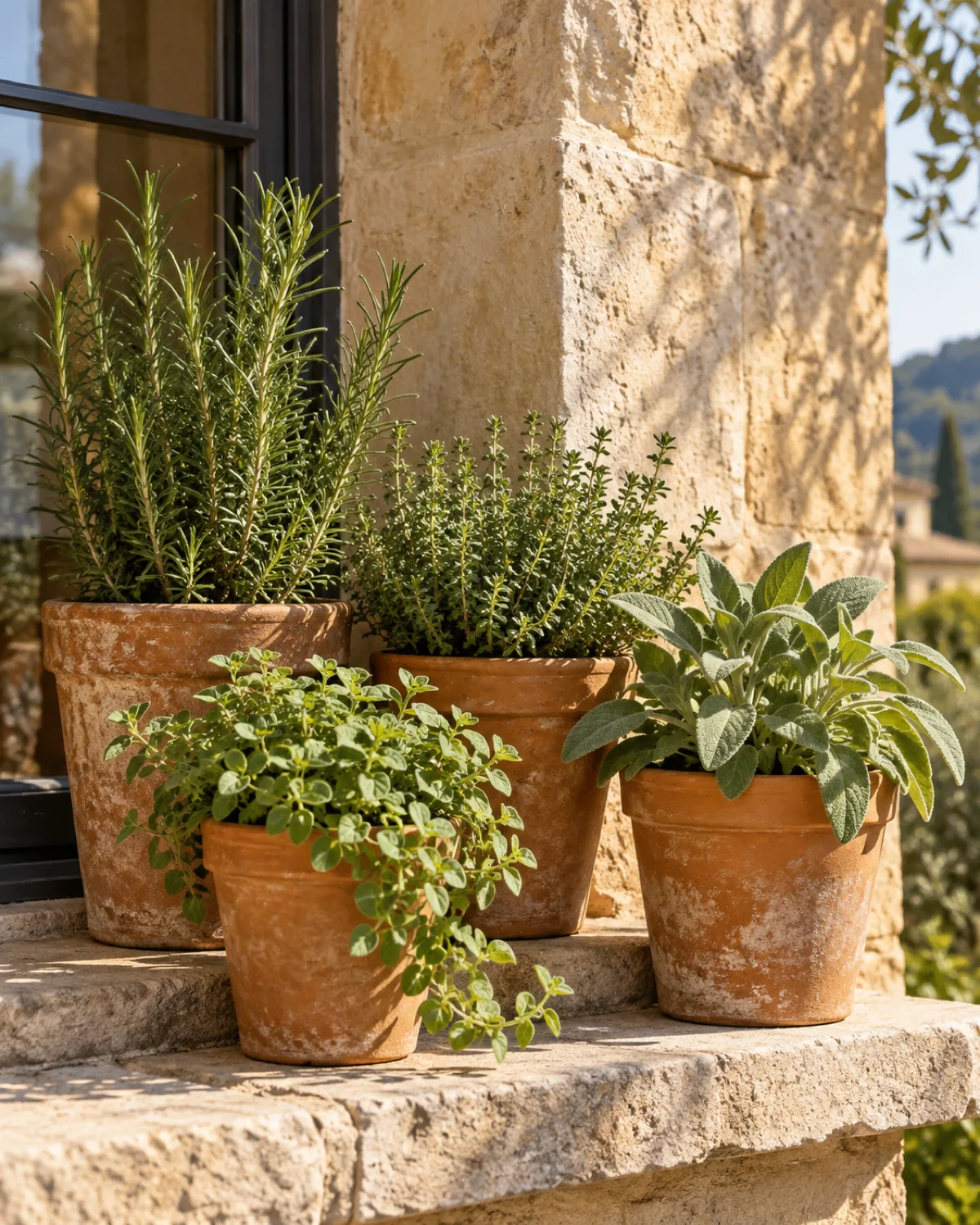
Rosemary, thyme, oregano, and sage share nearly identical care requirements — full sun, lean fast-draining soil, and infrequent watering — because they all evolved in the same rocky Mediterranean hillside conditions. Grouping them together means one watering schedule, one soil mix, and one light position covers all four plants.
Mix potting soil fifty-fifty with perlite for a fast-draining blend that mimics the gravelly soil these herbs grow in naturally. Standard potting mix retains too much moisture and causes root rot in all four species. Terracotta pots accelerate drying, which is exactly what these herbs want.
- Water only when the top inch of soil is completely dry — these herbs evolved to survive drought, and overwatering kills them faster than underwatering
- Skip heavy feeding; rich soil and frequent fertilizing produce lush foliage with weaker essential oil concentration, which means less flavor per leaf
- All four are perennials that live for years indoors with adequate light, unlike annual herbs (basil, cilantro) that need replanting every season
This is the lowest-maintenance indoor herb garden on the list. Once established in a sunny spot, the cluster runs on weekly watering and almost nothing else. Our fertilizing houseplants guide explains why less feeding produces more flavor in herbs.
Tea and tisane herb collection
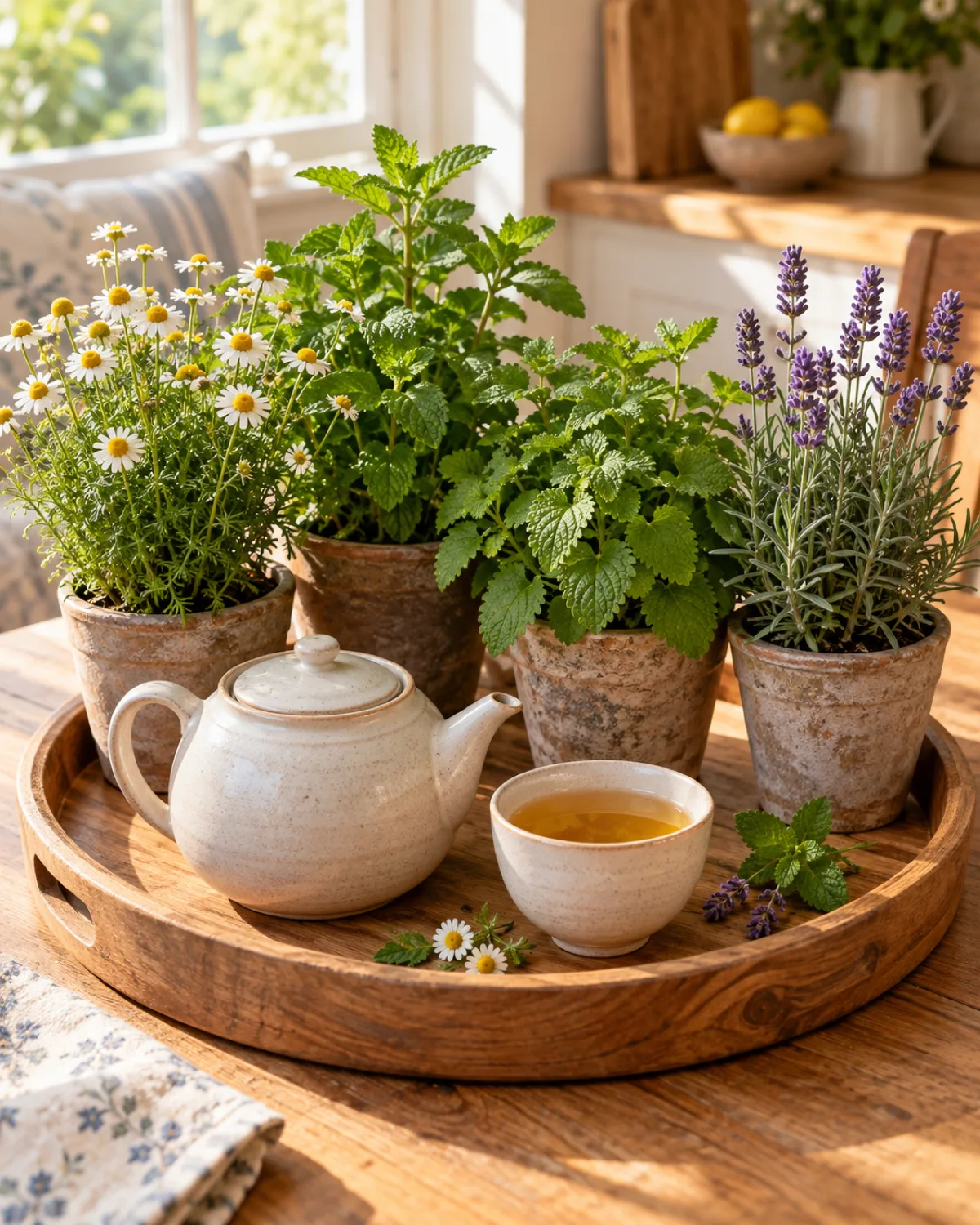
Growing your own tea herbs transforms the indoor herb garden from a cooking tool into a daily ritual. Chamomile, peppermint, lemon balm, and lavender produce enough leaf material from a single pot each to brew several cups a week — and the flavor gap between fresh-picked and dried store-bought is dramatic.
Each of these four herbs has a quirk that matters for indoor growing:
- Peppermint spreads aggressively through underground runners and will colonize any shared pot within weeks; always give it its own container with no drainage holes connecting to other pots
- Chamomile prefers cooler temperatures than most kitchen herbs and tolerates partial shade, making it a good candidate for a north-facing window or a cooler room
- Lemon balm is nearly unkillable but bolts to flower quickly in warm rooms, which turns the leaves bitter; pinch flower buds the moment they appear to keep the plant in leafy production mode
- Lavender needs the most light of the four and struggles indoors without a south-facing window or supplemental grow light; English lavender varieties are more compact and better suited to pots than French lavender
Harvest fresh leaves in the morning when essential oil concentration peaks. For drying, bundle six to eight stems and hang upside down in a warm, dry spot for five to seven days, then store in airtight containers.
Self-watering herb planter
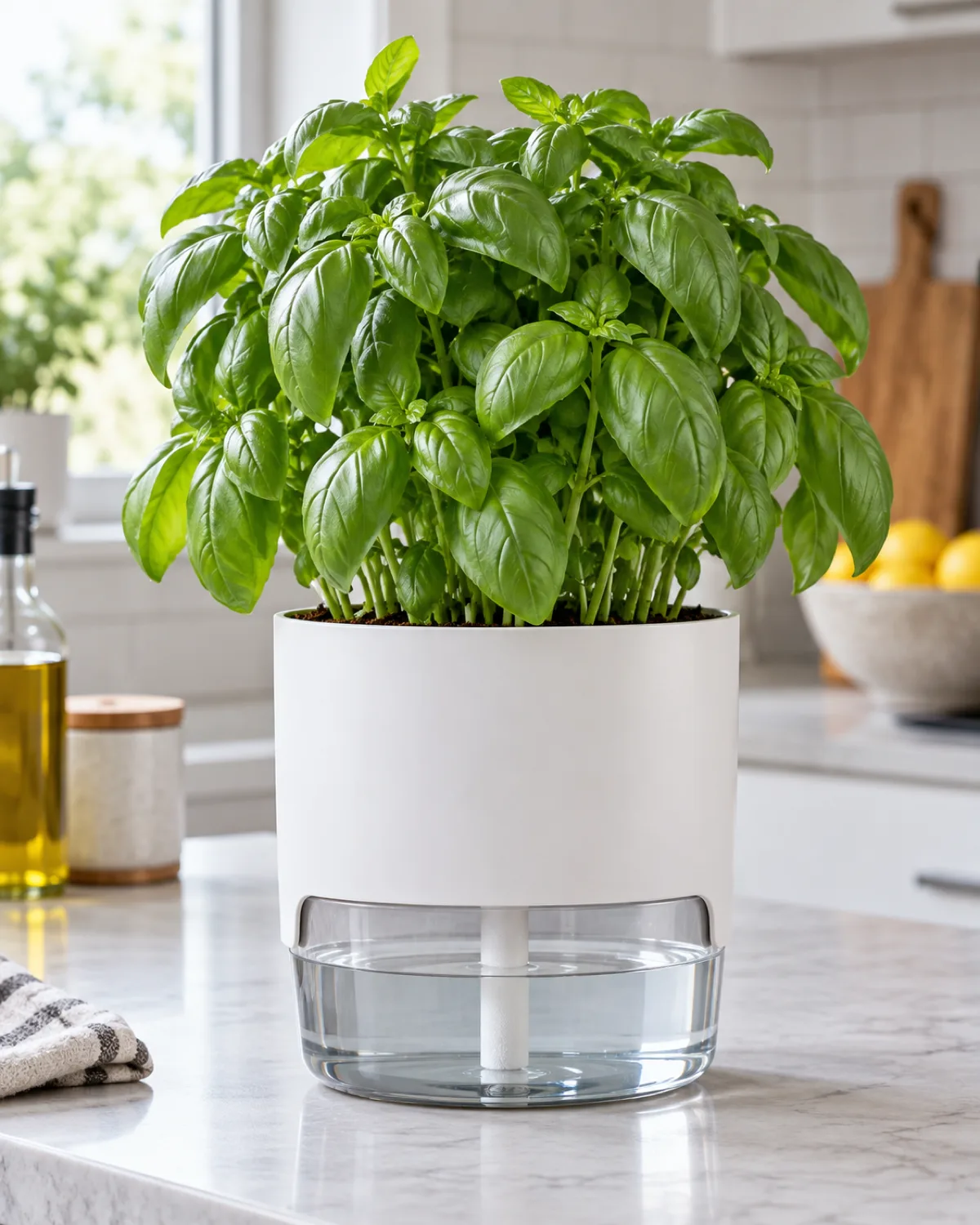
Self-watering planters use a wicking system or capillary mat to draw water from a reservoir at the bottom up into the soil, delivering moisture at exactly the rate the roots need it. This eliminates the daily guesswork of when to water — the most common reason indoor herbs die.
The system works especially well for thirsty herbs like basil and cilantro that wilt within hours of drying out. Instead of checking soil moisture every morning, you refill the reservoir once a week and the wick handles distribution.
- Commercial options from Lechuza, Gardener's Supply, and Cole & Mason use reservoirs with water level indicators so you can see when to refill without lifting the pot
- DIY version: nest a smaller pot (with drainage holes) inside a larger pot, thread a cotton rope through the inner pot's drain hole into the water reservoir below, and fill the gap with water
- The reservoir must never sit high enough to submerge the bottom of the soil — the wick draws water up, but soil sitting in water becomes anaerobic and rots the roots
Our self-watering pots guide covers the capillary wicking mechanism in detail and reviews seven commercial options. The same principle works for all indoor plants, but herbs benefit the most because their shallow root systems dry out fastest.
Herb spiral planter
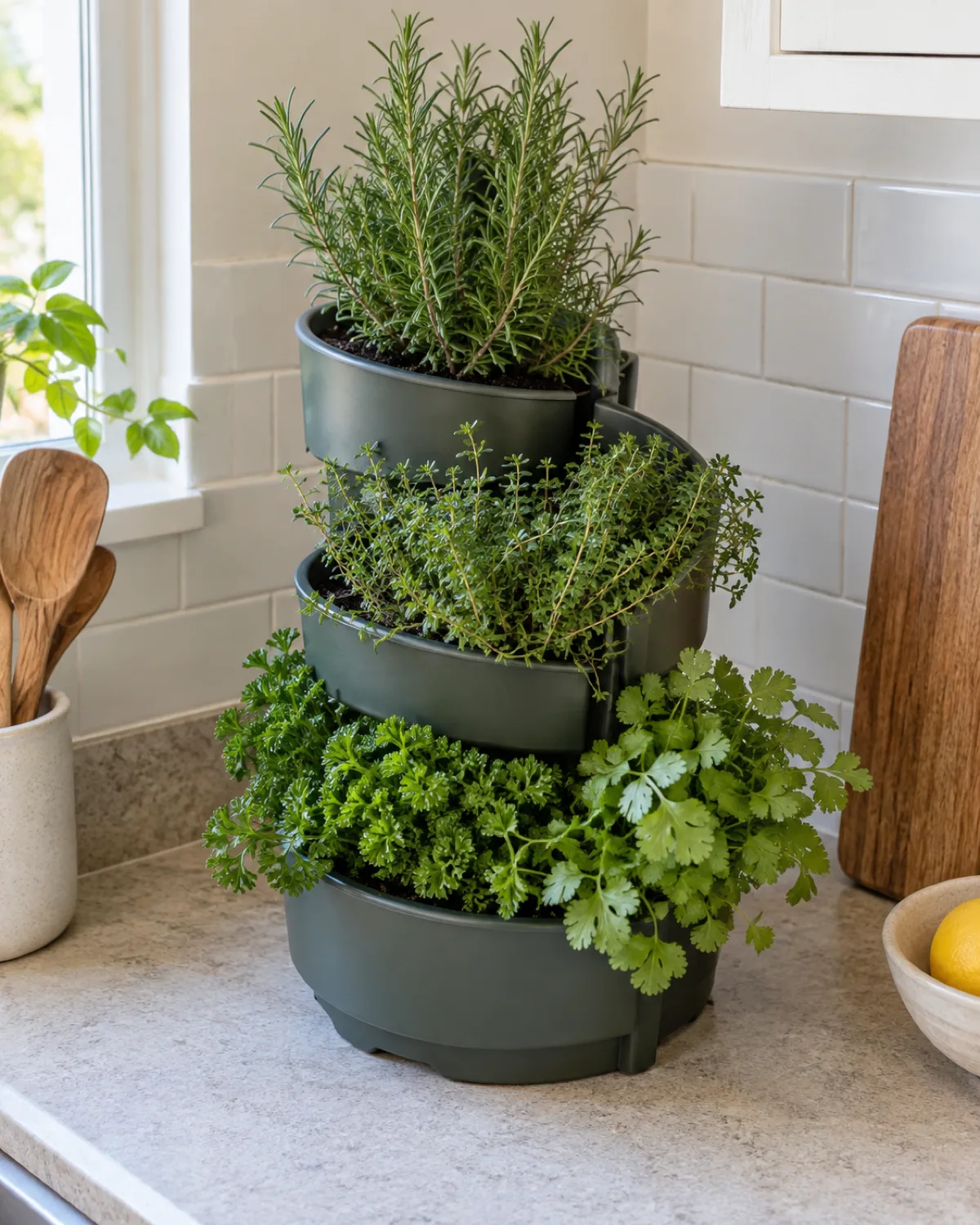
The spiral tower creates different microclimates at each tier — the top is driest and gets the most light, the middle retains moderate moisture, and the bottom stays consistently damp from drainage above. This vertical gradient lets you grow herbs with different water needs in a single compact footprint.
Place drought-tolerant rosemary and sage at the dry, exposed top. Thyme and oregano go in the middle tier where moisture is moderate. Parsley, cilantro, and chives thrive at the bottom where accumulated drainage keeps the soil evenly moist.
- A three-tier spiral holds eight to twelve plants in roughly one square foot of counter space — the highest plant density of any setup on this list
- Stackable terracotta or plastic towers are available commercially, or build one from graduated pot saucers stacked with soil mounds
- Rotate the entire tower a quarter turn weekly since the window-facing side grows faster than the room-facing side
The spiral shape is a conversation piece that looks deliberately designed rather than like a collection of random pots. The tiered structure also makes harvesting easy because every plant is visible and reachable from above.
Grow light herb shelf
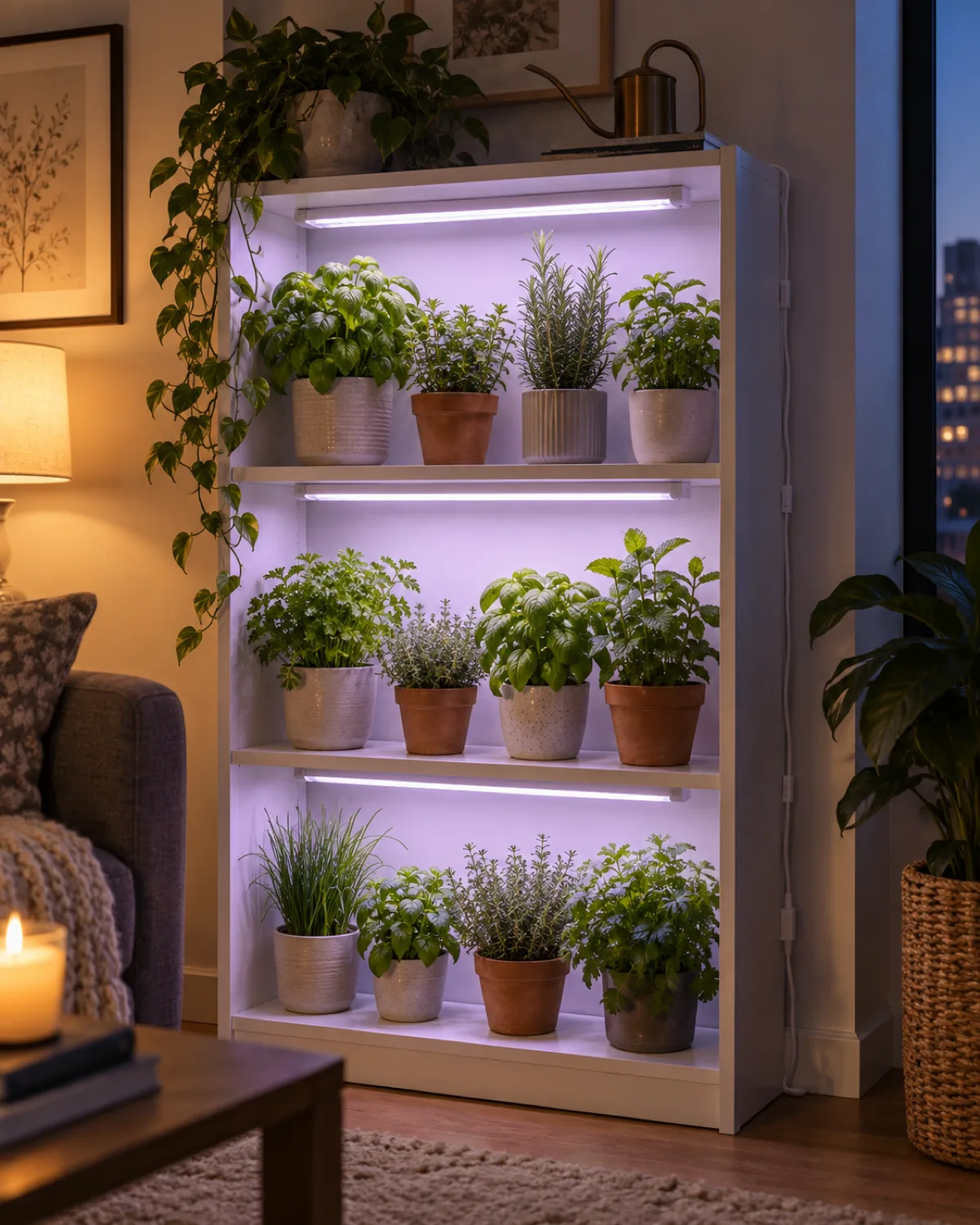
A bookshelf fitted with clip-on or adhesive strip LED grow lights turns any dark corner of any room into a productive herb garden. This is the only setup that completely removes window access as a requirement — you can grow basil in a closet if the lights are right.
The key specification is light duration. Set the lights on a timer for fourteen to sixteen hours per day. Herbs need more total light hours from artificial sources than from sunlight because even the best LEDs deliver lower intensity per hour than direct sun. Without a timer, you will forget to turn them on and off consistently, and inconsistent photoperiod stresses herbs into bolting.
- Full-spectrum white LEDs or warm-white strips (3000K-4000K) produce the best herb growth; the purple-pink "blurple" lights work but make the plants look unappetizing and are harder to live with visually
- Mount the light strip underneath each shelf so it illuminates the plants on the shelf below; adjust height as herbs grow by adding spacers under the pots
- Three shelves at eighteen-inch spacing accommodates most herbs without crowding and allows air circulation that prevents mildew
This setup scales from three pots to thirty. Start with one shelf and add levels as you gain confidence. Our grow lights guide and dark rooms guide cover the PAR spectrum and placement math in detail.
Bathroom herb garden
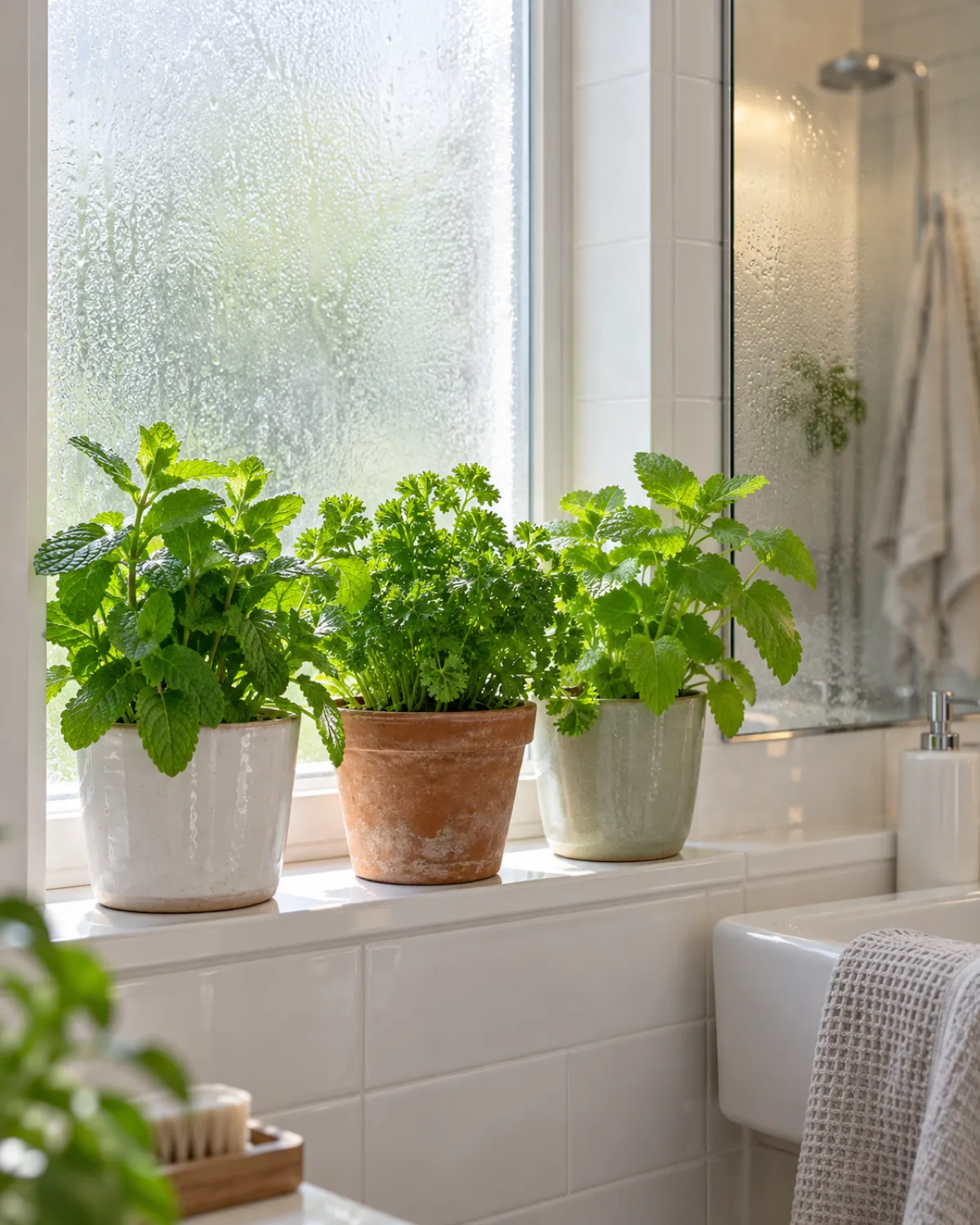
Bathrooms are underrated herb growing spaces because they deliver the one condition most kitchens lack — consistent humidity. Steam from daily showers creates a microclimate that moisture-loving herbs thrive in, and the warm, humid air prevents the leaf-edge browning that plagues herbs in dry heated rooms.
The herbs that work best here are the ones that naturally grow in damp, shaded conditions:
- Mint evolved in wet stream banks and loves the consistent moisture; it also perfumes the bathroom with menthol when steam hits the leaves
- Parsley tolerates lower light than most herbs and its deep green color complements bathroom tile and stone
- Lemon balm handles the low-to-moderate light that bathroom windows provide and adds a citrus scent to the humid air
The trade-off is light. Bathroom windows are often frosted, north-facing, or small, which limits available light. Herbs here grow slower and leggier than they would on a sunny kitchen windowsill, but they survive — and for mint specifically, the slower growth is actually an advantage because it keeps the aggressive spreader contained.
Best placement options for bathroom herbs:
- Windowsill behind frosted glass — the most light available in most bathrooms, and the ledge keeps pots out of the splash zone
- Shelf above the toilet — uses dead space, stays warm from the room, and catches ambient humidity without direct water contact
- Corner étagère or tiered stand — fits multiple pots vertically when the windowsill is too narrow for more than one
Avoid placing pots directly in the shower where soap and shampoo residue coats the leaves and blocks stomata. If the bathroom has no window at all, add a small clip-on grow light and this setup works anywhere. Our bathroom plants guide covers more humidity-loving options.
Indoor Herb Garden: The Quick Reference
- 1Sunny windowsill herb rowTerracotta pots on a drip tray. South-facing window, 6+ hours direct sun. Rotate weekly. The simplest starter setup.
- 2Wall-mounted vertical planterPocket planters on the wall. Drought herbs at top, moisture lovers at bottom. Saves all counter space.
- 3Countertop tiered herb standThree-tier bamboo stand. Sun-lovers on top, shade-tolerant on bottom. Triple the growing capacity in one footprint.
- 4Mason jar herb gardenClear glass, pebble drainage layer. Monitor roots and moisture visually. Best for small herbs like chives and cilantro.
- 5Hanging herb basketMacramé hanger from a ceiling hook. Trailing oregano and thyme cascade beautifully. Water at the sink to prevent drips.
- 6Indoor hydroponic herb systemBuilt-in LED and nutrient pump. Herbs grow 2-3× faster. No soil, no gnats. Works anywhere regardless of windows.
- 7Mediterranean herb clusterRosemary, thyme, oregano, sage in terracotta. Same care for all four. Lowest maintenance on the list.
- 8Tea and tisane herb collectionChamomile, mint, lemon balm, lavender. Grow-your-own tea shelf. Keep mint in its own pot.
- 9Self-watering herb planterReservoir wicking system. Refill weekly instead of daily checks. Best for thirsty basil and cilantro.
- 10Herb spiral planterStacked tiers create dry-to-moist gradient. Fits 8-12 plants in one square foot. Decorative conversation piece.
- 11Grow light herb shelfBookshelf + LED strips on a 14-16 hour timer. Grows herbs in any dark corner. Scales from 3 pots to 30.
- 12Bathroom herb gardenHumidity from daily showers. Mint, parsley, lemon balm thrive. Slower growth but no dry-air browning.
kultivy.com
FAQ
What herbs grow best indoors?
Basil, mint, chives, parsley, thyme, and rosemary adapt best to indoor conditions. Basil and mint need the most light and water, while thyme and rosemary tolerate dry soil and slightly lower light. Start with one from each group to learn what your space supports before expanding.
How many hours of light do indoor herbs need?
Most culinary herbs need six to eight hours of direct sunlight or fourteen to sixteen hours under grow lights. Herbs grown in less light survive but produce leggy stems, fewer leaves, and weaker flavor. Our light requirements guide explains how to measure the light your spot actually delivers.
Why do my indoor herbs keep dying?
The two most common causes are overwatering and insufficient light. Indoor herbs need more light than most houseplants, and their soil should dry between waterings. Supermarket herbs are grown in greenhouses under ideal conditions and often decline quickly when moved to a home environment — repot immediately into proper drainage containers and place in your brightest spot.
Can you grow herbs indoors year-round?
Yes, with adequate light. Perennial herbs like rosemary, thyme, and mint continue growing indefinitely. Annual herbs like basil and cilantro complete their life cycle in six to eight months and need replanting, but grow lights and consistent indoor temperatures eliminate the seasonal dormancy they would experience outdoors.
Do indoor herbs need fertilizer?
Lightly. A half-strength liquid fertilizer once a month during the growing season (spring through fall) is enough. Over-fertilizing produces large, watery leaves with reduced essential oil concentration — which means less aroma and flavor per leaf. Mediterranean herbs (rosemary, thyme, sage) perform best in lean soil with almost no feeding.

Mara Quinn edits Kultivy, where she shares houseplant care, propagation, beginner-friendly plant picks, and plant-styling ideas for anyone who wants their indoor plants to actually thrive. Every guide is image-led and reviewed for clarity, usefulness, image accuracy, and Pinterest-to-page alignment before it goes live. Visit the About page.