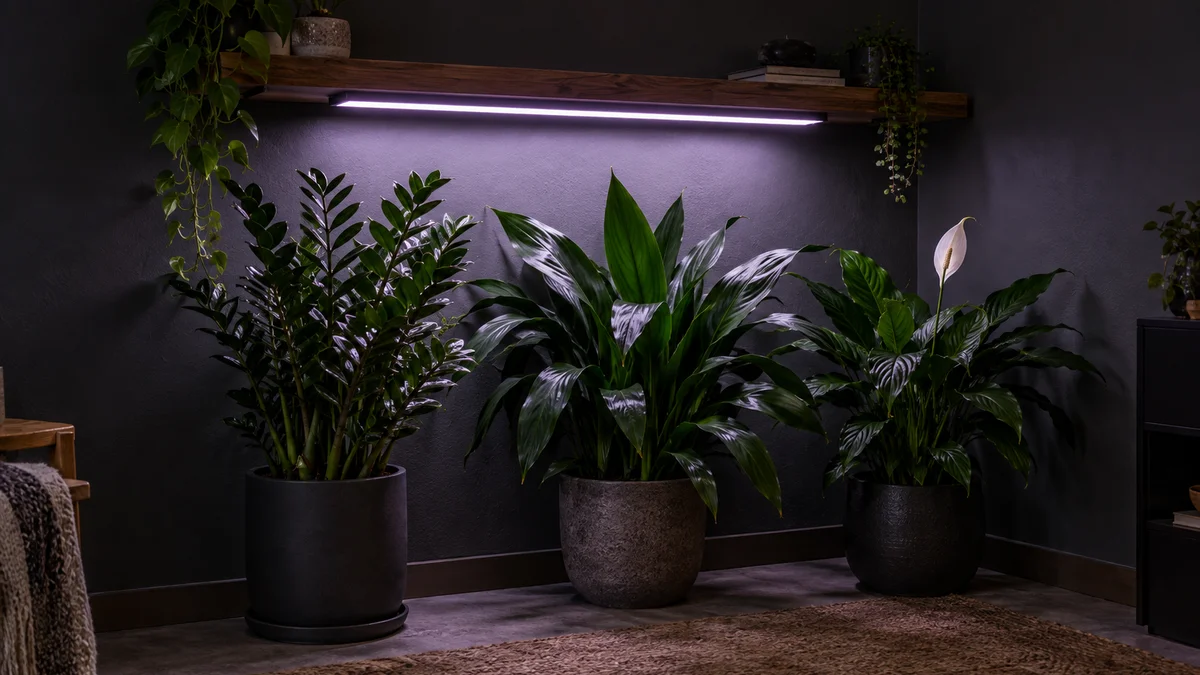
The NASA Clean Air Study sealed houseplants in chambers and measured their removal of formaldehyde, benzene, and other volatile organic compounds. The results were real.
The context matters, though. Those chambers were small and packed with far more foliage per cubic foot than any living room. A 2019 meta-analysis estimated you would need hundreds of plants to match opening a window.
These fourteen earned their spot in testing and happen to be excellent houseplants, which is the reason that actually matters.
Each plant was tested in NASA or university sealed-chamber studies for removing specific volatile organic compounds. Jump to any plant below.
Snake plant
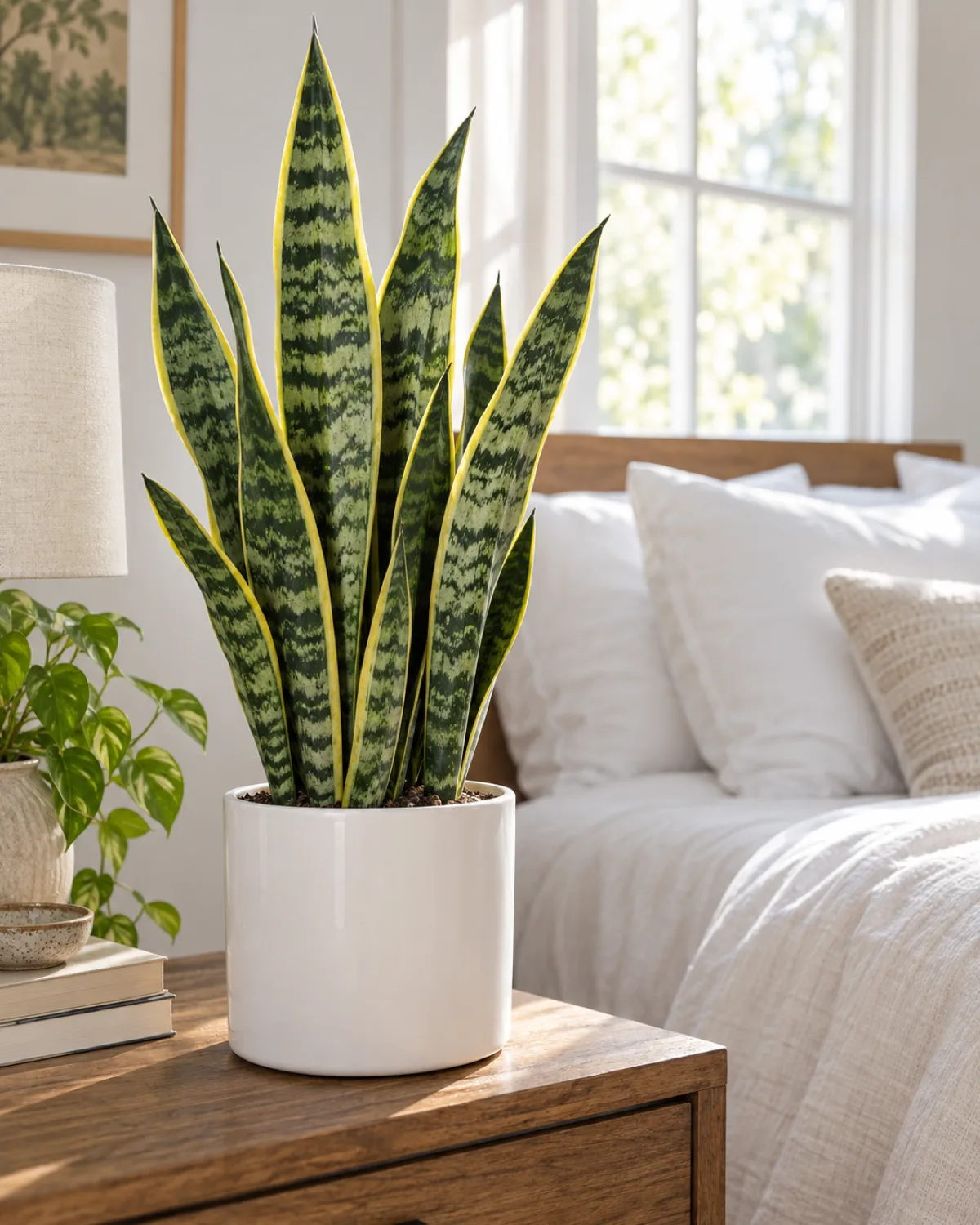
The snake plant (Dracaena trifasciata, formerly Sansevieria) removed four of the six compounds tested in the NASA sealed-chamber study — formaldehyde, benzene, xylene, and toluene. That is one of the broadest compound profiles on the entire test list.
What makes this plant unusual is its photosynthetic pathway. Snake plants use CAM (crassulacean acid metabolism), absorbing carbon dioxide and releasing oxygen at night rather than during the day. Most houseplants do the opposite.
This quirk makes the snake plant the default recommendation for bedrooms, where nighttime oxygen release at least theoretically improves sleeping conditions.
- Tolerates low light down to 50 foot-candles, though growth slows dramatically below bright indirect light
- Water only when the soil is completely dry to the bottom of the pot — overwatering is the single most common way people kill this plant
- Toxic to cats and dogs (saponins cause nausea and vomiting if chewed)
The practical reason this plant tops so many air purifying lists is not just the sealed-chamber data — it is almost impossible to kill, which means it actually stays alive long enough to do anything at all. Read the full snake plant care guide for watering, light, and propagation details.
Peace lily
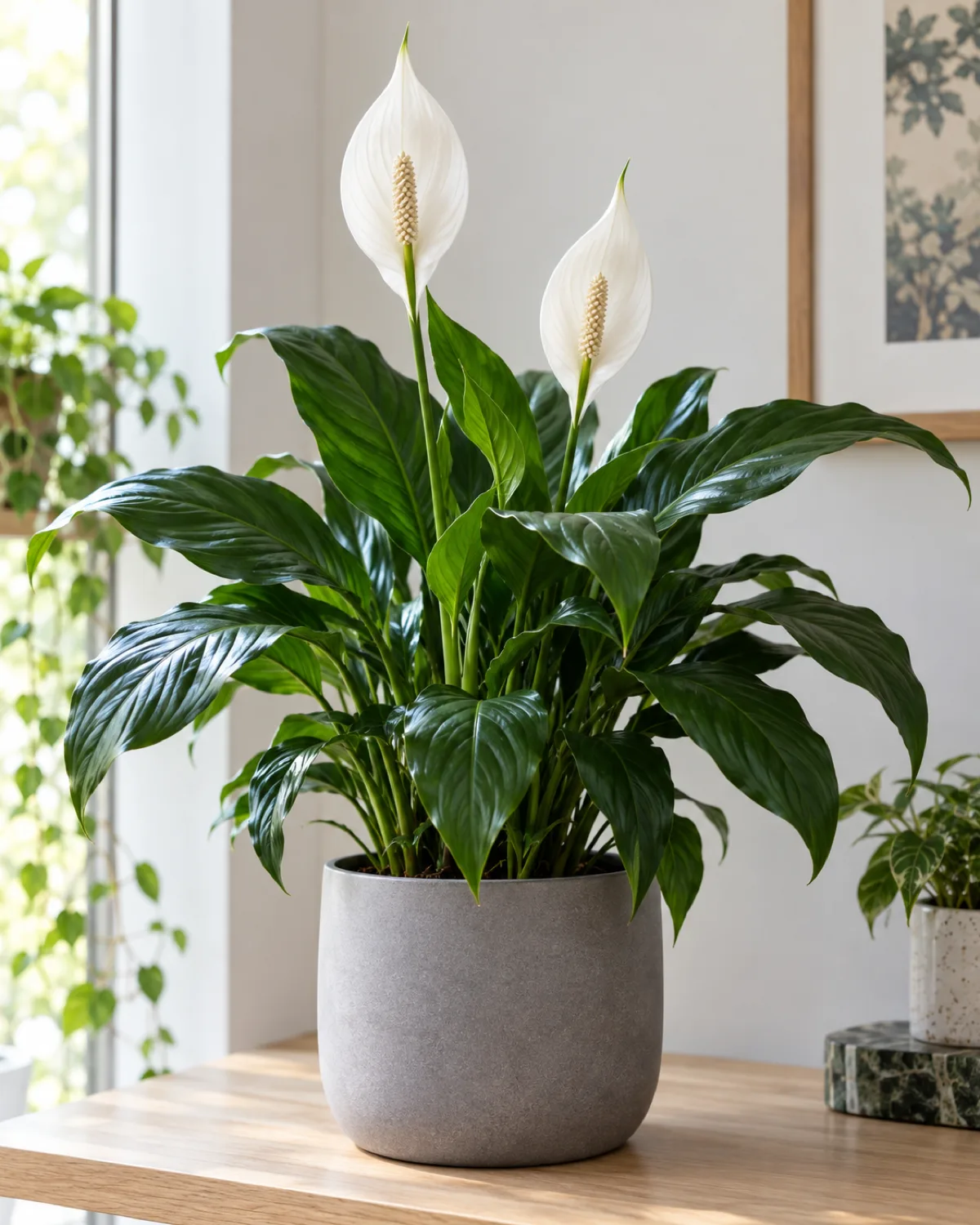
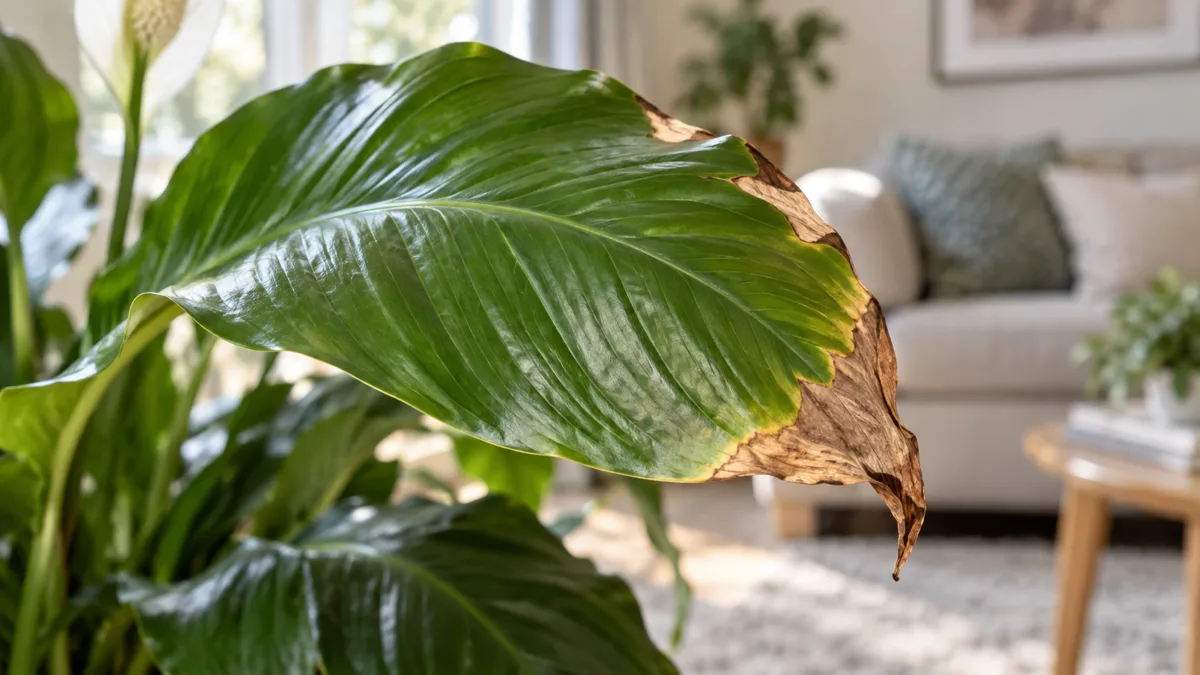
The peace lily (Spathiphyllum) tested positive for removing acetone, benzene, formaldehyde, and trichloroethylene in sealed-chamber conditions — the widest compound range of any flowering plant on the NASA list. It is also one of the few tested plants that reliably blooms indoors, producing white spathe flowers under moderate light without any special treatment.
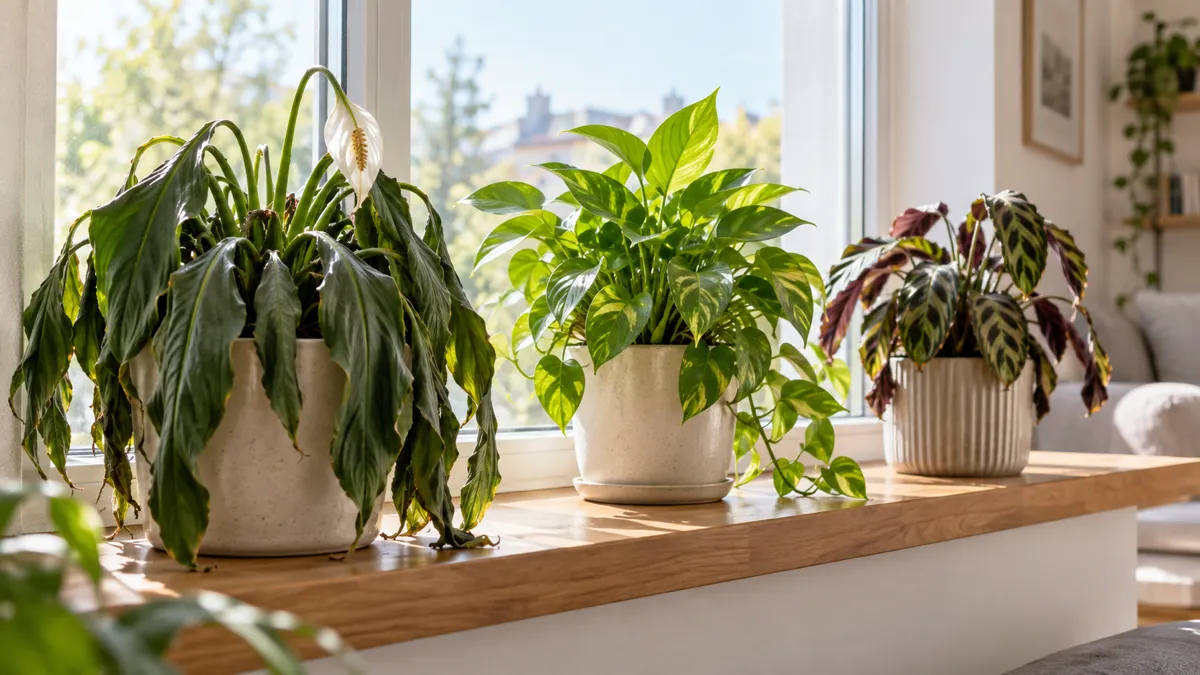
Peace lilies communicate their water needs clearly. When the leaves begin to droop, the plant is thirsty. Water it, and the leaves perk back up within hours. This built-in signal makes it nearly impossible to underwater a peace lily, though the reverse — keeping the soil perpetually soggy — causes root rot quickly.
- Thrives in moderate indirect light, tolerates low light but flowers less frequently in dim conditions
- Contains calcium oxalate crystals and is toxic to cats and dogs — the crystals cause oral irritation, drooling, and difficulty swallowing
- One of the few plants on this list that prefers consistently moist (not wet) soil rather than the dry-between-waterings cycle most houseplants need
If you want the combination of sealed-chamber test results and a plant that actually looks like it is doing something, the peace lily is the obvious pick. See the full peace lily care guide for blooming tips and pet-safe alternatives if you have animals at home.
Spider plant
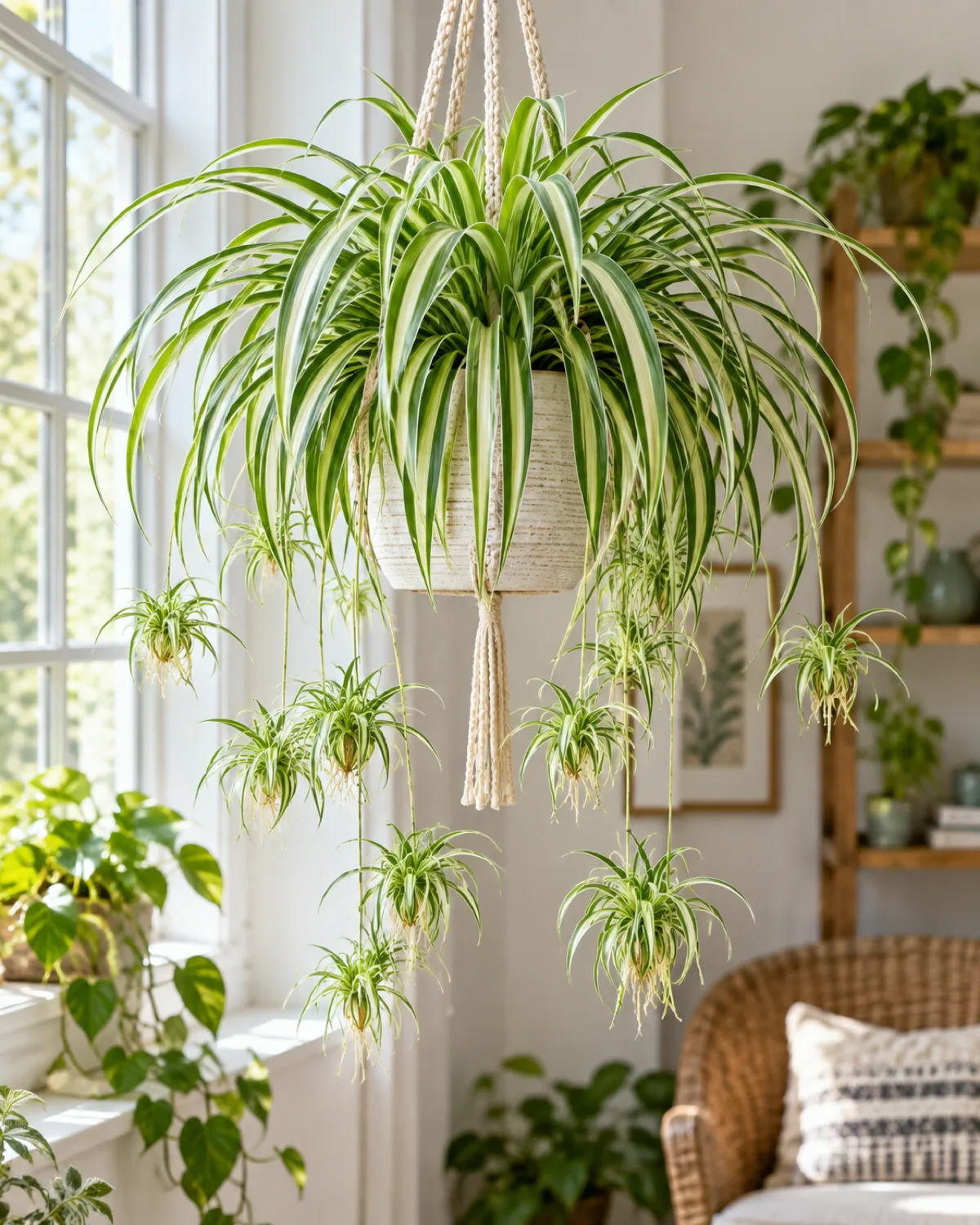
The spider plant (Chlorophytum comosum) removed formaldehyde and xylene in NASA sealed-chamber testing. Its real advantage over most plants on this list is safety — it is one of the few species confirmed non-toxic by the ASPCA, making it the default air-purifying choice for households with cats, dogs, or small children.
Spider plants are also the easiest to propagate on this entire list. Mature plants produce stolons — long stems that grow baby plantlets at their tips. Each plantlet roots within days when placed in water or moist soil. One healthy spider plant can produce a dozen new plants in a single growing season, which is how you scale leaf area without buying anything.
- Bright indirect light is ideal, but spider plants survive in low light better than most variegated species
- Fluoride in tap water causes brown leaf tips — use filtered or rain water if your municipal supply is fluoridated
- The cascading stolons make this a natural fit for hanging planters where the babies can dangle freely
For households that need non-toxic plants specifically, pair the spider plant with the areca palm and Boston fern from this list for a fully pet-safe collection. Full care details are in the spider plant care guide and the plants safe for cats roundup.
Golden pothos
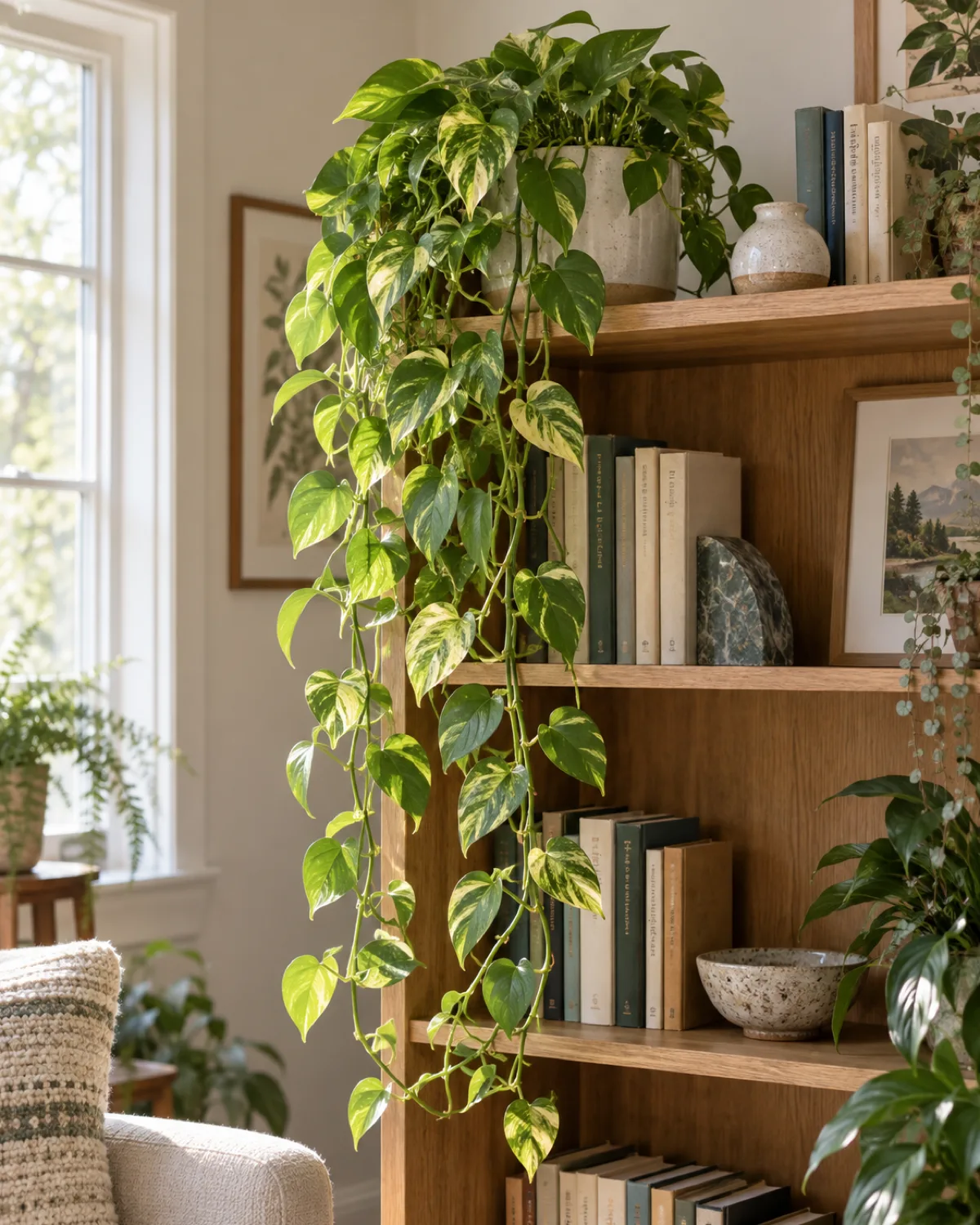
Golden pothos (Epipremnum aureum) removed formaldehyde, benzene, and xylene in sealed-chamber testing. It is probably the most commonly grown houseplant in the world, which means more people already own this air-purifying species than any other on the list — they just may not know it was tested.
The trailing growth habit of pothos is directly relevant to the air quality discussion. Leaf surface area matters for gas exchange, and a pothos allowed to trail from a high shelf or bookcase can produce several feet of vine covered in leaves, all from a single small pot. This makes it one of the most efficient ways to add foliar surface area per dollar spent.
- Grows in almost any light condition from bright indirect to genuinely low light, though variegation fades in very dim settings
- Let the soil dry out between waterings — the thick waxy leaves store enough moisture to survive forgotten watering for weeks
- Toxic to cats and dogs (calcium oxalate crystals in all parts of the plant)
The plant is sometimes sold under the name "devil's ivy" because it is so difficult to kill. See the full pothos care guide for propagation and the pothos varieties guide to see which cultivars hold their variegation in lower light.
Rubber plant
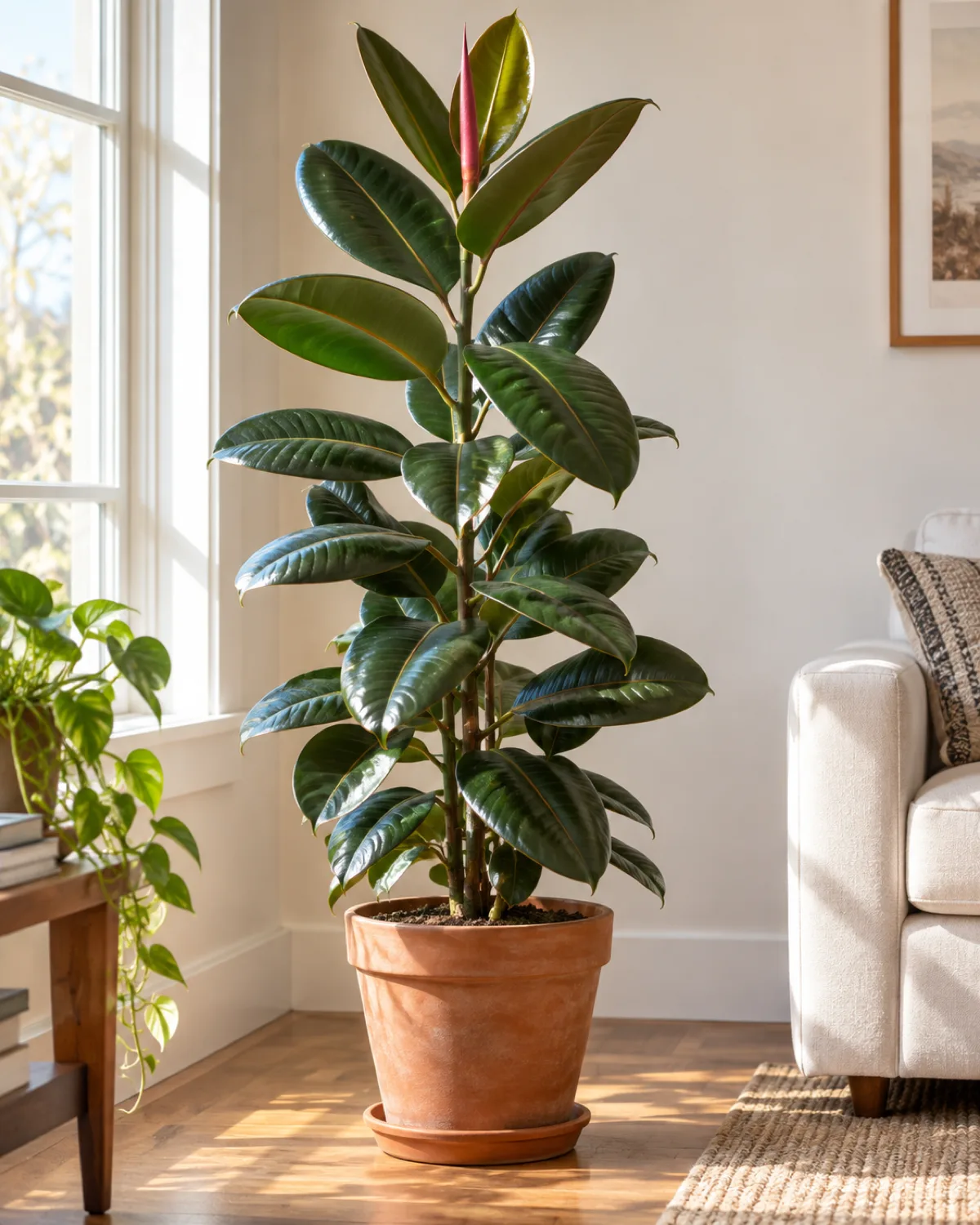
The rubber plant (Ficus elastica) showed particularly strong formaldehyde removal in sealed-chamber studies. The reason is straightforward: its leaves are large. Each leaf on a mature rubber plant can measure eight to twelve inches long, and the glossy surface area per leaf is substantially greater than the small-leaved species on this list.
Beyond gas exchange through stomata, the waxy leaf surface physically traps airborne dust and particulate matter. This is not chemical filtration — it is simple adhesion. The dust settles on the sticky surface and stays there until you wipe the leaves, which is why regular leaf cleaning is part of rubber plant maintenance and not just cosmetic.
- Needs bright indirect light to maintain its deep green color; tolerates moderate light but grows leggy
- Water when the top two inches of soil are dry — rubber plants are more sensitive to overwatering than most of the species on this list
- Can reach four to eight feet indoors, making it a floor specimen that fills vertical space in a room
A single rubber plant takes up less floor space than a shelf of small pots and delivers comparable total leaf area. See the rubber plant care guide for pruning and the tall indoor plants roundup for other large-scale options.
Boston fern
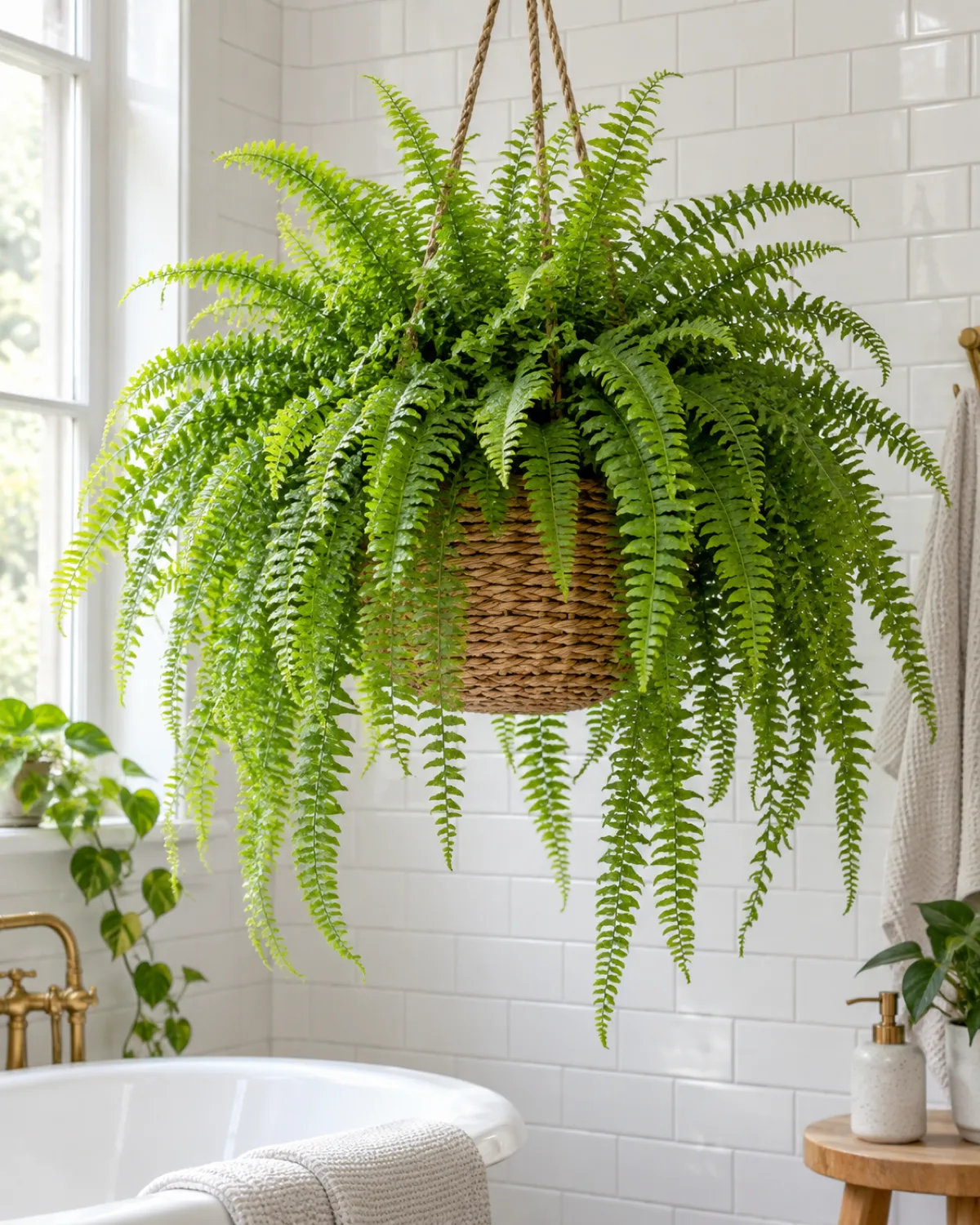
The Boston fern (Nephrolepis exaltata) removed formaldehyde and xylene in sealed-chamber testing. It also happens to be one of the highest-transpiring houseplants commonly available, releasing moisture through its fronds at a rate that noticeably raises local humidity around the plant.
This high transpiration rate is relevant to air quality in a practical, non-chemical way. Dry indoor air — especially in heated or air-conditioned homes — exacerbates respiratory irritation, dry skin, and static. A large Boston fern in a room with otherwise stale dry air introduces measurable moisture without an electric humidifier.
- Needs consistent moisture in the soil — let the top inch dry slightly, but never let the root ball dry out completely or the fronds shed and brown rapidly
- Prefers bright indirect light and high humidity; bathrooms with a window are the ideal placement
- Shedding leaflets is normal, not a sign of death — Boston ferns drop old growth constantly and it does not mean the plant is failing
The shedding is the main reason people give up on this plant. It is messy. Accept that a Boston fern will leave small brown leaflets on the floor and you remove the biggest barrier to keeping one alive. Full care details are in the Boston fern care guide and the broader fern care guide.
Areca palm
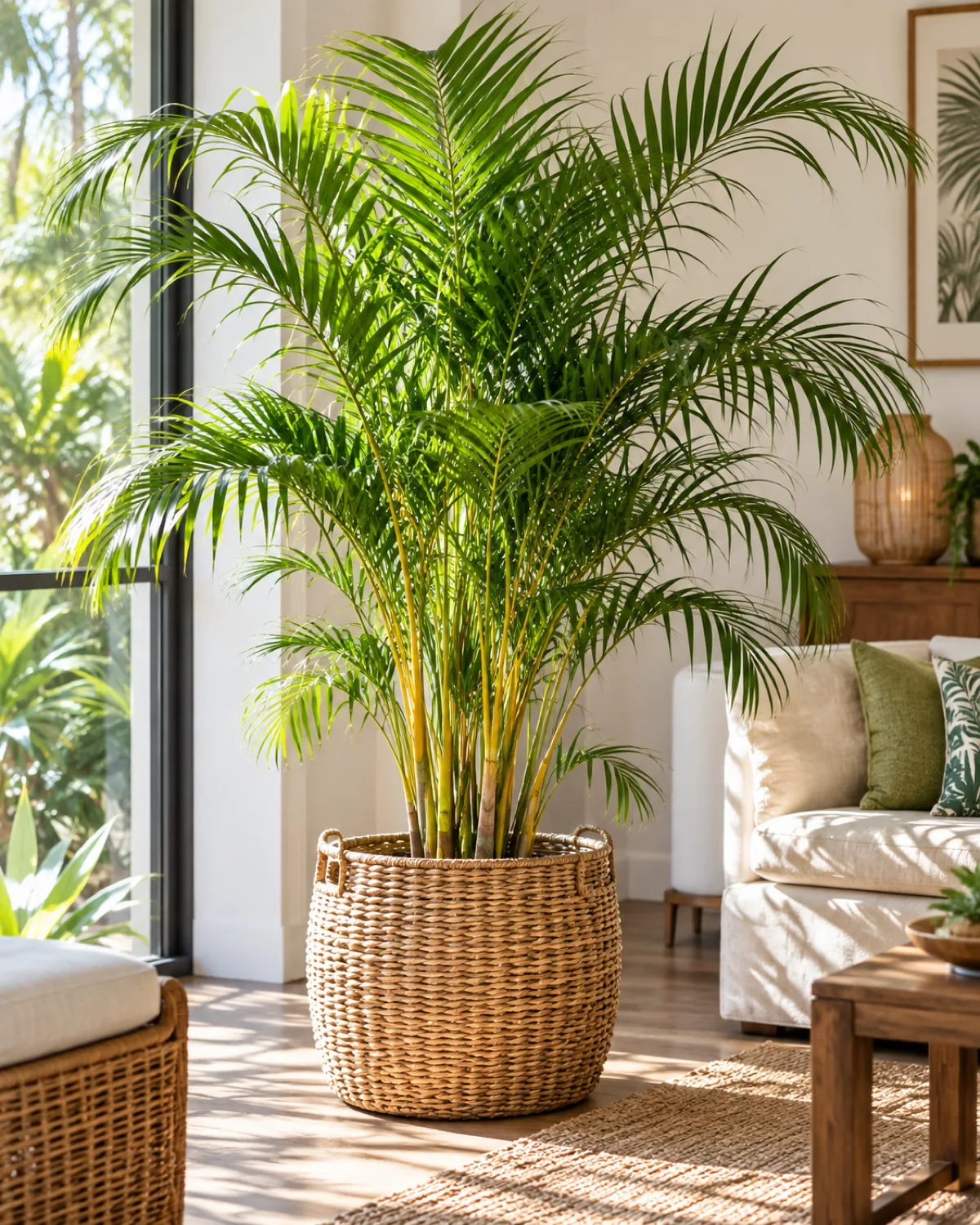
The areca palm (Dypsis lutescens) was rated one of the most effective sealed-chamber formaldehyde removers in the NASA study. It also has the highest transpiration rate of any palm commonly sold as a houseplant — a mature specimen can release roughly one liter of water vapor into the air every twenty-four hours.
That combination of chemical removal in testing plus high moisture output makes the areca palm a frequent recommendation for living rooms and offices. It is also one of the few palms on the ASPCA non-toxic list, which adds pet safety to the equation.
- Needs bright indirect light — more light than most species on this list except aloe vera
- Water when the top inch of soil dries out; areca palms do not tolerate drought or standing water
- Yellow fronds at the base are normal age-related shedding and not a sign of problems unless accompanied by brown tips on new growth
The golden cane stems and feathery fronds give this palm a distinctly tropical look that makes it a focal-point plant rather than a background filler. Compare it with the parlor palm if you want a similar look in lower light, and see the full areca palm care guide for fertilizing and brown-tip troubleshooting.
Chinese evergreen
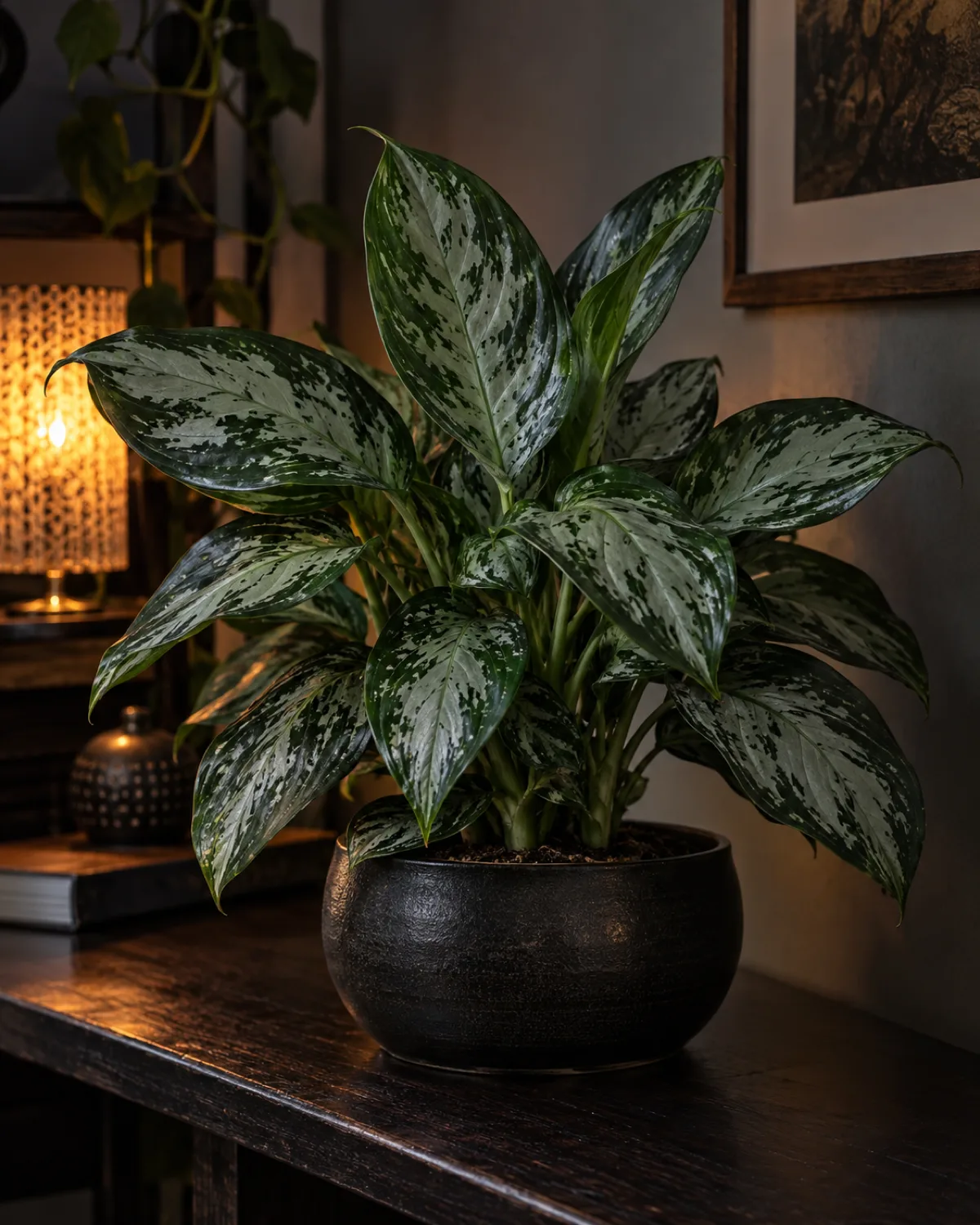
The Chinese evergreen (Aglaonema) removed benzene and formaldehyde in sealed-chamber testing. Its real strength on this list, though, is shade tolerance. Most air-purifying plants need at least moderate indirect light to stay healthy. Chinese evergreens — particularly the darker-leaved varieties — survive in genuinely low light that would stress or kill nearly every other species here.
The counterintuitive selection rule for Chinese evergreens is that leaf color predicts light needs. Darker green varieties with less variegation tolerate lower light because they have more chlorophyll per unit of leaf area. The pink or red cultivars that are trendy on social media need brighter conditions to maintain their color and will revert toward green in dim rooms.
- Extremely slow growing, which means it stays at the size you bought it for a long time
- Water when the top two inches dry out; these are more forgiving of slight overwatering than most on this list
- Toxic to cats and dogs (calcium oxalate crystals)
If you have a room where the light is genuinely low — a north-facing room with one small window, an interior office — the Chinese evergreen is one of the only sealed-chamber-tested plants that will actually thrive there. See the full Chinese evergreen care guide and the low-light plants roundup for other shade-tolerant picks.
Dracaena
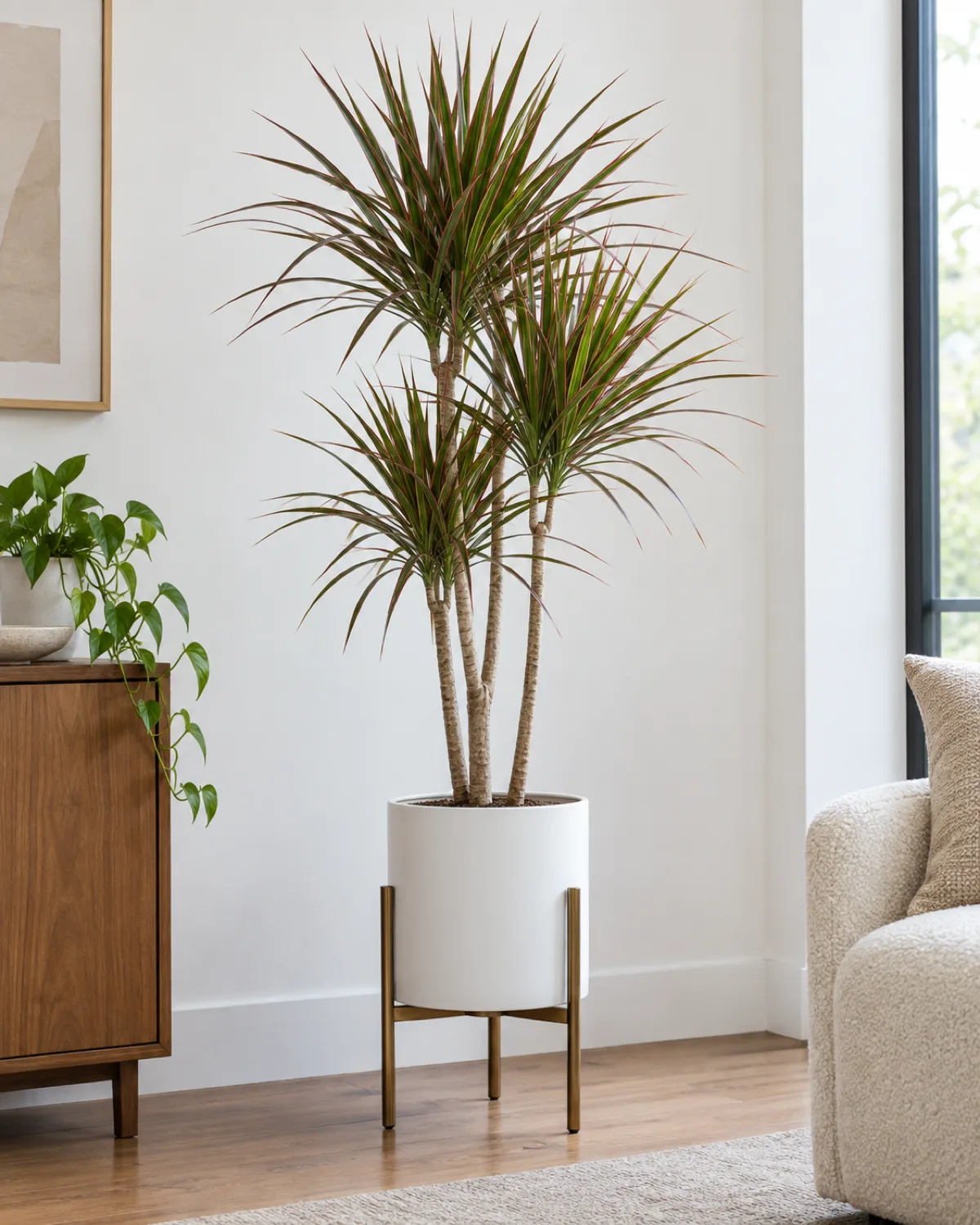
The Dracaena genus placed multiple species on the NASA sealed-chamber test list. Dracaena marginata removed benzene, formaldehyde, and trichloroethylene. Dracaena fragrans (corn plant) was particularly effective against formaldehyde. Dracaena deremensis tested well against xylene and toluene. If any single genus earned "air purifying" status on sheer breadth of compounds tested, Dracaena is it.
The practical advantage of dracaenas is their narrow vertical growth habit. Most species grow on canes — slender woody stems topped with rosettes of leaves — which means the plant takes up very little floor space relative to its height. A three-foot Dracaena marginata occupies barely more floor area than a floor lamp.
- Fluoride sensitive: use filtered water or let tap water sit out overnight; brown tips in dracaenas are usually fluoride damage, not underwatering
- Tolerates moderate to low light; grows faster in bright indirect but survives dim corners
- Toxic to cats and dogs
The narrow profile makes dracaenas popular for hallways, corners, and spaces between furniture where a bushy plant would not fit. See the full Dracaena marginata care guide for cane-cutting propagation and fluoride management.
English ivy
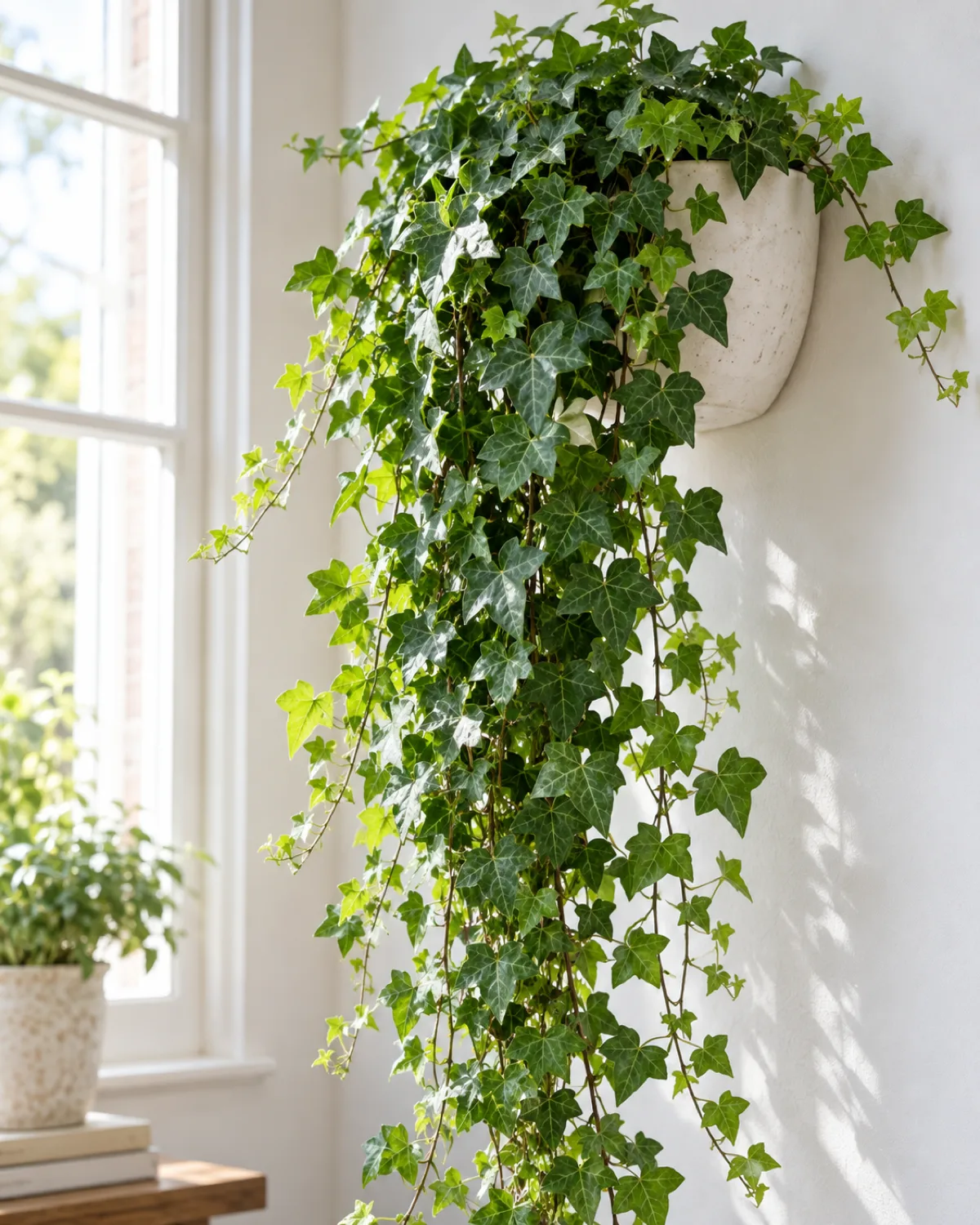
English ivy (Hedera helix) removed benzene and formaldehyde in the NASA sealed-chamber study. A 2005 study by Wolverton Environmental Services also tested it against airborne fecal-matter particles and reported significant reduction — a finding that made English ivy a frequent recommendation for bathrooms, though repeating sealed-chamber results in a ventilated bathroom is a large extrapolation.
The trailing growth habit of English ivy is aggressive. Given something to climb — a trellis, a moss pole, a wall — it attaches via aerial rootlets and covers surface area rapidly. This vigorous growth means more leaf surface faster, but it also means the plant needs regular trimming to prevent it from taking over a shelf or windowsill.
- Prefers bright indirect light and cooler temperatures than most tropical houseplants — warm dry rooms cause spider mite infestations
- Keep soil evenly moist but not waterlogged; English ivy is less drought-tolerant than pothos or snake plant
- Toxic to cats and dogs (triterpenoid saponins cause vomiting and abdominal pain)
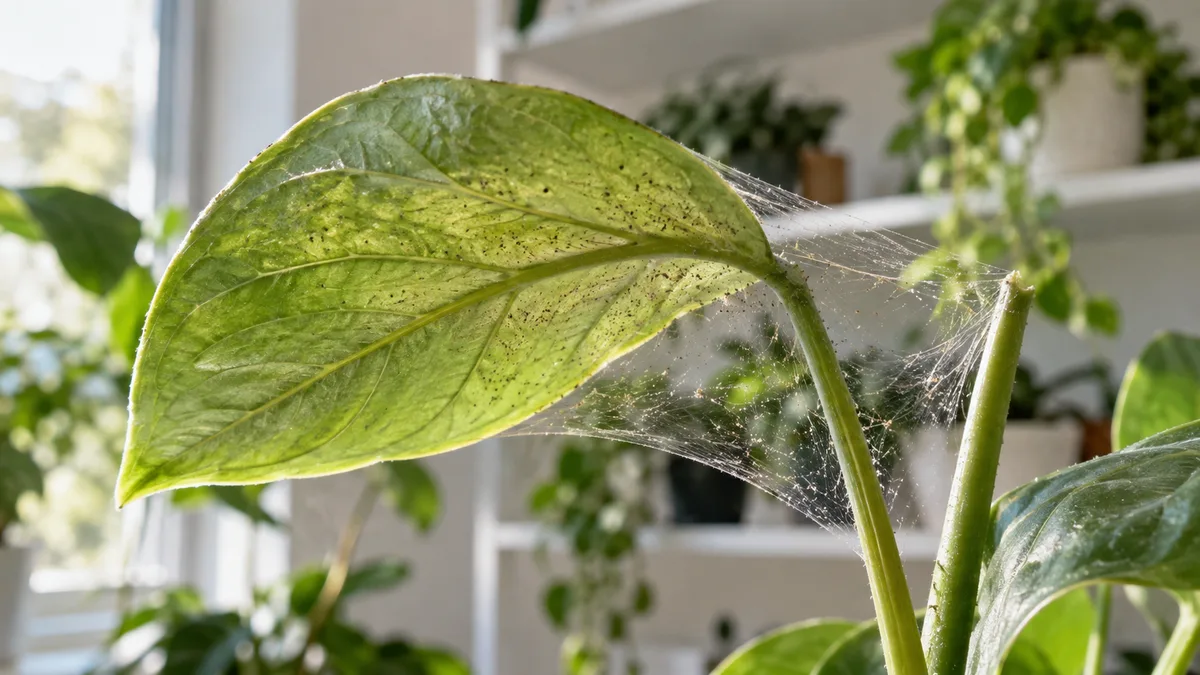
Spider mites are the single biggest maintenance challenge with indoor English ivy. The mites thrive in the dry warm conditions of most heated homes, and ivy is their favorite host. Inspect the undersides of leaves weekly and mist regularly. See the full English ivy care guide and the spider mites treatment guide for prevention strategies.
Aloe vera
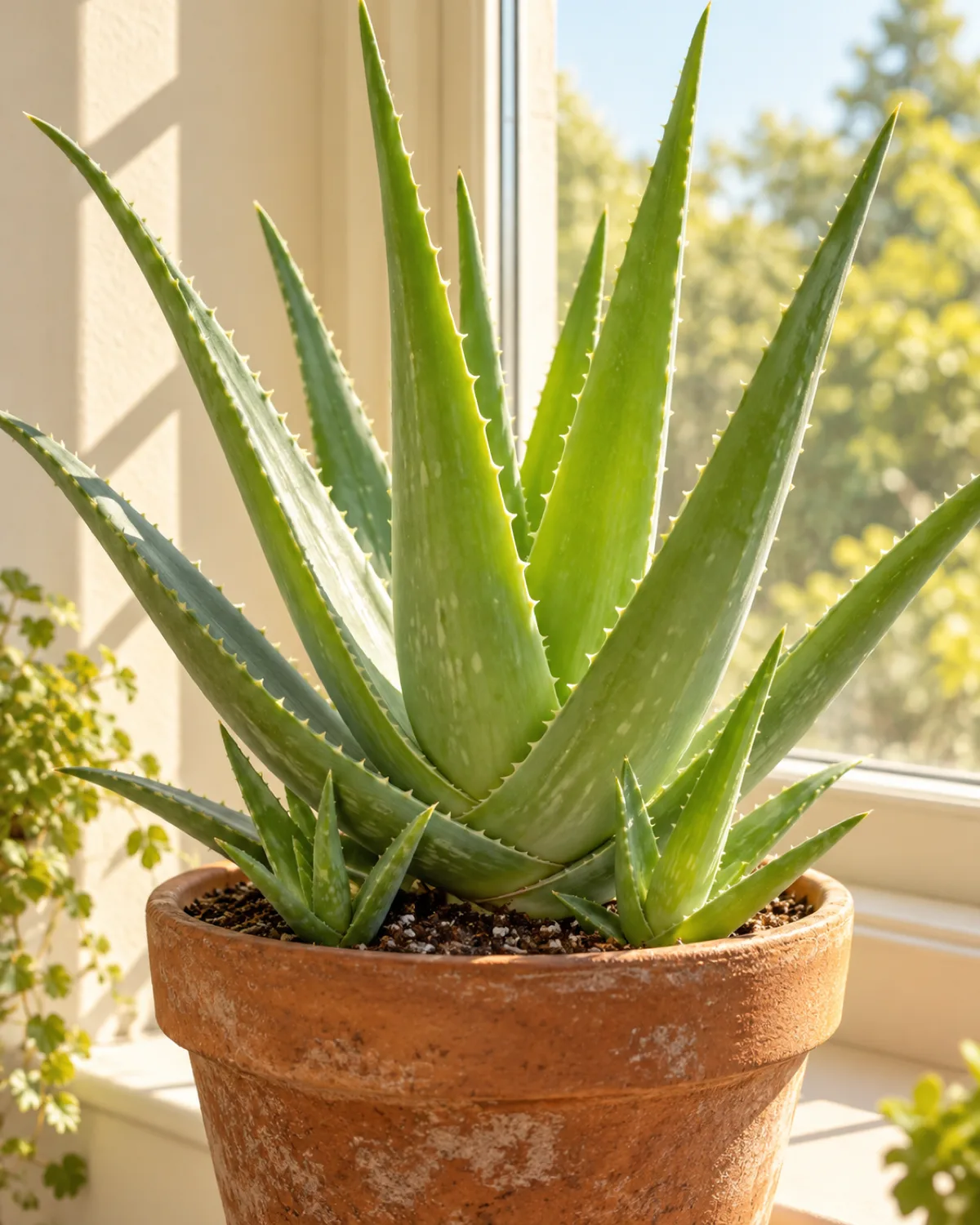
Aloe vera removed formaldehyde and benzene in sealed-chamber testing. Its inclusion on this list comes with a caveat that applies to all succulents: aloe vera has a relatively low transpiration rate compared to leafy tropical plants. It conserves water by keeping its stomata closed during the hottest parts of the day, which limits gas exchange during those hours.
The practical benefit of aloe vera that no other plant on this list offers is the gel. The clear inner gel of the leaf has documented topical uses for minor burns and skin irritation. Growing your own means having a supply of fresh gel without the preservatives and additives found in commercial products.
- Needs bright direct light — more light than any other plant on this list; south-facing or west-facing windows are ideal
- Water deeply but infrequently, allowing the soil to dry completely between waterings; the three-layer leaf structure stores water like a reservoir
- Non-toxic to humans but mildly toxic to cats and dogs (the latex layer between the skin and gel causes digestive upset)
Aloe vera is the outlier on this list in terms of care. While most plants here prefer indirect light and regular moisture, aloe wants full sun and drought. Place it where the light is strongest and water it less than your instincts suggest.
See the full aloe vera care guide for gel harvesting and the succulent care guide for general succulent watering principles.
Philodendron
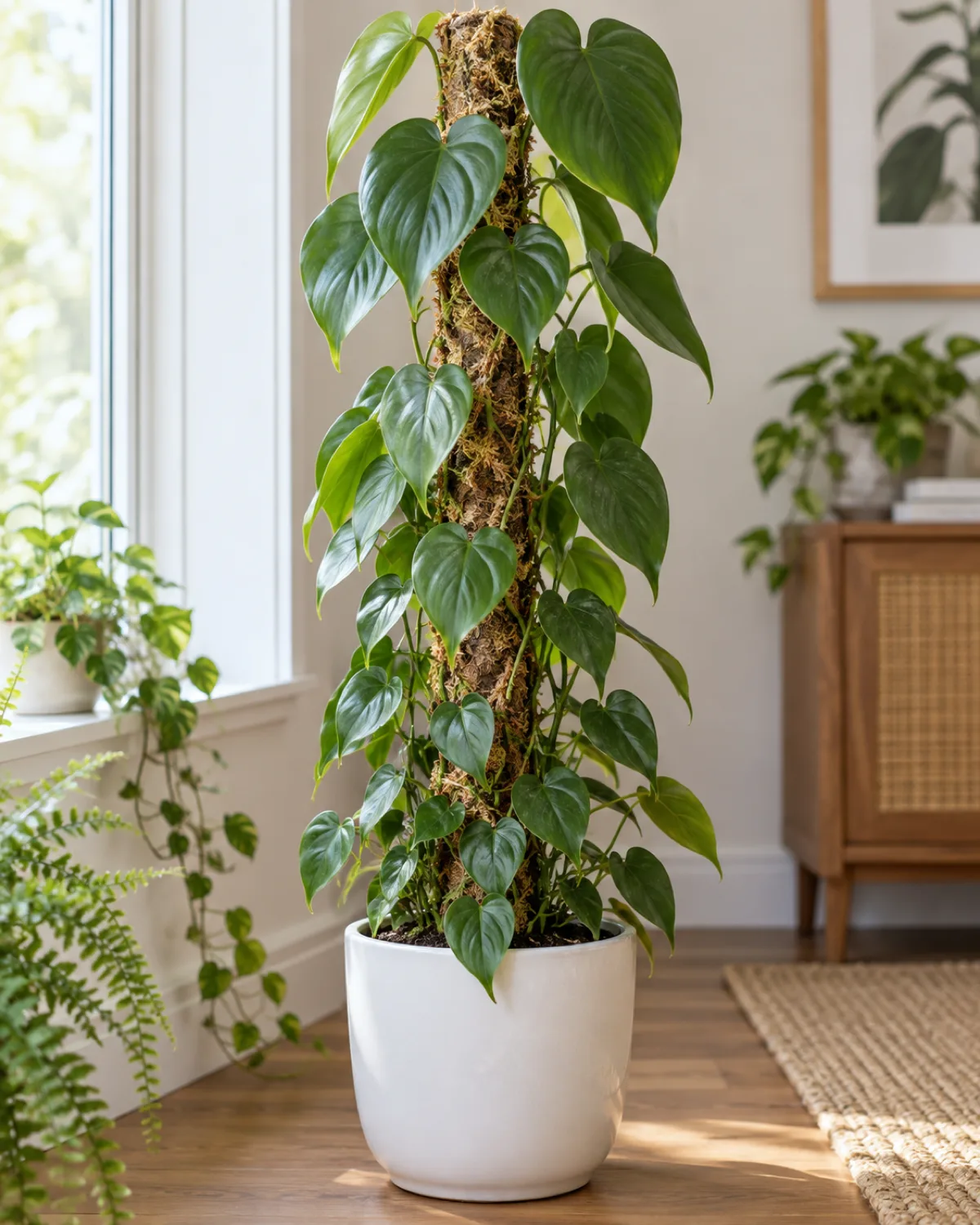
The heartleaf philodendron (Philodendron hederaceum) showed consistent formaldehyde removal in sealed-chamber testing. Philodendrons as a genus are enormous — over four hundred species — but the heartleaf is the one that was actually tested, and it is also the most commonly available and easiest to grow.
The genus divides into two growth habits: climbing species (like the heartleaf) that ascend via aerial roots and produce larger leaves when given a moss pole to climb, and self-heading species that grow in upright rosettes without support.
Climbers are more versatile because you can train them vertically to maximize foliage in a small footprint. Both types produce substantial leaf area.
- Thrives in moderate to bright indirect light; tolerates low light better than most tropical aroids
- Water when the top inch of soil dries out; philodendrons are moderately drought-tolerant but prefer consistent moisture
- Toxic to cats and dogs (calcium oxalate crystals in all parts)
Propagation is trivially easy — cut a stem below a node, put it in water, and roots appear within a week or two. This is the fastest way to multiply your philodendron collection without spending money. See the full philodendron care guide and the philodendron varieties guide for the full range of species available.
Bamboo palm
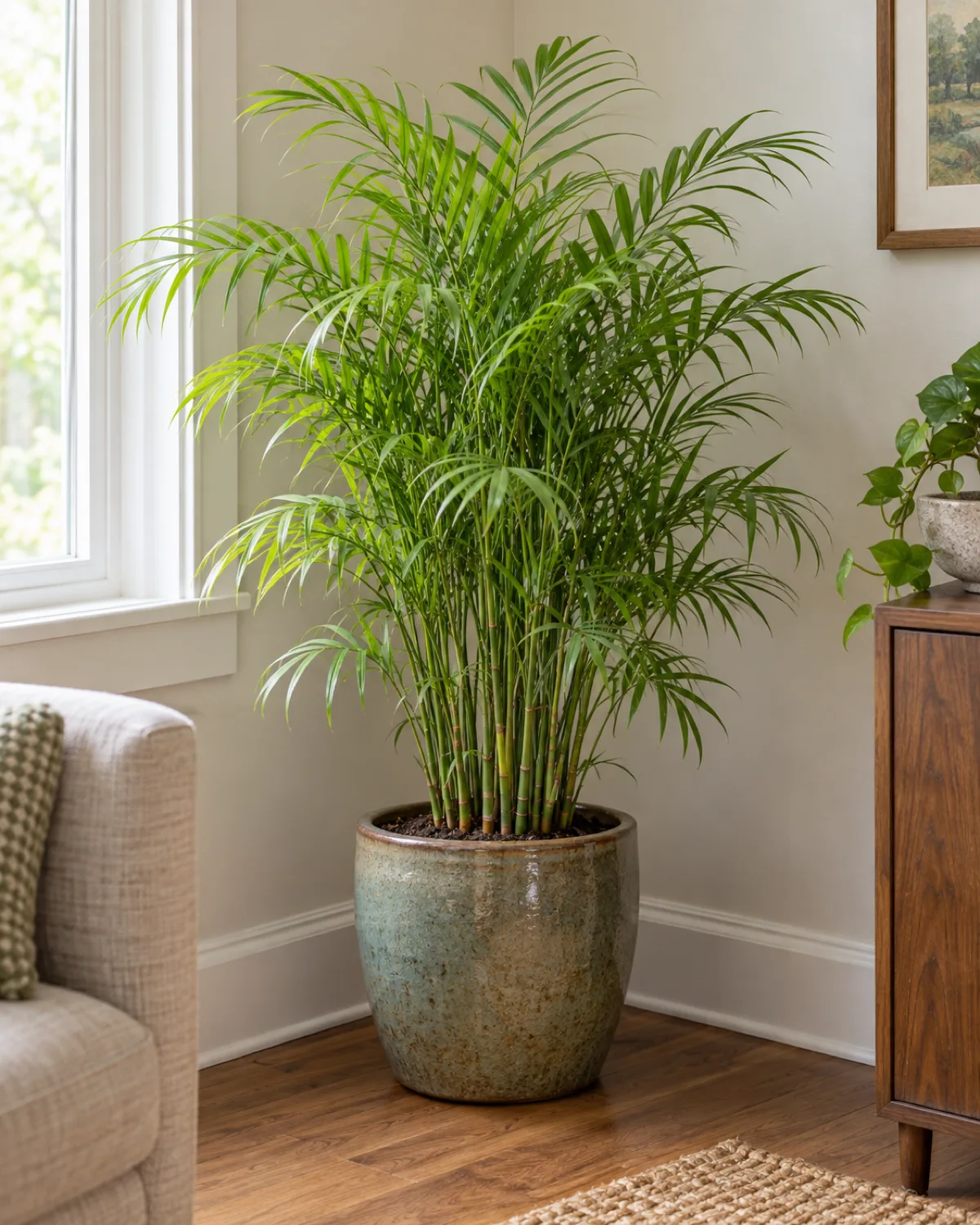
The bamboo palm (Chamaedorea seifrizii) removed benzene, formaldehyde, and trichloroethylene in NASA sealed-chamber testing — one of only a few species that tested positive against all three. It is also pet-safe (ASPCA non-toxic), which makes it the only palm on this list that combines broad-spectrum test results with confirmed animal safety.
Compared to the areca palm earlier on this list, the bamboo palm tolerates lower light conditions. It naturally grows as an understory palm in Central American forests, which means it evolved under a canopy that filters most direct sunlight. This shade tolerance makes it viable for rooms where the areca palm would struggle — north-facing rooms, interior offices, or corners far from windows.
- Multiple thin canes cluster together, creating a bushy form that fills corners without the width of a large-frond palm
- Water when the top inch of soil dries; less water than the areca but more than succulents on this list
- Yellow lower fronds are normal shedding and not a sign of distress as long as new growth at the top looks healthy
The bamboo palm is the compromise pick when you want the palm look, need pet safety, and do not have the bright light that the areca demands. Compare it with the parlor palm, which is even more shade-tolerant but was not part of the NASA sealed-chamber study, and the plant corner ideas roundup for placement strategies.
Dieffenbachia
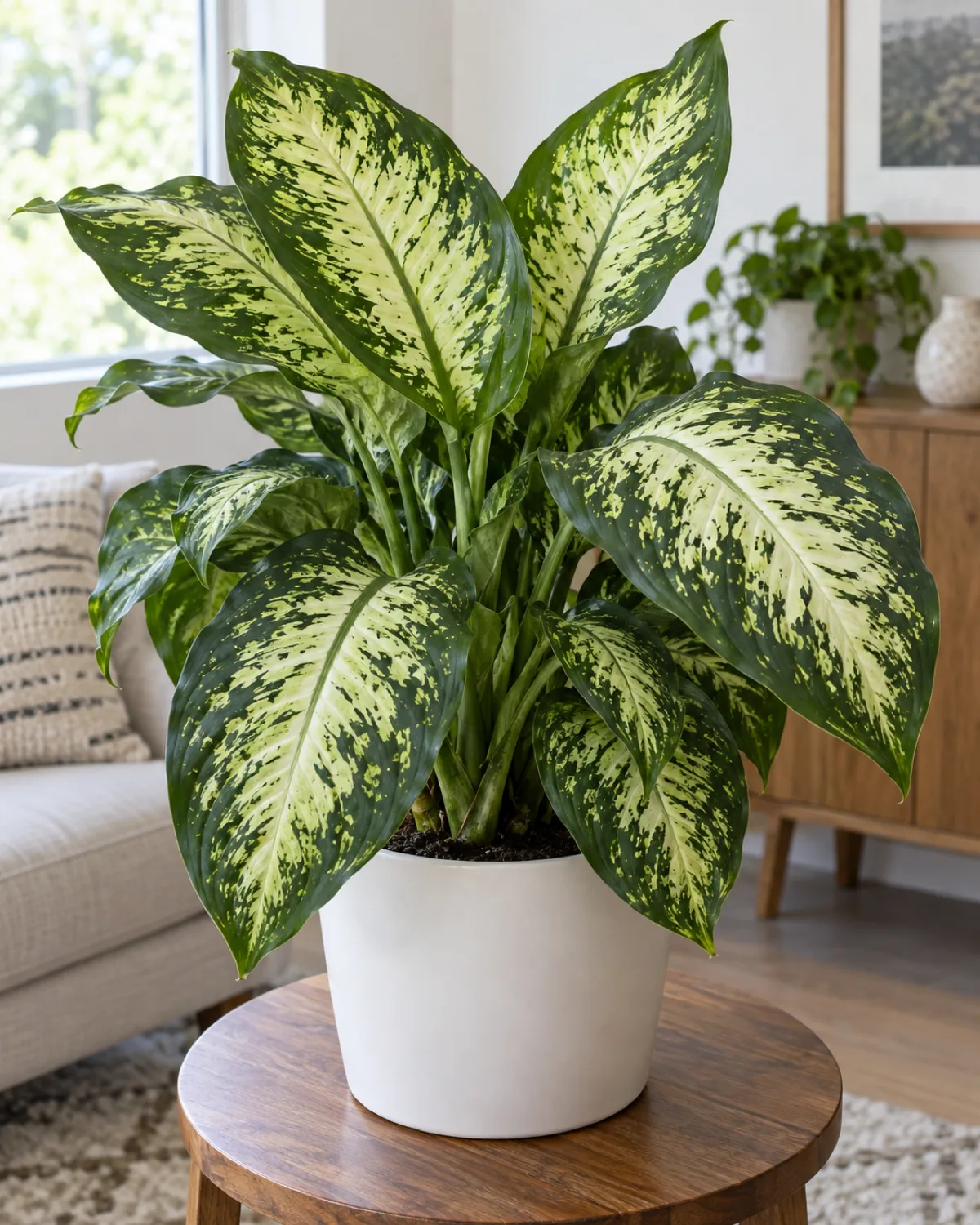
Dieffenbachia (dumb cane) showed removal of xylene and toluene in sealed-chamber testing with large-leaved cultivars. The common name "dumb cane" comes from the calcium oxalate crystals concentrated throughout the plant — chewing any part causes immediate oral numbness and swelling that can temporarily impair speech.
The reason dieffenbachia makes this list despite the toxicity warning is leaf size. Individual leaves on a mature specimen reach eighteen inches long and eight inches wide — more surface area per leaf than any species here except the rubber plant.
If the mechanism behind air quality benefits is stomatal gas exchange across leaf surfaces, dieffenbachia brings the raw square footage.
- Bright indirect light maintains the variegation; lower light causes leaves to revert toward solid green
- Water when the top two inches of soil dry out; dieffenbachia is moderately drought-tolerant
- Highly toxic to cats, dogs, and humans (calcium oxalate crystals cause intense oral burning, drooling, and swelling) — keep well out of reach of children and pets
This is the plant for experienced growers in pet-free households who want maximum leaf coverage. It grows quickly, fills space visually, and is one of the few plants that can match a rubber plant's leaf area on a tabletop rather than requiring floor space. Full care details are in the dieffenbachia care guide.
14 Air Purifying Plants for Cleaner Indoor Air
- 1Snake plantRemoved four compounds in sealed-chamber testing, uses CAM photosynthesis for nighttime oxygen release, and tolerates extreme neglect.
- 2Peace lilyWidest compound range of any flowering tested plant; drooping leaves tell you exactly when to water.
- 3Spider plantASPCA non-toxic, propagates effortlessly via stolons, and handles formaldehyde and xylene in chamber tests.
- 4Golden pothosTrailing vines maximize leaf area from a single pot; grows in nearly any light condition.
- 5Rubber plantLarge glossy leaves trap dust physically and tested well against formaldehyde in sealed chambers.
- 6Boston fernHigh transpiration rate adds moisture to dry rooms; tested against formaldehyde and xylene.
- 7Areca palmHighest transpiration rate among tested palms, ASPCA non-toxic, and a top formaldehyde remover in chamber tests.
- 8Chinese evergreenThrives in genuinely low light where most tested plants struggle; darker leaves mean more shade tolerance.
- 9DracaenaMultiple species tested across benzene, formaldehyde, trichloroethylene, xylene, and toluene; narrow vertical profile.
- 10English ivyAggressive trailing growth covers surface area fast; tested against benzene, formaldehyde, and airborne particles.
- 11Aloe veraTested for formaldehyde and benzene removal; bonus topical gel for minor burns.
- 12PhilodendronHeartleaf species tested for formaldehyde; climbs a moss pole for vertical leaf coverage in tight spaces.
- 13Bamboo palmThree-compound test results, ASPCA non-toxic, tolerates lower light than areca palm.
- 14DieffenbachiaLargest individual leaf area on this list; tested against xylene and toluene. Keep away from pets and children.
kultivy.com

Mara Quinn edits Kultivy, where she shares houseplant care, propagation, beginner-friendly plant picks, and plant-styling ideas for anyone who wants their indoor plants to actually thrive. Every guide is image-led and reviewed for clarity, usefulness, image accuracy, and Pinterest-to-page alignment before it goes live. Visit the About page.
Frequently asked questions
Do air purifying plants really work?
In sealed-chamber studies, yes — specific plants removed measurable VOCs including formaldehyde, benzene, and trichloroethylene. In real living rooms with normal air exchange, the effect is dramatically diluted.
- A 2019 meta-analysis estimated you would need hundreds of plants to match a standard air exchange system
- Plants are a co-benefit alongside proper ventilation, not a replacement for opening a window or running an air purifier
How many plants do you need to purify a room?
The sealed-chamber ratio does not translate directly. The NASA study used roughly one plant per hundred cubic feet in sealed space — fifteen plants for a typical living room with no ventilation.
- Real rooms have air exchange that dilutes the effect
- No practical number of houseplants replaces an air filtration system
- Grow them for the visual and psychological benefits and treat any air quality contribution as a bonus
Which air purifying plants are safe for pets?
Four on this list are ASPCA non-toxic:
- Spider plant
- Areca palm
- Bamboo palm
- Boston fern
The remaining ten contain compounds causing varying degrees of toxicity in cats and dogs. See the pet-safe plants guide and plants safe for cats for non-toxic alternatives.
Where should I put air purifying plants?
Place them where they will thrive. A healthy plant with open stomata exchanges gas at a higher rate than a stressed one. Match each species to its light and humidity needs first.
- Low-light rooms: snake plant, Chinese evergreen, or philodendron
- Bright rooms: areca palm, aloe vera, and rubber plant
- Humid bathrooms: Boston fern