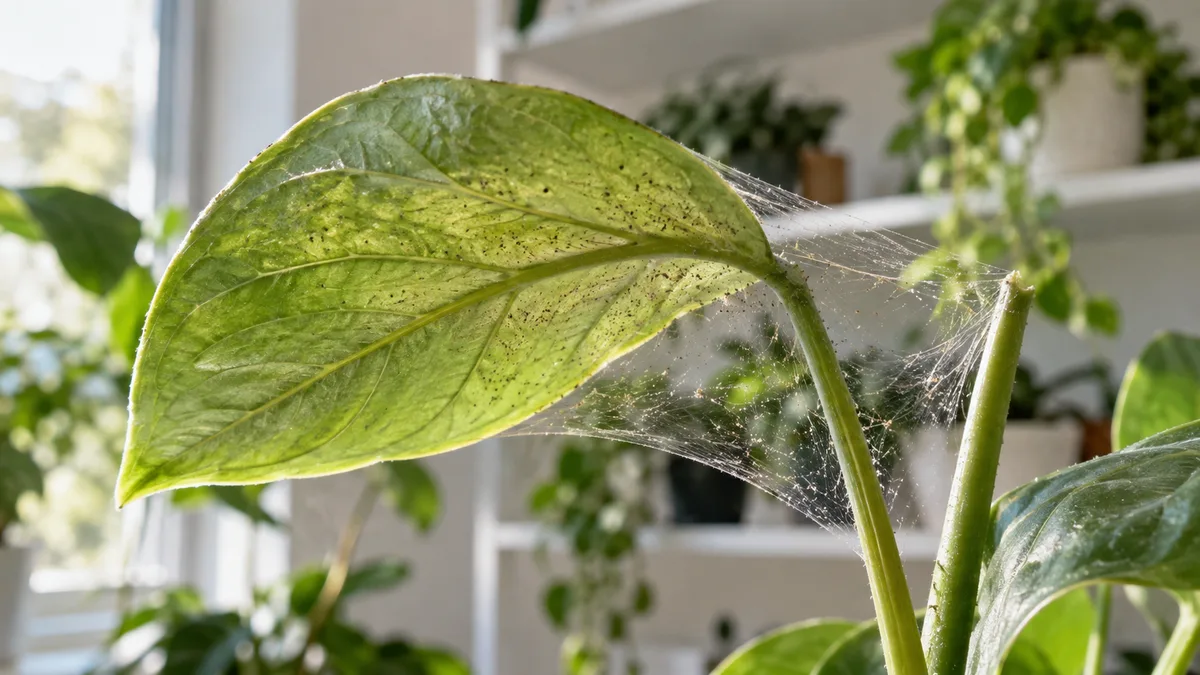
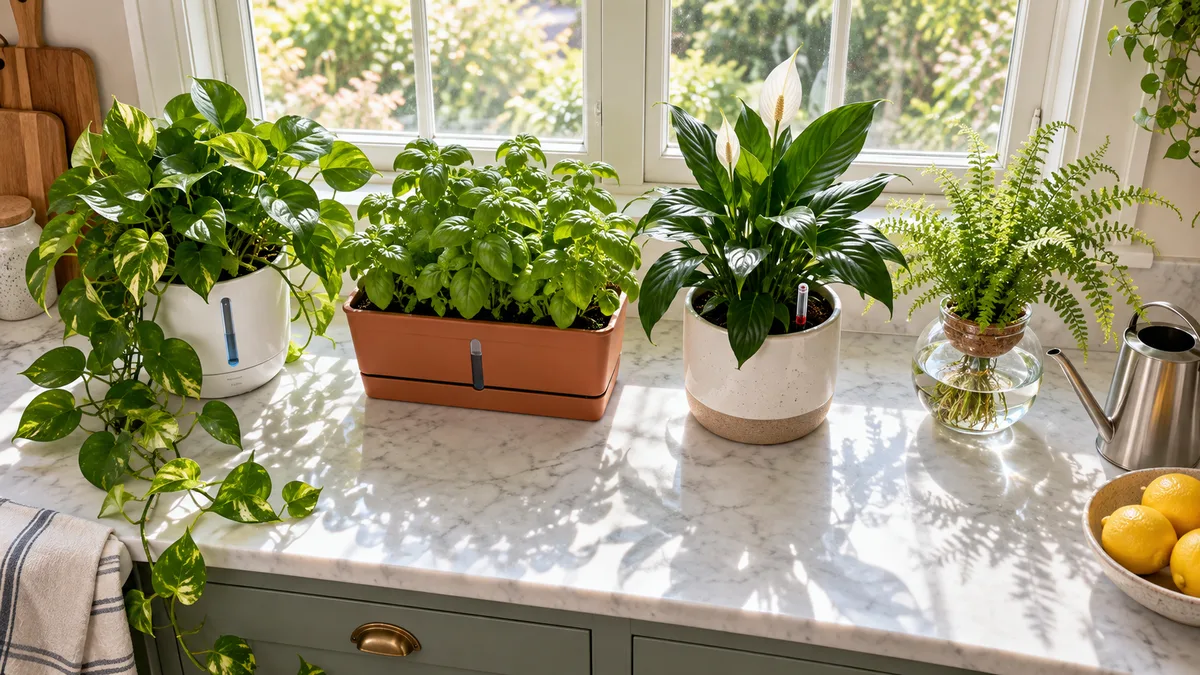
Succulents store water in their thick fleshy leaves. That makes them the most drought-tolerant houseplants you can own — and the easiest to kill with kindness.
The watering rules you learned from tropical plants will rot a succulent in weeks. The light levels most rooms provide are not enough. The potting mix from the garden center holds too much moisture.
None of this is hard to fix once you understand what succulents actually need: more light, less water, grittier soil, and the patience to leave them alone.
Succulents are the opposite of tropical houseplants in almost every way that matters. These thirteen sections cover the watering method that prevents rot, the light levels that prevent stretching, the soil mix that drains fast enough, and the leaf trick that turns one plant into a dozen.
What makes succulents different from other houseplants
Succulents are plants that store water in their leaves, stems, or roots. The word comes from the Latin sucus, meaning juice. That water storage is an adaptation to arid environments where rain is rare and unpredictable — deserts, dry mountainsides, coastal cliffs.
The defining visual feature is thick, fleshy, plump leaves or stems that feel firm and slightly rubbery when the plant is healthy. Touch a healthy echeveria leaf and it resists the squeeze. Touch a healthy fern frond and it bends immediately. That firmness is stored water.
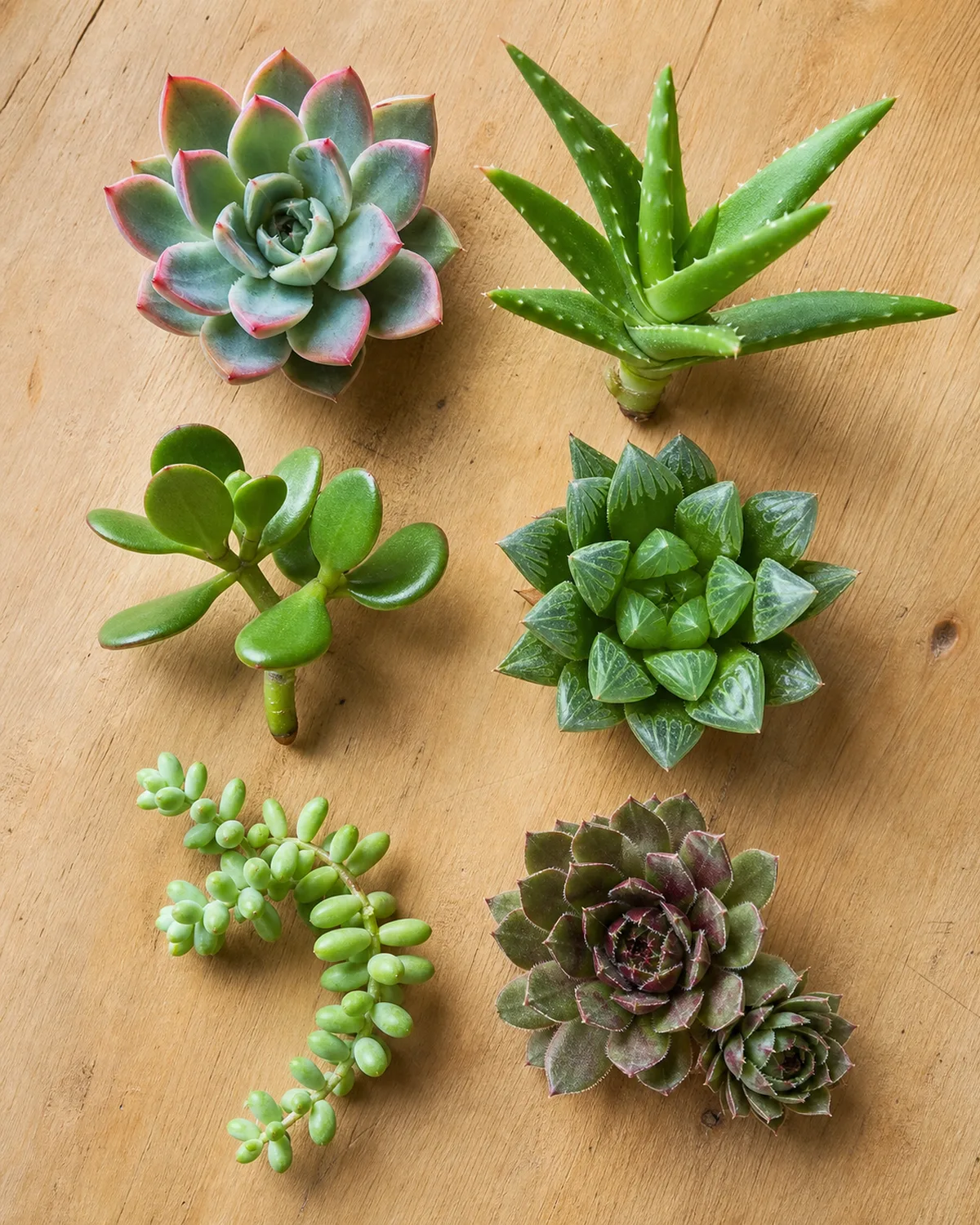
Succulents span dozens of plant families and hundreds of genera. The most common indoor types include Echeveria (the rosette-forming favorite), Haworthia (small, indirect-light tolerant), Sedum (trailing varieties like burro's tail), Sempervivum (hens and chicks), and Crassula (jade plant).
Add Aloe (medicinal, spiky) and Senecio/Curio (string of pearls, string of dolphins) and you cover the core indoor roster.
What unites them all is the fundamental care difference from tropical houseplants: succulents want bright light, infrequent water, and fast-draining soil — the exact opposite of what ferns, calatheas, and most aroids need.
The single biggest indoor succulent killer is treating them like a tropical plant. Regular watering, rich soil, medium light — the combination that keeps a philodendron happy will rot a succulent from the inside out.
Succulents thrive on neglect and reward bright windowsills — but they are not the forgiving low-light plants many people expect.
Light: the non-negotiable that most indoor setups get wrong
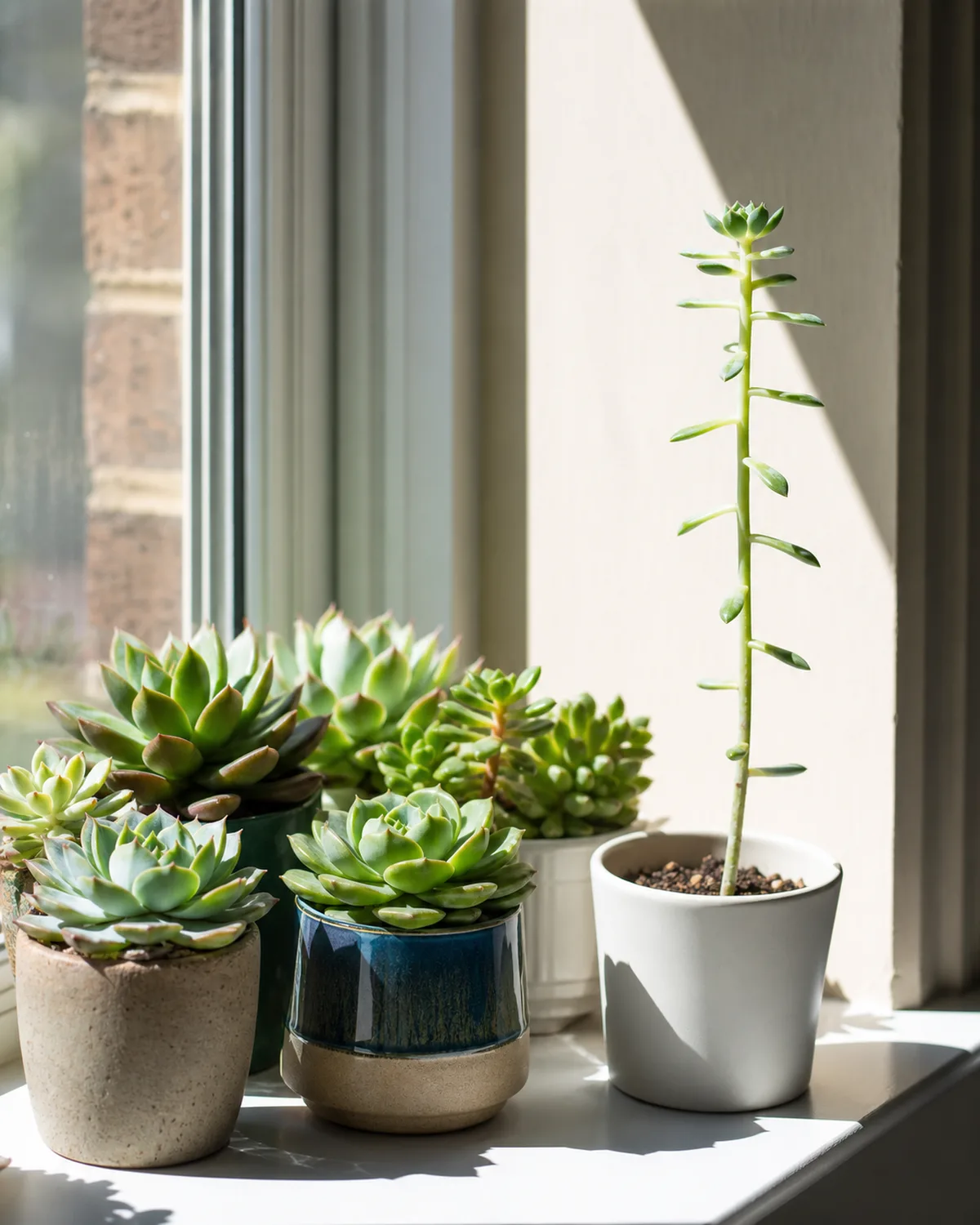
Succulents need more light than almost any other common houseplant. Most species want at least six hours of bright light daily, and many tolerate or prefer some direct sun. A south-facing windowsill is ideal. East-facing works for morning sun. North-facing windows are almost never enough.
The problem is that most indoor spaces simply do not provide enough light for sun-loving succulents. That is why etiolation — the plant stretching desperately toward light — is the number one indoor succulent problem.
Etiolation looks like this: the stem elongates, leaves space out along the stem, and rosettes lose their compact shape. An echeveria that should be a tight rosette becomes a tall leggy stalk with small, widely-spaced leaves. The stretched growth is irreversible. The only fix is to behead the plant and re-root the top for a fresh start.
A full-spectrum LED grow light running twelve to fourteen hours daily is the single most impactful upgrade for indoor succulent keeping. It turns a dim shelf into a viable succulent habitat.
The notable exception is Haworthia. These small succulents naturally grow in the shade of larger plants and rocks in their native South African habitat. They actually prefer bright indirect light and can burn in direct sun, making them the best succulent genus for typical indoor light levels.
For a deeper look at measuring light without a meter and matching plants to window positions, see the houseplant light guide.
Watering: the soak-and-dry method
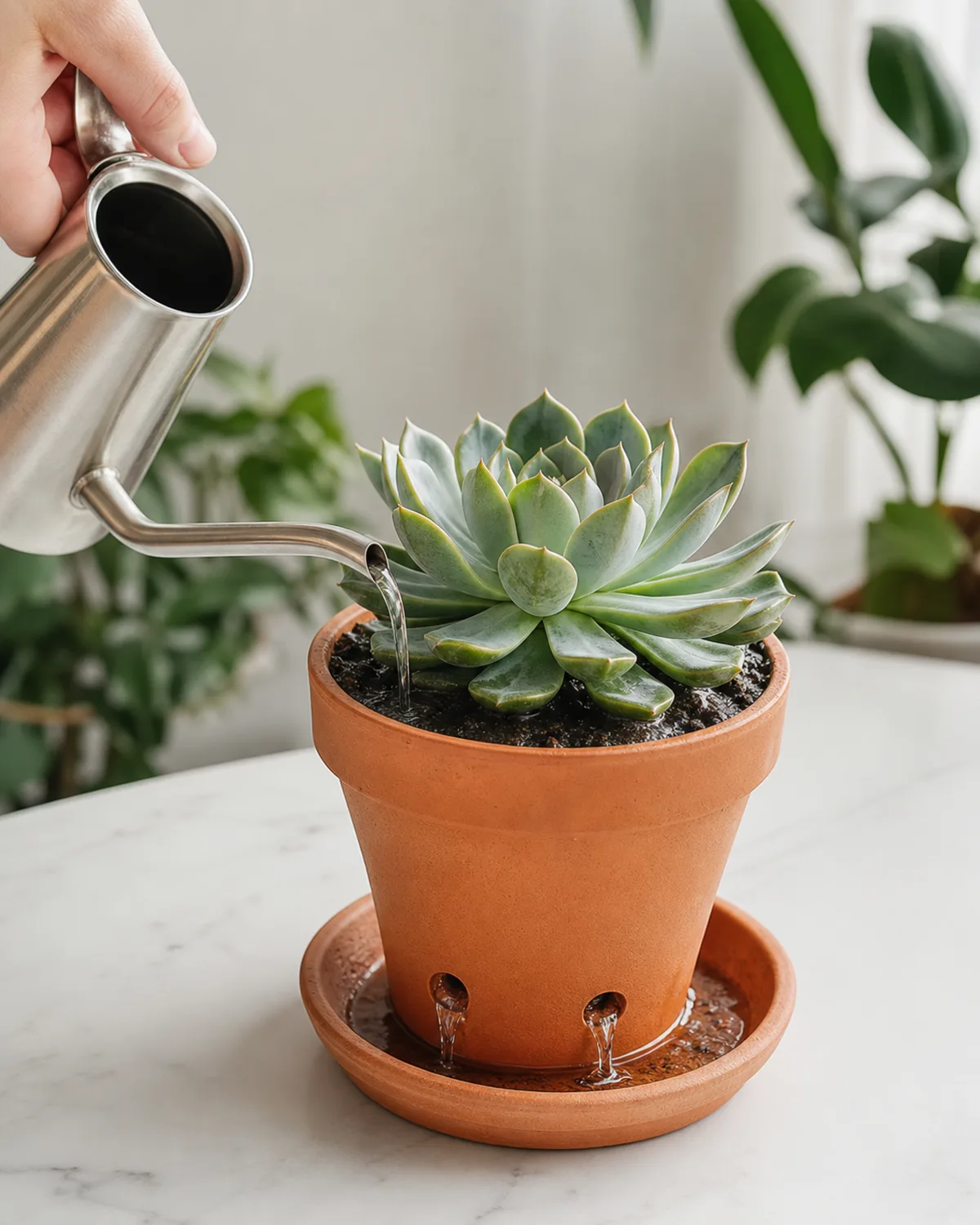
This is the opposite of tropical plant watering, and the skill that prevents the most common succulent death.
The method: wait until the soil is completely dry. Not "top inch dry" — that is the tropical plant standard. Bone dry all the way through the pot. Then soak thoroughly until water pours from the drainage holes. Then wait again until completely dry.
In practice this means watering roughly every ten to fourteen days in summer, and every three to four weeks in winter. Some species in deep winter dormancy need even less — once a month or not at all.
The plant's leaves tell you what it needs. Plump, firm leaves mean the plant is hydrated — do not water. Slightly soft or wrinkled leaves mean the plant is thirsty — time to soak. This is a more reliable signal than any watering schedule.
Overwatering kills succulents faster than anything else. The signs: translucent mushy leaves where cells have burst from excess water, a black stem base, leaves falling off at the slightest touch. By the time the stem is soft, the rot is usually fatal.
Underwatering looks different: wrinkled, shriveled leaves that feel papery but not mushy. The plant recovers fully once watered. Underwatering is almost always survivable. Overwatering is often not.
The watering frequency is the hardest habit shift for people coming from tropical houseplants. If you have been watering your pothos weekly and it thrives, your instinct will be to water the succulent weekly too. Fight that instinct.
Soil: the 50% rule for fast drainage
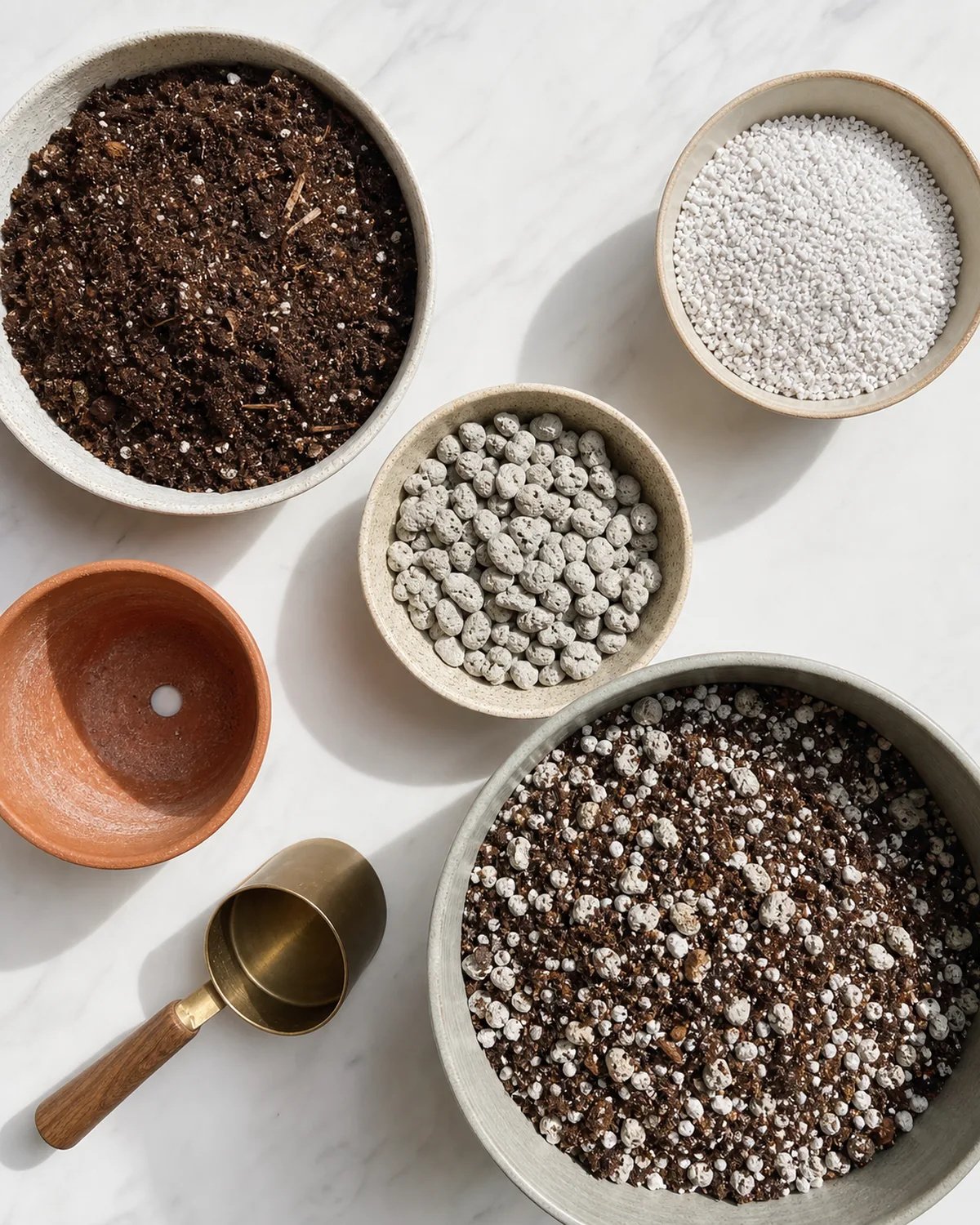
Standard potting mix retains too much moisture for succulents and will cause root rot even with correct watering technique. The soil stays wet for a week or more — succulents need it dry in two to three days.
The formula is simple: equal parts regular potting soil and inorganic grit. Perlite, coarse sand, pumice, or small gravel all work. The goal is a mix that feels chunky, drains in seconds when you water, and dries completely within two to three days.
Premade "cactus and succulent mix" from garden centers is a starting point but is often still too moisture-retentive for the most rot-prone species. Adding extra perlite or pumice improves it. A good test: water the pot and check the soil the next day. If it still feels damp, add more grit.
Pumice is the premium choice if you can find it. It is porous volcanic rock that absorbs and releases moisture slowly, does not float to the surface like perlite, and does not compact over time. Perlite is cheaper and more widely available but tends to float during watering and degrade after a year or two.
The container matters equally. Terracotta is ideal because it is porous — it wicks moisture away from roots faster than glazed ceramic or plastic. You can use other materials, but you will need to water less frequently.
Always drainage holes. Never rocks at the bottom of a pot without holes. That old trick does not create drainage — it raises the water table inside the pot, pooling moisture exactly where it does the most damage at the root zone.
Containers and repotting: less is more
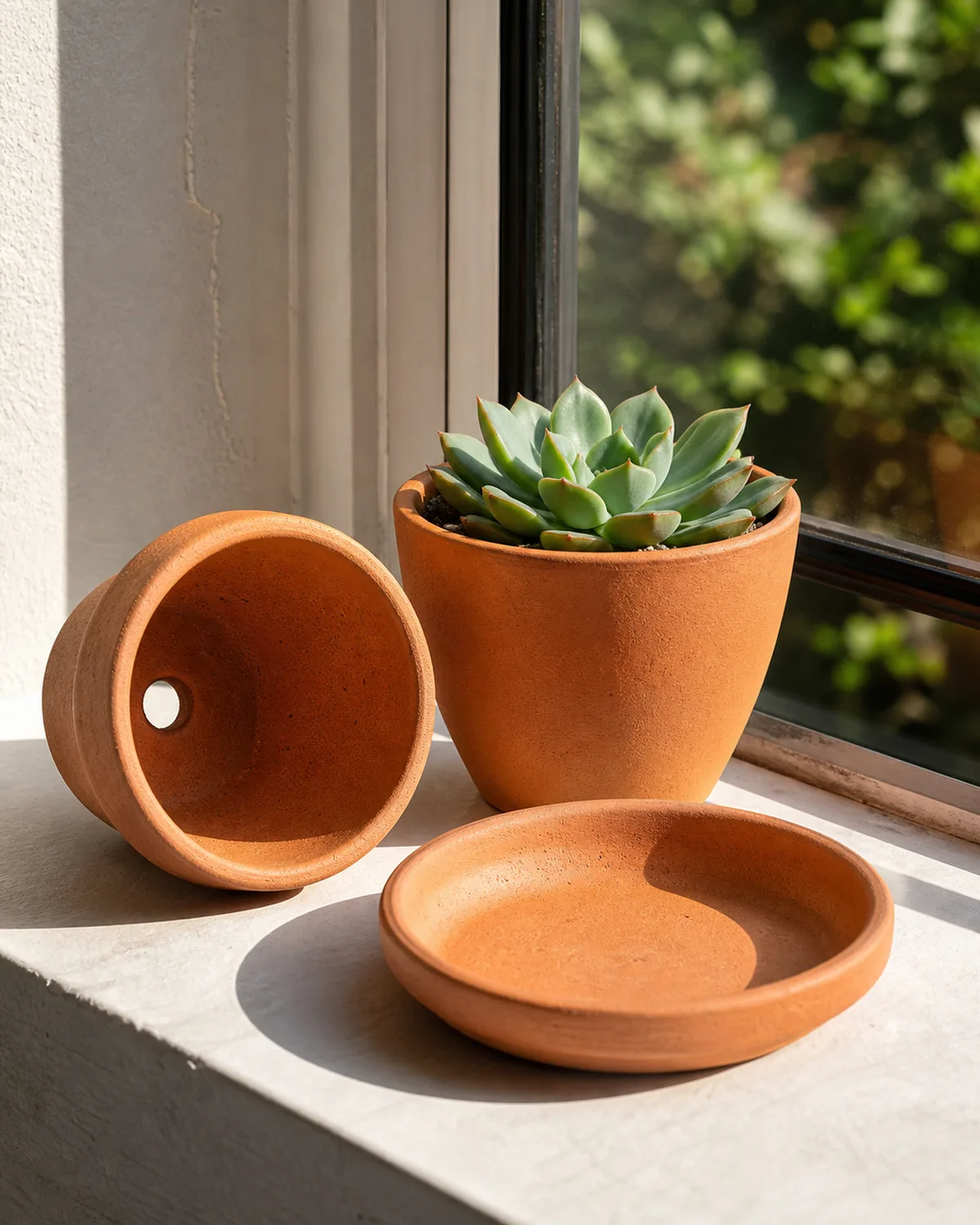
Succulents prefer being slightly root-bound. A snug pot means less excess soil, which means less moisture hanging around the roots. Overpotting — putting a small succulent in a large pot — is one of the most common beginner mistakes because the excess soil stays wet far too long.
When repotting, go up only one inch in diameter. Not two inches like tropical plants. Shallow, wide pots suit succulents better than deep narrow ones because most species have shallow root systems that spread horizontally rather than diving down.
Repot every two to three years, or when the plant is visibly root-bound with roots circling the drainage holes. The best time is early spring, just before the growing season begins.
After repotting, wait three to five days before watering. This lets any damaged roots callous over — a critical rot-prevention step that is unique to succulents. Tropical plant owners move a freshly repotted plant straight to water. With succulents, that moisture hits the open wounds on broken roots and invites rot.
Arrangements in shared containers look stunning — a mix of rosettes, spiky types, and trailing varieties creates beautiful texture contrast. But mix only species with the same watering needs and dormancy cycle. An echeveria (summer grower) and an aeonium (winter grower) in the same pot guarantees one of them will be overwatered during the other's active season.
Temperature and dormancy: the summer vs. winter split
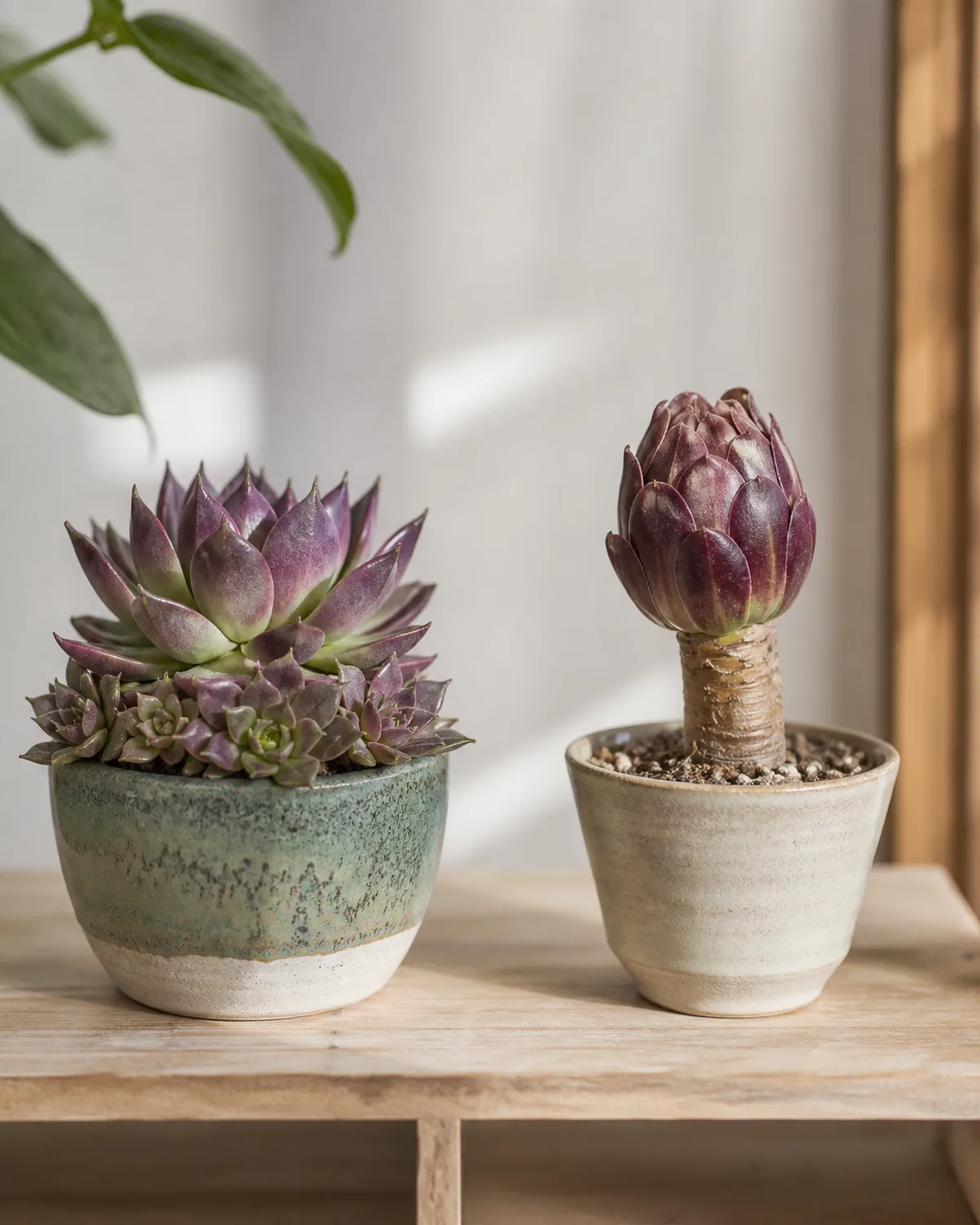
Most common indoor succulents are "summer growers" — they are active from spring through fall and semi-dormant in winter. This group includes Echeveria, Sedum, most Crassula, and Aloe.
Some are "winter growers" — active in fall and winter, dormant in summer. Aeonium and Senecio (string of pearls, string of dolphins) fall into this category. So do some Haworthia species.
The dormancy distinction matters for watering and fertilizing. During dormancy, a succulent needs almost no water — once a month or even less. Forcing a dormant succulent to grow by continuing regular watering and fertilizer produces weak, etiolated growth that is vulnerable to rot and disease.
Temperature range for most indoor succulents is 60 to 80 degrees Fahrenheit. They tolerate briefly down to 40 to 50 degrees but frost kills most species instantly. Many succulents actually benefit from a slight temperature drop at night — ten to fifteen degrees cooler mimics the desert temperature swing and can trigger flowering in some species.
Sempervivum (hens and chicks) are the exception to nearly everything above. They are frost-hardy down to minus twenty degrees Fahrenheit and are better suited to outdoor growing than indoor windowsills. If you are keeping hens and chicks indoors, they will survive but never perform like they do outside.
Fertilizing: the less-is-more approach
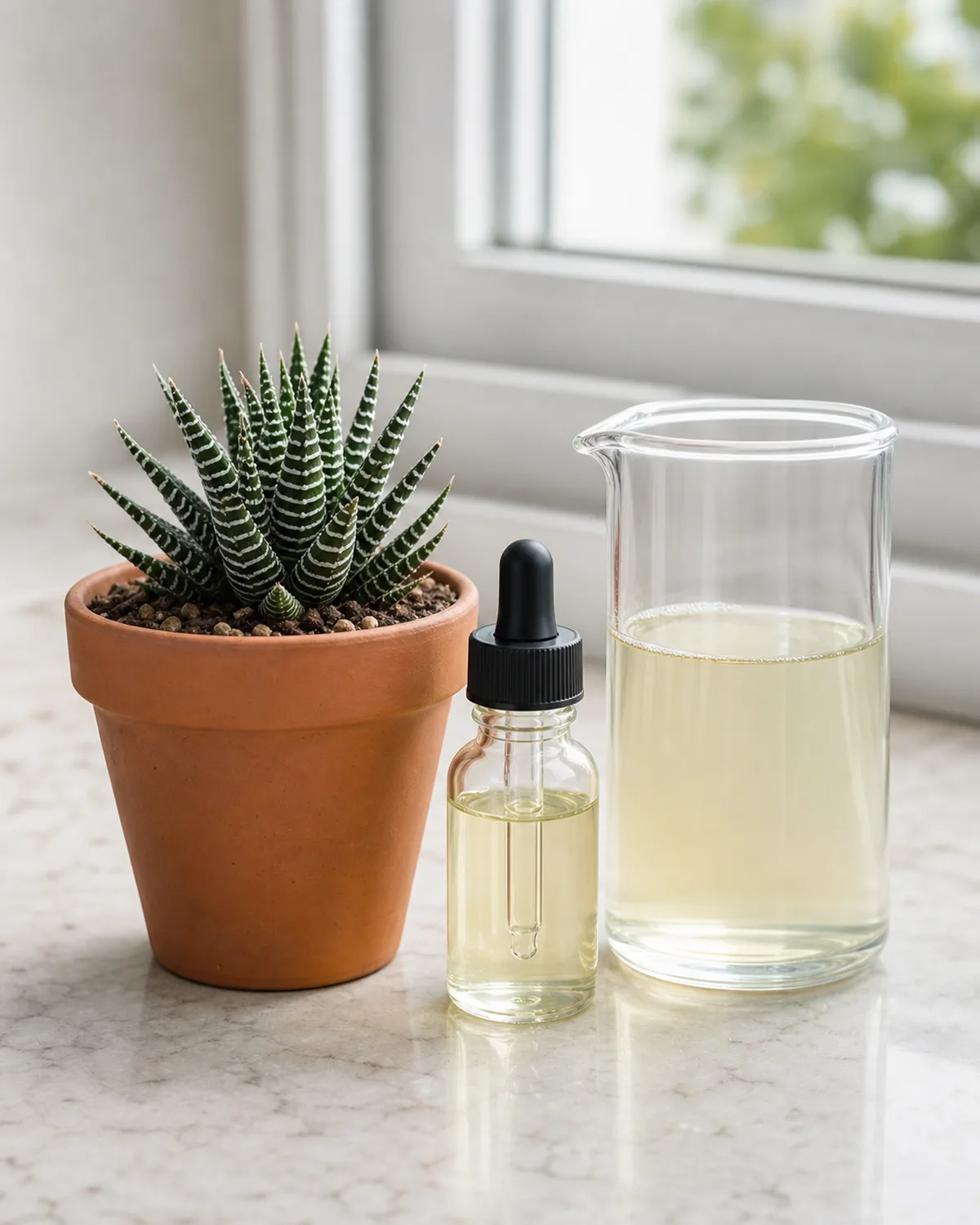
Succulents evolved in nutrient-poor soils and need far less feeding than tropical houseplants. A dieffenbachia or monstera benefits from half-strength fertilizer every two to three weeks during growing season. A succulent needs quarter strength once a month at most.
Use a balanced liquid fertilizer diluted to one quarter strength. Not half strength — that is still too concentrated for most succulents. Feed only during the active growing season: monthly for summer growers in spring through early fall, monthly for winter growers in fall through early spring.
Never fertilize during dormancy. The plant is not actively growing and cannot use the nutrients. Excess fertilizer sits in the soil, accumulates as mineral salts, and burns the fine root hairs.
Signs of over-fertilizing include leggy stretched growth that can mimic etiolation from low light, burnt leaf tips, and a white salt crust on the soil surface. If you notice salt buildup, flush the soil by running water through the pot for several minutes to dissolve and rinse out the accumulated minerals.
Underfed succulents simply grow slower. They rarely show the dramatic deficiency symptoms — yellowing leaves, stunted growth, pale color — that tropical plants display. When in doubt, skip the feeding. Succulents tolerate hunger far better than excess.
Leaf propagation: the magic trick
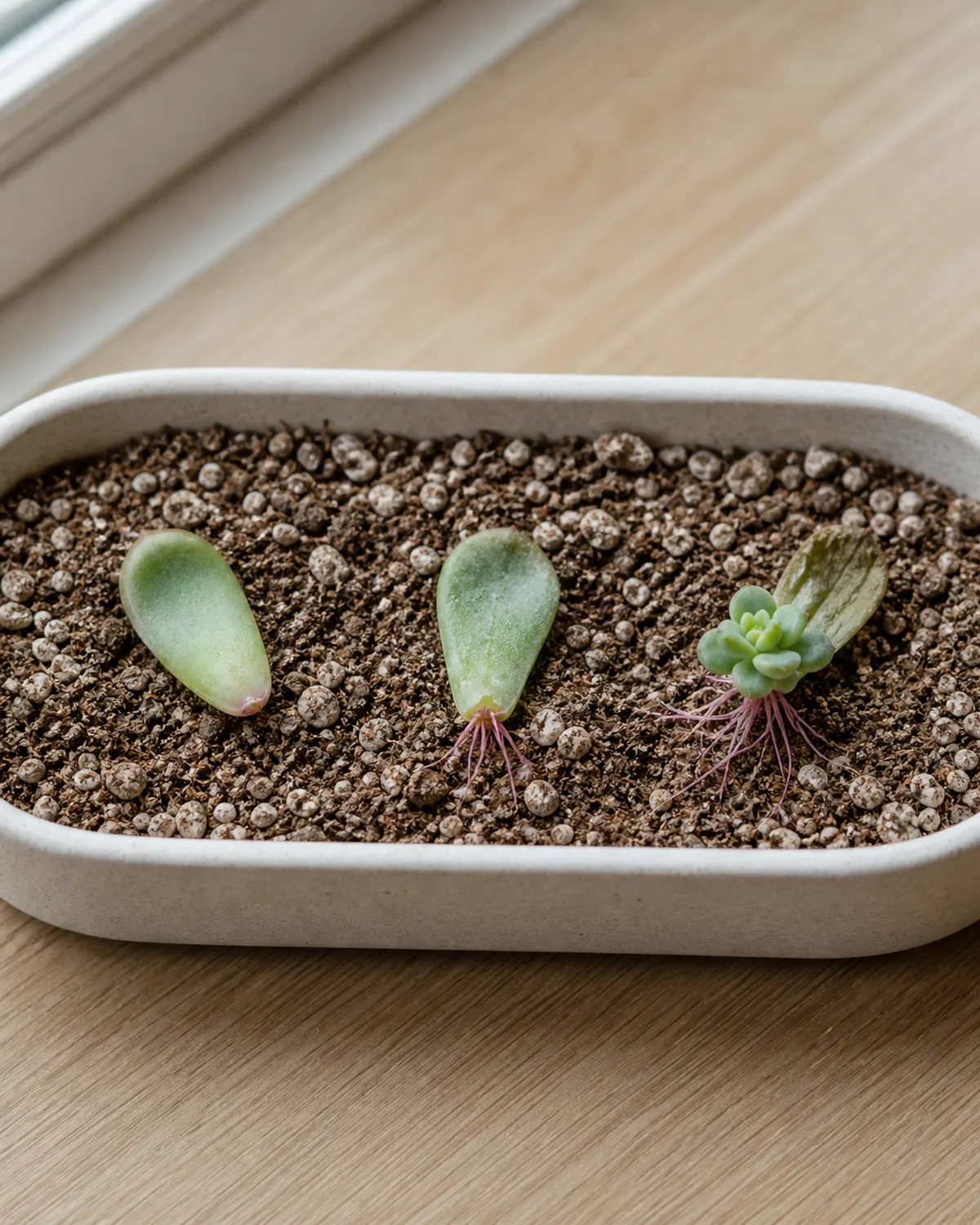
This is the most distinctive succulent ability and the most satisfying beginner plant project. Many species can grow an entire new plant from a single detached leaf.
The method is simple. Gently twist a healthy leaf from the stem — do not cut it. You need a clean break that includes the leaf base where it meets the stem. If the leaf tears and leaves part of its base behind, it will not propagate.
Lay the detached leaf on top of dry, gritty soil. Do not bury it. Place in bright indirect light — not direct sun, which dries the leaf out before roots can form.
Within one to three weeks, tiny roots appear at the broken end. Shortly after, a miniature rosette begins forming at the same spot. Mist the roots lightly every few days — this is the only time misting is appropriate for succulents.
The mother leaf gradually shrivels as the baby plant absorbs its stored water. Do not remove the mother leaf — let it drop off on its own when fully spent. In two to three months you have a self-sufficient mini plant ready for its own pot.
Success rate varies by genus. Echeveria, Sedum, and Graptoveria propagate easily from leaves — expect fifty to seventy percent success. Haworthia propagates better from offsets. Aloe propagates from pups. Jade plant propagates from both leaves and stem cuttings.
Leaf propagation is free, requires no special tools, and can turn a single healthy succulent into a dozen plants over a growing season. It is the best introduction to plant propagation that exists.
Stem cutting and offsets: other propagation methods
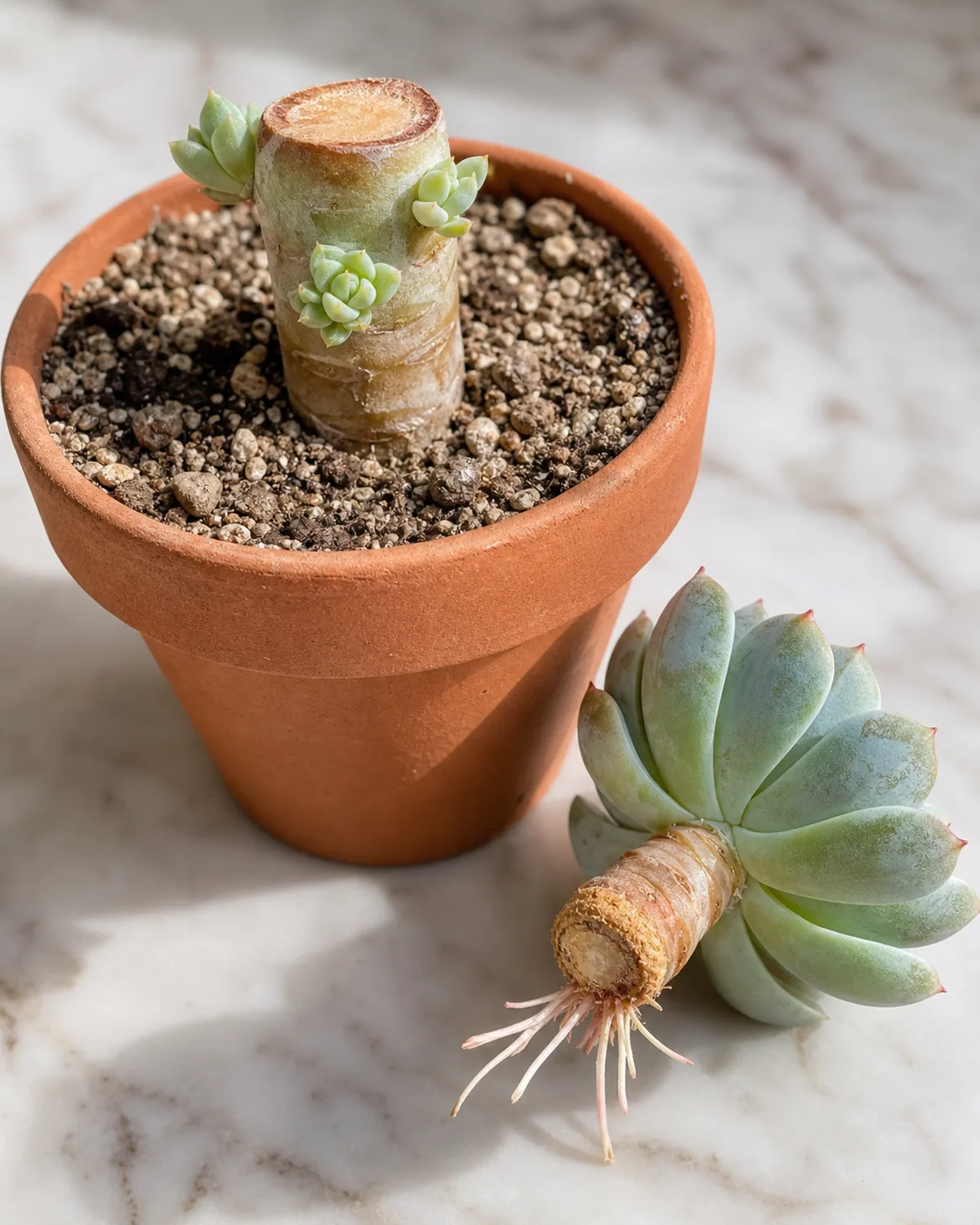
Stem cuttings fix the most common succulent aesthetic problem: etiolation. When a rosette has stretched into a tall leggy stalk, cut the top rosette with two to three inches of stem. Let the cut end callous for two to three days in open air — this step is critical. Planting a fresh cut directly into moist soil almost guarantees rot.
After the callous forms, plant the cutting in dry gritty soil and wait a week before watering. Roots form in two to three weeks.
The decapitated stump almost always sprouts new growth. Often two or three new rosettes emerge from dormant nodes below the cut, resulting in a bushier, more attractive plant than the original. Between the new top growth and the re-rooted cutting, you end up with two plants instead of one leggy one.
Offsets — also called pups — are baby plants produced at the base of the parent. Aloe, Haworthia, and Sempervivum produce them reliably. Wait until the offset has its own roots or is at least one-third the size of the parent, then gently separate and pot independently.
The callous-before-planting rule applies to all succulent propagation. This is the major difference from tropical plant propagation, where you root cuttings in water immediately. Succulent tissue is full of water already — exposing a fresh wound to moisture invites rot before roots can form.
Common pests and problems
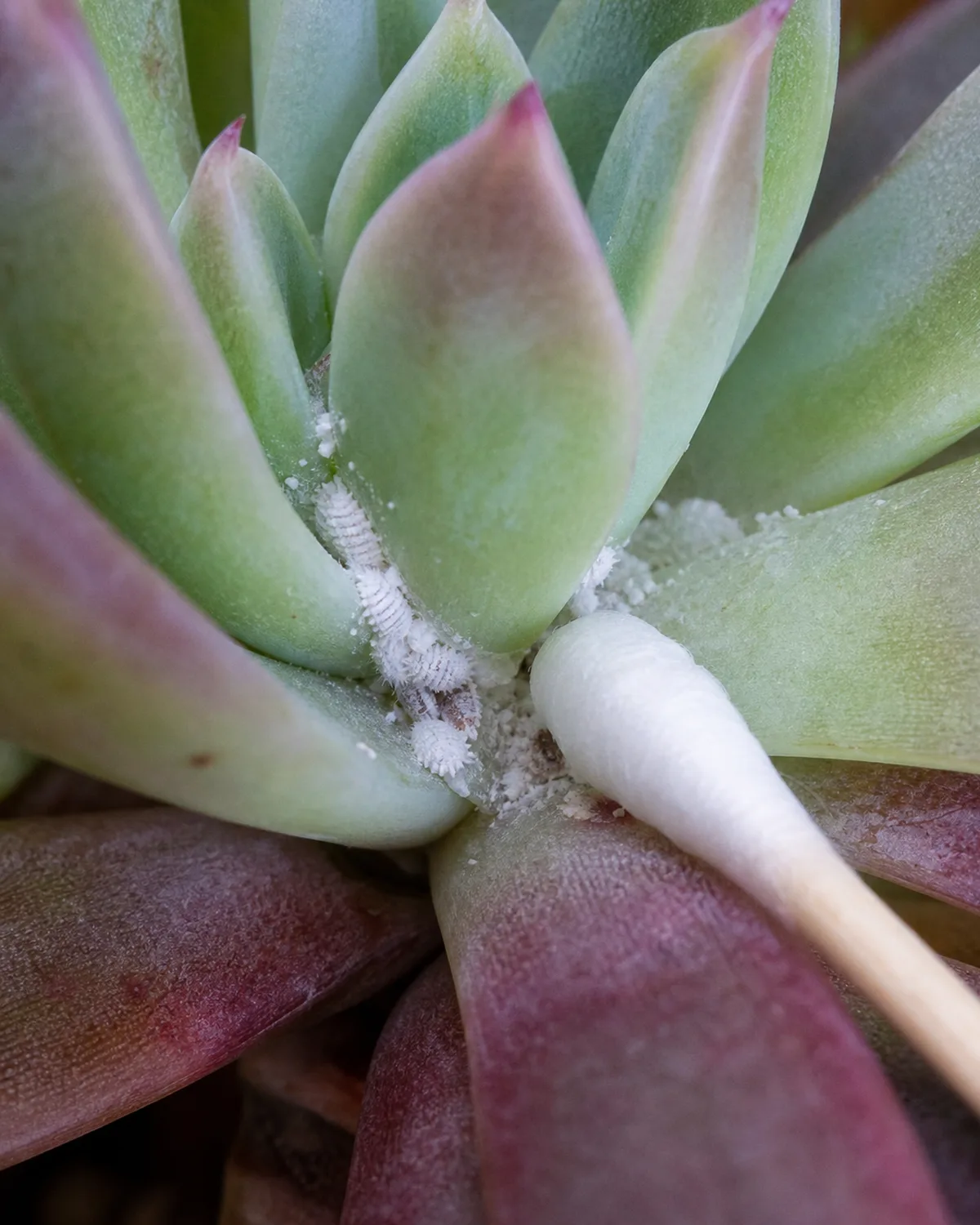
Mealybugs are the number one succulent pest. They show up as white cottony masses in leaf crevices, especially where leaves meet the stem at the center of a rosette.
Small infestations respond to isopropyl alcohol applied directly with a cotton swab — the alcohol dissolves the waxy coating and kills on contact. Severe infestations require unpotting, washing the roots clean, and repotting in fresh dry soil.
Scale insects show as small brown bumps on leaves and stems that look like part of the plant. Scrape them off with a fingernail, then treat the area with neem oil.
Fungus gnats — tiny flies hovering around the soil surface — are a sign the soil stays too wet for too long. They breed in moist soil. The fix is the watering fix: let soil dry completely between waterings and add more grit to the mix.
Root rot is the biggest killer. Soft mushy stem base, translucent leaves, plant collapsing seemingly overnight. If caught early: unpot, cut away all rotted tissue until you see firm, healthy material, let the cut callous for three to five days, and replant in fresh dry mix. Do not water for a week.
Sunburn appears as brown or white patches on leaves from sudden direct sun exposure. Succulents that have been in low light need gradual acclimation to direct sun — move them closer to the window over one to two weeks rather than placing them in full sun immediately.
For a more detailed approach to identifying and treating common houseplant pests, see the pest and disease guide.
Succulent Care Indoors: The Quick Reference
- 1Soak then dry completelyBone dry all the way through before watering. Every 10-14 days summer, 3-4 weeks winter. Not top-inch-dry like tropicals.
- 2Maximum bright light6+ hours daily. South window ideal. Grow light if no sunny window. Not enough light = irreversible stretching.
- 350/50 gritty soilEqual parts potting soil and perlite or pumice. Standard potting mix is too wet. Should dry in 2-3 days.
- 4Terracotta with drainage holesPorous clay wicks moisture. No rocks at the bottom. Slightly snug pot — overpotting keeps soil wet too long.
- 5Plump leaves = hydratedFirm thick leaves mean do not water. Soft or wrinkled means thirsty. The plant tells you what it needs.
- 6Wait to water after repotting3-5 days dry after repotting lets damaged roots callous. Watering immediately invites rot.
- 7Quarter-strength fertilizerMonthly during growing season only. Not half-strength. Never during dormancy. When in doubt, skip.
- 8Summer vs. winter growersMost common succulents grow in summer. Aeonium and Senecio grow in winter. Reduce water during dormancy drastically.
- 9Leaf propagation worksTwist off a leaf, lay on dry soil, wait 1-3 weeks for roots. Free plants from a single leaf. Callous before planting.
- 10Behead to fix stretchingCut the top, callous 2-3 days, replant. The stump sprouts new rosettes. Two plants from one leggy one.
- 11Mealybugs at the centerWhite cottony masses where leaves meet the stem. Isopropyl alcohol on a cotton swab kills on contact.
- 12Jade and Haworthia for beginnersJade tolerates lower light. Haworthia prefers indirect light. Both forgive mistakes better than most succulents.
- 13When in doubt, do lessLess water, less fertilizer, less soil richness. The only thing succulents want more of is light.
kultivy.com
Why your succulent keeps dying (and how to fix it)
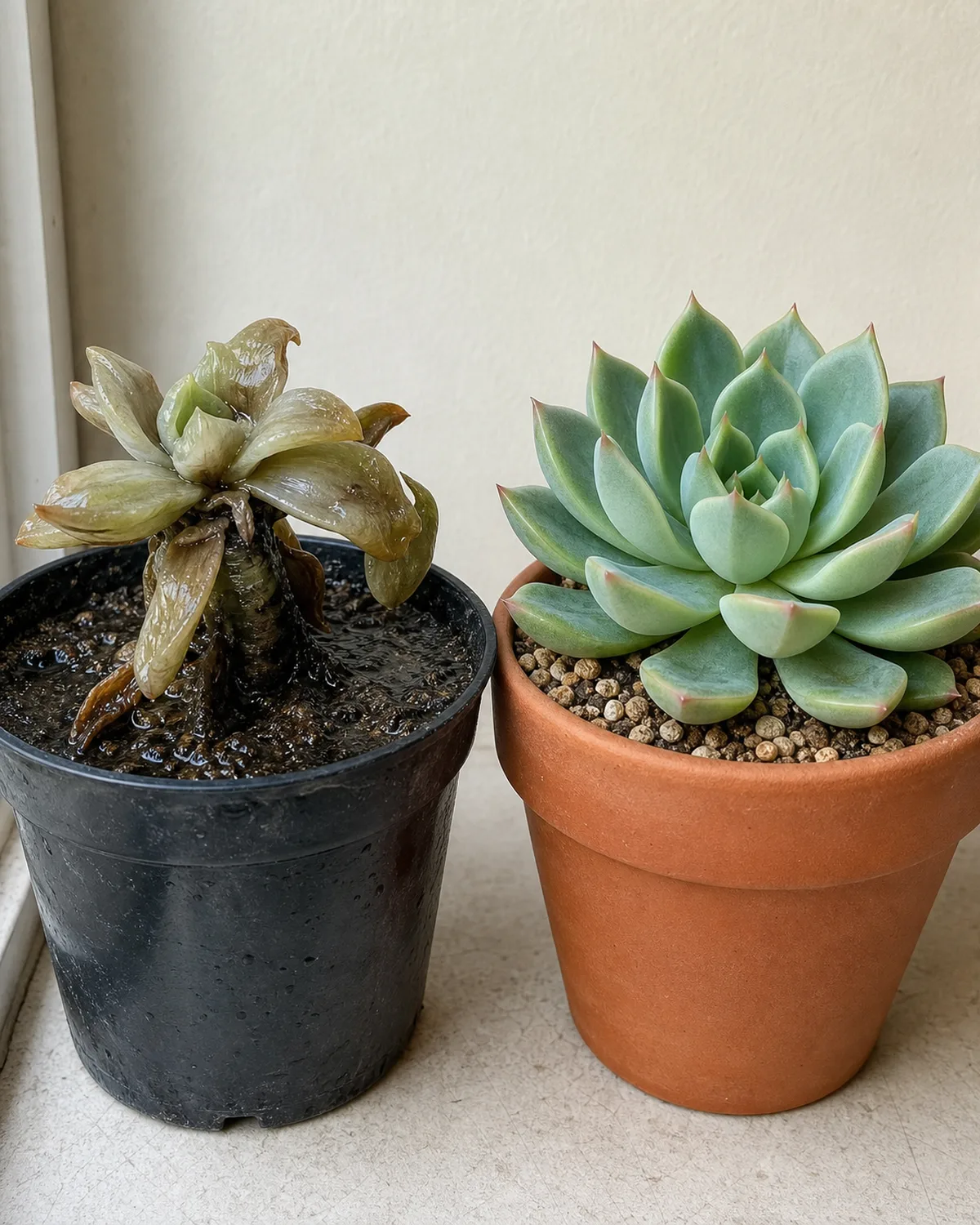
Five failures account for nearly every indoor succulent death. Here is each one and the fix.
Overwatering. Translucent mushy leaves, soft black stem base, leaves falling off. The fix: water only when the soil is bone dry all the way through. Use the soak-and-dry method. If the plant is already rotting, unpot, cut away all soft tissue, callous, and replant in dry gritty soil.
Etiolation. Stretched leggy growth, gaps between leaves, rosettes losing their compact form. The fix: more light. Move to a south window or add a grow light. Behead the stretched portion and re-root the top.
Wrong soil. The soil stays wet for days after watering. The fix: repot in a 50/50 mix of potting soil and perlite or pumice. The soil should dry completely in two to three days.
No drainage. The pot has no holes. Water pools at the bottom and rots the roots. The fix: always use pots with drainage holes. Decorative pots without holes work only as covers for a nursery pot that has them.
Treating it like a tropical plant. Weekly watering, rich soil, medium light — the recipe that keeps a monstera or pothos happy. The fix: flip every assumption. Water less, use grittier soil, provide more light.
The simplest rule for succulents: when in doubt, do less. Less water, less fertilizer, less soil richness, less fuss. The only thing succulents want more of is light.
Best succulents for beginners
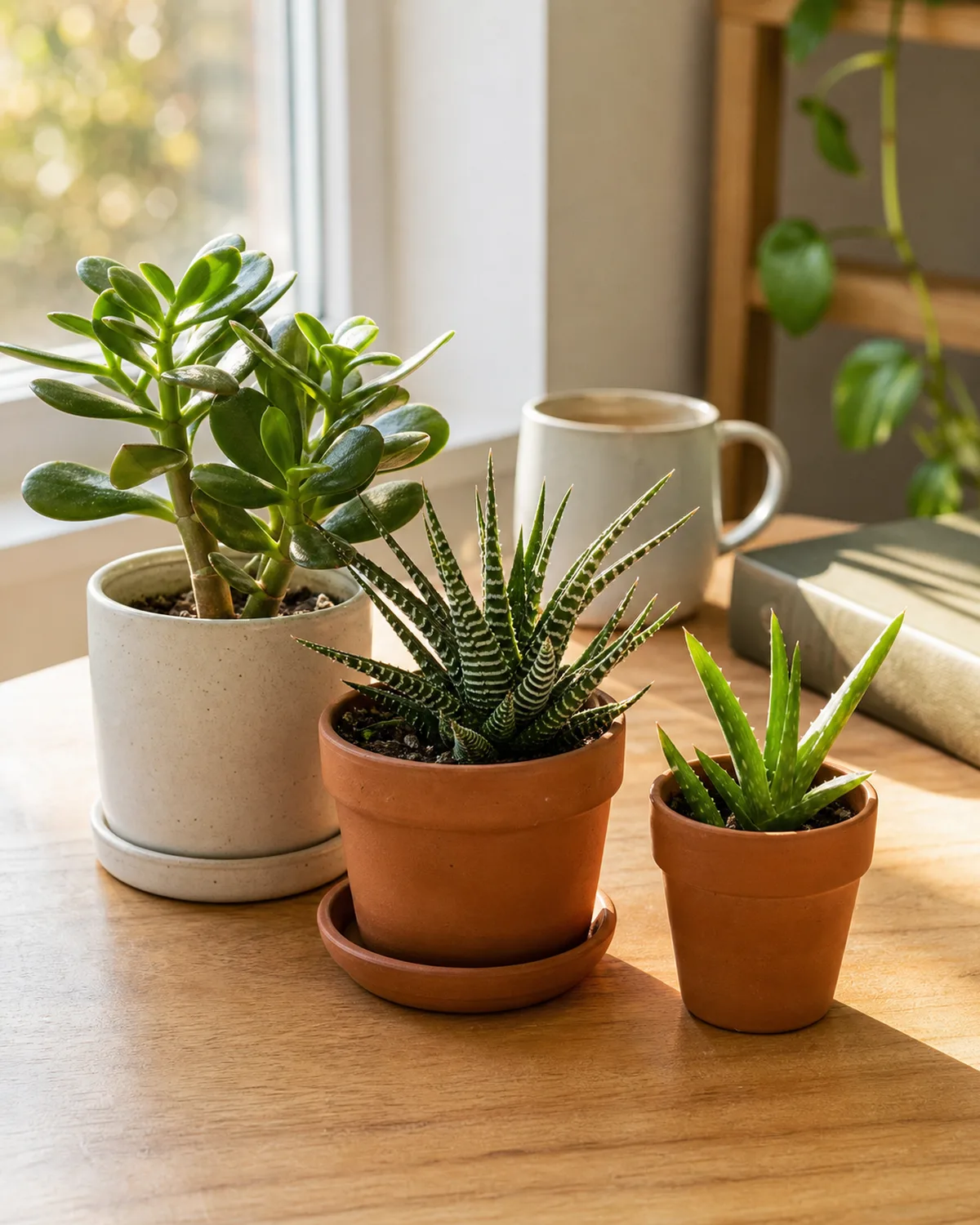
Jade plant (Crassula ovata) tolerates lower light than most succulents and forgives irregular watering better than any echeveria. Over years it grows into a sculptural miniature tree with a thick woody trunk. It is the succulent for people who want a long-term relationship with a plant.
Haworthia is the succulent for people without a south window. It naturally grows in the shade of rocks in South Africa, so it thrives in bright indirect light that would starve most other succulents. Small enough for any desk. The translucent leaf windows are a built-in conversation piece.
Echeveria is the classic rosette succulent — the one you picture when someone says "succulent." It needs good light to maintain its tight symmetrical form, but rewards that light with stunning geometry and often pastel colors at the leaf edges. Dozens of cultivars range from two inches across to dinner-plate size.
Aloe vera is the practical choice. The gel inside the leaves treats minor burns and cuts. It tolerates a wider range of conditions than its reputation suggests, and it produces pups freely for easy propagation.
Sedum 'Burro's Tail' is the best trailing succulent for a sunny hanging spot. The cascading stems covered in plump teardrop-shaped leaves create a waterfall effect. Handle gently — the leaves detach easily, but each dropped leaf can root into a new plant.
String of pearls is the most visually striking trailing succulent, but also the most finicky about overwatering. Start with jade or haworthia, then graduate to string of pearls once you have the watering rhythm down.
For the absolute lowest maintenance: jade plus haworthia. Together they tolerate the widest range of indoor conditions with the fewest demands.
Succulent arrangements and display
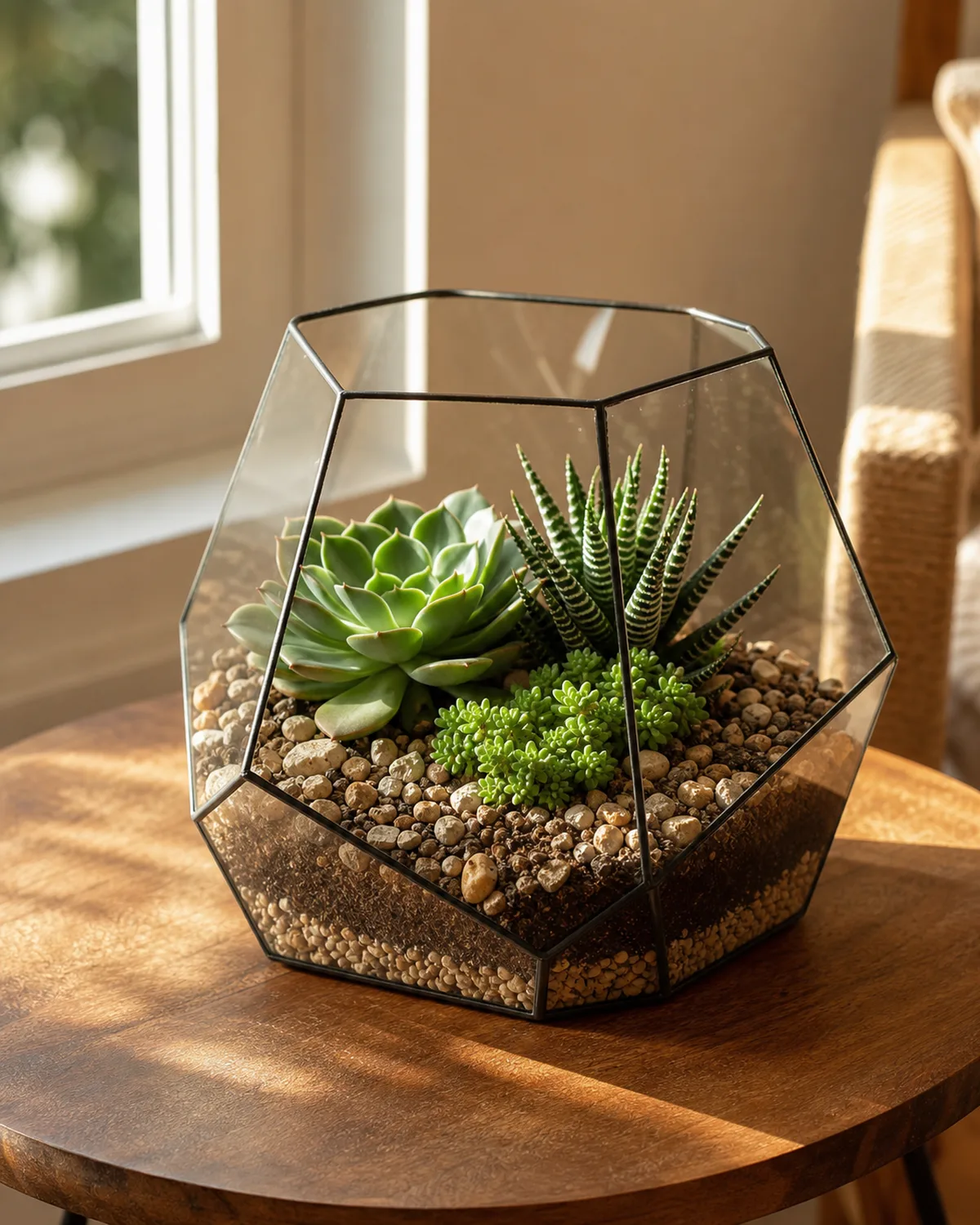
Succulents are uniquely suited to creative displays. Their compact size, slow growth, and enormous variety of forms and colors make them the best houseplants for small-space design.
Windowsill gardens — group rosettes, spiky types, and trailing varieties for texture contrast. Matching small terracotta pots create cohesion while the plants provide diversity. Rotate the pots a quarter turn every week so all sides get even light.
Open-top terrariums work beautifully. Glass bowls, geometric containers, or vintage fishbowls with a thick drainage layer of pebbles beneath gritty soil. The critical word is open-top. Closed terrariums trap humidity, which rots succulents. If you can put a lid on it, do not plant a succulent in it.
Dish gardens — shallow, wide containers with multiple succulent types planted together. Visually stunning but plan carefully. Mix only species with the same dormancy cycle and watering needs. An echeveria and an aeonium in the same dish will force you to choose which one you overwater.
Color combinations that work: green plus purple (Echeveria 'Perle von Nurnberg' beside a green jade), green plus blue-grey (Sedum 'Blue Spruce' beside a standard echeveria), all-green (a collection of Haworthia varieties for textural cohesion without color chaos).
The key rule for any arrangement: each plant must be individually accessible for watering. Avoid tightly packed compositions where water pools at the center and rots the innermost plants. Beauty is not worth replacing three dead rosettes every month.

Mara Quinn edits Kultivy, where she shares houseplant care, propagation, beginner-friendly plant picks, and plant-styling ideas for anyone who wants their indoor plants to actually thrive. Every guide is image-led and reviewed for clarity, usefulness, image accuracy, and Pinterest-to-page alignment before it goes live. Visit the About page.