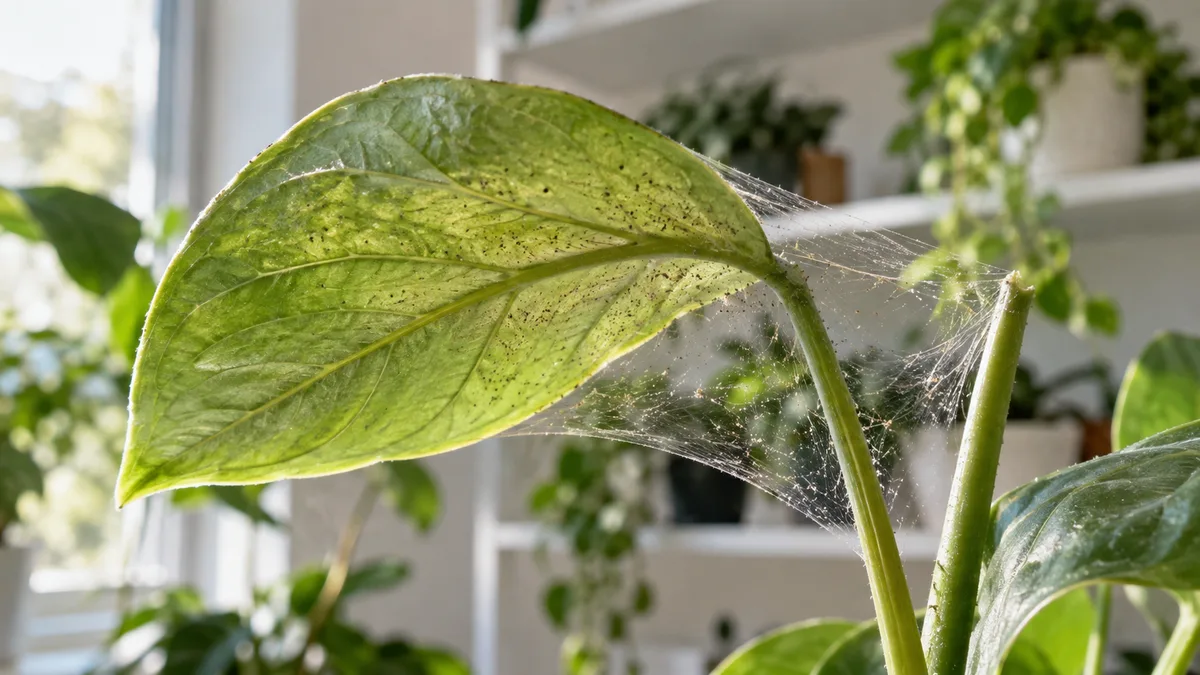
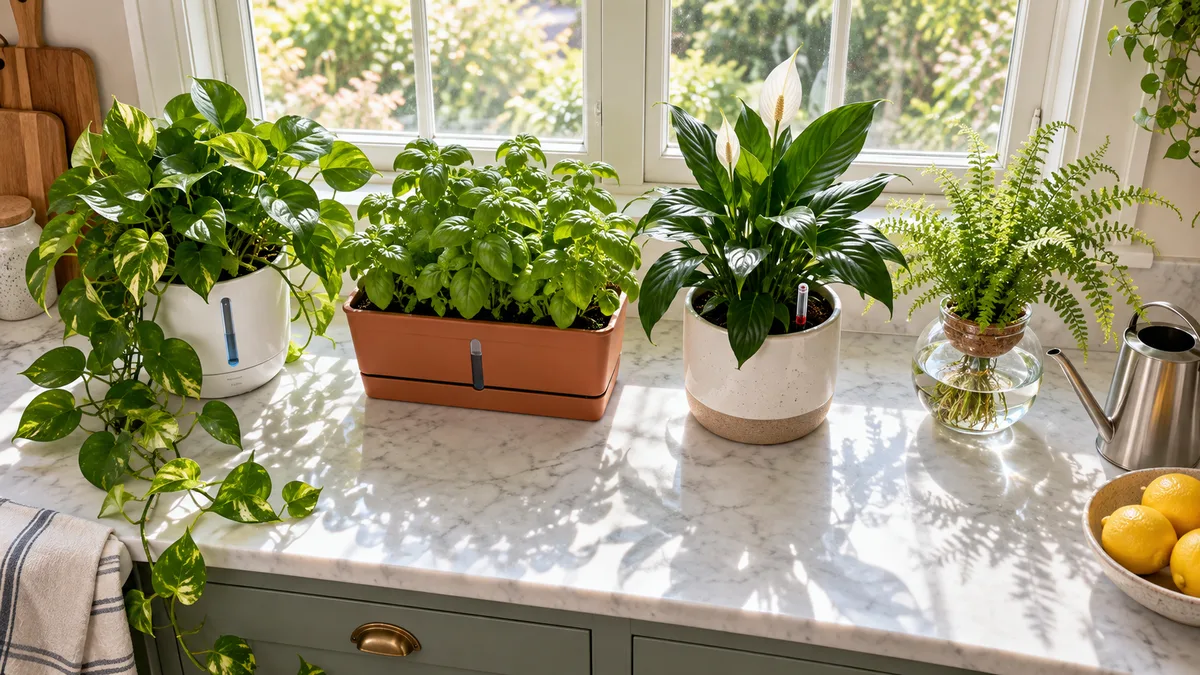
Most houseplant advice just says "bright indirect light" and stops there, which is fine until you're standing in your own living room trying to figure out if your actual window counts.
Light problems are also the most commonly misdiagnosed houseplant issue — a stretching, fading plant gets watered more, not moved, and a scorched plant gets fertilized instead of shaded.
This guide covers the real signs a plant is getting too much or too little light, how to read light without a meter, a window-direction cheat sheet, seasonal light drop, and when a grow light actually helps.
Light problems almost always come down to matching intensity to a plant's tolerance, not maximizing brightness. The thirteen sections below cover the real signs of too much or too little light, how to read it without a meter, and when a grow light actually helps.
- 1Matching, not maximizing
- 2Signs of too little light
- 3Signs of too much light
- 4The shadow test
- 5Window direction cheat sheet
- 6Distance from the window
- 7Sheer curtains soften sun
- 8Winter light drop
- 9Rotate for even growth
- 10When to add a grow light
- 11Grow light basics
- 12Adjustment period after a move
- 13Match plant to light first
Light is about matching intensity to a plant's tolerance, not "more is always better"
Too much light burns leaves just as reliably as too little starves growth, so the real goal is matching a plant to the spot it's in, not maximizing brightness everywhere in the room.
This guide covers the real diagnostic signals for both directions, a no-meter way to read any spot in your home, and how that changes with the seasons and with a grow light in the mix.
- More light isn't automatically better — it's a match to make, not a maximum to chase.
- Both directions leave visible signs on the plant itself.
- The right spot depends on the species as much as the room.
Signs a plant isn't getting enough light: stretching, leaning, small pale new leaves, no new growth
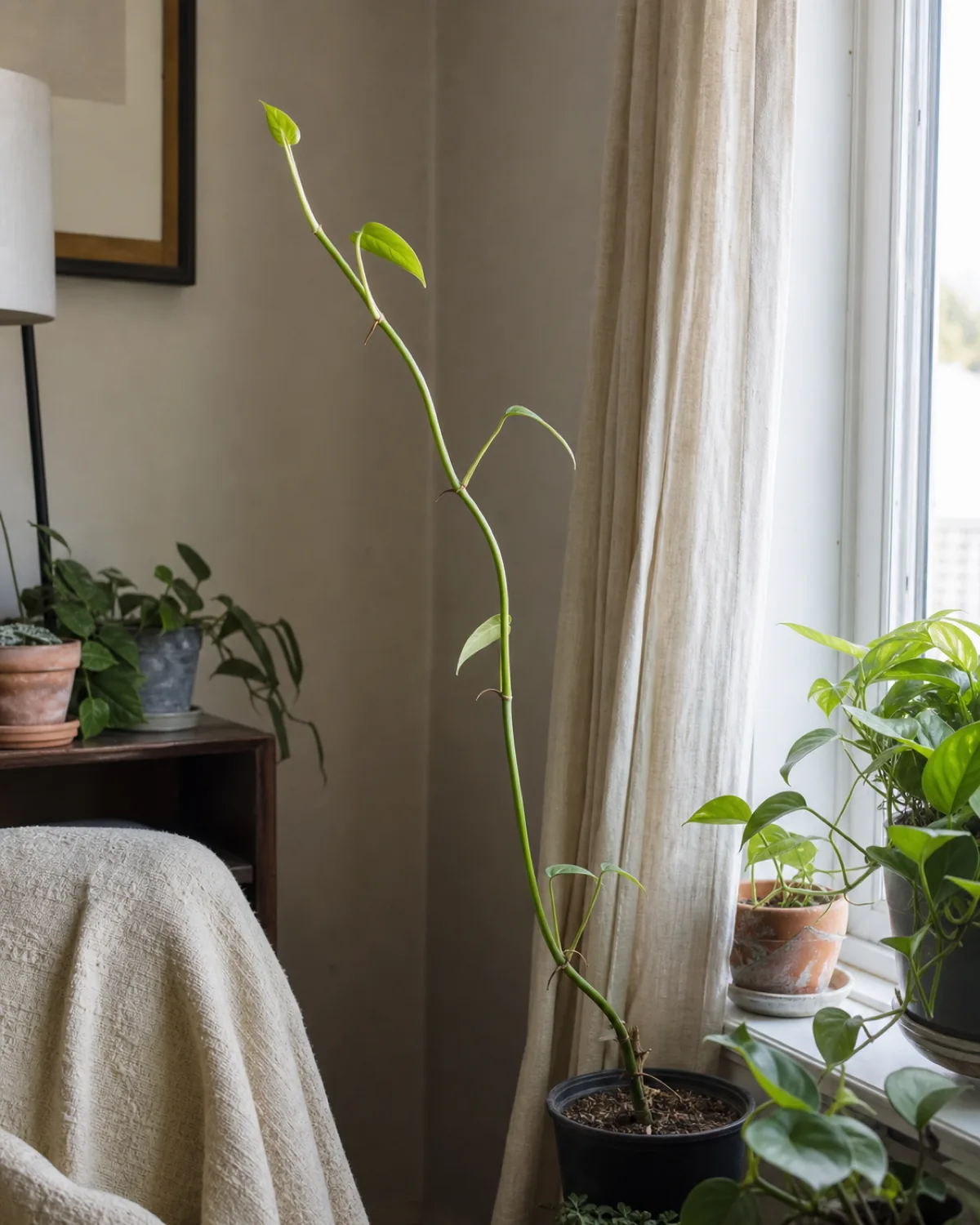
Long thin stem stretches between leaves, leaning hard toward the nearest window, new leaves noticeably smaller and paler than old ones, and growth that's stalled entirely are the clearest under-light signals.
Any one of these is worth a closer look. Several together usually mean the plant needs to move closer to a real light source, not just get watered less.
- Long bare gaps between leaves (etiolation) are the clearest under-light sign.
- Leaning hard toward a window means the plant is chasing what little light it has.
- Small, pale new leaves show up before growth stalls out completely.
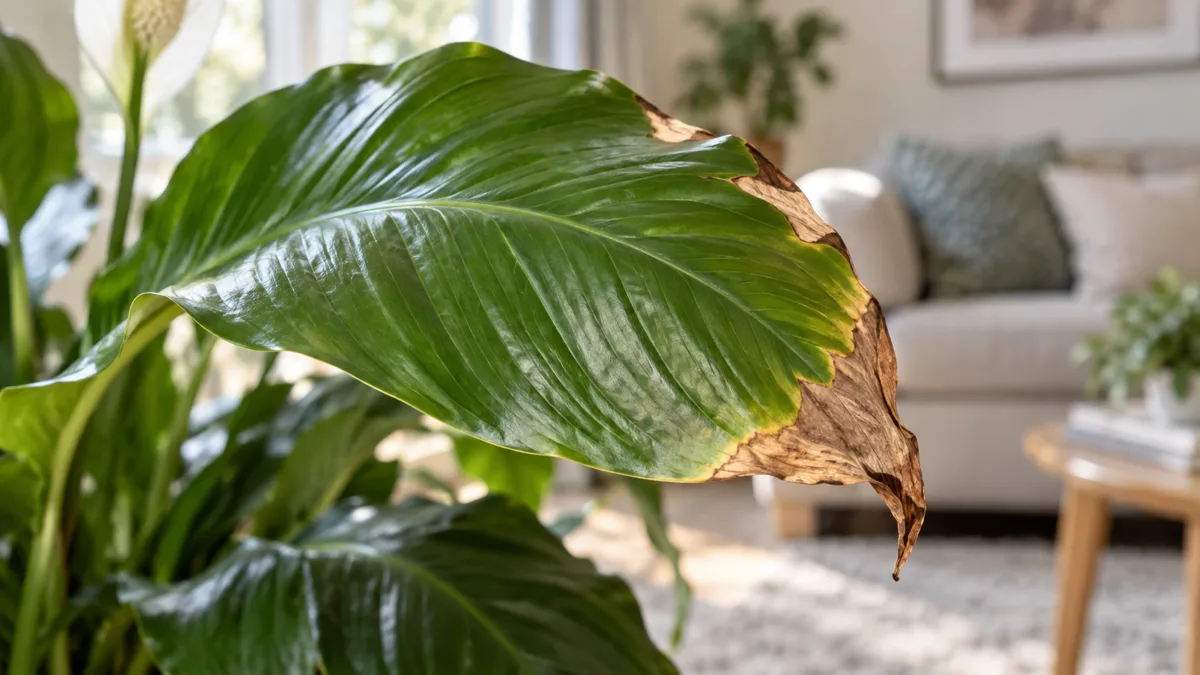
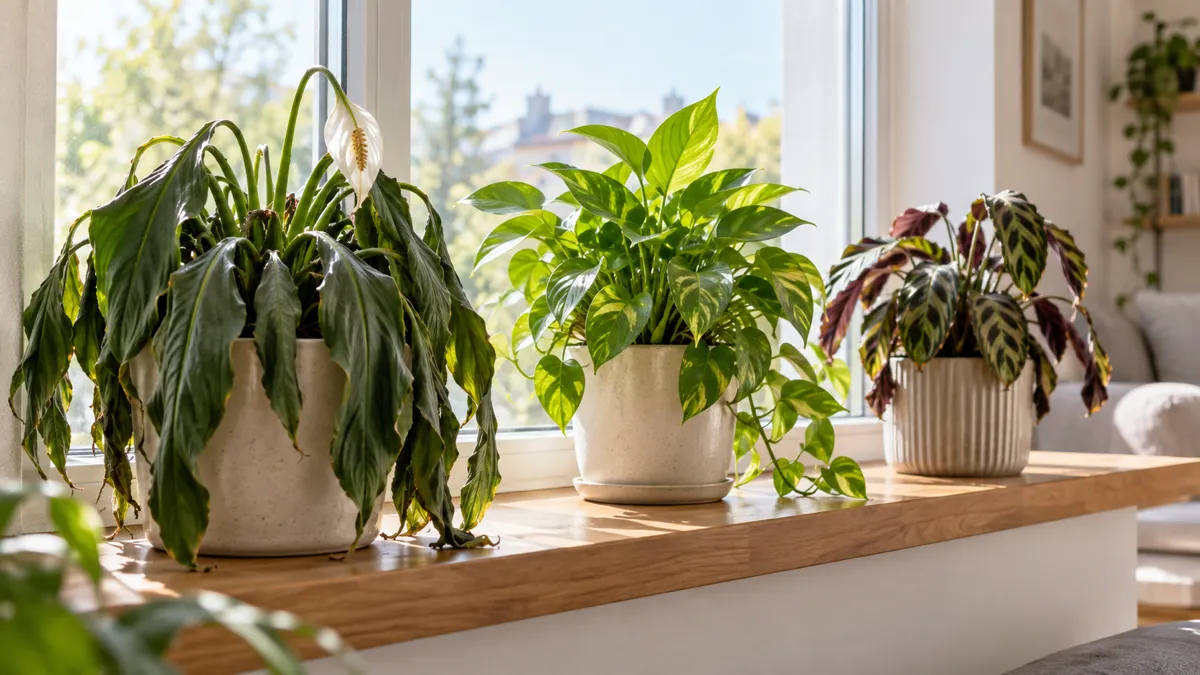
Signs a plant is getting too much light: bleached patches, crispy scorch marks, wilting despite moist soil
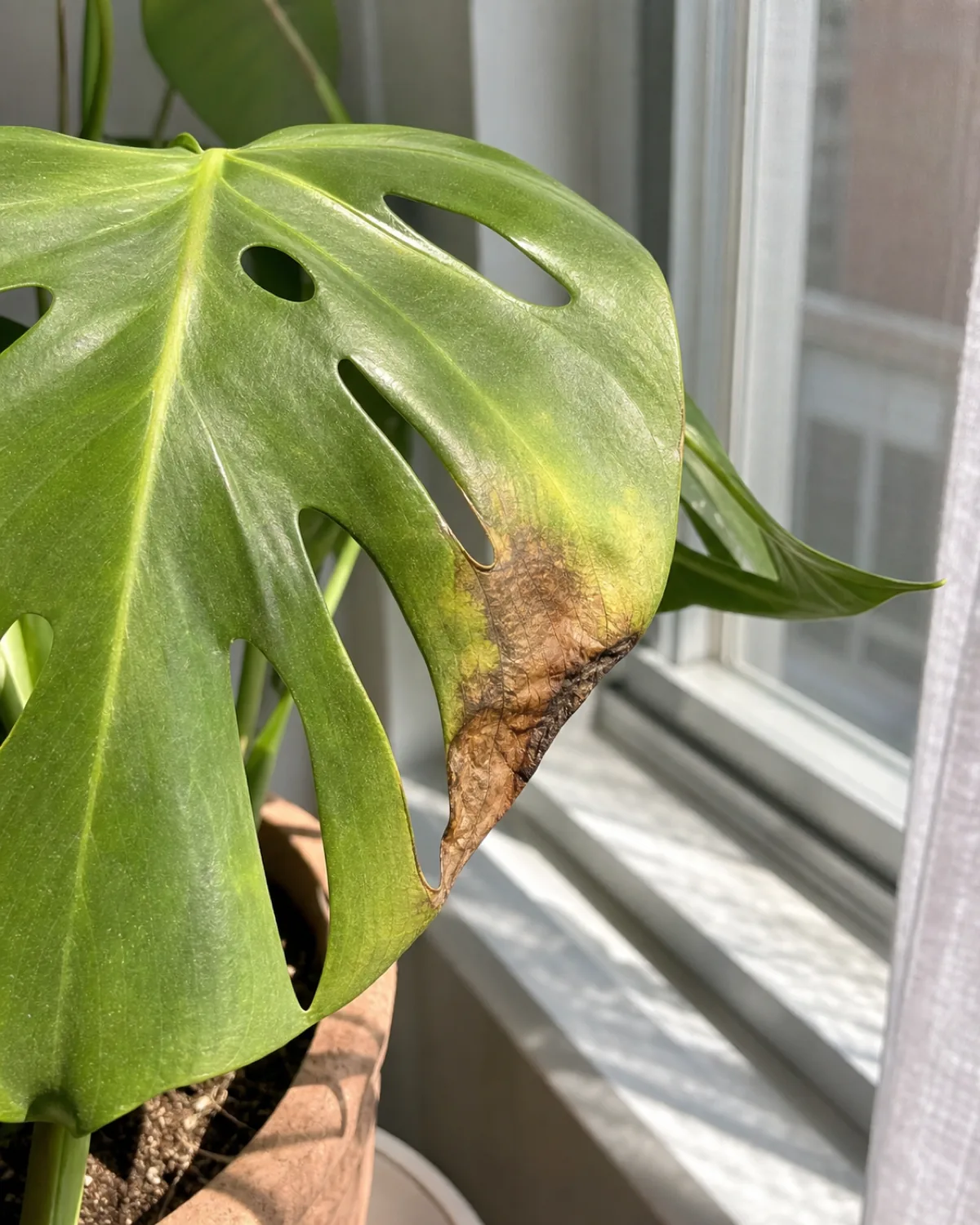
Washed-out pale patches facing the window, dry crispy brown spots that look nothing like soft rot, and midday wilting even though the soil is moist are the clearest overexposure signals. The fiddle leaf fig care guide covers a species that's especially quick to scorch when direct sun hits its leaves head-on.
Overexposure signs show up on the sun-facing side of the plant first, which is a useful clue for telling light damage apart from a watering problem.
- Bleached or washed-out patches appear on the side facing the light.
- Crispy brown spots, not soft mushy ones, point to sun scorch.
- Wilting with moist soil means light, not water, is the likely cause.
How to read light without a meter: the shadow test
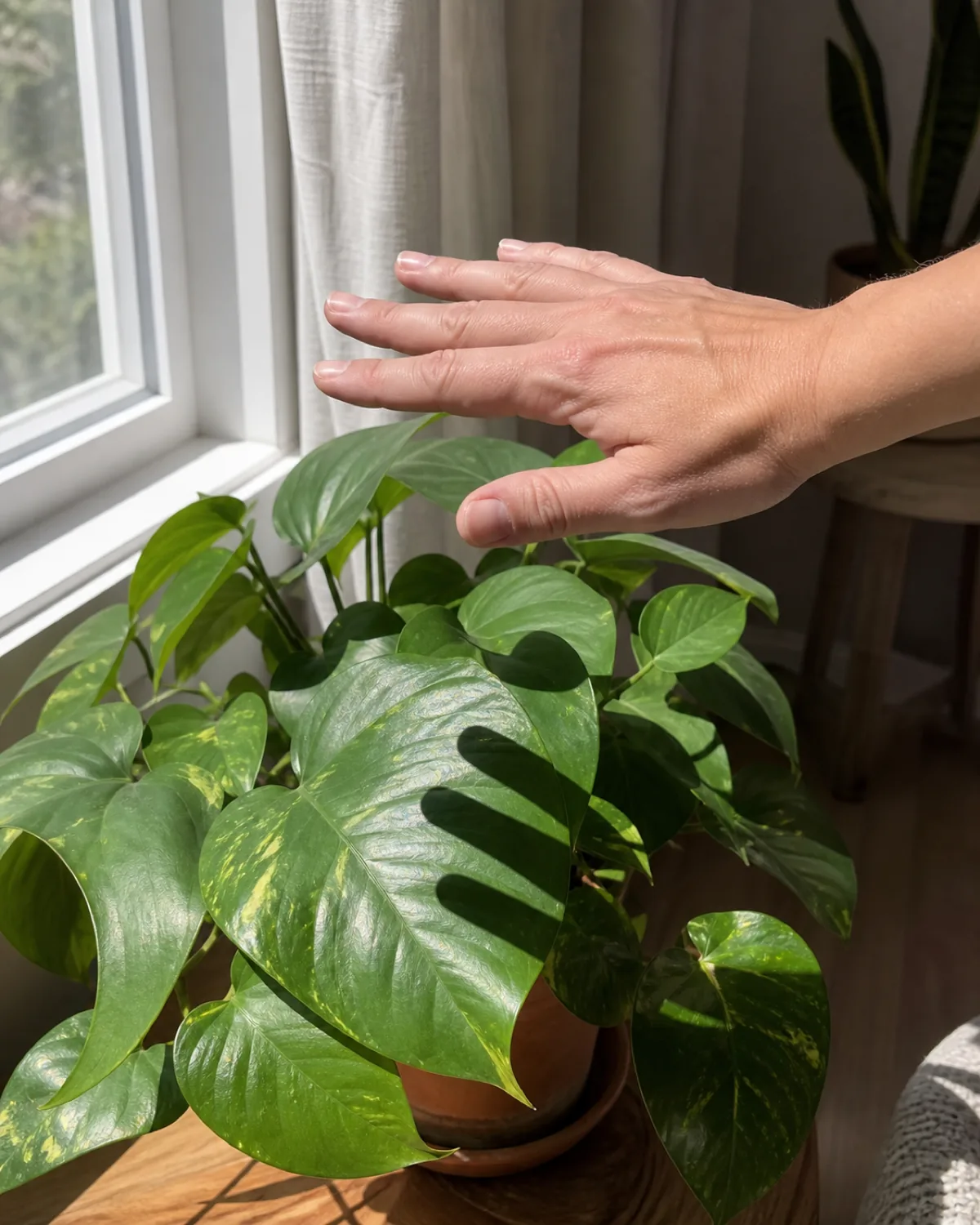
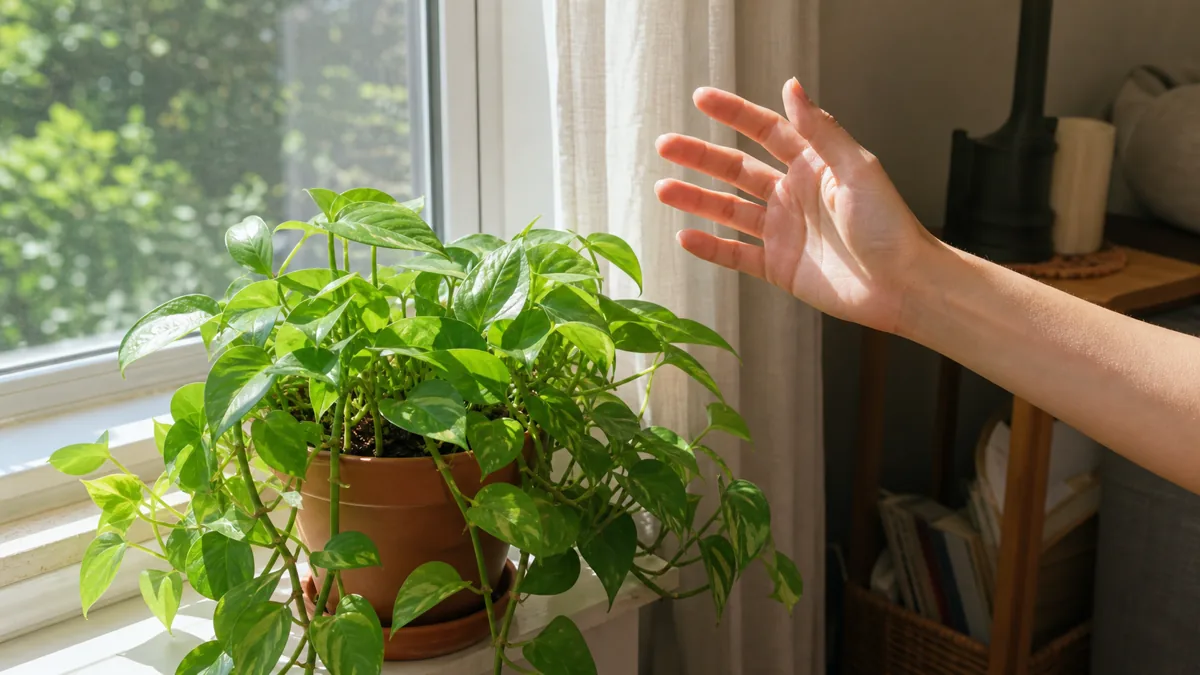
Hold a hand roughly a foot above the leaves at midday: a sharp, crisp-edged shadow means bright direct-adjacent light, a soft blurry shadow means bright indirect, and a faint or absent shadow means low light.
This takes ten seconds and works in any room, no app or meter required.
- A crisp, sharp-edged shadow means bright, direct-adjacent light.
- A soft, blurry shadow means bright indirect light — the target for most houseplants.
- A faint or missing shadow means the spot is low light.
Window direction cheat sheet: south brightest, west hottest afternoon, east gentle morning, north lowest
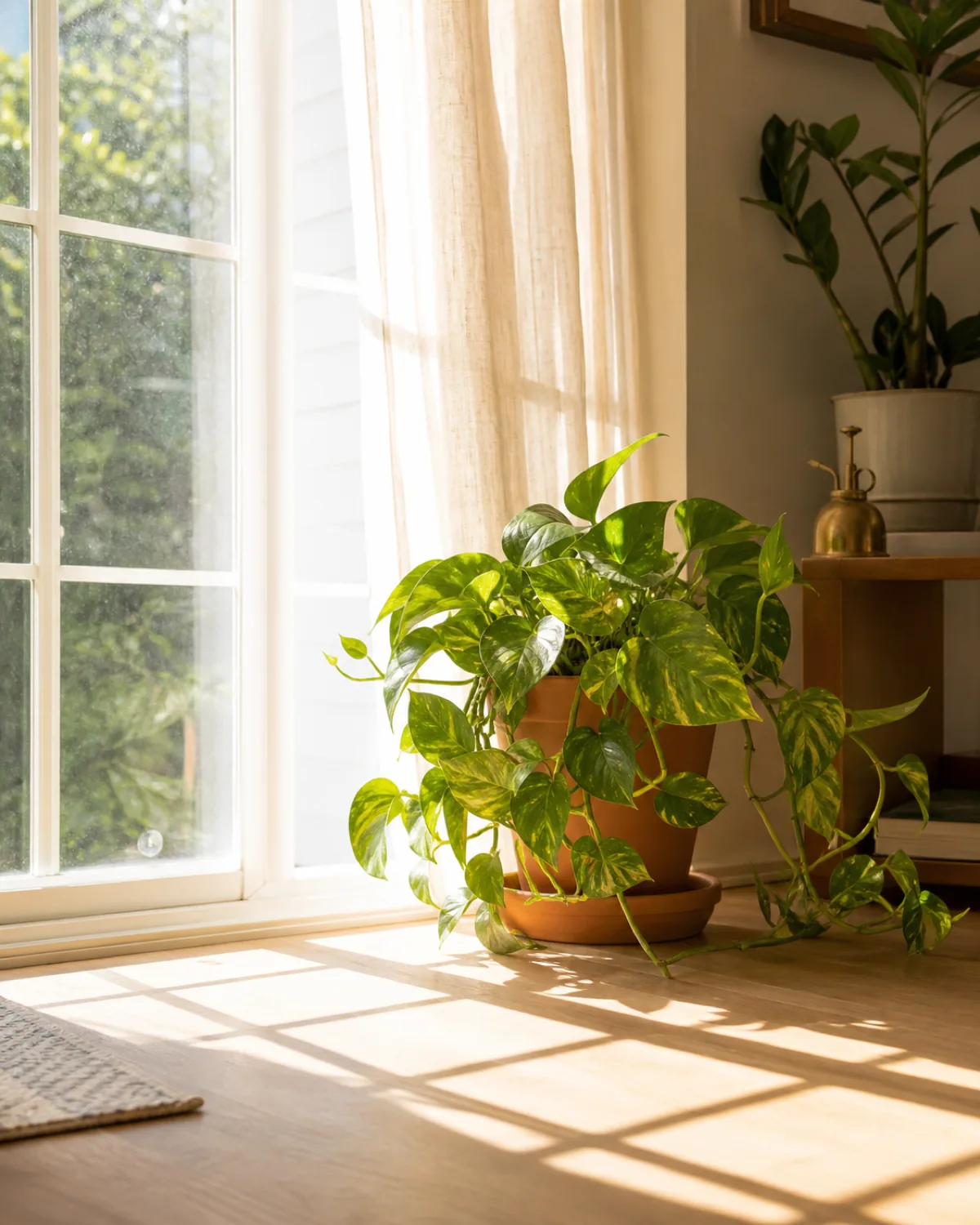
South-facing windows get the most hours of direct sun, west gets intense hot afternoon sun, east gets softer direct morning sun, and north gets the least — but also the most consistent light — of the four.
Knowing the compass direction of a window is a faster starting guess than staring at the room trying to judge brightness by eye.
- South windows get the most direct-sun hours of any exposure.
- West windows run hottest in the late afternoon.
- North windows are dimmest but steadiest, with no harsh direct sun to manage.
Distance from the window matters as much as direction
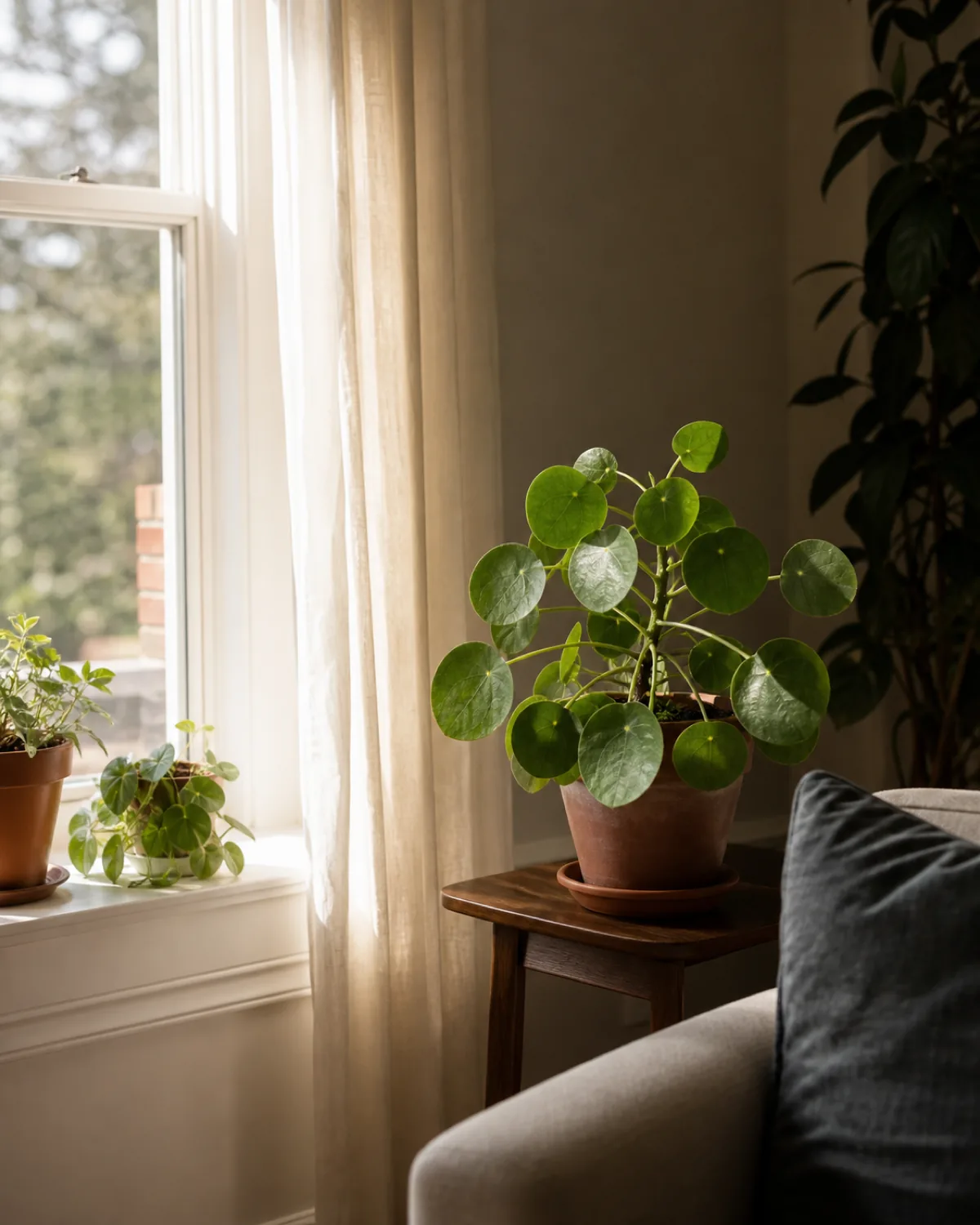
Light intensity drops off fast per foot moved back from the glass, so a plant a couple feet back from a south window can sit in the same light category as one pressed right against an east window.
Direction sets the ceiling; distance from the glass is what actually determines what a specific spot on the floor receives.
- Light falls off quickly per foot from the glass.
- A south window a few feet back can match an east window right up close.
- Judge the actual spot, not just the window's compass direction.
Sheer curtains turn harsh direct sun into gentler bright indirect light
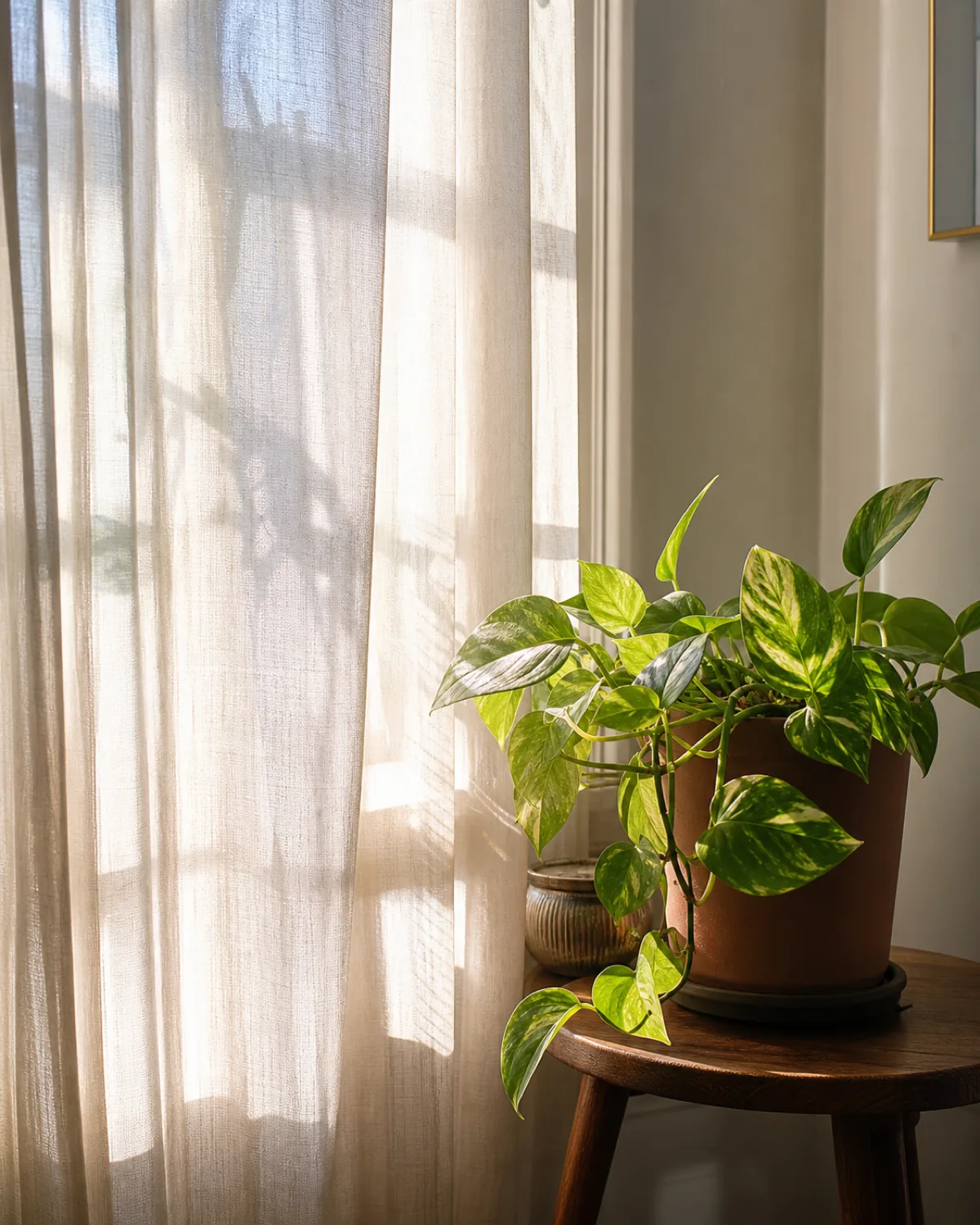
A light sheer panel diffuses direct rays enough to protect scorch-prone leaves while still passing plenty of usable brightness through to the plant behind it.
This is the easiest fix for a plant that's clearly scorching in a window that's otherwise the best light source in the room.
- A sheer panel softens direct sun without blocking most of the usable light.
- It protects scorch-prone leaves in an otherwise-great window spot.
- No need to move the plant — just change what's between it and the glass.
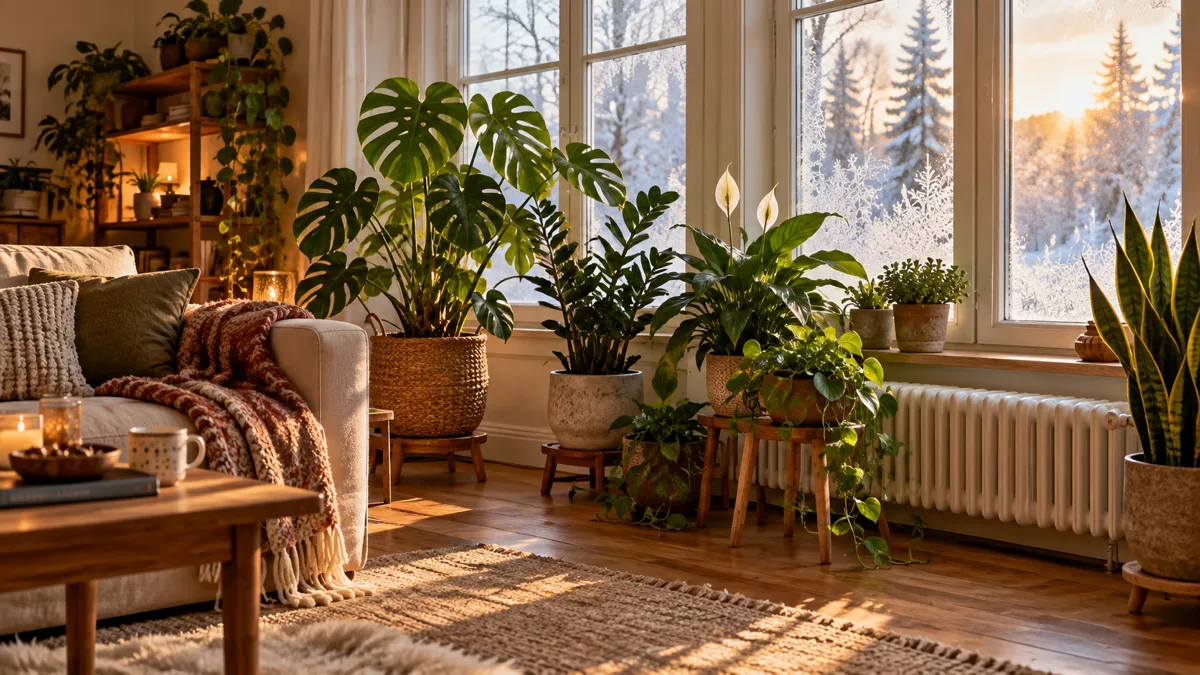
Winter light drop: the same spot gets noticeably dimmer even with no change in the room
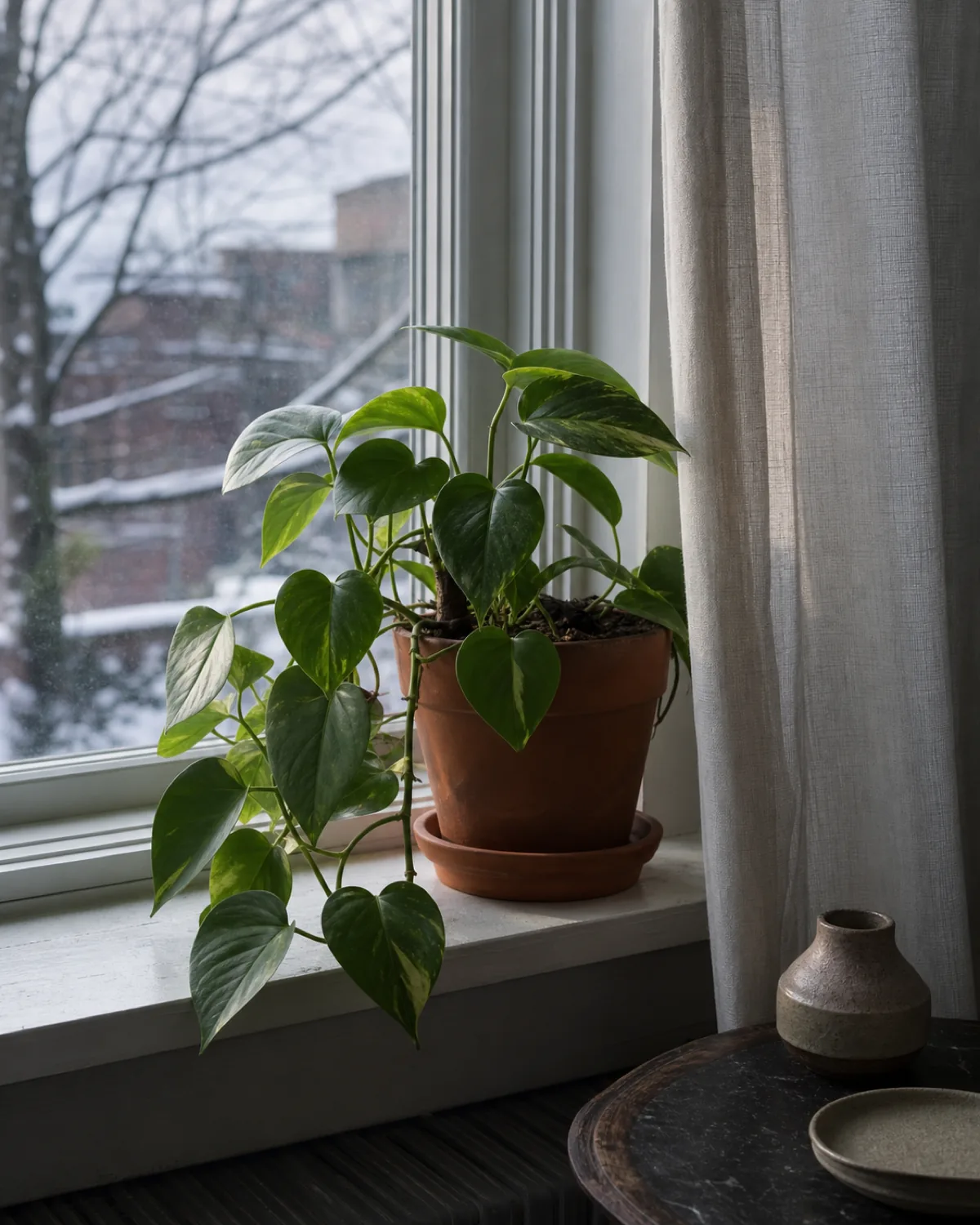
Lower sun angle and shorter days mean a window that reads as bright indirect in summer can drop to medium or even low light by midwinter, with nothing in the room actually changing.
Growth naturally slows to match, which is normal and doesn't call for extra water or fertilizer to compensate.
- The same window can shift light categories between summer and winter.
- Nothing in the room needs to change — the sun angle already did.
- Slower winter growth is expected, not a sign of a problem.
Rotate a quarter turn every week or two for even growth on all sides
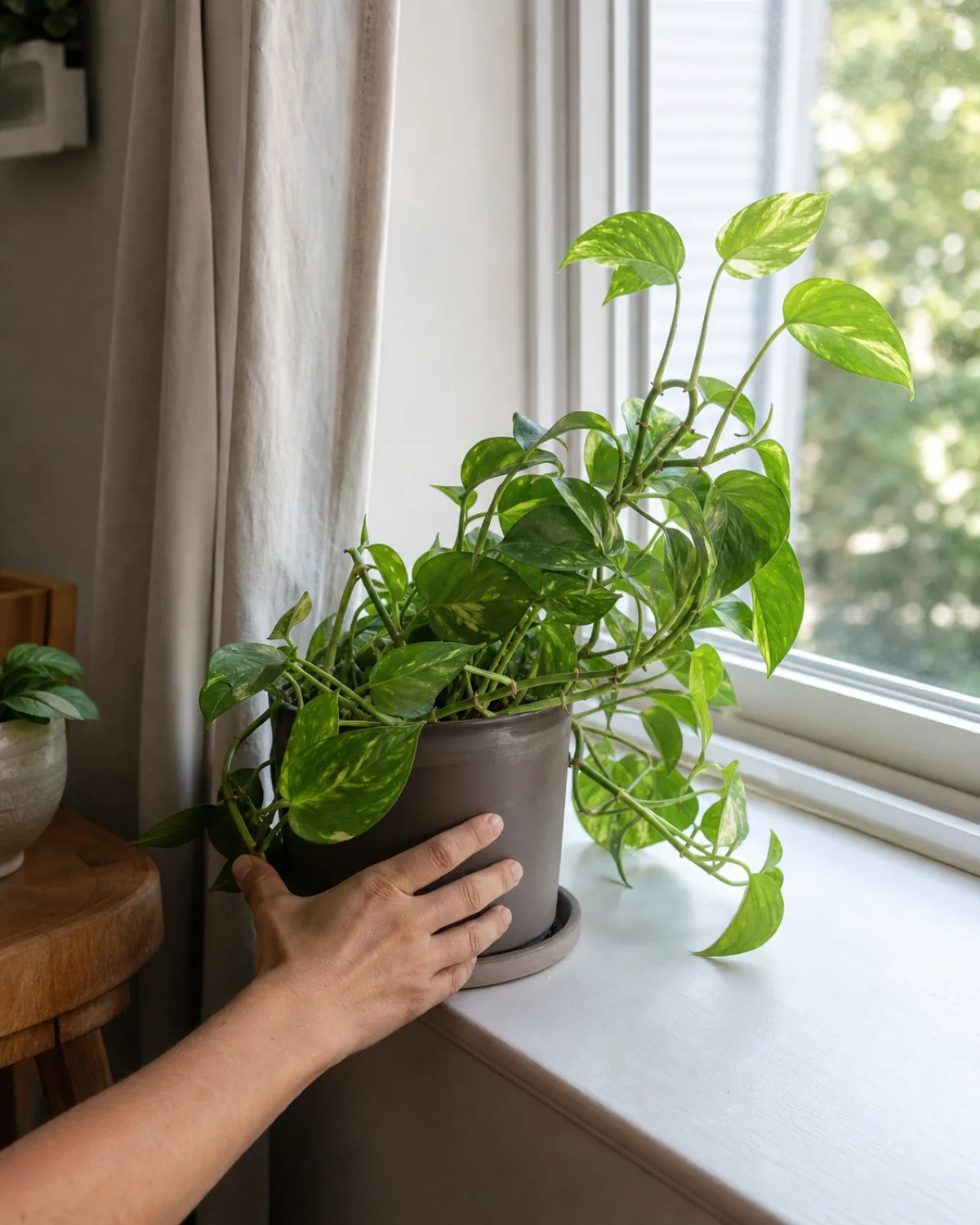
Plants grow toward their light source, so a pot left facing one way develops lopsided, one-sided growth over time. A regular quarter turn keeps growth even all around instead of leaning permanently toward the window.
This one habit prevents most of the lopsided growth people otherwise try to fix after the fact by pruning.
- Plants grow toward the light, which is what causes lopsided shape.
- A quarter turn every week or two keeps growth balanced.
- Easier to prevent than to correct once one side has stretched much longer than the other.
Most light questions trace back to one of four situations. Start with whichever one describes yours, then return to the rest later.
When to consider a grow light: chronic stretching or fading despite the best window in the room
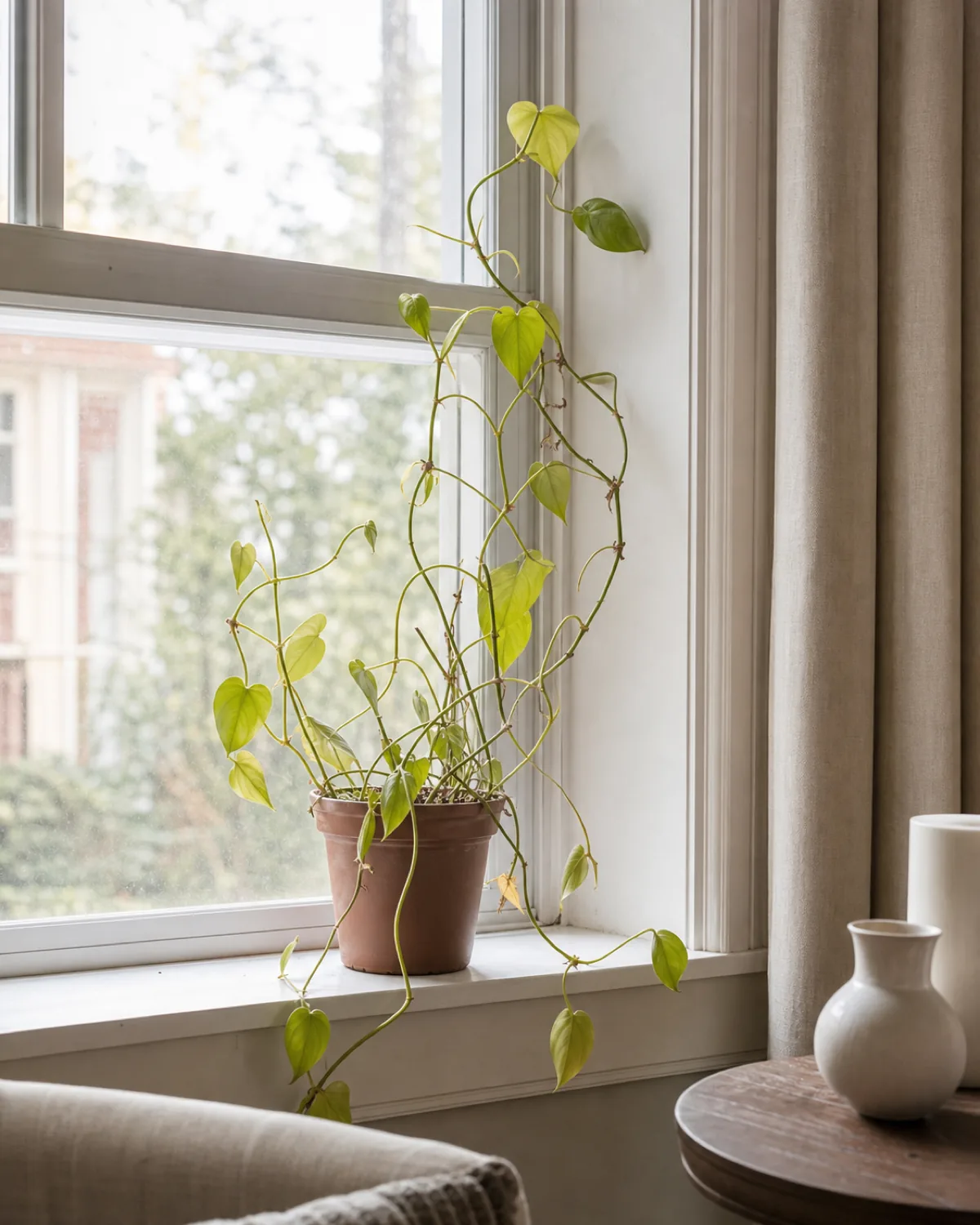
A plant that keeps stretching, fading, or refusing to grow even in the brightest spot available in the room is a sign the room's natural light has hit its ceiling, not that something else is wrong with the plant.
This is the point where moving it again won't help much further, and a supplemental light source becomes the more useful fix.
- Chronic stretching in the best spot you have points to a light ceiling, not a care mistake.
- Moving it again rarely solves this once it's already in the brightest available window.
- A grow light is the next real option, not a red flag that something else failed.
Grow light basics: distance, daily duration, and full-spectrum bulbs
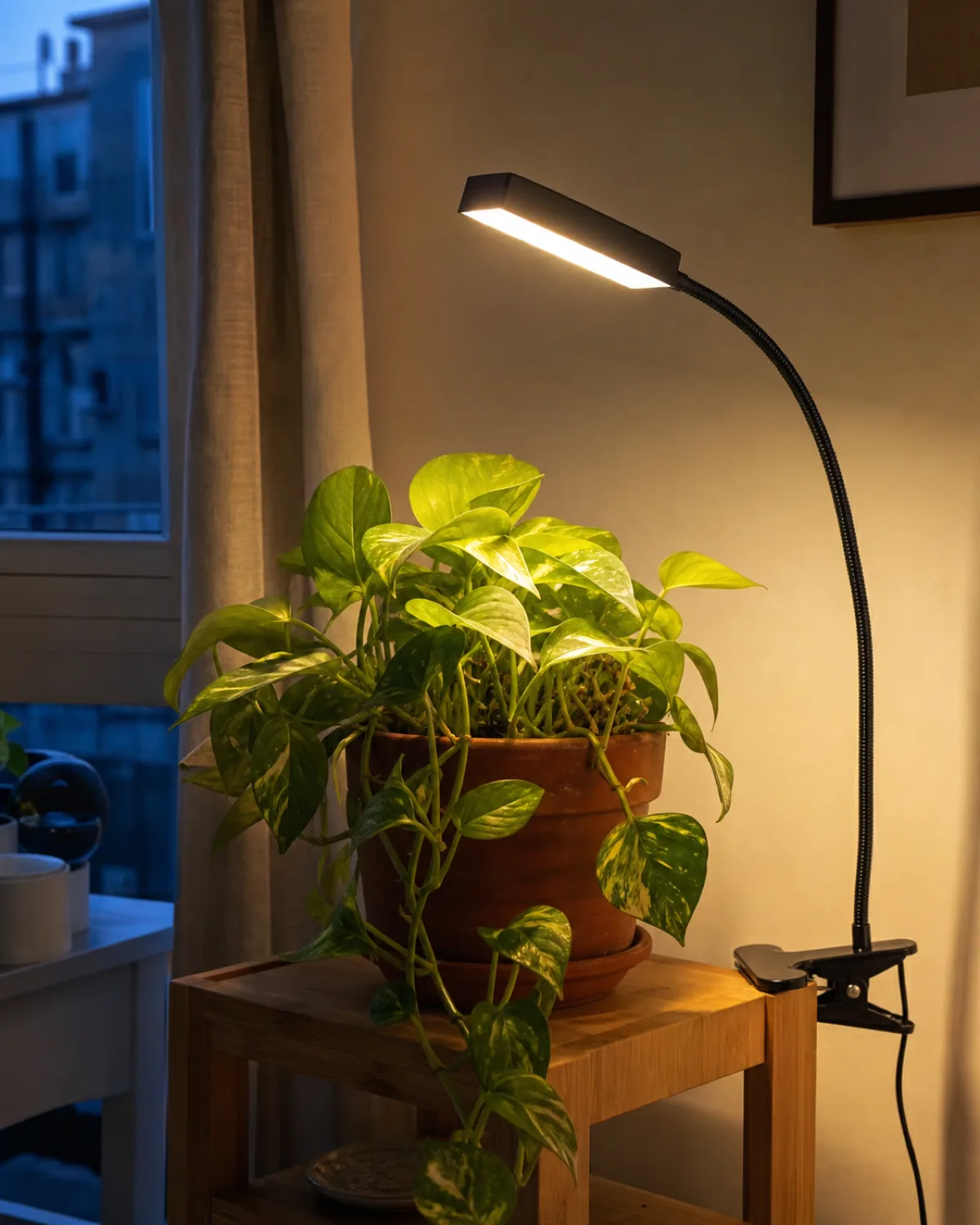
Most indoor grow lights work best 6-12 inches above the foliage, run 12-14 hours a day on a timer, and should be labeled full-spectrum rather than a plain warm-white bulb meant for reading a book.
A timer removes the guesswork of remembering to turn it on and off at consistent hours every day.
- 6-12 inches above the foliage is the general placement target.
- 12-14 hours a day on a timer mimics a long bright-light day.
- Full-spectrum, not plain warm-white, is the bulb type that actually supports growth.
Moving a plant to a brighter or dimmer spot causes a short adjustment period, not permanent damage
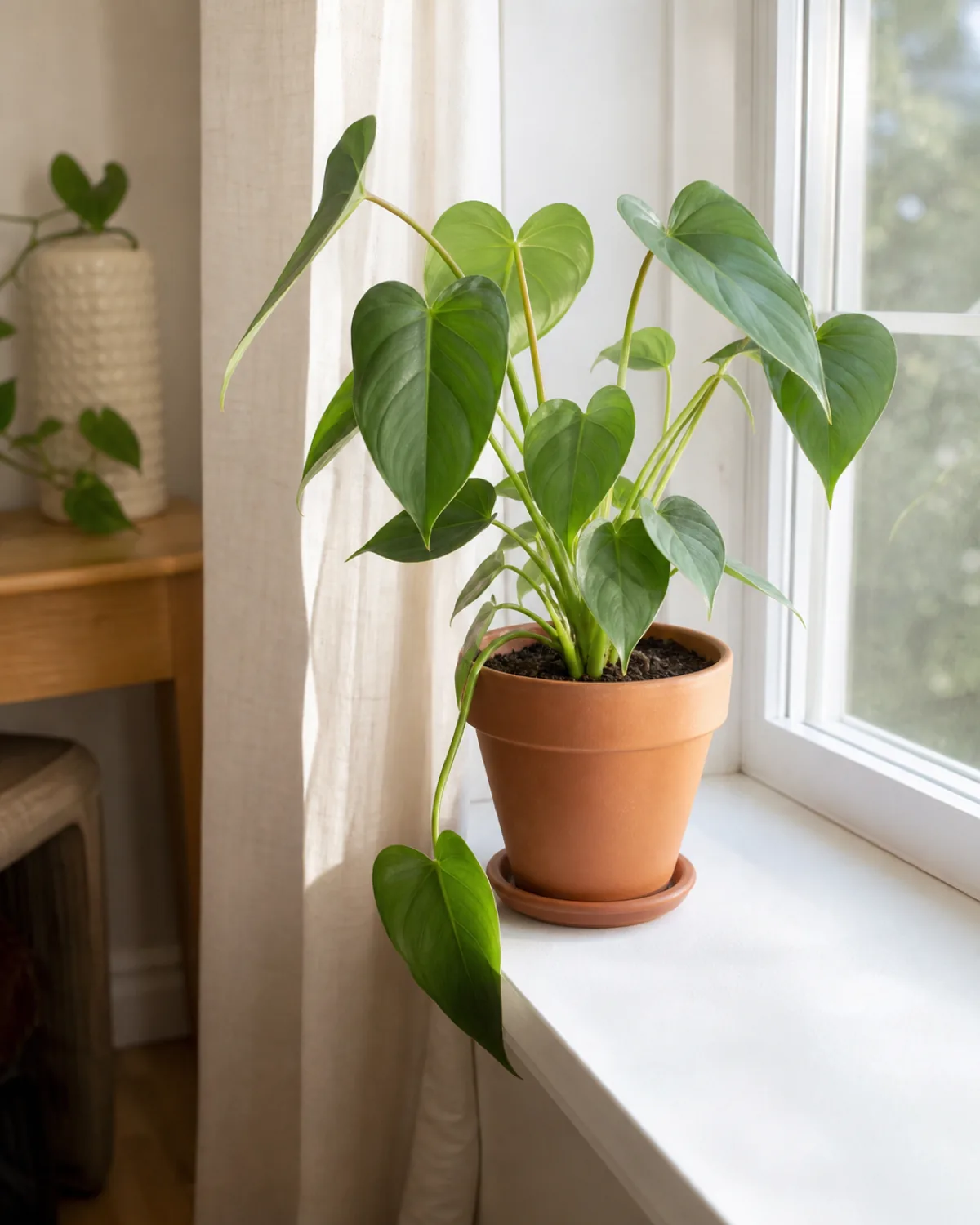
A few days of drooping or one dropped leaf after a move is normal acclimation to a new light level. Ongoing decline past two to three weeks points to the new spot being genuinely wrong for that plant, not a passing adjustment.
Give a newly moved plant a few weeks before deciding the spot didn't work.
- A few days of mild drooping is normal after any move to new light.
- Ongoing decline past two to three weeks means the spot itself is the problem.
- Patience first, another move second — most adjustment periods resolve on their own.
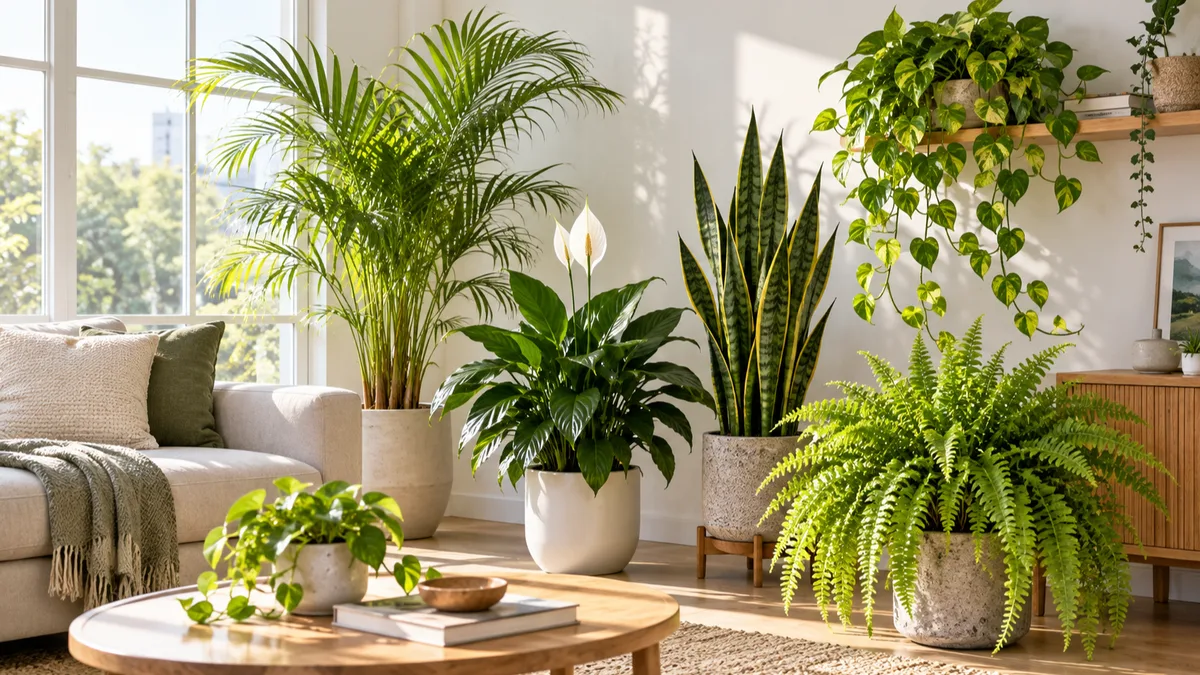
Match the plant to the light before buying or placing it, not after
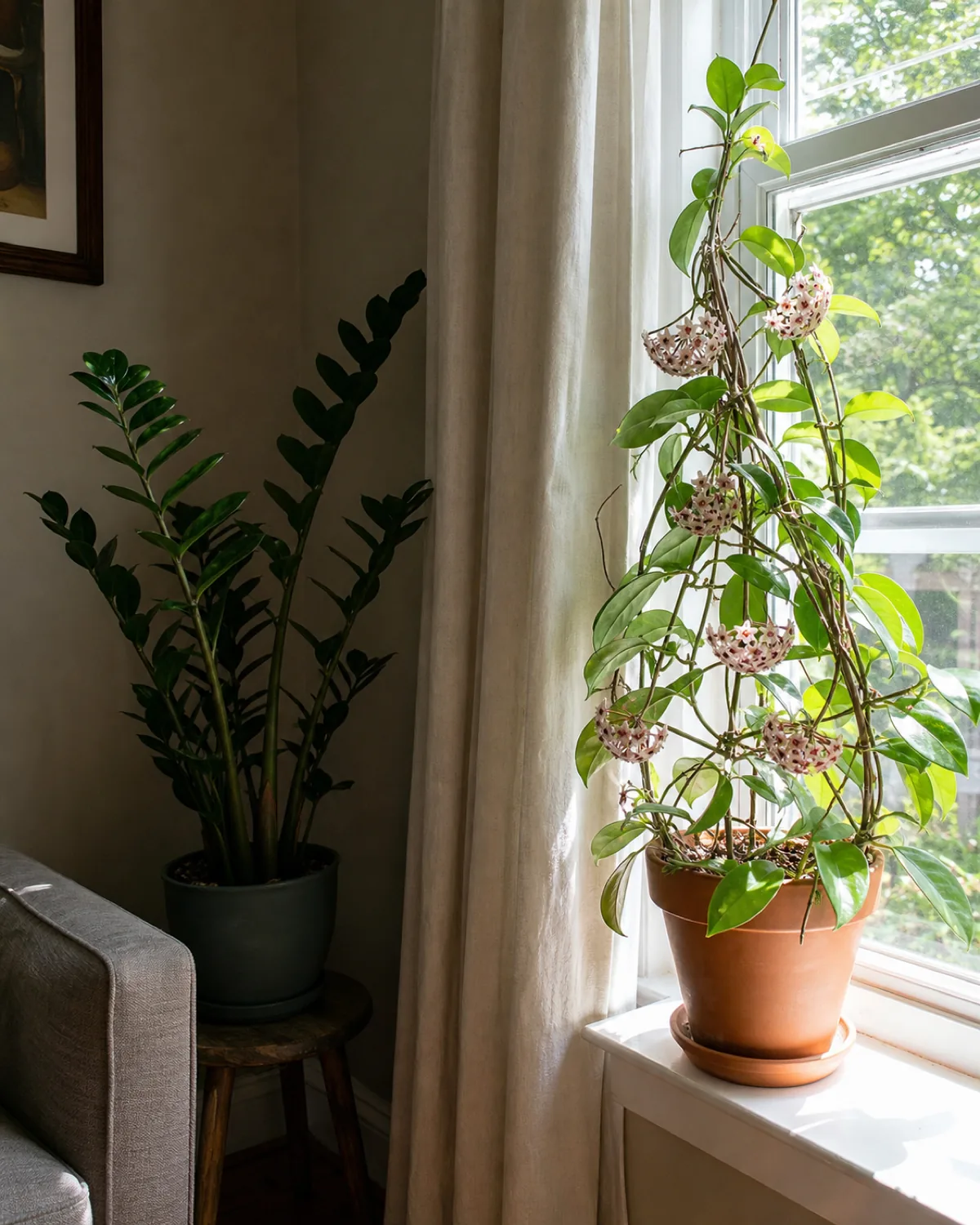
Species vary hugely in tolerance. The zz plant care guide and snake plant care guide cover two of the most low-light-tolerant houseplants available, while the hoya carnosa care guide needs strong bright light just to bloom at all.
Checking a plant's actual light tolerance before it comes home saves the frustration of trying to force a sun-lover to survive in a dim corner, or a shade-lover to tolerate a scorching window.
- Tolerance varies enormously by species, not just by size or type.
- Some plants genuinely thrive in low light — others need strong direct sun to bloom.
- Check tolerance before buying or placing, not after it's already struggling.
Most light-related problems trace back to one of four moves people skip. Hold these four and almost any houseplant ends up in a spot it can actually thrive in.
Houseplant Light Requirements: The Quick Reference
- 1Match intensity to tolerance, don't maximize brightnessToo much light burns leaves as reliably as too little starves growth.
- 2Too little: stretching, leaning, pale new leavesLong bare gaps between leaves and stalled growth are the clearest under-light signals.
- 3Too much: bleached patches, crispy scorch, wiltingDry crispy brown spots and midday wilting with moist soil point to overexposure.
- 4The shadow test reads any spot in ten secondsSharp shadow = bright direct-adjacent; soft blurry = bright indirect; faint or none = low light.
- 5South brightest, west hottest, east gentle, north lowestThe window-direction cheat sheet for a fast starting guess.
- 6Distance from the glass matters as much as directionLight falls off fast per foot moved back from the window.
- 7Sheer curtains soften harsh direct sunProtects scorch-prone leaves while still passing plenty of light through.
- 8Winter light drop is normalThe same spot can read a full category dimmer by midwinter with nothing else changing.
- 9Rotate a quarter turn every week or twoPrevents the lopsided, one-sided growth plants develop toward their light source.
- 10Chronic stretching in the best spot = grow light territoryA sign the room's natural light has hit its ceiling, not a care mistake.
- 11Grow lights: 6-12 inches, 12-14 hours, full-spectrumThe three settings that actually make a supplemental light useful.
- 12A short adjustment period after a move is normalDecline past two to three weeks means the new spot is genuinely wrong.
- 13Match the plant to the light before buying itTolerance varies hugely by species — check first, not after it's already struggling.
kultivy.com

Mara Quinn edits Kultivy, where she shares houseplant care, propagation, beginner-friendly plant picks, and plant-styling ideas for anyone who wants their indoor plants to actually thrive. Every guide is image-led and reviewed for clarity, usefulness, image accuracy, and Pinterest-to-page alignment before it goes live. Visit the About page.