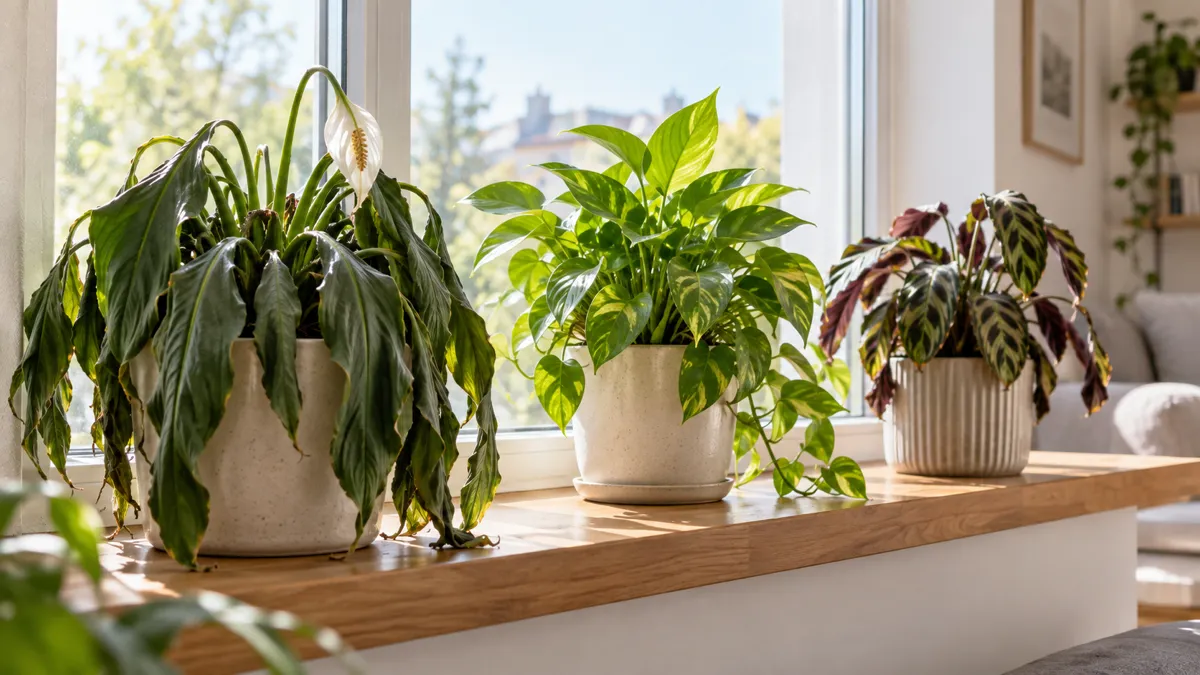
When a houseplant shoots out a long bare stem with a single small leaf at the tip, it is not growing well — it is growing desperate. That stretched, sparse look is called etiolation.
It happens when the plant burns through its energy reserves chasing a light source that is too far away or too dim. The stem elongates, the leaves shrink, and the overall shape goes from bushy to bare.
The good news is that leggy growth is one of the easiest problems to diagnose. The fix usually involves pruning shears, a brighter spot, and some patience — and the cuttings you remove can become new plants.
From diagnosing the stretch to pruning, propagating, and preventing it from coming back.
- 1 What leggy growth looks like
- 2 Low light is the top cause
- 3 One-sided light and the lean
- 4 Winter stretch
- 5 Heat pushing soft stems
- 6 Overwatering keeps stems stretchy
- 7 Excess nitrogen fertilizer
- 8 Skipping pruning
- 9 Making the reset cut
- 10 Pinching tips for density
- 11 Moving to better light safely
- 12 When a grow light is the fix
- 13 Propagating the leggy cuttings
- 14 Plants that get leggy fastest
What Leggy Growth Actually Looks Like
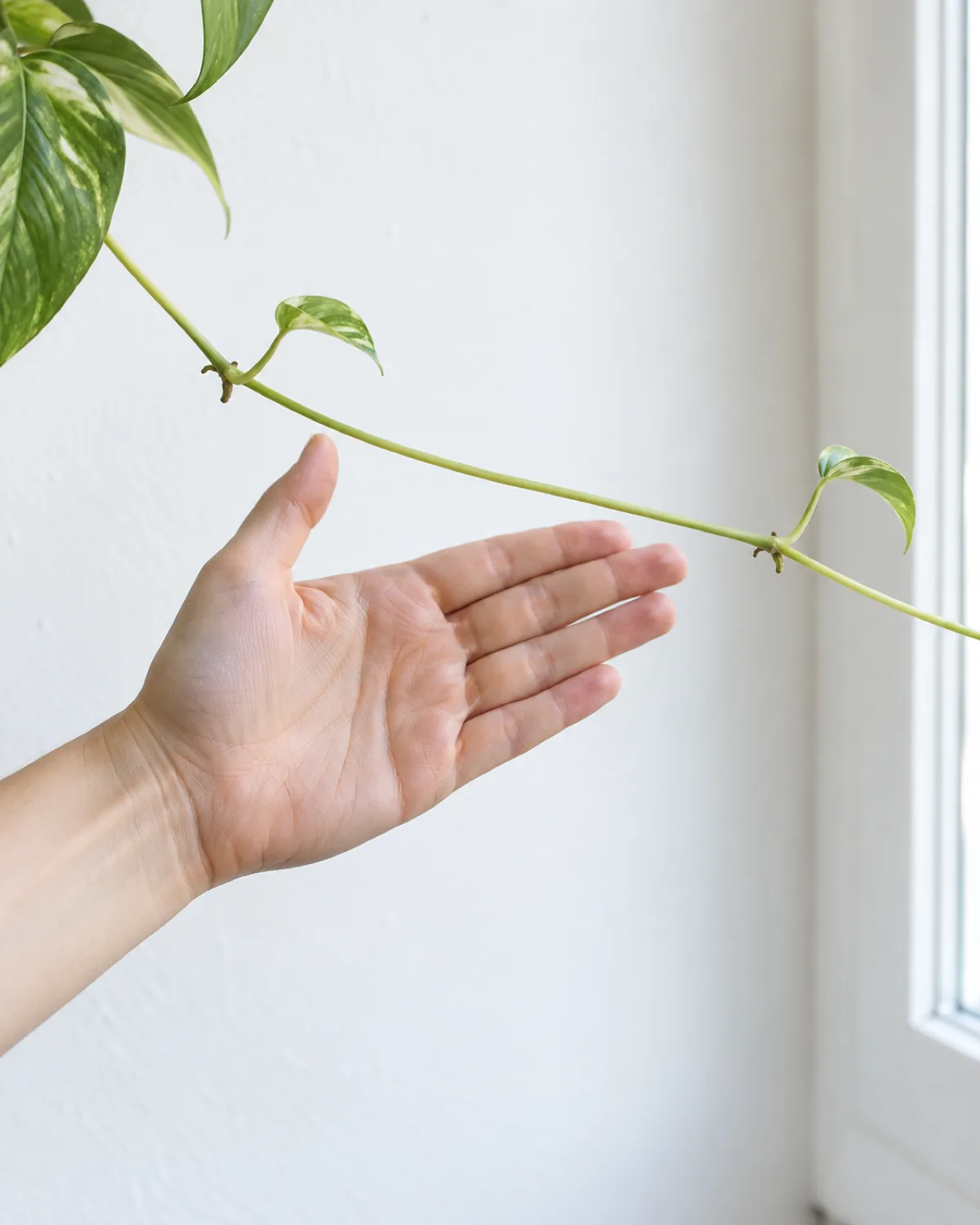
The word "leggy" describes a specific pattern: long internodes stretching eight to fifteen centimeters apart instead of the normal two to five. The leaves at each node are smaller than they should be, sometimes half the size of mature foliage. The stem itself is often thinner and paler than compact growth on the same species.
The stretch always moves toward the nearest light source. A leggy pothos on a shelf leans hard toward the window, with bare stem on the room side and the few remaining leaves clustered at the tip. A leggy fittonia shoots one spindly stem straight up instead of spreading into its usual low mound.
- Internode length: measure the gap between two adjacent leaves — if it is more than double the spacing lower on the stem, the new growth is leggy
- Leaf size: new leaves at the stretched tip are noticeably smaller and often paler than the older foliage below
- Stem color: etiolated stems produce less chlorophyll, so they look lighter green or even yellowish compared to compact sections
- Directionality: the lean is always toward the strongest light source in the room
The critical thing to understand is that legginess is structural and permanent. Those bare internodes will never fill in with new leaves. The plant cannot go back and add foliage to a stretch it already grew. Improving conditions stops new leggy growth, but the existing bare sections stay bare — which is why pruning is almost always part of the fix.
Low Light Is the Number One Cause
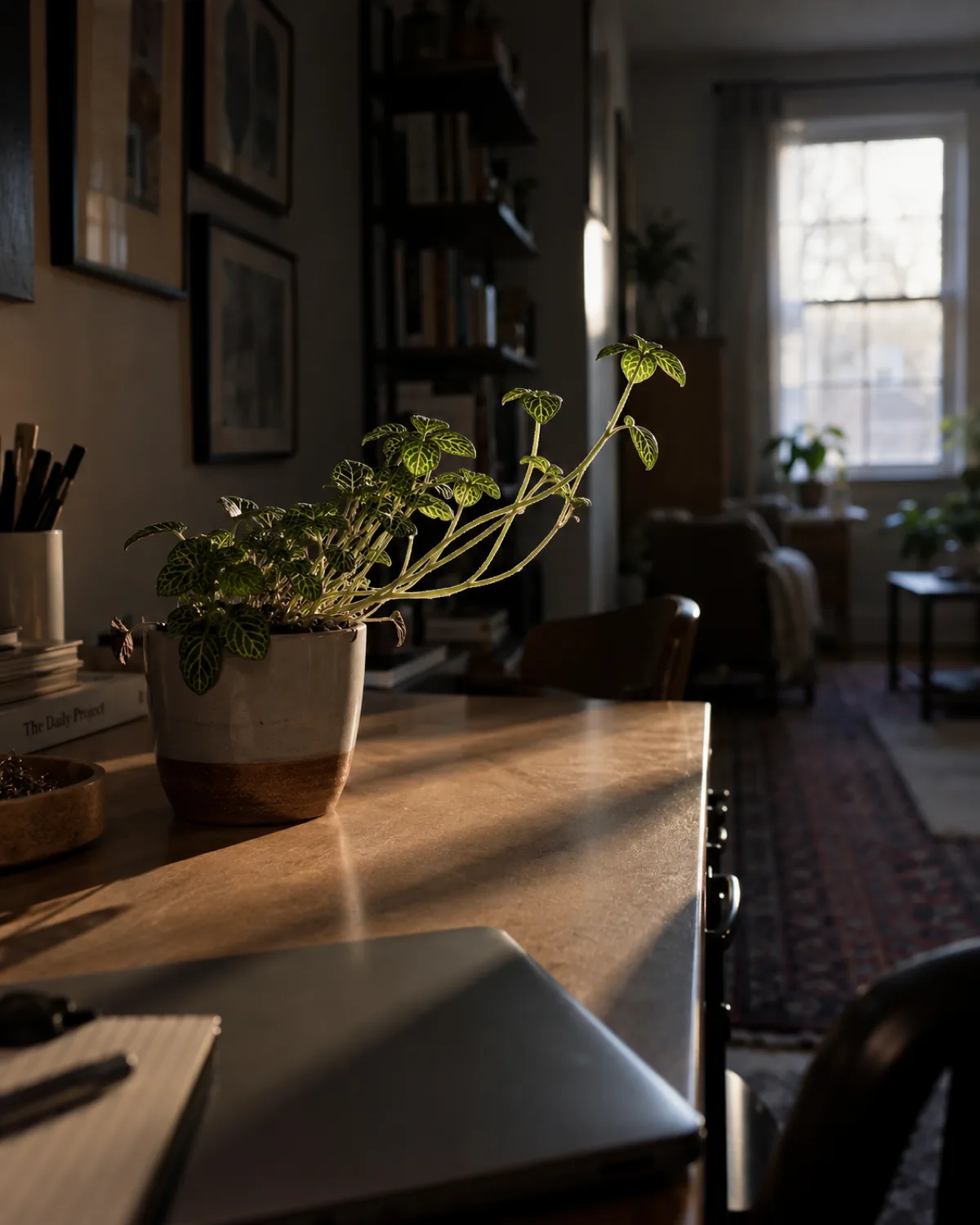
Every case of leggy growth starts with the same hormone: auxin. When light hits one side of a stem, auxin migrates to the shaded side and causes those cells to elongate faster. The stem literally grows toward the light because one side is stretching more than the other. This is phototropism, and it is the single most common reason houseplants get leggy.
A plant sitting two meters from a north-facing window receives roughly fifty to one hundred foot-candles of light. That is enough to keep the plant alive — barely — but nowhere near enough to produce compact, dense growth. Most tropical foliage plants need two hundred foot-candles or more for tight internodes and full-sized leaves.
The stretch is the plant gambling its energy reserves on reaching a brighter spot before it runs out of fuel. In the wild, this response makes perfect sense — a seedling on the forest floor stretches toward a gap in the canopy, and if it reaches the light, it survives.
On your bookshelf three meters from a window, there is no brighter spot to reach. The plant just keeps stretching until you intervene.
- The quick test: hold your hand thirty centimeters above the plant at midday — if the shadow is faint and blurry, the light is probably below two hundred foot-candles and leggy growth is expected
- Distance matters exponentially: light intensity drops with the square of the distance — a plant two meters from a window gets roughly one-quarter the light of a plant one meter away
- North vs south: a north-facing window in the northern hemisphere provides the lowest light year-round, while south-facing windows deliver the strongest
Spot the differences that tell you whether your plant needs more light.
One-Sided Light and the Permanent Lean
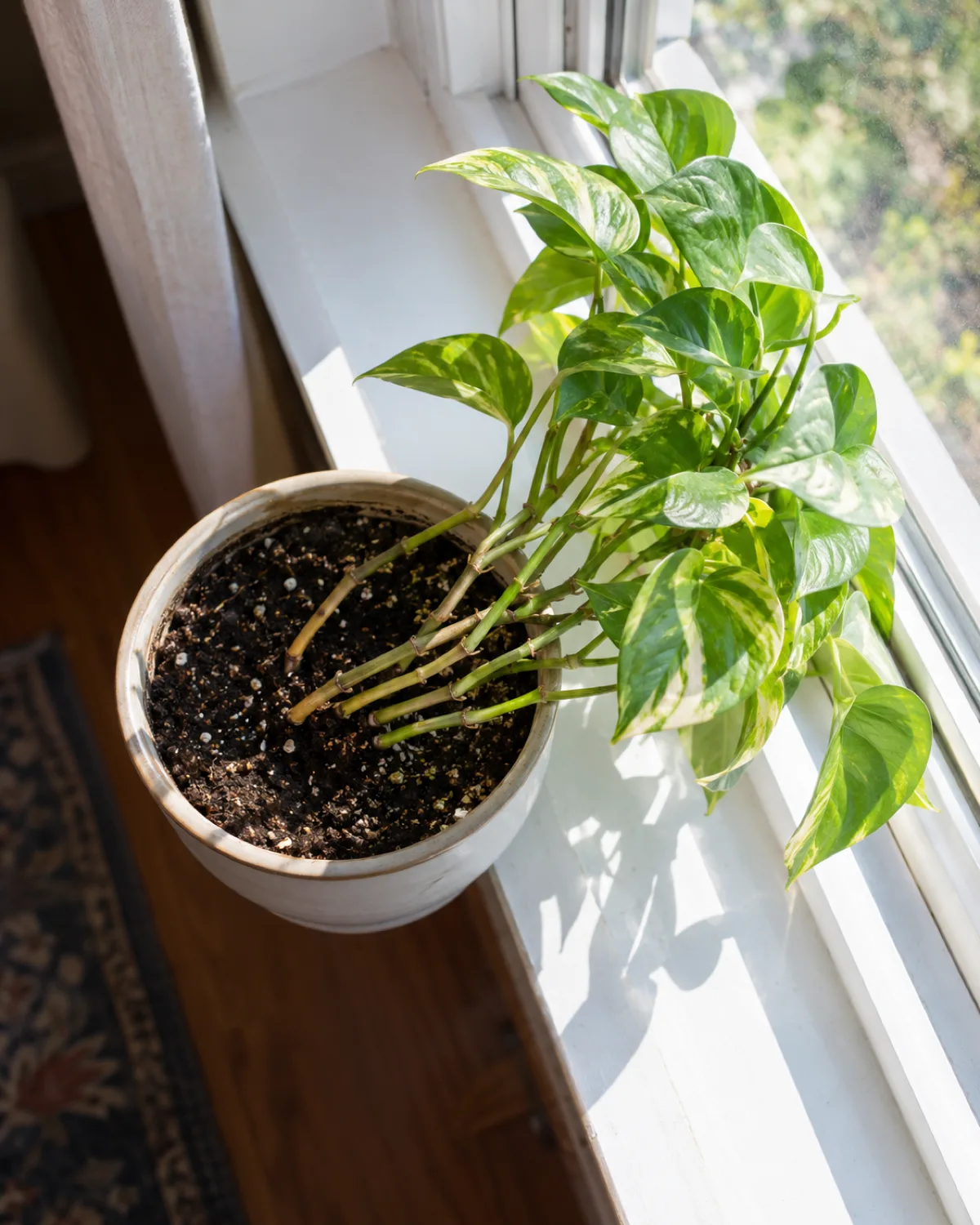
Even a bright window creates a problem if the light only hits the plant from one direction. Auxin pools on the dark side of every stem, and over weeks the entire plant curves toward the glass. The window side develops full-sized leaves while the room side stays bare.
A quarter-turn every time you water is the simplest prevention. Rotate the pot ninety degrees in the same direction each time, and the plant receives roughly equal light on all sides over the course of a month. The growth stays symmetrical and the stems stay upright.
If the lean is already severe, staking the main stem upright with a bamboo support helps while you begin rotating. New growth above the stake will grow straight, but the old curved section below it is permanent — that bend is locked into the woody tissue and will not straighten.
- Rotation rhythm: quarter-turn at every watering works for most species — weekly for tropicals, biweekly for succulents
- Single-stem species lean fastest: pileas, alocasias, and dracaenas with one central trunk have no secondary stems to balance the lean
- Bushy species compensate: pothos and tradescantia send out runners in all directions, so directional lean is less dramatic even without rotation
Winter Stretch When Daylight Hours Drop
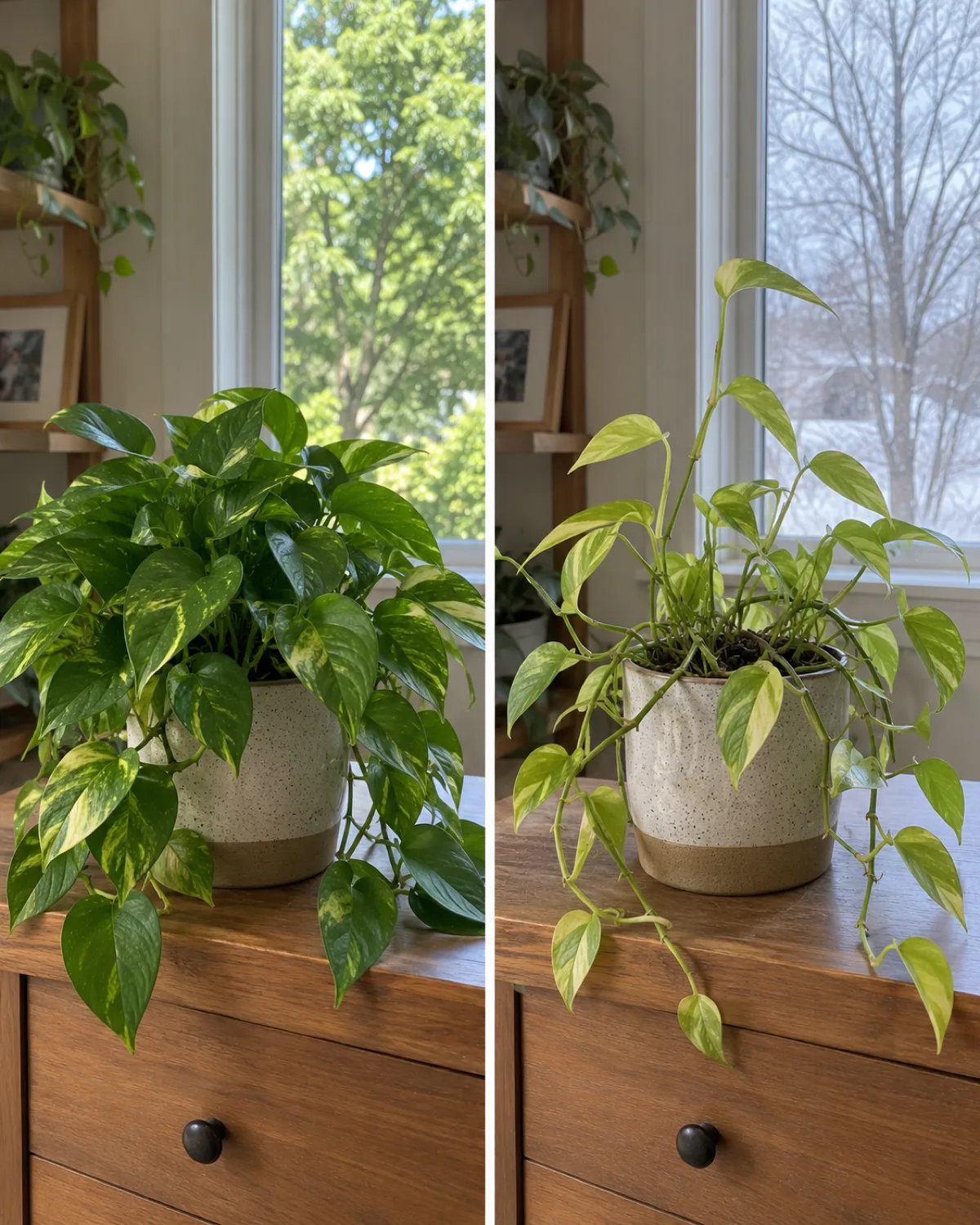
Even a south-facing window loses thirty to forty percent of its light intensity between June and December at mid-latitudes. Day length drops from fifteen hours to nine, and the angle of the sun drops lower, delivering less energy per square meter. The plant keeps growing — most tropical houseplants do not have a true dormancy — but the ratio of light to growth tilts the wrong way.
The result is a predictable annual pattern: tight, compact growth through spring and summer, then a burst of stretched, leggy stems from November through February. Many plant owners blame themselves for changing something, but the light changed on its own.
- Seasonal repositioning: move plants from shelves and tables onto the windowsill itself in October — the few extra centimeters make a measurable difference
- Grow light supplementation: a grow light on a twelve-hour timer maintains summer photoperiods through the dark months and eliminates winter stretch entirely
- Pruning timing: if you must prune, wait until late February or March when light returns — cutting in December removes growth the plant cannot replace quickly
Too Much Heat Pushing Soft Stems
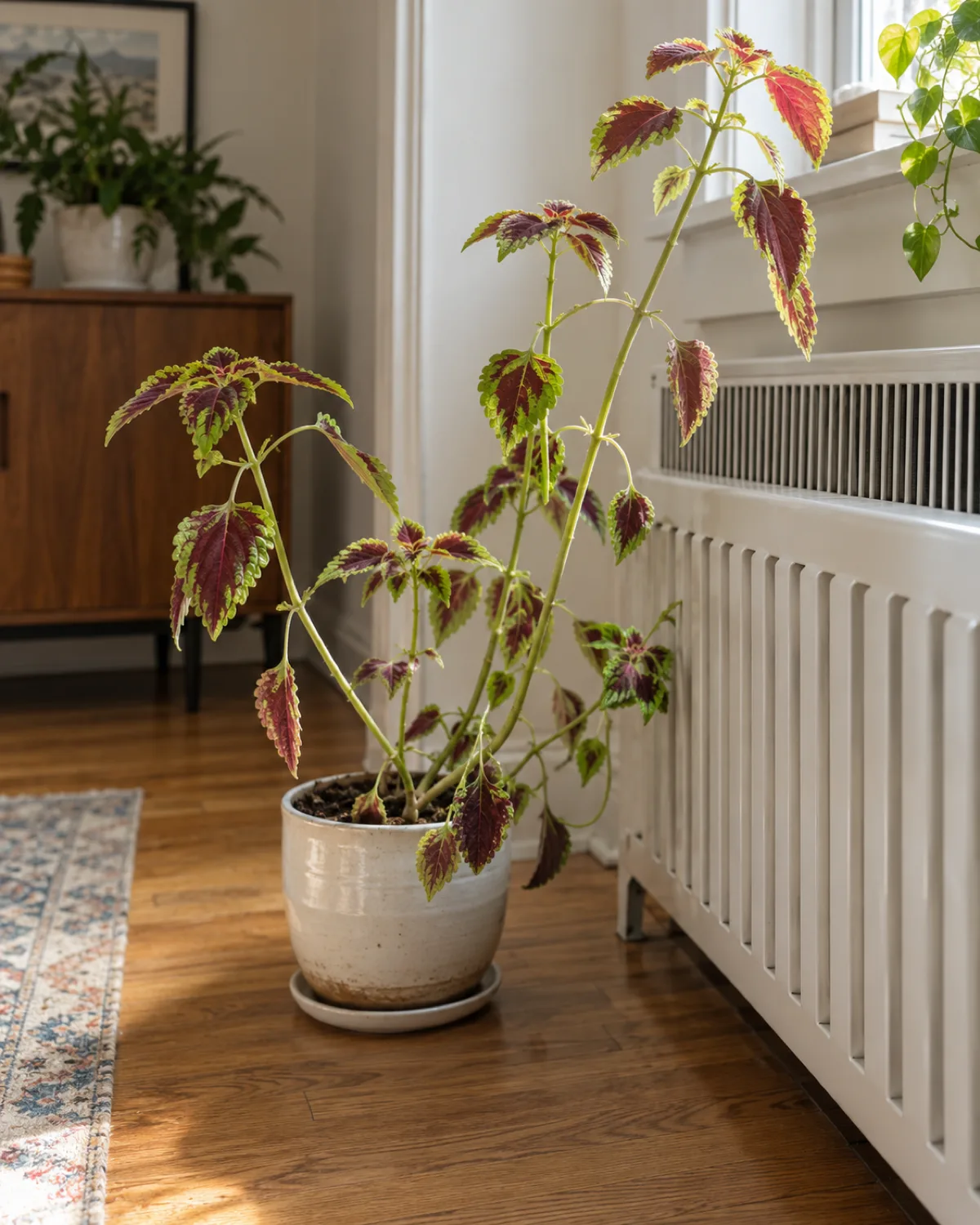
Warm temperatures above twenty-seven degrees Celsius accelerate cell division and elongation, especially at night. Daytime heat combined with adequate light usually balances out, but nighttime heat is the problem — the plant keeps growing in the dark when it cannot photosynthesize, producing cells that are long but structurally weak.
Radiators, heating vents, and south-facing windows in summer create microclimates where heat pushes growth faster than light can fill it with substance. A plant on a radiator shelf gets blasted with warm air from below while the light only hits from one side — the classic recipe for fast, leggy, lopsided growth.
- Night temperature matters most: cooler nighttime temperatures between eighteen and twenty-one degrees Celsius slow cell elongation and produce denser, sturdier stems
- Radiator proximity: move plants at least sixty centimeters away from active radiators and heat vents during heating season
- Summer heat: south-facing windows can push air temperatures above thirty degrees behind the glass — a sheer curtain diffuses both heat and direct sun
Overwatering Keeps Stems Soft and Stretchy
Consistently moist soil delivers water faster than the plant can convert it into rigid cell walls. The stems stay turgid and pliable instead of developing the firm structure that holds compact growth upright. On its own, overwatering does not cause dramatic stretching — but combined with low light, it amplifies the problem significantly.
The mechanism is straightforward: low light tells the plant to stretch toward the window, and the abundant water supply gives it the hydraulic pressure to stretch further and faster than it could in dry soil. A leggy plant in dry soil produces short, stunted leggy growth. A leggy plant in wet soil produces long, dramatic leggy growth.
- The double fix: improving light and reducing watering frequency at the same time addresses both sides of the equation
- Drying interval: let the top three to five centimeters of soil dry between waterings — this slows stem elongation while the roots stay healthy
- Pot size: an oversized pot holds more moisture for longer, which feeds the stretch cycle — keep the pot proportional to the root mass
Excess Nitrogen Fertilizer Pushes Leaf-to-Stem Imbalance
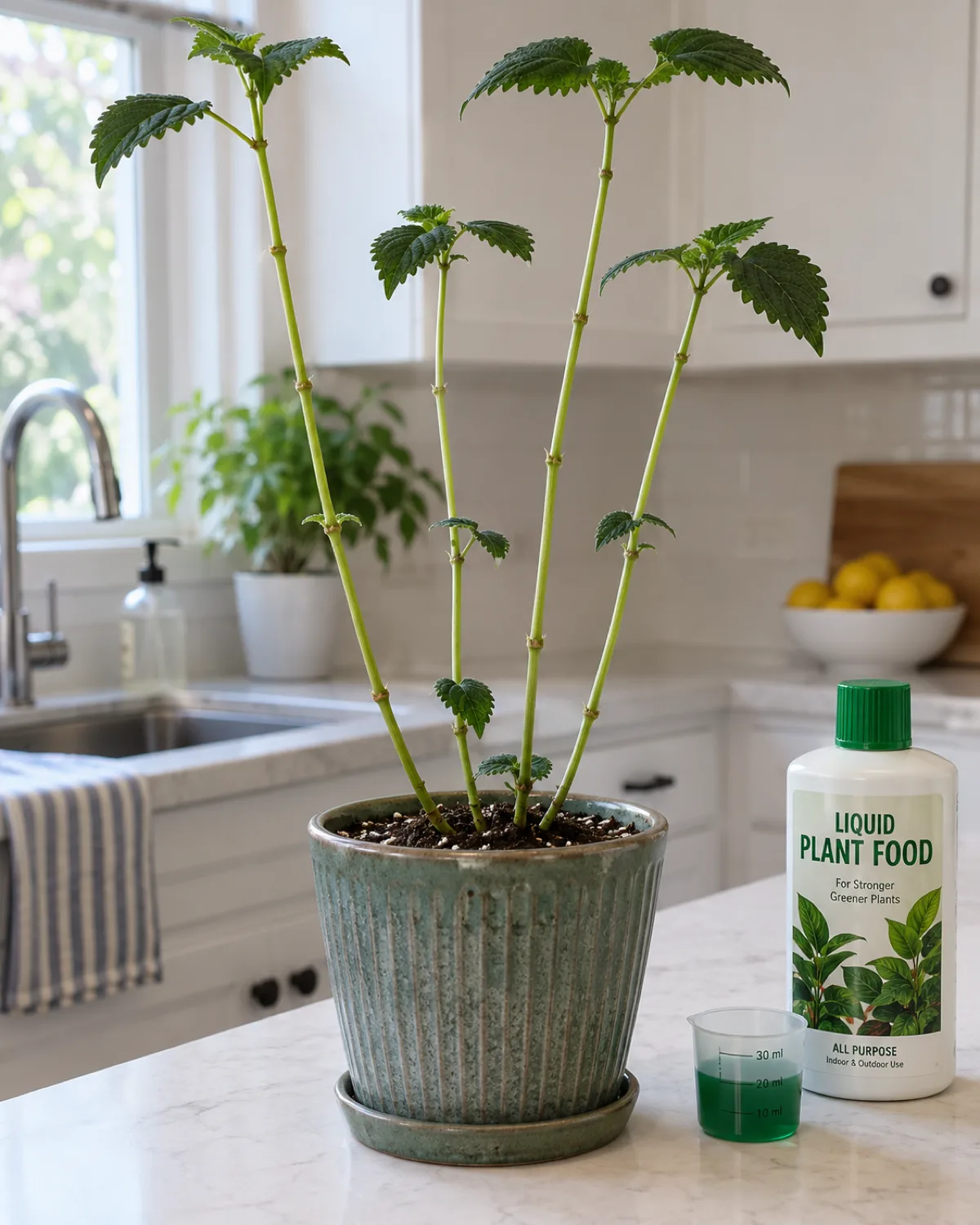
High-nitrogen fertilizers with ratios like 10-5-5 promote rapid vegetative growth — specifically, more stem length and fewer lateral branches. The plant invests its energy in growing longer instead of growing denser.
The result looks almost identical to light-driven legginess but with one telltale difference: the leaves are deep green and healthy-looking even though the stems are stretched.
Light-driven legginess produces pale, undersized leaves. Nitrogen-driven legginess produces full-color but sparse foliage on abnormally long stems. If the plant is near a bright window and still stretching, fertilizer is worth investigating.
- Balanced formula: switch to a balanced fertilizer at half the recommended strength during the growing season — 10-10-10 or a gentle liquid at every other watering
- Winter feeding: cut fertilizer entirely from November through February when most houseplants should slow down naturally
- Flush the soil: if you suspect nitrogen buildup, water thoroughly until it runs through the drainage holes three times to leach excess salts
Skipping Pruning Lets Stems Run Unchecked
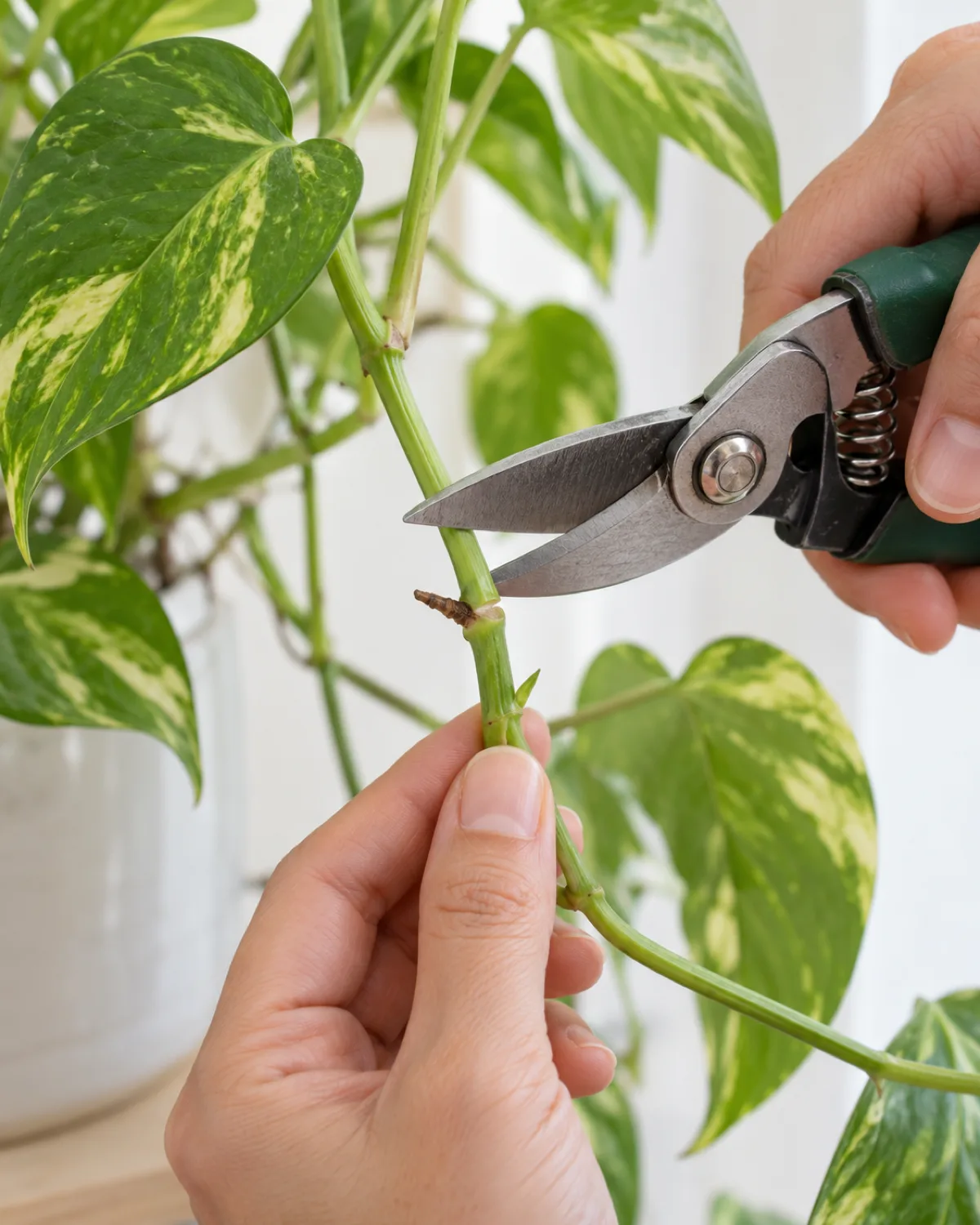
Most houseplants grow from terminal buds at the tip of each stem. A hormone called auxin flows downward from that tip and suppresses the lateral buds below it — a process called apical dominance. As long as the terminal bud is intact, all the plant's energy flows into extending that one stem longer and longer.
Removing the terminal bud — whether by pruning or pinching — breaks apical dominance. The auxin signal stops, and dormant lateral buds below the cut activate within one to three weeks. Instead of one long stem, the plant produces two or more shorter shoots, creating the bushy, full shape that looks healthy.
Species that absolutely must be pruned to stay compact include pothos, tradescantia, Swedish ivy, lipstick plant, and string of hearts.
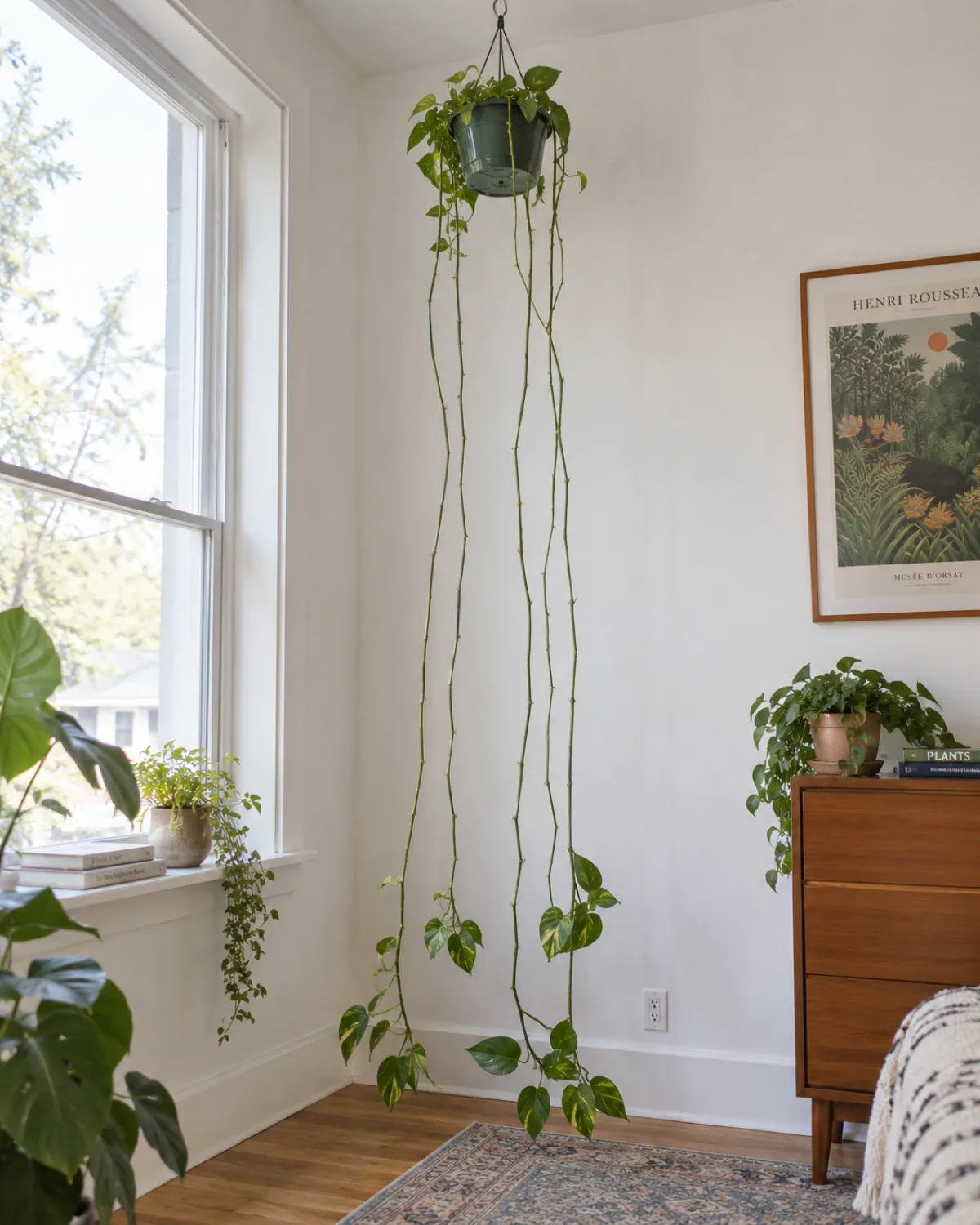
An unpruned pothos can extend three or more meters in a single season with only a handful of leaves near the end. That is not because anything is wrong — it is the plant's natural growth habit without intervention.
Follow these in order. Most plants show new branching within two to four weeks.
Where and How to Make the Reset Cut
Finding the right place to cut is the difference between a clean recovery and a bare stump that takes months to re-sprout. Look for nodes — the slightly swollen bumps on the stem where leaves attach or once attached. Many aroids also show small aerial root nubs at nodes, which are easy to spot even on bare stems.
Cut one centimeter above the highest healthy node you want to keep. Angle the blade forty-five degrees away from the bud so water sheds off the cut surface instead of pooling on it. Use clean, sharp shears — a crushing cut from dull blades damages the stem tissue and invites infection.
For single-stemmed plants like dracaena and dieffenbachia, the remaining stump looks alarming but re-sprouts from dormant eyes within three to six weeks. For vining types like pothos and tradescantia, cut each runner individually and save the lengths for propagation.
- How much to remove: up to two-thirds of total stem length is safe for most tropical houseplants
- Best season: spring and early summer give the strongest regrowth response because increasing light fuels new shoots
- Avoid late-fall cuts: the plant has less energy to push new growth when light is declining, and open wounds heal slowly in cool, damp conditions
Pinching Tips for Ongoing Compact Growth
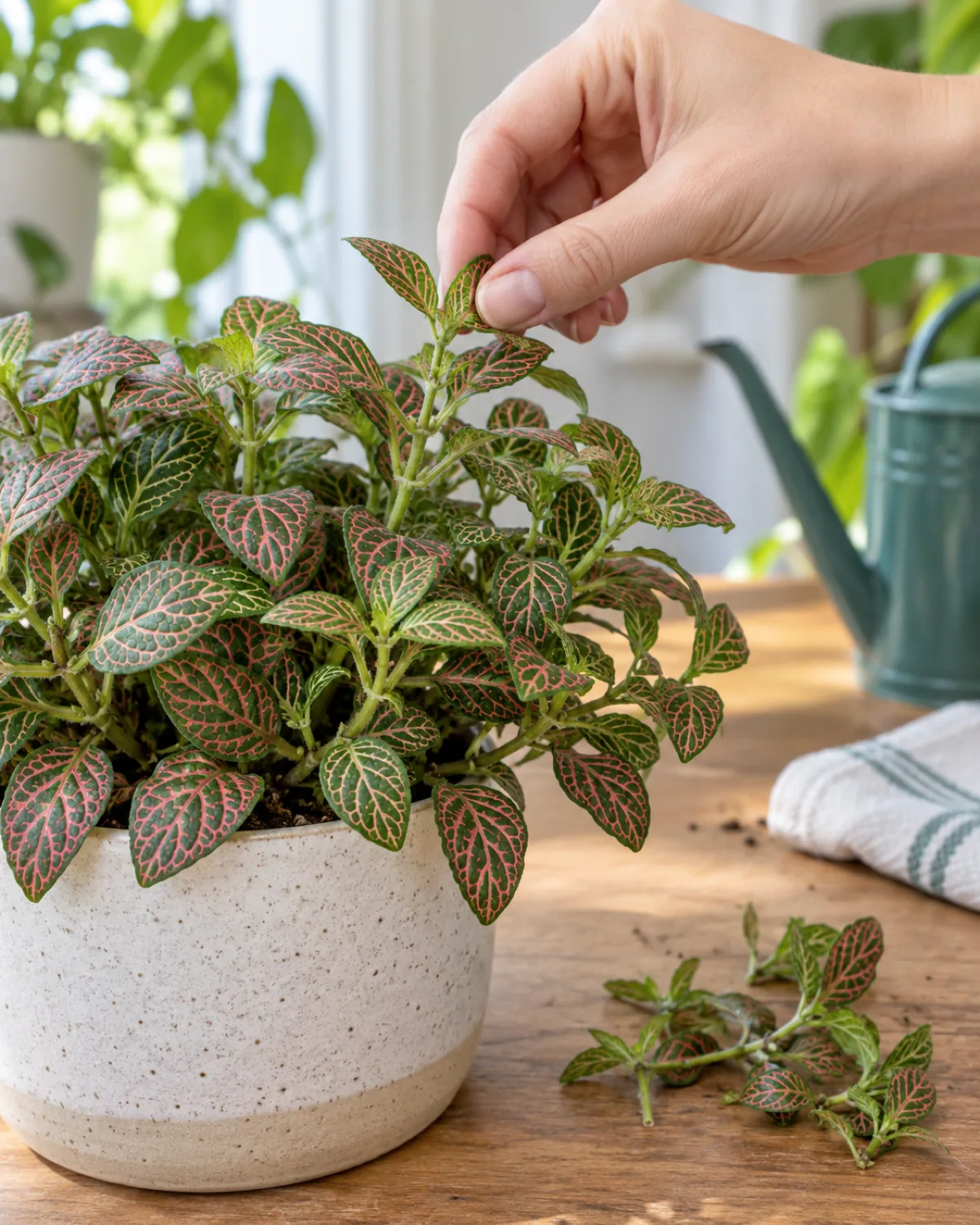
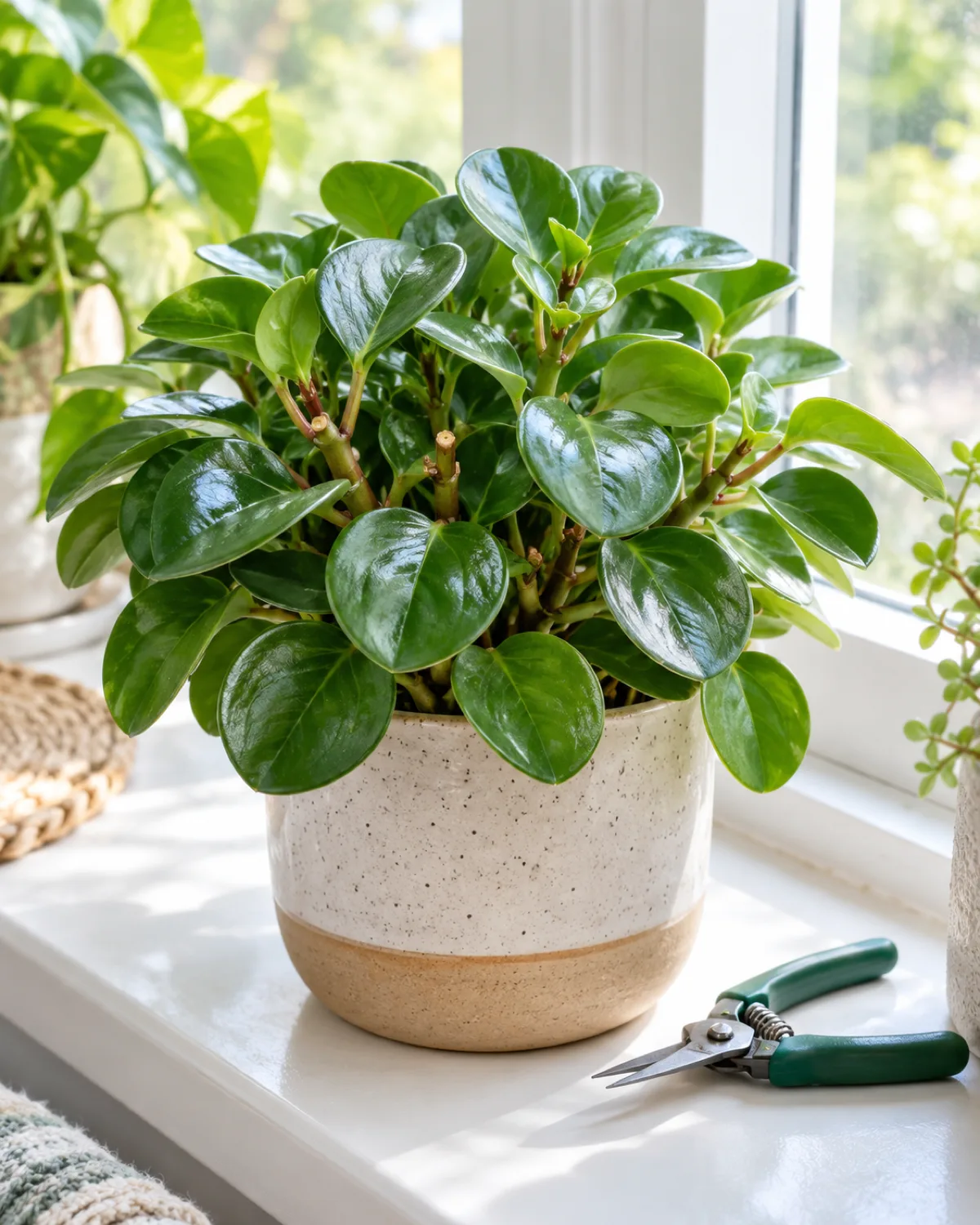
Pinching is gentler than hard pruning and works as ongoing maintenance rather than a rescue operation. Remove just the top one to two centimeters of a growing tip with your fingers or small snips — this removes the terminal bud and triggers branching without shocking the plant.
The math compounds quickly: one tip becomes two shoots, two shoots become four after the next round of pinching, four become eight. After three rounds, the plant has eight growing tips instead of one, which is what gives well-maintained plants that full, rounded look.
Pinch every time a stem extends four to six new nodes beyond the shape you want. This takes five seconds per stem and prevents legginess before it starts. The best time to pinch is during regular watering checks — make it part of the same routine.
- Best responders: coleus, fittonia, peperomia, polka dot plant, and basil branch aggressively after pinching
- Moderate responders: pothos, philodendron, and tradescantia branch well but may only produce one new shoot per pinch
- Poor responders: rosette growers like snake plants and aloe do not branch from pinching — they grow from the center and legginess is not a typical problem for them
Moving to Better Light Without Shocking the Plant
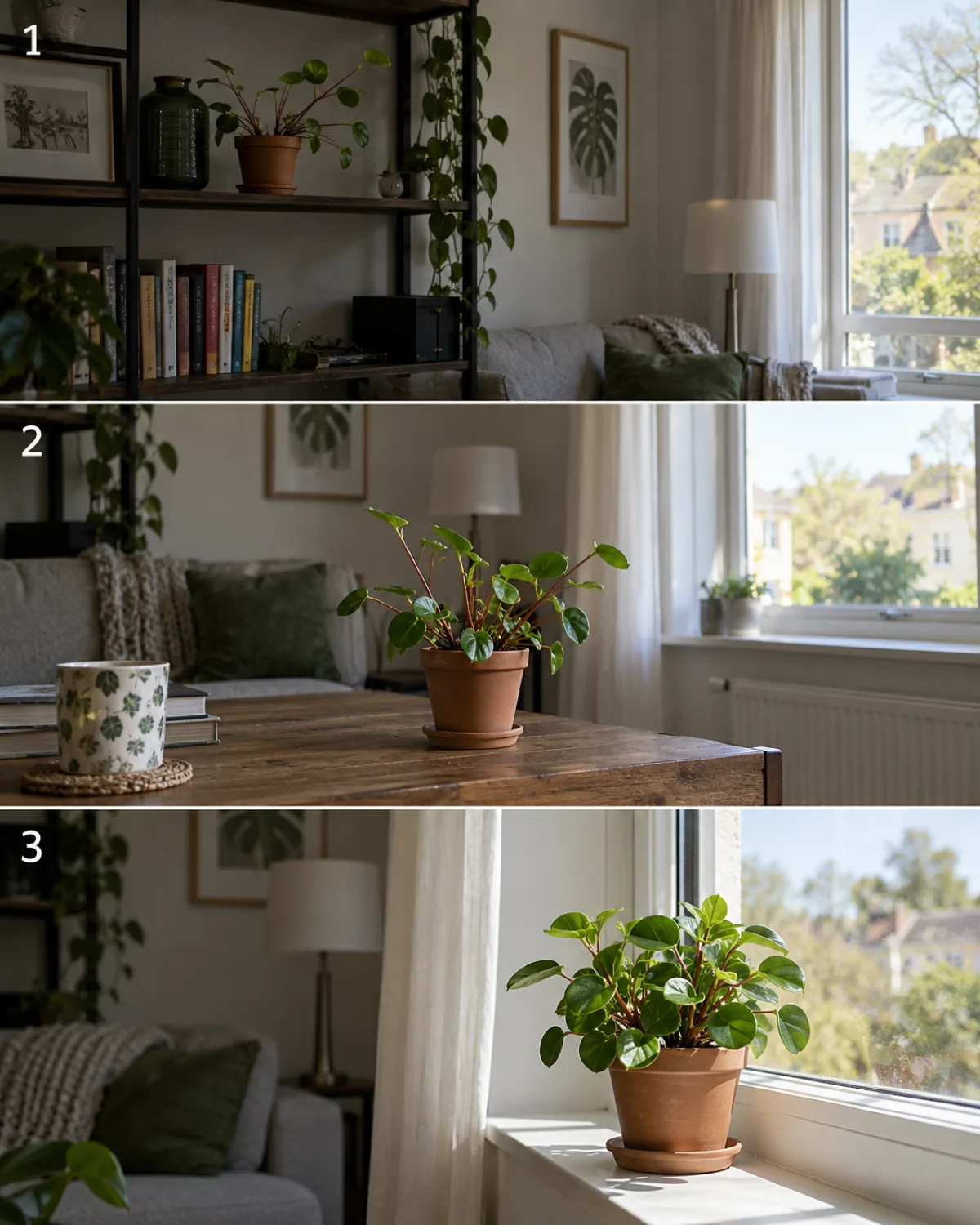
A leggy plant that has been sitting in a dim corner for months has adapted to low light — its chloroplasts are arranged to capture every available photon, and its leaf tissue is thin and photosensitive. Moving it directly into full afternoon sun is like stepping out of a dark room into bright daylight. The leaves sunburn within days, developing bleached or brown patches that do not recover.
Acclimate over seven to ten days. Move the plant thirty centimeters closer to the light source every two to three days. Or start with bright indirect light behind a sheer curtain for a week before introducing any direct morning sun. Watch the new growth: if the newest leaves are the same size or larger than the leggy ones and the internodes are short, the light level is right.
- Signs of too much, too fast: bleached white or brown patches on leaves, curling leaves, crispy edges that appear within days of the move
- Signs of just right: new growth is compact, dark green, and the internode spacing tightens within two to three weeks
- Signs of still too little: the plant keeps stretching even in the new spot — it needs to move even closer or needs supplemental lighting
When a Grow Light Is the Only Fix
North-facing apartments, interior rooms, and basements cannot provide enough natural light for compact growth regardless of how close to the window you put the plant. In these spaces, a grow light is not a luxury — it is the only way to prevent chronic legginess.
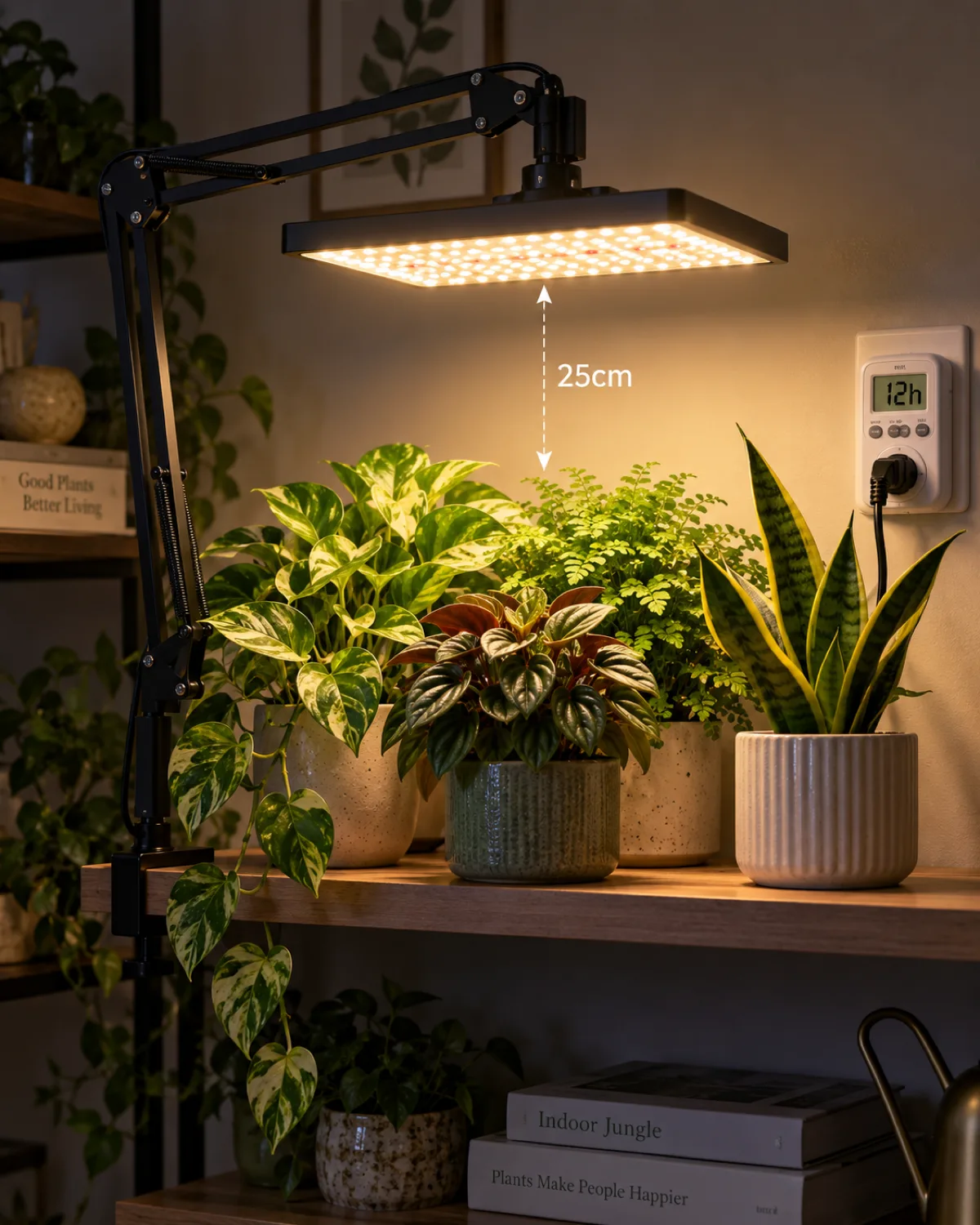
Full-spectrum LED grow lights delivering two hundred to four hundred PPFD at leaf level solve the problem permanently. Mount the light twenty to thirty centimeters above the plant canopy and set a timer to twelve to fourteen hours — this mimics tropical day length and gives the plant enough energy to produce tight internodes and full-sized leaves.
- Positioning: closer is brighter — twenty centimeters for light-hungry species, thirty for shade-tolerant ones
- Timer is non-negotiable: plants need a dark period for respiration — running a grow light twenty-four hours is counterproductive and stresses the plant
- Signs it is working: new leaves match or exceed the size of pre-stretch leaves, and internodes shorten visibly within two to three weeks of consistent use
Propagating the Leggy Cuttings Instead of Composting Them
Every leggy stem you cut off has at least one viable node, and that node can become a new plant. Instead of composting the prunings, turn them into compact new starts that grow correctly from day one — as long as you give them adequate light from the beginning.
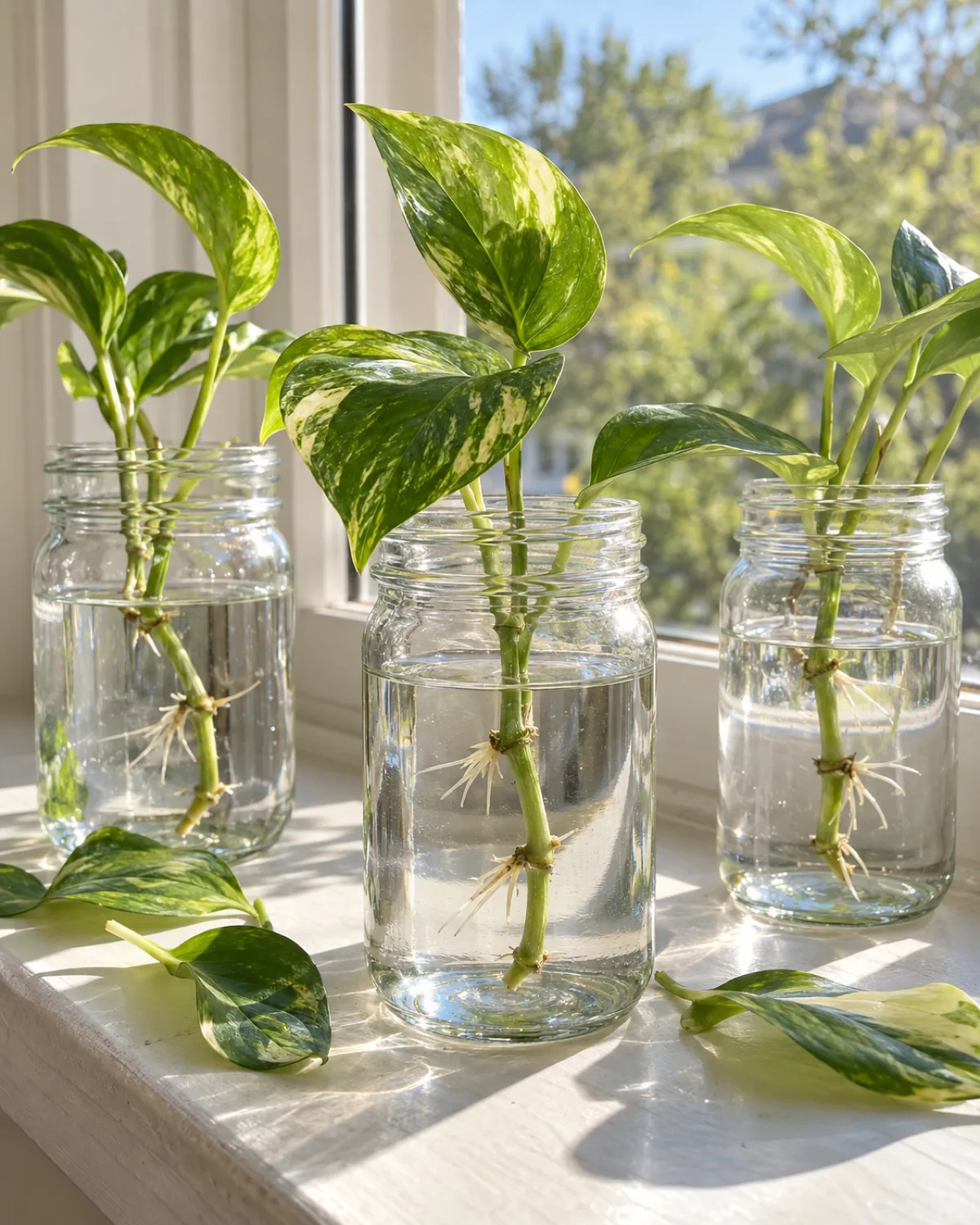
Water propagation is the simplest method for most aroids: strip the leaves from the bottom two nodes, place the cutting in a jar of clean water with the nodes submerged, and set it on a bright windowsill. Roots appear in ten to twenty days for most pothos, philodendron, and tradescantia cuttings. Change the water weekly to prevent bacterial buildup.
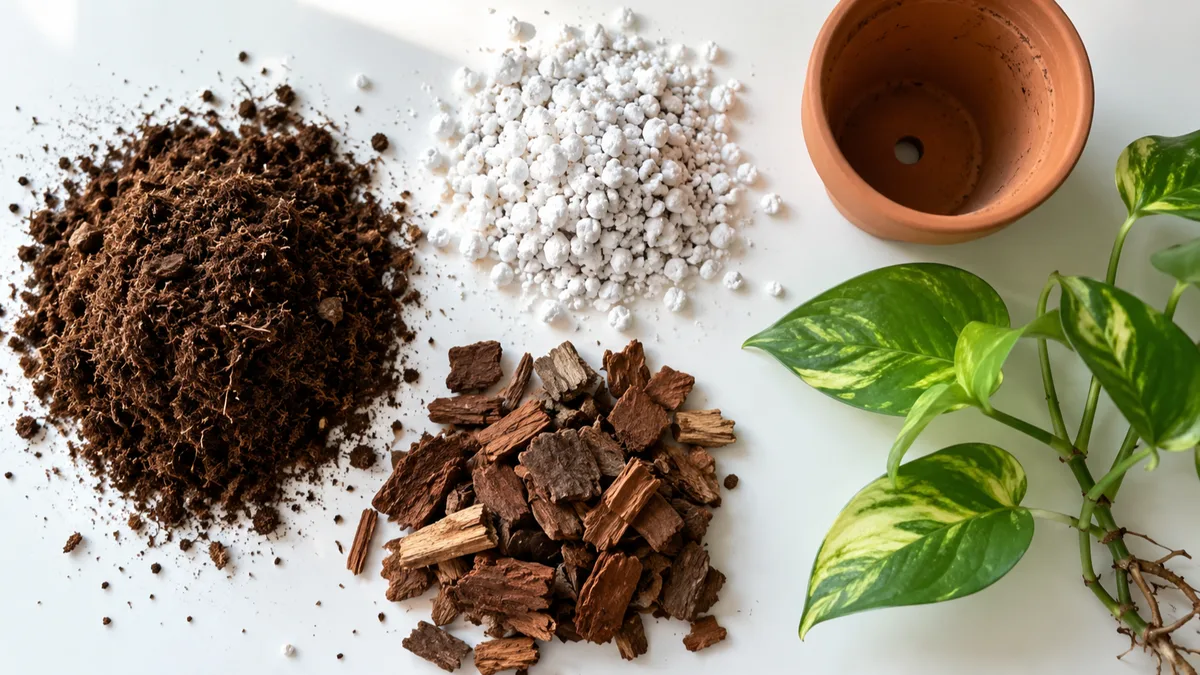
Soil propagation works for woodier stems: dip the cut end in rooting hormone, insert into moist perlite-peat mix, and cover with a clear plastic bag to hold humidity. Keep the medium moist but not soaking. New growth from the node confirms rooting, usually within three to four weeks.
- Key difference: the cuttings only got leggy because the mother plant was in poor light — place the new cuttings in good light immediately and they grow compact from the start
- Node count: each cutting needs at least one node to root — two to three nodes per cutting gives the best success rate
- Temperature: warm soil temperatures between twenty-one and twenty-five degrees Celsius speed root development significantly
Why Some Houseplants Get Leggy Faster Than Others
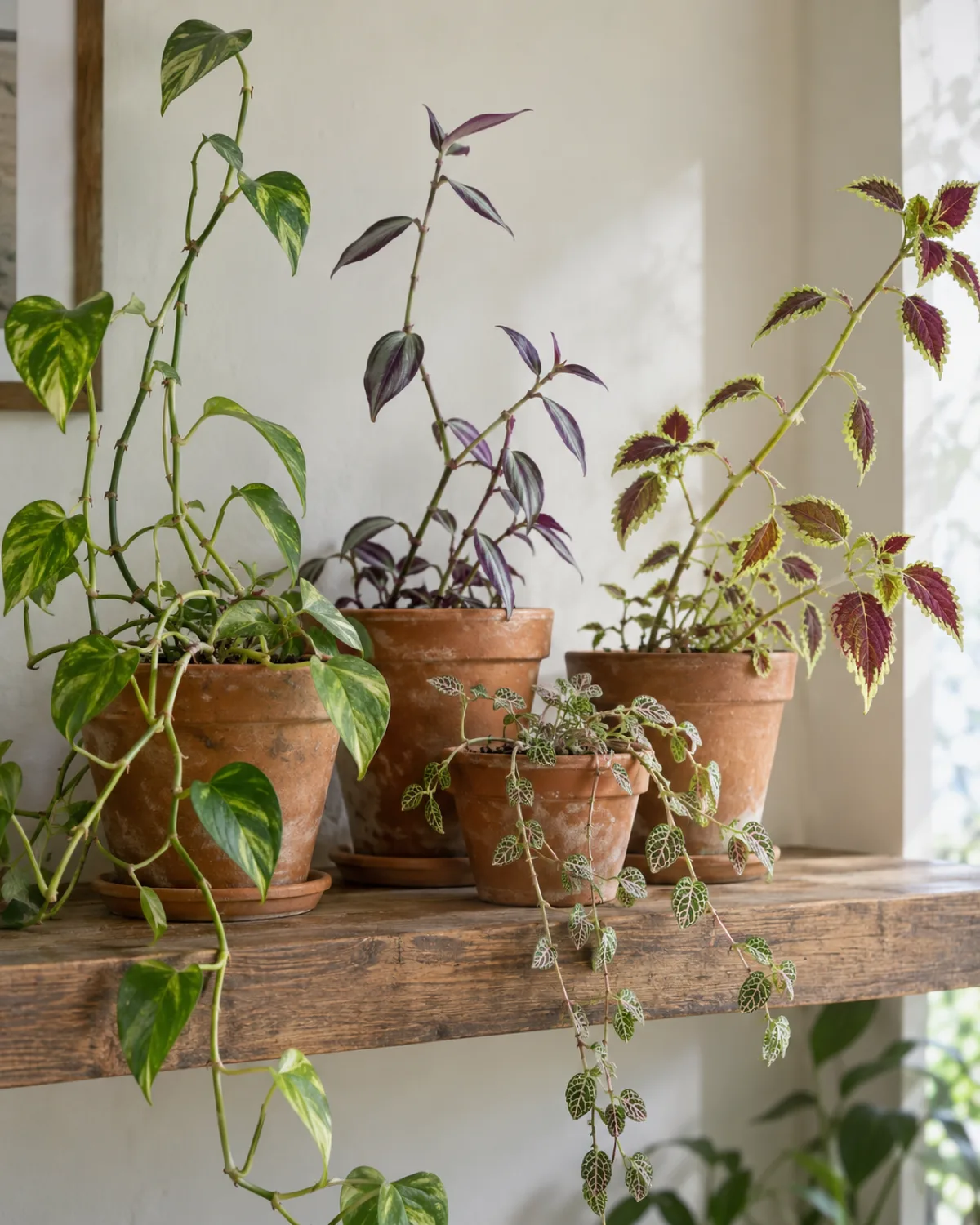
Not all houseplants respond to low light the same way. Vining species like pothos, philodendron, and tradescantia are genetically programmed to extend — long stems with widely spaced leaves is their natural growth habit in the wild, where they climb toward the canopy.
For these species, legginess is not a disease. It is their default state, and regular pruning is maintenance rather than a rescue.
Rosette growers like snake plants, aloe, and haworthia almost never get leggy. Their leaves grow from a central point at soil level, and low light causes them to stretch slightly upward but never produces the long bare stems characteristic of true legginess.
The middle group — bushy tropicals like fittonia, peperomia, coleus, and polka dot plant — gets leggy fast in low light but responds to pinching within days. These species are the most rewarding to rehabilitate because the turnaround from leggy to bushy is dramatic and quick.
- Fast leggy growers: pothos (3+ meters per season unpruned), tradescantia (two meters), Swedish ivy, lipstick plant, string of hearts
- Medium leggy growers: fittonia, coleus, peperomia, begonia, polka dot plant
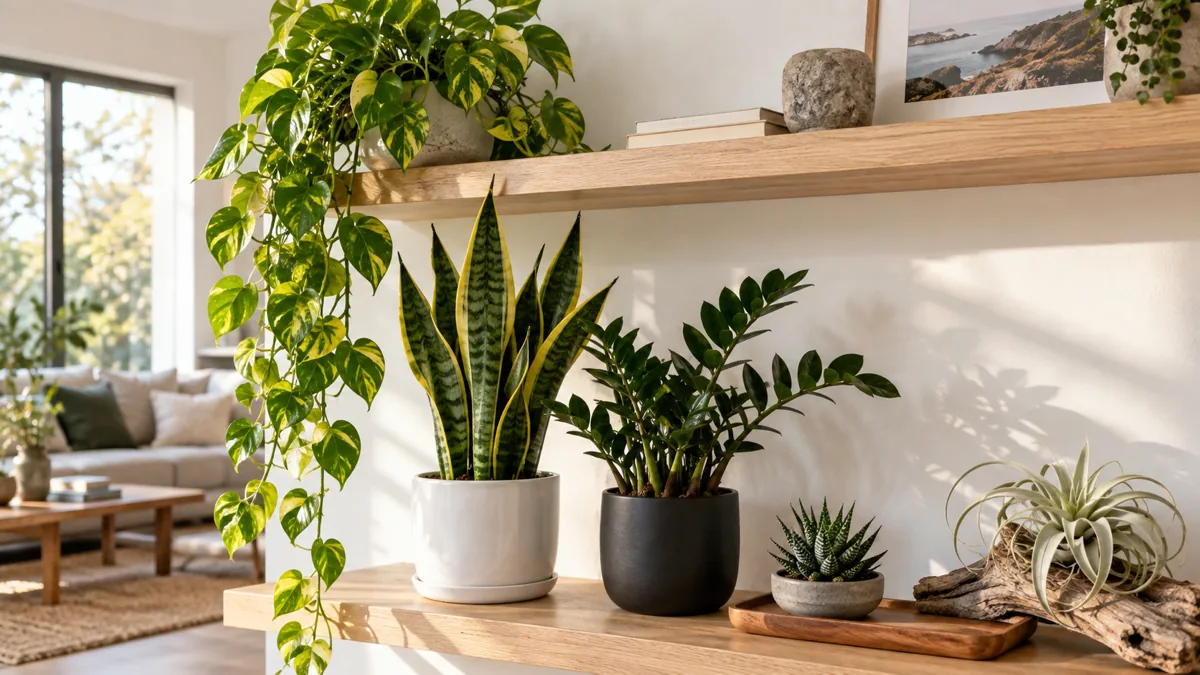
- Rarely leggy: snake plant, ZZ plant, aloe, jade plant, most succulents
Knowing which group your plant falls into sets realistic expectations. A pothos will always need pruning. A snake plant will never need it. A fittonia sits in between — it gets leggy quickly in poor light but bushes back out just as quickly with a pinch and a brighter spot.
Quick Reference
14 leggy plant essentials to save
- 1Leggy growth means long bare gaps between undersized leavesInternodes stretch eight to fifteen centimeters instead of two to five. The stem is thin, pale, and leans toward the nearest window.
- 2Low light is the number one cause of leggy houseplantsAuxin drives stems toward light. Below two hundred foot-candles, most tropicals stretch instead of producing compact growth.
- 3Quarter-turn every watering prevents one-sided leaningRotate the pot ninety degrees in the same direction each time you water to keep growth symmetrical.
- 4Winter stretch happens even in bright roomsDay length and light intensity drop thirty to forty percent between June and December. Move plants onto the sill or add a grow light.
- 5Nighttime heat above twenty-seven degrees pushes soft stemsCool nights between eighteen and twenty-one degrees slow cell elongation and produce denser, sturdier growth.
- 6Overwatering amplifies leggy growth in low lightWet soil gives the plant hydraulic pressure to stretch farther and faster. Let the top three to five centimeters dry between waterings.
- 7Excess nitrogen pushes stem length over lateral branchingSwitch to balanced fertilizer at half strength. Deep green but sparse foliage on long stems is the telltale sign.
- 8Apical dominance keeps all energy in one lengthening stemWithout pruning, the terminal bud suppresses lateral buds. Removing it forces branching and a fuller shape.
- 9Cut above a node at forty-five degrees for the cleanest regrowthNodes with visible bumps or aerial root nubs are where new shoots emerge. Angle the cut to shed water.
- 10Pinching tips every four to six nodes maintains compact shapeEach pinch point produces two shoots. After three rounds the plant has eight growing tips instead of one.
- 11Acclimate to brighter light over seven to ten daysMove thirty centimeters closer every two to three days. Direct sun on a shade-adapted plant causes sunburn within days.
- 12Grow lights solve legginess in windowless rooms permanentlyTwo hundred to four hundred PPFD at leaf level on a twelve-hour timer mimics tropical day length.
- 13Every leggy cutting with a node can become a new compact plantRoot in water or moist perlite. Place in good light from day one and the new growth starts compact.
- 14Vining species get leggy by nature and need regular pruningPothos, tradescantia, and philodendron are genetically programmed to extend. Pruning is maintenance, not rescue.
kultivy.com — leggy plant guide

Mara writes about indoor plants for people who want honest, practical care advice without the fluff. She covers everything from first-time plant parents to collectors chasing rare aroids — always with the science behind why something works. More at kultivy.com.