Walk into any plant shop and you will see half a dozen palms that all look vaguely tropical. Feathery fronds, slender trunks, the promise of a resort lobby in your living room.
The problem is that those fronds hide wildly different care needs. One palm drowns in a week of generous watering while another wilts if the soil dries out for a single day.
The twelve indoor palm types below run from the most forgiving to the most rewarding, each matched to the light, space, and watering style it actually needs.
From low-light survivors to humidity-loving divas, each palm below is matched to the room, light, and watering style it actually needs. Jump to the one that fits your space.
Parlor Palm — the low-light survivor that started it all
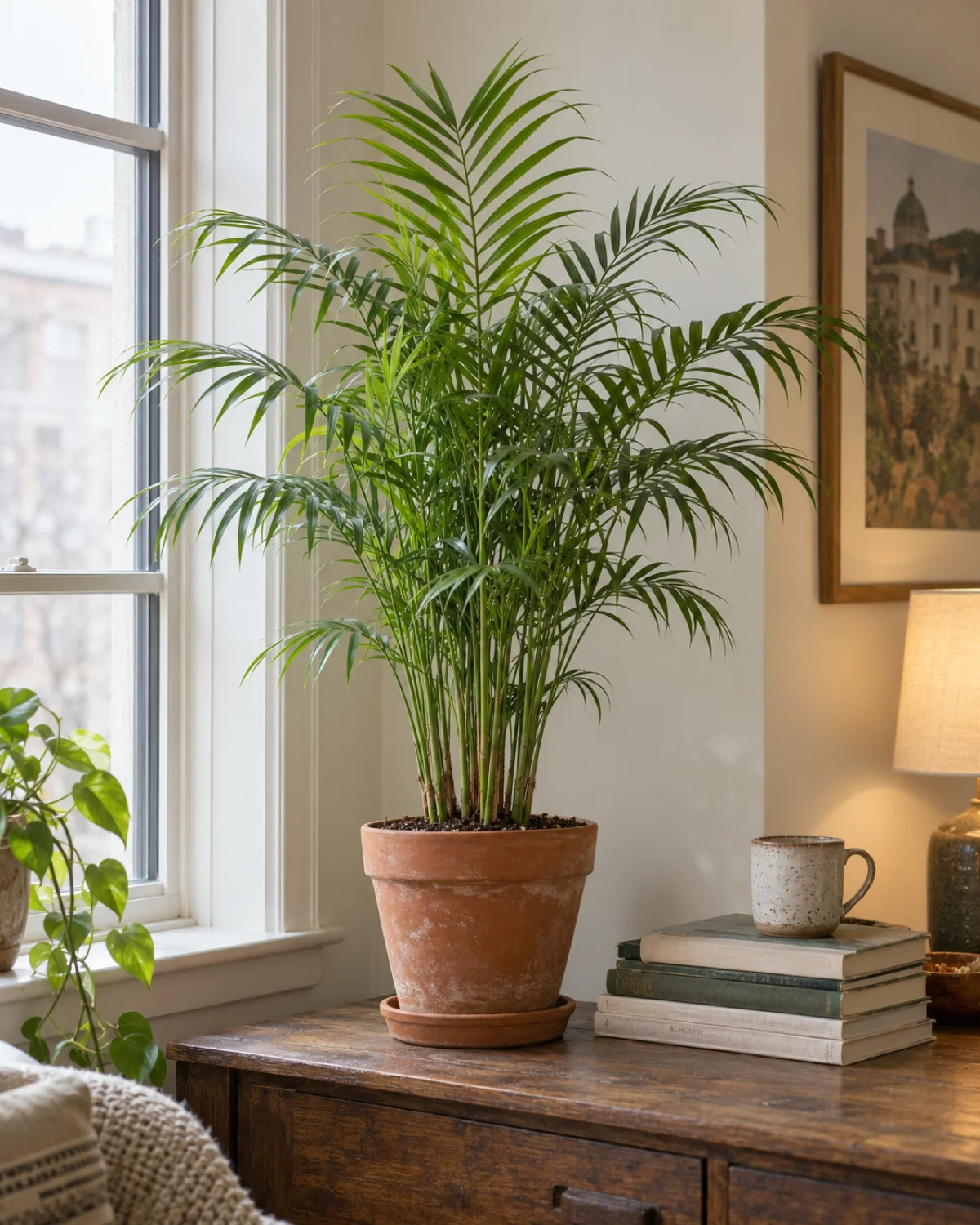
Chamaedorea elegans earned its common name in the Victorian era, when gas-lit parlors offered the kind of dim filtered light most houseplants refuse. The parlor palm not only survived those conditions — it thrived, and it still does in north-facing windows and interior rooms that other tropicals treat as death sentences.
The fronds are delicate and feathery, carried on slender green stems that cluster into a bushy silhouette rather than a single trunk. Mature plants top out around ninety to one hundred and twenty centimeters indoors, compact enough for a side table or a shelf grouping.
- Light: Low to medium indirect — one of the few palms that genuinely handles low-light conditions
- Watering: Keep the soil lightly moist; unlike most drought-tolerant palms, parlor palms resent fully dry soil
- Humidity: Average household levels (forty to fifty percent) are fine
- Pet safety: ASPCA non-toxic to cats and dogs
If you have never kept a palm alive before, this is the one to start with. The only real mistake is letting the soil go bone-dry between waterings — the frond tips brown fast when the roots lose moisture. Read the full parlor palm care guide for the watering rhythm that works.
Ponytail Palm — the caudex that stores its own water
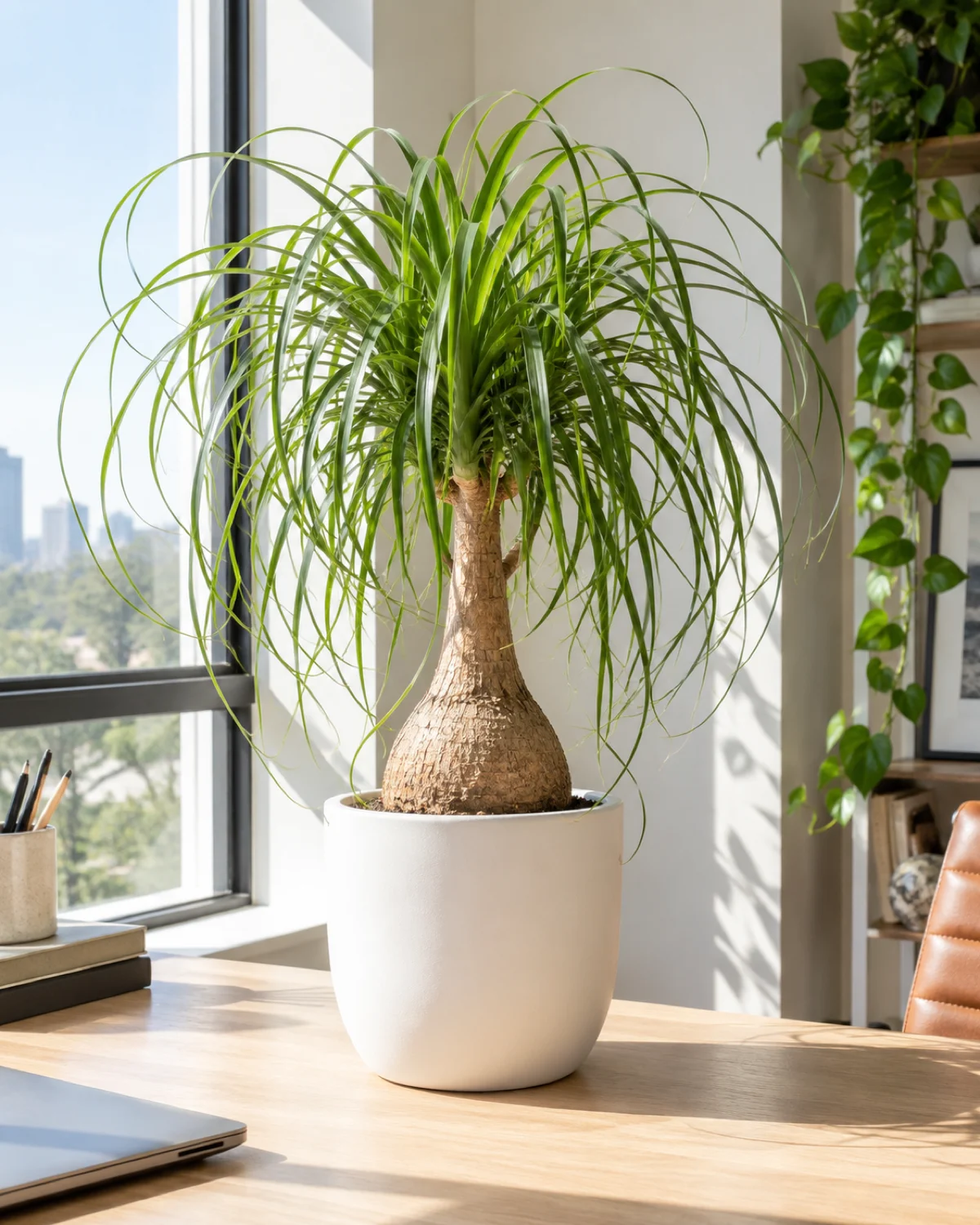
Beaucarnea recurvata is not a palm at all — it belongs to the asparagus family. But the cascading fountain of thin curly leaves and the upright trunk have earned it a permanent spot on every indoor palm list, and no one corrects the name at the nursery.
The swollen bulbous base, called a caudex, is a water reservoir. It stores enough moisture to carry the plant through weeks of neglect, making the ponytail palm the most forgiving option on this list for people who forget to water.
- Light: Bright indirect to direct — this is a sun-lover that tolerates some direct rays without burning
- Watering: Soak the soil, then let it dry out completely before the next round — classic soak-and-dry
- Growth rate: Slow; the caudex thickens noticeably over years, not months
- Pet safety: ASPCA non-toxic
The ponytail palm stays compact for a long time, but give it a decade and the trunk can reach impressive girth. The care guide covers the squeeze test for watering timing — a gentle press on the caudex tells you whether the reservoir is full or empty.
You do not need to read all twelve. Pick the constraint below that matches your space and jump to the palms that solve it.
Areca Palm — the feathery room divider
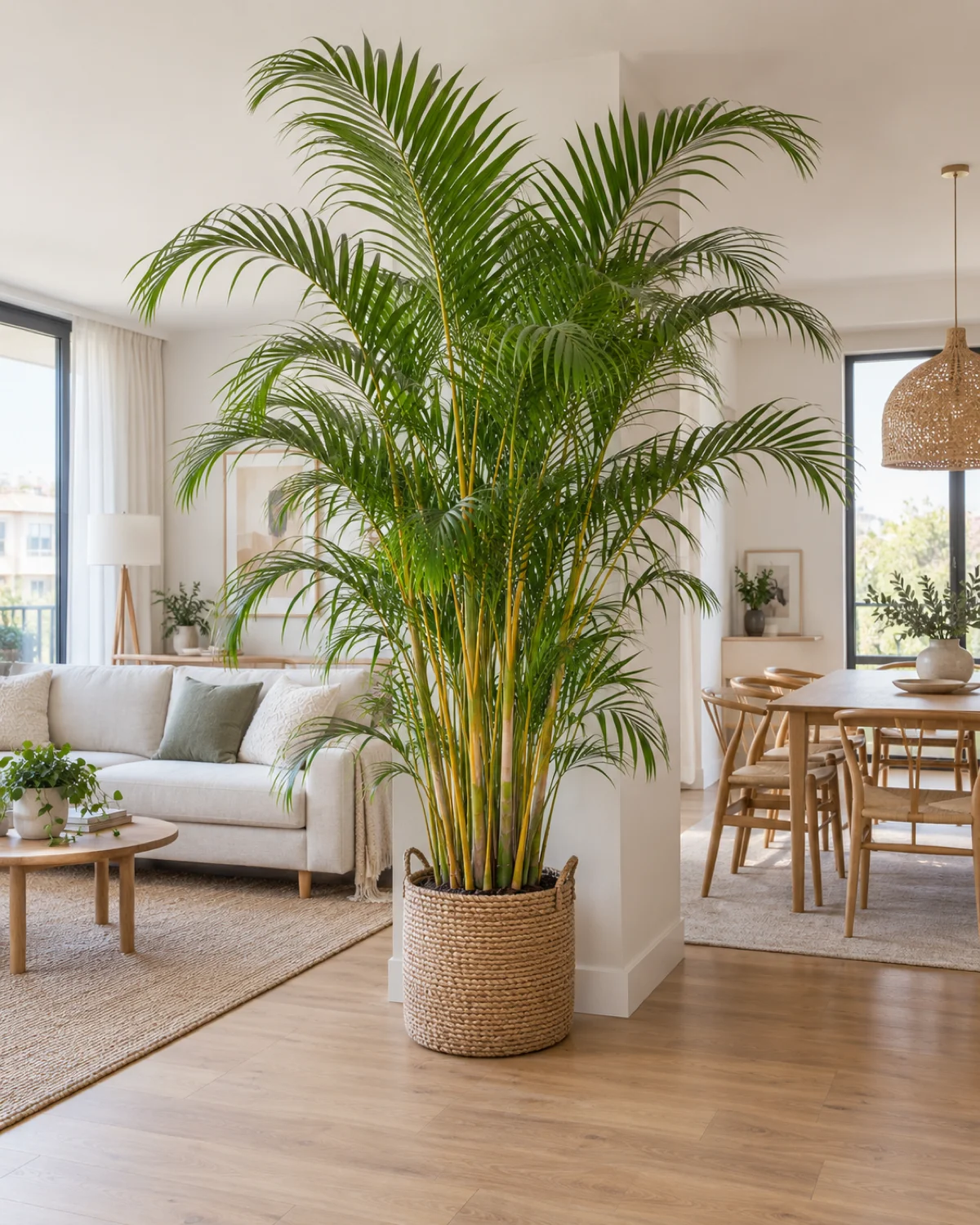
Dypsis lutescens is the palm most people picture when they hear the word tropical. Clusters of golden-stemmed canes fan outward and upward, each one topped with arching feathery fronds that filter light like a natural screen. A mature areca palm reaches one hundred and fifty to two hundred and ten centimeters indoors — tall enough to divide a room without blocking the view through it.
The golden color of the cane stems is not a deficiency. It is the species signature. Young stems start green and develop a yellow-gold tone as they mature, which is why the nursery tag sometimes reads golden cane palm or butterfly palm.
- Light: Bright indirect — direct afternoon sun can scorch the fronds, but morning sun is fine
- Watering: Keep the soil lightly damp; arecas are not drought-tolerant and will yellow from the bottom up if the soil dries out repeatedly
- Size: One hundred and fifty to two hundred and ten centimeters indoors, spreading habit
- Common issue: Lower frond yellowing is normal shedding, not a sign of trouble unless it accelerates
The full areca palm care guide covers the frond-yellowing timeline and the humidity trick that keeps spider mites away. If you want a palm that fills a bright corner fast, this is the one.
Kentia Palm — the elegant slow grower for dim rooms
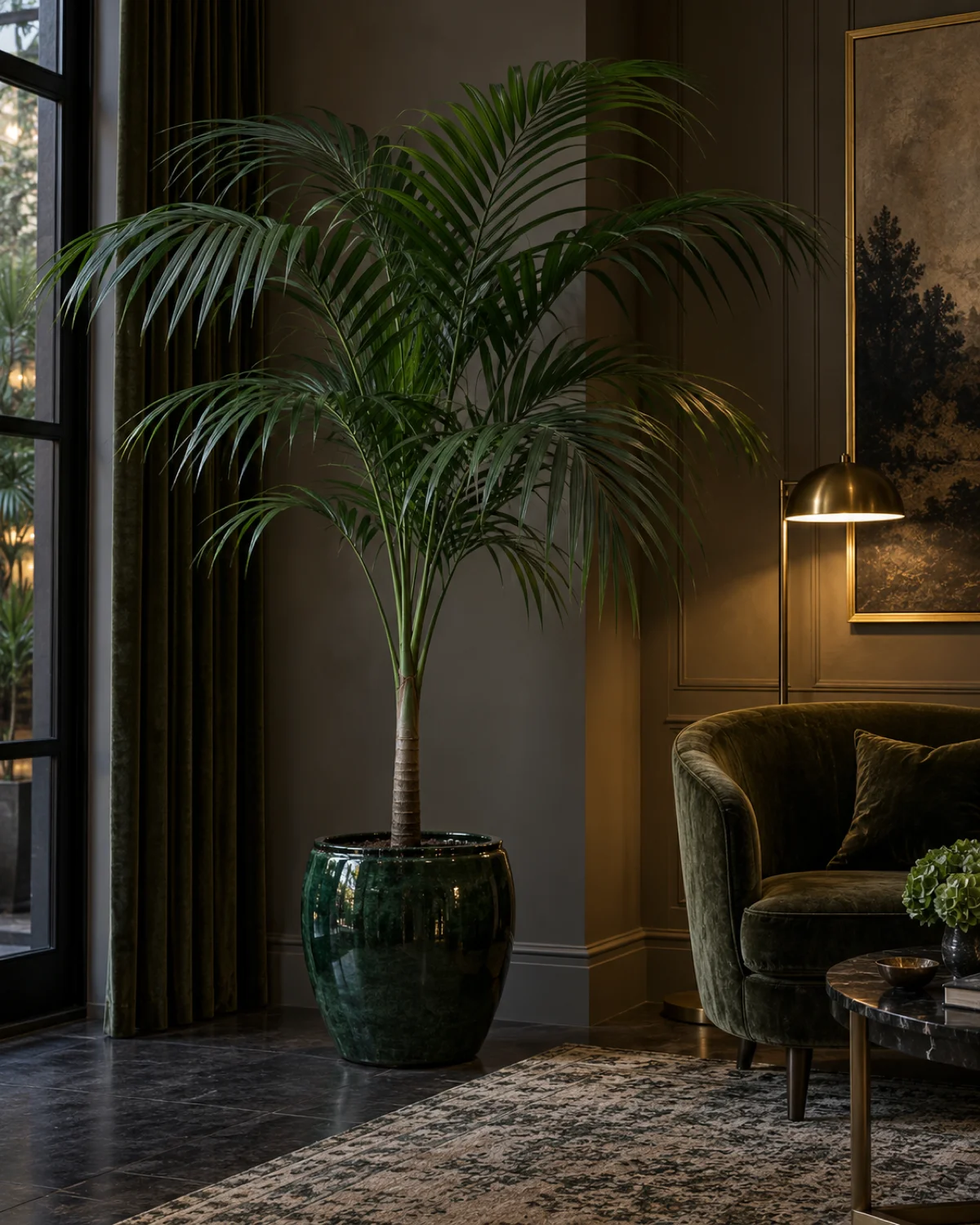
Howea forsteriana is the palm that fills hotel lobbies and upscale waiting rooms, and the reason is not just the graceful silhouette. Kentia palms tolerate lower light and drier air than almost any other full-sized indoor palm, which means they look elegant in exactly the kind of interior spaces where most tropicals slowly decline.
Growth is deliberate — a new frond every few months, a few centimeters of trunk height per year. That slow pace is the trade-off for the premium price tag. Kentia seeds take three to six months just to germinate, and the palm needs years to reach a saleable size. You are paying for patience someone else already spent.
- Light: Low to bright indirect — one of the best large palms for dim rooms and north-facing windows
- Watering: Let the top few centimeters of soil dry between waterings; kentias tolerate slight underwatering better than overwatering
- Mature size: One hundred and eighty to three hundred centimeters indoors over many years
- Air tolerance: Handles dry indoor air better than areca or majesty palms
A kentia in a dim corner will hold its shape for years without any intervention beyond watering. It is the set-and-forget palm for people who want a tall indoor plant that does not demand constant attention.
Every palm on this list follows the same four principles. Get these right and the species-specific quirks become manageable details rather than deal-breakers.
Bamboo Palm — the humidity machine that cleans air
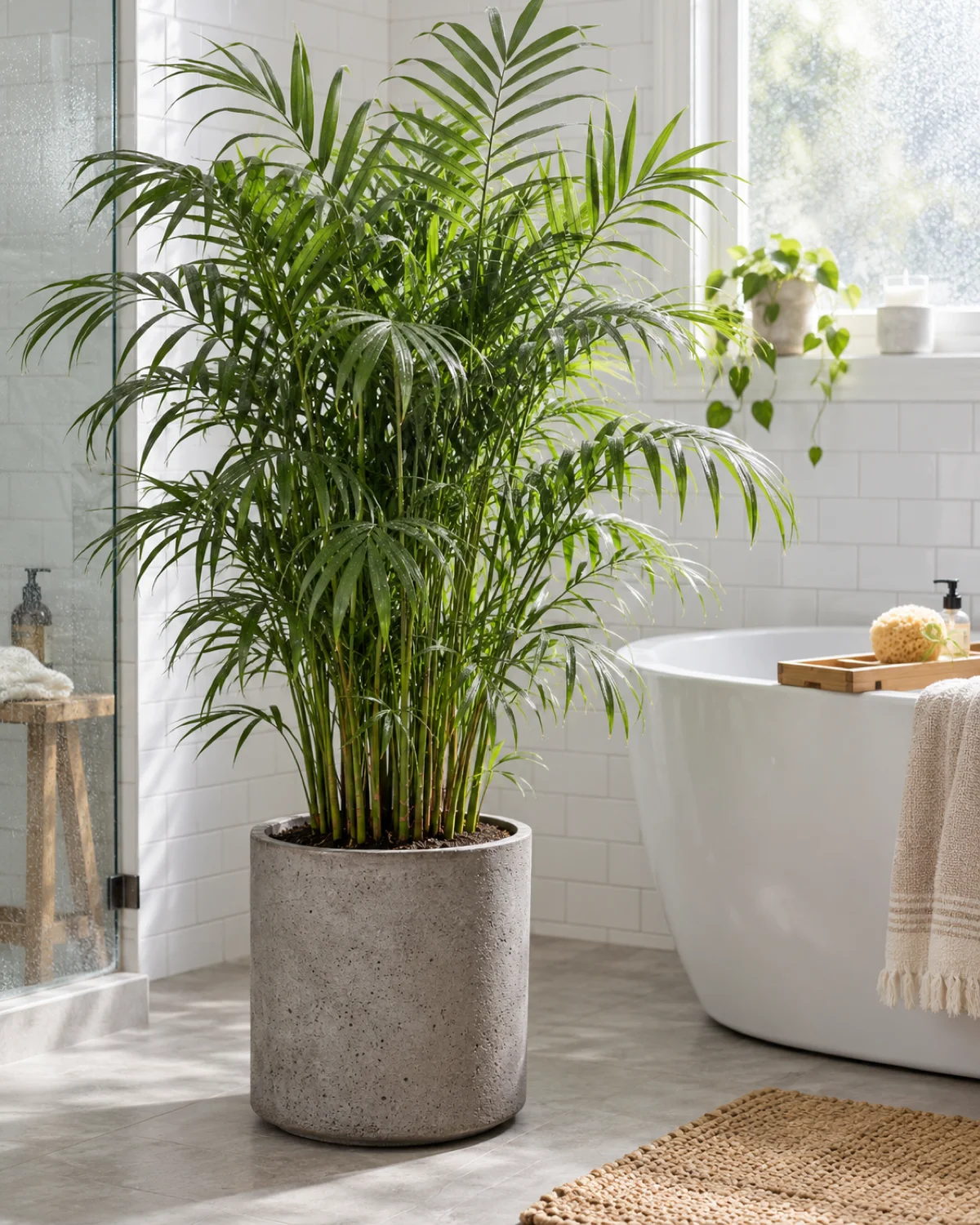
Chamaedorea seifrizii looks like a cluster of bamboo canes, but the stems are true palm tissue. The reed-thin trunks carry fine-textured fronds that are denser and more layered than the areca palm's, creating a bushy hedge-like silhouette that works beautifully as a room screen or bathroom companion.
NASA's clean air study flagged bamboo palm as one of the top plants for filtering formaldehyde and xylene — the same compounds that off-gas from new furniture and paint. Whether that matters at household scale is debatable, but the palm's reputation as an air-purifying plant has not faded.
- Light: Medium to bright indirect — tolerates lower light than areca palms without thinning out
- Watering: Keep evenly moist; bamboo palms are streamside species that dislike dry soil
- Size: One hundred and twenty to one hundred and eighty centimeters indoors, clumping habit
- Main enemy: Spider mites — boosting humidity above fifty percent is the best prevention
The full bamboo palm care guide covers the spider mite inspection routine and the humidity range that keeps the fronds clean. If you want a palm for a bathroom or a humid kitchen, bamboo is the strongest match.
Majesty Palm — the thirsty diva that rewards effort
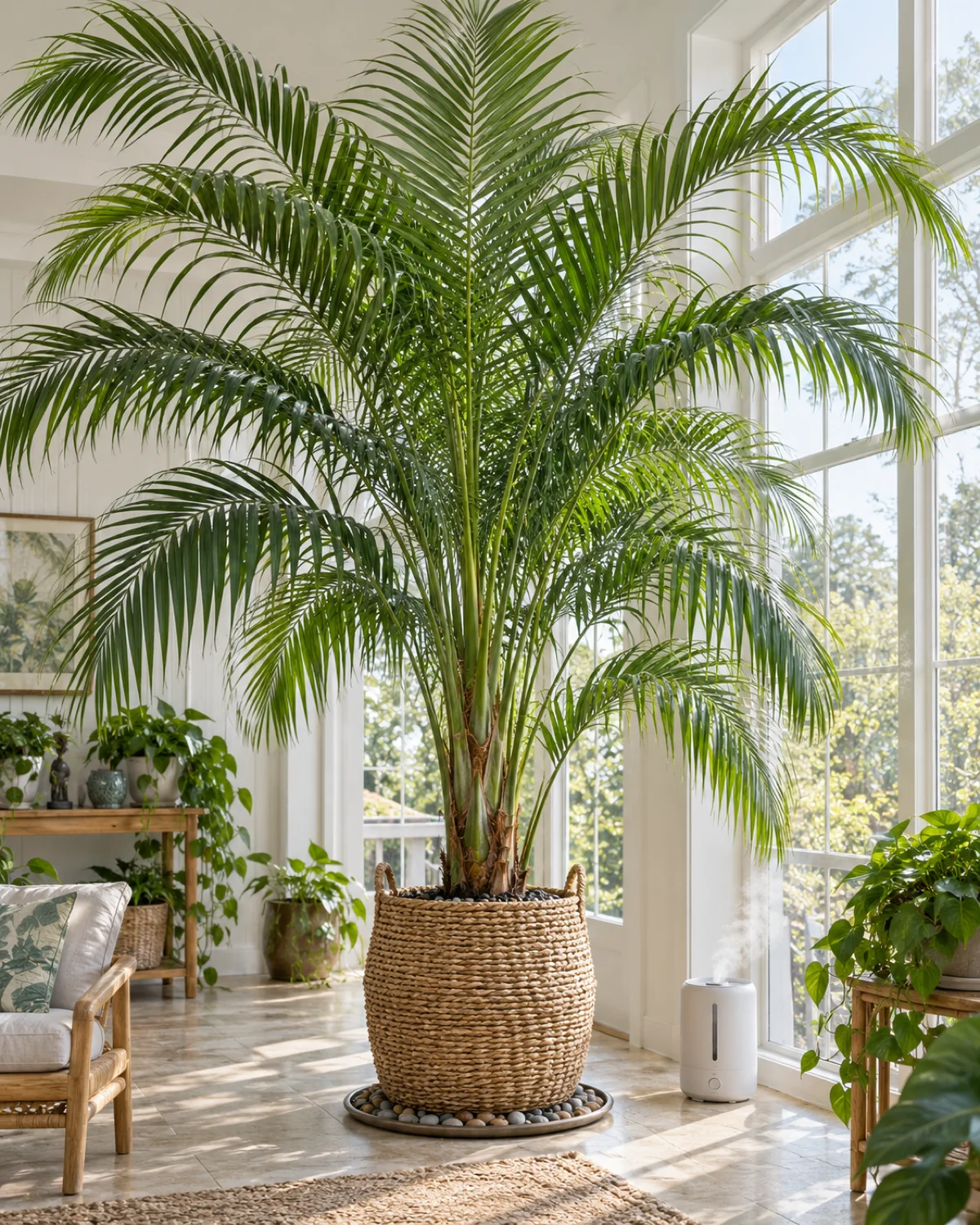
Ravenea rivularis produces the most dramatic fronds on this list — long, symmetrical, and deeply arching from a stout central trunk. A well-grown majesty palm looks like it belongs in a tropical resort, and that is precisely the environment it wants you to recreate indoors.
The catch is that majesty palms are genuinely demanding. They need bright indirect light for most of the day, consistently moist soil, and humidity above fifty percent. Let any one of those slip and the frond tips start browning within days. The combination of high light, high moisture, and high humidity is harder to maintain than most people expect at the nursery.
- Light: Bright indirect — needs more light than any other palm on this list except yucca
- Watering: Consistently moist, never soggy — the line between happy and drowning is narrow
- Humidity: Fifty percent minimum, sixty-plus preferred — a humidifier is almost mandatory in winter
- Growth: Fast by palm standards, reaching one hundred and eighty to two hundred and forty centimeters indoors
The frond browning that frustrates most owners traces back to humidity. A pebble tray alone rarely pushes the air above fifty percent — a small humidifier aimed at the fronds is the real fix. If you are willing to meet the demands, the visual payoff outweighs any other palm on this list.
Cat Palm — the soft-textured tabletop palm
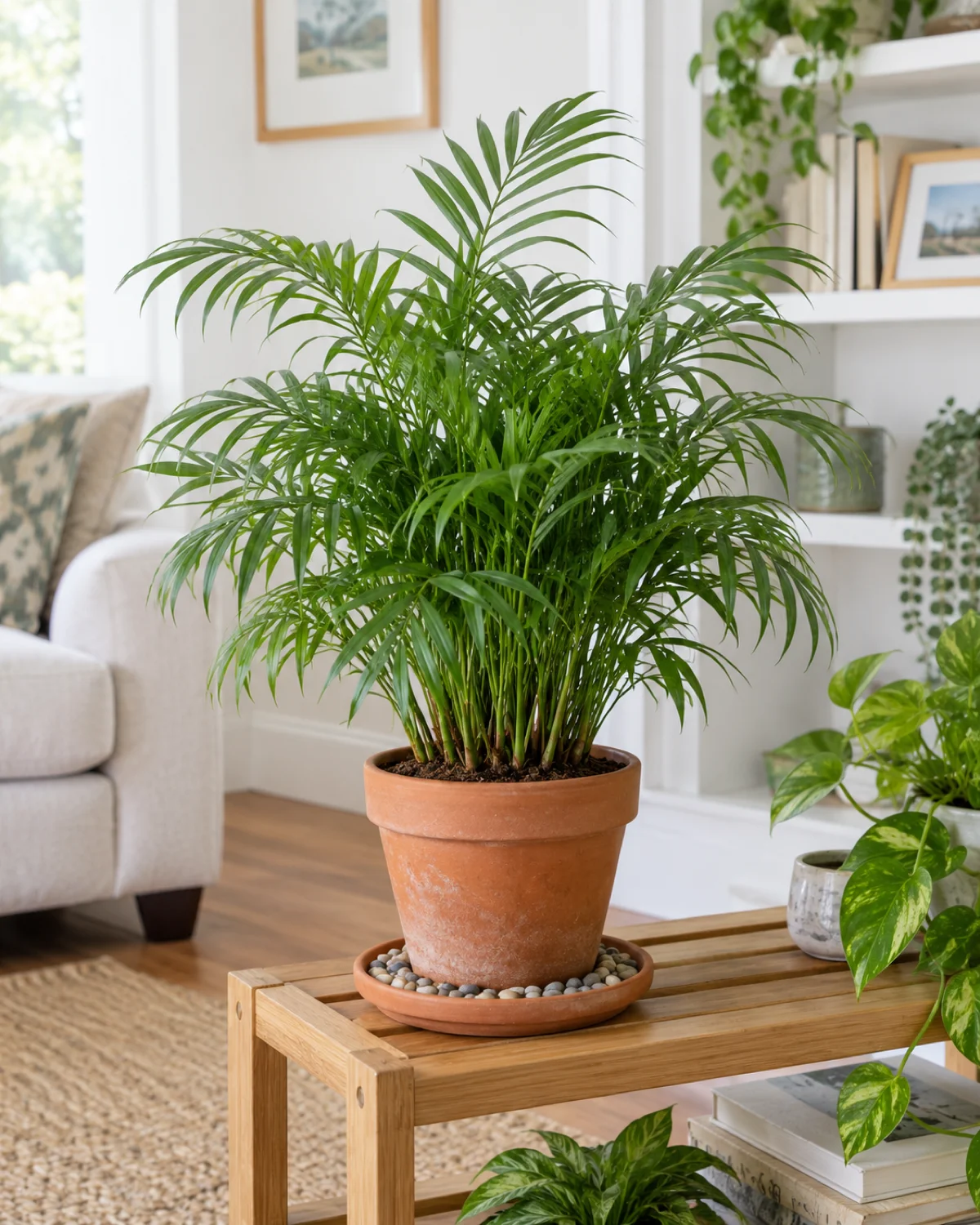
Chamaedorea cataractarum is the parlor palm's softer, denser cousin. The fronds are finer-textured and more numerous, creating a full rounded silhouette that looks lush even at a compact ninety centimeters. It is one of the best indoor palm types for tabletops, shelves, and plant stands where a floor palm would overwhelm the space.
Cat palms are native to streamside habitats in Mexico, which explains their one non-negotiable demand: consistently moist soil. They are not drought-tolerant, and they let you know it — the frond tips brown fast when the soil dries out even once.
- Light: Bright indirect preferred; handles medium light but thins out noticeably in low-light rooms
- Watering: Keep evenly moist at all times; a pebble tray underneath helps maintain humidity
- Size: Sixty to one hundred and twenty centimeters indoors, compact enough for tabletops
- Pet safety: ASPCA non-toxic — one of the safest palms for homes with cats and dogs
If you want a palm that stays small and soft-looking without the height commitment of an areca or kentia, cat palm fills the niche. Pair it with a pebble tray and a bright east-facing window and it will stay full for years.
Fan Palm — the bold leaf shape that breaks the frond pattern
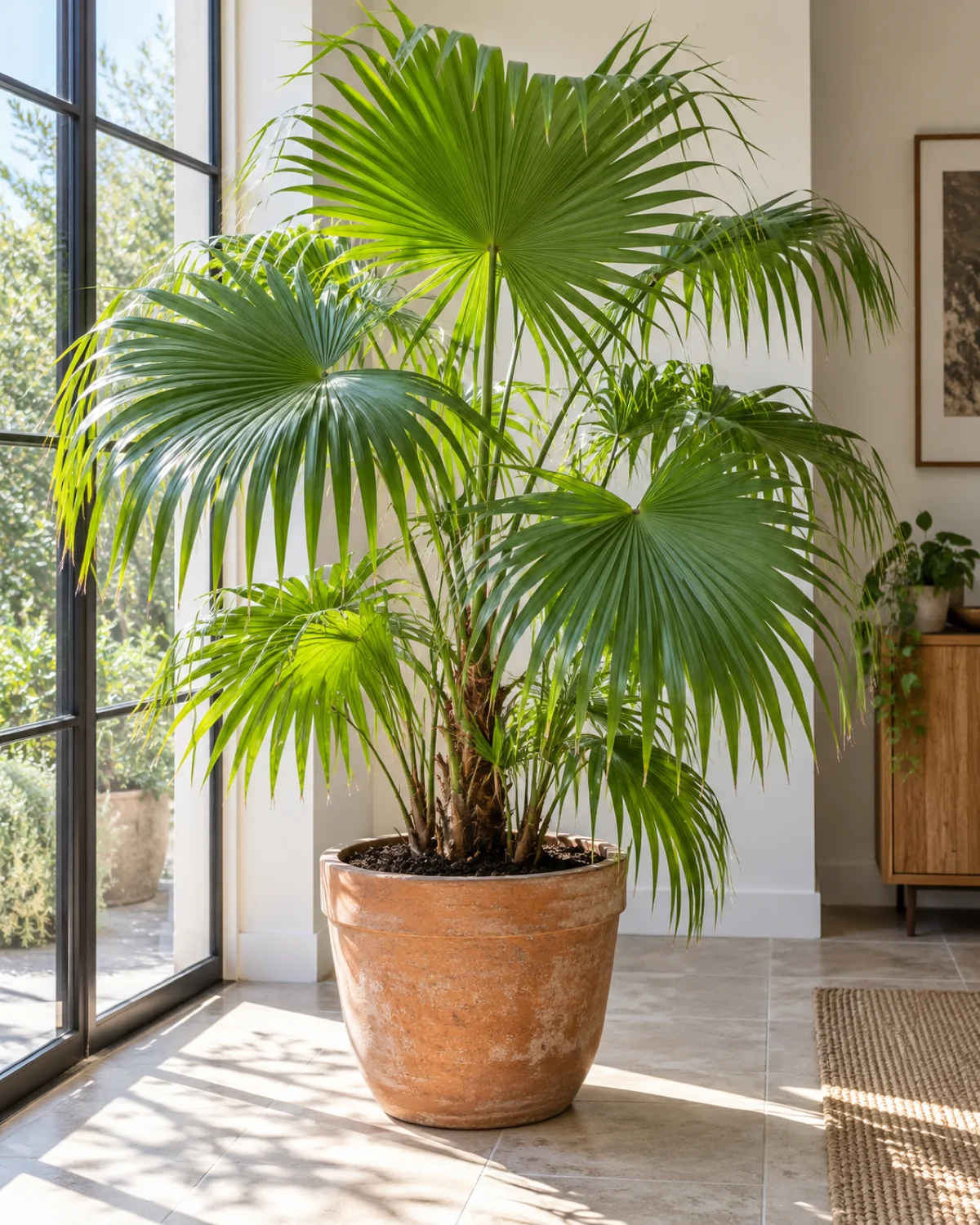
Livistona chinensis is the palm that makes visitors stop and stare, because the leaves look nothing like the feathery fronds on every other species on this list. Each leaf is a broad palmate fan — up to sixty centimeters across on a mature plant — with segmented tips that droop slightly at the ends, giving the whole canopy a weeping effect.
The distinction matters beyond aesthetics. Palmate leaves are structurally different from pinnate fronds: they transpire differently, catch light differently, and create a completely different silhouette. A fan palm in a living room corner reads as a sculptural statement piece, not just another tropical.
- Light: Bright indirect to some direct — needs more light than parlor or kentia palms
- Watering: Moderate; let the top few centimeters dry between waterings
- Size: Manageable indoors if you choose dwarf cultivars; full-sized Livistona chinensis grows enormous outdoors
- Signature: The segmented leaf tips droop with age, adding a weeping cathedral effect
Fan palms grow slowly enough indoors that the size stays manageable for years. The one caveat is that the leaves are wide and rigid, so the plant needs horizontal space — it will not tuck neatly into a narrow corner the way an areca does.
Lady Palm — the shade-tolerant clumper
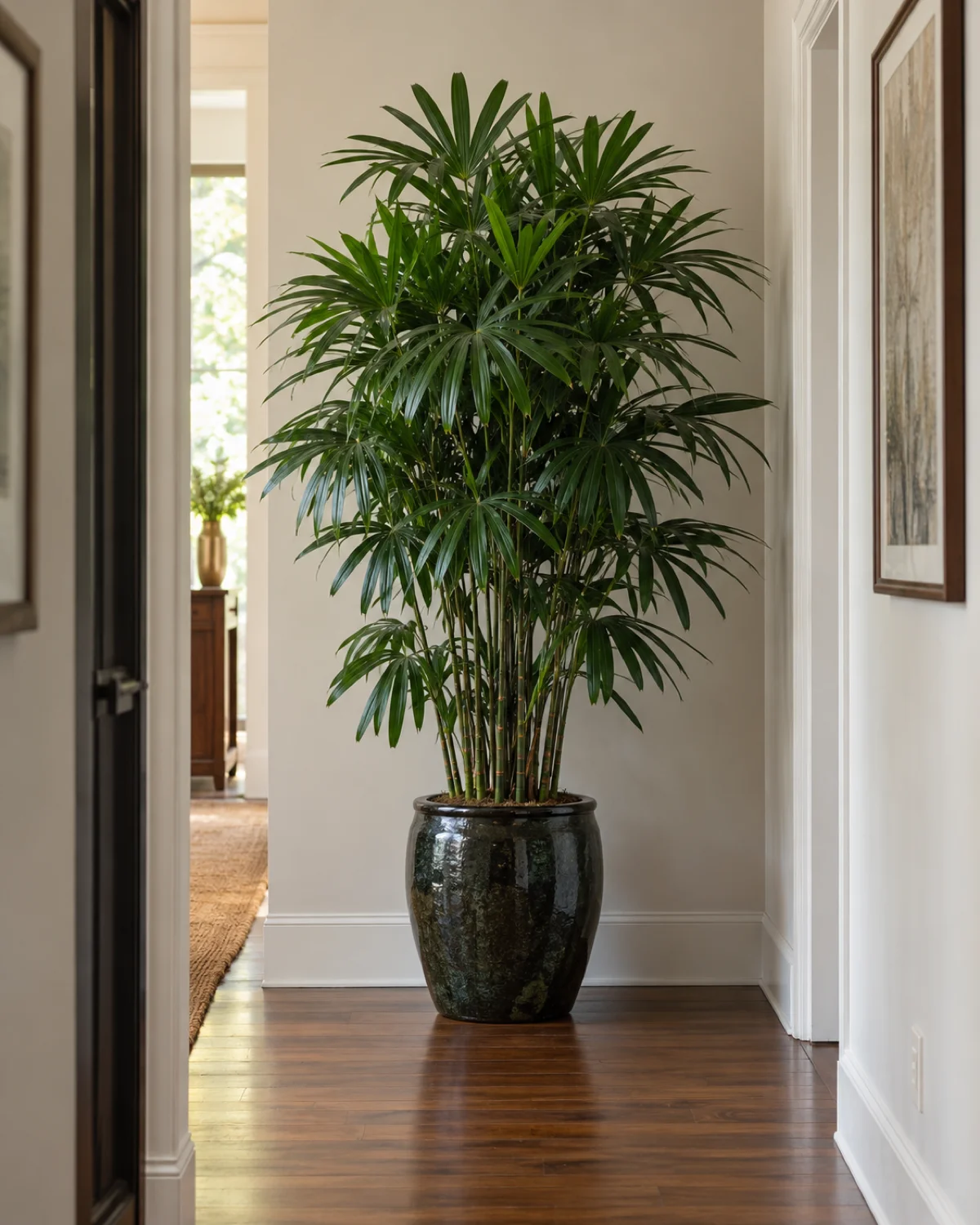
Rhapis excelsa is the palm for the hallway, the interior room, and every dim corner where even a kentia might struggle to look its best. The dark green fan-shaped leaves on slender bamboo-like stems create a dense, hedge-like mass that reads as a living wall rather than a single specimen plant.
Lady palms genuinely thrive in low to medium light — not just survive, but put out new growth. They also tolerate cooler temperatures down to ten degrees Celsius, which makes them one of the few palms that can sit near a drafty entrance without brown-tipping through winter.
- Light: Low to medium indirect — one of the most shade-tolerant palms alongside the parlor palm
- Watering: Keep evenly moist; lady palms prefer consistent moisture but tolerate brief dry spells better than cat palms
- Size: One hundred and twenty to one hundred and eighty centimeters indoors, clumping growth
- Temperature: Handles cool to warm; more cold-tolerant than most tropical palms on this list
The clumping habit means a lady palm gets wider over time, not just taller. It works best where you have horizontal room — a wide hallway, a room divider spot, or a plant corner where the dense silhouette can fill the space properly.
Sago Palm — the living fossil that is not actually a palm
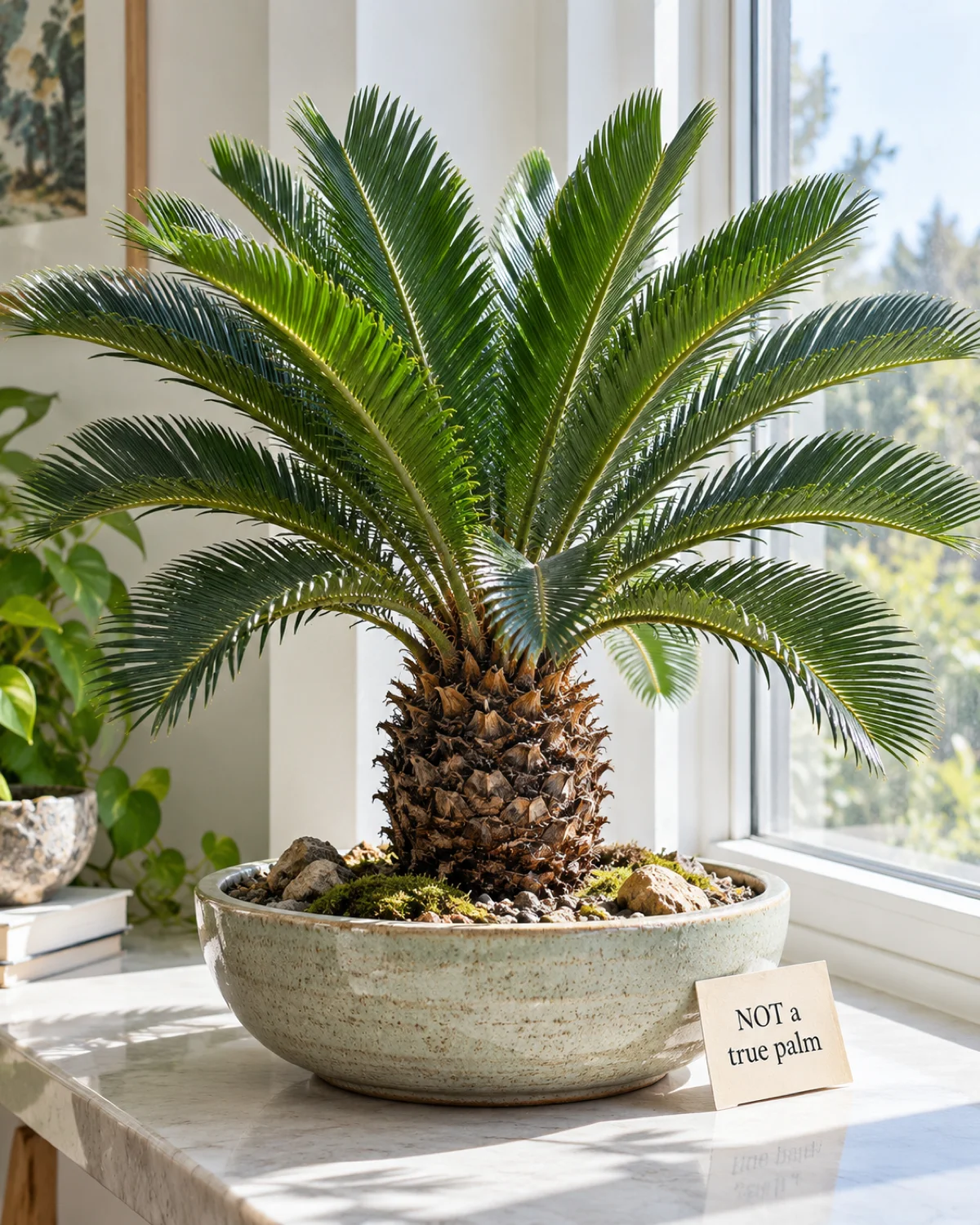
Cycas revoluta is a cycad, not a true palm. It predates the dinosaurs by roughly two hundred million years, which makes it one of the oldest seed plant lineages still alive. The stiff, dark green rosette of pinnate leaves and the rough-textured trunk give it a sculptural, prehistoric look that no true palm can replicate.
Growth is glacially slow — expect one new frond flush per year, each emerging as a ring of soft light-green leaves that gradually harden and darken. That pace means a sago palm holds its form without pruning and barely outgrows its pot.
- Light: Bright indirect to direct — sagos tolerate some full sun indoors, unusual for most palm-shaped plants
- Watering: Infrequent; let the soil dry out between waterings — overwatering rots the trunk
- Growth: One flush of new fronds per year; extremely slow
- Toxicity: Highly toxic to pets — all parts, especially the seeds, contain cycasin. Keep away from dogs and cats entirely
The toxicity warning is serious. Sago palm ingestion is one of the most common causes of fatal plant poisoning in dogs. If you have pets, skip this one entirely and choose a parlor palm, ponytail palm, or cat palm instead. The prehistoric look is not worth the risk.
Fishtail Palm — the only palm with compound leaves
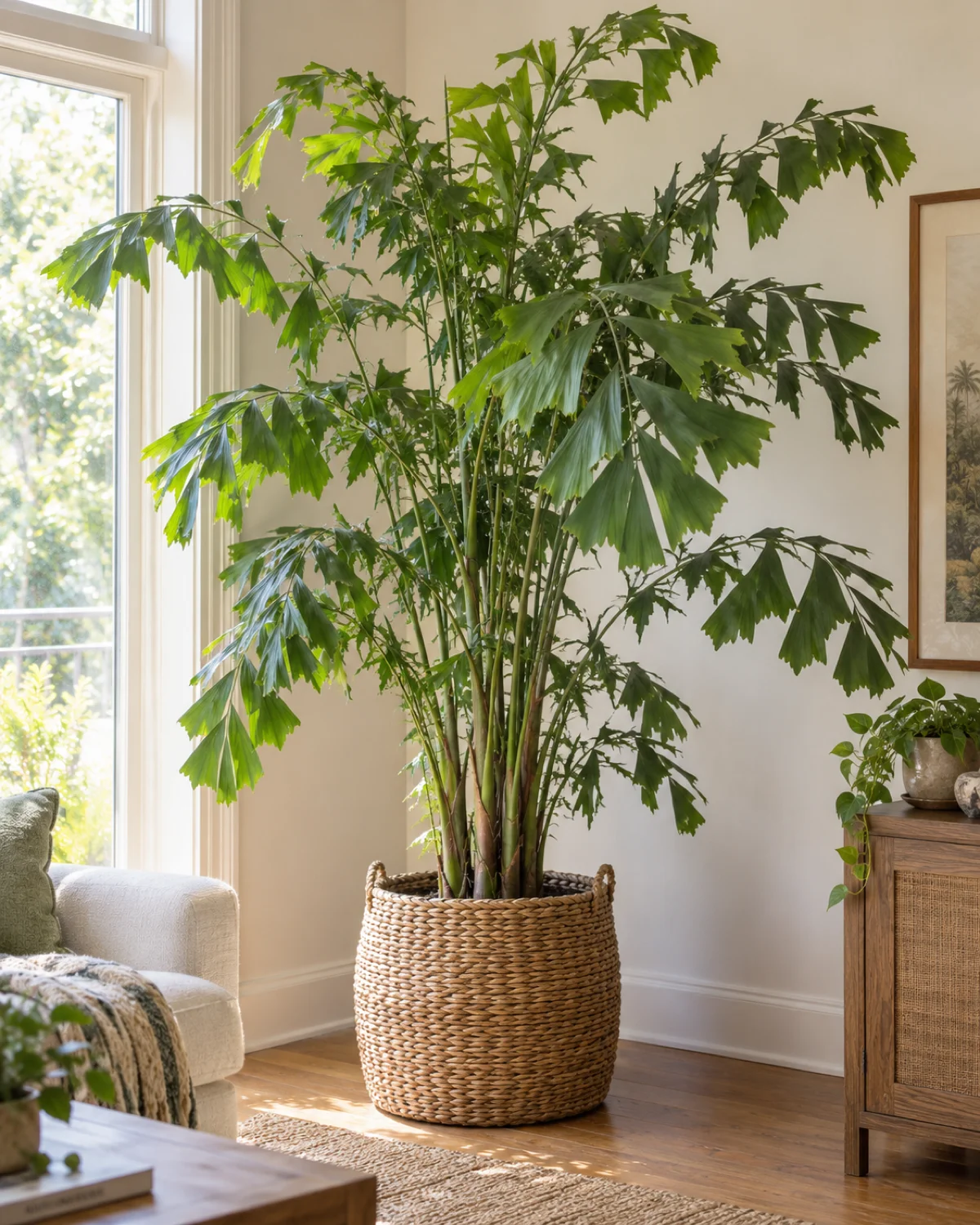
Caryota mitis is the only indoor palm type with bipinnate leaves — each frond is divided twice, producing leaflets that are triangular and ragged-edged, shaped like the tail fin of a fish. No other palm in this list or any nursery has that leaf structure, which makes fishtail palms instantly recognizable from across a room.
The clumping habit sends up multiple stems, each one growing quickly to one hundred and eighty centimeters or more indoors. Fishtail palms are monocarpic at the stem level — each individual cane flowers once and then dies — but the clump continuously produces new replacements from the base.
- Light: Bright indirect — needs consistent light to maintain the dense leaflet coverage
- Watering: Keep evenly moist; fishtail palms are tropical understory species that dislike dry soil
- Humidity: High — sixty percent or more keeps the leaflet edges clean
- Unique trait: Monocarpic stems, but new canes replace spent ones continuously
Fishtail palms demand more humidity and warmth than most indoor palms. If your home runs below fifty percent humidity in winter, the ragged leaf edges will brown and curl — and on a fishtail, that damage is more visible than on any smooth-fronded species. A humidifier is nearly non-negotiable.
Yucca Palm — the desert tough trunk palm
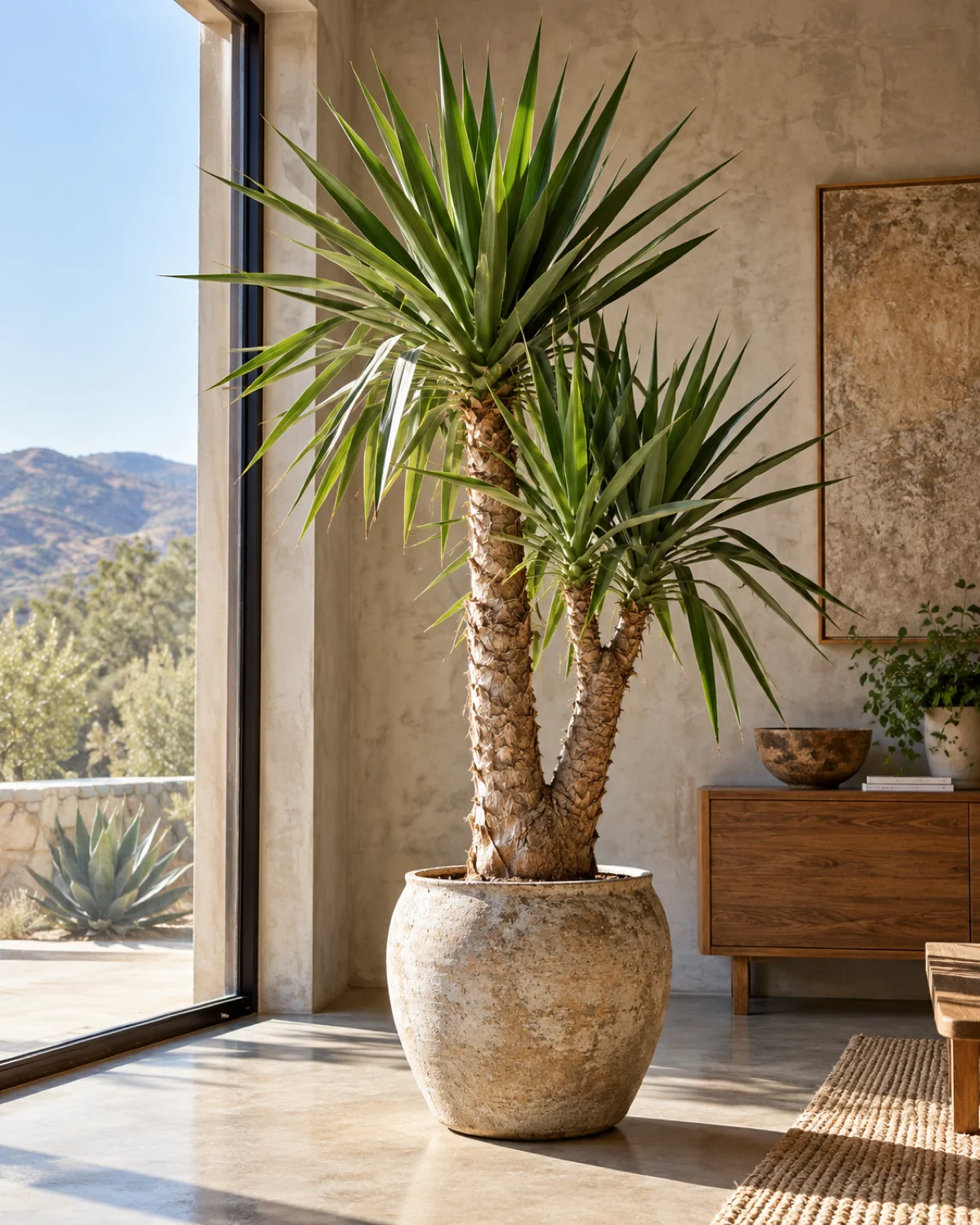
Yucca elephantipes — the spineless yucca — is not a true palm any more than the ponytail palm is, but the thick woody trunk and radiating crown of stiff sword-like leaves give it a palm silhouette that earns its place on every indoor palm list. It is also the most drought-tolerant option here alongside the ponytail palm, thriving on neglect that would kill a majesty palm in weeks.
The spineless designation matters: unlike outdoor yucca species with needle-sharp leaf tips, Yucca elephantipes has soft-tipped leaves that are safe to brush past in a hallway or living room. It is one of the few indoor palms that actively wants direct sun — a south-facing window is not too much.
- Light: Bright direct to bright indirect — one of the few indoor palm types that thrives in full sun
- Watering: Soak and let the soil dry out fully between waterings; very drought-tolerant
- Size: One hundred and twenty to two hundred and forty centimeters indoors depending on the trunk section
- Tolerance: Handles dry air, temperature swings, and irregular care better than any true palm on this list
The full yucca plant care guide covers the trunk-cutting propagation method and the light requirements in detail. If your space gets direct sun for most of the day and you want a palm-shaped plant that asks almost nothing in return, yucca is the pick.
12 Indoor Palm Types for Every Room and Light Level
- 1Parlor PalmThe low-light survivor that handles north-facing windows where most tropicals give up.
- 2Ponytail PalmA succulent in disguise — the swollen caudex stores weeks of water for forgetful waterers.
- 3Areca PalmGolden-stemmed canes with feathery fronds that screen a room without blocking light.
- 4Kentia PalmThe hotel-lobby palm that tolerates dim rooms and dry air better than any full-sized rival.
- 5Bamboo PalmDense reed-like canes with fine fronds and NASA-tested air-purifying credentials.
- 6Majesty PalmThe most dramatic fronds on the list — if you meet its high light and humidity demands.
- 7Cat PalmA compact soft-textured palm that stays small enough for tabletops and shelves.
- 8Fan PalmBold palmate leaves shaped like open fans — the most visually distinct silhouette here.
- 9Lady PalmA shade-tolerant clumper that doubles as a living hedge in hallways and dim corners.
- 10Sago PalmA prehistoric cycad with a sculptural rosette — beautiful but highly toxic to pets.
- 11Fishtail PalmThe only palm with compound leaves — triangular ragged leaflets that look like fish tails.
- 12Yucca PalmDesert-tough and sun-loving — thrives on neglect in bright rooms where true palms would scorch.
kultivy.com
FAQ
Which indoor palm is best for low light?
Parlor palm and lady palm tolerate the lowest light levels on this list — both handle north-facing windows and interior rooms without thinning out or stretching. Kentia palm is a close third for dim corners, though it prefers slightly more light than the other two. Check the full low-light plants guide for non-palm options that pair well alongside them.
Are indoor palms safe for cats and dogs?
Five palms on this list are ASPCA non-toxic to both cats and dogs:
- Parlor palm
- Ponytail palm
- Areca palm
- Bamboo palm
- Cat palm
Sago palm is the major exception — it is highly toxic to all pets, and ingestion can be fatal. Always confirm the species before buying. The pet-safe plants and plants safe for cats guides cover the full non-toxic list.
How often should I water an indoor palm?
It depends on the species. Ponytail palm and yucca palm want the soil to dry out completely between waterings. Cat palm and majesty palm need consistently moist soil at all times and will brown at the tips within days of drying out.
The universal check is the finger test: push two inches into the soil, and if it feels dry at that depth, most palms except the moisture-lovers are ready for water.

Mara Quinn edits Kultivy, where she shares houseplant care, propagation, beginner-friendly plant picks, and plant-styling ideas for anyone who wants their indoor plants to actually thrive. Every guide is image-led and reviewed for clarity, usefulness, image accuracy, and Pinterest-to-page alignment before it goes live. Visit the About page.