An areca palm is the houseplant most likely to get mistaken for its shade-loving cousin the parlor palm — and that mix-up is exactly how owners end up with a sparse, pale plant in a dim corner it was never built to survive in.
Dypsis lutescens grows many slender, densely clustered canes marked with distinctive yellow-gold rings, each topped with a graceful, arching frond of feathery leaflets.
Unlike the genuinely shade-tolerant parlor palm on this site, an areca palm needs real bright light to stay lush. This guide covers light, water, humidity, potting, feeding, growth, pruning, repotting, pests, styling, and pet safety.
An areca palm's identity comes from its dense cluster of gold-ringed canes and feathery fronds. The thirteen sections below cover identification, exact care needs, and how to keep it thriving for years.
What an areca palm actually looks like
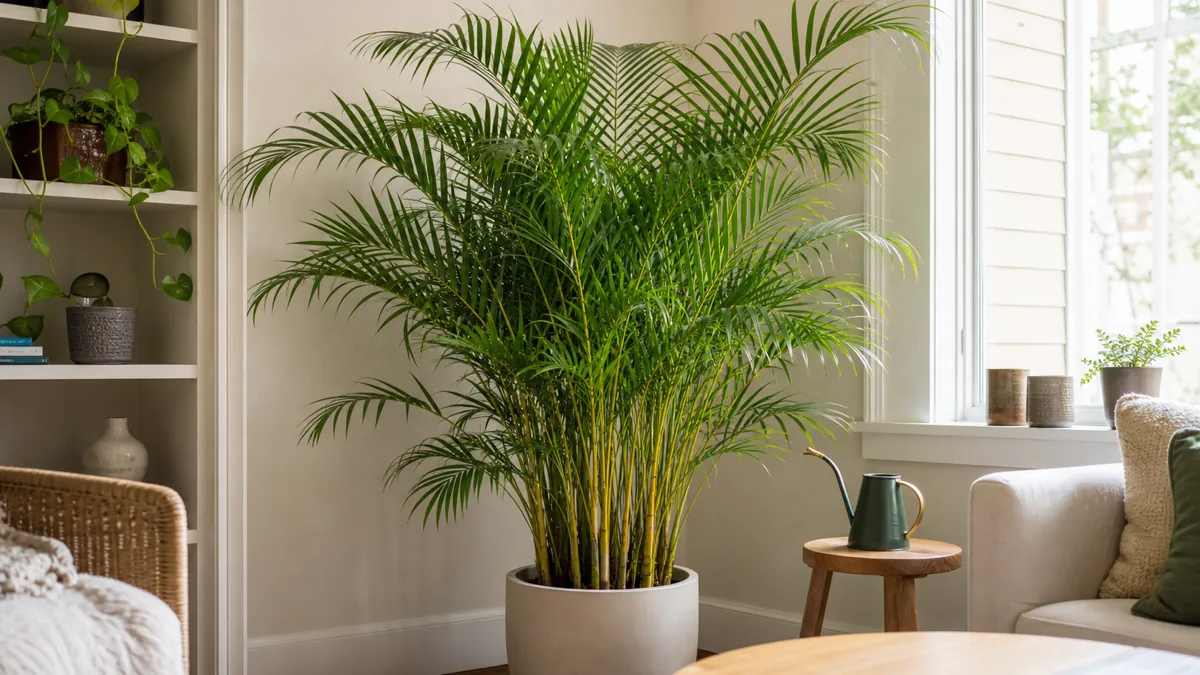
An areca palm's identity comes from its dense cluster of many slender canes, each ringed with distinctive yellow-gold banding, which is exactly why it's also called the golden cane palm. Every cane tops out in its own graceful, arching frond made of dozens of narrow feathery leaflets.
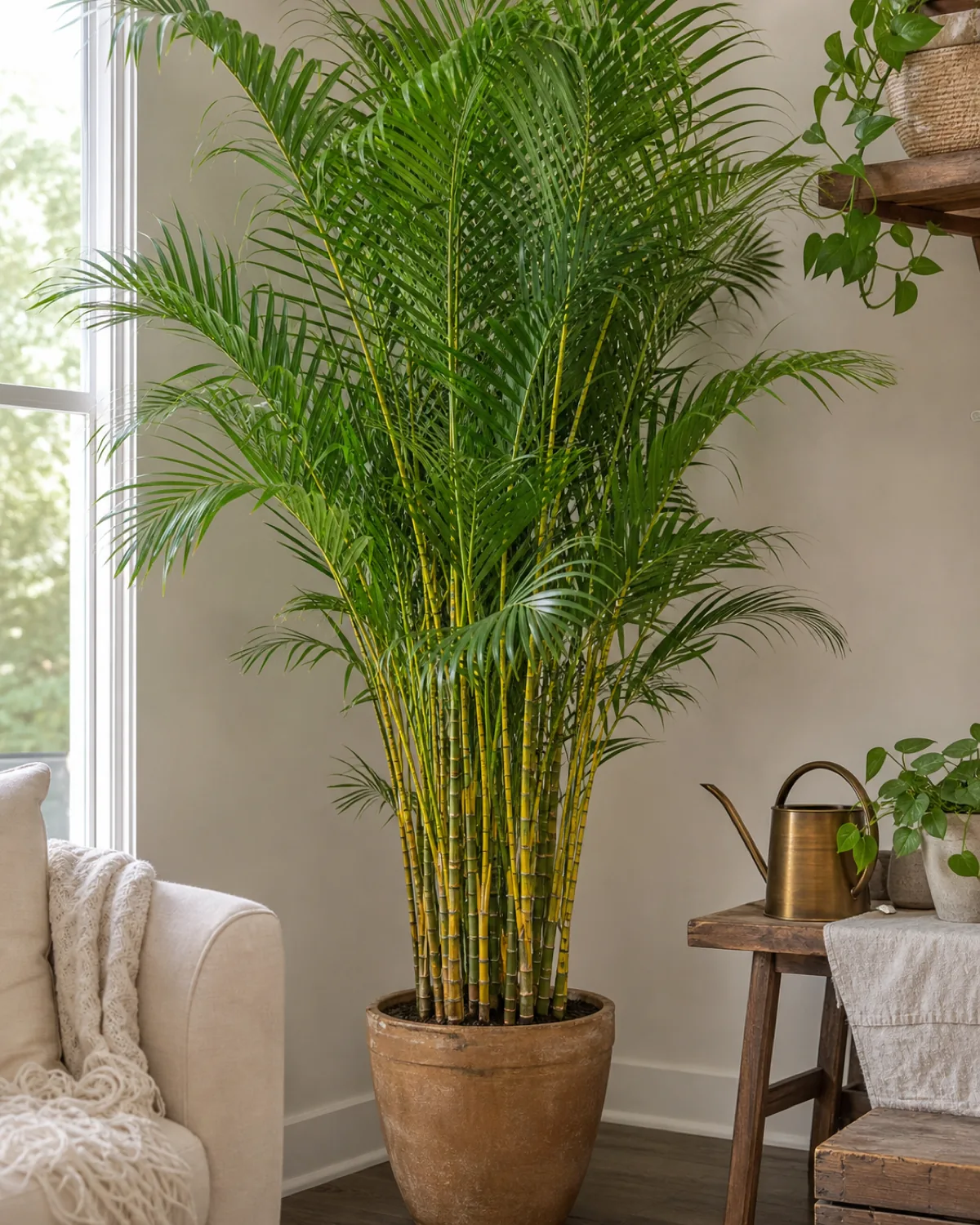
Compared to the parlor palm covered elsewhere on this site, an areca palm's clump is noticeably denser, taller, and more crowded with canes, and those gold rings are a giveaway no other common houseplant palm shares.
- Many densely clustered canes, more crowded than a parlor palm's clump.
- Distinctive yellow-gold ring markings on every cane, the "golden cane palm" giveaway.
- Graceful, arching feathery fronds atop each individual cane.
How much light an areca palm needs (it is not a low-light plant)
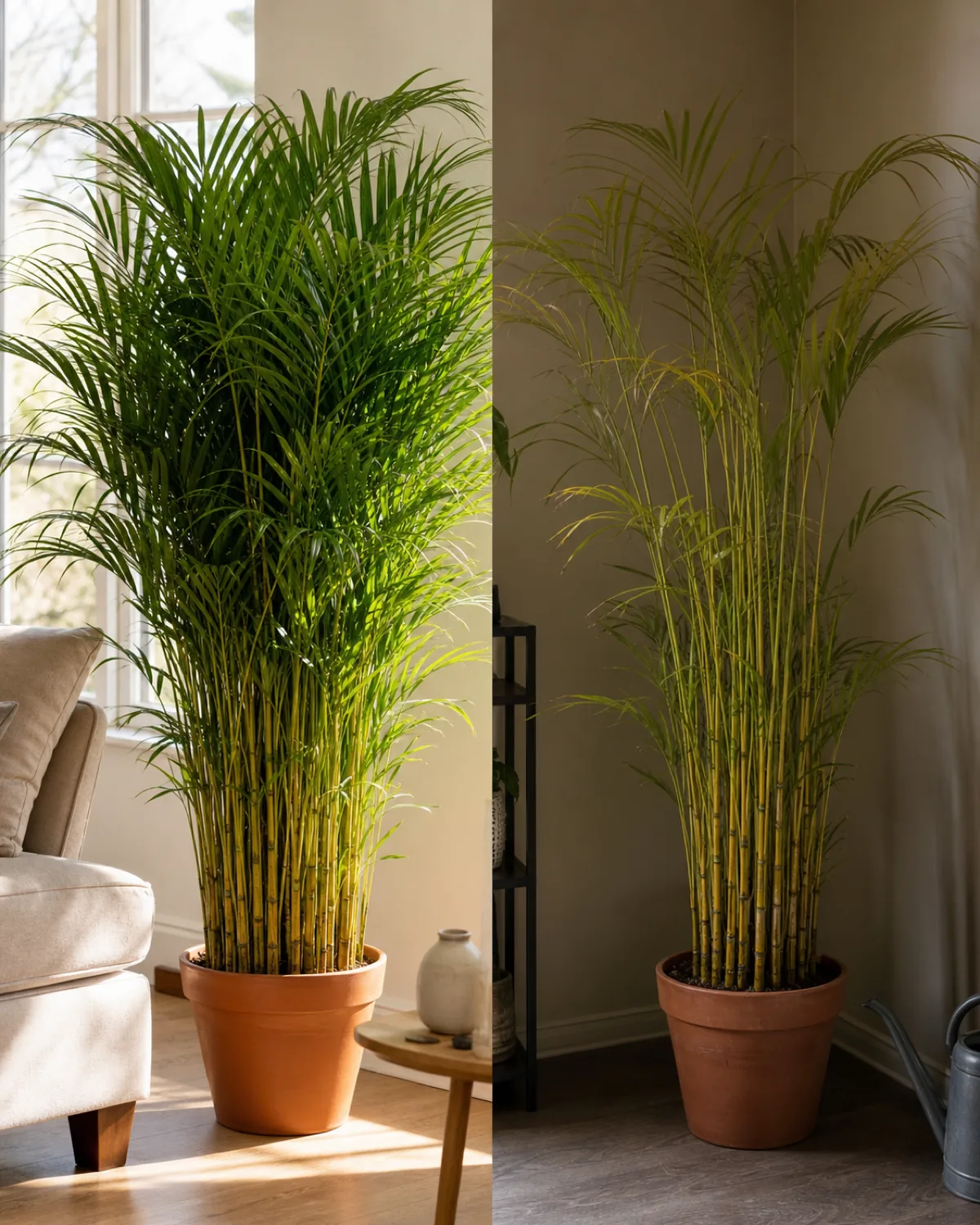
Unlike the parlor palm, an areca palm genuinely needs bright indirect light to stay full and lush. Compare that to the parlor palm care guide, a true low-light champion — areca palm is the opposite case, and treating it like a shade plant is the single most common mistake new owners make.
It also doesn't belong on the low light plants roundup for the same reason.
Left in a dim corner, an areca palm responds by growing sparse and leggy, its fronds thinning out and fading toward pale yellow-green instead of a rich deep green.
- Bright indirect light is genuinely required, not just preferred.
- A dim corner causes sparse, leggy, pale growth, not just slower growth.
- It is a direct contrast to the parlor palm's true shade tolerance.
Getting the water balance right on a plant that punishes both extremes
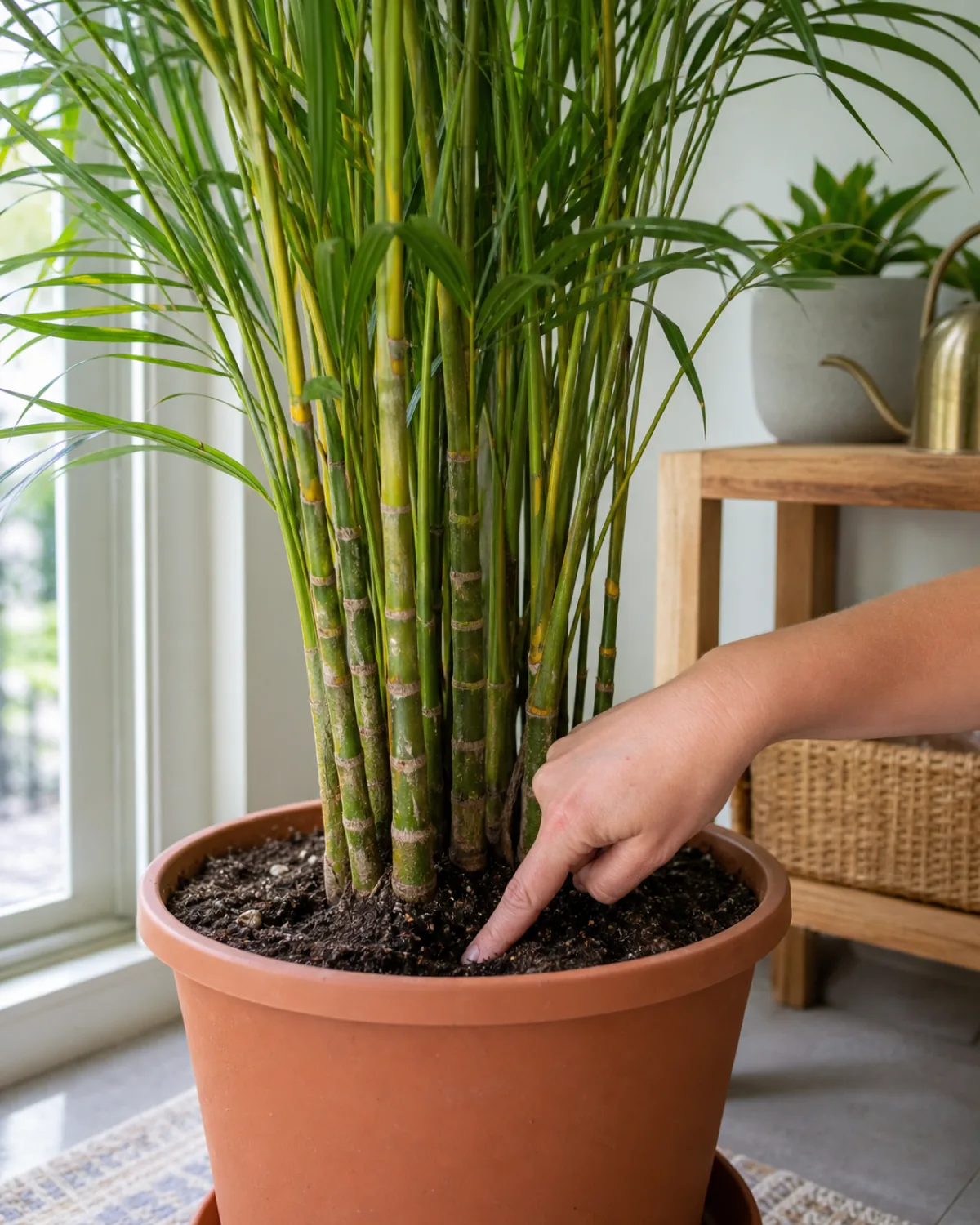
An areca palm sits in a narrower margin than most houseplants covered here: water once the top inch of soil starts to feel dry to keep things evenly moist, but this is one of the few plants on this site where both letting it go bone-dry and leaving it sitting soggy cause visible damage within days rather than weeks.
That tighter tolerance is a direct consequence of its fast, dense growth habit — a plant working hard to fill out a 6-foot clump doesn't have the reserves to shrug off either extreme the way a slow-growing parlor palm can.
- A narrower margin than most easy houseplants, in both directions.
- Fast growth leaves less reserve to absorb watering mistakes.
- Consistency matters more than any single watering rule.
Ranking areca palm against the other water-sensitive plants on this site
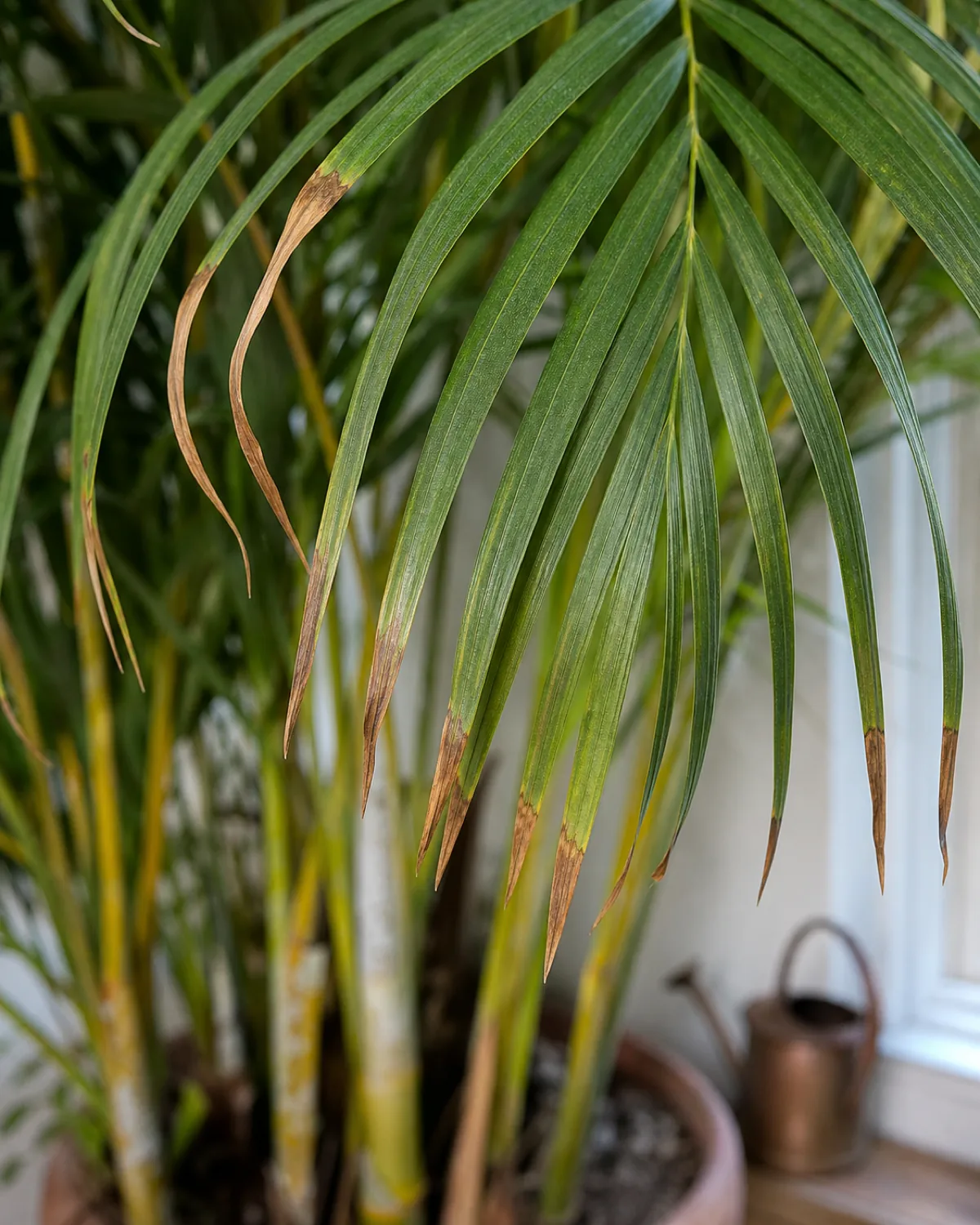
Among every species covered here, an areca palm sits at the top of the sensitivity list for water quality — worse than dracaena marginata's well-known fluoride reaction, and worse than the parlor palm. The tell is the sequence of symptoms: a curling, slightly dulled leaflet edge shows up days before it actually crisps brown, giving an earlier warning than most owners realize they're getting.
Softened-water sodium is the piece owners miss most, since a home water softener reads as "clean" but leaves behind salts an areca palm reacts to almost as strongly as raw tap fluoride. A cheap water hardness test strip settles the question faster than guessing from symptoms alone, and a switch to rainwater, distilled water, or rested tap water addresses both fluoride and softener sodium at once.
- The most water-sensitive species covered on this site, ranked above dracaena and parlor palm.
- Leaflet edges curl and dull before they actually crisp — an earlier tell than most owners catch.
- A home water softener is an overlooked cause, easy to rule in or out with a cheap test strip.
Humidity: it wants more than the average home offers
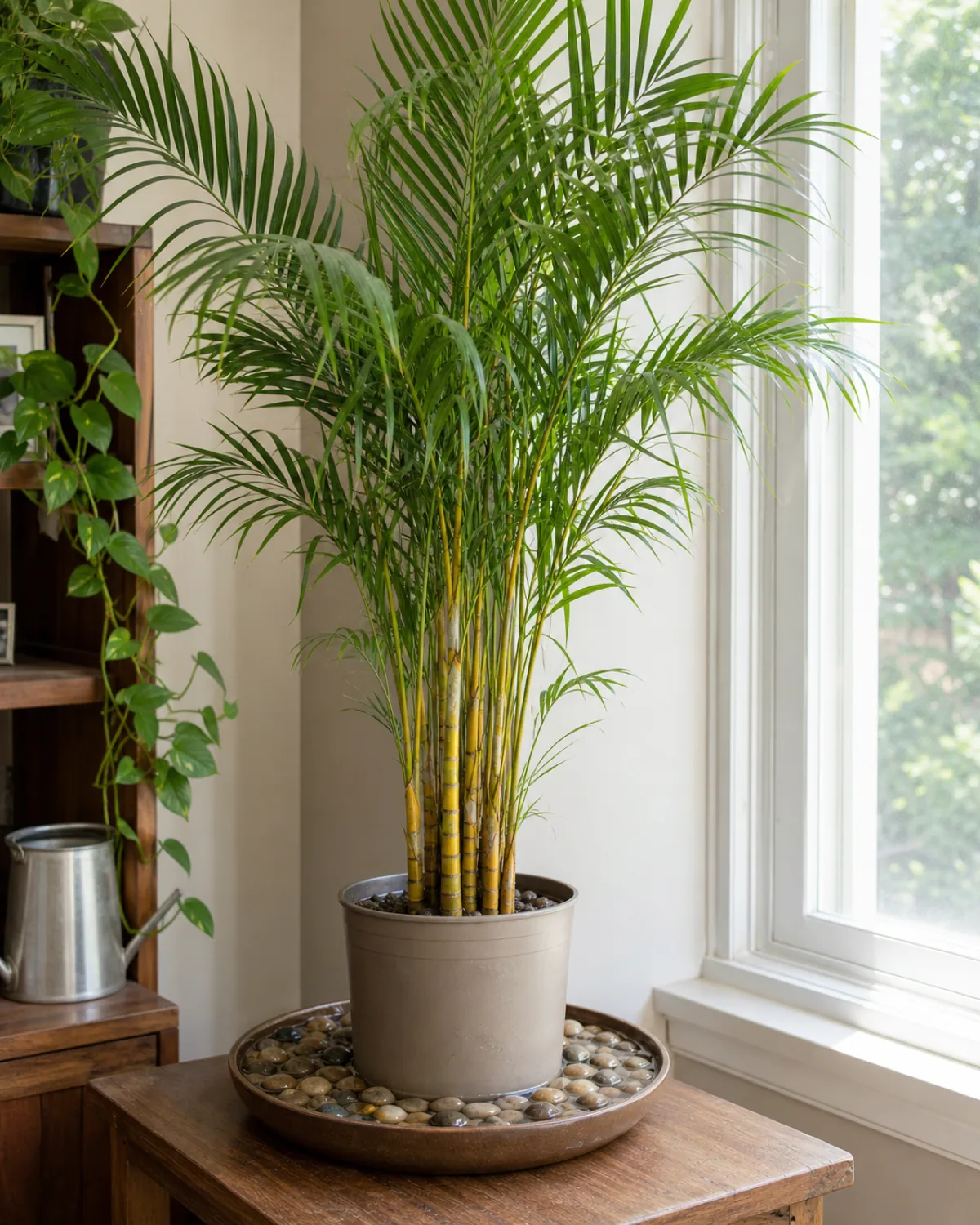
Native to humid tropical understory, an areca palm looks its fullest and glossiest with above-average humidity from a pebble tray, a humidifier, or grouping it near other plants.
Dry indoor air brings on both crispy frond tips and spider mite infestations faster on an areca palm than on most other palms, which makes humidity a bigger lever here than for the parlor palm. A humid bathroom counter, like the picks on the bathroom plants roundup, is a naturally good fit if there's enough light.
- Above-average humidity keeps fronds fuller and glossier.
- Dry air accelerates both brown tips and spider mites.
- A naturally humid, bright spot is an easy win.
Choosing a mix built for a fast, root-rot-prone grower
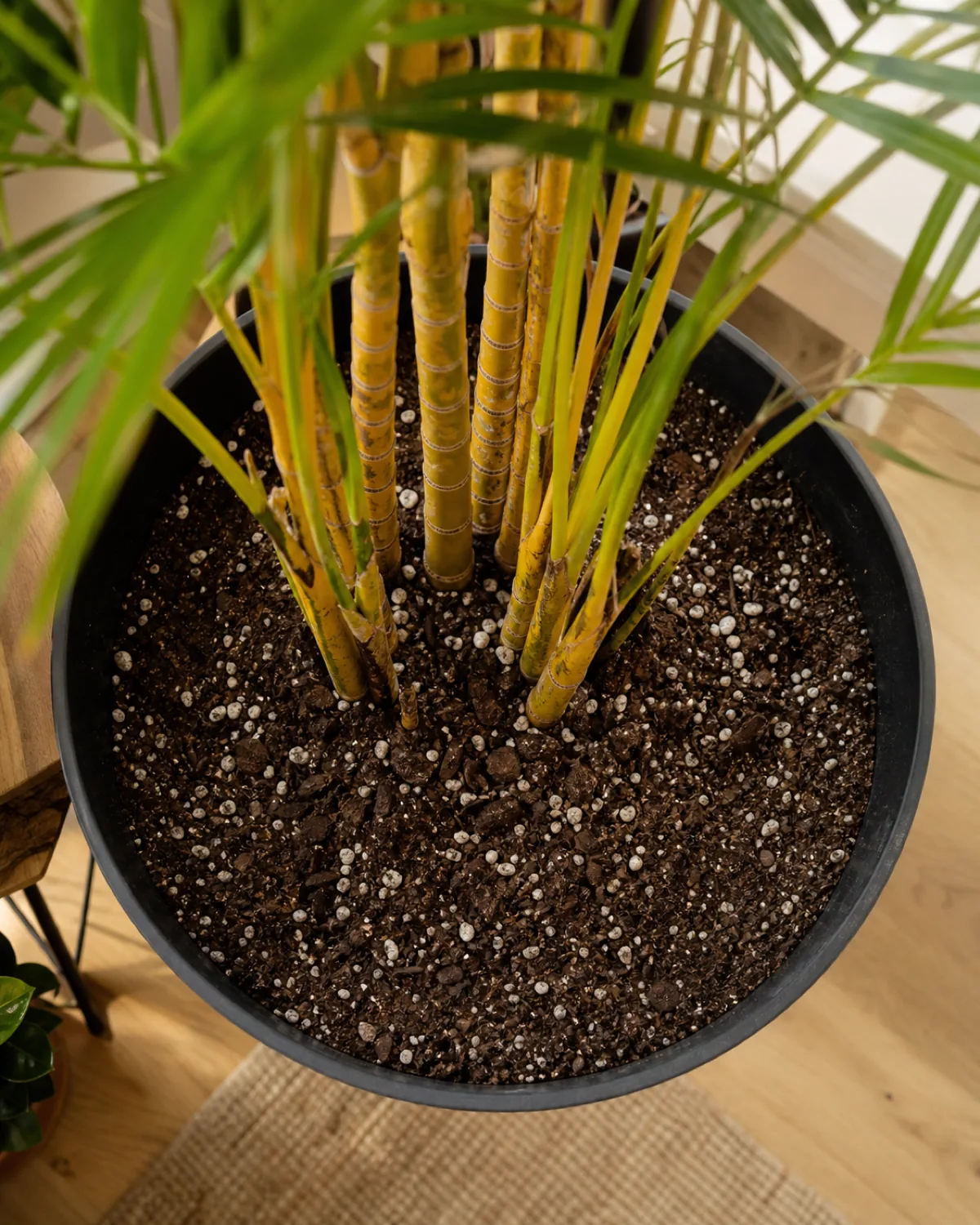
Drainage is the single non-negotiable requirement for an areca palm's soil: a well-draining, moisture-retentive mix in a pot with a real drainage hole keeps the roots from sitting wet, which matters more here than on plants that simply tolerate an occasional soggy week.
A second, separate consideration is pace — a plant reaching for 6 to 7 feet needs its pot sized up on a real schedule, not left indefinitely, or root-crowding shows up as stalled new growth well before the canes look obviously pot-bound.
- Drainage is non-negotiable, given how quickly wet roots turn to rot here.
- Pot size has to keep pace with fast growth, not sit indefinitely.
- Stalled new growth is often the first sign of a crowded root ball.
Reading yellow banding as a feeding signal, not a pest
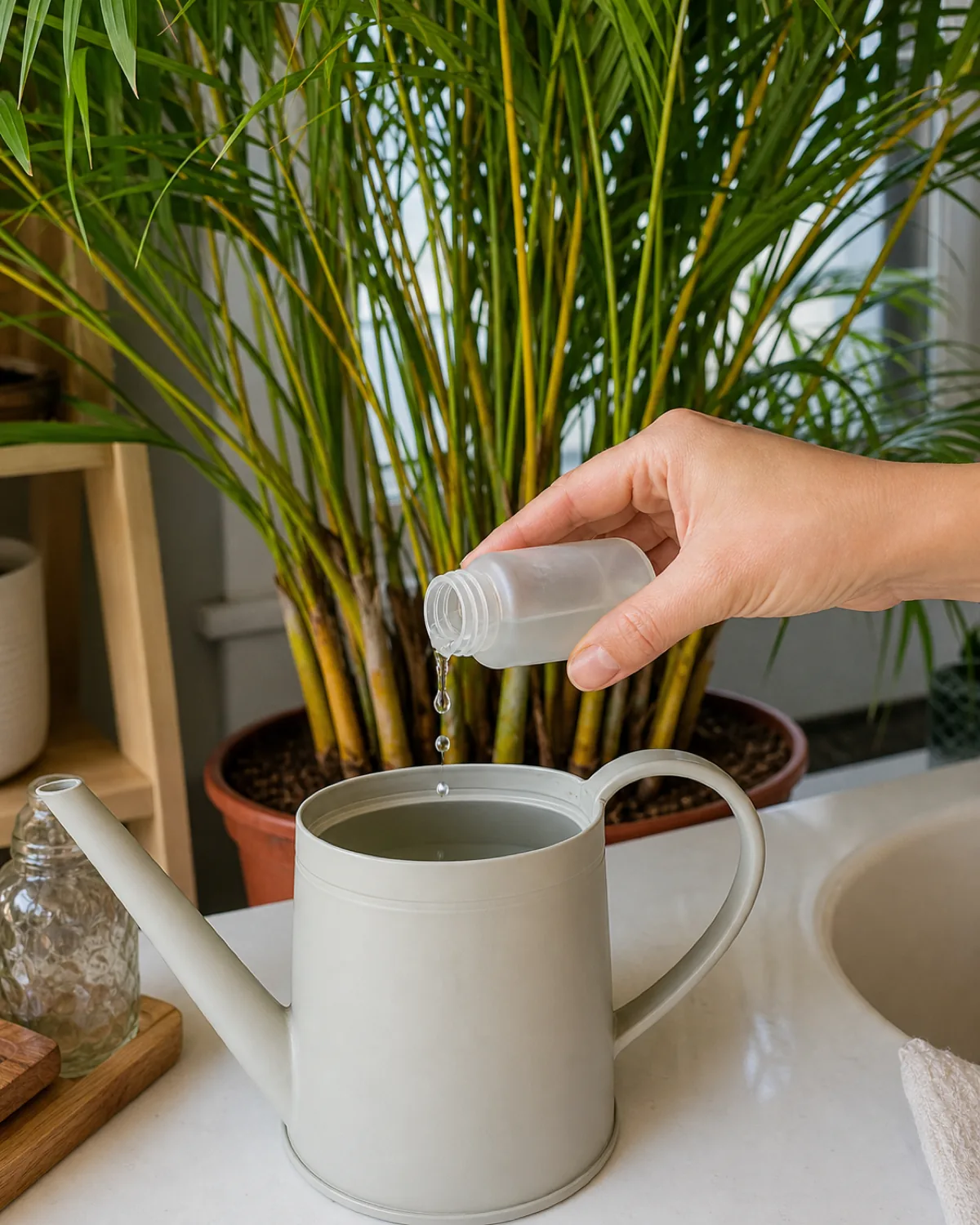
An areca palm's nutrient needs go beyond a generic monthly feed: magnesium, manganese, and potassium deficiencies specifically show up as yellow banding across older fronds, a symptom owners frequently misread as spider mite damage, underwatering, or just an aging leaf.
A palm-specific fertilizer formulated with those nutrients during the growing season, eased off through fall and winter, resolves the banding — feeding with a generic all-purpose formula alone often isn't enough to correct it.
- Yellow banding on older fronds is a nutrient signal, not automatically a pest or age issue.
- Magnesium, manganese, and potassium are the specific nutrients to look for on the label.
- A generic all-purpose feed alone often isn't enough to correct existing banding.
Growth rate and size: why it becomes a real room divider
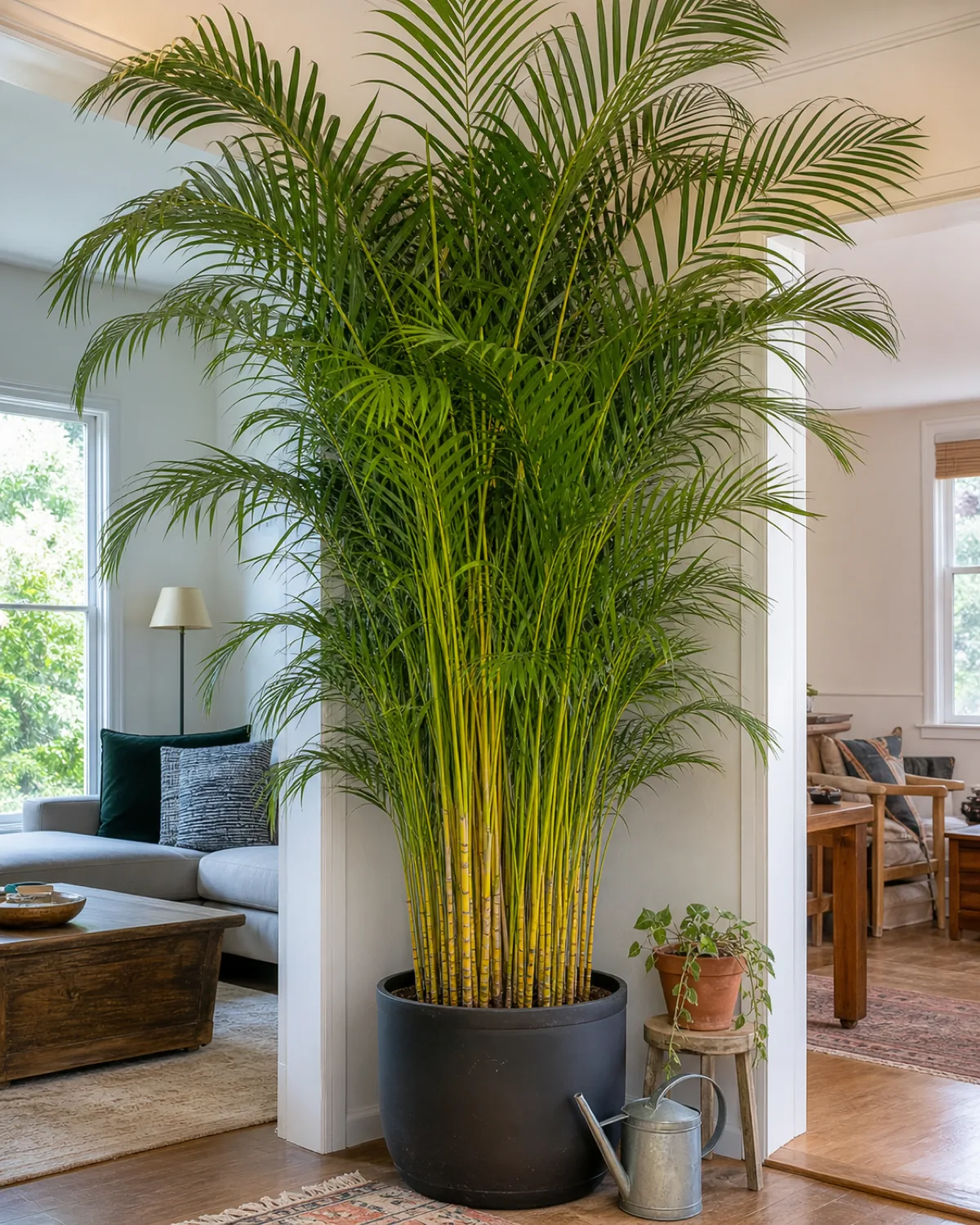
An areca palm is a genuinely fast grower for a palm, reaching 6 to 7 feet indoors with a dense, clumping habit that fills space fast rather than staying put for years.
That growth story is a complete reversal of the parlor palm's slow, desk-corner pace, and it's exactly what makes an areca palm a natural choice as a living room divider or privacy screen rather than a small accent plant.
- Reaches 6-7 feet indoors, genuinely fast for a common houseplant palm.
- A dense clumping habit that fills a footprint rather than staying compact.
- A natural living room divider or privacy screen, unlike the parlor palm's small footprint.
Most areca palm questions trace back to one of four situations. Start with whichever one describes yours, then return to the rest later.
Why an areca palm keeps you reaching for the pruning snips
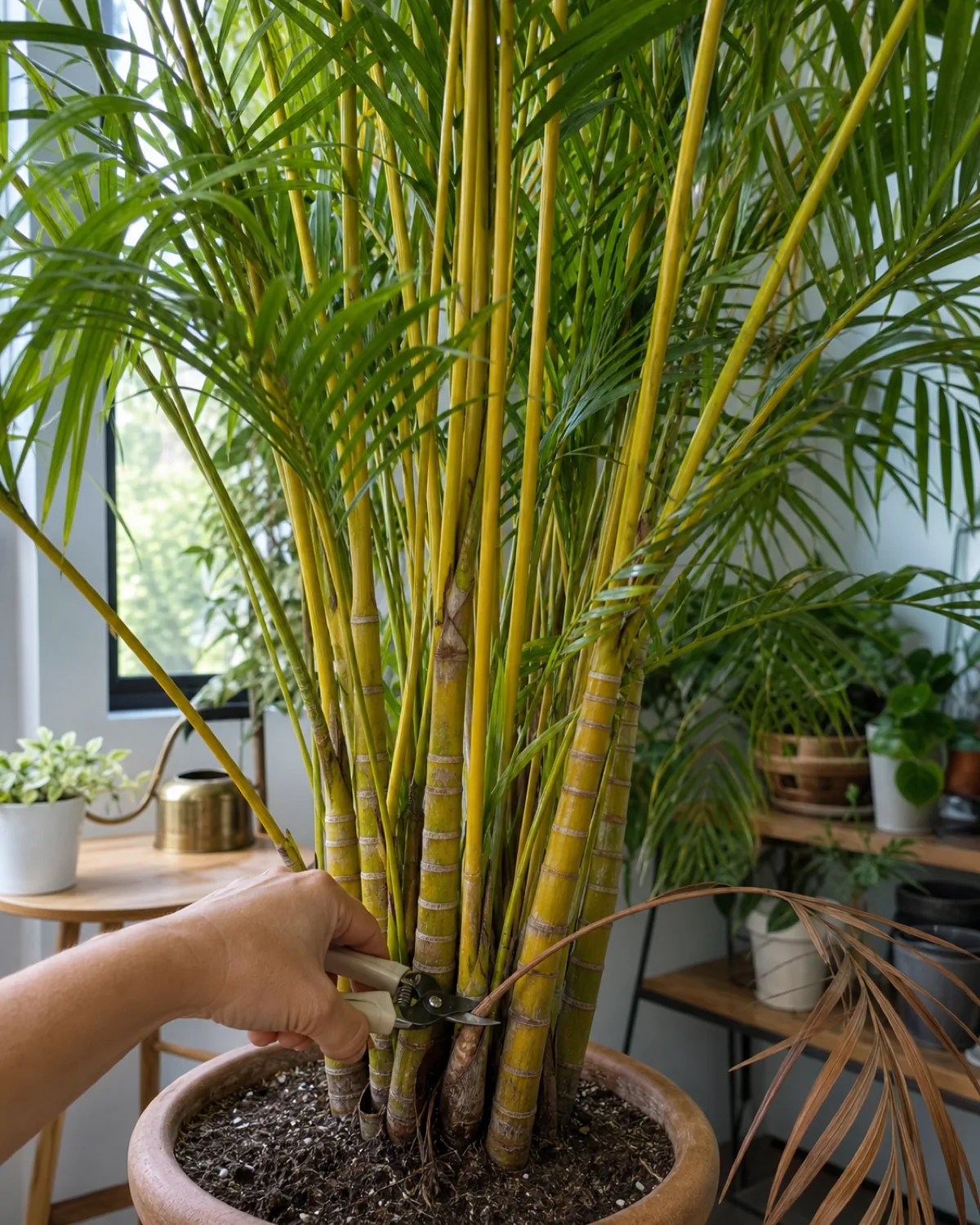
A dense clump pushing out new canes on a 6-to-7-foot trajectory throws off far more spent fronds per year than a plant that barely grows, so pruning becomes a recurring seasonal chore here rather than a once-in-a-while task — owners who bought their areca palm expecting parlor-palm-level maintenance are usually surprised by how often the shears come out.
That volume tempts people into tidying up fronds that are still doing work, which is the real risk with a fast grower: reach for the snips too eagerly and you're cutting into nutrients the plant hasn't finished reclaiming yet, not saving it effort.
- Expect a recurring seasonal chore, not an occasional task, given the growth rate.
- The volume of dead fronds tempts over-eager trimming — that's the real risk here.
- A fast clump replaces what you cut quickly enough that patience costs little.
Repotting a fast-growing clump
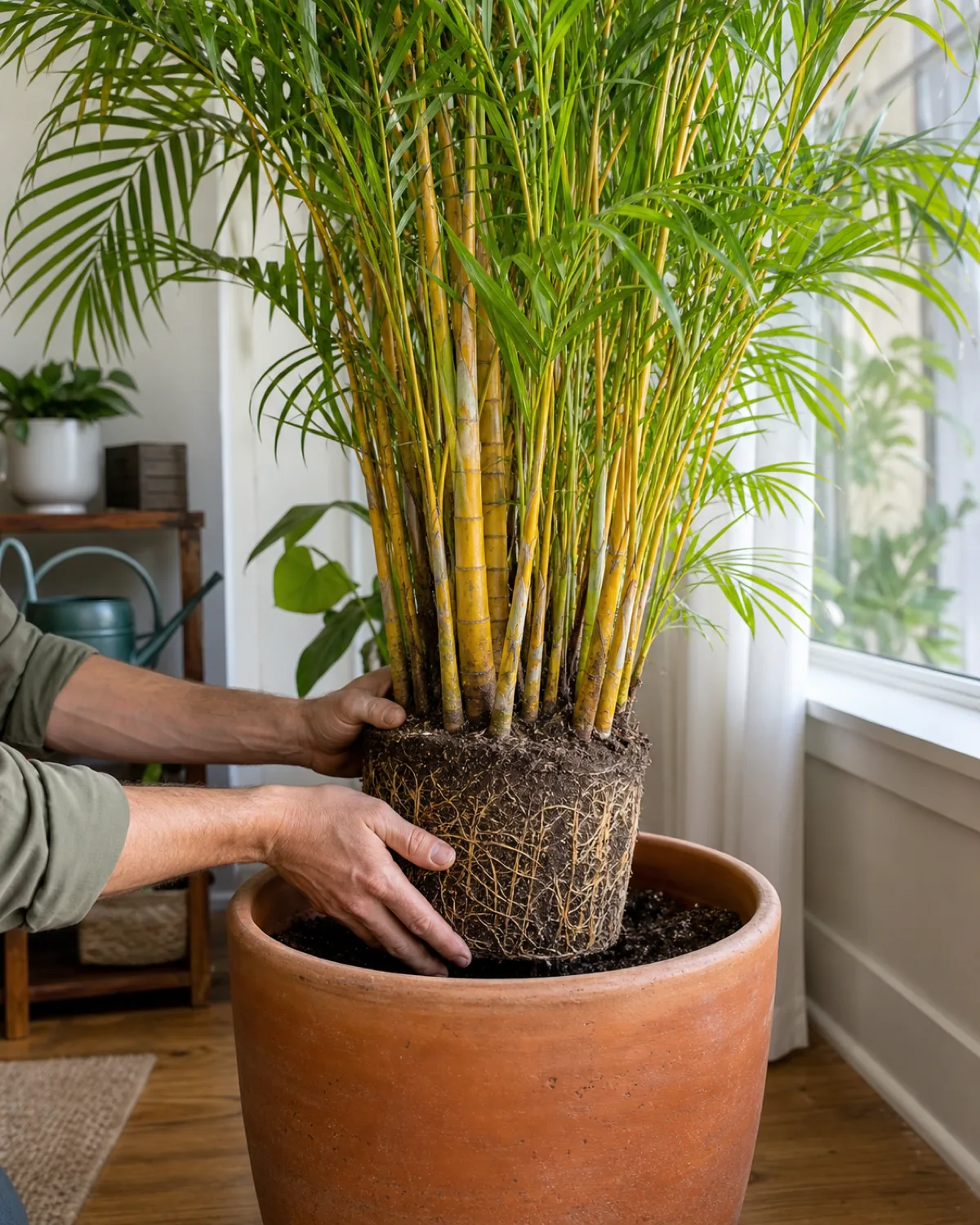
Repot roughly every 2 years while an areca palm is young and actively filling out, sizing up just one pot size at a time once roots are visibly circling the bottom of the pot.
A heavier pot, like a thick ceramic or terracotta rather than lightweight plastic, helps keep a tall, top-heavy clump of canes from tipping over as it grows.
- Roughly every 2 years while young, faster than the parlor palm's 3-5 year rhythm.
- Size up just one pot size at a time.
- A heavier pot improves stability as the clump grows tall.
The location test that tells you which pest you're actually looking at
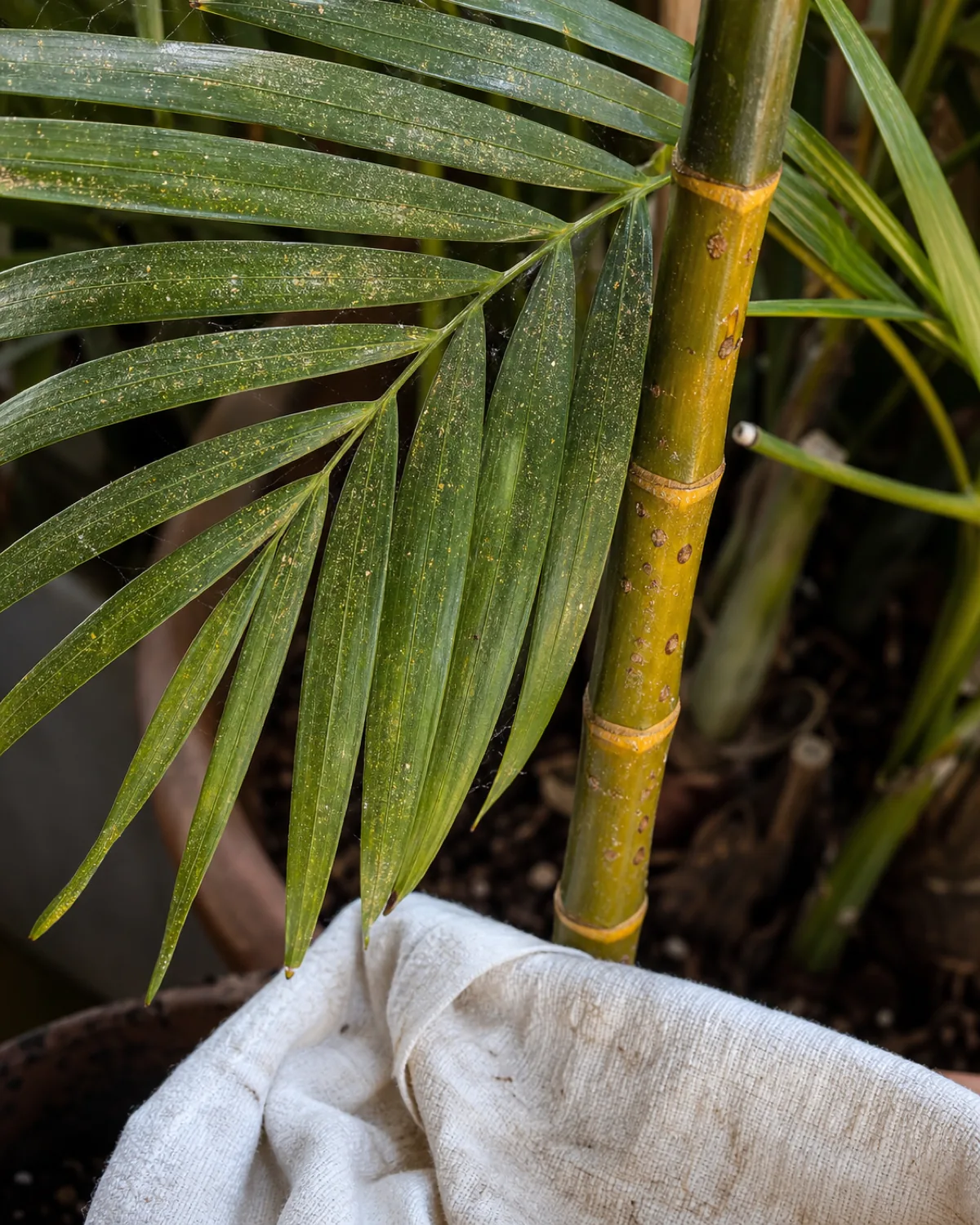
Two pests turn up on areca palm often enough to be worth naming separately, and the fastest way to tell them apart isn't the damage pattern, it's where on the plant you find it: check the flat surface of the leaflets first, then run a finger down the woody cane itself before deciding on a treatment.
Fine webbing and dusty speckling confined to the leaflets means spider mites, and they take hold on this species faster than on most other palms whenever household humidity dips.
Small brown or tan bumps found instead on the cane surface, not the leaflets, mean scale — a pest that behaves more like a stationary crust than a spreading infestation and responds well to being scraped off or dabbed with insecticidal soap.
- Check the leaflet surface versus the woody cane — that location is the fastest way to tell the two pests apart.
- Spider mites take hold here faster than on most palms the moment humidity drops.
- Scale behaves like a stationary crust on the cane, not a spreading leaflet infestation.
Why height and light needs put it in a different room than the parlor palm
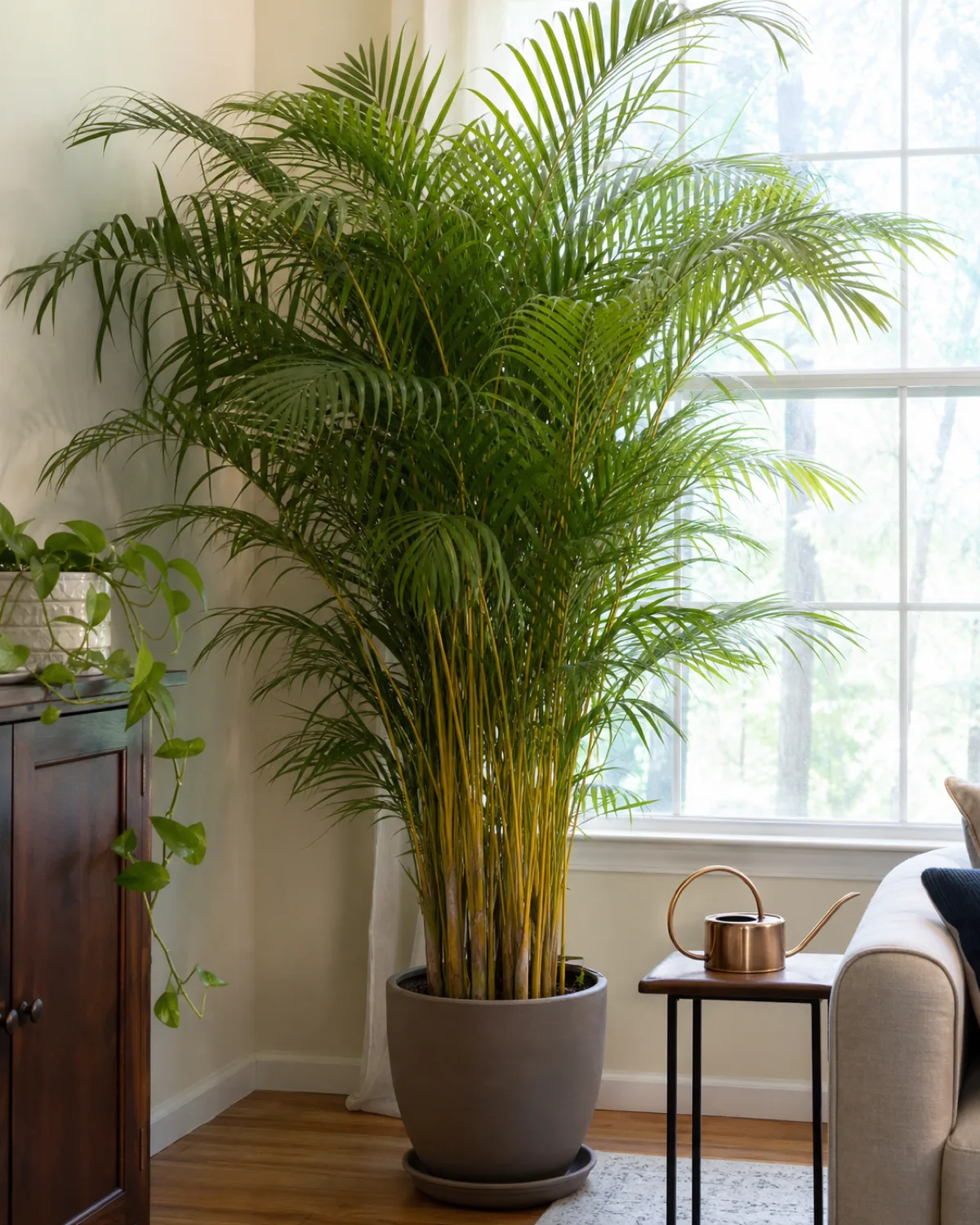
An areca palm's real height, dense clumping, and graceful arching fronds suit it to jobs a small houseplant can't do: standing as a living room divider between two open spaces, screening a window for privacy, or anchoring a sunny corner as a genuine statement piece.
That role only works because it also needs the bright light those spots naturally get — pairing its height with a dim hallway or desk corner, the way a parlor palm thrives there, just produces the sparse, leggy look covered earlier in this guide.
- A living room divider or privacy screen, a job its height and density are built for.
- It needs the bright light those open, sunny spots naturally provide.
- Pairing its size with a dim spot produces the sparse look, not a happy plant.
Is an areca palm toxic to pets, and how do you tell it apart from a parlor palm or bamboo palm?
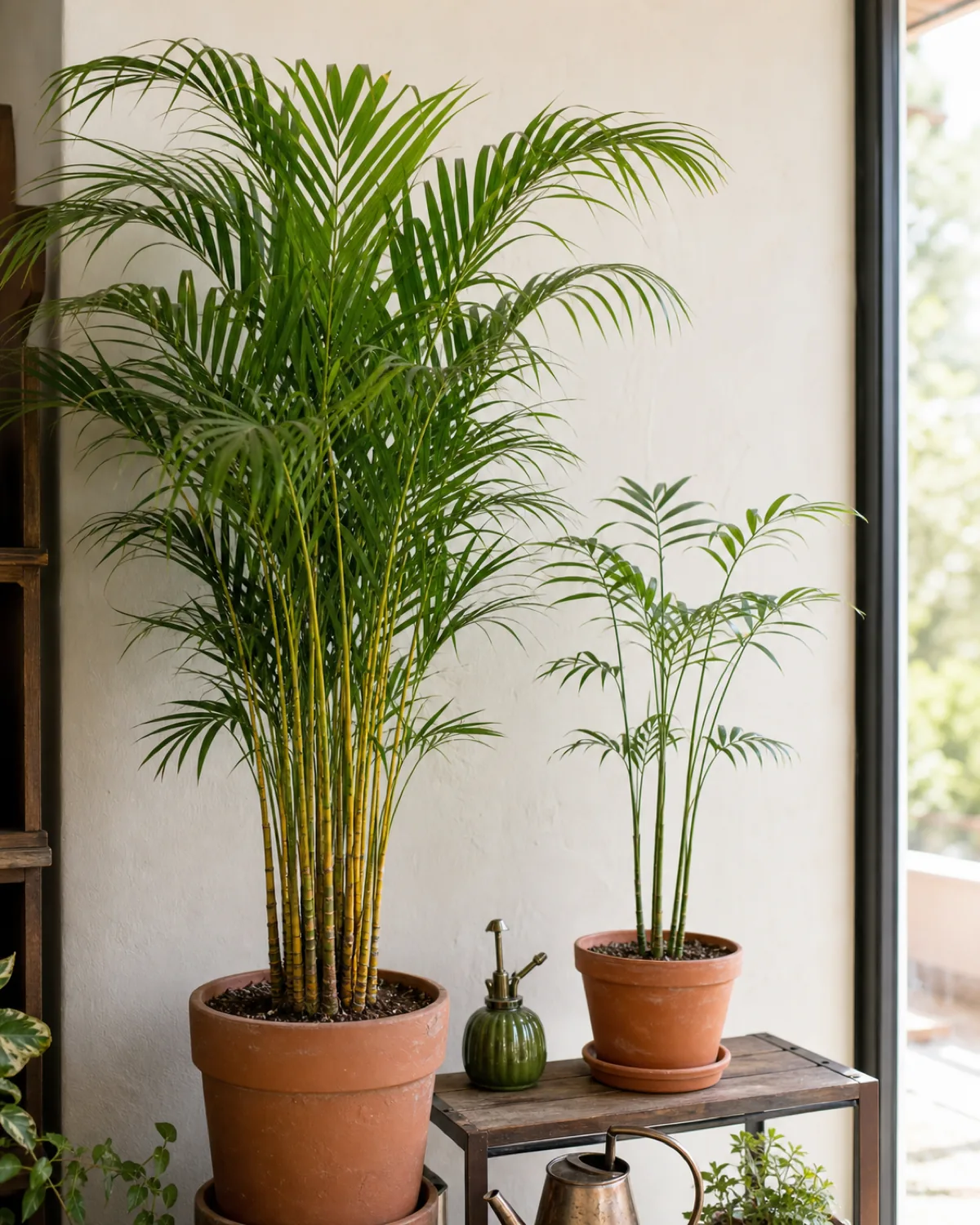
Honestly, an areca palm is non-toxic to cats and dogs, making it another safe palm choice for pet owners alongside the parlor palm. It's a fit for the picks on the easy houseplants roundup as long as its light needs are met.
Look for its taller height, denser clustering of canes, and distinctive yellow-gold ring markings to tell it apart from the shorter, more slender-caned parlor palm, or from a bamboo palm's more upright habit with less graceful arching in the fronds.
- Non-toxic to cats and dogs, a genuinely safe pick for pet owners.
- Taller, denser clustering with gold-ringed canes distinguishes it from parlor palm.
- More graceful arching fronds distinguish it from the more upright bamboo palm.
Most areca palm problems trace back to one of four moves people skip. Hold these four and it stays full and healthy for years.
Areca Palm Care: The Quick Reference
- 1Dense gold-ringed clustered canes, feathery frondsThe "golden cane palm" giveaway no other common houseplant palm shares.
- 2Genuinely needs bright indirect lightA dim corner causes sparse, leggy, pale growth — not just slower growth.
- 3Water on a narrow margin, in both directionsBoth bone-dry and soggy soil cause damage within days here.
- 4The most water-sensitive species on this siteTest for softener sodium, not just fluoride, with a cheap hardness strip.
- 5Above-average humidity keeps it fullestDry air speeds up both brown tips and spider mites.
- 6Drainage is non-negotiableWet roots turn to rot faster here than on most easy houseplants.
- 7Yellow banding on older fronds is a feeding signalLook for magnesium, manganese, and potassium on the label.
- 8Reaches 6-7 feet indoors, genuinely fastA natural living room divider or privacy screen.
- 9Pruning is a recurring seasonal choreDon't over-trim fronds that are still partly green.
- 10Repot roughly every 2 years while youngA heavier pot improves stability as the clump grows tall.
- 11Check leaflet versus cane to ID the pestWebbing on leaflets means mites; bumps on the cane mean scale.
- 12Needs height and bright light togetherA living room divider spot only works if it's also sunny.
- 13Non-toxic to cats and dogsTaller, denser, gold-ringed canes set it apart from parlor and bamboo palm.
kultivy.com

Mara Quinn edits Kultivy, where she shares houseplant care, propagation, beginner-friendly plant picks, and plant-styling ideas for anyone who wants their indoor plants to actually thrive. Every guide is image-led and reviewed for clarity, usefulness, image accuracy, and Pinterest-to-page alignment before it goes live. Visit the About page.