A parlor palm is the rare houseplant that survives a dim corner most other plants simply give up in, which is exactly why it's been a go-to for Victorian parlors and modern office desks for well over a century.
Chamaedorea elegans grows several slender, bamboo-like canes clustering up from the soil, each topped with a soft, arching frond of narrow leaflets. It's genuinely shade-tolerant and grows so slowly it rarely outgrows a spot.
Unlike most drought-tolerant easy houseplants here, it wants its soil kept lightly, evenly moist. This guide covers light, water, brown tips, humidity, potting, feeding, pruning, repotting, pests, styling, and pet safety.
A parlor palm's identity comes from its clustered bamboo-like canes and feathery fronds. The thirteen sections below cover identification, exact care needs, and how to keep it thriving for years.
What a parlor palm actually looks like (and why it's not like anything else on this site)
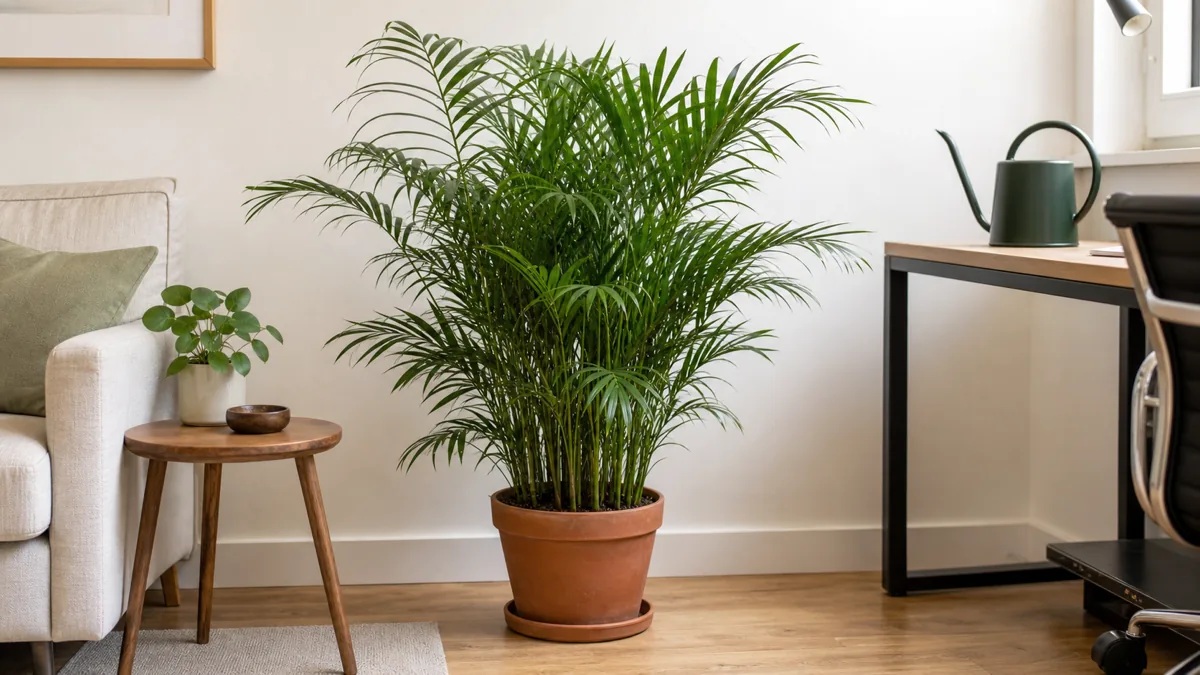
A parlor palm's identity comes from its cluster of several slender, bamboo-like canes rising directly out of the soil, each one topped with its own soft, arching pinnate frond made of dozens of narrow leaflets.
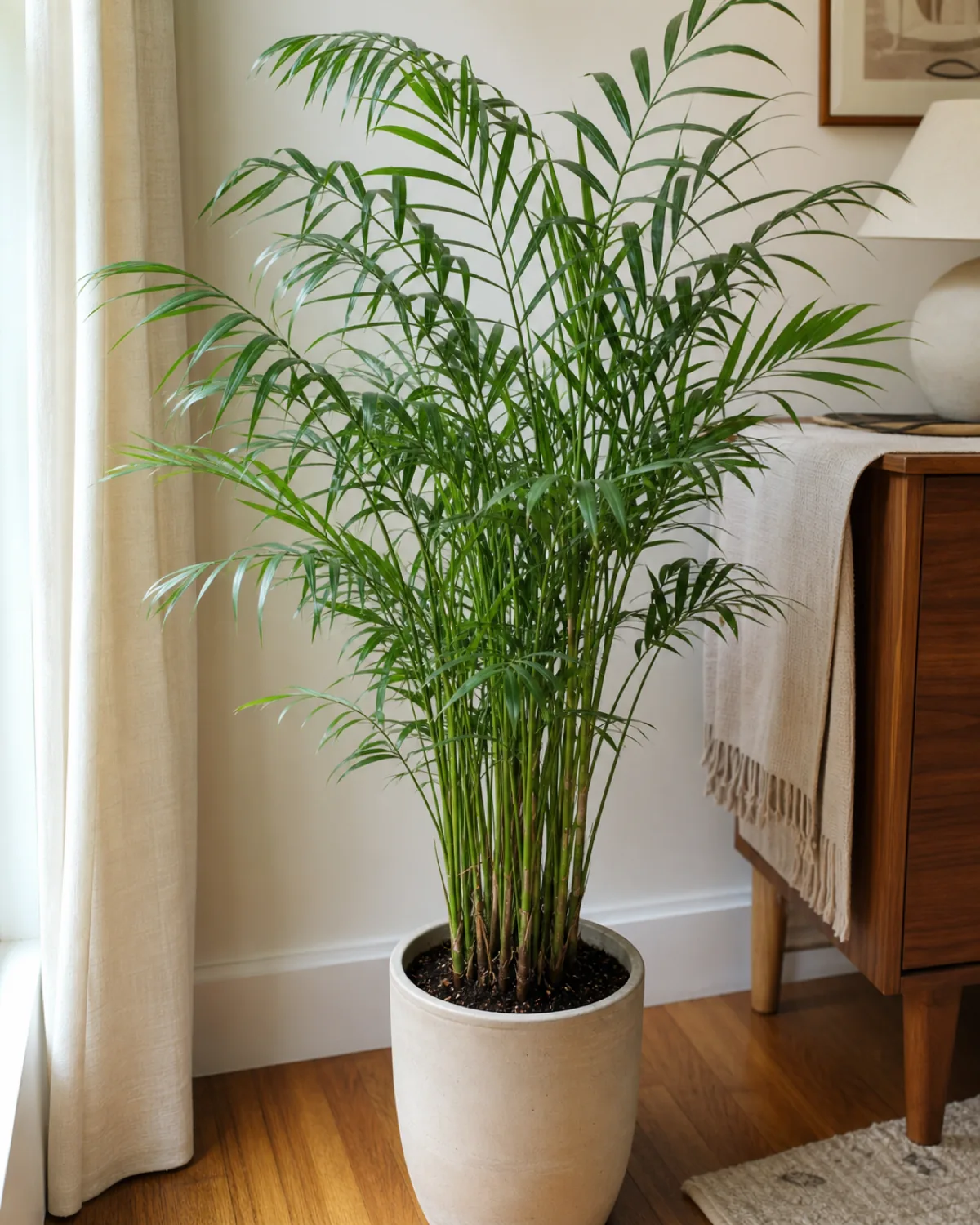
There's no single wide leaf blade and no vining stem — every other species covered on this site is a broad single-leaf tree, a stemless sword-leaf rosette, a rhizome-based complex leaf, or a climbing vine, which makes the true miniature-palm silhouette here unmistakable once you know what to look for.
- Several slender clustered canes, not one central trunk or a stemless rosette.
- Soft, feathery pinnate fronds, not a single broad leaf blade.
- A true palm form, the only one covered on this site so far.
How much light a parlor palm needs (a genuine low-light champion)
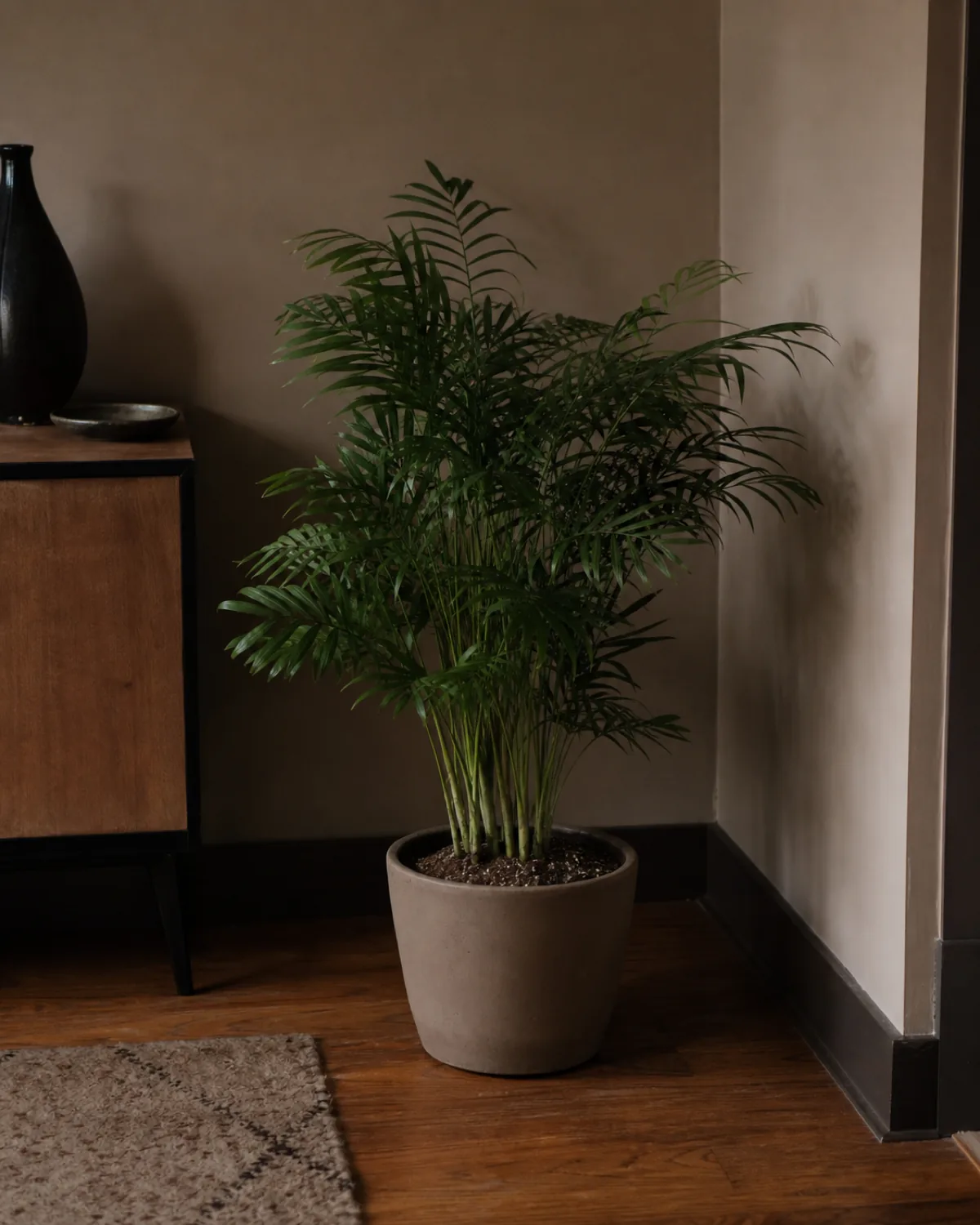
Parlor palms thrive in low to medium indirect light and hold up in spots most flowering or broad-leaf houseplants would fade in, which is exactly why they became a Victorian parlor staple. Compare that to the low light plants roundup for other genuine shade-tolerant picks with a completely different growth habit.
They also tolerate brighter indirect light just fine, but direct sun scorches the delicate fronds, bleaching them a dry, papery tan rather than a crisp brown.
- Low to medium indirect light is genuinely enough, not just tolerated grudgingly.
- Brighter indirect light works too, as long as it isn't direct.
- Direct sun scorches fronds into a bleached tan, not a typical brown edge.
How often to water a parlor palm (it wants evenly moist soil, not bone-dry)
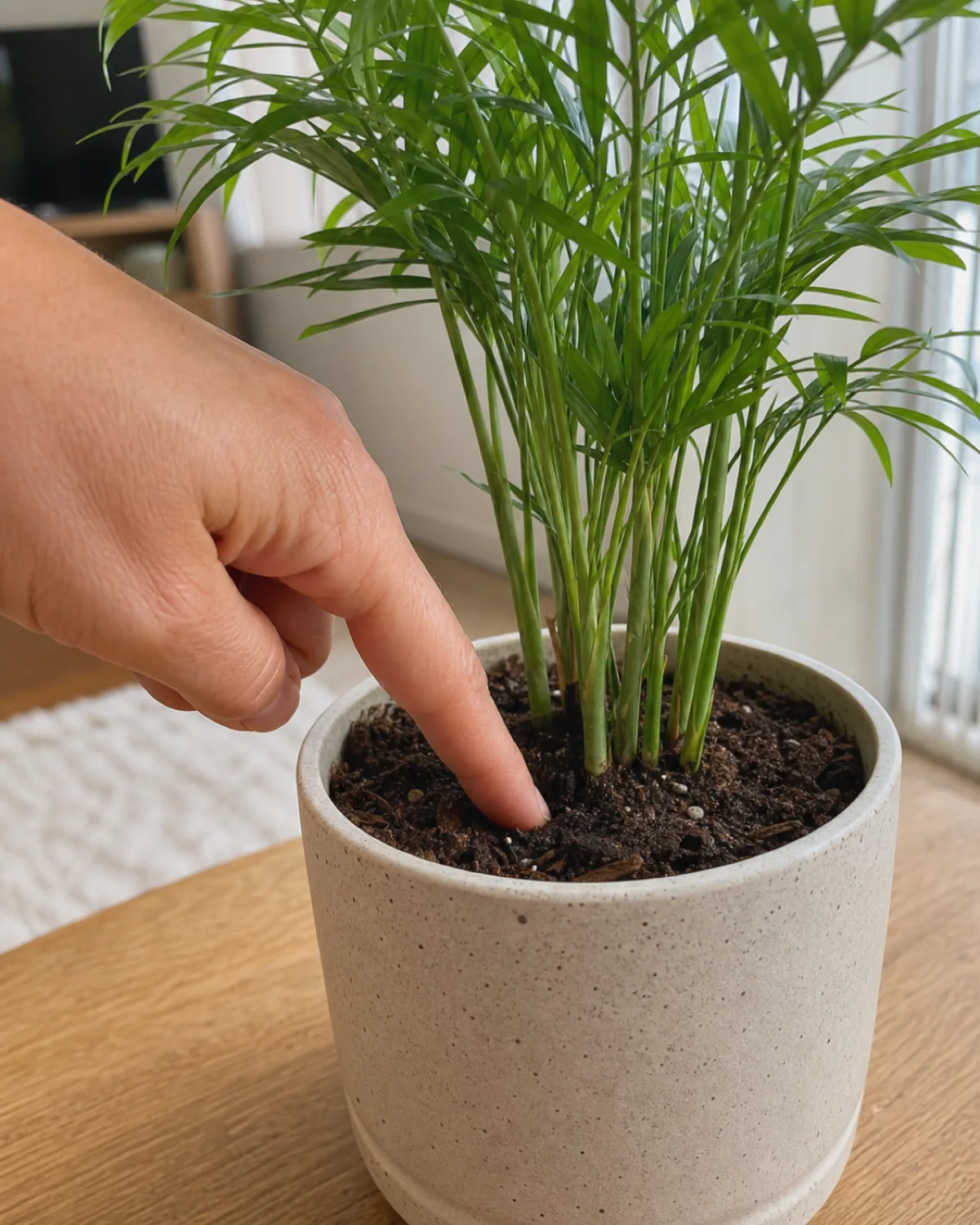
Unlike most of the drought-tolerant easy houseplants on this site, a parlor palm prefers soil that stays lightly and evenly moist and never fully dries out for an extended stretch. Water when the top inch of soil just starts to feel dry, which usually lands around every 7 to 10 days depending on light and season.
Letting the pot sit bone dry for too long is a bigger risk for this plant than for most of the "forget to water it and it's fine" species covered elsewhere.
- Water when the top inch starts to feel dry, not once the whole pot is dry.
- Roughly every 7-10 days for most homes, adjusted for season and light.
- Letting it dry out completely is a real risk here, unlike most easy houseplants.
Why the frond tips are turning brown or crispy
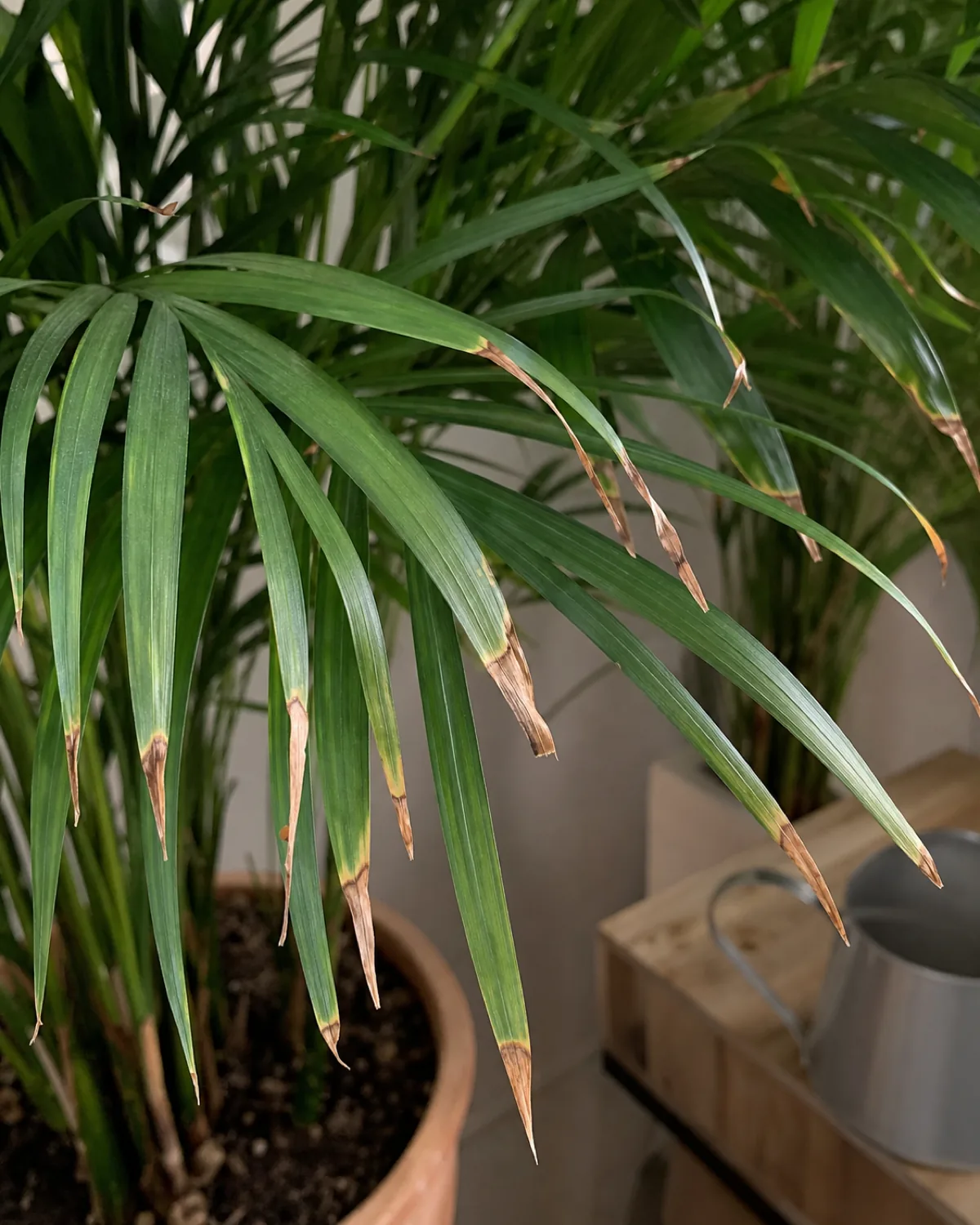
Letting the soil dry out completely between waterings is the single most common cause of browned, crispy frond tips on a parlor palm. Fluoride and mineral salts building up from tap water, combined with low household humidity, are the next most common contributors.
Switching to filtered or rested tap water and keeping the watering schedule consistent stops new tips from browning, though tips that are already brown and crisp won't turn green again and can be trimmed off at a natural point.
- Letting the soil fully dry out is the top cause, more often than water quality alone.
- Tap water fluoride and mineral salts are a secondary contributor.
- Existing brown tips don't reverse, but consistent care stops new ones.
Humidity: it appreciates more than average, but tolerates typical home air
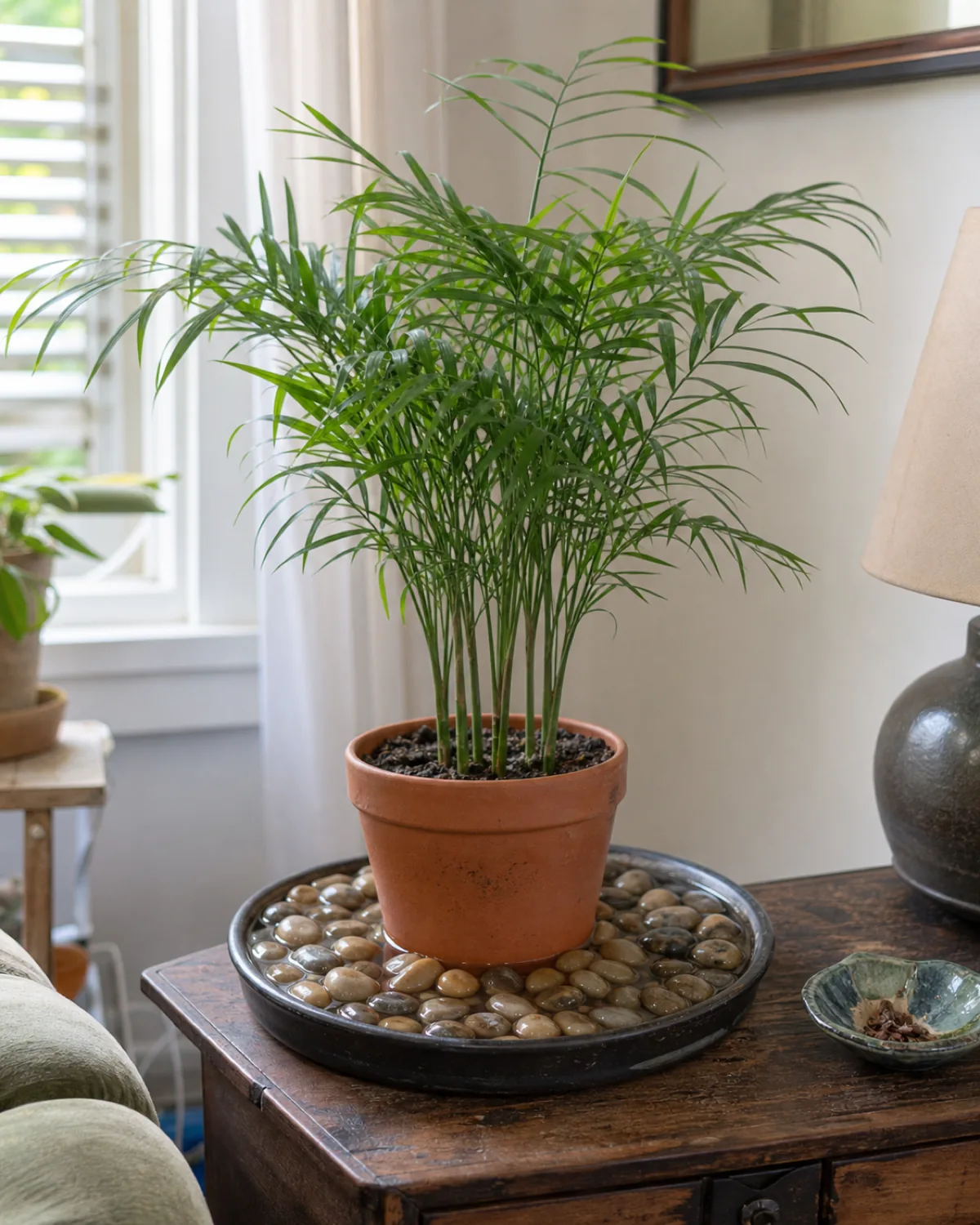
Native to humid understory forest floors, a parlor palm looks its healthiest with above-average humidity from a pebble tray or a nearby humidifier, especially during dry winter heating months.
It's forgiving enough, though, to hold up fine in an average living room or office without any extra humidity help, which is part of why it's stayed such a reliable low-maintenance pick.
- Above-average humidity brings out its best look, fuller and glossier fronds.
- A pebble tray or humidifier helps most in dry winter heating season.
- It tolerates typical home humidity fine without either.
The right potting mix and pot size
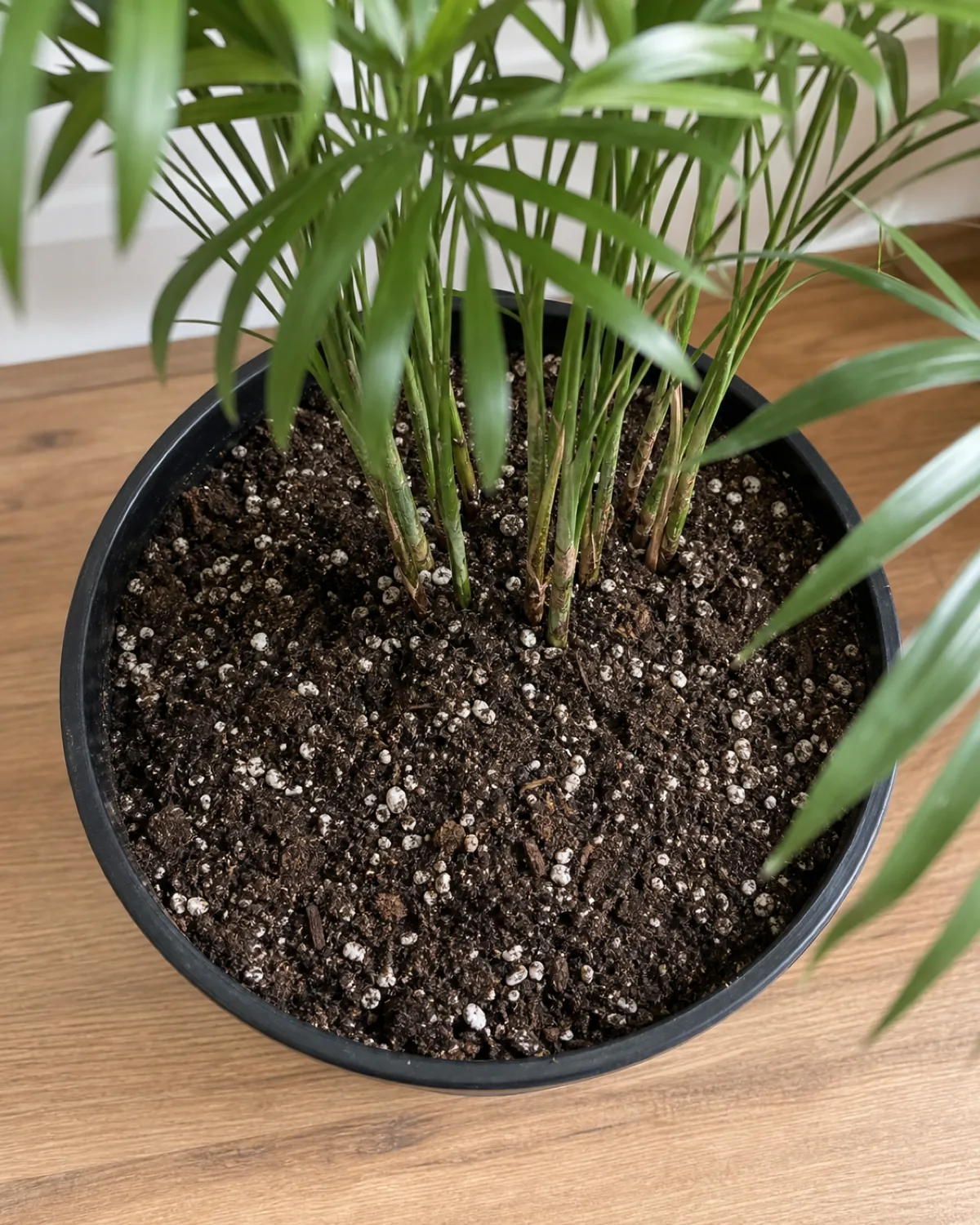
A well-draining but moisture-retentive potting mix works best, typically standard potting soil with a little perlite mixed in, in a pot with a drainage hole so the roots aren't sitting in standing water.
Because a parlor palm grows so slowly, sizing up to a larger pot is rarely urgent, and a slightly snug pot causes far fewer problems here than soggy, slow-draining soil would.
- A well-draining but moisture-retentive mix balances its evenly-moist preference.
- A pot with a drainage hole matters more than pot size.
- Slow growth means sizing up is rarely urgent.
Fertilizing: a light feeder that needs very little
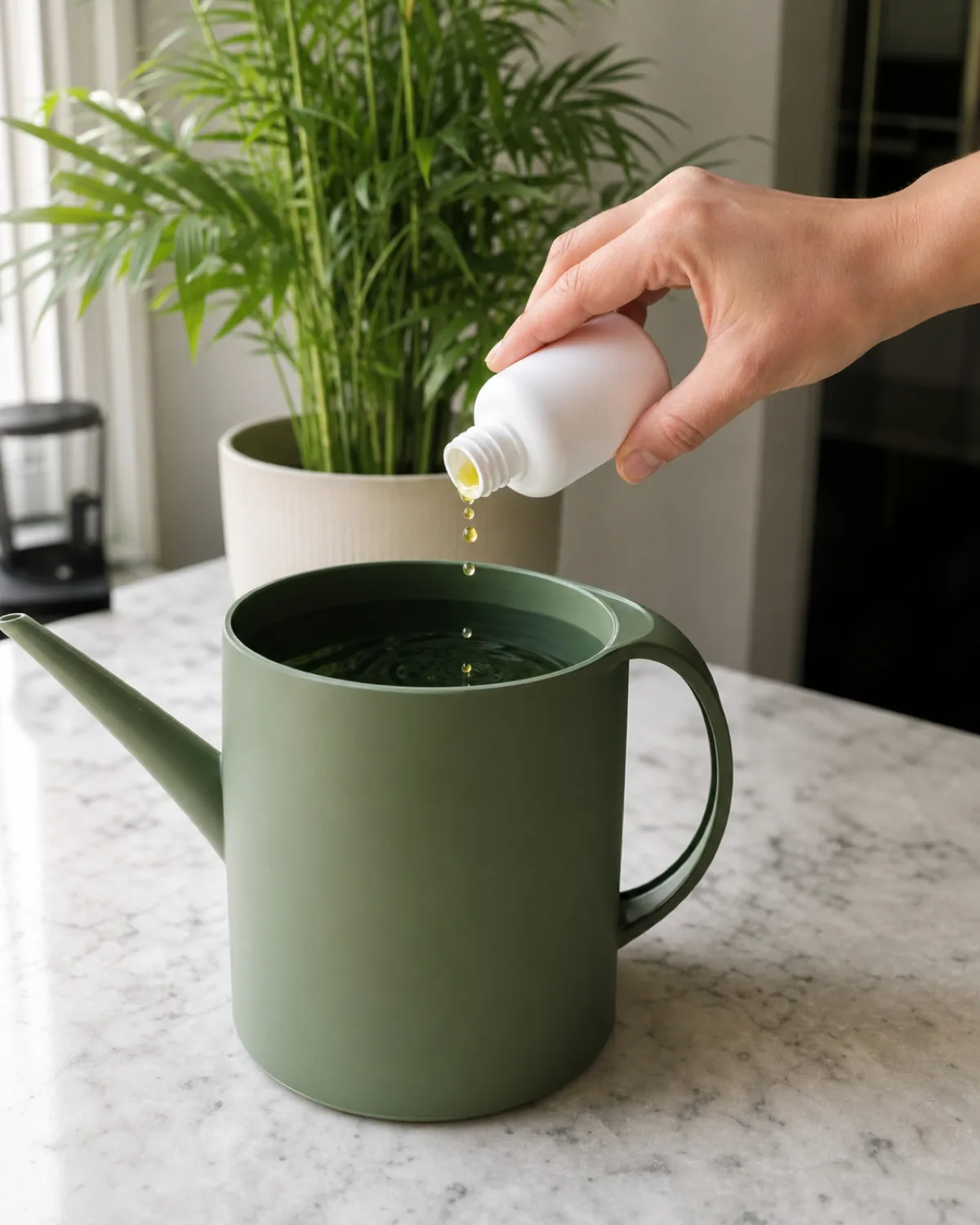
Feed a parlor palm with a diluted, balanced houseplant fertilizer once a month at most during the growing season, and skip it entirely through fall and winter.
Parlor palms are sensitive to fertilizer salt buildup, and skipping feeding altogether for a year rarely causes any visible harm, which makes under-feeding the safer default mistake to make.
- Once a month at most, diluted, during the growing season only.
- Skip feeding in fall and winter entirely.
- Salt buildup from over-feeding is more likely to cause problems than skipping it.
Growth rate and size: why it barely outgrows a desk corner for years
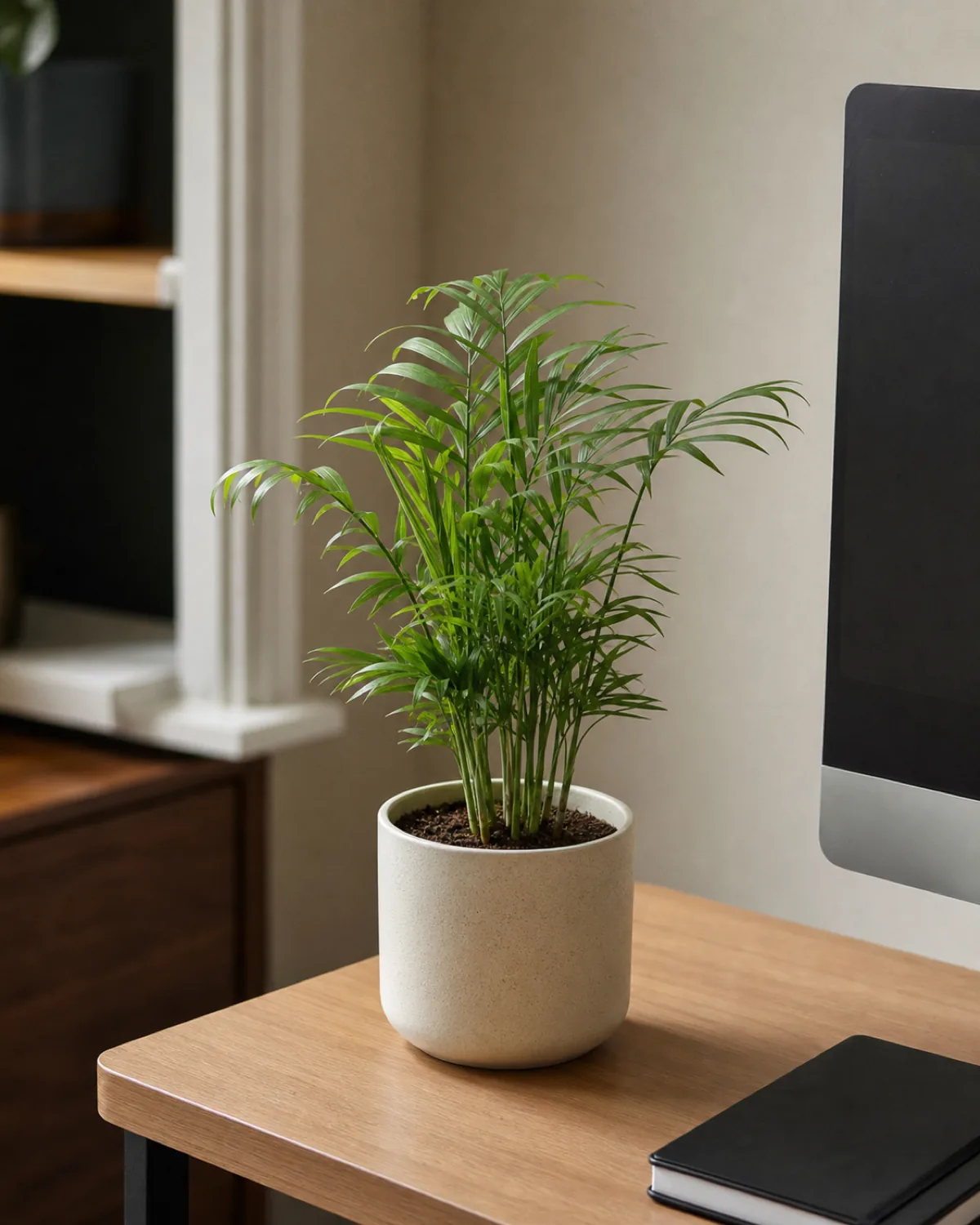
A parlor palm is one of the slowest-growing common houseplants, typically adding just a few inches of height a year and topping out around 3 to 4 feet indoors only after many years of growth. See the office plants roundup for other picks that hold their footprint in a small space.
That glacial pace is exactly why it became the classic Victorian parlor palm and the modern office-desk palm that owners can plant once and never worry about replacing for outgrowing its spot.
- Just a few inches of new growth per year, among the slowest common houseplants.
- Tops out around 3-4 feet indoors, and only after many years.
- It rarely outgrows the spot it started in.
Pruning: only remove fronds that have gone fully brown
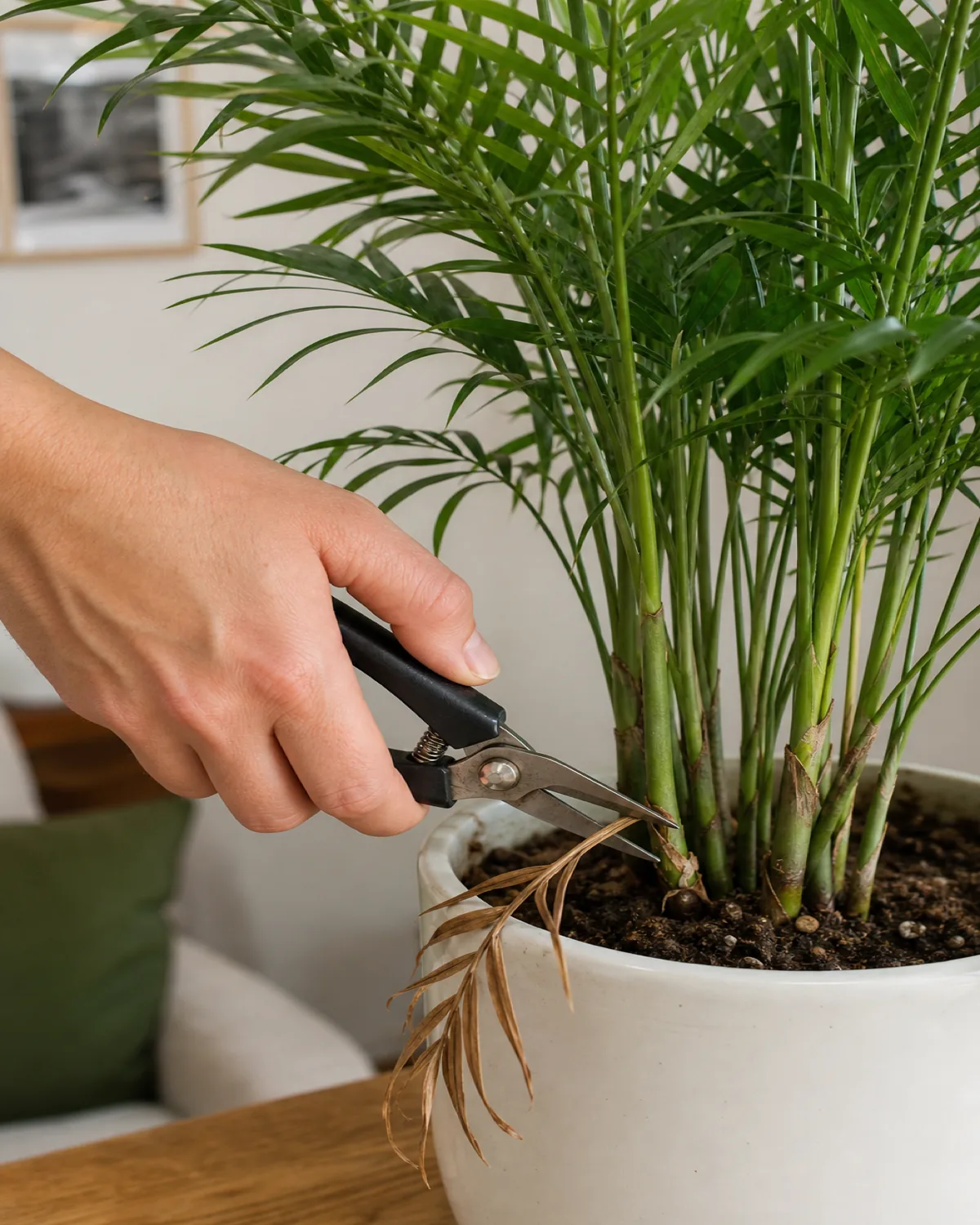
Trim an individual frond at its base once it has turned completely brown or yellow, cutting close to where it meets the cane.
Never cut a frond that's still partly green, since a palm pulls remaining nutrients back out of an aging frond before it fully browns, and cutting early wastes resources the plant would otherwise reclaim.
- Cut only fully brown or yellow fronds, at the base near the cane.
- Never trim a partly green frond — the plant is still reclaiming nutrients from it.
- A clean cut at the base looks tidier than leaving a stub.
Most parlor palm questions trace back to one of four situations. Start with whichever one describes yours, then return to the rest later.
Repotting and dividing a clustering clump
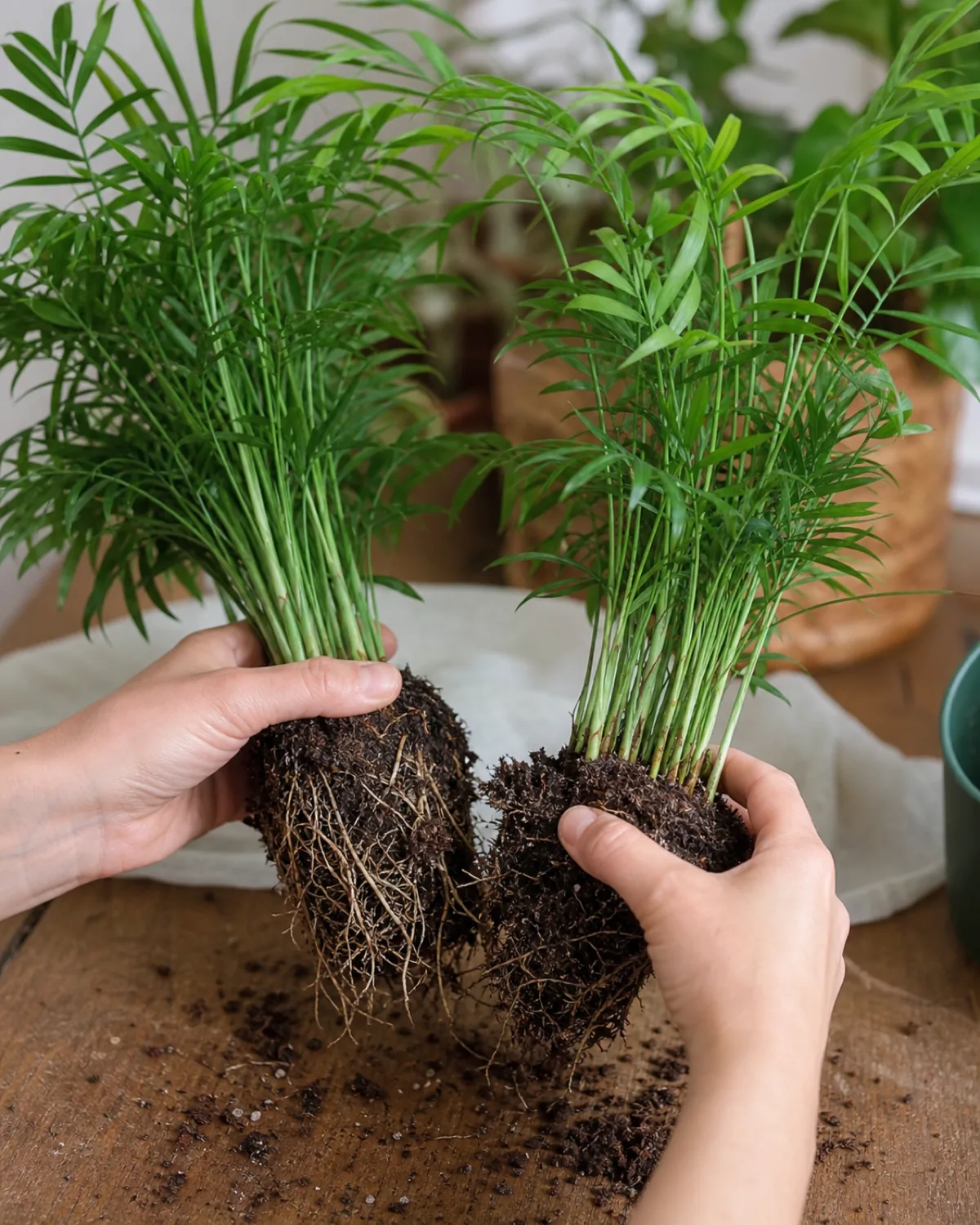
Repot only every 3 to 5 years, or once roots are visibly circling the bottom of the pot, sizing up just one pot size at a time.
A crowded clump of canes can be gently divided at the roots into two separate plants if it's genuinely outgrowing its space, though most owners never need to bother given how slowly it grows.
- Every 3-5 years, or when roots visibly circle the pot.
- Size up just one pot size at a time.
- Dividing the clump is optional, most plants never need it.
Common pests: spider mites in dry, low-humidity air
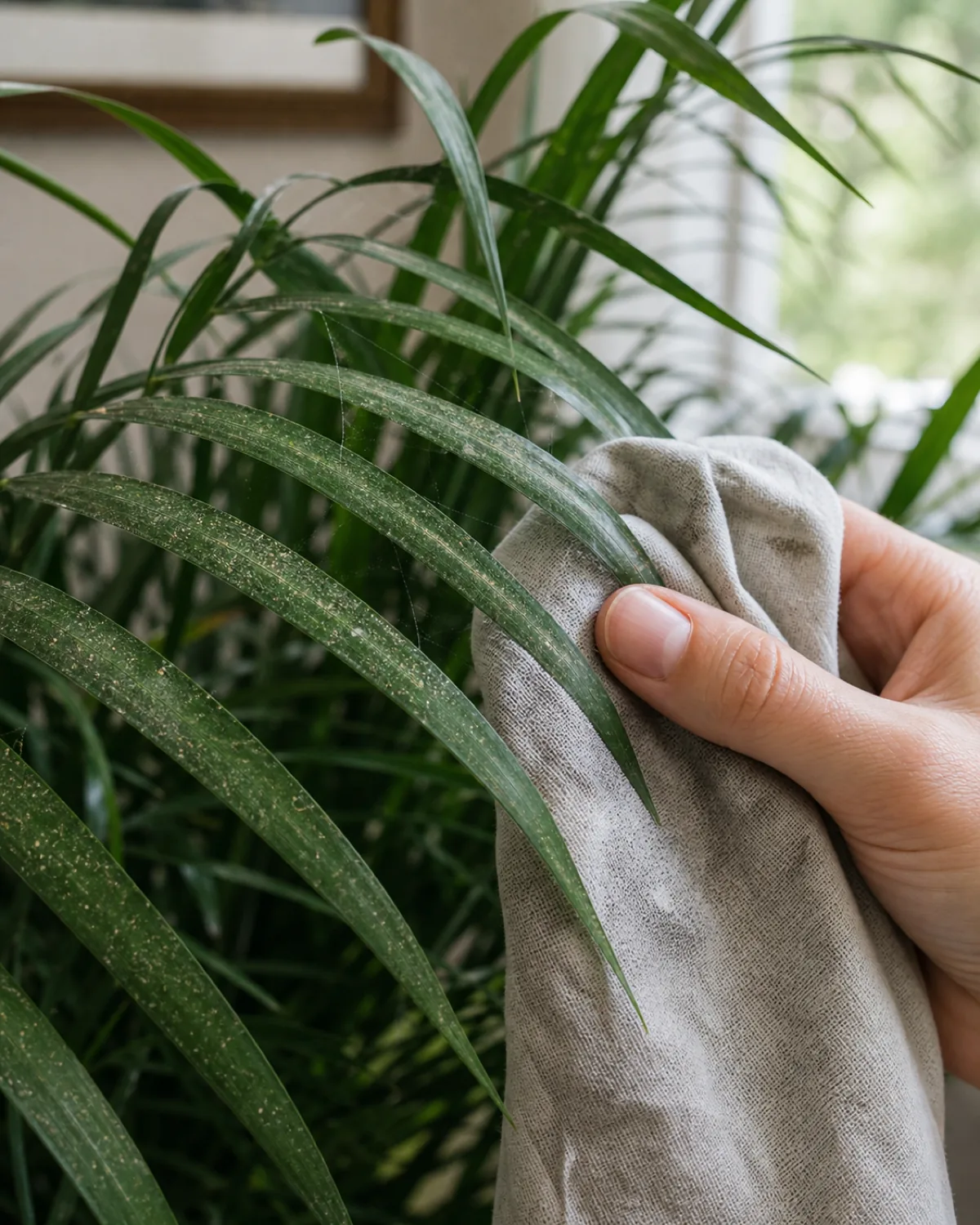
Fine webbing and stippled, dusty speckling across the fronds are the telltale signs of spider mites, and they show up worse in dry rooms during winter heating season when humidity drops.
Wiping fronds with a damp cloth periodically and raising humidity slightly are the two easiest ways to keep an infestation from taking hold in the first place.
- Fine webbing and stippled speckling are the confirming signs.
- Dry winter heating air is when infestations are most likely.
- A damp cloth wipe and a little more humidity are simple prevention.
Where a parlor palm works best in a room
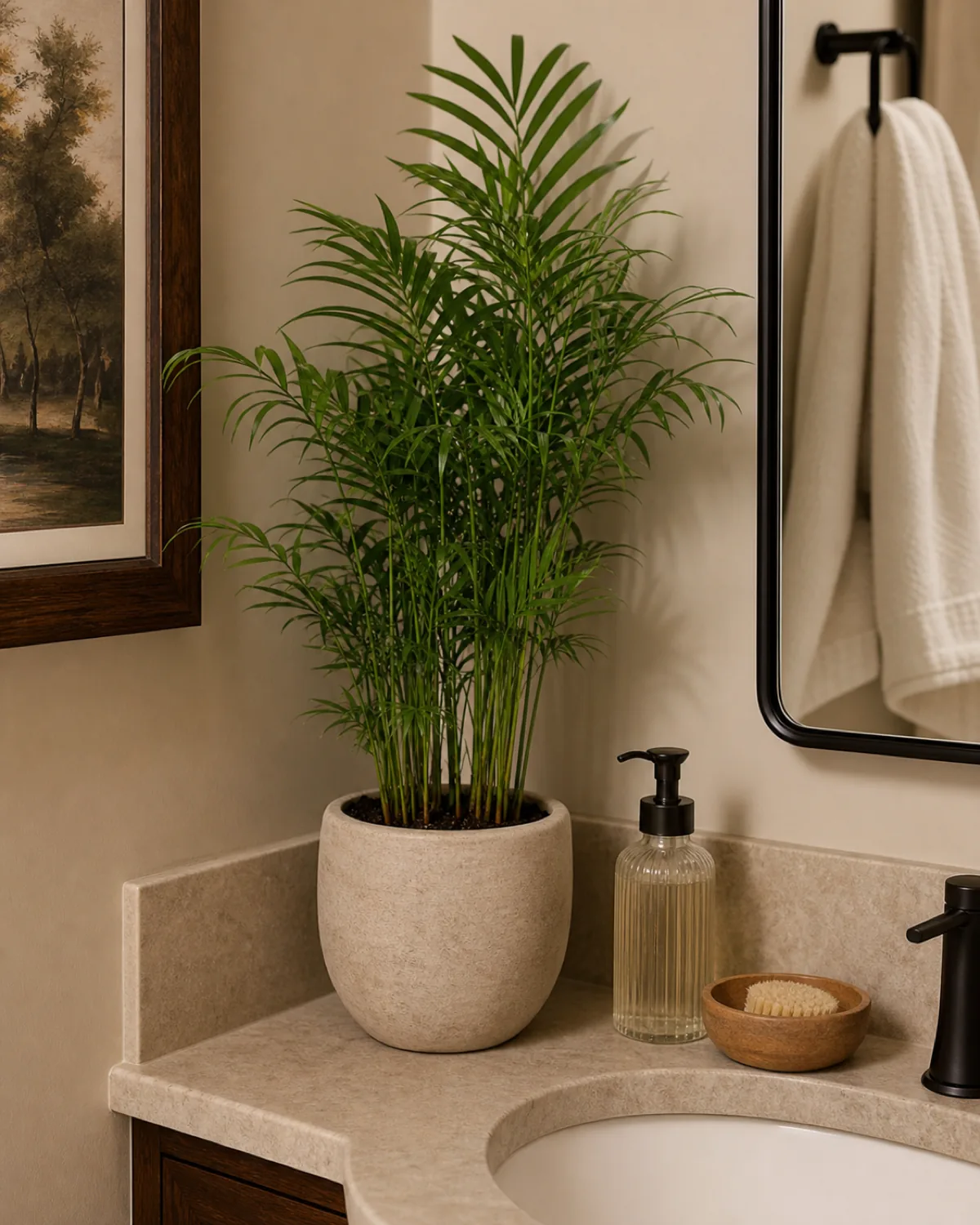
Its soft, arching fronds and genuine tolerance for low light make it a natural fit for a dim office corner, a hallway with no direct window, or a bathroom counter, filling vertical space without needing a bright spot to survive.
That combination of shade tolerance and a slow, contained growth habit is what makes it work in spots most other floor plants would struggle in.
- Dim office corners and windowless hallways are natural fits.
- A bathroom counter works too, given its humidity preference.
- It fills vertical space without needing bright light.
Is a parlor palm toxic to pets, and how do you tell it apart from a similar-looking palm at the store?
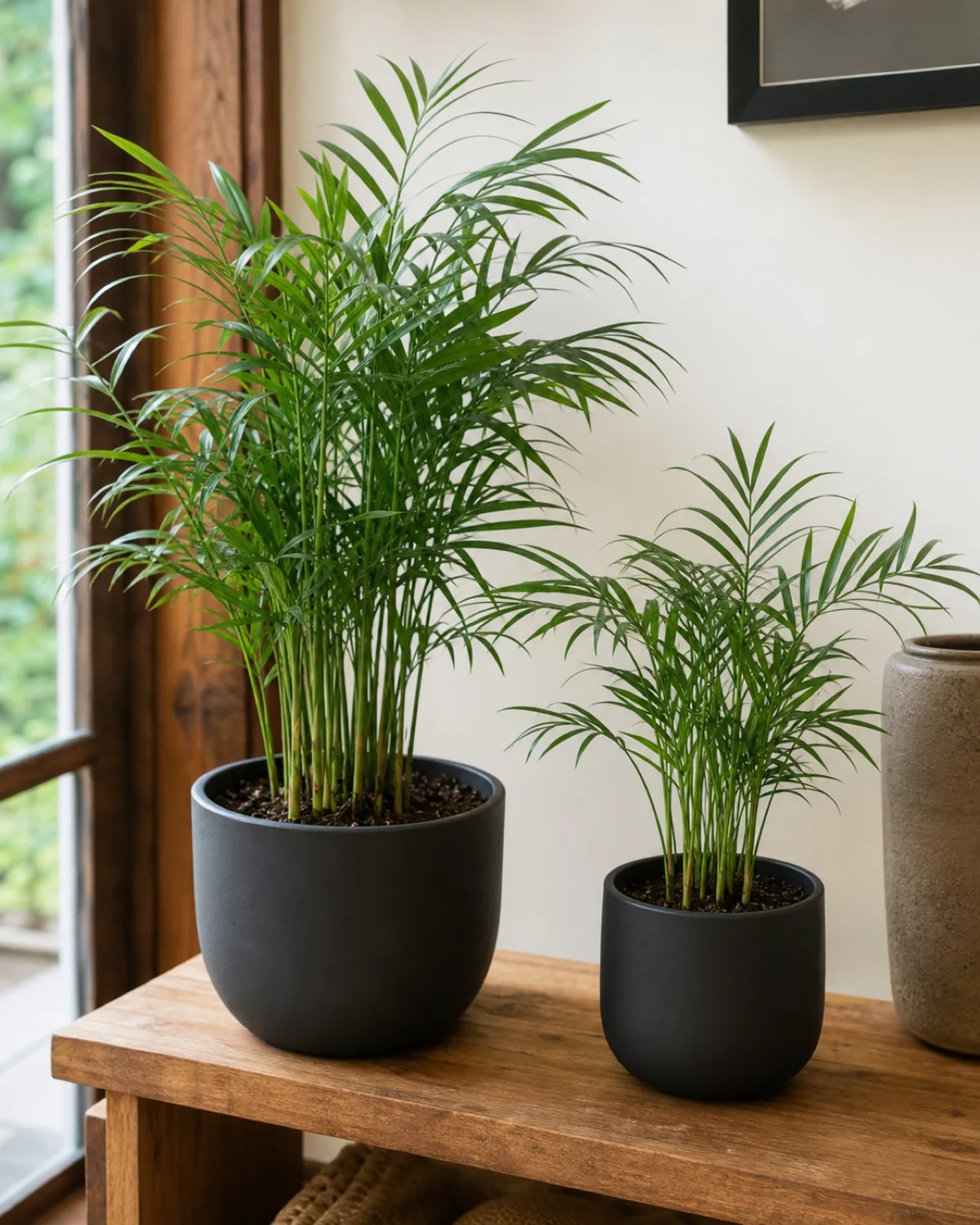
Honestly, a parlor palm is non-toxic to cats and dogs, making it one of the safer palm choices for pet owners to bring home. Like the spider plant, it's one of the pet-safe picks covered on this site.
Look for its slender, closely clustered canes and soft, narrow leaflets to tell it apart from a bamboo palm, which grows taller and more upright with more visible cane segments, or an areca palm, which has larger, coarser fronds.
- Non-toxic to cats and dogs, a genuinely safe pick for pet owners.
- Slender, closely clustered canes distinguish it from bamboo palm.
- Softer, narrower fronds distinguish it from the coarser areca palm.
Most parlor palm problems trace back to one of four moves people skip. Hold these four and it stays healthy for years with almost no fuss.
Parlor Palm Care: The Quick Reference
- 1Clustered bamboo-like canes, feathery frondsThe only true palm form covered on this site.
- 2Low to medium indirect light is genuinely enoughDirect sun bleaches fronds a papery tan.
- 3Water when the top inch starts to feel dryRoughly every 7-10 days — don't let it dry out fully.
- 4Brown tips: soil drying out is the top causeFluoride and mineral salts in tap water are secondary.
- 5Above-average humidity brings out its best lookBut it tolerates typical home air just fine.
- 6Well-draining but moisture-retentive mixA drainage hole matters more than pot size.
- 7Feed once a month at most, growing season onlySkipping it entirely for a year rarely causes harm.
- 8One of the slowest-growing common houseplantsTops out around 3-4 feet after many years.
- 9Only prune fully brown or yellow frondsA partly green frond is still feeding the plant.
- 10Repot every 3-5 years, divide only if crowdedMost plants never need dividing.
- 11Spider mites show up in dry winter airA damp cloth wipe and more humidity help prevent them.
- 12A natural fit for dim corners and bathroomsFills vertical space without needing bright light.
- 13Non-toxic to cats and dogsLook for slender clustered canes to tell it apart from bamboo or areca palm.
kultivy.com

Mara Quinn edits Kultivy, where she shares houseplant care, propagation, beginner-friendly plant picks, and plant-styling ideas for anyone who wants their indoor plants to actually thrive. Every guide is image-led and reviewed for clarity, usefulness, image accuracy, and Pinterest-to-page alignment before it goes live. Visit the About page.