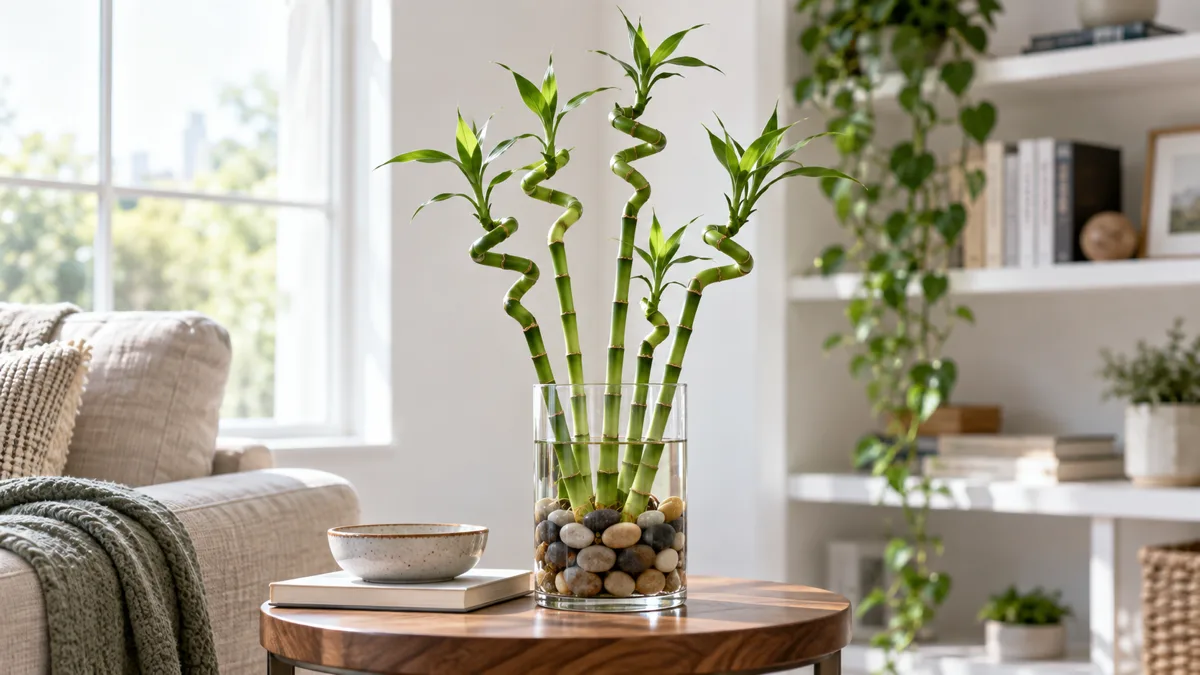
A bamboo palm is the houseplant palm most likely to actually look like its namesake — thin, upright canes marked with distinct ring banding, standing straighter than either of the other common houseplant palms.
Chamaedorea seifrizii clusters many slender, ringed canes from the base, each topped with narrower, straighter fronds than a parlor or areca palm, settling into a full, bushy clump. Its light needs sit between those two cousins.
More light than a shade-loving parlor palm, but more shade tolerance than a bright-light-hungry areca palm. This guide covers light, water, brown tips, humidity, its NASA fame, potting, feeding, growth, pruning, repotting, pests, and pet safety.
A bamboo palm's identity comes from its thin, upright, ring-banded canes. The thirteen sections below cover identification, exact care needs, and how to keep it thriving for years.
What a bamboo palm actually looks like
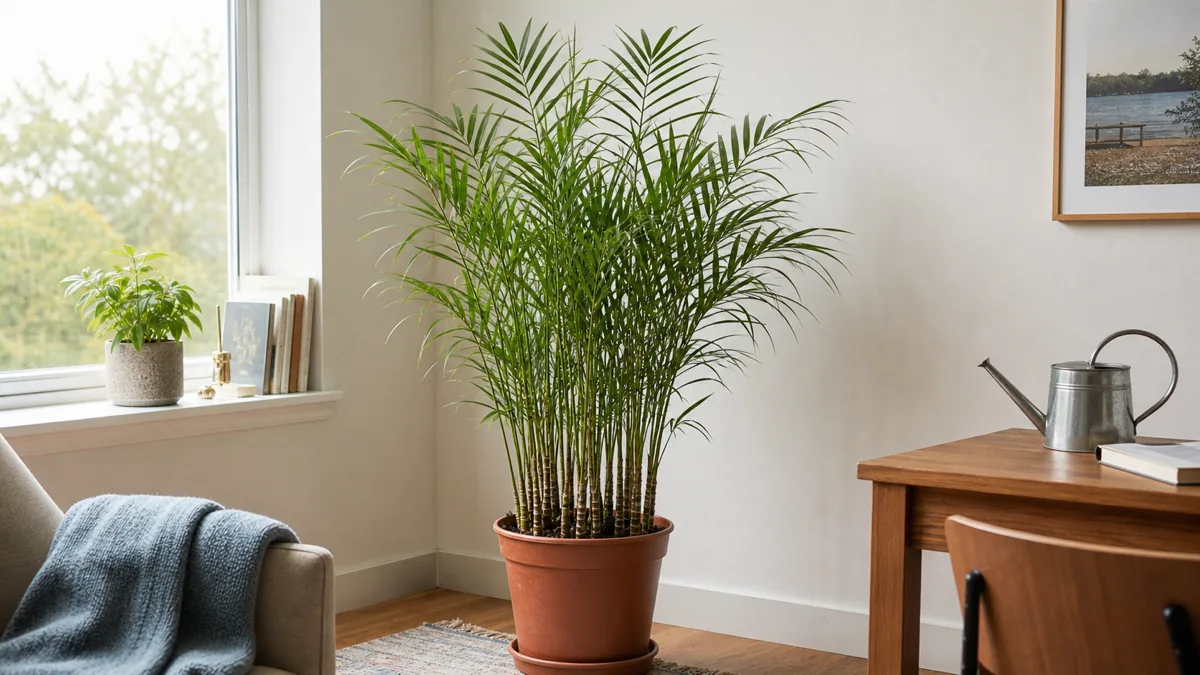
A bamboo palm's identity comes from its cluster of thin, upright canes, each marked with distinct ring and node banding that genuinely resembles a stalk of bamboo — more literally bamboo-like than either other houseplant palm covered on this site. Every cane tops out in a narrower, straighter frond made of slim leaflets that hold much less arch than a parlor or areca palm's fronds.
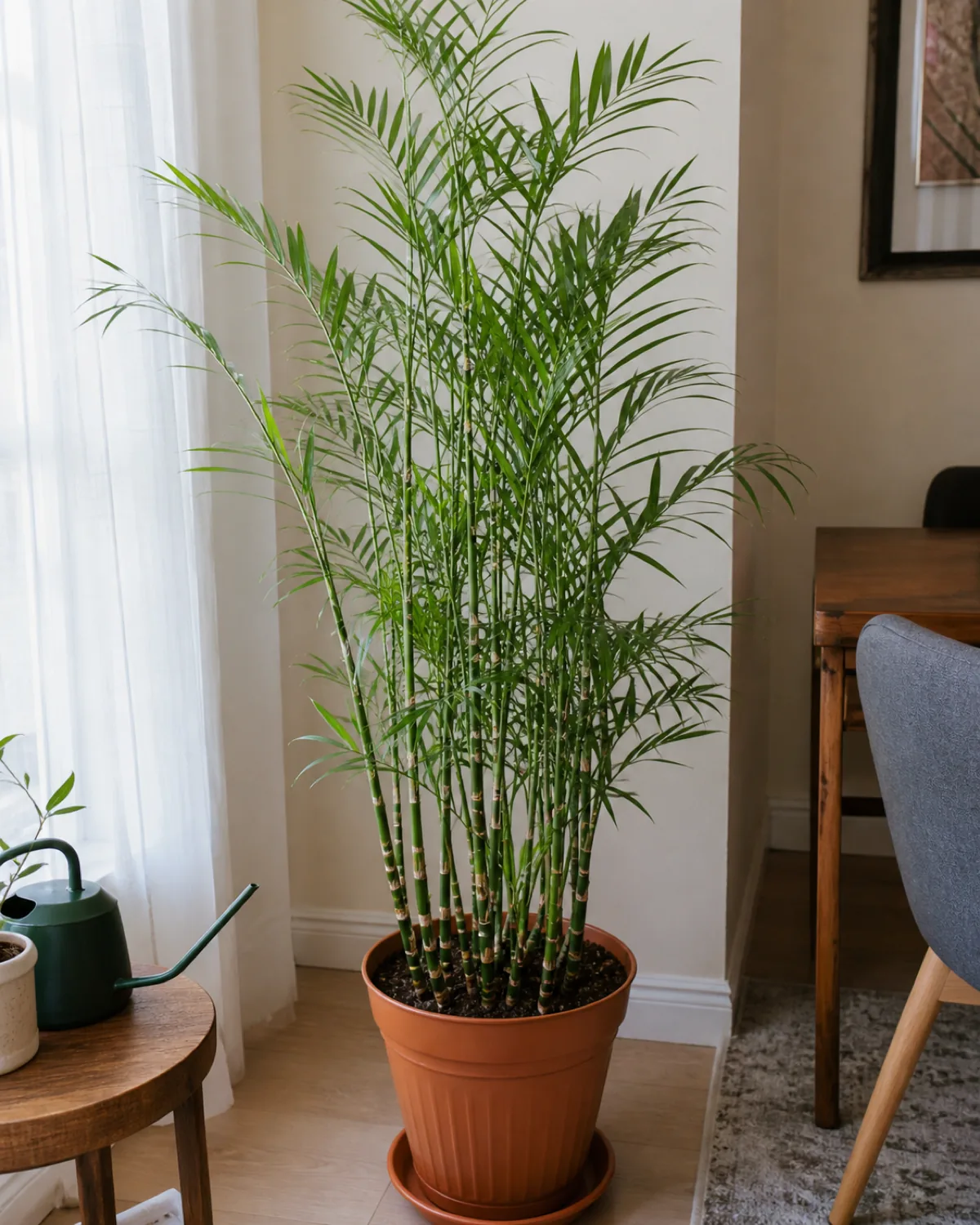
Compared to those two, a bamboo palm's canes stay thinner and more upright, and the whole clump reads tighter and more vertical rather than spreading or gracefully drooping.
- Thin, upright canes with distinct ring banding, the most literally bamboo-like of the houseplant palms here.
- Narrower, straighter fronds with far less arch than parlor or areca palm.
- A tighter, more upright clumping habit than either other palm.
How much light a bamboo palm needs (it sits between parlor and areca)
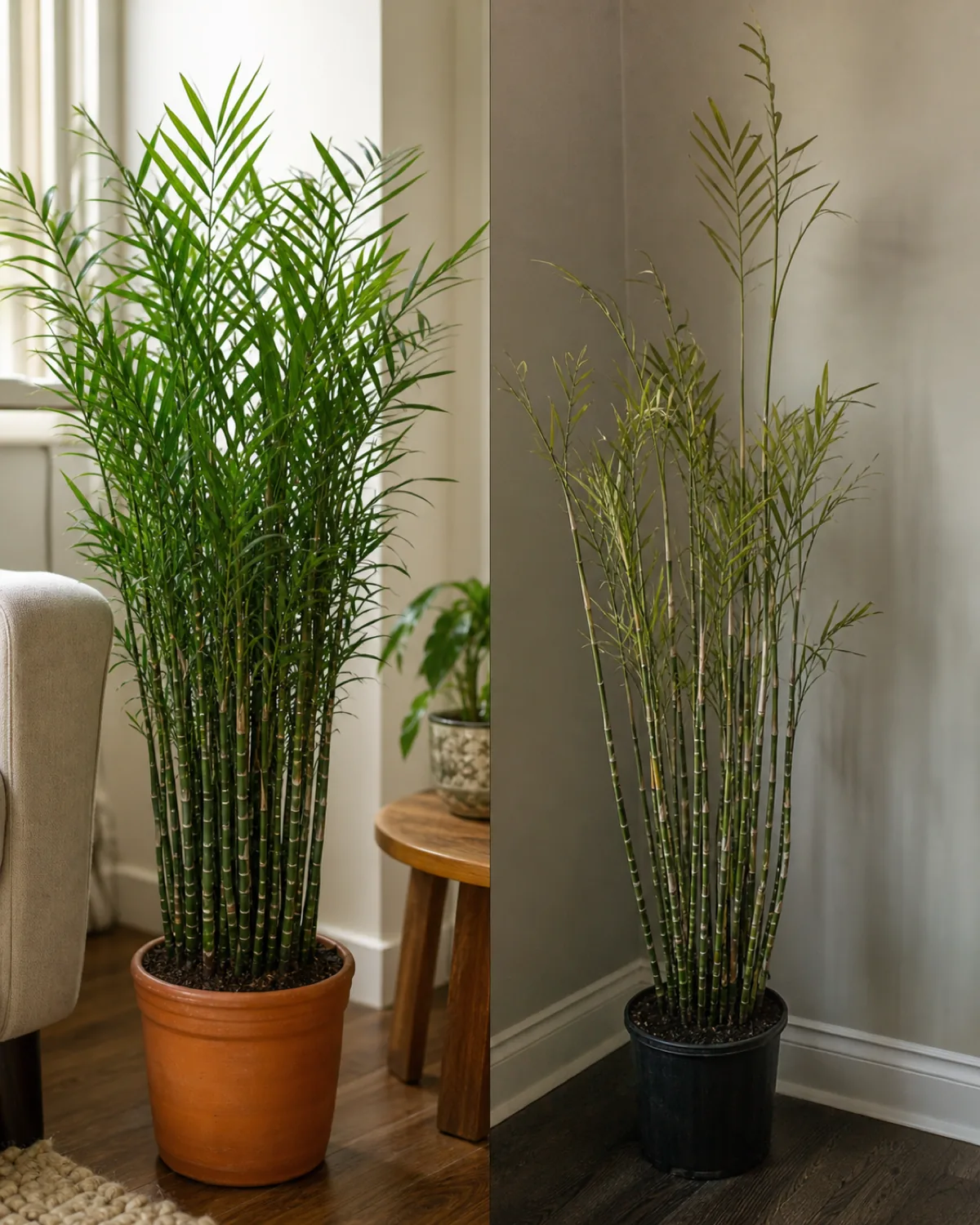
A bamboo palm tolerates medium to low light better than an areca palm, but it still needs noticeably more light than a genuinely shade-loving parlor palm to stay dense. A dim, windowless corner a parlor palm shrugs off for years will slowly thin a bamboo palm out instead.
The safest read is a medium-light spot a few feet back from a window, or brighter indirect light if the room runs on the dim side overall. Watch for stretching gaps between fronds or a noticeably sparser clump as the first sign it needs to move closer to a window.
- More light-tolerant than areca palm, but not a true shade plant like parlor palm.
- A dim, windowless corner will slowly thin it out, even though it survives longer there than an areca palm would.
- Stretching or thinning fronds signal it needs to move closer to a window.
How often to water a bamboo palm
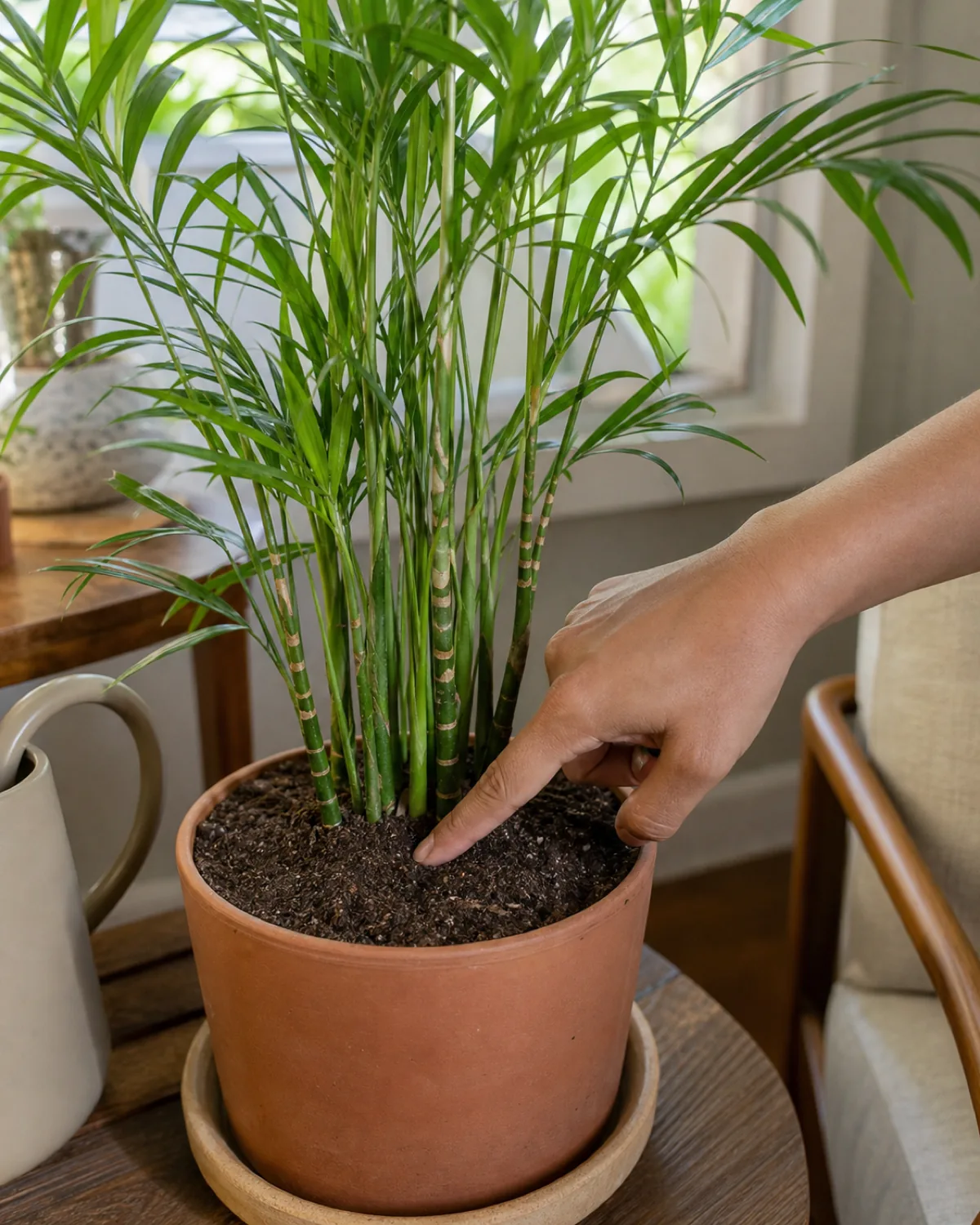
Keep the soil evenly moist, watering once the top inch starts to feel dry. A bamboo palm forgives an occasional missed watering better than an areca palm does, but it still isn't as drought-tolerant as a parlor palm left to dry out between waterings.
Soggy, waterlogged soil is the bigger risk of the two extremes here — root rot sets in faster than the plant recovers from a few dry days, so when in doubt, wait a day rather than watering again.
- Evenly moist soil, watering once the top inch dries.
- More forgiving of a missed watering than areca palm, but less drought-tolerant than parlor palm.
- Soggy soil is riskier than a dry stretch — when unsure, wait.
Why frond tips turn brown or yellow
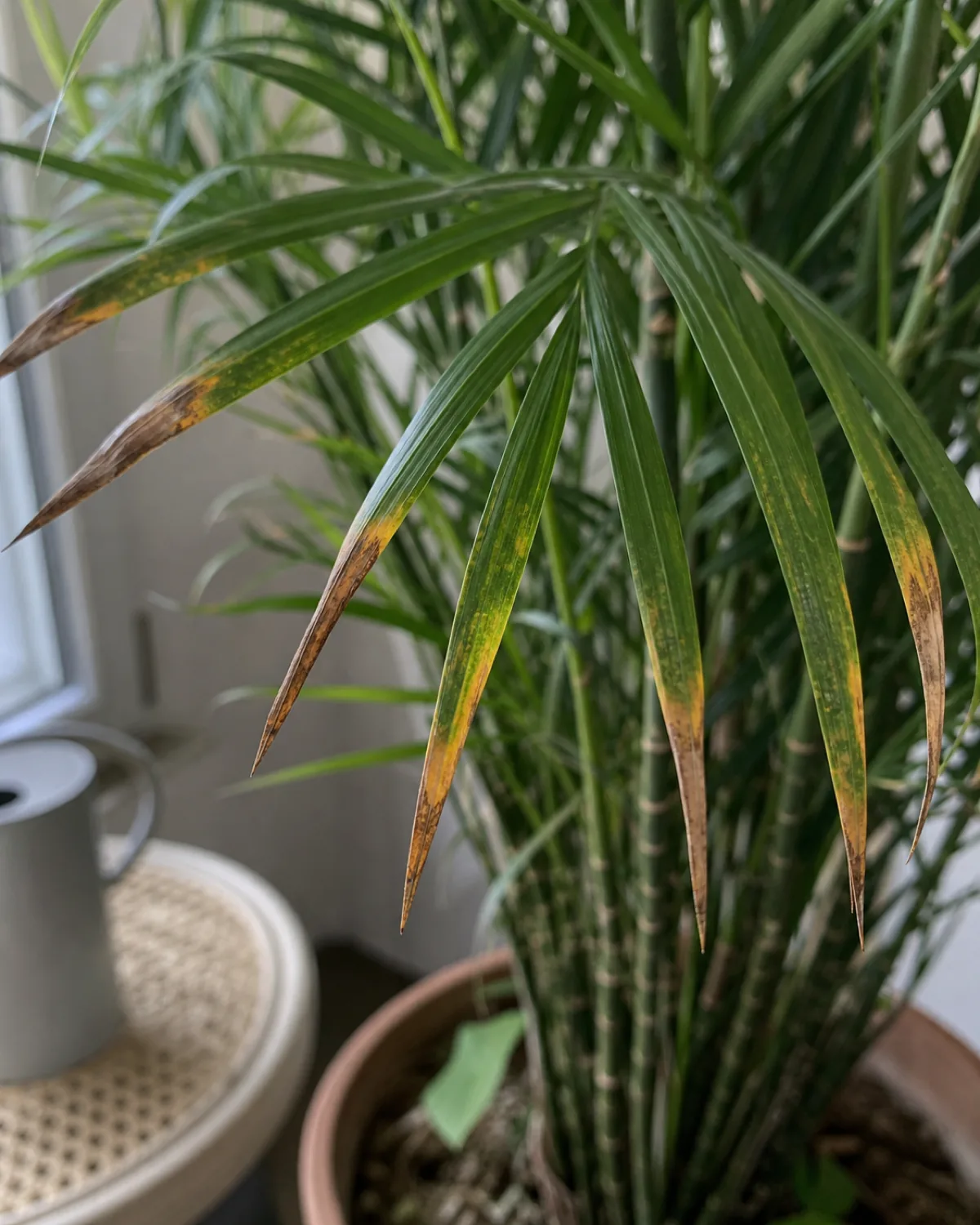
A bamboo palm shows moderate sensitivity to fluoride, chlorine, and mineral salt buildup in tap water — less extreme than an areca palm's well-known reaction, but enough that consistently hard or treated tap water will eventually show up as browned tips. Low humidity and inconsistent watering compound the same symptom.
Switching to distilled water, filtered water, or tap water left out overnight to off-gas chlorine usually resolves new tip browning within a few weeks of new growth, though existing browned tips won't reverse.
- Moderate sensitivity to fluoride and mineral salts, milder than areca palm but real.
- Low humidity and inconsistent watering make tip browning worse.
- Switching water sources prevents new damage, though existing brown tips stay.
Humidity and why it's the most air-conditioning-tolerant houseplant palm here
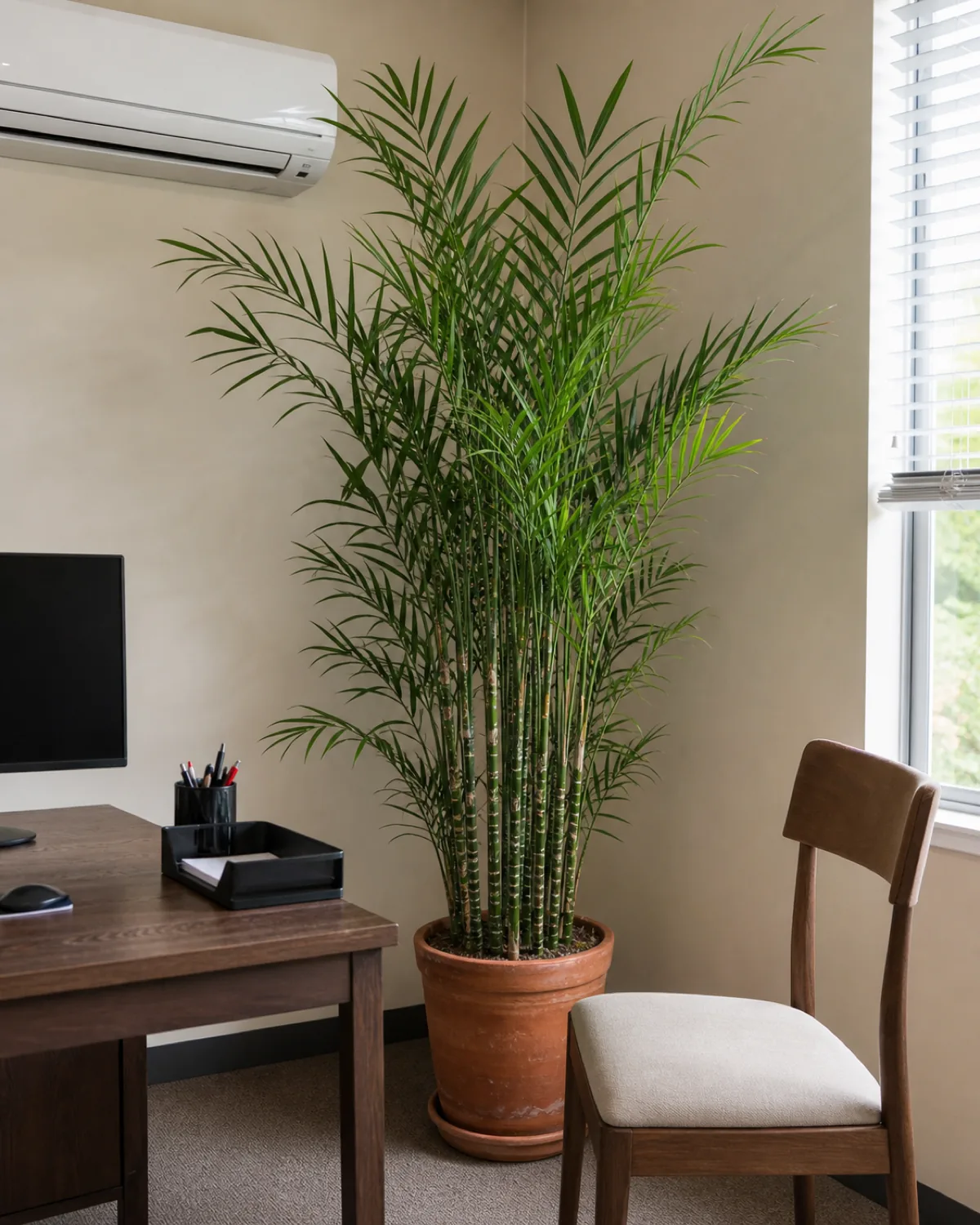
A bamboo palm appreciates above-average humidity, but it shrugs off dry, drafty, air-conditioned rooms better than either the parlor palm or the areca palm covered on this site.
That makes it the most forgiving of the three for a climate-controlled living room or a genuinely dry office corner near a vent.
A pebble tray or nearby humidifier still helps it look its fullest, but skipping that step won't punish a bamboo palm nearly as fast as it would the other two palms.
- The most air-conditioning-tolerant of the three houseplant palms covered here.
- A genuinely good fit for a dry office corner near an air vent.
- Extra humidity helps it look fuller, but isn't as urgent as for parlor or areca palm.
The real reason it's a houseplant celebrity: the NASA Clean Air Study
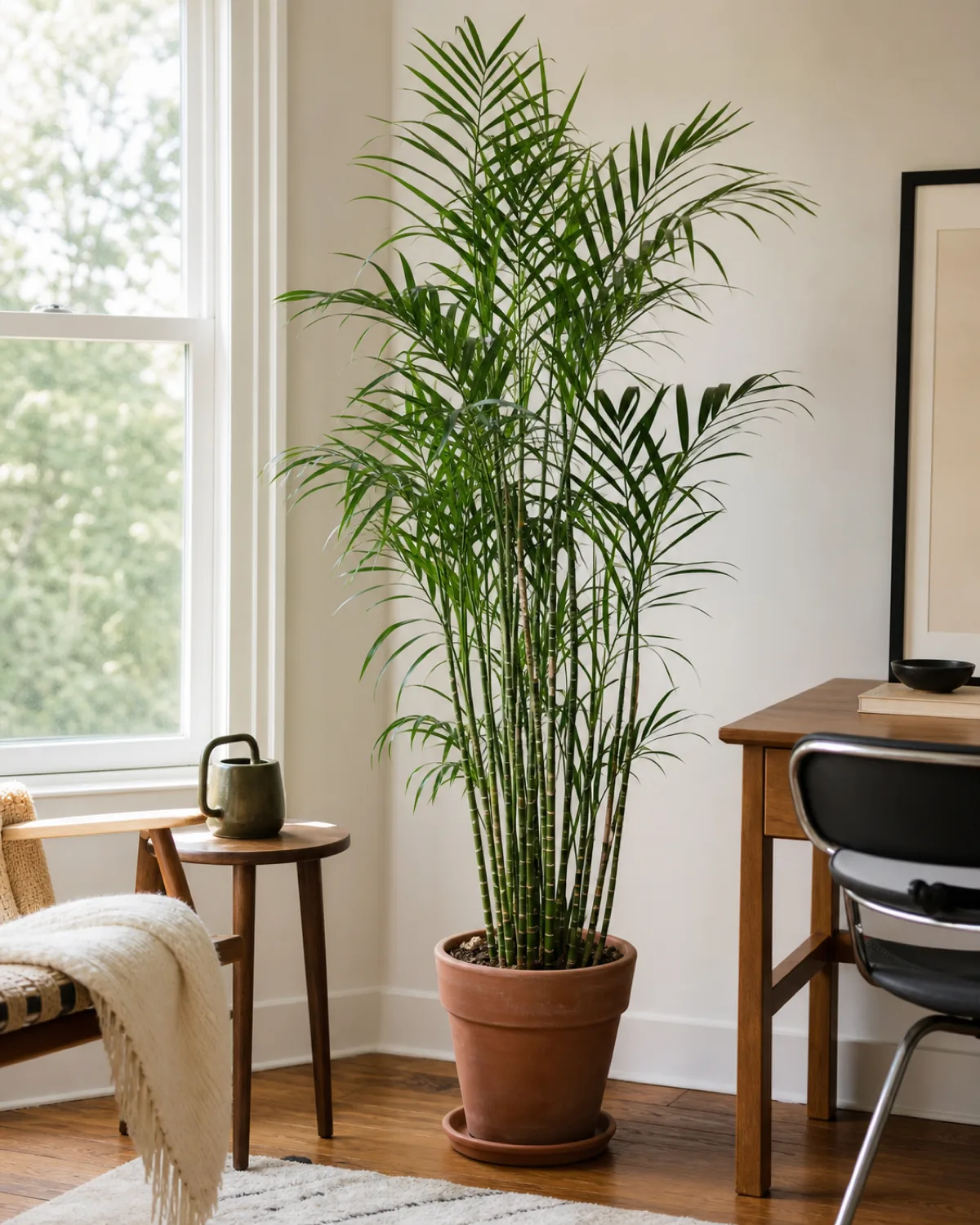
A bamboo palm's reputation goes beyond looks — it was one of the top-ranked houseplants in NASA's classic indoor air-quality research for filtering common household air pollutants, a specific claim to fame that neither the parlor palm nor the areca palm covered on this site carries.
That reputation is part of why it shows up so often in office lobbies and waiting rooms: it's genuinely one of the better-studied houseplants for indoor air quality, on top of being a forgiving, attractive clump of greenery.
- One of the top-ranked plants in NASA's Clean Air Study, a distinction unique to this palm on this site.
- Explains its long history in offices and lobbies, not just its looks.
- A real, studied reputation, not just houseplant folklore.
Why its pot-sizing pace lands between the other two palms
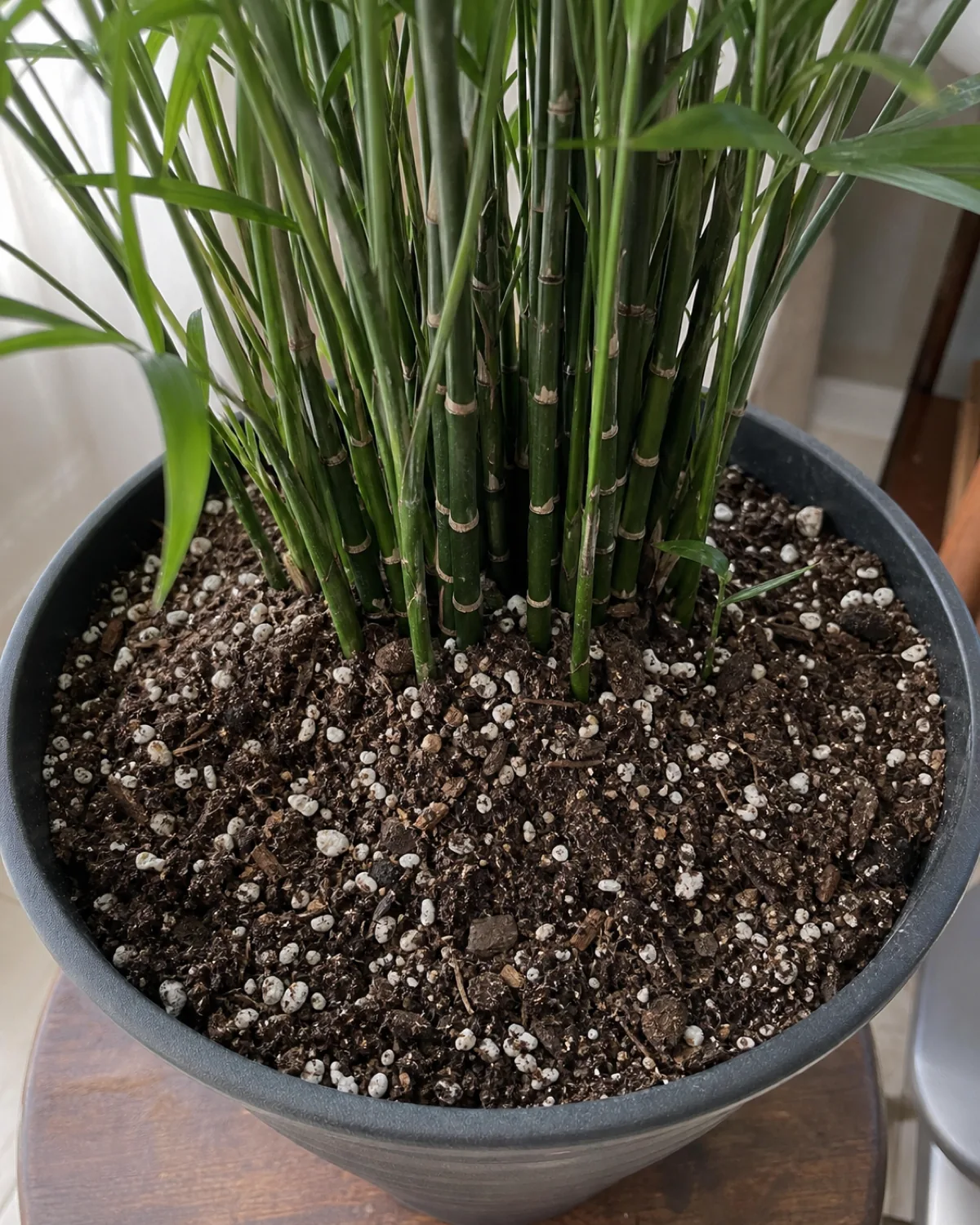
Drainage is the one non-negotiable: a well-draining, moisture-retentive mix in a pot with a real hole keeps a bamboo palm's roots from sitting wet long enough to rot. Beyond that baseline, the actual re-potting rhythm is what sets it apart from the site's other two houseplant palms.
A bamboo palm clumps in more new canes per year than a parlor palm ever will, yet it never races toward a 6-foot room-divider clump the way an areca palm does.
So instead of parlor palm's "leave it for years" pace or areca palm's "size up almost annually" pace, this one lands on a genuine middle rhythm: sizing up one pot size roughly every couple of years, once new canes visibly crowd the current pot.
- Non-negotiable drainage, same baseline as any houseplant palm.
- More new canes per year than parlor palm, without areca palm's race toward a 6-foot clump.
- A genuine middle re-potting rhythm — not "leave it for years," not "size up almost annually."
Fertilizing: light, regular feeding during the growing season
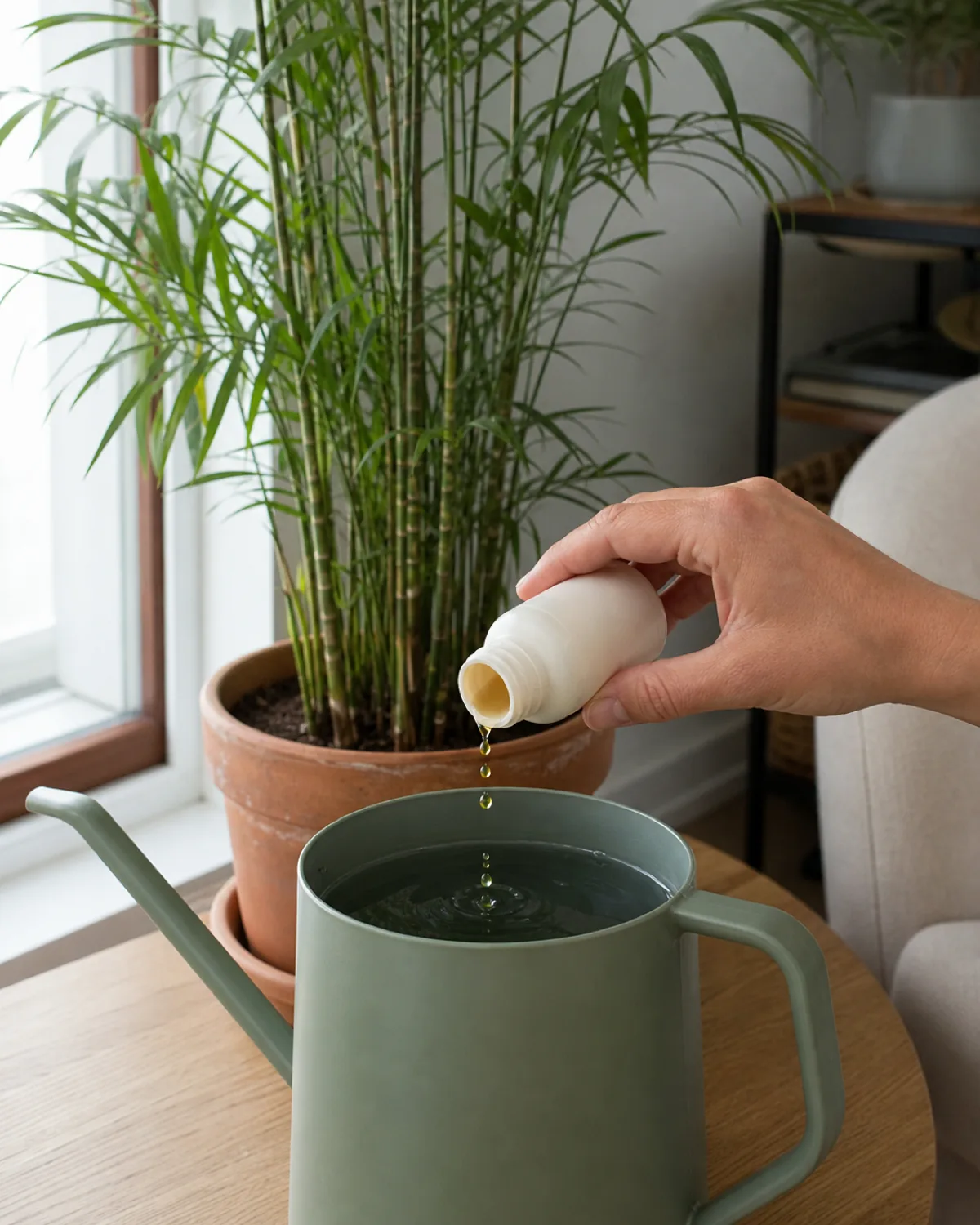
Feed with a balanced houseplant fertilizer diluted to half strength about once a month from spring through summer, easing off through fall and winter when growth slows.
Over-fertilizing shows up as the same salt-burn browned tips covered earlier in this guide, so it's safer to err on the light side and skip a feeding if growth already looks slow.
- Half-strength balanced fertilizer, roughly monthly, spring through summer.
- Ease off in fall and winter as growth slows.
- Over-fertilizing causes the same brown-tip symptom as hard water — when in doubt, feed less.
Most bamboo palm questions trace back to one of four situations. Start with whichever one describes yours, then return to the rest later.
Growth rate and size: a fuller, bushier mid-size palm
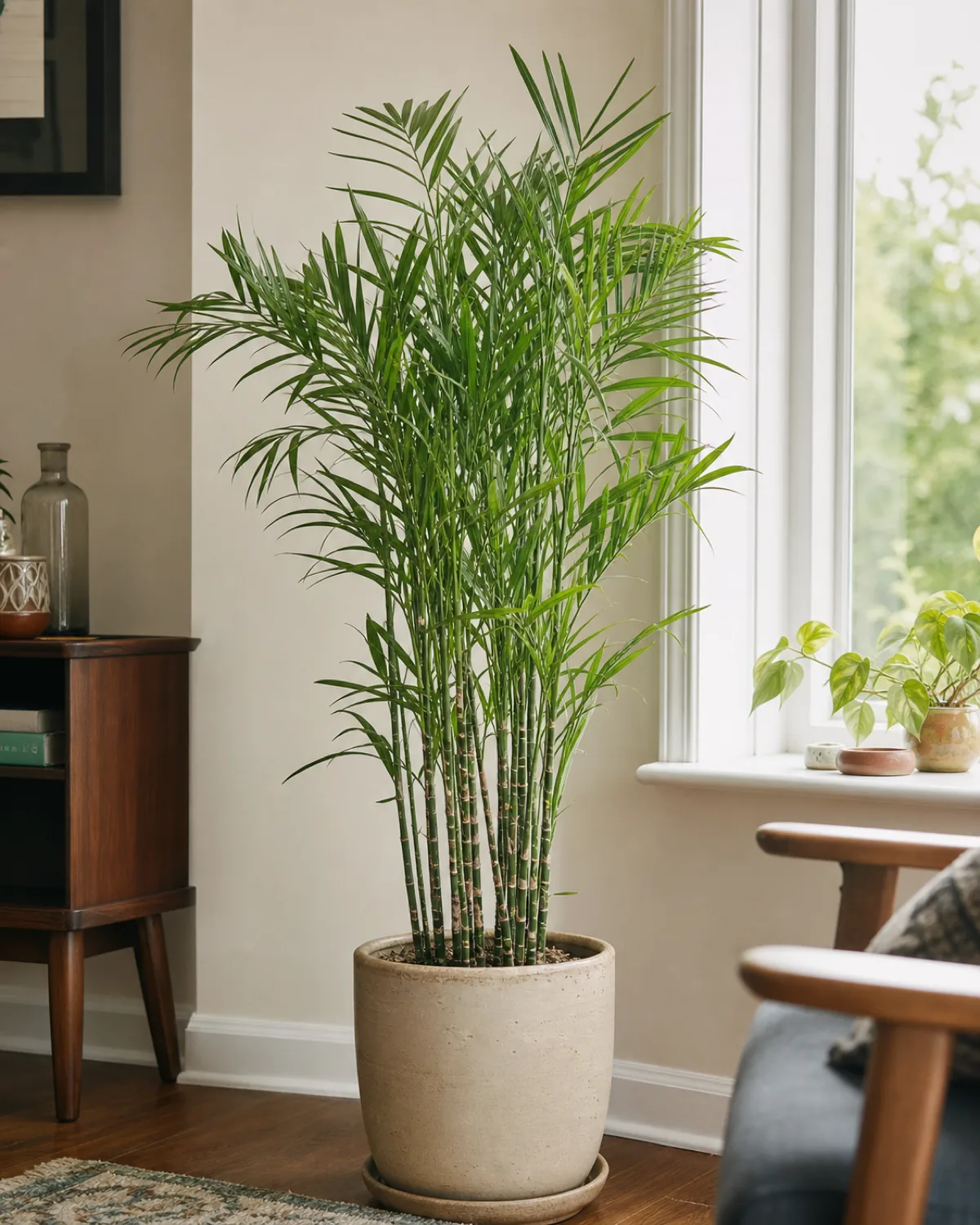
A bamboo palm settles into a full, bushy clump in the 4-to-6-foot range, slower and shorter than the fast, tall, room-dividing areca palm covered on this site, but producing more canes over time than the slim, sparse parlor palm.
That makes it a solid middle-ground pick for anyone who wants real fullness and presence without the multi-year wait or eventual room-divider scale of an areca palm.
- Settles into a full 4-to-6-foot bushy clump, slower than areca palm.
- Produces more canes over time than parlor palm, staying fuller.
- A middle-ground size and growth rate between the site's other two houseplant palms.
Keeping the upright silhouette clean without over-trimming it
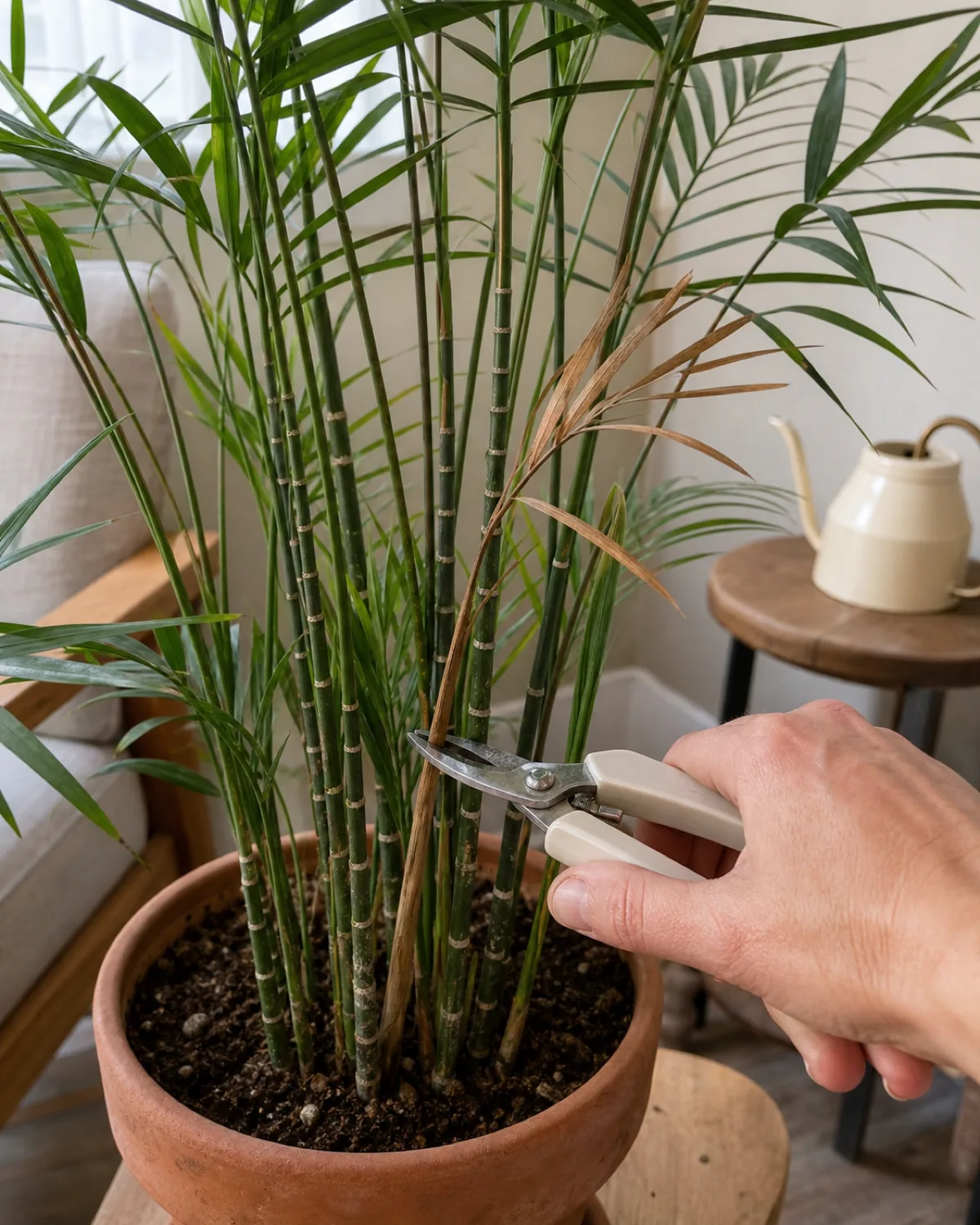
Because a bamboo palm's whole visual identity is its straight, tightly upright canes rather than a dramatic arch, careless trimming shows up here more than on the site's other two palms — cutting into a still-partly-green frond leaves a visibly bare gap along that upright line that a fuller-arching areca palm would mostly hide.
The safe rule stays the same as for any houseplant palm: cut a spent frond at the cane only once it's gone completely brown or yellow, using clean snips, and leave anything still partly green so the plant keeps reclaiming its nutrients.
- A premature cut leaves a visible gap in its upright silhouette faster than it would on a fuller-arching palm.
- Wait for fully brown or yellow before cutting, at the cane, with clean snips.
- Leave partly green fronds alone so the plant can reabsorb their nutrients.
Repotting a clumping bamboo palm
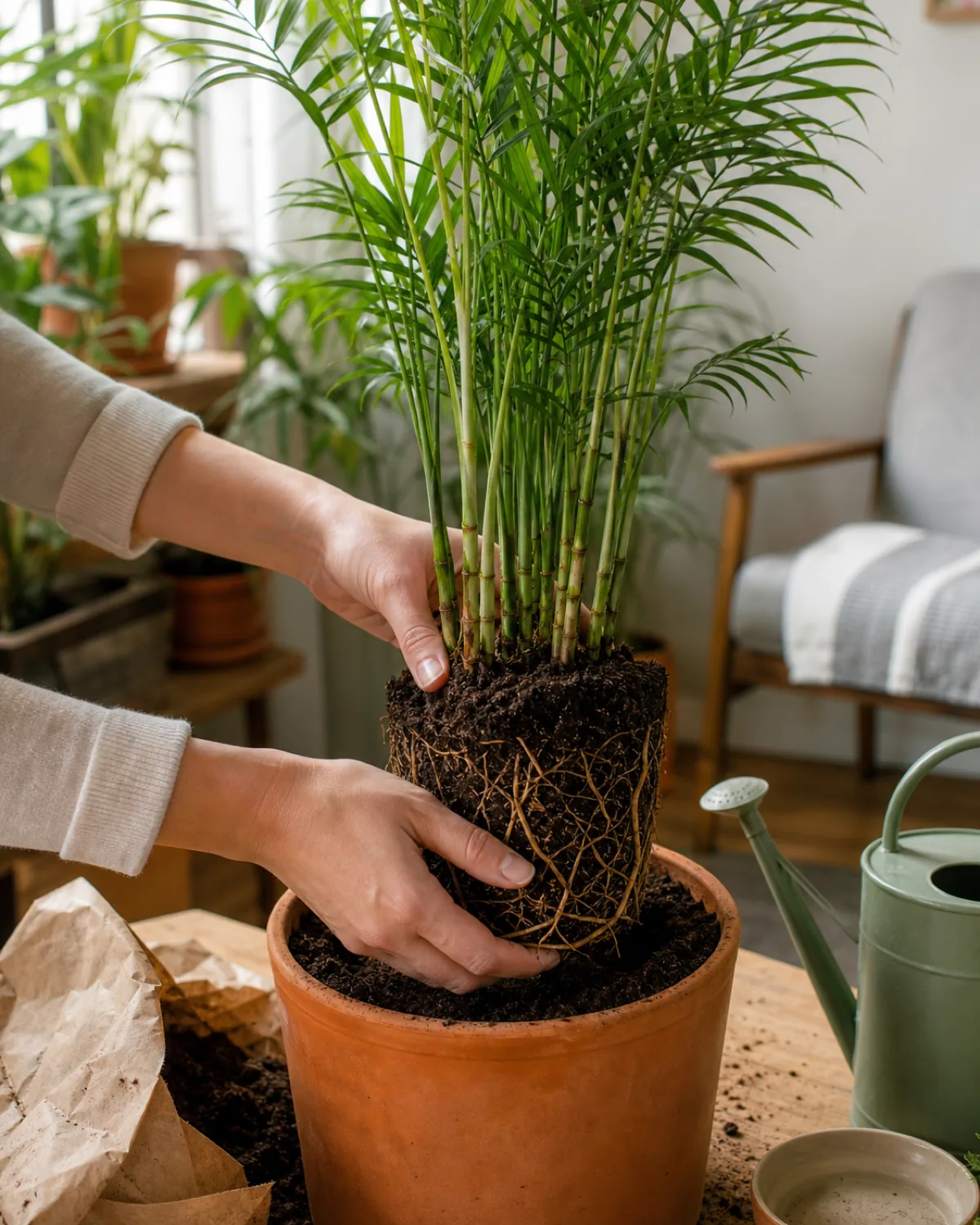
Repot roughly every 2 to 3 years, once canes crowd the pot or roots visibly circle the root ball. Size up gradually, one pot size at a time, rather than jumping several sizes at once.
Because it clumps more canes with each passing year, a repot is also a natural moment to check whether the clump would benefit from division, though most owners simply size up the same clump.
- Repot every 2 to 3 years, once canes crowd the current pot.
- Size up gradually, one pot size at a time.
- A natural moment to check whether the clump needs dividing.
Reading a spider mite outbreak as an unusually dry stretch, not a chronic problem
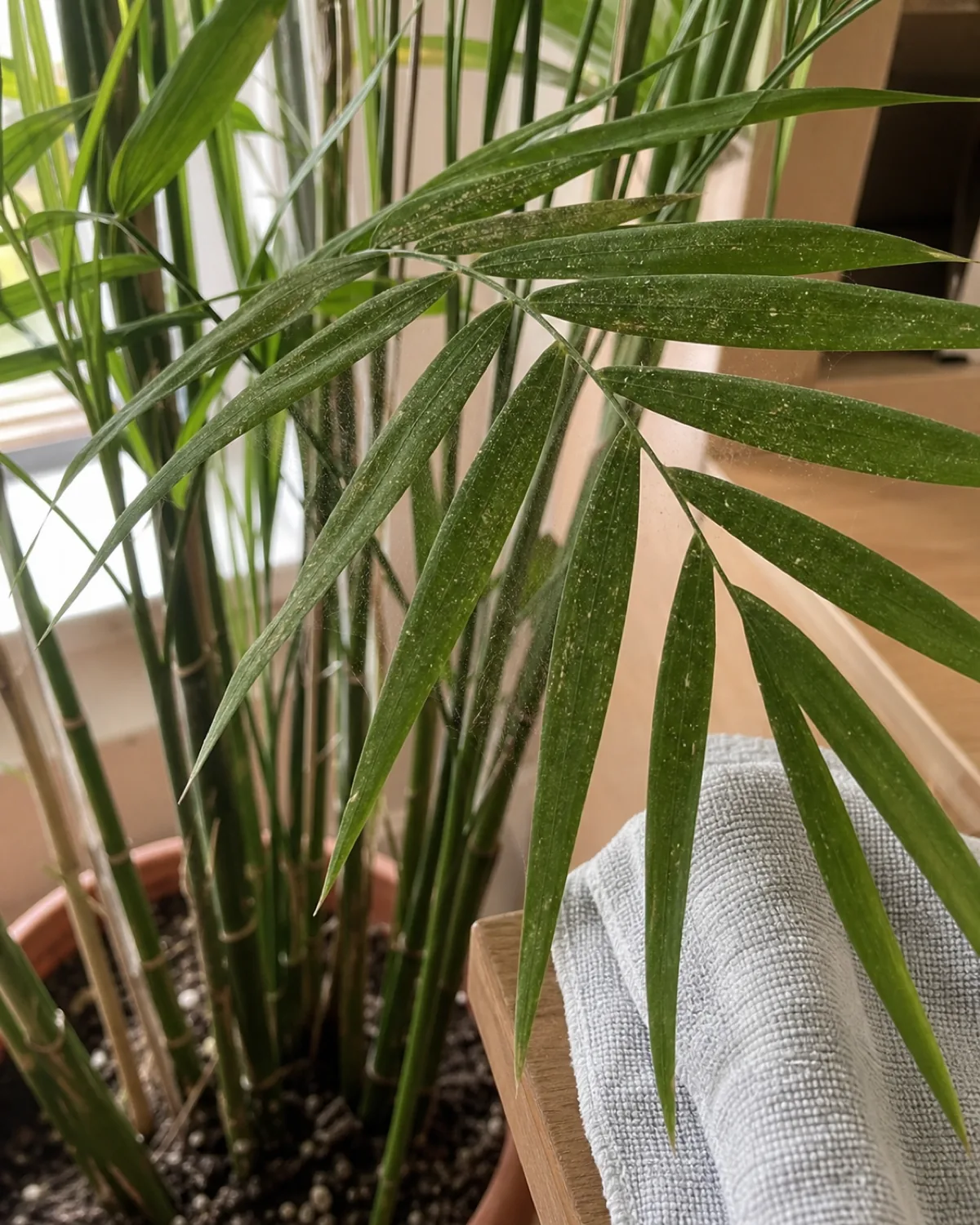
Fine webbing and stippled, dusty speckling on the fronds signal spider mites — the same tell as on the site's other houseplant palms.
What's different here is what an outbreak actually means: since a bamboo palm otherwise shrugs off dry, air-conditioned rooms better than the other two, mites showing up on this particular plant is usually a sign the air has gotten unusually dry lately, not a sign of chronic neglect.
Wiping down fronds periodically and raising humidity nearby for a stretch clears an early outbreak; treat it as a temporary correction rather than a permanent care change.
- Fine webbing and stippled speckling are the tell, same as on any houseplant palm.
- An outbreak here flags an unusually dry stretch, not chronic neglect, given how dry-air-tolerant it normally is.
- A temporary humidity bump and frond wipe-down clears it without a permanent care overhaul.
Most bamboo palm problems trace back to one of four moves people skip. Hold these four and it stays healthy for years with almost no fuss.
Bamboo Palm Care: The Quick Reference
- 1Thin, upright, ring-banded canesThe most literally bamboo-like of the site's houseplant palms.
- 2Light needs sit between parlor and areca palmMore light-tolerant than areca, less shade-tolerant than parlor.
- 3Water when the top inch starts to feel drySoggy soil is riskier than an occasional dry stretch.
- 4Brown or yellow tips: moderate water-quality sensitivityMilder than areca palm, but real — switch water sources to stop new damage.
- 5The most A/C-tolerant houseplant palm hereA genuinely good fit for a dry office corner.
- 6A top-ranked NASA Clean Air Study plantA reputation neither parlor nor areca palm carries.
- 7Pot-sizing pace lands between its two cousinsSize up roughly every couple of years.
- 8Feed at half strength, roughly monthlySpring through summer only; ease off in fall and winter.
- 9Settles into a full 4-to-6-foot bushy clumpSlower than areca palm, fuller than parlor palm.
- 10Only prune fully brown or yellow frondsA premature cut leaves a visible gap in its upright silhouette.
- 11Repot every 2-3 years, sizing up graduallyOnce canes visibly crowd the pot.
- 12Spider mites signal an unusually dry stretchNot chronic neglect, given its normal dry-air tolerance.
- 13Non-toxic to cats and dogsLook for its thin ring-banded canes to tell it apart from parlor or areca palm.
kultivy.com
Is a bamboo palm toxic to pets, and how do you tell parlor, areca, and bamboo palm apart?
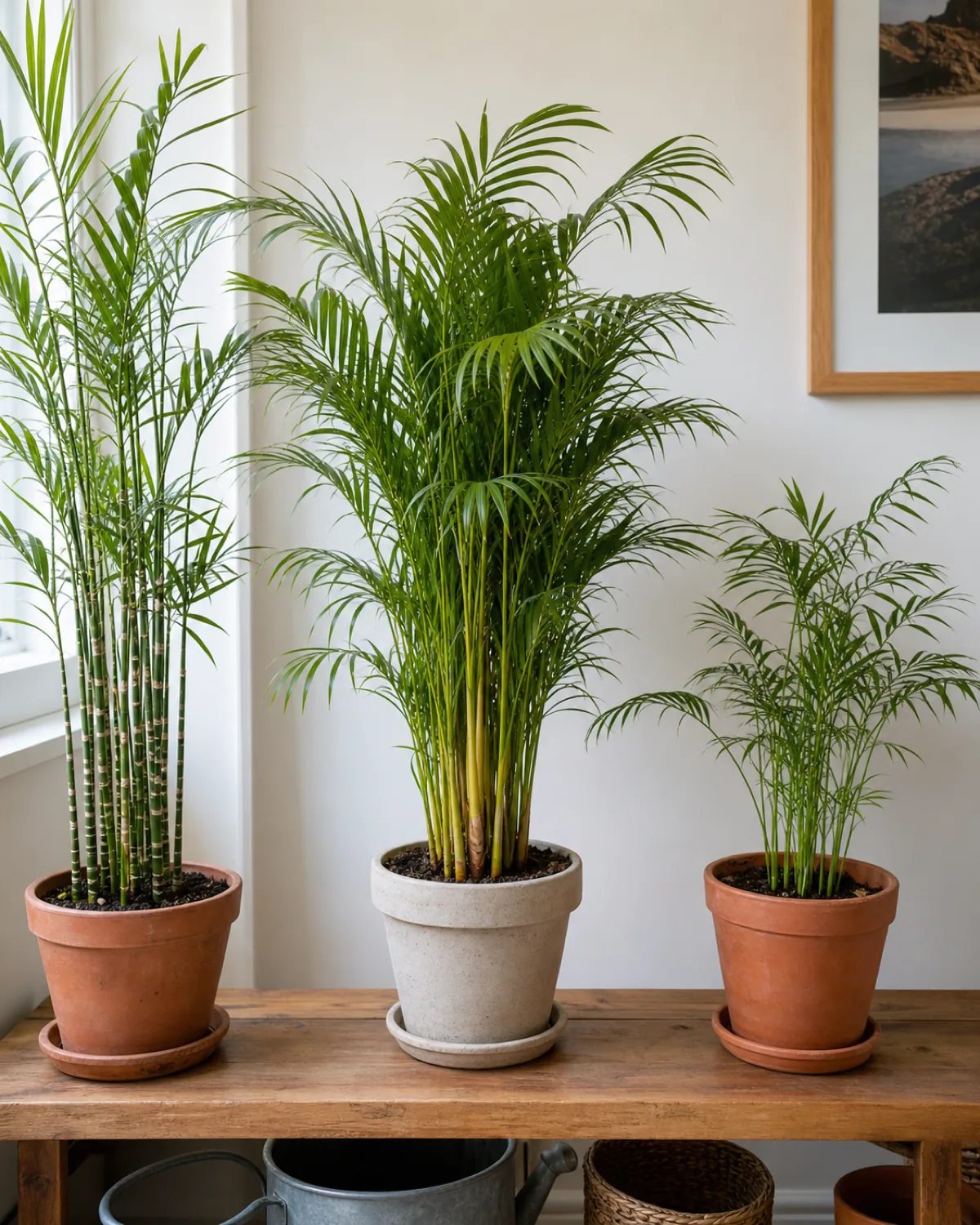
Honestly, a bamboo palm is non-toxic to cats and dogs, the same safe verdict as the parlor palm and the areca palm covered on this site.
The clearest tell among all three: a bamboo palm's thin canes show distinct ring and node banding and hold straighter, less-arching fronds; an areca palm's canes are thicker, more densely clustered, and ringed in gold with gracefully arching fronds; a parlor palm has the fewest, thinnest, smoothest canes with no ring banding at all and the softest, most delicate fronds of the three.
- Non-toxic to cats and dogs, same as parlor and areca palm.
- Distinct bamboo-like ring banding and straighter fronds set it apart from both other palms.
- Areca palm's gold rings and arching fronds, parlor palm's smooth unringed canes are the other two tells.

Mara Quinn edits Kultivy, where she shares houseplant care, propagation, beginner-friendly plant picks, and plant-styling ideas for anyone who wants their indoor plants to actually thrive. Every guide is image-led and reviewed for clarity, usefulness, image accuracy, and Pinterest-to-page alignment before it goes live. Visit the About page.