Every plant below earns its spot by forgiving at least one common mistake — missed waterings, dim rooms, or inconsistent attention. Jump to the one that matches your biggest constraint.
Low maintenance indoor plants store water in fat leaves, rhizomes, or swollen trunks — so a missed watering is a minor inconvenience, not a death sentence.
The fourteen houseplants below each forgive at least two of the three most common beginner mistakes: irregular watering, insufficient light, and total neglect during a two-week vacation.
You do not need to read all fourteen. Pick the constraint that matches your life and jump to the plants that solve it.
What makes a houseplant truly low maintenance
What separates genuinely tough houseplants from merely marketed ones comes down to three built-in adaptations:
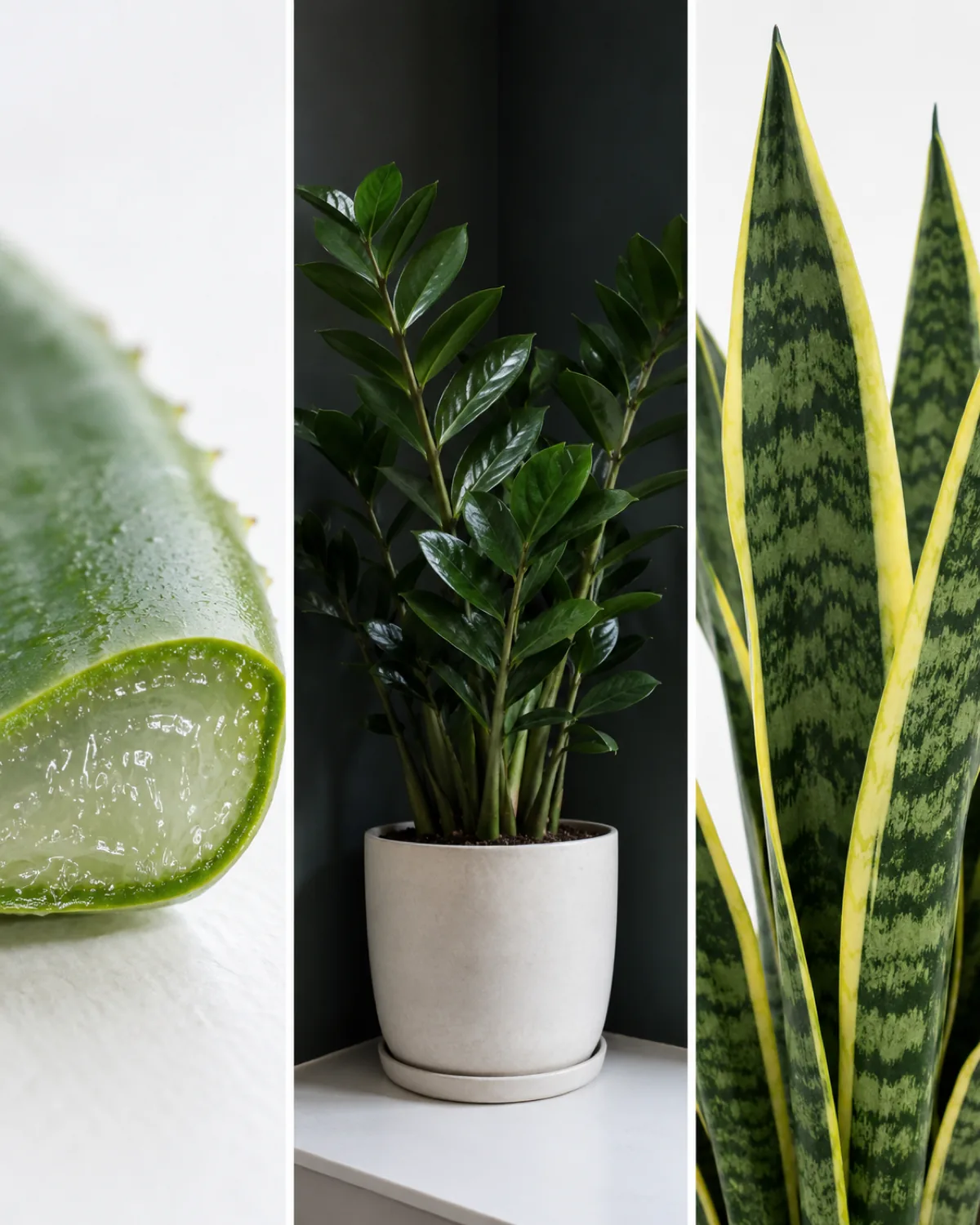
- Water storage — succulents keep moisture in fleshy leaves, ZZ plants bank it in underground rhizomes, and ponytail palms hoard it in a swollen caudex
- Low-light tolerance — cast iron plant and Chinese evergreen evolved on forest floors and photosynthesize efficiently where most houseplants starve
- Pest resistance — thick waxy leaves (snake plant, hoya, ZZ) are physically harder for spider mites and fungus gnats to feed on
The houseplant light requirements guide explains how to test your room's actual light level in ten seconds using the shadow method — the single test that prevents the most common low-maintenance plant failure.
Pothos — the trailing vine that grows in a glass of water
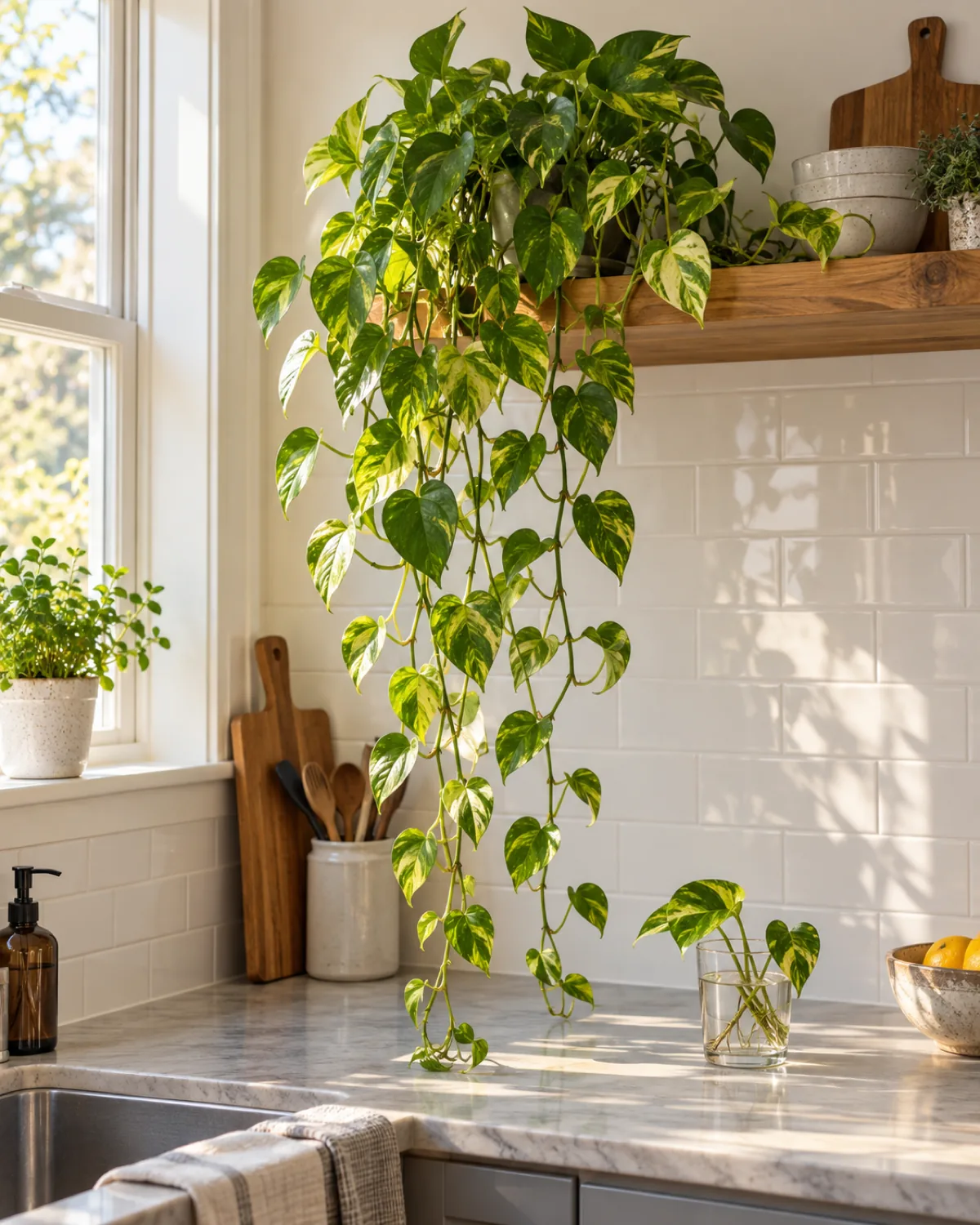
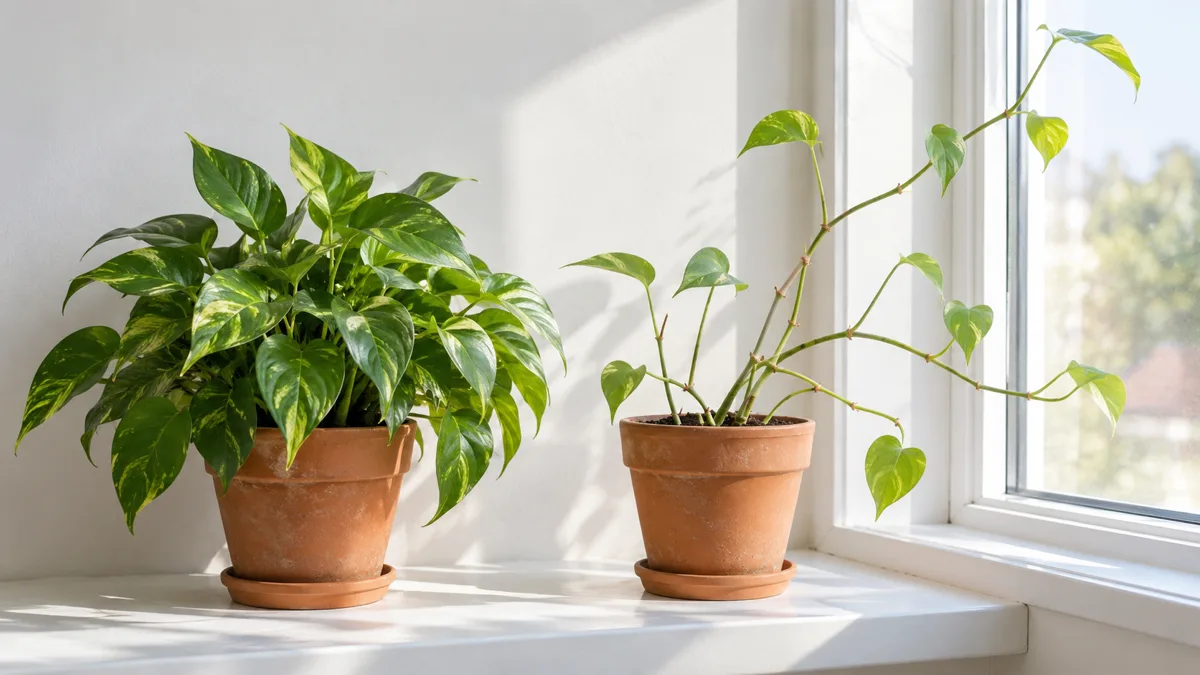
Pothos (Epipremnum aureum) is the plant that converts skeptics. It grows in a jar of water on a kitchen windowsill, trails six feet down a bookshelf without complaint, and bounces back from a bone-dry pot by wilting visibly — then perking up within hours of a good soak.
The golden pothos is the most common variety, with green and gold variegated heart-shaped leaves, but marble queen (white and green), neon (chartreuse), and jade (solid dark green) are equally tough. The deeper the green, the better it handles low light. Neon and marble queen need brighter spots to hold their color.
- Water when the top two inches of soil feel dry — roughly every seven to ten days in summer, every two weeks in winter
- Tolerates low light but grows faster in bright indirect light
- Propagation is almost foolproof: cut below a node, drop in water, roots in a week
The full pothos care guide covers pruning, pest prevention, and the difference between every major variety. For the collection-minded, the pothos varieties guide profiles thirteen cultivars side by side.
ZZ Plant — the glossy rhizome that survives a month without water
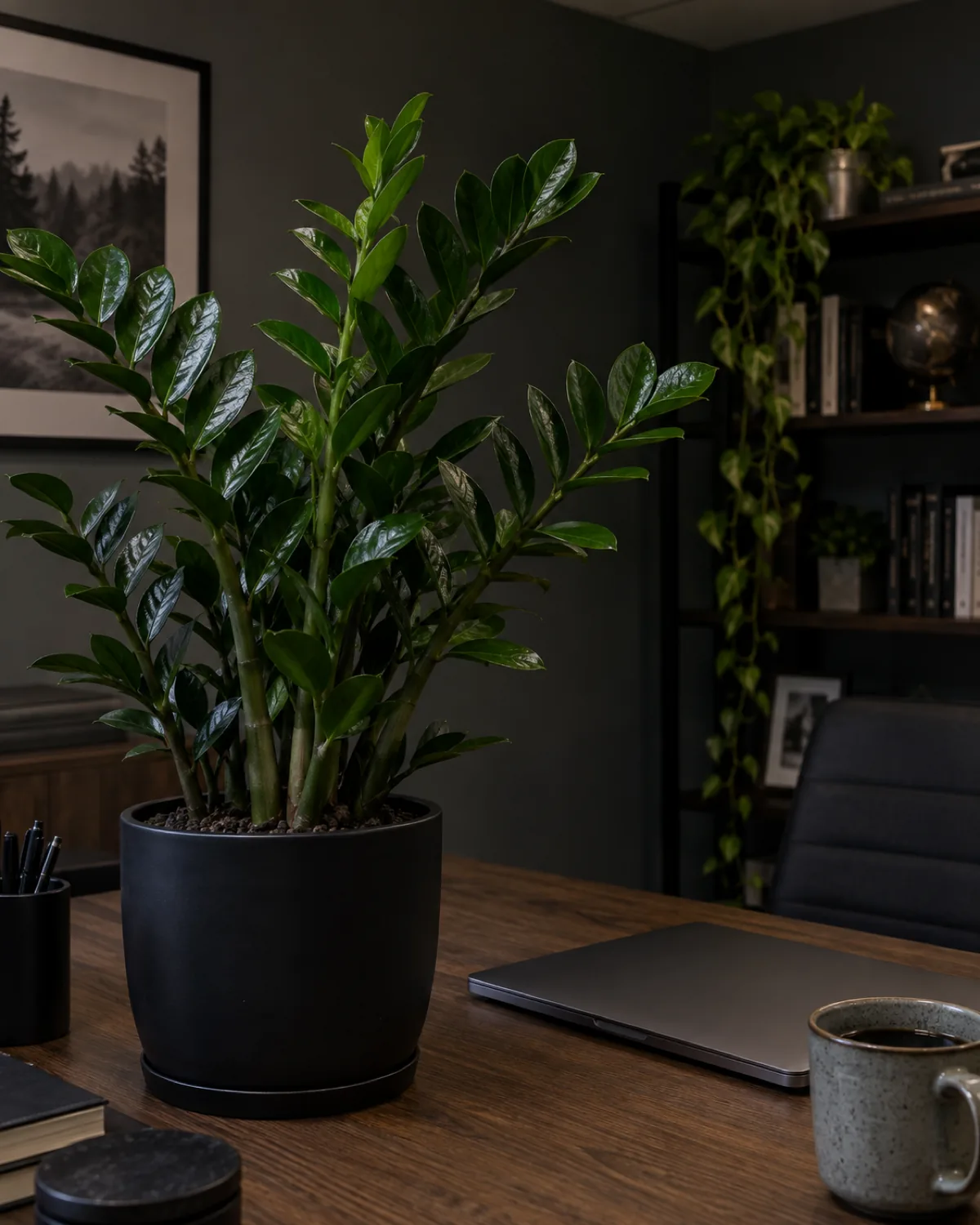
The ZZ plant (Zamioculcas zamiifolia) stores water in fat underground rhizomes that look like small potatoes. Those reserves let it survive three to four weeks without a single drop of water — and sometimes longer in winter when growth stalls.
Thick glossy leaves line arching stems that grow from the soil in matched pairs. The plant tolerates fluorescent-only office light, which is why it shows up in lobbies, cubicles, and bathrooms with no windows. It does grow faster in bright indirect light, but it will not complain in the dark.
- Water only when the soil is completely dry, typically every two to three weeks
- Overwatering rots the rhizomes faster than anything else kills this plant — when in doubt, skip a week
- New growth emerges as tightly rolled stems that unfurl over days, starting bright green and darkening with age
The detailed ZZ plant care guide covers rhizome division propagation and the most common mistakes people make with this almost-indestructible species.
Snake Plant — the vertical sculptural succulent that cleans air overnight
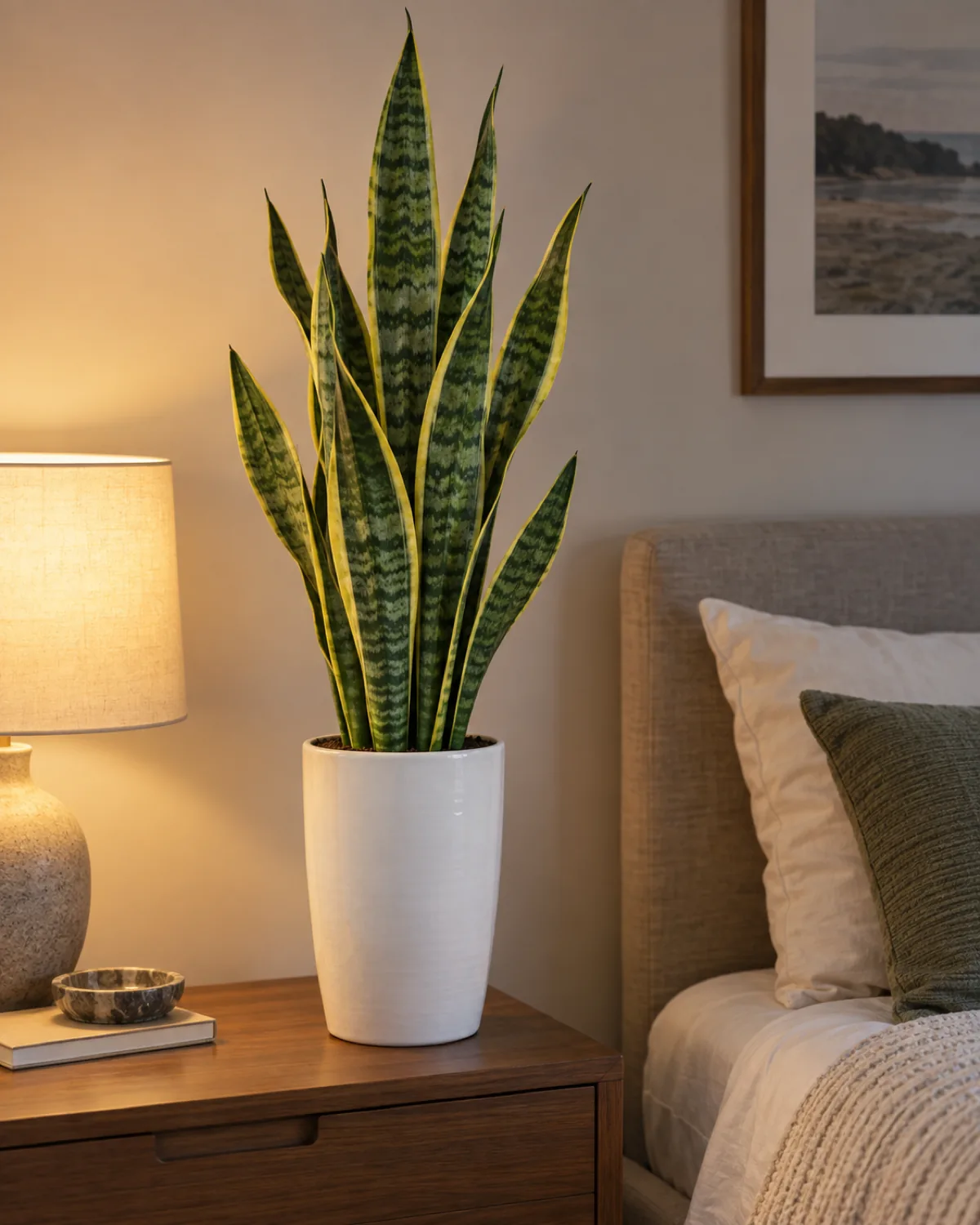
Snake plant (Dracaena trifasciata, formerly Sansevieria) is the closest thing to a houseplant that runs on autopilot. It uses CAM photosynthesis — opening its stomata at night instead of during the day — which means it exchanges oxygen while you sleep and loses less water to transpiration than almost any other indoor plant.
The stiff upright sword-shaped leaves grow vertically without needing support, making it one of the most architectural low-maintenance options. Varieties range from the classic dark green with yellow-edged Laurentii to the cylindrical Cylindrica and the compact bird's nest Hahnii.
- Water every two to three weeks in summer, once a month in winter — let the soil dry completely between waterings
- Handles everything from bright direct sun to dim hallways, though growth slows dramatically in very low light
- Root rot is the only reliable way to kill it, and that only happens from chronic overwatering in a pot without drainage
The full snake plant care guide covers propagation by leaf cuttings, the light spectrum that keeps variegation sharp, and why this plant consistently ranks among the best air-purifying options.
Spider Plant — the self-propagating air purifier for beginners
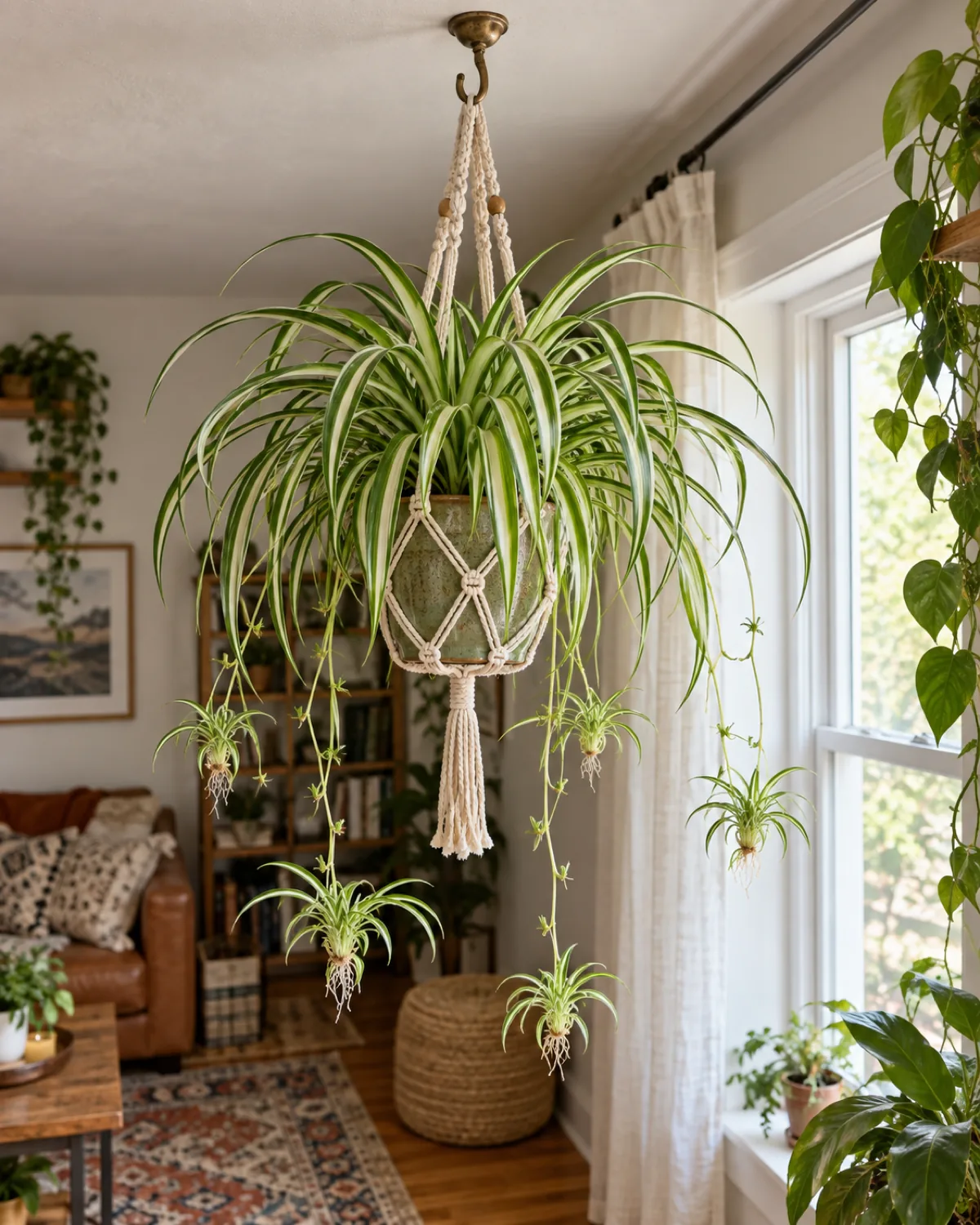
Spider plant (Chlorophytum comosum) earns its beginner reputation honestly. It tolerates inconsistent watering by storing moisture in thick tuberous roots that act as a buffer against drought. When it is happy — bright indirect light, occasional feeding — it sends out long arching stolons tipped with miniature plantlets that root on contact with soil.
Those baby spider plants are the easiest propagation project in the hobby. Snip one off, drop it in water or press it into moist soil, and it roots within days. A single mother plant can produce a dozen babies in one growing season.
- Water when the top inch dries out — roughly weekly in summer, biweekly in winter
- Brown leaf tips usually mean tap water fluoride or low humidity, not neglect — switch to filtered water or set a pebble tray
- ASPCA non-toxic to cats and dogs
The comprehensive spider plant care guide covers tuberous root anatomy, why brown tips happen, and how to manage a prolific stolon producer without running out of shelf space.
Cast Iron Plant — the deep-shade survivor Victorian parlors relied on
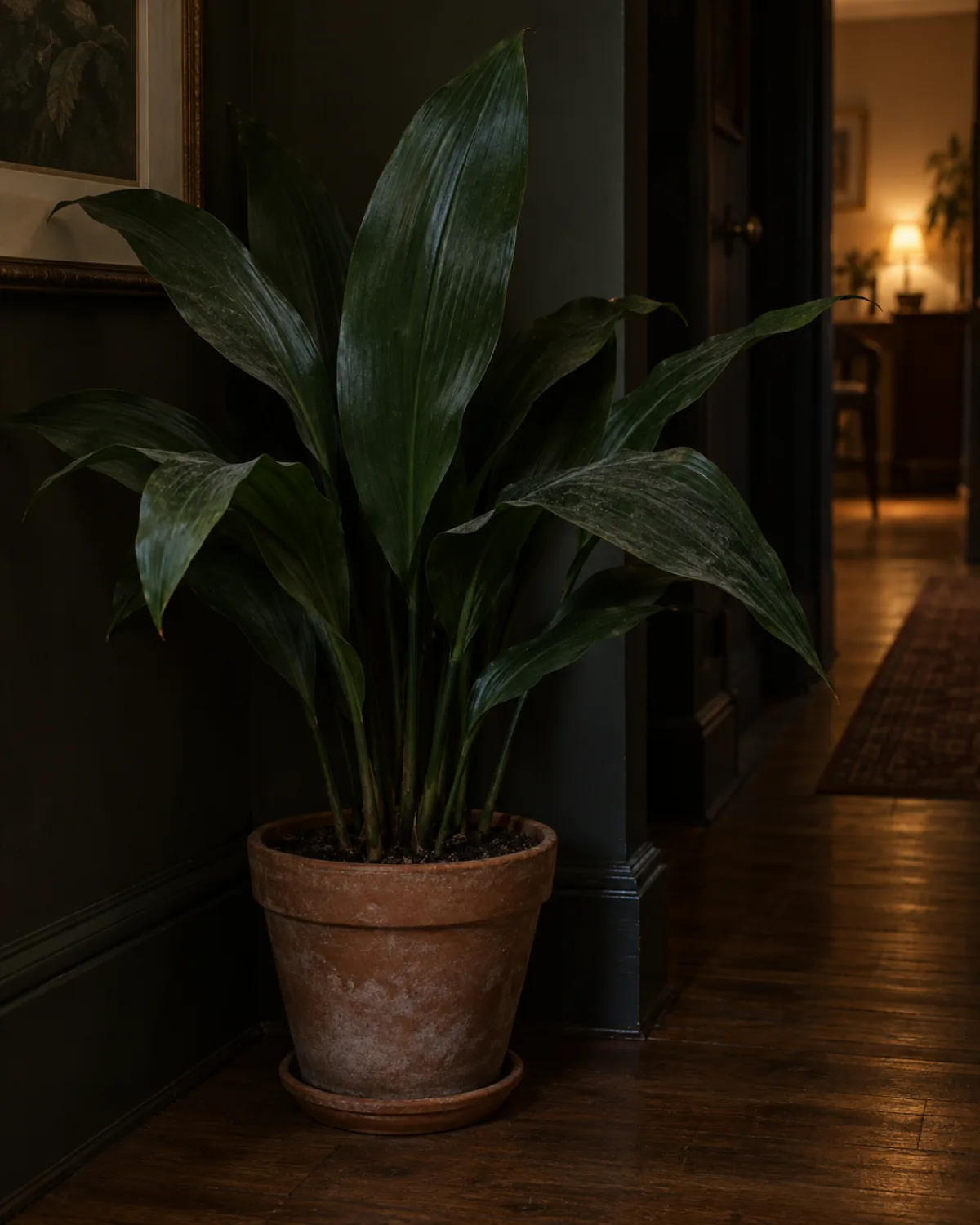
The cast iron plant (Aspidistra elatior) earned its common name in Victorian England, where it survived in gaslit parlors with coal dust in the air and almost no natural light. A century and a half later, it remains the most shade-tolerant houseplant you can buy.
Wide dark green lance-shaped leaves grow directly from a spreading rhizome at soil level. Growth is slow — two to three new leaves per year in good conditions — but the tradeoff is almost zero maintenance. It handles drought, temperature swings from 45°F to 85°F, and humidity levels that would stress most tropical plants.
- Water when the soil dries out completely, roughly every ten to fourteen days
- Thrives in the darkest corners of your home where even low-light plants like pothos would stretch toward the nearest window
- Virtually pest-free — the thick leathery leaves are physically difficult for sap-sucking insects to penetrate
The only thing that reliably kills it is waterlogged soil. Use a well-draining mix and a pot with drainage holes, and this plant will outlast your furniture.
Yucca — the desert sword that handles drought and full sun indoors
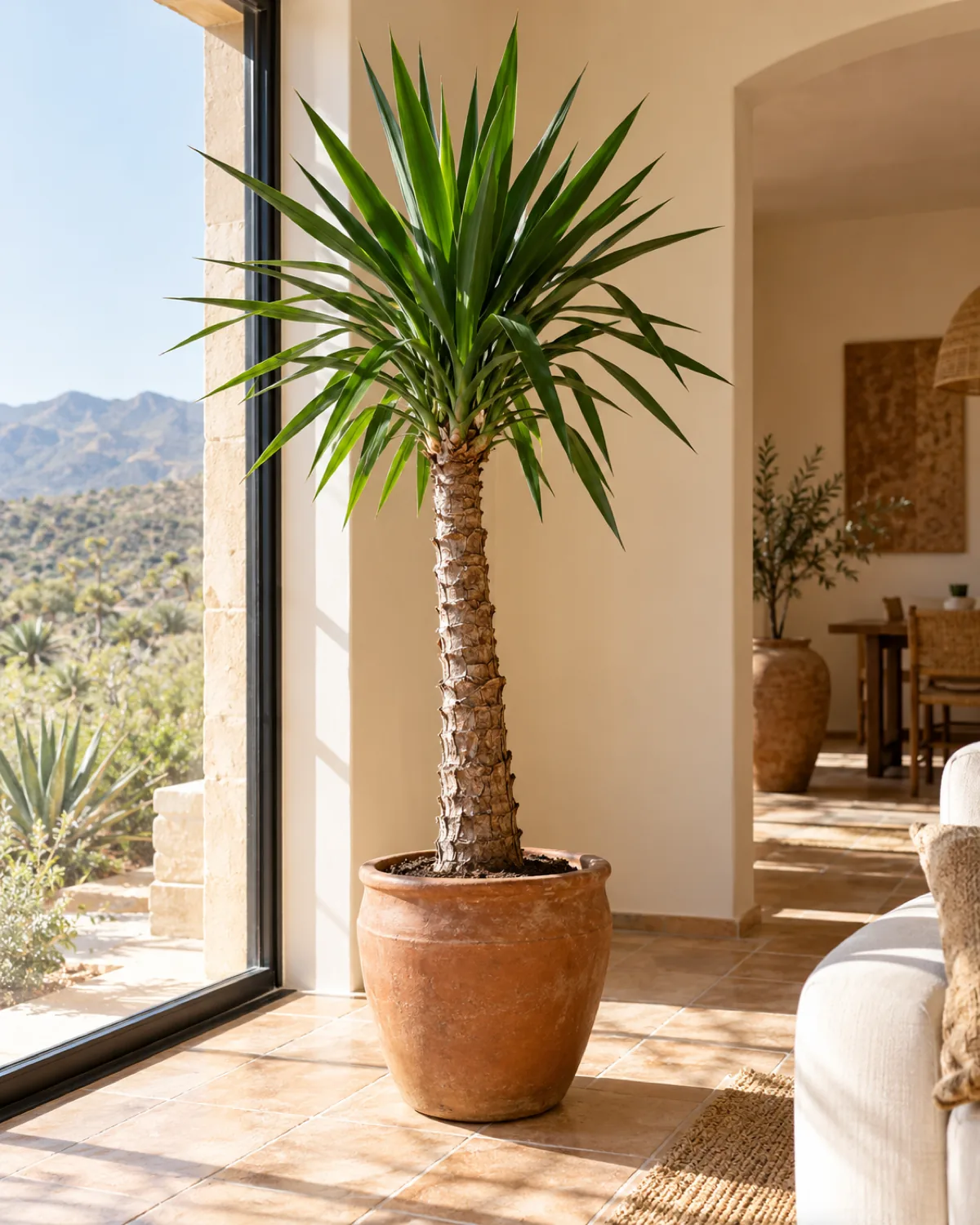
Yucca (Yucca elephantipes) is the pick for bright rooms where most houseplants would scorch. It handles hours of direct sun without flinching, stores water in a thick woody trunk, and shrugs off the kind of dry indoor air that turns fern fronds crispy overnight.
The stiff sword-shaped leaves radiate from the trunk in a rosette that gives the plant an architectural, almost sculptural presence. It grows slowly indoors — a foot or two per year in ideal conditions — and tolerates being root-bound for long stretches.
- Water every two to three weeks, letting the soil dry out completely between waterings
- Prefers bright direct light but adapts to bright indirect — struggles in genuinely dim rooms
- The thick trunk stores enough moisture to survive a three-week vacation without intervention
The full yucca plant care guide covers cane cutting for propagation, fluoride sensitivity in tap water, and the difference between Y. elephantipes (the common indoor species) and the outdoor desert yuccas you see in southwestern landscapes.
Aloe Vera — the medicinal succulent that stores gel in its own leaves
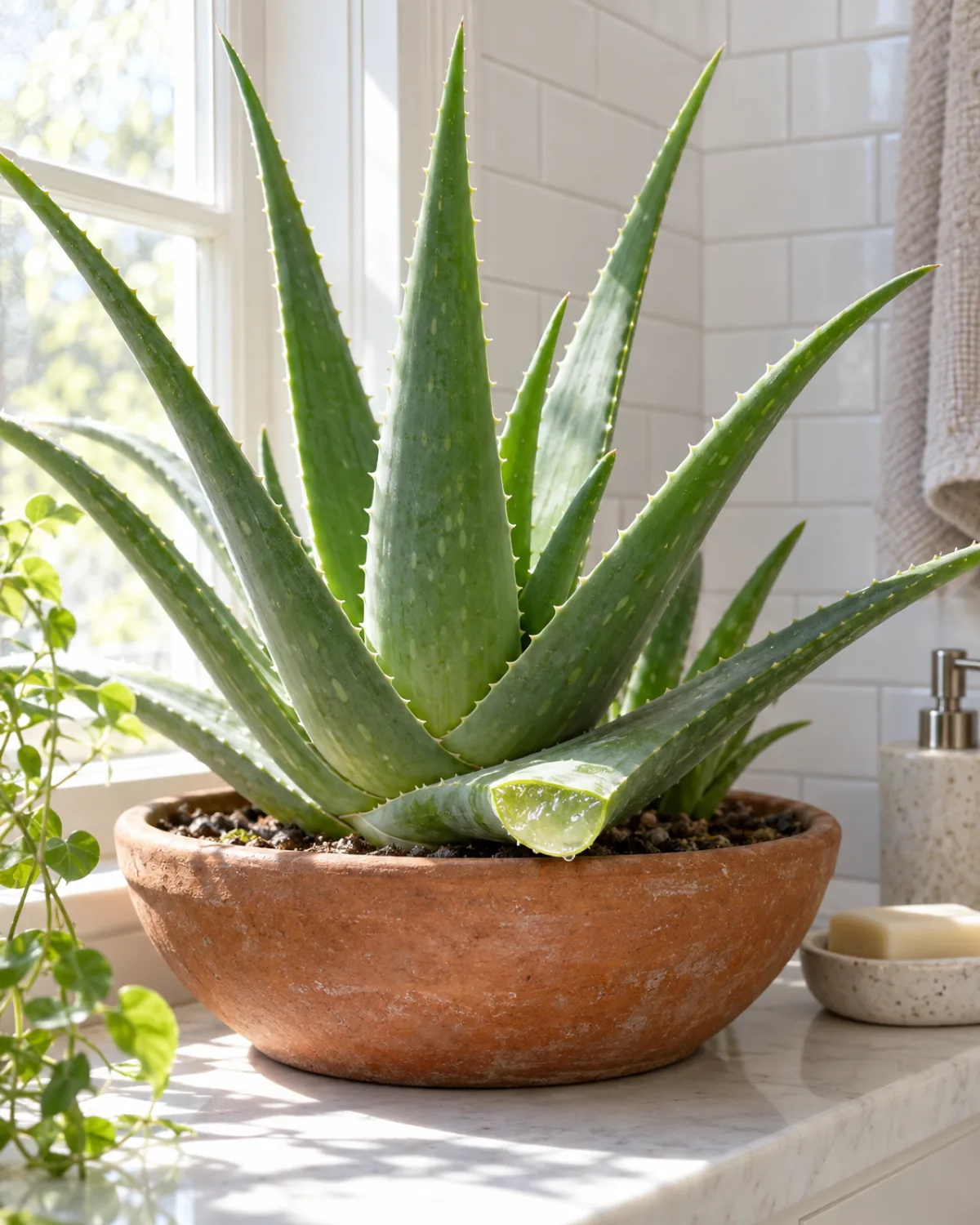
Aloe vera is the rare houseplant with a practical use beyond aesthetics. The clear gel inside each thick fleshy leaf soothes minor burns and skin irritation — break one off, squeeze, and apply. The plant replaces itself faster than most households use the gel, sending up offsets (pups) around its base every growing season.
Three layers of leaf tissue — an outer rind, a middle latex layer, and the inner gel — create a moisture reservoir that makes aloe one of the most drought-tolerant indoor plants. The thick blue-green rosette of leaves with tiny serrated edges looks good on a bright windowsill without any styling effort.
- Soak the soil thoroughly, then let it dry completely before watering again — typically every two to three weeks
- Needs bright indirect to direct light; a south or west window is ideal
- ASPCA toxic to cats and dogs — keep on a high shelf or in a room pets cannot access
The complete aloe vera plant care guide covers gel harvesting technique, sunburn paradox (yes, aloe can sunburn), and offset propagation for multiplying your supply.
Every plant on this list follows the same four principles. Get these right and the species-specific details become manageable extras rather than deal-breakers.
Chinese Evergreen — the color-coded foliage that tells you how much light it needs
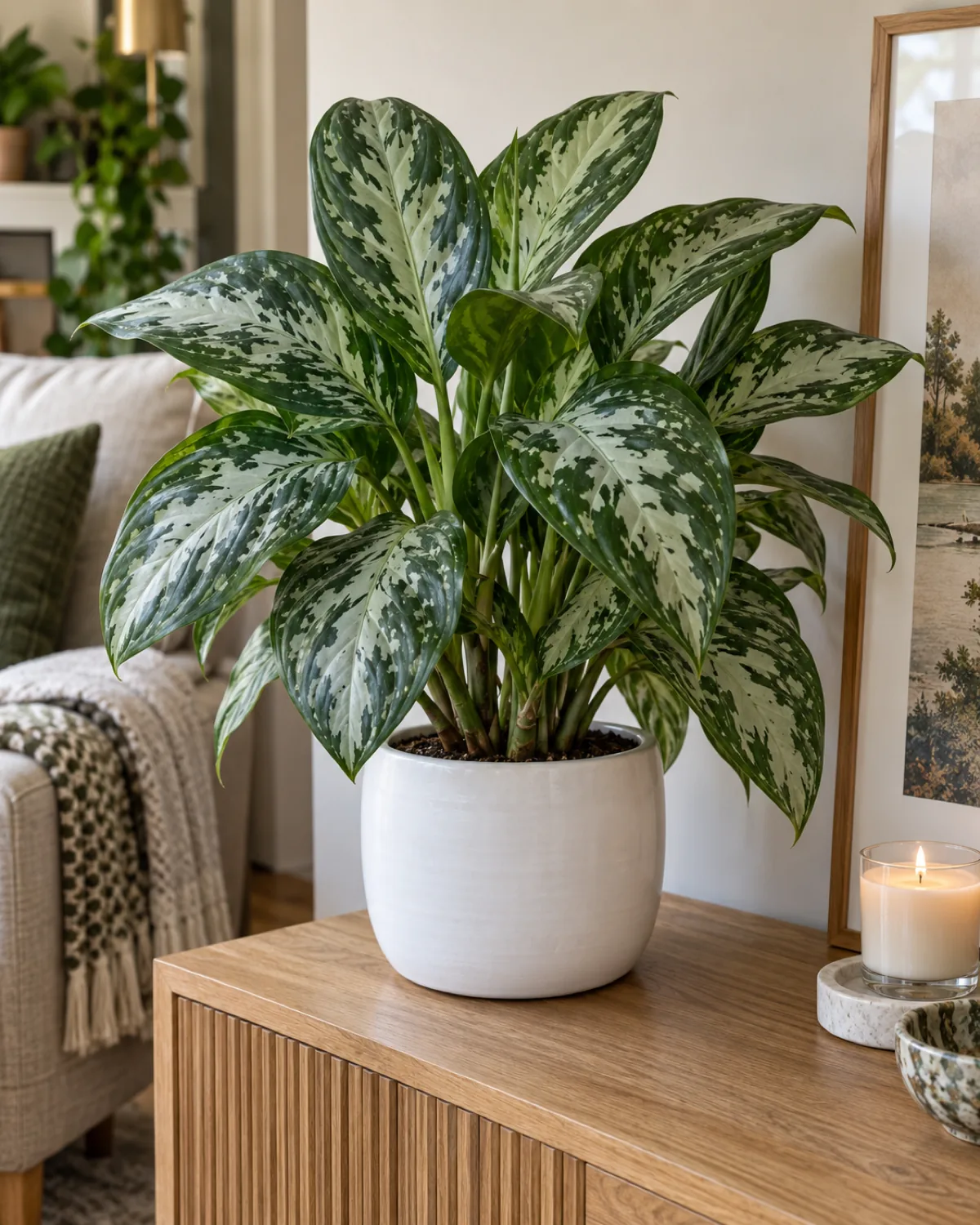
Chinese evergreen (Aglaonema) has a built-in cheat code: the darker the leaf, the less light it needs. The deep green varieties handle dim corners that would kill most houseplants. The pink, red, and silver-splashed cultivars need brighter spots to hold their color — but even those tolerate the kind of ambient light that makes calatheas throw a tantrum.
The plant grows as a compact bushy clump of oval leaves on short stems, rarely exceeding two feet tall. It is one of the most pest-resistant houseplants available and tolerates inconsistent watering better than it tolerates overwatering.
- Water when the top two inches of soil feel dry — roughly every week to ten days
- Dark-leaved varieties handle low light; variegated varieties need medium indirect light
- Toxic to cats and dogs — keep on elevated surfaces in pet households
The full Chinese evergreen care guide covers the counterintuitive light-color relationship in detail and explains why darker leaves actually mean the plant evolved for shadier conditions.
Hoya Carnosa — the waxy-leaved vine you water once and forget for weeks
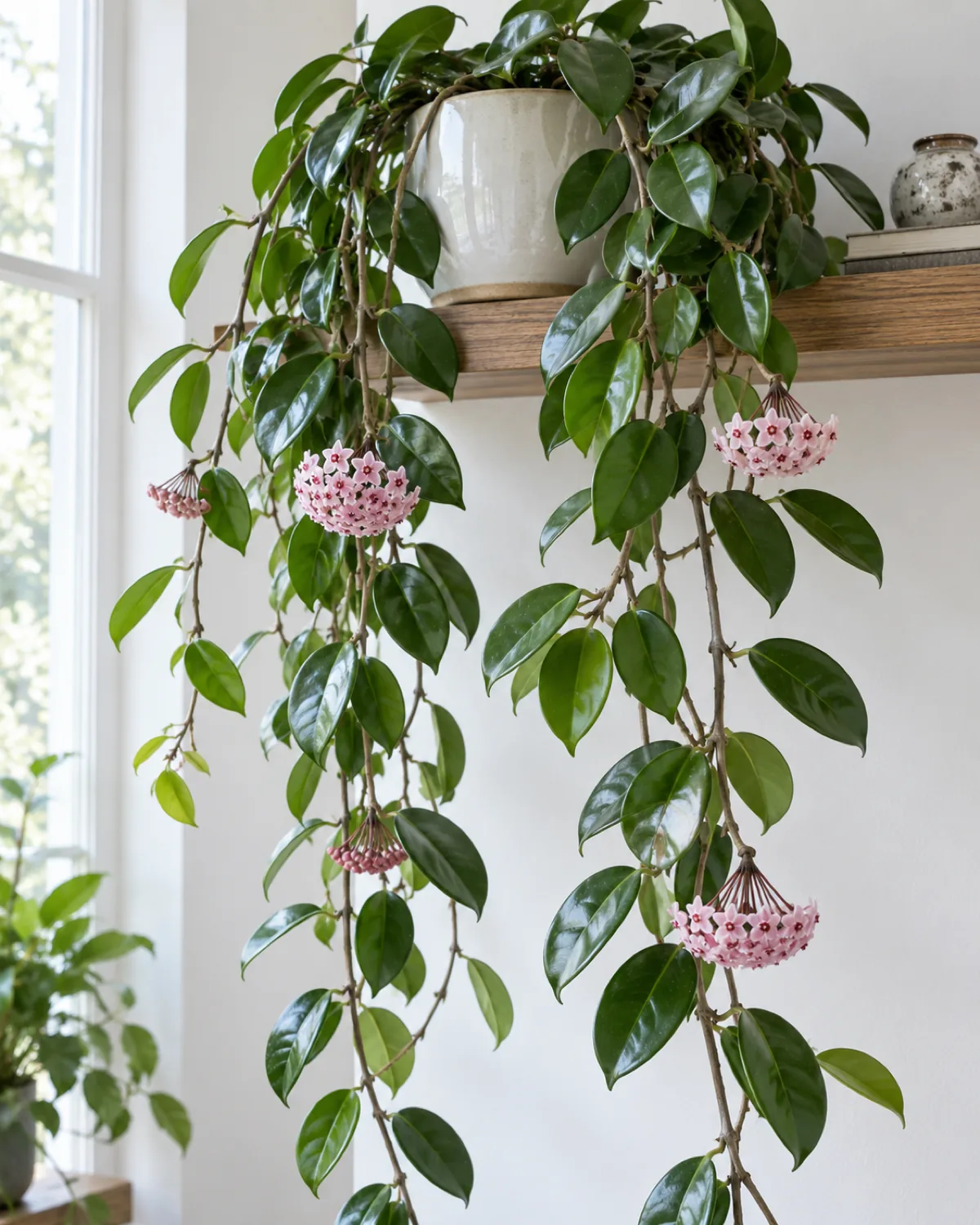
Hoya carnosa (wax plant) is a semi-succulent vine with thick fleshy leaves that store enough moisture to tolerate two to three weeks between waterings without visible wilting. When it finally blooms — clusters of pink star-shaped flowers in perfect round umbels — the scent fills a room after dark.
The secret to getting a hoya to bloom is doing less, not more. Keep it root-bound in a snug pot. Give it bright indirect light. Water only when the leaves start to feel slightly soft rather than plump. Never cut the spent flower stalks (peduncles), because new flowers emerge from the same spur year after year.
- Water when the soil is completely dry and the leaves feel slightly less firm — roughly every two to three weeks
- Bright indirect light produces the best growth and eventual blooms; tolerates medium light but may never flower there
- Non-toxic to cats and dogs
The detailed hoya carnosa care guide explains the peduncle rule, why you should never cut a spent bloom stalk, and how root-bound stress actually triggers flowering.
Haworthia — the compact windowed succulent perfect for desks and shelves
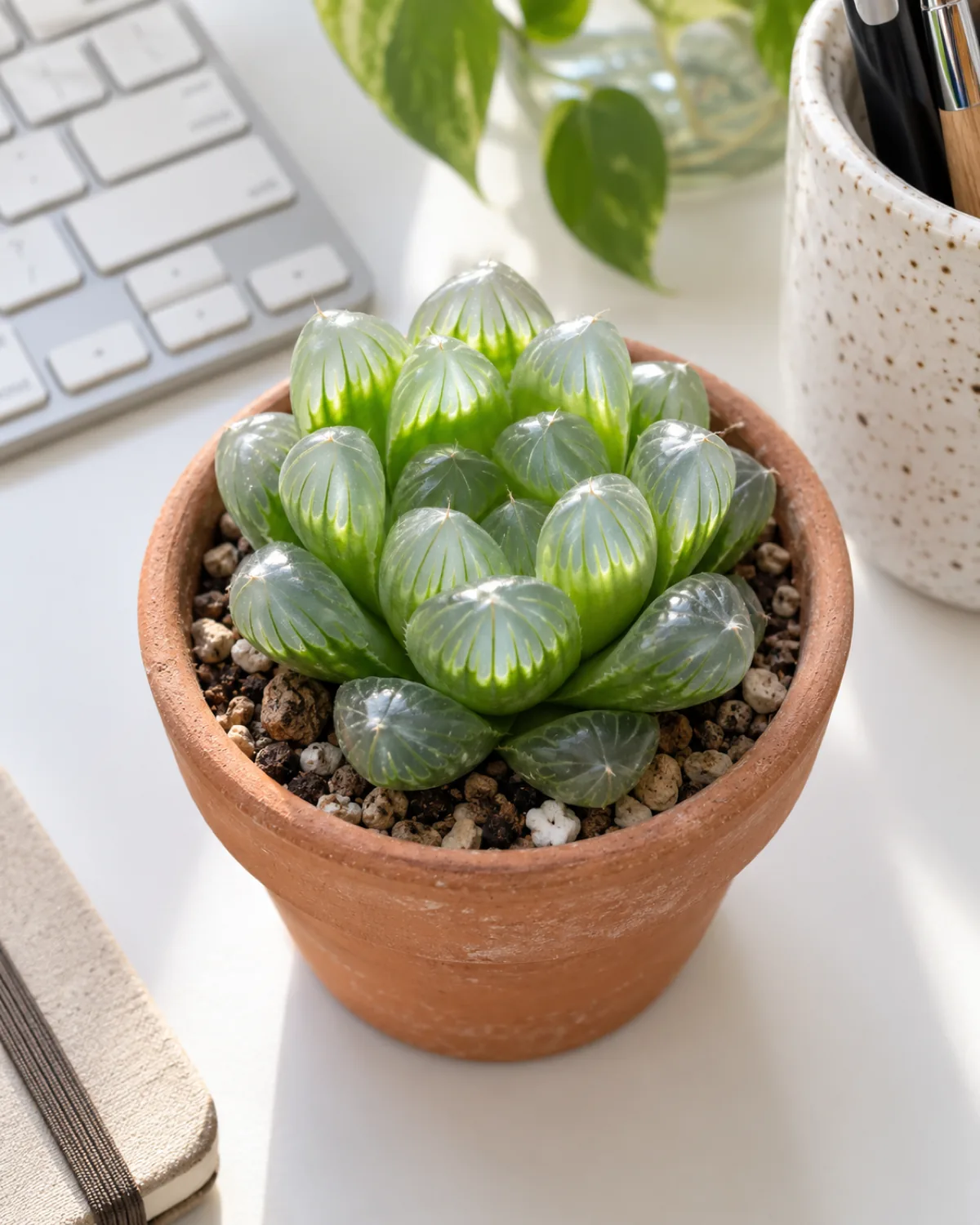
Haworthia is the succulent for people who do not have a sunny window to spare. Unlike most succulents — which demand direct sun to stay compact — haworthia evolved on shaded rock faces in South Africa, where translucent leaf windows filter light down to the chlorophyll below. That adaptation makes it one of the few succulents that thrives in bright indirect light rather than requiring full sun.
The rosettes stay compact, rarely exceeding four inches across, making haworthia ideal for desk displays, narrow shelves, and windowsills where space is limited. Growth is glacially slow, which means repotting is a rare event.
- Water when the soil is completely dry, roughly every two to three weeks in summer, monthly in winter
- Bright indirect light is ideal — direct afternoon sun can scorch the translucent leaf tips
- Propagation by offset is the easiest method: twist off a pup, let the base callous for a day, and pot it up
For broader succulent guidance including the soak-and-dry method that works for haworthia and most of its relatives, the succulent care guide covers the fundamentals.
Philodendron Heartleaf — the cascading vine that thrives on benign neglect
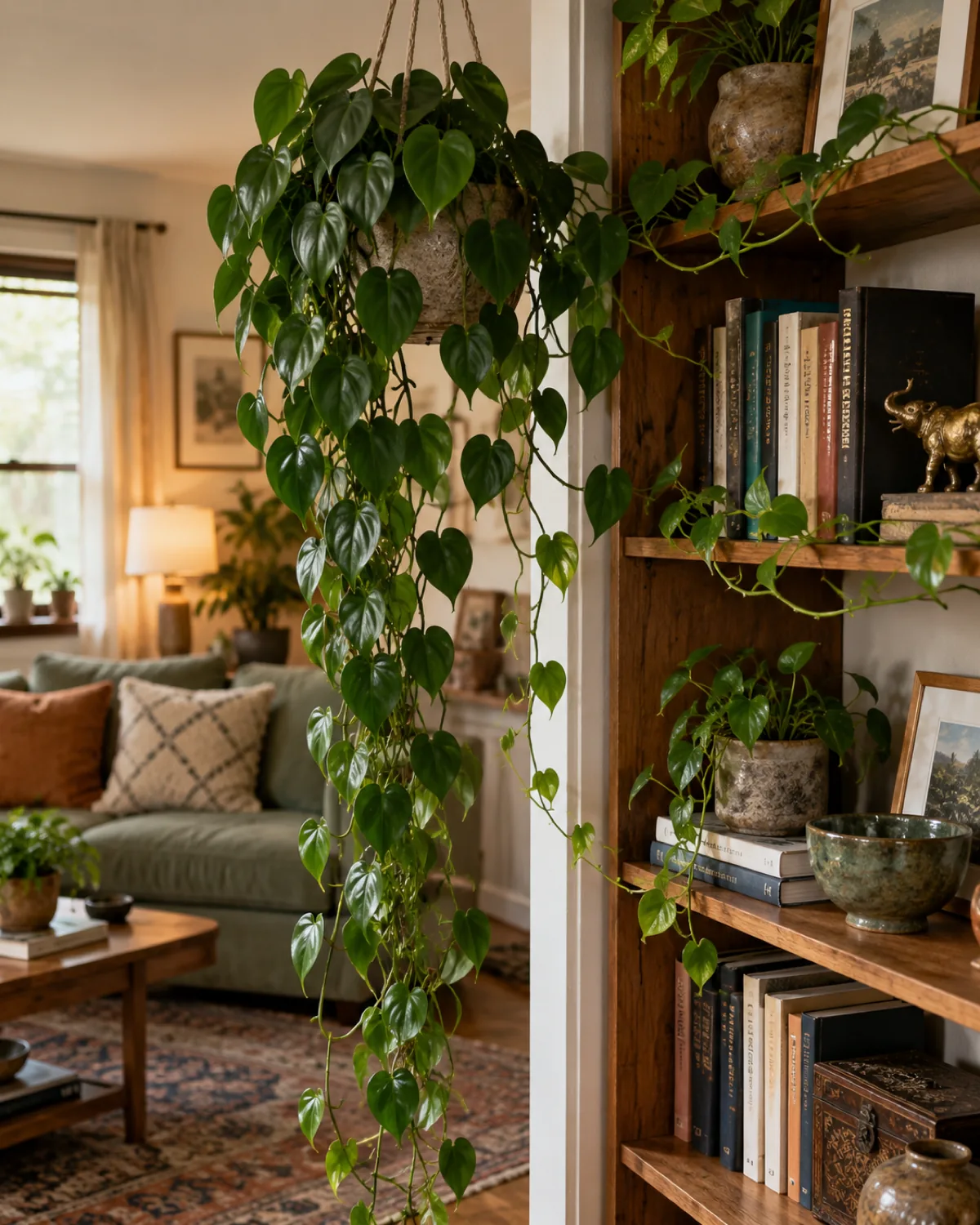
Heartleaf philodendron (Philodendron hederaceum) is often confused with pothos, and for practical purposes the care is nearly identical: trail it from a shelf, hang it in a planter, or let it climb a moss pole. It grows fast, tolerates low light better than most trailing plants, and bounces back from a missed watering with nothing worse than a few yellow lower leaves.
The glossy dark green heart-shaped leaves are smaller and more uniform than pothos leaves, and the stems are thinner and more flexible. It fills shelf-to-floor vertical space faster than almost any other houseplant.
- Water when the top inch of soil feels dry — roughly weekly in the growing season
- Handles low to bright indirect light; direct sun scorches the thin leaves
- Toxic to cats and dogs — hang it high or train it along a high shelf out of reach
The full philodendron care guide covers the difference between heartleaf and its climbing relatives, while the philodendron varieties guide profiles sixteen species by growth form.
Peace Lily — the flowering shade plant that tells you when it is thirsty
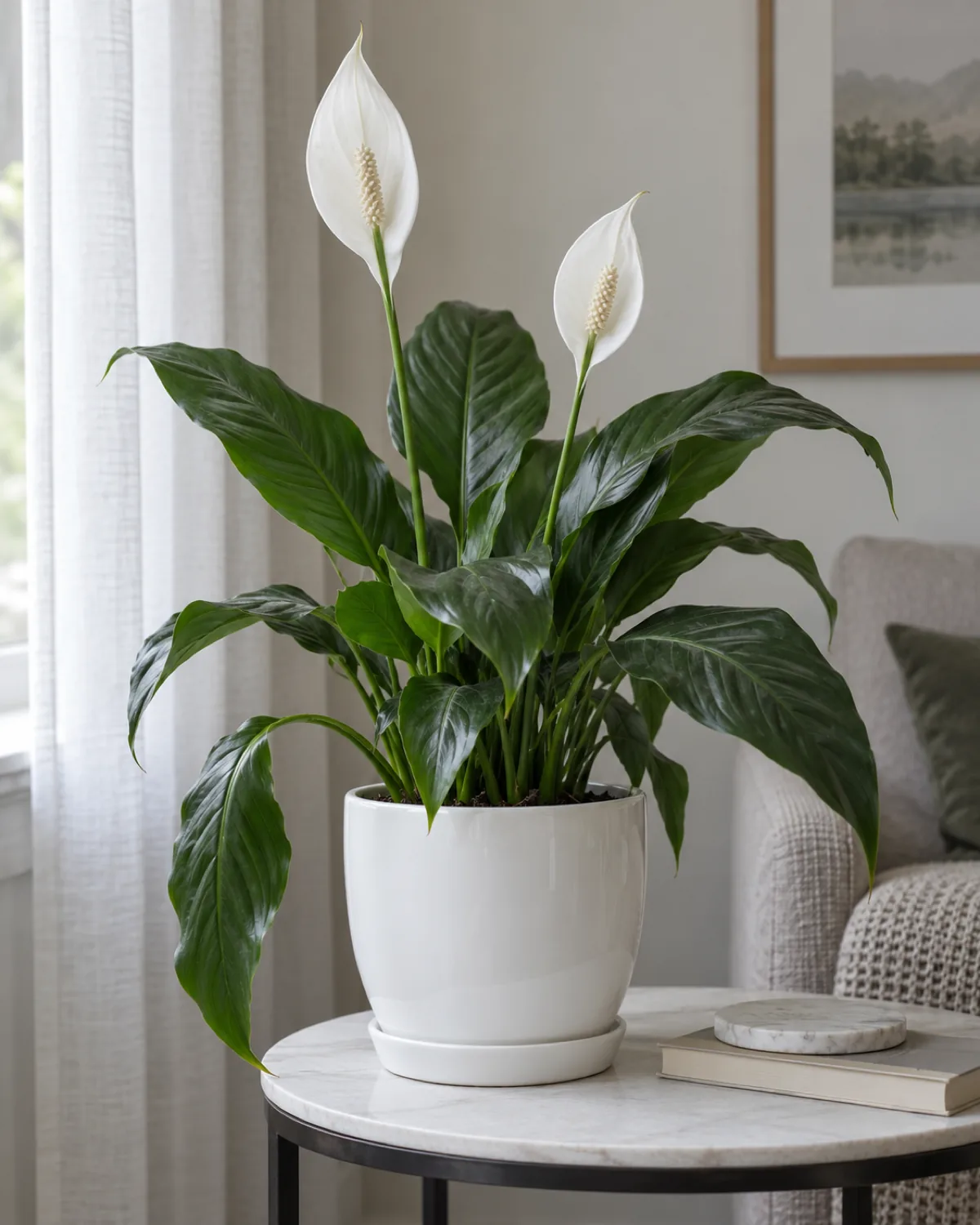
Peace lily (Spathiphyllum) is the only plant on this list that blooms reliably in low light. The white spathe flowers — each a single petal-like bract surrounding a cream-colored spadix — appear throughout the year without any special treatment. No cold period, no fertilizer boost, no supplemental light required.
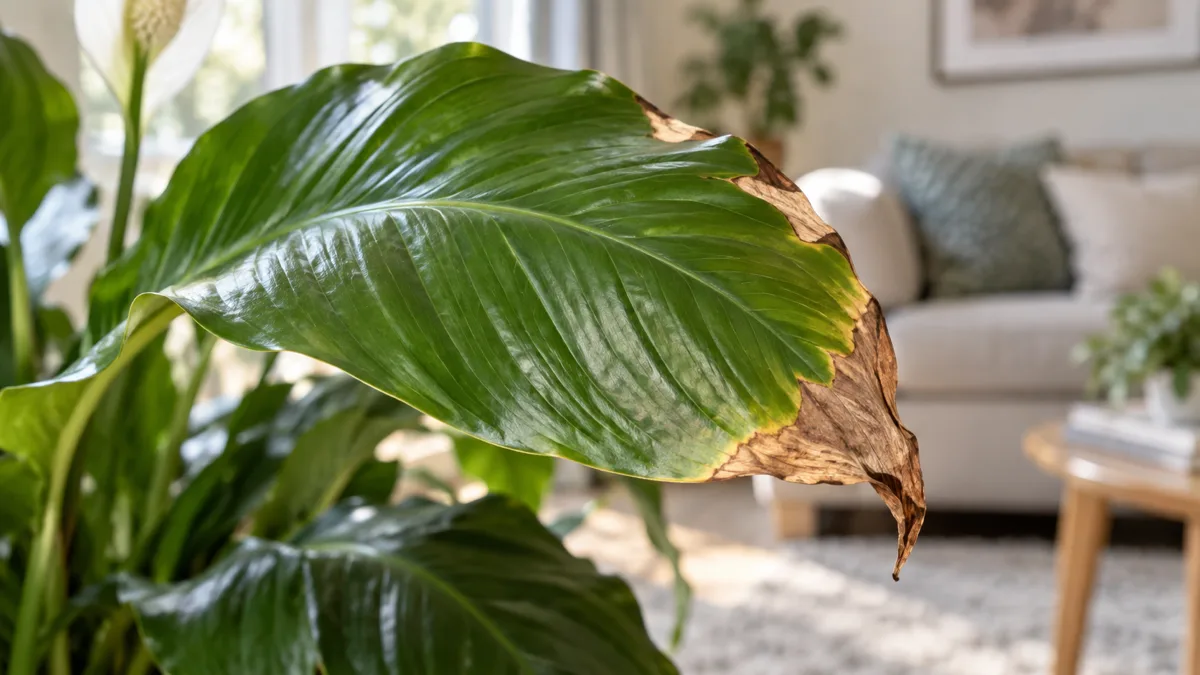
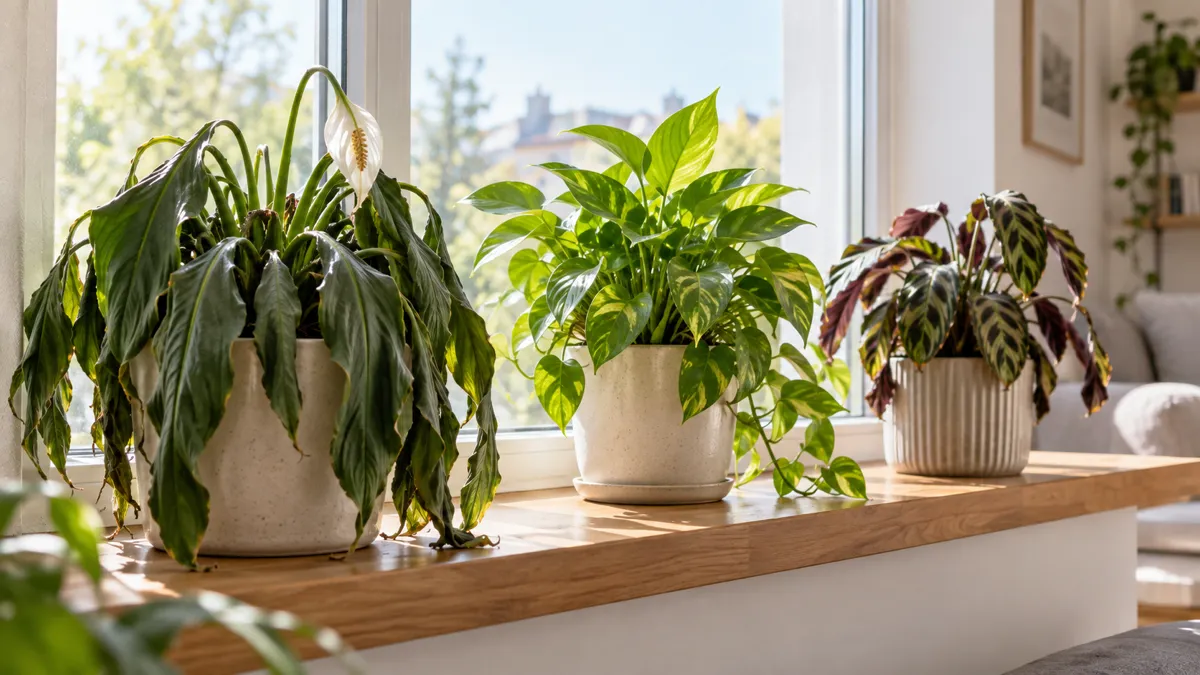
The plant's most useful feature is its dramatic wilt signal. When a peace lily needs water, the entire canopy droops visibly — leaves angle downward like a limp umbrella. Water it, and within two hours the foliage stands upright again. That built-in alarm system makes overwatering nearly impossible for attentive owners.
- Water when the soil surface feels dry or the leaves begin to droop — roughly once a week
- Thrives in low to medium indirect light; direct sun bleaches the leaves
- Toxic to cats and dogs — the calcium oxalate crystals cause mouth irritation if chewed
The comprehensive peace lily care guide covers bloom frequency, the wilt-and-recovery cycle, and why peace lilies sometimes produce green flowers instead of white.
Ponytail Palm — the bulbous-base oddity that stores water in its trunk
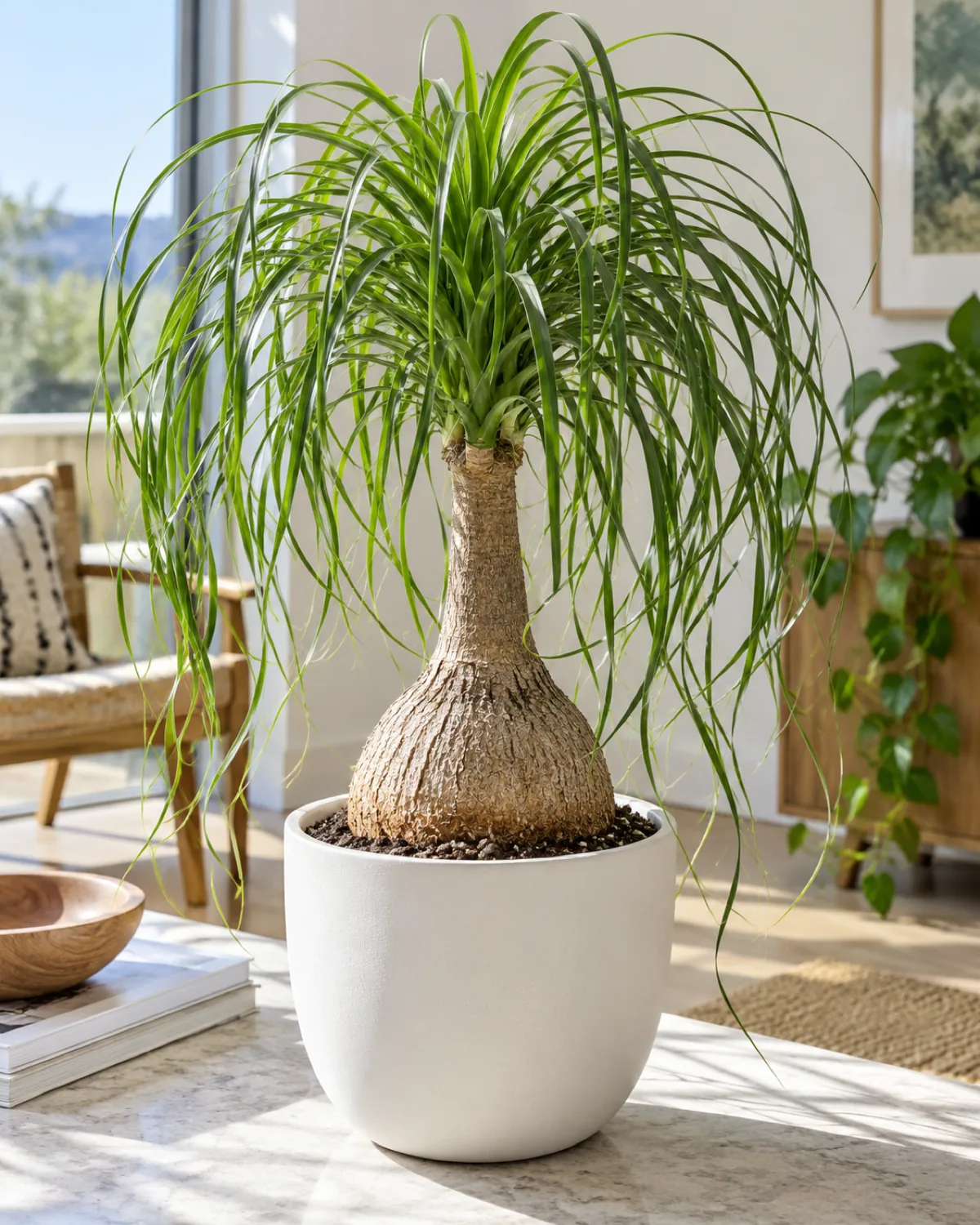
Ponytail palm (Beaucarnea recurvata) is not a palm at all — it is a succulent relative of agaves. The swollen brown caudex at its base is a water storage tank that lets the plant survive weeks of drought. Long thin curly leaves cascade from the crown like a green fountain, giving it the look of a Dr. Seuss illustration with the toughness of a desert native.
The caudex tells you everything you need to know about watering. A firm rounded base means the tank is full. A slightly soft or wrinkled caudex means it is time to water. That squeeze test is more reliable than any soil moisture check for this species.
- Water every two to three weeks in summer, monthly in winter — guided by the caudex squeeze test
- Prefers bright direct to bright indirect light; tolerates medium light but grows very slowly there
- ASPCA non-toxic to cats and dogs
The full ponytail palm care guide covers the squeeze test in detail, explains why removing the crown forces multiple heads, and profiles offset propagation as the only reliable method for multiplying this plant.
Air Plant — the soilless epiphyte you soak once a week and forget
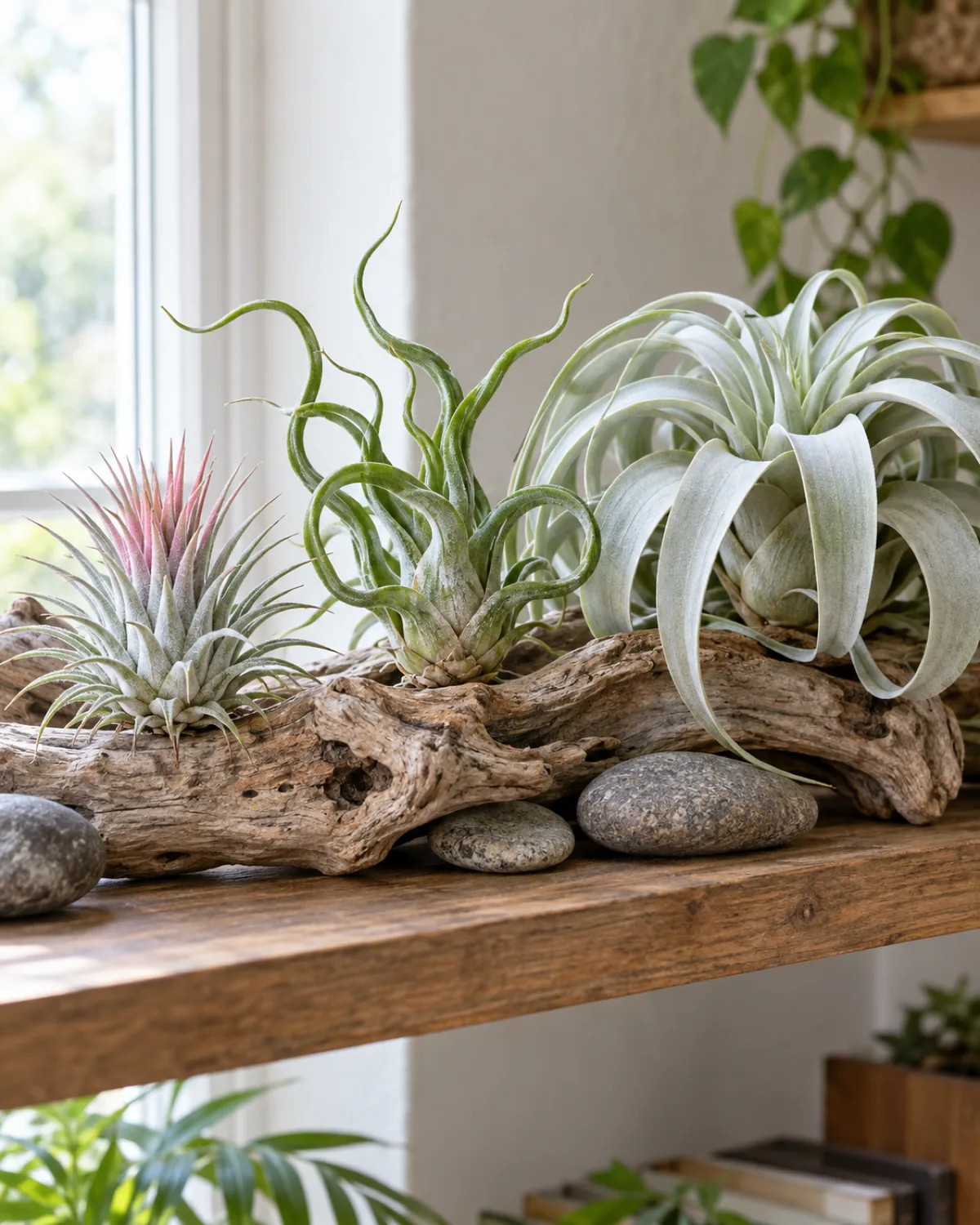
Air plants (Tillandsia) break every rule. No soil. No pot. No drainage holes to worry about. They absorb water and nutrients directly through trichomes on their leaf surfaces, which means you can display them on driftwood, in glass globes, on shelves, or anywhere that gets bright indirect light and occasional air circulation.
The care routine is almost absurdly simple: submerge the entire plant in room-temperature water for twenty to thirty minutes once a week. Shake off the excess, turn it upside down on a towel for an hour to drain the crown, and put it back. In dry climates or heated winter rooms, a light mist between soaks keeps the trichomes hydrated.
- Weekly thirty-minute soak, followed by thorough draining — trapped water in the crown causes rot
- Bright indirect light; direct afternoon sun dries out the trichomes faster than soaking can replenish them
- Monocarpic — each rosette blooms once and then dies, but produces offsets (pups) before it goes
The detailed air plant care guide covers the soak-and-shake method, why air plants blush pink before blooming, and how to separate and mount pups for a perpetual display.
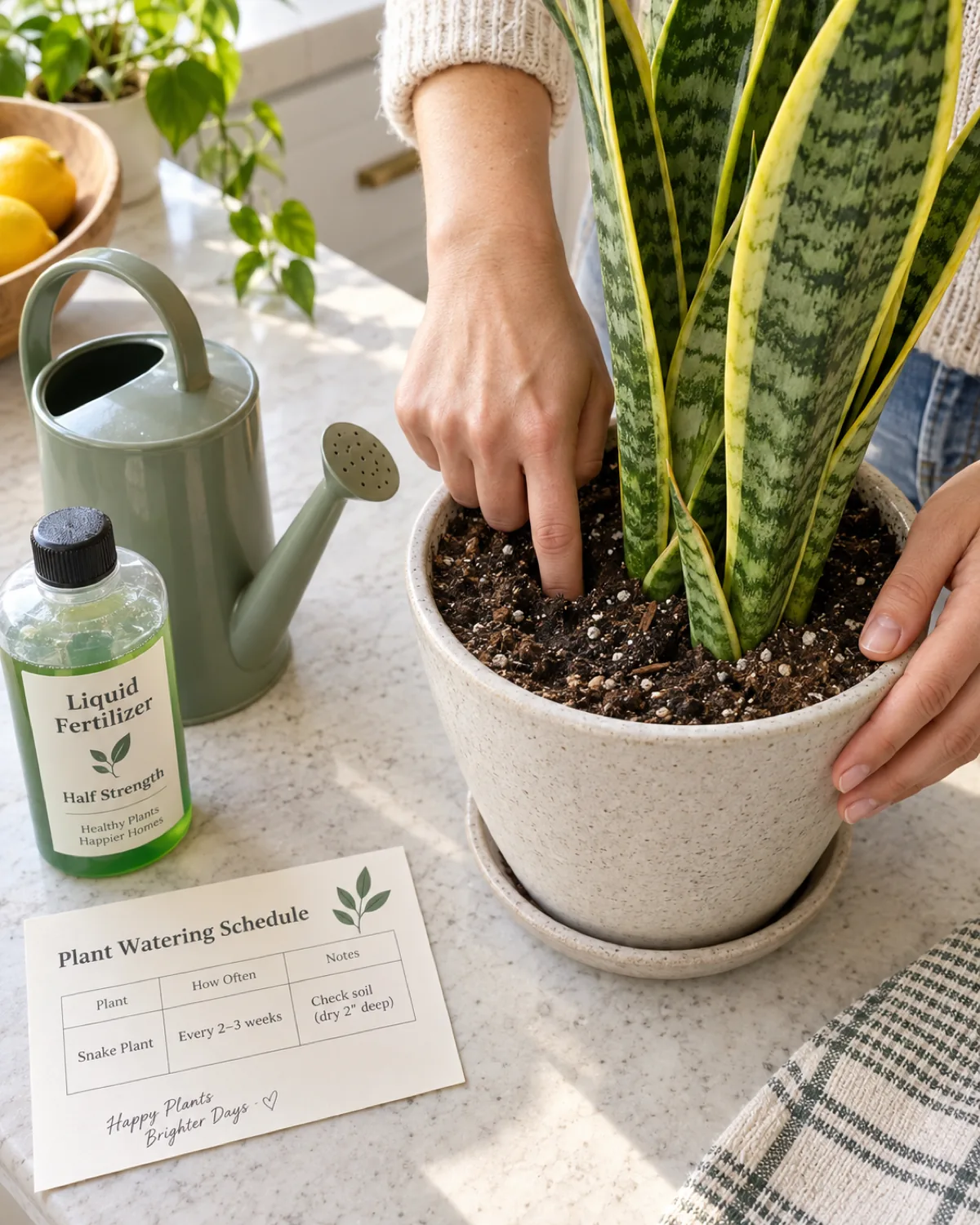
Low maintenance does not mean zero maintenance. A practical minimal-effort routine for every plant on this list:
- Weekly walk-by — touch the soil surface on every pot. If it feels dry two inches down, water thoroughly until it drains from the bottom. If it feels moist, move on.
- Monthly check — rotate each pot a quarter turn so growth stays even. Wipe dust off large-leaved plants (snake plant, ZZ, Chinese evergreen) with a damp cloth so the stomata can breathe.
- Twice a year feed — dilute a balanced liquid fertilizer to half strength and water it in during April and July. More detail in the fertilizing houseplants guide.
The one scenario that defeats even the toughest low maintenance indoor plants is chronic overwatering in a pot without drainage. A drainage hole is more important than the species you choose.
FAQ
Can low maintenance plants survive in rooms with no windows?
No plant survives indefinitely without any light. However, ZZ plant, cast iron plant, and snake plant tolerate the very low light of windowless rooms supplemented with standard fluorescent or LED ceiling lights. If the room has no artificial light either, consider a small grow light on a timer — even a desk lamp with a full-spectrum bulb helps.
How often should I water low maintenance houseplants?
There is no universal schedule — pot size, soil type, humidity, and light all affect drying speed. The finger test works for every plant on this list:
- Insert a finger two inches into the soil
- Water only when it feels dry at that depth
- Most of these plants prefer to dry out fully between waterings
The watering indoor plants guide covers the method in full.
Are there low maintenance indoor plants safe for cats and dogs?
| Safe (ASPCA non-toxic) | Toxic if chewed |
|---|---|
| Spider plant, ponytail palm, haworthia, air plant, cast iron plant | Pothos, philodendron, peace lily, Chinese evergreen, dracaena, aloe vera |
Keep toxic plants on high shelves or in rooms pets cannot access. The pet-safe plants guide lists more options organized by room and light level.
Do low maintenance plants still need fertilizer?
They benefit from it but will not die without it. A half-strength balanced liquid fertilizer applied once a month during the growing season (April through September) is enough. Skip winter entirely — most of these plants are dormant or growing very slowly, and unused fertilizer salts accumulate in the soil. See the fertilizing houseplants guide for dosing details.
14 Low Maintenance Indoor Plants That Thrive on Neglect
- 1PothosThe trailing vine that grows in water, tolerates low light, and propagates itself for free.
- 2ZZ PlantUnderground rhizomes store a month of water — the ultimate desk and office survivor.
- 3Snake PlantVertical sculptural leaves that exchange oxygen at night and shrug off neglect.
- 4Spider PlantSelf-propagating air purifier that sends out free baby plants on trailing stolons.
- 5Cast Iron PlantDeep-shade champion from Victorian parlors — handles near-darkness and temperature swings.
- 6YuccaDesert-tough sword leaves on a water-storing trunk — thrives in bright dry rooms.
- 7Aloe VeraMedicinal gel in every leaf, soak-and-dry watering, and offsets that multiply the supply.
- 8Chinese EvergreenColor-coded foliage that tells you its light needs — darker leaves mean shadier spots.
- 9Hoya CarnosaWaxy semi-succulent vine that blooms fragrant pink stars when you leave it root-bound.
- 10HaworthiaCompact windowed succulent that fits on a desk and thrives in indirect light.
- 11Heartleaf PhilodendronFast-cascading vine with glossy hearts that fills shelf-to-floor space overnight.
- 12Peace LilyThe only flowering shade plant that wilts visibly to tell you when it is thirsty.
- 13Ponytail PalmSucculent oddity with a bulbous water tank — squeeze the base to check hydration.
- 14Air PlantSoilless epiphyte you soak once a week and display anywhere with light and air.
kultivy.com

Mara Quinn edits Kultivy, where she shares houseplant care, propagation, beginner-friendly plant picks, and plant-styling ideas for anyone who wants their indoor plants to actually thrive. Every guide is image-led and reviewed for clarity, usefulness, image accuracy, and Pinterest-to-page alignment before it goes live. Visit the About page.