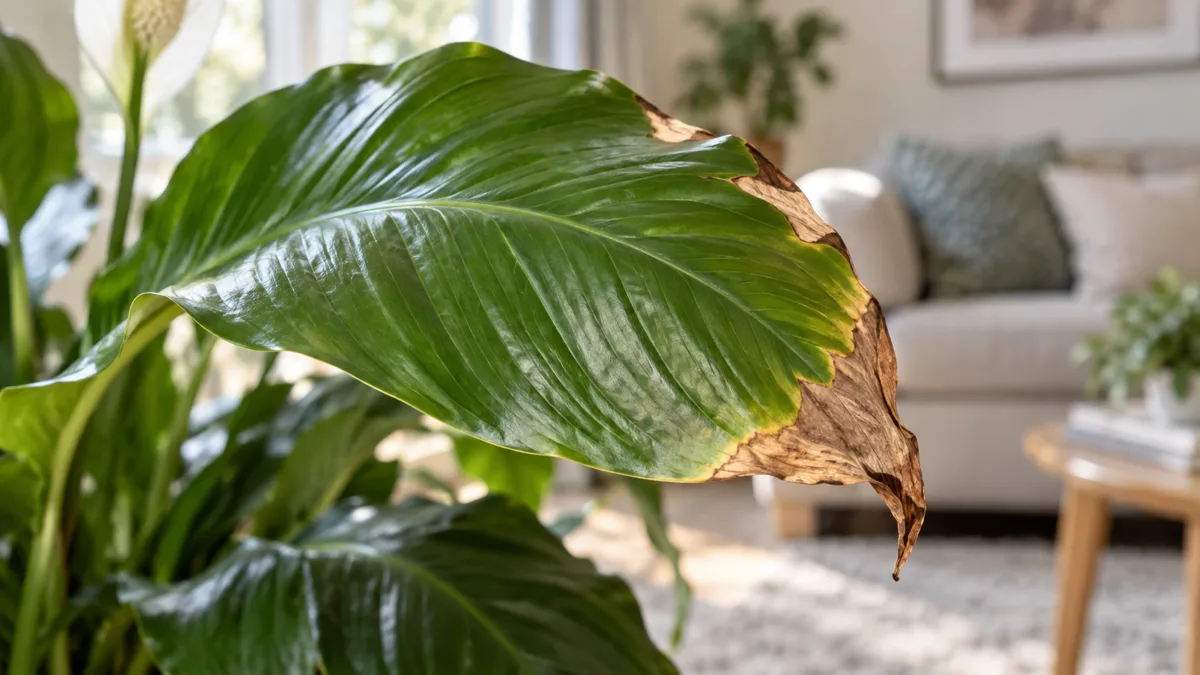
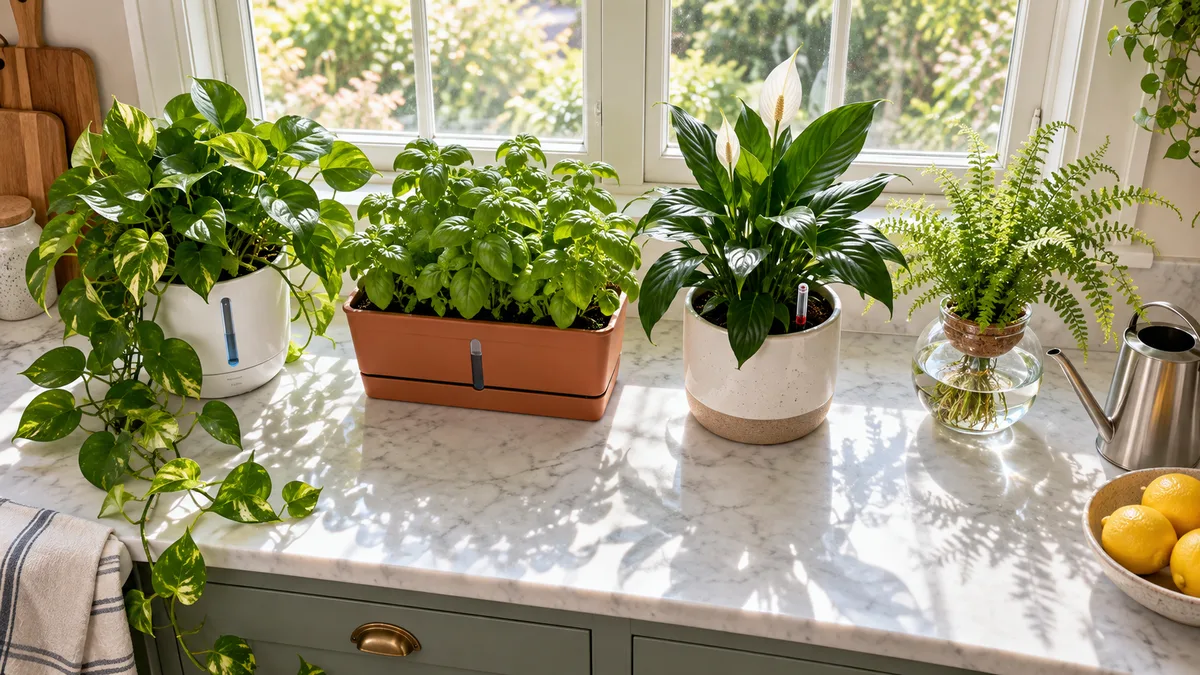
A drooping houseplant is not dying. It is sending a signal. The leaves hang because turgor pressure has dropped — the cells are not getting enough water, or the roots can no longer deliver it.
The tricky part is that underwatering, overwatering, root rot, and half a dozen other problems all produce the same droop. A plant that was fine yesterday suddenly looks like it gave up.
This guide breaks down the causes, starting with the two most common. Each section covers the telltale signs and the specific fix.
From thirsty soil to root rot, temperature shock, pests, and hidden drafts. Jump to the cause that matches your plant.
Underwatering
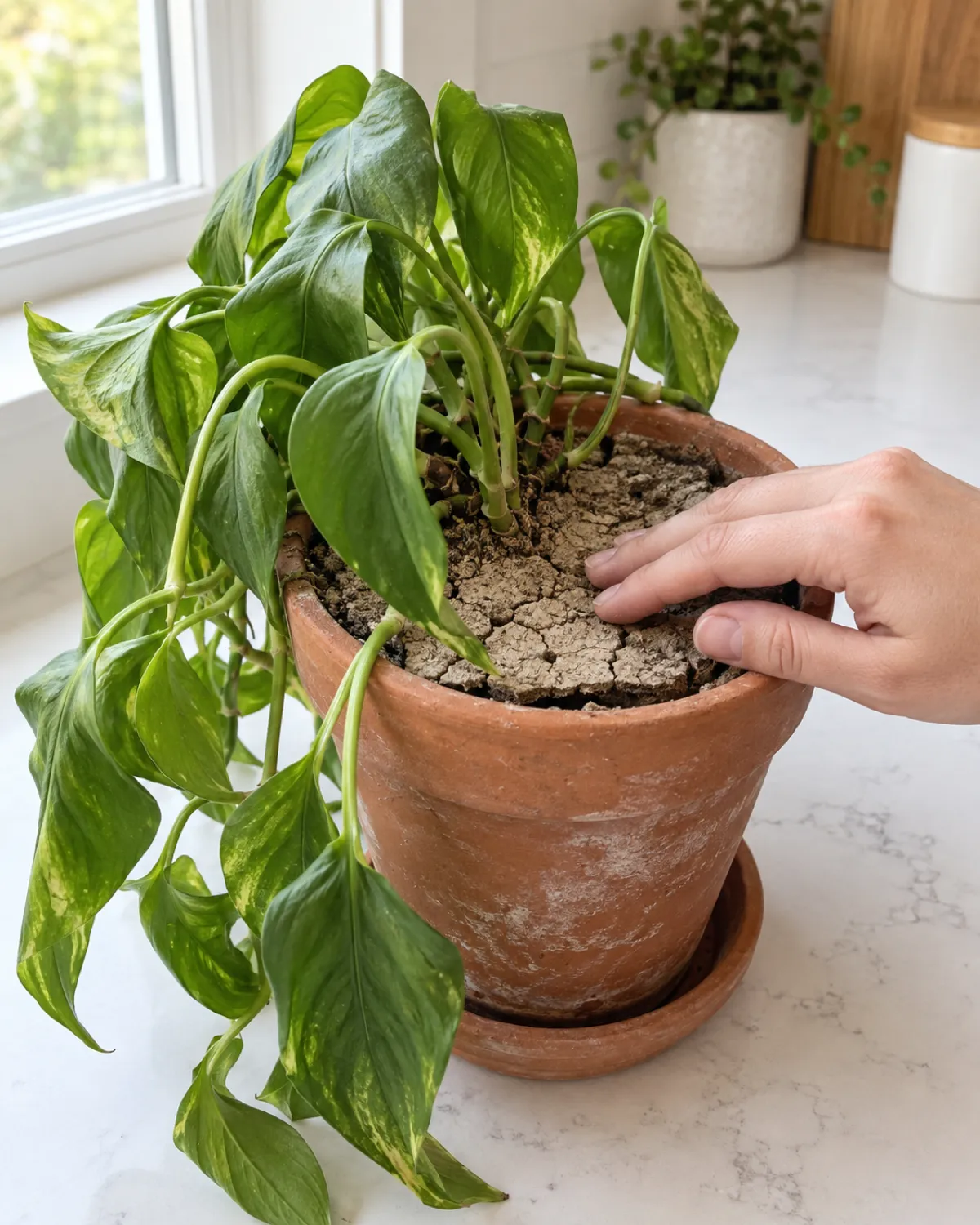
Underwatering is the most common reason a houseplant droops. The soil dries out, roots stop delivering water to the stems, and turgor pressure drops. The whole plant goes limp.
The telltale signs are easy to read. The soil pulls away from the pot edges and feels bone-dry an inch below the surface. The leaves are limp but still green — not yellow, not mushy, just soft. The pot feels abnormally light when you lift it.
- Finger test: push your finger one inch into the soil — if it comes out completely dry, underwatering is the likely cause
- Pot-weight test: lift the pot — a dry pot weighs noticeably less than a recently watered one
- Leaf texture: limp and papery, not yellow or mushy
The fix is straightforward. Water the plant thoroughly from the top until water runs from the drainage holes. If the soil has become hydrophobic and water runs straight through without absorbing, set the pot in a basin of room-temperature water for twenty to thirty minutes and let the soil soak from the bottom up.
Most underwatered plants recover within a few hours. If the leaves are still drooping after twenty-four hours of moist soil, the problem is something else on this list.
Overwatering
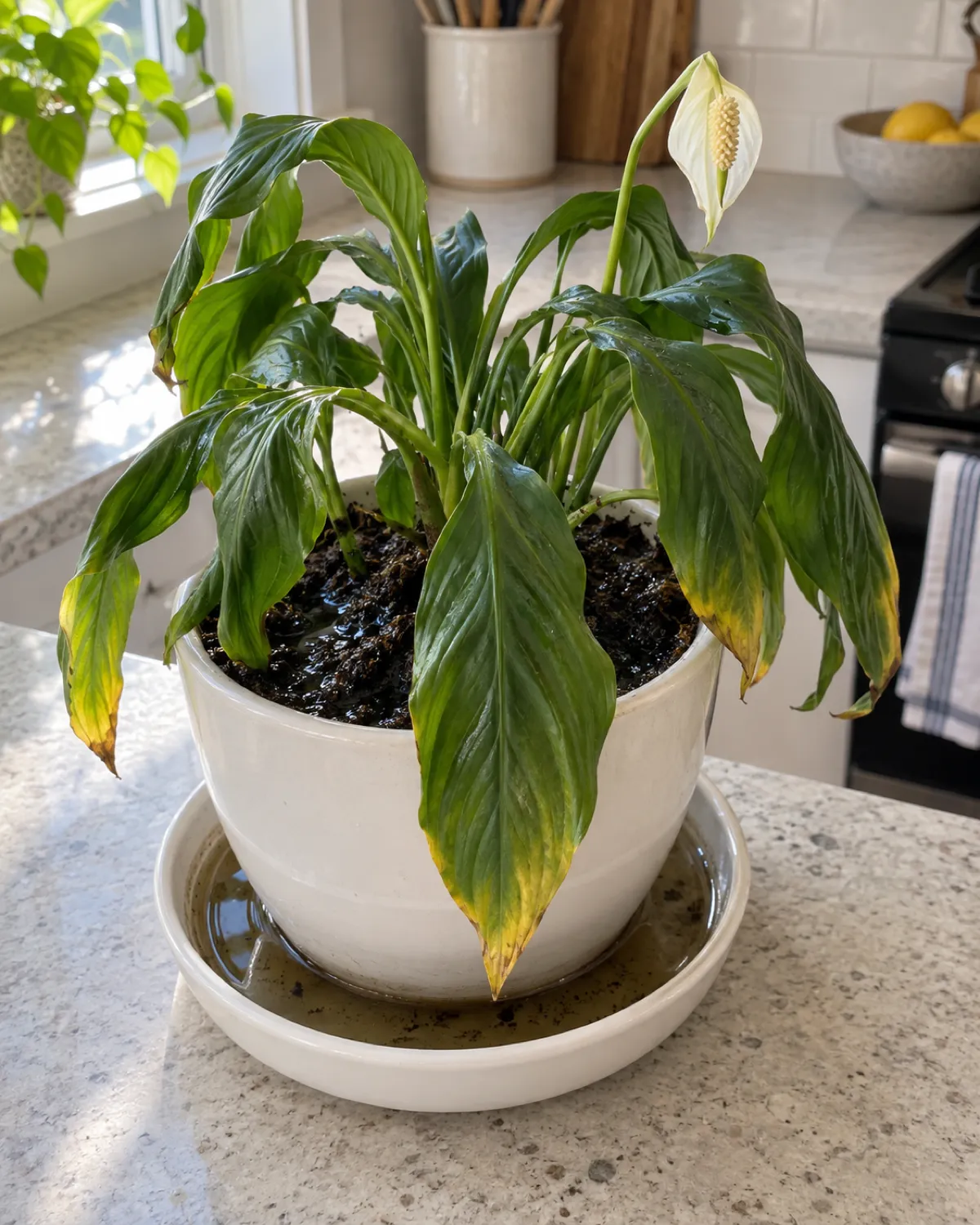
Overwatering produces the same droop as underwatering, which is why it confuses so many people. The difference is what happens at the root level. Saturated soil displaces oxygen, and roots need oxygen to absorb water. Without it, the roots shut down and the plant wilts even though the soil is soaking wet.
The signals are distinct if you know where to look:
- Soil: dark, wet, and has stayed moist for several days after the last watering
- Leaves: drooping with yellow edges or spots, possibly mushy at the base
- Smell: a sour or swamp-like odor from the soil surface
- Saucer: standing water that has been sitting for more than thirty minutes
Stop watering immediately. Let the soil dry out completely before watering again. Check that the pot has drainage holes — if it does not, repot into one that does. Remove the plant from any decorative cache pot that traps water at the bottom.
If the overwatering has been going on for weeks and the roots look brown and mushy, the problem has escalated to root rot — the next section.
Root Rot
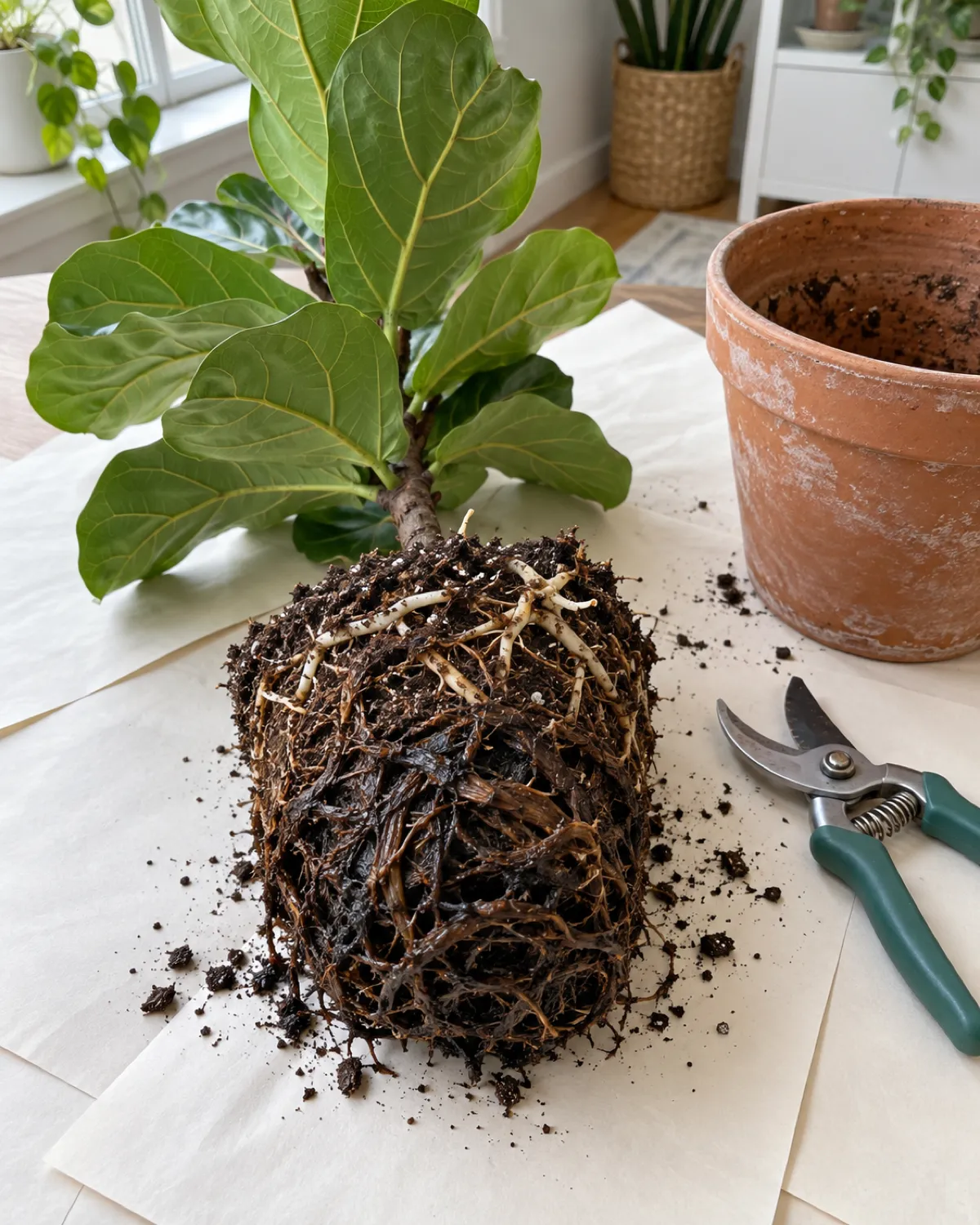
Root rot is overwatering's endgame. Fungi — usually Pythium, Phytophthora, or Fusarium species — colonize waterlogged roots and destroy them from the inside. The plant droops because the root system can no longer deliver water, no matter how wet the soil is.
The diagnosis requires unpotting. Slide the plant out and inspect the roots:
- Healthy roots: white or pale tan, firm, snap cleanly
- Rotting roots: brown or black, mushy, fall apart when touched, smell sour
The fix has a narrow window. If more than half the roots are gone, recovery is unlikely. For plants caught early:
- Trim every brown, mushy root with sterile scissors — cut back to firm white tissue
- Let the root ball air-dry for one to two hours
- Repot into fresh, well-draining mix in a clean pot with drainage holes
- Water lightly and place in bright indirect light
- Do not fertilize for at least four weeks — damaged roots cannot handle salts
For a deeper walkthrough of the rescue protocol, see the full root rot guide.
Temperature Shock
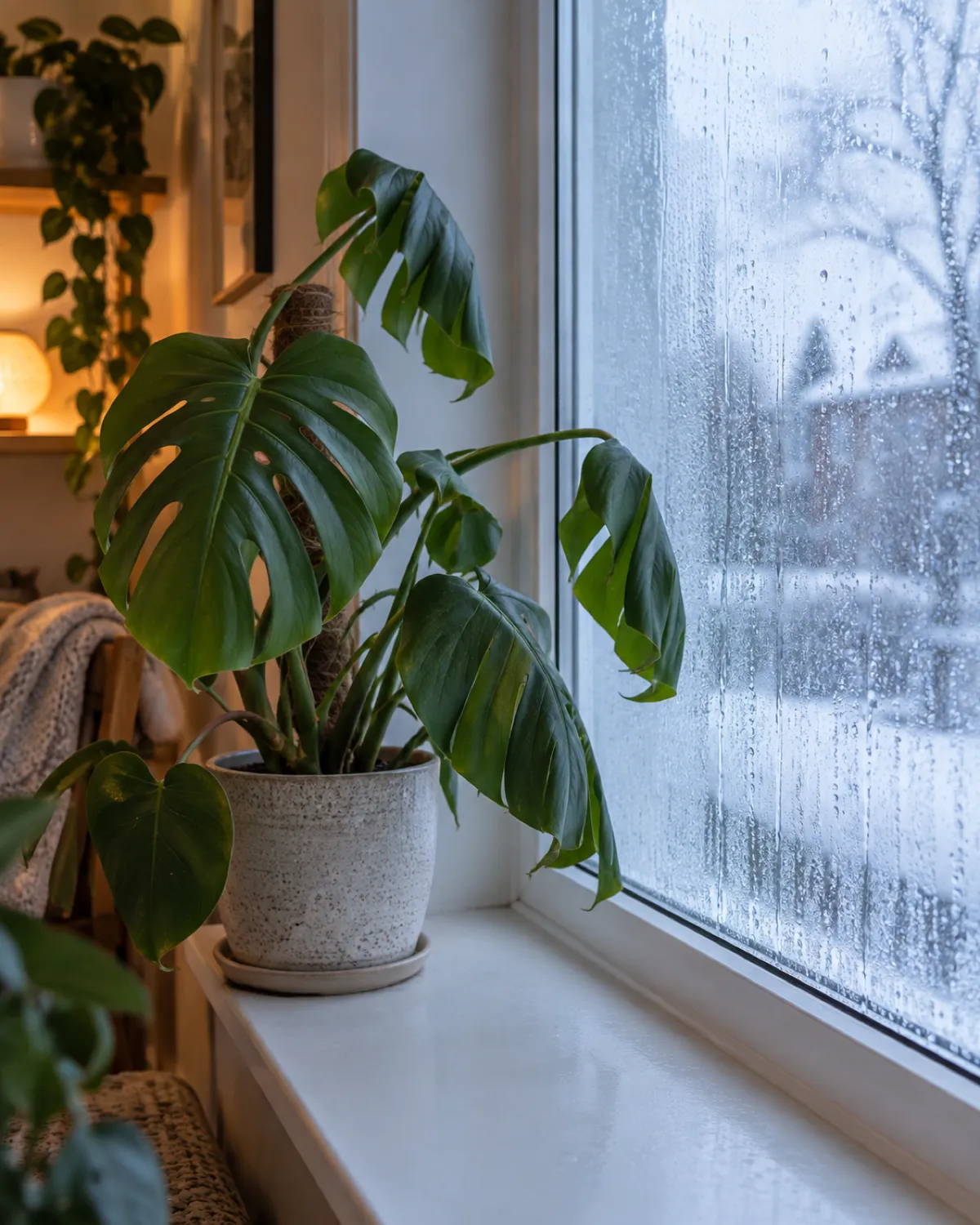
Most tropical houseplants evolved in environments where the temperature stays between 60 and 85 degrees Fahrenheit year-round. Sudden exposure to cold — a window left open overnight, a delivery left on a freezing porch, a plant placed too close to an air conditioner — causes cells to lose water rapidly. The droop appears within hours.
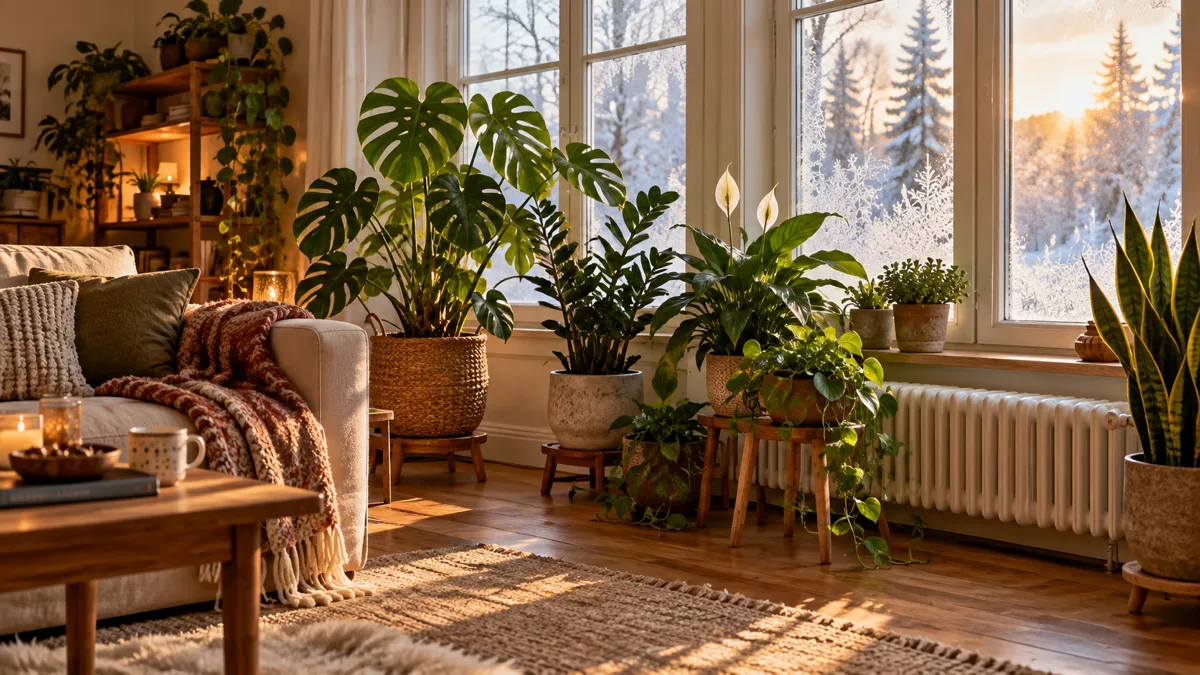
Heat shock works the same way in reverse. A plant placed next to a radiator or in a sun-baked car loses water faster than the roots can replace it. The stems go soft and the leaves curl inward to reduce surface area.
The clues:
- Timing: the droop appeared suddenly after a location change or weather event
- Pattern: all leaves affected evenly, not just one side
- Temperature check: leaves feel cold or unusually warm to the touch
Move the plant to a stable location between 65 and 80 degrees. Do not water heavily — shocked roots absorb poorly, and adding water to a cold root ball increases rot risk. Give the plant a week in gentle conditions before assessing recovery.
Transplant Shock
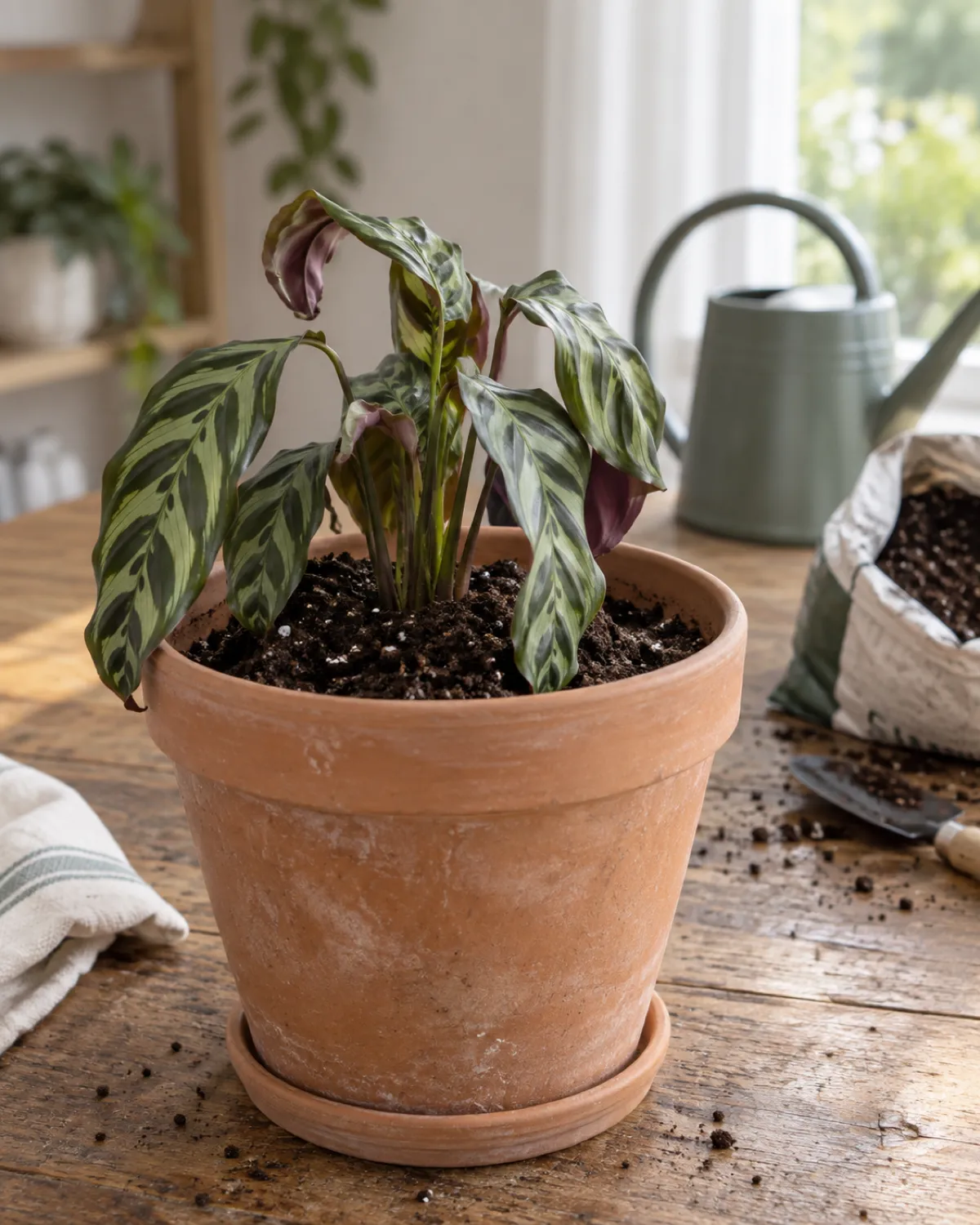
Transplant shock is the stress response that follows repotting. The fine root hairs that absorb most of the water get damaged during the move, and the plant wilts while they regrow. It can also happen when you move a plant to a radically different light or humidity environment.
This one is easy to identify because the timing lines up with a recent change. The plant was fine before repotting and started drooping within a day or two afterward.
- Normal duration: one to two weeks for most species
- Sensitive plants: calatheas, ferns, and alocasias can take three to four weeks
- Danger sign: if drooping gets worse after two weeks instead of better, something else went wrong during repotting (damaged roots, wrong soil, pot too large)
The fix is patience combined with gentle care. Keep the soil lightly moist — not soaking, not dry. Place the plant in bright indirect light, away from direct sun and drafts. Do not fertilize until new growth appears. Resist the urge to repot again.
For full repotting technique, see the repotting guide.
Low Humidity
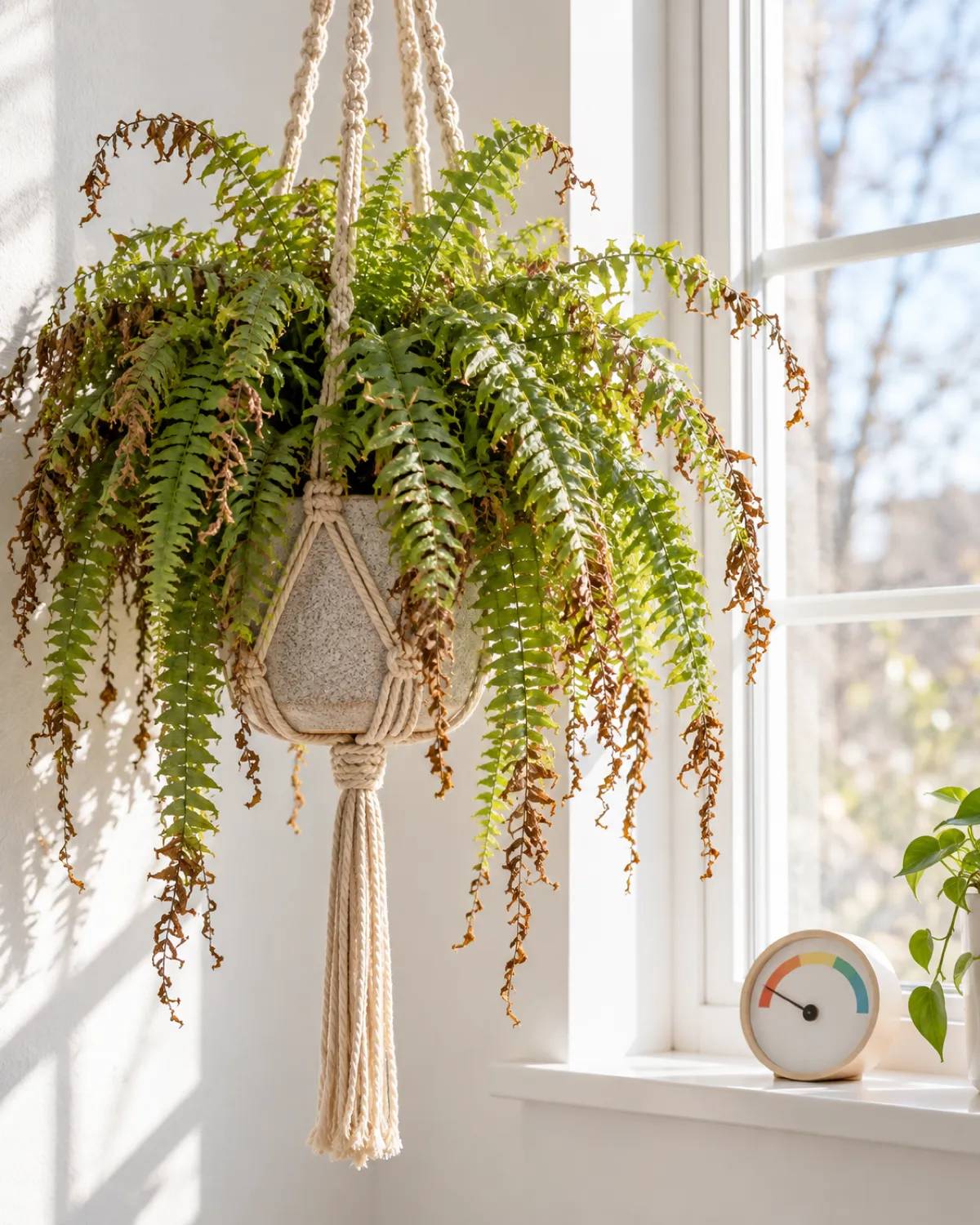
Tropical plants evolved in humidity above 50 percent. Most heated or air-conditioned homes sit between 30 and 40 percent, especially in winter. The plant loses moisture through its leaves faster than the roots can replace it, and the result is drooping paired with crispy brown leaf tips.
The clue is the combination of symptoms. Pure underwatering gives you limp green leaves. Low humidity gives you limp leaves with dry, brown, crunchy edges — the tips and margins die first because they are the thinnest tissue.
- Worst offenders: ferns, calatheas, alocasias, and any plant from a tropical forest understory
- Seasonal pattern: drooping worsens in winter when heating dries the air further
- Placement risk: directly above a radiator, near a forced-air vent, or in a drafty hallway
Three fixes that actually work:
- Pebble tray: fill a tray with pebbles and water, set the pot on top — evaporation raises local humidity
- Group plants together: transpiration from neighboring plants creates a shared humid microclimate
- Humidifier: the only method that reliably raises room humidity above 50 percent
Misting is widely recommended but barely effective. The moisture evaporates within minutes and does not change the ambient humidity in any lasting way. It can also leave water spots on leaves and encourage fungal growth.
Too Much Direct Sunlight
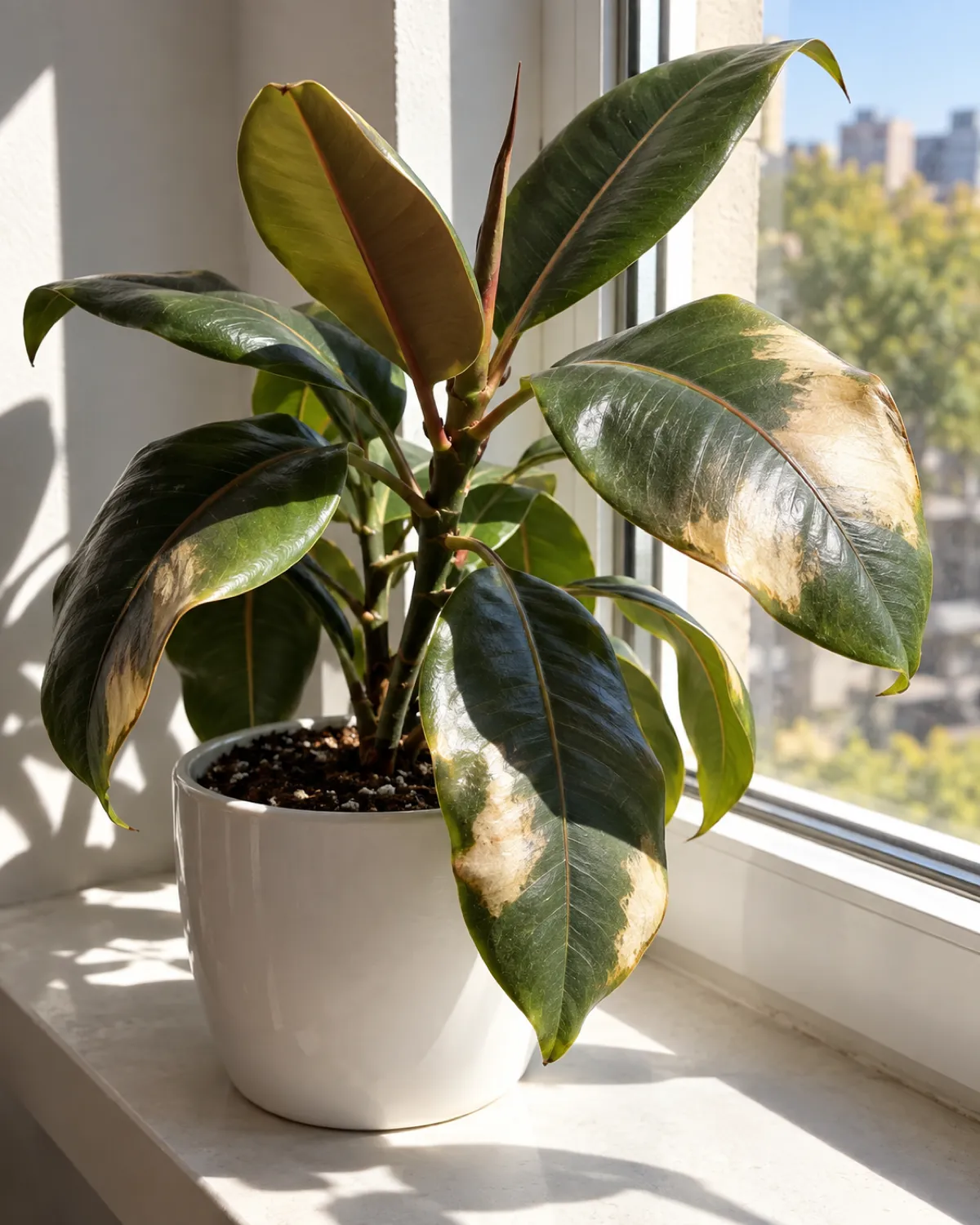
Direct afternoon sun pushes leaf temperature above the point where cells can maintain turgor. The plant droops to reduce the surface area exposed to light — a survival mechanism that limits further water loss.
The pattern is distinctive. The drooping gets worse in the afternoon and partially recovers by morning. The leaves closest to the window show bleached or scorched patches, while leaves on the shaded side look fine.
- Most vulnerable: plants moved suddenly from low light to a sunny window (no acclimation period)
- Seasonal shift: a window that was safe in winter may become scorching in summer as the sun angle changes
- Species sensitivity: ferns, calatheas, and most aroids burn quickly in direct sun; succulents and cacti tolerate it
The fix is relocation. Move the plant two to three feet back from the window, or add a sheer curtain to diffuse the light. If the plant was recently moved to a brighter spot, return it to its previous location and acclimate it gradually over two weeks.
For more on matching plants to light conditions, see the light requirements guide.
Rootbound
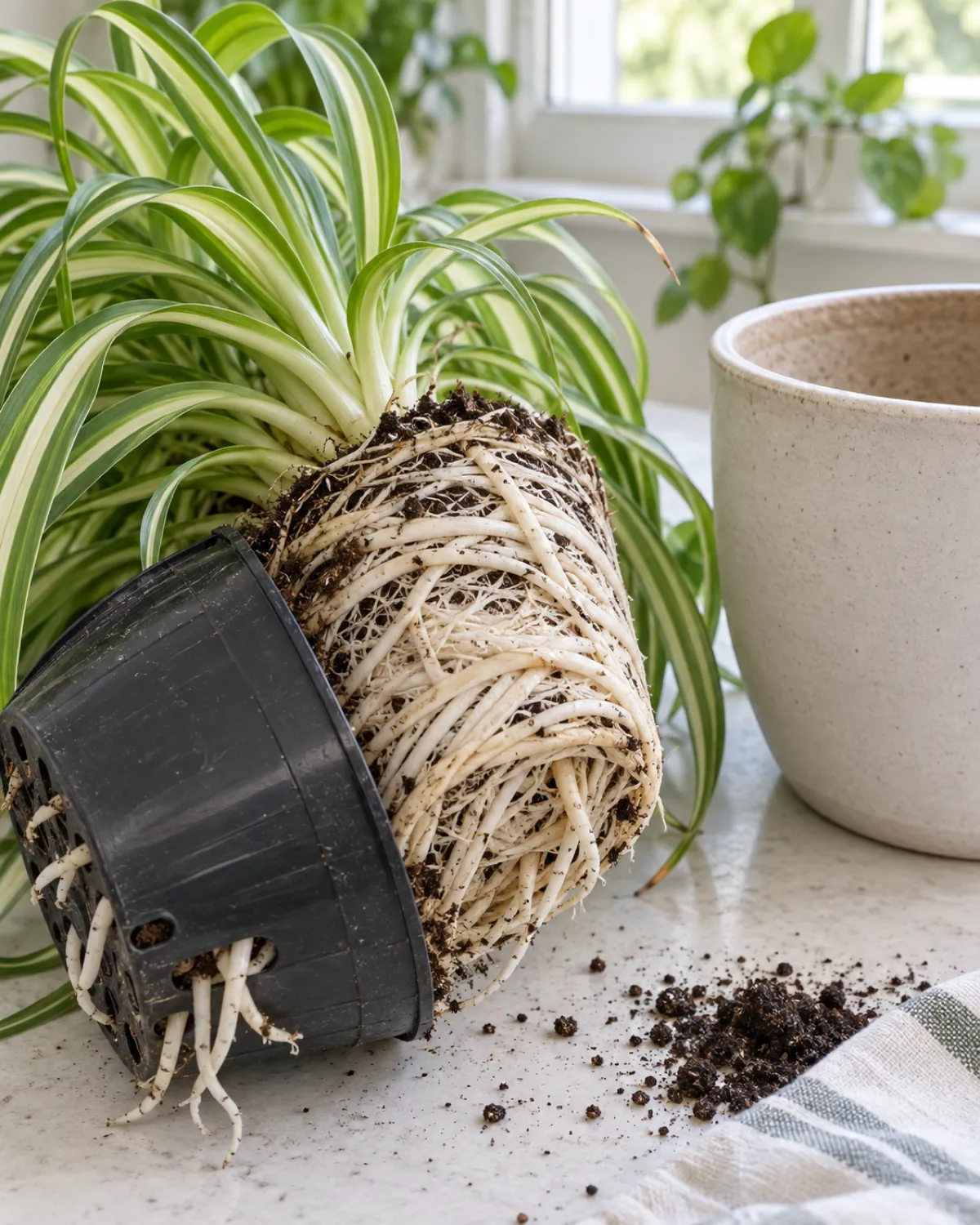
A rootbound plant has outgrown its pot. The roots have filled every cubic inch of soil and are circling the bottom of the pot, growing out of the drainage holes, or pushing the plant upward out of the container.
The drooping happens because the root-to-soil ratio is so skewed that the pot cannot hold enough water to sustain the plant between waterings. You water thoroughly, and the soil dries out within a day because the roots drink it all.
- Water behavior: water runs straight through the pot and out the drainage holes without being absorbed
- Growth: the plant has stopped putting out new leaves or the new leaves are smaller than the old ones
- Physical signs: roots visible at the surface, coming out of drainage holes, or the pot is cracking
Repot into a container one to two inches larger in diameter. Gently loosen the circling roots with your fingers before placing the plant in fresh mix. Do not jump to a pot that is much larger — excess soil holds excess water and creates a root rot risk.
Pest Infestation
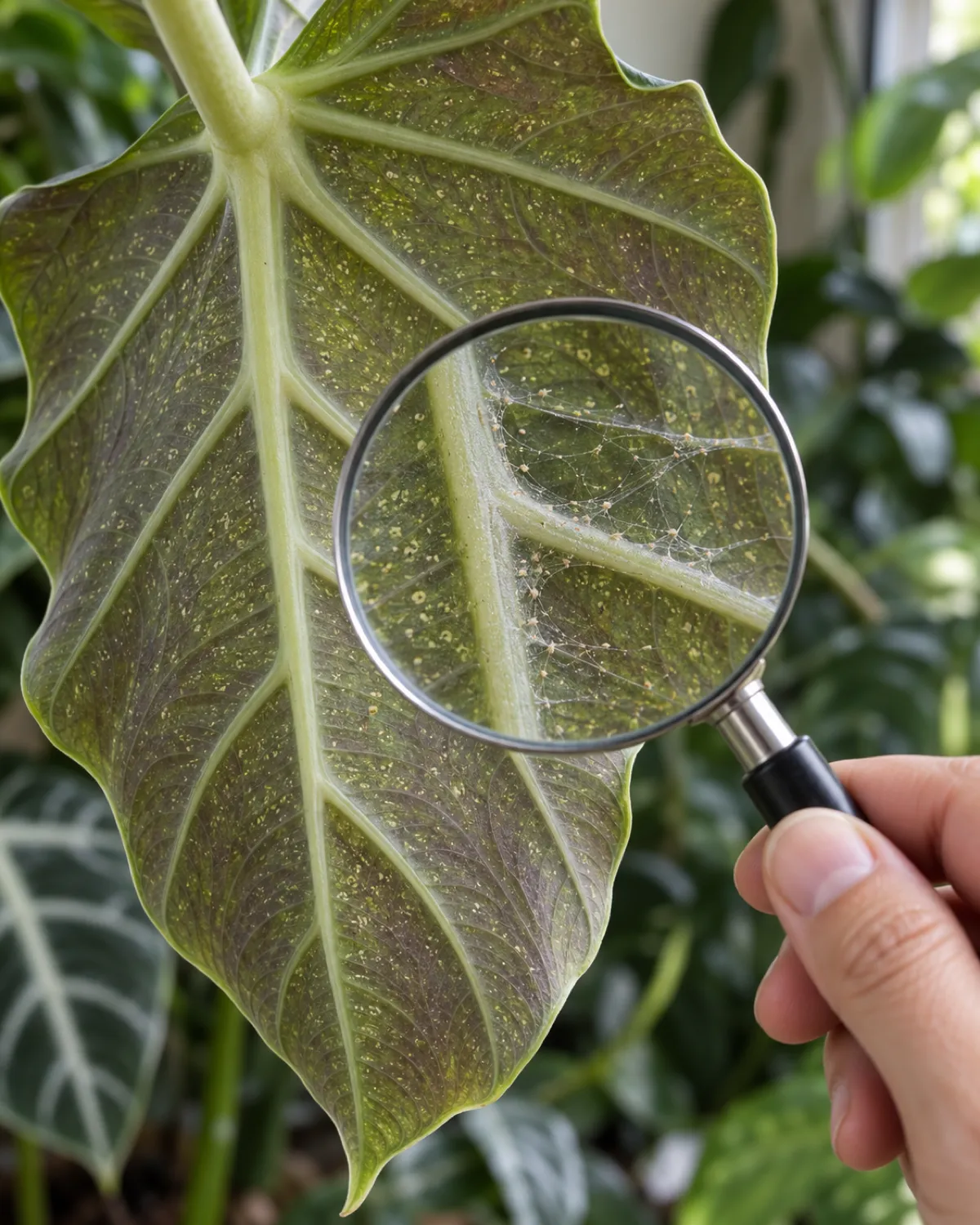
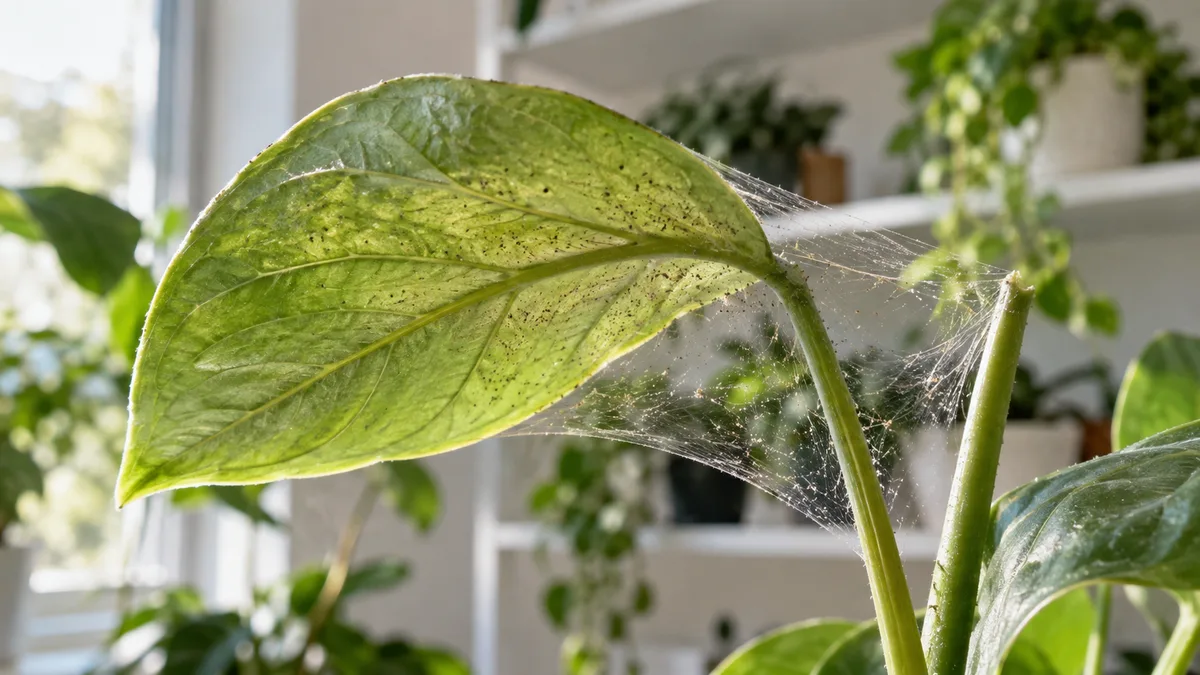
Sap-sucking pests — spider mites, mealybugs, aphids, scale, and thrips — drain water and nutrients directly from the plant tissue. A heavy infestation can cause enough fluid loss to make the entire plant droop.
The drooping from pests develops gradually rather than overnight. You will usually notice other signs first:
- Spider mites: fine webbing between leaves, tiny yellow stippling dots on leaf surfaces
- Mealybugs: white cottony clusters in leaf joints and along stems
- Aphids: clusters of small green, black, or white insects on new growth
- Scale: brown or tan bumps along stems that do not scrape off easily
- Sticky residue: honeydew (pest excrement) on leaves or the surface below the plant
Isolate the plant immediately. Treat with neem oil spray every seven days for three weeks — pest life cycles run about twenty-one days, and a single treatment only kills the adults currently present. For severe infestations, see the full pest identification and treatment guide.
Fertilizer Burn
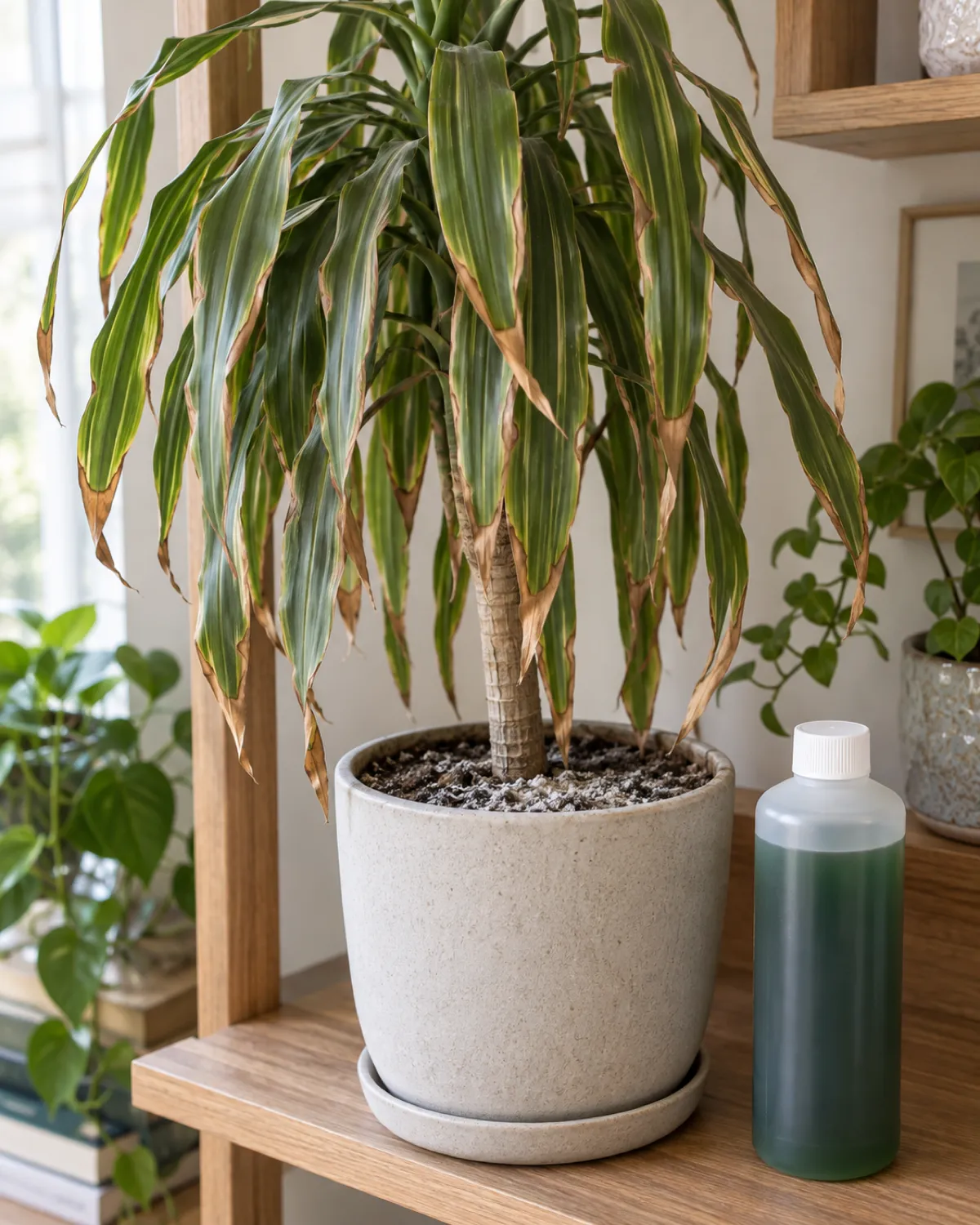
Too much fertilizer deposits mineral salts in the soil. Those salts pull water away from roots through reverse osmosis — the same principle that makes saltwater dehydrate you. The plant droops because the roots are losing water to the soil instead of absorbing it.
The signs are specific:
- White crust: mineral salt deposits visible on the soil surface or around the rim of the pot
- Leaf margins: brown and crispy edges that progress inward, distinct from the tip-burn of low humidity
- Timing: symptoms appeared within a week or two of fertilizing
- New growth: stunted or deformed new leaves
Flush the soil immediately. Run water through the pot for five to ten minutes, letting it drain completely. This dissolves and washes away the accumulated salts. Skip fertilizing for the rest of the season and reduce the concentration next time — half-strength is safer than full-strength for most houseplants.
For a complete guide to feeding without burning, see the fertilizing houseplants guide.
Cold Drafts and Heat Vents
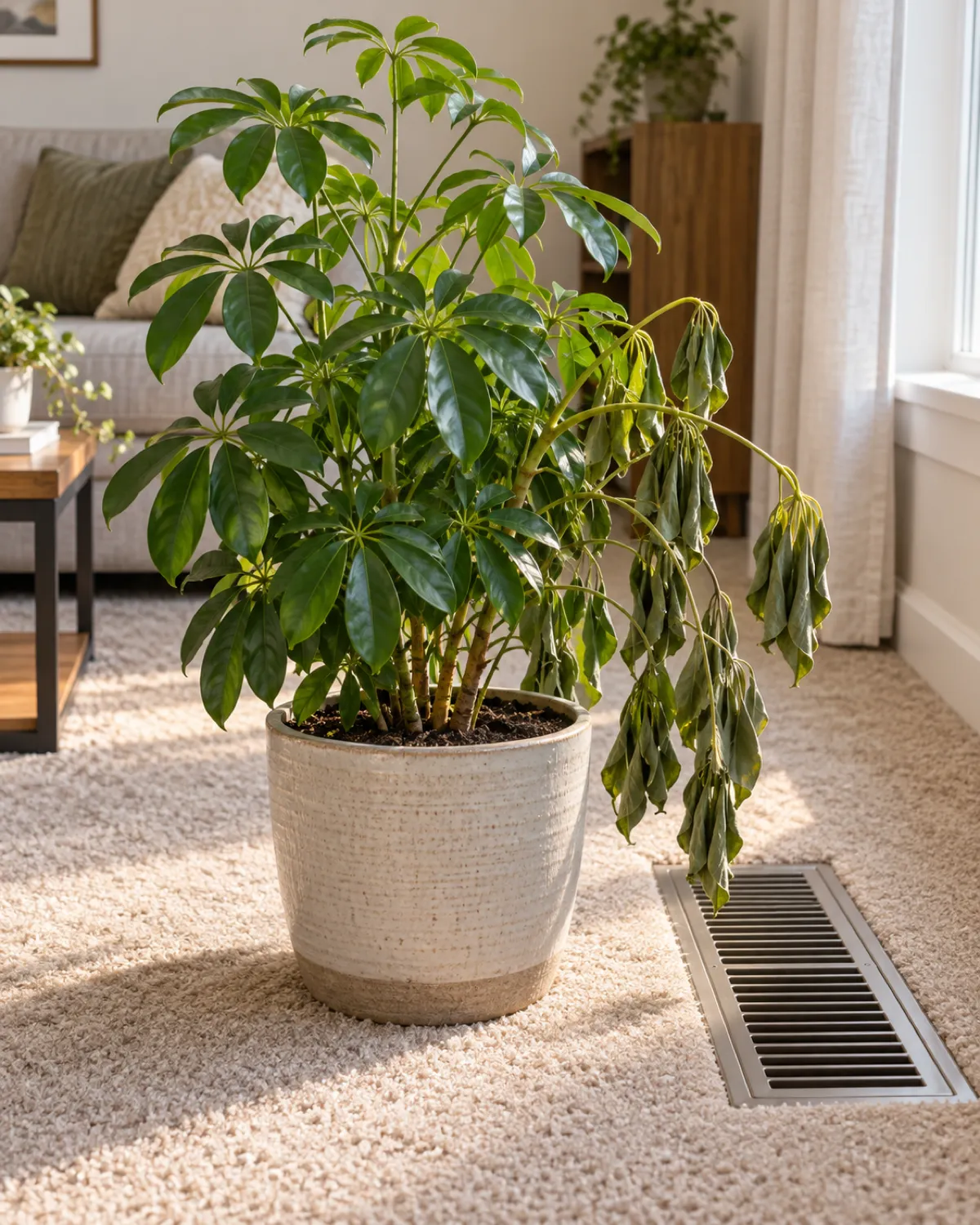
This cause is invisible unless you think about airflow. A plant sitting next to a heating vent gets blasted with hot, dry air on one side. A plant near an exterior door catches a cold draft every time it opens. Either situation creates a localized stress that makes part or all of the plant droop.
The diagnostic clue is asymmetry. The leaves on the side facing the vent or door droop or brown out while the rest of the plant looks normal. Temperature shock (section four) affects the whole plant evenly — drafts and vents hit one side.
Common culprits:
- Floor heating vents: the most common offender, especially in fall and winter when the heat kicks on
- Air conditioning vents: cold dry air directly onto foliage
- Exterior doors: cold air rushes in at ankle level, right where floor-level plants sit
- Single-pane windows: radiate cold in winter, creating a cold microzone within inches of the glass
The fix is relocation. Move the plant at least three feet from any vent, door, or leaky window. If the plant cannot be moved, redirect the vent louvers away from the foliage or place a barrier between the plant and the air source.
Save for Later
Drooping Plants in 11 Takeaways
- 1Underwatering is the most common causeDry soil, limp green leaves, lightweight pot. A thorough soak fixes it within hours.
- 2Overwatering looks identical on topSoggy soil, yellow-edged leaves, sour smell. Stop watering and let the soil dry completely.
- 3Root rot is overwatering left uncheckedBrown mushy roots, sour smell. Trim damaged roots, repot in fresh mix, skip fertilizer for a month.
- 4Temperature shock drops turgor fastSudden cold or heat exposure. Move to a stable 65 to 80 degree location and give it a week.
- 5Transplant shock is temporaryFine root hairs need one to two weeks to regrow. Keep soil lightly moist and avoid direct sun.
- 6Low humidity causes droop plus crispy tipsWinter heating drops indoor humidity below 30 percent. Pebble trays and humidifiers help; misting barely works.
- 7Direct sun overheats leaf cellsAfternoon wilting that recovers by morning. Move the plant back or add a sheer curtain.
- 8Rootbound plants dry out in a dayRoots circling, no soil left. Repot one to two inches larger and loosen circling roots.
- 9Pests drain sap and cause gradual droopWebbing, stippling, sticky residue. Isolate and treat with neem oil weekly for three weeks.
- 10Fertilizer burn reverses osmosisWhite salt crust, crispy margins. Flush soil for five to ten minutes to wash away salts.
- 11Drafts and vents cause one-sided droopAsymmetric wilting near a vent or door. Move the plant at least three feet away from the air source.
kultivy.com
FAQ
Quick-reference answers:
- How quickly will a drooping plant recover after watering? An underwatered plant typically perks up within two to six hours after a thorough soak. If the soil was hydrophobic, bottom-watering for thirty minutes speeds recovery. If the plant is still drooping after twenty-four hours of moist soil, the cause is not underwatering
- Can a severely wilted plant come back? It depends on the root health. If the roots are white and firm, the plant can usually recover even from dramatic wilting. If the roots are brown and mushy, recovery depends on how much healthy root tissue remains — more than half gives you a fighting chance
- Why does my plant droop only at night? Some plants, especially calatheas and marantas, fold their leaves upward at night through a mechanism called nyctinasty. This is normal behavior, not distress. If the leaves stay folded during the day, check for low light or underwatering
More common questions:
- Should I mist a drooping plant? Misting does not address any of the eleven causes on this list. It raises humidity for a few minutes at most and can encourage fungal growth on wet leaves. Identify the actual cause instead — a humidifier is the effective tool if low humidity is the problem
- When should I give up on a wilting plant? When the stems are soft and mushy all the way down, the roots are entirely brown, and no new growth has appeared after three weeks of proper care. At that point the plant has exhausted its recovery resources
- My plant droops every afternoon but recovers by morning — is something wrong? Mild afternoon wilting in bright light can be normal for thin-leaved plants that transpire faster than the roots can keep up. If it happens daily, move the plant to slightly less direct light or water more frequently

Mara Quinn edits Kultivy, where she shares houseplant care, propagation, beginner-friendly plant picks, and plant-styling ideas for anyone who wants their indoor plants to actually thrive. Every guide is image-led and reviewed for clarity, usefulness, image accuracy, and Pinterest-to-page alignment before it goes live. Visit the About page.