Most houseplant owners either repot on a vague yearly habit or never repot at all until a plant looks visibly stressed. Neither approach tracks what actually matters: repotting is about root space running out, not a date on a calendar.
This guide covers the real diagnostic signs a plant needs repotting, how much bigger the new pot should actually be, the best season to do it, and the step-by-step technique that keeps root damage to a minimum.
Repotting questions almost always come down to timing and pot size, not a fixed schedule. The thirteen sections below cover the real signs a plant needs repotting, how much bigger to go, and how to help it settle in afterward.
- 1Root space, not a schedule
- 2Signs it's rootbound
- 3Signs it's fine for now
- 4How often, really
- 5The right pot size
- 6Drainage over material
- 7Best season to repot
- 8Step-by-step technique
- 9Don't feed it right away
- 10Normal shock vs. a real problem
- 11Water thoroughly right after
- 12Plants that prefer snug roots
- 13Fast growers need it sooner
Repotting is about root space running out, not a bigger pot on a schedule
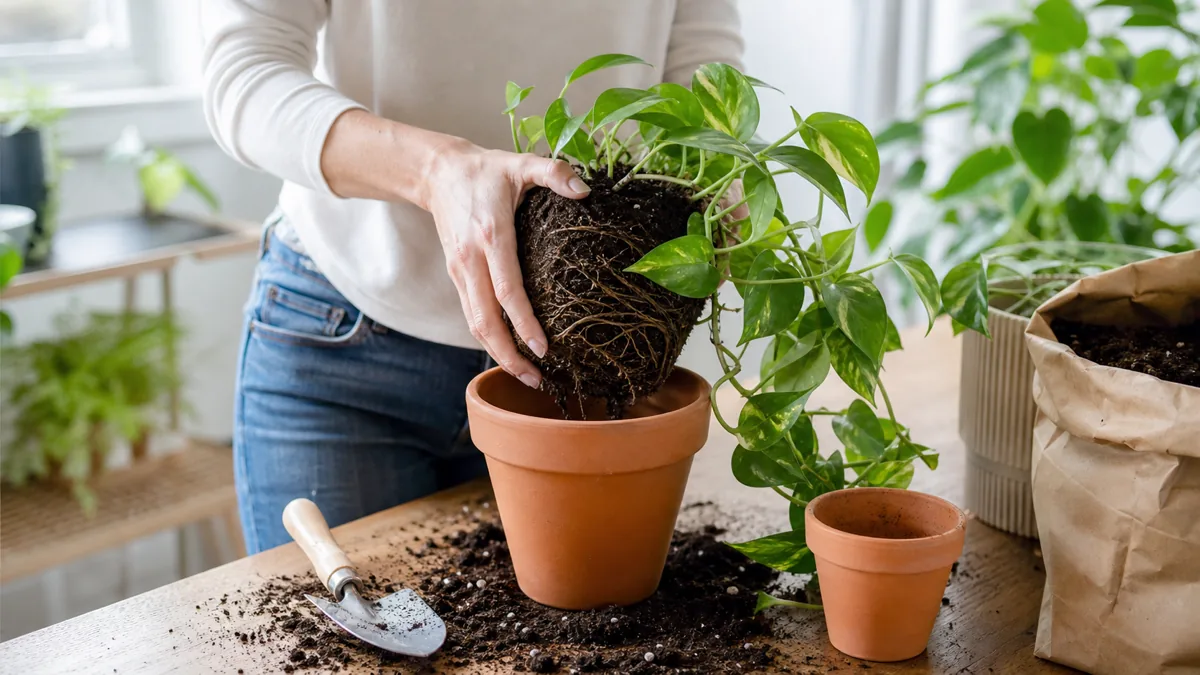
A plant only actually needs repotting when its roots have filled the available soil, not because a year has passed since it last got a new pot. Watch what the roots are actually doing instead of counting months on a calendar.
This guide covers the real diagnostic signals below instead of a one-size-fits-all schedule, so a plant only gets disturbed when it genuinely needs the extra room.
- Repotting on a fixed schedule is a guess, not a diagnosis.
- Roots tell the real story — circling, surfacing, or staying comfortably settled.
- Unnecessary repotting stresses a plant more than leaving it in a pot it's still using well.
Signs a plant is rootbound: circling roots, roots pushing up, water running straight through
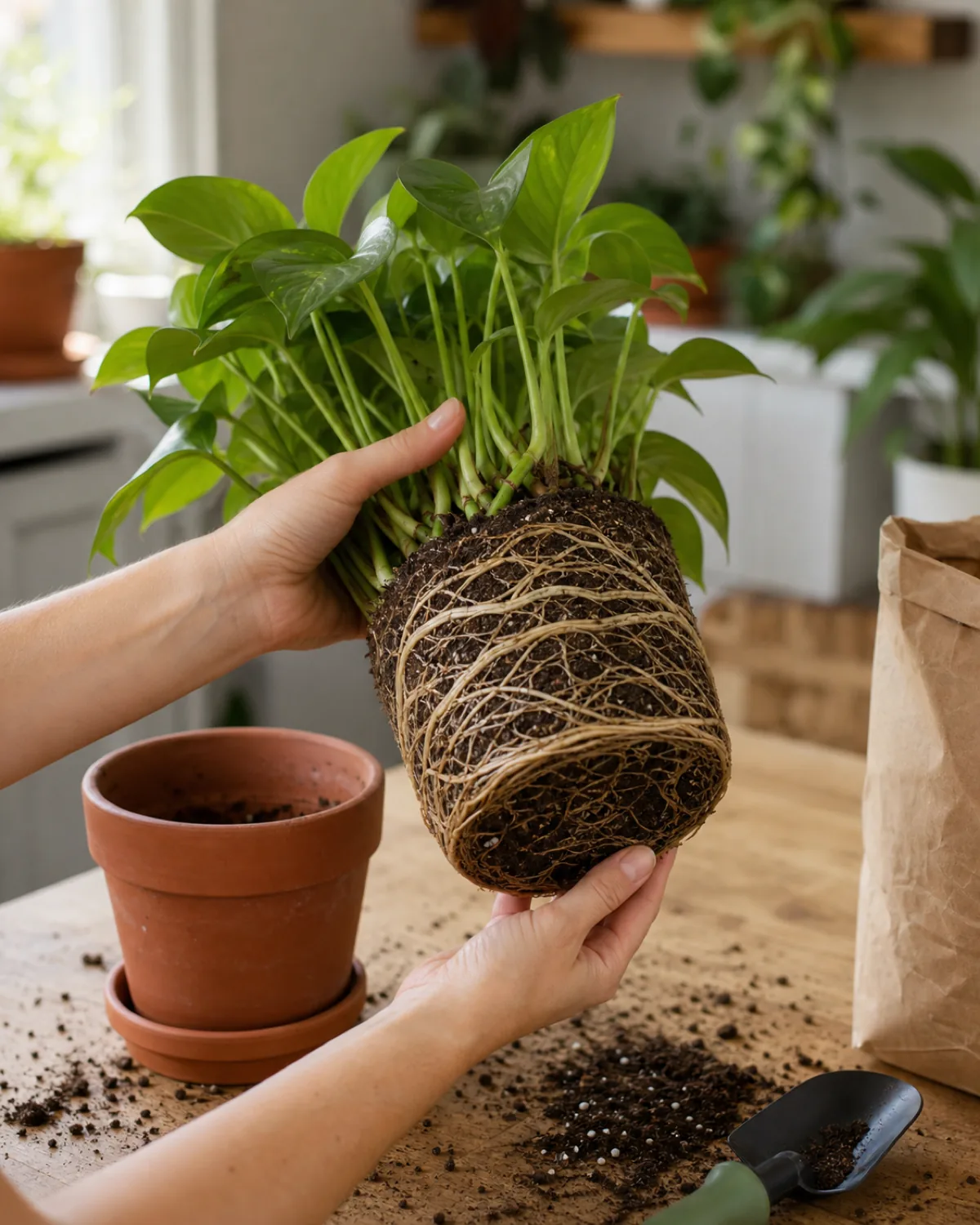
Roots visible circling around the outside of the root ball when the plant is lifted from its pot, roots pushing up and breaking above the soil surface, and water that runs straight through the pot without the soil visibly absorbing it are the three clearest physical signs the roots have filled the available space.
Any one of these on its own is worth watching. Two or more together mean it's genuinely time.
- Circling roots at the root ball's edge are the clearest sign of all.
- Roots surfacing above the soil line mean they've run out of room below.
- Water running straight through means there's more root than soil left to hold it.
Signs it does NOT need repotting yet
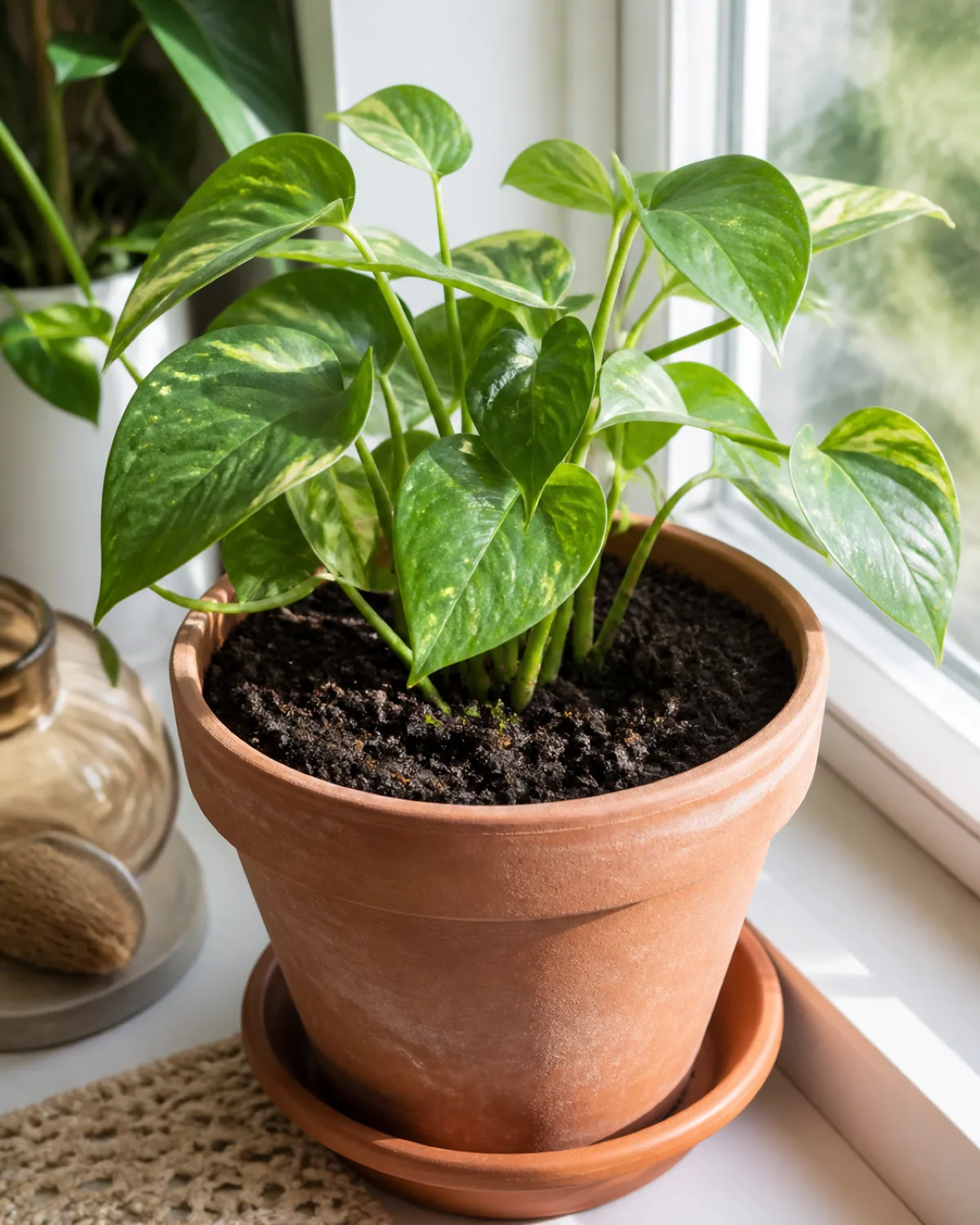
A plant with steady moderate new growth, soil that still holds moisture for its normal watering interval, and no visible circling roots is fine exactly where it is. Repotting a plant that doesn't need it stresses the roots more than it helps and can slow growth for weeks afterward.
If nothing above applies, the most useful thing to do is leave it alone.
- Steady, moderate new growth means the current pot is still working.
- Soil holding moisture normally is a sign roots aren't crowding it out.
- Repotting too early costs more than it gives — new root damage without a real need for it.
How often: most houseplants need repotting every 12-24 months, based on growth not the calendar
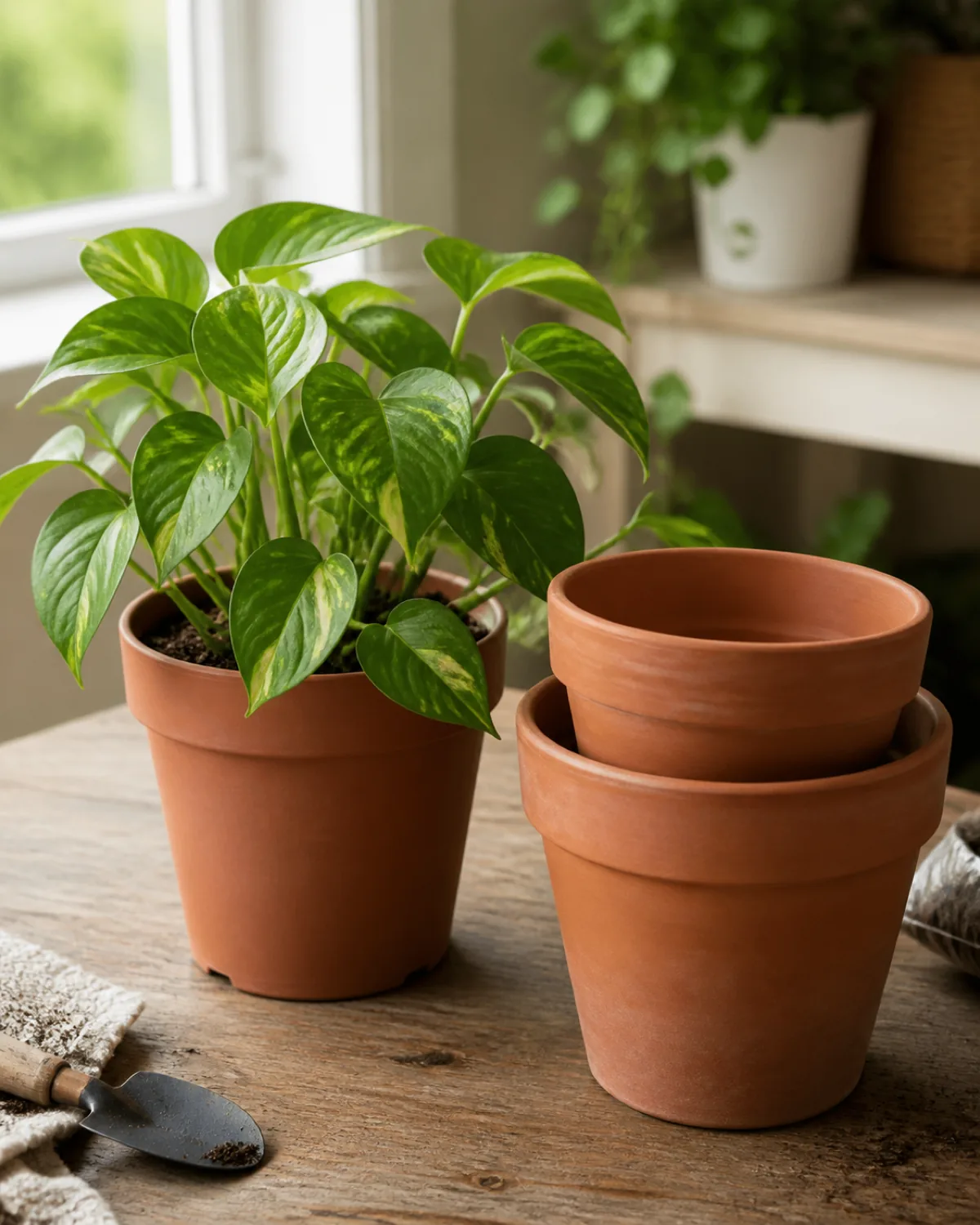
Fast growers can fill a pot within a single year. Slow growers can go two to three years, sometimes longer, without needing a size change at all. Growth rate, not a fixed schedule, is what actually decides timing.
Treat 12-24 months as a general range to start checking, not a deadline to act on.
- Fast growers may need a new pot within a year.
- Slow growers can go 2-3+ years before it matters.
- Growth rate sets the real timeline — the calendar is only a reminder to check.
The right pot size: one size up, about 2 inches wider — never jump several sizes at once
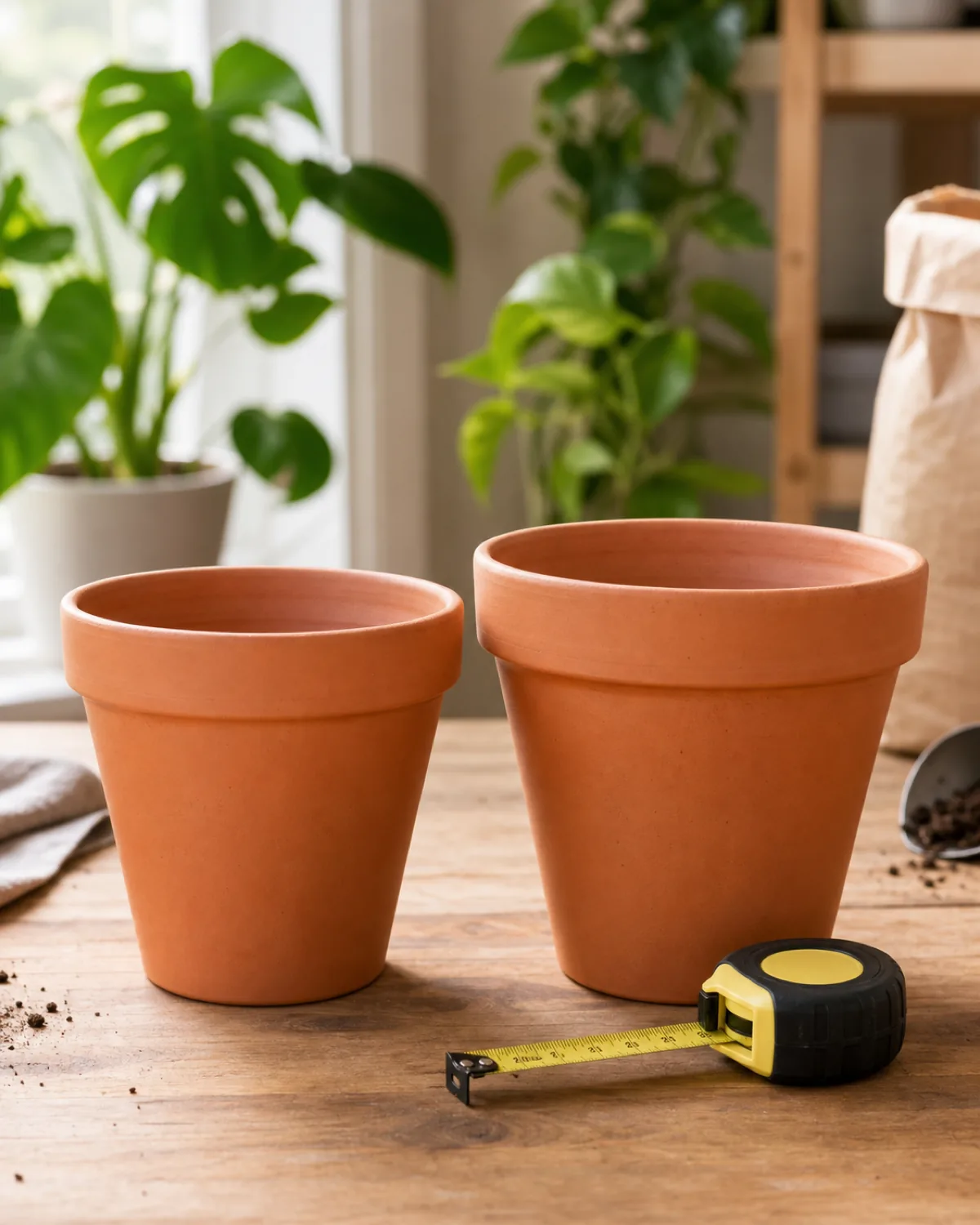
A pot only slightly larger gives roots room to grow into without holding a large volume of excess wet soil the roots can't use up yet, which is the single biggest cause of repotting-related root rot. About 2 inches wider in diameter than the current pot is the general target.
Jumping several sizes at once feels efficient, but it usually causes more harm than it saves in future repottings.
- One size up, roughly 2 inches wider, is the general rule.
- Oversized pots hold excess wet soil roots can't use, which invites root rot.
- A modest size jump now beats a dramatic one that outpaces what the roots can fill.
Most repotting questions trace back to one of four situations. Start with whichever one describes yours, then return to the rest later.
Drainage holes matter more than the pot material
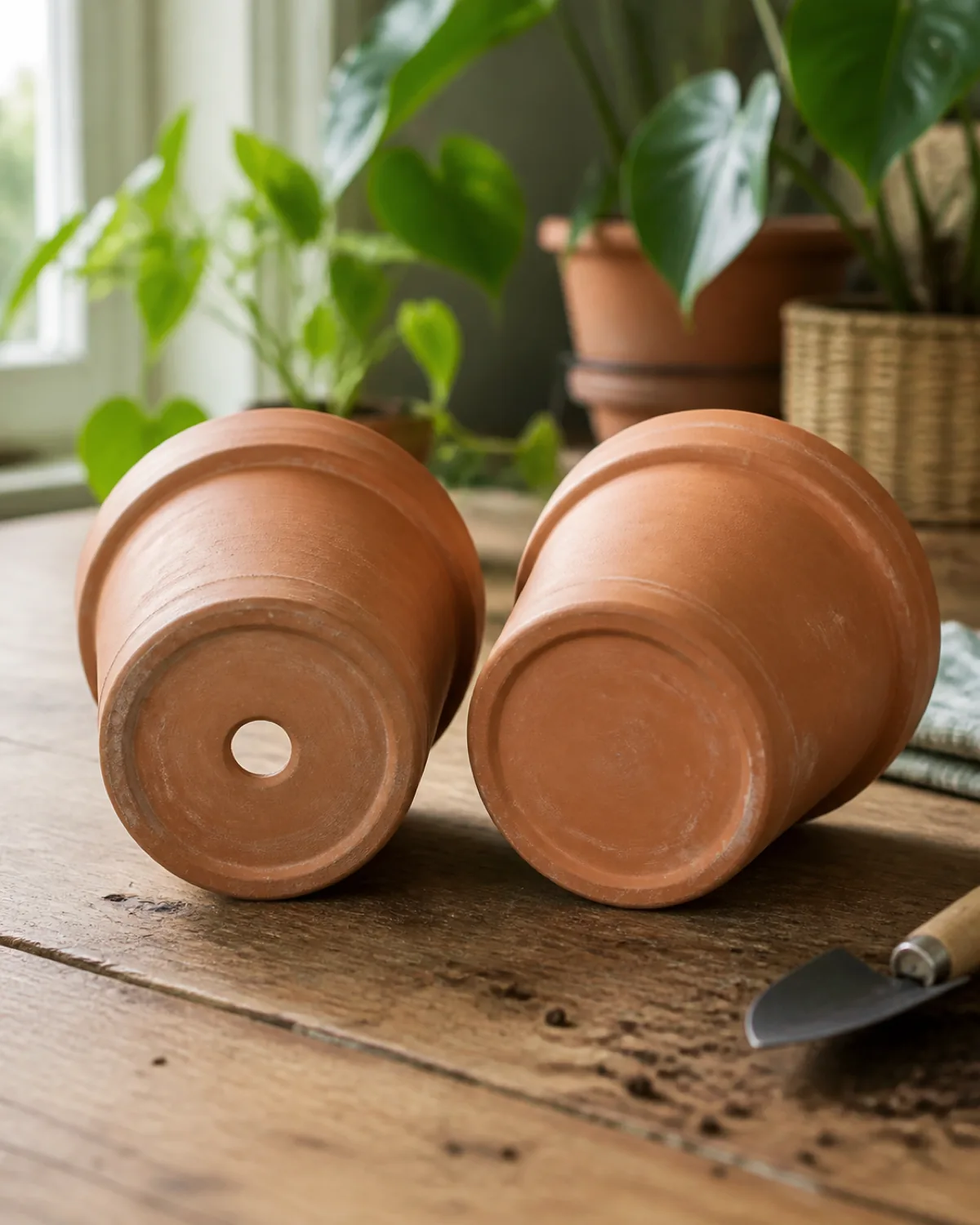
A pot without a drainage hole undoes the entire purpose of repotting into fresh, aerated soil. A plain plastic nursery pot with good drainage beats a beautiful ceramic pot without one, every time.
If a favorite pot has no hole, use it as a decorative outer cover and keep the plant in a nursery pot with drainage inside it.
- A drainage hole is non-negotiable, regardless of what the pot is made of.
- A plain pot with good drainage beats a decorative one without it.
- No hole doesn't mean skip the pot — just use it as a cover, not the growing container.
Best season to repot: spring or early growing season, not fall or winter
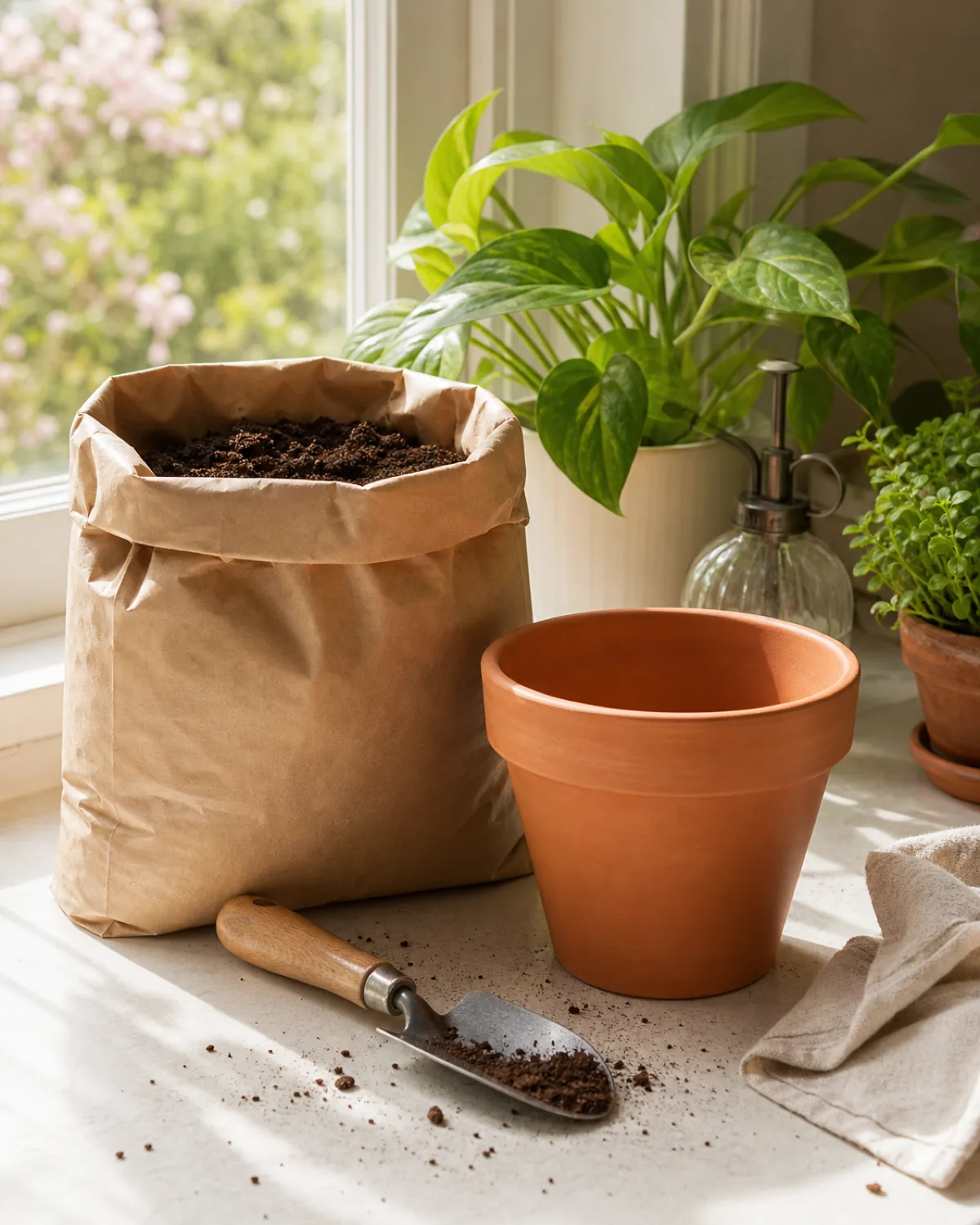
Roots recover from the disturbance of repotting fastest when the plant is already in active growth. Repotting during dormancy adds root stress on top of a plant that's already slowed down, and recovery takes noticeably longer.
Spring through early summer, when most houseplants are pushing new growth anyway, is the general window to aim for.
- Active growth means faster root recovery after the disturbance.
- Repotting during dormancy stacks stress on stress.
- Spring through early summer is the general target window.
Step-by-step: loosen the roots, tease apart circling growth, set at the same depth, backfill without packing
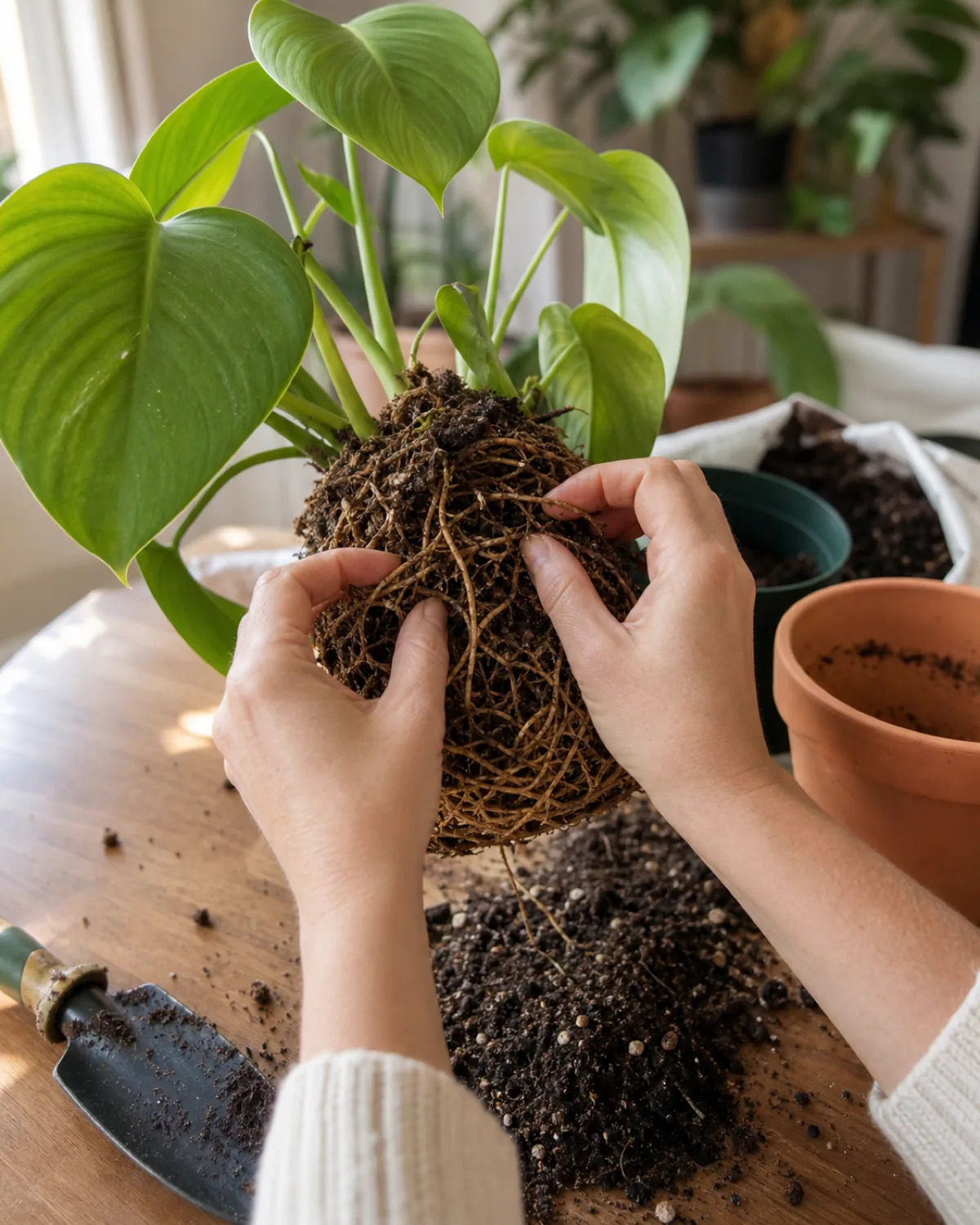
Gently loosen the root ball first, then tease apart any tightly circling roots so they grow outward instead of continuing to spiral in the new pot. Keep the plant at the same soil depth it was at before, and backfill firmly but without compacting the new soil down hard.
Rushing this step is the most common way people accidentally damage roots that were otherwise healthy.
- Loosen the root ball before anything else.
- Tease apart circling roots so they grow outward, not in continued spirals.
- Same depth, backfilled without heavy packing — firm contact, not compaction.
Most repotting mistakes trace back to one of four moves people skip. Hold these four and almost any houseplant handles a repot with minimal setback.
Right after repotting, a plant's energy goes into root recovery, not growth
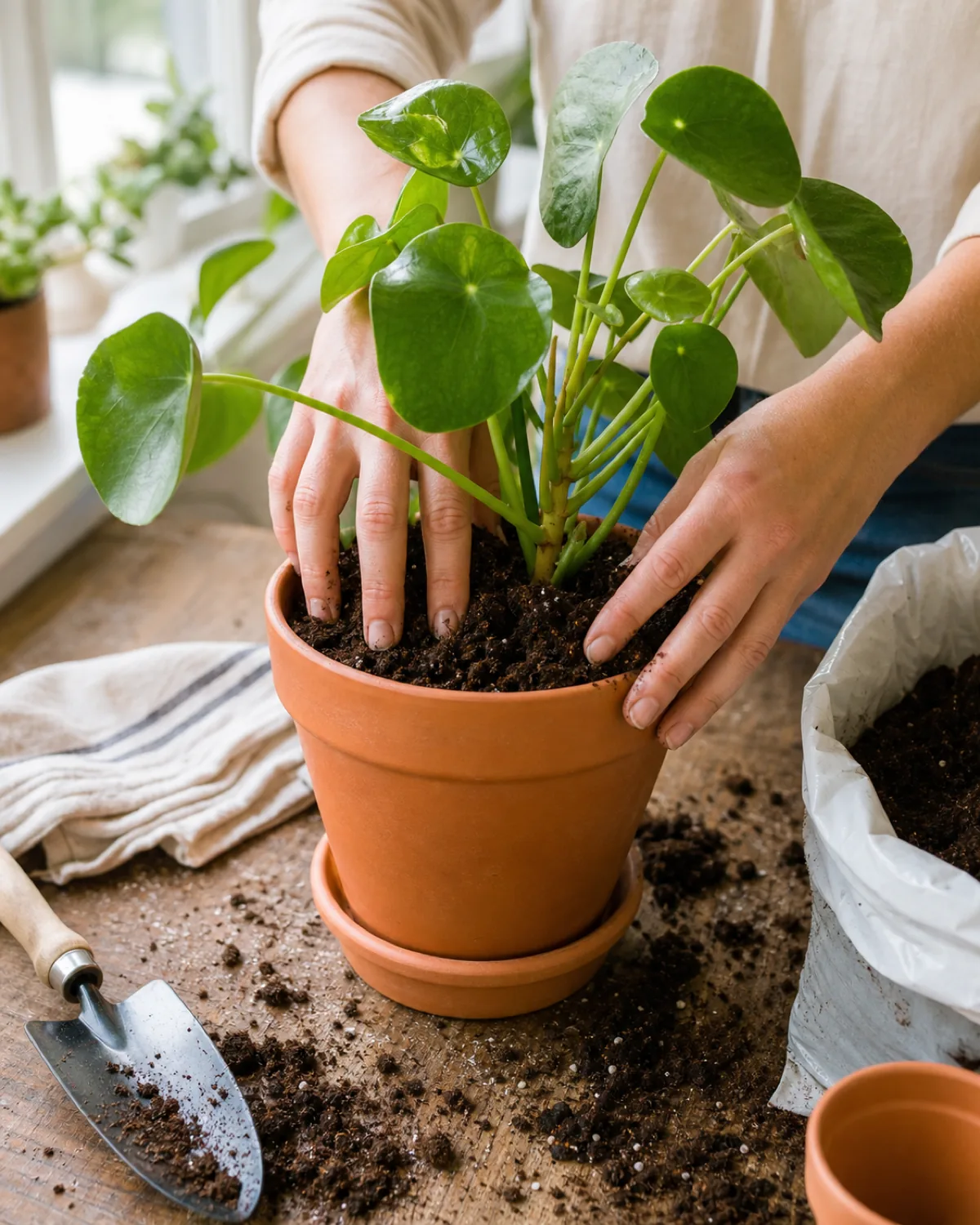
For several weeks after repotting, the roots are re-establishing contact with disturbed soil rather than fueling new leaves, so anything added to the soil during that recovery window mostly goes unused instead of helping.
See the fertilizing houseplants guide for exactly why feeding a freshly repotted plant just adds unused nutrients on top of roots that aren't ready to use them yet.
Waiting four to six weeks before the first feeding gives the roots time to actually put any added nutrients to use.
- Root recovery comes before new growth in the weeks right after repotting.
- Added nutrients mostly go unused during that window.
- Wait 4-6 weeks before the first post-repot feeding.
Repotting shock is normal for a few days — here's how to tell it from a real problem
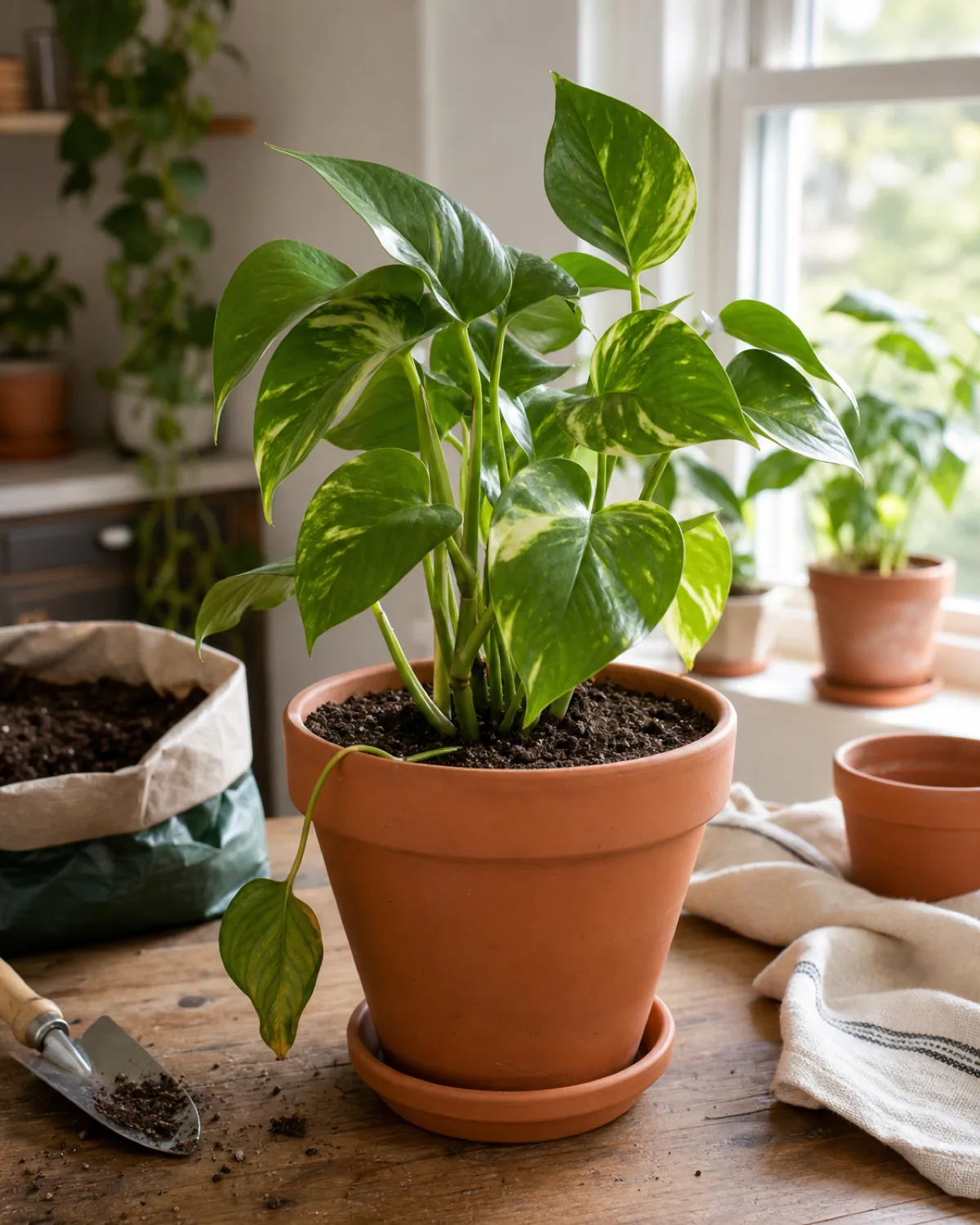
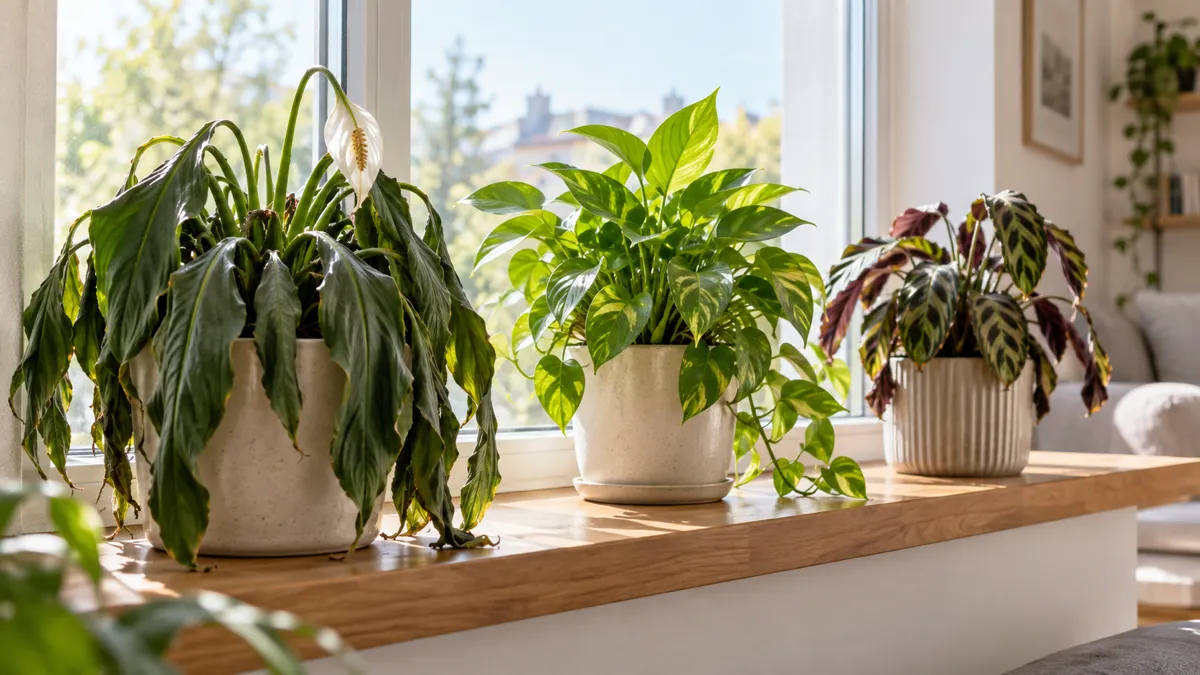
Mild drooping or one yellowing leaf in the first few days after repotting is a normal recovery response to disturbed roots. Ongoing wilting that continues past a week, or multiple leaves dropping at once, points to a deeper issue like root damage from the move or a new pot that's too large.
Give it a few quiet days out of direct hard light before deciding anything is actually wrong.
- A day or two of mild drooping is a normal recovery response.
- Wilting past a week, or multiple leaves dropping, is not normal.
- Keep it out of harsh direct light while it settles in.
Water thoroughly right after repotting to settle the soil around the roots
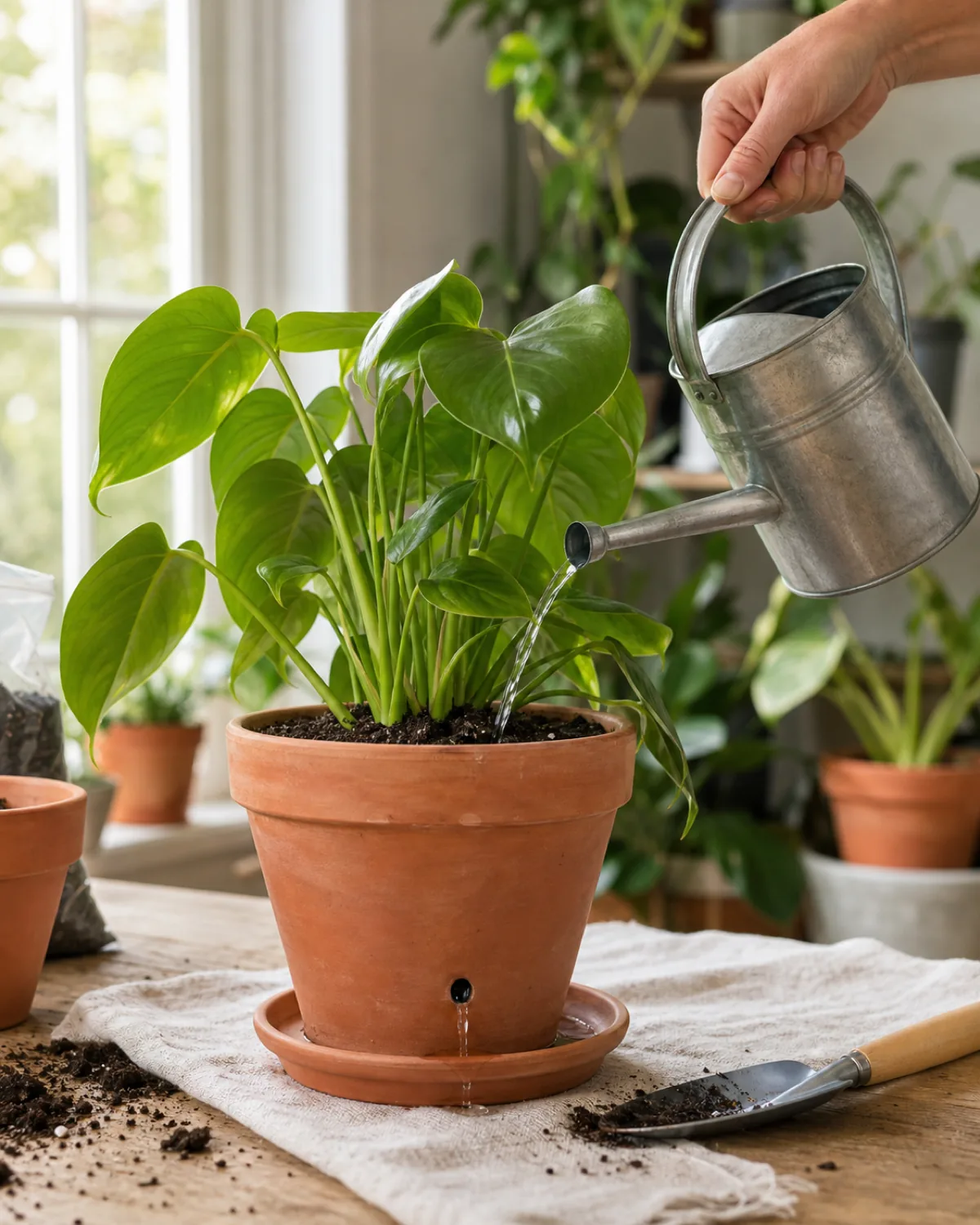
A deep watering right after repotting closes air pockets left around the disturbed roots and helps the plant re-establish contact with the new soil faster than letting it sit dry. See the watering indoor plants guide for how to judge when it actually needs water again after that first soak.
Water until it runs through the drainage hole, then let the pot drain fully before setting it back in place.
- Water deeply right after repotting — this is the one exception to "check before you water."
- It closes air pockets around the disturbed roots.
- Let it drain fully, then judge the next watering by the usual signs, not a fixed count of days.
Some plants actually prefer staying slightly rootbound
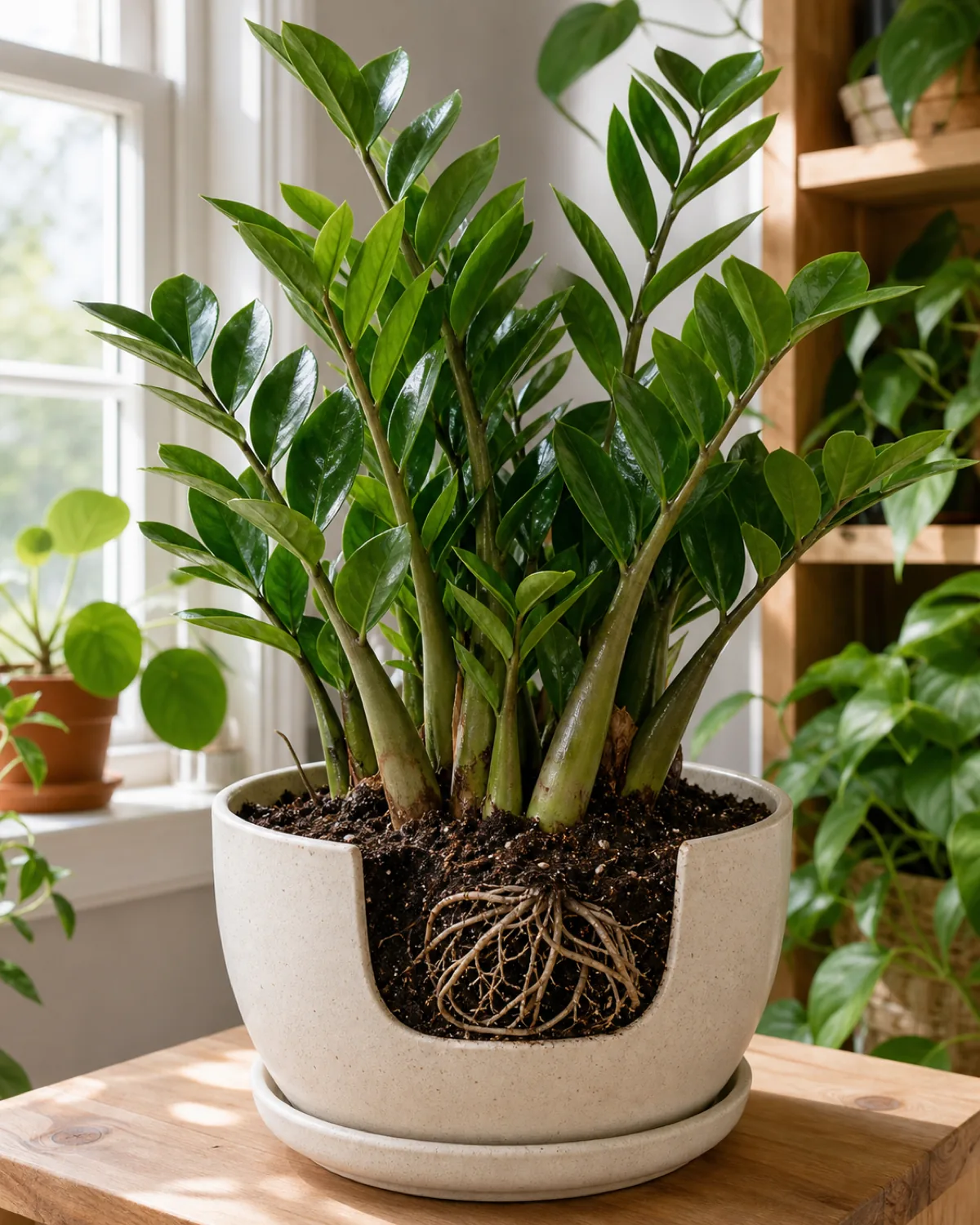
A few species handle, or even benefit from, snug roots and don't need frequent sizing up. The zz plant care guide covers a rhizome-storing species that's often better left slightly snug in its pot than repotted on an aggressive schedule.
For these plants, "it's a little snug" isn't a problem to fix — it's closer to how they naturally prefer to grow.
- Not every plant wants more room the moment roots reach the pot's edge.
- Rhizome and bulb-storing species often prefer staying snug.
- Check the species-specific guide before assuming snug automatically means overdue.
Fast, vigorous growers need repotting far more often than the calendar suggests
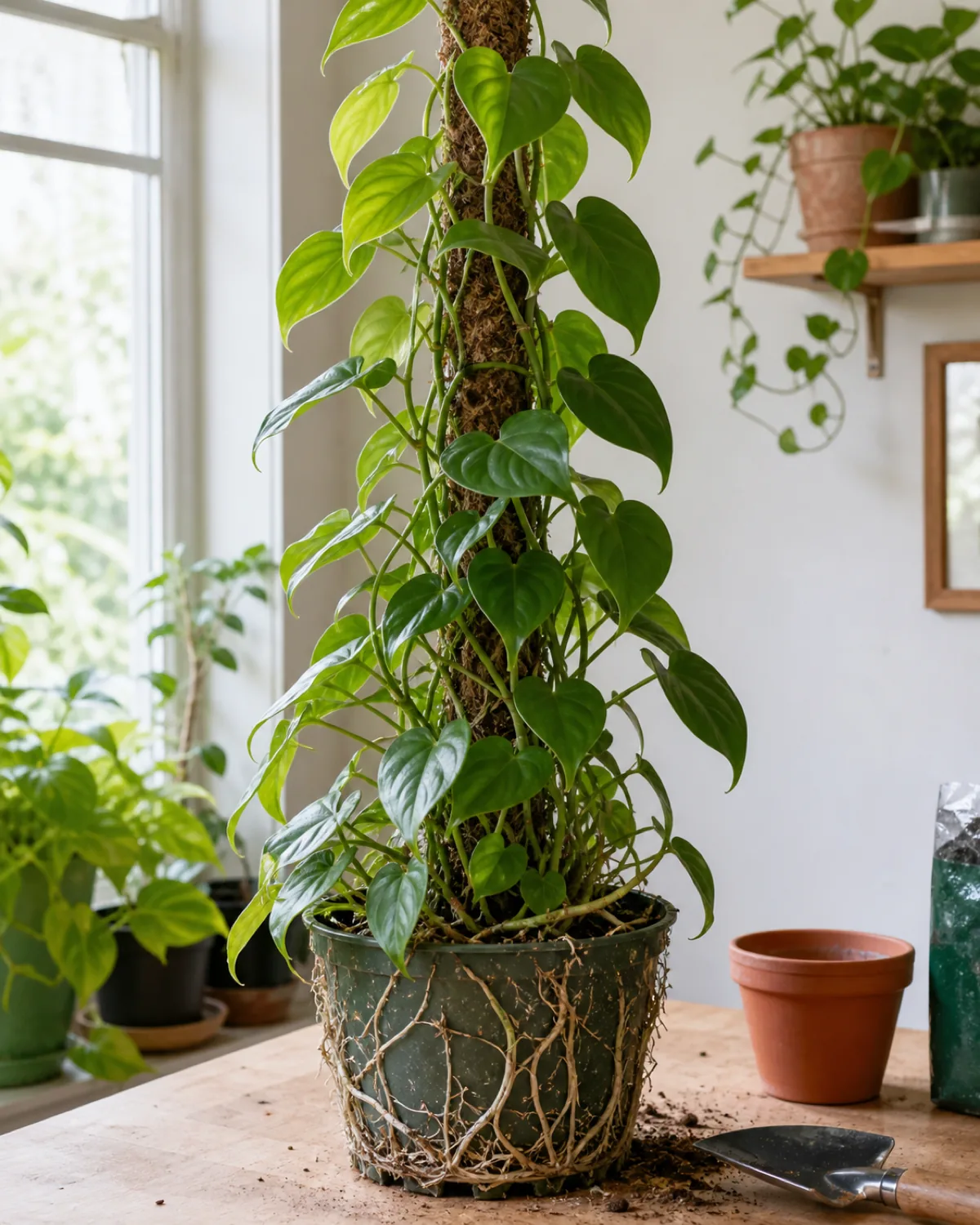
A vining plant that's actively climbing and putting out new leaves every week can fill a pot within a single growing season, well ahead of the usual 12-24 month window. The philodendron care guide covers exactly this kind of vigorous grower that often needs a size-up sooner than the general timeline suggests.
For a plant like this, check the rootbound signs above every few months during active growth rather than waiting for an annual reminder.
- Vigorous vining growth can outpace a year-long timeline.
- Check for rootbound signs every few months, not just once a year, during active growth.
- A fast grower needing a new pot sooner isn't unusual — it's a sign the plant is thriving.
Repotting Indoor Plants: The Quick Reference
- 1Repot based on roots, not the calendarCircling roots, surfacing roots, or water running straight through are the real signals — not a fixed schedule.
- 2Rootbound signs: circling, surfacing, fast drainageRoots visible at the root ball's edge, roots pushing above the soil, water running straight through.
- 3Not every plant needs it yetSteady growth, normal moisture retention, and no circling roots mean it's fine where it is.
- 4Most houseplants: every 12-24 monthsFast growers sooner, slow growers later — growth rate decides, not the calendar.
- 5Go up one pot size, about 2 inches widerA bigger jump holds excess wet soil roots can't use, which invites root rot.
- 6Drainage holes are non-negotiableA plain pot with a hole beats a beautiful pot without one, every time.
- 7Repot in spring or early summerActive growth means faster root recovery than repotting during dormancy.
- 8Loosen, tease apart, same depth, backfill gentlyThe four-step technique that keeps root damage to a minimum during the move.
- 9Skip fertilizer for 4-6 weeks afterThe plant is recovering roots, not growing, and won't use added nutrients yet.
- 10A little droop for a few days is normalWilting past a week, or multiple leaves dropping, points to a deeper problem.
- 11Water deeply right after repottingIt closes air pockets around disturbed roots and helps the plant settle in faster.
- 12Some plants prefer staying snugRhizome and bulb-storing species often do better left slightly rootbound.
- 13Fast growers may need it well before a year is upVigorous vining plants can fill a pot within a single growing season.
kultivy.com

Mara Quinn edits Kultivy, where she shares houseplant care, propagation, beginner-friendly plant picks, and plant-styling ideas for anyone who wants their indoor plants to actually thrive. Every guide is image-led and reviewed for clarity, usefulness, image accuracy, and Pinterest-to-page alignment before it goes live. Visit the About page.