The thermostat clicks on, humidity drops to desert levels overnight, and every south-facing window loses two hours of usable light. Your houseplants notice all of it before you do.
The ones that looked bulletproof in July start dropping leaves by December. The soil that dried out in three days now stays wet for two weeks.
Winter plant care is not about doing more — it is about doing less of some things and adjusting others. This guide covers 15 essentials that will get every plant through to spring.
From light changes and watering adjustments to humidity rescue, dormancy, pest pressure, and the February transition. Jump to what you need.
- 1Why Winter Is Dangerous
- 2How Light Changes
- 3Moving Plants for Light
- 4When Grow Lights Help
- 5Watering Schedule Shift
- 6Cold Water Shock
- 7Humidity vs Furnace
- 8Heating Vent Danger
- 9Cold Window Drafts
- 10Dormancy Signals
- 11Stop Fertilizing
- 12Winter Pest Pressure
- 13Winter Pruning
- 14February Transition
- 15Plants That Thrive
Why Winter Is the Most Dangerous Season for Indoor Plants
Four things change at once when fall turns to winter, and your plants feel every single one of them.
Heating systems slash indoor humidity from a comfortable 45–50% down to 15–20%. Day length drops so dramatically that rooms bright in June become borderline dark by December.
Soil stops drying out because lower temperatures and reduced light slow water uptake through the roots. And most tropical houseplants enter a survival mode that their owners misread as decline.
- Humidity crash: forced-air heating strips moisture from the air within days of the first firing
- Light loss: usable daylight hours drop by 3–5 hours per day depending on your latitude
- Slow evaporation: soil stays wet 2–3 times longer than in summer because plants drink less
- Dormancy signals: reduced growth, lower leaf yellowing, and weeks without new growth are normal — not emergencies
The biggest winter plant care mistake is treating these changes as problems to fix aggressively. Pouring more water because the plant looks droopy. Cranking up the heat to compensate for cold. Moving plants into direct sun because the room seems dim. Each of these reactions does more damage than the winter conditions themselves.
How Light Changes Indoors from October to March
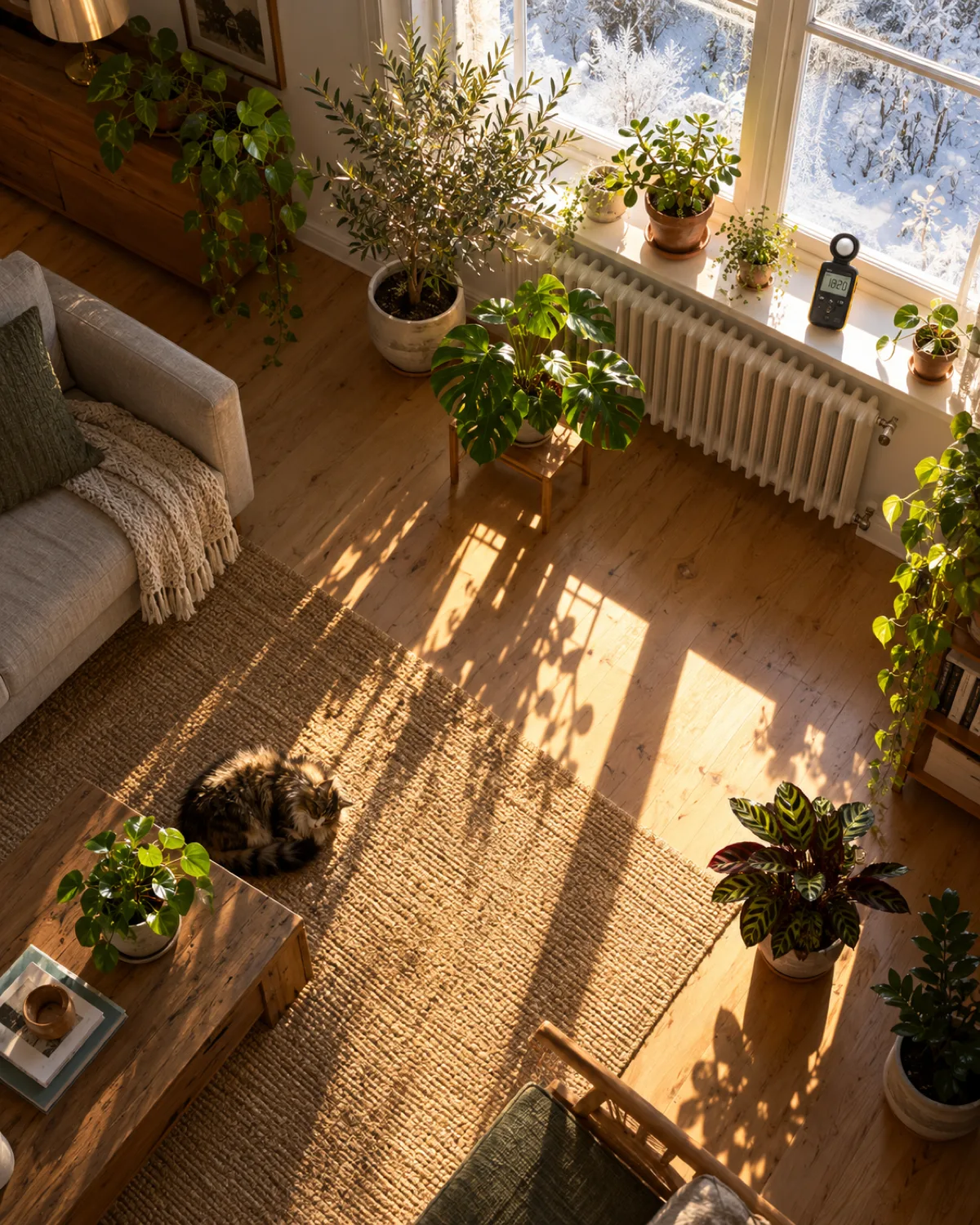
The sun sits lower in the sky during winter. That single fact reshapes the light inside your home more dramatically than any curtain or lamp placement.
In summer, a south-facing window might deliver 8–10 hours of usable light across a wide swath of the room. By December, that same window delivers 4–5 hours, and the light cone narrows so sharply that a plant sitting three feet from the glass receives less than half the light it got in July.
- Sun angle: drops 30–40 degrees between the summer solstice and winter solstice in most temperate latitudes
- Usable hours: a plant that got 10 hours of indirect light in June may get 5 hours in December
- North windows: become nearly dark — below 50 foot-candles for most of the day
- Inverse-square law: moving a plant just 2 feet farther from a window halves its light intake
- South and west windows: become the only reliable natural light sources for most homes
If you have a lux meter or a light meter app on your phone, take a reading at your plant's current position. Anything below 100 foot-candles is survival territory for most tropical species. That number was probably 300–400 in the same spot six months ago.
Moving Plants to Chase Winter Light Without Shocking Them
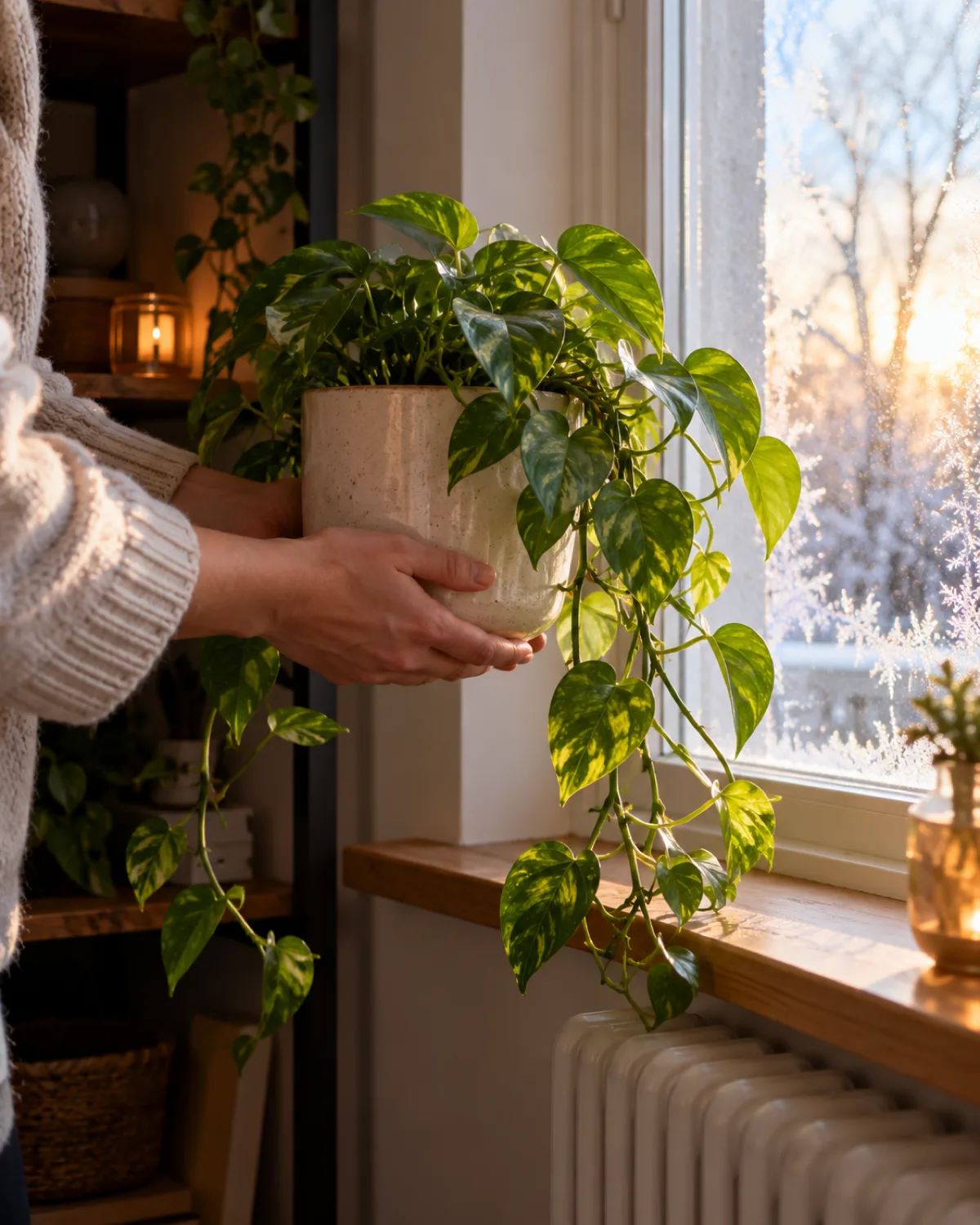
The instinct to move all your plants to the brightest window in October is correct. The instinct to do it in one afternoon is not.
A sudden jump from low light to bright direct winter sun can cause leaf burn even in species that tolerate full sun in summer. The plant's photosynthetic machinery has downregulated to match its current light level, and it needs time to ramp back up.
- Gradual moves: shift the plant 1–2 feet closer to the window every two days over a 5–7 day period
- Cluster strategy: group plants near south or west windows rather than scattering them across the room
- Rotate weekly: a quarter turn every week ensures all sides of the plant receive even light exposure
- Watch for burn: pale patches or scorched leaf edges within the first week mean the transition was too fast
The goal is not to match summer light levels — that is impossible without grow lights. The goal is to maximize whatever natural light is available by positioning plants where it actually falls.
Four common winter dilemmas and the stronger path for most indoor plant collections.
When Grow Lights Become Non-Negotiable
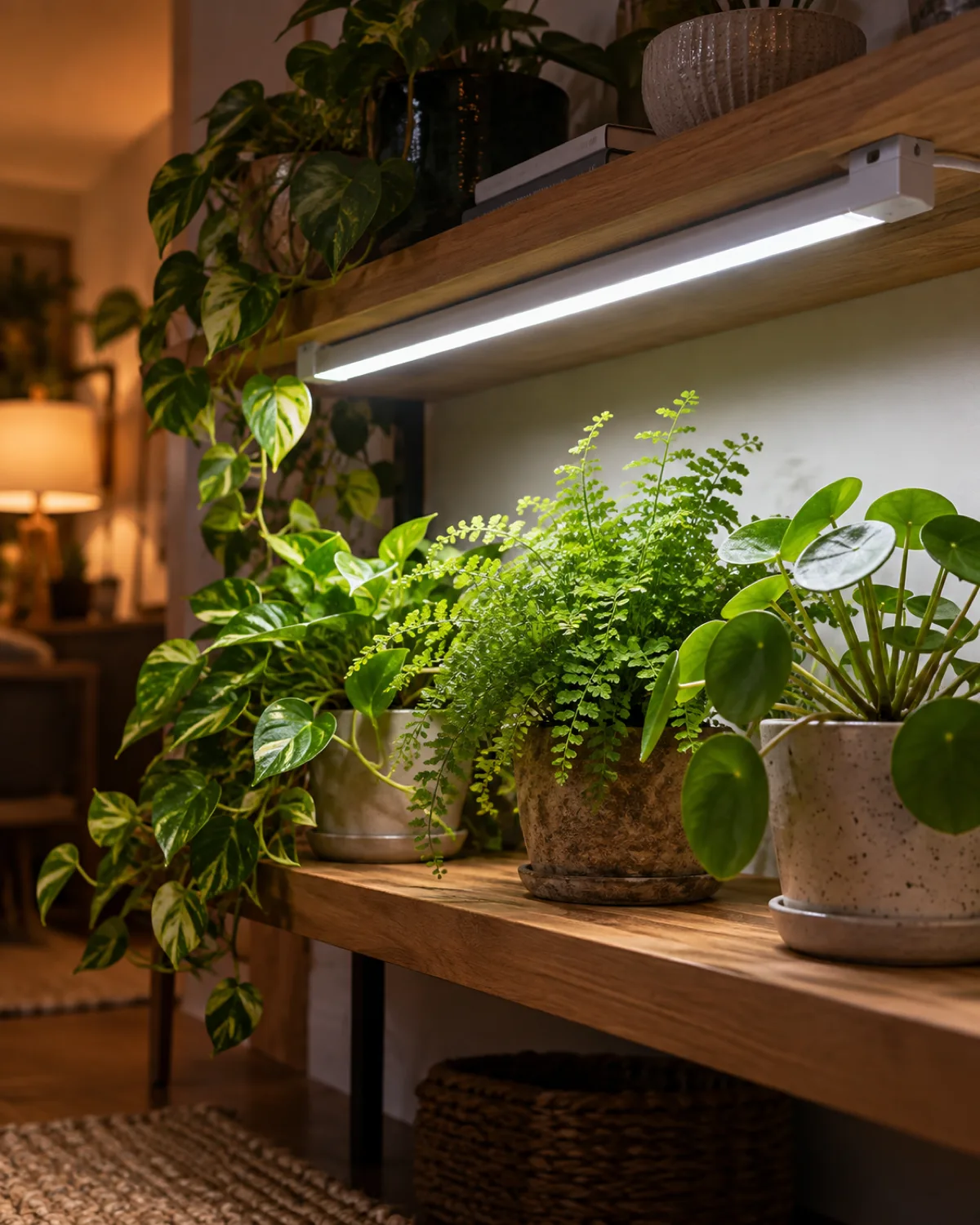
Some rooms simply cannot provide enough natural light to sustain plants from November through February. Grow lights are not a luxury for these situations — they are the difference between a living plant and a slowly declining one.
If any of these describe your situation, a grow light is not optional:
- No south-facing window: north-facing rooms in northern latitudes drop below 50 foot-candles by midwinter
- Basement or interior rooms: zero natural light means zero photosynthesis without supplementation
- Large collections: you have more plants than windowsill space, and some are stuck in dark corners
- Variegated or high-light species: variegated plants have less chlorophyll and need more light to compensate
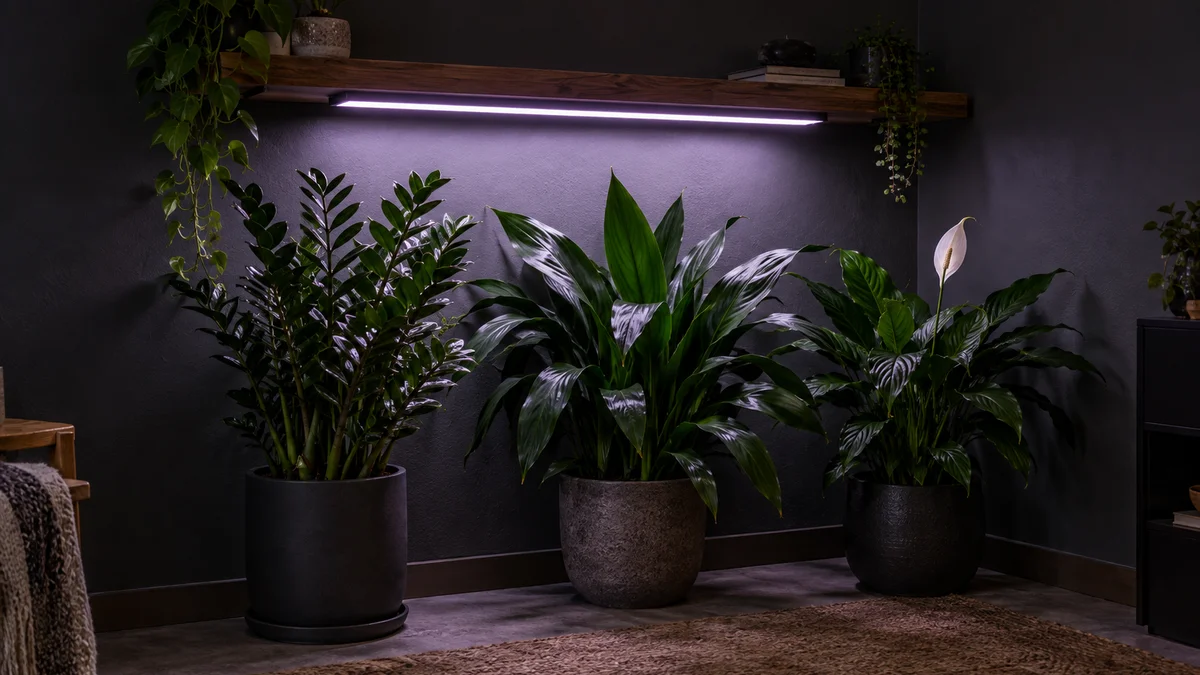
A simple LED grow light bar mounted under a shelf or clipped to a pot edge is enough for most houseplants. Set it on a timer for 12–14 hours per day to compensate for the shortened natural photoperiod. The timer matters — inconsistent light schedules stress plants more than consistently low light.
Full-spectrum LED lights in the 4000–6500K range work well for foliage plants. Flowering plants like African violets or orchids benefit from lights with a higher proportion of red spectrum. Most consumer grow lights marketed for houseplants already include both.
Why Your Watering Schedule Breaks Every November
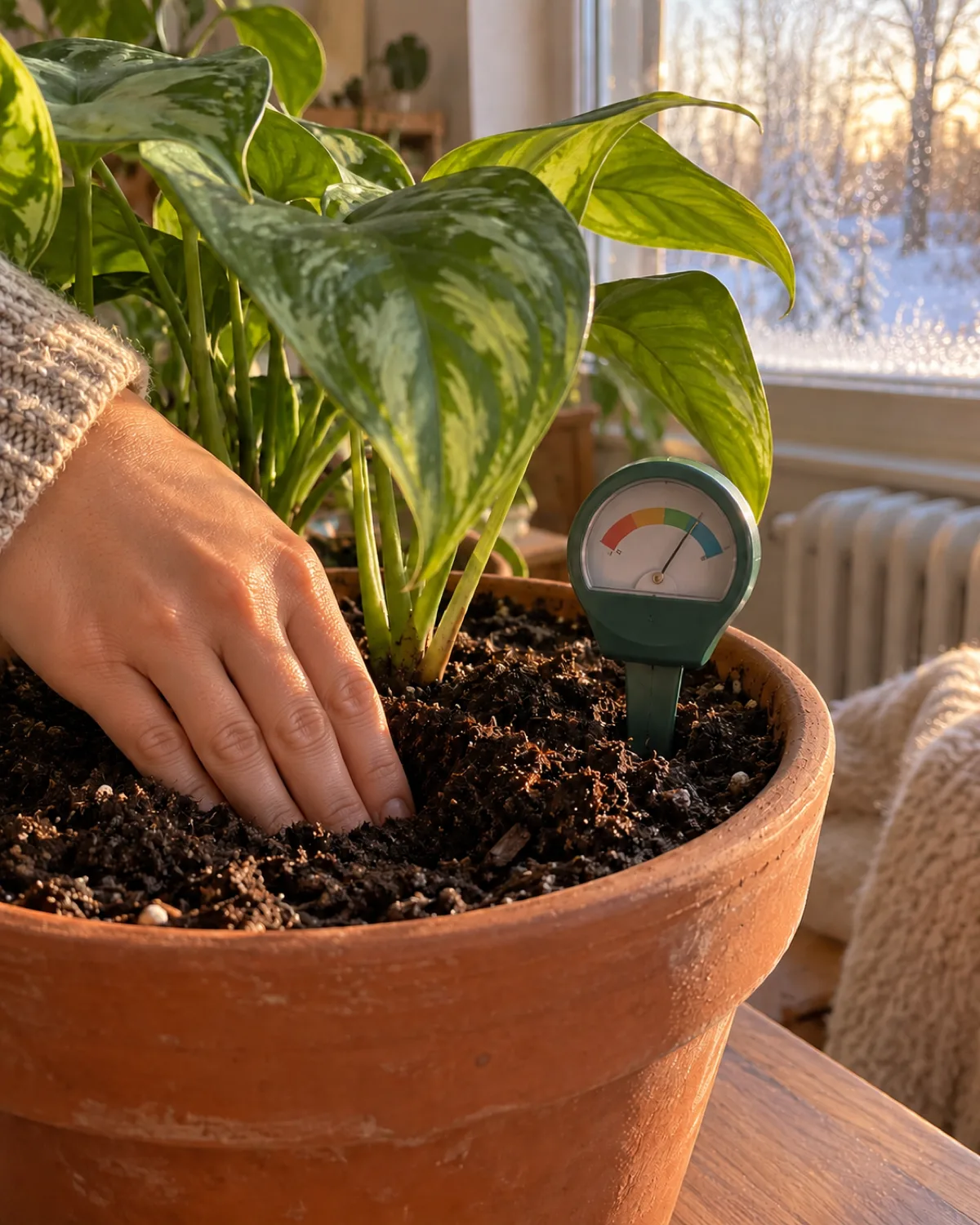
The same pour that worked perfectly in August now sits in the pot for twelve days because evaporation rate drops roughly 60% with shorter days and cooler indoor temperatures.
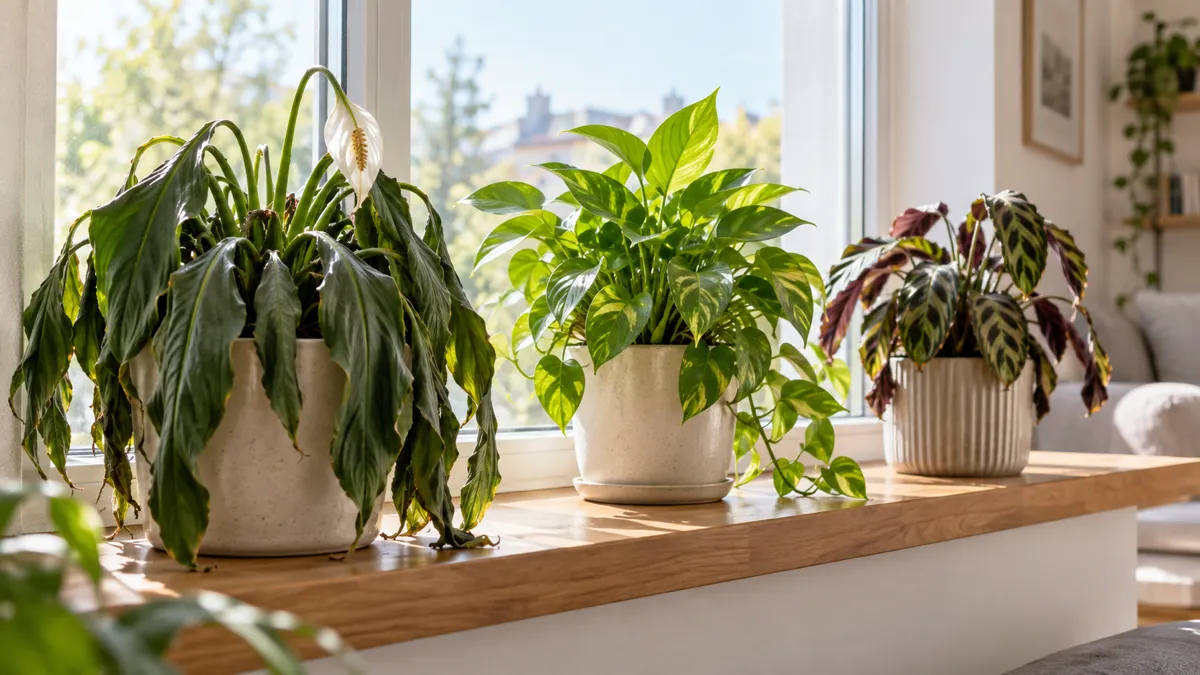
This is the single biggest winter plant killer. Not cold. Not dry air. Overwatering in conditions where the soil cannot dry out fast enough.
Plants drink less in winter because they are photosynthesizing less. Lower light means lower metabolic activity, which means the roots pull less water from the soil. Meanwhile, cooler temperatures slow evaporation from the soil surface. The result is a pot that stays wet long enough for root rot to establish.
- Recalibrate the finger test: push your finger deeper — 2 inches instead of 1 — before deciding to water
- Pot-weight comparison: lift the pot right after watering and again a week later; water only when the pot feels noticeably lighter
- Wooden chopstick method: insert a plain wooden chopstick to the bottom of the pot; pull it out after 10 minutes — if it comes out dark and damp, the soil is still wet enough
- Abandon fixed schedules: "water every Sunday" works in summer when conditions are predictable; it fails in winter when evaporation rates fluctuate with heating cycles and weather
If you are unsure whether to water, wait another three days. Underwatering stress is almost always recoverable. Root rot from overwatering frequently is not.
Cold Tap Water Shock and Other Winter Watering Traps
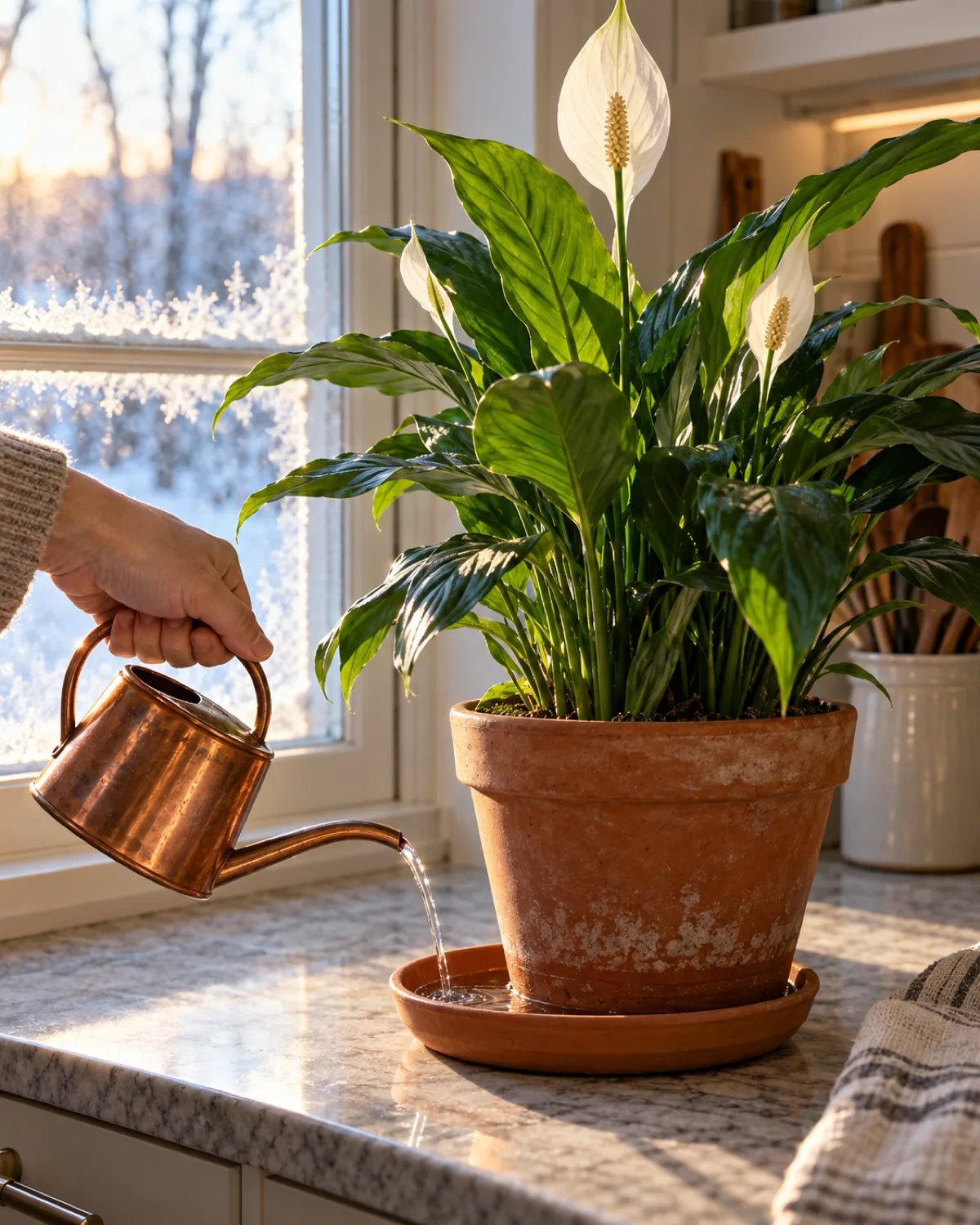
Tap water in January runs 15–20°F colder than it does in July. Pouring that water directly onto the roots of a tropical plant is the equivalent of dumping ice water on someone who was just sleeping under a warm blanket.
Cold water shocks tropical roots into temporary shutdown. The root hairs — the tiny absorptive tips that do the real work of water uptake — contract and stop functioning. The plant wilts not because it lacks water but because its roots temporarily cannot absorb the water you just gave it.
- Room temperature first: fill your watering can and let it sit for at least 2–4 hours before using it, or overnight
- Saucer sitting epidemic: in summer a saucer dries in hours; in winter it can sit full for days — drain saucers within 30 minutes after watering
- Bottom watering for sensitive species: plants prone to crown rot (African violets, cyclamen, string of pearls) benefit from absorbing water upward through drainage holes rather than having water poured over their crowns
- Volume adjustment: for plants that hate fully dry soil (ferns, calathea), reduce the volume per watering rather than stretching the interval
The crown-rot risk rises sharply in winter because lower airflow in heated rooms means wet foliage stays wet far longer. Overhead watering that was harmless in a breezy summer room becomes dangerous in a sealed winter room with stagnant air.
Your Furnace Is a Dehumidifier — How to Fight Back
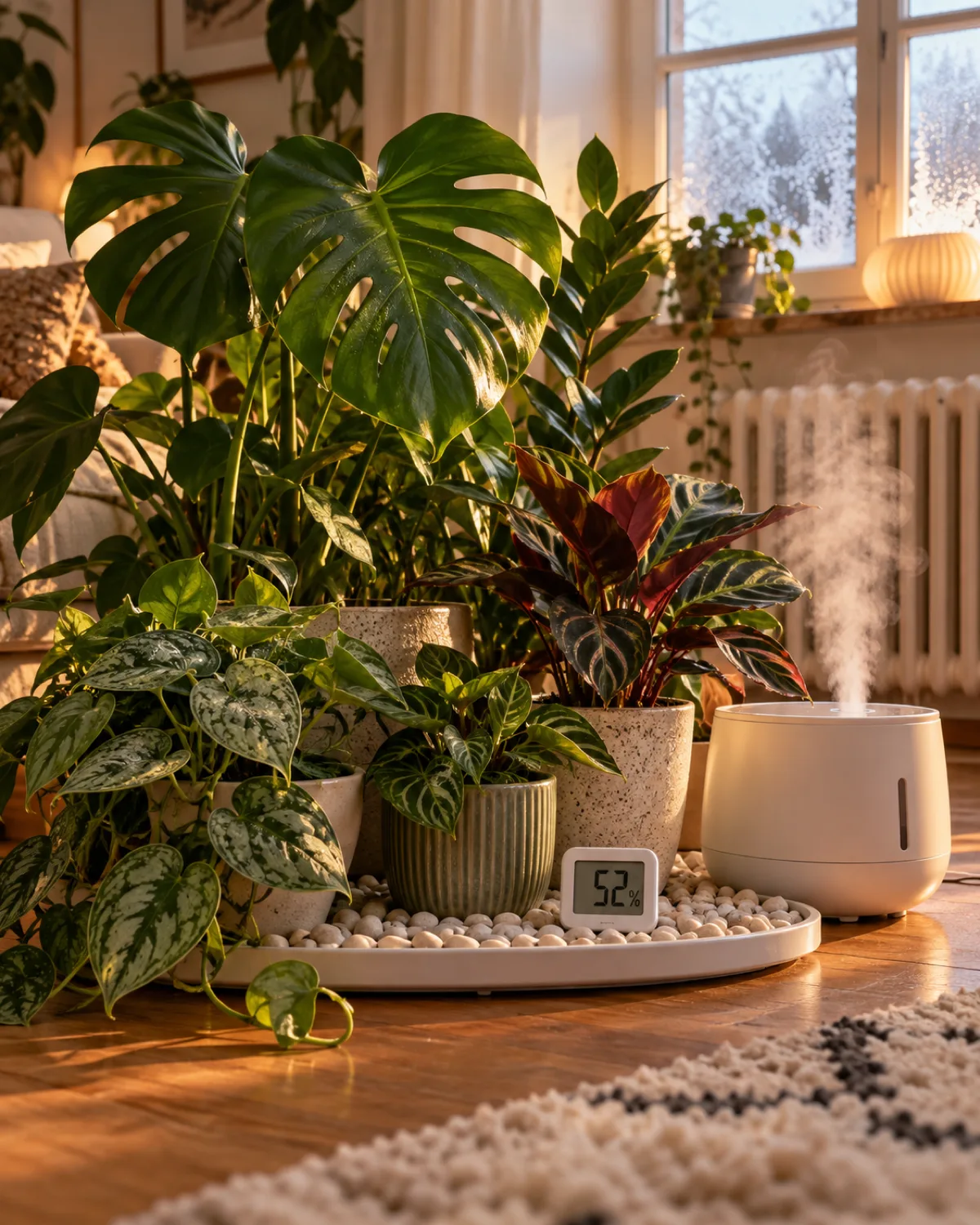
Forced-air heating strips indoor relative humidity from a comfortable 45% down to 15–20% within weeks of the first firing. That is drier than the Sahara Desert. Your tropical houseplants evolved in environments where humidity rarely drops below 60%.
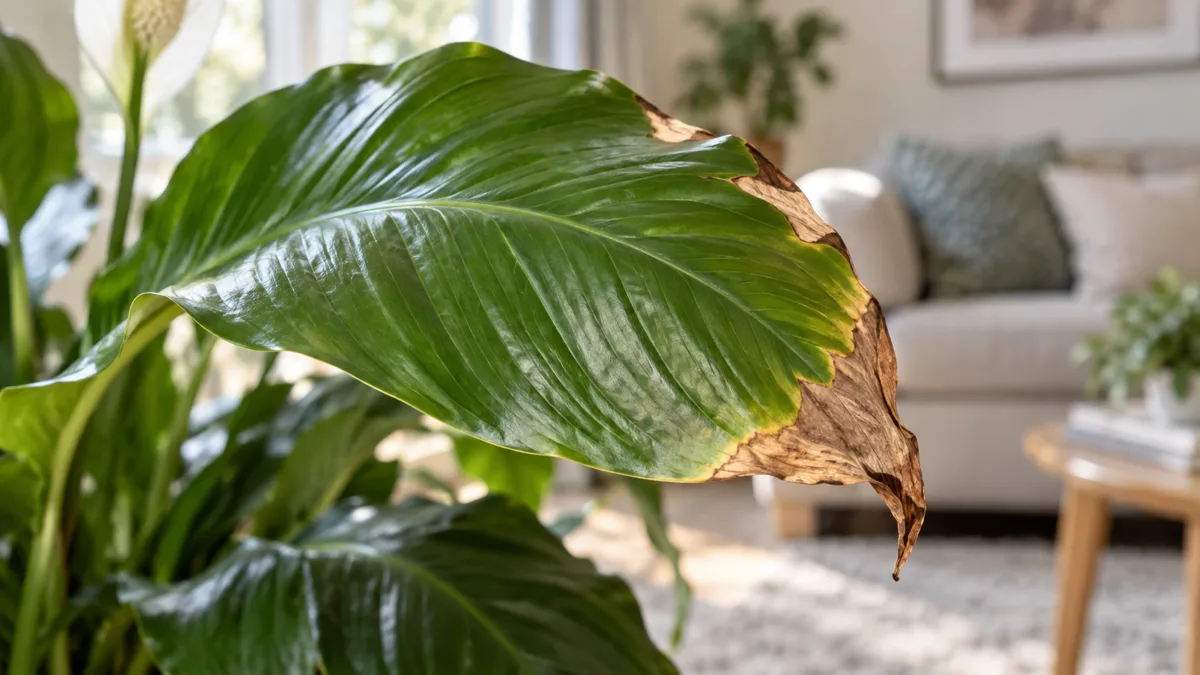
The damage shows up as brown leaf tips, curling leaf edges, increased leaf drop, and a general crispy look that no amount of watering can fix — because the problem is in the air, not the soil.
- Hygrometer placement: measure humidity at plant level, not across the room — there can be a 10–15% gap between what the hygrometer reads at room center and what the air is like at your plant shelf
- Grouping plants: clustering plants together creates a shared transpiration microclimate that raises local humidity by 5–10%
- Pebble trays: a tray of wet pebbles under the pot adds another 5–10% of humidity directly at the plant — modest but meaningful when combined with grouping
- Humidifier sizing: a small tabletop humidifier helps one shelf; a room with 20+ plants needs a console-size unit rated for the room's square footage
- Humidifier placement: point it near the plants, not at the wall — walls do not need humidity, your ferns do
Misting is the most popular humidity solution and also the least effective one. A fine mist evaporates within minutes and raises humidity for seconds. Worse, in winter's low-airflow conditions, water droplets sit on leaves long enough to create the conditions for fungal leaf spot. If you are going to mist at all, do it in the morning so leaves dry before nightfall.
Nail these three fundamentals and you will get through winter without losing a single plant, regardless of what else you do or skip.
Heating Vents, Radiators, and Hot Air — The Invisible Killer
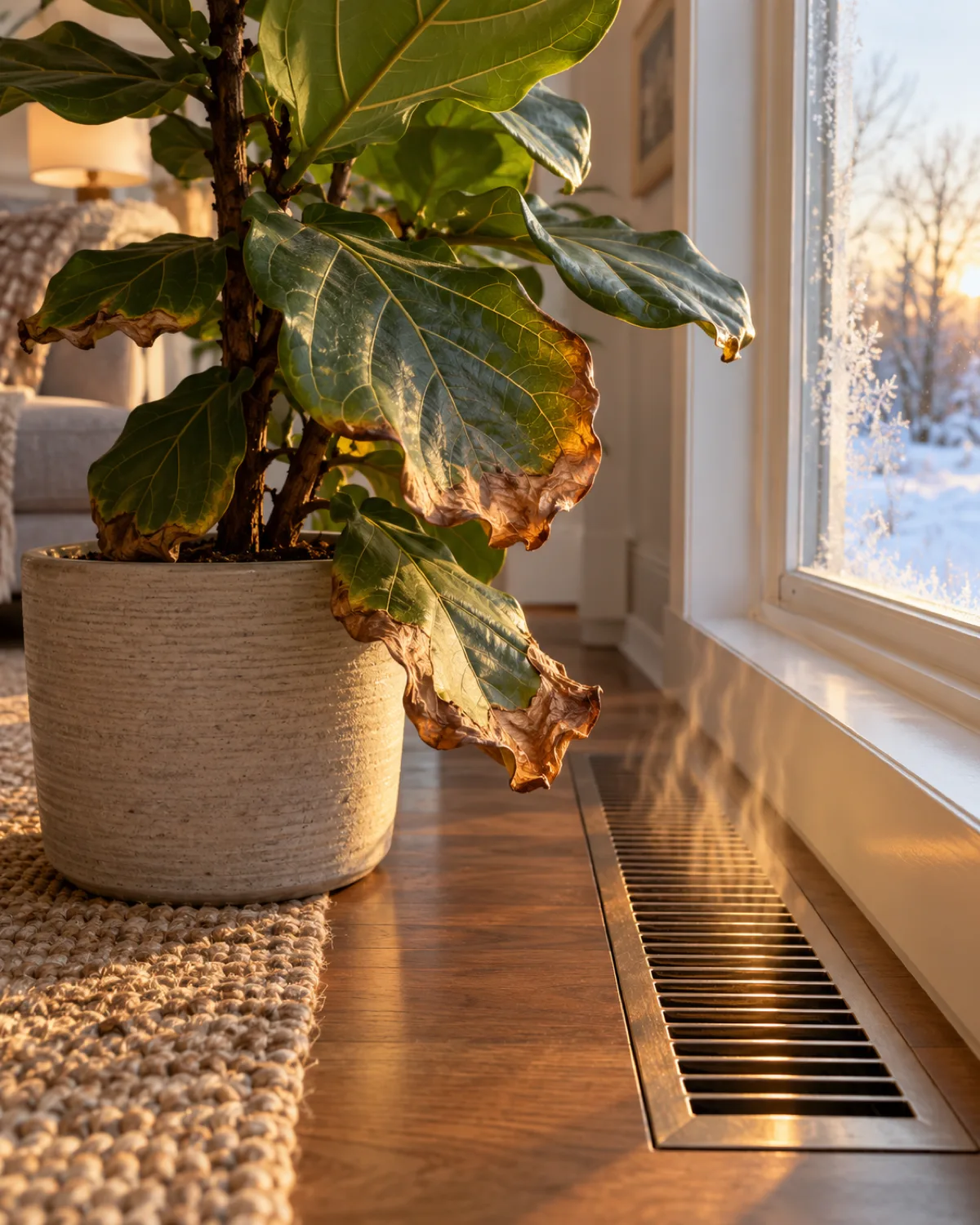
Direct hot air from a heating vent desiccates plant leaves faster than any other winter threat. The damage happens so quickly — crispy leaf edges within 48 hours — that most people blame underwatering and respond by adding more water, which then sits in the pot and rots the roots. The plant was dehydrated from above and drowned from below simultaneously.
The problem is not the room temperature itself. Most houseplants are fine between 65–75°F, which is where most people keep their thermostats. The problem is the blast of hot, dry air hitting the leaves directly.
- Floor vents: the most dangerous — hot air rises directly through the foliage of any plant placed on or near the vent
- Baseboard radiators: plants on shelves directly above radiators cook from below as heat rises
- Wall-mounted heaters: create a hot zone that extends 2–3 feet outward
- Minimum safe distance: 3 feet from any heat source for most species; further for sensitive plants like ferns, calathea, and maidenhair fern
If you cannot move a plant away from a heat source, a magnetic vent deflector can redirect the airflow away from the foliage. This is a compromise, not a solution — the air in that zone is still drier and warmer than the rest of the room.
Cold Window Drafts and the Overnight Temperature Drop
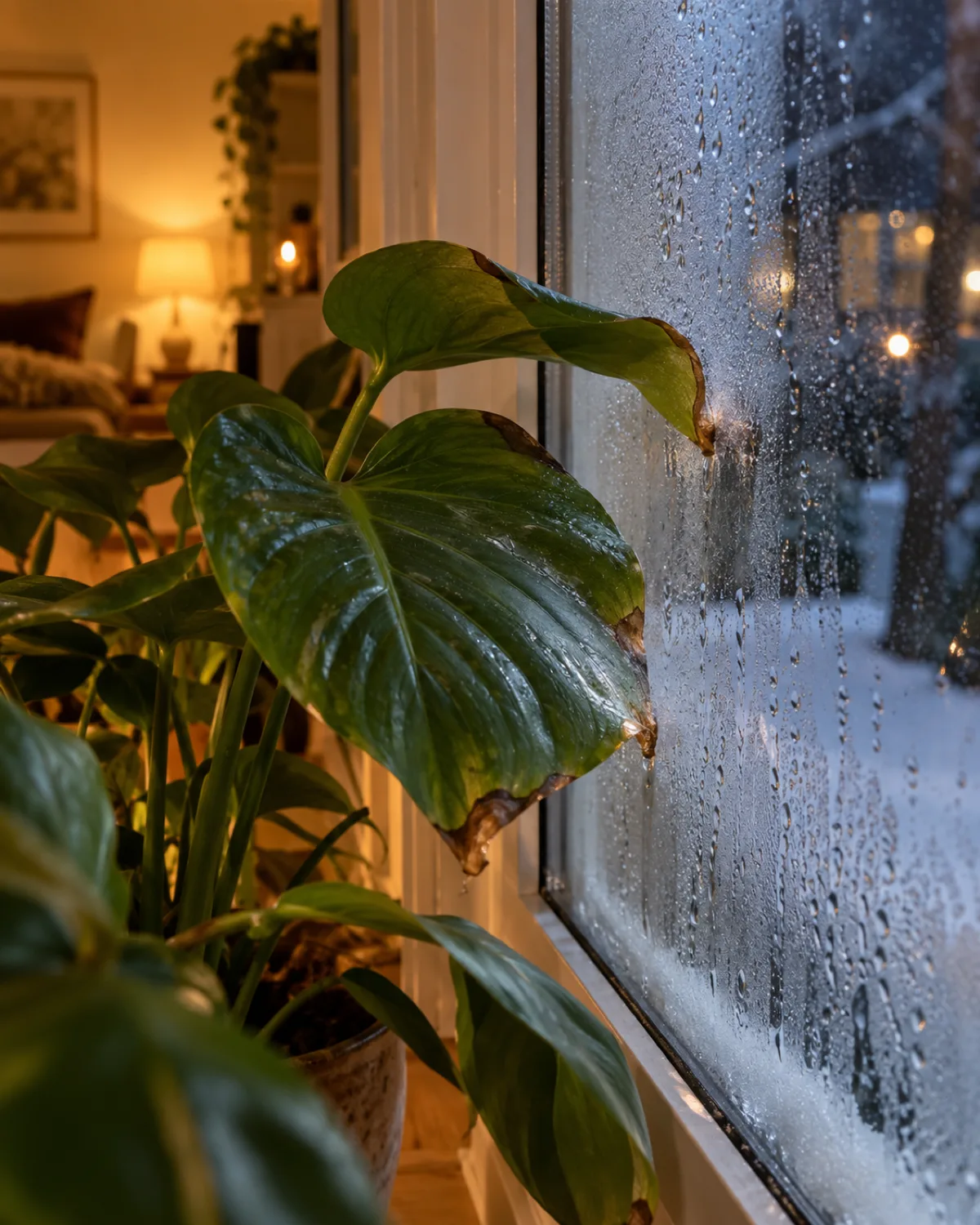
The same window that provides your plant's best winter light becomes its biggest temperature threat after sunset. Single-pane glass radiates cold so effectively that the air within an inch of the glass can drop to 40°F even when the room thermostat reads 70°F.
Leaves that touch cold glass overnight develop brown translucent spots that look exactly like chemical burn. The cell walls rupture as intracellular water crystallizes at near-freezing temperatures, and the damage is irreversible.
- Contact damage: leaves physically touching cold glass develop frost-like injury — pull plants 6 inches from the glass at sunset
- Draft infiltration: older windows leak cold air around the frame, creating a cold zone that extends 12–18 inches into the room
- Thermal curtains: effective at blocking cold radiation but also block the morning light the plant needs — open them at sunrise, close them at sunset
- Double-pane windows: insulate much better and reduce the cold radiation zone to 2–3 inches — if you have them, your plants can sit closer to the glass
The daily rhythm matters: push plants close to the glass in the morning to catch the light, then pull them back 6 inches in the late afternoon before the glass cools. This sounds fussy but takes five seconds and prevents the most common winter window injury.
Dormancy Is Not Death — Reading Your Plant's Winter Slowdown
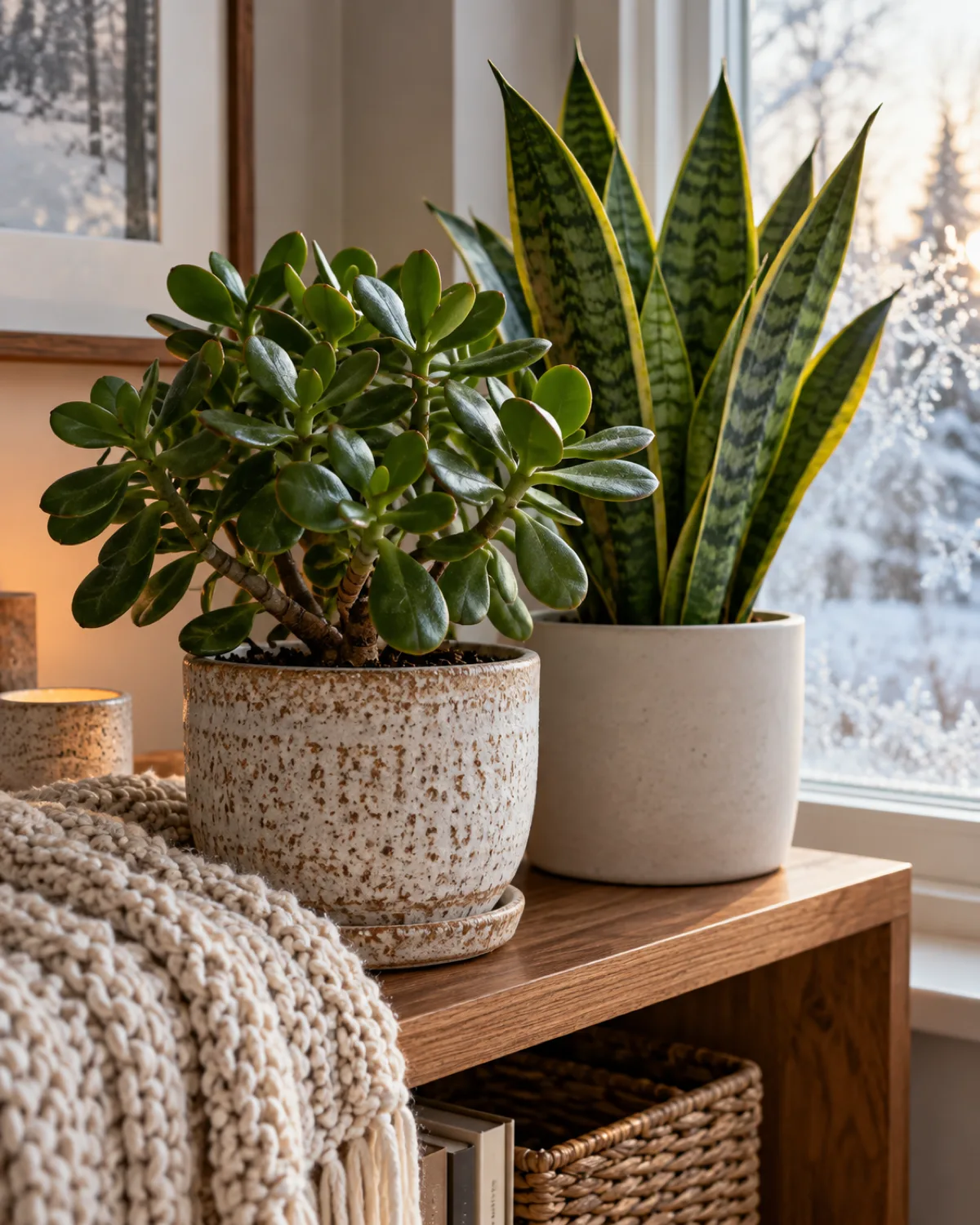
Most tropical houseplants reduce their growth rate by 60–80% during winter. This is not a problem. This is what they are supposed to do.
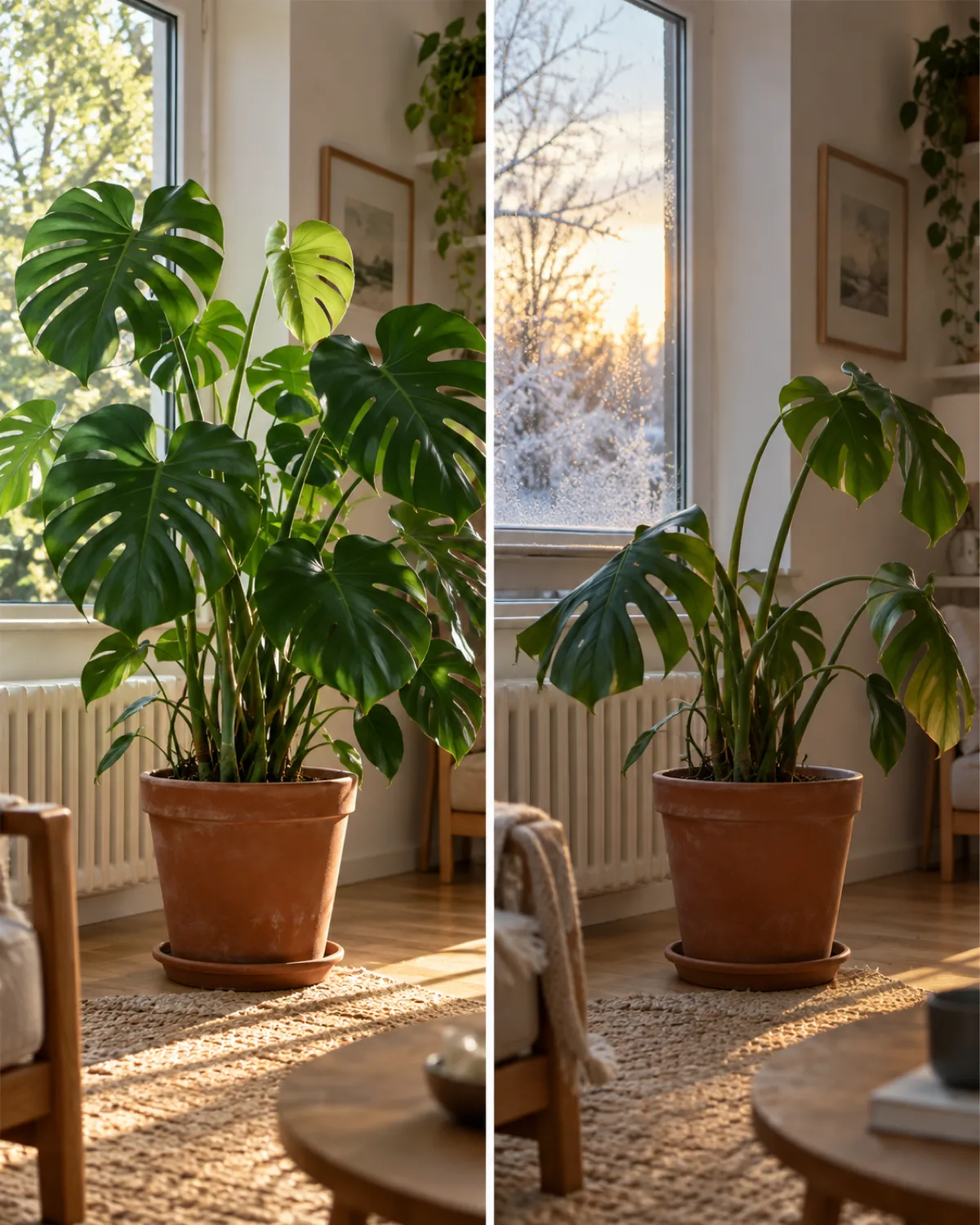
No new leaves for eight to twelve weeks is normal. A monstera that pushed a new leaf every three weeks in summer may go three months without one in winter. A pothos that grew six inches a month in July might add nothing visible between November and February.
The slowdown happens because the plant is receiving less light, which means less photosynthesis, which means less energy available for new growth. The plant is conserving resources, not dying.
- Normal dormancy signs: growth stops, no new leaves unfurl, stem elongation pauses, existing leaves maintain their color
- Yellow lower leaves: one or two older leaves turning yellow during winter is resource reallocation — the plant pulls nutrients from expendable older leaves to maintain the newer ones
- Succulent and cactus rest: these plants need a cool, dry winter rest period to trigger spring blooms — water sparingly and keep them in a cooler room (50–60°F) if possible
- Not dormancy — actual distress: rapid leaf drop (more than 2–3 per week), mushy stems, widespread yellowing across all leaf levels, foul smell from the soil — these are emergencies, not rest
The worst thing you can do for a dormant plant is try to "wake it up" by increasing water, fertilizer, or heat. All three of those interventions push resources the plant cannot use, and the unused resources become toxic — waterlogged soil, salt-burned roots, heat-dried foliage.
Stop Fertilizing — Why Winter Feeding Does More Harm Than Good
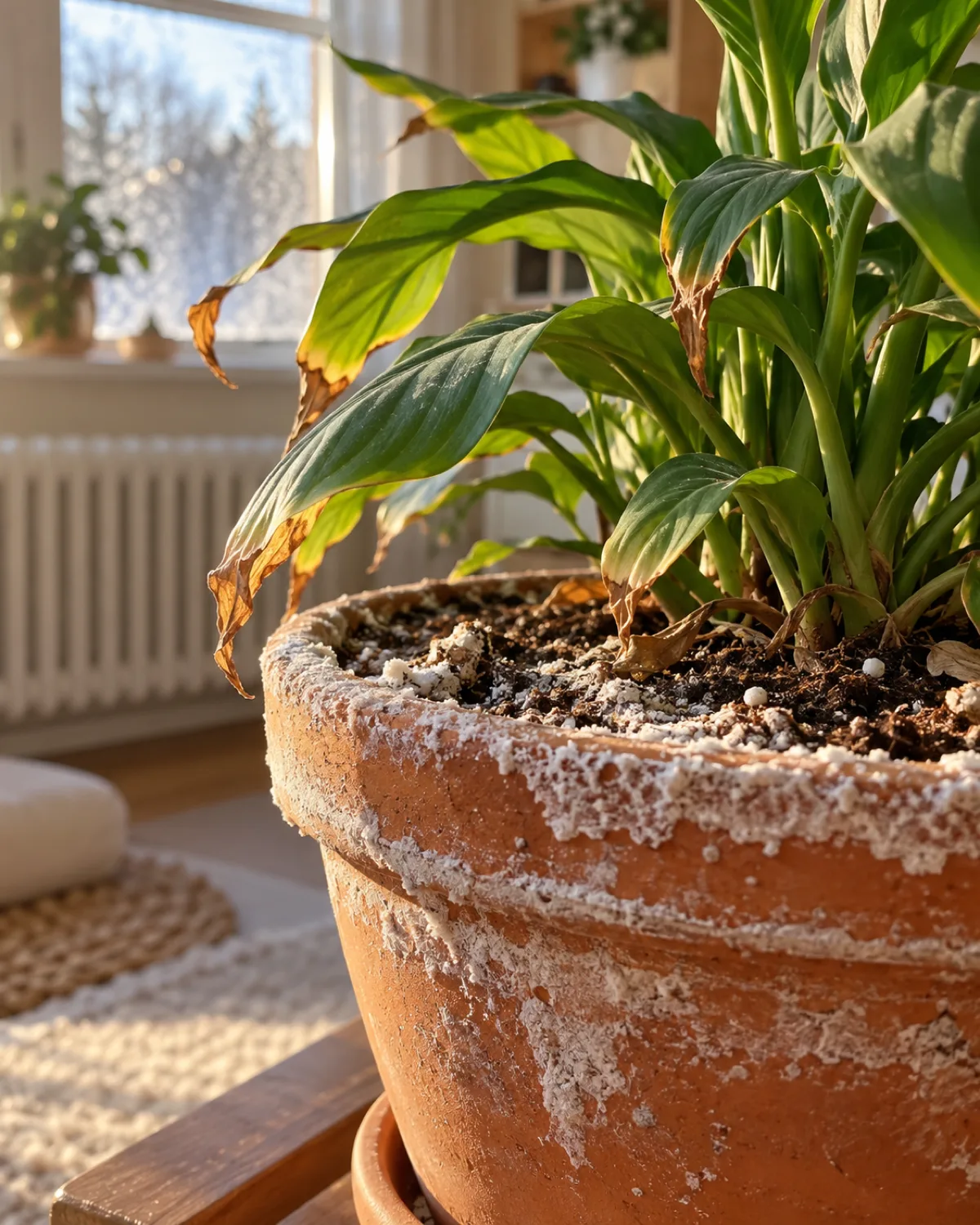
A dormant root system cannot absorb nutrients efficiently. The minerals in fertilizer — nitrogen, phosphorus, potassium, and trace elements — dissolve in the soil water and sit there because the roots are not pulling them up at their summer rate.
Over successive winter waterings, these unused salts concentrate in the soil. They draw moisture away from the root tips through osmosis (salt pulls water), effectively burning the roots from the outside. The visible result is brown, crispy leaf tips that look identical to underwatering damage.
- No-feed window: stop all fertilizer between November and February for most tropical houseplants
- Flush before winter: in late October, water each pot thoroughly until water runs freely from the drainage holes to wash out accumulated summer salts before the dormant period begins
- Salt crust indicator: white crusty deposits on the pot rim, soil surface, or drainage holes mean salt buildup is already advanced — flush immediately with plain water
- Resume timing: wait until you see the first new growth in late February or early March, then resume at half the summer concentration
The exception is plants that actively bloom during winter. Christmas cactus, cyclamen, and some orchids are in their peak growing and flowering season from November through January. These plants can receive diluted fertilizer (quarter strength) while they are actively blooming. Stop once the flowers fade.
Pest Pressure Rises When Defenses Drop
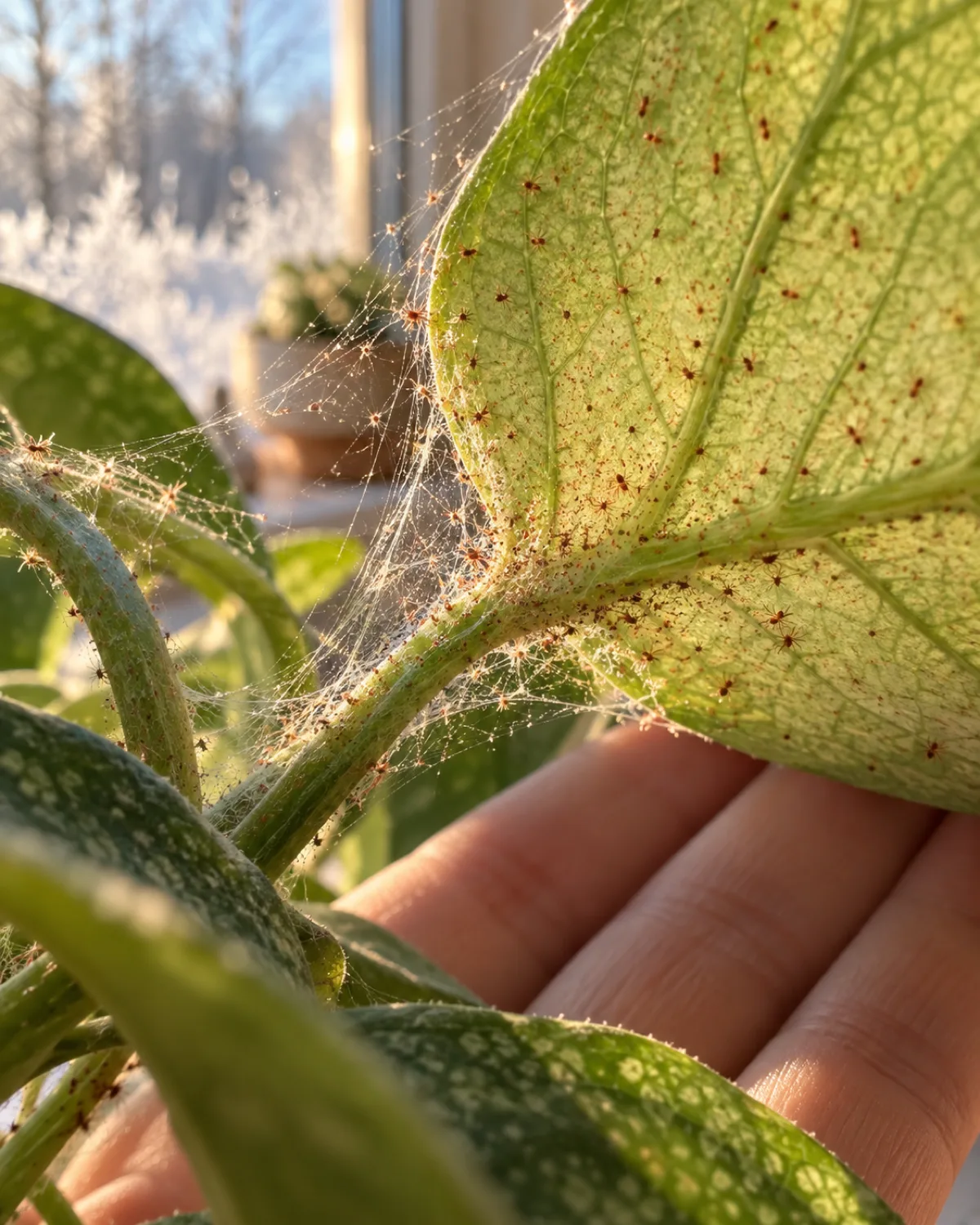
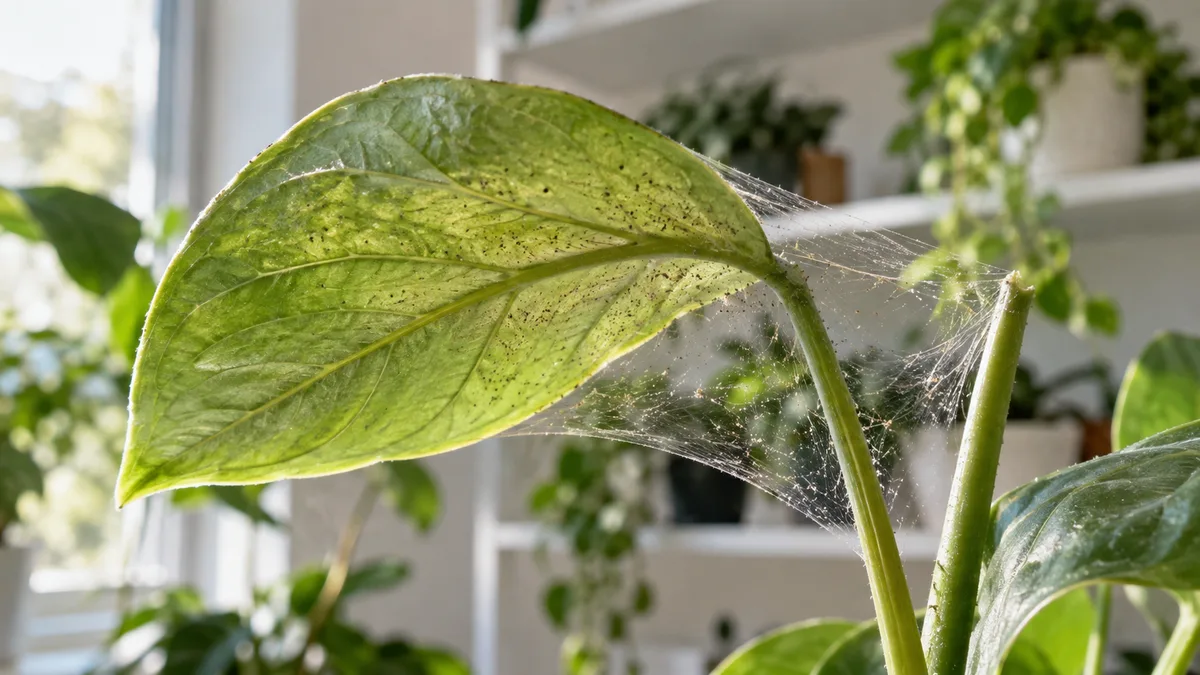
Spider mites thrive in exactly the conditions your heating system creates: warm, dry air with low humidity and minimal air circulation. A plant that was mite-free all summer can develop a visible infestation within two weeks of the furnace starting.
The mites are not suddenly appearing. They were present at low numbers all along, kept in check by higher humidity and the plant's own defenses. Winter stress weakens the plant and creates the dry conditions that allow mite populations to explode.
- Spider mites: the number one winter pest — fine webbing between leaves and stems, stippled pale dots on leaf surfaces, thrives in dry air below 40% humidity
- Fungus gnats: the opposite problem — they exploit perpetually moist winter soil; tiny black flies hovering around the soil surface indicate larvae feeding on root hairs below
- Scale and mealybugs: spread faster on stressed plants; check the undersides of leaves and along stems monthly
- Thrips: tiny elongated insects that cause silvery streaking on leaves; often arrive on new plant purchases brought indoors for winter
Monthly inspection is the single most effective pest management strategy in winter. Turn each plant over, examine the leaf undersides, check where leaves meet stems, and look at the soil surface. Catching an infestation at 10 insects is manageable. Catching it at 10,000 requires throwing the plant away.
Neem oil spray works as both a treatment and a preventive. Apply every 2–3 weeks through winter, coating both leaf surfaces thoroughly. Mix at half strength compared to summer applications — stressed plants are more sensitive to oil-based sprays.
Winter Pruning — What to Cut and What to Leave Alone
The urge to prune in winter is strong. The leggy growth, the sparse foliage, the long bare stems stretching toward the window — it all looks untidy and fixable with a pair of scissors.
Resist that urge for shaping cuts. A dormant plant cannot push the new growth needed to fill in the gaps you create. A branch you cut in December will sit as a bare stub until March or April when the plant finally has enough light energy to produce new shoots. In the meantime, the open wound is an entry point for disease in the low-circulation winter air.
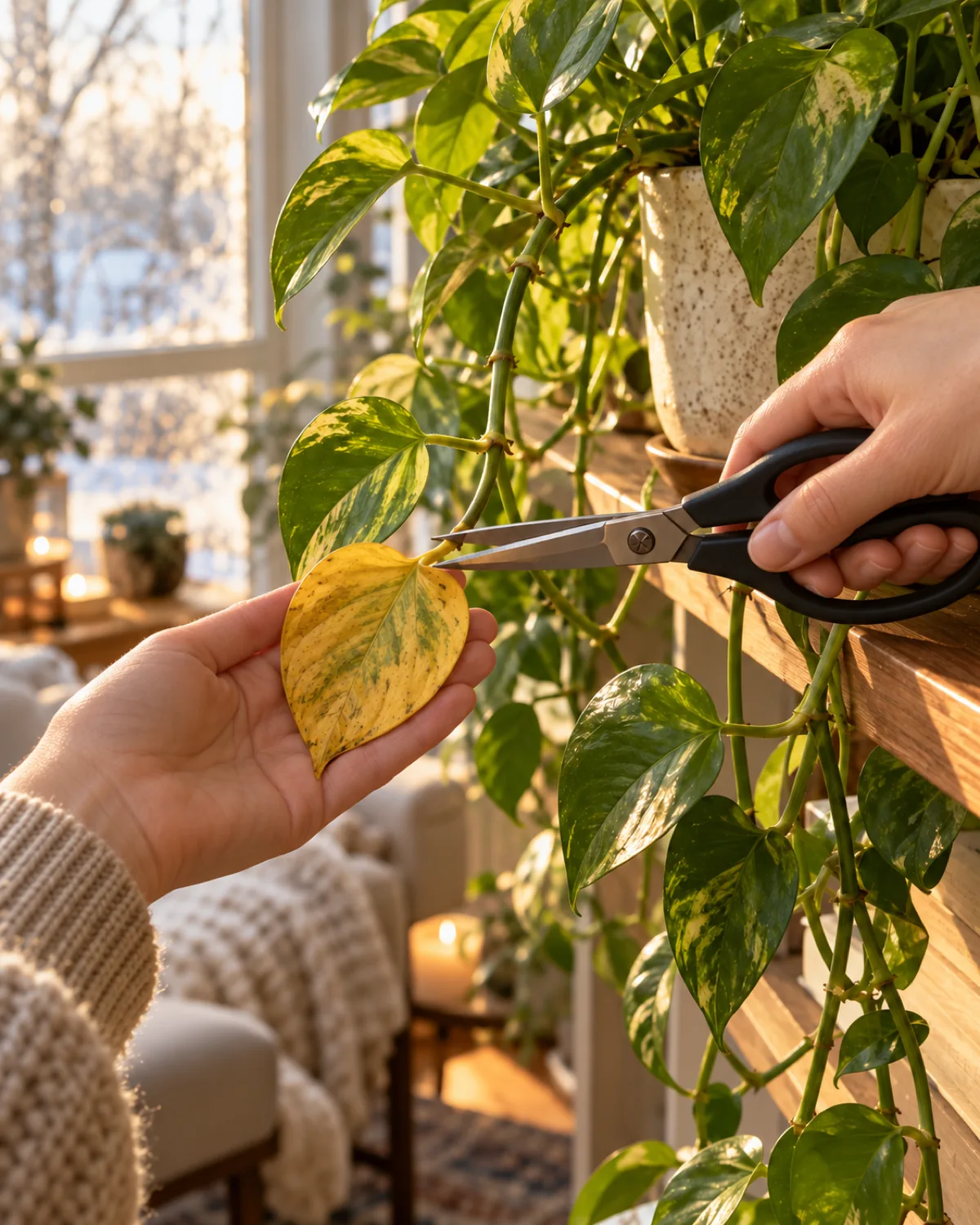
- Cut now: dead leaves (fully brown and dry), diseased foliage (fungal spots, bacterial lesions), any stem that has gone mushy or black
- Wait for spring: leggy growth from low light, shaping cuts for a bushier silhouette, size reduction pruning, propagation cuttings
- Exception: trailing plants like pothos or tradescantia that are dragging on the floor or tangling into other plants — trimming the tips to a manageable length is fine because these plants heal quickly from tip cuts
When you do remove dead foliage, use clean, sharp scissors. Cut the petiole cleanly at its base — do not tear leaves off, which creates ragged wounds that heal slowly. Wipe the blade with rubbing alcohol between plants to avoid transferring any pathogens.
Preparing for Spring — The February Transition Checklist
February is the turning point. Days are noticeably longer, the sun sits higher, and the first signs of new growth start appearing on plants that have been dormant since November.
This is the month to gradually shift from winter survival mode back to active care — but gradually is the operative word. Jumping straight from no fertilizer and minimal water to full summer routines shocks a plant that has spent three months in conservation mode.
- Increase watering gradually: start checking soil moisture every 5–7 days instead of every 10–14; let the plant tell you when it needs more by pushing new growth
- Resume fertilizing at half strength: use half the concentration you used last summer for the first two applications; full strength starts in April when growth is clearly active
- Inspect roots: gently unpot one or two plants and check for brown, mushy roots that indicate winter rot; trim any damaged roots before the spring repotting season
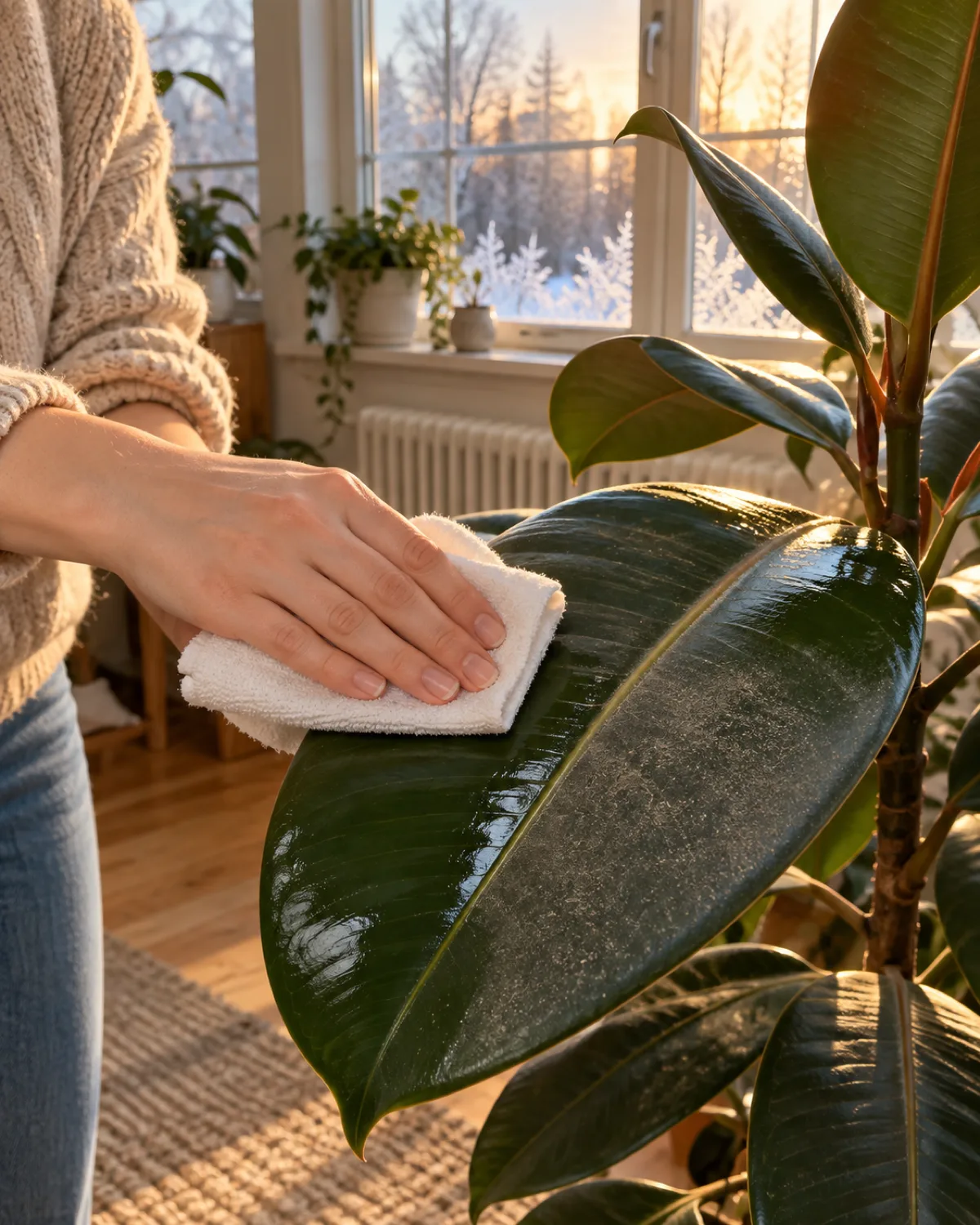
- Clean leaf dust: three months of settled dust can block 20–30% of light reaching the leaf surface; wipe each leaf with a damp cloth or give the whole plant a lukewarm shower
- Reposition gradually: if you moved plants to the brightest window in October, start moving them back to their summer positions over 1–2 weeks as the light increases
Do not repot in February. Wait until March or April when the plant is actively growing and can recover from root disturbance quickly. February repotting risks root damage in a plant that does not yet have the energy to regrow root tissue.
The Five Houseplants That Actually Thrive in Winter Conditions
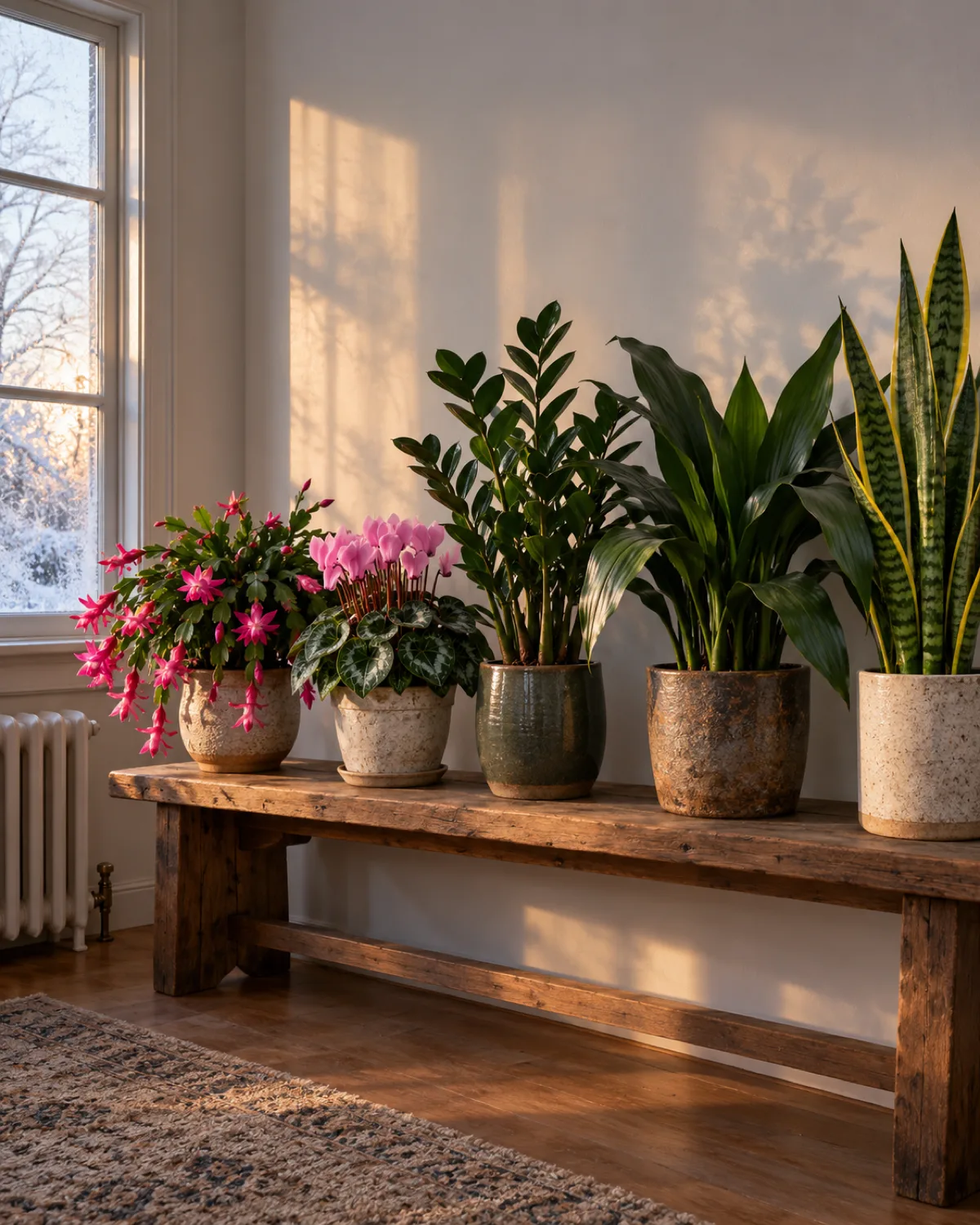
Most houseplants tolerate winter. These five actually prefer it — or at least perform as well in November as they do in June.
If you live in a cold apartment with poor light and dry air, these are the plants to start with. They do not just survive winter. They look good through it.
- Christmas cactus (Schlumbergera): blooms specifically because of winter conditions — it needs 14 hours of uninterrupted darkness and cool temperatures (50–55°F) to set flower buds, which is exactly what a cold room with early sunsets provides
- Cyclamen: a cool-season grower that actively blooms from November through March and goes dormant in summer — the reverse of most houseplants; it prefers 55–65°F and wilts in warm rooms
- ZZ plant (Zamioculcas zamiifolia): stores water in its underground rhizomes and thick petioles, tolerates low light down to 50 foot-candles, and barely notices whether it is January or July
- Cast iron plant (Aspidistra elatior): earned its common name by surviving the gas-lit, poorly ventilated parlors of Victorian England; low light, dry air, cold drafts, and neglect are all within its operating range
- Snake plant (Dracaena trifasciata): drought-tolerant CAM plant that opens its stomata at night, stores water in its thick leaves, and can survive temperatures down to 50°F — water it once a month in winter and it will not complain
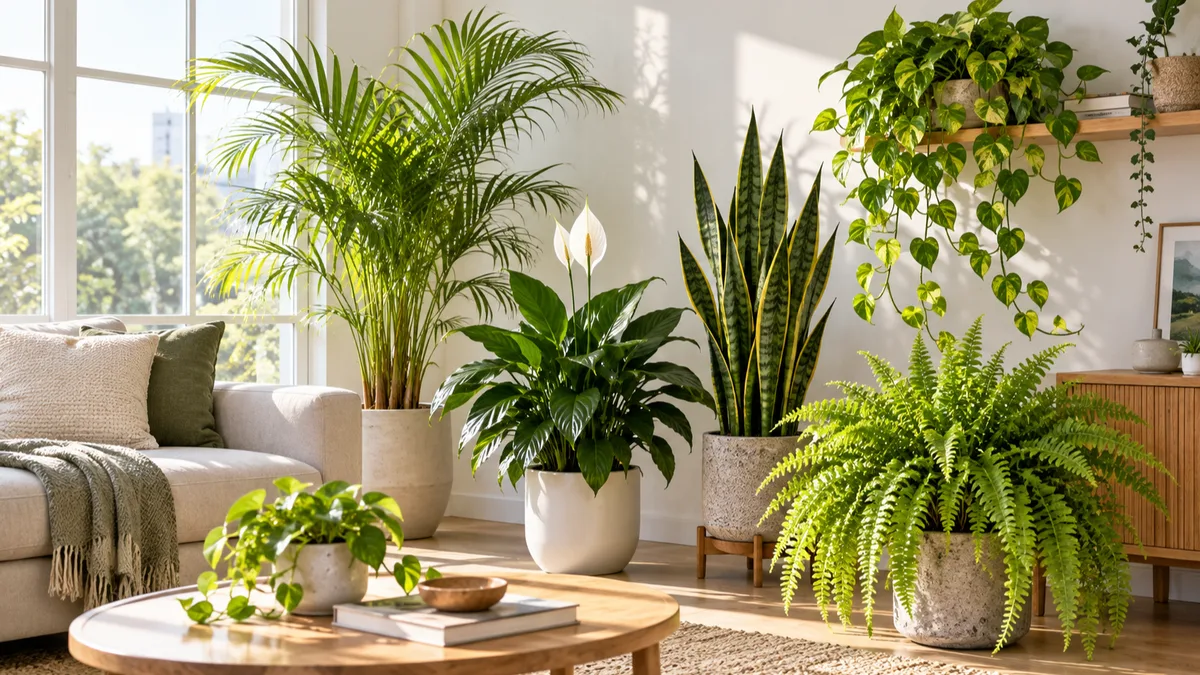
These five plants share a common trait: they evolved in conditions that are naturally challenging. Desert species, forest-floor dwellers, and plants from seasonally dry climates all handle the low-resource environment of a winter home better than tropical humidity-lovers like ferns and calathea.
Should I repot my houseplants in winter?
No. Wait until March or April when new growth signals the plant has the energy to recover.
- Dormant roots cannot regrow damaged tissue quickly
- Root disturbance in moist winter soil increases rot risk
- Spring repotting lets the plant heal in active-growth conditions
How cold is too cold for indoor plants?
Most tropical houseplants suffer damage below 50°F (10°C). Some, like pothos and philodendron, show stress as low as 55°F. Succulents and cacti tolerate cooler temps down to 40°F if the soil is dry.
The critical threshold is not the thermostat reading but the temperature at the plant's actual location — near a cold window, the local temperature can be 15–20°F lower than the room average.
- Below 50°F: damage zone for most tropicals — yellowing, leaf drop, root shock
- 50–60°F: safe for succulents, cacti, snake plants, and ZZ plants
- 60–75°F: comfort zone for most common houseplants
Do houseplants need less water in winter?
Yes, significantly less. Most houseplants need 50–70% less water in winter than in summer because reduced light slows their metabolism and cooler temperatures slow evaporation. The exact reduction depends on the plant, pot material, and heating conditions.
- Tropical foliage (monstera, philodendron, pothos): reduce watering by about 50%
- Succulents and cacti: reduce by 70–80%, water only when fully dry
- Ferns and calathea: reduce frequency but never let soil dry out completely
Can I put my houseplants outside on warm winter days?
This is risky. A "warm" winter day of 55°F feels mild to you but is at the stress threshold for most tropical plants. Even if the daytime temperature is safe, nighttime temps can drop dangerously low.
The temperature swing between a heated indoor room and outdoor air also shocks plants. If you must give them outdoor time, choose a day above 65°F and bring everything inside well before sunset.
Save for Reference
Winter Plant Care — 15-Point Checklist
- 1Why Winter Is DangerousFour simultaneous changes — humidity crash, light loss, slow soil drying, and dormancy signals — make winter the riskiest season for houseplants.
- 2How Indoor Light ChangesSun angle drops, usable hours shrink by 3–5 per day, and north windows become near-dark. Measure with a lux meter to know your actual levels.
- 3Move Plants GraduallyShift plants toward brighter windows over 5–7 days to avoid leaf burn. Cluster near south or west windows and rotate weekly.
- 4Grow Lights When NeededNo south window, basement rooms, or big collections in dark corners — set LED grow lights on a 12–14 hour timer to compensate.
- 5Recalibrate WateringSoil stays wet 2–3x longer in winter. Push the finger test deeper, lift pots for weight, and abandon fixed schedules.
- 6Avoid Cold Water ShockJanuary tap water runs 15–20°F colder than summer. Let water reach room temperature for 2–4 hours before pouring.
- 7Fight the Furnace AirHeating drops RH to 15–20%. Group plants, use pebble trays, and run a properly sized humidifier aimed at the plant shelf.
- 8Heating Vent DangerDirect hot air desiccates leaves within 48 hours. Keep plants at least 3 feet from all heat sources and avoid shelves above radiators.
- 9Cold Window ProtectionGlass radiates cold down to 40°F at the surface. Pull plants 6 inches back from windows at sunset; use thermal curtains overnight.
- 10Dormancy Is NormalNo new growth for 8–12 weeks is conservation, not decline. One or two yellow lower leaves is resource reallocation. Do not "wake up" the plant.
- 11Stop FertilizingNovember to February no-feed window for most plants. Unused salts burn roots. Resume at half strength when new growth appears in late February.
- 12Monthly Pest InspectionSpider mites thrive in dry air, fungus gnats in wet soil. Check undersides of leaves monthly and spray neem at half strength preventively.
- 13Prune Only What Is DeadRemove dead or diseased foliage now. Save all shaping cuts and leggy-growth cleanup for spring when the plant can push replacements.
- 14February TransitionIncrease watering gradually, resume fertilizer at half strength, clean dust from leaves, and inspect roots for winter rot before spring repotting.
- 15Winter ThriversChristmas cactus, cyclamen, ZZ plant, cast iron plant, and snake plant all handle winter conditions without complaint — ideal for cold apartments.
Save this checklist · Kultivy

Mara writes about indoor plants for people who want honest answers without the jargon. She covers houseplant care, propagation, and plant styling at Kultivy, testing every method she recommends in her own apartment first. More about Mara