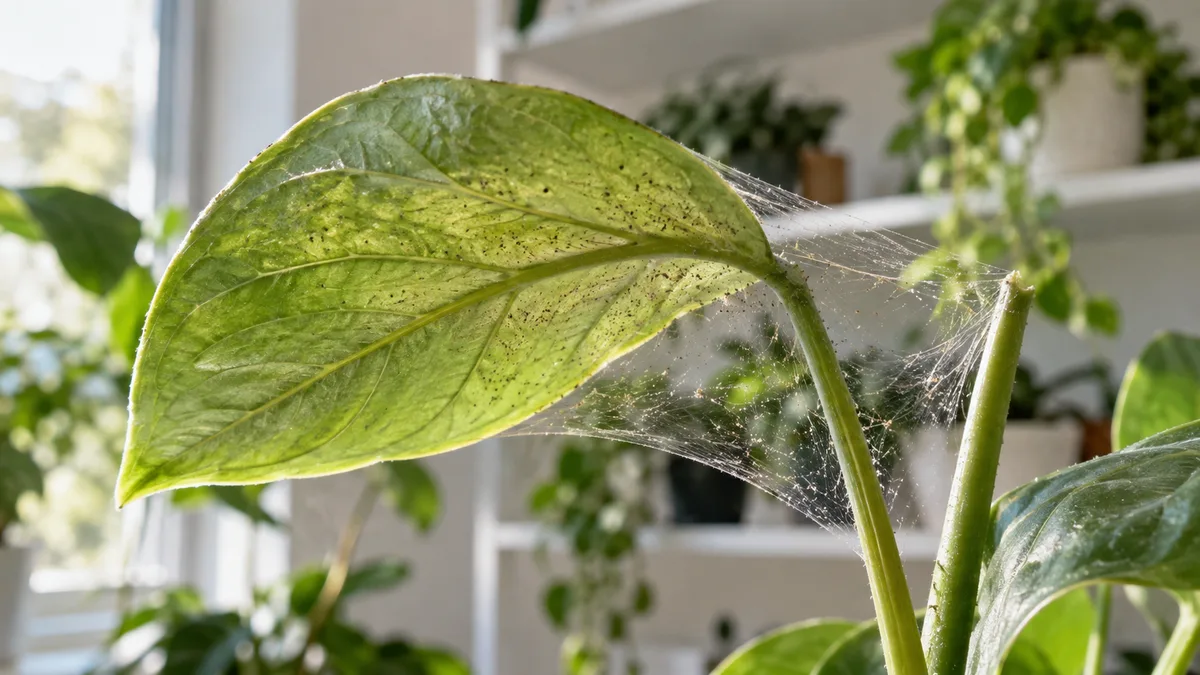
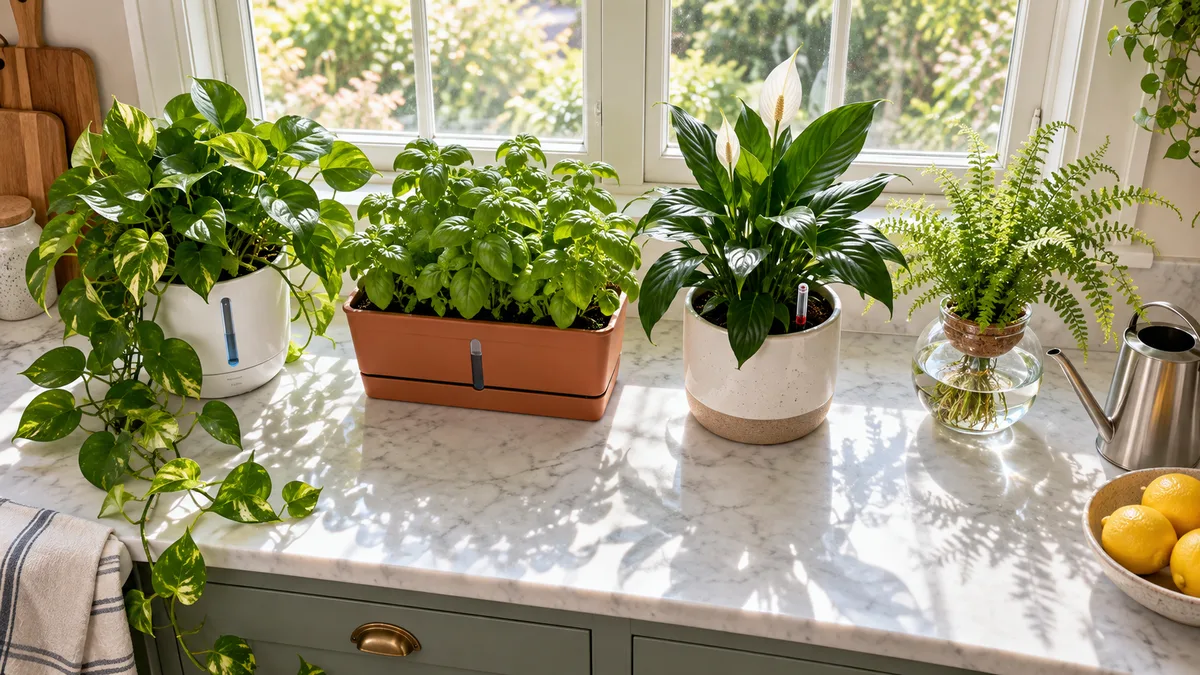
Most houseplants that die indoors die wet. The roots sit in saturated soil, oxygen disappears, and by the time you notice something is wrong the damage has already started underground.
But overwatering leaves visible clues long before root rot takes hold — a yellow leaf, a mushy stem base, soil that still smells damp five days later.
This guide covers every early warning sign, how to tell overwatering from underwatering at a glance, and what to do the moment you catch it.
From the science of what happens underground to a two-minute diagnostic checklist you can run right now.
- 1 What overwatering does to roots
- 2 Why it's the most common mistake
- 3 Yellow leaves as the first sign
- 4 Soft stems and mushy bases
- 5 Soil that stays wet for days
- 6 Fungus gnats and mold
- 7 Overwatering vs underwatering
- 8 Most overwatered plants
- 9 Pot choice and drainage
- 10 How to water after catching it
- 11 When repotting is needed
- 12 Adjusting by season and light
- 13 Soil mix changes that prevent it
- 14 Two-minute overwatering checklist
What Overwatering Actually Does to Houseplant Roots
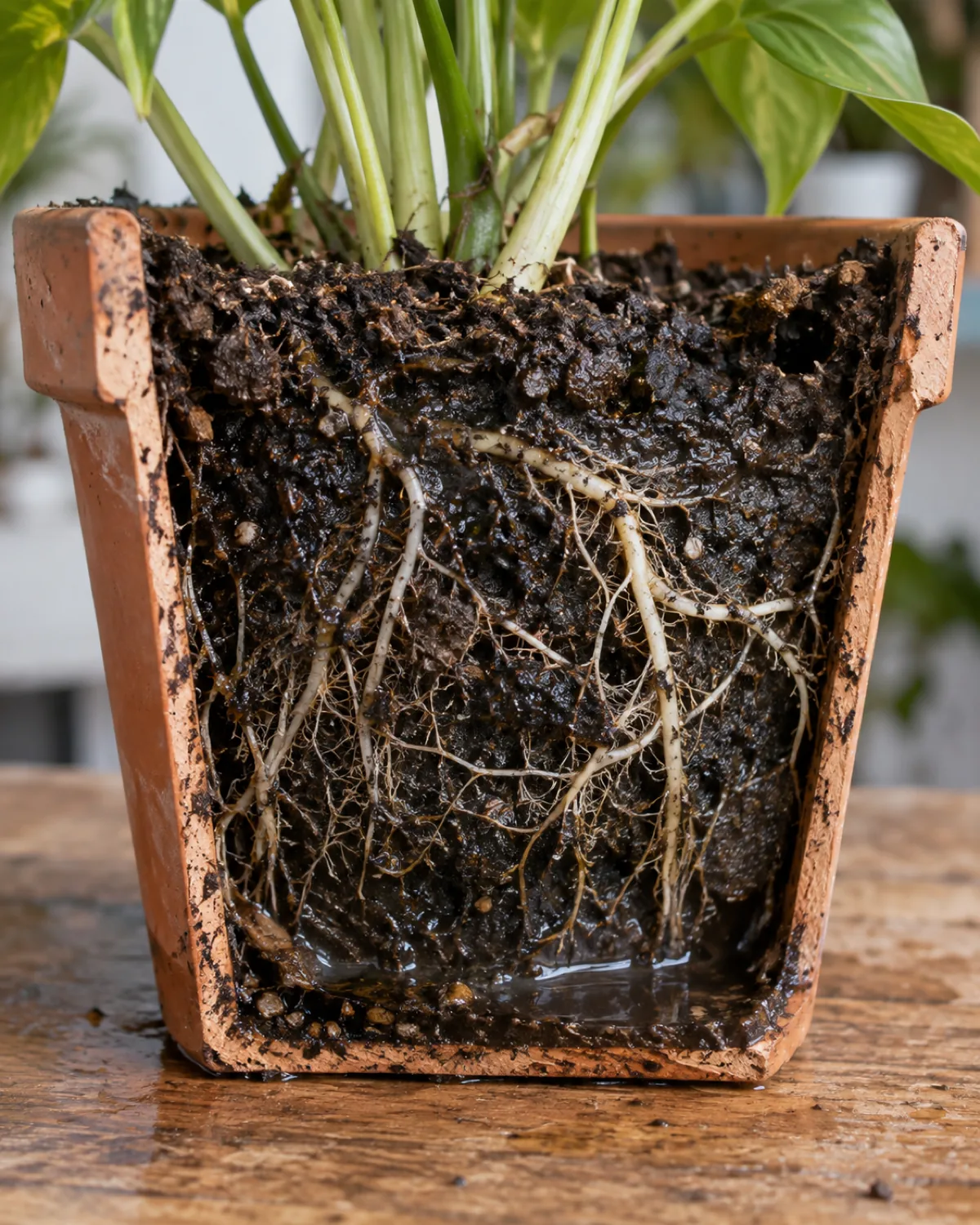
Roots do not drown in water. They suffocate from lack of oxygen.
Healthy soil contains tiny air pockets between particles. When you water, some of those pockets fill temporarily, then drain. The roots absorb moisture and oxygen alternates back in as the soil dries.
When soil stays saturated — either from watering too often or from poor drainage — those air pockets never reopen. The roots sit in an oxygen-free environment and cannot perform basic metabolic functions.
- Anaerobic bacteria move into oxygen-depleted zones and begin decomposing live root tissue
- Fine root hairs — the ones that do most of the water and nutrient absorption — die first
- The plant stops absorbing water even though it is surrounded by it, creating a paradox where an overwatered plant can actually wilt from dehydration
- Nutrient uptake shuts down because the transport proteins in root cells require oxygen to function
Water itself is not the enemy. The absence of oxygen is. A plant in a well-draining pot with drainage holes can tolerate heavy watering because excess water leaves fast enough for air to return. The same amount of water in a pot without drainage creates an oxygen desert in hours.
This is why overwatering and root rot are related but not identical. Overwatering creates the oxygen-free conditions. Root rot is what happens when fungal pathogens like Pythium and Fusarium exploit those conditions. Catching overwatering early means stopping the process before those pathogens gain a foothold.
Why Overwatering Is the Most Common Houseplant Mistake
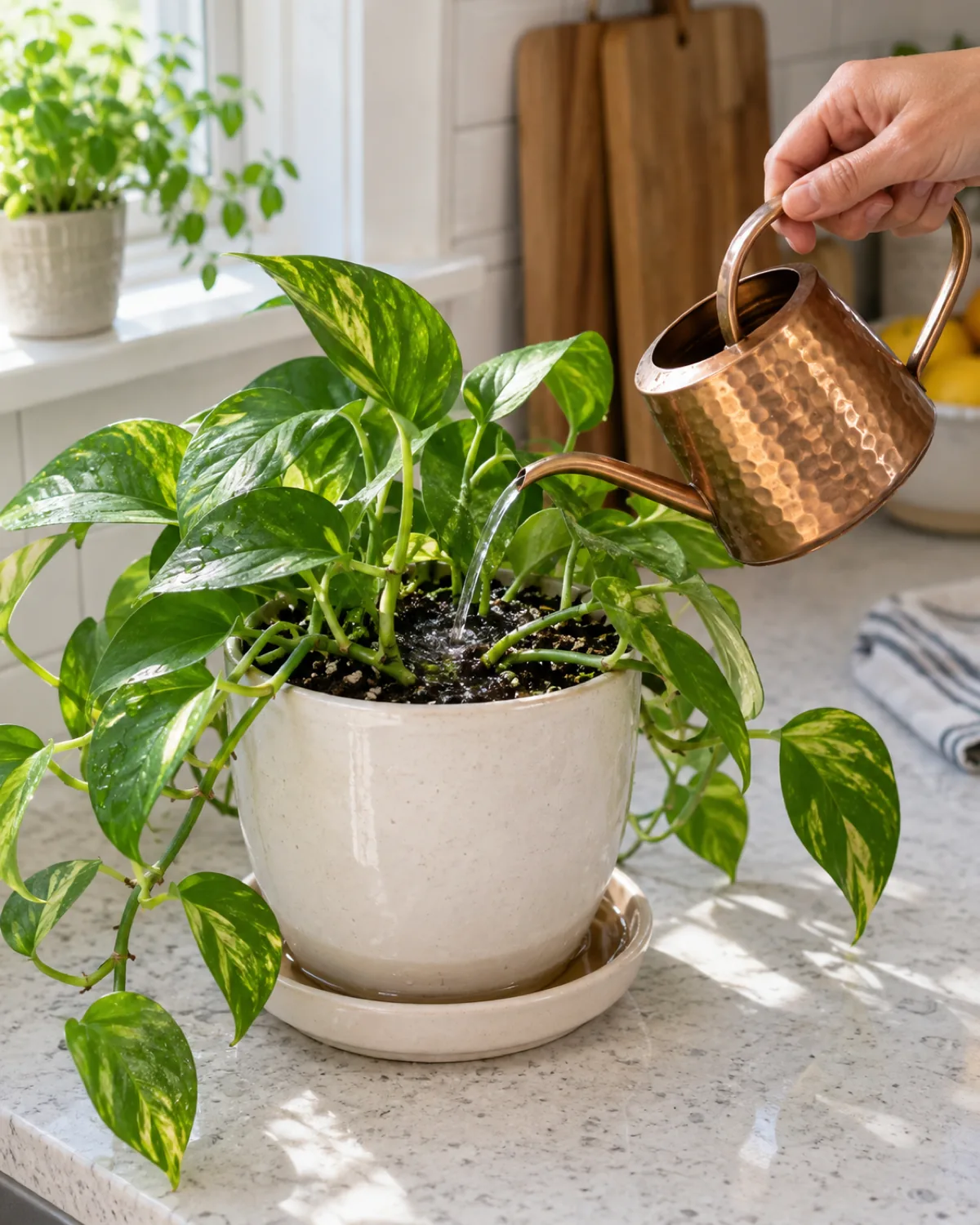
New plant owners almost always overwater. It feels like the most caring thing you can do. The impulse is natural — the execution is what causes problems.
Most overwatering comes from a schedule rather than the plant's actual need. "I water every Sunday" ignores that the same plant dries out in three days during summer and takes ten days during winter.
- Watering on a calendar instead of checking the soil — the single biggest cause
- Leaving water sitting in the saucer underneath the pot, keeping the bottom roots constantly wet
- Using a pot without drainage holes because it looked better on the shelf
- Not adjusting for seasonal changes — winter dormancy slows water uptake by half or more
The other trap is emotional. You see a wilting leaf and assume the plant needs water. But wilting is also a symptom of overwatering — the roots are too damaged to move water up to the leaves. Adding more water to a plant that is already drowning makes every problem worse.
The safest default: when in doubt, wait another day. Underwatering is almost always easier to fix than overwatering. A dry plant bounces back in hours after a good soak. A plant with damaged roots can take weeks to recover — if it recovers at all.
Yellow Leaves as the First Visible Warning Sign
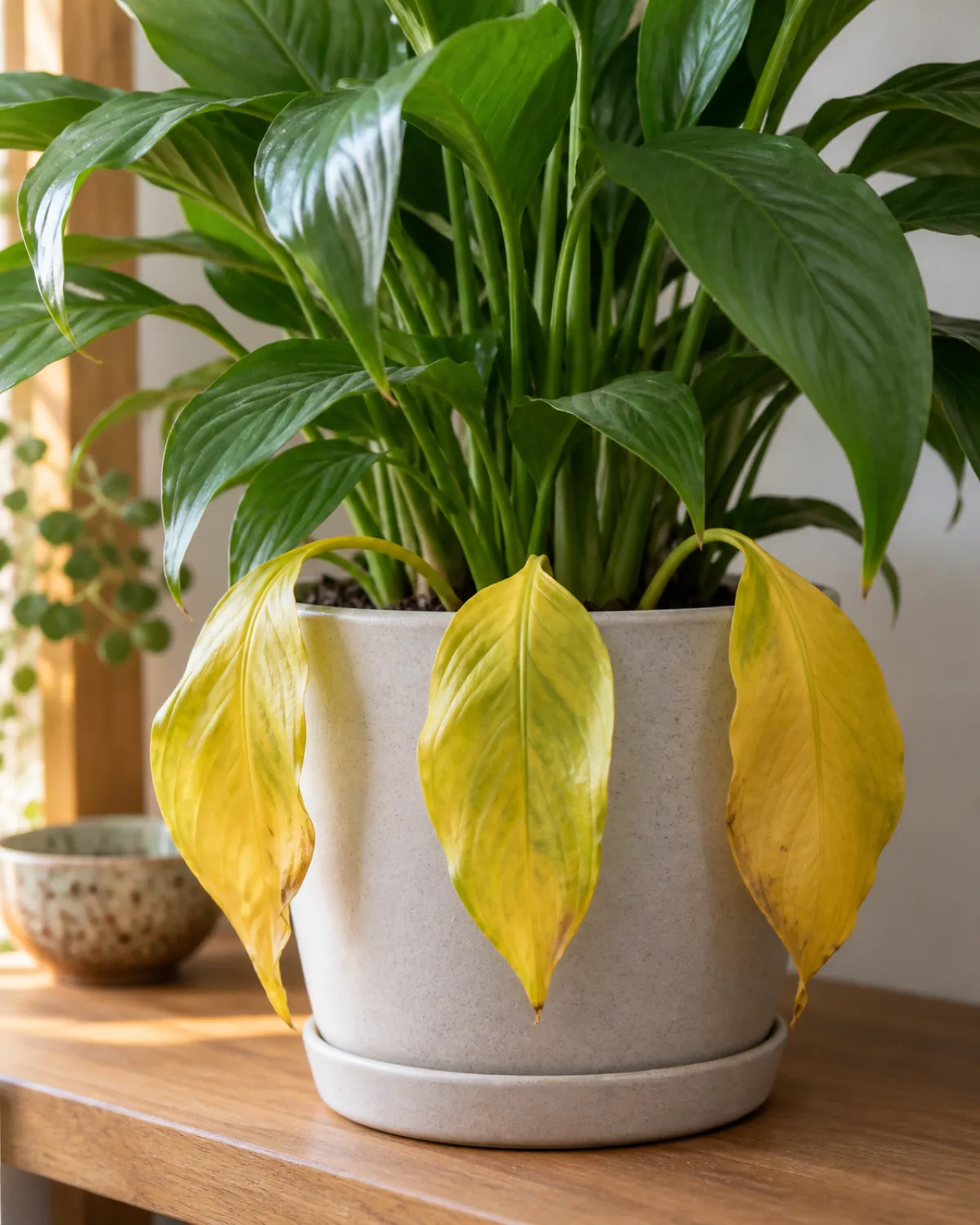
Yellow leaves are the most common visible symptom of overwatering, but they are also caused by underwatering, nutrient deficiency, aging, and a dozen other things. The key is reading the pattern.
Overwatering yellowing has a specific signature:
- Location: lower leaves first, working upward — the oldest leaves are closest to the saturated root zone and lose function first
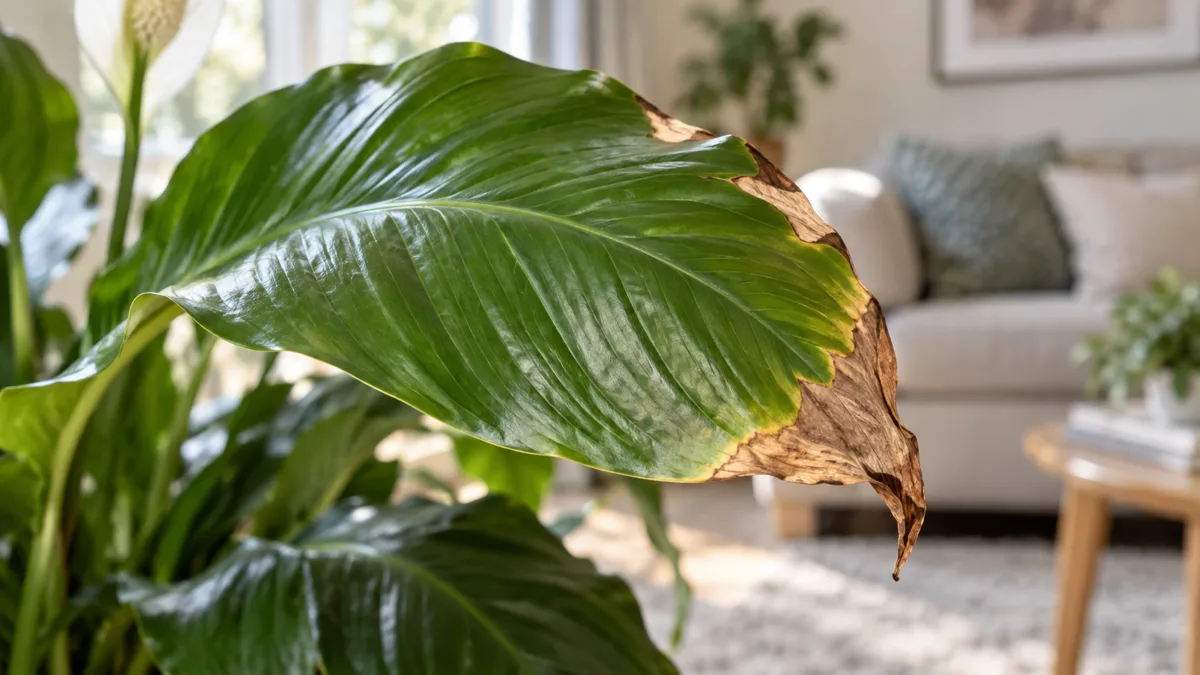
- Texture: soft and mushy, not dry or crispy — waterlogged tissue feels limp between your fingers
- Color: uniform pale yellow with no brown spots or crispy edges — the leaf looks washed out
- Speed: gradual over several days, not sudden overnight
Contrast this with underwatering, where leaves go crispy and brown at the tips and edges before turning yellow, and the texture is papery and dry.
If you see one yellow lower leaf on an otherwise healthy plant, it might just be natural aging — plants shed old leaves. But if two or three lower leaves yellow within the same week and the soil is still wet, overwatering is the most likely explanation.
Check the soil immediately when you spot the first yellow leaf. If it is still damp from the last watering several days ago, you have your answer.
Soft Stems and Mushy Leaf Bases That Signal Trouble
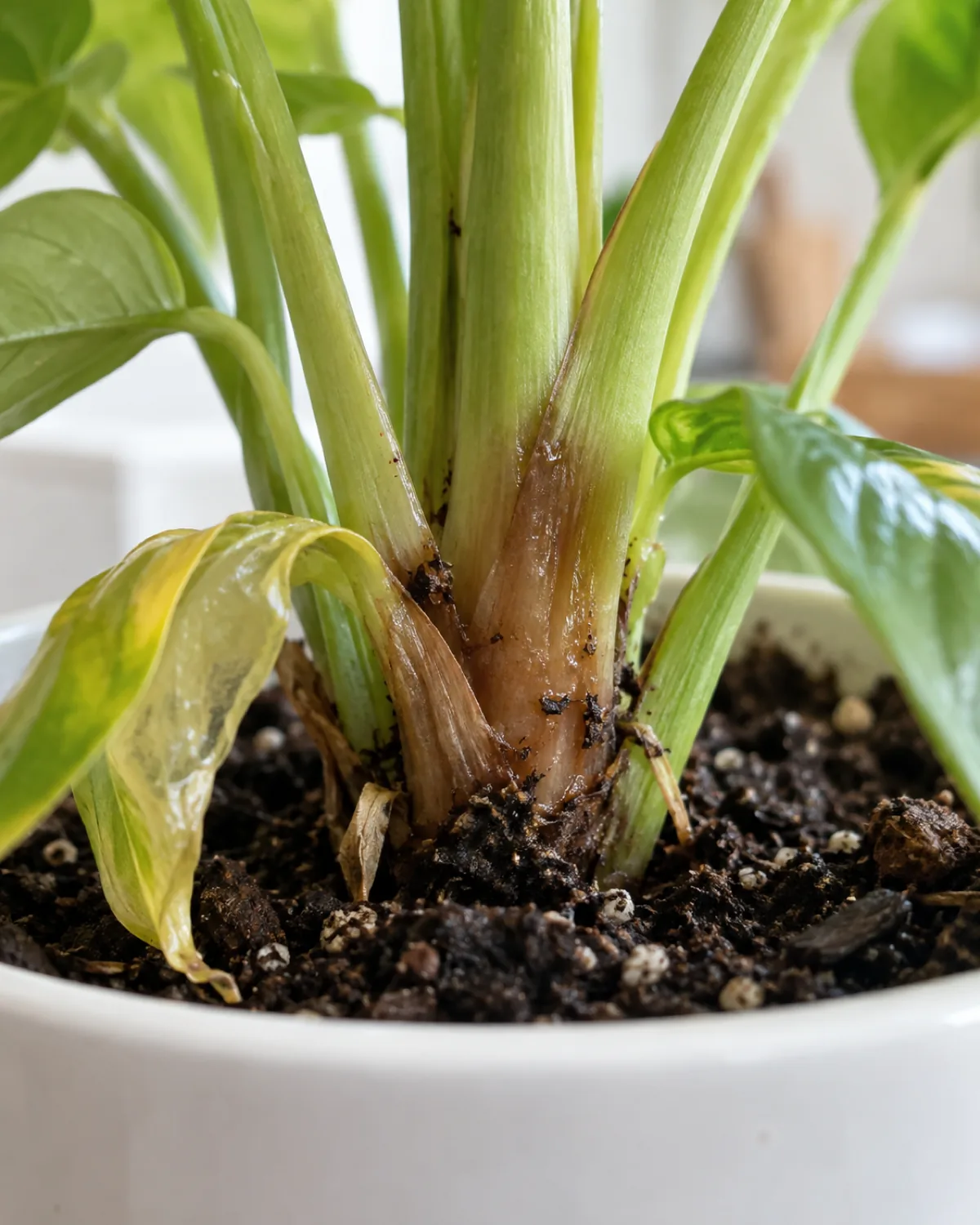
By the time stems go soft, the overwatering is more advanced than yellowing alone. This is the stage where the damage is migrating from the roots upward into the plant's structural tissue.
What to look for:
- Stem base turning brown and mushy while the upper stem still looks green — the rot is climbing from the soil line
- Translucent or waterlogged leaves near the base that look almost see-through when you hold them up to light
- Edema blisters — small raised bumps on the undersides of leaves where the plant has absorbed more water than it can transpire, causing cells to burst
Edema is actually a helpful early warning because it shows up before stem rot. If you see small corky bumps on leaf undersides and the soil is wet, reduce watering immediately — the plant is telling you it has more water than it can process.
- Edema bumps: water blisters on leaf undersides — reduce watering, increase airflow
- Mushy stem base: tissue breakdown at soil line — unpot and inspect roots immediately
- Black stem base: advanced rot — emergency repot, trim all black tissue, may not recover
The difference between a mushy stem and a limp stem matters. A limp stem that firms up after watering was underwatered. A mushy stem that stays soft regardless of moisture has structural tissue damage from overwatering.
Soil That Stays Wet for Days After Watering
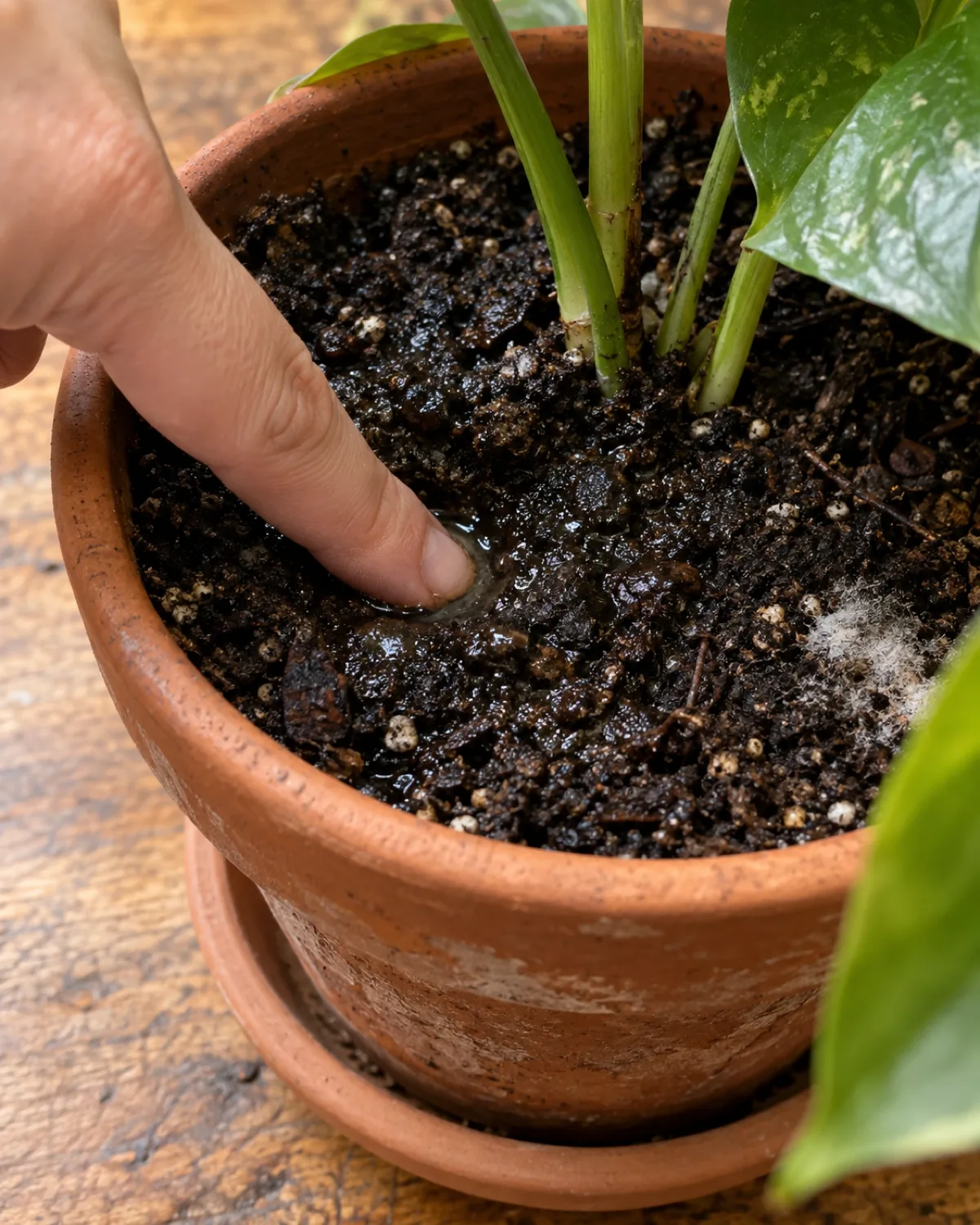
The soil itself gives the clearest signal. If you watered three or four days ago and the top inch is still dark and moist, something is wrong — either you are watering too often, the soil retains too much water, or the pot has no drainage.
Three soil tests you can run right now:
- Finger test: push your index finger two inches into the soil. If it comes out with wet soil clinging to it, do not water. Most houseplants want the top one to two inches dry before the next watering
- Smell test: lean close and sniff the soil surface. Healthy soil smells earthy and clean. Overwatered soil develops a sour, musty odor from anaerobic bacterial activity — if it smells off, the soil has been wet too long
- Weight test: lift the pot. A recently watered pot feels noticeably heavier than a dry one. If it still feels heavy days after watering, the water is not leaving
White fuzzy mold on the soil surface is not always a sign of overwatering — it can appear in humid environments with rich organic soil — but when combined with persistently damp soil and other symptoms, it reinforces the pattern.
If your soil consistently stays wet for more than five to seven days between waterings, the problem might be the soil mix itself rather than your watering habits. Standard potting mixes often retain too much moisture for plants like succulents, cacti, and most aroids.
Fungus Gnats and Mold as Overwatering Indicators
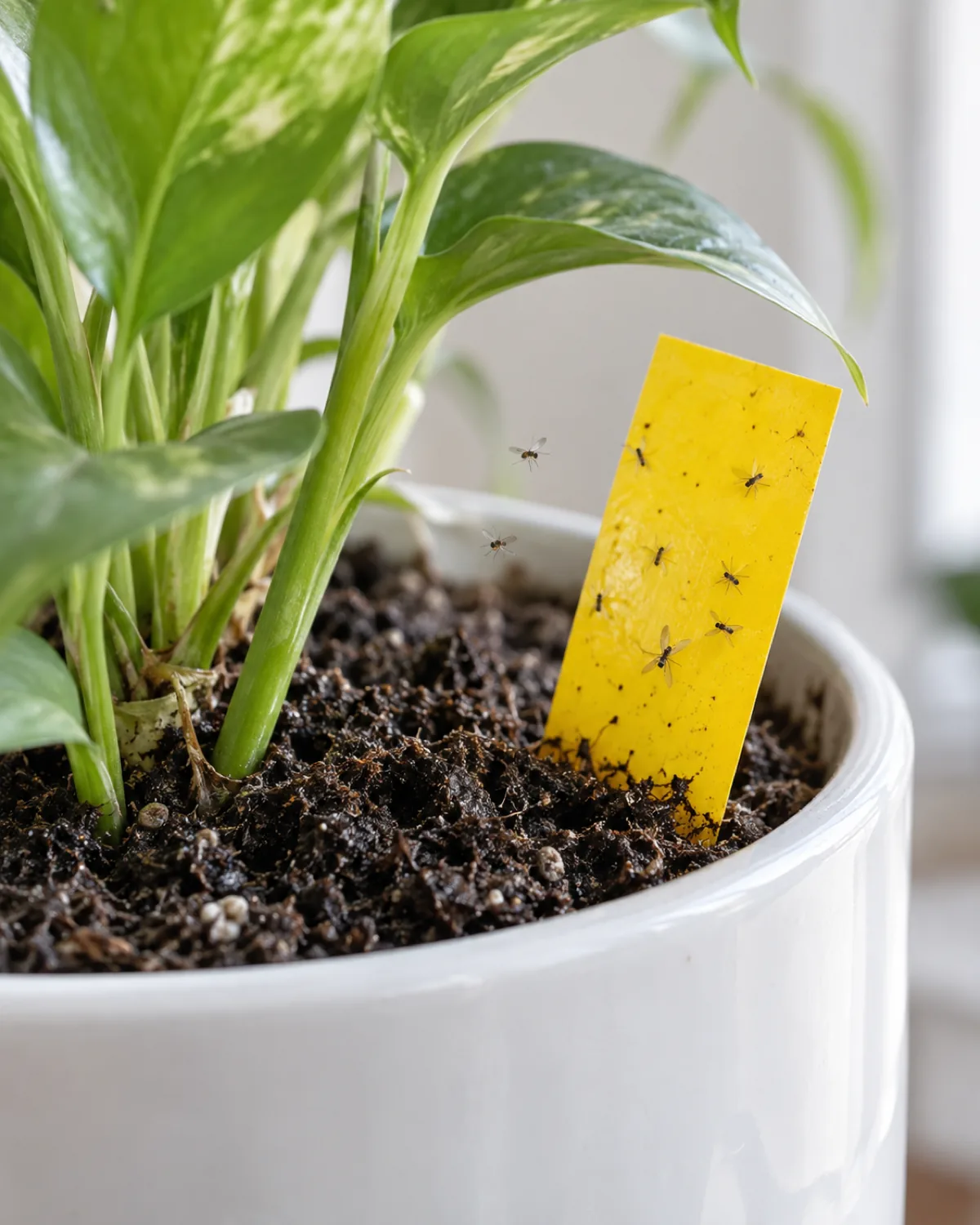
Fungus gnats are the most reliable living indicator of overwatering. These tiny flies lay eggs in consistently moist topsoil, and their larvae feed on organic matter and fine root hairs in the wet zone.
If you see small dark flies hovering around your plant's soil surface, the topsoil has been staying moist long enough for a reproductive cycle — roughly three weeks of persistently damp conditions.
- Gnats are a symptom, not the primary problem — killing the gnats without fixing the watering habit means they come back within weeks
- Let the top inch of soil dry between waterings and the gnat population collapses because the eggs and larvae cannot survive in dry soil
- Yellow sticky traps catch adults but do nothing to the larvae below the surface
- A half-inch layer of coarse sand on the soil surface blocks egg-laying without affecting the plant
White fuzzy mold on the soil works the same way. It thrives in stagnant moisture and poor air circulation. Neither gnats nor mold will kill your plant directly, but both are telling you the soil environment is too wet — and that is what will eventually cause root damage.
Address the watering problem and both disappear. Treat only the gnats or mold without changing watering frequency and you are fighting symptoms while the cause continues.
How Overwatering Differs From Underwatering at a Glance
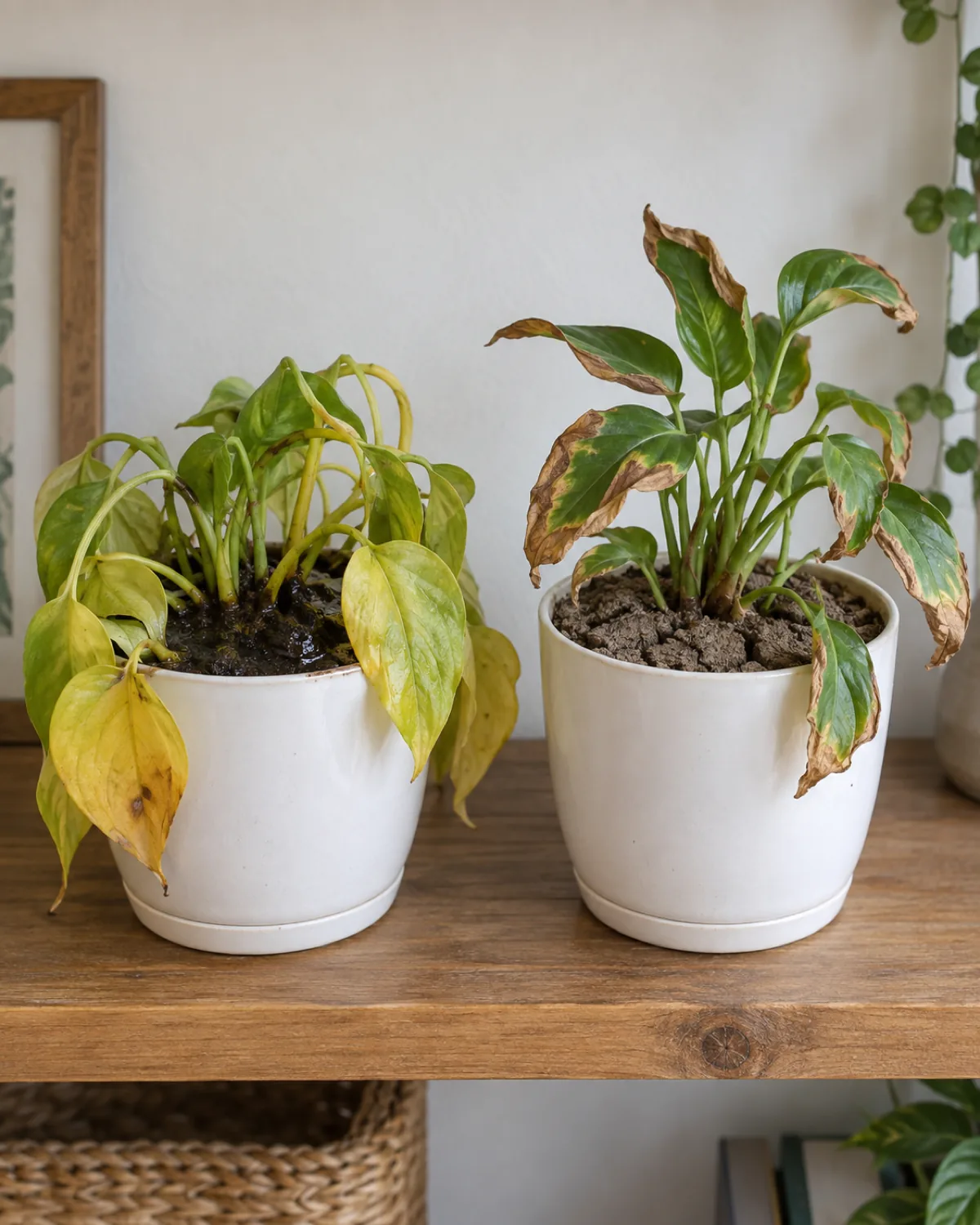
The two conditions look similar at first glance — both cause wilting, both cause leaf discoloration — but the details are completely different.
Match what you see on your plant to the right column. Every detail points one direction.
The fastest single test: pick up the pot. A heavy pot with a wilting plant is overwatered. A light pot with a wilting plant is underwatered. The weight test takes two seconds and is more reliable than visual inspection alone.
One more distinction that matters: an underwatered plant perks up within hours of a thorough watering. An overwatered plant does not improve with more water — it gets worse. If you watered a wilting plant and it still looks bad the next day, overwatering was likely the original problem.
Plants That Get Overwatered Most Often
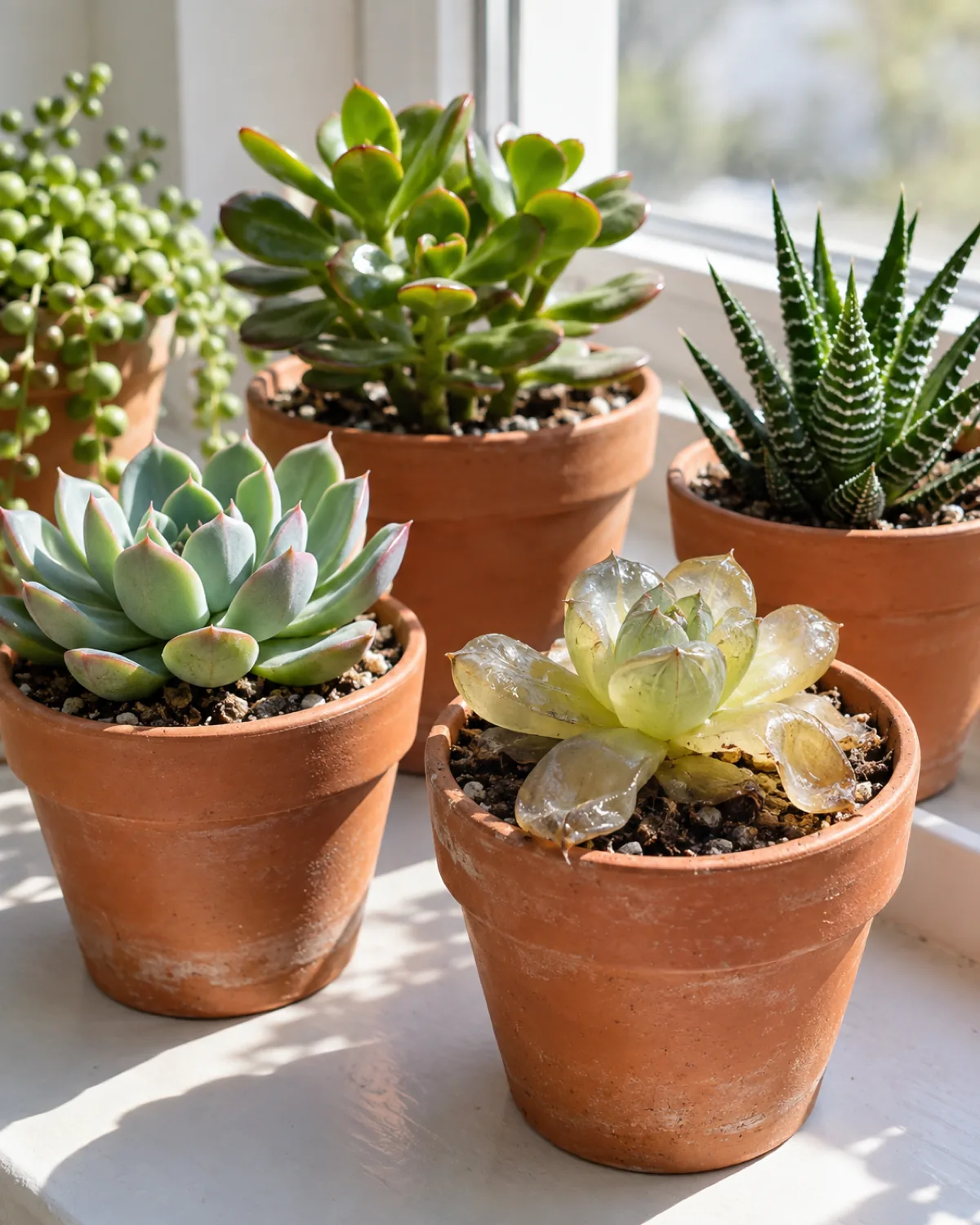
Some plants are built to survive drought. Giving them a tropical watering schedule is the fastest way to kill them.
The most frequently overwatered houseplants share one trait: they have built-in water storage that their owners do not account for.
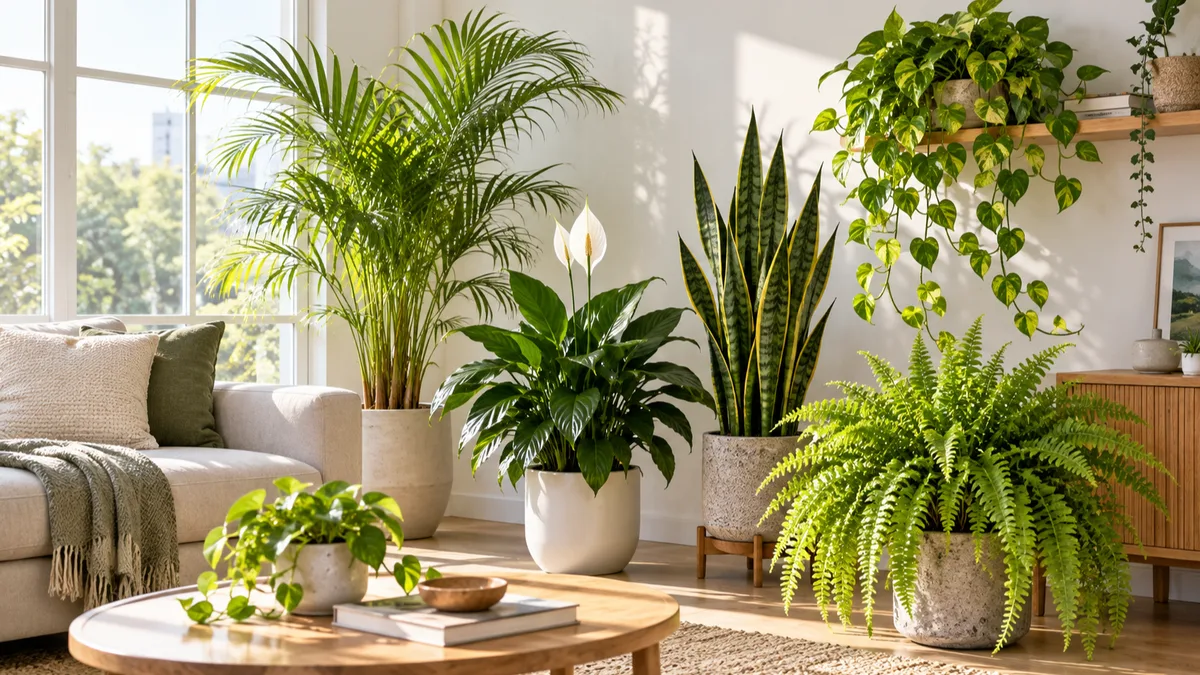
- Succulents and cacti — thick leaves and stems store weeks of water; they need soil to dry completely between waterings and most owners water them like tropical plants (succulent care, cactus care)
- ZZ plant — underground rhizomes hold enough water to survive months of drought; weekly watering is far too much (ZZ plant care)
- Snake plant — succulent leaves and rhizome root system; tolerates bone-dry soil between waterings and rots quickly in soggy conditions
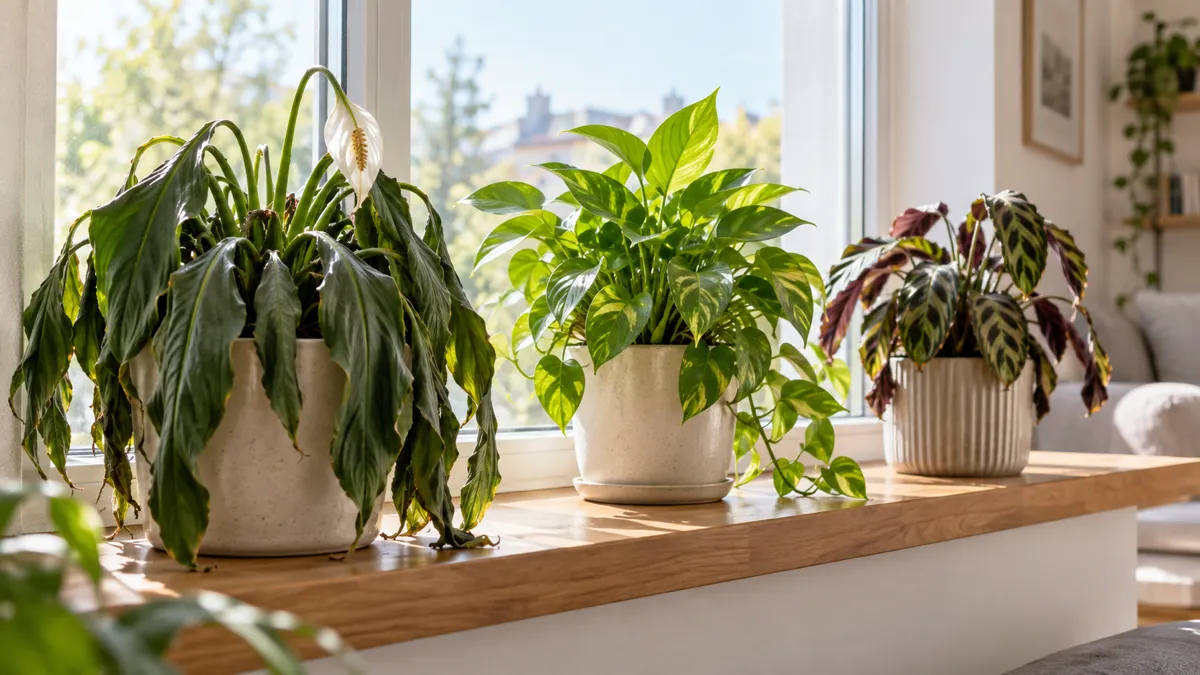
- Peace lily — the droop gets misread as thirst; in reality, peace lilies droop when they want water and when they are overwatered, so the droop alone is not diagnostic (peace lily care)
- Pothos — surprisingly tolerant of neglect; the vining stems store some moisture and the plant prefers to dry out between waterings (pothos care)
The common thread: if a plant evolved in a habitat with periodic drought — rocky deserts, forest floors with seasonal dry spells, or as an epiphyte clinging to tree bark — it has adaptations for water storage. Those adaptations make it more vulnerable to overwatering than underwatering.
How Pot Choice and Drainage Affect Overwatering Risk
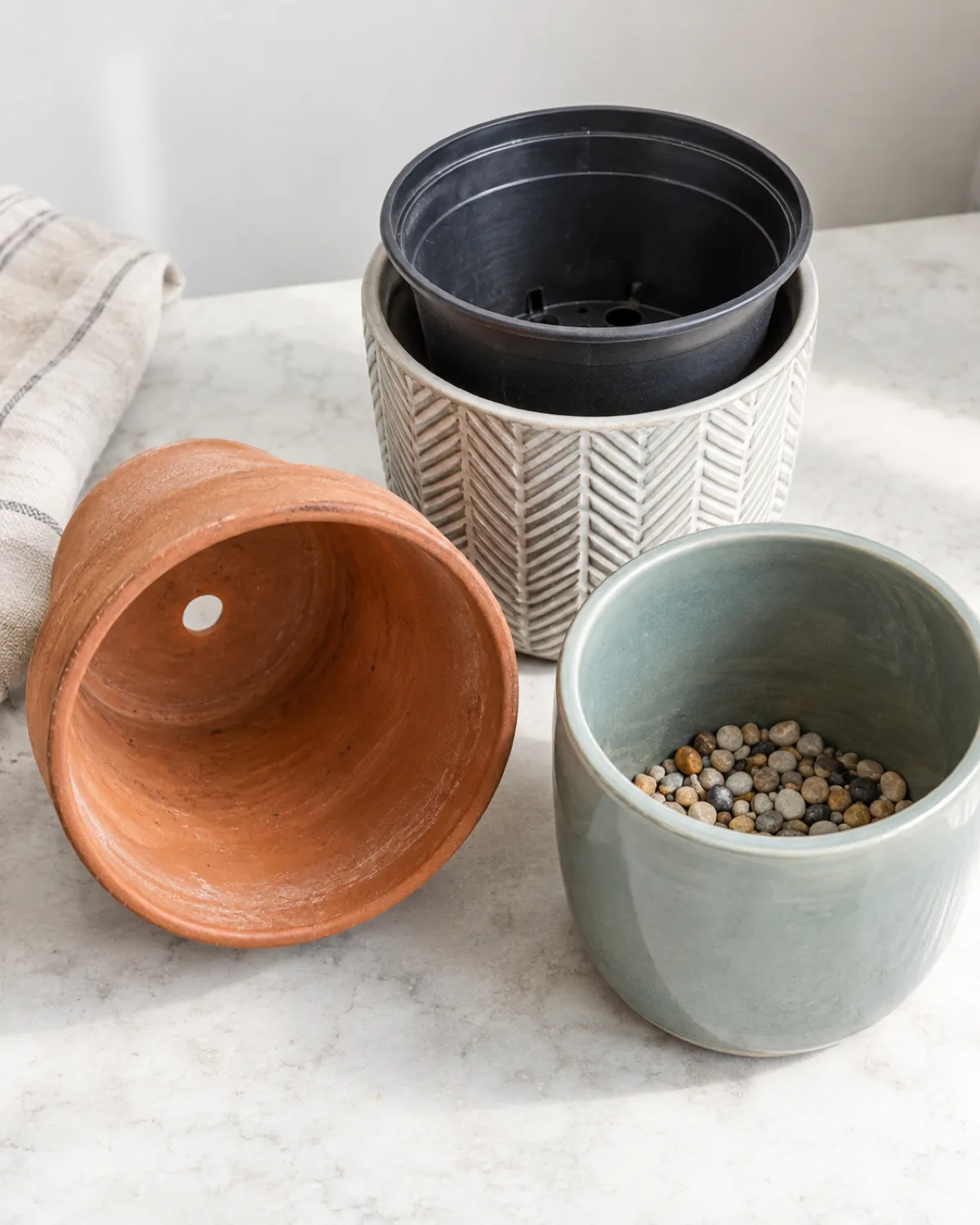
The pot is the first line of defense against overwatering. A well-chosen pot makes overwatering difficult. A poorly chosen pot makes it almost inevitable.
Drainage holes are non-negotiable. A pot without drainage traps every drop of excess water at the bottom where the roots sit. No amount of careful watering compensates for zero drainage.
- Terracotta is the most forgiving material — the porous clay wicks moisture through the walls and lets the soil breathe, reducing the time soil stays saturated
- Plastic nursery pots work well inside decorative cache pots — leave an air gap between the nursery pot and the outer pot so water can drain freely
- Glazed ceramic without drainage is the highest-risk option — it looks beautiful but holds moisture like a bowl
Pot size matters too. A pot that is much larger than the root ball contains far more soil than the roots can access. That extra soil holds water the plant cannot use, and it stays wet for weeks — especially in the center of the pot where air circulation is lowest.
- Size up by one inch in diameter when repotting, not two or three
- A snug root fit means the roots reach the moisture quickly and dry the soil evenly
- A small plant in a large pot is a setup for root rot no matter how carefully you water
The Right Way to Water After Catching Overwatering Early
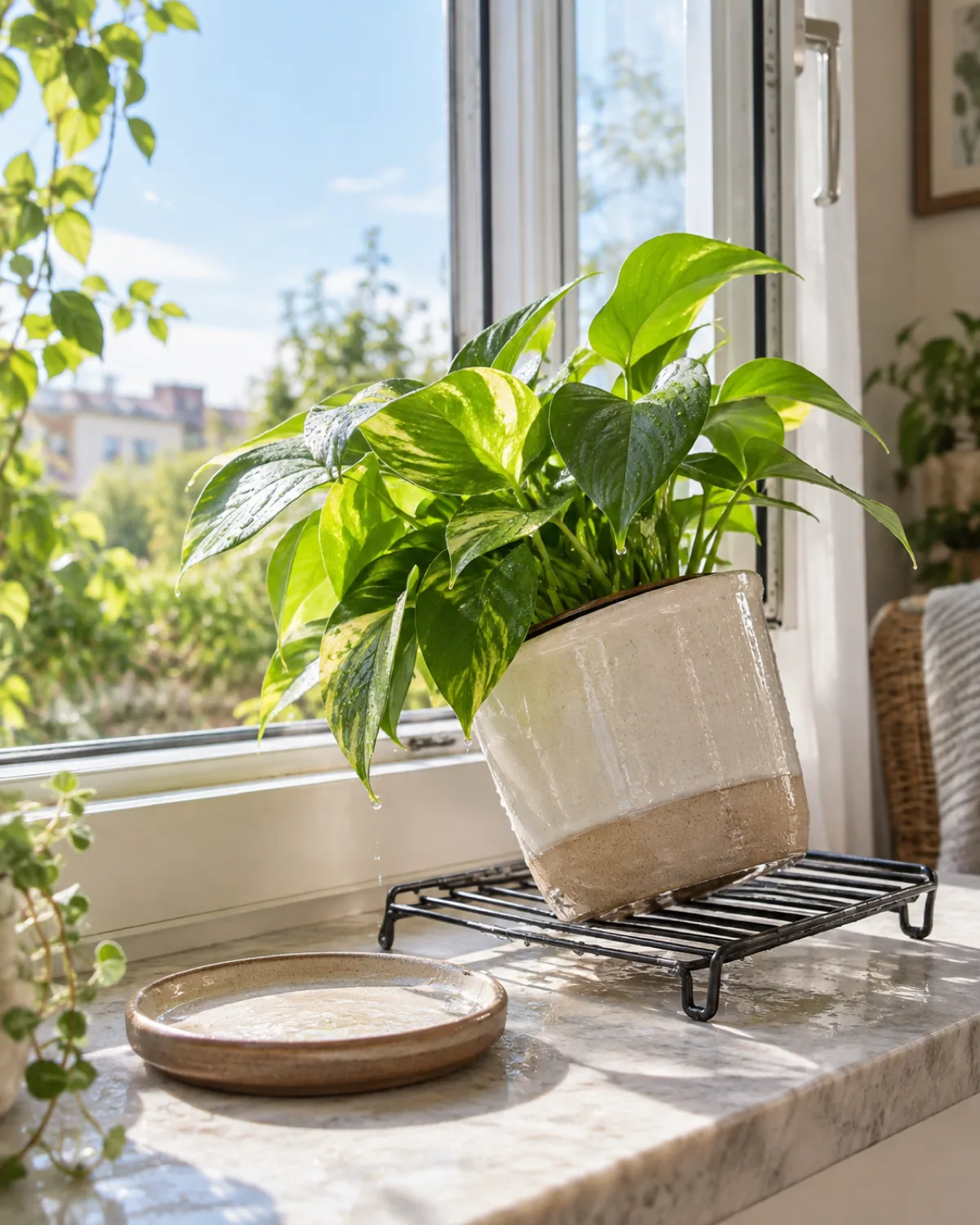
If you have caught the signs early — yellow lower leaves, soggy soil, maybe some gnats — the roots are probably still mostly healthy. Recovery at this stage is straightforward.
Follow these in order. Most plants caught early recover fully within two to three weeks.
Most plants recover from mild overwatering without repotting. The key is patience — let the soil dry thoroughly before watering again, then adjust your watering frequency going forward.
If the plant does not improve after a week of drying out, or if the stem base is mushy, move to the next section.
When Overwatering Has Gone Too Far and Repotting Is Needed
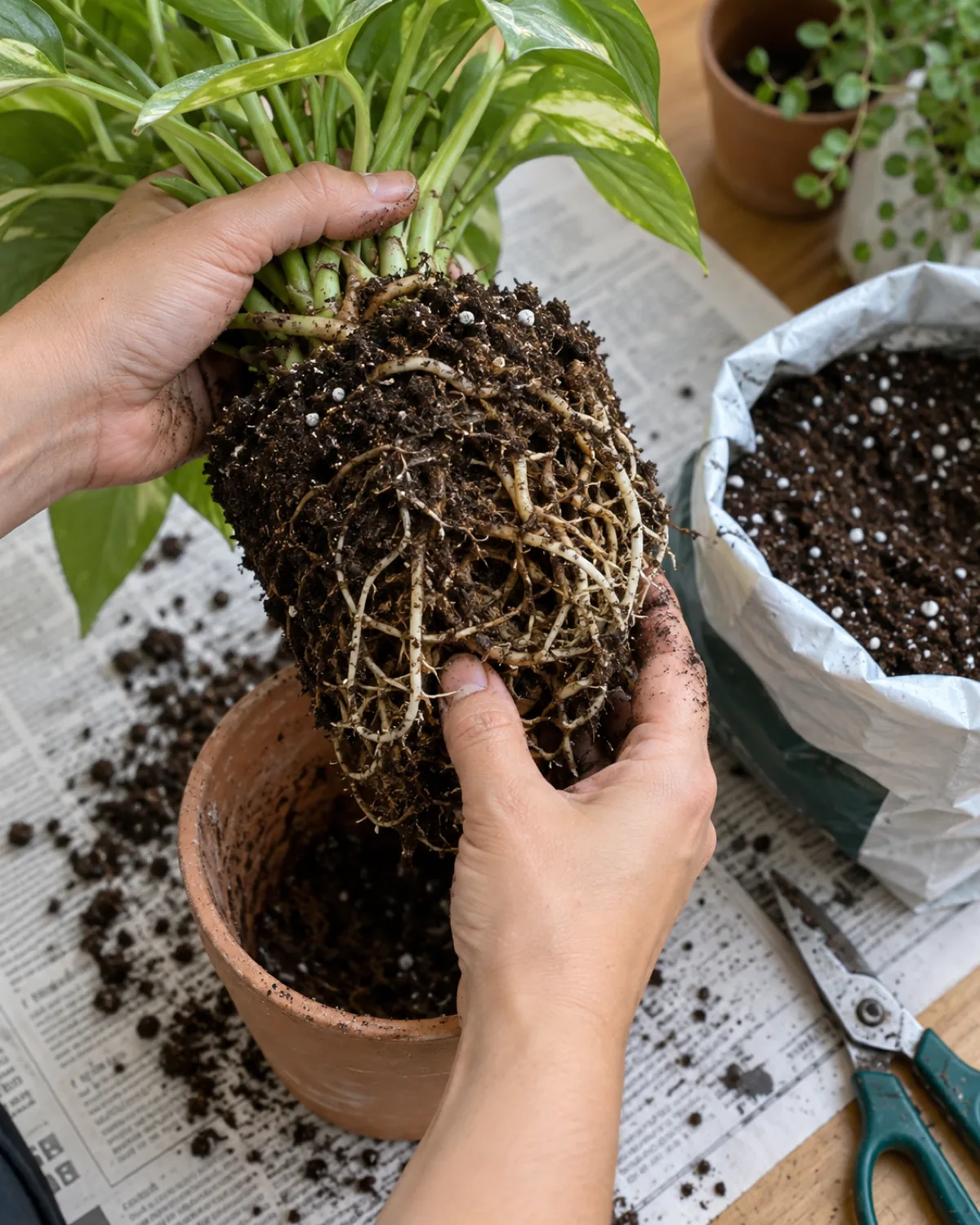
When the stem base is soft, multiple leaves are yellowing rapidly, or the soil smells sour despite being allowed to dry, the damage has likely reached the roots. At this point you need to look at them directly.
Steps for an emergency repot:
- Gently remove the plant from the pot and shake off as much wet soil as possible
- Inspect the roots — healthy roots are white or light tan and firm; damaged roots are brown, black, or mushy and pull apart easily
- Trim all brown and mushy roots with sterile scissors or pruners; cut back to healthy white tissue
- Let the trimmed roots air-dry for 30 minutes to an hour before replanting — this lets the cuts callus slightly
Replant in fresh, dry potting mix with good drainage — never reuse the old waterlogged soil. If you had to remove a significant portion of the root system, move the plant into a smaller pot. A root system that has lost half its mass cannot support the moisture held by its original pot size.
For severe cases where most of the roots are gone, see the root rot rescue guide for advanced recovery techniques including hydrogen peroxide root soaks and fungicide treatment.
Skip fertilizing for at least four to six weeks after a root trim. The new root growth needs time to establish before it can handle nutrient uptake.
Adjusting Your Watering Schedule by Season and Light
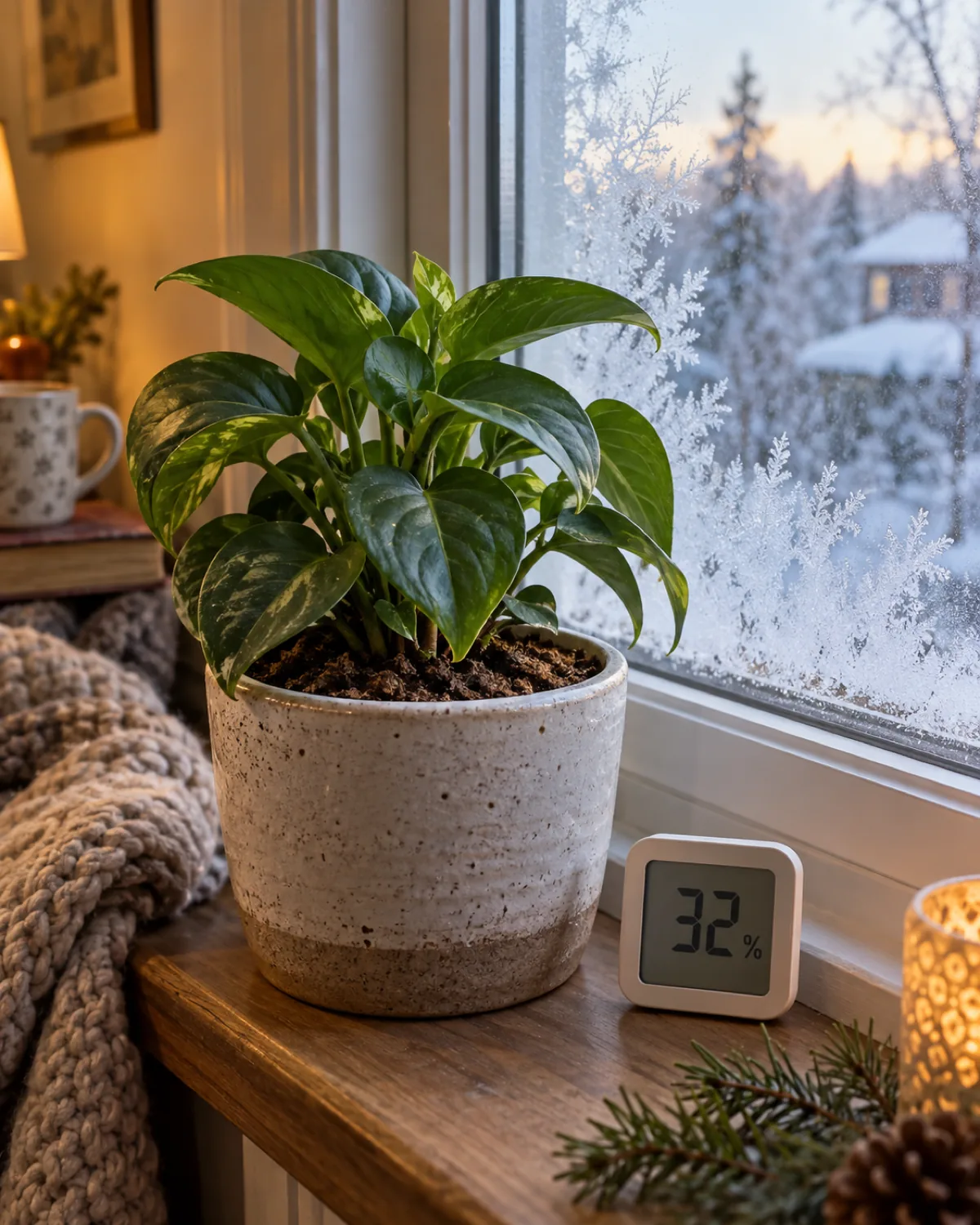
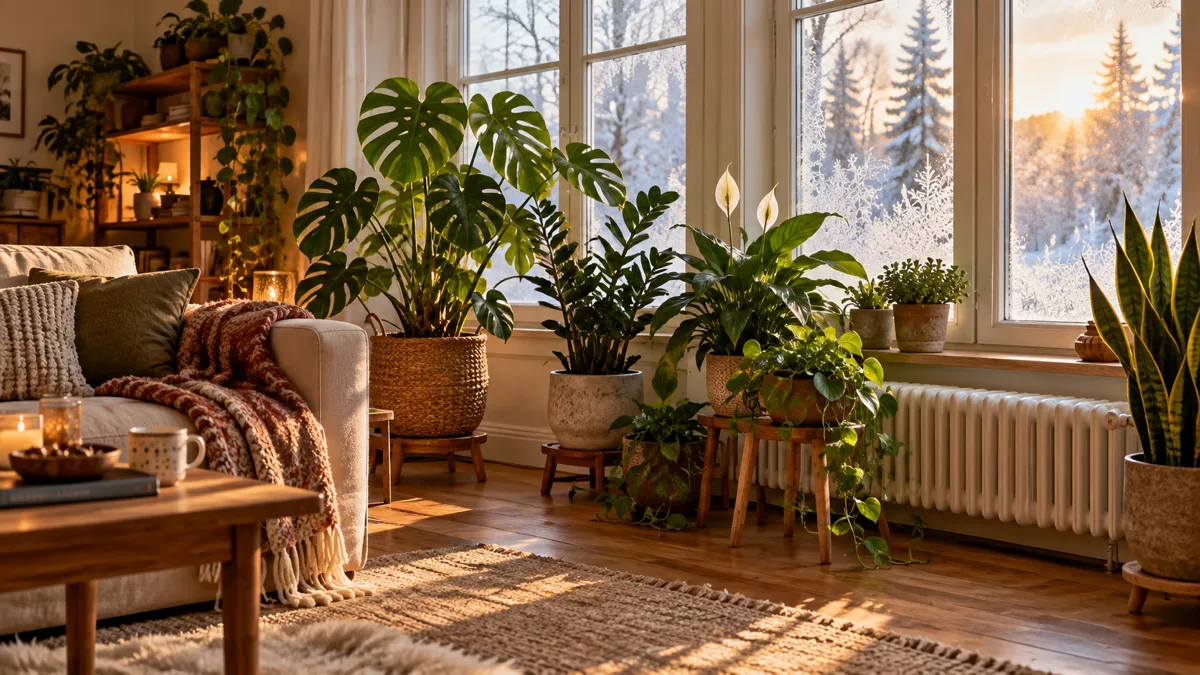
The same watering frequency that kept your plant healthy in July will overwater it in January. Seasonal adjustment is not optional — it is the single biggest factor in preventing chronic overwatering.
Why winter changes everything:
- Shorter days mean less light, less photosynthesis, and slower water uptake through the leaves
- Lower transpiration rates from reduced light and cooler indoor air
- Many tropical houseplants enter semi-dormancy — growth slows or stops, and water needs drop by 50 percent or more
- Indoor heating reduces humidity but also reduces the plant's metabolic rate
A practical approach: in winter, let the soil dry out an extra day or two beyond your summer schedule before watering again. For drought-tolerant plants like succulents, ZZ, and snake plants, you can safely cut watering to once a month or less during winter.
- Bright south window: soil dries fastest, water more frequently year-round
- Low-light north room: soil stays moist much longer, extend time between waterings
- Room with a humidifier running: slower evaporation from the soil surface, water less often
- Heated room with dry air: faster evaporation but also faster transpiration — check before assuming it needs water
The finger test beats every calendar. Push your finger into the soil before every watering. If the top inch or two is still moist, come back tomorrow.
Soil Mix Changes That Prevent Overwatering
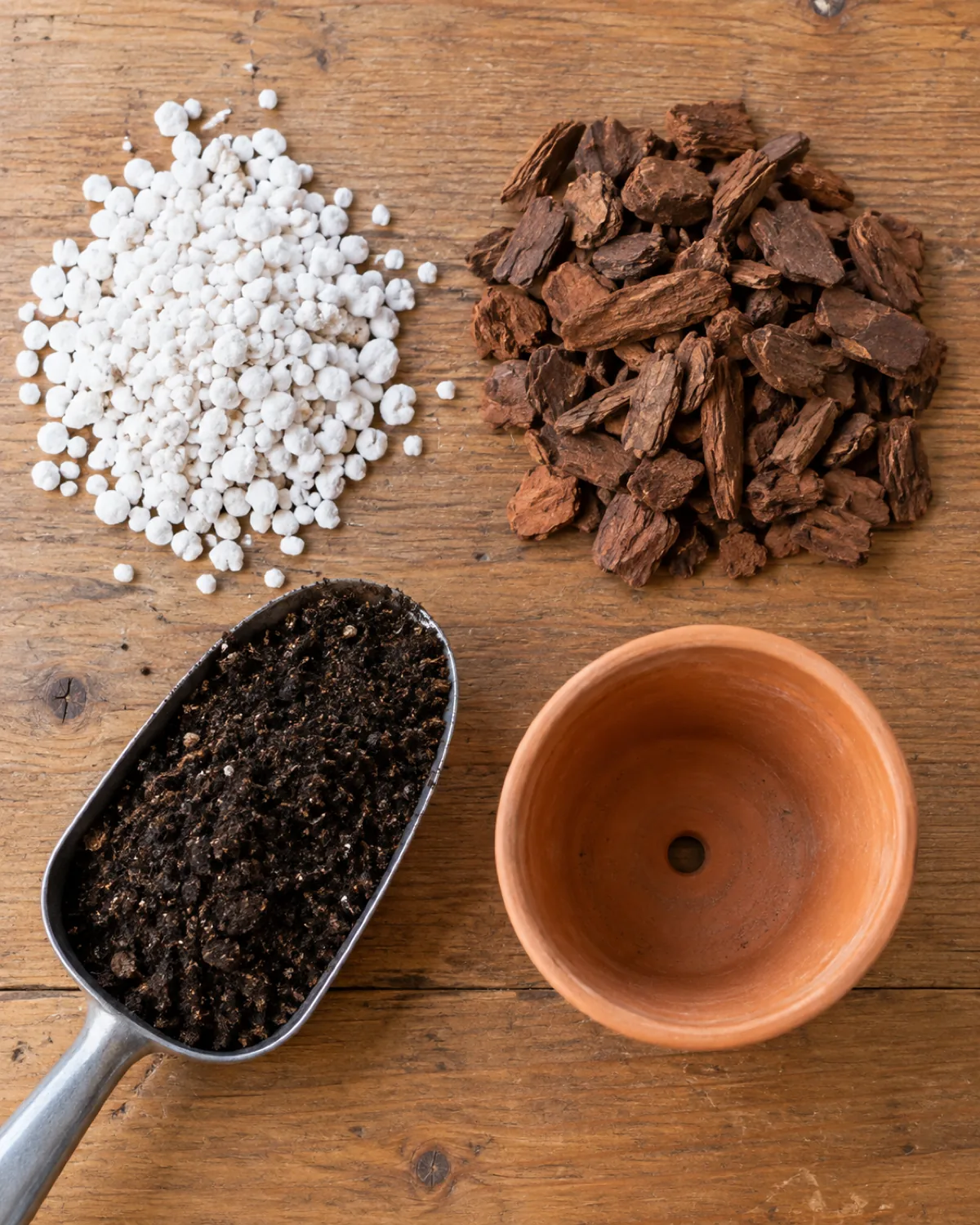
If your soil holds water for a week despite good drainage and reasonable watering, the mix itself is the problem. Standard commercial potting soil is designed to retain moisture — great for outdoor containers that dry out fast, too heavy for most indoor plants.
The fix is adding drainage amendments:
- Perlite — the white volcanic glass pieces that look like tiny styrofoam balls; they create air pockets in the soil and dramatically improve drainage
- Orchid bark — chunky bark chips that resist compaction and let water flow through; essential for epiphytic plants like philodendrons and monsteras
- Coarse sand or pumice — heavier than perlite, equally effective at improving aeration
For most tropical houseplants, a mix of roughly equal parts potting soil, perlite, and orchid bark works well. This gives the roots moisture without waterlogging.
- Succulents and cacti: 50% inorganic (perlite, pumice, coarse sand) and 50% organic (potting soil) — or use a pre-made cactus mix
- Aroids (monstera, philodendron, pothos): 1:1:1 potting soil, perlite, orchid bark
- Ferns and calatheas: slightly heavier on potting soil for moisture retention, but still add 20–30% perlite
Bottom watering can also reduce overwatering risk. Place the pot in a tray of water and let it soak from the bottom up for 20 to 30 minutes. The soil wicks up only what it can hold. Remove the pot, let it drain, and the result is evenly moist soil without the surface saturation that causes gnats and mold.
A Quick Overwatering Checklist You Can Run in Two Minutes
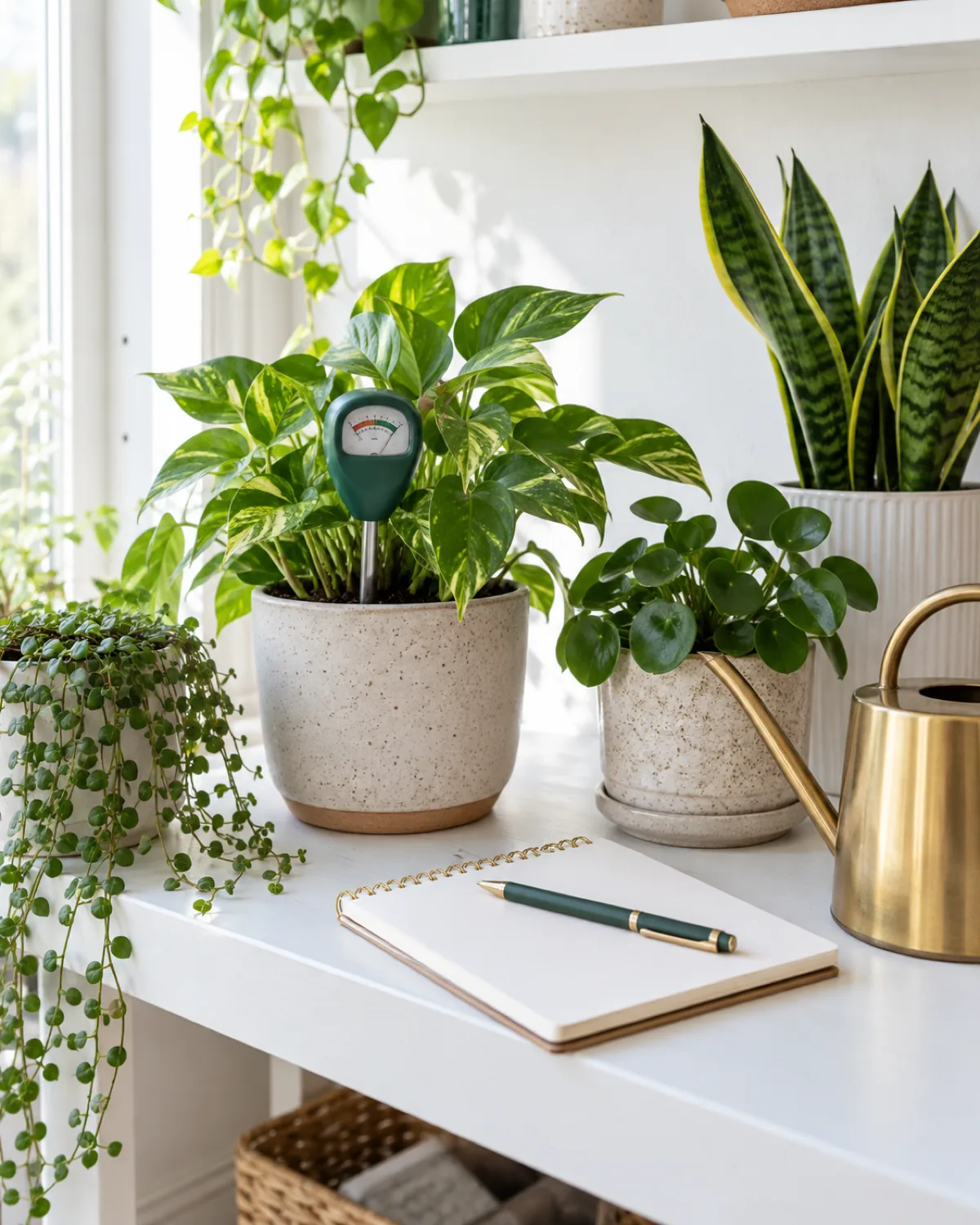
Before you water any houseplant, run through these five checkpoints. If more than one comes back positive for overwatering, skip the watering session and check again in a day or two.
- Finger test — push your index finger two inches into the soil. Still moist? Do not water.
- Weight test — lift the pot with one hand. Still heavy? The soil has not dried out yet.
- Leaf check — look at the lowest leaves. Soft, pale yellow, and limp? That is overwatering, not hunger.
- Smell test — lean close to the soil surface and sniff. Sour or musty? The soil has been anaerobic too long.
- Drainage tray — look at the saucer or tray under the pot. Standing water? Dump it immediately.
If all five come back clear — dry top soil, lightweight pot, healthy leaves, clean smell, empty tray — water thoroughly until it runs out the drainage holes. Then do not water again until the next time all five pass.
This routine takes less than two minutes and prevents the vast majority of overwatering problems. It replaces the calendar with actual plant feedback, which is the only system that adapts automatically to seasonal changes, light shifts, and the plant's real needs.
Quick Reference
14 overwatering plants essentials to save
- 1Roots suffocate from lack of oxygen, not from water itselfSaturated soil fills air pockets and starves roots of the oxygen they need for basic metabolic function.
- 2Watering on a calendar is the single biggest cause of overwateringThe same plant needs water every three days in summer and every ten in winter. The finger test replaces the schedule.
- 3Overwatered yellow leaves are soft and mushy, not crispyLower leaves go uniformly pale yellow and feel limp. Underwatered leaves turn brown and papery at the edges.
- 4Edema blisters on leaf undersides are an early warningSmall raised bumps mean the plant absorbed more water than it can transpire. Reduce watering before stems go soft.
- 5Sour-smelling soil means anaerobic bacteria are activeHealthy soil smells earthy. A musty or sour odor means the soil has been wet long enough for decomposition to begin.
- 6Fungus gnats breed in consistently moist topsoilKill the watering habit and the gnats disappear. Sticky traps catch adults but the larvae live in the wet soil.
- 7A heavy pot with a wilting plant is overwateredThe weight test takes two seconds. A light pot with wilting means underwatered. Weight does not lie.
- 8Succulents, ZZ, and snake plants have built-in water storageTheir thick leaves and rhizomes hold weeks of water. Weekly watering is far too much for any of them.
- 9Drainage holes are non-negotiable for any plant potNo amount of careful watering compensates for zero drainage. Use a nursery pot inside a decorative cache pot.
- 10Stop watering, remove the saucer, and increase light and airflowThe four immediate actions for a caught-early overwatered plant. Most recover fully within two to three weeks.
- 11Trim brown mushy roots back to white tissue and repot in dry mixIf stem base is soft or soil smells sour after drying, the roots need inspection and a fresh start.
- 12Cut watering by half or more in winterShorter days, less light, slower metabolism. The same schedule that worked in July will rot roots in January.
- 13Add perlite and bark to standard potting mix for better drainageA 1:1:1 mix of soil, perlite, and orchid bark prevents waterlogging for most tropical houseplants.
- 14Run the five-point checklist before every watering sessionFinger, weight, leaf, smell, tray. Two minutes replaces every watering calendar and adapts to every season.
kultivy.com

Mara writes about indoor plants for people who want honest, practical care advice without the fluff. She covers everything from first-time plant parents to collectors chasing rare aroids — always with the science behind why something works. More at kultivy.com.