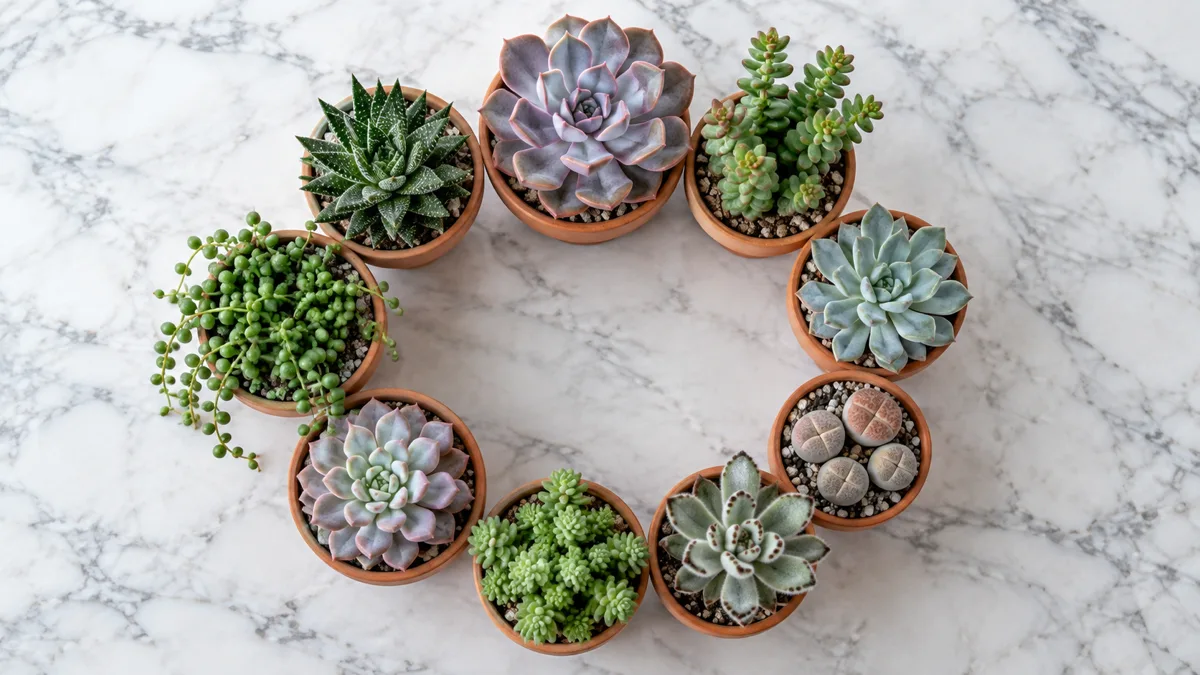
Cacti are succulents, but they play by their own rules. Areoles, spines, and a winter dormancy cycle that triggers flowers set them apart from every other plant on your shelf.
The care advice that works for echeverias and jade plants will keep a cactus alive — but it will not make one bloom. And blooming is the real reward of indoor cactus keeping.
The adjustments are straightforward once you understand what makes cacti different: more light than you think, less water than you think, a soil mix that drains almost instantly, and a cool winter rest that tells the plant spring is coming.
Cacti belong to their own plant family, and that family has its own rulebook. These thirteen sections cover the areole that makes them unique, the light they actually need, the watering rhythm that prevents rot, the cool rest that triggers flowers, and the handling techniques that keep your fingers intact.
What makes cacti different from other succulents
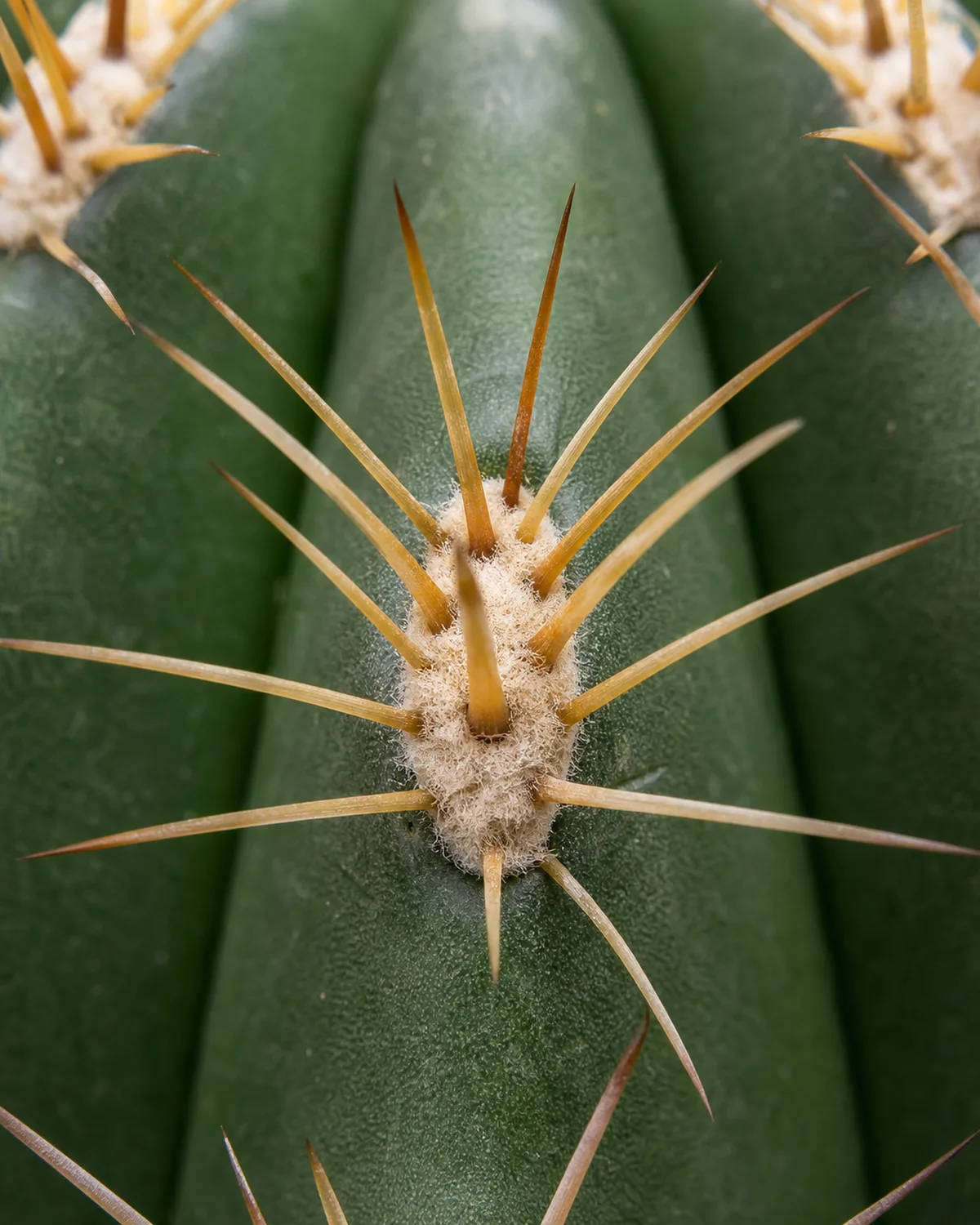
All cacti are succulents. Not all succulents are cacti. The dividing line is a single anatomical structure: the areole.
An areole is a small cushion-shaped bump on the cactus surface from which spines, flowers, hair, and new growth emerge. No other plant family has areoles. If a thick, water-storing plant has areoles, it is a cactus. If it does not, it is some other kind of succulent.
Spines are modified leaves. Over millions of years of evolution in arid environments, the broad leaves that would lose water through transpiration were replaced by thin, hard spines that shade the stem, reduce air movement across the surface, and deter animals from biting into the water stored inside.
Without true leaves, cacti perform photosynthesis through their stems — those green, ribbed, or padded bodies are the equivalent of a tree's canopy. The ribs on a barrel cactus expand and contract like an accordion as the plant takes in and uses water.
Cacti also use a specialized form of photosynthesis called CAM (Crassulacean Acid Metabolism). Unlike most plants that open their stomata during the day, cacti open theirs at night to take in carbon dioxide. This reduces water loss by up to ninety percent, because the cooler nighttime air causes far less evaporation.
This matters for care because it explains why cacti tolerate drought that would kill a fern in days — and why overwatering is so destructive. The entire organism is built to conserve water, not shed it.
Cacti demand very little attention — but they demand the brightest spot in your home. That one requirement is non-negotiable.
Light: the one thing indoor cacti almost never get enough of
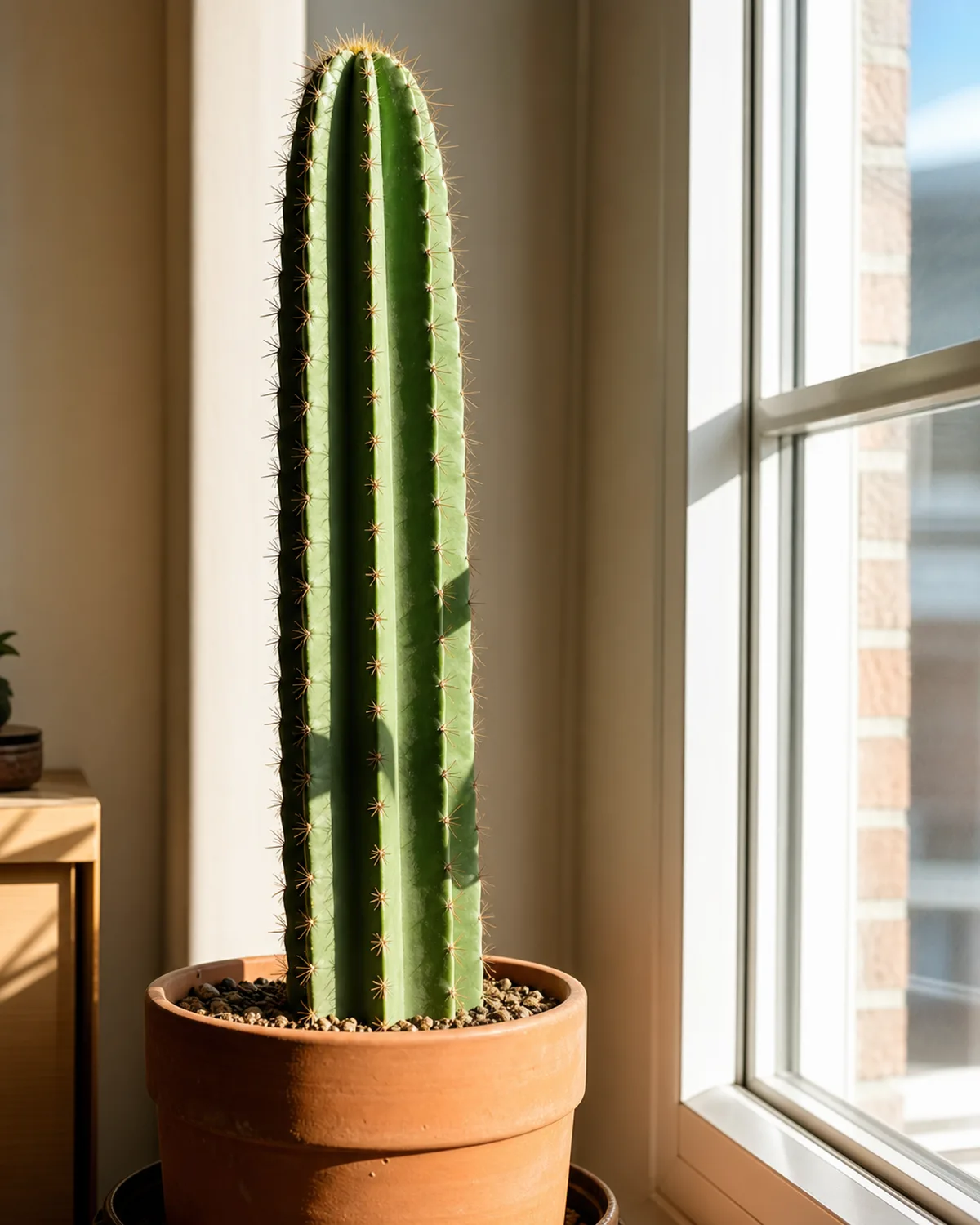
Desert cacti need the brightest spot you have. Six hours of direct sunlight daily is the minimum for healthy growth. A south-facing window is ideal. East-facing provides weaker morning sun and may be enough for some smaller species. West-facing delivers intense afternoon heat that most cacti enjoy. North-facing windows are not enough for any desert cactus.
Without sufficient light, a cactus etiolates — it stretches toward the light source, growing thin and pale at the top while the base stays normal. A barrel cactus that should be round becomes elongated. A columnar cactus that should be thick grows spindly. Etiolation is irreversible; the stretched portion never thickens back up.
The difference from general succulent light needs is degree. Where an echeveria can manage with bright indirect light, most cacti genuinely need direct sun hitting the plant. Indirect light through a sheer curtain is not enough.
A full-spectrum LED grow light running twelve to sixteen hours daily can supplement weak winter light or replace window sun entirely. Place the light six to twelve inches above the cactus — farther away and the intensity drops too quickly to matter.
Rotate the pot a quarter turn weekly. Without rotation, the cactus leans toward the light source, and the shaded side may develop a pale, weak strip.
Watering: less than you think, more than zero
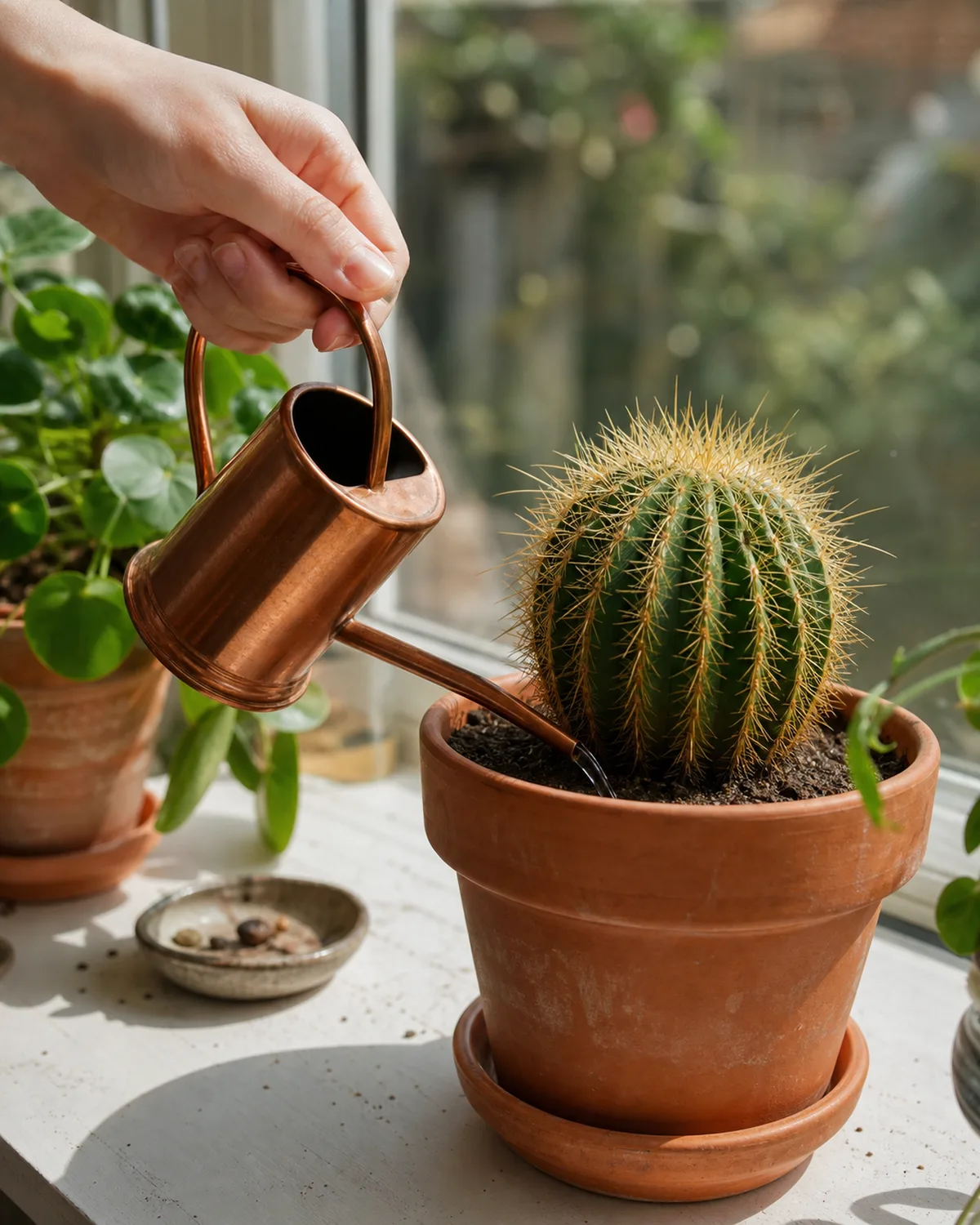
Cactus watering follows the same soak-and-dry principle as general succulent watering, but pushed further toward the dry end. Wait until the soil is completely dry all the way through the pot — not just the top inch, but the very bottom. Then soak thoroughly until water runs from the drainage holes. Then wait again.
During the growing season — spring through early fall — this typically means watering every two to three weeks. In winter dormancy, most desert cacti need water once a month at most. Some growers stop watering entirely from November through February and see no harm.
The roots of desert cacti evolved to absorb water rapidly from brief, violent rainstorms and then sit in bone-dry soil for weeks. They are extremely efficient at taking in moisture quickly. They are extremely inefficient at surviving in consistently moist soil. Soggy roots rot faster in a cactus than in almost any other houseplant.
Water at the soil line, not over the top of the plant. Water sitting in the crevices between ribs or in the crown of a globular cactus can cause localized rot, especially in cooler temperatures. A narrow-spout watering can makes soil-line watering easier.
The single most common cactus killer is watering on a fixed schedule — "every Sunday" — without checking whether the soil is actually dry. Check every time. Stick a wooden skewer into the soil and pull it out. If it comes out clean and dry, water. If it has any moisture or soil clinging to it, wait.
Soil: the fastest-draining mix you can build
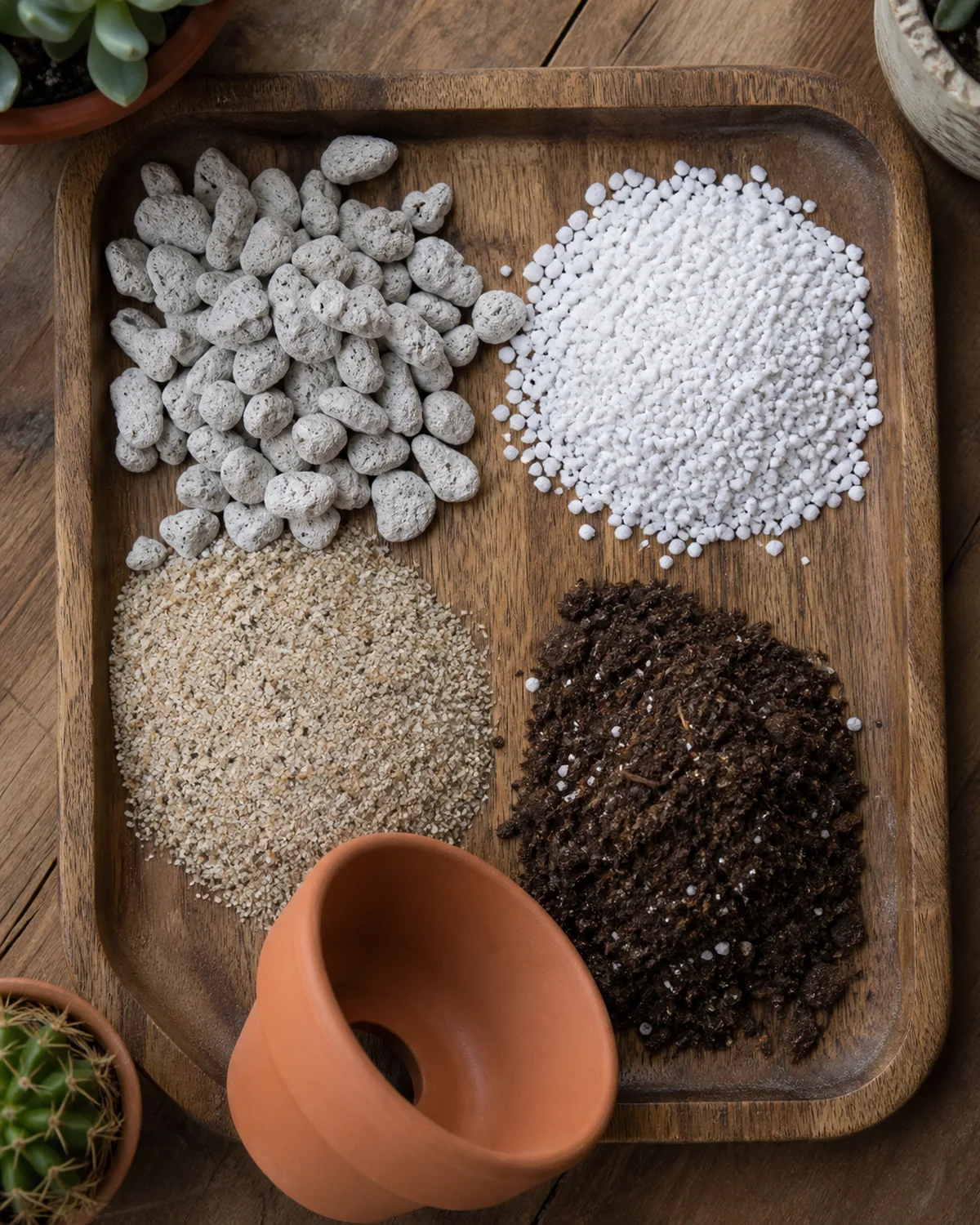
Standard houseplant potting mix will hold moisture against cactus roots for days — exactly the condition that causes rot. A cactus needs soil that drains almost instantly and dries completely within one to two days.
The target ratio is roughly seventy percent inorganic material to thirty percent organic. The inorganic component provides drainage and aeration: pumice, perlite, coarse horticultural sand (not fine beach sand, which compacts), or crushed granite. The organic component provides the small amount of nutrients cacti need: standard potting soil or coconut coir.
Commercial "cactus and succulent" mixes are better than standard potting soil, but most still retain too much moisture for true desert cacti. The fix: buy the commercial cactus mix and add an equal volume of perlite or pumice. That simple amendment turns an adequate mix into a good one.
The pot matters as much as the soil. Terracotta is the best material for cacti because it is porous — it wicks moisture away from the root zone through evaporation across the pot wall. Glazed ceramic, plastic, and concrete pots all trap moisture longer. If you use a non-porous pot, increase the inorganic fraction of your soil mix to compensate.
A drainage hole is not optional. No amount of rocks at the bottom of a pot without drainage will save a cactus from root rot. The rocks create a perched water table that keeps the bottom of the soil saturated — the opposite of what they are supposed to do. For a more detailed look at potting mechanics, see the repotting guide.
Temperature and the bloom trigger
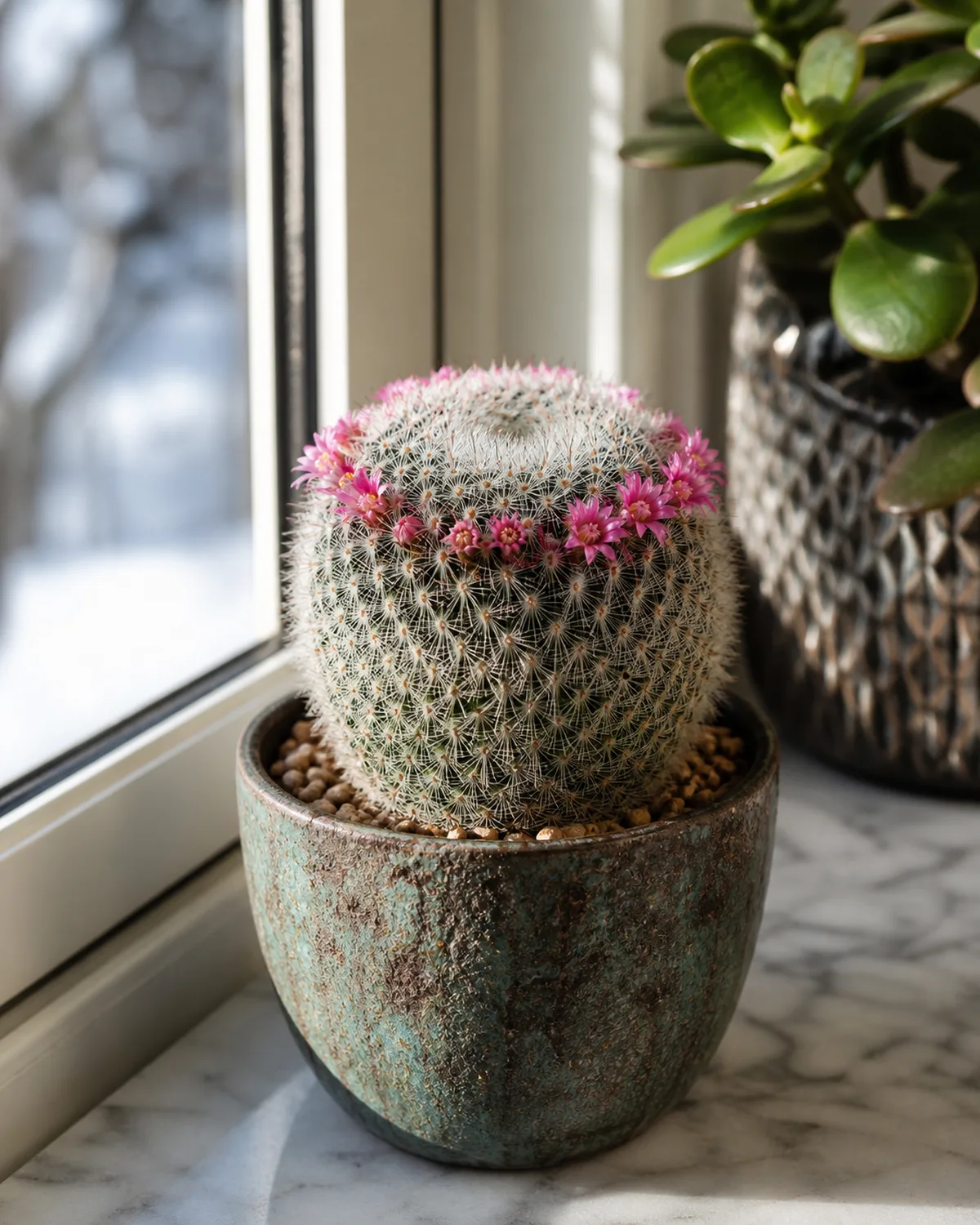
Most desert cacti tolerate a wide temperature range during the growing season — sixty-five to ninety-five degrees Fahrenheit (eighteen to thirty-five Celsius). They handle dry heat better than humidity. A sunny windowsill that gets hot in summer is ideal, not a problem.
The critical temperature event is the cool winter rest. This mechanism triggers flowering, and it is the reason most indoor cacti never bloom despite growing well.
Here is how it works: in the wild, desert temperatures drop significantly in winter. This signals the cactus to enter dormancy — a metabolic slowdown where growth stops and energy is redirected toward flower bud development. When spring warmth and longer daylight return, the stored energy produces flowers.
To replicate this indoors, move the cactus to a cool spot — fifty to fifty-five degrees Fahrenheit (ten to thirteen Celsius) — for six to eight weeks during winter. An unheated room, a garage that stays above freezing, or a spot near a cold window can work. Reduce watering to near zero during dormancy. The cactus should look unchanged — not growing, not wilting, just dormant.
After the cool rest, return the cactus to its warm sunny spot and resume normal watering. Flower buds should begin to appear within a few weeks.
Without this temperature drop, many cactus species will grow indefinitely — healthy, green, and flowerless. The common complaint "my cactus has never bloomed in ten years" almost always traces back to the plant never experiencing winter.
Cacti should never go below forty degrees Fahrenheit (four Celsius). Most species suffer tissue damage at freezing temperatures. The goal is cool, not cold.
Common types for indoors
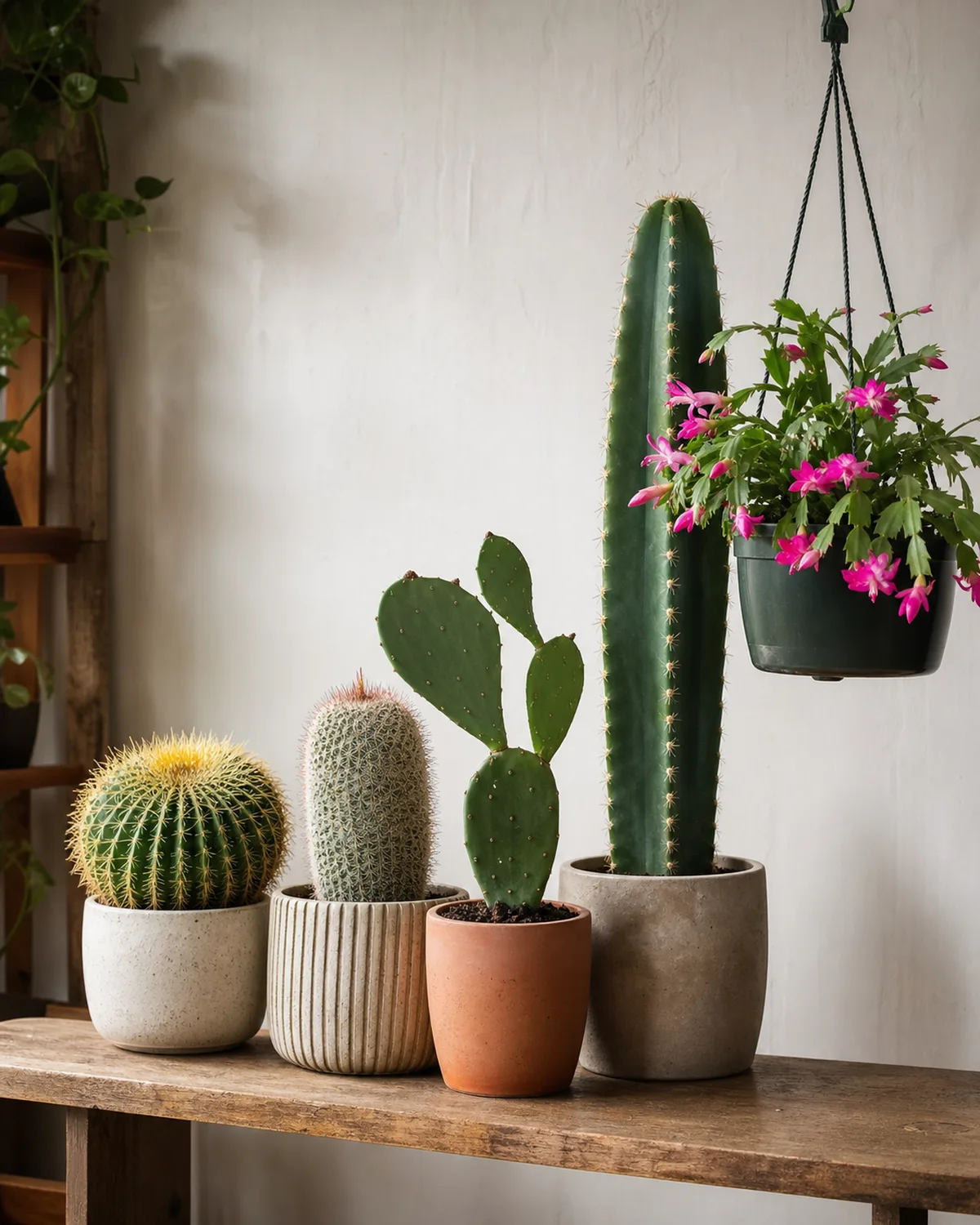
Mammillaria is the best cactus genus for beginners who want flowers. These small, globular cacti produce rings of tiny colorful flowers around the crown, often in their first or second year indoors. They stay compact — most species max out at four to six inches across — making them ideal windowsill plants. Over 200 species exist, with spines ranging from soft and hairlike to stiff and hooked.
Barrel cacti (Echinocactus, Ferocactus) are the classic round-bodied cacti with prominent ribs and stout spines. Echinocactus grusonii — the golden barrel — is the most popular, forming a near-perfect sphere covered in golden-yellow spines. These grow slowly and can live for decades indoors without outgrowing a medium-sized pot.
Prickly pear (Opuntia) grows in flat pad segments that branch off each other. The pads are photosynthetic stems, not leaves. Some species produce edible fruit. The main indoor hazard is glochids — microscopic barbed hairs on the pad surface that detach on contact and embed in skin. They are nearly invisible and maddeningly difficult to remove. Handle with thick leather gloves.
Columnar cacti (Cereus, Pilosocereus) create dramatic vertical statements. A cereus in a large pot can reach five feet indoors. Pilosocereus pachycladus, the blue torch cactus, has striking blue-green coloring. These are the cacti that turn a bright corner into a statement.
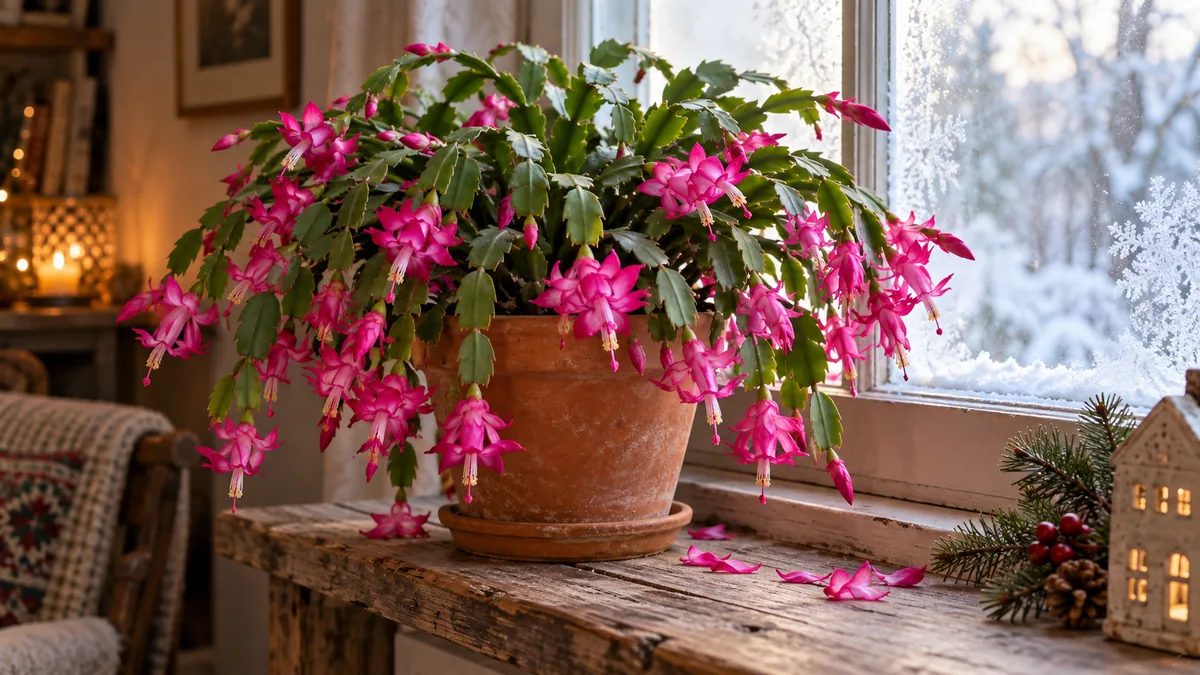
Christmas cactus (Schlumbergera) and Easter cactus (Hatiora) look and behave nothing like desert cacti because they are not desert plants — they are epiphytic jungle cacti. Their flat segmented stems cascade, they bloom in winter, and they need humidity and indirect light. See the desert vs. jungle section below.
Handling and repotting without getting hurt
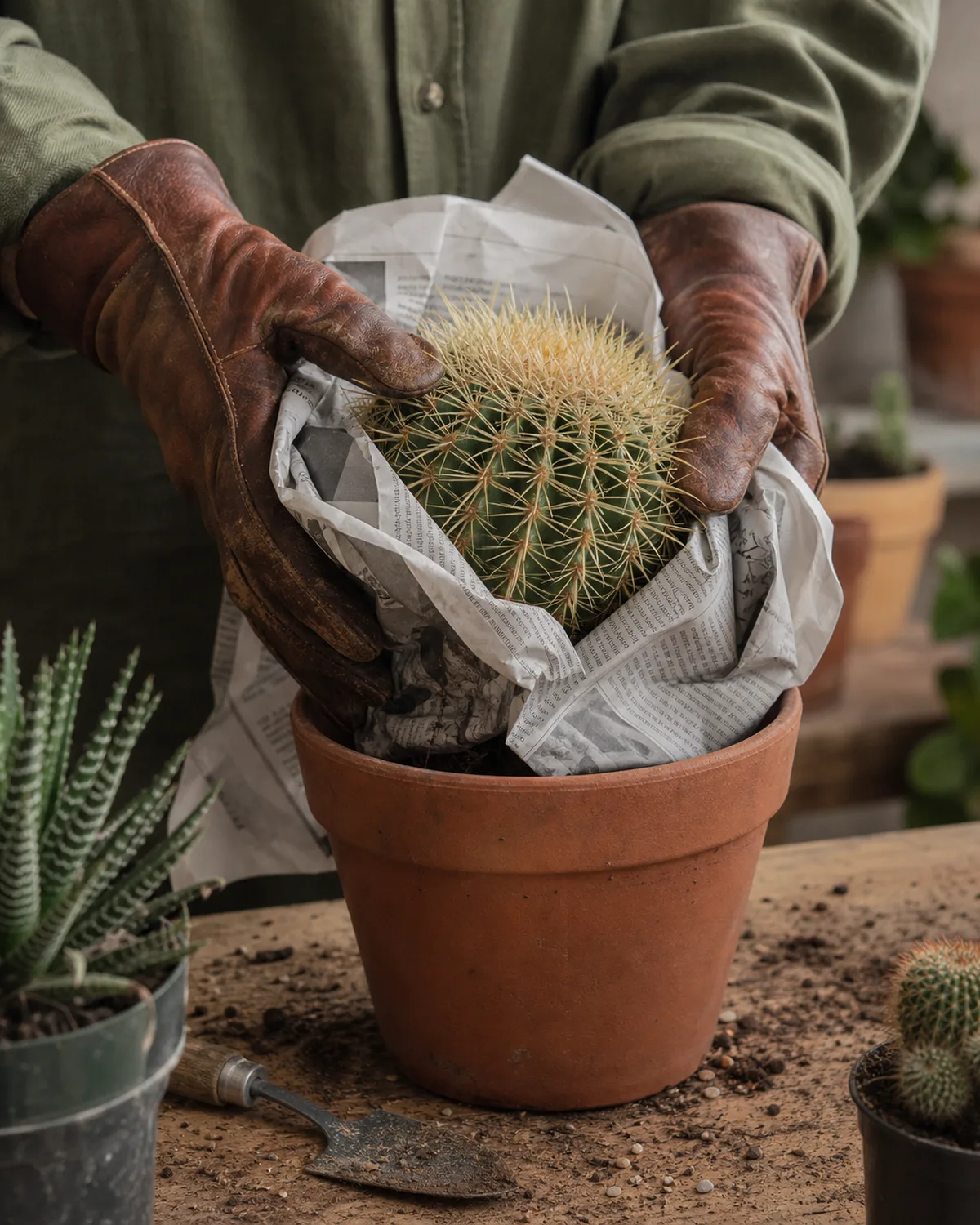
Spines are the obvious barrier to cactus handling. The three safest methods:
Newspaper wrap. Fold several sheets of newspaper into a thick band, wrap it around the cactus like a collar, and grip the newspaper to lift. The paper layers cushion the spines enough to hold the plant without being pierced. This works for medium to large cacti.
Leather gloves. Thick leather gardening gloves or welding gloves provide enough protection for most species. Thin rubber or cloth gloves do not — spines go straight through. Leather gloves do not protect against glochids (the microscopic barbs on prickly pear), which are small enough to penetrate leather seams.
Kitchen tongs. Silicone-tipped kitchen tongs work well for small cacti — three inches or less. Grip gently around the base and lift. The tongs keep your hands completely away from the spines.
Cacti grow slowly and prefer snug pots. Repot only when the roots have filled the current pot — typically every two to four years. Signs that repotting is needed: roots visible through the drainage hole, water running straight through without being absorbed, or the cactus visibly too large for its container.
Repot in spring at the start of the growing season. Choose a pot only one inch larger in diameter than the current one. Overpotting — putting a small cactus in a large pot — means excess soil that stays wet for too long around the roots.
After repotting, wait five to seven days before watering. This allows any roots damaged during the move to callous over and seal. Watering immediately after repotting invites rot through the fresh wounds.
Fertilizing: almost nothing, at the right time
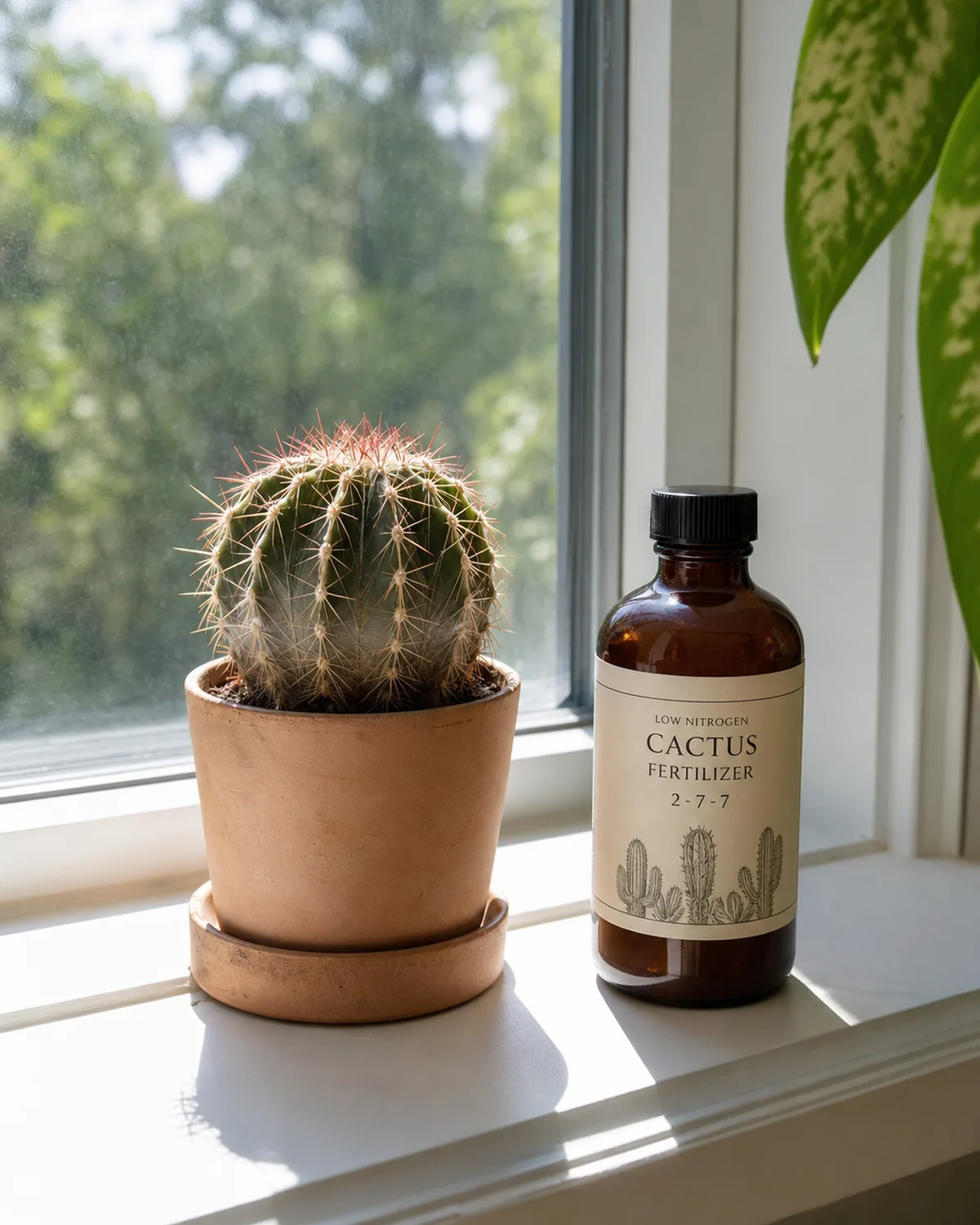
Cacti in the wild grow in nutrient-poor soil — rocky desert ground, sandy washes, cliff crevices. They evolved to thrive on very little fertility. Overfertilizing causes soft, fast growth that is vulnerable to rot, pests, and structural weakness.
Use a low-nitrogen cactus formula — a ratio like 2-7-7 or 5-10-10 — diluted to half the label strength. The reduced nitrogen prevents soft growth. The higher phosphorus and potassium support root development and flowering.
Feed once a month during the active growing season only (spring through early fall). Never fertilize during winter dormancy — the cactus is not metabolizing nutrients and the unused salts accumulate in the soil, potentially burning roots.
Never fertilize a newly repotted cactus. Wait at least one month after repotting before the first feeding. The fresh soil contains enough nutrients, and damaged roots from repotting are more susceptible to fertilizer burn.
Every few months during the growing season, water thoroughly without fertilizer to flush accumulated mineral salts from the soil. This prevents the white crusty buildup that sometimes appears on the soil surface or pot rim.
The most common fertilizing mistake with cacti is not overfeeding — it is using a balanced all-purpose fertilizer (like 10-10-10) at full strength. The excess nitrogen pushes rapid soft growth that distorts the plant's natural form and creates tissue that rots at the first overwatering.
Propagation: offsets, stem cuttings, and seeds
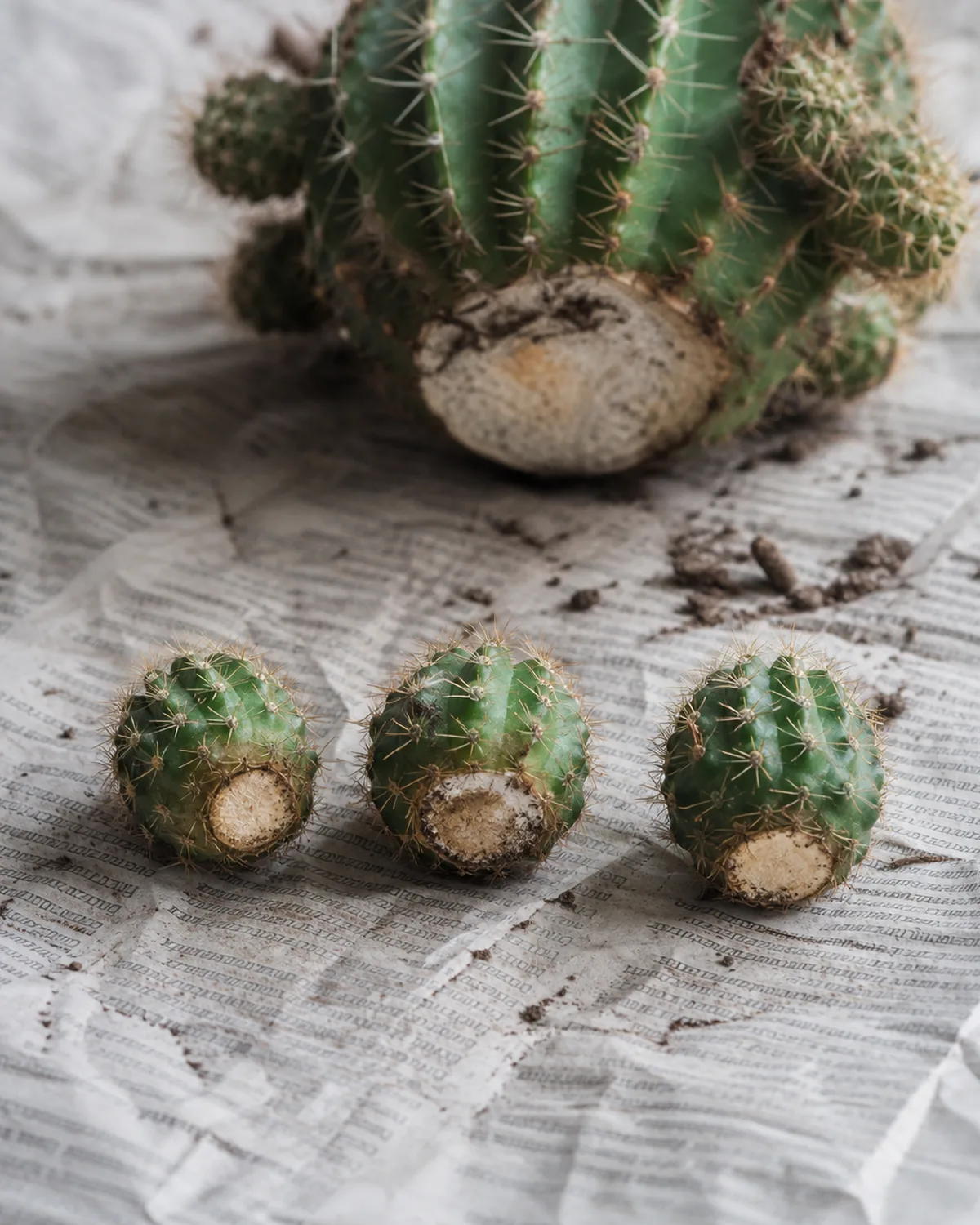
The easiest way to propagate a cactus is from offsets — the small pups that grow at the base of the mother plant. Mammillaria, Echinopsis, and many barrel cacti produce pups freely once they reach maturity.
Twist or cut the pup free with a clean, sharp blade. If the pup has its own roots already, you can pot it immediately. If not, let the cut end callous in dry air for three to seven days until a dry, whitish skin forms over the wound. Then place the calloused end on the surface of dry cactus mix. Do not bury it deeply and do not water for a week. Roots should emerge within two to four weeks.
The callous step is critical. Planting a fresh cut into moist soil almost guarantees rot. The exposed inner tissue absorbs moisture and bacteria, and the pup rots before roots ever form.
Stem cuttings work for columnar and pad-type cacti. For a columnar cactus, cut a segment four to six inches long with a clean blade. For a prickly pear, twist or cut off an entire pad at the joint. Callous both types for five to seven days (longer for thicker cuts), then plant upright in dry cactus mix.
Seed propagation is possible but demands patience. Some cactus species take three to five years to grow from seed to a recognizable plant, and ten or more years to reach flowering size. Seeds need consistent warmth (seventy-five to eighty-five degrees Fahrenheit), moisture (unlike adult cacti), and a sterile medium. This is a hobby project, not a quick multiplication method.
Cactus Care Indoors: The Quick Reference
- 1Areoles are the defining featureThe small cushion-shaped bump that produces spines and flowers. If it has areoles, it's a cactus. No other plant family has them.
- 2Six hours direct sun minimumSouth window ideal. Grow light if needed. Without direct sun most cacti etiolate — stretch thin and pale, irreversibly.
- 3Bone dry all the way throughEvery 2-3 weeks summer, monthly or less in winter. Water at the soil line, never over the crown. Skewer test before every watering.
- 470/30 grit-to-organic soilPumice or perlite dominates. Commercial cactus mix + extra perlite. Terracotta with drainage holes. Should dry in 1-2 days.
- 5Cool rest triggers flowers50-55°F for 6-8 weeks in winter. Near-zero water during rest. Without this, most cacti never bloom indoors.
- 6Mammillaria blooms easiestSmall, compact, flowers in 1-2 years. Best beginner cactus for people who want blooms. Over 200 species to collect.
- 7Newspaper wrap for handlingFold several layers around the plant to grip safely. Leather gloves for frequent handling. Kitchen tongs for small specimens.
- 8Low-nitrogen fertilizer only2-7-7 or 5-10-10 at half strength. Monthly during growing season. Never in winter dormancy. Flush salts periodically.
- 9Callous before planting cuttings3-7 days of dry air on the cut end. Fresh cuts in moist soil rot before rooting. This step is not optional.
- 10Check crevices for mealybugsWhite cottony masses between ribs and under spines. Isopropyl alcohol on a cotton swab. Check monthly — spines hide pests.
- 11Corking is normal, not rotBrown hardening at the base of older cacti is natural aging. Rot is soft and dark. Corking is firm and dry.
- 12Jungle cacti are differentChristmas and Easter cacti need indirect light, higher humidity, regular watering. Opposite of desert cactus care.
- 13Keep out of reach of kidsMost cacti are non-toxic but spines cause puncture wounds. Glochids on prickly pear are microscopic and embed in skin.
kultivy.com
Mealybugs, scale, and the rot that hides inside
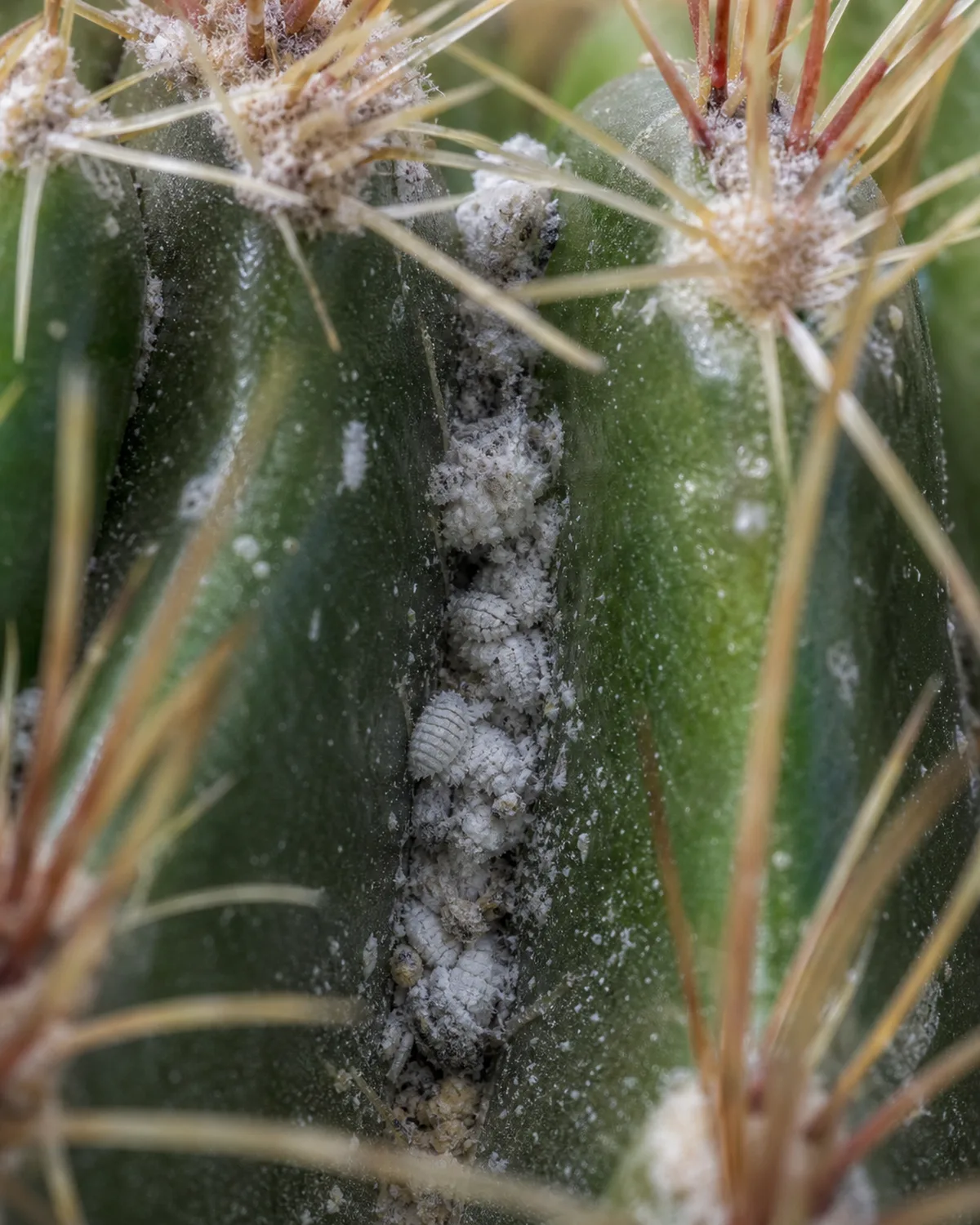
Cacti have fewer pest problems than most houseplants, but the pests they attract are specialists at hiding in the one place you cannot easily inspect — between spines and inside rib crevices.
Mealybugs are the most common cactus pest. They appear as white cottony clusters, typically in the protected areas between ribs, at the base of spines, or where pups join the mother plant. The spines make mechanical removal difficult.
The most effective treatment: dip a cotton swab in seventy percent isopropyl alcohol and dab each visible cluster. The alcohol dissolves their waxy coating on contact. Repeat weekly for three weeks to catch new hatchlings.
Scale insects look like flat brown or tan bumps on the stem surface and are often mistaken for natural markings. They do not move visibly — they attach, build a waxy shield, and feed in place. Scrape them off with a fingernail or wooden stick, then dab the spot with alcohol to kill any remaining insects underneath.
Root rot is not a pest but the most common cactus disease. It starts at the roots from overwatering and works upward. By the time you notice the base turning soft and dark, the rot has often progressed far inside.
If caught early: unpot, cut away all soft tissue until every exposed surface is firm and green, let the wound callous for five to seven days, and replant in completely dry cactus mix.
Corking looks alarming but is harmless. It is a brown, woody hardening at the base of older cacti — the stem equivalent of bark forming on a tree trunk. Corking is firm and dry to the touch. Rot is soft and often dark or black. The texture test distinguishes them instantly.
For a comprehensive guide to identifying and treating houseplant pests across species, see the pest and disease guide.
Why your cactus is not blooming (and how to fix it)
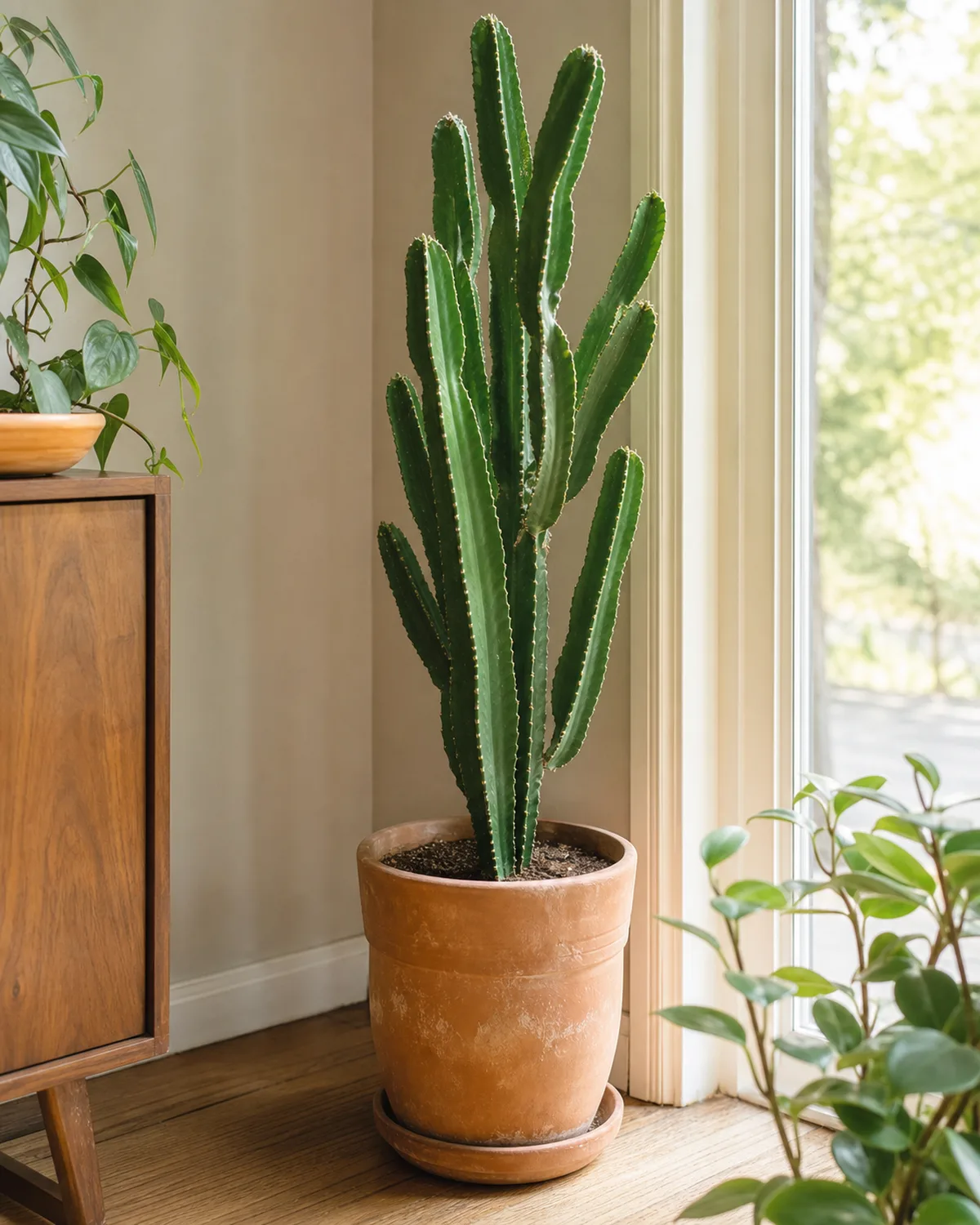
Four factors control whether an indoor cactus produces flowers. All four must align.
Light. Six or more hours of direct sunlight daily. A cactus in a dim room will not bloom regardless of other conditions. This is the most common missing factor.
Cool winter rest. Six to eight weeks at fifty to fifty-five degrees Fahrenheit with near-zero water. This dormancy period redirects the plant's energy from growth to bud development. Without it, the plant never receives the hormonal signal to flower. This is the second most common missing factor.
Maturity. Some cactus species need years to reach blooming age. Mammillaria may flower in its first or second year. A barrel cactus may take five to ten years. A columnar cereus may take fifteen or more. No amount of perfect care makes a juvenile cactus bloom before it is ready.
Patience. Even with all conditions met, buds develop slowly. A cactus that has spent ten years without a cool rest does not bloom immediately after its first dormancy — it may need two or three annual cycles before the first flowers appear.
The most reliable path to indoor cactus flowers: choose a mammillaria (genetically disposed to early flowering), give it a south window (maximum light), stop watering and move it to a cool room in November (dormancy trigger), and bring it back to warmth and light in February. Flowers typically appear within three to six weeks of the return to warmth.
Desert vs. jungle cacti: the care split
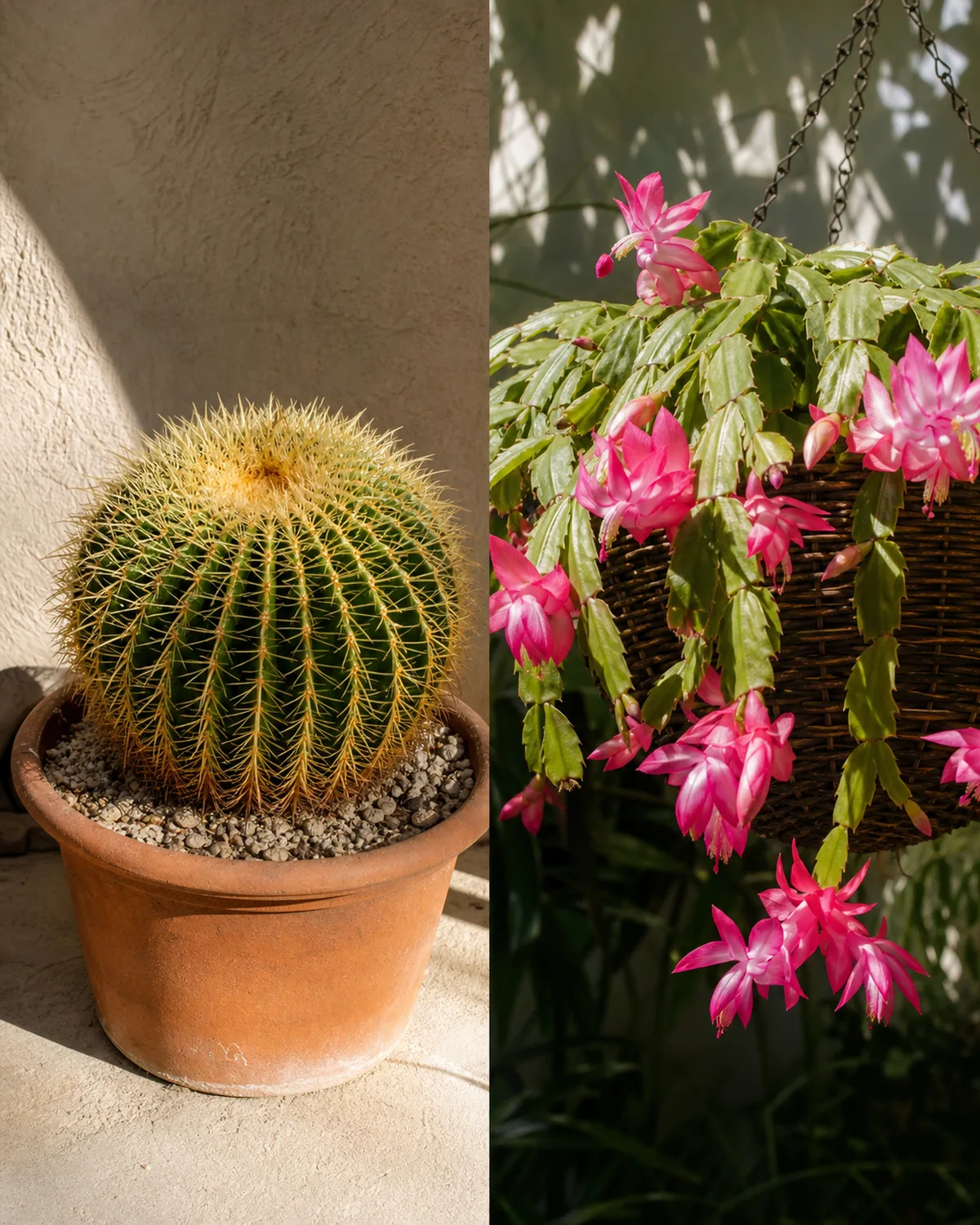
Everything above describes desert cacti — the barrel, columnar, mammillaria, and prickly pear types that most people picture when they hear the word cactus. But an entire branch of the cactus family evolved in a completely different environment and needs completely different care.
Jungle cacti — primarily Christmas cactus (Schlumbergera), Easter cactus (Hatiora), and orchid cactus (Epiphyllum) — are epiphytes. They grow on tree branches in tropical and subtropical forests, not in desert sand.
Their flat, segmented, leaf-like stems look nothing like the ribbed cylinders of desert cacti because they solve a different problem: catching filtered light in a forest canopy rather than maximizing water storage in full desert sun.
The care differences are fundamental:
Light. Jungle cacti want bright indirect light. Direct sun burns their flat stems. This is the opposite of desert cacti, which demand direct sun. An east-facing window or a spot near (but not in) a south window is ideal.
Water. Jungle cacti need more frequent watering than desert types. Let the top inch of soil dry between waterings, not the entire pot. They tolerate brief drought but dislike the prolonged bone-dry periods that desert cacti prefer.
Humidity. Jungle cacti benefit from humidity above fifty percent — mist occasionally, use a pebble tray, or group them with other tropical plants. Desert cacti do not care about humidity and may rot in consistently humid conditions.
Soil. Jungle cacti need well-draining but moisture-retentive soil — a standard peat-based potting mix with added perlite works well. The seventy-percent-grit desert mix drains too fast and dries too quickly for them.
Bloom trigger. Christmas cactus blooms are triggered by short day length (long nights of twelve or more hours) and cool temperatures (fifty to sixty degrees Fahrenheit) in autumn — not by a prolonged winter freeze. Easter cactus responds to the same cues but later in the season.
The critical practical point: if someone gives you a "cactus" and it has flat segmented stems with no visible spines, it is almost certainly a jungle cactus. Treat it like a tropical houseplant that likes to dry out slightly between waterings, not like a desert survivor.
Displaying cacti indoors
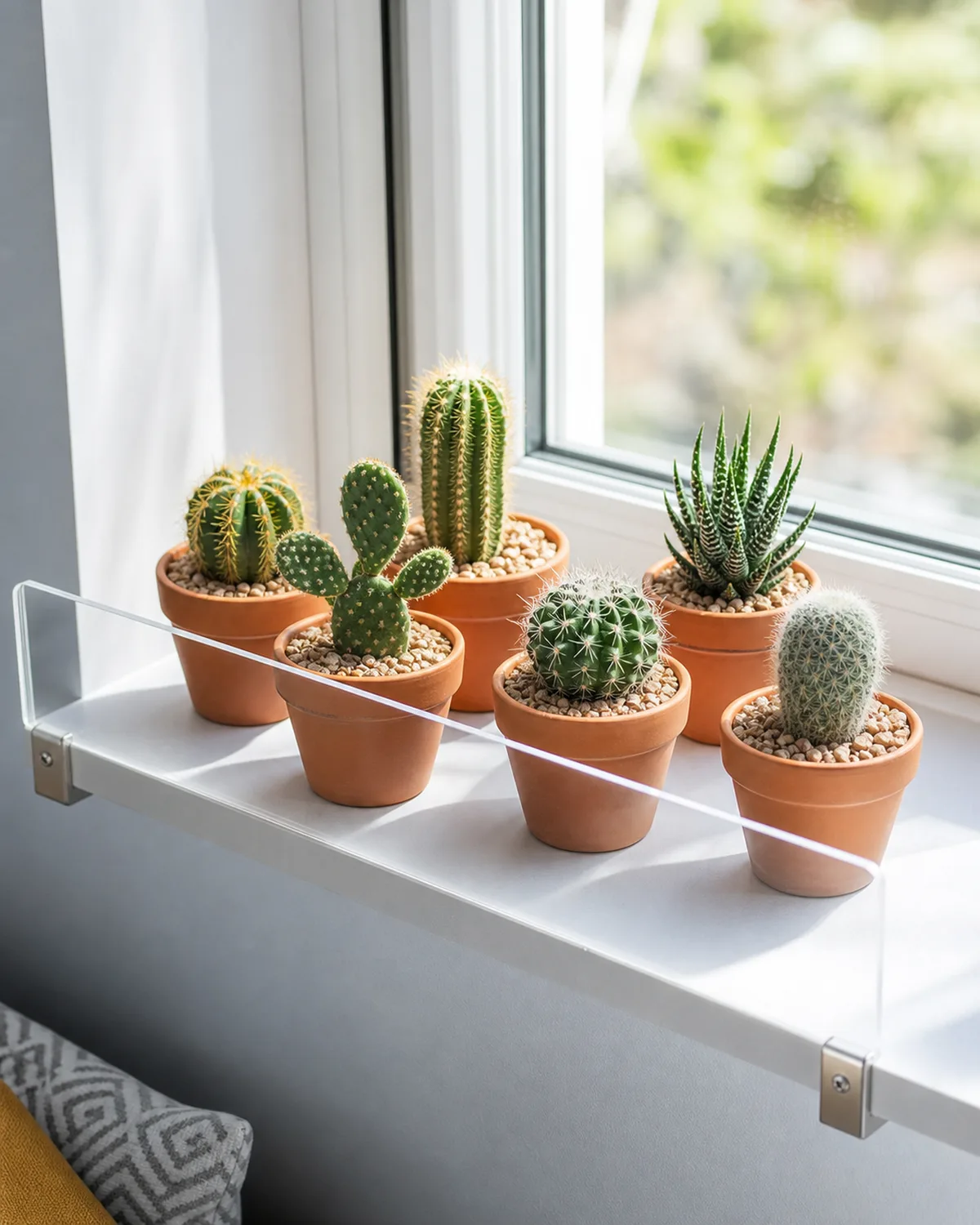
The visual appeal of cacti comes from contrast — in shape, texture, height, and color. A display that mixes forms creates more visual interest than a row of identical specimens.
Windowsill groupings are the most practical arrangement. Group a tall columnar cactus, a round barrel, and a small clustered mammillaria together. The height differences create a natural silhouette. Matching terracotta pots in different sizes provide cohesion while the cacti provide diversity.
Floor specimens work for larger columnar types. A five-foot cereus or pilosocereus in a substantial pot anchors a bright corner the way a floor lamp does — vertical, structural, and impossible to miss. Position it right next to the window for maximum light, not across the room where it will look dramatic but slowly decline.
Safety is a real consideration. Most cacti are technically non-toxic — eating one would cause mechanical injury from the spines, not chemical poisoning. But spines cause painful puncture wounds, and the glochids on prickly pear pads are arguably worse — microscopic barbed hairs that embed in skin and resist removal.
Duct tape pressed and peeled across the affected skin works better than tweezers for glochids. The barbs are too small for tweezers to grip reliably.
Keep spiny cacti on elevated shelves, high windowsills, or surfaces that children and pets cannot reach. A clear acrylic shelf barrier adds protection without blocking light.
If you have pets or young children and still want the cactus aesthetic, consider spineless cultivars. Some Opuntia varieties are bred to be nearly glochid-free. Astrophytum species have minimal spines and a distinctive starred appearance. Or display cacti in a room that can be closed off.
For more ideas on arranging plants by room and function, see the living room plants guide or plant shelf ideas.

Mara Quinn edits Kultivy, where she shares houseplant care, propagation, beginner-friendly plant picks, and plant-styling ideas for anyone who wants their indoor plants to actually thrive. Every guide is image-led and reviewed for clarity, usefulness, image accuracy, and Pinterest-to-page alignment before it goes live. Visit the About page.