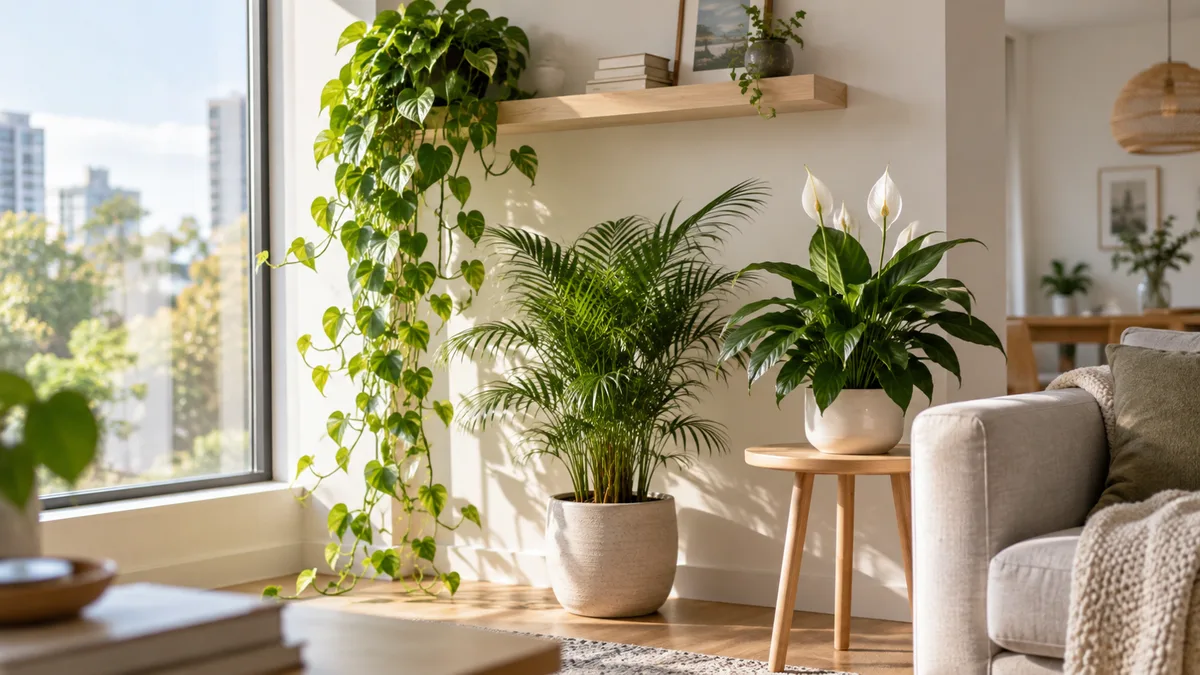
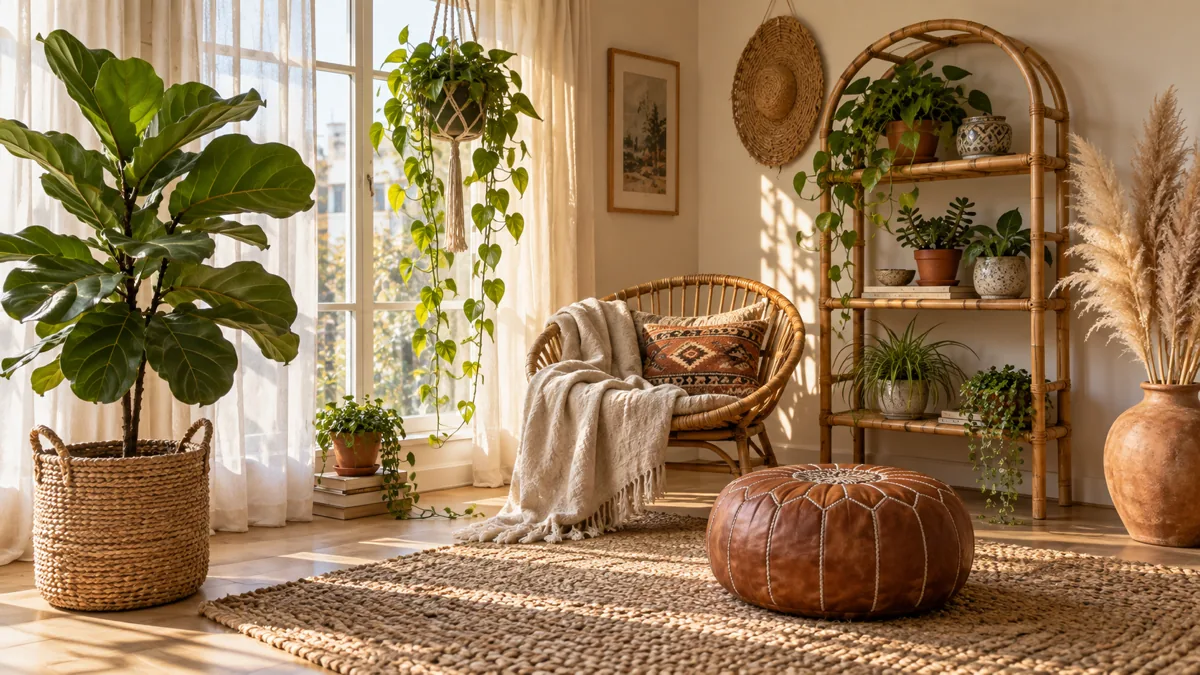
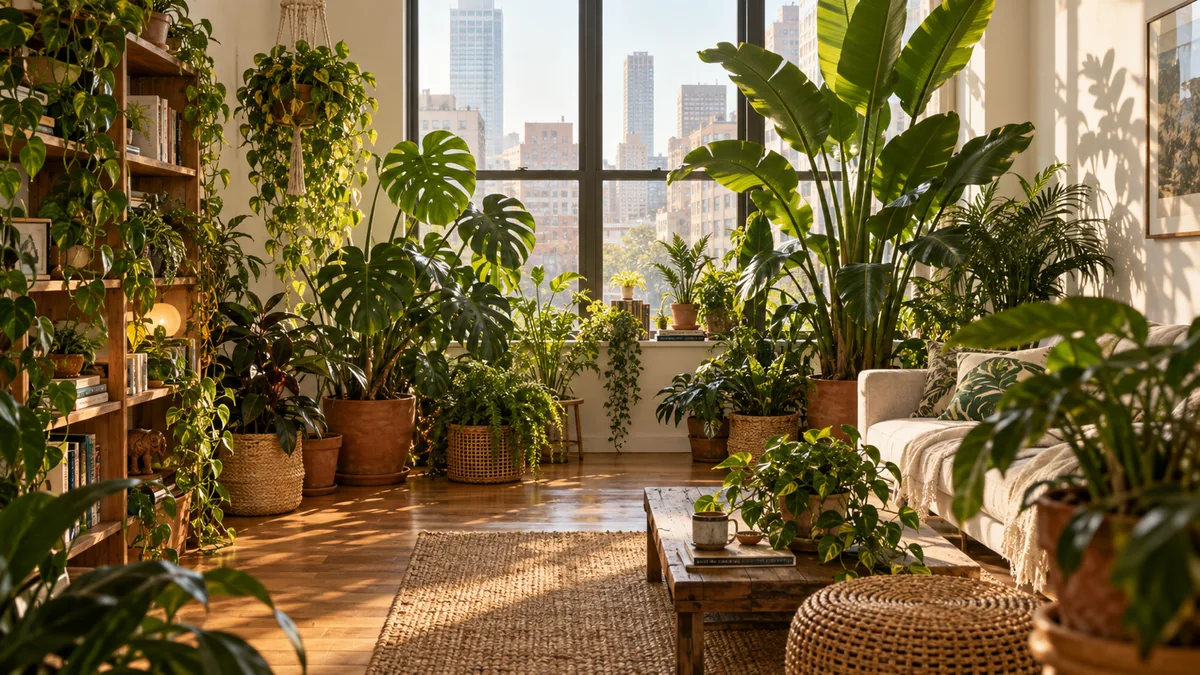
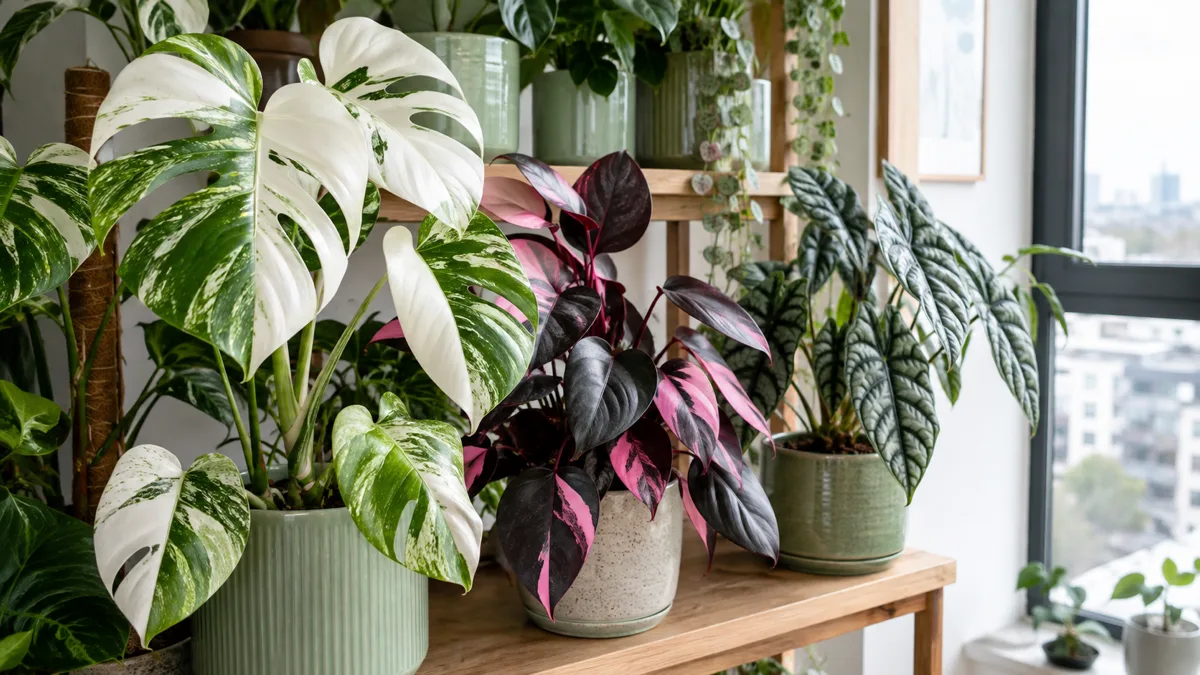
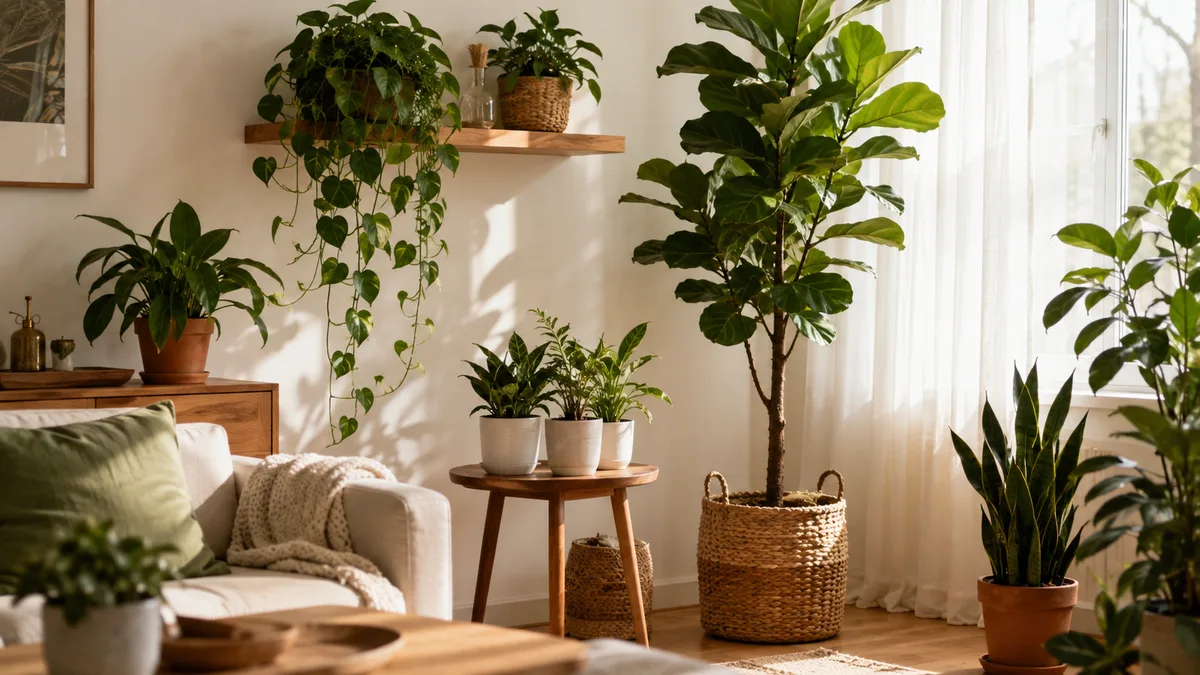
Most houseplants sit in a pot and stay there. Climbing plants reach for the ceiling. Give them a moss pole, a trellis, or a wire grid and they will cover a blank wall in months and turn a flat corner into a vertical jungle.
These plants evolved in tropical forests where light lives at the canopy. They developed aerial roots, tendrils, or twining stems to haul themselves upward — and indoors, the leaves change dramatically when they climb.
From the easiest beginner vine to a flowering orchid that can fruit indoors. Jump to the climber you want.
Pothos as the Easiest Indoor Climbing Plant
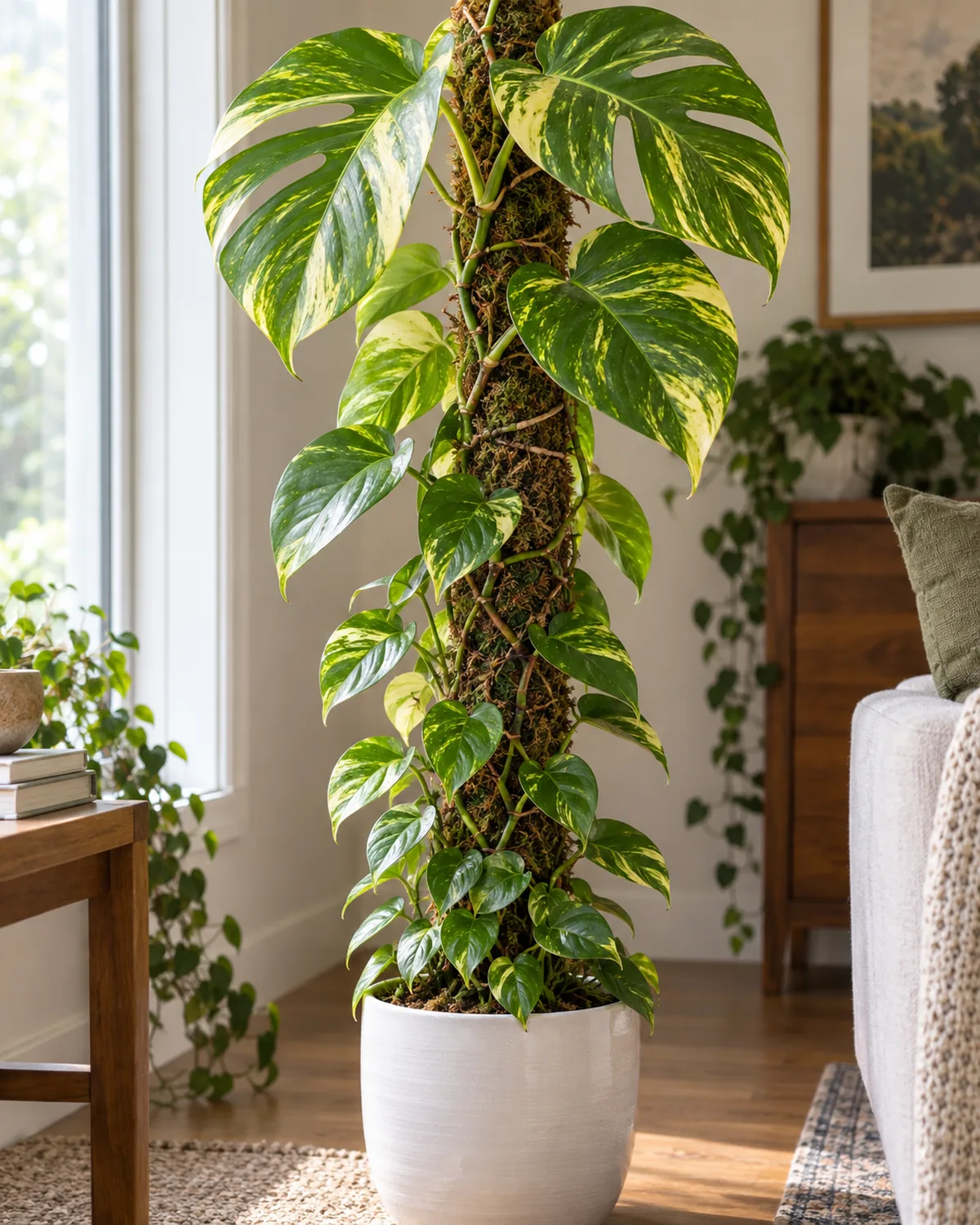
Pothos is the plant most people know as a trailer, draped over a shelf or hanging from a macrame hanger. But Epipremnum aureum is actually a climbing aroid that reaches eighty feet in the wild. The trailing version is its juvenile, stunted form.
Put a pothos on a moss pole and the transformation is immediate. Within weeks the internodes shorten, the leaves double in size, and the aerial roots dig into the sphagnum.
- Climbing method: aerial roots from stem nodes
- Best support: moss pole or coir post
- Light: bright indirect for fastest climbing; tolerates low light but climbs slowly
- Leaf change: three-inch trailing leaves become six-to-ten-inch climbing leaves; mature leaves can develop fenestrations
- Varieties: Golden, Marble Queen, Neon, and Cebu Blue — which develops its pinnate split-leaf form only when climbing
- Toxicity: toxic to cats and dogs (calcium oxalate)
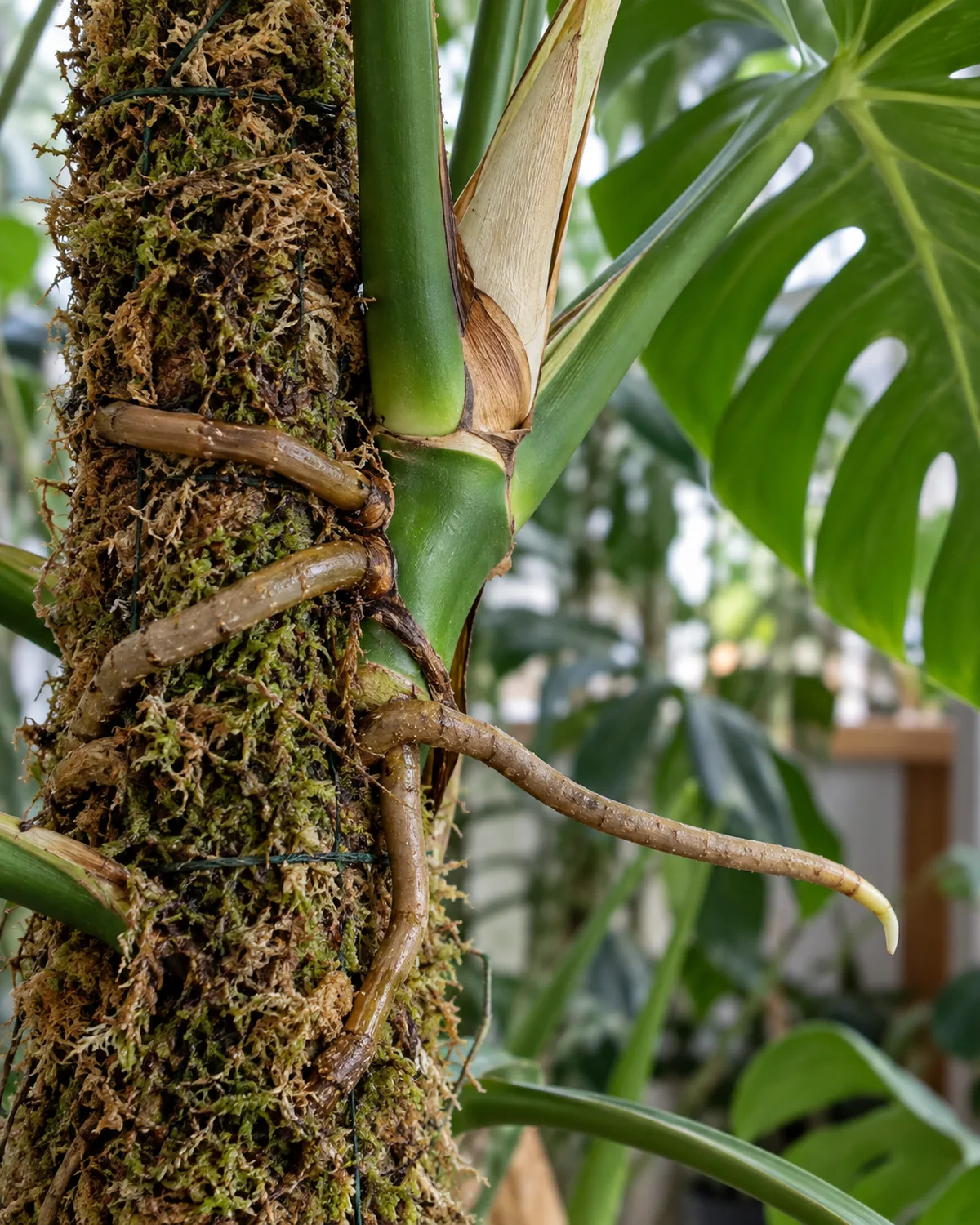
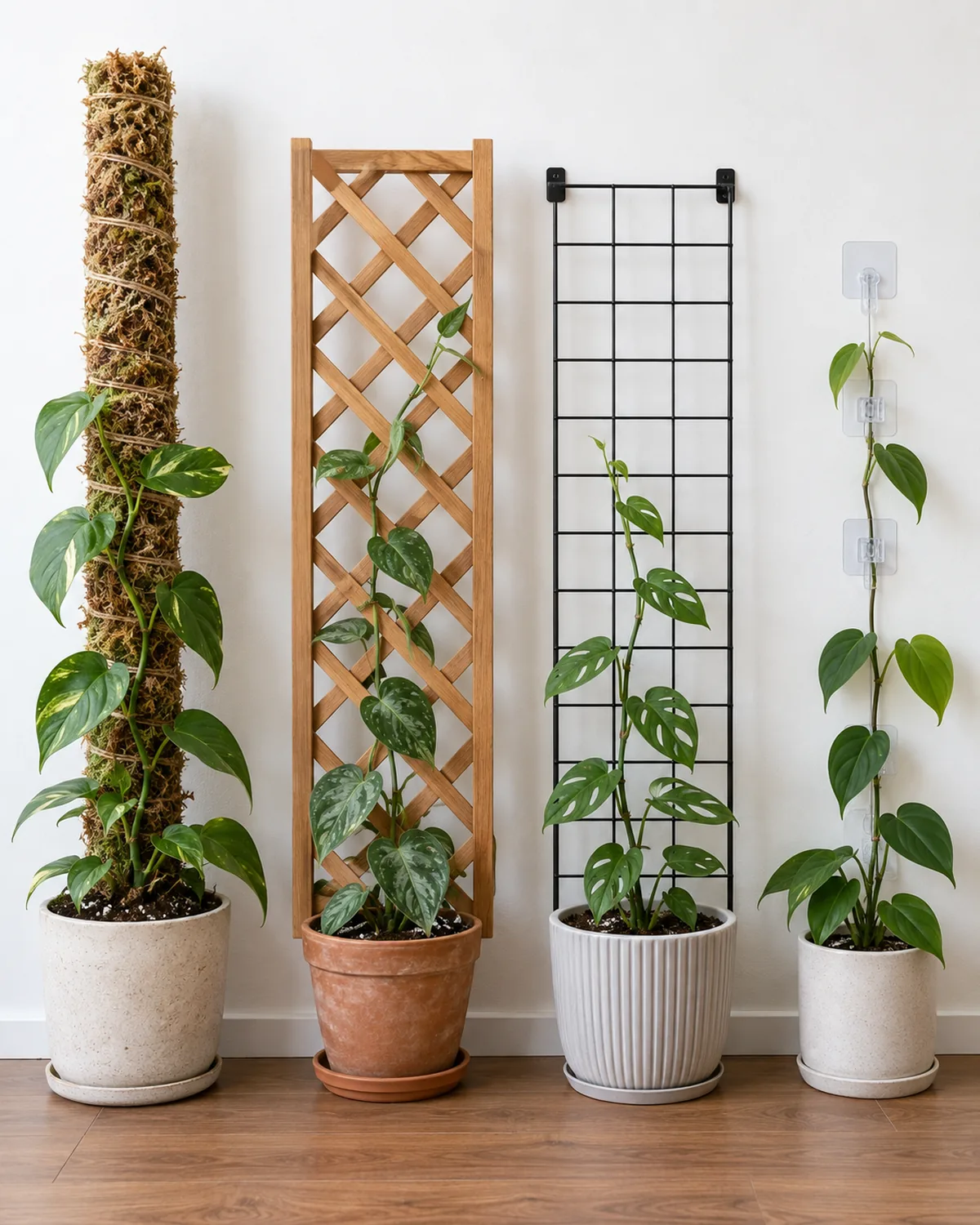
Climbing houseplants attach in three distinct ways, and each method demands a different support structure:
- Aerial roots (pothos, monstera, philodendron) grip porous surfaces and absorb moisture — they need moss poles or coir posts
- Tendrils (rex begonia vine) curl around thin wire or string — they cannot grip flat surfaces or thick poles
- Twining stems (hoya, jasmine) spiral around narrow supports — they need something thin enough to wrap completely
Heartleaf Philodendron as a Velvet-Textured Climber
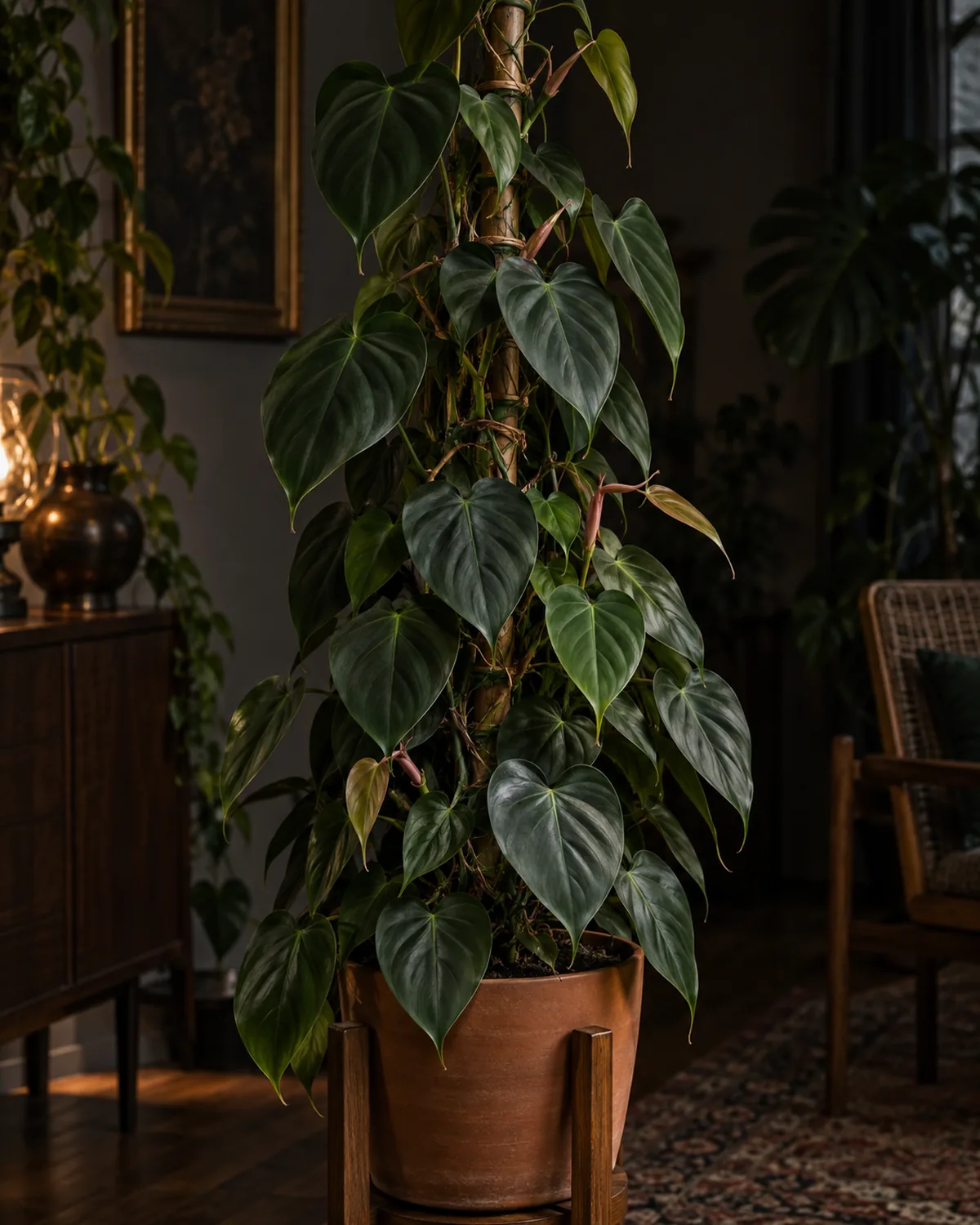
Philodendron hederaceum is the fastest low-light climber on this list. It handles north-facing windows, offices with fluorescent lighting, and corners that would kill most tropicals.
What changes when it climbs is the texture. The leaves develop a subtle velvet sheen that trailing leaves rarely show — denser and more matte than the glossy trailing form.
- Climbing method: aerial roots (thinner and more numerous than pothos)
- Best support: moss pole, bamboo pole, or thin trellis
- Light: low to bright indirect — one of the few climbers that performs well in genuinely dim rooms
- Growth speed: fast, several feet per growing season
- Key difference from pothos: heart-shaped leaves with a pointed drip tip; new leaves emerge from a cataphyll sheath that dries and peels; see our full philodendron guide
- Toxicity: toxic to cats and dogs (calcium oxalate)
Monstera Deliciosa as the Statement Climbing Aroid
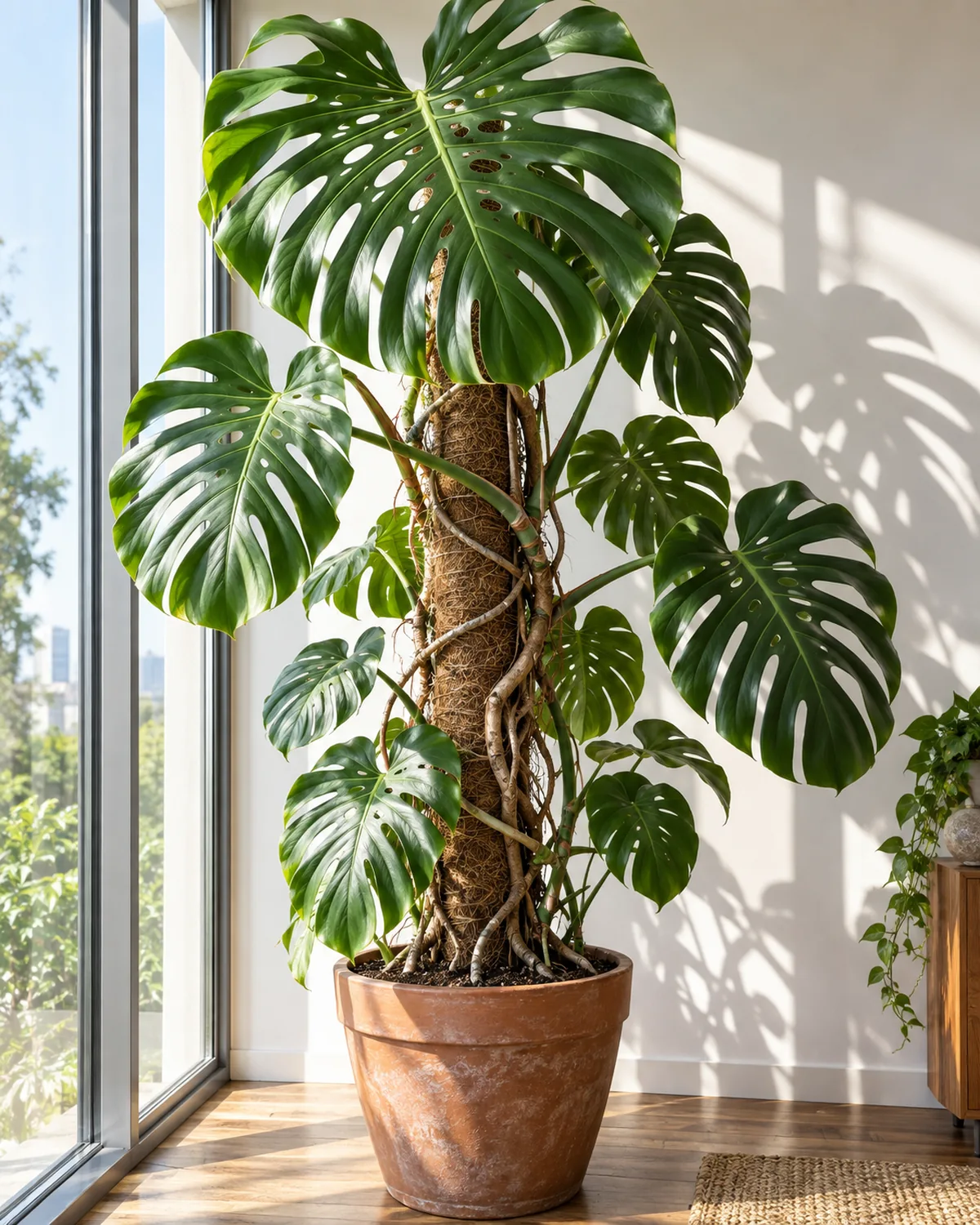
Monstera deliciosa is the reason most people discover climbing plants indoor. The fenestrations — those splits and holes in the leaves — only appear on mature climbing growth. A monstera left to trail produces small, uncut leaves.
The key is the moss pole. Monstera aerial roots are thick, aggressive, and need a support at least two inches in diameter wrapped in sphagnum or coir. A thin bamboo stake will not trigger the mature growth response.
- Climbing method: aerial roots — thick, woody, capable of supporting significant weight
- Best support: thick moss pole or coir post, minimum two-inch diameter; extendable poles are worth the investment
- Light: bright indirect for the largest fenestrated leaves
- Fenestration timeline: most monsteras show leaf splits at two to three years when climbing; trailing monsteras may never fenestrate
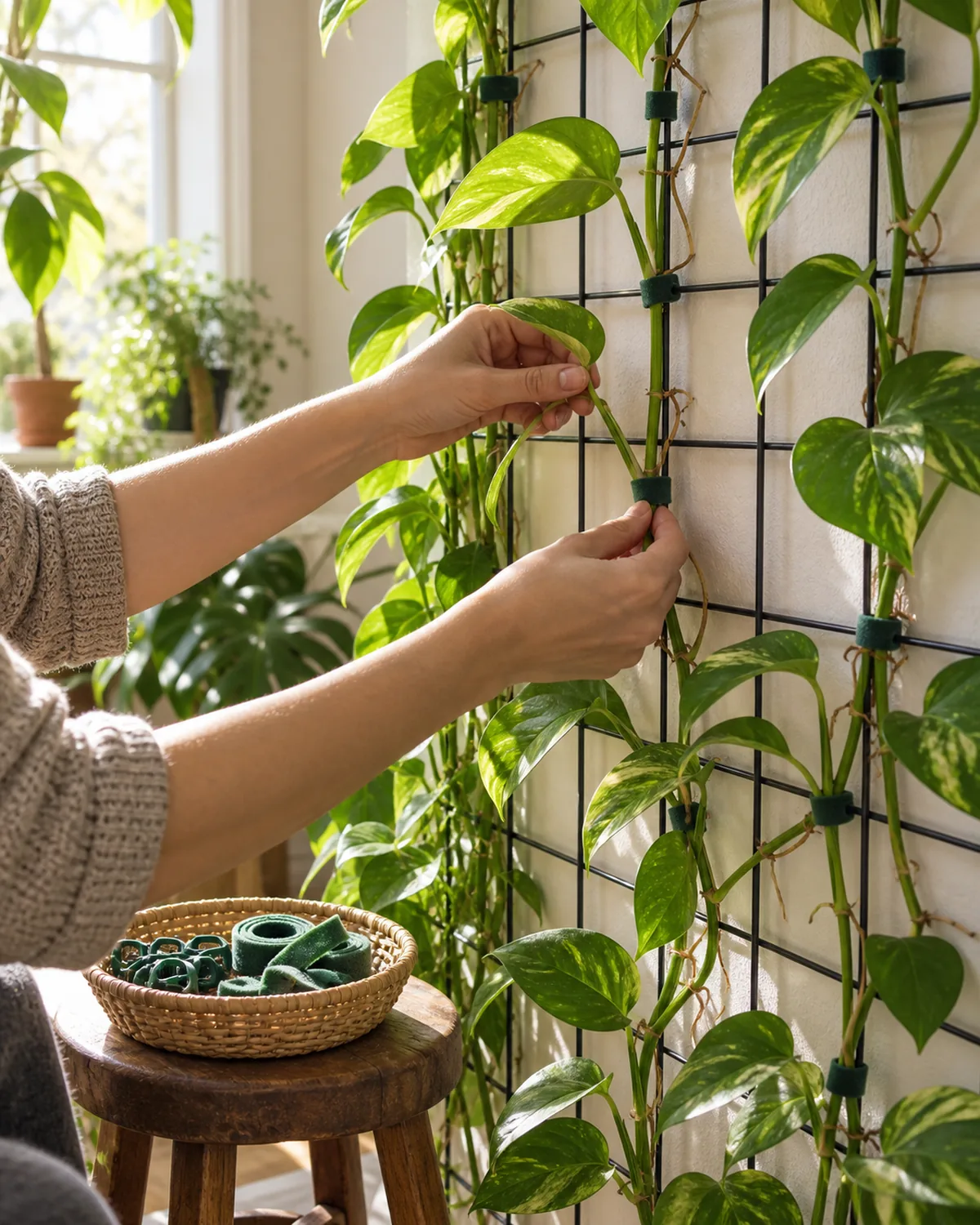
Aerial roots serve a dual purpose — anchoring the plant and absorbing moisture from damp moss. Misting the pole regularly is how you get the roots to grab and the leaves to grow. Training a monstera upward takes patience in the first weeks, but the payoff in leaf size is dramatic.
- Size: can reach eight feet or more indoors; see all monstera varieties
- Toxicity: toxic to cats and dogs (calcium oxalate)
Syngonium as the Most Dramatic Shape-Shifter
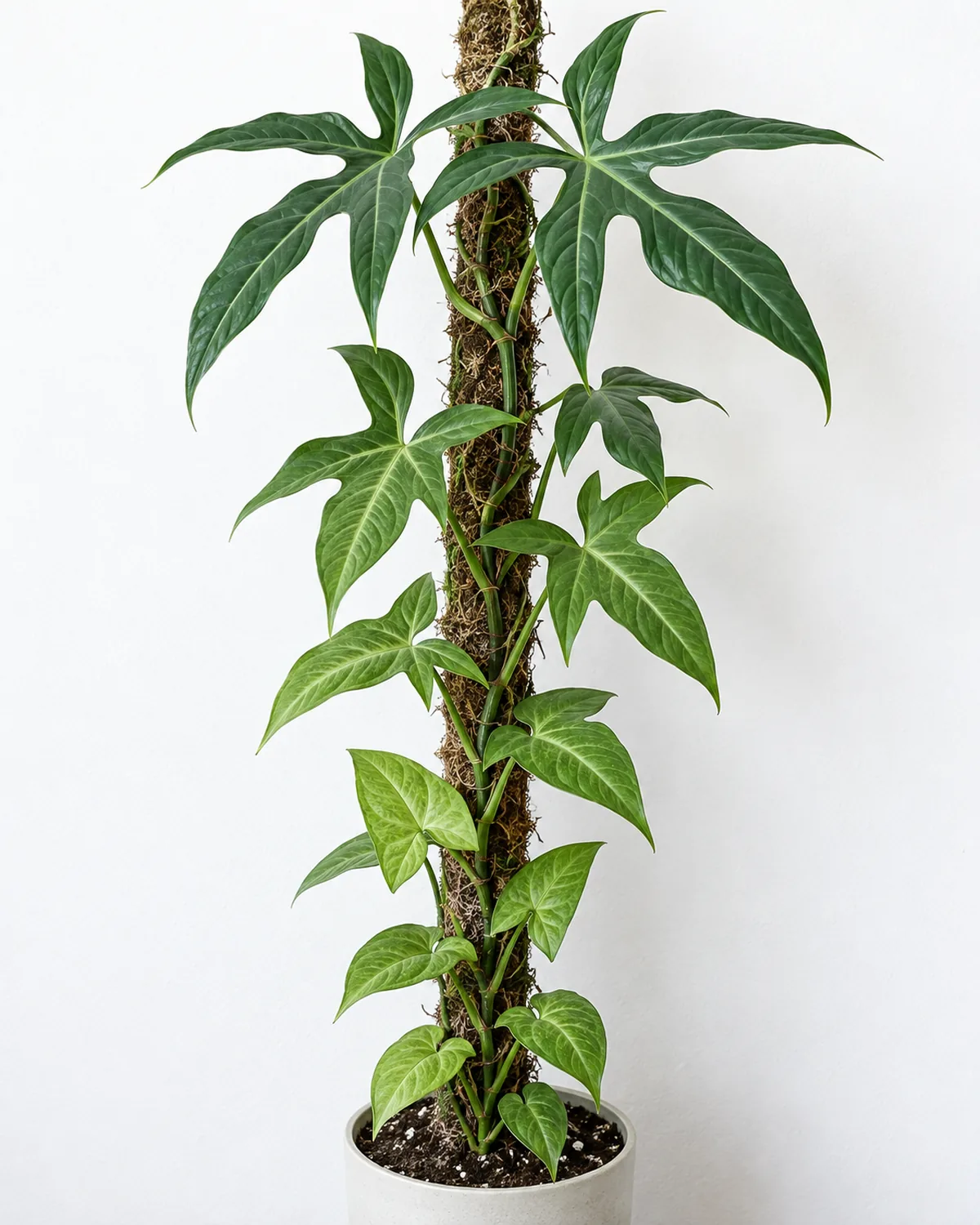
No climbing plant changes its leaf shape more dramatically than syngonium. The juvenile arrowhead leaves are just the beginning. When syngonium climbs, the leaves undergo a heteroblastic shift that makes the plant look like a different species.
At the base: compact arrowheads. Halfway up: larger leaves with lobes separating. At the top: deeply divided leaves with five or more segments.
- Climbing method: aerial roots from stem nodes
- Best support: thin moss pole or bamboo pole — the plant is lighter than monstera
- Light: bright indirect for the most pronounced leaf change
- Varieties: White Butterfly, Pink Splash, and Neon Robusta all show the shape-shifting trait
- Growth habit: compact bush when young, vigorous climber when given vertical support
- Toxicity: toxic to cats and dogs (calcium oxalate)
English Ivy as the Classic Cool-Room Climber
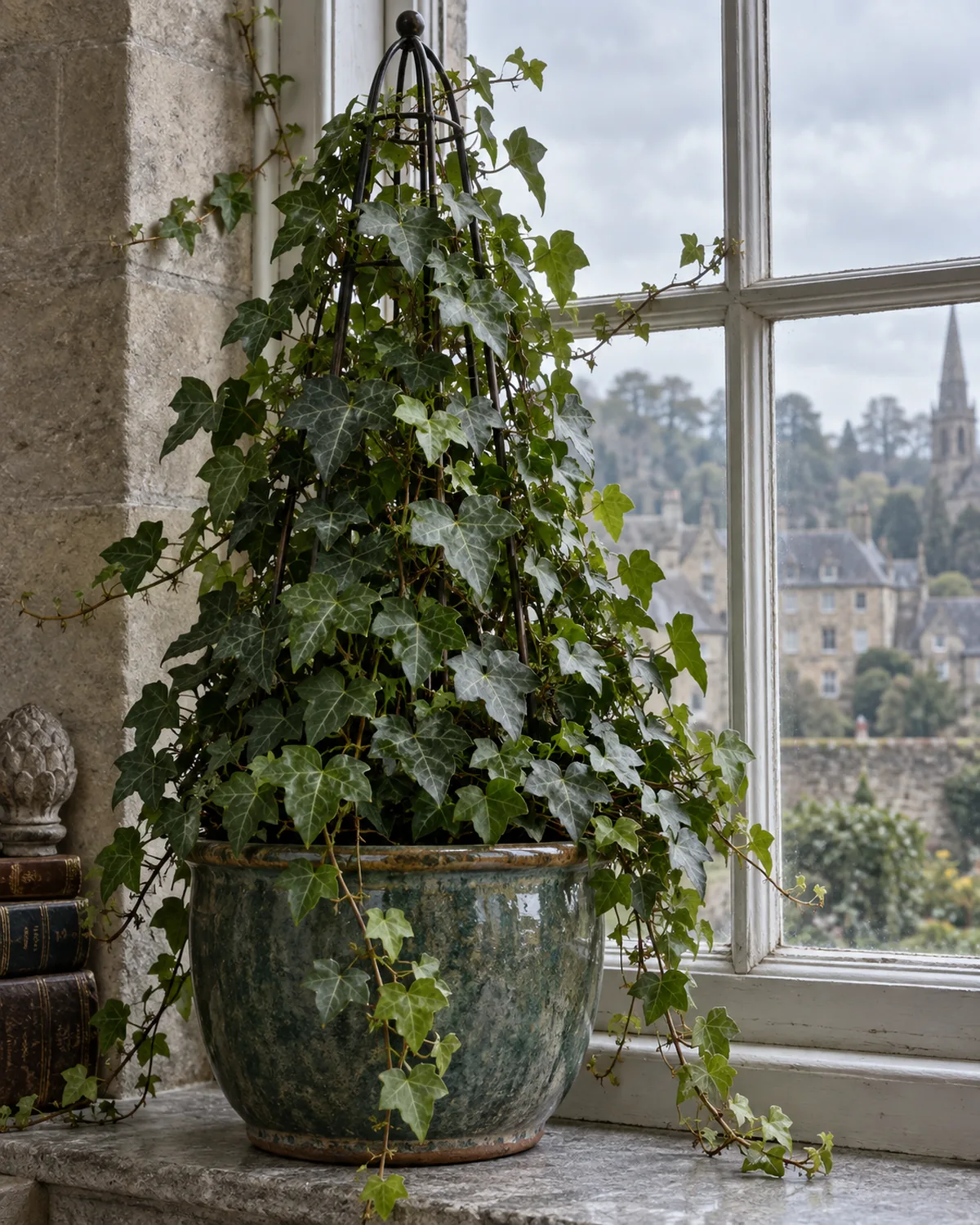
English ivy (Hedera helix) is the only plant on this list that dislikes warm rooms. It climbs best between 50 and 70 degrees Fahrenheit — ideal for unheated sunrooms, cool hallways, and north-facing bedrooms.
Ivy produces adventitious rootlets that secrete a natural adhesive. These rootlets grip almost any surface: wire, wood, brick, plaster, even glass.
- Climbing method: adventitious rootlets with adhesive secretion (self-clinging)
- Best support: wire trellis, obelisk, or wall — ivy climbs anything; warning: rootlets can damage painted walls
- Light: bright indirect to partial shade; scorches in hot direct sun
- Temperature: prefers cool conditions; struggles above 75°F and becomes a spider mite magnet in warm, dry air
- Varieties: Needlepoint (small, deeply lobed), Glacier (white-edged), Gold Child (yellow variegation)
- Toxicity: toxic to cats and dogs (saponins); can cause contact dermatitis
Hoya Carnosa as the Flowering Twining Vine
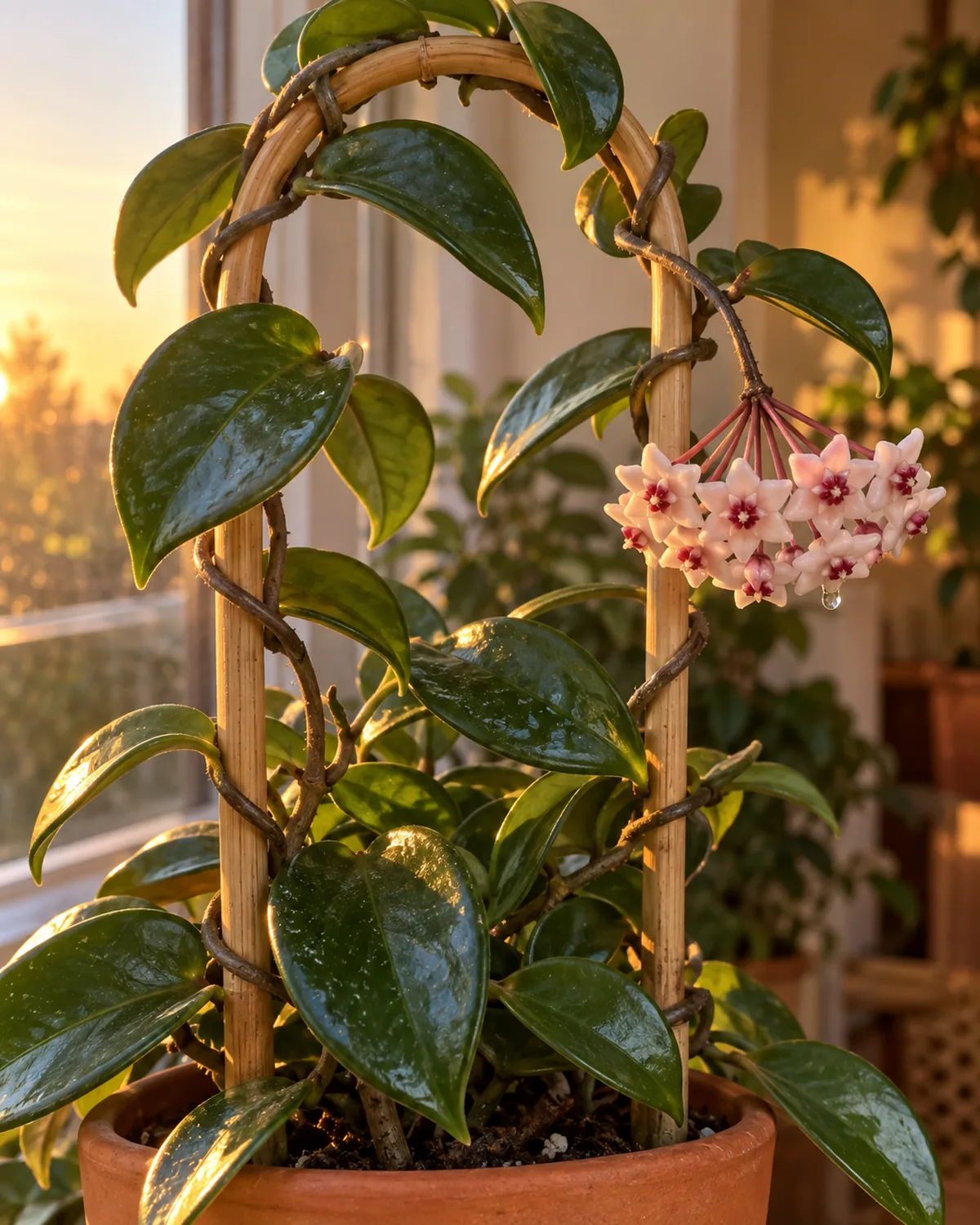
Hoya carnosa does not climb with roots or tendrils. Its stems twine — spiraling around any thin support they encounter. This makes hoyas natural candidates for bamboo hoops, arched trellises, and thin wire supports.
The reward for patience is the bloom. Flowers appear in perfect spherical umbels, each a waxy star in pink and white that produces nectar sweet enough to drip. Blooms only appear on mature vines — usually after two years of climbing.
- Climbing method: twining stems that spiral around supports
- Best support: bamboo hoop, thin trellis, or wire arch
- Light: bright indirect to some direct morning sun for blooms
- The peduncle rule: never cut the woody stump where flowers grew — next bloom uses the same peduncle
- Watering: semi-succulent leaves store water; let soil dry almost completely between waterings
- Toxicity: non-toxic to cats and dogs — one of the few pet-safe climbing plants
String of Hearts as a Delicate Twining Vine
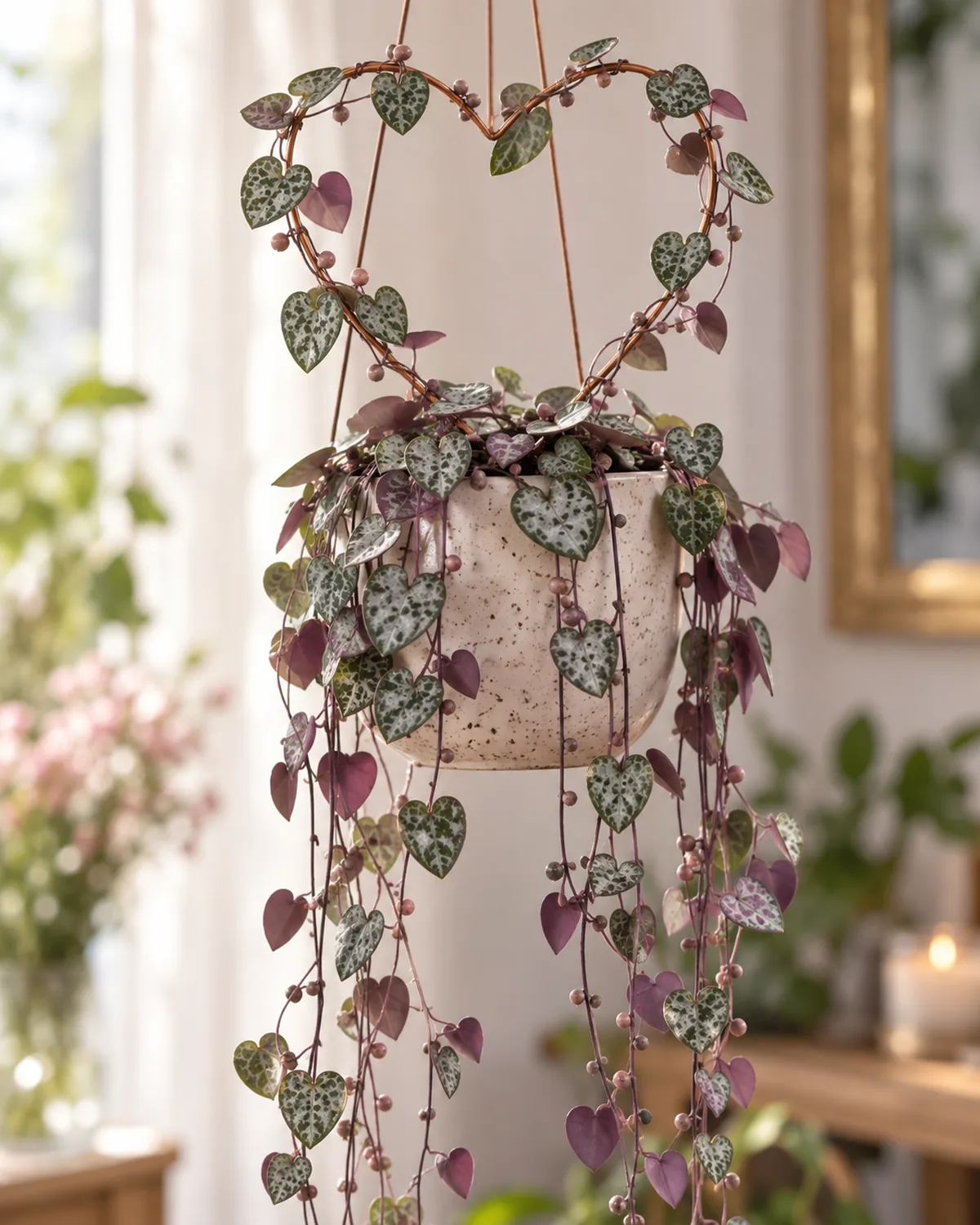
String of hearts (Ceropegia woodii) is better known as a trailer, but it is technically a twiner. The thin wiry stems wrap around any delicate support — copper wire, fishing line, or small trellises.
Growing string of hearts as a climber makes the aerial tubers more visible. Each bead-like growth along the stems can root and grow a new plant, turning the vine into a living propagation station.
- Climbing method: twining stems (very thin, needs delicate supports)
- Best support: thin wire frame, copper wire shapes, or fishing line
- Light: bright indirect to some direct morning sun
- Watering: semi-succulent caudex stores water; let soil dry completely
The heart-shaped leaves have translucent windows — clear cells that channel light to the chloroplasts on the underside, letting the plant photosynthesize efficiently even when leaves overlap.
- Creative supports: wire heart shapes, small fan trellises, or simple vertical strings
- Toxicity: non-toxic to cats and dogs
Monstera Adansonii as the Faster and Lacier Alternative
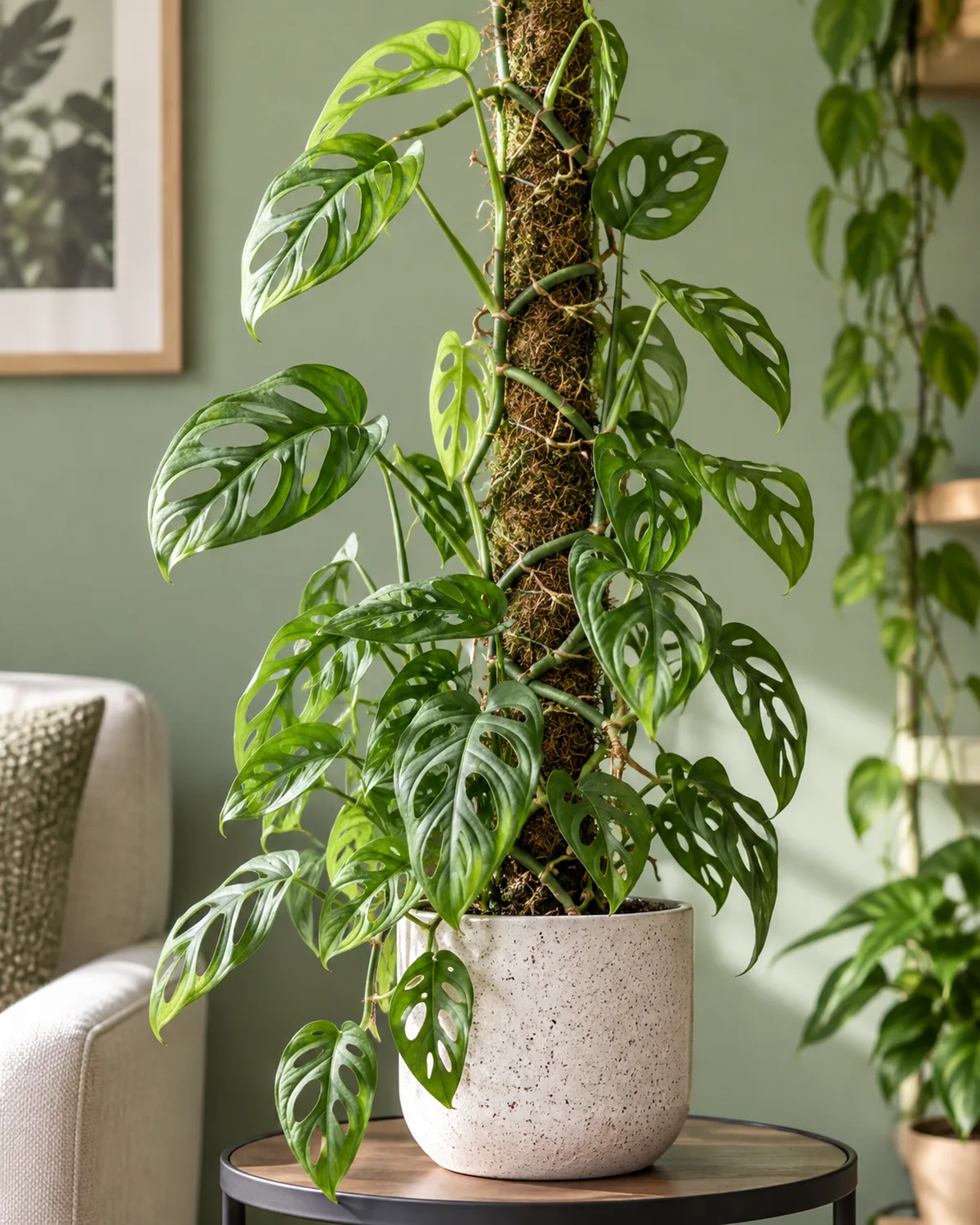
If monstera deliciosa is the statement piece, monstera adansonii is the faster, more flexible version. The Swiss cheese vine produces three-to-five-inch leaves with proportionally larger fenestrations — a lacy, perforated look that covers space faster.
Adansonii tolerates thinner supports because the plant stays lighter. A slim bamboo pole or wire grid that would buckle under mature deliciosa works perfectly here.
- Climbing method: aerial roots (thinner and more flexible than deliciosa)
- Best support: thin moss pole, bamboo pole, or wall-mounted wire grid
- Light: bright indirect for the most fenestrations
- Growth speed: one of the fastest climbing aroids — several feet per growing season
- Key difference from deliciosa: smaller oval leaves with proportionally larger holes; thinner bendable stems
- Toxicity: toxic to cats and dogs (calcium oxalate)
Philodendron Brasil as the Fastest Variegated Climber
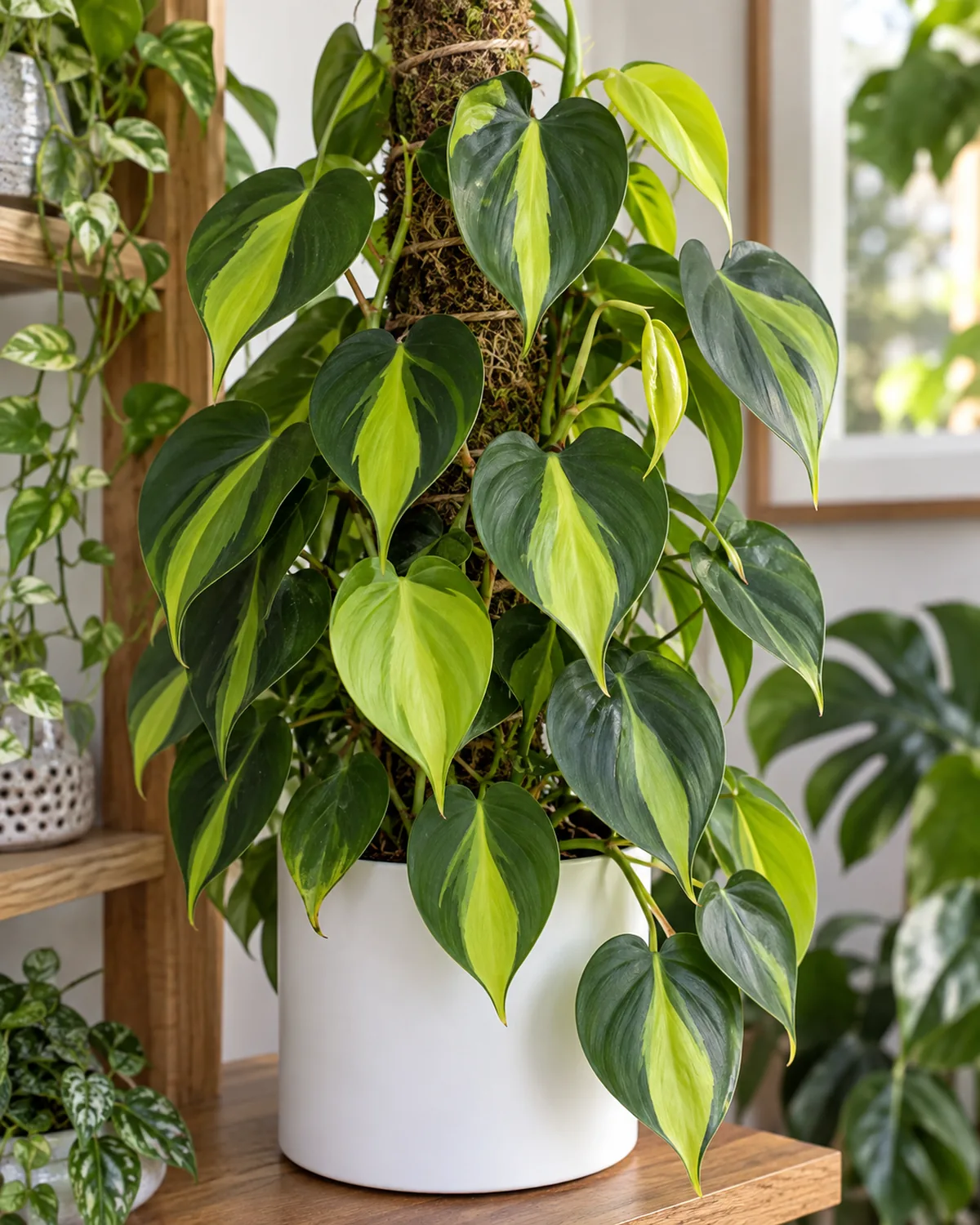
Philodendron Brasil is a sport mutation of heartleaf philodendron with a central lime-green stripe down each leaf. It is the fastest philodendron variety on a moss pole, and the variegation intensifies as the plant climbs into brighter light.
Each leaf shows a different balance of lime and dark green. Some emerge almost entirely lime, others mostly dark. The randomness is the charm.
- Climbing method: aerial roots
- Best support: moss pole or thin trellis
- Light: bright indirect is critical — too little and the variegation reverts to solid green; direct sun scorches the lighter tissue
- Growth speed: the fastest climbing philodendron in common cultivation
- Pruning note: if a stem reverts to all-green leaves, prune back to the last variegated leaf to encourage color
Two to four feet from an east or west window usually balances variegation and burn risk.
- Toxicity: toxic to cats and dogs (calcium oxalate)
Creeping Fig as the Self-Clinging Wall Cover
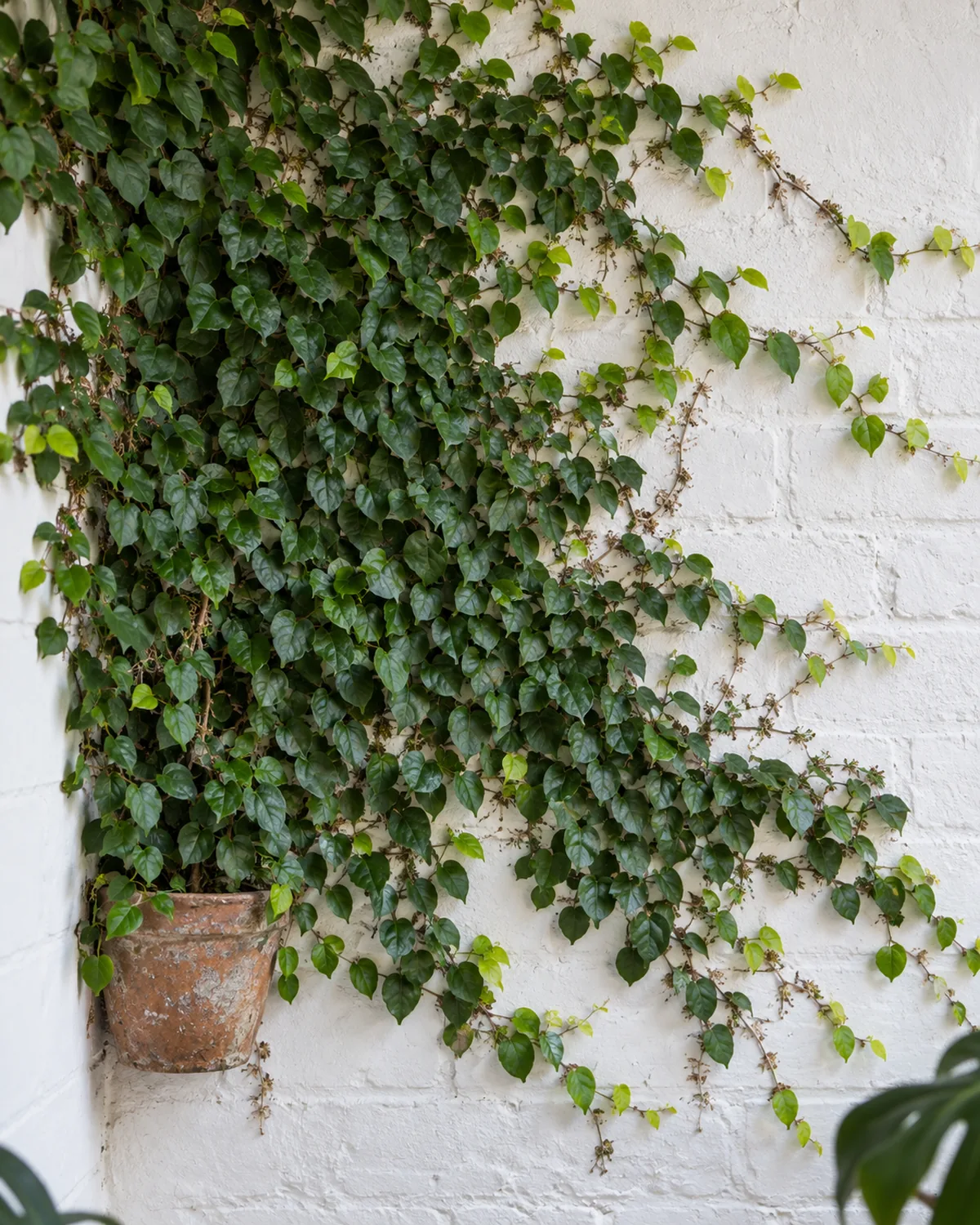
Ficus pumila is the most aggressive self-clinger on this list. It produces adhesive pads on its aerial rootlets that bond directly to walls, brick, and concrete. No ties needed, no trellis required.
This is both the advantage and the risk. Creeping fig bonds so strongly that removing it pulls paint off. On brick or stone it leaves permanent rootlet marks. Decide where you want it before planting.
- Climbing method: adhesive aerial rootlets (self-clinging)
- Best support: any flat surface — walls, columns, door frames
- Light: bright indirect to moderate; slower in low light but still climbs
- Growth speed: aggressive once established; starts slow then accelerates after year one
The juvenile and adult forms are different plants visually. Juvenile leaves are tiny hearts pressed flat. Adult growth produces larger, leathery, three-dimensional leaves that stand away from the wall.
- Pruning: hard pruning in spring keeps the attractive juvenile form; see our plant wall guide for coverage techniques
- Toxicity: mildly toxic; milky sap can irritate skin
Jasmine as the Fragrant Indoor Twining Vine
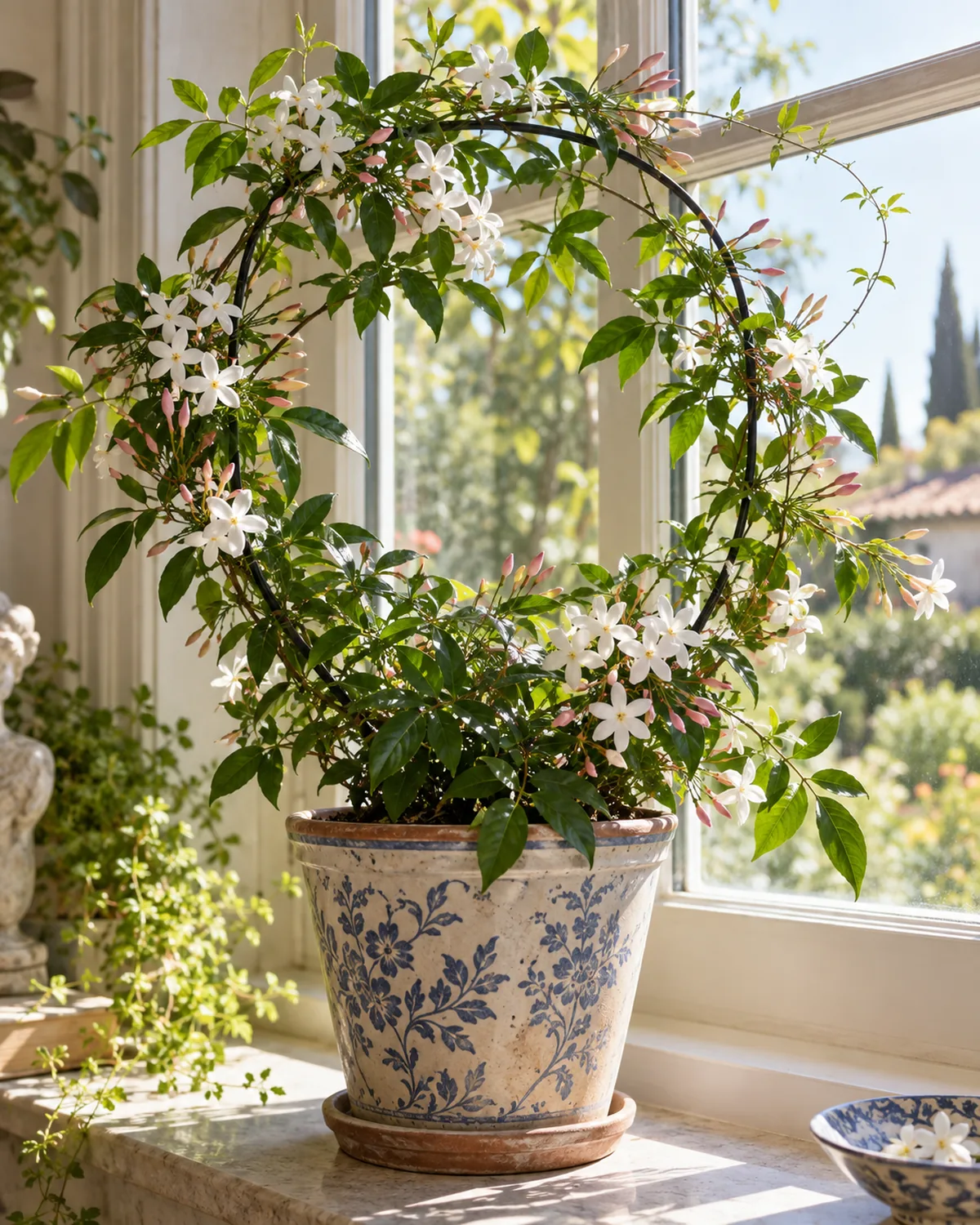
Jasminum polyanthum is a twining vine that wraps around hoops and trellises while producing clusters of intensely fragrant white flowers. The scent fills a room during bloom season, late winter through spring.
The catch: without a cool winter rest — several weeks below 60°F — the plant grows healthy foliage but no buds. This makes jasmine better for cool rooms and unheated sunrooms.
- Climbing method: twining stems
- Best support: wire hoop, bamboo trellis, or wire arch in the pot
- Light: bright direct — one of the few indoor climbers that wants a south-facing window
- Bloom trigger: six to eight weeks at 40–55°F in autumn or early winter
- Post-bloom care: cut back hard after the last flower fades to encourage bushy regrowth and more stems for next season
Jasmine is a vigorous grower that becomes leggy without pruning. Regular fertilizing during the growing season supports the heavy blooming.
- Toxicity: mildly toxic if ingested in large quantities; generally low-risk
Rex Begonia Vine as the Jewel-Toned Tendril Climber
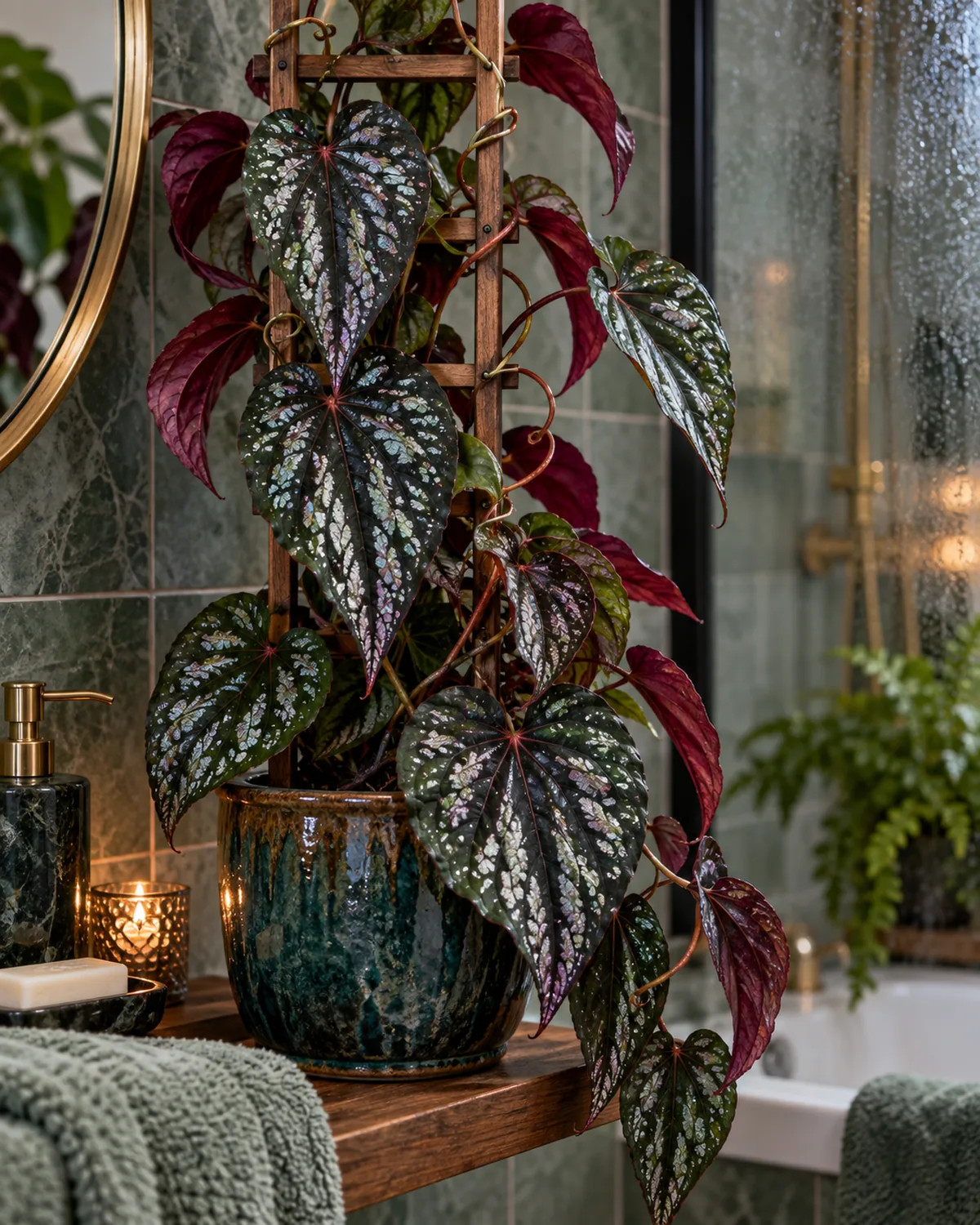
Despite the name, Cissus discolor is not a begonia. It belongs to the grape family (Vitaceae) and climbs with tendrils — thin curling appendages at the nodes that wrap around thin supports. The name comes from the leaves, which rival rex begonias for color complexity.
Each leaf is an elongated heart with a dark green surface shot through with silver streaks and burgundy undersides that flash when leaves twist in a breeze. The iridescence shifts with viewing angle.
- Climbing method: tendrils that wrap around thin supports like wire, string, or trellis bars
- Best support: thin wooden trellis or wire grid
- Light: bright indirect; direct sun fades the silver patterning
- Humidity: high — drops leaves dramatically below fifty percent; bathrooms or humidifier zones only
- Temperature: warm only; drops leaves below 60°F
The humidity is the main challenge. Heated winter air typically sits around thirty percent. A humidifier running at least four hours daily is the minimum for long-term success.
- Dormancy: may lose most leaves in winter; reduce watering and wait — new growth returns in spring
- Toxicity: not well documented; keep away from pets as a precaution
Black-Eyed Susan Vine as an Annual Indoor Bloomer
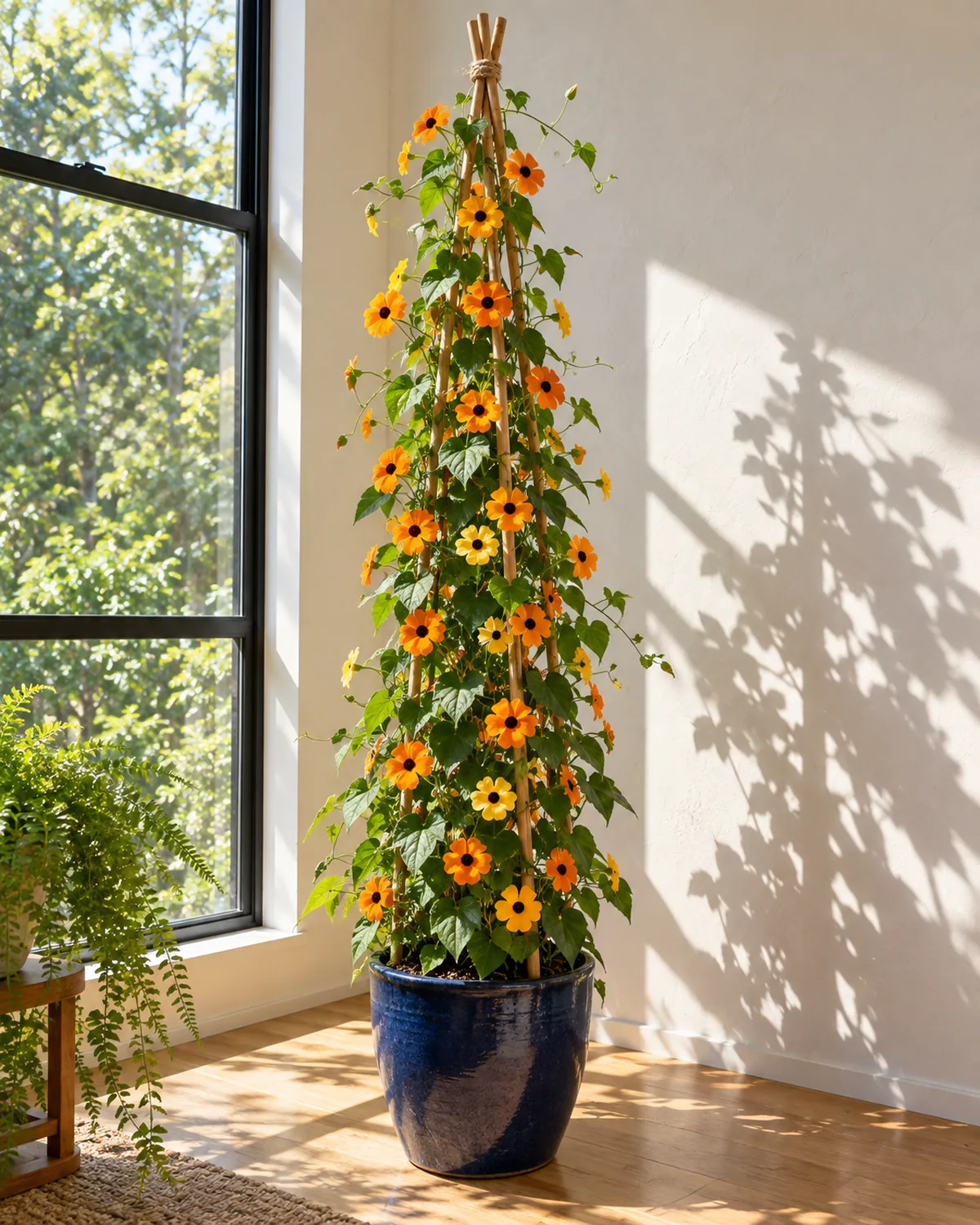
Thunbergia alata is technically a tender perennial, but most indoor growers treat it as an annual. Cheerful orange, yellow, or white flowers with a dark center bloom on a fast-growing twining vine that can cover a small trellis in one season.
Unlike most climbers here, this plant needs genuine direct sunlight — at least six hours daily from a south-facing window. It will not bloom in bright indirect light.
- Climbing method: twining stems
- Best support: bamboo trellis, wire obelisk, or string supports in a pot
- Light: full direct sun — minimum six hours; south-facing window essential
- Bloom period: late spring through fall with consistent light
- Growth habit: fast — can reach six feet in a single growing season from seed
Growing from seed is straightforward and produces blooming plants within three to four months. Start seeds indoors in late winter.
- Watering: keep soil consistently moist; wilts quickly when dry but recovers fast
- Feeding: heavy feeder during bloom; fertilize every two weeks with balanced liquid
- Toxicity: non-toxic to cats and dogs
Vanilla Orchid as the Only Climbing Orchid
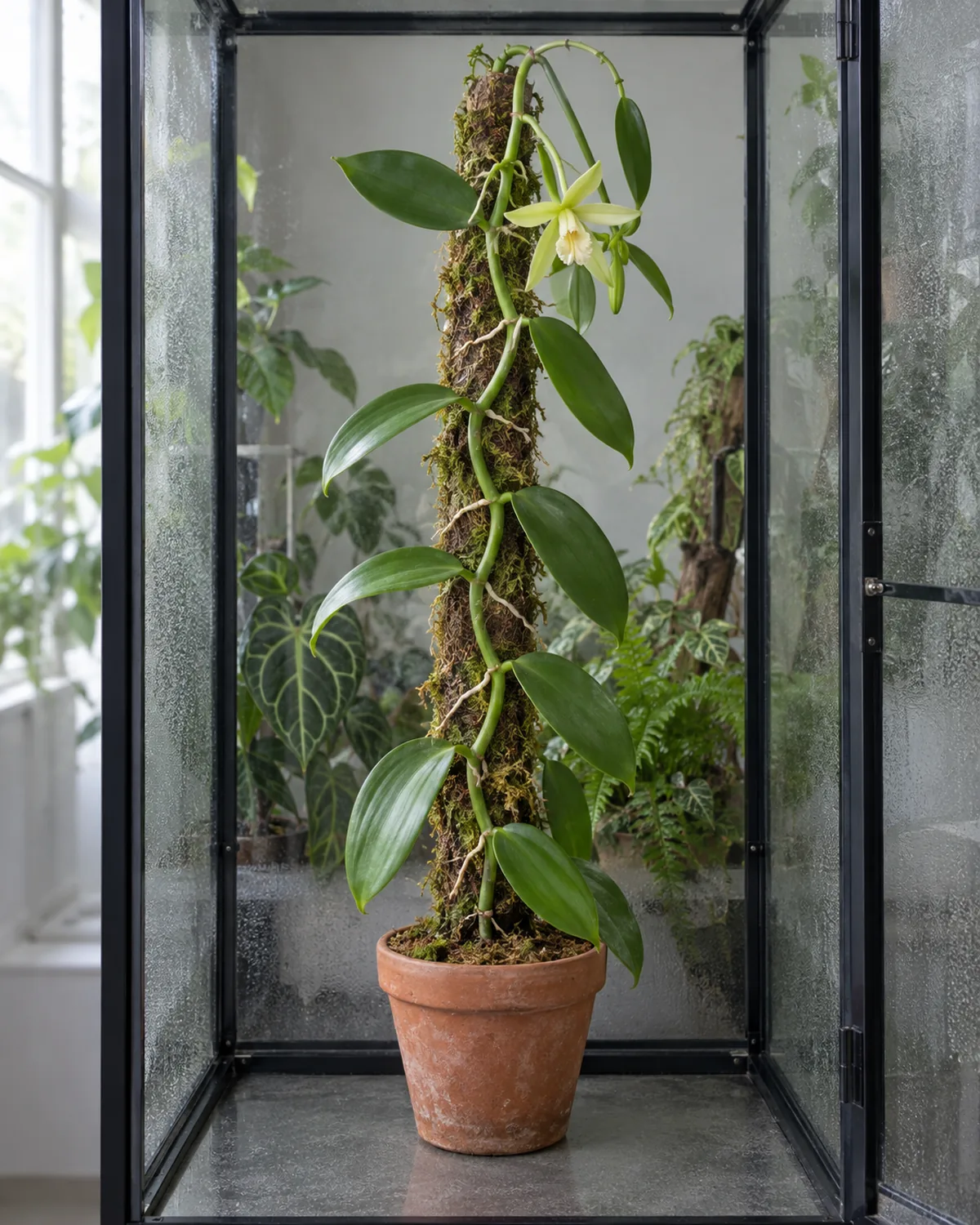
Vanilla planifolia is the vine behind the vanilla bean — the world's second most expensive spice. This climbing orchid scales tree trunks to fifty feet in the wild using aerial roots along thick, fleshy green stems.
A thick moss pole or coir post kept consistently moist is essential indoors. The aerial roots need to penetrate a damp porous surface, similar to the other aroids on this list.
- Climbing method: aerial roots along fleshy stems
- Best support: thick moss pole or coir post kept consistently moist
- Light: bright indirect; tolerates some morning direct sun
- Humidity: sixty percent or above for healthy aerial root growth
- Flowering: mature vines (usually over ten feet) produce greenish-yellow orchid flowers lasting one day
Each flower must be hand-pollinated with a toothpick because the natural pollinator — a specific Mexican bee — does not exist outside its native range. Growing your own vanilla beans is possible but requires years of patience and one-morning timing.
- Growth speed: slow compared to aroids
- Toxicity: non-toxic
Rhaphidophora Tetrasperma as the Fastest Mini-Fenestrated Climber
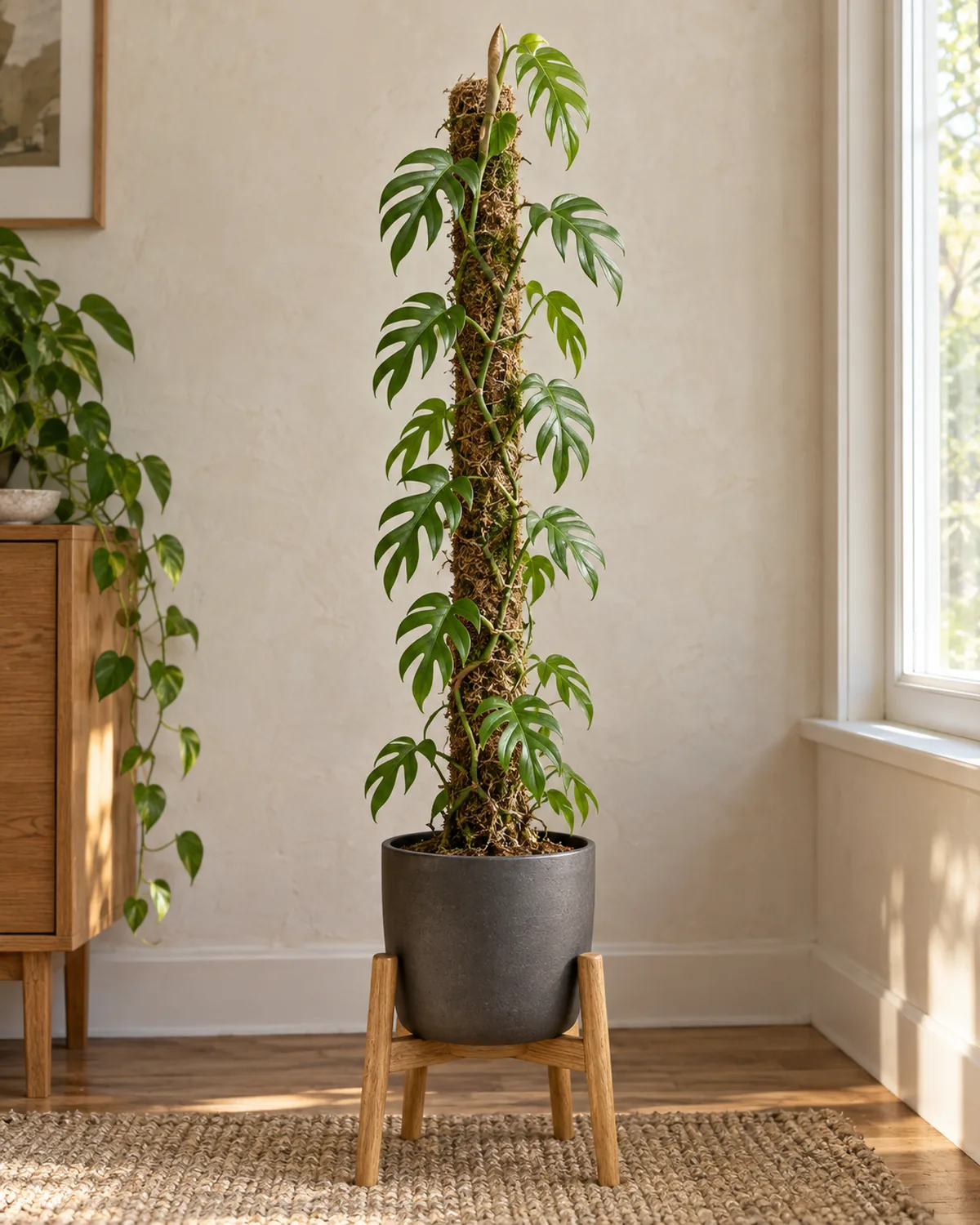
Commonly called "mini monstera," Rhaphidophora tetrasperma is not a monstera at all — different genus entirely. It produces smaller, more delicate fenestrations on leaves about a quarter the size of deliciosa, but what it lacks in leaf size it makes up for in speed.
On a moss pole, this plant starts producing fenestrations almost immediately, even on young plants. Unlike monstera deliciosa, which may take years to split, Rhaphidophora begins cutting leaves early on every new one.
- Climbing method: aerial roots (similar to monstera but thinner)
- Best support: thin moss pole or bamboo stake — the plant is lightweight
- Light: bright indirect for the most pronounced fenestrations
- Growth speed: extremely fast — several feet per growing season; may need frequent pruning
- Leaf size: four to six inches with proportionally large, clean geometric splits
A plant at the base of a three-foot pole can reach the top in a single growing season. When it outgrows the pole, extend it rather than cutting back — the largest leaves always appear at the top.
- Common confusion: sold as "mini monstera" or "Philodendron Ginny" — neither is correct
- Toxicity: toxic to cats and dogs (calcium oxalate)
Quick Reference
15 climbing plants indoor essentials to save
- 1Pothos leaves triple in size when climbing a moss poleThe three-inch trailing leaves are the juvenile form. Give it a damp pole and mature leaves reach ten inches with fenestrations.
- 2Heartleaf philodendron is the best climber for low lightHandles north-facing windows and dim corners where other tropical climbers stall.
- 3Monstera fenestrations only appear on climbing mature growthA trailing monstera may never develop splits. A two-inch-diameter moss pole triggers the transition.
- 4Syngonium changes from arrowhead to five-lobed leaves as it climbsThe most dramatic heteroblastic shift of any common houseplant.
- 5English ivy prefers cool rooms and hates warm dry airBelow 70°F is ideal. Above 75°F it becomes a spider mite magnet.
- 6Hoya blooms only on mature vines and reuses the same peduncleNever cut the woody flower stump. Next bloom comes from the same spot.
- 7String of hearts is a twiner that climbs delicate wire supportsTrain on copper wire shapes. Aerial tubers along stems are each a potential new plant.
- 8Monstera adansonii is faster and lacier than deliciosaSmaller leaves with larger holes. Tolerates thinner supports and covers walls faster.
- 9Philodendron Brasil variegation intensifies with climbing and lightLime-green stripe fades in dim light. Too much sun burns the lighter cells.
- 10Creeping fig bonds permanently to walls and will damage paintAdhesive rootlets pull paint off on removal. Use on brick or stone you will not repaint.
- 11Jasmine needs a cool winter rest to bloomSix to eight weeks below 60°F triggers flower buds. No cold, no flowers.
- 12Rex begonia vine is not a begonia and demands high humidityCissus discolor from the grape family. Below fifty percent humidity it drops leaves.
- 13Black-eyed Susan vine needs six hours of direct sun to bloomAnnual twiner that covers a trellis in one season. South-facing window essential.
- 14Vanilla orchid can fruit indoors but each flower lasts one morningThe only climbing orchid. Hand-pollinate with a toothpick for vanilla beans.
- 15Rhaphidophora tetrasperma fenestrates faster than any monsteraNot a monstera. Starts splitting leaves on young plants and covers a three-foot pole in one season.
kultivy.com
Every climbing plant on this list will grow as a trailing vine without support. It will survive and produce leaves. But you will never see what the plant is actually capable of until you point it upward.
Start with a pothos on a moss pole — the lowest-risk experiment with the most visible payoff. From there, add a monstera adansonii on a wire grid, a hoya on a bamboo hoop, or a creeping fig on a bathroom wall.
The moss pole guide covers choosing, installing, and maintaining the support that unlocks the climbing potential in most of these plants.

Mara writes plant care and styling guides at Kultivy, focusing on practical advice for people who want their indoor plants to actually thrive. Every recommendation in this guide comes from documented care protocols and real growing conditions, not assumptions about what might work. More about Kultivy.