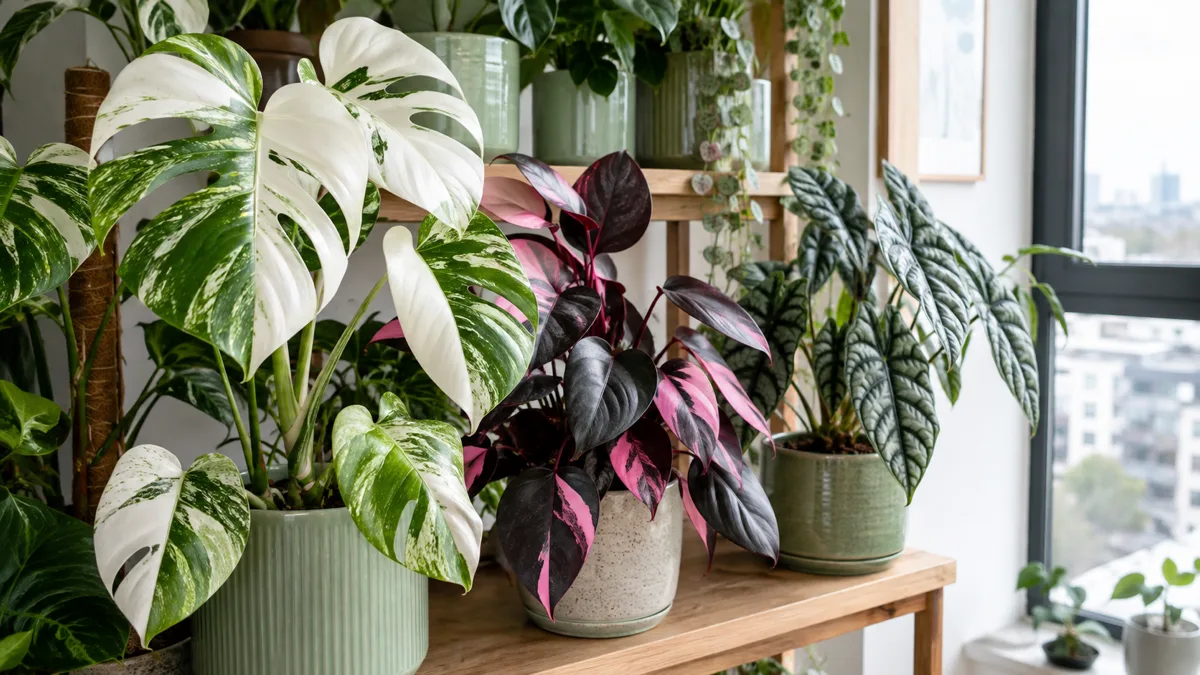
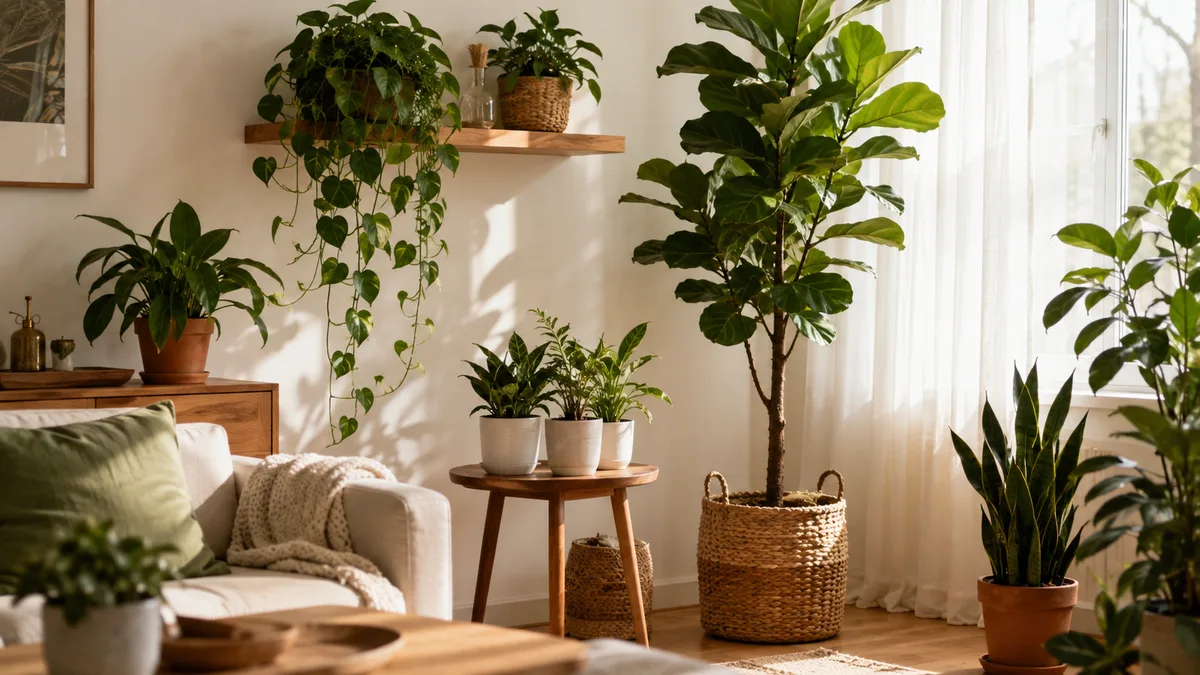
A room full of plants is just a room full of plants. A boho plant room tells you the person who lives here picks things up at flea markets, lets trailing vines do whatever they want, and owns more baskets than they can explain.
The difference comes down to three things: what the pots are made of, how the heights layer, and whether the display feels collected over time rather than ordered in a single checkout.
These sixteen ideas cover every element from macrame hangers to budget thrifting tricks.
Natural materials, trailing greenery, layered textures, warm neutrals, and the handmade imperfection that separates boho from generic. Jump to the idea you need.
- 1What Makes It Boho
- 2Macrame Hangers
- 3Rattan and Wicker Stands
- 4Terracotta Groupings
- 5Trailing Plants
- 6Woven Basket Covers
- 7Layered Plant Shelf
- 8Boho Bedroom Corners
- 9Bohemian Bathroom
- 10Warm-Neutral Palette
- 11Thrifted and New Mix
- 12Window Displays
- 13Dried Flowers
- 14Textiles and Plants
- 15Boho on a Budget
- 16Mistakes to Avoid
What Makes Plant Decor Actually Boho
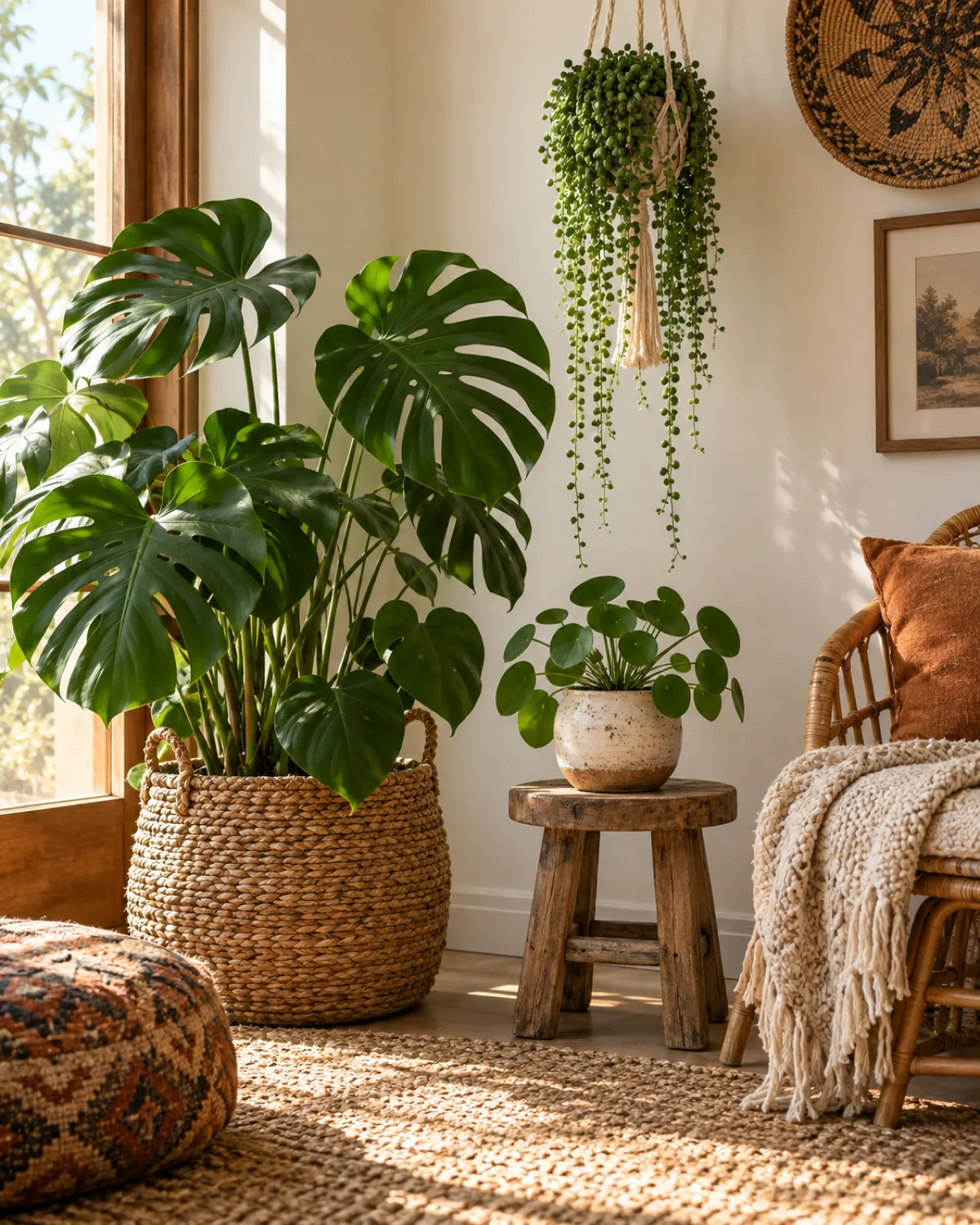
Walk into a room that reads as genuinely bohemian and three things are always present. Natural materials make up every surface you can see. Heights layer from floor to ceiling with no single focal point. And nothing looks like it came out of a box set.
The three pillars that separate boho plant decor from a generic shelf of houseplants:
- Natural materials first: rattan, jute, terracotta, raw wood, woven cotton. Every container and display surface should feel like it grew rather than got manufactured
- Layered textures at every height: a floor basket next to a mid-shelf arrangement next to a ceiling-hung macrame hanger creates depth that a row of matching pots on one surface never will
- Handmade imperfection: a slightly lopsided ceramic, a macrame knot that is not perfectly even, a terracotta pot with mineral staining. Boho lives in the gap between polished and careless
The test for whether a room qualifies: if you replaced every plant container with a matching white ceramic from the same store, would the room lose its character? If yes, the materials were doing the work. That is boho.
Macrame Hangers as the Signature Boho Plant Display
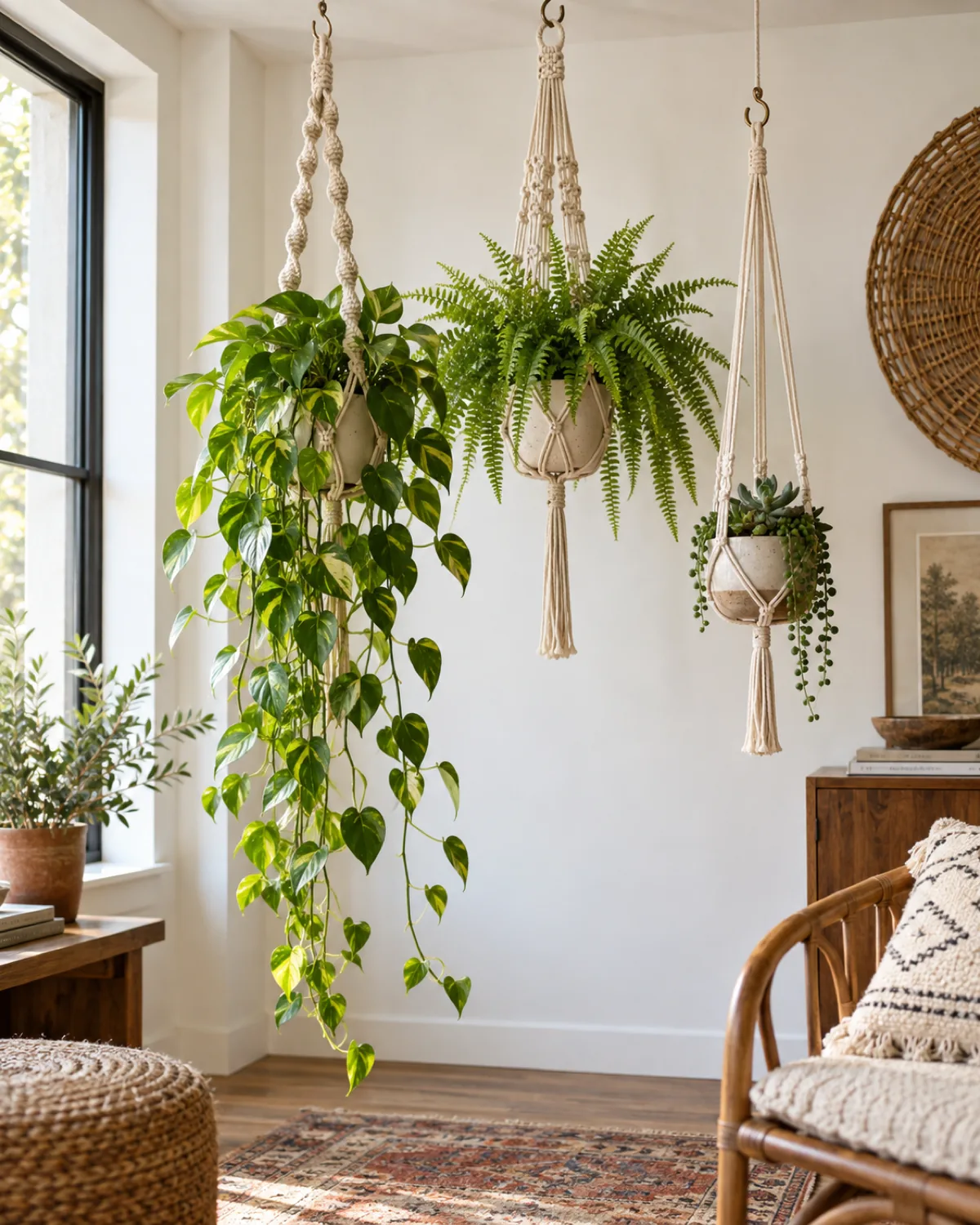
Nothing says boho plant decor faster than a macrame hanger holding a trailing vine. The knotted cotton cord, the visible handcraft, the plant floating at a height that puts greenery where you do not expect it. It is the single most recognizable element of the style.
What to know before you hang one:
- Cotton cord stretches slightly over time and reads warm and soft. Jute cord holds its shape better and reads more rustic. Both work. Mixing them does not
- Single-pot hangers suit smaller trailing plants like string of hearts or a compact pothos. Tiered hangers with two or three baskets make more visual impact but need a ceiling hook rated for the combined weight
- Odd-number groupings — hang three at staggered heights rather than two at the same level. The asymmetry reads as collected, not installed
The biggest mistake with macrame hangers is placing them against a blank wall with nothing else around them. They work best when they are part of a layered scene: a floor plant below, a shelf to one side, the hanger filling the vertical gap between.
Rattan and Wicker Plant Stands That Ground the Look
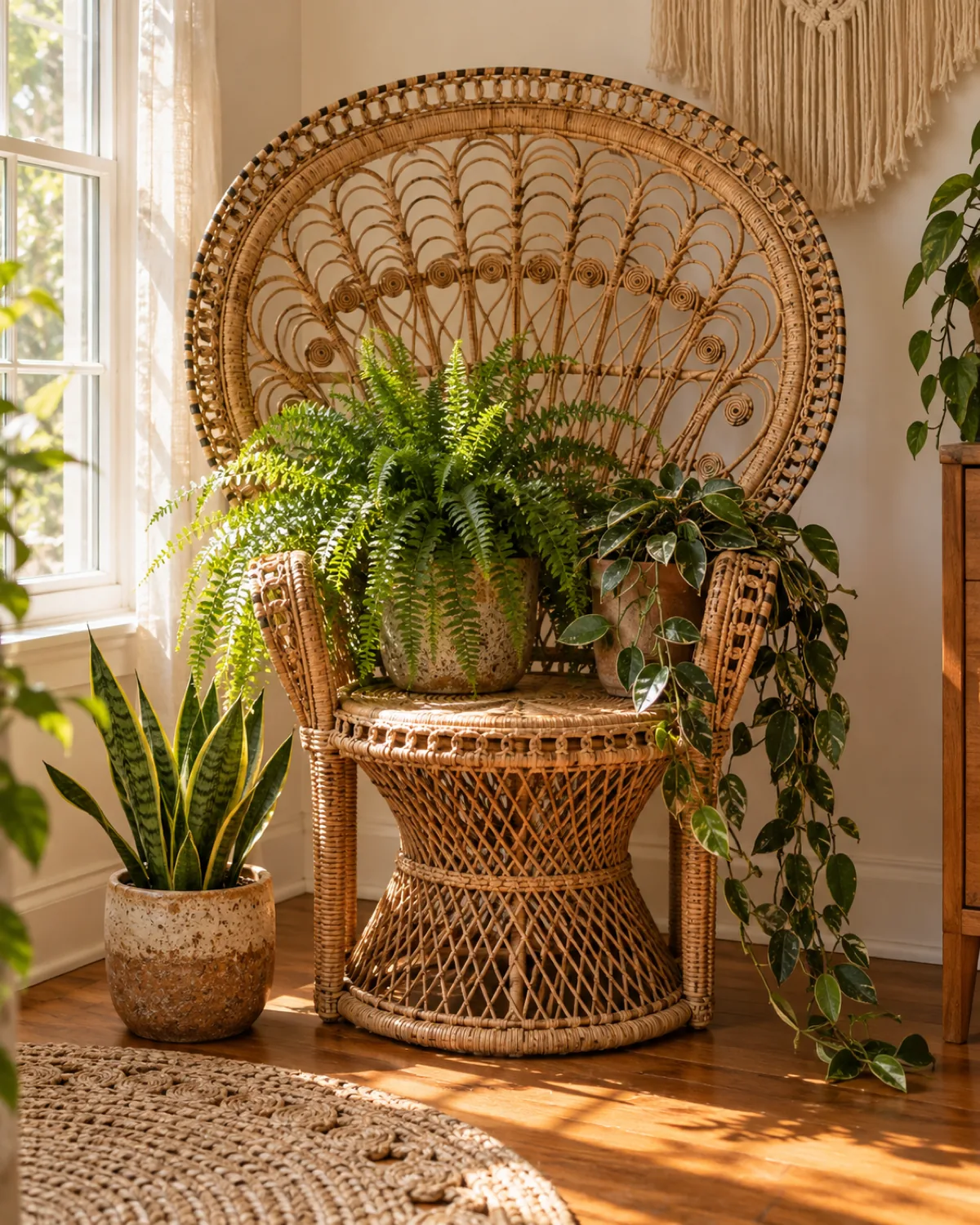
Rattan and wicker bring warmth that metal and glass never will. The woven texture of a rattan plant stand echoes the organic shapes of the plants sitting on it, and the material ages into a deeper honey tone that makes new pieces look vintage within a year.
Boho-specific stand choices:
- Peacock chairs repurposed as plant display: a vintage or reproduction peacock chair with plants on the seat and draped over the arms turns furniture into a living sculpture
- Tiered wicker shelving: two or three tiers give you vertical layering in one piece, and the open weave lets light reach lower plants
- Rattan plant stands with splayed legs: the mid-century silhouette mixed with the woven material is the sweet spot between boho and modern
What to avoid: shiny chrome or matte black metal stands. They read as industrial or minimalist, not bohemian. If you already own metal stands, soften them by wrapping the legs with jute twine or placing them behind a cluster of woven baskets so the metal disappears.
The warmth test is simple. Hold your palm against the material. If it feels warm, it belongs in a boho setup. If it feels cold, it fights the aesthetic.
Terracotta Everything: Pots, Saucers, and Groupings
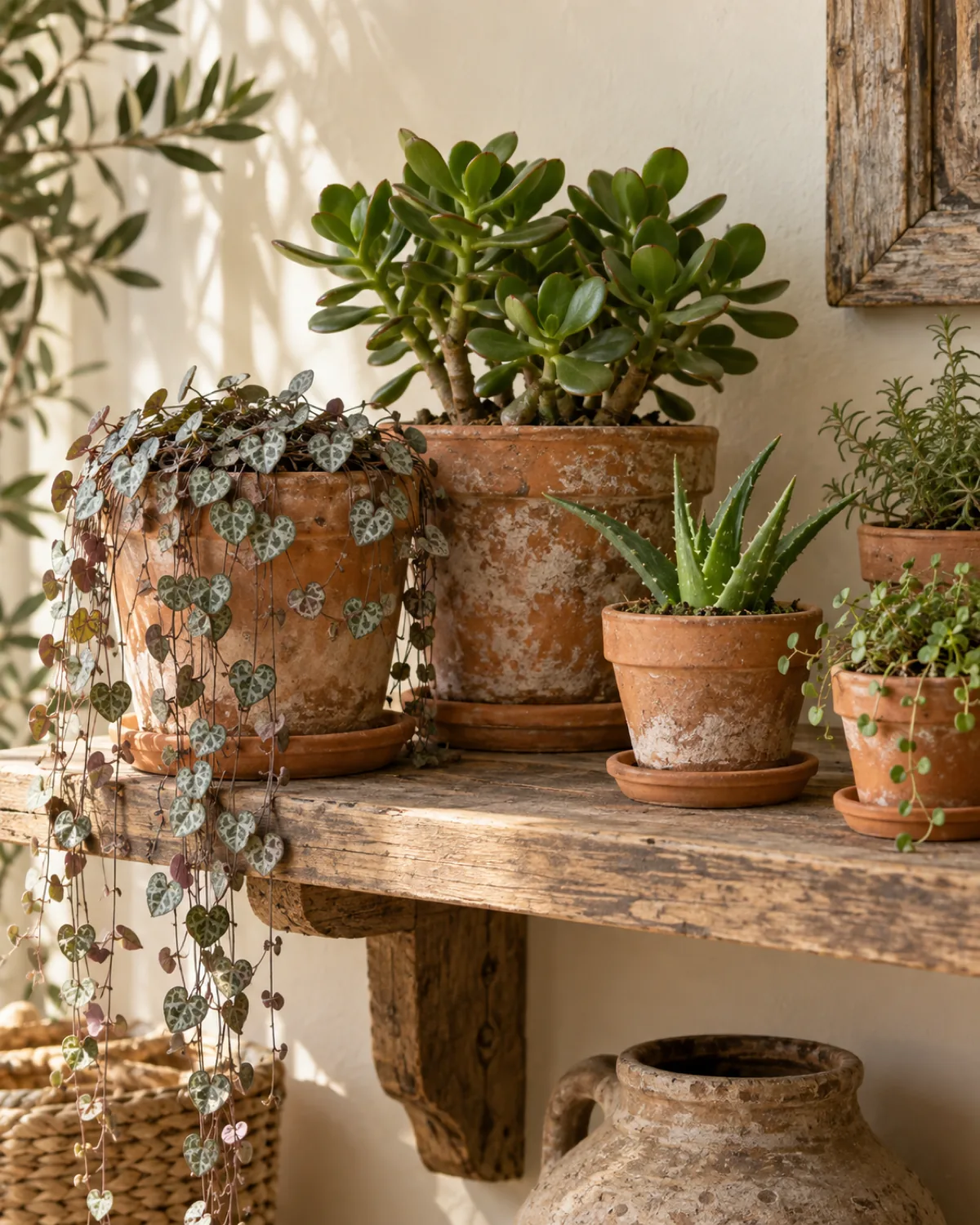
Terracotta is the default pot material for boho plant decor, and there is a reason beyond price. The unglazed clay breathes, develops white mineral deposits over time, and turns from uniform orange into a surface with the kind of character you cannot buy new.
How to build a terracotta grouping that looks collected:
- Mix sizes deliberately: a cluster of three to five pots ranging from three inches to ten inches on one surface creates more interest than same-size repetition
- Seek out aged pieces: estate sales, garden centers with outdoor stock, or your own pots left outside through a season. The white mineral bloom and slight green algae are features, not flaws
- Pair with trailing greenery: a string of pearls or pothos cascading over the rim of warm terracotta is one of the most photographed combinations in the boho plant world
Terracotta absorbs moisture through the walls, which means plants dry out faster than in glazed or plastic pots. For moisture-loving species like ferns, either size up the pot or slip a plastic nursery pot inside the terracotta and use it as a decorative sleeve.
The patina shortcut: soak a new terracotta pot in water overnight, then paint the outside with plain yogurt. Leave it in indirect light for two weeks. The yogurt feeds mineral growth that would otherwise take a year to develop naturally.
Trailing Plants That Define the Boho Vibe
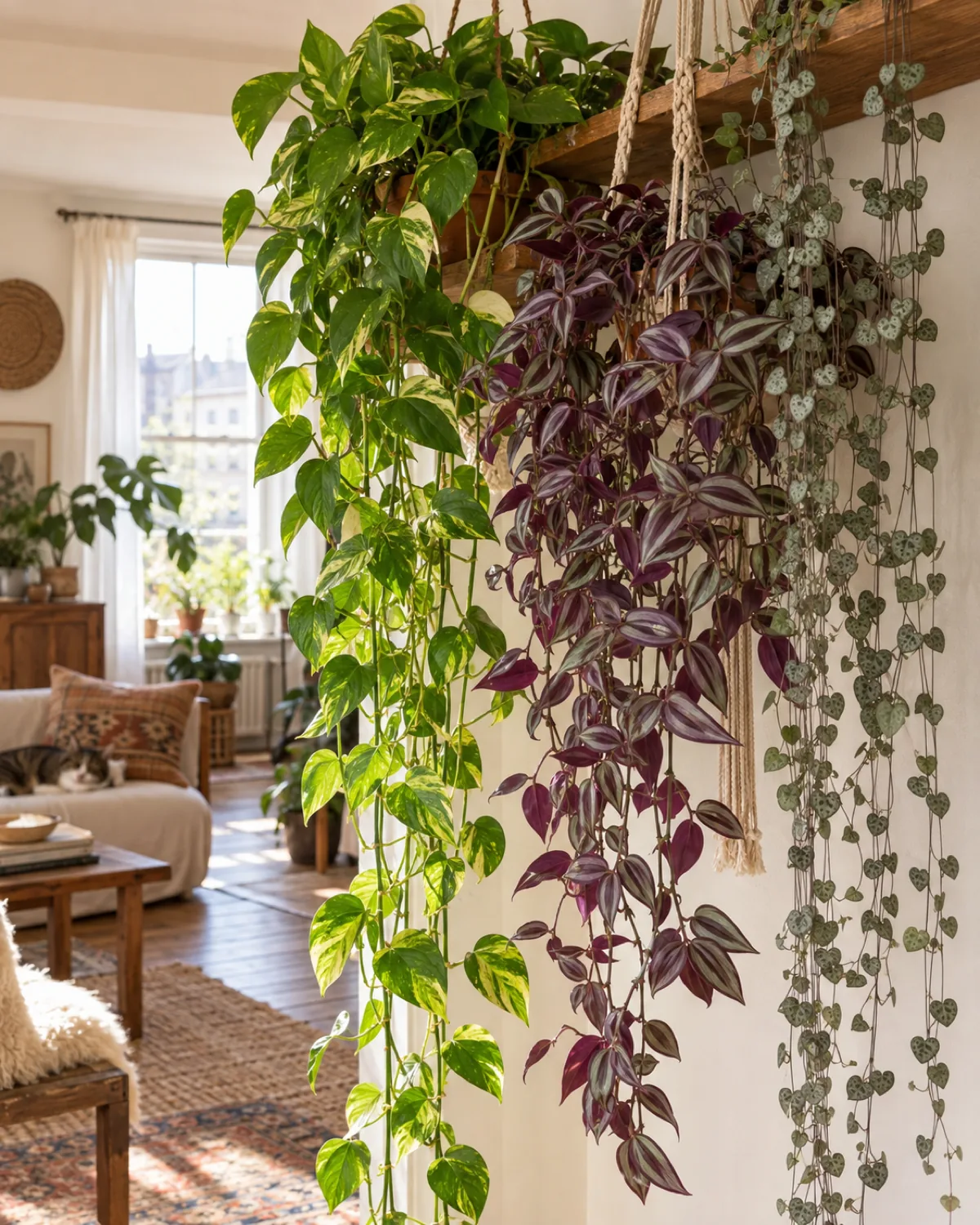
Upright plants sit in their pots and stay put. Trailing plants escape, drape, cascade, and fill vertical gaps that no amount of shelf styling can reach. In boho decor, trailing species do more work than any other plant form because they create the flowing, organic movement the style depends on.
The trailing roster ranked by boho impact:
- Pothos: the workhorse. Grows a foot per month in good light, tolerates neglect, available in golden, marble queen, and neon varieties that each read differently
- String of pearls: spherical bead-like leaves on thin stems. Dramatic and delicate looking but actually a succulent that prefers bright light and infrequent watering
- String of hearts: tiny heart-shaped leaves with silver markings on thread-thin vines. Pairs with macrame hangers better than any other species
- Tradescantia: fast-growing, purple-and-silver striped foliage that adds color variety to an otherwise all-green trailing collection
- Hoya carnosa: waxy leaves on woody vines that trail slowly but look increasingly sculptural over years
The placement principle: every elevated surface — shelf edge, cabinet top, hanging planter hook — should have at least one trailing plant spilling over the edge. The vines connect the vertical layers and make the room feel like the plants chose to grow there rather than being placed.
Woven Baskets as Pot Covers
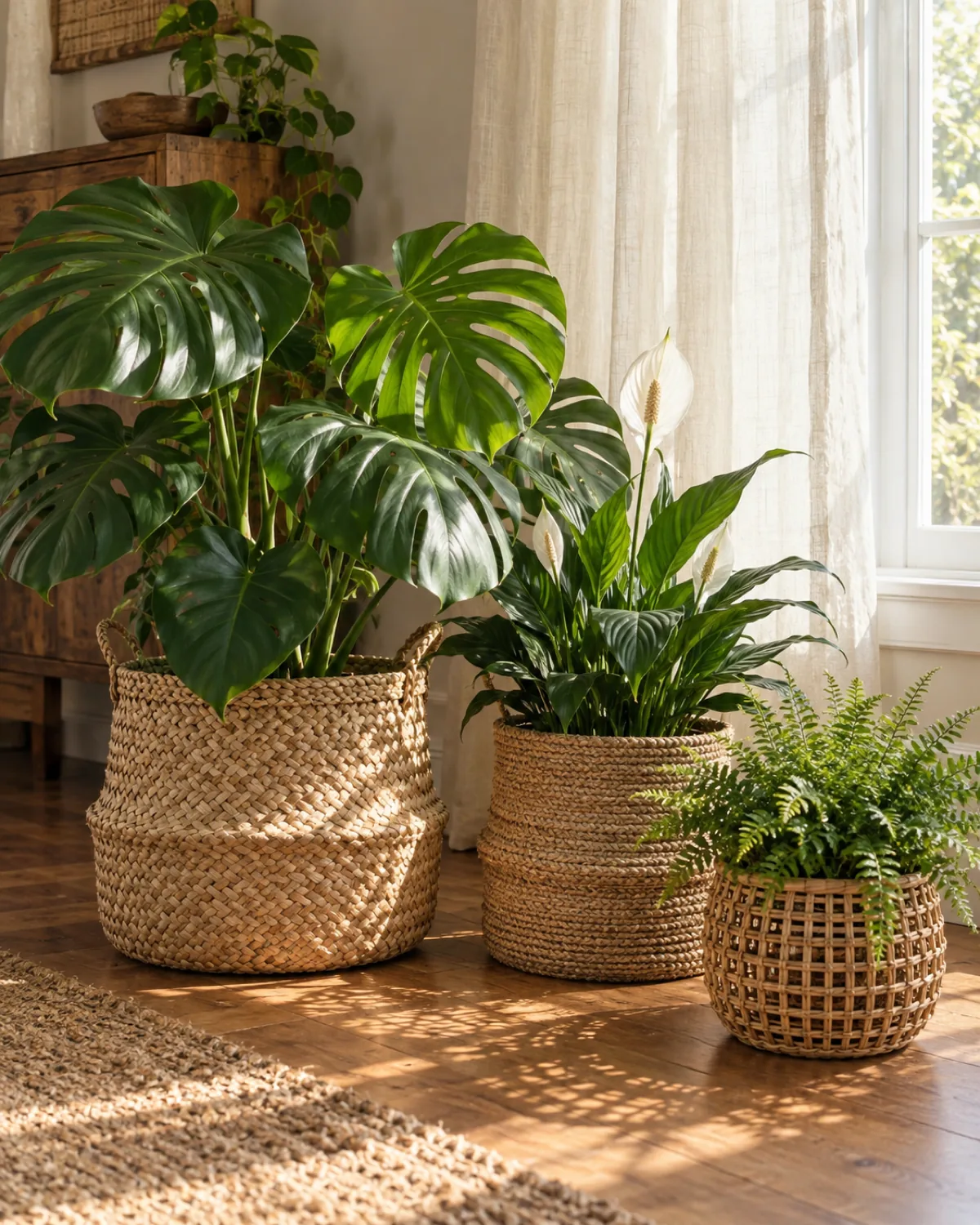
The fastest way to make a plastic nursery pot disappear is to drop it inside a woven basket. The texture hides the generic container, the material reads as warm and organic, and the cost is usually less than buying a decorative ceramic pot.
Basket types that work best:
- Seagrass belly baskets: the rounded shape and natural tan color coordinate with almost any plant and room palette. Available at every price point from big-box stores to handmade artisan markets
- Jute storage baskets: stiffer walls support heavier plants and the ropelike texture adds a nautical-meets-boho layer
- Thrifted baskets: estate sales, Goodwill, and flea markets are the best source. A basket with a slightly uneven weave or faded color has the handmade character that new production baskets lack
The drainage issue and how to solve it:
- Plastic saucer inside the basket: cheapest, invisible, catches runoff
- Waterproof liner: a plastic bag cut to size and folded over the basket rim, hidden by the plant
- Lift and drain: water the plant in the sink, let it drain fully, then return it to the basket
Never water a plant directly inside a woven basket without waterproofing. Standing water rots the weave within weeks and molds the basket lining, which you will not notice until the smell starts.
A Boho Plant Shelf Styled in Layers
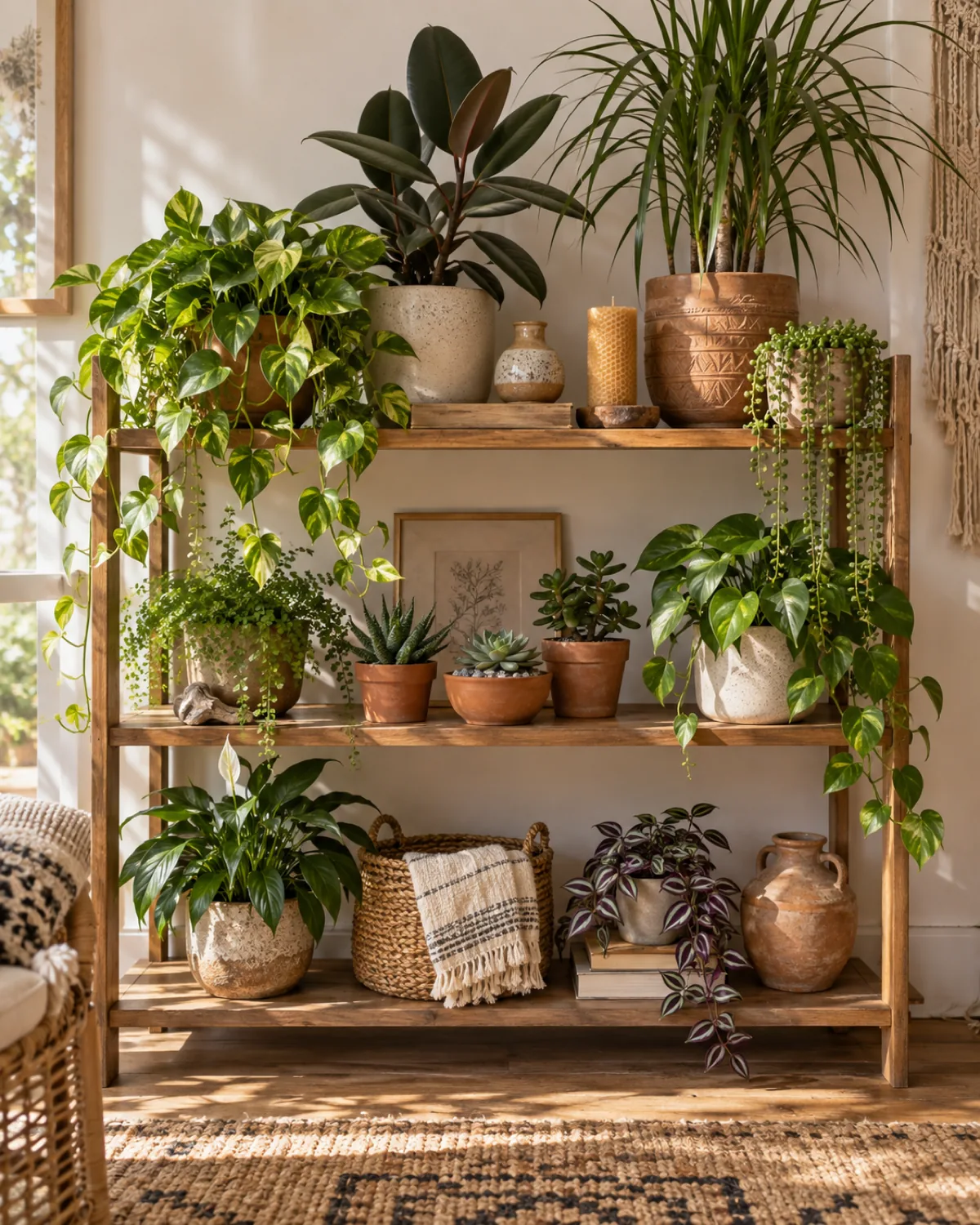
A plant shelf in a boho room does not look like a plant shelf. It looks like a scene that happens to include plants alongside candles, ceramics, books, and collected objects.
The layering formula for a three-tier shelf:
- Back row: tallest items against the wall. A small upright plant, a stack of books, a tall ceramic vase
- Middle row: medium plants and objects that add texture. A woven basket with a trailing plant, a handmade pottery piece, a small framed print
- Front row and edges: small plants in tiny pots, trailing vines spilling over the lip, a single candle, a small dish of crystals or stones
The ratio that keeps it boho rather than cluttered:
- Roughly sixty percent plants, forty percent non-plant objects
- No more than two items of the same material touching each other
- At least one trailing element per shelf tier
The biggest shelf-styling mistake is filling every inch. Boho is curated abundance, not storage. Leave at least twenty percent of the shelf surface empty. The negative space is what makes each grouping readable.
Boho Bedroom Plant Corners
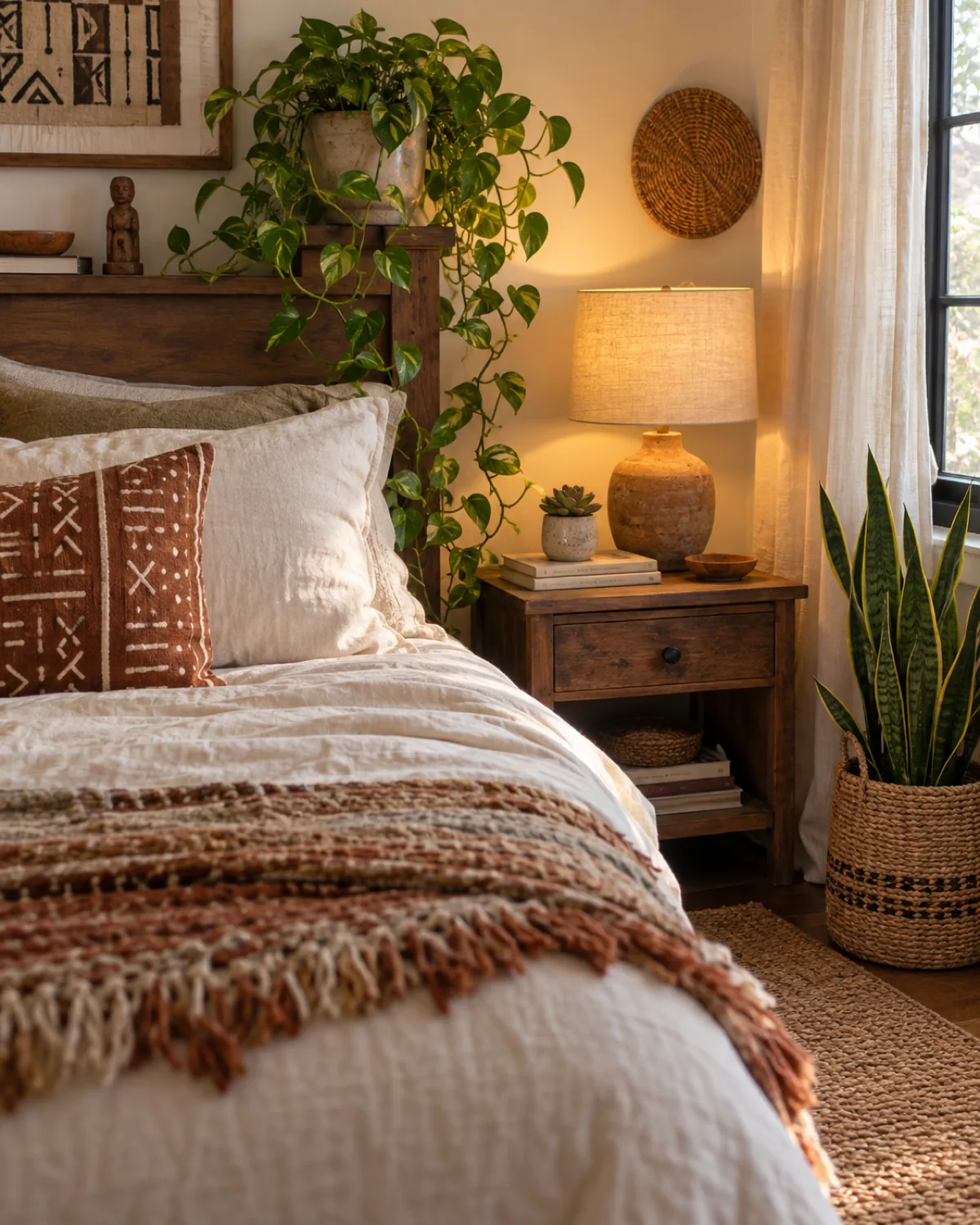
The bedroom is where boho plant decor shifts from visual to atmospheric. The goal is not a jungle but a soft green layer that makes the room feel like a sanctuary.
Three bedroom zones that take plants well:
- Headboard shelf or ledge: a trailing pothos or string of hearts cascading down the wall behind the headboard adds a living backdrop. Choose species that tolerate medium light since this spot is usually away from the window
- Nightstand: one small plant in a handmade ceramic. A compact succulent, a tiny pilea, or a miniature spider plant pup in a three-inch pot keeps it proportional to the lamp and book stack
- Floor basket: a medium snake plant or ZZ plant in a woven basket beside the bed frame fills the floor gap without competing with the bedding
What keeps it boho versus generic:
- The pot materials match the textile palette — terracotta with linen, woven basket with a jute rug, cream ceramic with cotton bedding
- Plants are tucked into the room rather than lined up on one surface
- Nothing requires high light. Low-light species prevent the temptation to drag a grow light into a room that should feel restful
Bohemian Bathroom Plant Styling
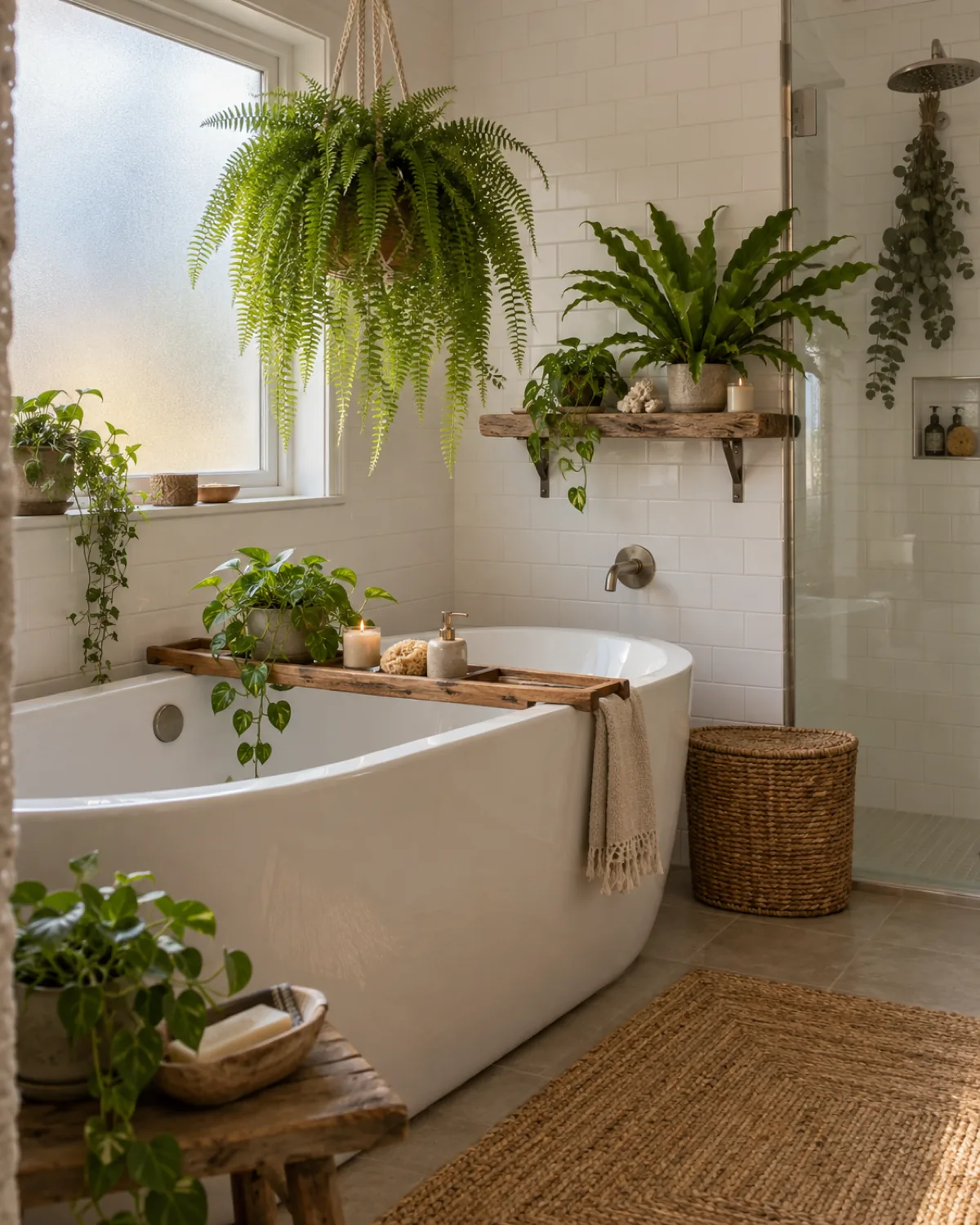
A bathroom with plants is nice. A bohemian bathroom with plants feels like bathing in a greenhouse. The built-in humidity makes this the easiest room in the house for tropical species, and the small footprint forces creative placement that naturally reads as boho.
The three best bathroom plant positions:
- Macrame hanger above the tub: a Boston fern or trailing pothos hung from a ceiling hook above or beside the bathtub is the signature boho bathroom move. The steam rising from the bath feeds the plant, and the trailing fronds frame the soak
- Wooden bath tray or shelf: a rustic wood plank across the tub rim or a driftwood shelf on the wall holds small plants alongside candles and soap
- Shower eucalyptus bundle: technically dried botanical rather than a live plant, but a bundle of eucalyptus stems tied to the shower head with jute twine releases scent in steam and costs almost nothing
Humidity-loving species that thrive in bathrooms:
- Ferns (Boston, maidenhair, bird's nest)
- Pothos and philodendron
- Air plants mounted on driftwood
- Calathea and prayer plants
The material palette stays the same — driftwood, terracotta, woven baskets, raw wood shelving. Avoid metal bathroom fixtures as plant holders. A chrome towel rack with a plant on it reads as an afterthought, not a design choice.
The Warm-Neutral Color Palette That Ties It Together
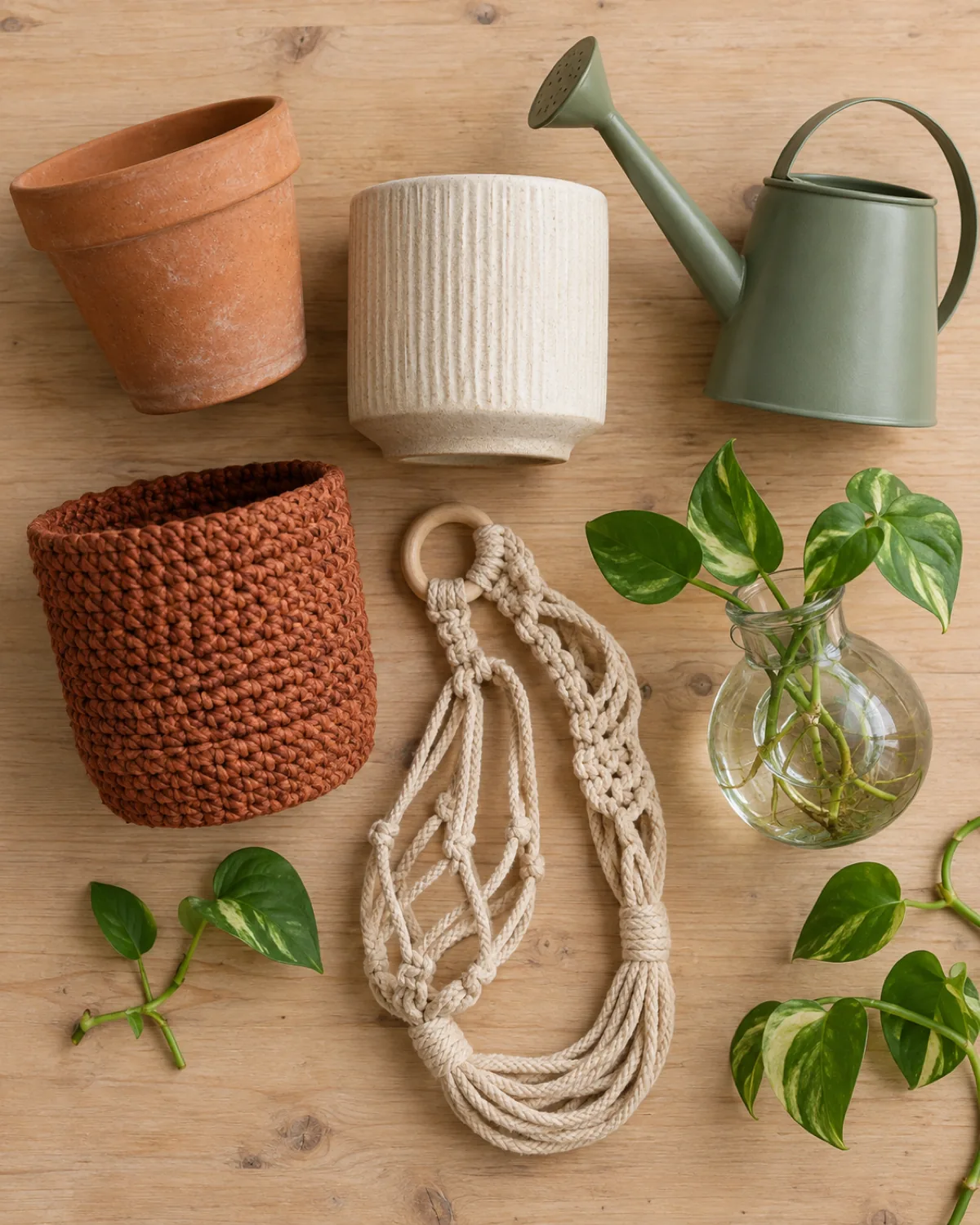
Boho plant decor works because the non-green elements share a color family that makes the greenery pop without competing with it. The palette is warm, muted, and pulled from the same materials the plants sit in.
The five anchor colors:
The five anchor colors and where they show up:
- Cream — linen curtains, cotton macrame, light ceramics. The neutral backdrop that lets green dominate
- Sand — jute rugs, woven baskets, light wood shelves. Warm mid-tone bridging cream and terracotta
- Terracotta — clay pots, rust textiles, accent walls. The signature boho earth tone
- Sage — soft green ceramics, dried eucalyptus. Bridges plant green with container neutral
- Rust — woven pot covers, throw pillows, dried foliage. Warm accent adding depth
The coordination rule: pick three of the five as your primary palette and let the other two appear as small accents. A room using cream, sand, and terracotta with a single sage pot and one rust pillow looks intentional. A room using all five equally looks chaotic.
Avoid these:
- Pure white (reads sterile, not warm)
- Black (reads gothic or industrial)
- Bright primary colors (read eclectic, not boho)
- Cool greys (read Scandinavian, not bohemian)
Mixing Thrifted and New Pieces Without Looking Random
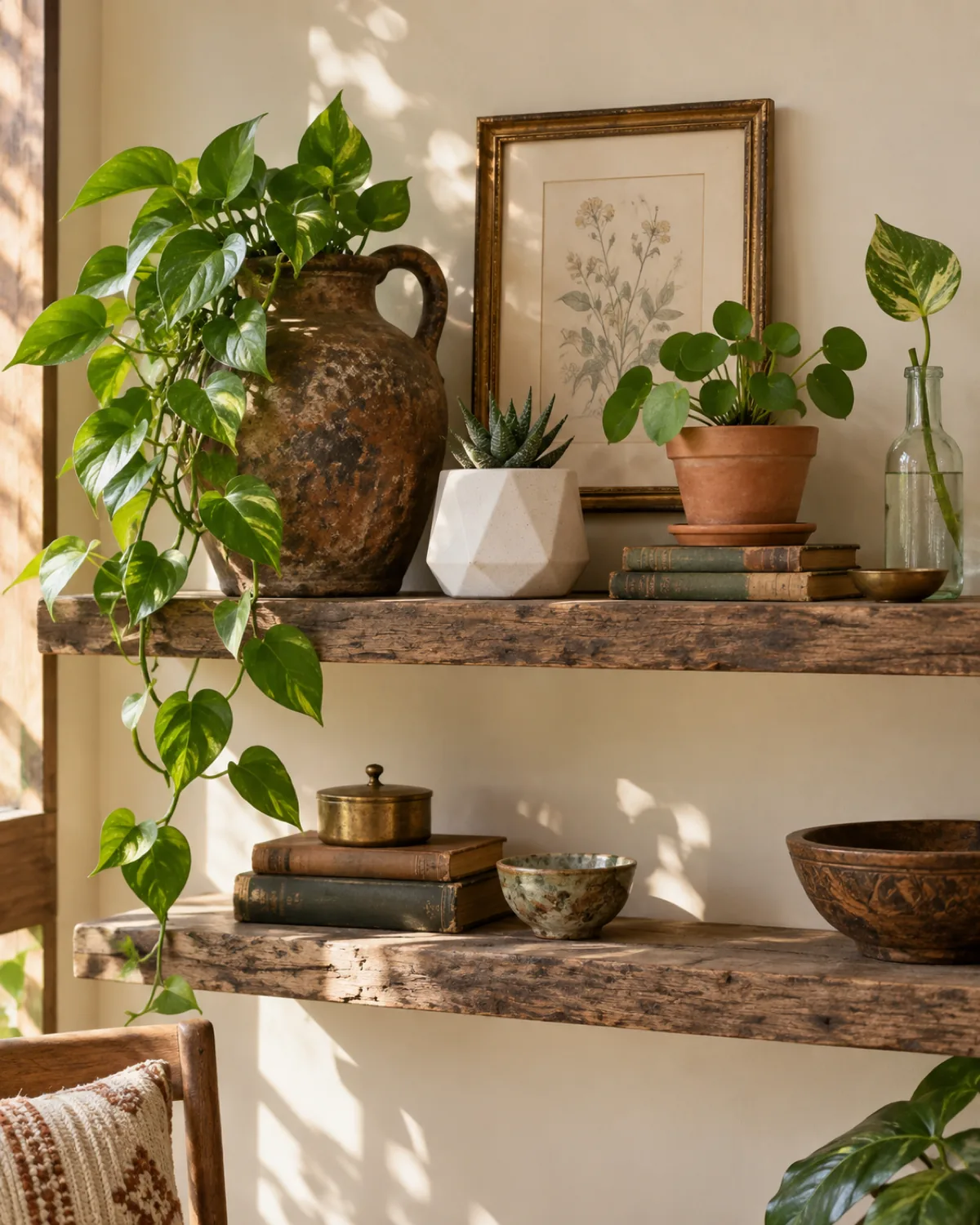
The most convincing boho rooms look like they were assembled over years of travel, thrift runs, and inherited hand-me-downs. You can build that look in a weekend if you understand the ratio.
The 70/30 rule:
- Seventy percent new or readily available: terracotta pots, standard baskets, macrame hangers, and basic ceramics in the warm-neutral palette. These are the canvas
- Thirty percent thrifted, vintage, or handmade: an estate-sale ceramic jug, a hand-thrown bowl from a local potter, a brass planter with patina, a vintage glass propagation vase. These are the personality
Where to find the thirty percent:
- Estate sales and garage sales: ceramic planters, brass bowls, woven baskets that have aged naturally
- Thrift stores: glazed pottery, glass vases, small wooden shelves, woven wall hangings
- Online resale: Etsy vintage, Facebook Marketplace (search "ceramic planter" or "woven basket")
- Local potters and makers markets: one-of-a-kind pieces that no one else in your neighborhood will have
The test for whether a thrifted piece fits: hold it against your terracotta and cream palette. If it could have been made from the same material family — clay, glass, wood, woven fiber — it belongs. If it is plastic, chrome, or neon colored, it fights the whole setup.
Boho Window Displays With Hanging and Shelf Plants
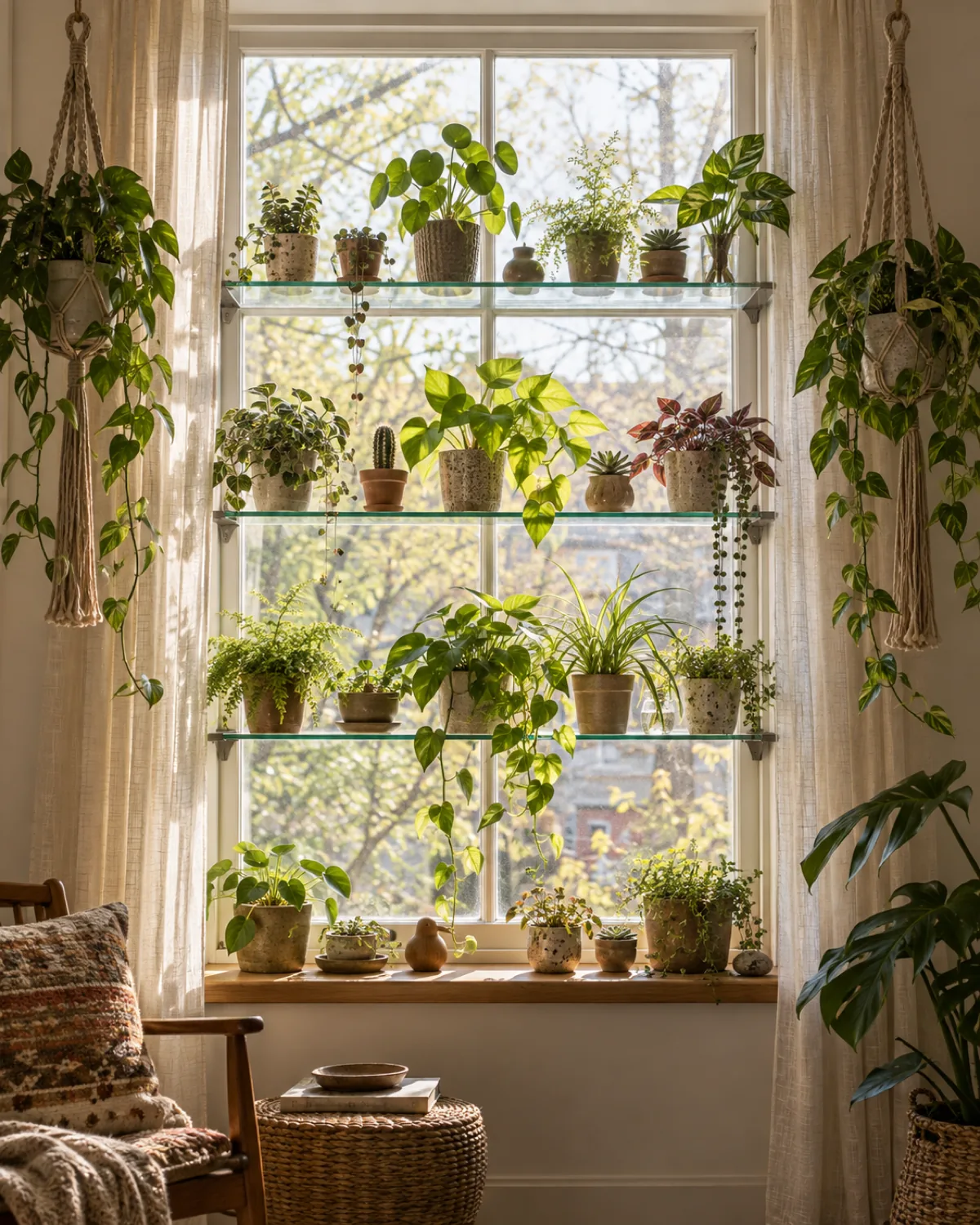
Windows are the highest-value real estate in any plant room, and in boho decor they serve double duty as both a light source and a natural display frame.
Three window display approaches:
- Glass shelves across the pane: two or three clear glass shelves spanning the window width let light pass through while holding a row of small plants. The backlit effect makes leaves glow and creates silhouettes that look different at every hour
- Macrame hangers flanking the frame: one hanger on each side of the window at slightly different heights frames the view with trailing greenery without blocking the light. Pothos and tradescantia are the best candidates because their vines grow fast enough to frame the full window within a season
- Windowsill gardens: a dense row of small pots in mismatched terracotta and ceramic along the sill turns even a narrow ledge into a focal point
Light-conscious choices:
- South-facing windows: succulents, jade plant, string of pearls — species that tolerate direct sun
- East or west windows: most trailing tropicals thrive here
- North windows: pothos, philodendron, snake plant — low-light tolerant species only
The sheer curtain trick: a cream or white linen curtain diffuses harsh direct light into the soft glow that photographs best and prevents leaf burn on the plants closest to the glass.
Incorporating Dried Flowers and Preserved Elements
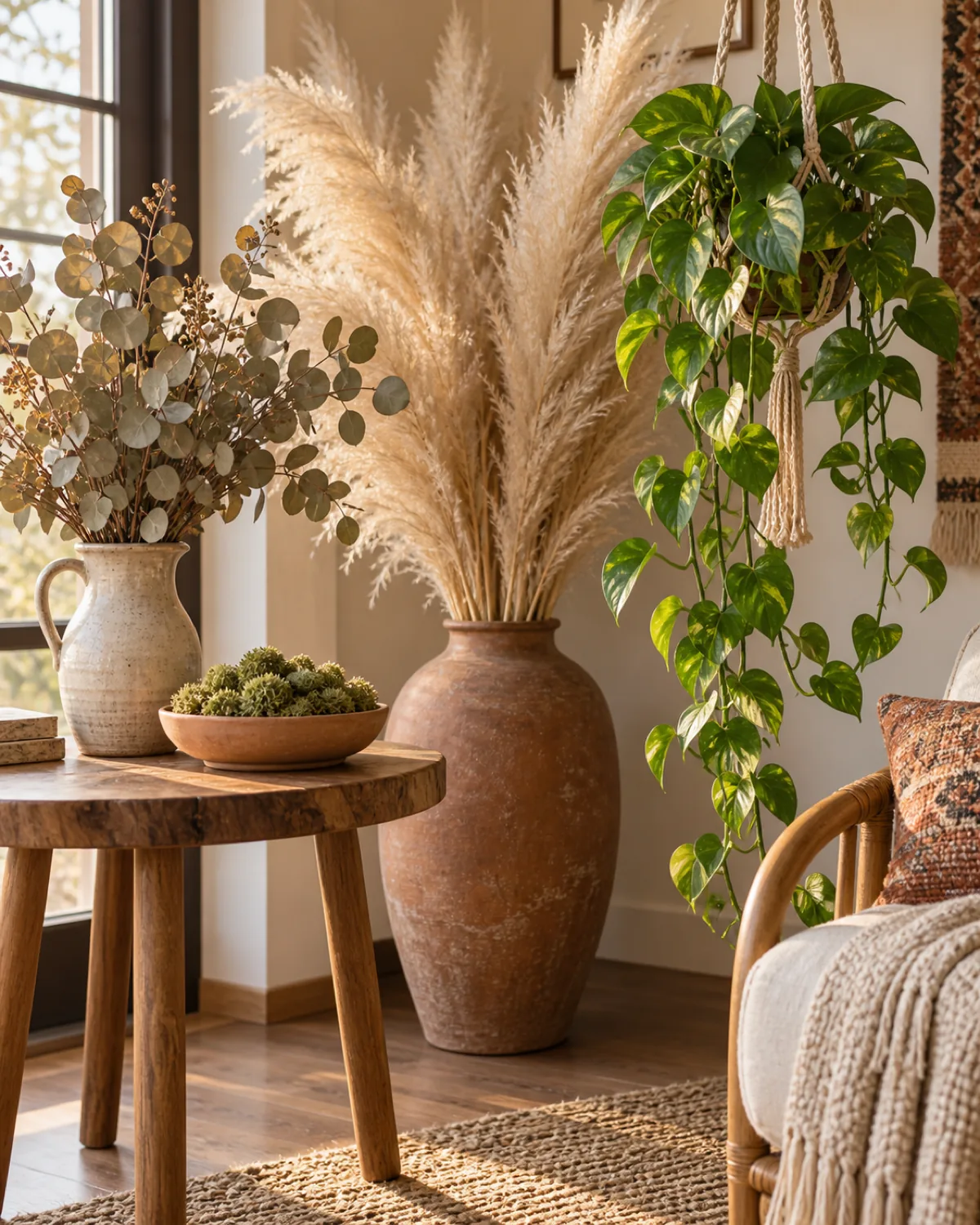
Live plants are the backbone of boho decor, but dried and preserved botanicals are the texture layer that makes the look feel complete. They fill spots where live plants cannot survive and add warm tones that green foliage lacks.
The dried elements that earn their place:
- Pampas grass: tall plumes in a floor vase create vertical drama beside a plant cluster. Choose naturally dried (cream and soft brown) over dyed pink or bleached white
- Dried eucalyptus: bundles in ceramic pitchers or hung upside down from a hook add silvery-green tones and a subtle scent that lasts months
- Preserved moss: shallow terracotta dishes filled with preserved sheet moss or reindeer moss work as a living-looking accent on side tables and shelves
Where dried elements work best:
- Shelves that do not get enough light for live plants
- High ledges and mantel tops that you cannot reach for watering
- Next to live trailing plants, creating a transition from fresh green to warm brown
The ratio rule: dried elements should never outnumber live plants in a single grouping. One pampas vase next to three live plants reads as intentional. A shelf with three dried arrangements and one live plant reads as a plant graveyard.
Maintenance reality: dried botanicals collect dust. Run a blow dryer on cool or shake them outside every few weeks to keep them looking deliberate rather than neglected.
Textiles That Complement Plant Displays
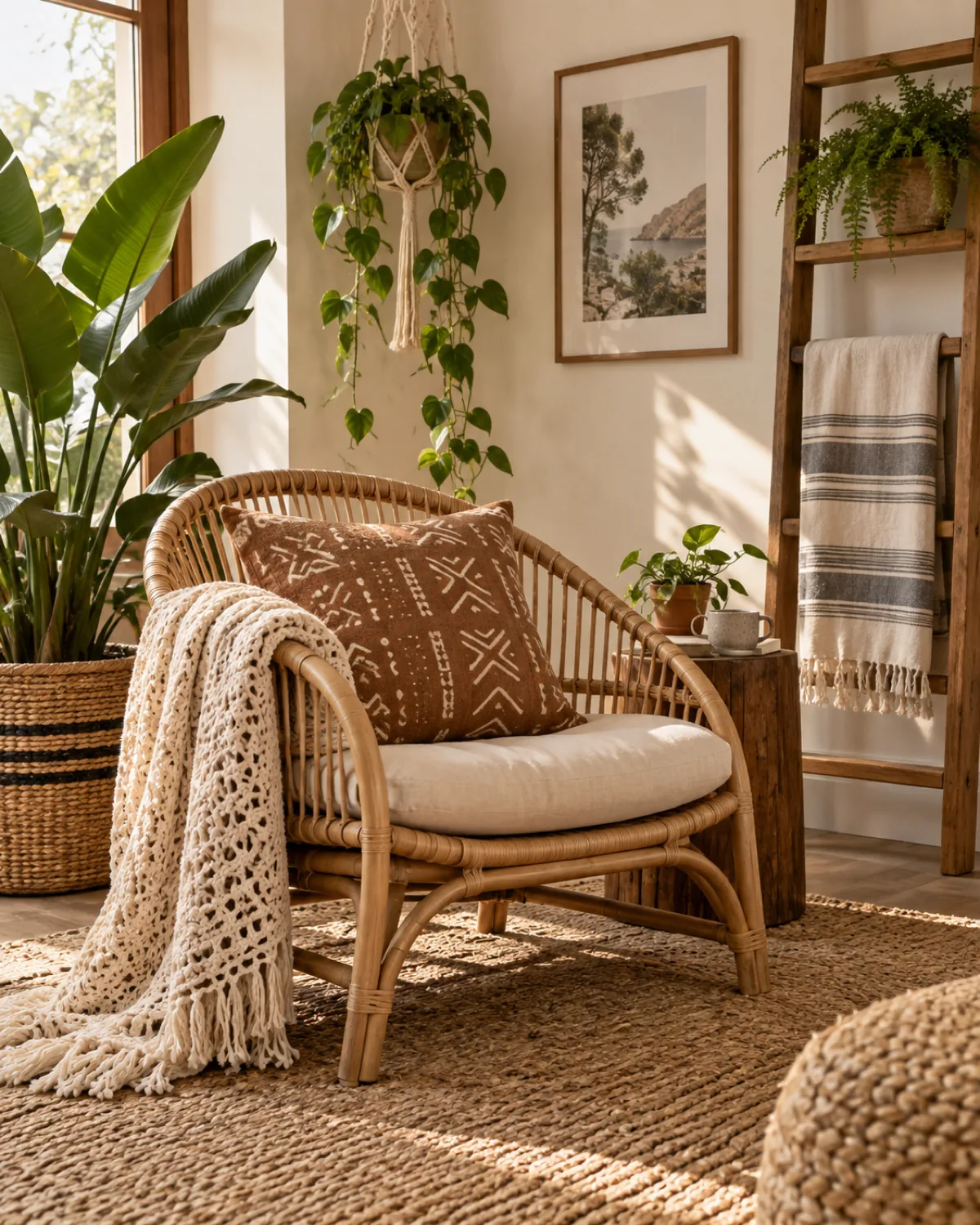
Plants provide the green. Textiles provide the warmth, softness, and lived-in quality that keeps boho from looking like a garden center.
The textile categories that play well with plants:
- Jute and sisal rugs: the rough woven texture underfoot grounds every plant cluster above it. A jute rug under a plant corner setup is almost mandatory in boho styling
- Mudcloth pillows: the hand-painted geometric patterns on natural cotton echo the imperfection principle. One or two on a chair near a plant grouping ties the scene together
- Crochet and knit throws: draped over a rattan chair or the arm of a sofa near plants, the handmade texture mirrors the macrame hangers above
- Turkish towels or lightweight woven blankets: draped on a wooden ladder shelf that also holds a small fern or trailing vine
The pairing logic:
Quick pairing guide:
- Rough jute pairs with terracotta and rattan. Clashes with glossy ceramics and metal
- Smooth linen pairs with cream ceramics and glass. Clashes with concrete and industrial pots
- Chunky crochet pairs with macrame and woven baskets. Clashes with minimalist sleek surfaces
- Printed mudcloth pairs with solid-color pots. Clashes with busy patterned wallpaper
The textile test: if the fabric could have been made by hand — even if it was not — it fits the boho aesthetic. Machine-finished synthetics with no texture variation fight the look.
Boho Plant Decor on a Budget
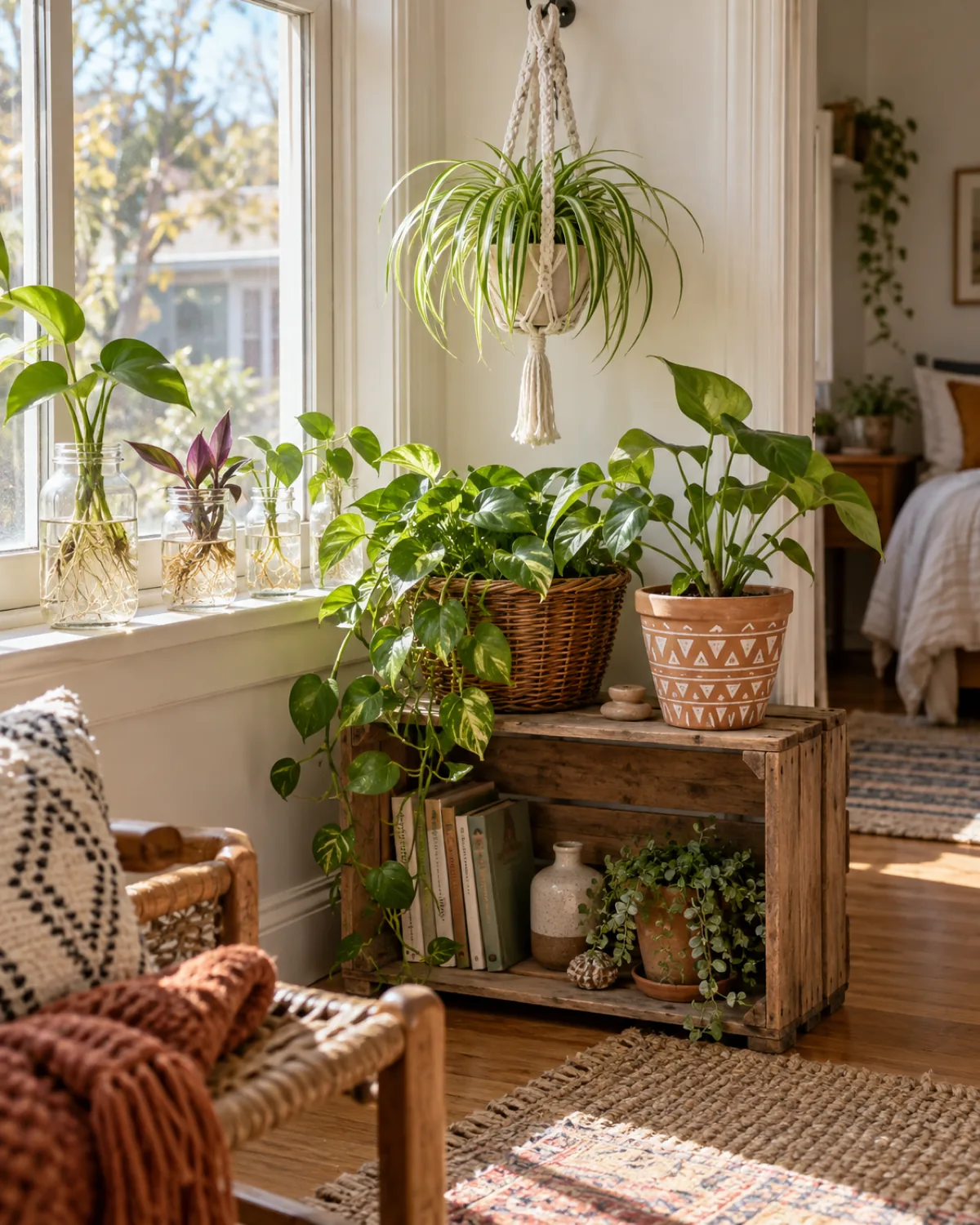
Boho plant decor is one of the cheapest aesthetics to build because the style actively rewards imperfection, secondhand finds, and DIY. A room that looks like it cost hundreds can be built for the price of a few terracotta pots and some cotton cord.
Budget strategies ranked by impact per dollar:
- Propagation stations as decor: glass jars with plant cuttings rooting in water on a windowsill look intentional in a boho room. They cost nothing if you already own a plant and a jar, and the cuttings become new plants in weeks
- Thrift store basket hauls: secondhand stores almost always have woven baskets for a few dollars each. Buy in different sizes and use them as pot covers throughout the room
- Terracotta with simple paint accents: a basic terracotta pot with hand-painted white lines, dots, or geometric shapes elevates a two-dollar pot into a one-of-a-kind piece
- Cutting swaps with friends: trade cuttings of your pothos for a friend's tradescantia. The boho community is built on sharing, and swaps build variety without spending
- Wooden crates as plant stands: secondhand wooden crates flipped upside down or stacked create instant tiered displays for under five dollars
The free boho elements:
- Driftwood from a beach walk as a shelf or decor piece
- Rocks and stones as top dressing for pots
- Dried seed pods and branches from your neighborhood
- A glass bottle from the recycling bin as a single-stem propagation vase
The spending trap to avoid: buying everything in one trip to a home decor store. Boho is built over time. A room assembled in a single shopping run looks coordinated in a way that defeats the whole point.
Common Boho Plant Decor Mistakes to Avoid
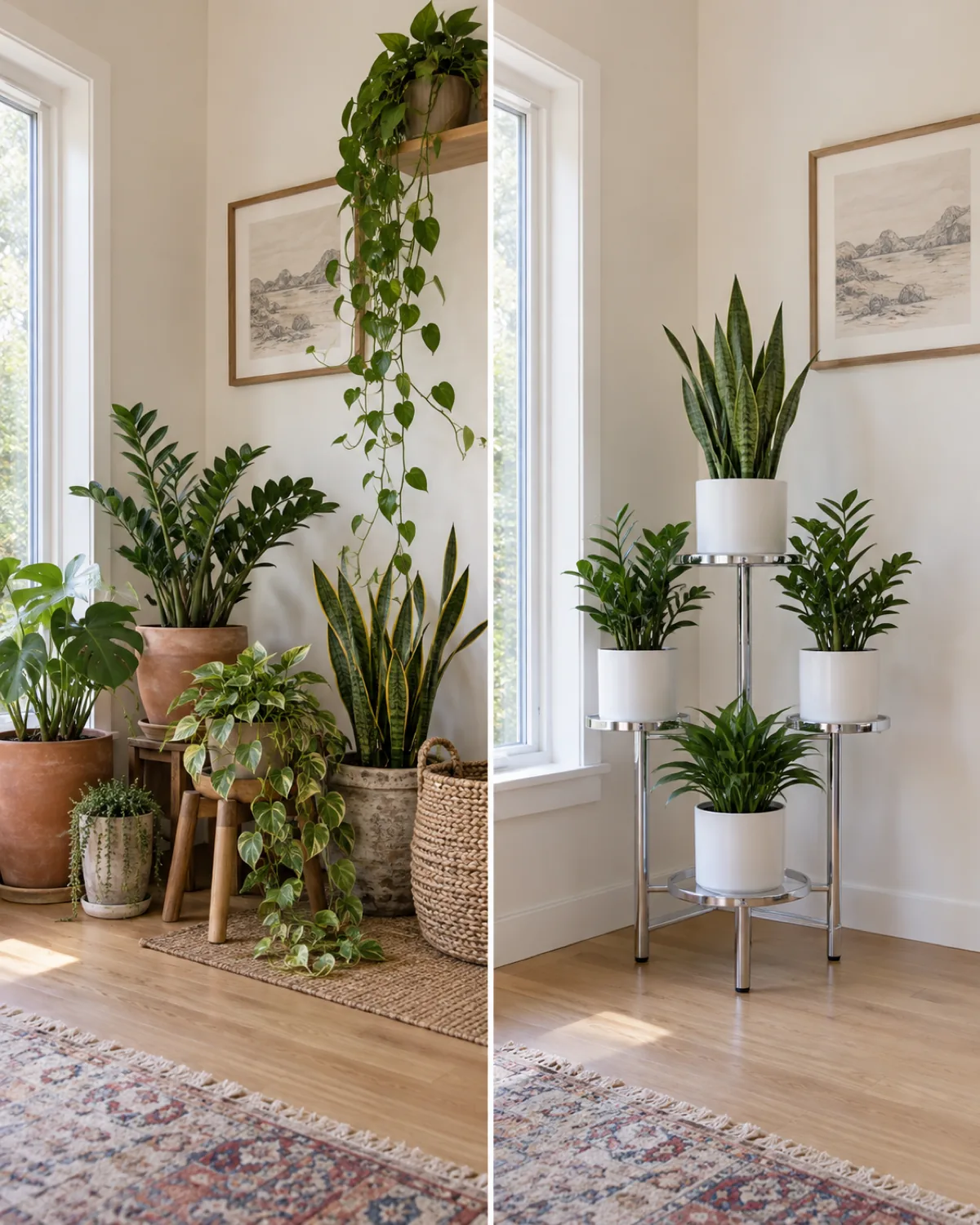
The line between bohemian and messy is thinner than any styling guide admits. These mistakes are the ones that tip a room from intentional to accidental.
The six most common boho plant decor mistakes:
- All-matching pots: buying a set of six identical white or grey pots and calling it boho. Coordinated is good. Identical kills the handmade-over-time look that defines the style
- Too many cold metals: a single brass accent works. Three chrome plant stands, a metal shelf, and a wire basket turn the room industrial. Limit metal to less than ten percent of visible surfaces
- Ignoring plant health for aesthetics: placing a fiddle-leaf fig in a dark corner because the corner needs a tall plant. A dying plant does not look bohemian. It looks neglected. Match the plant to the light, then style around it
- The "everything from one store" look: ordering a rattan shelf, matching macrame hanger, and coordinating terracotta set from the same retailer. The uniformity reads as catalog, not collected
- Symmetry: two identical plants flanking a mirror, three pots evenly spaced on a shelf. Boho is asymmetric by nature. Odd numbers, staggered heights, and uneven spacing create the relaxed feeling
- Skipping the non-plant elements: a shelf with only plants and nothing else reads as a growing station, not a styled vignette. The candles, ceramics, books, and textiles are what make plants feel like part of a room rather than a separate hobby
The fix for all six is the same principle: if it looks planned, disrupt it. Move one pot to the side. Add a thrifted piece that does not match. Let a vine trail in whatever direction it grows. The moment you stop arranging and start allowing, the room starts looking boho.
Quick Reference
16 boho plant decor essentials to save
- 1Build boho on three pillars: natural materials, layered heights, handmade imperfectionIf every container could be swapped for a matching white ceramic without losing anything, the materials were not doing their job.
- 2Hang macrame at staggered heights in odd-number groupsThree hangers at different levels look collected. Two at the same height look installed.
- 3Choose rattan and wicker over metal standsWarm woven materials echo plant shapes. Chrome and black steel fight the bohemian palette.
- 4Let terracotta age naturally for patina and characterWhite mineral bloom and slight green staining are features. New-looking clay reads as unfinished.
- 5Prioritize trailing plants over upright specimensPothos, string of pearls, string of hearts, tradescantia, and hoya create the flowing movement boho depends on.
- 6Hide nursery pots inside woven belly basketsSeagrass or jute baskets add texture instantly and cost less than decorative ceramics.
- 7Style shelves with sixty percent plants and forty percent objectsCandles, ceramics, and books between plants create scenes instead of growing stations.
- 8Match bedroom pot materials to the textile paletteTerracotta with linen, woven baskets with jute rugs, cream ceramics with cotton bedding.
- 9Use bathroom humidity for ferns, pothos, and air plantsA macrame hanger above the tub with a Boston fern is the signature boho bathroom move.
- 10Stick to the cream-sand-terracotta-sage-rust palettePick three as primaries and let the other two appear as small accents. All five at once reads chaotic.
- 11Follow the 70/30 rule for new versus thrifted piecesSeventy percent standard items for the canvas, thirty percent vintage or handmade pieces for personality.
- 12Frame windows with glass shelves and flanking macrame hangersBacklit plants glow and trailing vines frame the view without blocking light.
- 13Use dried pampas, eucalyptus, and preserved moss as texture layersDried elements fill spots where live plants cannot survive and add warm tones green foliage lacks.
- 14Pair rough jute with terracotta and smooth linen with ceramicsMatching textile texture to container material creates visual harmony the eye reads as intentional.
- 15Build the look with propagation jars, thrifted baskets, and crate standsBoho rewards imperfection and secondhand finds. A full room can cost under forty dollars.
- 16If it looks too planned, disrupt itMove one pot off-center. Add a thrifted piece that does not match. Let a vine trail where it wants. Boho starts when you stop arranging.
kultivy.com
Boho plant decor is not about buying specific products or following a formula. It is about choosing materials with warmth, letting trailing plants do what trailing plants do, and building a room that looks like it happened over time rather than over a weekend.
Start with one macrame hanger and a trailing pothos. Add a woven basket from a thrift run. Put a terracotta pot with a jade plant on a shelf where it catches afternoon light. Let those three things sit together for a week before adding anything else.
The room will tell you what it needs next.

Mara writes plant care and styling guides at Kultivy, focusing on practical advice for people who want their indoor plants to actually thrive. Every recommendation in this guide comes from documented care protocols and real growing conditions, not assumptions about what might work. More about Kultivy.