No other trailing houseplant fills a basket as fast as tradescantia. The problem is keeping it that way — the stems stretch, the base goes bare, and the purple fades to green if you miss one care detail that most guides bury at the bottom.
That detail is light. Not watering, not fertilizer, not humidity. Light controls the color, the density, and whether your plant looks lush or scraggly within a single season.
Tradescantia is the fastest-growing trailing houseplant you can keep indoors. These thirteen sections cover the color-light connection most people miss, the pinch-and-propagate trick that keeps stems full, and which species survive beginners.
What makes tradescantia stand out
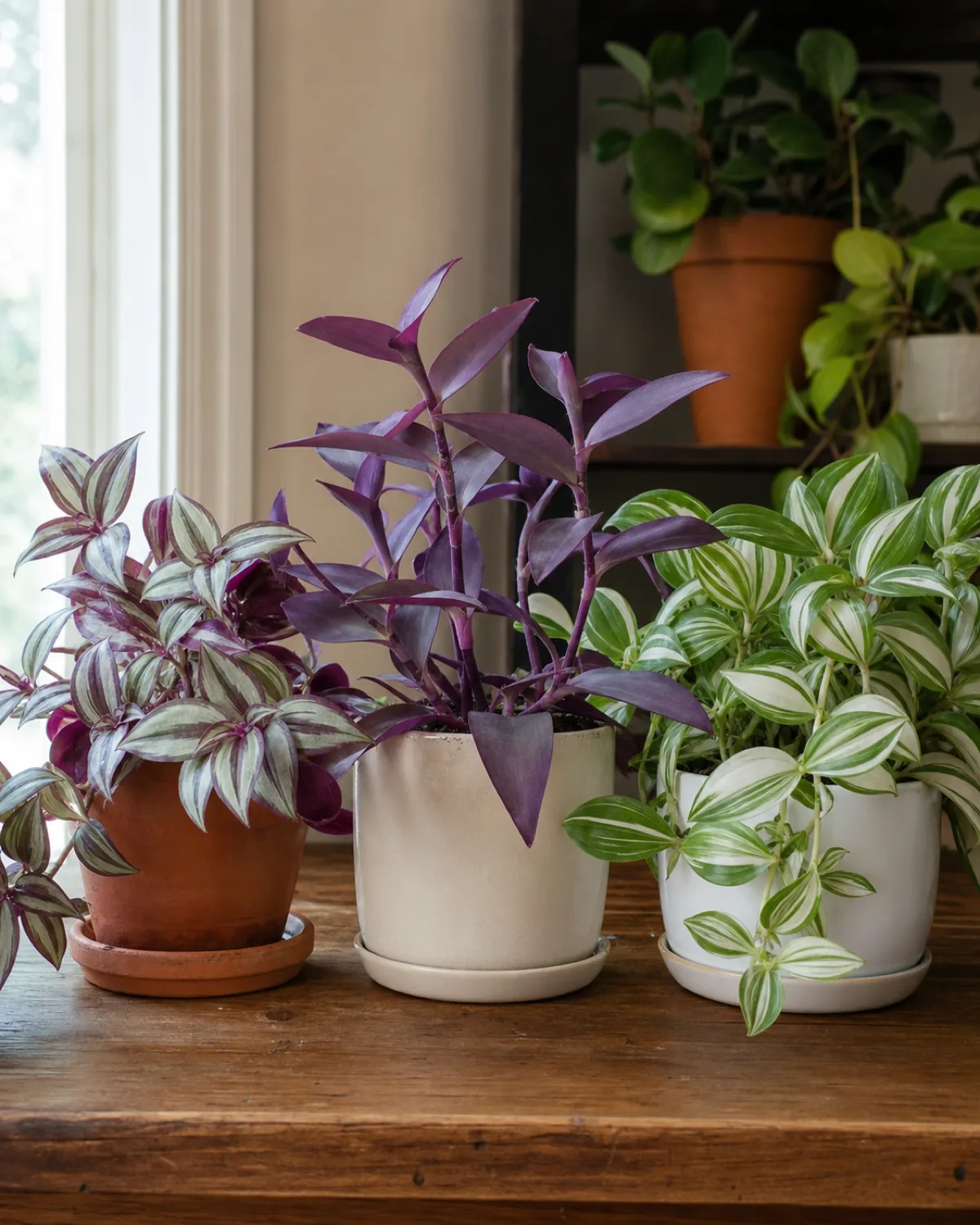
Tradescantia is a genus of about seventy-five species native to the Americas, but only a handful have become indoor stars. The three most popular share one trait: intensely colored foliage that no other trailing houseplant matches.
Tradescantia zebrina is the most common. Its pointed oval leaves carry silver metallic stripes alternating with deep purple-green bands, and the undersides are solid purple. In bright light, the metallic sheen is unmistakable. This is the one you see in hanging baskets at every plant shop.
Tradescantia pallida (Purple Heart) has solid deep purple-magenta leaves and stems. It is the most intensely colored houseplant you can grow indoors — no other species produces this depth of purple across every surface. It needs the most light of the three to hold that color.
Tradescantia fluminensis comes in solid green or variegated white-and-green forms. It is the fastest grower of the group, less colorful but extremely vigorous. A single cutting fills a pot within months.
What all tradescantias share: trailing semi-succulent stems with prominent swollen nodes. Every node is capable of producing roots and a new branch the moment it touches water or soil. This is what makes the plant so easy to propagate and so hard to kill — any piece with a node is a potential new plant.
Growth rate is explosive. A single cutting can fill a hanging basket in one growing season.
Tradescantia grows fast, propagates easily, and forgives missed waterings — but it demands bright light to stay colorful, and it needs regular pruning to stay full.
Light: the single factor that controls the color
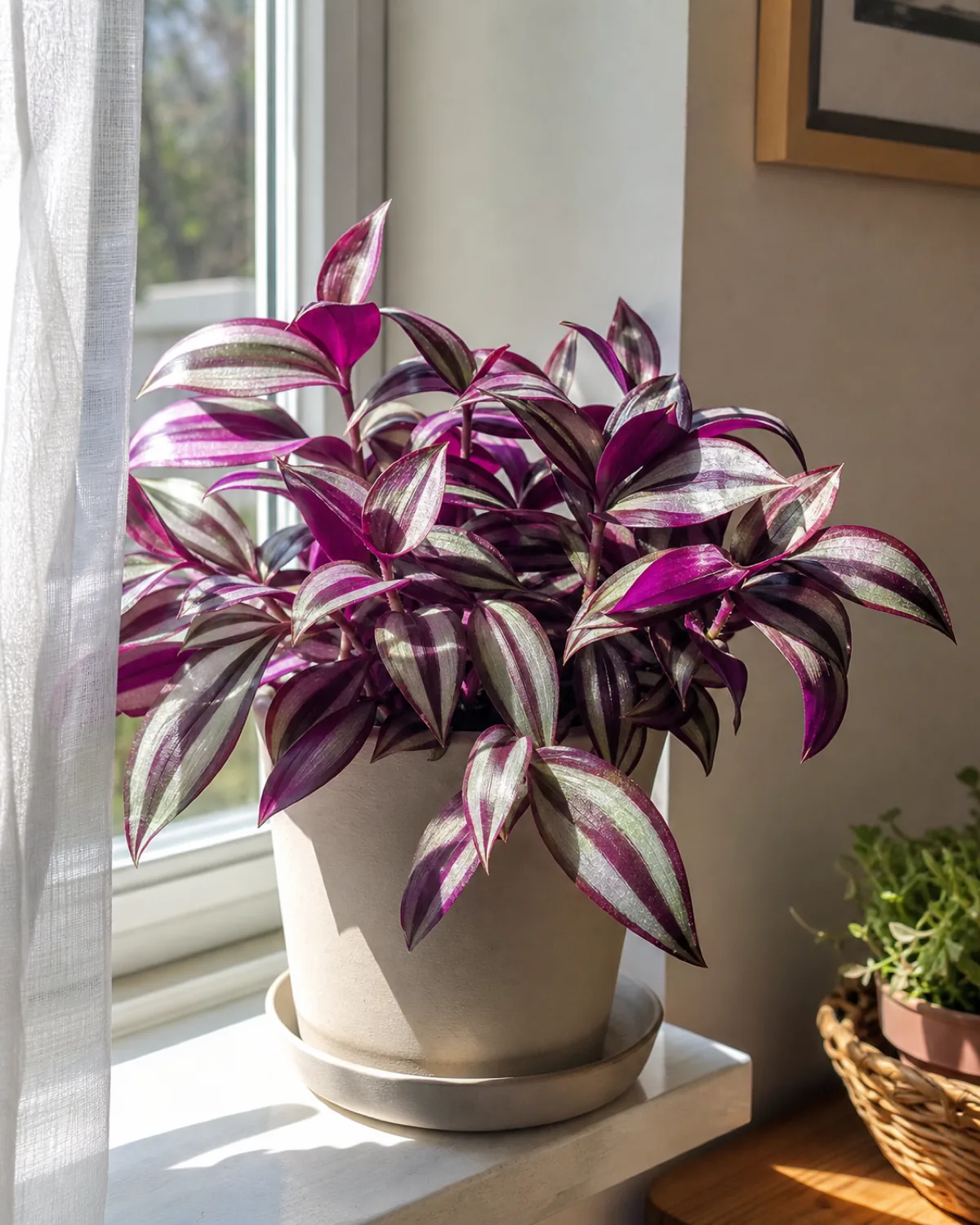
This is where tradescantia care diverges from almost every other houseplant guide. Most plants tolerate a range of light and stay roughly the same color throughout. Tradescantia does not. Its color is a direct function of light intensity.
In bright indirect light — the kind you get within three feet of an east or south window — T. zebrina shows vivid silver metallic stripes on purple-green leaves. T. pallida stays deep magenta from stem to leaf tip. The colors are intense enough to look artificial.
Move that same plant to a dim corner or a north-facing windowsill, and within a few weeks the silver fades, the purple recedes, and the leaves turn plain green. The plant is producing more chlorophyll to compensate for less light, and chlorophyll is green. This is the number one complaint from tradescantia owners: "my purple plant turned green."
Some direct morning sun from an east window actually intensifies the color. Tradescantia is one of the few houseplants that benefits from two to three hours of gentle direct sun daily. Harsh afternoon sun from a west or south window can scorch leaves — you will see brown crispy patches — but the threshold is higher than for most tropicals.
The relationship is the inverse of Chinese evergreen. Aglaonema's darkest green varieties thrive in deep shade. Tradescantia's most colorful varieties demand the brightest spot you have.
Our light guide covers how to measure light levels without a meter and match them to specific plants.
Watering: forgiving but not bulletproof
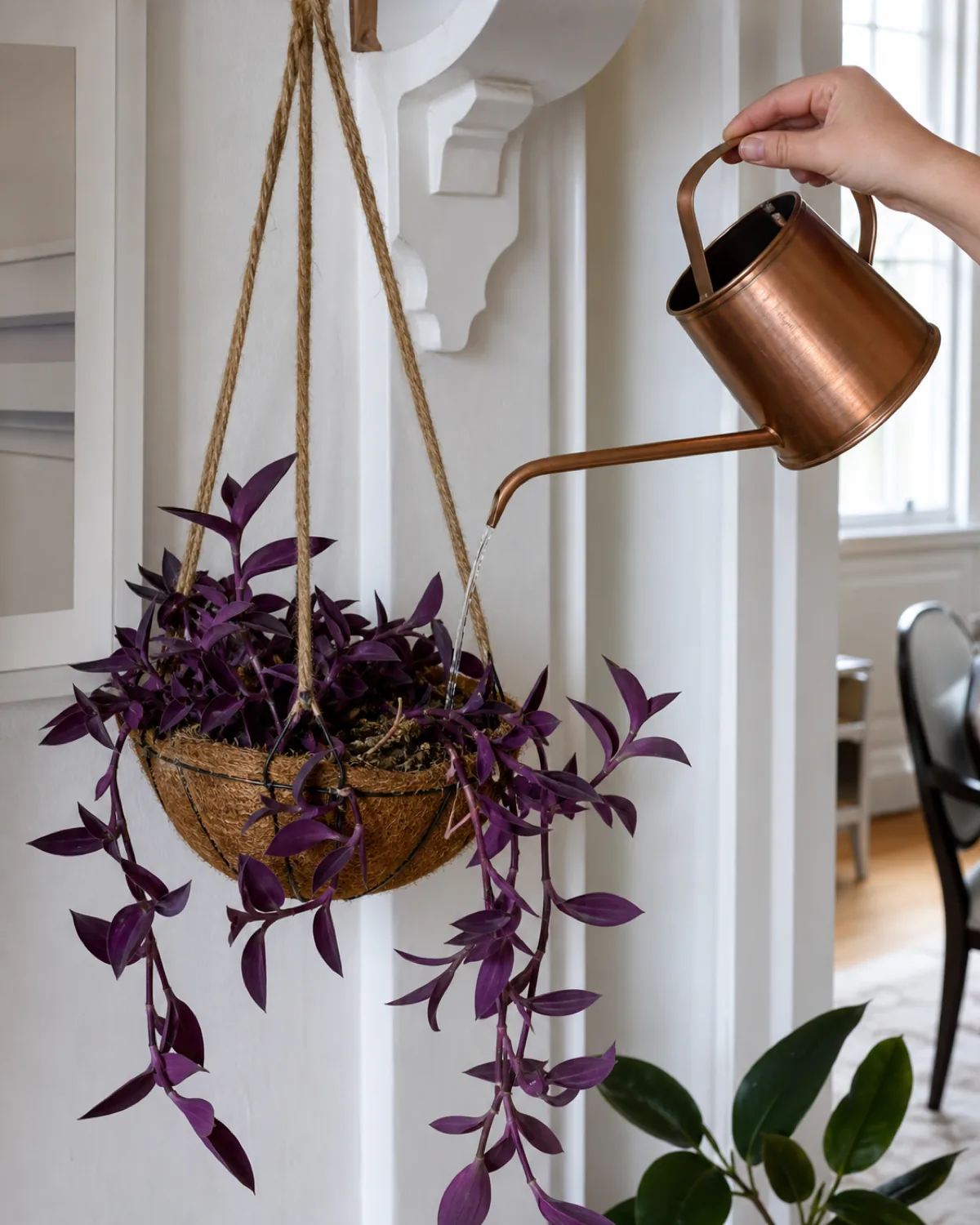
Tradescantia prefers evenly moist soil but tolerates brief dry spells. Water when the top inch of soil dries out — roughly weekly in summer, every ten to fourteen days in winter.
The stems are semi-succulent. They store a small amount of water in their slightly fleshy tissue, which gives tradescantia a forgiveness buffer that true tropicals like ferns and calatheas lack. Miss a watering by a few days and the leaves curl inward and feel papery-thin, but a thorough drink revives them within hours.
The danger is the other direction. Overwatering causes the stems to rot at the base before the leaves show any distress. The first sign is translucent, mushy stems right at the soil line. By the time you notice, the rot has often traveled upward along the stem. The fix is surgical: cut above the rot, discard the mushy portion, and re-root the healthy top sections in fresh soil or water.
Avoid getting water trapped in the leaf axils where leaves clasp the stem. In dense growth, water pooling at those junctions encourages localized rot and fungal spots. Water the soil surface directly, not over the foliage.
Soil and potting
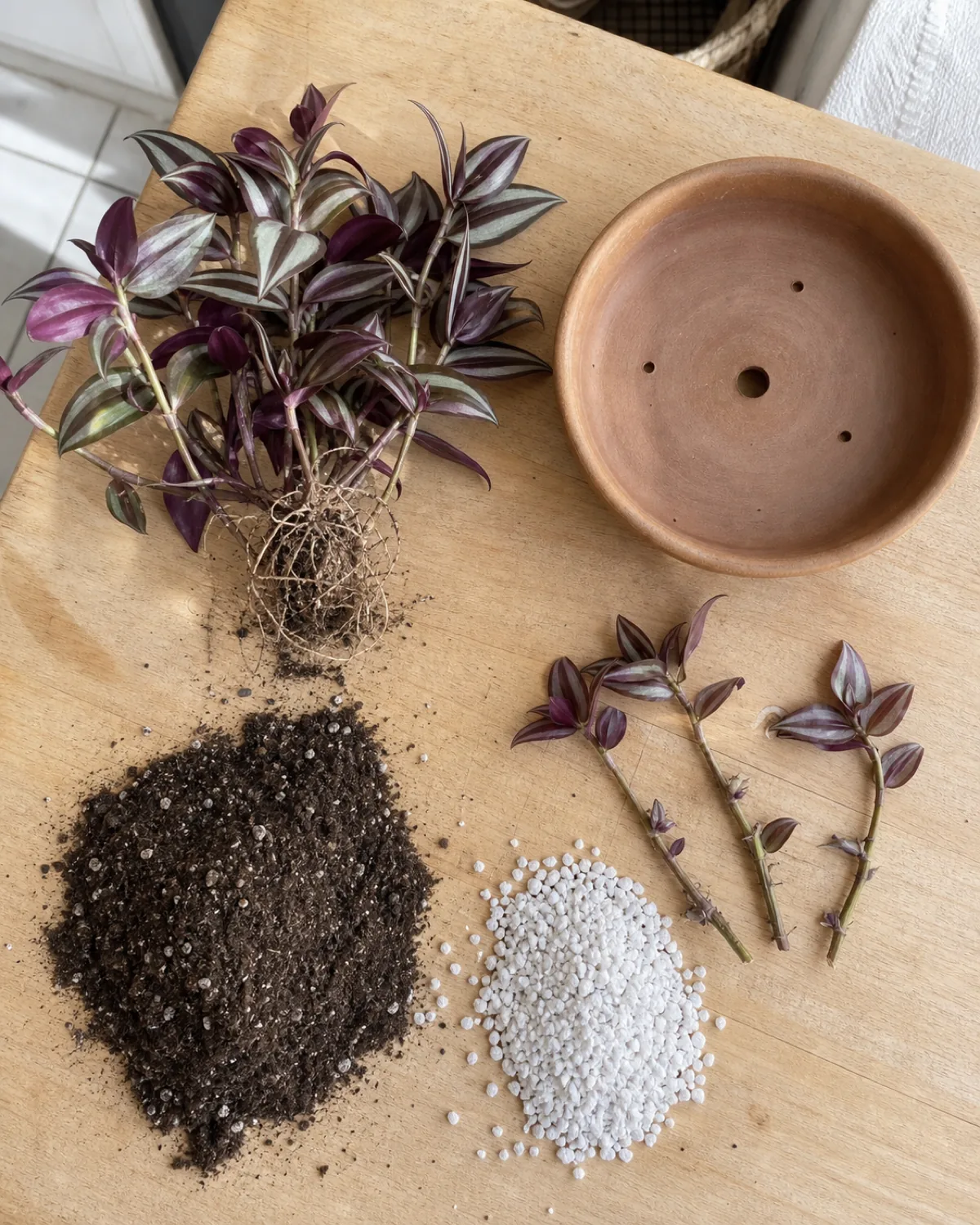
Standard well-draining potting mix: two parts all-purpose potting soil plus one part perlite. Nothing exotic needed. Tradescantia is not particular about soil composition as long as it drains.
The root system is relatively shallow and fine. Tradescantia does not need deep pots — a wide, shallow container or a standard hanging basket with drainage holes is ideal. The plant will trail over the edge of any container within weeks regardless of pot shape.
Repot in spring when roots circle the bottom of the pot or overall growth slows, which usually means annually for vigorous growers like zebrina and fluminensis. Pallida and nanouk grow slightly slower and may go eighteen months between repots.
Repotting is the perfect time to combine two maintenance tasks: trim any leggy stems and stick the cuttings directly into the fresh soil alongside the mother plant. This is standard practice among tradescantia growers — it fills gaps instantly and ensures the pot looks full from day one after repotting.
The pinch-and-propagate trick
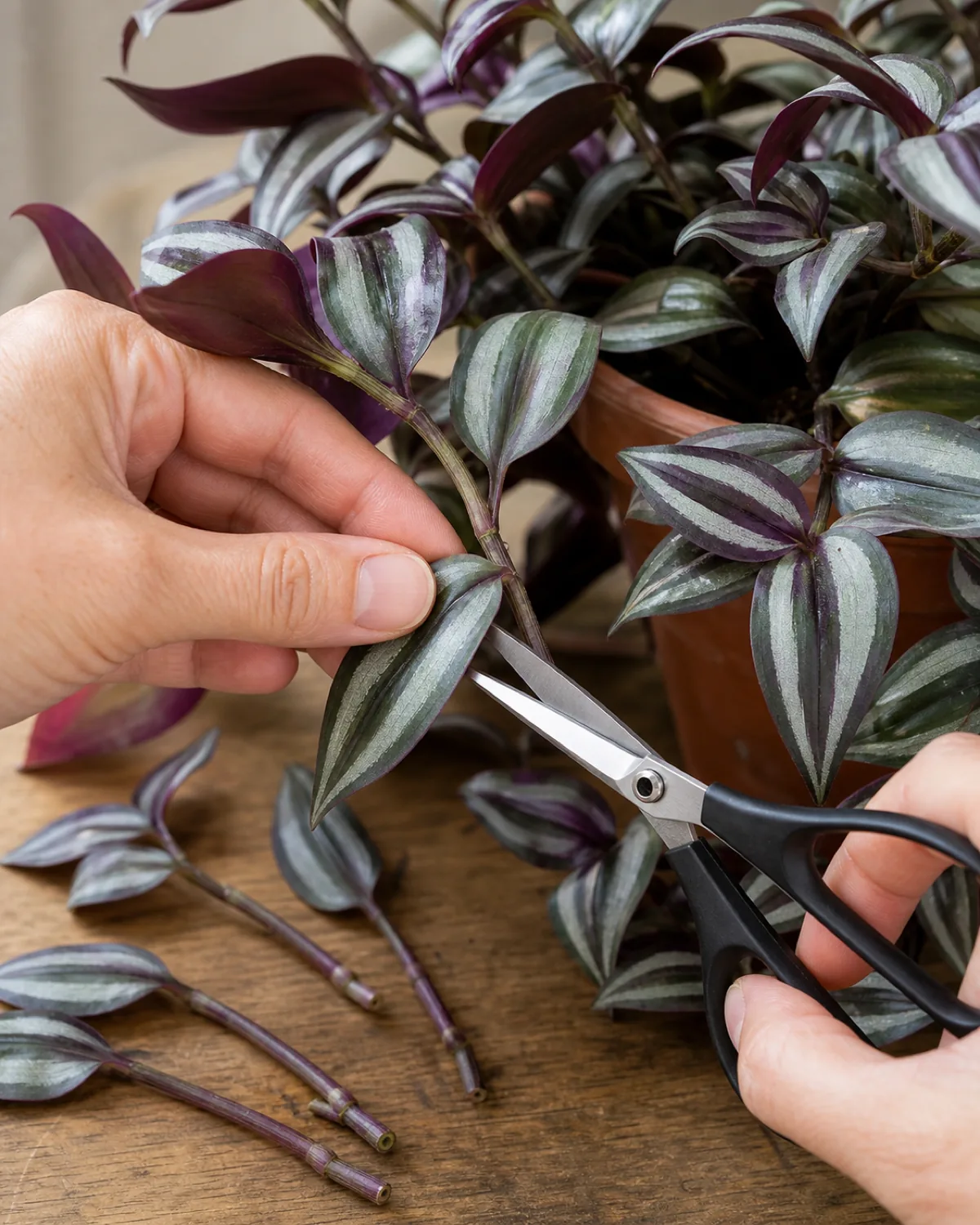
This is the single care technique that separates lush, cascading tradescantias from sparse, scraggly ones.
Without regular pruning, tradescantia stems grow long, lose their lower leaves, and end up as bare woody stems with a small tuft of leaves at the trailing tip. It looks thin and unkempt. Every tradescantia owner encounters this.
The fix: pinch or cut stems back to a node — the swollen bump on the stem where a leaf emerges. Every cut point responds by producing two new branches, doubling the stem density at that height. The cut pieces are instant cuttings.
Place them in a glass of water. Roots appear in three to five days — faster than any other common houseplant including pothos, which takes one to two weeks. Once roots reach an inch or two, plant the cuttings back into the same pot or start new pots.
This means pruning, propagation, and making the mother plant bushier are all the same action. You are not discarding anything. Every cut improves the mother plant and creates new plants simultaneously.
Aim to pinch every four to six weeks during the growing season. Pinch above a node, leaving at least two or three leaves on each remaining stem. Within one season of regular pinching, a sparse plant becomes a dense cascade.
Our propagation guide covers water-rooting technique in detail, including when to transfer cuttings to soil.
Why the stems go bare at the base
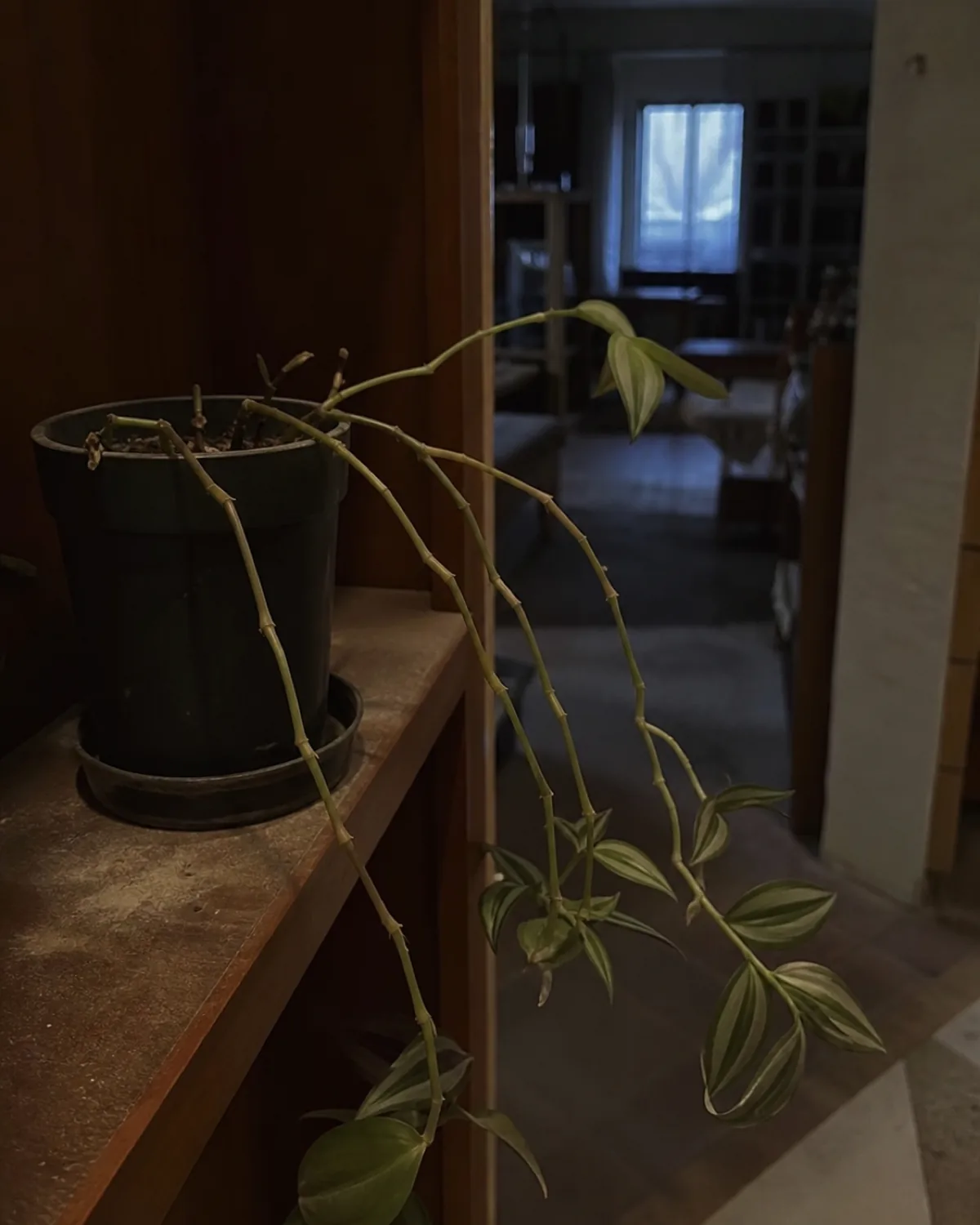
This is the most common tradescantia frustration, and understanding why it happens makes the solution obvious.
As stems elongate, the oldest leaves near the base naturally senesce and fall off. This is normal growth, not disease and not a care failure. Every trailing plant does this to some degree. Tradescantia does it faster than most because it grows faster than most.
In low light, the problem accelerates. The plant stretches toward the light source (etiolation), the internodes lengthen, and the lower leaves drop faster because they are not receiving enough light to justify the plant maintaining them. The result is a long, bare, green stem with a small rosette of faded leaves at the tip.
The solution has three parts. First, move the plant to brighter light. This slows the stretching and keeps leaves on the stems longer.
Second, start regular pinching to prevent stems from getting long enough to go bare. Every cut above a node forces two new branches, filling in the mid-section.
Third, if the plant is already leggy beyond recovery, do a full chop-and-prop reset: cut all stems back to two or three inches above the soil, root the healthy tip sections in water, and plant them back in fresh soil.
Tradescantia can regenerate from bare stems as long as nodes remain above the soil, but it is faster and produces a fuller result to replant rooted cuttings. Many experienced growers do this reset annually in spring as routine maintenance, treating it as a fresh start rather than a rescue.
Propagation: the easiest of any houseplant
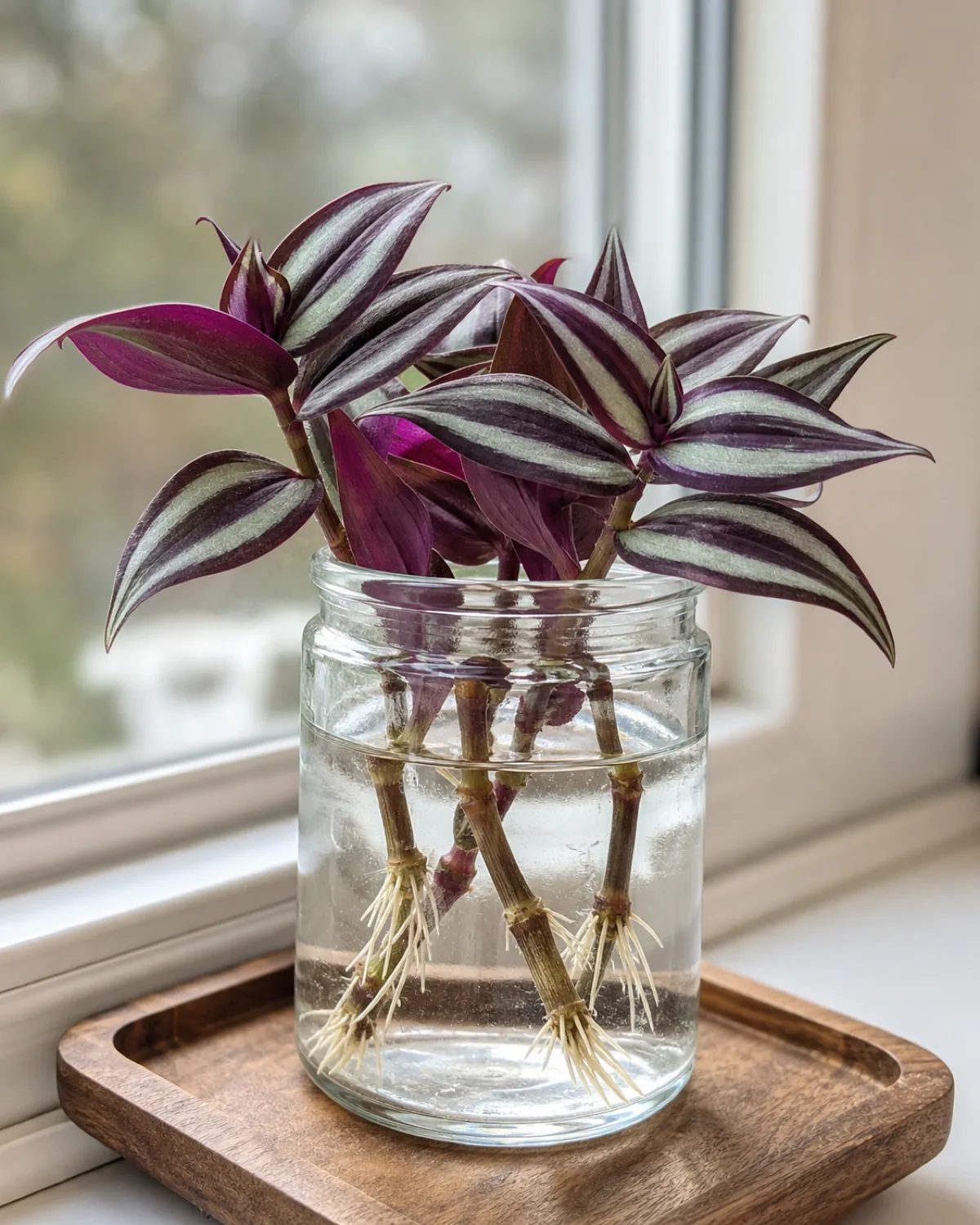
Tradescantia is the easiest houseplant to propagate. This is not an exaggeration — the success rate approaches one hundred percent in warm months, and the speed is unmatched.
Water propagation. Cut a four-to-six-inch stem section just below a node. Strip the bottom two or three leaves so the nodes are exposed. Place in a jar of clean water with the nodes submerged. Roots appear in three to five days. Transfer to soil when roots reach one to two inches.
Direct soil propagation. Skip the water step entirely. Stick cuttings directly into moist potting mix, burying at least one node below the surface. Keep the soil consistently moist for two weeks. The cuttings root in place without any visible wilting in most cases.
Layering. Pin a trailing stem onto a pot of moist soil placed next to the mother plant while the stem is still attached. Any node in contact with the soil surface roots within a week. Once established, sever the connection to the mother plant.
The combination of speed and reliability makes tradescantia an ideal first propagation project for beginners. A single mature plant can produce dozens of cuttings per year, enough to fill every hanging basket in your home and still have extras to share.
Temperature and humidity
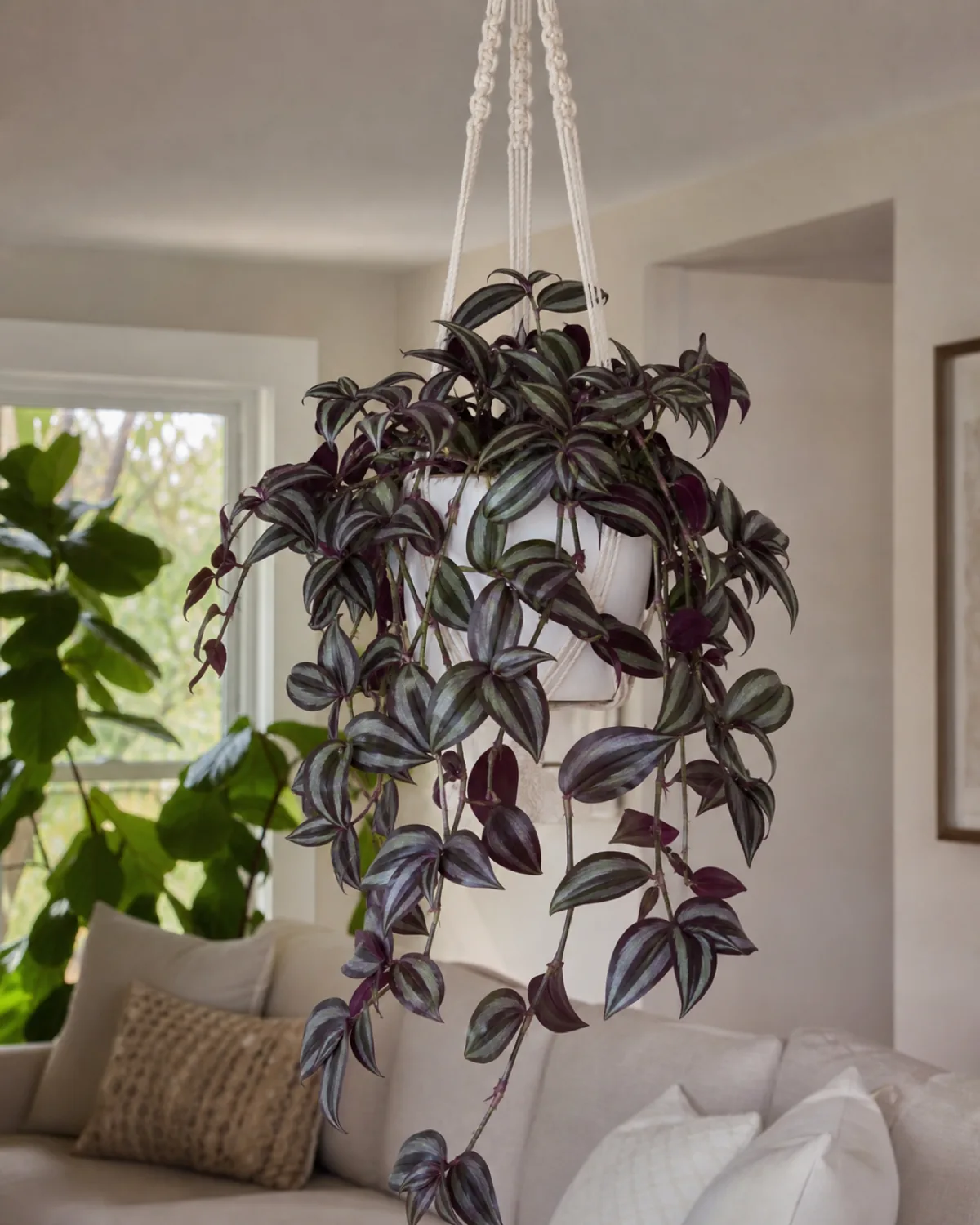
Tradescantia is adaptable to normal indoor conditions. The comfortable range is sixty to eighty degrees Fahrenheit. It tolerates down to fifty degrees but stops growing and may drop leaves below that threshold.
Humidity is a non-issue. Average household humidity of forty to sixty percent is fine — no pebble trays, no humidifiers, no misting needed. This sets tradescantia apart from humidity-demanding plants like ferns and calatheas. In very dry winter air near heating vents, leaf tips may brown slightly, but it is cosmetic and does not compromise the plant.
The one temperature sensitivity: cold drafts. The semi-succulent stems are vulnerable to cold damage from winter windows. Translucent mushy spots appear on the stems within hours of sustained cold exposure, and they do not recover.
Woody-stemmed plants like fiddle leaf figs handle cold air better because their stems are structurally more rigid. Tradescantia's fleshy stems freeze faster.
Keep the plant at least a foot from cold winter windowpanes and away from AC vents that blow directly onto the foliage.
Fertilizing: less is more color
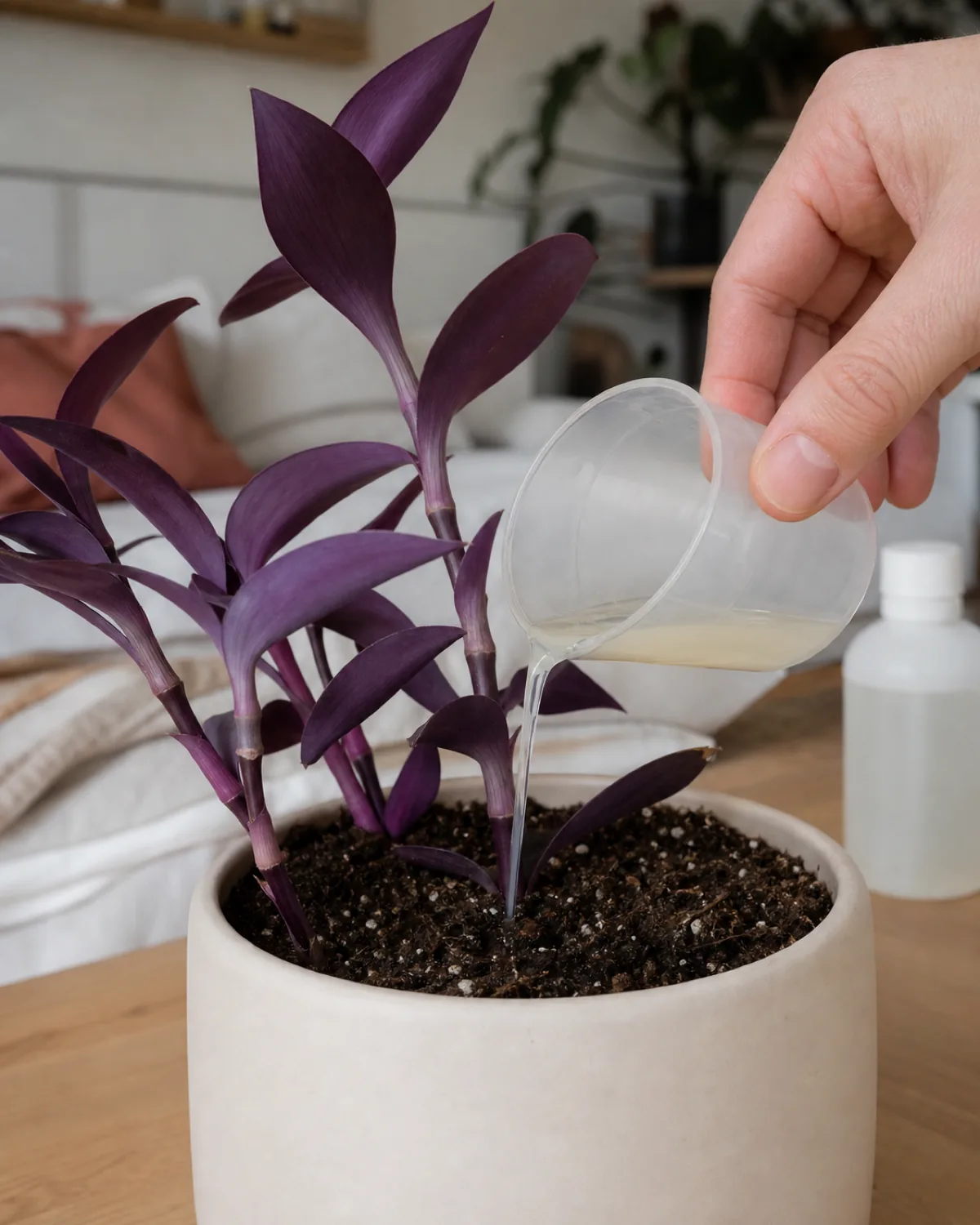
Tradescantia is a light feeder. Balanced liquid fertilizer (10-10-10 or 20-20-20) diluted to half the label strength, applied once a month from spring through fall. Skip winter entirely.
Over-fertilizing causes two problems, and the second one surprises people. The first is salt buildup that burns the fine roots — you see brown tips and slowed growth.
The second is excessive green growth that dilutes the purple and silver coloring. The plant responds to heavy nitrogen by pushing out fast, chlorophyll-heavy new leaves. Too much fertilizer can make your tradescantia greener, which is the opposite of what most owners want.
If you see white salt crust on the soil surface, flush the pot thoroughly with plain water until it runs freely from the drainage holes. Do this two or three times to dissolve accumulated salts.
Organic options — fish emulsion, worm casting tea — work well at even lower concentrations than synthetic fertilizers. Newly rooted cuttings need no fertilizer for the first four to six weeks while their root system establishes.
Common problems
Leaves losing color, turning green. Insufficient light. This is the number one issue and the number one reason people contact plant forums about tradescantia. Move the plant to a brighter location. Color returns within a few weeks of new growth, but already-green leaves do not revert.
Leggy, bare stems. The combination of insufficient light and no pruning. More light slows the stretching; regular pinching prevents stems from getting long enough to lose their lower leaves. See the section on bare stems for the full reset method.
Mushy translucent stems at the base. Overwatering or poor drainage. The stems rot from the bottom up. Cut off every healthy stem section above the rot, discard the mushy base and the waterlogged soil, and re-root the cuttings in fresh, well-draining mix.
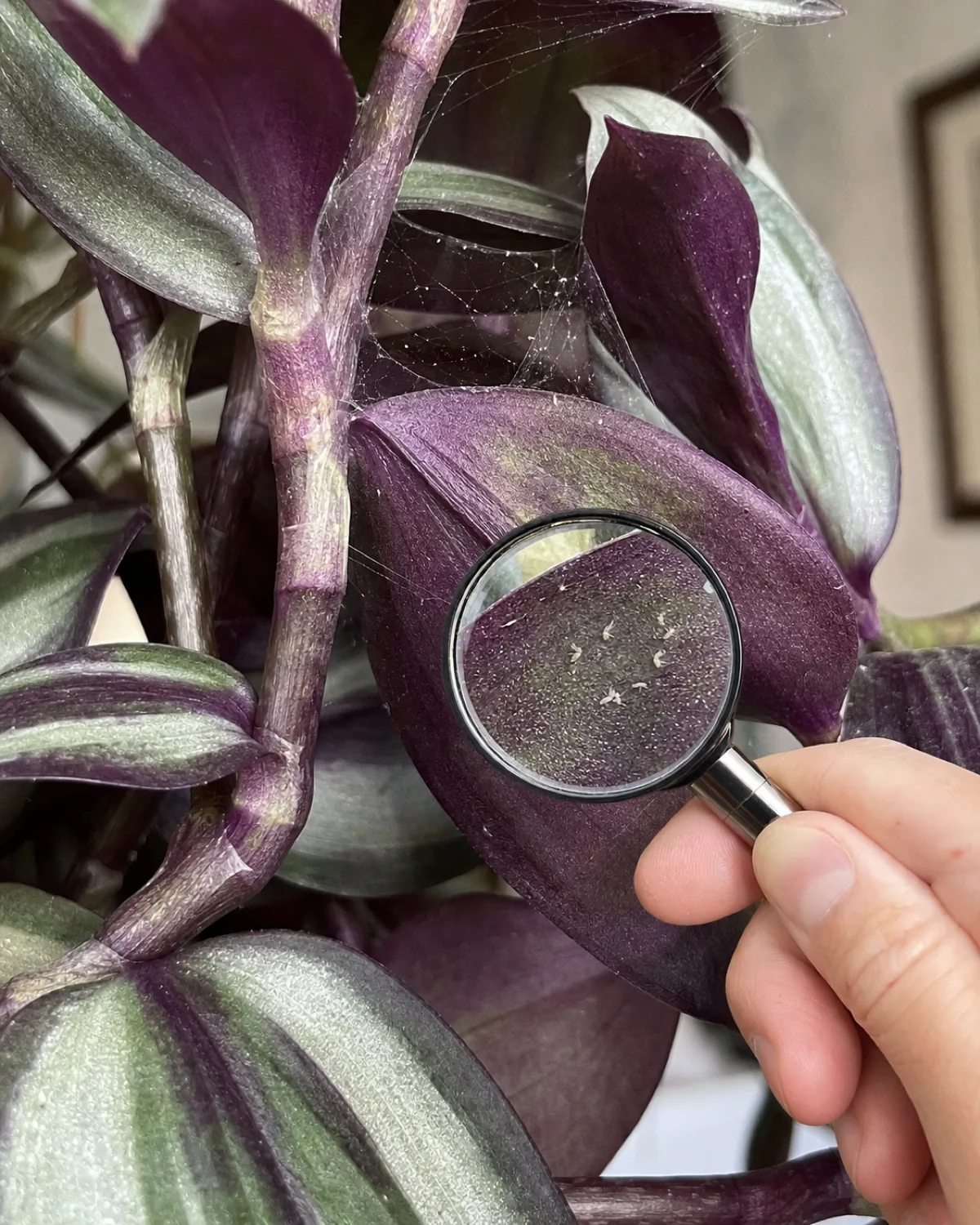
Spider mites. Tradescantia's dense, trailing growth creates a microenvironment that spider mites love, especially in dry indoor air. Look for fine webbing stretched between leaves at stem junctions and stippled, faded patches on the leaf surface.
Treat with neem oil spray applied to all leaf surfaces — top and bottom — and repeat every five to seven days for three full cycles. Our pest guide covers the complete spider mite treatment protocol.
Crispy brown leaf tips. Usually low humidity in winter or inconsistent underwatering. Cosmetic in most cases. Trim the brown tips with clean scissors if they bother you.
Brown or black leaf spots with yellow halos. Fungal infection from chronic overwatering or water sitting in the leaf axils. Improve air circulation around the plant and reduce watering frequency. Remove affected leaves to prevent spread.
Toxicity
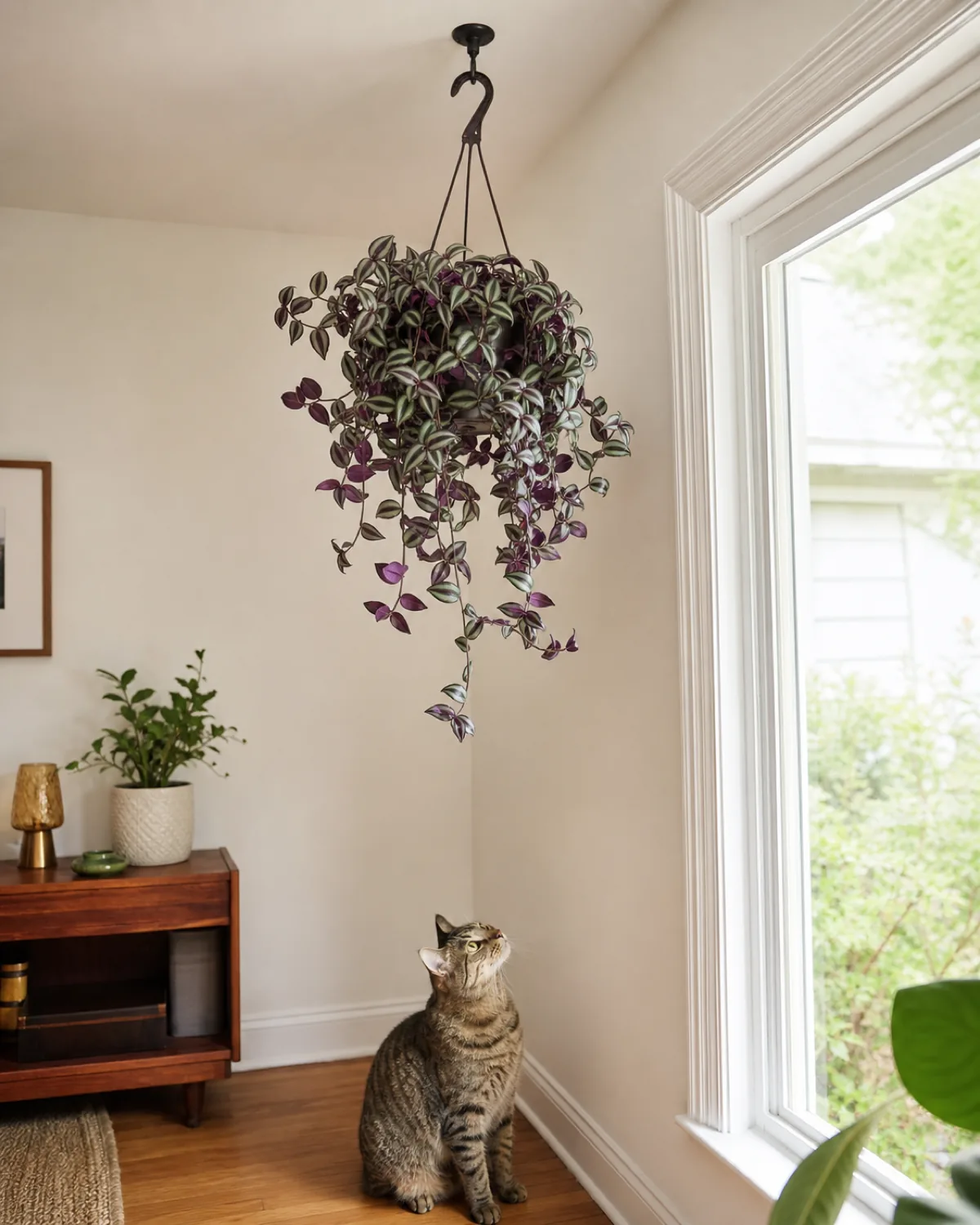
Tradescantia sap causes contact dermatitis in some people and pets. The reaction is a red, itchy rash where the sap contacts skin, most commonly on the forearms during extended pruning sessions. Wear gloves if you have sensitive skin or if you are doing a full chop-and-prop session.
For cats and dogs, tradescantia is mildly toxic. Ingestion typically causes mouth irritation, excessive drooling, and mild gastrointestinal upset. It is not as dangerous as the calcium oxalate crystals in aroids like monstera, philodendron, and pothos, which cause intense burning and swelling. But it is not safe either.
The bigger practical concern is the trailing stems. Cats are drawn to batting and chewing anything that dangles, and tradescantia's long trailing stems are irresistible cat toys. The solution is elevation: hang the plant high enough that the trailing stems stay out of reach. This also puts the plant in better light, which is a win for color intensity.
If you want trailing plants that are non-toxic to pets, spider plants and Boston ferns are safer alternatives.
Tradescantia vs. other trailing plants
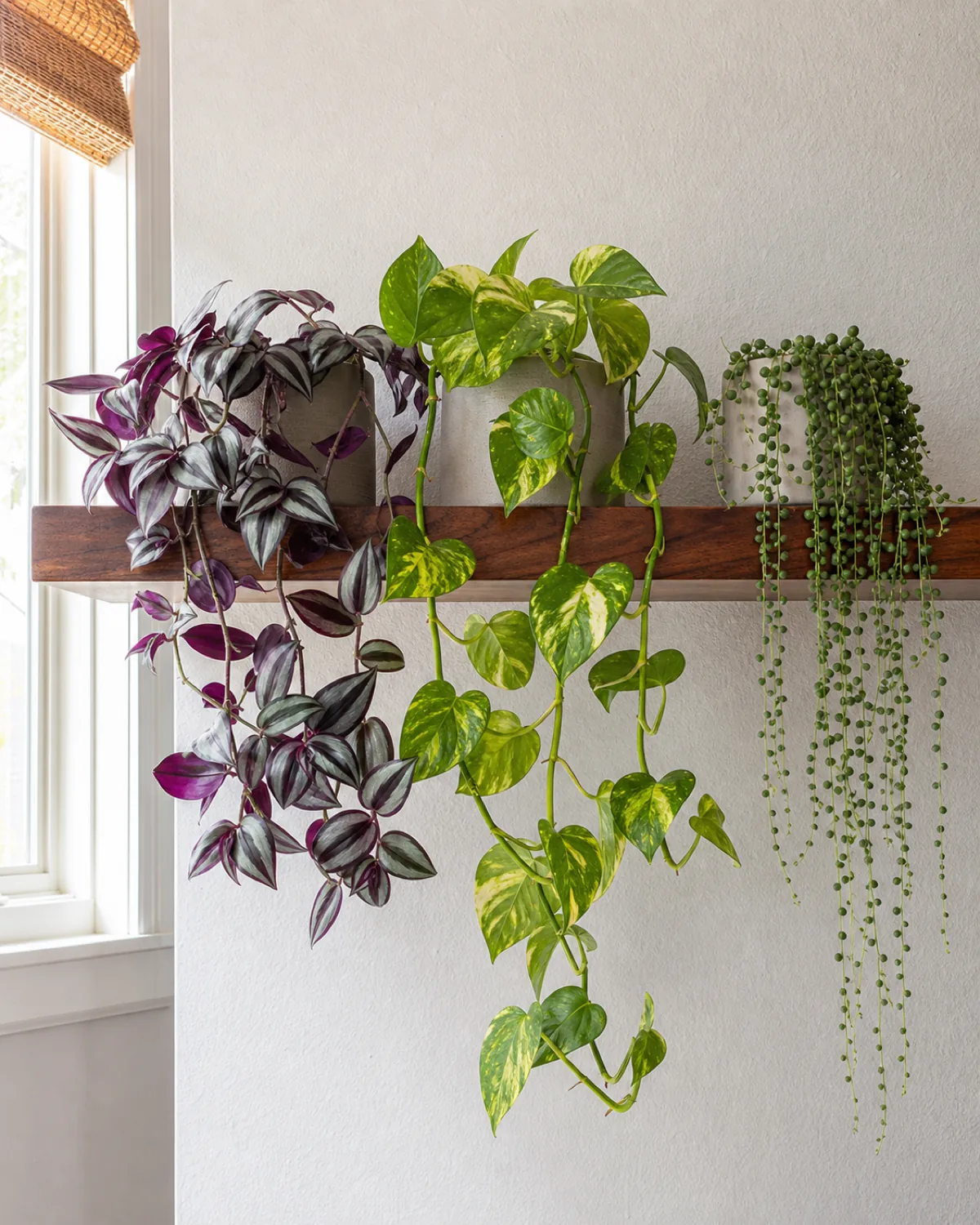
How tradescantia compares to the other trailing plants already covered on Kultivy:
Vs. pothos. Tradescantia grows faster, propagates faster, and offers more dramatic color. Pothos is more forgiving in low light — it stays green and healthy in spots where tradescantia would lose all color — and lives longer per vine.
If you have bright light and enjoy active gardening, tradescantia. If you want something you can ignore in a dim room, pothos.
Vs. string of pearls. Tradescantia is dramatically easier to keep alive. String of pearls needs precise watering — too much and it rots, too little and the pearls shrivel — plus bright light with no tolerance for overwatering.
Tradescantia tolerates more water, more variation in care, and produces visible growth far faster.
Vs. hoya. Entirely different pace. Hoya grows slowly, blooms eventually, and lives for decades on the same vine. Tradescantia grows fast, never blooms indoors, and needs regular renewal as older stems senesce. Hoya rewards patience. Tradescantia rewards active engagement.
Tradescantia fills the niche of instant-gratification trailing plant. Nothing else fills a basket as fast, propagates as easily, or offers the same range of foliage color. The trade-off is that it needs regular attention — pruning, resetting, managing the light — where lower-maintenance trailers like pothos and hoya can go months without intervention.
Tradescantia Care: The Quick Reference
- 1Color = lightPurple and silver fade to green in low light. Bright indirect light or gentle morning sun keeps the color vivid.
- 2Fastest trailing growerOne cutting fills a basket in a single season. Zebrina, pallida, and fluminensis are the three main indoor species.
- 3Pinch every 4-6 weeksCut above a node. Every cut doubles branching. Stick cuttings back in the pot for instant density.
- 4Water when top inch driesSemi-succulent stems forgive brief dry spells. Mushy translucent stems at the base = overwatering.
- 5Roots in 3-5 daysWater propagation is nearly 100% reliable. Faster than pothos. Any node can become a new plant.
- 6Bare base = normal agingOlder leaves drop as stems elongate. Annual chop-and-prop in spring resets the entire plant.
- 7No humidity drama40-60% household humidity is fine. No pebble trays, no misting, no humidifier needed.
- 8Half-strength fertilizer monthlySpring through fall only. Too much fertilizer pushes green growth and dilutes the purple.
- 9Watch for spider mitesDense trailing growth in dry air invites them. Fine webbing between leaves is the tell. Neem oil, three rounds.
- 10Mildly toxic to petsSap irritates skin and mouth. Hang high to keep trailing stems away from cats. Not as toxic as aroids.
- 1160-80°F, avoid cold draftsSemi-succulent stems freeze faster than woody ones. Keep away from cold winter windowpanes.
- 12Well-draining soil, shallow potTwo parts potting soil, one part perlite. Wide shallow containers work best for shallow roots.
- 13Start with zebrinaMost forgiving, most available, best color-to-effort ratio. Graduate to pallida for deeper purple.
kultivy.com
Best indoor tradescantia varieties
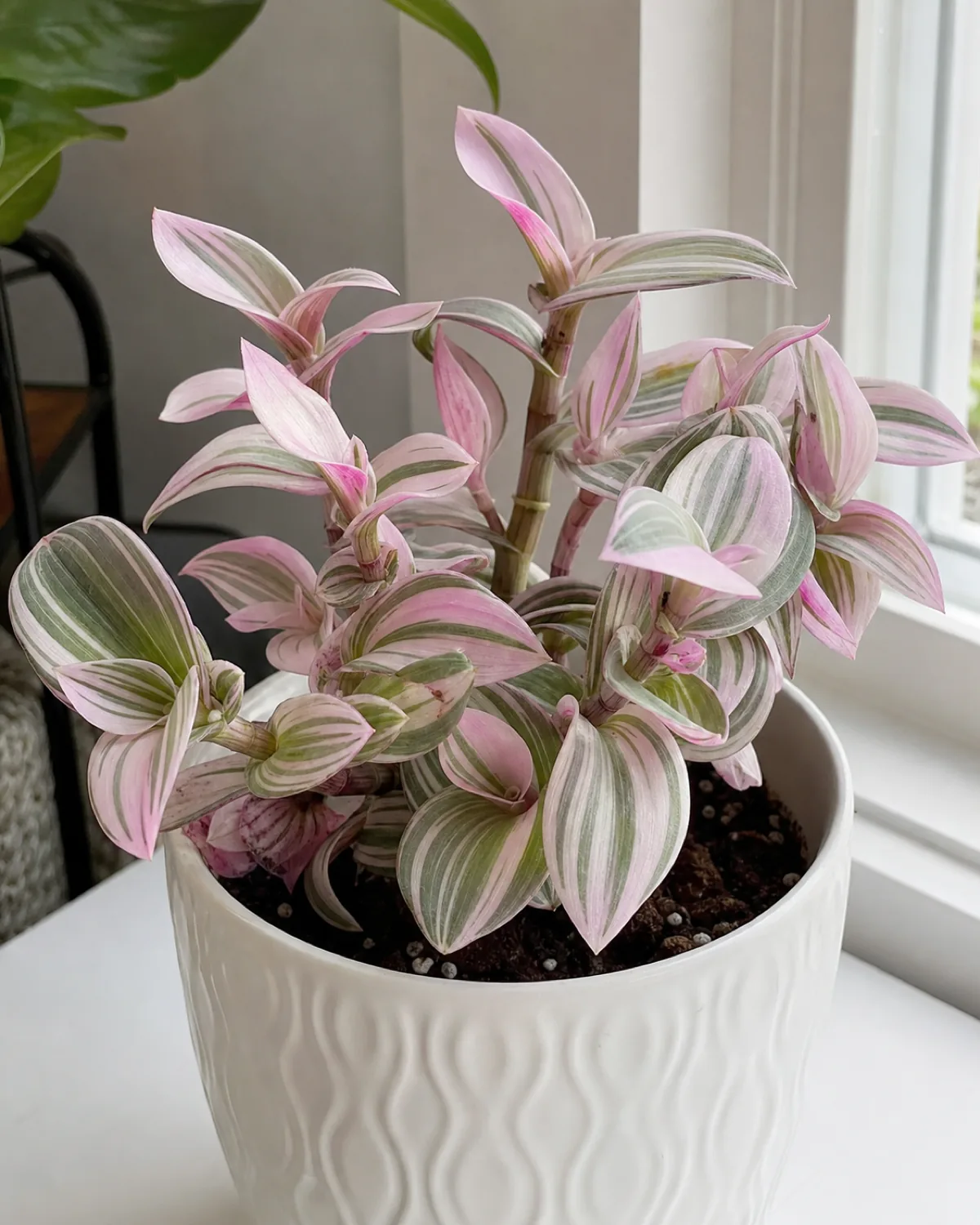
Tradescantia zebrina is the classic and the best starting point. Silver metallic stripes on purple-green leaves with purple undersides — the color is vivid, the growth is fast, and the care requirements are the most forgiving of the group. If you can only grow one tradescantia, this is the one.
Tradescantia pallida (Purple Heart) is the most intensely colored. Every surface — leaves, stems, undersides — is deep purple-magenta. It needs the most light to maintain that color (it fades to olive-green faster than zebrina in dim conditions), but in a sunny window it is stunning. A south-facing windowsill is its ideal home.
Tradescantia fluminensis (Variegata) offers green and white striped leaves on extremely vigorous stems. It is the fastest grower of the group but the least colorful — the appeal is coverage speed rather than foliage drama. If you need to fill a large hanging basket quickly and care more about volume than color, this is the efficient choice.
Tradescantia nanouk is the trendiest variety. Its leaves carry candy-stripe patterns of pink, green, and white — a pastel palette entirely different from the metallic tones of zebrina. The growth habit is more compact and slightly more upright than trailing, and it grows somewhat slower than zebrina. It is the most popular on social media and the most commonly sold at specialty plant shops.
Tradescantia sillamontana is the oddity of the group. Its green leaves are covered in dense white woolly hairs that give the entire plant a fuzzy, frost-covered appearance. The coating protects the leaves from sun and conserves moisture.
This makes sillamontana more succulent-like in its care preferences — less water, more direct light, less frequent pinching. It is a conversation piece rather than a cascading trailer.
Start with zebrina or fluminensis for confidence. Graduate to pallida when you have a reliably bright spot. Add nanouk for color variety and sillamontana when you want something no one else has on their shelf.

Mara Quinn edits Kultivy, where she shares houseplant care, propagation, beginner-friendly plant picks, and plant-styling ideas for anyone who wants their indoor plants to actually thrive. Every guide is image-led and reviewed for clarity, usefulness, image accuracy, and Pinterest-to-page alignment before it goes live. Visit the About page.