Not every windowsill gets enough sun. A grow light bridges the gap between what your plant needs and what your room actually delivers.
North-facing apartments, basement rooms, interior offices, and winters that cut daylight to eight hours — all create conditions where even the toughest low-light plants slow down.
The challenge is not finding a grow light. It is finding the right one. This guide strips the jargon and gives you a working setup.
From choosing the right type to dialing in the distance and hours — a complete setup reference for indoor gardeners.
Why some rooms need grow lights
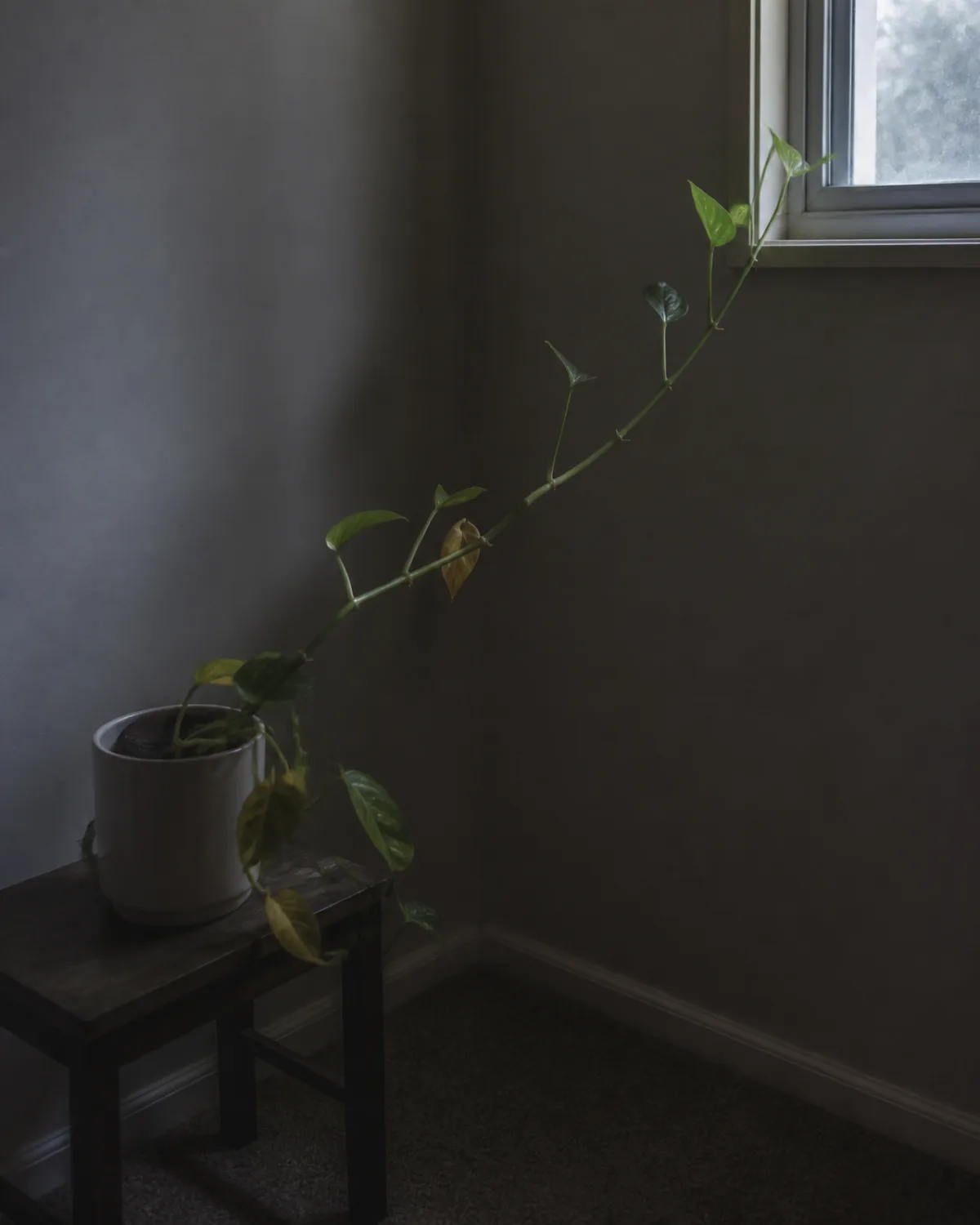
A north-facing window in winter delivers roughly 50 to 200 foot-candles of light at the glass. Move three feet into the room and that number halves. Most tropical houseplants need 200 to 400 foot-candles minimum for maintenance growth — and high-light species like fiddle leaf fig or croton want 400 or more.
The math does not work for many rooms. Basement apartments with small wells, interior bathrooms, home offices without windows, and north-facing living rooms all fall below the threshold where plants can sustain themselves on natural light alone.
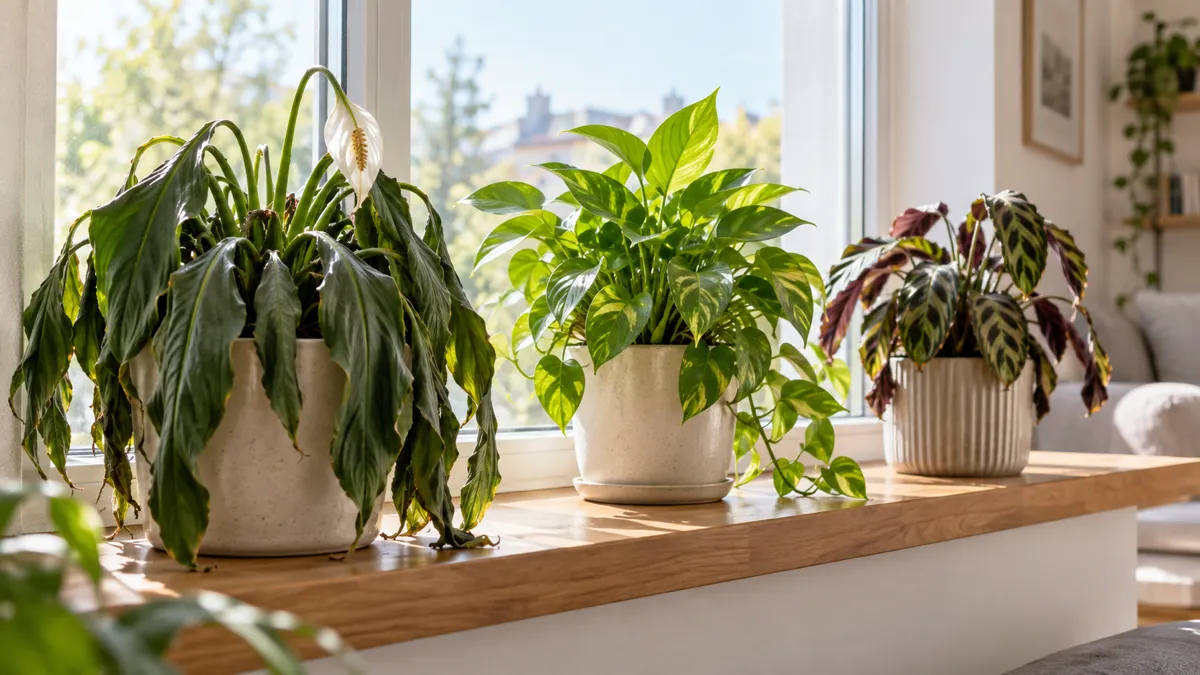
You will see the deficit before you read about it. Stems elongate and stretch toward whatever light exists — a condition called etiolation. Internodes lengthen. Leaves shrink. Variegated plants like pothos revert to solid green because the plant needs every cell producing chlorophyll. New growth stalls entirely in severe cases.
Winter compounds the problem even in rooms that get adequate light from April through September. At 40 degrees north latitude, December delivers about nine hours of daylight compared to fifteen hours in June. Your south-facing window drops from excellent to marginal, and your east-facing window drops from acceptable to insufficient.
A grow light does not replace the sun. It fills the gap — adding the photons your room cannot provide, for the hours your latitude cannot deliver. The difference between a struggling plant and a thriving one is often just 100 to 200 foot-candles of supplemental light for 12 to 14 hours a day.
Not every plant in every room needs supplemental lighting. Here is how to decide.
Light spectrum basics without the science degree
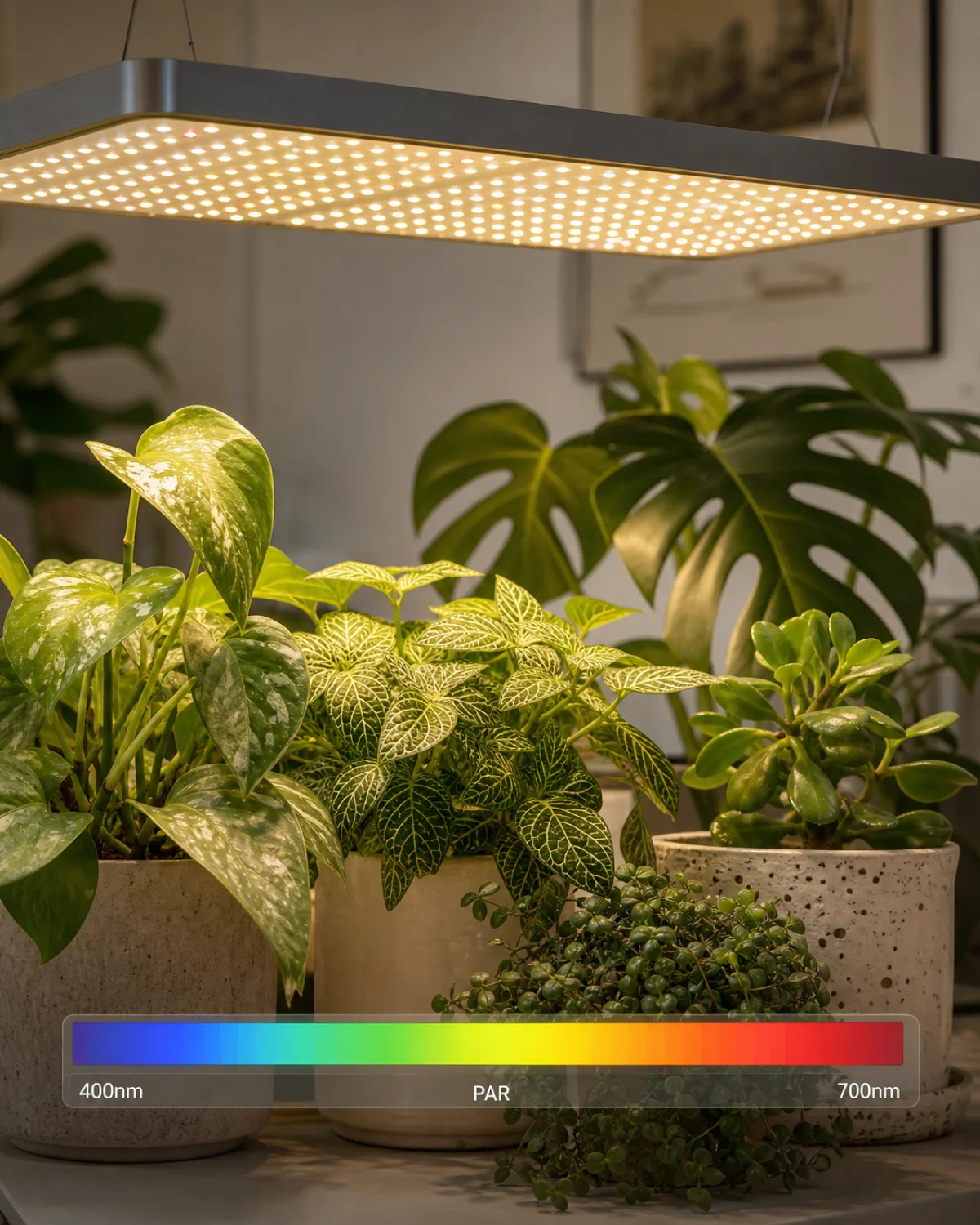
Plants do not use all light equally. The wavelengths that drive photosynthesis fall between 400 and 700 nanometers — a range scientists call PAR, or photosynthetically active radiation. Within that range, blue light (400 to 500 nm) and red light (600 to 700 nm) are the most efficiently absorbed by chlorophyll.
This is why older grow lights glowed purple. Manufacturers combined blue and red LEDs while skipping the green wavelengths in between. The "blurple" result was efficient for photosynthesis but terrible for living spaces — it made plants look gray and rooms look like a nightclub.
Modern full-spectrum white LEDs solve this by producing light across the entire PAR range, including green wavelengths that our eyes perceive as warm or cool white. The plant gets what it needs; you get a light that looks like a normal lamp.
Blue wavelengths promote compact, bushy vegetative growth. Red wavelengths drive flowering, fruiting, and stem elongation. A balanced full-spectrum light provides both in the proportions most foliage houseplants need.
For most indoor plant growers, the practical takeaway is simple: buy a full-spectrum LED with a color temperature between 3500K and 5000K. This range delivers a warm to neutral white that works for both plants and people. Avoid anything marketed as "blurple" or showing only blue and red diodes — it is outdated technology that costs the same and works no better than a modern white LED.
LED vs fluorescent: which type to choose
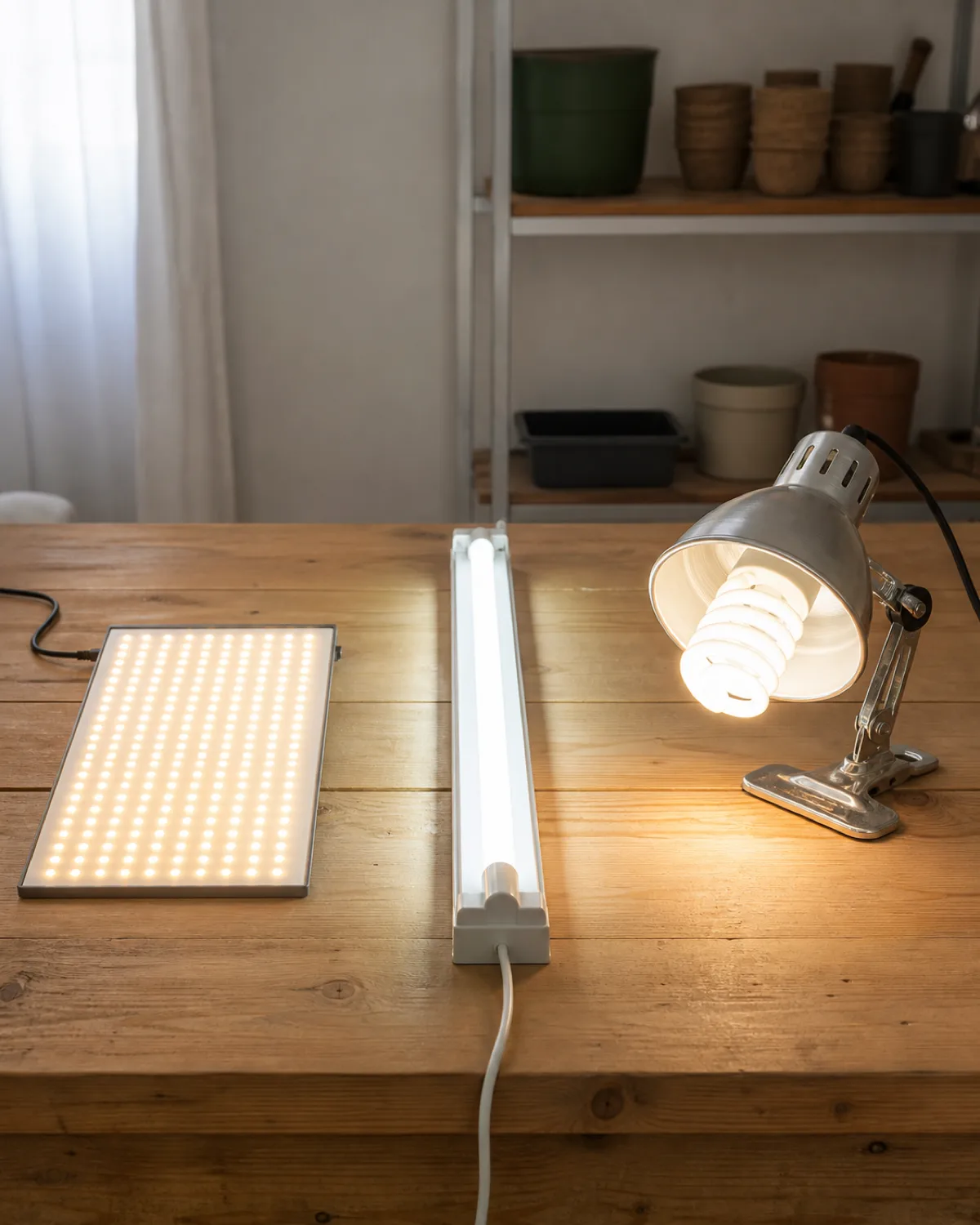
LED panels and bars dominate the indoor plant market for good reason. They run cool, last 50,000 hours (roughly 10 years at 14 hours a day), consume 50 to 70 percent less electricity than fluorescent equivalents, and come in tunable spectrums. A 20-watt LED bar produces as much usable plant light as a 40-watt fluorescent tube. The upfront cost is higher, but the two-year running cost is lower.
T5 fluorescent tubes still have a niche. They produce a wide, even spread of light that works well for shelf setups where you need uniform coverage across a flat area. The tubes are thin enough to mount under shelves without stealing headroom.
They run warmer than LEDs, which matters if your shelf has limited ventilation. Expect to replace the tubes every 12 to 18 months as the phosphor coating degrades and light output drops — a hidden cost that LEDs avoid.
CFL spiral bulbs work in a pinch. Screw a 23-watt 6500K CFL into a desk lamp or clamp lamp and you have an instant grow light for a single plant. The coverage area is tiny — about one square foot — but the price is under five dollars. Useful for rescuing a single plant in a dark corner, not for setting up a serious growing station.
Incandescent bulbs are not grow lights. They produce 95 percent heat and 5 percent light, almost none of it in the PAR range. They will burn any plant placed close enough to benefit. Do not use them.
For most people setting up grow lights for indoor plants, an LED bar or panel is the right choice. Buy once, mount it, set a timer, and forget it for a decade.
How to read grow light specs
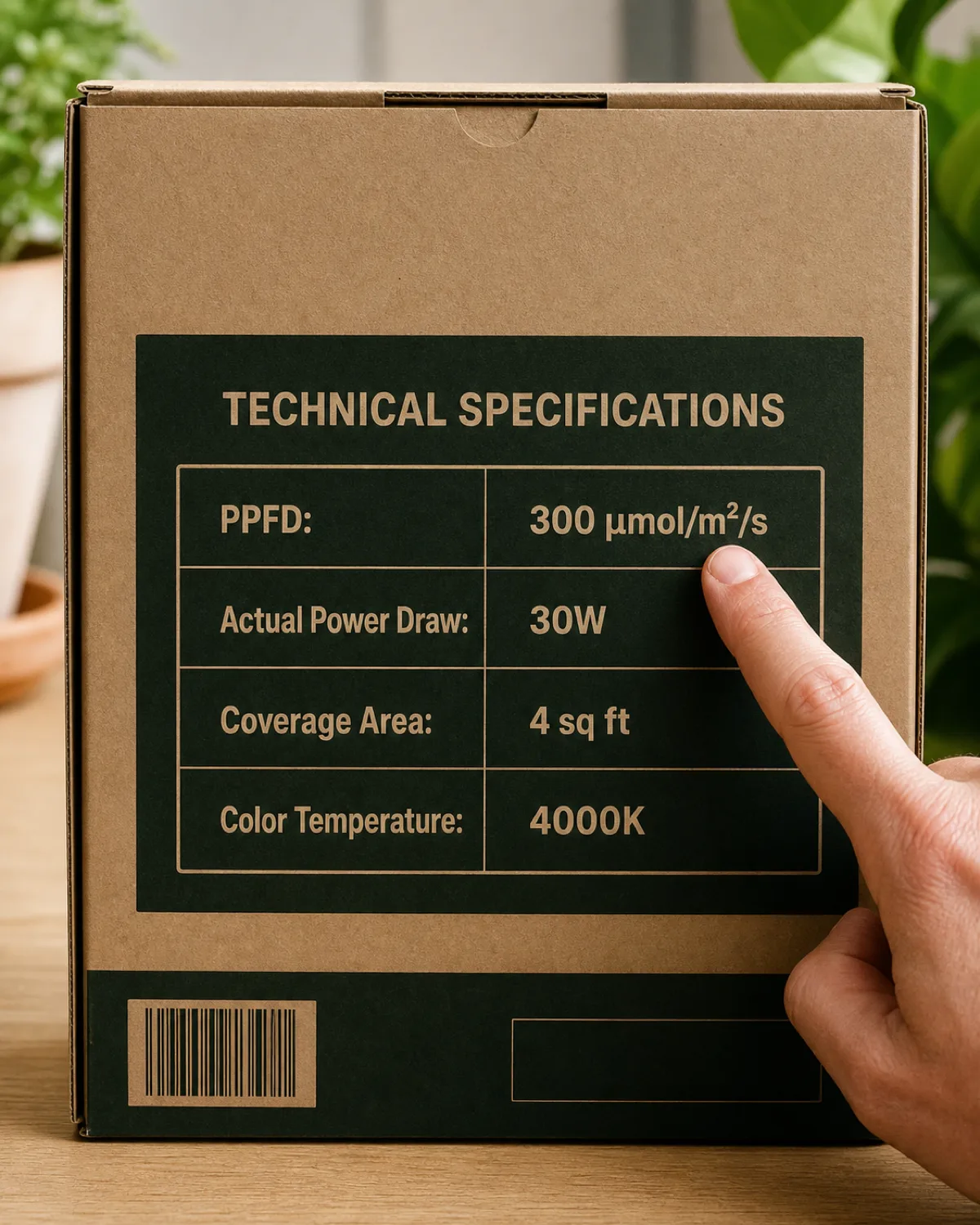
The spec sheet on a grow light box contains several numbers. Only a few matter for houseplant growers.
PPFD (photosynthetic photon flux density) is the most useful number. Measured in micromoles per square meter per second, it tells you how much usable light reaches the plant canopy at a given distance. For foliage houseplants, aim for 50 to 200 PPFD at the canopy. Succulents and high-light species want 200 to 400. Anything above 400 is unnecessary for indoor plants and risks light stress.
Wattage tells you power consumption, not light output. A 30-watt LED can produce more usable plant light than a 60-watt fluorescent. Look at actual draw rather than the "equivalent" wattage that some manufacturers use to inflate the perceived value. A 30-watt actual draw LED panel is plenty for a two-foot by two-foot shelf.
Coverage area defines how many plants one fixture can serve at the recommended hanging height. This number assumes a specific distance from the fixture to the canopy — usually stated in the fine print.
If you hang the light higher than specified, the coverage area increases but the intensity decreases. If you want intense light for succulents, hang it closer and accept a smaller coverage footprint.
Color temperature in Kelvin describes the warmth of the light. Below 3500K looks warm and yellow. Above 5000K looks cool and blue. Between 3500K and 5000K is the sweet spot for grow lights — it provides balanced spectrum for plants while looking pleasant in a living space.
Lumens is the number to ignore. It measures brightness as the human eye perceives it, which is biased toward green wavelengths. A light can score high on lumens while delivering mediocre PAR. Always prioritize PPFD over lumens when comparing grow lights for plants.
Hanging height and light distance
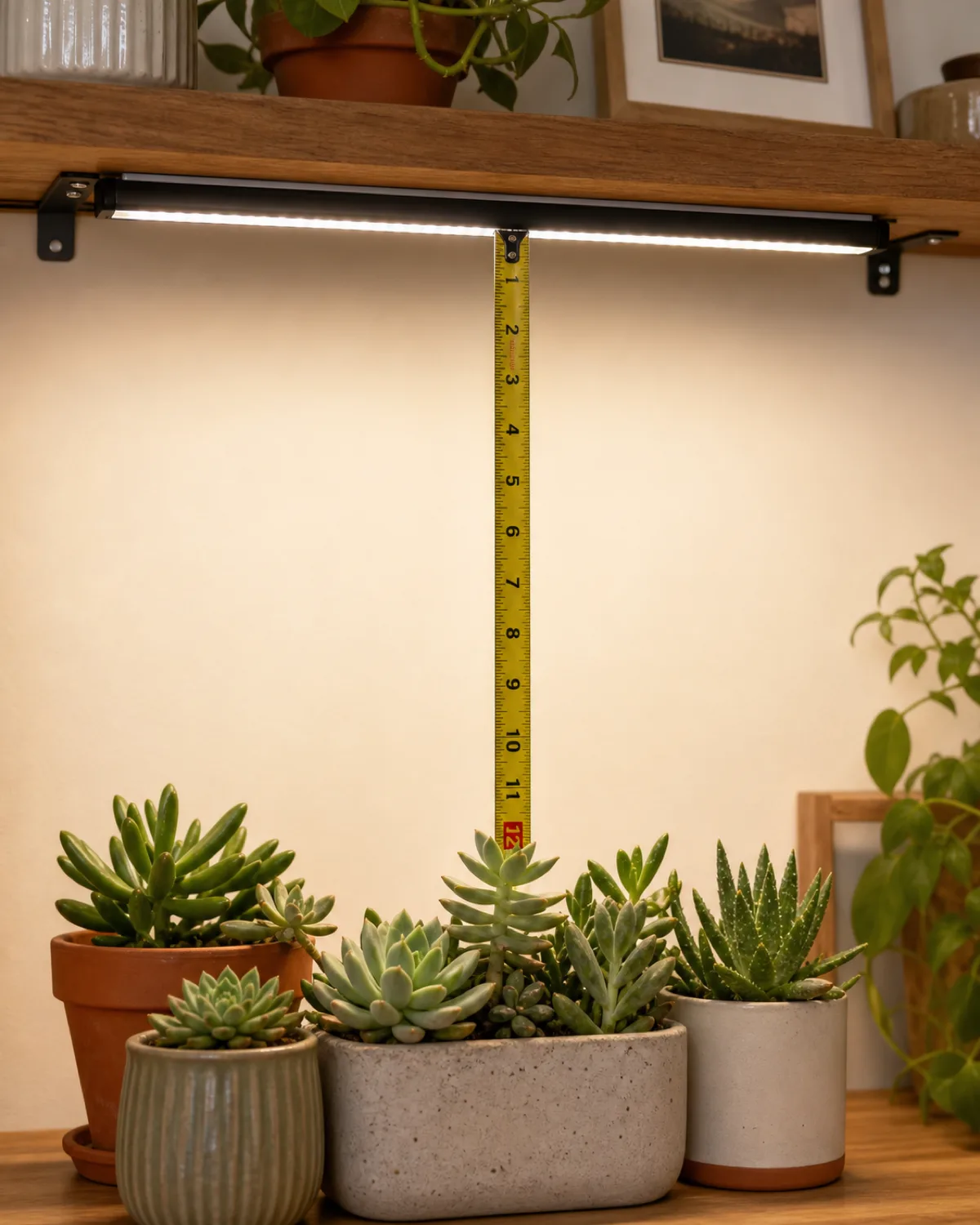
Light intensity follows the inverse square law. Double the distance from the source and the intensity drops to one quarter. This single principle explains most grow light troubleshooting.
For low-light plants — pothos, snake plant, ZZ plant, peace lily — hang the fixture 24 to 36 inches above the canopy. These species tolerate and even prefer indirect, moderate light. Placing the light too close wastes energy and can cause leaf bleaching on sensitive species.
For medium-light plants — monstera, philodendron, calathea, prayer plant — position the light 12 to 18 inches from the top leaves. This range delivers the bright indirect light these tropicals evolved under.
For high-light plants — succulents, cacti, fiddle leaf fig, croton — bring the fixture to 6 to 12 inches from the canopy. These species naturally grow in full sun or bright open conditions and need the highest intensity you can practically deliver indoors.
Adjustable hangers or chains make setup easier. As plants grow upward, you need to raise the light to maintain the correct distance. A fixture bolted to the underside of a fixed shelf works fine for slow growers, but a fast-growing monstera or fiddle leaf fig can close the gap within weeks during the growing season.
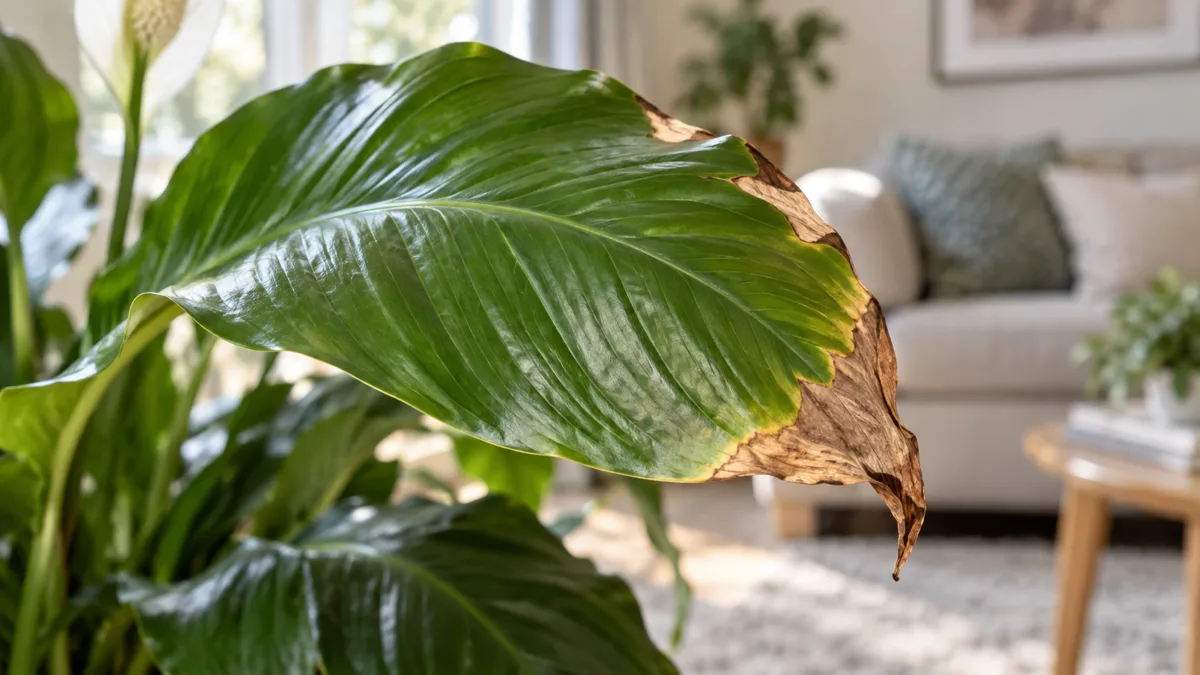
The signs of a light that is too close: leaf edges curl upward, tips bleach to white or pale yellow, and the upper leaves closest to the source show damage while lower leaves remain healthy. Move the fixture up immediately — the damage is visible within days of the light being too close.
How many hours to run your grow light
Most foliage houseplants perform well with 12 to 14 hours of supplemental light per day. This mimics the photoperiod of tropical regions where these species evolved — roughly equal parts light and dark, year round.
Succulents and cacti that grow in full desert sun benefit from 14 to 16 hours. These plants evolved under intense, long-day conditions and tolerate (and reward) extended photoperiods.
Flowering plants like orchids and anthuriums sometimes need specific photoperiod manipulation to trigger bloom cycles. A shorter day length (10 to 12 hours) can signal some species to initiate flower buds. If your orchid refuses to rebloom, try reducing the light duration rather than increasing it.
Running grow lights 24 hours a day hurts plants. During the dark period, plants convert the sugars produced by photosynthesis into starch for storage and carry out cellular respiration processes that require darkness. Continuous light disrupts this cycle, leading to chlorosis (yellowing), stunted growth, and eventually leaf drop.
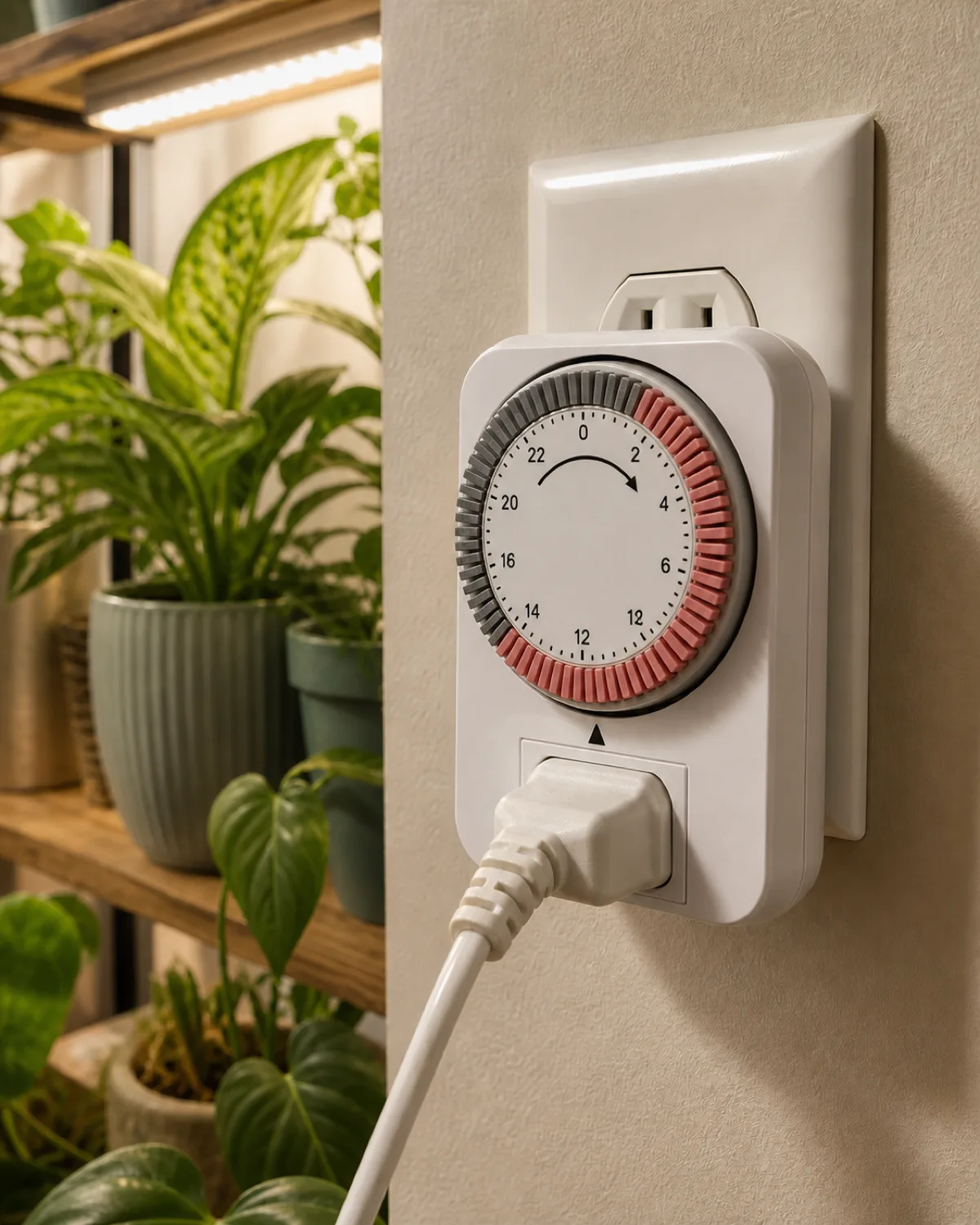
A timer is not optional — it is essential. Manual switching leads to inconsistent photoperiods that confuse growth cycles. A basic mechanical outlet timer costs three to five dollars and eliminates the problem entirely. Plug the grow light into the timer, set the on and off intervals, and never think about it again.
Smart timers and WiFi-connected outlets add convenience if you want to adjust schedules from your phone or set sunrise and sunset ramps — but a five-dollar mechanical timer does the core job just as well.
The best indoor plants for grow lights
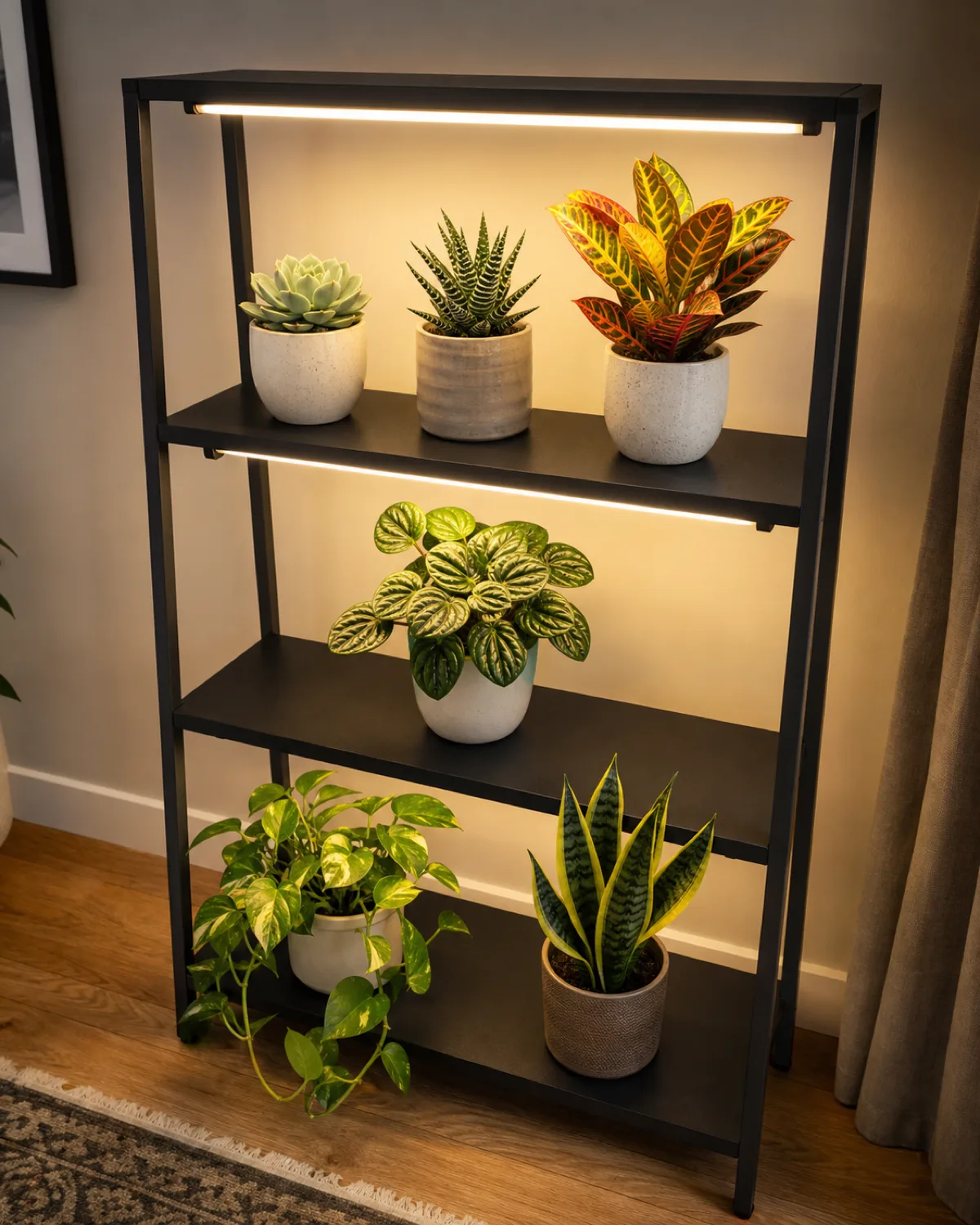
Every indoor plant benefits from supplemental lighting in low-light rooms, but some respond more dramatically than others.
Low-light tolerant species — pothos, snake plant, ZZ plant, peace lily, Chinese evergreen — survive in dim conditions but grow faster under moderate supplemental light. A grow light is not essential for these, but it transforms them from surviving to thriving.
Chinese evergreen is an interesting case: its darker varieties tolerate lower light than lighter ones, but even they show improved growth under a distant grow light.
Medium-light species — monstera, philodendron, calathea, ferns, prayer plant, peperomia — show the most visible improvement. These plants grow faster, produce larger leaves, and develop stronger fenestration under grow lights.
If you can only afford to light one shelf, put these plants on it.
High-light species — succulents, cacti, fiddle leaf fig, croton, jade plant, aloe vera, bonsai — genuinely need supplemental light in most indoor settings. These plants evolved in full sun or bright open environments.
Without adequate light, succulents stretch into etiolated towers, crotons lose all color, and fiddle leaf figs drop their lower leaves. A grow light is the difference between a thriving specimen and a plant that slowly declines.
Arranging a multi-tier shelf by light need is the most efficient approach: high-demand species on the top shelf closest to the LED bars, medium-light plants on the middle tier, and low-light tolerant species on the bottom shelf where the light is most diffused.
Setting up a grow light shelf
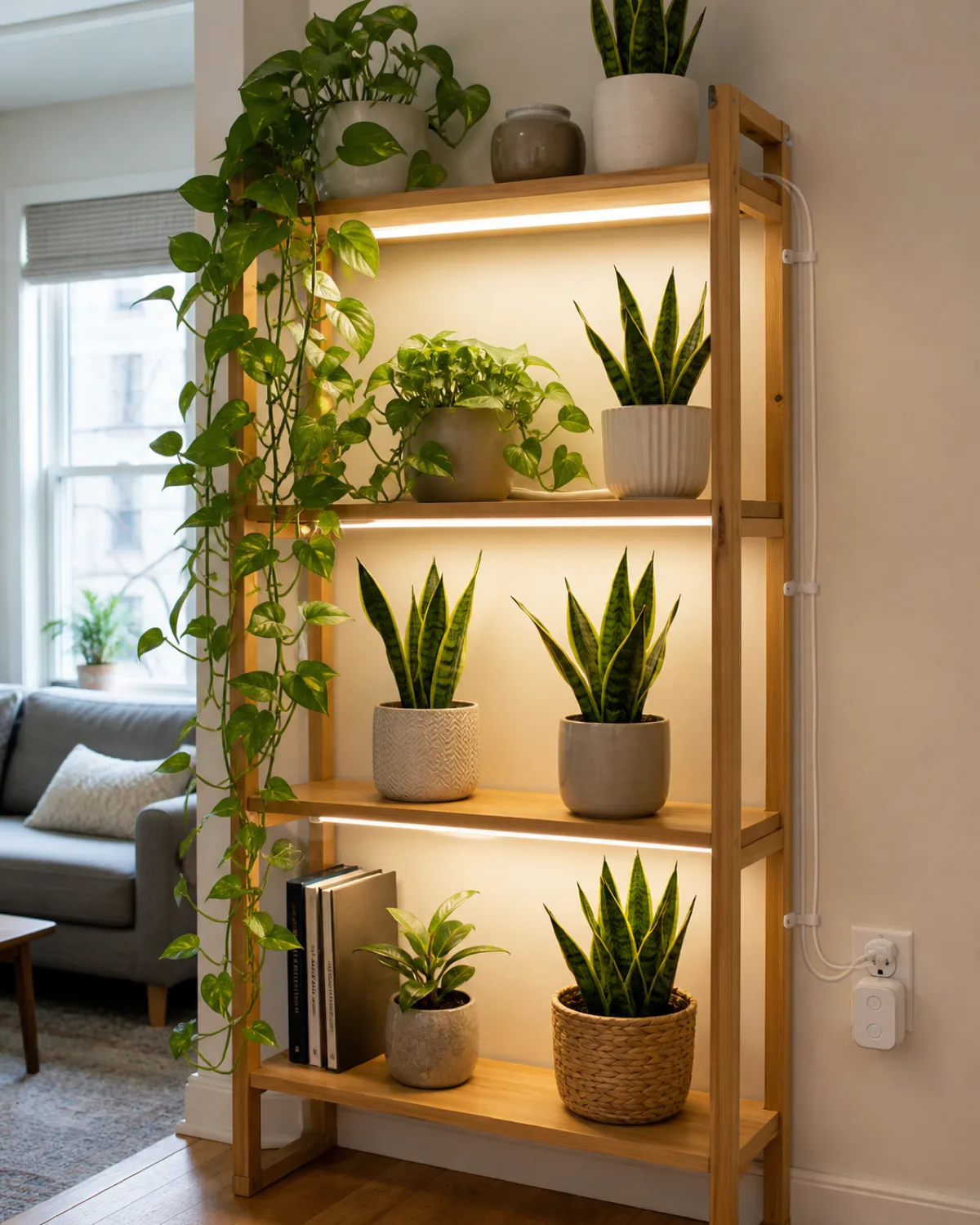
A three-tier wire or wooden shelf with LED bars mounted under each shelf creates the most versatile indoor growing station. The entire setup can cost under 50 dollars if you use a basic wire utility shelf with adhesive-backed LED strip lights.
Choose the right shelf. Wire shelving allows light to pass through, which benefits plants on lower tiers. Wooden shelving looks better in living spaces and hides the fixtures more cleanly. Tier spacing of 18 to 24 inches gives enough room for most houseplants while keeping the light source at an effective distance.
Mount the lights under each shelf. LED bars designed for under-cabinet use are the cleanest option — they mount with adhesive strips or small screws, draw minimal power, and produce warm white light that does not look industrial. Position the bar at the front edge of the shelf so it angles light toward the back as well as straight down.
Use reflective surfaces. A white wall behind the shelf bounces light back toward the plants, effectively increasing the usable output by 10 to 20 percent at no additional cost. If the wall behind your shelf is dark, tape a piece of white foam board to the back. The difference is measurable.
Manage the cables. Multiple LED bars mean multiple power cords. White adhesive cord clips running down one shelf leg keep everything tidy. A power strip with a built-in timer at the base simplifies wiring — one plug controls all three tiers.
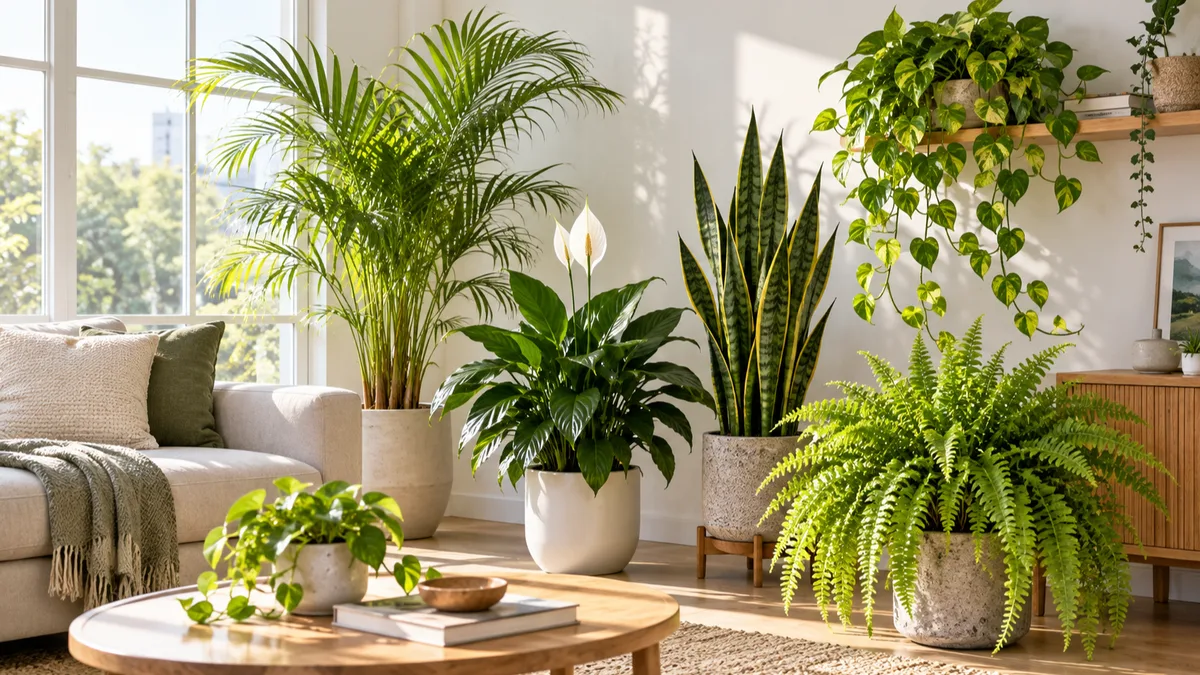
Consider aesthetics. A grow light shelf does not have to look like a laboratory. Matching pot colors, trailing plants like pothos that cascade over the shelf edges, and a consistent warm white LED color temperature create a display piece rather than a utility setup.
The light itself becomes part of the decor — warm white LEDs highlight leaf texture and color in a way that overhead room lighting never does.
Seasonal grow light strategies
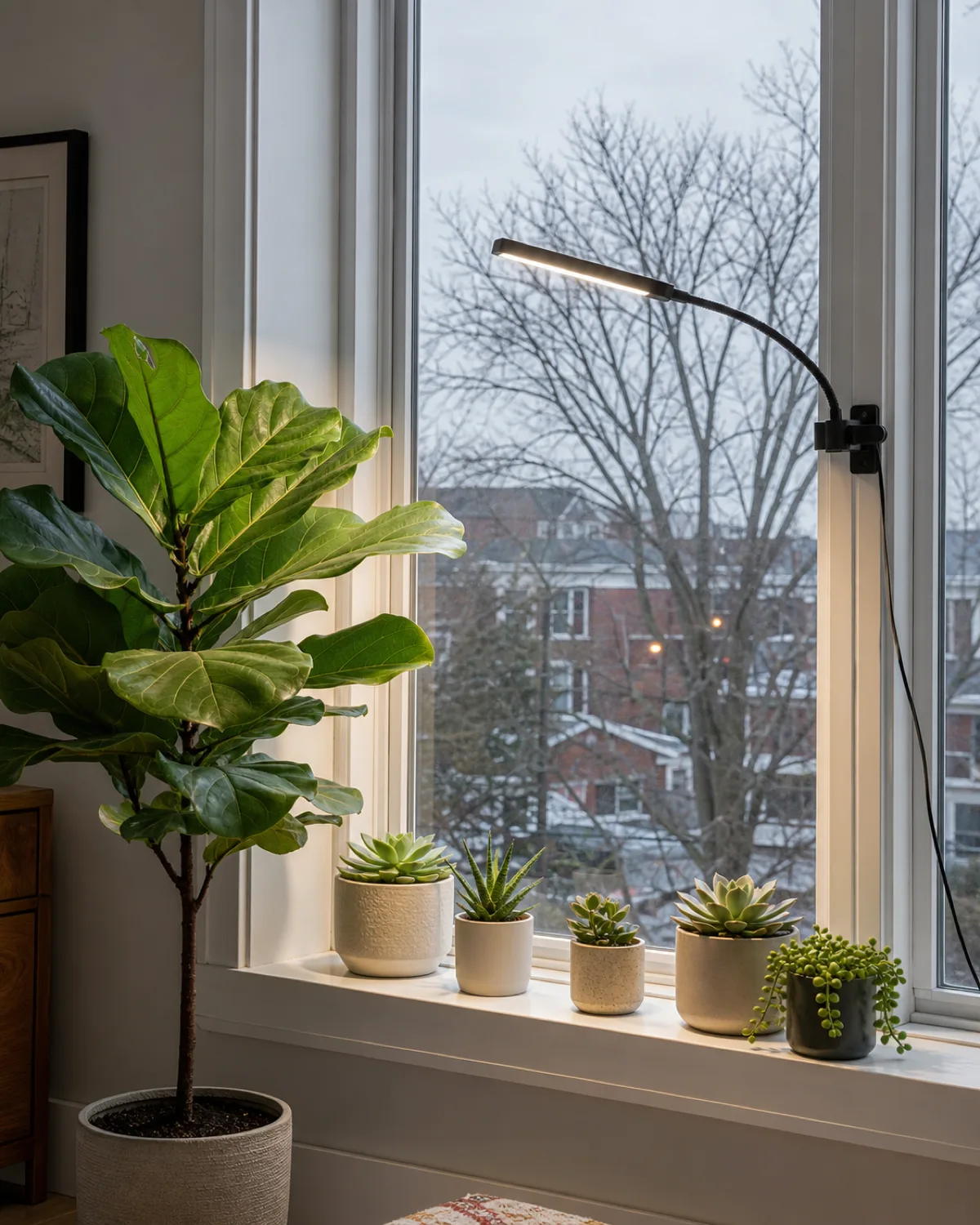
The most common use for grow lights is not replacing sunlight entirely — it is supplementing natural light during the months when your windows deliver less than your plants need.
Winter supplementation is the highest-value application. A south-facing window that delivers 10 hours of bright light in June may deliver only 6 hours of weak light in December.
Adding 6 to 8 hours of grow light time — starting before sunrise and extending after sunset — maintains the total photoperiod your plants need. This prevents the winter slowdown, leaf drop, and etiolation that many growers accept as inevitable.
Summer adjustment matters if your grow lights run year round. Natural light peaks in June and July. If your grow lights are supplementing a south window, reduce the timer by 2 to 4 hours during peak summer to avoid overexposure. Signs of too much total light include faded variegation and leaf curling on sensitive species like calathea.
Vacation mode is one of the underrated advantages of a timer-controlled grow light setup. Your plants maintain their photoperiod whether you are home or traveling for two weeks. As outlined in our watering guide, water before you leave, and the grow light handles the rest of the care equation automatically.
Outdoor-to-indoor transition catches many growers off guard. Plants that spent the summer on a patio or balcony acclimatize to outdoor intensity. Bringing them indoors in fall without supplemental light triggers shock — leaf drop, color loss, growth stall.
A grow light bridges the gap. Run it at the plant's accustomed photoperiod for the first two weeks, then gradually reduce to your normal indoor schedule.
Grow Lights for Indoor Plants: The Quick Reference
- 1Rooms below 200 foot-candles need supplemental lightNorth windows, basements, interior rooms, and winter months all fall below what most houseplants need. Stretched stems and pale leaves are the signals.
- 2Full-spectrum white LED, 3500K-5000KSkip blurple lights. Modern white LEDs produce the full PAR range while looking like a normal lamp. Warm white to neutral daylight both work.
- 3LED bars beat fluorescent on every metric50% less electricity, 50,000 hour lifespan vs 12-18 months for tubes, no heat issues. CFL clamp lamps work for single rescue plants.
- 4PPFD is the only spec that matters for plantsAim for 50-200 PPFD at the canopy for foliage plants, 200-400 for succulents. Ignore lumens — they measure human brightness, not plant usefulness.
- 5Distance controls intensity — match to plant typeLow-light plants 24-36 inches away. Medium 12-18 inches. High-light 6-12 inches. Double distance = quarter intensity. Leaf curl = too close.
- 612-16 hours on a timer, never 24/7Foliage plants need 12-14 hours. Succulents 14-16. Plants need dark time for respiration. A $5 mechanical timer is essential, not optional.
- 7Medium-light plants benefit the mostMonstera, philodendron, calathea show the biggest improvement. Low-light plants survive without one. High-light plants need one to avoid decline.
- 8Three-tier shelf = most efficient setupLED bars under each shelf. High-light plants on top, low-light on bottom. White wall behind boosts output 10-20%. Cord clips keep it clean.
- 9Winter is the highest-value applicationSupplement short winter days to maintain total photoperiod. Reduce hours in summer. Timer-based vacation mode keeps plants steady while you travel.
- 10Bleached leaves = too close, stretched stems = too farCurling upper leaves with pale tips = move fixture up. Leggy growth despite a grow light = wrong spectrum or insufficient PPFD. Both fixable.
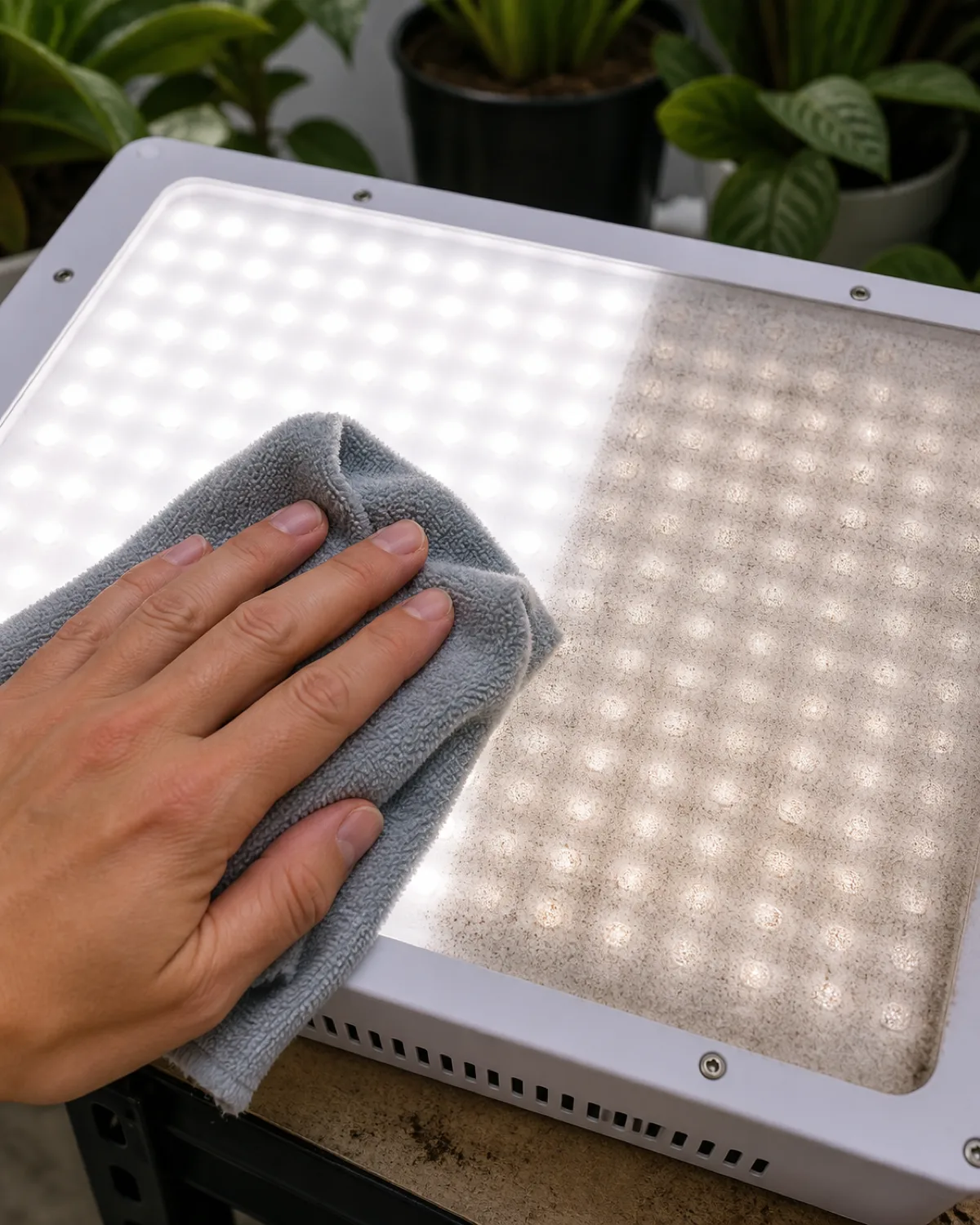
- 11Dust cuts output by 30% in six monthsWipe the panel monthly with a dry microfiber cloth. Also: use a timer (not manual), skip blurple, check actual wattage not equivalent.
kultivy.com
Signs your grow light setup needs adjusting
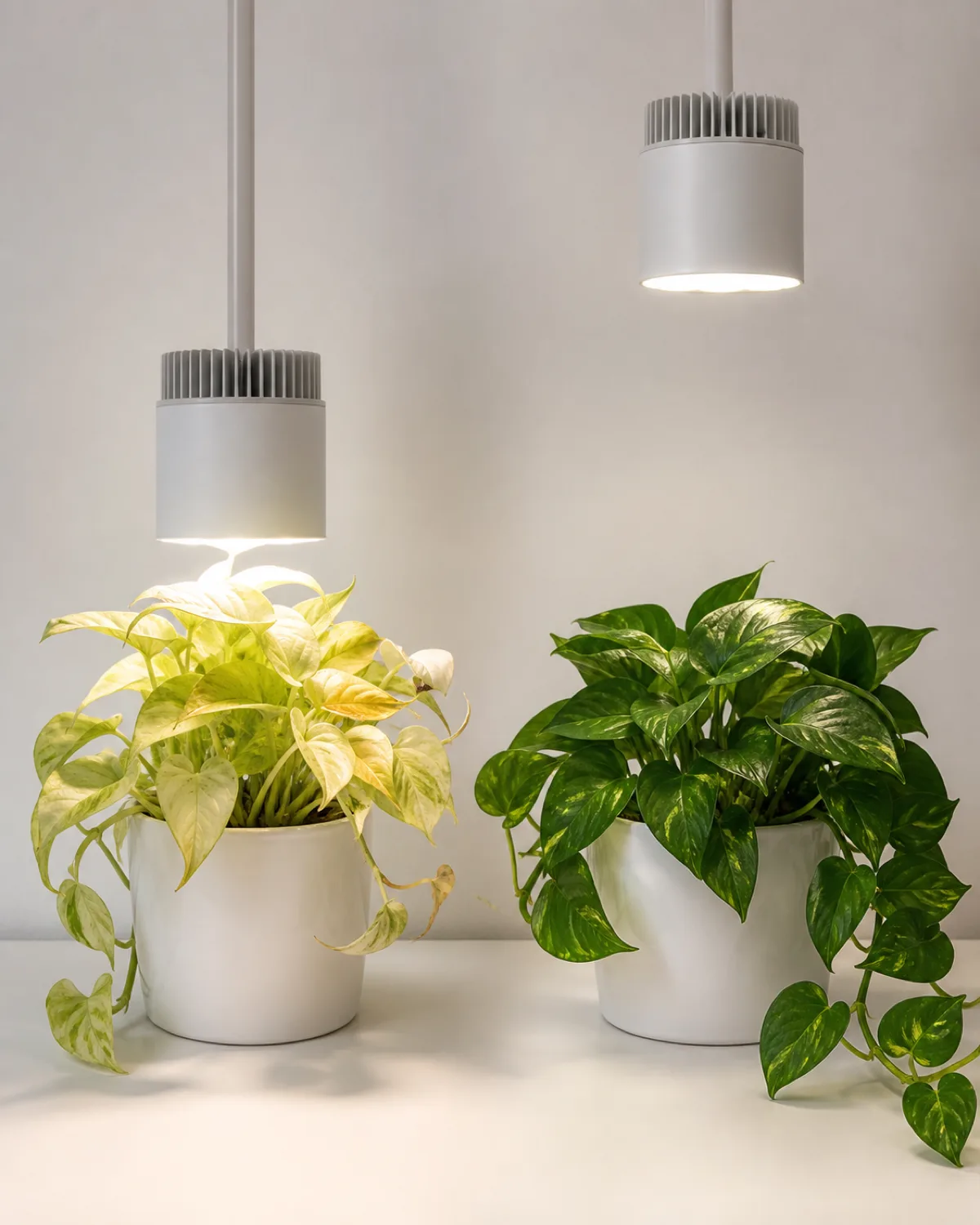
A grow light is not a set-and-forget solution. Plants grow, seasons change, and the initial setup may drift out of the optimal range over months.
Too close produces bleached, pale patches on the upper leaves nearest the fixture. Leaf edges curl upward as if trying to escape the intensity. The damage appears on the top of the canopy first while lower leaves remain healthy — a clear directional signal. Move the light up by 4 to 6 inches and monitor for a week.
Too far looks exactly like no grow light at all. Stems stretch, internodes lengthen, and the plant leans toward the nearest light source. If this happens despite having a grow light running, either the distance is too great, the spectrum is wrong (a blurple light may lack the blue wavelengths that prevent stretching), or the PPFD at the canopy is too low for the species.
Too many hours stresses plants in subtle ways. Continuous exposure beyond 16 hours can cause leaf chlorosis, faded variegation on plants like syngonium or pothos, and inhibited root growth. If your timer is set to 16+ hours and you notice these symptoms, reduce to 14 hours and observe over two weeks.
Not enough hours produces the same symptoms as insufficient natural light — slow growth, small new leaves, declining variegation, and a general lack of vigor. If your light is close enough and the spectrum is correct, increasing the photoperiod by 2 hours often resolves the issue.
The simplest diagnostic: if the top leaves are damaged and the bottom leaves are fine, the light is too close or too long. If all leaves are uniformly lackluster, the light is too far, too weak, or running for too few hours.
Five grow light mistakes and how to fix them
Using a blurple light for foliage plants. The purple glow from combined red and blue LEDs was the standard a decade ago. Modern full-spectrum white LEDs deliver equal or better PAR efficiency while producing light you can actually live with.
If your current blurple light works, keep it — but if you are buying new, there is no reason to choose purple over white.
Running without a timer. Manual switching creates inconsistent photoperiods that confuse growth cycles. Some growers forget to turn the light on; others forget to turn it off. Plants regulate growth hormone production based on consistent light and dark cycles. A three-dollar mechanical timer eliminates the variable entirely.
Ignoring actual wattage. A light marketed as "equivalent to 150 watts" may draw only 25 watts — which is fine if the PPFD at your canopy distance is adequate. But a light marketed as "300 watt equivalent" that draws 15 watts actual is misleading. Check actual power draw and PPFD rather than equivalent claims. More actual watts at the wall generally means more photons at the canopy.
Mounting fixtures with no airflow. LED grow lights run cooler than fluorescents but still generate heat. Mounting a panel flush against the underside of a solid shelf traps heat and shortens the fixture's lifespan. Leave at least half an inch of clearance above the panel for air circulation, or use a bar-style fixture that naturally sits away from the mounting surface.
Letting dust accumulate. A layer of household dust on the surface of a grow light panel reduces output by up to 30 percent over six months. The decline is gradual enough that you do not notice it — until you wipe the panel with a dry microfiber cloth and see the difference immediately. Monthly cleaning takes 30 seconds and maintains full performance.
A well-chosen grow light, properly positioned, running on a timer, and cleaned once a month delivers years of reliable service. The initial setup takes an afternoon. The ongoing maintenance takes less time than watering your plants.