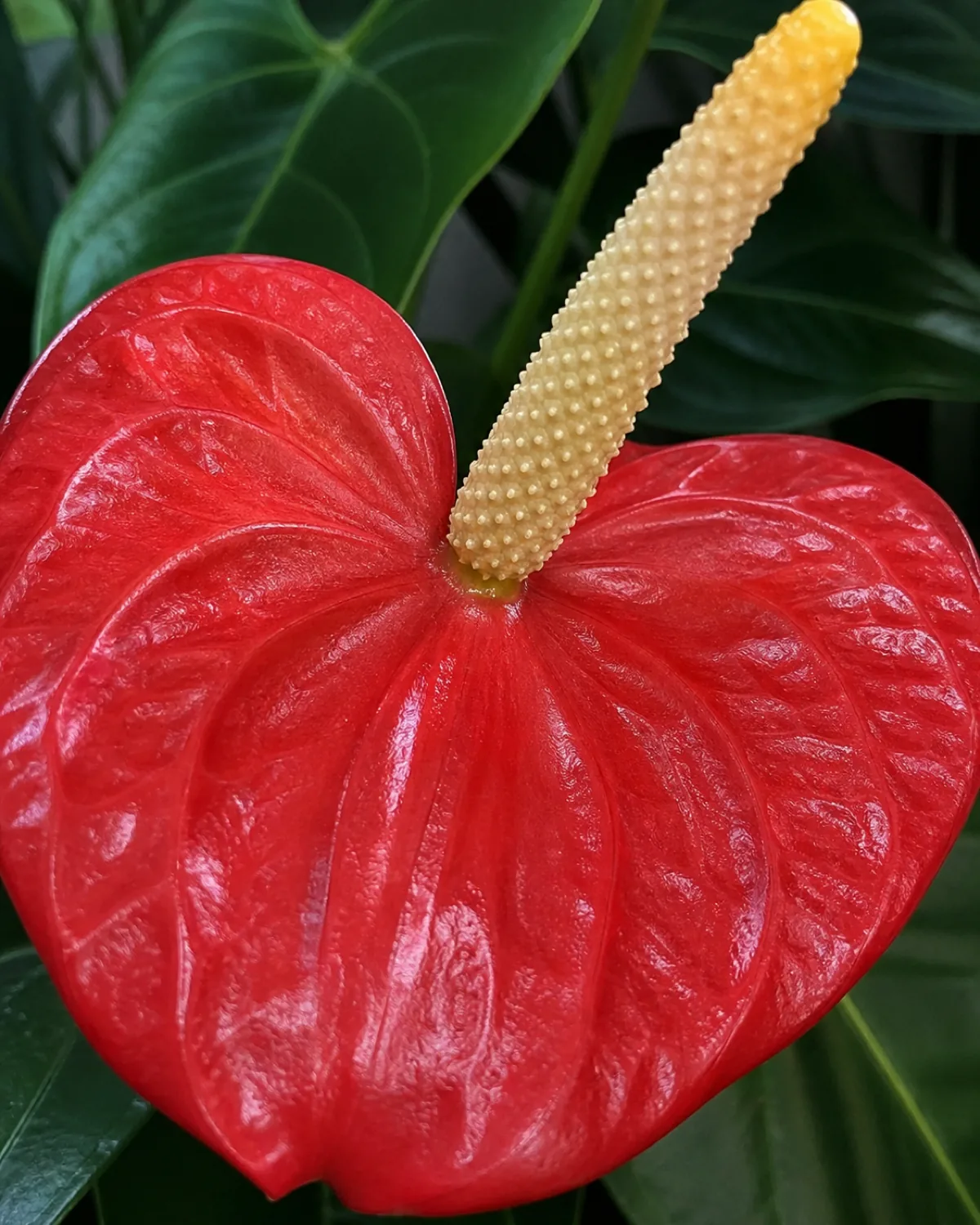
The waxy red heart is not a petal. It is a modified leaf called a spathe, and the actual flowers are the tiny bumps on the yellow spike in the center.
Anthurium andraeanum comes from cloud forests where it grows on tree branches. Give it bright indirect light, chunky soil, and steady warmth and it blooms nearly year-round.
Anthuriums are one of the few houseplants that bloom nearly year-round indoors. The thirteen sections below cover the spathe anatomy most people misunderstand, the light and humidity that actually trigger blooming, how to water epiphytic roots without rot, and the varieties worth collecting.
What an anthurium actually is (and why the red thing is not a flower)
Anthurium andraeanum is a tropical epiphytic aroid from the cloud forests of Colombia and Ecuador. In the wild it grows on tree branches, not in soil, sending thick aerial roots into crevices filled with leaf litter and moss.
The glossy red, pink, or white heart-shaped structure that people call the flower is actually a spathe — a modified leaf bract. The real flowers are the tiny bumps packed along the finger-like spadix that projects from the spathe center. Each bump is a complete individual flower with its own pollen.
A single spathe lasts six to eight weeks before fading, and a healthy plant produces a new one roughly every two to three months from each growth point. A multi-stemmed plant can have spathes at different stages simultaneously, which is why anthurium appears to bloom nonstop.
This makes it one of the easiest houseplants to keep in flower — significantly easier to rebloom than orchids, which need a specific temperature-drop cycle to trigger a new flower spike.
Light: the single biggest factor in whether your anthurium blooms
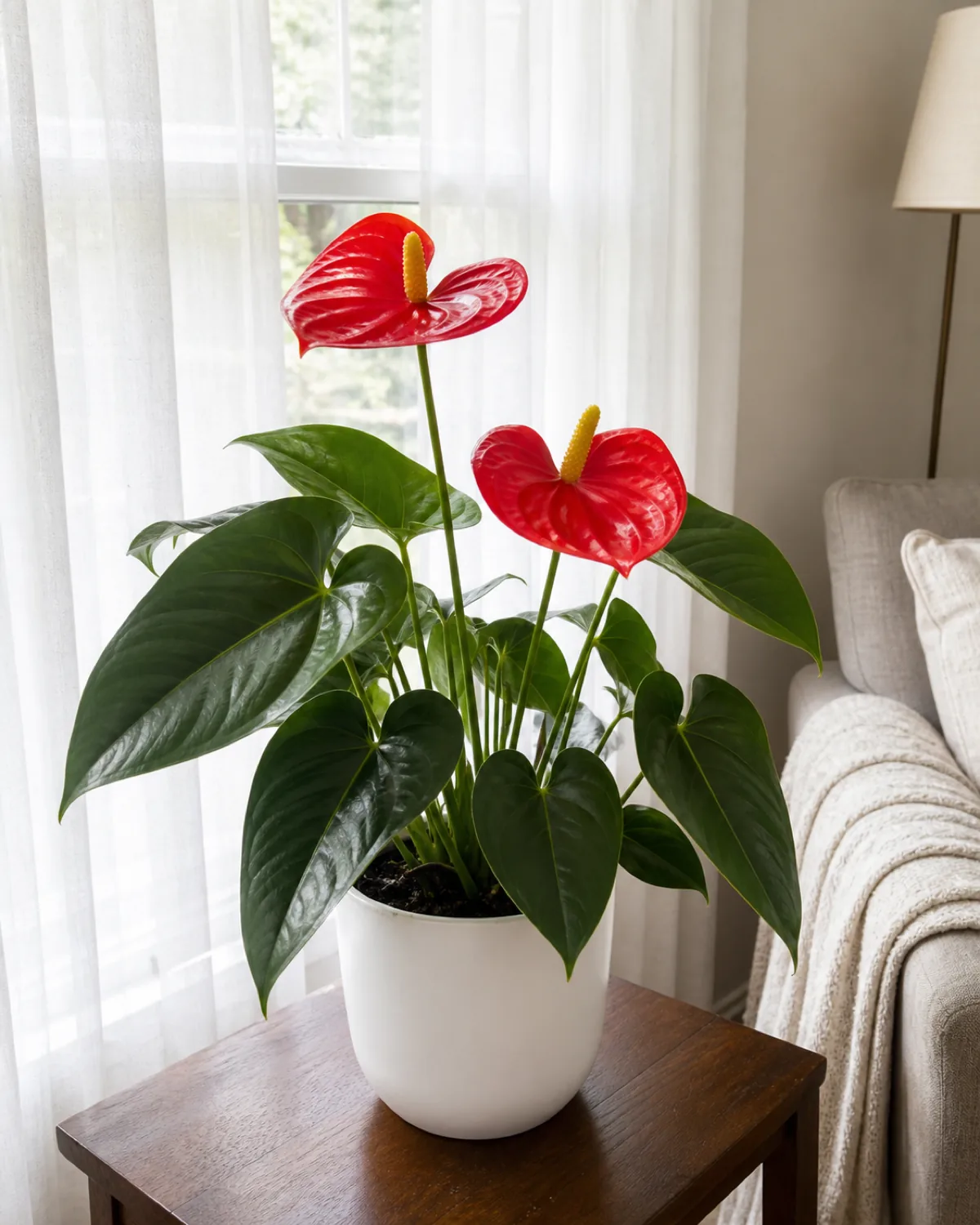
Bright indirect light is the number one requirement for flowering. An east-facing window or a spot two to three feet from a south or west window with a sheer curtain is ideal. The light should be strong enough to read by without a lamp.
Direct sun is too much. It burns the glossy leaves and bleaches the spathe color, leaving irreversible brown scorch patches. Too little light is the more common problem — the plant grows leaves just fine in a dim corner but refuses to produce spathes. If your anthurium has healthy foliage and zero flowers, moving it closer to a window will almost always fix it.
Anthuriums need noticeably more light than peace lilies, which tolerate genuinely low light. Think of anthurium as orchid-level light needs without the orchid-level fussiness. The general rule from our houseplant light guide applies: if the plant casts a defined shadow with soft edges, the light is in the right range.
Watering: moist but never soggy, because the roots grew on trees
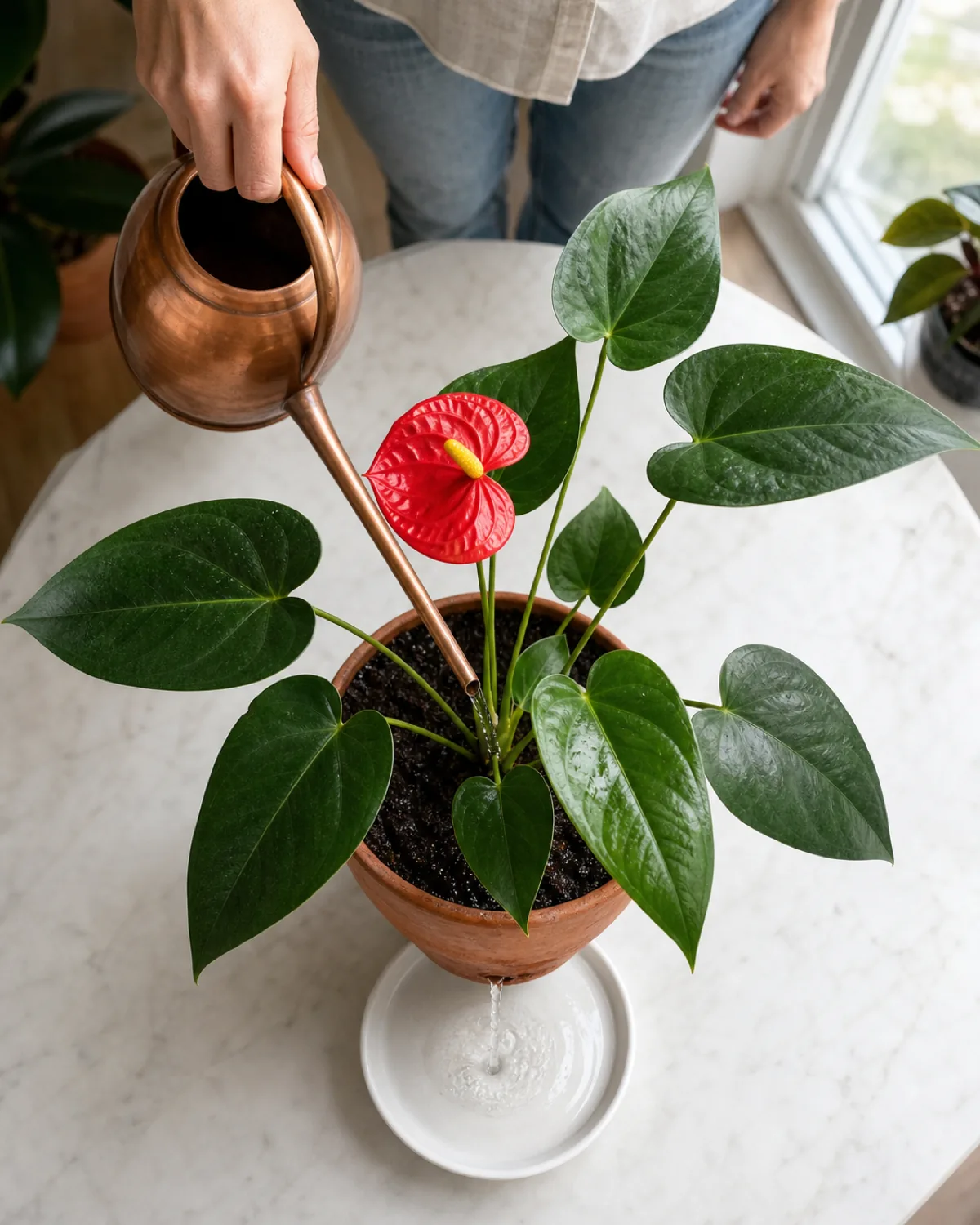
Water when the top inch of soil feels dry to the touch. Push a finger in — if it comes back clean and dry, water thoroughly until it drains from the bottom. If it comes back with damp soil clinging to it, wait another day or two.
Anthurium roots are partly epiphytic. In the wild they hang in open air, grabbing moisture from humidity and rain rather than sitting in saturated ground. This means they need oxygen around them and rot quickly when waterlogged. Overwatering is the leading killer.
Yellow lower leaves usually mean overwatering — the roots are drowning. Brown crispy leaf edges can mean underwatering, but more often point to low humidity. Check the soil before assuming: if the soil is moist and the edges are brown, humidity is the problem, not water.
Use room-temperature water and always ensure the pot has a drainage hole. Anthuriums potted in chunky aroid mix dry faster than those in standard potting soil, so check more frequently.
Anthuriums are forgiving once light and soil are right — but they do have non-negotiables worth matching to your home before you buy.
Humidity: sixty percent is where anthuriums really thrive
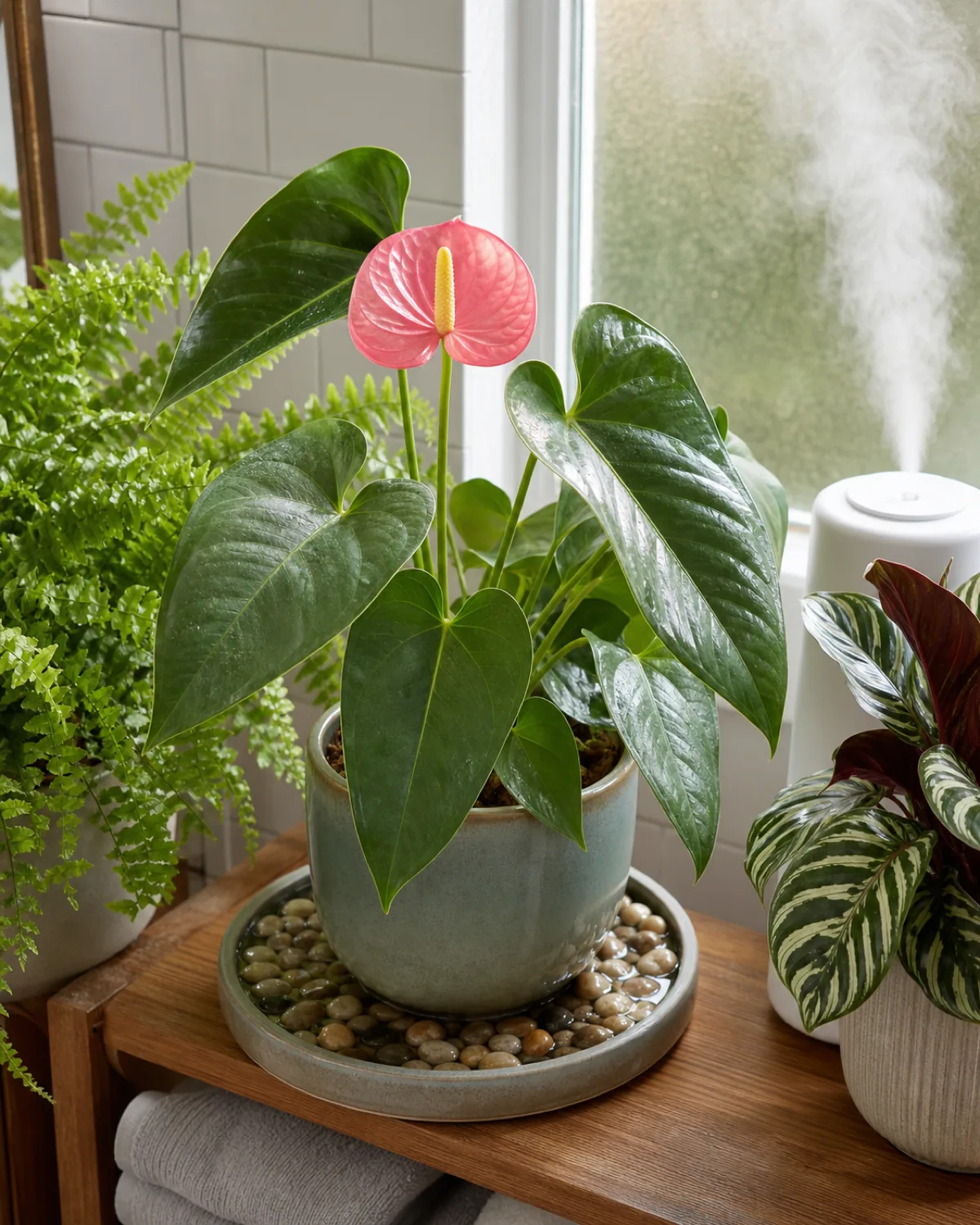
Anthuriums come from cloud forests where the air is perpetually moist. They want sixty percent humidity or higher. Below forty percent the leaf edges turn brown and papery, and new spathes may emerge smaller than normal or slightly deformed.
Misting does almost nothing. It raises humidity for minutes, not hours. Solutions that actually work: a pebble tray filled with water under the pot (evaporation creates a humid microzone around the foliage), grouping several plants together (collective transpiration raises local humidity), or running a small humidifier nearby.
The good news is that anthurium's glossy leaf surface loses less moisture than fuzzy-leaved plants like calathea. Most anthuriums tolerate average home humidity of forty-five to fifty-five percent without drama. But bloom size and frequency improve noticeably above sixty percent. Bathrooms with good natural light are anthurium sweet spots — the daily shower steam provides free humidity.
Temperature: steady warmth, no cold drafts, no chill trigger needed
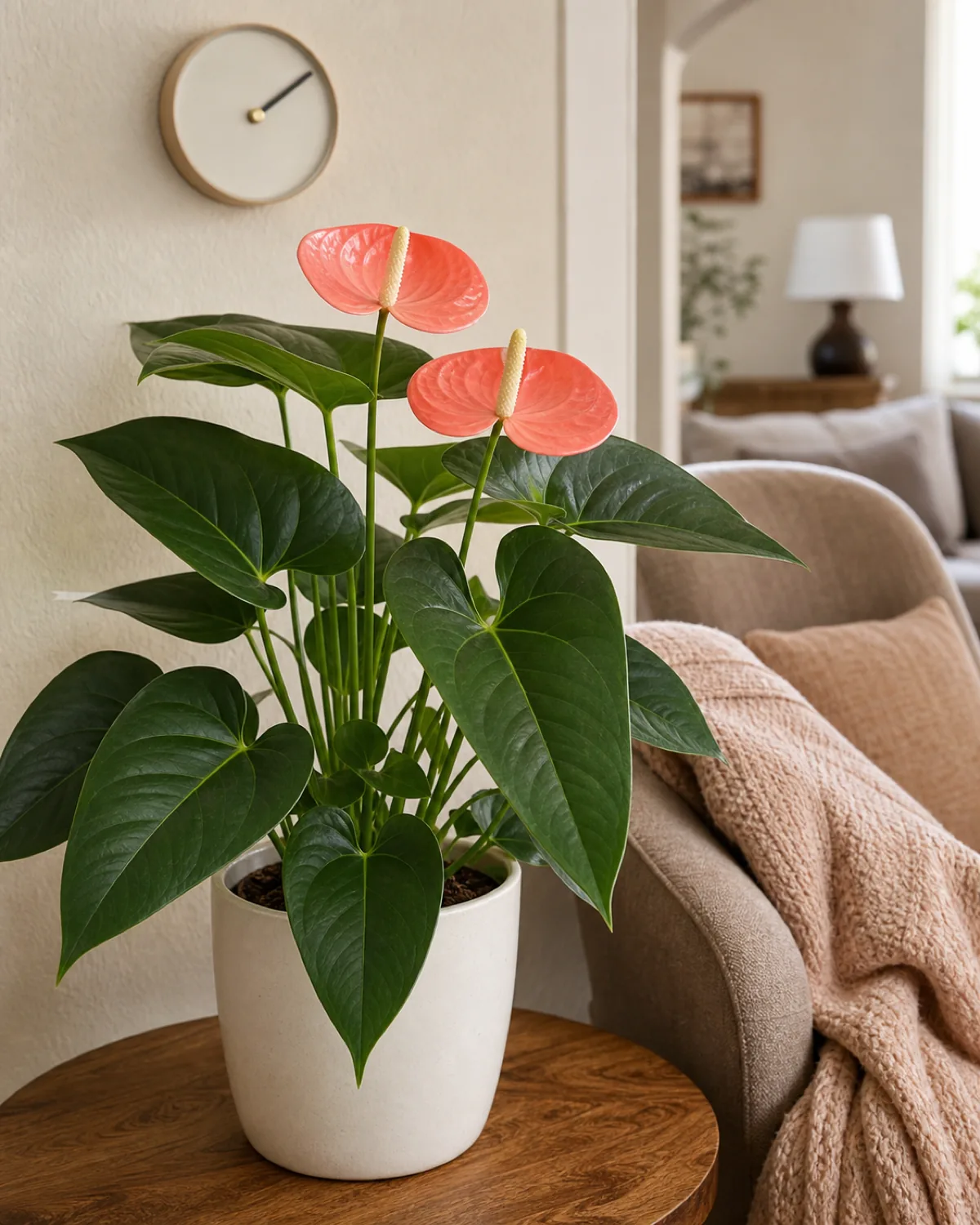
Anthuriums thrive between sixty-five and eighty degrees Fahrenheit. They have zero cold tolerance. Below fifty-five degrees the leaves darken and growth stops entirely. Below fifty degrees is often fatal.
Keep the plant away from air conditioning vents, drafty windows in winter, and exterior doors that open into cold air. Even brief exposure to cold drafts can damage developing spathes.
One thing that makes anthurium easier than orchids: no temperature drop is needed to trigger blooming. Orchids require a ten to fifteen degree Fahrenheit difference between day and night temperatures to initiate a new flower spike. Anthuriums bloom on light and feeding alone. Steady warmth is the goal — consistent is more important than warm.
Soil mix: chunky aroid mix, not standard potting soil
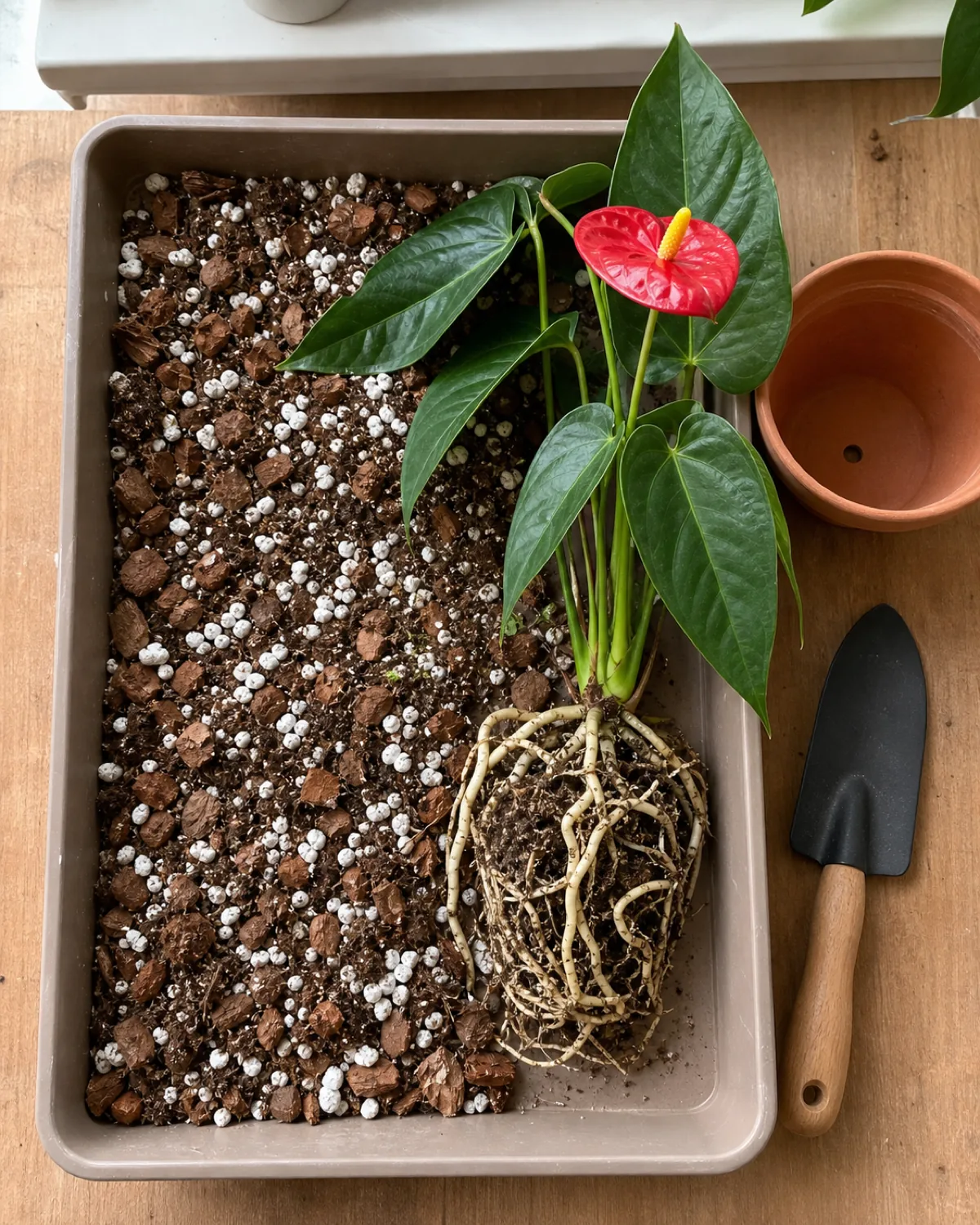
Standard potting soil retains too much water for anthurium's epiphytic roots. The roots need air pockets around them, the same way they get air when growing on tree branches in the wild.
Use a chunky aroid mix: one part potting soil, one part perlite, one part orchid bark. The bark pieces create air channels throughout the mix that prevent water from sitting around the roots. If you only have regular potting soil on hand, mix in a generous handful of perlite — at least a thirty percent ratio — to improve drainage.
Repot every two years or when roots circle the bottom of the pot and poke out the drainage holes. Go up only one inch in pot diameter. Anthuriums actually bloom better when slightly rootbound. A pot that is too large encourages root growth at the expense of spathe production — the plant puts its energy into filling the pot instead of flowering.
Fertilizing: the phosphorus switch that triggers more spathes
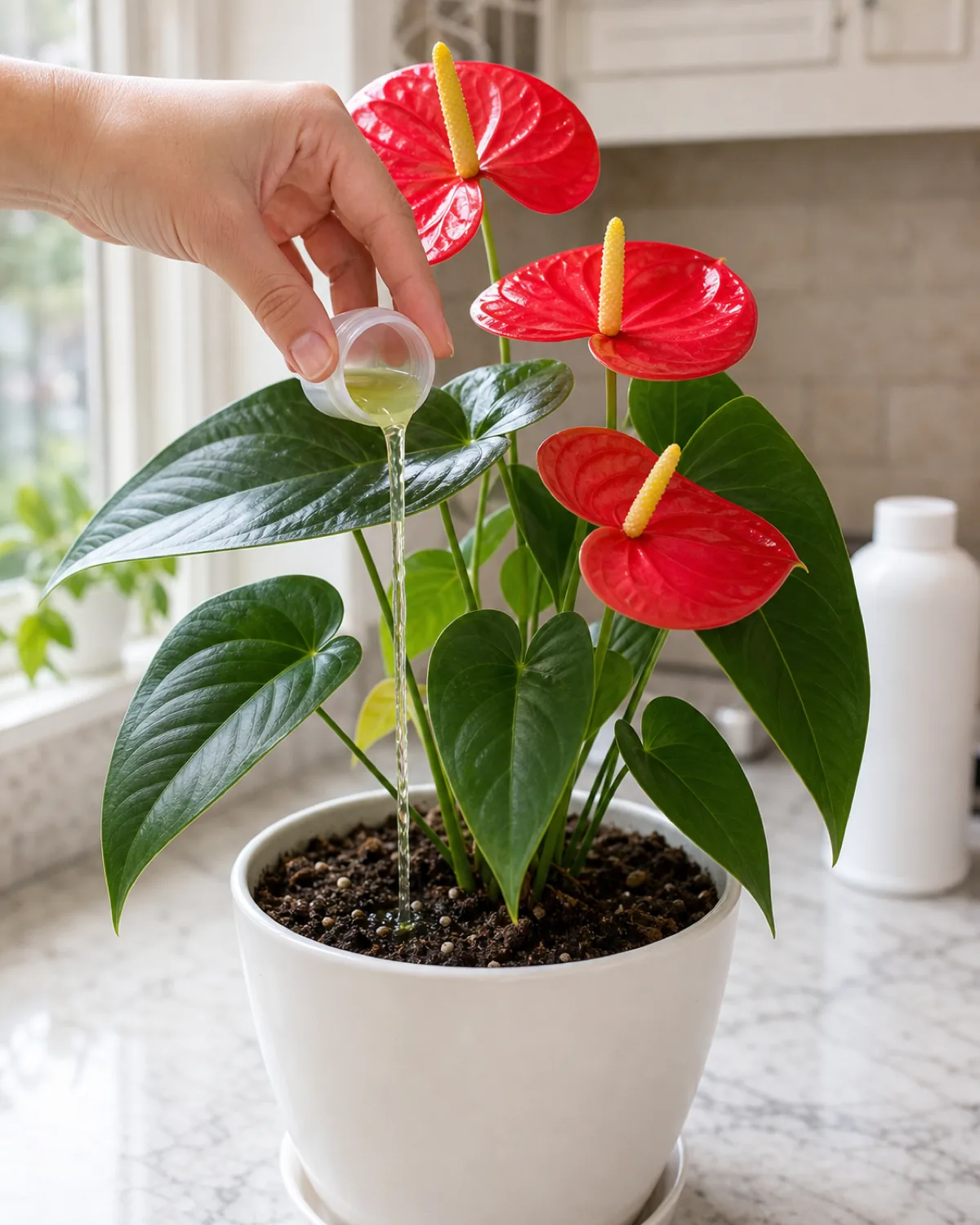
The difference between an anthurium that grows leaves-only and one that produces spathes nonstop is often phosphorus. Standard balanced fertilizer (the equal-ratio type like 20-20-20) supports general growth but does not push flowering.
During the growing season from spring through early fall, feed every four to six weeks with a liquid fertilizer diluted to half strength. To actively push more blooms, switch to a bloom-booster formula — one with a higher middle number in the NPK ratio, like 10-30-20. The phosphorus is the middle number, and it is the nutrient most directly linked to flower production.
Stop fertilizing entirely in winter when growth slows. Overfertilizing shows up as brown leaf tips and a white salt crust on the soil surface. Flush the pot with plain water once a month during the feeding season to prevent salt buildup. The fertilizing houseplants guide covers NPK ratios and dilution methods in detail.
Why your anthurium stopped blooming (and how to fix it)
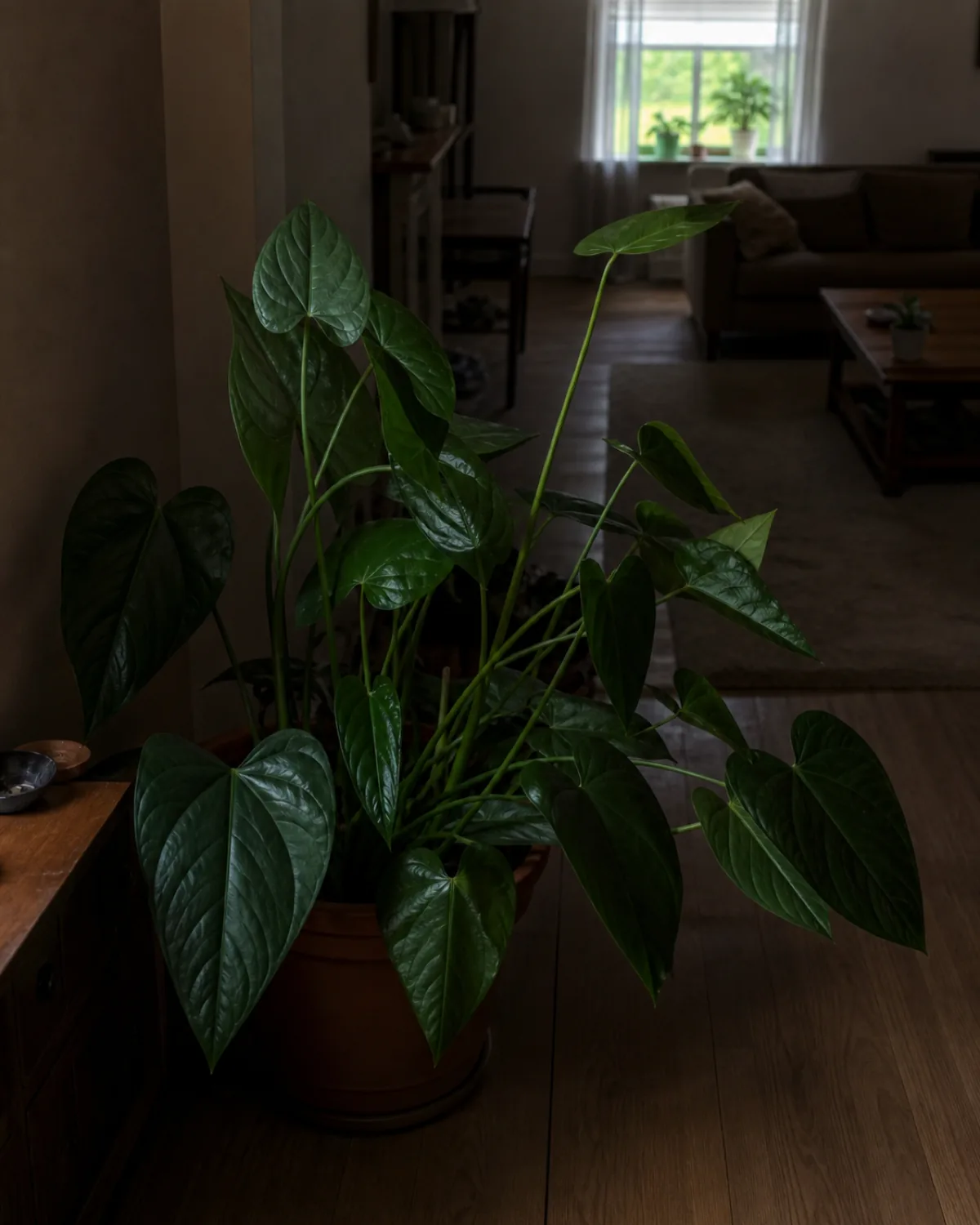
Not enough light is the number one reason. Anthuriums grow leaves in low light but will not produce spathes without bright indirect light. Move the plant closer to a window and give it four to six weeks to respond.
Other common causes: overfertilizing with high-nitrogen fertilizer (promotes leaf growth over flowering — switch to a bloom-booster with higher phosphorus), pot too large (the plant puts energy into roots instead of blooms — wait for roots to fill or downsize), and temperature too cold or unstable (below sixty-five degrees slows everything).
Less obvious causes: the plant is simply immature (seedlings and small divisions take one to two years to reach blooming size), and old spent spathes left on the plant (dead spathes divert energy — snip them at the base when they brown).
One thing that is actually fine and does not need fixing: being slightly rootbound. Tight roots trigger flowering in anthurium. Do not rush to repot a plant that is blooming well.
Pruning and cleanup: cut, never pull
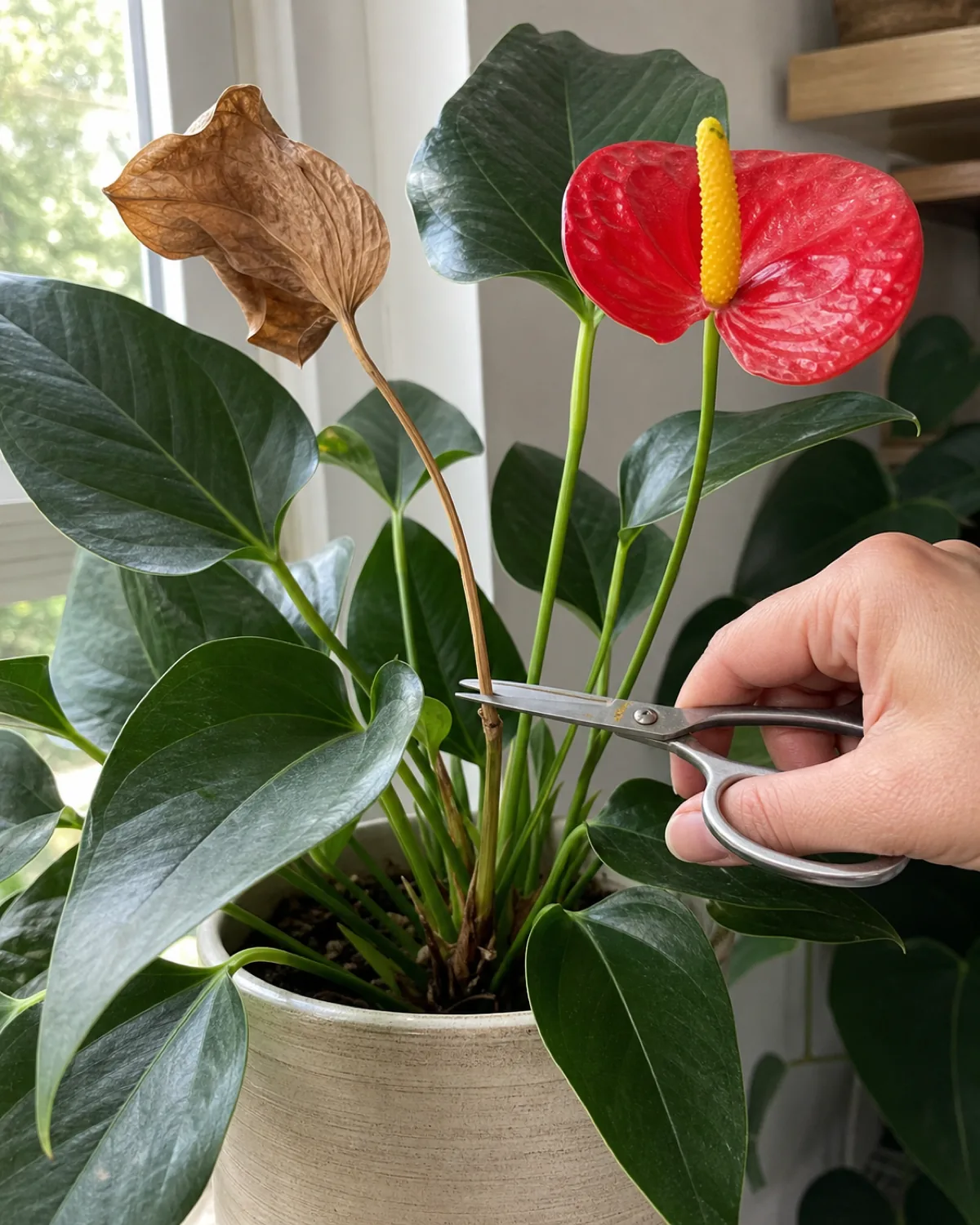
Remove spent spathes by cutting the stem cleanly at the base where it meets the main stem. Use sharp scissors or pruners. Do not pull or tear — pulling risks damaging the main stem and the growth point it connects to.
Remove yellowed or brown leaves the same way — clean cut at the base. Old lower leaves yellowing and dropping is normal aging, not a problem to solve. If only the oldest one or two leaves yellow while new growth looks healthy, the plant is just redirecting resources.
Aerial roots that grow above the soil surface look messy to some people, but they are completely normal for an epiphyte. You can push them gently into the soil mix if they bother you, or leave them. They absorb moisture from the air and actually help the plant.
For tall, leggy anthuriums that have lost lower leaves over time: cut the main stem four to six inches above the soil line. New growth will sprout from the remaining nodes within a few weeks. The cut top section can be rooted as a stem cutting if it has at least one aerial root.
Propagation: division is instant, stem cuttings take patience
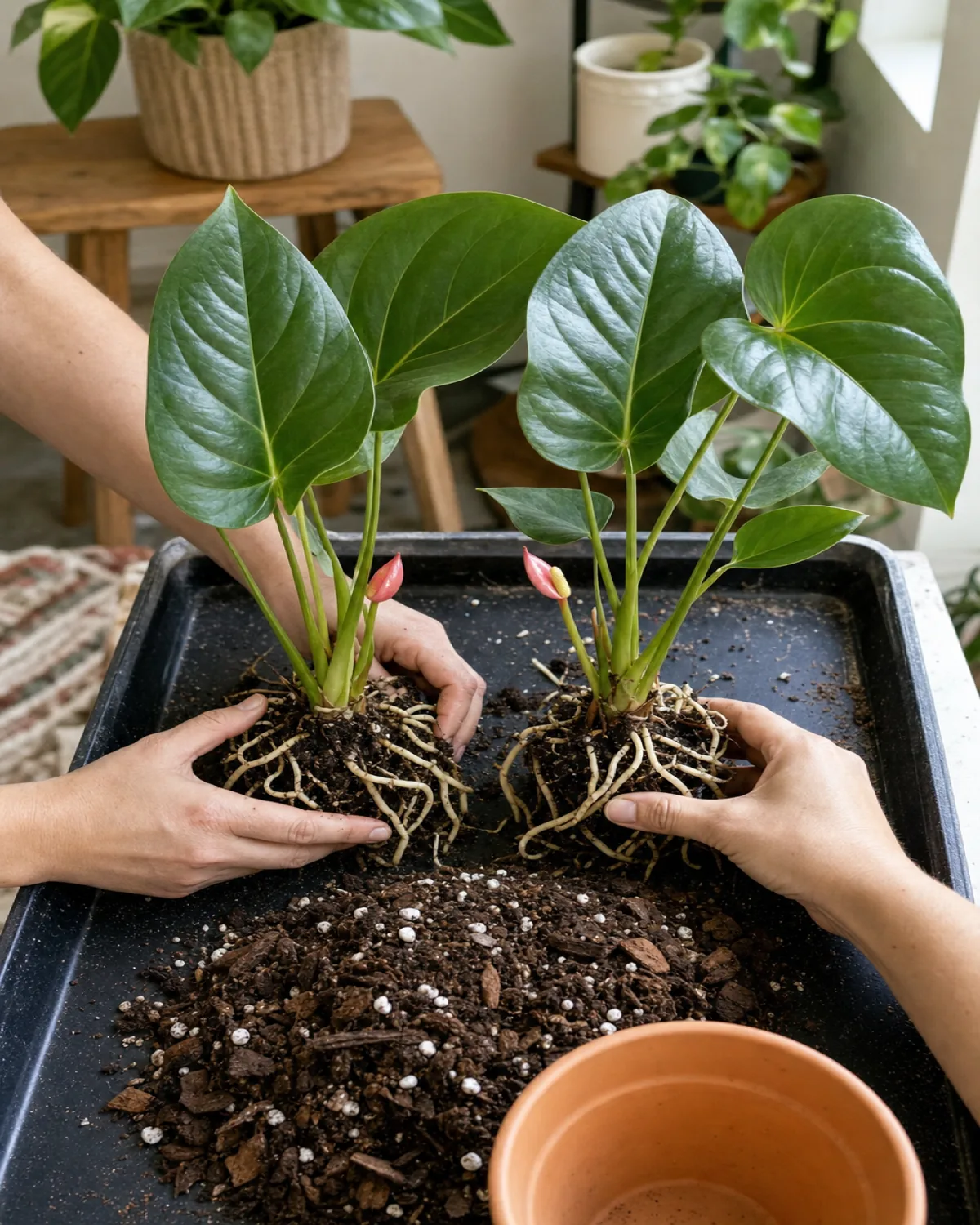
Division is the fastest and most reliable method. When you repot, look for natural separation points in the root ball — most mature anthuriums have multiple stems emerging from the base. Gently pull or cut the clump into two or three sections, each with its own roots and at least two leaves.
Pot each division into fresh aroid mix and keep it warm and slightly more humid than usual for two to three weeks while roots establish in the new pot. Each division is already a blooming-size plant, so you skip the waiting period that comes with other propagation methods.
Stem cuttings work for leggy plants. Cut a stem section with two to three nodes and at least one aerial root. Place it in damp sphagnum moss or a jar of water — roots develop in four to six weeks.
Water-rooted cuttings need time to adjust. Start with very moist soil and gradually reduce watering over a few weeks as roots adapt.
Seed propagation is possible but impractical for home growers — it takes two to three years from seed to first bloom. Division gives you results immediately.
Anthurium-specific problems: bacterial blight is the one to watch for
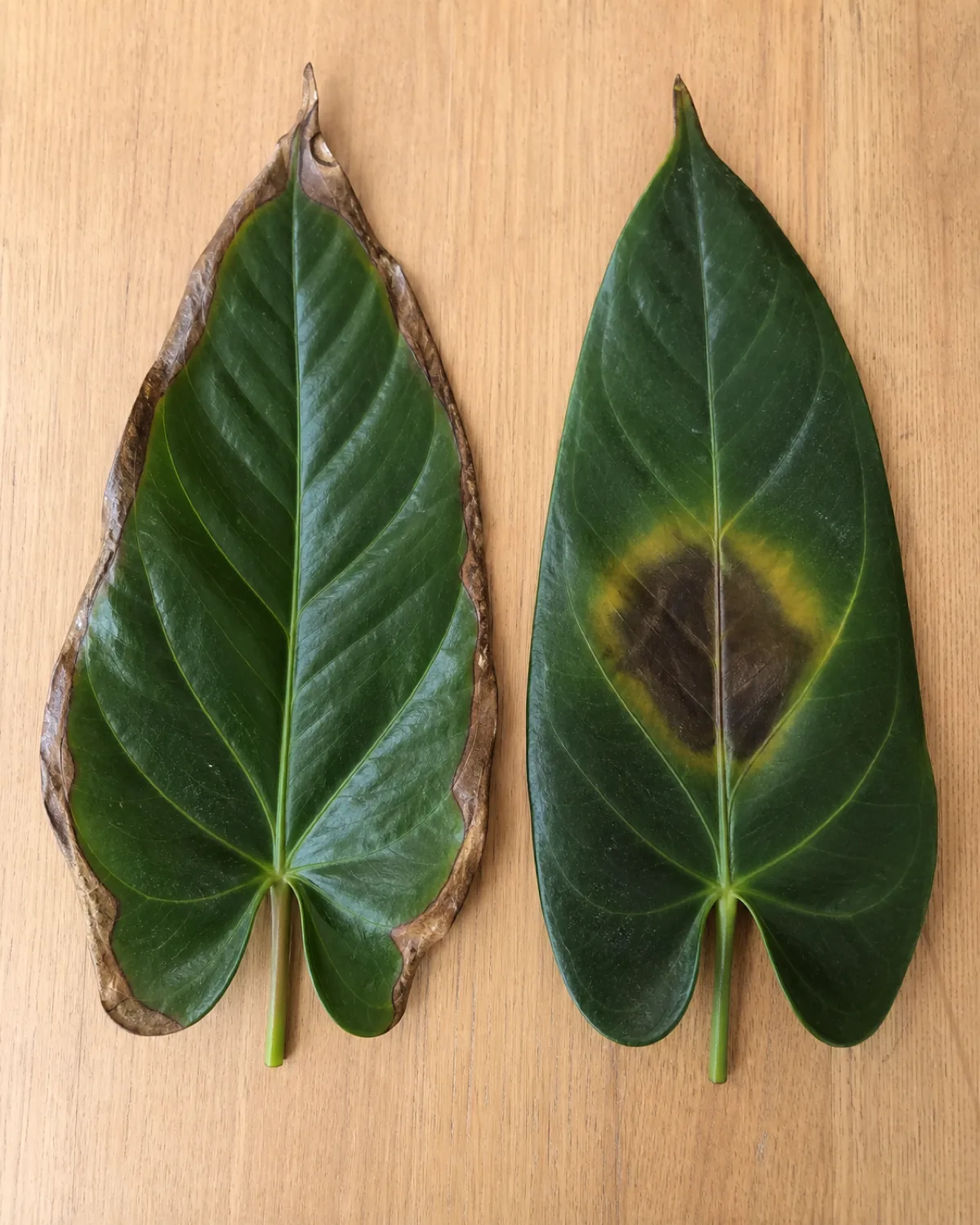
Brown crispy leaf tips or edges point to one of two causes: low humidity (the more common one — the air is too dry) or fertilizer salt burn (white crust on soil surface confirms this). Check your humidity level first. If humidity is adequate, flush the soil with plain water to wash out accumulated salts.
Yellow leaves mean overwatering if multiple leaves yellow at once from the bottom up, or natural aging if only the oldest leaf or two yellows while new growth is healthy. Touch the soil — if it is soggy, reduce watering frequency and check that the drainage hole is not blocked.
Bacterial blight is the anthurium-specific problem that sets it apart from other houseplants. It shows as water-soaked, dark brown or black spots that spread rapidly across the leaf, often with a yellow halo. This is contagious to other anthuriums.
Isolate the plant immediately, remove all affected leaves with clean tools, and improve air circulation. Avoid getting water on the leaves when you water — bacterial blight enters through wounds and water droplets on leaf surfaces.
Root rot looks like mushy brown roots when you unpot the plant. Trim all affected roots with clean scissors, repot in completely fresh aroid mix, and reduce watering going forward. Healthy anthurium roots are thick and white or light tan.
Toxicity: calcium oxalate means keep it away from pets
Anthurium contains calcium oxalate crystals throughout all parts — leaves, stems, roots, and spathes. These microscopic needle-shaped crystals embed in soft tissue on contact, causing immediate mouth pain, swelling, excessive drooling, and difficulty swallowing.
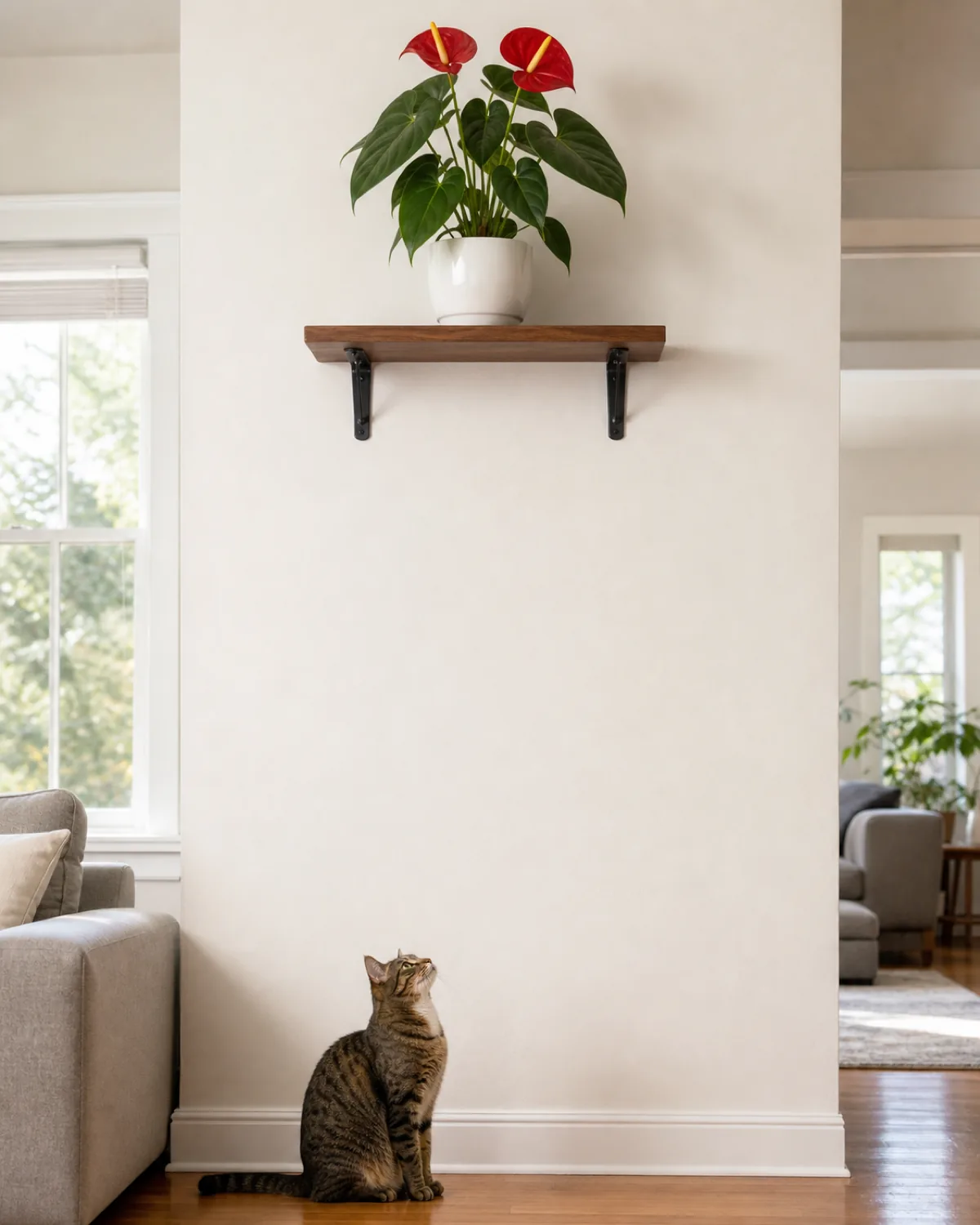
ASPCA classifies anthurium as toxic to both cats and dogs. The reaction is rarely fatal, but it causes significant discomfort that can last several hours. If a pet chews any part of an anthurium, offer water or ice chips to reduce mouth swelling and contact your veterinarian if swelling persists or the animal stops eating.
The same calcium oxalate mechanism exists in peace lilies and all other members of the aroid family (philodendron, monstera, dieffenbachia). Keep anthurium on a high shelf, in a hanging planter, or in a room that pets cannot access.
Varieties worth growing: from the classic red spathe to velvet collectors
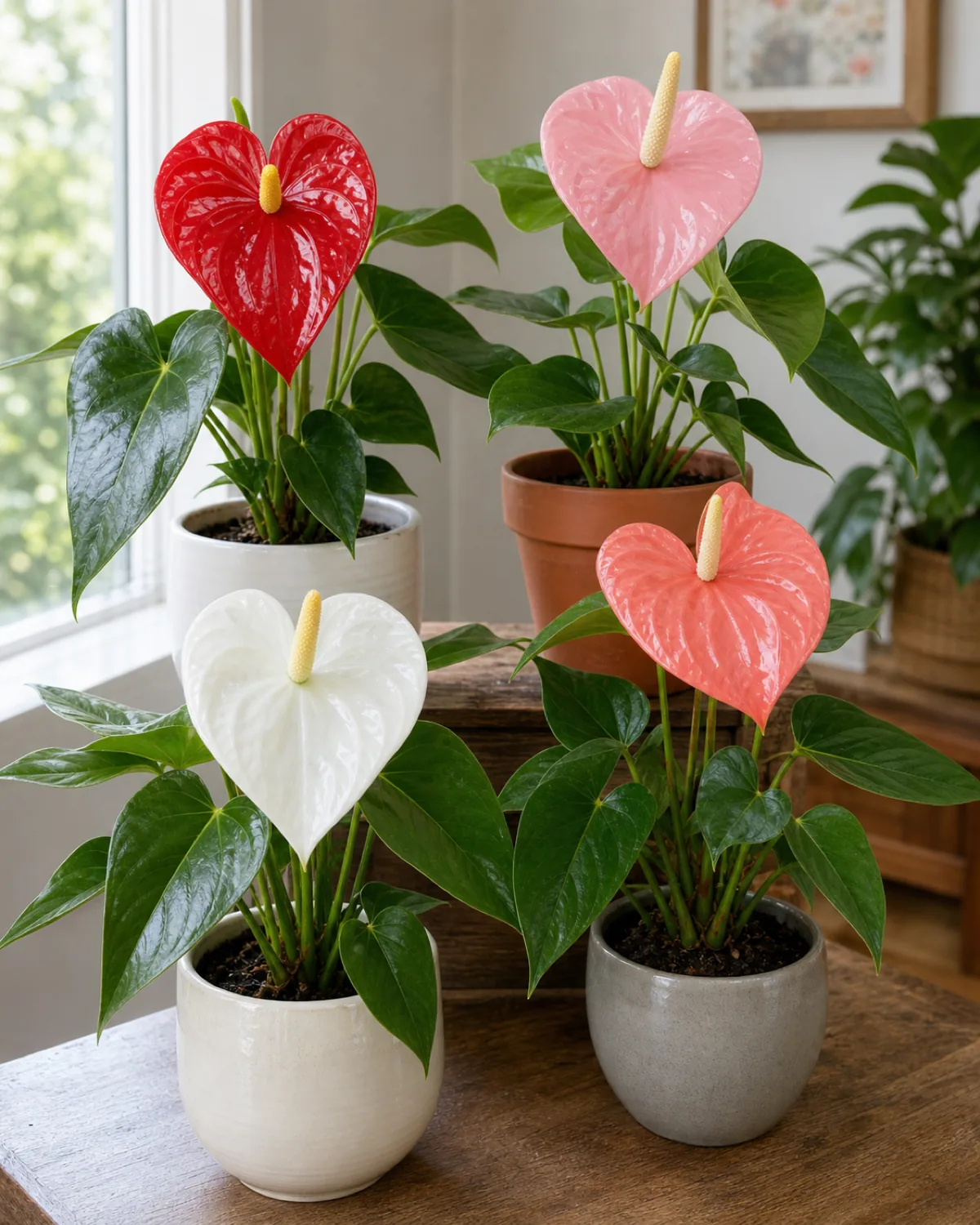
Anthurium andraeanum is the one you see in every garden center. It has the classic glossy red, pink, white, or coral spathe with a yellow spadix. It is the cheapest, most forgiving, and most reliable bloomer. If you are new to anthuriums, start here.
Anthurium clarinervium is grown for foliage, not flowers. It has large, dark green, heart-shaped velvet leaves with striking white veins that look like they were painted on. It needs higher humidity than andraeanum (sixty-five percent or more) and is slower growing, but the leaf texture is unlike anything else in the houseplant world.
Anthurium crystallinum is similar to clarinervium but with larger leaves and silver (rather than white) veins. It is slightly more forgiving on humidity and grows faster, making it a better entry point into velvet-leaved anthuriums.
Anthurium veitchii — the king anthurium — produces enormous corrugated, pendant leaves that can reach three feet long. It is a statement plant that needs space, humidity, and patience, but nothing else in the houseplant world looks quite like it. Collector pricing has come down significantly in recent years as tissue culture has increased supply.
For blooms, stick with andraeanum. For foliage drama, clarinervium or crystallinum. For sheer scale, veitchii. All share the same basic care — bright indirect light, chunky aroid mix, and humidity above fifty percent — with the foliage types leaning harder into humidity.
Like orchids, variety exploration becomes an absorbing collecting hobby once the basic care clicks into place.
Anthurium Care: The Quick Reference
- 1The red thing is a spathe, not a petalA modified leaf bract. Real flowers are the tiny bumps on the yellow spadix.
- 2Bright indirect light = bloomsEast window or filtered south. No direct sun (scorches), no dim corners (no flowers).
- 3Water when top inch is dryEpiphytic roots need air. Soggy soil = root rot. Always use drainage holes.
- 460%+ humidity for best bloomsPebble tray, humidifier, or bathroom spot. Tolerates 45-55% but blooms bigger above 60%.
- 565-80°F, no cold draftsNo chill trigger needed (unlike orchids). Steady warmth is all it takes.
- 6Chunky aroid mix, not regular soil1 part soil + 1 part perlite + 1 part orchid bark. Air pockets mimic tree-branch roots.
- 7Phosphorus triggers bloomingBloom-booster fertilizer (high middle NPK number) every 4-6 weeks, spring to fall.
- 8No blooms? More light, less nitrogenMove closer to window. Switch fertilizer. Do not repot a rootbound bloomer.
- 9Cut spent spathes, never pullClean cut at base with sharp scissors. Aerial roots are normal — leave them.
- 10Divide when repottingEach section with roots and 2+ leaves becomes a new blooming plant immediately.
- 11Bacterial blight is anthurium-specificWater-soaked dark spots that spread fast. Isolate, remove leaves, keep foliage dry.
- 12Toxic to cats and dogsCalcium oxalate crystals cause mouth pain. Keep on high shelves or in pet-free rooms.
- 13Start with andraeanumCheapest, most forgiving, blooms the most. Velvet types (clarinervium, crystallinum) for foliage drama.
kultivy.com

Mara Quinn edits Kultivy, where she shares houseplant care, propagation, beginner-friendly plant picks, and plant-styling ideas for anyone who wants their indoor plants to actually thrive. Every guide is image-led and reviewed for clarity, usefulness, image accuracy, and Pinterest-to-page alignment before it goes live. Visit the About page.