A jade plant is the houseplant most likely to outlive you. Specimens over a hundred years old get passed down through families, their trunks thickening into miniature trees.
Jade care runs opposite to most houseplants on this site. It wants direct sun, complete dry-out between waterings, and a decade of patience to grow that thick trunk.
Jade plants are among the longest-lived houseplants — and the easiest to keep alive once you understand that they want the opposite of most tropicals. The thirteen sections below cover succulent basics, the wrinkle test, trunk development, pruning, propagation, and everything else that turns a cutting into a tree.
Why jade plants outlive every other houseplant you own
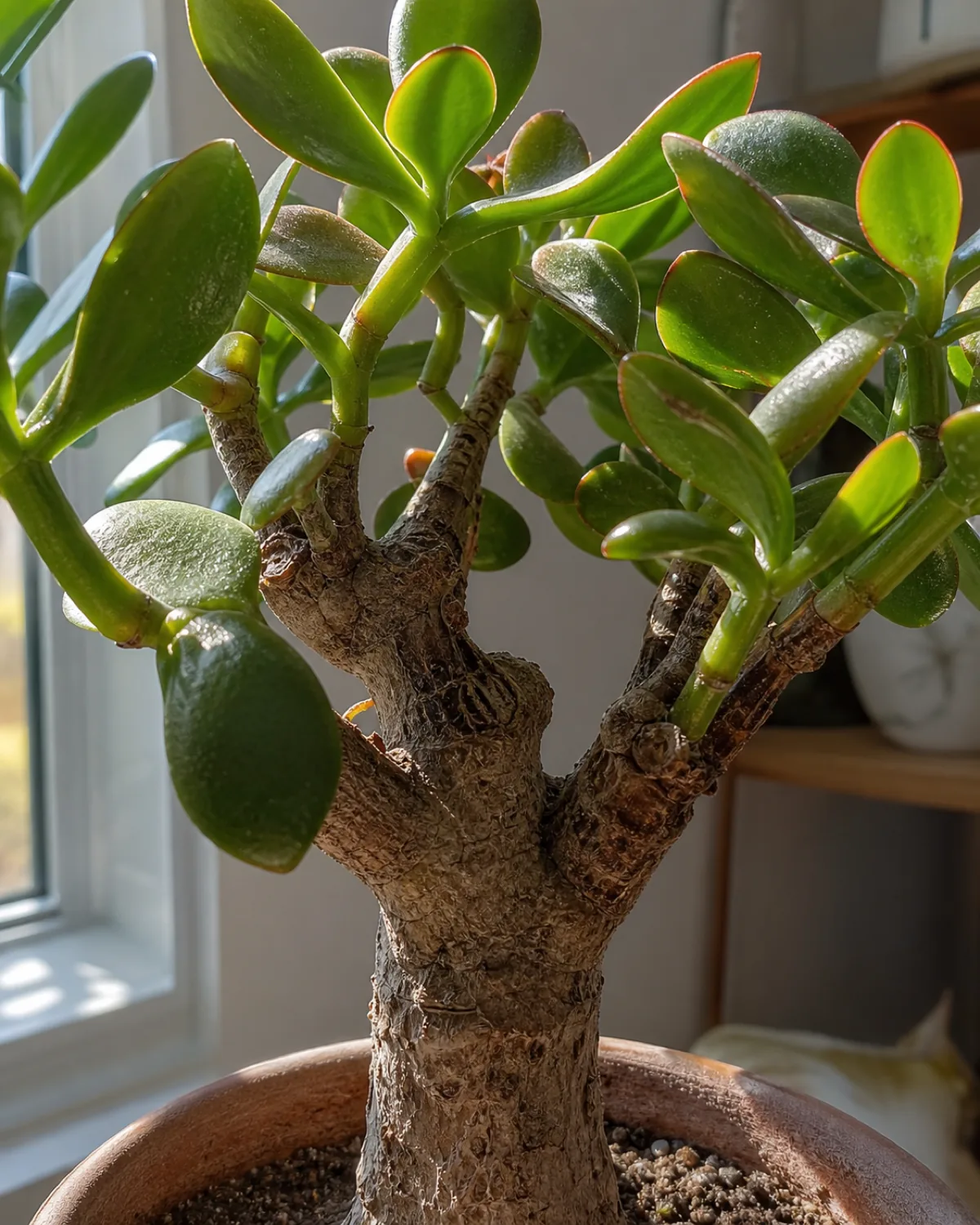
Crassula ovata is a pachycaul succulent from South Africa's rocky Eastern Cape. It stores water in both its thick, fleshy oval leaves and its gradually lignifying trunk, a dual-reservoir system that lets it survive drought that would kill any tropical houseplant.
That storage capacity is why jade plants live so long. Documented specimens over a hundred years old have been passed through three or four generations of the same family, their trunks thickening into gnarly miniature trees without any bonsai technique.
The feng shui association with prosperity earned it the money plant nickname, but the real draw is watching a two-inch cutting develop into a thick-trunked specimen over a decade.
Every care decision below flows from one fact: this is a succulent, not a tropical. It wants more sun, less water, and faster drainage than almost anything else on this site.
Light: one of the few houseplants that actually wants direct sun
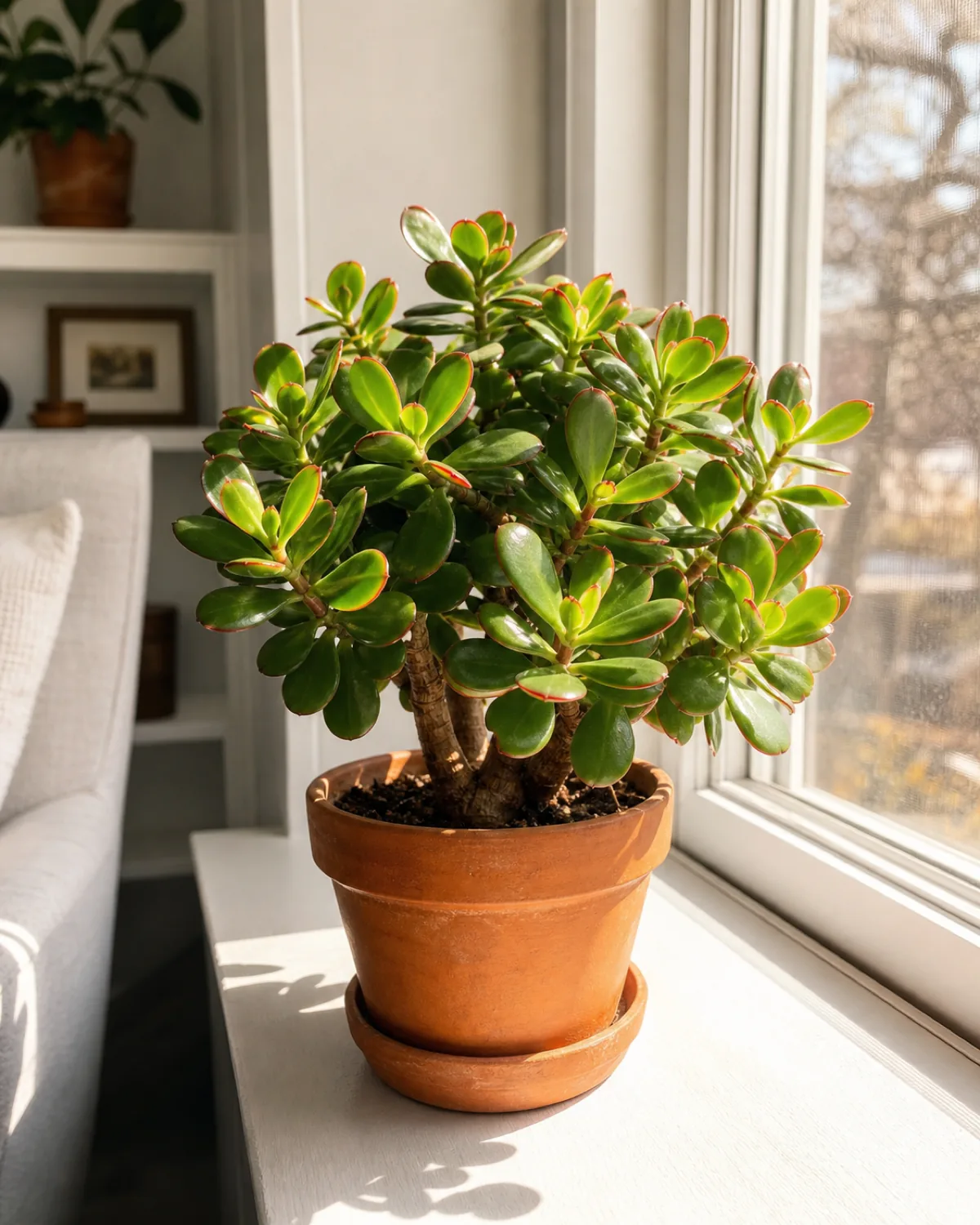
Jade plants need four to six hours of direct sunlight daily. A south-facing or west-facing window is ideal. Unlike most houseplants that burn in direct afternoon sun, jade actively thrives in it.
The leaf edges develop a beautiful red-bronze tinge called sun stress coloring. This is a sign of health, not damage. The red pigmentation (anthocyanins) protects the leaf cells from UV, and many growers consider the blush the most attractive feature of a well-grown jade.
Insufficient light produces leggy, stretched stems with wide gaps between leaf pairs. The leaves thin out and droop under their own weight because the plant is reaching for a light source that isn't strong enough. This etiolation is the single most common jade problem in apartments with north-facing windows.
A jade that has been sitting in low light needs gradual acclimation before moving to direct sun. Increase exposure by an hour each day over two to three weeks to avoid sunburn on leaves that haven't built up their UV protection.
For more on reading light signals across species, that guide covers the window-direction cheat sheet and the shadow test.
How to water a jade plant (the wrinkle test)
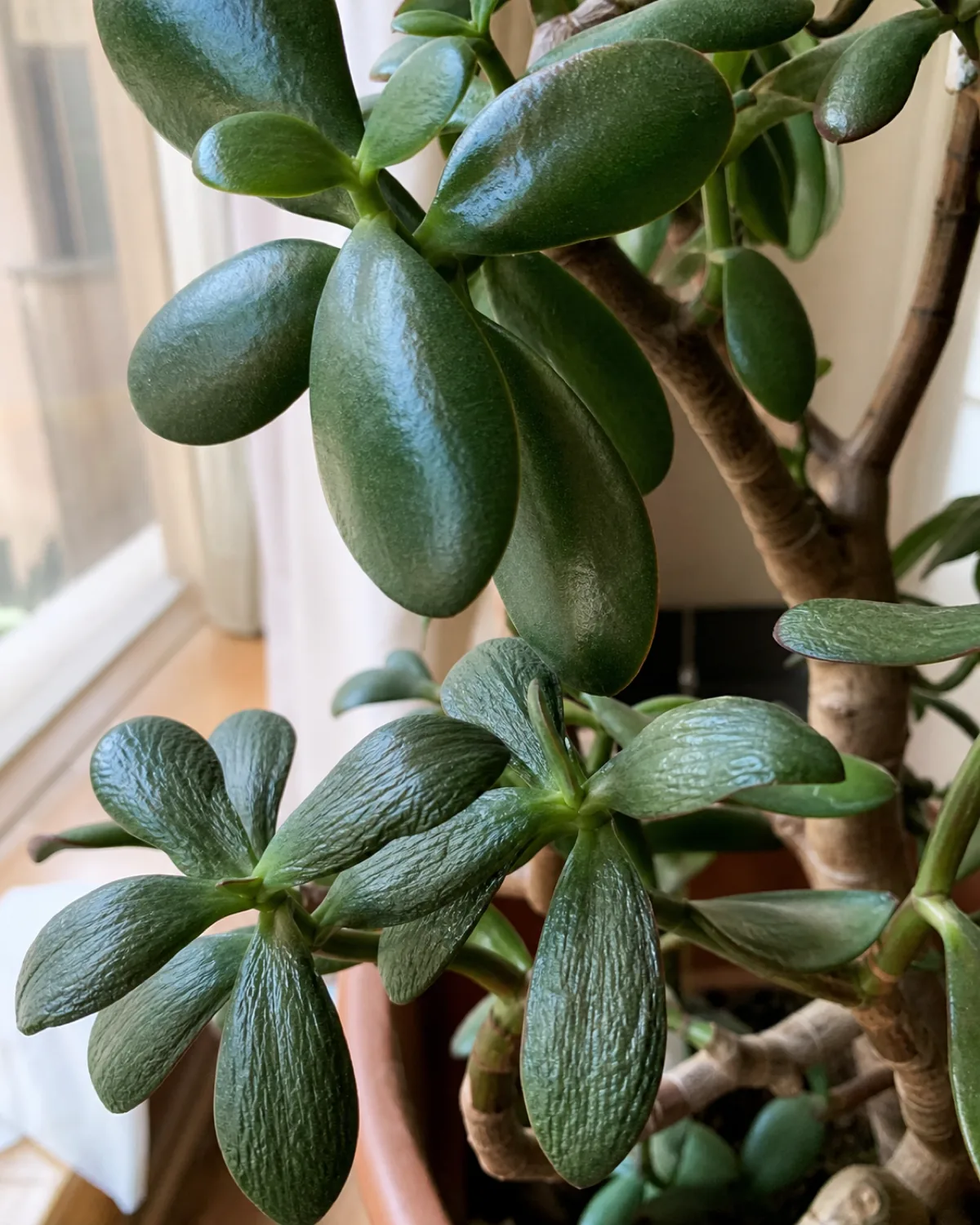
Forget every watering schedule. Jade leaves are the gauge.
Plump, firm, and glossy means fully hydrated. Slightly soft and starting to show fine surface wrinkles means time to water. Flat and deeply wrinkled means overdue. This wrinkle test is unique to succulents with thick fleshy leaves. Tropical houseplants droop when thirsty, but jade wrinkles.
Water thoroughly until it drains from the bottom, then let the soil dry completely. Not just the top inch. All the way through the pot. In summer this might mean every two to three weeks. In winter, every four to six weeks. The interval depends entirely on pot size, soil mix, light, and humidity.
The number one killer of jade plants is overwatering. Translucent, mushy, yellowish leaves that fall off at a touch mean the cells have burst from excess water and root rot has already started. A jade that looks slightly thirsty is always safer than one sitting in damp soil.
For the broader watering framework across species, that guide covers the finger test, pot weight, and drainage principles. Jade is the extreme case of the soak-and-dry method.
Jade plants are genuinely low-maintenance — but only if your space and habits match what they need.
Soil and pot: fast drainage is non-negotiable
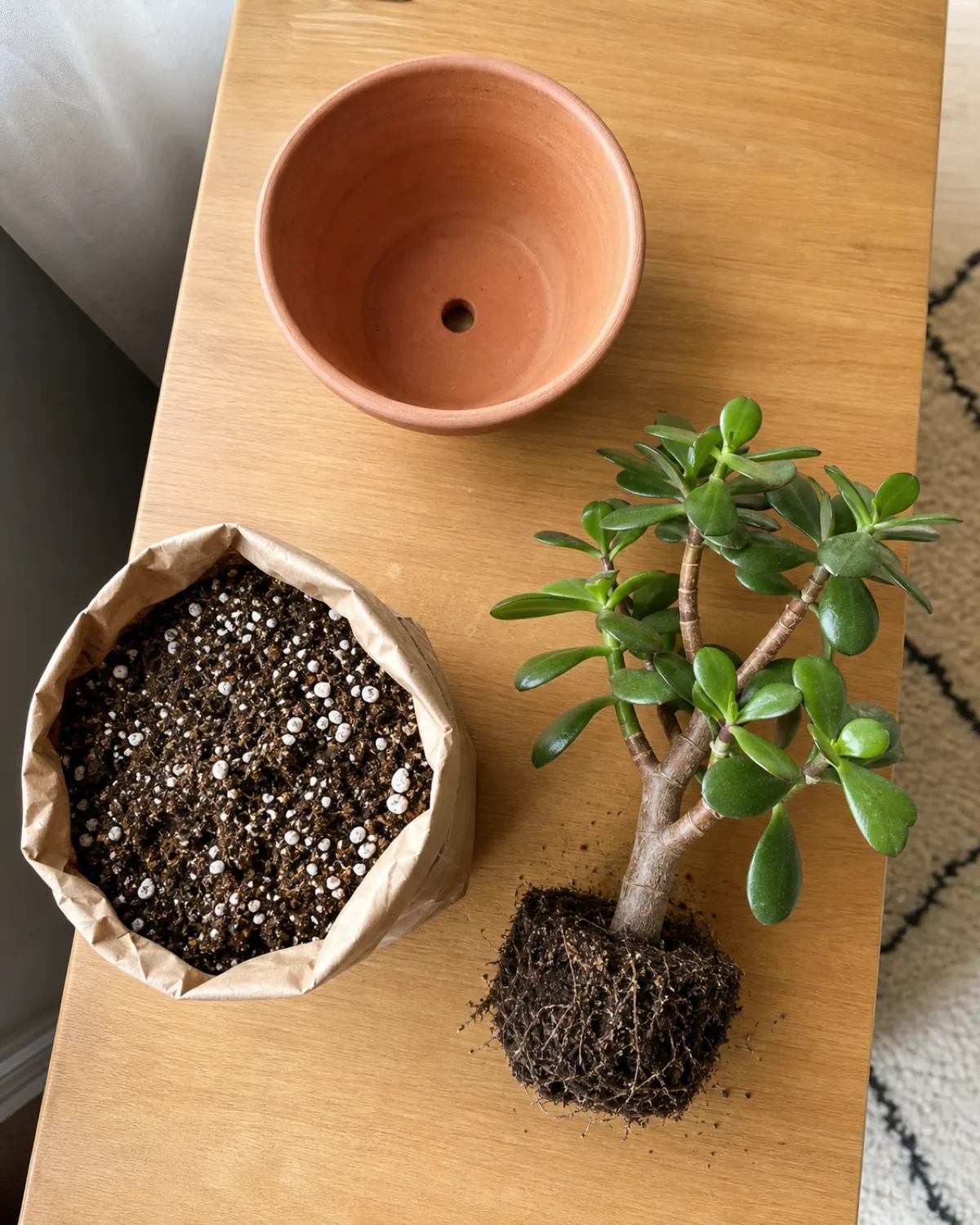
Use a cactus and succulent mix, or add fifty percent perlite to regular potting soil. The goal is a mix that drains in seconds and dries within a few days. Standard potting soil holds moisture too long for succulent roots and invites rot.
The pot must have drainage holes. No exceptions. Terracotta is ideal because the porous clay wicks moisture away from the root zone, drying the soil faster than plastic or glazed ceramic.
A jade in a terracotta pot with drainage holes is almost impossible to overwater if you follow the wrinkle test.
Jade plants have surprisingly shallow root systems relative to their heavy top canopy. Use a wide, heavy pot that won't tip over as the plant grows tall and top-heavy. A slightly rootbound jade actually grows better than one swimming in excess soil, so resist the urge to overpot. Moving up one pot size every three to four years is enough.
How to grow a thick trunk
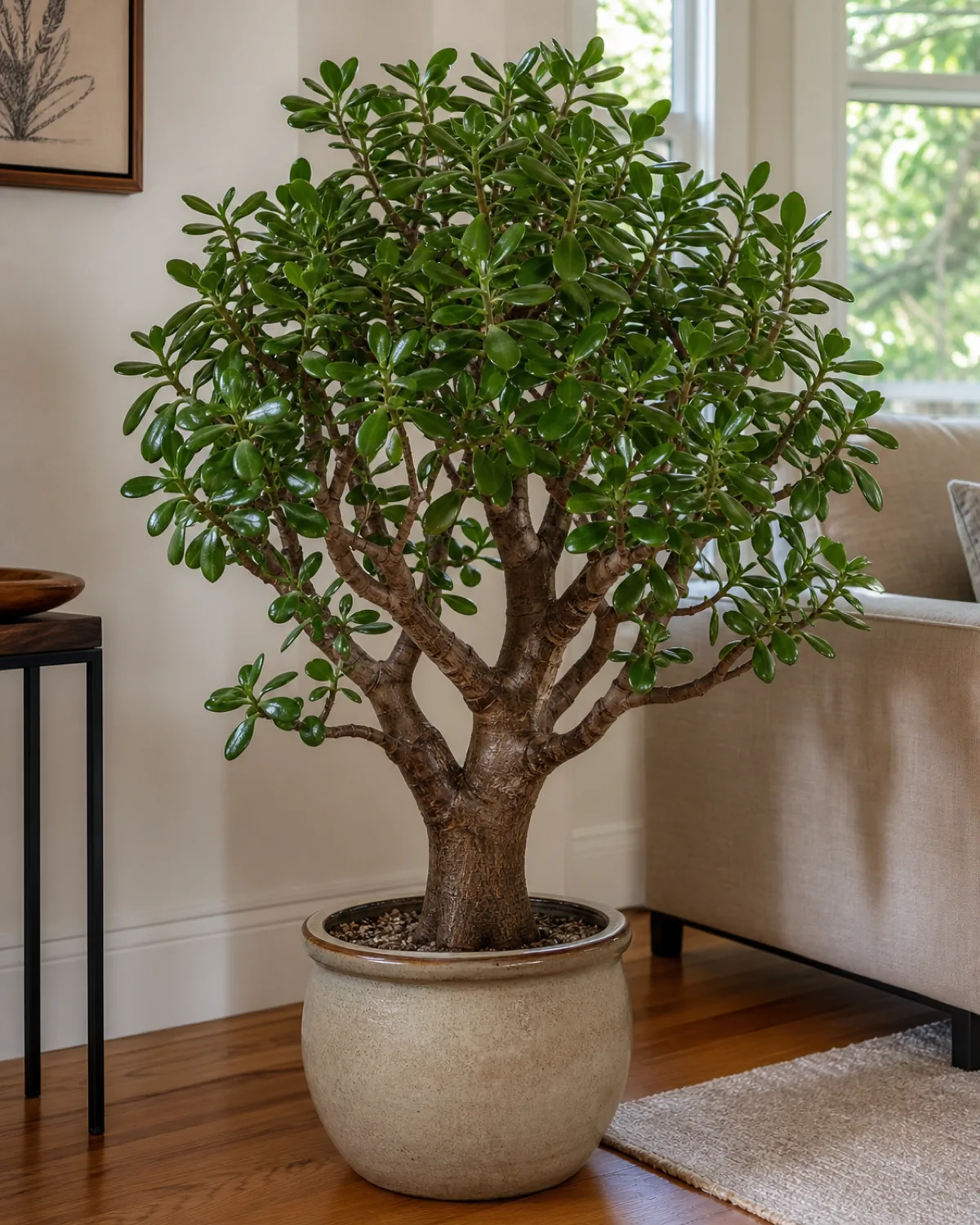
The thick trunk is the entire point of growing a jade plant, and there is no shortcut. A pencil-thick stem takes three to five years to become finger-thick. A truly tree-like specimen with a gnarly, bark-textured trunk takes ten years or more. That patience is the appeal.
Three factors drive trunk thickening. First, direct sunlight. Strong light triggers lignification, the process that converts green stem tissue into woody bark. A jade in a dim corner stays green and thin no matter how old it gets.
Second, strategic pruning. Cutting back leggy branches forces the plant to redirect energy into existing stems rather than producing new growth. The remaining stems thicken to support the canopy above the cut point.
Third, controlled drought stress. Letting the plant cycle between full hydration and mild wrinkle-stage drought signals it to store more water capacity in the trunk. The trunk literally thickens to hold more reserves. Consistent dampness, by contrast, tells the plant it never needs to store anything.
Jade bonsai shaping: selective cuts for trunk taper and canopy density
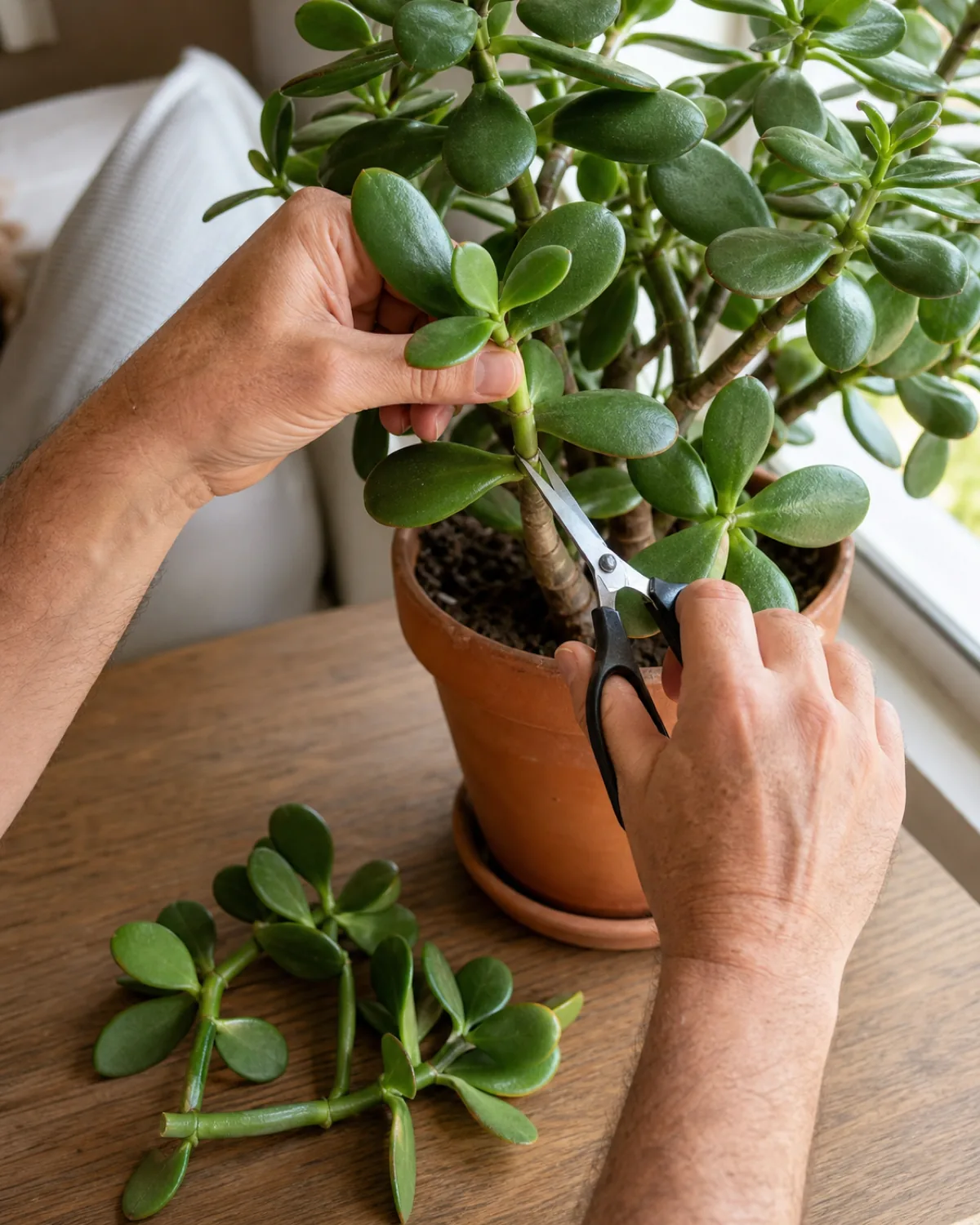
Jade pruning serves a different purpose than pruning a rubber plant or fiddle leaf fig. It is about creating trunk taper, a thick base that narrows upward like a natural tree, and a proportioned canopy with dense foliage.
Prune in spring or early summer during active growth. Cut just above a leaf node, the junction where a leaf pair attaches to the stem, using clean sharp scissors. Each cut point branches into two new stems, creating the bushy density that makes a jade look tree-like.
Remove any upward-shooting leader branch that is thicker than the trunk section below it. If a single branch outgrows the trunk, the plant loses the tapered silhouette and starts looking lanky. Keeping the canopy proportional to the trunk is the key aesthetic decision.
The calloused cut sites become part of the bark texture over time, adding to the aged appearance. No wound sealer is needed. Save all pruned stems for propagation.
You can remove up to one-third of the plant's foliage in a single pruning session without stressing it.
Propagation from leaves and cuttings
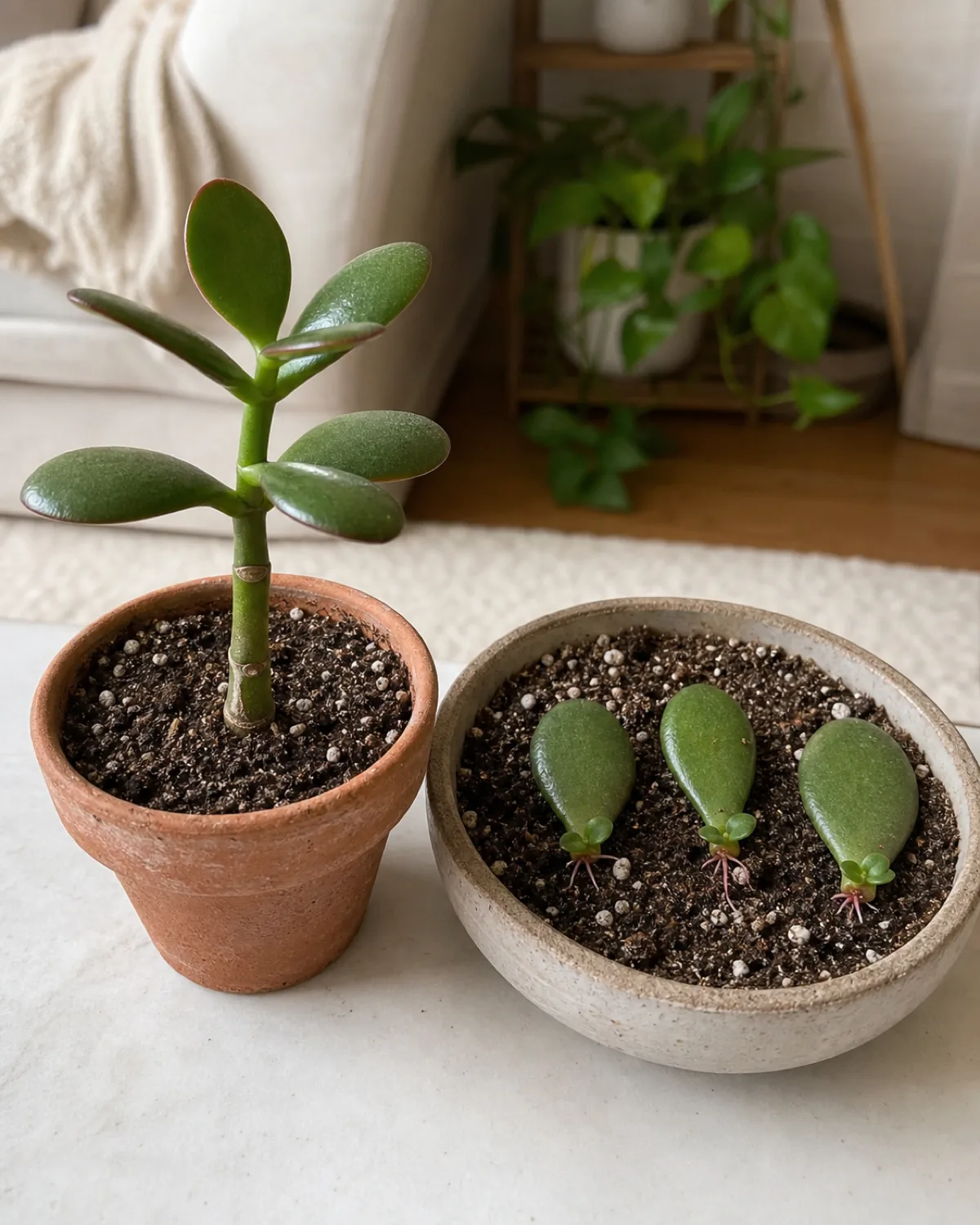
Jade propagation is one of the most satisfying projects in houseplant keeping because you can grow an entirely new plant from a single leaf.
For stem cuttings, cut a three- to four-inch section, then let the cut end callous for three to five days in open air until the wound surface is dry and sealed. Plant the calloused end in completely dry succulent mix. Do not water for two to three weeks, until roots have formed. Watering before the callous heals invites rot.
For leaf propagation, twist a healthy leaf cleanly off the stem. Do not cut it. A clean twist leaves the leaf base intact, which is where the new roots and rosette will sprout. Let the leaf callous for two to three days, then lay it flat on top of dry soil. A tiny rosette appears at the base within four to eight weeks.
The key difference from tropical plant propagation: no water propagation. Succulent cuttings rot in water. The callous-first-then-plant-in-dry-soil rule is non-negotiable.
For the broader propagation framework across methods, that guide covers stem cuttings, division, and other techniques. Jade's callous-and-dry approach is unique among the methods covered there.
Temperature and seasonal care
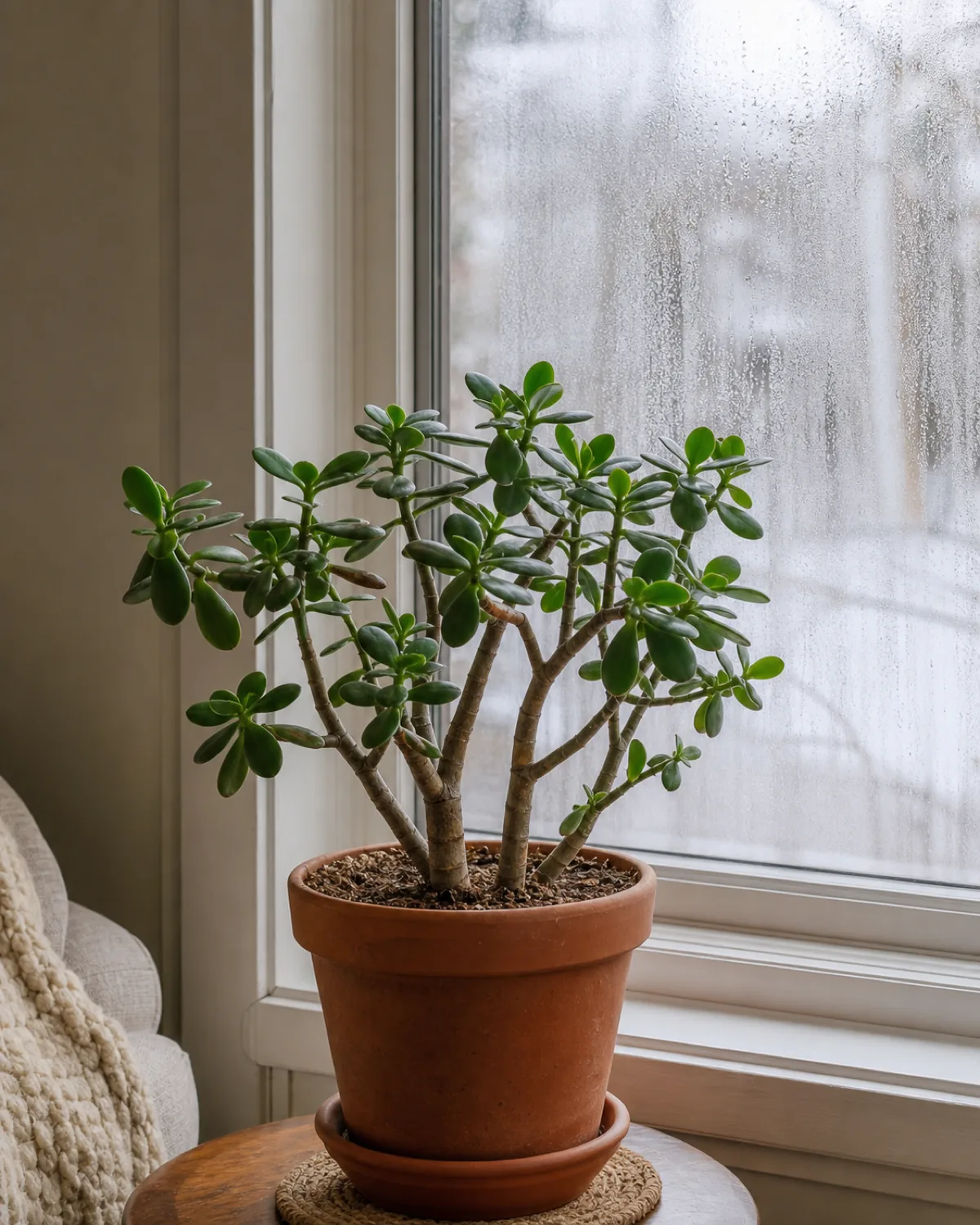
Jade tolerates normal indoor temperatures of sixty-five to seventy-five degrees during the growing season. It is not picky about humidity, thriving in the dry indoor air that kills calatheas and ferns.
The seasonal rhythm matters more than most people realize. Spring through summer is active growth: more frequent watering, monthly fertilizer, the strongest light you can give it. Fall is a transition: reduce watering and stop fertilizing. Winter is semi-dormancy: minimal water, no fertilizer, and ideally a cool spot near a window where nighttime temperatures drop to fifty to fifty-five degrees.
That cool winter rest is not just a nice-to-have. It is the trigger for blooming, and it also gives the plant a natural rest period that produces stronger growth the following spring. A jade grown in constant seventy-degree warmth year-round will survive, but it will never bloom and its growth cycles will be less defined.
Jade is not frost-hardy. Below forty degrees causes tissue damage that shows as dark, water-soaked patches on the leaves.
Fertilizing: less is genuinely more
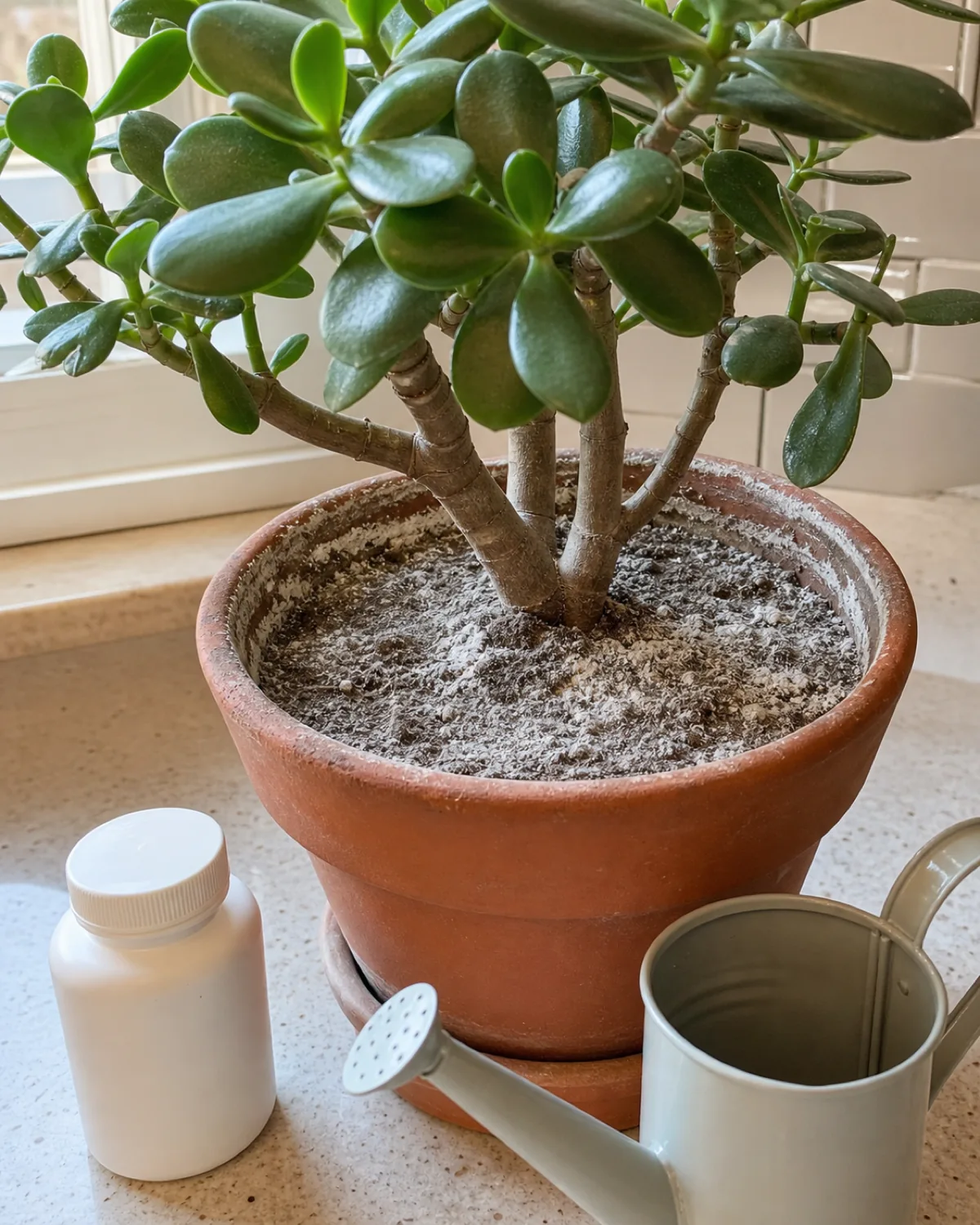
Feed once a month during spring and summer only, using a balanced liquid fertilizer at half the recommended strength. Stop completely in fall and winter.
Over-fertilizing causes salt buildup in the soil, visible as a white chalky crust on the surface. Those salts burn jade's shallow root system, and the damage often looks like underwatering because the burned roots can no longer absorb water efficiently. If you see white crust, flush the soil by running plain water through the pot for several minutes until it drains clear.
Many experienced jade growers never fertilize at all. Their plants thrive for decades on the nutrients in fresh potting mix, refreshed every few years during repotting. This is one plant where deliberate neglect genuinely produces better results than attentive feeding.
Getting a jade plant to bloom
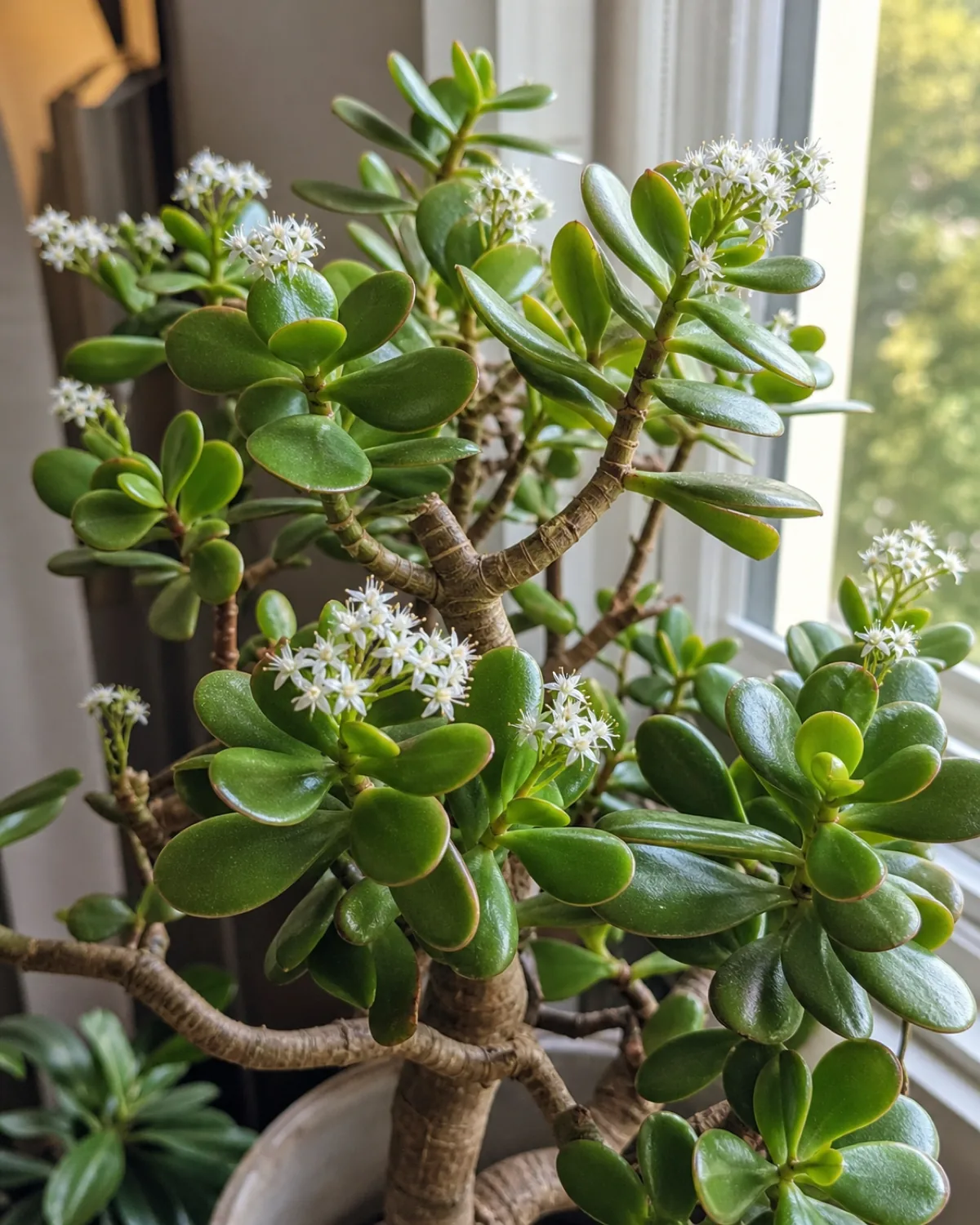
Most indoor jade plants never bloom. Not because they can't, but because they never receive the trigger.
Blooming requires four to six weeks of cool nights between fifty and fifty-five degrees, combined with long dark periods of twelve to fourteen hours of complete darkness each night, during fall. The plant must be mature, at least three to five years old, and growing in strong direct light during the rest of the year.
The reward is clusters of tiny, star-shaped white or pink flowers at the branch tips. They are surprisingly fragrant, with a light sweet scent that fills a room. Each flower cluster lasts several weeks.
Blooming is a bonus, not a health indicator. A jade that never blooms but grows well, develops a thick trunk, and produces firm glossy leaves is a perfectly healthy plant. Chasing blooms at the expense of the plant's basic care needs is not worth it.
Jade leaf diagnostics: reading the specific signals succulents give
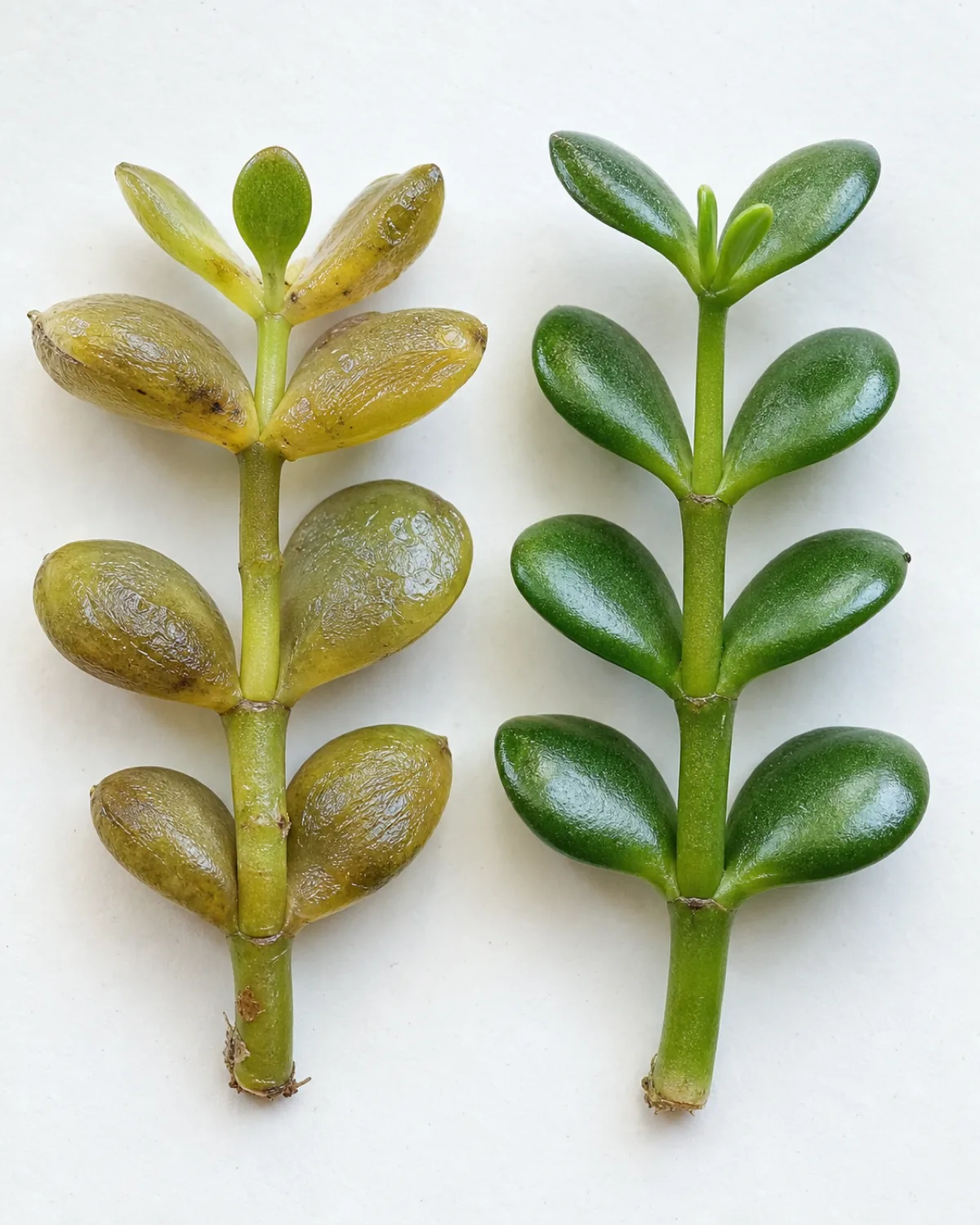
Jade communicates through its leaves differently than tropical houseplants. Learning to read these signals is the core skill of jade care.
- Translucent, jelly-like leaves falling at a touch: overwatering rot. The leaf cells have burst from excess water absorption. Unpot immediately, trim any brown mushy roots, let the root ball dry for two to three days, repot in completely dry mix, and do not water for a week.
- Deeply wrinkled, shrunken leaves that feel firm, not soft: severe underwatering. Fully recoverable with a single deep soak. New plumpness returns within a day or two.
- Leaves dropping suddenly, still green and firm: temperature shock or a cold draft below forty degrees. Check for proximity to an air conditioning vent or a drafty window.
- Stretched, pale growth with wide gaps between leaf pairs: etiolation from insufficient direct sun. The number one jade problem in north-facing apartments. Move to a brighter window gradually.
- White cottony tufts in leaf axils: mealybugs, the primary jade pest. Dab each visible bug with isopropyl alcohol on a cotton swab. Repeat weekly until clear.
Is my jade plant dead or just stressed
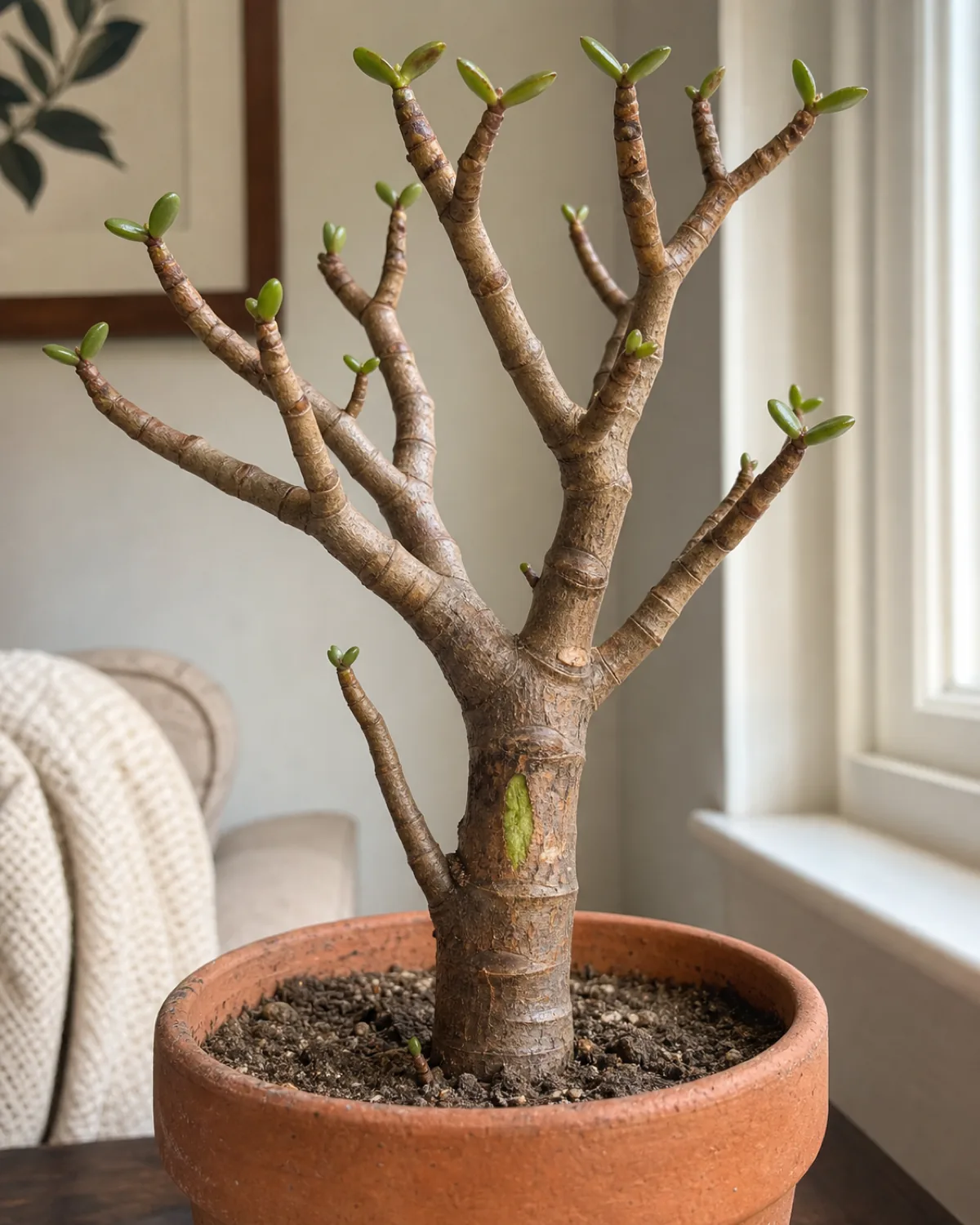
Jade plants are extremely difficult to kill completely. Even a plant that has dropped every leaf can recover if the trunk is still firm.
The scratch test tells you everything. Gently scratch a small area of bark with your fingernail. If you see bright green tissue underneath, the plant is alive and will regrow.
Root rot rescue: trim all mushy, brown roots with clean scissors. Let the bare root ball air-dry for three to five days in a shaded spot. Repot in completely dry succulent mix. Wait another full week before the first watering. This sounds extreme, but jade's internal water reserves sustain it through the dry-out phase.
A desiccated jade with wrinkled everything and a slightly soft trunk can usually be rescued with a single deep watering and patience. New leaf buds appear at the branch tips within two to four weeks. The plant is drawing on whatever moisture remains in its trunk to push new growth.
The only truly dead jade is one where the trunk is soft, black, and shows no green tissue when scratched.
Jade plant toxicity and pet safety
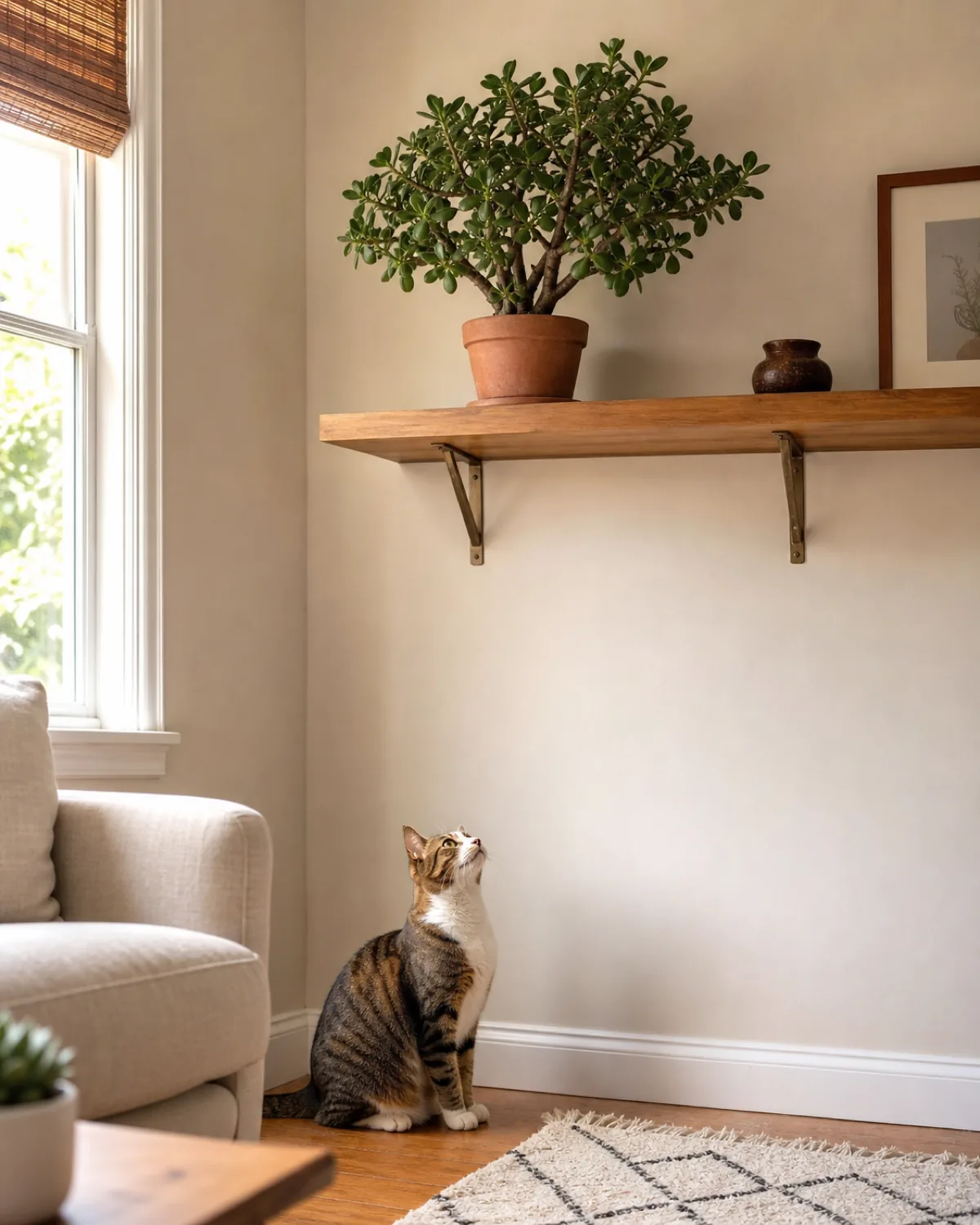
Crassula ovata is toxic to both cats and dogs. The ASPCA confirms that ingestion causes vomiting, lethargy, and incoordination. The thick, shiny leaves can attract curious cats who like to chew on things.
Keep jade plants on high shelves, tall plant stands, or in rooms that pets do not access. The plant's weight increases substantially as it matures, so make sure the shelf or stand is sturdy enough to support a heavy terracotta pot.
If a pet chews a jade leaf, contact your veterinarian. Jade toxicity is rarely fatal but causes significant gastrointestinal distress that warrants professional guidance.
For pet-safe alternatives with a similar thick-leaved succulent appeal, consider Haworthia (non-toxic, compact rosettes that thrive in the same bright conditions) or Echeveria (non-toxic, rosette form, similar drought tolerance). Neither develops a woody trunk, but both scratch the succulent itch without the pet risk.
For a full overview of easy-to-keep houseplants, that guide covers options across toxicity levels and light requirements.
Jade Plant Care: The Quick Reference
- 1Succulent tree, not a tropicalStores water in fleshy leaves and lignifying trunk — care runs opposite to most houseplants.
- 2Direct sun, 4-6 hours dailyRed-bronze leaf edges = healthy sun stress. Etiolation = not enough light.
- 3Water when leaves wrinklePlump = hydrated. Wrinkled = thirsty. Mushy = overwatered. Let soil dry completely.
- 4Fast-draining soil, terracotta potCactus mix or 50% perlite. Drainage holes mandatory. Slightly rootbound is fine.
- 5Trunk thickens with sun, pruning, droughtNo shortcut — 3-5 years for finger-thick, 10+ for tree-like.
- 6Prune above nodes for branchingEach cut branches into two. Remove leaders thicker than the trunk below.
- 7Propagate from leaves or cuttingsCallous first, plant in dry soil, no water for 2-3 weeks. Never water-propagate.
- 8Cool winter rest, 50-55°FTriggers blooming and produces stronger spring growth.
- 9Fertilize monthly in summer onlyHalf-strength, or not at all. Salt crust = flush the soil.
- 10Blooming needs cool + dark trigger4-6 weeks of cool nights + 12-14 hours darkness. Mature plants only.
- 11Read the leaves for diagnosticsTranslucent = overwatered. Wrinkled = underwatered. Stretched = insufficient light.
- 12Scratch test: green = aliveEven a bare trunk with no leaves can regrow if the tissue is green.
- 13Toxic to cats and dogsKeep elevated. Pet-safe alternatives: Haworthia, Echeveria.
kultivy.com

Mara Quinn edits Kultivy, where she shares houseplant care, propagation, beginner-friendly plant picks, and plant-styling ideas for anyone who wants their indoor plants to actually thrive. Every guide is image-led and reviewed for clarity, usefulness, image accuracy, and Pinterest-to-page alignment before it goes live. Visit the About page.