A prayer plant folds its leaves every night and opens them every morning. It is one of the few houseplants that visibly moves, and the mechanism behind it is more sophisticated than most people realize.
Maranta leuconeura comes from the Brazilian rainforest floor. It is built for shade, humidity, and steady warmth. Get those three things roughly right and the herringbone-veined leaves keep folding like clockwork.
Prayer plants fold their leaves at night and open them at dawn. The thirteen sections below cover the biology behind that movement, the humidity and watering that keep the patterns vivid, propagation by division, and how Maranta compares to its fussier cousin calathea.
What makes a prayer plant different from every other houseplant
Maranta leuconeura is a low-growing, spreading tropical from the Brazilian Atlantic Forest floor. Its defining feature is nyctinastic leaf movement. Every evening the leaves fold upward like hands pressed together in prayer. Every morning they unfold flat again.
This is not random. Each leaf has a pulvinus, a swollen joint at the base of the petiole that acts as a biological hinge. Specialized motor cells in the pulvinus fill and empty water through rapid turgor pressure changes, raising and lowering the leaf on a roughly twenty-four-hour cycle.
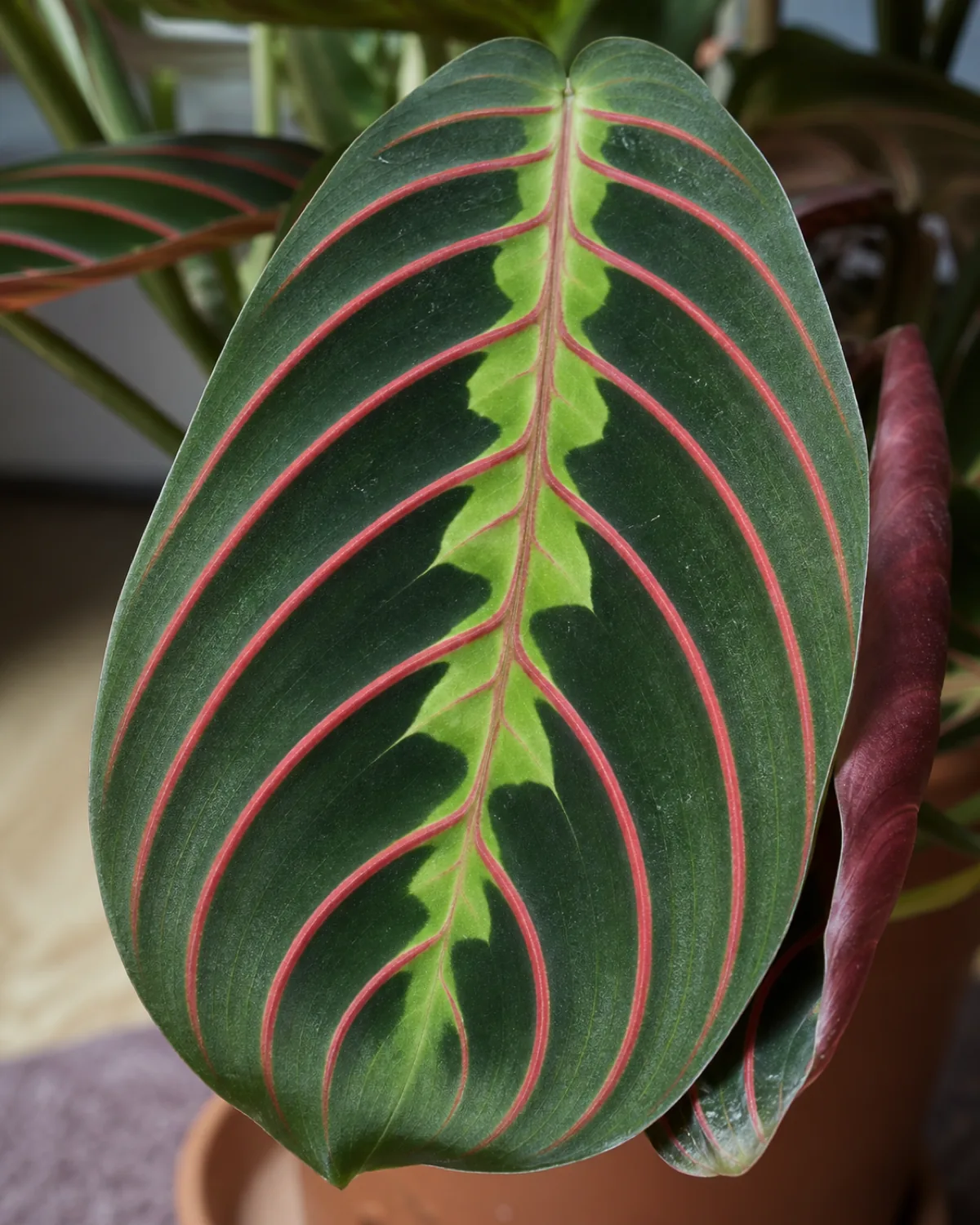
The leaf tops display intricate herringbone vein patterns in shades of green with dark blotches along the midrib, while the undersides are deep reddish-purple. When the leaves fold up at night, you see an entirely different plant.
Maranta belongs to the Marantaceae family alongside calathea, but it is widely considered the more forgiving cousin. It tolerates more mistakes, bounces back faster, and grows low and trailing rather than upright.
The varieties worth knowing before you buy
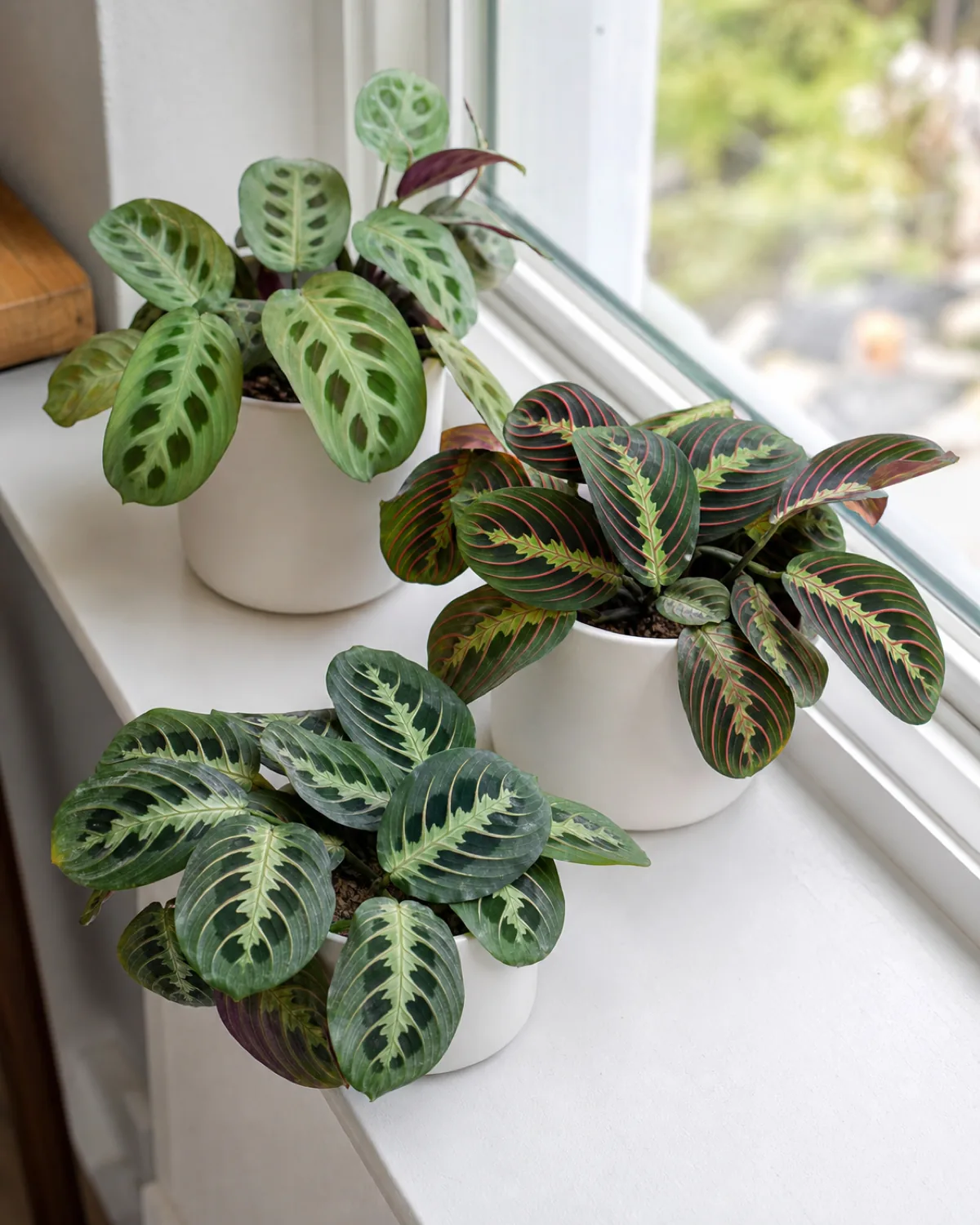
Maranta leuconeura var. kerchoveana is the rabbit's foot plant. Light green leaves with rows of dark brown-green blotches that fade to green as the leaf matures. The most common variety and the easiest to find at garden centers.
Maranta leuconeura var. erythroneura is the red prayer plant, also called the herringbone plant. Dark green leaves with bright red veins radiating from a lime-green central stripe. This is the showstopper that dominates Pinterest boards and is the variety most people picture when they hear prayer plant.
Maranta leuconeura var. leuconeura is the black prayer plant. Dark blue-green leaves with silver markings along the central vein. Less common in shops but striking in person.
All varieties share the same folding behavior and the same care requirements. Choose by pattern, not by difficulty.
Light: a true low-light survivor from the forest floor
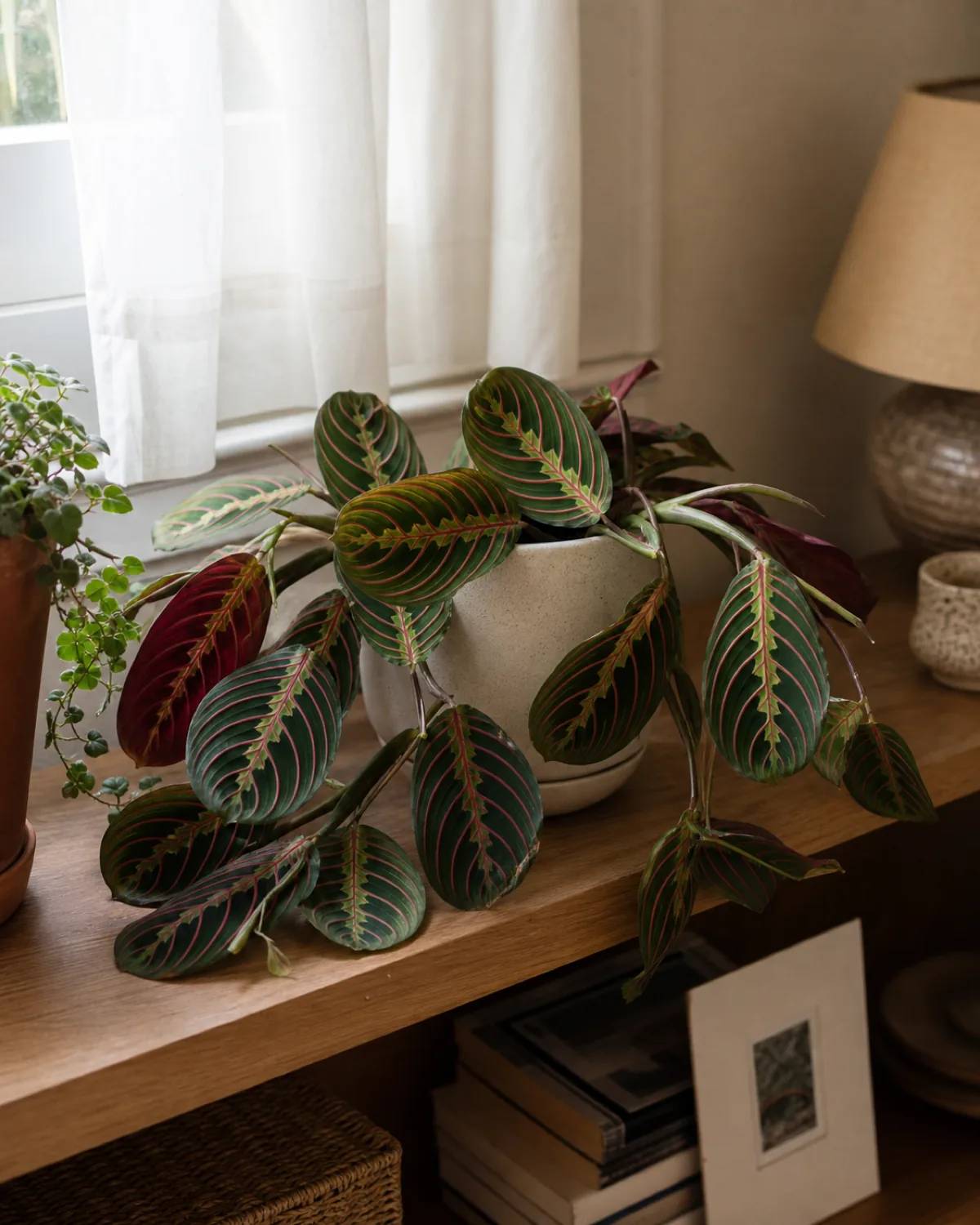
In the wild, Maranta grows beneath the dense canopy of the Brazilian Atlantic Forest. It receives only dappled, filtered light through multiple layers of tree cover.
Indoors, it thrives in bright indirect light but genuinely tolerates low light better than almost any other patterned plant. North-facing windows and interior rooms with no direct sun are fine. An east-facing window with gentle morning sun is ideal.
Direct sunlight is the enemy. It fades the vivid leaf patterns, bleaching the dark greens and muting the red veins. It also scorches the thin leaves, producing brown crispy patches.
The leaves themselves signal light quality. Vivid, high-contrast patterns with saturated colors mean the plant is happy. Faded, washed-out, or bleached-looking leaves mean too much light.
For a deeper look at reading light signals across species, that guide covers the window-direction cheat sheet and the shadow test for measuring light intensity without a meter.
Watering: keep it evenly moist, never soggy
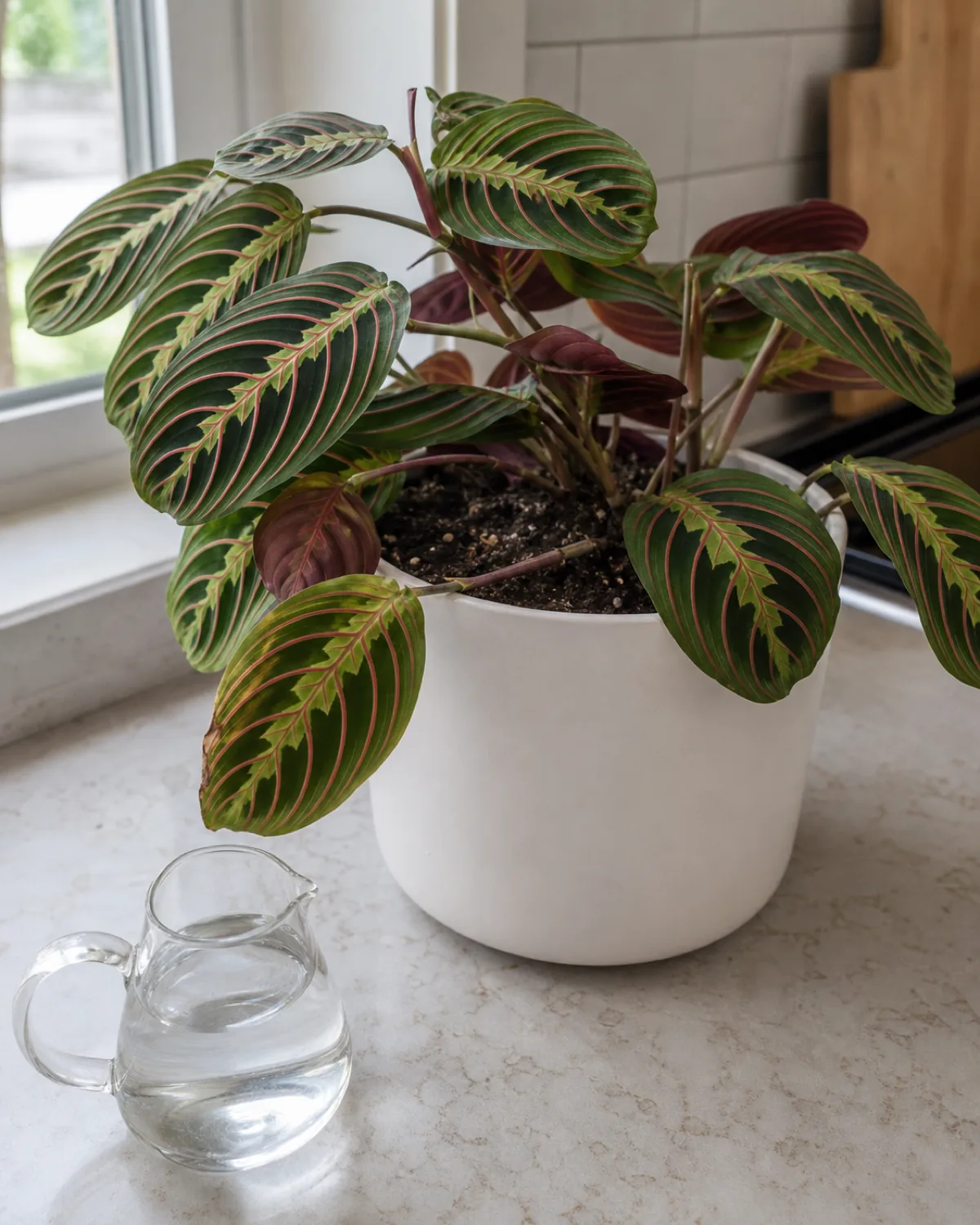
Prayer plants want consistently moist soil. Think of a wrung-out sponge: damp throughout but not dripping. This is different from succulents or snake plants that want to dry out completely between waterings.
Water when the top inch of soil feels dry to the touch. Do not wait until the pot is bone dry. Maranta will protest with curling, crispy leaf edges if the soil dries out too much.
Use room-temperature water, and ideally filtered or distilled. Maranta is sensitive to chlorine and fluoride in tap water. Brown leaf tips are often the giveaway that tap water chemicals are accumulating in the soil.
The leaves will curl inward during the day when the plant is thirsty. This is a stress signal, not the normal nighttime fold. Evening folding lifts the leaves vertically in a slow, deliberate motion. Daytime curling rolls the edges inward, making the leaf look like a tube.
For the broader watering framework across species, that guide covers the finger test, pot weight method, and drainage principles. Prayer plants are the opposite end of the spectrum from drought-tolerant succulents.
Prayer plants are forgiving and adaptable — but they do have preferences worth matching to your space.
Humidity: the one thing prayer plants genuinely need
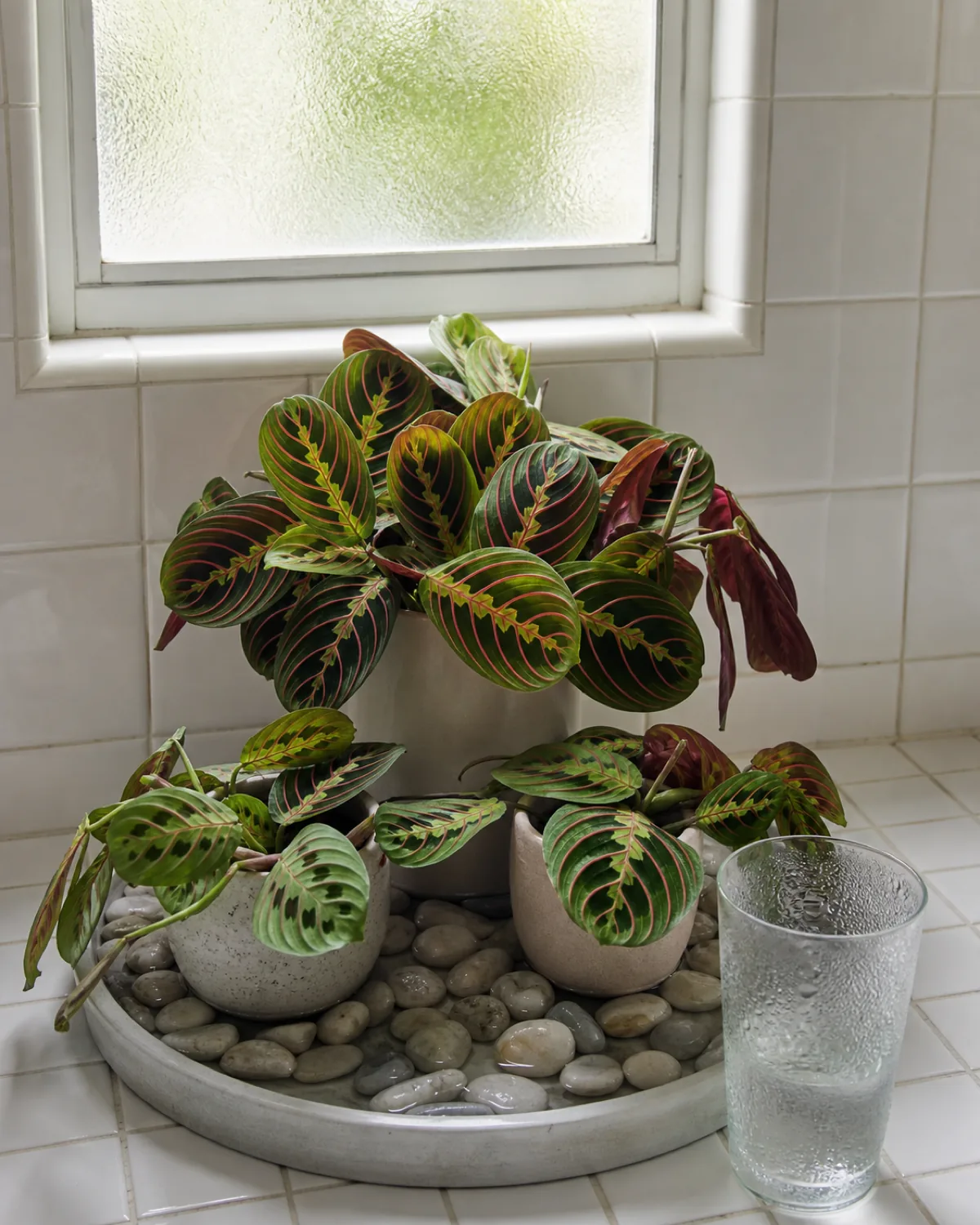
Maranta wants fifty to sixty percent humidity or higher. In most homes during winter, indoor humidity drops to thirty to forty percent, and that is when prayer plants start showing brown, crispy leaf edges.
Solutions ranked by effectiveness: group plants together on a pebble tray with water (evaporation from the tray creates a micro-humid zone around the foliage), run a small humidifier nearby, mist daily (temporary but helps between more permanent solutions), or place the plant in a naturally humid room like a bathroom or kitchen.
The difference from calathea matters here. Calathea demands sixty percent humidity and shows crispy edges at anything below it. Maranta tolerates moderate humidity. It just looks its best above fifty percent. If only the very tips of older leaves are brown and new growth looks fine, the humidity is adequate and the browning is cosmetic, not critical.
Soil and repotting: wide and shallow, not deep
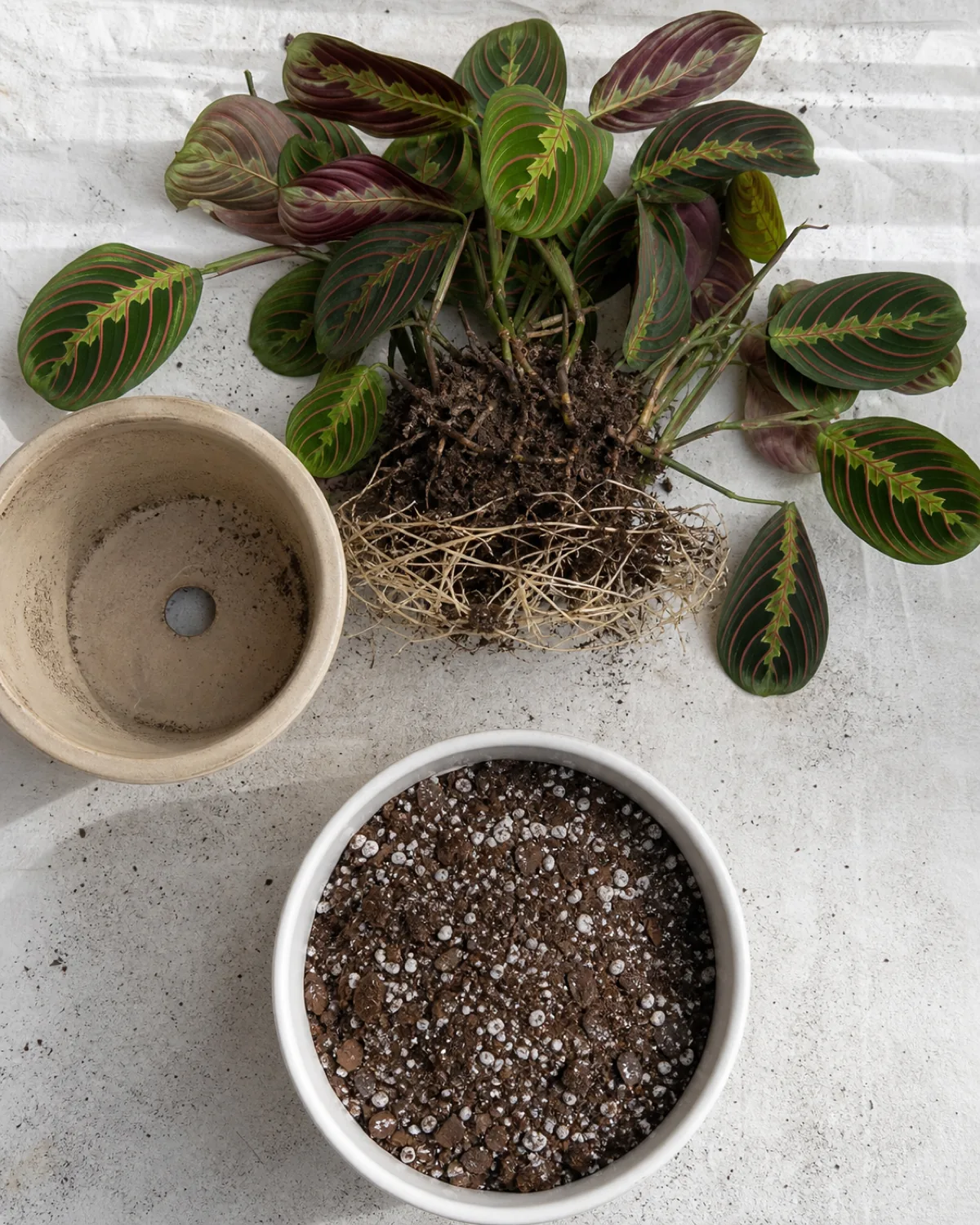
Use a well-draining but moisture-retentive mix. Standard potting soil with added perlite in a two-to-one ratio works well. A pre-made aroid mix is another good option. The goal is soil that holds some moisture without staying waterlogged.
Maranta has shallow, spreading roots rather than deep taproots. A wide, shallow pot suits it better than a deep one. The roots grow horizontally along the soil surface, branching out from the rhizome-like base of each stem.
Repot every one to two years in spring when roots start circling the bottom of the pot or emerging from the drainage holes. Go up only one pot size, one to two inches wider. Maranta does not mind being slightly root-bound. If the plant is growing new leaves and the leaves are folding normally, it is content where it is.
Choose pots with drainage holes. Terracotta works but dries out faster, which means more frequent watering for a plant that likes even moisture. Glazed ceramic or plastic retains moisture longer and reduces the watering frequency.
Temperature and placement: stability matters more than perfection
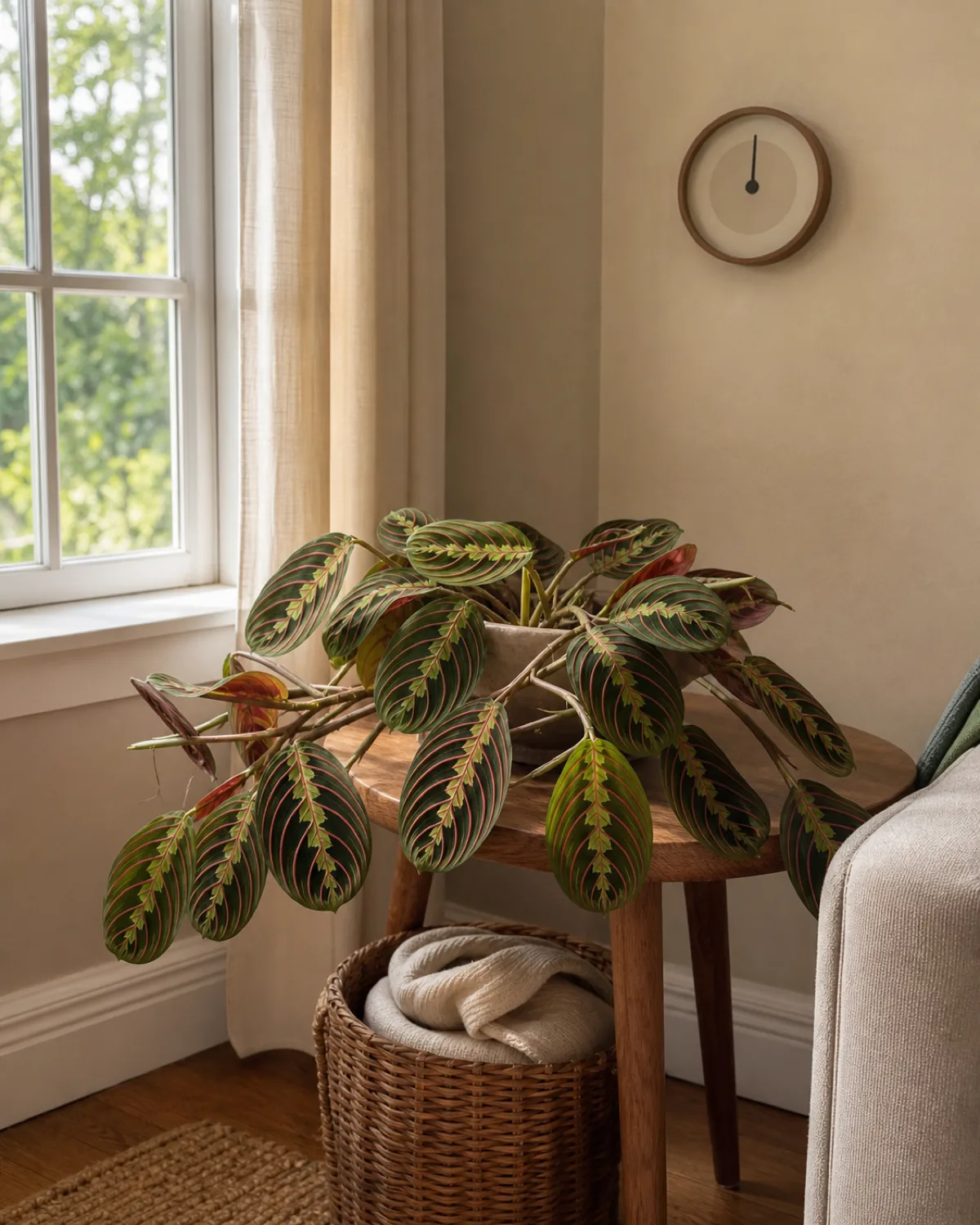
Keep the temperature between sixty-five and eighty degrees Fahrenheit. Maranta hates cold drafts and sudden temperature drops. Keep it away from exterior doors in winter, air conditioning vents in summer, and cold single-pane windows.
Below fifty-five degrees triggers dormancy and potential cold damage: dark spots on leaves, drooping stems, and eventually leaf drop. The plant does not die at fifty-five, but it stops growing and the folding movement slows or stops entirely.
Hot, dry air from heating vents is equally damaging. The combination of heat and low humidity desiccates the thin leaves faster than the roots can replace the moisture.
The ideal spot is a few feet from an east-facing window, away from any air vents, in a room that stays a consistent temperature. Maranta evolved on a forest floor where daily temperature swings are minimal. Stability matters more than hitting a specific number.
Feeding during the growing season only
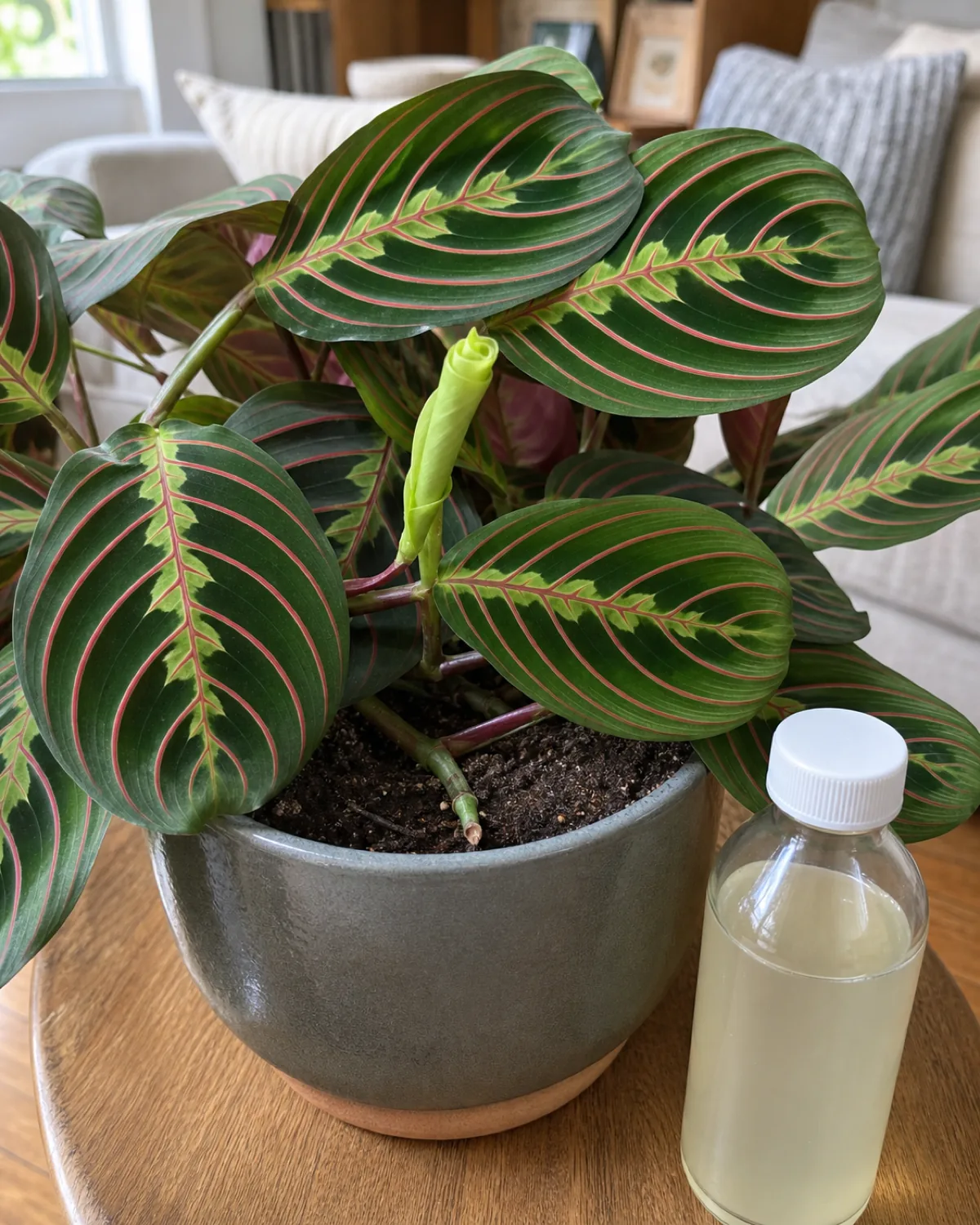
Fertilize monthly from spring through early fall with a balanced liquid fertilizer diluted to half the recommended strength. Stop fertilizing completely in winter when growth slows or stops.
Over-fertilizing causes leaf tip burn and salt buildup in the soil. If you see a white crust forming on the soil surface, flush the pot by running water through it for several minutes to wash out accumulated salts.
Maranta is not a heavy feeder. If you forget a month during the growing season, the plant will not notice. Yellow leaves during active growth can mean too much fertilizer rather than too little. Reduce the dose before increasing it.
Why the leaves fold at night (and what it means when they stop)
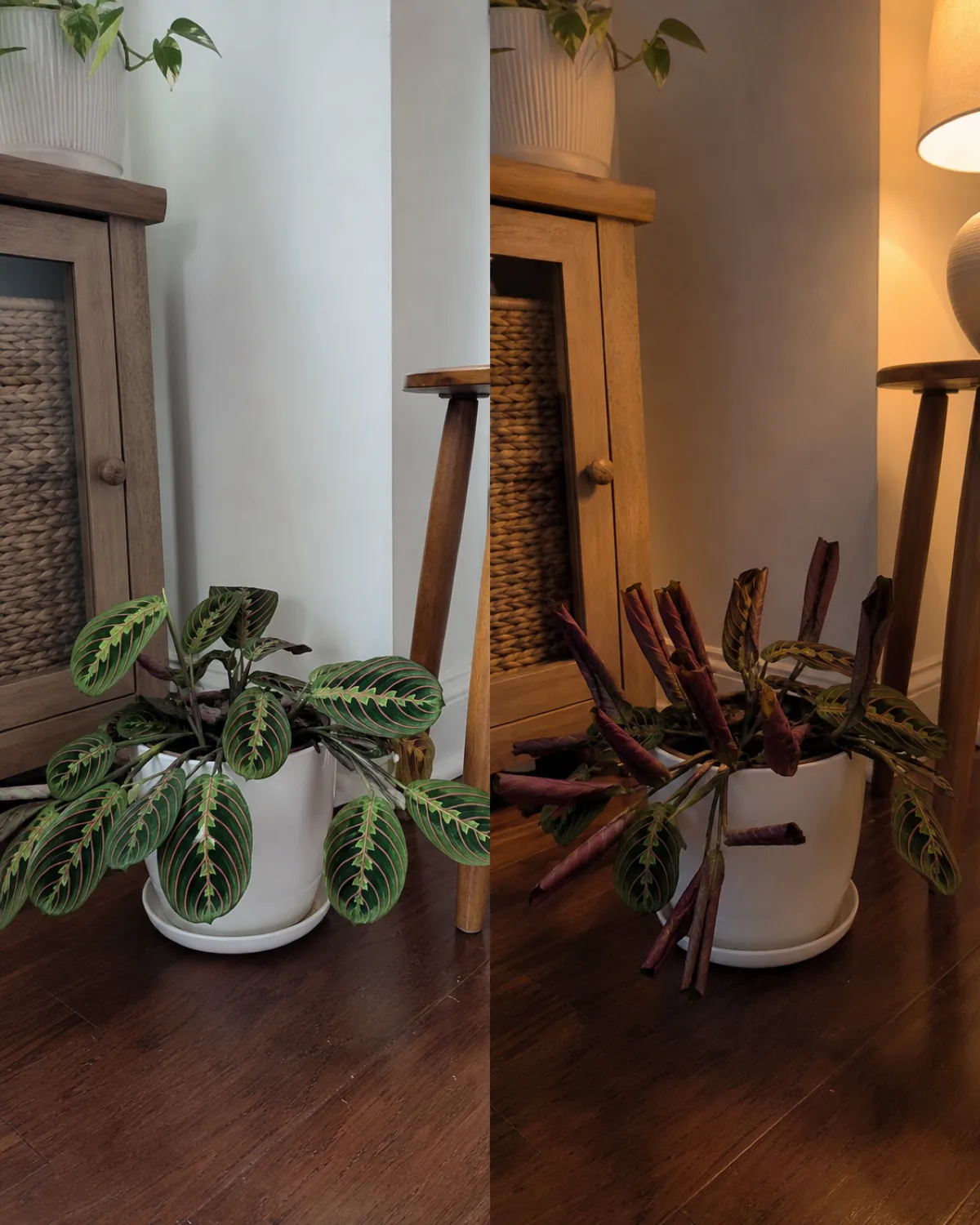
The nightly folding is functional, not decorative. One leading theory is that raising the leaves at night prevents water from pooling on the leaf surface, which reduces fungal growth and keeps the stomata clear for gas exchange. Another theory is that folded leaves let moonlight reach lower foliage and the soil surface, helping the plant track night length for seasonal cues.
The pulvinus controls this movement through rapid changes in turgor pressure. Specialized motor cells on opposite sides of the pulvinus joint fill or empty water in response to light signals, physically swinging the leaf up or down. The process takes roughly thirty minutes in each direction.
If a single leaf stops folding while the others continue, that leaf is aging out or its pulvinus is damaged. This is not a crisis. It is one leaf's mechanism reaching the end of its service life.
If all leaves stop folding, check for systemic stress. The most common cause is insufficient light. The plant needs a clear day-night light cycle to trigger the movement. A room that stays lit late into the night or has no natural light can disrupt the rhythm. Other causes include extreme cold slowing the turgor mechanism and root problems disrupting water transport to the pulvinus.
Healthy, well-lit prayer plants fold like clockwork every single evening.
Propagation: division is the easiest method by far
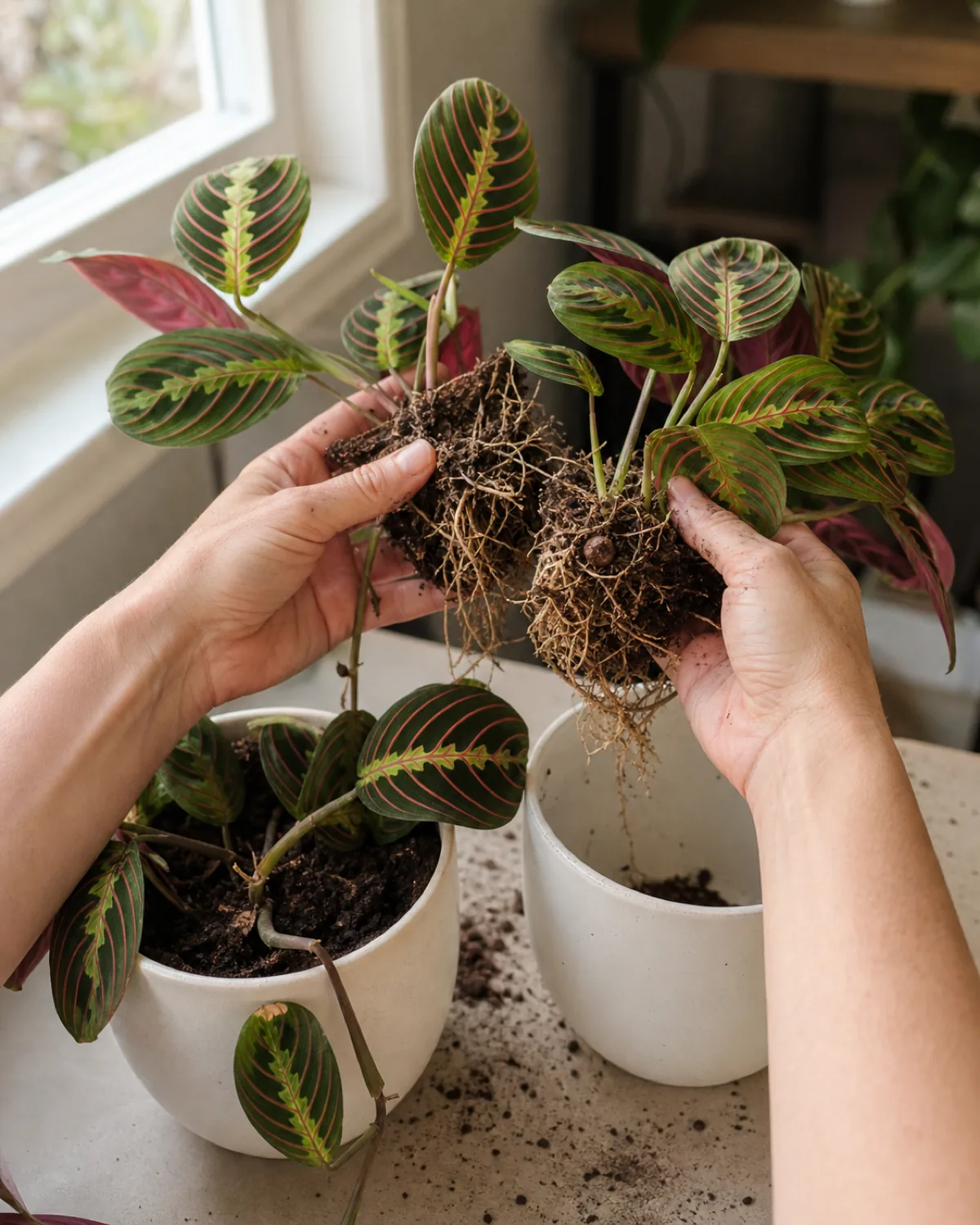
Maranta propagates most reliably by division. During spring repotting, gently pull the root ball apart into two or three clumps, each with several stems and healthy roots attached. Plant each division in its own pot immediately and water well.
The spreading, rhizome-like root system naturally produces multiple growth points. A mature prayer plant often has three or four distinct clusters of stems growing from the same root mass, making division genuinely easy even for people who have never propagated a plant before.
Stem cuttings also work. Cut a stem just below a node, the bump where a leaf attaches. Place the cutting in water or moist soil. Roots appear in two to four weeks. Water propagation lets you watch root development and transfer to soil once roots are one to two inches long.
For more on propagation methods across species, that guide covers the full toolkit from stem cuttings to division to air layering.
Prayer plant leaf diagnostics: reading the specific signals
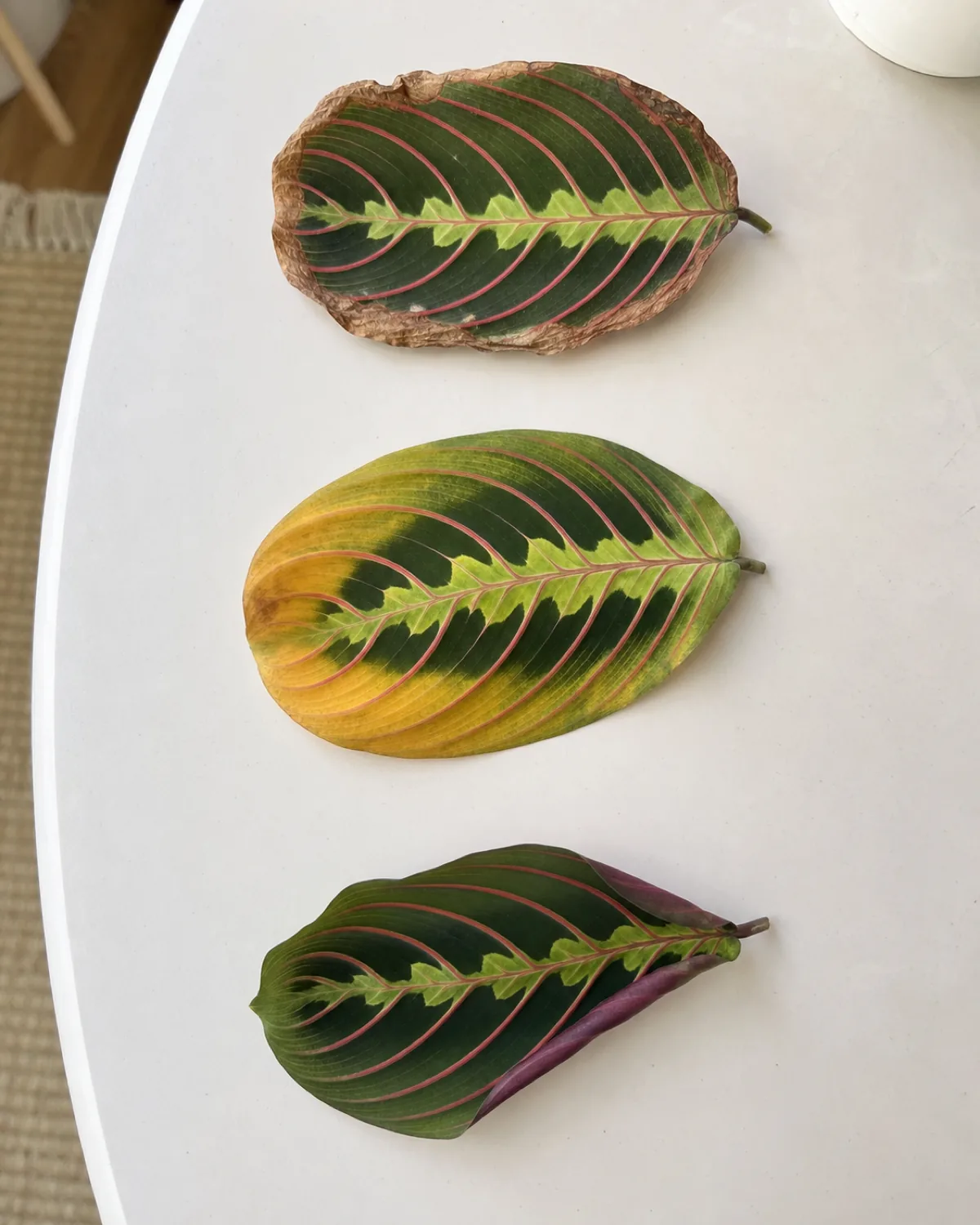
- Brown, crispy leaf edges: the most common prayer plant complaint. Low humidity or underwatering, sometimes both. Increase humidity first. If that does not help, check whether the soil is drying out too much between waterings.
- Yellow leaves: overwatering if the yellowing starts at the base and the soil stays wet, natural aging if only the oldest lower leaves yellow and new growth looks healthy, or over-fertilizing if the yellowing appears during the growing season after recent feeding.
- Curling leaves during the day: the plant is thirsty or getting too much direct light. Check the soil. If it is dry, water thoroughly. If it is moist, move the plant away from the light source.
- Faded or washed-out patterns: too much light. The vivid vein patterns bleach out under direct sun or even very bright indirect light close to a south-facing window. Move the plant deeper into the room.
- Leaves not folding at night: insufficient day-night light cycle, cold stress, or root damage. Check that the room gets naturally dark in the evening and that the plant is above fifty-five degrees.
- Brown spots on leaves: cold water shock (use room-temperature water) or bacterial leaf spot (isolate and remove affected leaves, improve air circulation).
- Spider mites: they love the undersides of Maranta leaves. Run a finger along the purple underside and check for fine webbing or a gritty texture. Treat with insecticidal soap or a strong water spray, repeating weekly for three weeks.
Why Maranta forgives mistakes that punish other tropicals
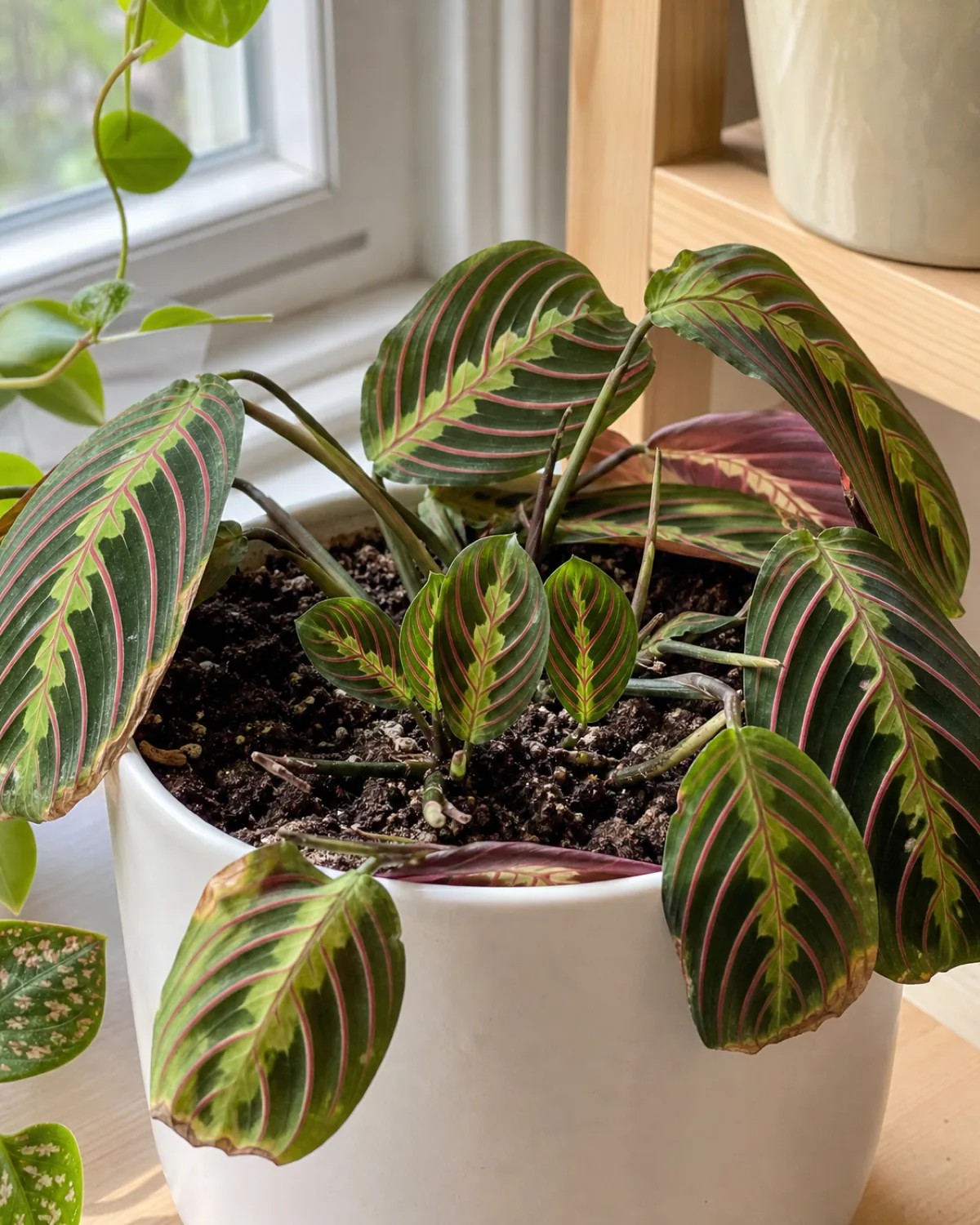
Most tropical foliage plants with vivid leaf patterns are fussy. They demand precise humidity, pure water, and stable conditions. Maranta breaks this pattern.
It recovers from a missed watering in hours. The curled leaves unfurl within sixty minutes of a good soak. The visual feedback is almost immediate, which is why prayer plants are excellent teaching plants for beginners learning to read their houseplants.
It tolerates tap water better than its Marantaceae relatives, though filtered is still ideal for the best long-term leaf appearance. It survives humidity dips to forty percent without permanent scarring. Older leaf tips may brown, but new growth emerges clean once conditions improve.
Its low, trailing growth habit means it never gets top-heavy or leggy the way upright tropicals do. And because it spreads by rhizome rather than growing taller, a prayer plant that looks rough after a neglect spell simply pushes out new stems at soil level, essentially regenerating itself from the base while the older growth can be trimmed away.
Pet safety and placement ideas for trailing growth
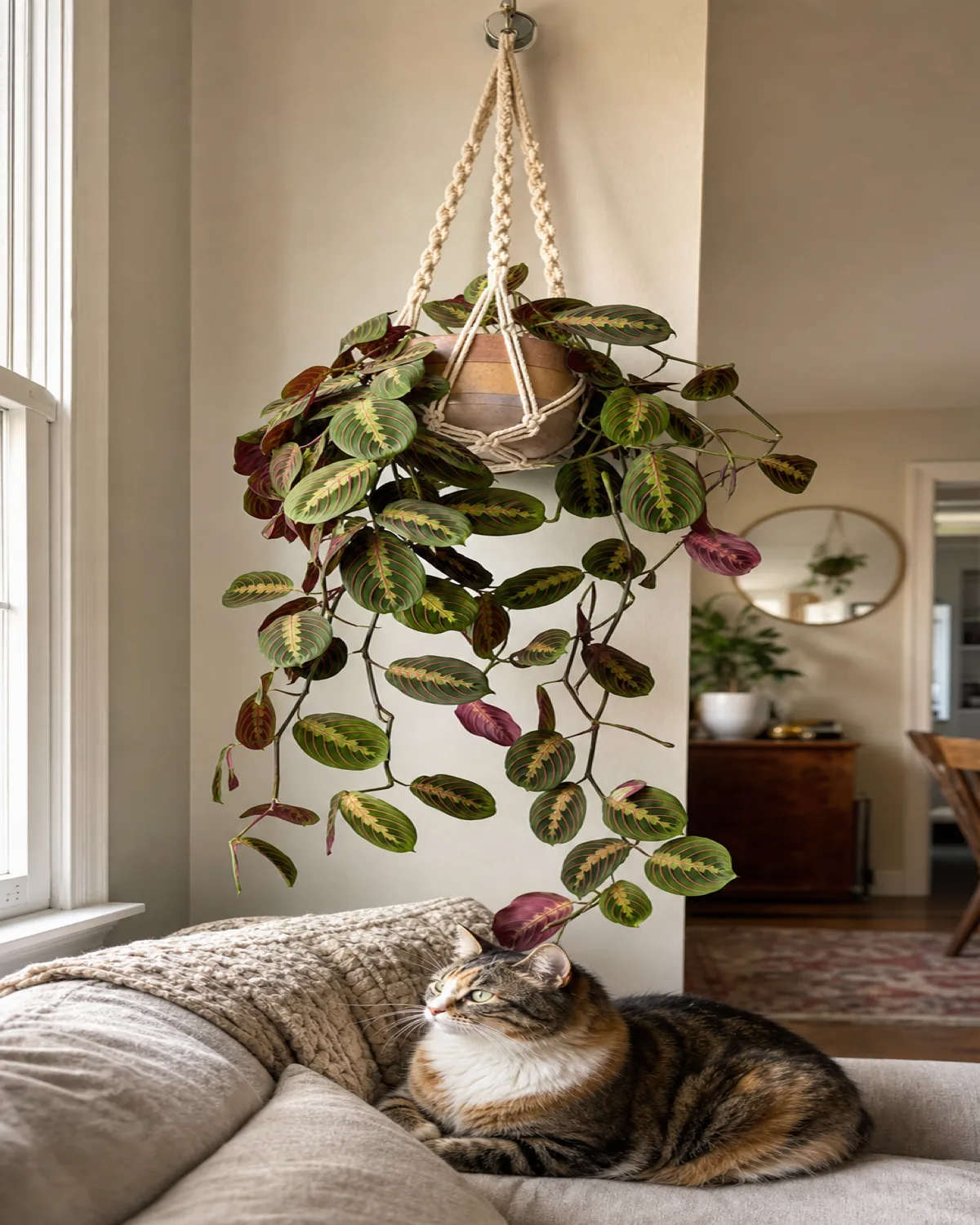
Maranta leuconeura is non-toxic to both cats and dogs. The ASPCA confirms it is safe, making it one of the genuinely worry-free options for households with curious pets.
Its low, spreading habit makes it a natural trailing plant. Place it on a shelf edge where the stems can cascade over the side, or in a hanging planter where the herringbone leaves dangle and catch the light. The undersides become visible from below, showing off the purple-red coloring that stays hidden on a tabletop.
Place it where you will see it in the evening. The folding performance is the plant's signature feature and it happens in real time over about thirty minutes. A spot you pass on the way to the kitchen or next to an evening reading chair lets you watch it happen.
A bathroom shelf or kitchen counter near a window provides the humidity Maranta loves. Group it with other pet-safe, humidity-loving plants like ferns, spider plants, and other trailing species to create a micro-humid zone that benefits all of them.
For a broader look at calathea care, that guide covers the fussier side of the Marantaceae family and helps you decide whether you are ready to graduate from Maranta to calathea.
Prayer Plant Care: The Quick Reference
- 1Leaves fold at night, open at dawnNyctinastic movement driven by the pulvinus joint. Healthy plants fold like clockwork.
- 2Three main varietiesKerchoveana (blotches), erythroneura (red veins), leuconeura (silver). Same care, different patterns.
- 3Low to bright indirect lightThrives without direct sun. Faded patterns = too much light.
- 4Evenly moist, never soggyWater when the top inch dries. Use filtered water to prevent brown tips.
- 5Humidity above 50%Pebble tray, humidifier, or bathroom spot. Brown edges = humidity is too low.
- 6Wide shallow pot, aroid mixShallow spreading roots. Repot every 1-2 years. Slightly rootbound is fine.
- 765-80°F, no draftsStability over perfection. Cold drafts stop the folding mechanism.
- 8Half-strength fertilizer, spring-fallMonthly during growing season. Skip winter. Less is better than more.
- 9Folding is functional, not decorativePrevents fungal growth and aids gas exchange. Stops folding = check light cycle.
- 10Propagate by division in springPull apart root clumps during repotting. Each division grows independently.
- 11Brown edges = humidity, not diseaseCurling = thirsty. Yellowing = overwatered. Faded = too much light.
- 12More forgiving than calatheaRecovers fast from mistakes. New stems regenerate from rhizome at soil level.
- 13Non-toxic to cats and dogsASPCA confirmed safe. Great trailing plant for shelves and hanging planters.
kultivy.com

Mara Quinn edits Kultivy, where she shares houseplant care, propagation, beginner-friendly plant picks, and plant-styling ideas for anyone who wants their indoor plants to actually thrive. Every guide is image-led and reviewed for clarity, usefulness, image accuracy, and Pinterest-to-page alignment before it goes live. Visit the About page.