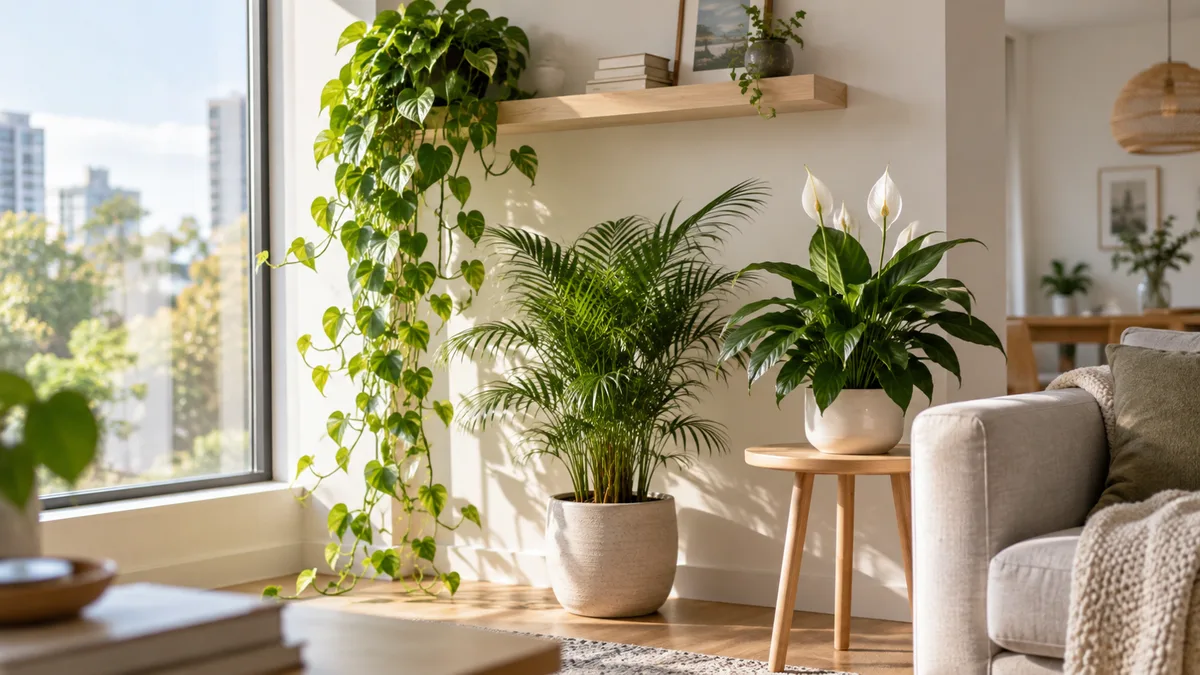
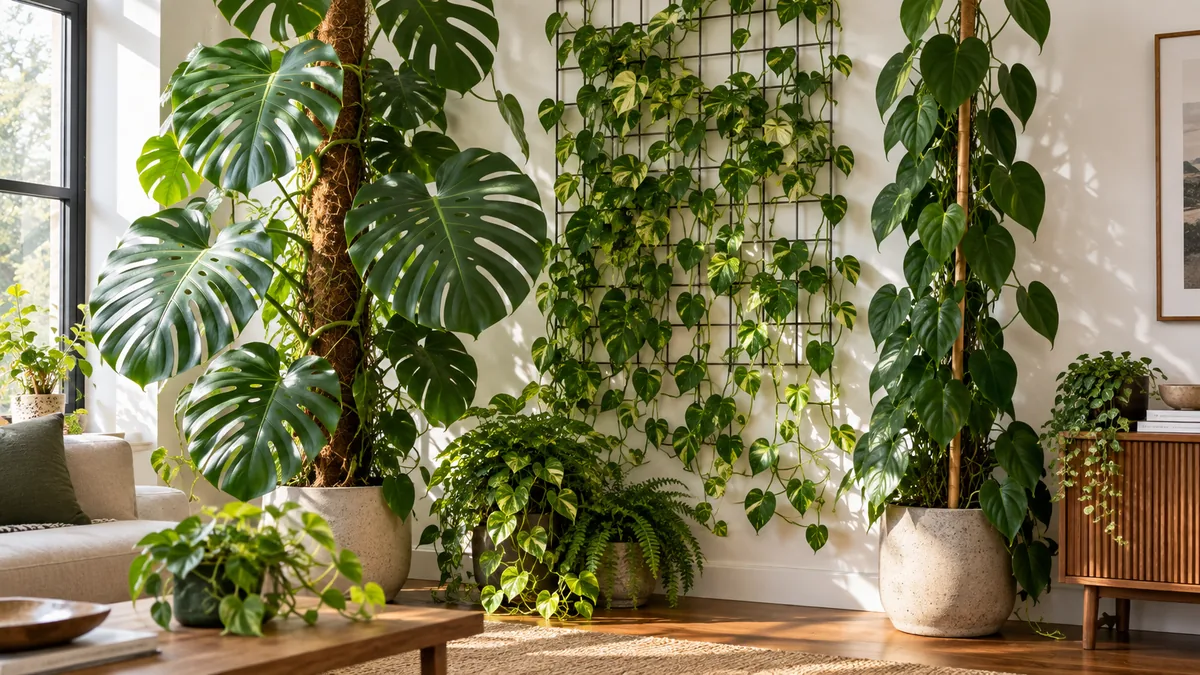
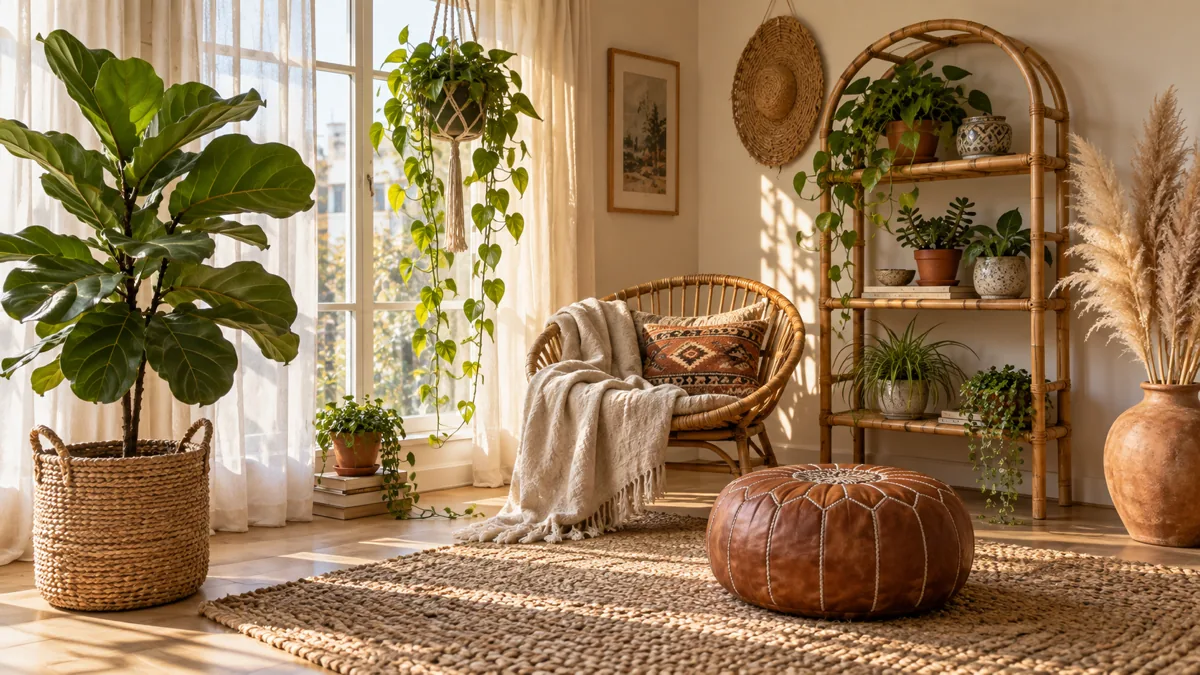
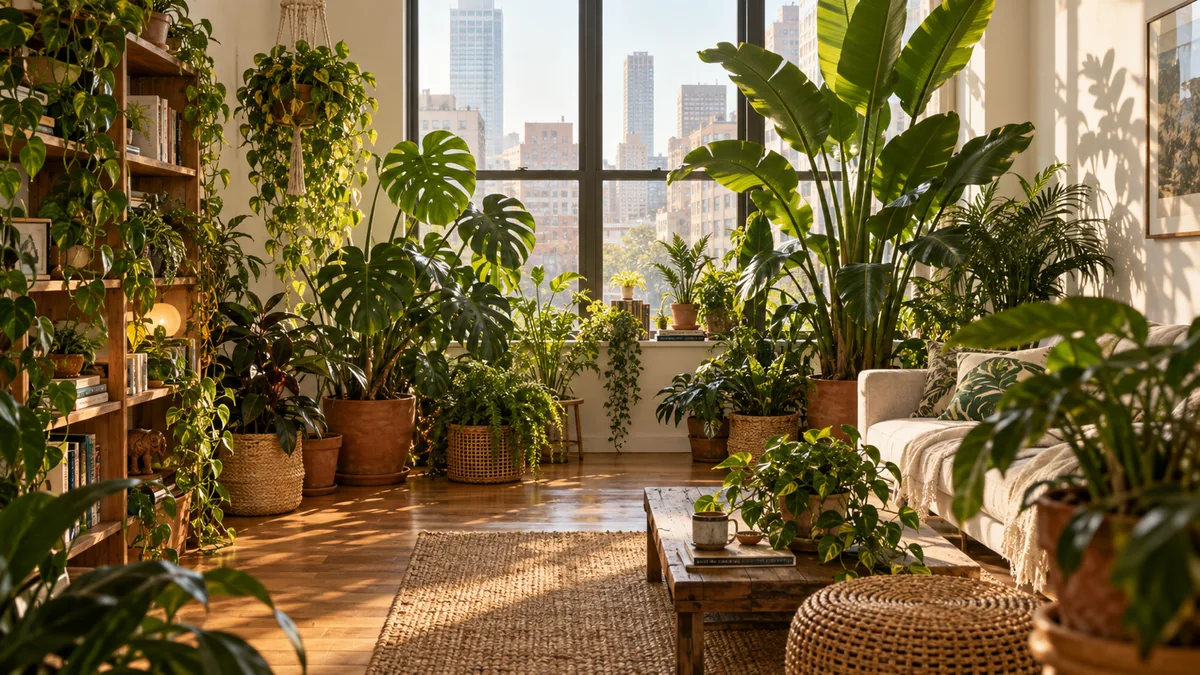
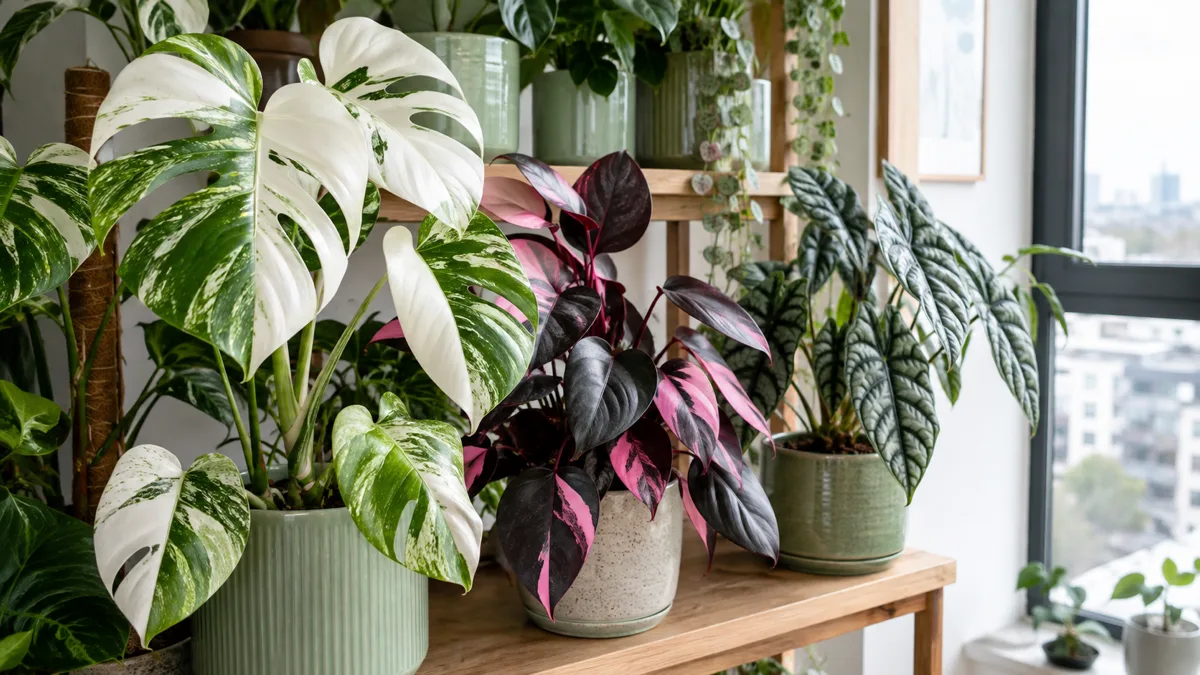
Kitchens throw everything at a plant: bursts of steam from boiling water, temperature swings from the oven, grease film that coats every surface, and hours of either blazing south-window light or none at all.
These fourteen plants are matched to specific kitchen spots — with the mechanism behind why each one handles the conditions that spot actually delivers.
Each pick is paired with the kitchen spot where it works best — a fridge-top trailer, a windowsill herb, a countertop accent, or a dark-corner survivor. Jump to any plant below.
- 1Pothos on the refrigerator
- 2Spider plant hanging by window
- 3Snake plant beside the fridge
- 4Aloe vera on the windowsill
- 5Herbs on a windowsill shelf
- 6Pothos cutting in a glass jar
- 7Chinese evergreen on countertop
- 8ZZ plant on top of cabinets
- 9Peace lily under cabinet lights
- 10English ivy above the sink
- 11Cast iron plant in a dim corner
- 12Jade plant on a bright shelf
- 13Air plant on an open shelf
- 14Pilea on a bright countertop
Pothos trailing from the top of the refrigerator
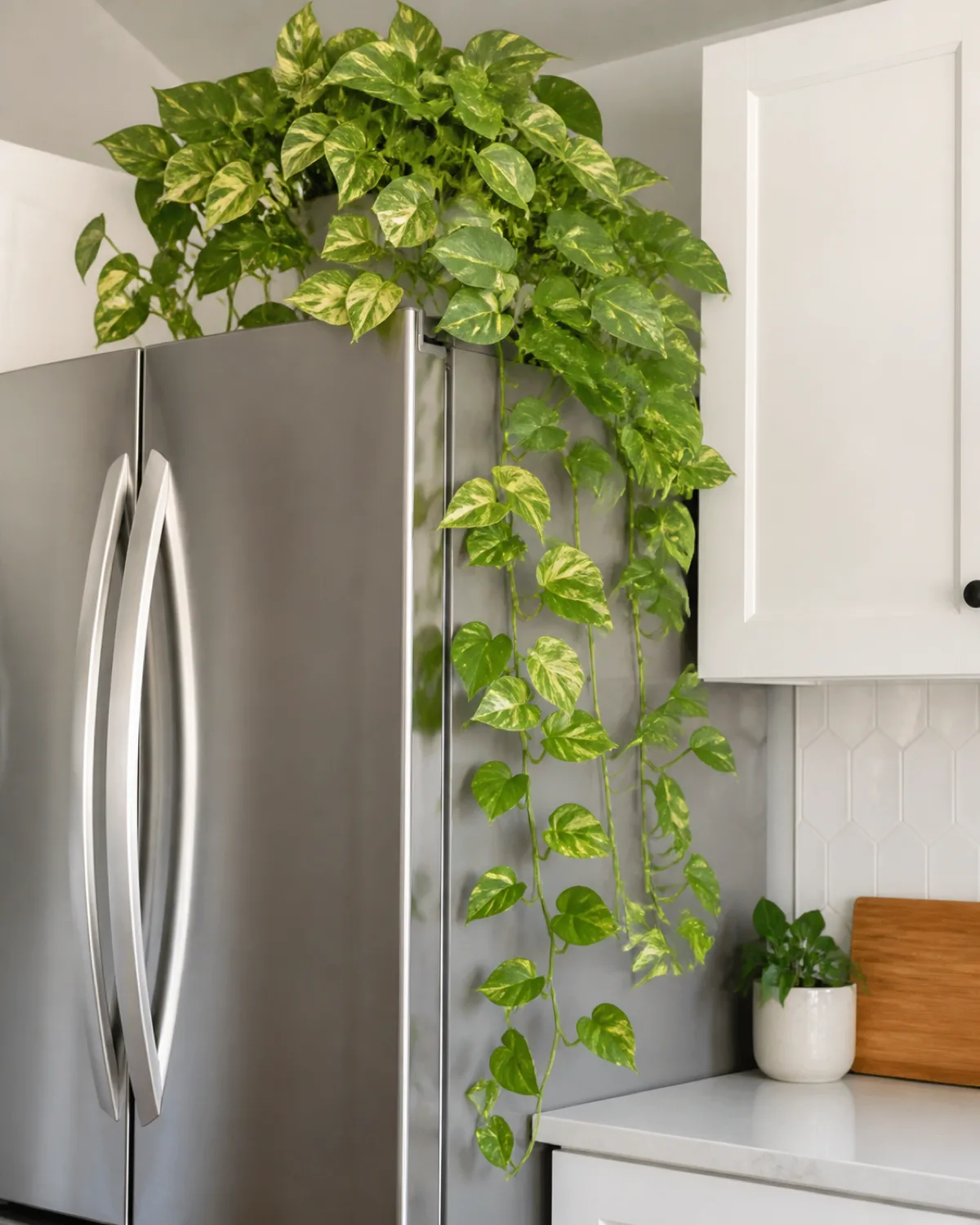
The top of the refrigerator is one of the most underused spots in any kitchen, and pothos claims it because its trailing vines drape naturally down the sides without needing a shelf or hook. The compressor underneath generates a gentle warmth that mimics the tropical floor temperatures pothos evolved on — a hidden advantage over a cold windowsill in winter.
The trade-off is light. Most fridge tops sit between upper cabinets in low ambient light, which is why pothos works here and most other trailing plants would not — its photosynthetic efficiency at low light levels is unusually high for a variegated plant. Wipe the leaves monthly with a damp cloth to remove the kitchen grease film that slowly blocks light absorption.
Our pothos care guide covers the full watering, light, and propagation details.
Kitchen spots differ more than any other room. Match the plant to the conditions your specific spot actually delivers.
Spider plant: the cooking-fume filter that hangs above the splash zone
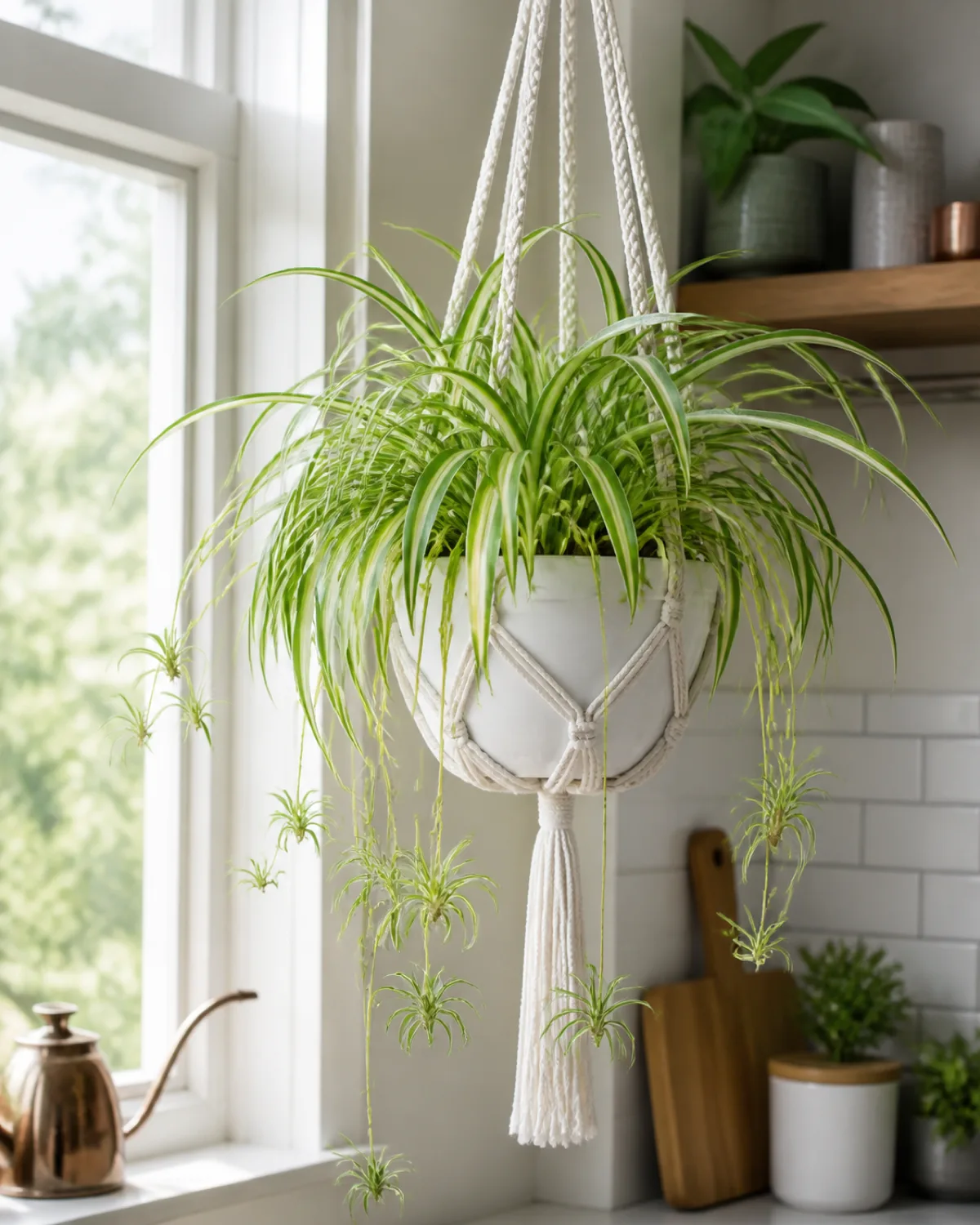
Gas stoves release formaldehyde as a combustion byproduct, and spider plants earned the NASA clean-air designation specifically for processing this compound through their leaf stomata. In a kitchen, hanging one by the window creates an air-cleaning station directly in the path of rising cooking fumes.
The kitchen placement solves two problems at once: the plant stays above the sink splash zone where soil would get soggy, while the window delivers the bright indirect light that triggers runner production. Those runners carry dangling pups that create a living curtain effect in front of the window — decorative and functional without needing hooks, wire, or training.
Unlike most hanging plants that need consistent humidity, spider plants tolerate the wild humidity swings kitchens produce — ninety percent during a boiling pot, thirty percent when the range hood runs. Non-toxic to cats and dogs. Full care in our spider plant care guide.
Snake plant in the narrow gap beside the refrigerator
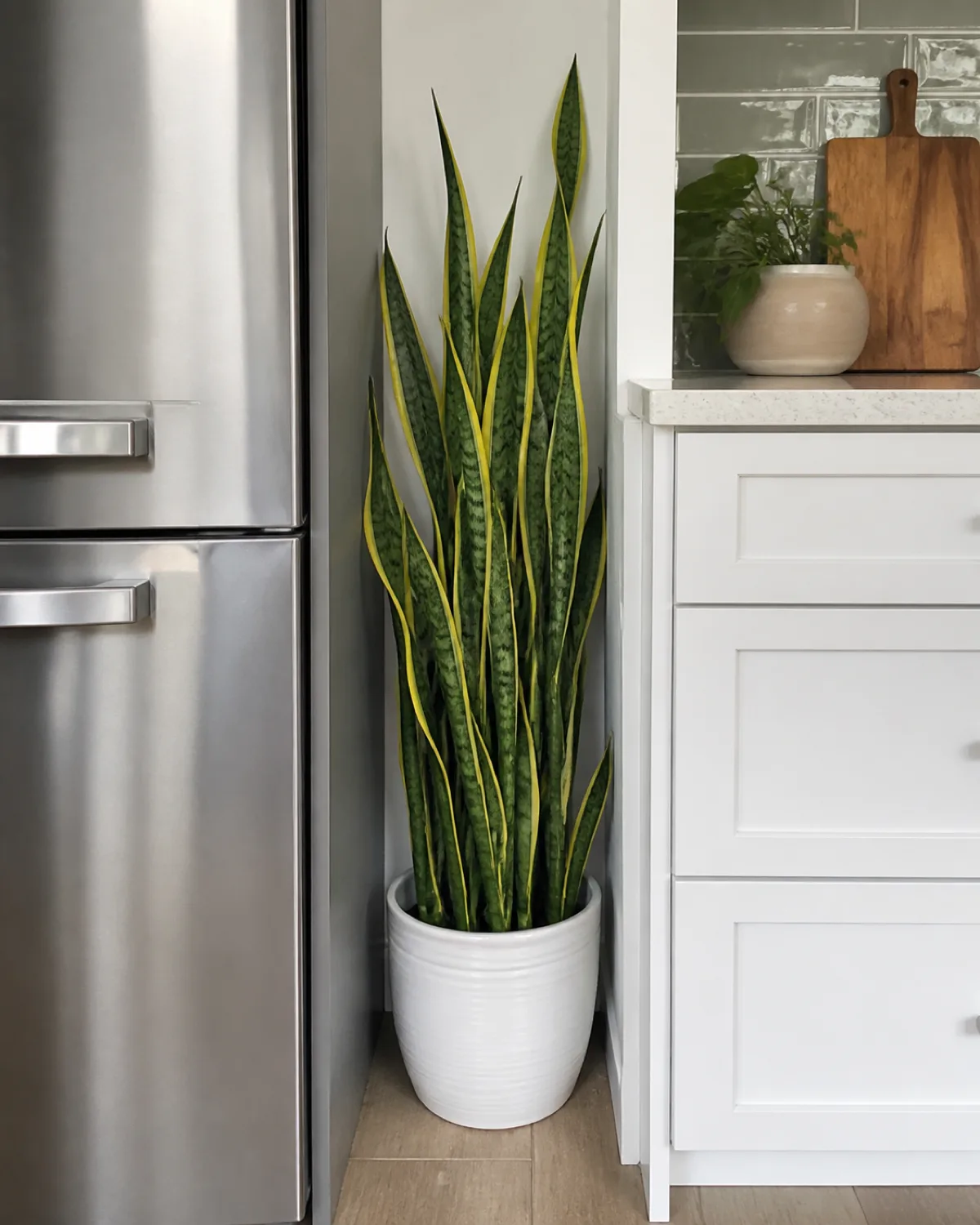
Every kitchen has at least one slot too narrow for anything but a plant — the gap between the refrigerator and the wall, or the strip between the end of the cabinets and a doorframe. Snake plants colonize these spaces because their stiff vertical blades grow straight up without spreading sideways, fitting into gaps as narrow as six inches.
The CAM photosynthesis pathway that makes snake plants survive in dark living room corners works the same way in a dim kitchen slot. Water every three to four weeks — the compressor heat from the adjacent fridge dries the soil slightly faster than a bedroom placement would.
The thick waxy leaf surface resists grease film better than fuzzy-leaved plants and wipes clean with a damp cloth. Full details in our snake plant care guide.
Aloe vera on a sunny kitchen windowsill
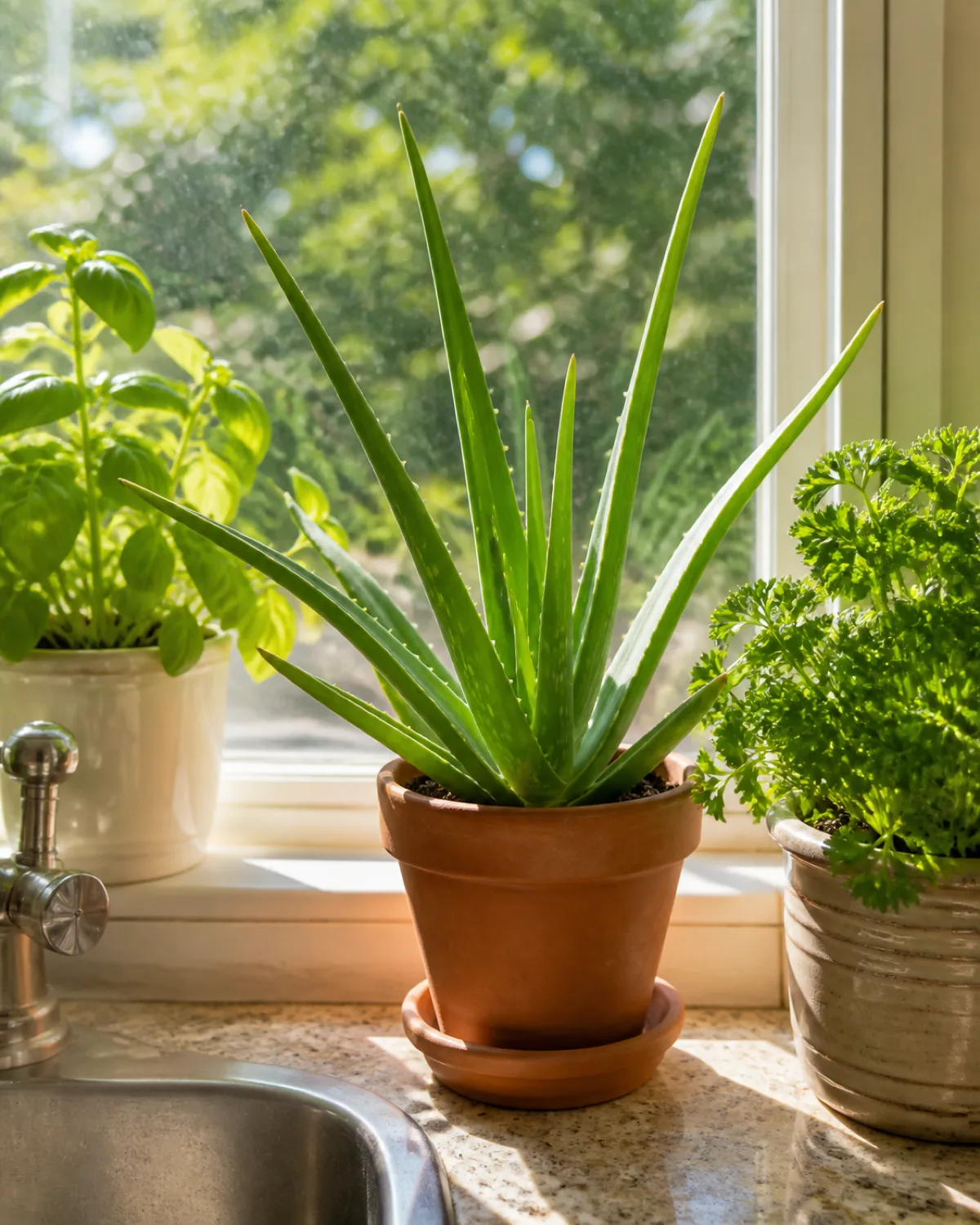
Aloe vera earns its kitchen spot for one reason no other plant can match: burn relief. Snap a lower leaf, squeeze the clear gel, and apply it directly to a minor kitchen burn. No other windowsill plant doubles as a first-aid station.
It needs the brightest spot your kitchen has — a south or west-facing windowsill with at least six hours of direct sun. The compact rosette form fits between herb pots without crowding, and the succulent storage leaves mean forgetting to water for two or three weeks does no damage.
Keep it away from food prep surfaces if you have pets — aloe is toxic to cats and dogs if ingested. Our aloe vera care guide covers the full watering rhythm, harvest method, and sunburn prevention.
Herbs on a windowsill shelf: the functional kitchen garden
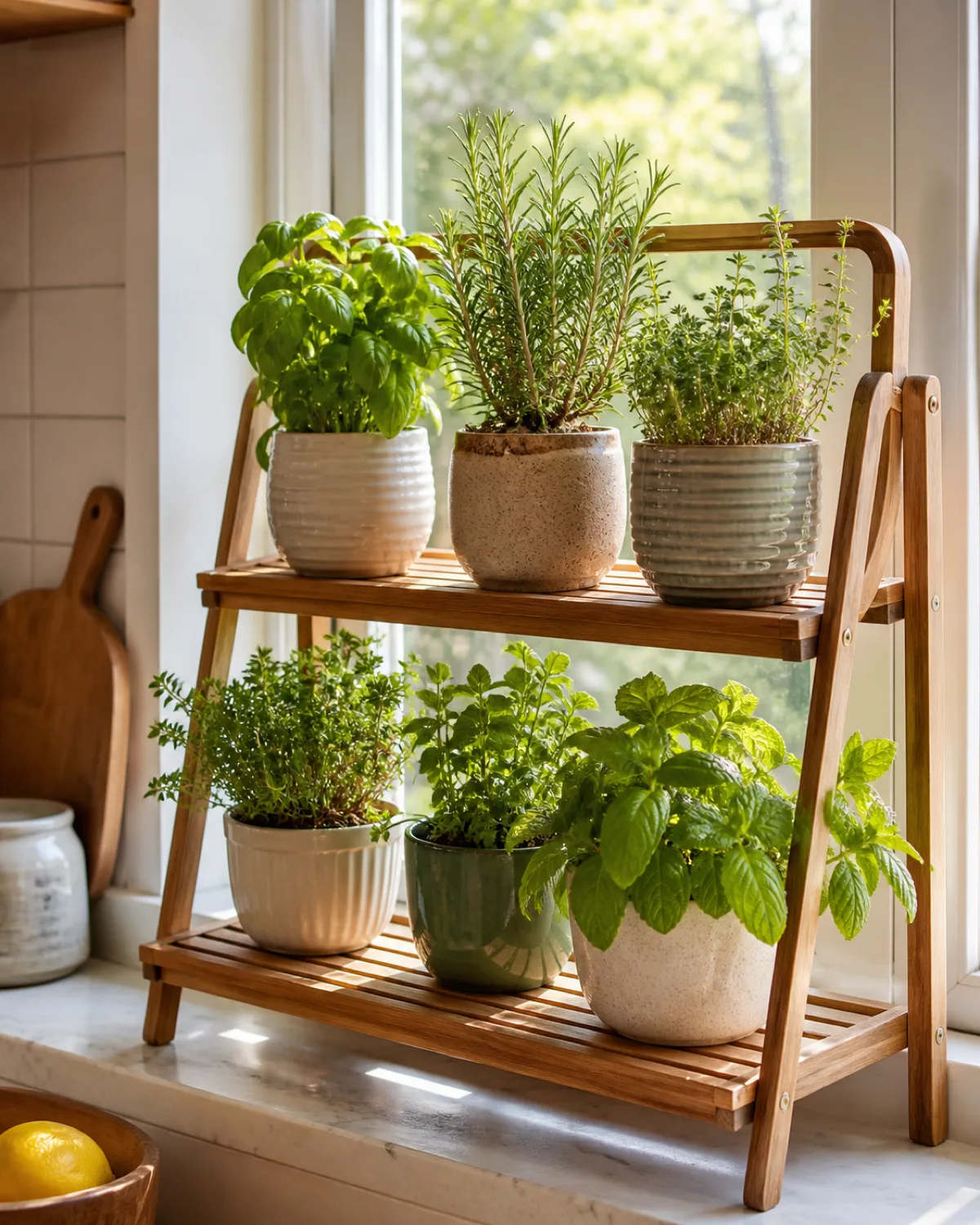
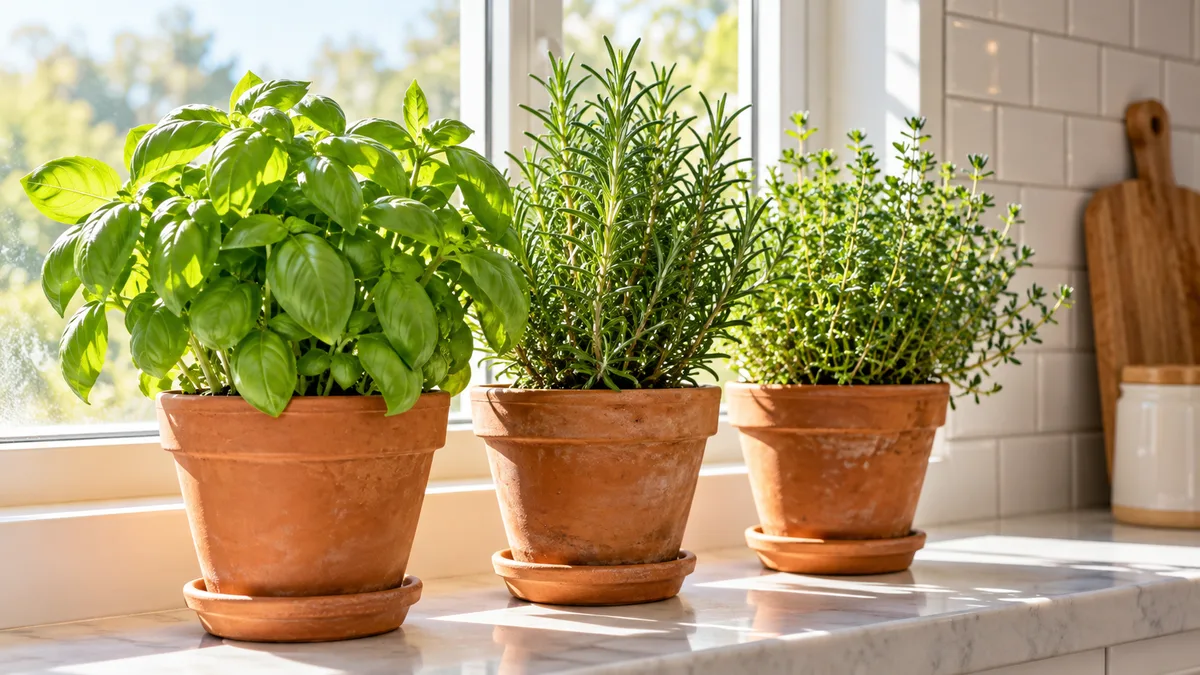
Herbs are not a decorative afterthought — they are the only kitchen plants that contribute directly to what you cook. A three-tier windowsill shelf turns one window into a functional micro-garden: basil on the top tier closest to the glass, rosemary and thyme in the middle, mint at the bottom where it gets slightly less light but more ambient humidity from the sink.
Basil demands warmth and bright direct sun, which makes the kitchen its best indoor location. Rosemary tolerates dry conditions between harvests. Thyme stays compact enough to fit between pots without crowding. Mint spreads aggressively, so keep it in its own contained pot or it will invade its neighbors within weeks.
The harvest-and-regrow cycle keeps each plant bushy rather than leggy. Pinch from the top — never strip the lower leaves — and each cut encourages two new branches at the node below.
Pothos cutting in a glass jar by the sink
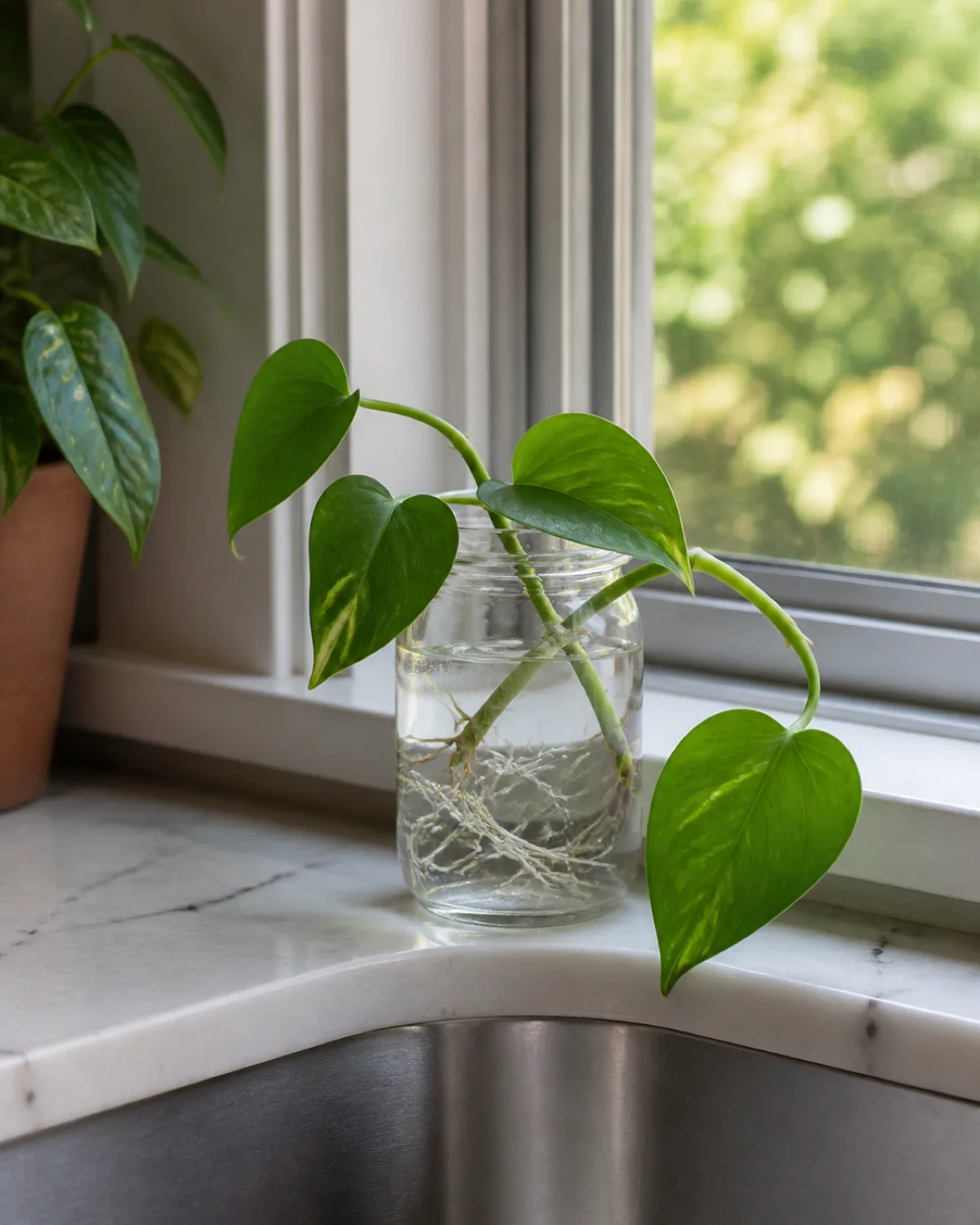
A single pothos cutting in a glass jar of water is the simplest possible kitchen plant — no soil, no pot, no drainage, no mess near food prep surfaces. The roots are the visual feature: they spiral and branch inside the glass, creating a living sculpture that changes week by week.
Take a four-inch cutting from any pothos vine, strip the lower leaves, and drop it in a jar of water. Roots appear within one to two weeks. Change the water weekly to prevent algae, which builds up faster in kitchens with warm ambient temperatures.
The sink windowsill is ideal because you refill the jar during regular kitchen use rather than making a separate watering trip. Bright indirect light from the window keeps the cutting growing indefinitely — some water-rooted pothos cuttings survive for years without ever needing soil.
Chinese evergreen on a low-light countertop
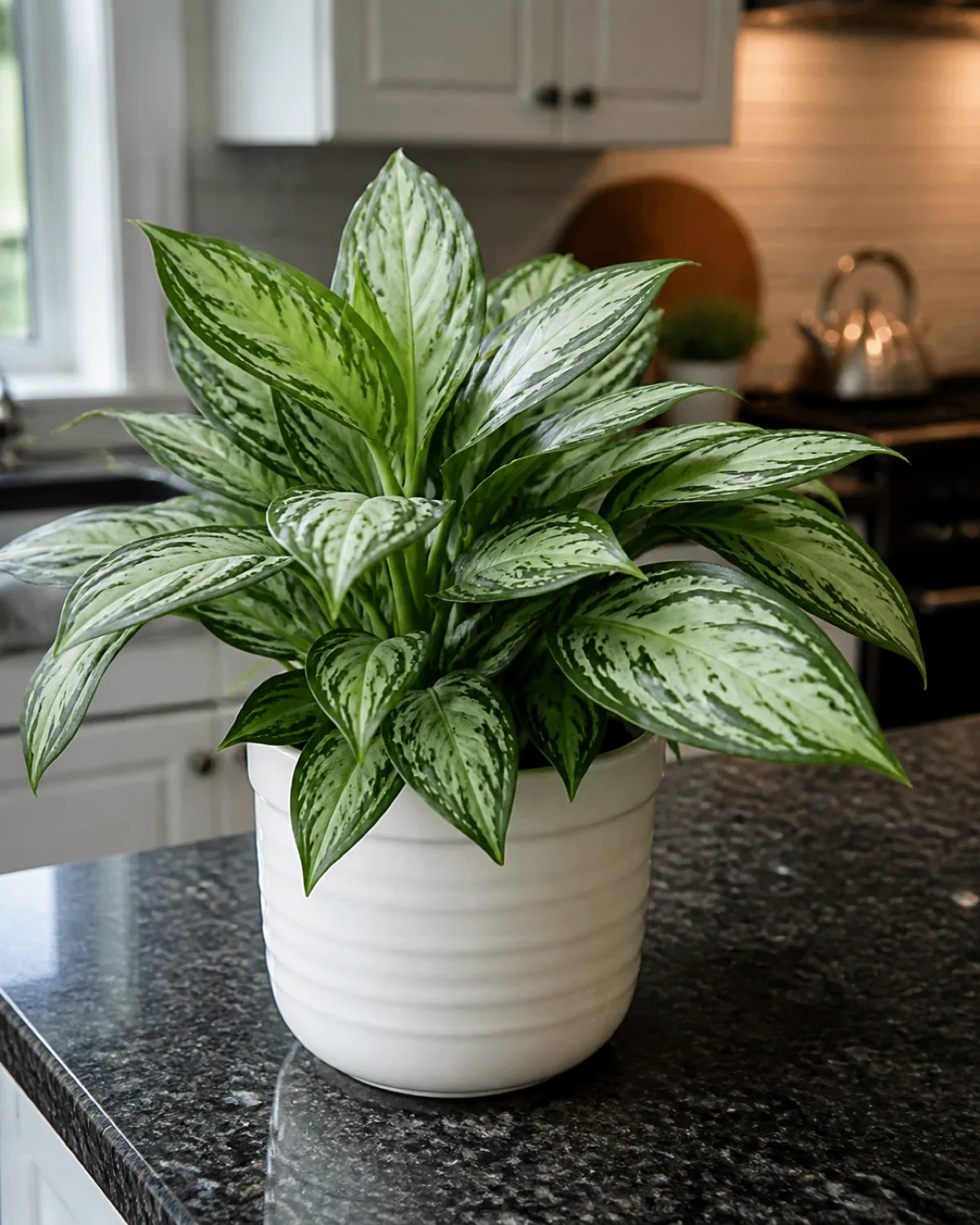
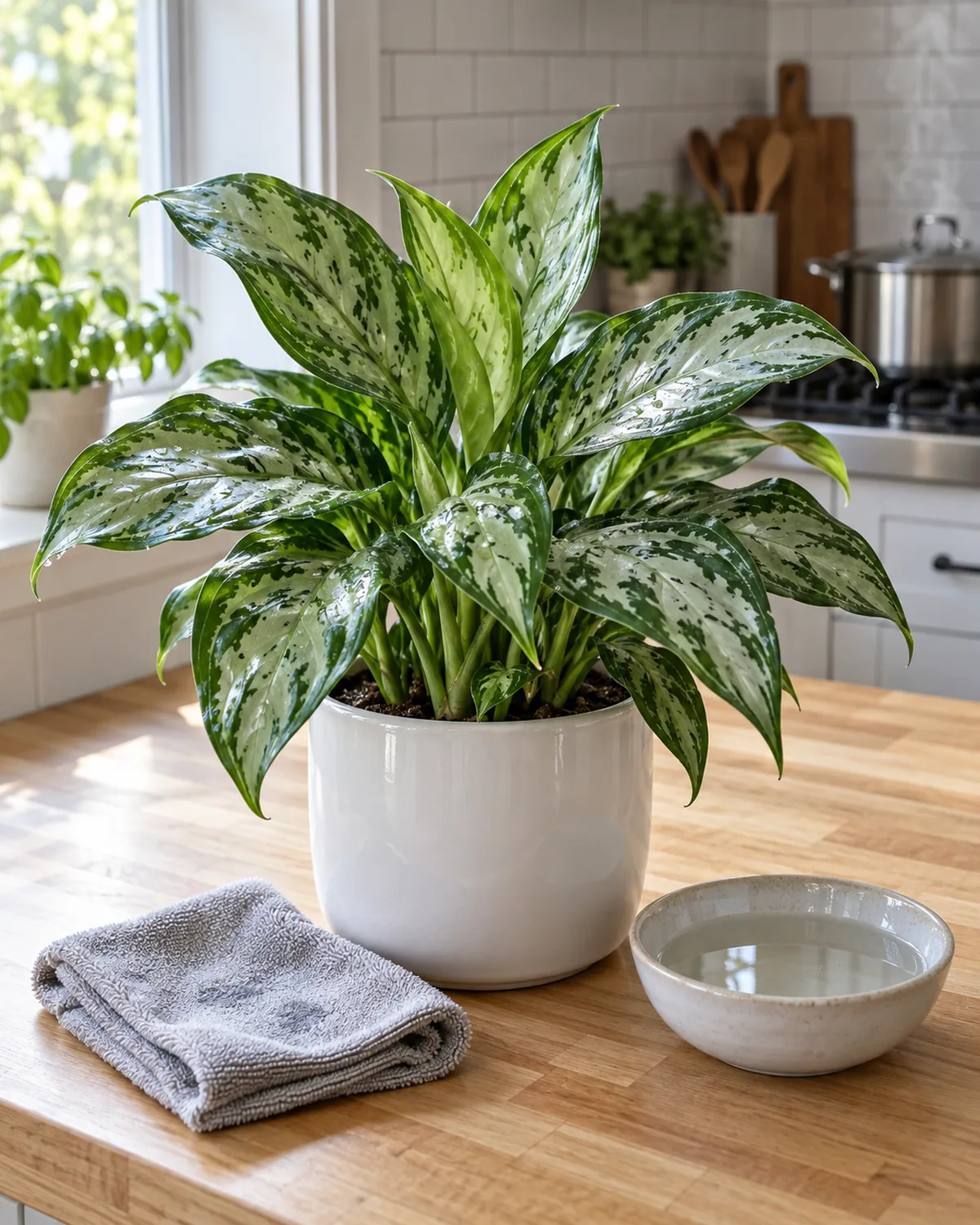
Most countertop-friendly plants are plain green because colorful varieties need more light than a kitchen interior delivers. Chinese evergreen breaks this rule with leaves splashed in silver, cream, and pink — and its unique feature is that the darker-green varieties tolerate the lowest light.
A silver-and-dark-green variety handles the back-counter spot between the microwave and the toaster where no direct light reaches. A pink variety needs the brighter end of the counter closer to the window. This inverse color-light relationship makes it easy to match the variety to the specific countertop spot.
The glossy leaf surface resists grease buildup and wipes clean easily. Tolerates the temperature swings and air-conditioning drafts that make kitchens hostile to humidity-sensitive plants. Full care in our Chinese evergreen care guide.
ZZ plant on top of the kitchen cabinets
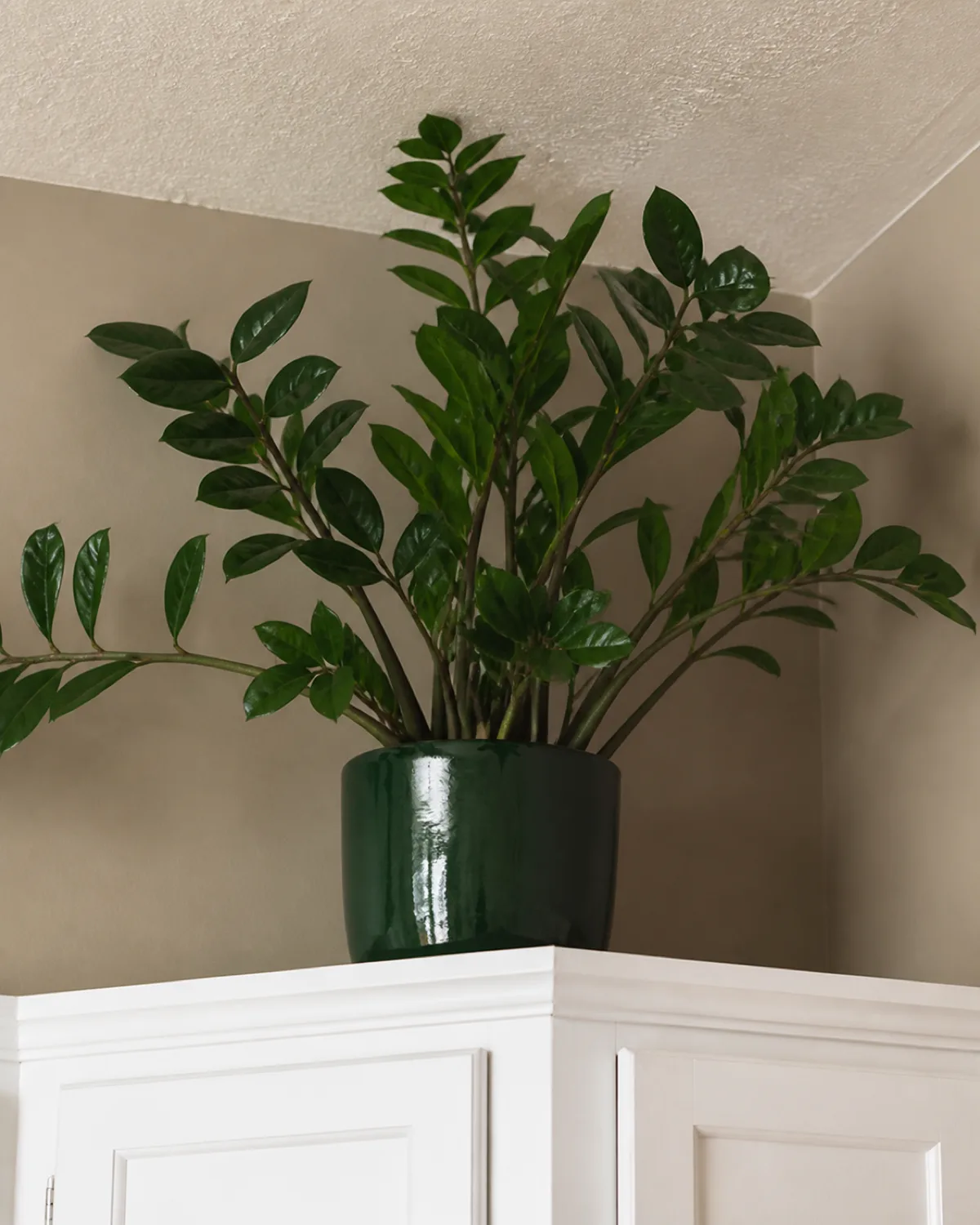
The dead zone above kitchen cabinets is where decorative bowls and cookbooks go to collect dust. A ZZ plant thrives there because its underground rhizomes store enough water to survive three to four weeks without attention, and the waxy cuticle on its leaflets reflects what little ambient light reaches the ceiling zone.
Forgetting it for a month is not neglect — it is the correct watering schedule. The glossy surface also resists the kitchen grease and dust that accumulates above cabinets, and the arching wand-shaped stems look deliberate rather than forgotten.
Access for watering requires a step stool, which is why the rhizome-based drought tolerance matters more here than in any other kitchen spot. Toxic if ingested, but the above-cabinet placement keeps it out of reach of children and pets. Full care in our ZZ plant care guide.
Peace lily: the only flowering plant that blooms under cabinet lights
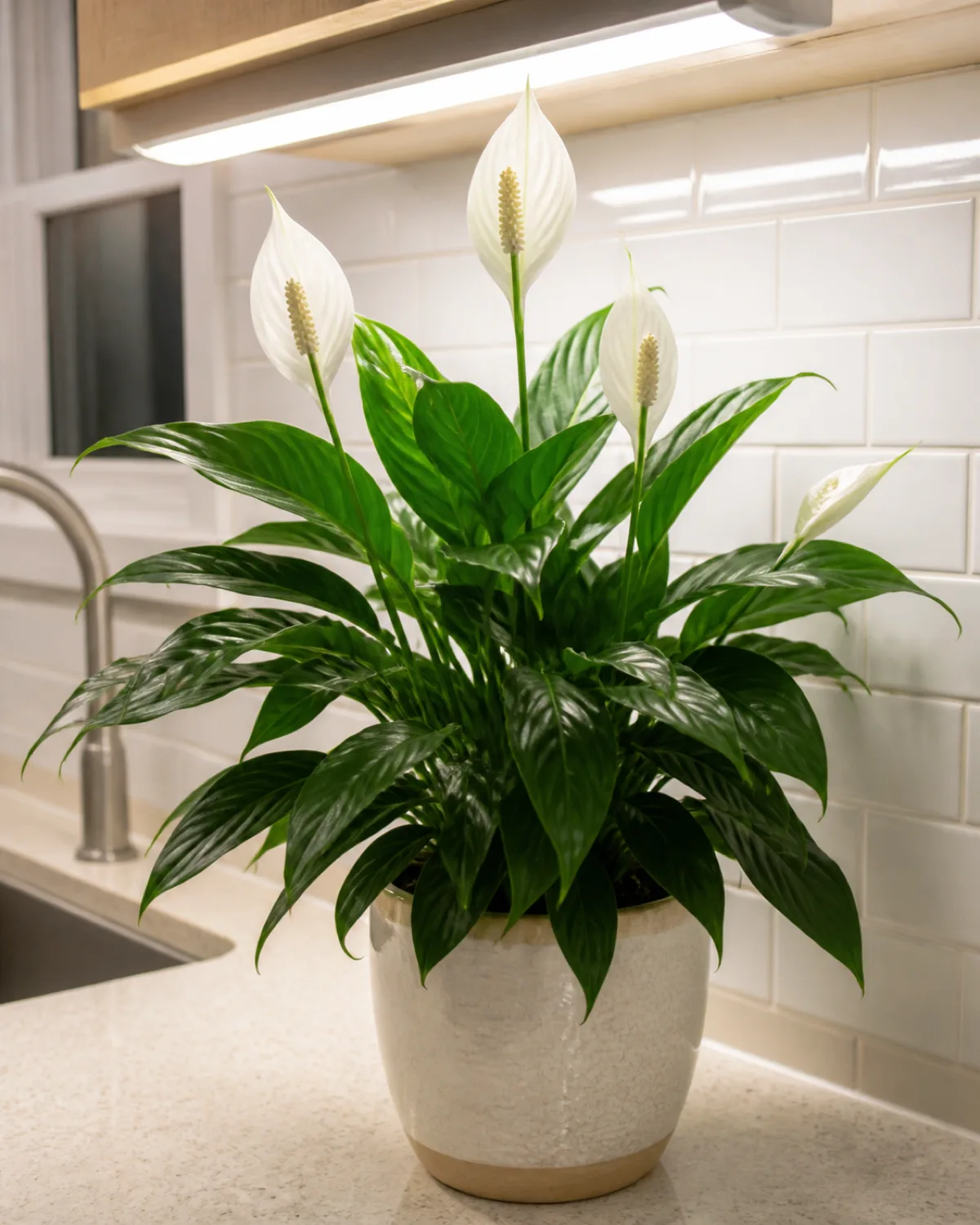
Most kitchen counters away from the window are lit entirely by fluorescent strips or LED under-cabinet fixtures. No flowering plant blooms in these conditions — except the peace lily, whose white spathes emerge and last for weeks under the same artificial light that illuminates your cutting board.
This is the kitchen-specific advantage over putting a peace lily on a living room console table: in the kitchen, the under-cabinet fixture provides exactly the diffuse light the plant needs, making it the only flowering option for that counter stretch between the stove and the sink.
The droop-and-recover watering signal is more useful in a kitchen than anywhere else. The plant wilts dramatically when thirsty, then perks up within an hour — and busy cooks notice a wilting plant on the counter faster than they would check soil moisture.
Peace lily also processes VOCs from cooking fumes through its leaf stomata. Toxic to cats and dogs. Full care in our peace lily care guide.
English ivy trailing from a hanging basket above the sink
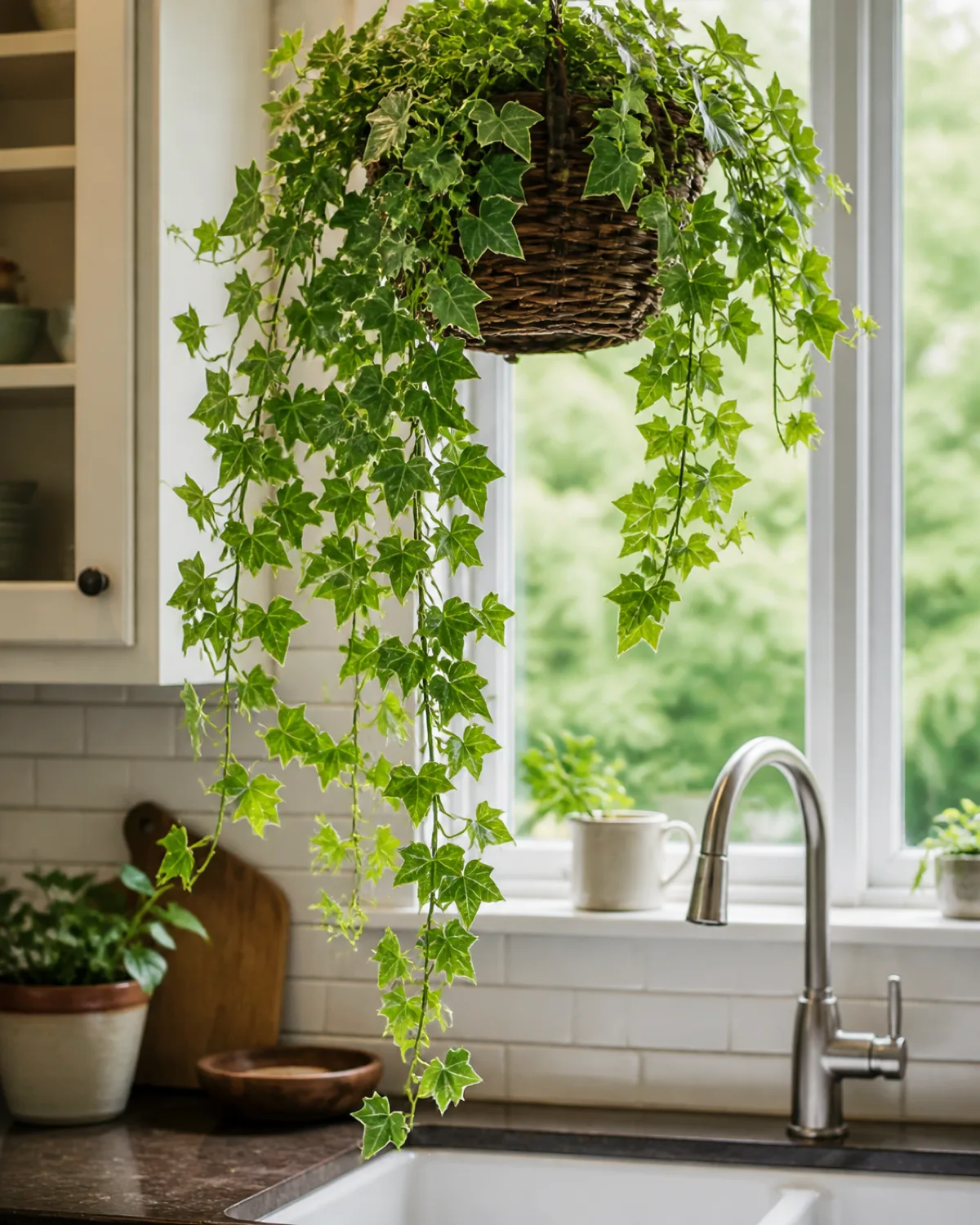
The space directly above the sink is a steam zone — warm moist air rises every time you wash dishes or boil water. English ivy thrives in this humidity corridor because it evolved as a woodland understory vine in temperate climates where cool moist air is the norm.
Unlike most tropical houseplants, English ivy actually prefers cooler temperatures, which means the kitchen drafts that stress calatheas and ferns are a benefit here. The aggressive trailing habit fills the vertical space between the window top and the sink within a few months.
English ivy also removes airborne mold spores — a practical advantage in a room where moisture and food debris create mold-friendly conditions. Toxic if ingested, so keep it hung high and out of reach. Trim wayward vines before they reach the counter surface.
Kitchens kill plants differently than any other room. These are the patterns — and the fix for each.
Cast iron plant in a dim kitchen corner
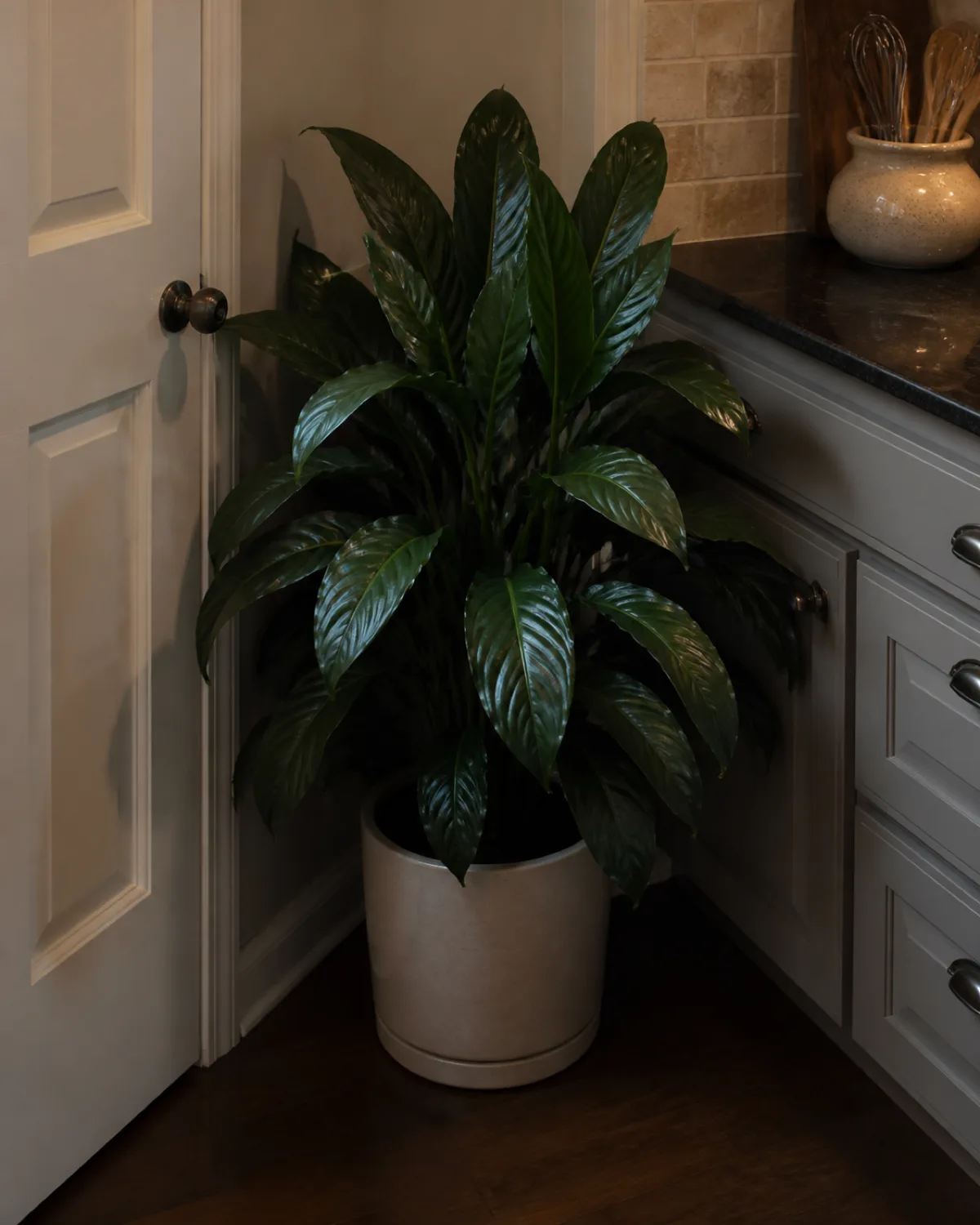
Cast iron plant earned its name by being nearly impossible to kill, and a dim kitchen corner is exactly where that reputation matters. The spot between the pantry door and the end of the counter — where foot traffic flows but light does not reach — is where most plants would decline within weeks. Aspidistra elatior has been surviving in Victorian parlors and dark hallways since the 1800s.
Its broad dark green leaves resist grease film, dust accumulation, and temperature fluctuations from opening the oven and the back door within minutes of each other. Watering every two to three weeks is sufficient — overwatering is a bigger risk than neglect.
Non-toxic to cats and dogs, making it one of the safest kitchen floor plants for pet households.
Jade plant on a bright kitchen shelf
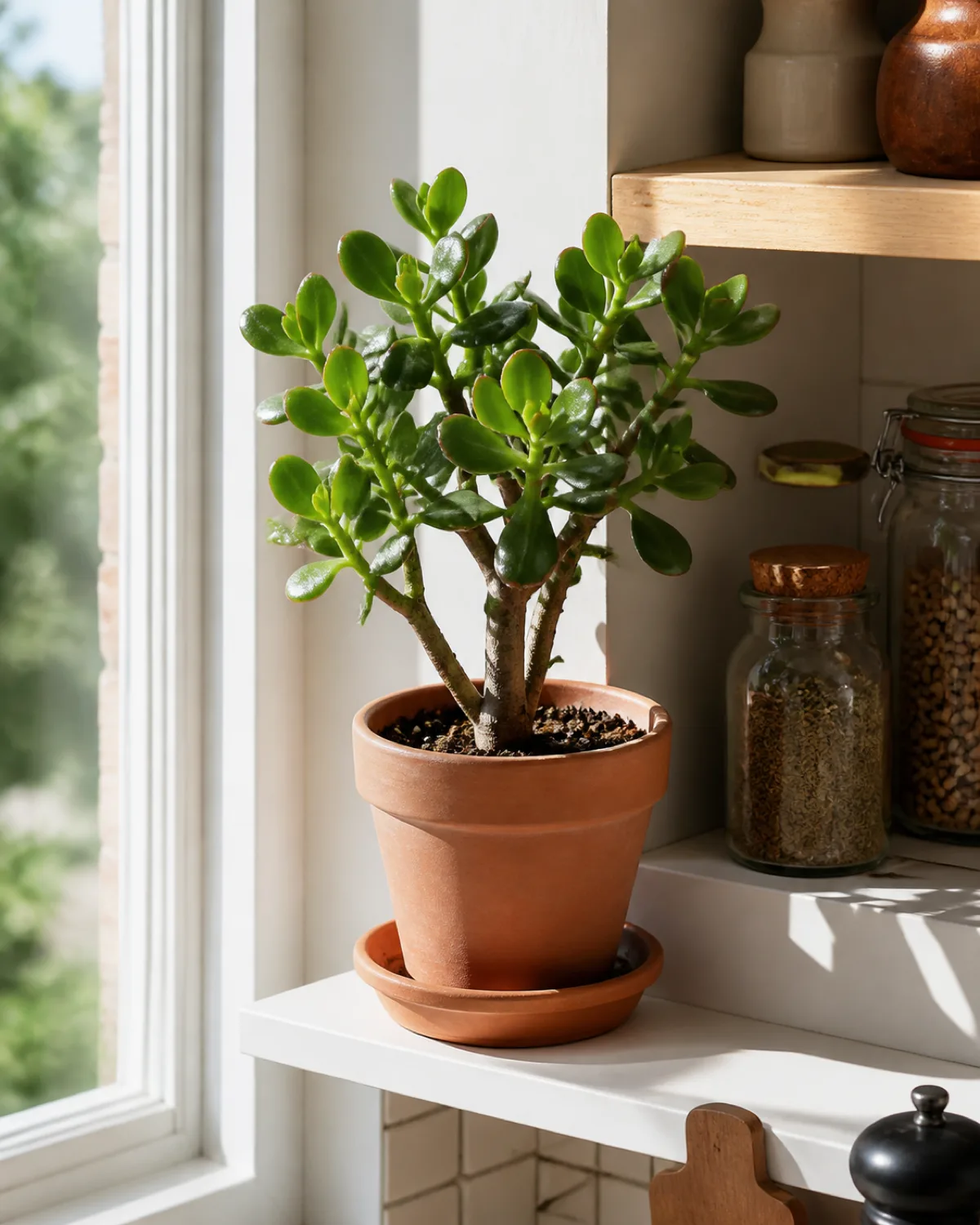
Jade plants fit the narrow kitchen shelf — the one between the window and the upper cabinet where you keep spice jars and olive oil — because their compact rosette form takes up less horizontal space than almost any other plant at the same visual density.
The thick succulent leaves store water for weeks, which matches the kitchen reality of forgetting to water while focusing on meal prep and cleanup. A mature jade develops a woody trunk that adds a miniature-tree silhouette, making it a genuine conversation piece on an otherwise utilitarian shelf.
Needs the brightest spot available — direct sun from a south or west kitchen window keeps it compact and prevents the leggy stretching that low light causes. Toxic to cats and dogs if ingested. Full care in our jade plant care guide.
Air plant on an open kitchen shelf
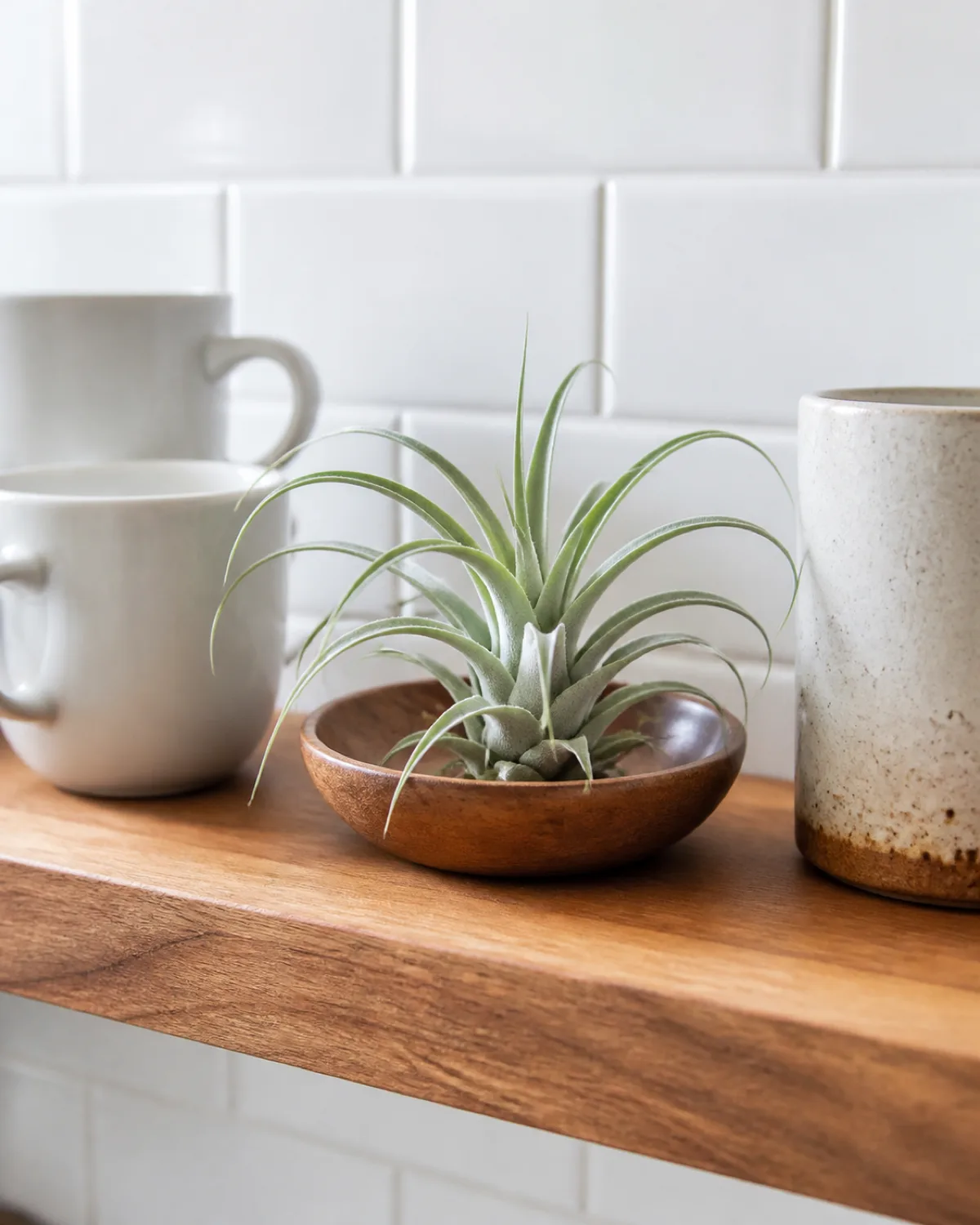
Air plants solve the kitchen problem of soil near food. No soil means no pot, no drainage hole, no saucer, no fungus gnats — just a plant sitting in a dish or clipped to a wire next to your mugs and glasses.
Tillandsias absorb water and nutrients through specialized trichomes on their leaves rather than roots. In a kitchen, the ambient humidity from cooking and dishwashing provides some of their moisture needs. Supplement with a weekly soak — submerge the plant in water for twenty minutes, shake off the excess, and set it back on the shelf.
The sculptural silver-green form reads as deliberate minimalist styling rather than forgotten greenery. Non-toxic and safe on any surface near food prep.
Pilea peperomioides: pet-safe countertop accent that grows faster in kitchen warmth
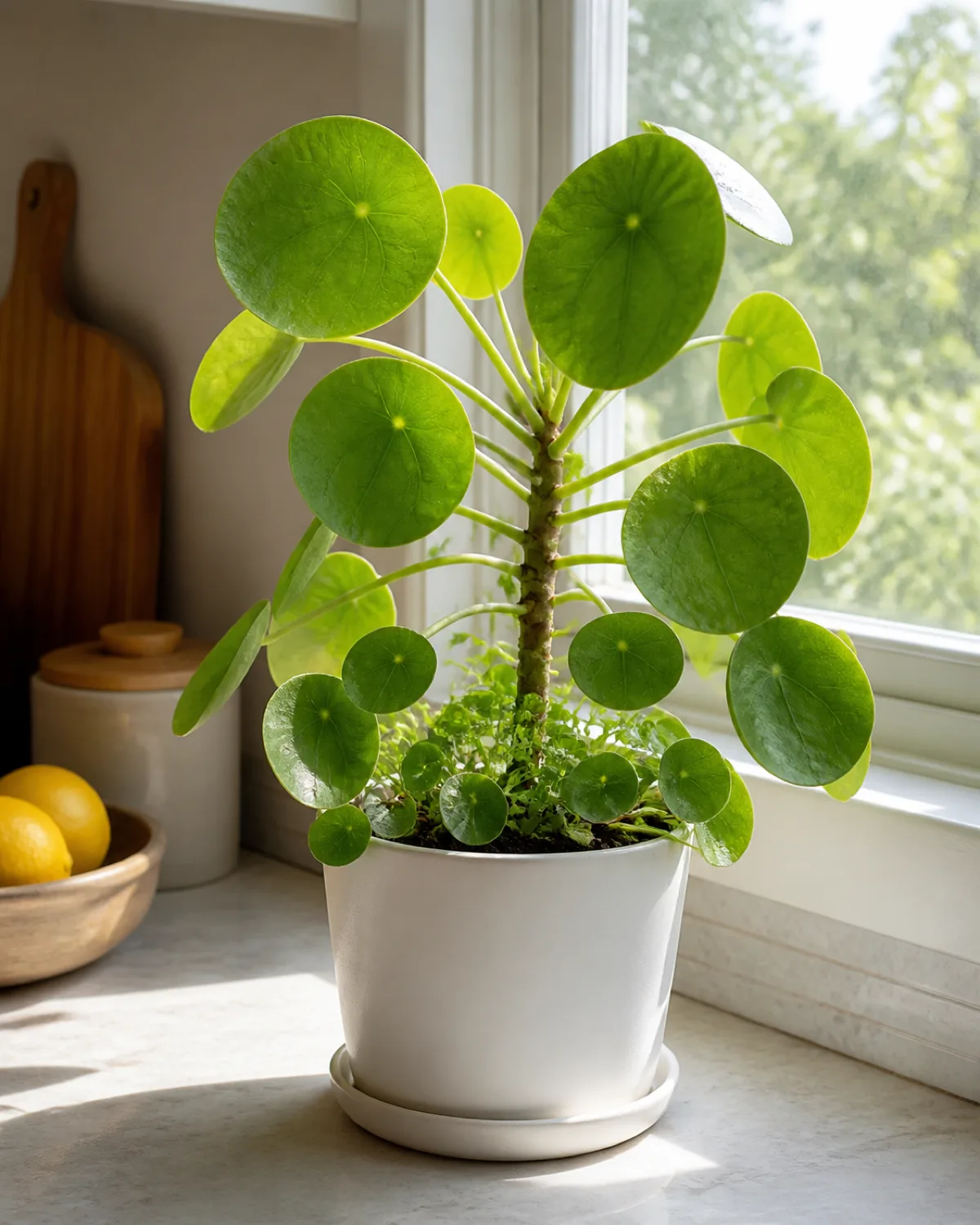
The kitchen is the warmest room in the house, and pilea responds to warmth by accelerating pup production — the offset plantlets that sprout at the base and can be separated and potted for friends. A kitchen-placed pilea produces pups roughly twice as fast as one on a cool bedroom windowsill because the ambient temperature from cooking and appliances stays consistently above seventy degrees.
This makes the kitchen the optimal room for anyone who wants to propagate pilea without a heat mat or grow light setup. The compact disc-shaped leaves fit beside the coffee maker or fruit bowl without crowding, and the single-stem growth habit means it never sprawls sideways on tight counter space.
Pilea is ASPCA non-toxic to cats and dogs, making it one of the few countertop plants that is genuinely safe next to food prep surfaces if a pet jumps up to investigate. Rotate the pot a quarter turn weekly to prevent the dramatic lean toward the window. Full care in our pilea peperomioides care guide.
How to keep kitchen plants alive long-term
The kitchen differs from every other room in the house because its environmental conditions change within minutes — boiling water sends humidity to ninety percent, then the range hood pulls it back down to thirty percent, then the oven door opens and blasts heat across the counter.
Plants that survive long-term in kitchens share one trait: resilience to rapid cycling. They tolerate fluctuations that would stress a calathea or maidenhair fern into crispy decline.
Kitchens and bathrooms share steam, but kitchens add oven heat and grease that bathrooms never produce. The plants that overlap between the two rooms — pothos, spider plant, peace lily — handle humidity, but only the kitchen picks on this list also handle the heat and grease.
The biggest single factor in kitchen plant survival is leaf cleaning. Every surface in a kitchen accumulates an invisible film of cooking oil, and plant leaves are no exception. Monthly wiping with a damp cloth removes the film and restores the photosynthetic surface. Skip this step and even a well-lit, well-watered plant slowly declines.
For the living room — where the constraints are different but the principle of matching plant to spot is the same — see our living room plants guide.
Kitchen Plants: The Quick Reference
- 1Fridge-top trailer: pothosTrails down fridge sides in low light. Compressor warmth mimics tropical floor heat. Wipe leaves monthly for grease.
- 2Hanging by window: spider plantRemoves cooking fumes, produces dangling babies, non-toxic. Bright indirect light from kitchen window.
- 3Narrow gap filler: snake plantVertical blades fit 6-inch gaps beside the fridge. Water every 3-4 weeks. Wipes clean of grease.
- 4Dual-purpose windowsill: aloe veraLiving burn relief station. South/west window with 6+ hours direct sun. Toxic to pets.
- 5Functional garden: windowsill herbsBasil, rosemary, thyme, mint. Harvest-and-regrow cycle. Bright direct light required.
- 6Zero-soil accent: pothos water cuttingGlass jar by the sink. No soil, no gnats, no mess. Change water weekly.
- 7Colorful countertop: Chinese evergreenSilver and pink leaves in low light. Darker green = lower light tolerance. Glossy surface resists grease.
- 8Above-cabinet survivor: ZZ plantRhizome stores water for a month. Waxy leaves resist dust and grease. Toxic — keep above reach.
- 9Artificial-light bloomer: peace lilyFlowers under fluorescents. Droops visibly when thirsty. Filters cooking VOCs. Toxic to pets.
- 10Steam-zone trailer: English ivyThrives in humid air above the sink. Prefers cool drafts. Removes airborne mold spores. Toxic.
- 11Indestructible corner: cast iron plantSurvives near-zero light, temperature swings, and weeks without water. Non-toxic.
- 12Bright-shelf succulent: jade plantCompact woody trunk fits narrow shelves. Direct sun required. Water when bone dry. Toxic to pets.
- 13Soil-free minimalist: air plantNo pot, no soil, no gnats. Weekly soak. Safe near food prep. Non-toxic.
- 14Countertop conversation piece: pileaRound disc leaves, produces shareable pups. Rotate weekly. Non-toxic and pet-safe.
kultivy.com
What is the best low-maintenance kitchen plant?
Pothos on top of the refrigerator. It trails decoratively, tolerates low light and irregular watering, and survives the temperature and humidity swings that kitchens produce. Wipe the leaves monthly and it will grow for years with almost no other attention.
Are kitchen plants safe near food?
Plants themselves do not contaminate food. The concern is soil — potting mix can harbor fungus gnats and mold spores. Keep soil-based plants on windowsills above the prep surface, and use soil-free options (water-rooted pothos, air plants) directly beside food areas.
Which kitchen plants are safe for cats?
Spider plant, cast iron plant, air plant, pilea, and culinary herbs are ASPCA non-toxic. Avoid pothos, peace lily, ZZ plant, English ivy, aloe vera, and jade plant on surfaces that cats can reach.
Can plants survive above kitchen cabinets with no light?
ZZ plants and snake plants survive in the dim above-cabinet zone because they have evolved water-storage structures (rhizomes and thick leaves) that let them grow extremely slowly in minimal light. They will not grow fast, but they will stay alive and look healthy for years.
How often should I wipe kitchen plant leaves?
Once a month. Kitchen grease accumulates faster than in any other room. A damp cloth removes the film and restores the leaf surface for photosynthesis. Plants near the stove may need wiping every two weeks.

Mara Quinn edits Kultivy, where she shares houseplant care, propagation, beginner-friendly plant picks, and plant-styling ideas for anyone who wants their indoor plants to actually thrive. Every guide is image-led and reviewed for clarity, usefulness, image accuracy, and Pinterest-to-page alignment before it goes live. Visit the About page.