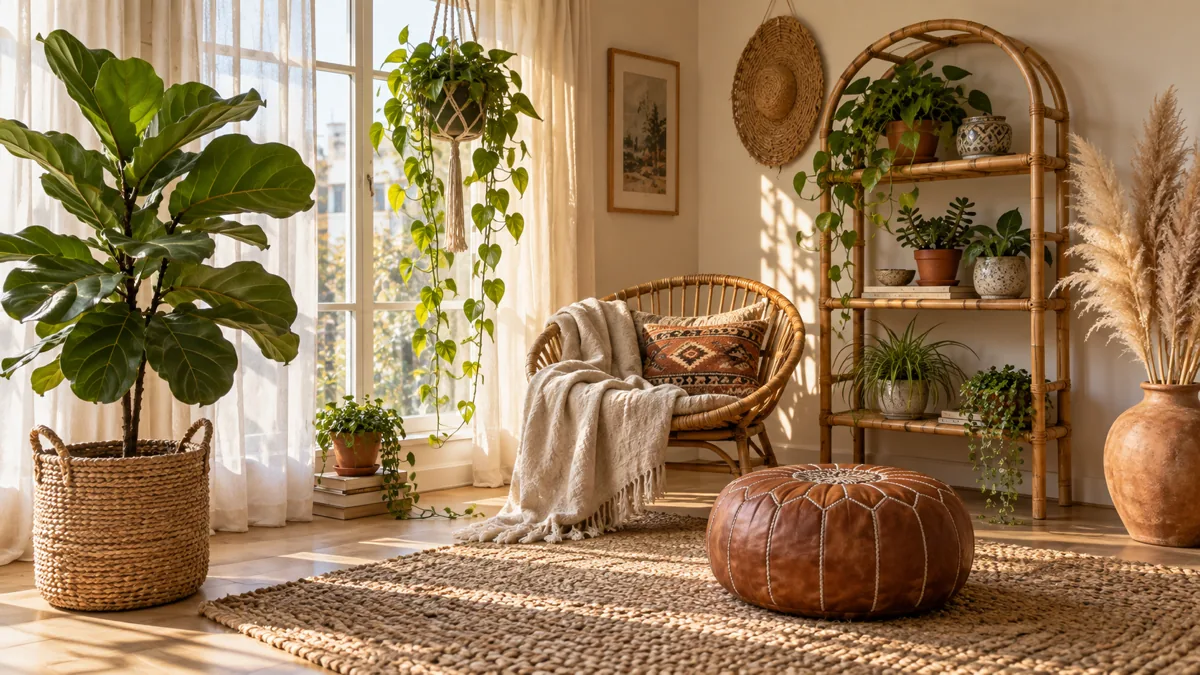
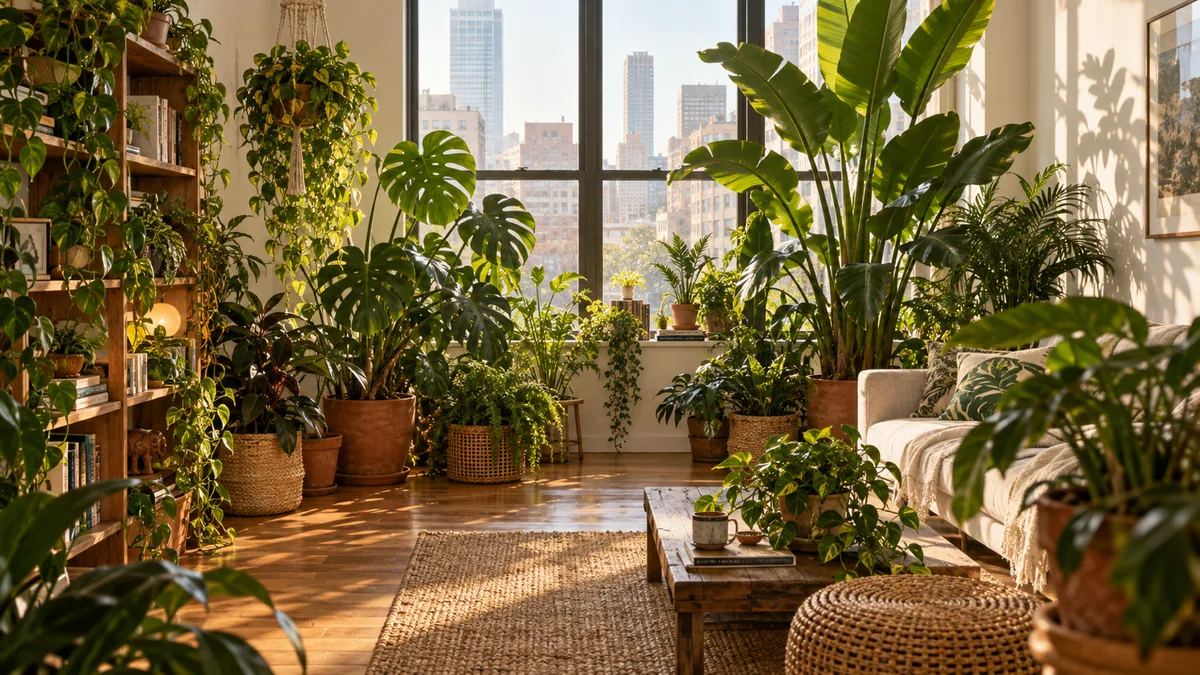
The fastest way to spot a fake plant is not the leaf texture — it is the styling. A single faux fern sitting dead center on a bare shelf reads artificial before anyone touches a leaf.
The same fern tucked between books with a trailing pothos draped over the edge reads like someone who collects plants. Mixing real and faux is the oldest decorator trick in the book.
The ideas below run from the easiest single-plant placements to full room schemes that blend real and fake so seamlessly that visitors start watering the wrong pots.
- 1Trailing plants on a high shelf
- 2Statement olive tree by the door
- 3Bookshelf mix with real cuttings
- 4Succulents & cacti on surfaces
- 5Hanging plants in macramé
- 6Eucalyptus in the bathroom
- 7Fiddle-leaf fig in a dark corner
- 8Herbs on the kitchen windowsill
- 9Monstera leaves in a floor vase
- 10Greenery garland on a mantel
- 11Mixed real-and-faux plant shelf
- 12Pampas grass in an entryway
- 13Boxwood topiary on the porch
- 14Faux plant wall panel
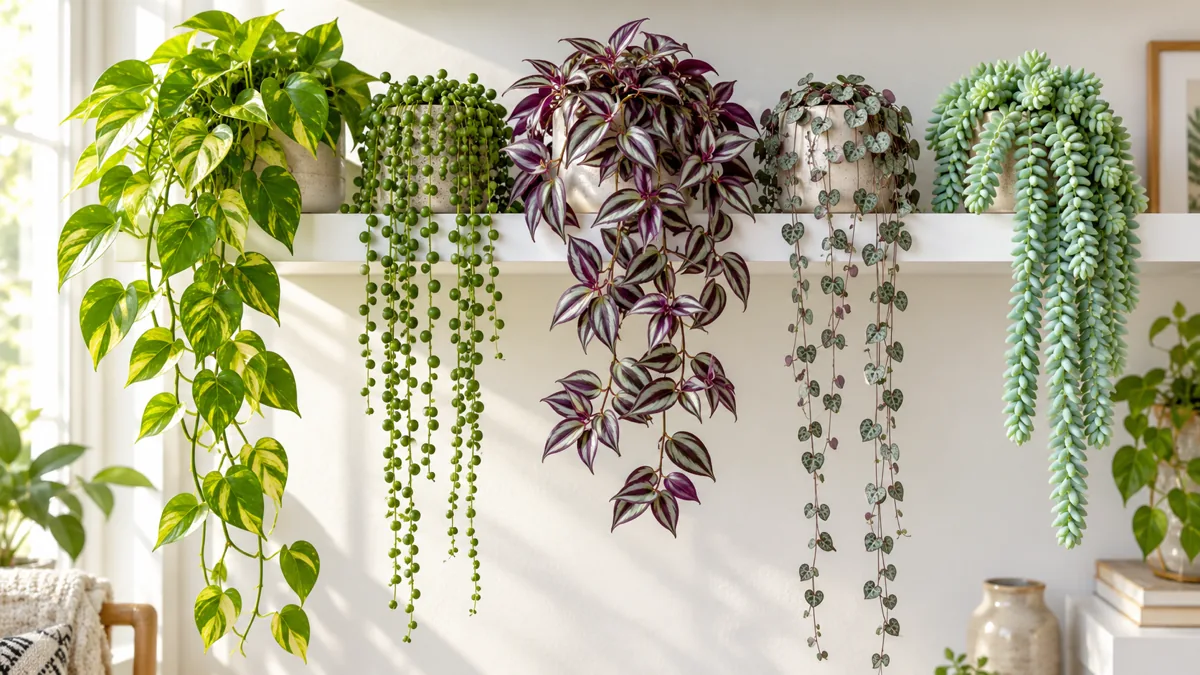
Faux trailing plants on a high shelf
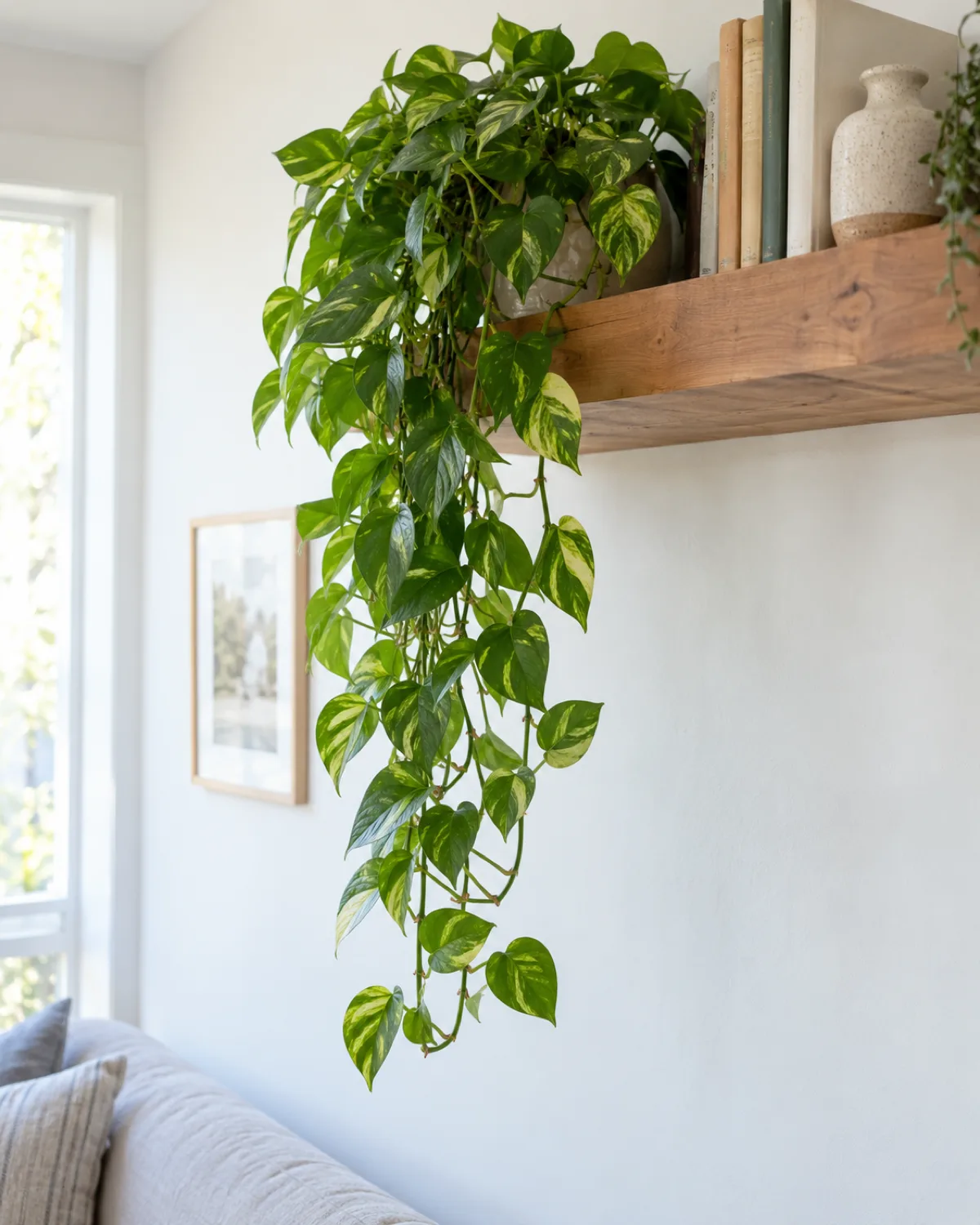
Height is the easiest trick in the faux plant playbook. A trailing golden pothos, string of pearls, or English ivy draped over the edge of a shelf above eye level puts the leaves out of touching range and lets gravity do all the styling work. The cascade looks natural because real trailing plants hang the same way.
The best faux species for shelves are the ones with waxy or small leaves. Pothos has a natural plastic sheen even on the real plant, so a faux version is nearly indistinguishable. String of hearts leaves are too small to inspect from floor level. Tradescantia draws the eye to its purple undersides instead of the texture.
- Ideal height: At least one hundred eighty centimeters from the floor — above standing eye level
- Drape length: Forty to sixty centimeters of trailing vine looks balanced on a standard shelf
- Anchor trick: Tuck the stem base behind a stack of books so the pot and plastic stems are hidden
- Maintenance: Dust the top leaves monthly with a damp microfiber cloth — gravity keeps the lower leaves clean
One faux trailing plant on a high shelf changes the feel of the entire wall. It is the lowest-effort, highest-impact fake plant placement in any room.
A statement faux olive tree by the front door
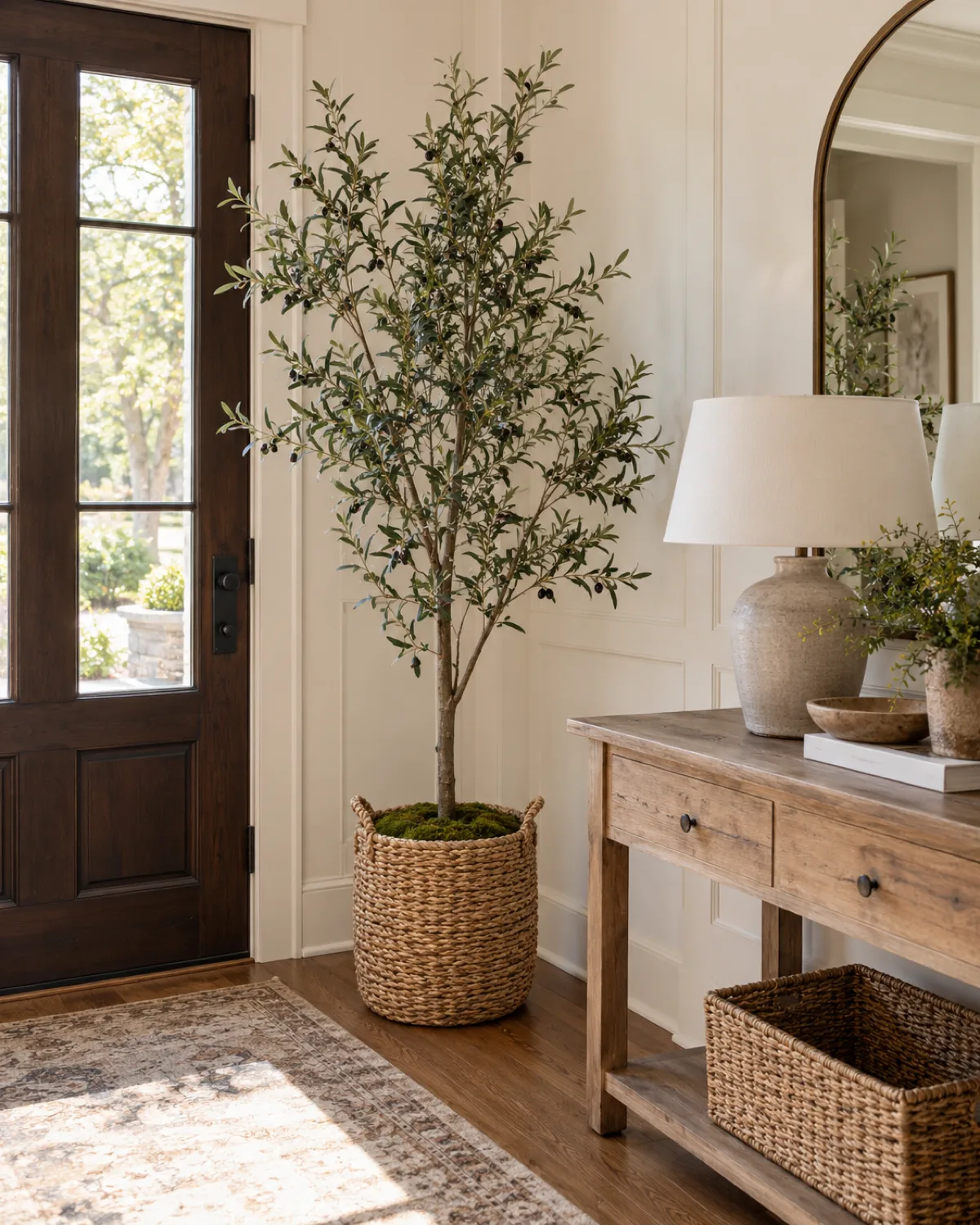
A tall faux olive tree in a woven basket anchors an entryway the way a real fiddle-leaf fig would, without the light crisis. The gray-green olive leaves read as Mediterranean and relaxed — a mood that most entryways need.
Quality faux olive trees come with wire-core branches that hold any position. Bend every branch slightly off-axis so no two point the same direction. Real trees are never symmetrical, and that imperfection is what sells the illusion.
- Height range: One hundred fifty to one hundred eighty centimeters fills an entryway without crowding the door
- Pot disguise: A woven seagrass or rattan basket hides the plastic nursery pot and adds texture the eye expects from a real plant setup
- Soil surface: Add a thin layer of real preserved moss or decorative pebbles on top of the plastic base — this is the detail that seals the deal
- Branch bending: Spend five minutes adjusting branches when you first set it up — the factory-straight look is the second-biggest giveaway after dust
An olive tree works where a real tree would struggle: narrow hallways, north-facing entries, and rooms where nobody is around to water for weeks.
Bookshelf faux greenery mixed with real cuttings
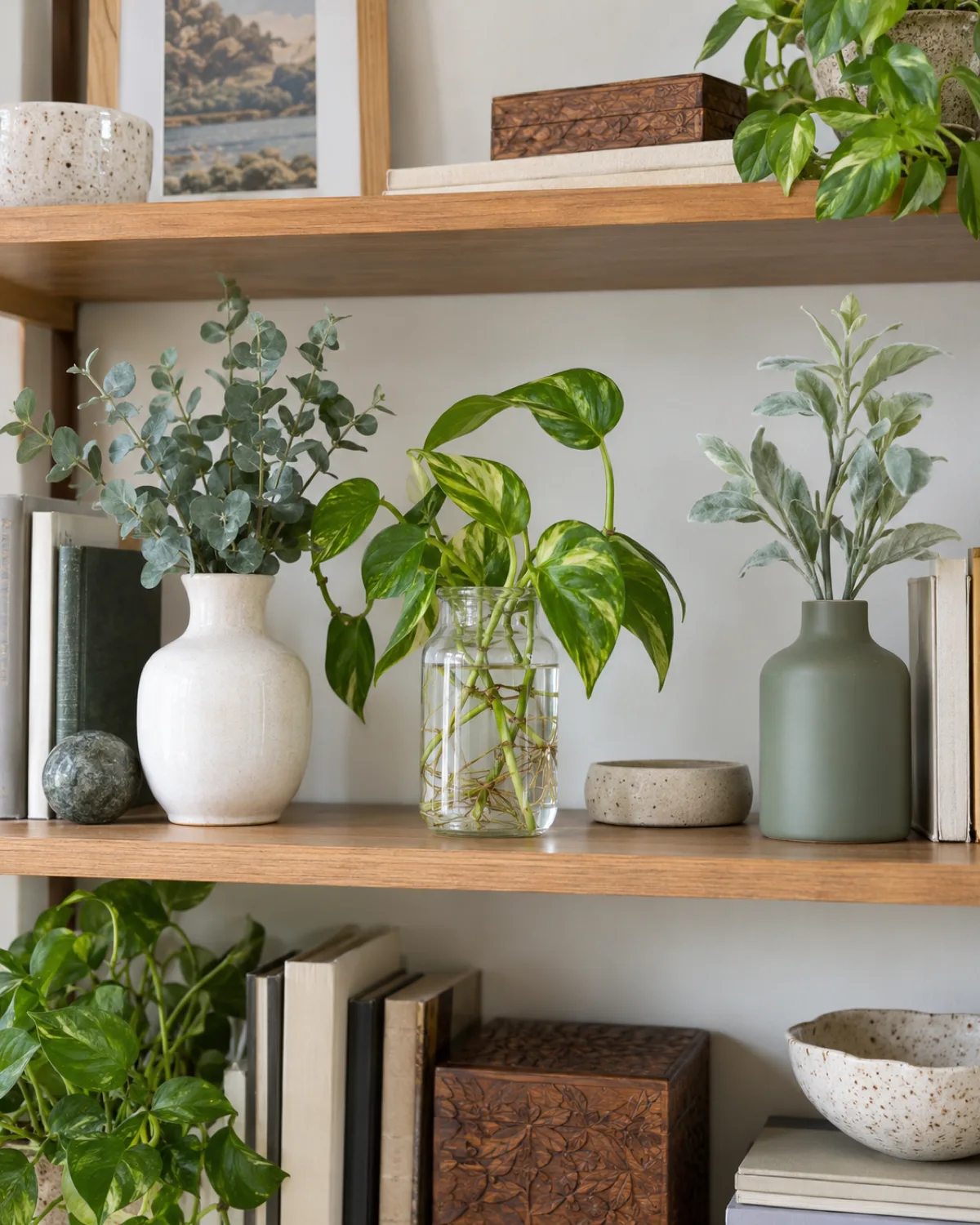
The smartest way to sell fake plants on a bookshelf is to put real ones next to them. A propagation jar with a real pothos cutting in water — roots visible through the glass — makes the brain accept everything else on the shelf as alive. Nobody questions a faux eucalyptus stem when it sits two books away from actual roots growing in water.
Use odd numbers. Three vases look curated; four look like a display at a home goods store. Vary the heights, the vase materials, and the green tones so the arrangement reads as collected over time rather than bought as a set.
- Real anchor: One clear glass propagation jar with a visible cutting and roots
- Faux fillers: Two to three faux stems in ceramic or matte vases — eucalyptus, olive branches, or dried-look grasses
- Spacing: Spread them across the shelf with books, candles, or small objects between — clustering all the greenery together invites comparison
- Vase rule: Never use the vase the faux plant shipped in — transfer it to a ceramic, glass, or stoneware vessel you already own
The propagation jar does double duty: it makes the faux plants look real and it gives you a genuine plant propagation project to watch grow.
Faux succulents and cacti on display surfaces
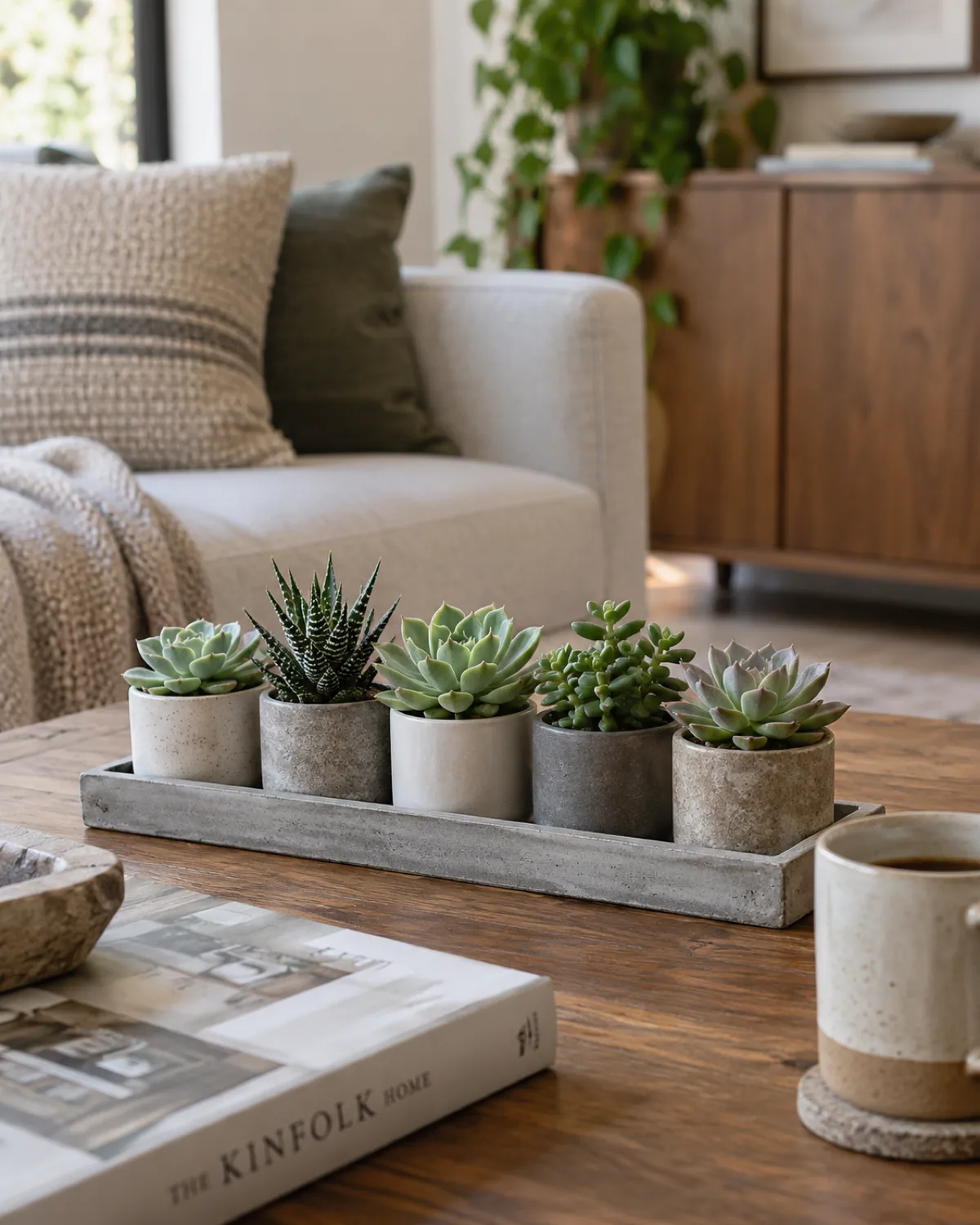
Real succulents and cacti sit still. They barely change shape over months. They do not trail, droop, or reach toward light the way a fern or pothos does. That stillness is exactly why faux succulents and cacti are the hardest fake plants to detect — the difference between a living one and a faux one is invisible for weeks at a time.
A cluster of five to seven mini faux succulents on a low concrete tray on a coffee table creates the same visual weight as a real arrangement. On a sunny windowsill, a group of three faux cacti — a round barrel, a tall columnar, and a small prickly pear — creates a desert-garden effect that real cacti collectors would envy.
- Succulent mix: At least three different rosette and upright shapes in sage, dusty blue-green, and true green
- Cactus mix: At least three different species shapes — barrel, columnar, and prickly pear in individual pots
- Container: A low rectangular concrete or wood tray for succulents. Individual ceramic or terracotta pots for cacti — never plastic nursery pots
- Topping: Real fine gravel or decorative sand on the soil surface in each pot — this is the detail that makes both succulents and cacti pass at arm's length
Faux succulents belong on surfaces people look down at: coffee tables, bathroom counters, bedside tables. Faux cacti belong on windowsills that get direct sun — real cacti thrive there, so the location reinforces the illusion. Pair either group with one real specimen that grows slowly enough not to draw attention to its static neighbors.
Faux hanging plants in macramé holders
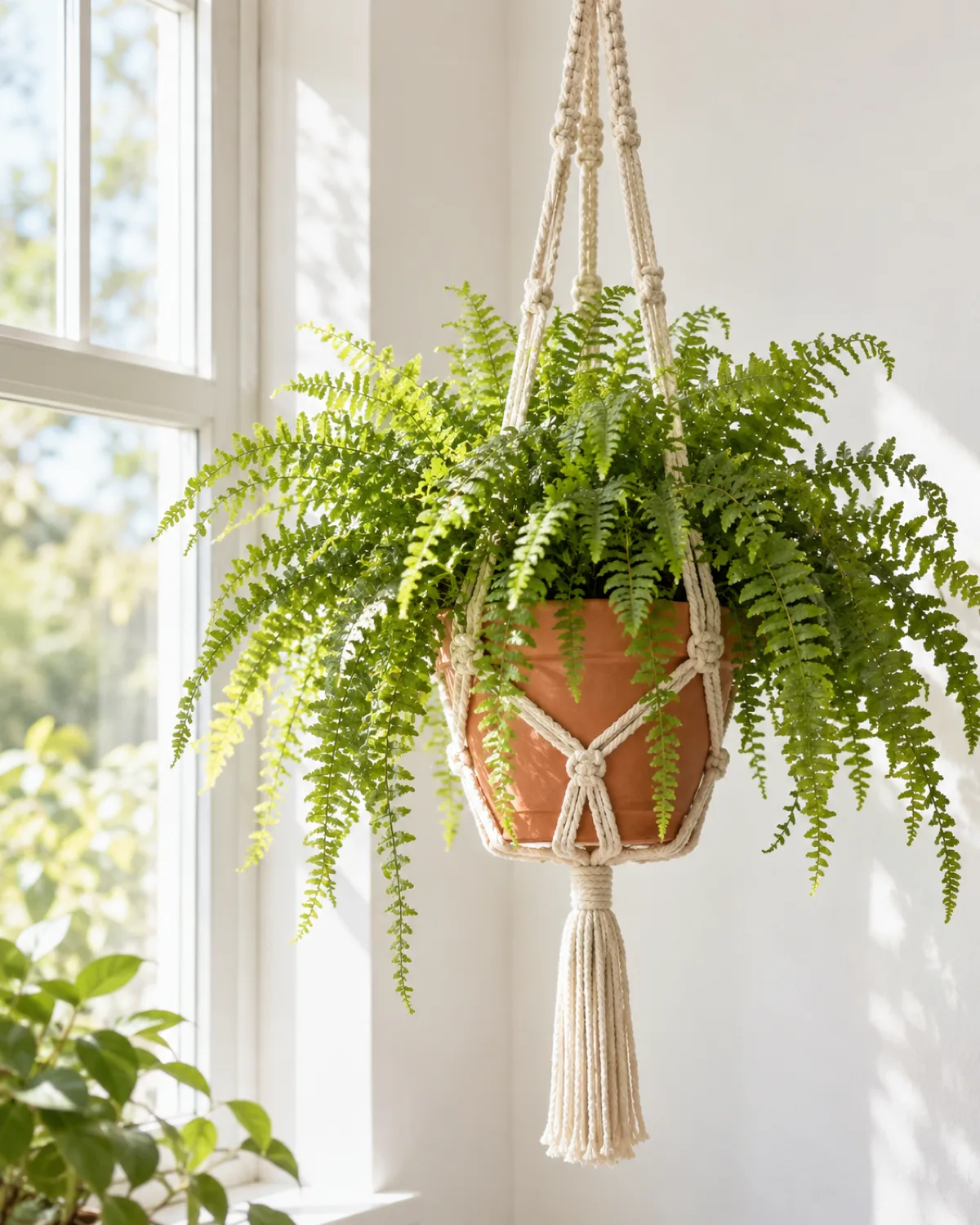
A faux Boston fern or pothos in a macramé plant hanger at window height catches every air current in the room. The gentle sway makes the leaves shift the way real fronds do — movement that no floor plant fakes.
The macramé hanger does more than hold the pot. It covers the pot rim, which is where the cheapest faux plants betray themselves. A visible plastic pot edge kills the illusion faster than any leaf texture issue.
- Best species: Boston fern (fronds hide any plastic seams), pothos (waxy leaves match real pothos), and string of pearls (beads are too small to inspect from below)
- Hanger style: Natural cotton or jute macramé that wraps over the pot rim — avoid hangers that leave the pot exposed
- Placement: Near a window where air currents from the HVAC or an open window create gentle movement
- Height: High enough that the bottom of the trailing fronds sits at or above eye level
One hanging faux plant plus one real trailing plant on a shelf in the same room creates a layered green effect that reads as a lived-in plant collection.
Faux eucalyptus in the bathroom
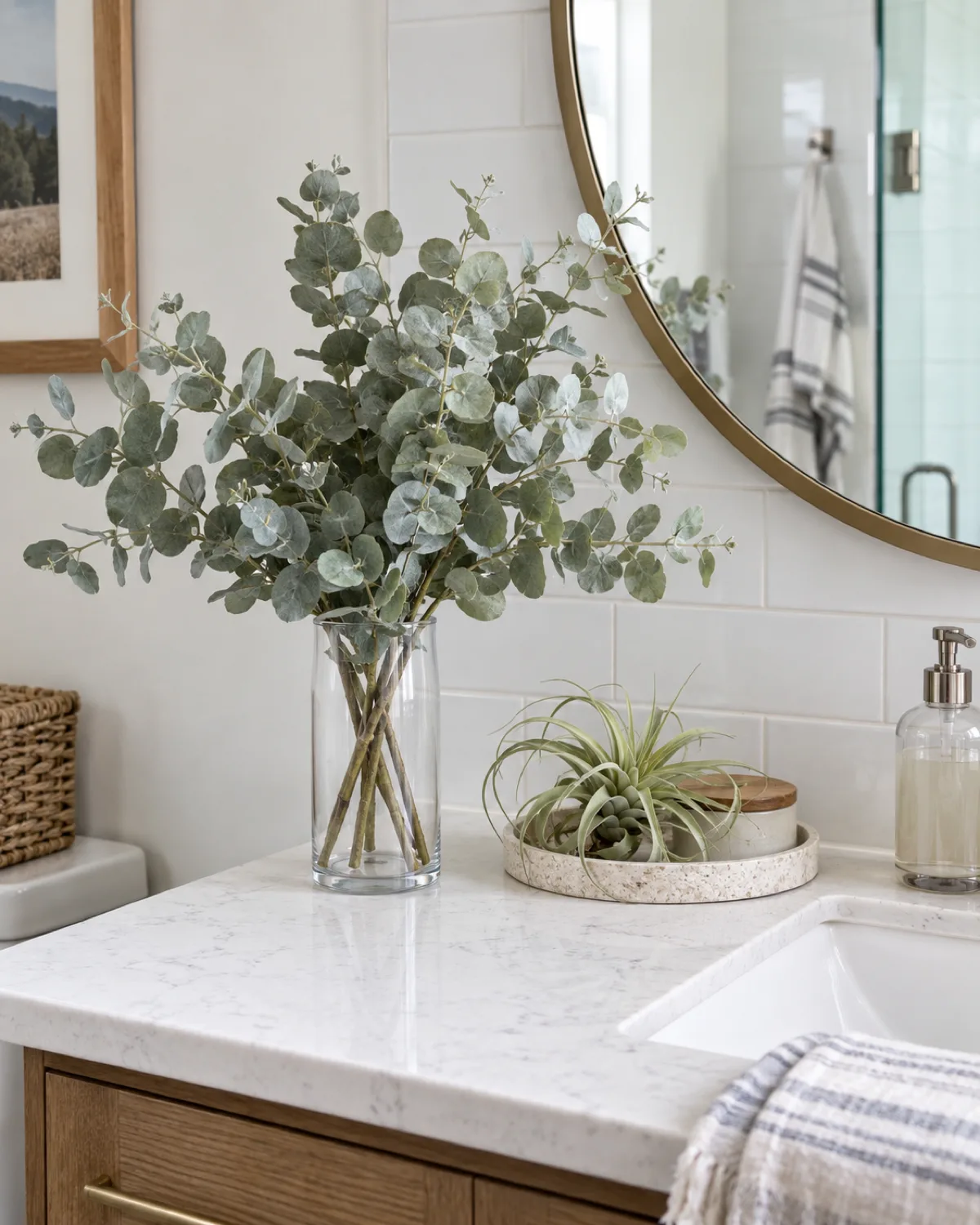
Bathrooms are the one room where slightly matte, dusty-looking foliage reads as steam-dried rather than fake. Faux eucalyptus stems in a glass vase on the vanity or hanging from the showerhead blend into the humid environment because real eucalyptus looks exactly the same in steam.
The bathroom also has built-in allies: mirrors double the greenery visually, tile reflects light in ways that flatten texture differences, and the smaller room scale means the arrangement sits at arm's length, not across a living room where someone might walk up to inspect.
- Vase: Clear glass cylinder or tall narrow bottle — the transparency signals "nothing to hide"
- Stems: Three to five faux eucalyptus branches in the dried-look matte sage green, not glossy fresh green
- Companion: One real air plant (Tillandsia) on a shelf or tray nearby — it needs no soil and thrives in bathroom humidity
- Shower trick: Tie a small faux eucalyptus bundle to the showerhead with twine — real spa eucalyptus bundles look identical
Faux eucalyptus in the bathroom is one arrangement where the faux version might actually look more natural than the real one, because real eucalyptus dries and drops leaves within a few weeks.
A faux fiddle-leaf fig in a low-light corner
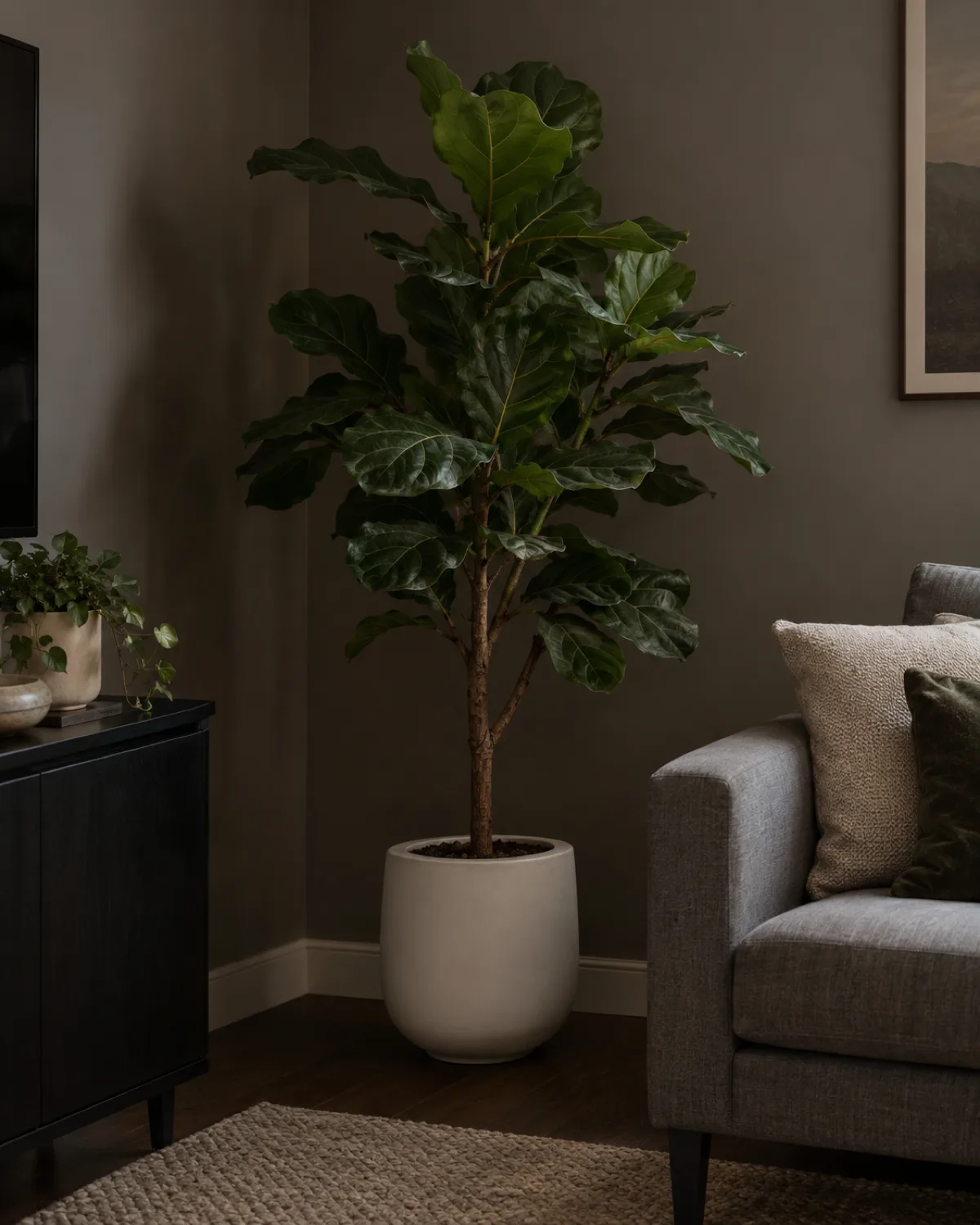
Real fiddle-leaf figs are famously dramatic about light. Put one in a dim corner and it drops every leaf within weeks, leaving a bare trunk and a pile of disappointment. A quality faux version with slightly irregular leaf sizes and a real wood trunk solves the light problem permanently.
The key to a convincing faux fiddle-leaf is leaf variation. Real fiddle-leaf figs have leaves of different sizes, slightly different shades of green, and minor imperfections — a small brown spot, a curled edge. The cheapest faux versions have identical leaves in identical green, which screams factory.
- Leaf variety: Look for versions with two or three slightly different leaf sizes and at least two green tones
- Trunk: Real wood or a realistic bark-textured trunk, not a smooth green plastic stem
- Pot: Matte white, concrete, or a woven basket — avoid glossy decorative pots that look too staged
- Placement: The corner that is too dark for any real houseplant — this is where faux plants earn their keep
Wipe the broad leaves every two to three weeks. Fiddle-leaf fig leaves are large enough to show dust from across the room, and dusty broad leaves are the single most recognizable sign of a fake plant.
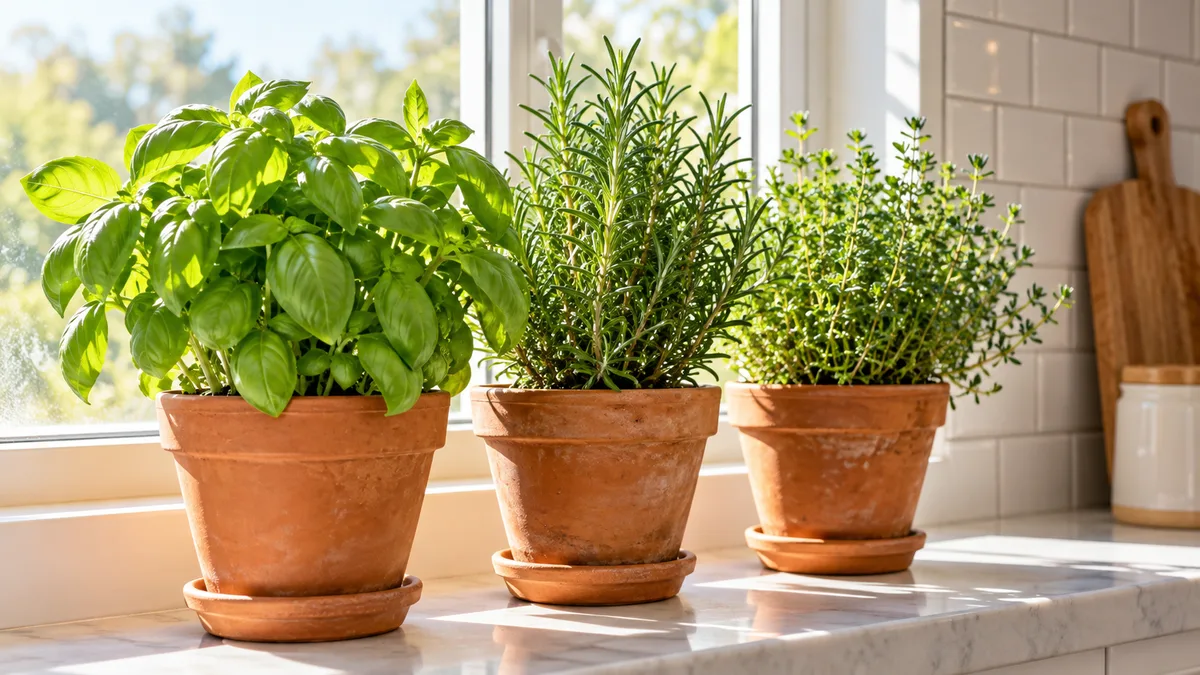
Faux herbs in the kitchen windowsill
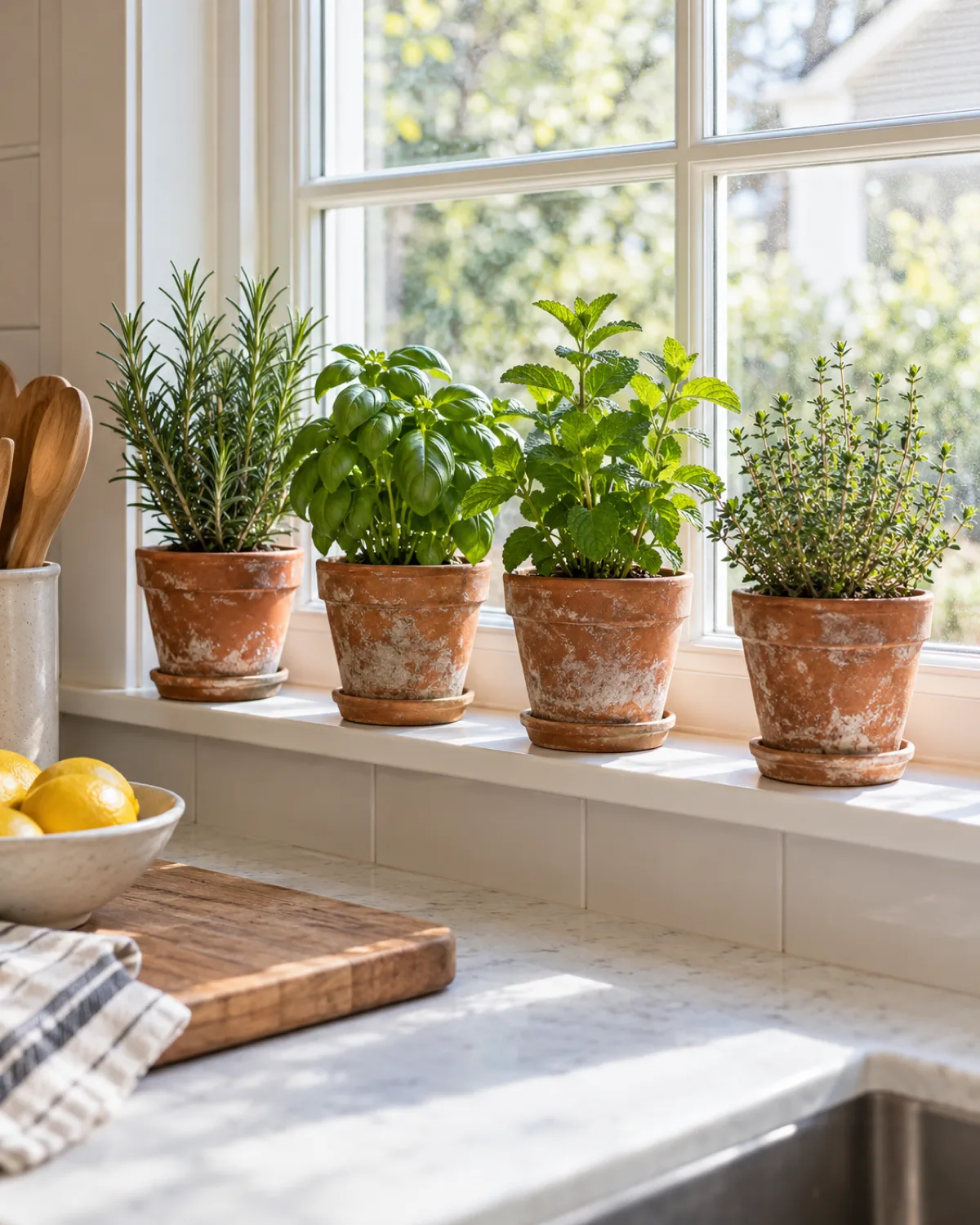
Real kitchen herbs bolt in summer heat, go leggy in low winter light, and die from inconsistent watering. Faux rosemary, basil, and thyme in terracotta pots on the windowsill look like a functional kitchen garden year-round without any of the maintenance.
The trick is the pots. Use real terracotta that has developed a white mineral crust from water and soil — the patina that only comes from time and actual use. New terracotta works too if you soak it in water for a day and let it dry naturally before planting.
- Species to fake: Rosemary (woody stems look the same real or faux), thyme (tiny leaves hide texture), and basil (broad leaves are harder to fake but work at arm's length)
- Species to keep real: Mint — it is nearly impossible to kill, grows aggressively in any light, and anchors the whole arrangement as living
- Container: Aged terracotta with mineral deposits. The pot matters more than the plant for kitchen windowsill realism
- Arrangement: Line them up in a row with a small gap between each — real kitchen herb gardens follow this layout naturally
Keep one real herb in the lineup. When someone reaches over to pinch a mint leaf for their drink, they stop questioning whether the rosemary next to it is real.
Faux monstera leaf stems in a floor vase
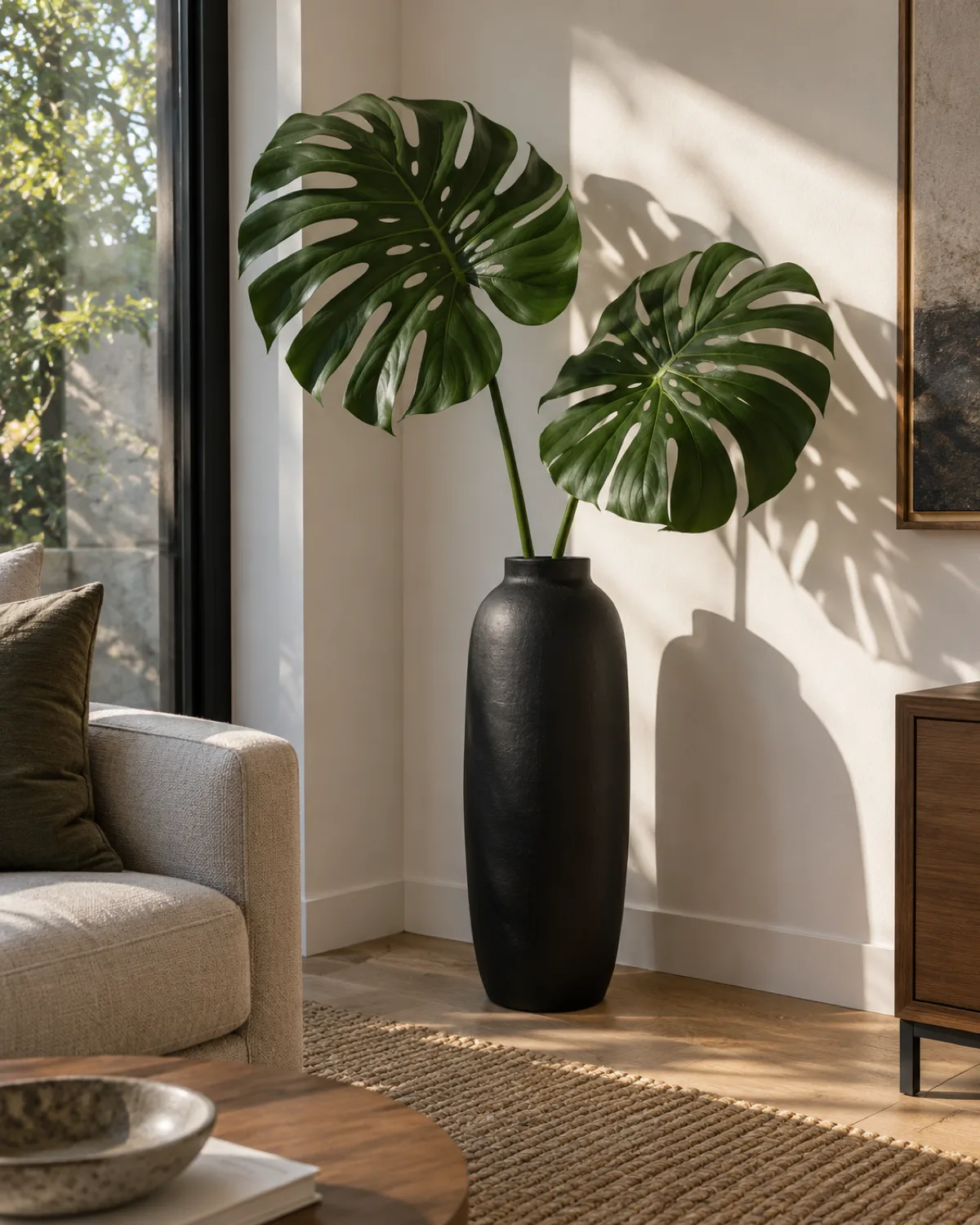
Two or three oversized faux monstera deliciosa leaves in a tall ceramic floor vase sidestep the realism question entirely. A single-stem arrangement reads as deliberately decorative — like dried branches or sculptural flowers — rather than pretending to be a potted plant.
The fenestrations — the natural holes in monstera leaves — cast interesting shadows on the wall behind the vase when afternoon light hits them. That shadow play adds movement to a static arrangement and gives the corner visual depth that a solid-leaf plant could not match.
- Leaf count: Two or three stems maximum. One looks sparse; four or more starts looking like a real plant attempt and invites scrutiny
- Vase: Tall floor vase in matte black, white, or terracotta — the vase should be a design object in its own right
- Fenestration: Choose leaves with natural-looking splits and holes — real monstera fenestrations are irregular, not stamped in a repeating pattern
- Shadow bonus: Position so the afternoon sun projects leaf shadows onto the wall — this is the detail that elevates the arrangement from basic to designed
This is the one faux plant arrangement that works better alone than mixed with real plants. The decorative intent is the point, and adding real plants around it muddies the aesthetic.
Faux greenery garland along a mantel
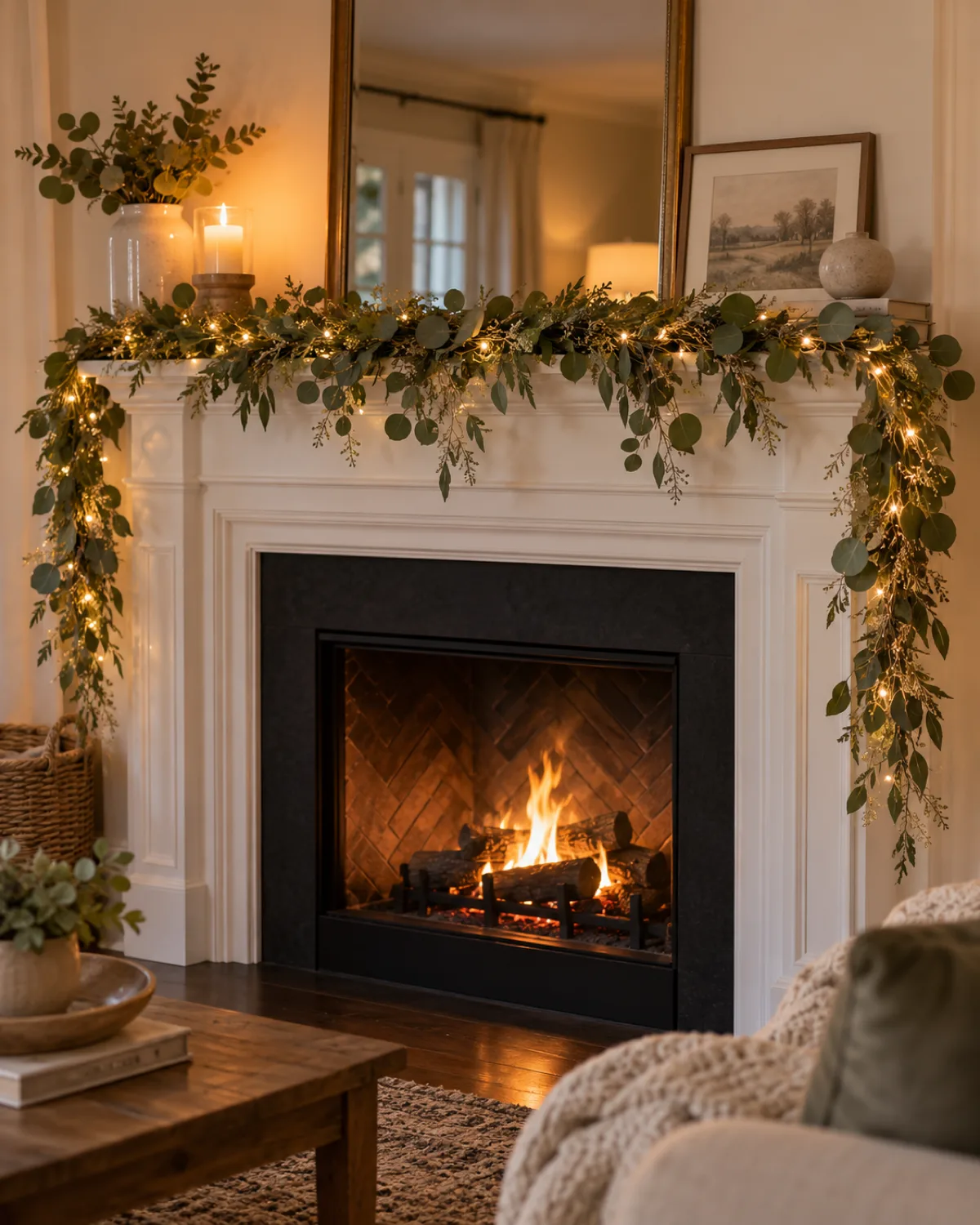
A faux eucalyptus or mixed-leaf garland draped loosely across a fireplace mantel works because real plants never grow in long horizontal lines. Nobody expects a garland to be alive — it reads as decor from the start, which means the bar for realism drops to zero.
The trailing ends that hang down on each side give the garland movement and prevent the rigid-tube look that stiff faux garlands get when laid flat. Tuck small fairy lights through the leaves for an evening warmth that makes the greenery glow.
- Drape: Loose and asymmetric — one trailing end longer than the other. Symmetry looks manufactured
- Length: One hundred fifty to one hundred eighty centimeters covers a standard mantel with trailing ends
- Leaves: Mixed-leaf garlands (eucalyptus plus fern fronds plus small berries) look more natural than single-species garlands
- Lights: Small warm-white fairy lights woven through the leaves, not wrapped around the outside
A mantel garland is seasonal-flexible: add dried orange slices in autumn, white berries in winter, and leave it plain in spring and summer. The faux base stays year-round; only the accents rotate.
A mixed real-and-faux plant shelf
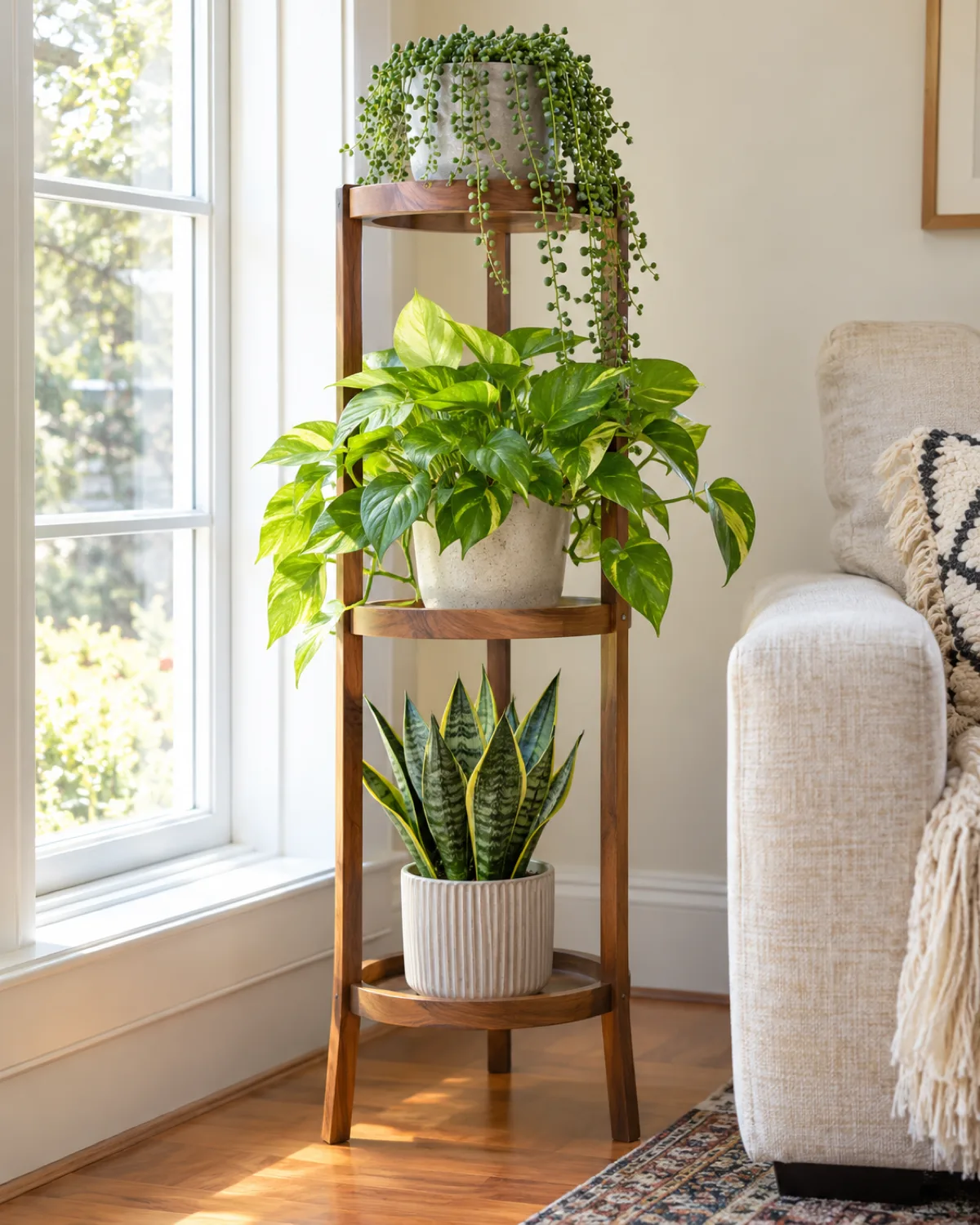
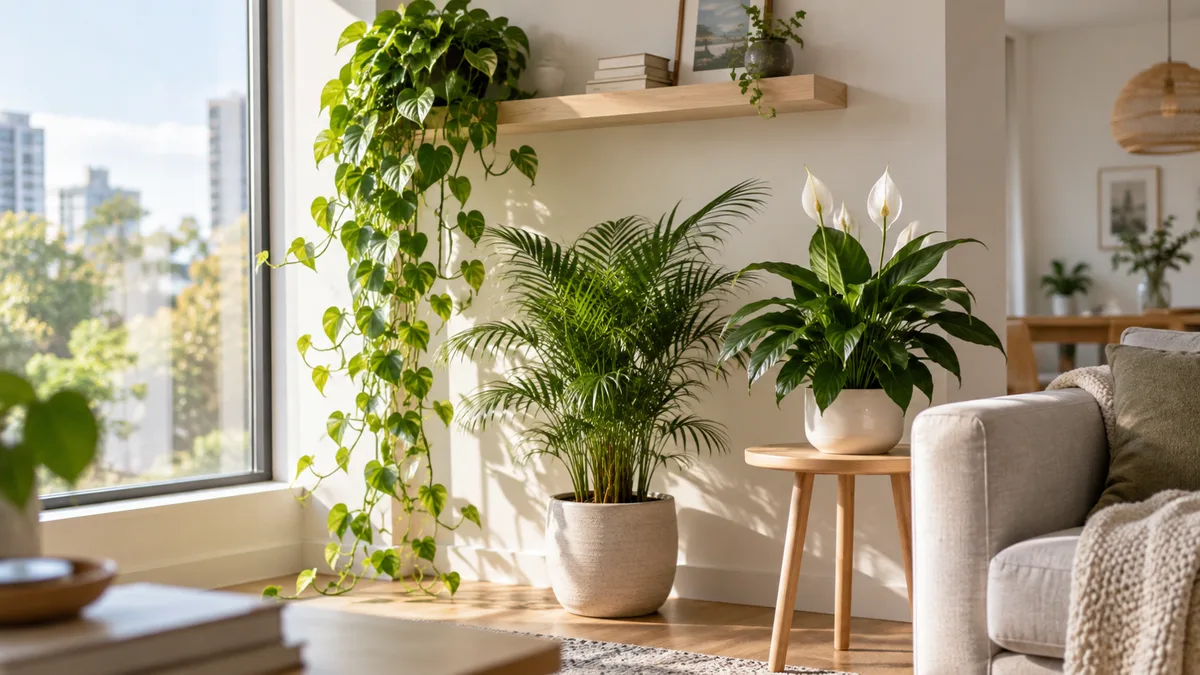
The decorator rule for mixing real and fake plants on a shelf or plant stand is simple: real plants go at eye level where people look closely, and faux plants go on the tiers where nobody lingers.
A sixty-forty ratio of real to faux works for most shelves. Three tiers: real golden pothos on the middle tier at eye level, a faux snake plant on the bottom tier where it is half-hidden, and a faux trailing string of pearls on the top tier where nobody can touch it.
- Eye-level tier: Real plants only — these are the ones visitors inspect, touch, and comment on
- Top tier: Faux trailing plants that benefit from height and the eye-level distance
- Bottom tier: Faux upright plants like snake plants or ZZ plants that sit still and rarely change — exactly the species that are hardest to tell apart
- Watering ritual: Water the real plants on a visible schedule — the act of watering makes visitors assume every plant on the shelf is alive
The faux plants fill in the tiers that get the worst light anyway. Real plants on the bottom of a plant shelf often struggle with low light, so replacing them with faux versions solves both the realism and the survival problem.
Faux pampas grass in an entryway vase
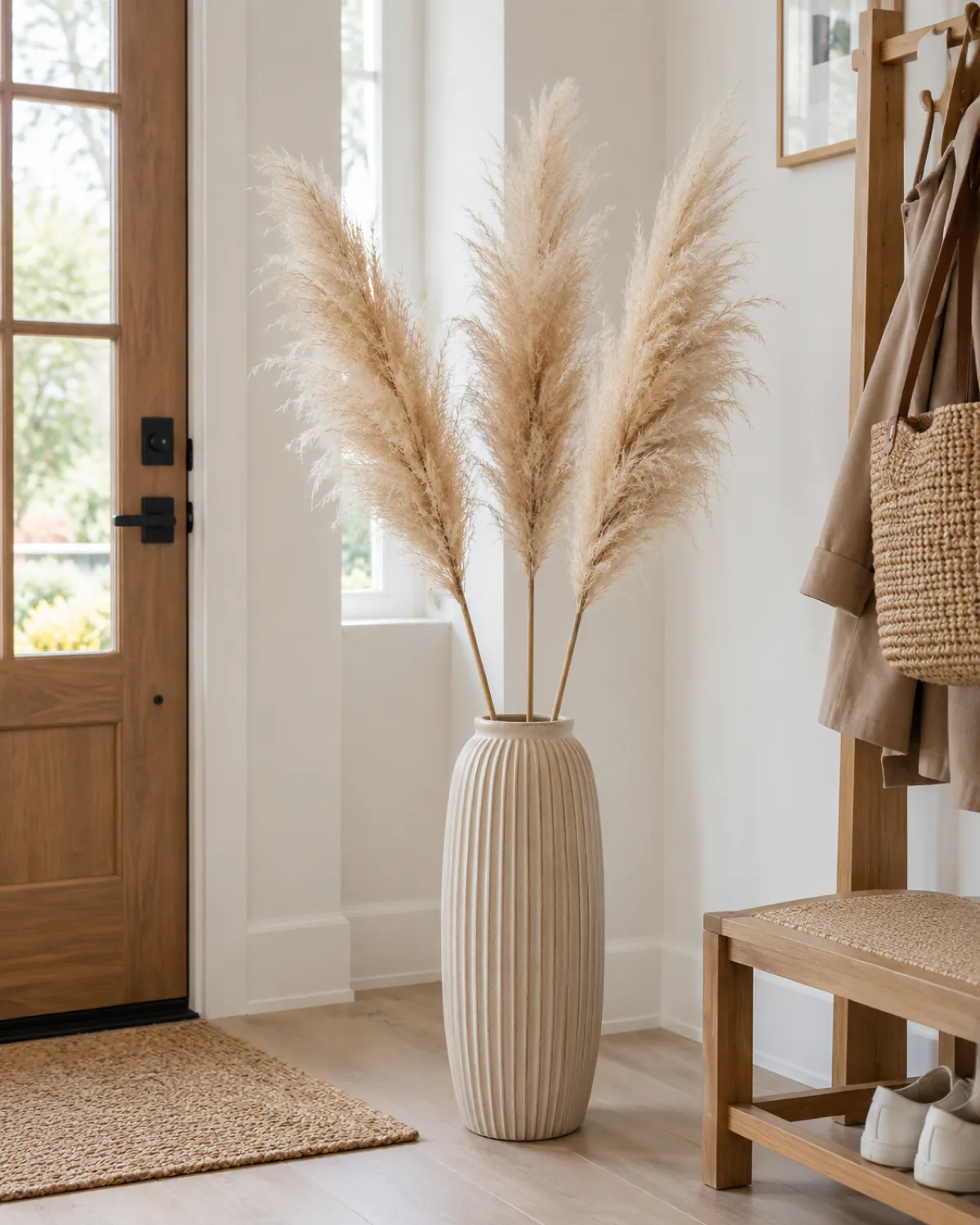
Faux pampas grass is the one fake plant category where the faux version is genuinely better than the real thing. Real dried pampas sheds everywhere, triggers allergies, and eventually disintegrates. Faux pampas plumes hold their shape indefinitely and never drop fibers on the floor.
Three to five oversized plumes in a tall neutral vase make a floor-level statement that fills vertical space the way a tall indoor plant would. Choose cream or warm beige — real pampas is never paper-white, and bright white plumes are the instant tell.
- Color: Cream, warm beige, or dusty blush — never bright white or dyed colors
- Plume count: Three to five for a standard vase — odd numbers look curated
- Vase: Tall ceramic or earthenware in sand, terracotta, or matte white. The vase needs visual weight to balance the plumes
- Fluffing: Spend two minutes gently pulling the fibers apart when you first set them up — compressed plumes from packaging look limp
Pampas plumes work in entryways, living rooms, and bedrooms — anywhere you want height and softness without a living plant to maintain.
Faux boxwood topiary on the front porch
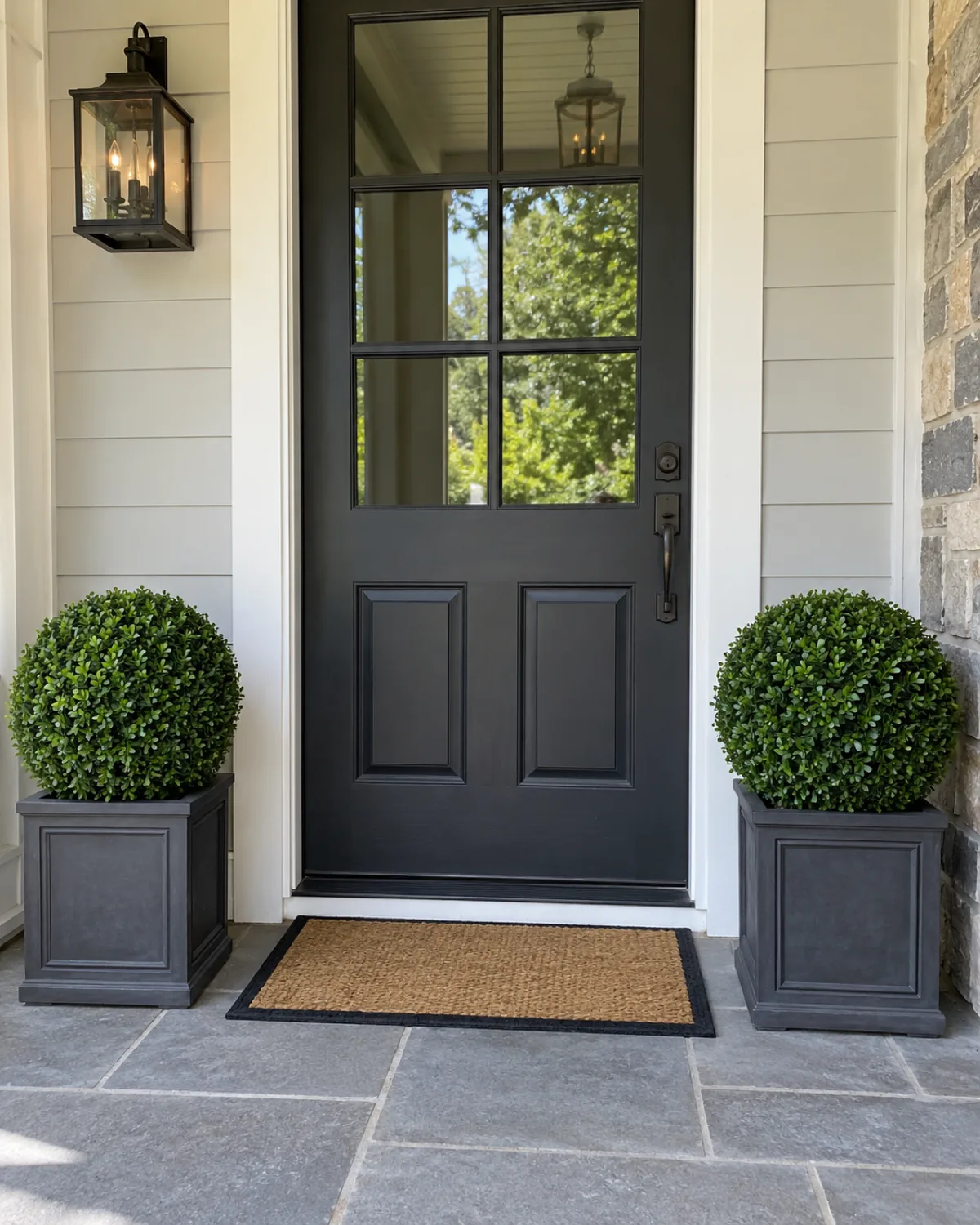
Real boxwood hedges are sheared into the same geometric shape that faux versions come in. That shared artificiality is what makes faux boxwood topiaries doubly convincing — the shape is supposed to look unnatural.
A pair of matching faux boxwood ball topiaries flanking the front door is a classic porch arrangement. Outdoor placement adds UV degradation risk, so buy versions specifically labeled as UV-treated or UV-resistant.
- UV treatment: Check the product tag — untreated faux boxwood fades from green to yellow within one summer season
- Planter: Square or round planters in dark gray, black, or terracotta. The geometric planter reinforces the formal topiary look
- Sizing: Symmetrical pair, each forty to sixty centimeters tall for a standard front door
- Shelf life: UV-treated faux boxwood lasts two to three years outdoors before color shift is noticeable; bring them in during extreme heat waves
Faux boxwood topiary is the one outdoor fake plant decor arrangement that even garden-savvy visitors rarely question, because real boxwood topiary already looks sculpted and uniform.
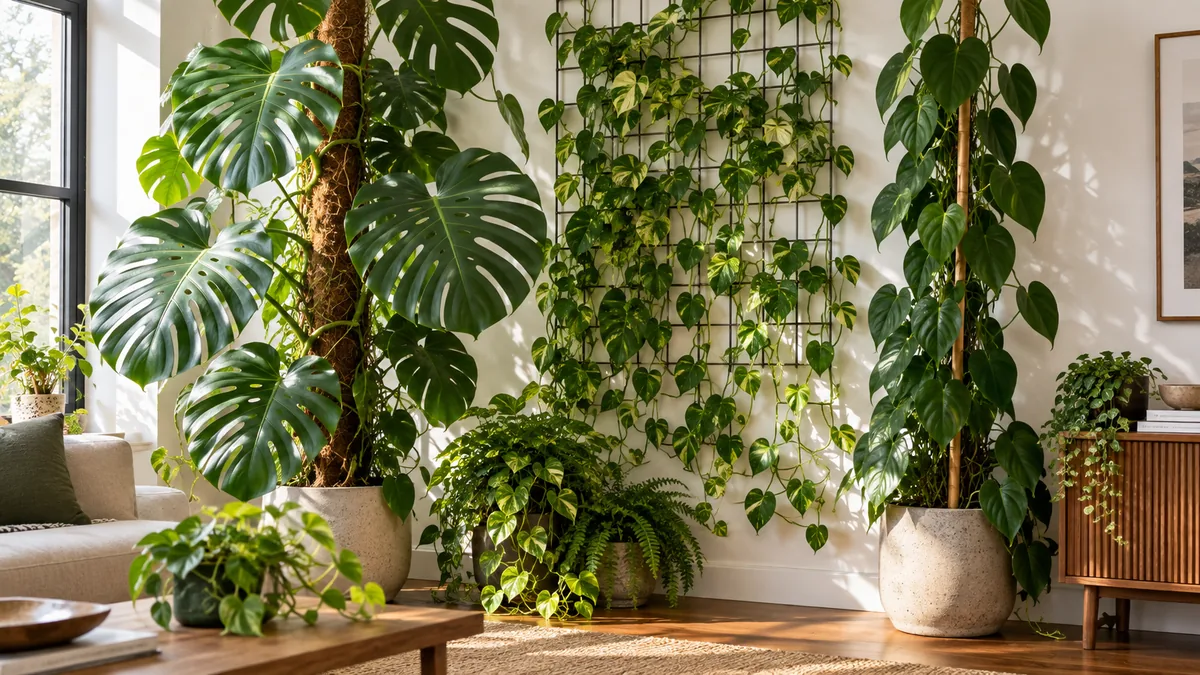
Faux plant wall or vertical garden panel
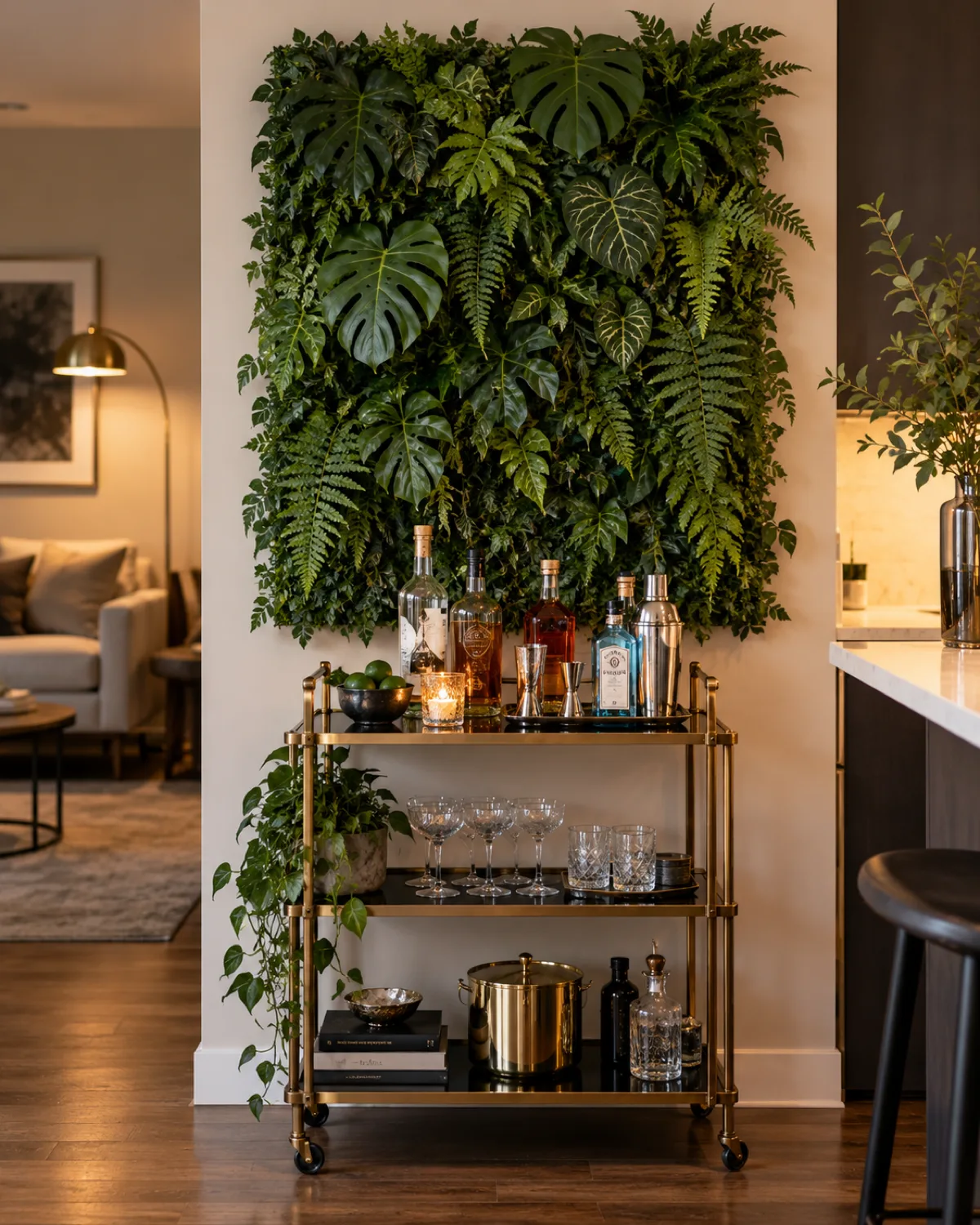
Pre-made faux greenery panels mounted on a wall create the look of a living wall without the irrigation system, the maintenance, or the risk of water damage behind drywall. The grid pattern is too regular to pass as a real living wall up close, so position the panel as a backdrop rather than a centerpiece.
Behind a bar cart, above a headboard, or framing a reading nook — these positions frame the panel as intentional decor. The furniture in front breaks up the grid and prevents the "artificial turf on the wall" look.
- Mounting: Behind a piece of furniture that partially covers the lower edge — the bar cart, a console table, or a bench
- Leaf mix: Panels with three or more leaf types (monstera, fern, philodendron) look more natural than single-species panels
- Lighting: Warm accent lighting (a wall sconce or picture light above) adds shadows that create depth and break the flat grid
- Coverage: One panel as an accent, not an entire wall — full-wall coverage looks like a commercial installation
A faux plant wall panel behind a bar cart is one of the most photographed fake plant decor arrangements because it solves the blank-wall problem and the plant-care problem simultaneously.
14 Fake Plants Decor Ideas That Look Real
- 1Trailing plants on a high shelfPothos or string of pearls draped above eye level. Height hides seams.
- 2Faux olive tree by the front doorWoven basket, bent branches, real moss on the soil surface.
- 3Bookshelf mix with real cuttingsFaux stems beside a real propagation jar. Roots in water sell the whole shelf.
- 4Succulents & cacti on surfacesMini rosettes on a coffee table, cacti on a windowsill. The stillest real plants.
- 5Hanging fern in macraméAir currents move the fronds. The hanger hides the pot rim.
- 6Eucalyptus in the bathroomDried-look stems in glass. Steam makes matte foliage look natural.
- 7Fiddle-leaf fig in a dark cornerThe spot that kills real figs. Irregular leaf sizes sell the illusion.
- 8Herbs on the kitchen windowsillFaux rosemary and thyme in aged terracotta. Keep one real mint.
- 9Monstera leaves in a floor vaseDecorative stems that sidestep the realism question entirely.
- 10Garland along a mantelNobody expects a garland to be alive. Add fairy lights for warmth.
- 11Mixed real-and-faux shelfReal plants at eye level, faux on top and bottom tiers.
- 12Pampas grass in an entrywayFaux pampas beats real: no shedding, no allergies, holds shape.
- 13Boxwood topiary on the porchReal boxwood already looks fake. UV-treated faux lasts years.
- 14Plant wall behind a bar cartGreenery panel as backdrop. Furniture breaks the grid pattern.
Save this list · Kultivy
FAQ
How do I clean fake plants?
Dust monthly with a damp microfiber cloth. For small faux plants, rinse them under lukewarm water and let them air-dry completely before putting them back.
- Wipe large leaves (fiddle-leaf fig, monstera) individually with a damp cloth
- Rinse small faux plants (succulents, herbs) under lukewarm water and air-dry
- Use a hairdryer on cool setting for faux ferns and trailing plants with many small leaves
How long do faux plants last before they look dated?
Quality UV-treated faux plants last three to five years indoors before noticeable color fading. Outdoor faux plants last one to two years in direct sun before the greens shift toward yellow. Store faux plants out of direct sun when possible — low-light corners are where they belong anyway.
Can I mix real and fake plants together?
A sixty-forty real-to-faux ratio is the decorator standard. Put real plants at eye level where people look closely and touch leaves. Put faux plants high, low, or behind other objects. The act of watering the real plants on a visible schedule makes visitors assume everything in the room is alive.

Mara Quinn edits Kultivy, where she shares houseplant care, propagation, beginner-friendly plant picks, and plant-styling ideas for anyone who wants their indoor plants to actually thrive. Every guide is image-led and reviewed for clarity, usefulness, image accuracy, and Pinterest-to-page alignment before it goes live. Visit the About page.