Pothos is not one plant. It is a genus that spans the five-dollar golden trailing from a gas-station shelf to the silvery cebu blue climbing a moss pole in a collector's apartment.
They all trail, they all root in water, and they are all toxic to pets. Beyond that, the differences matter more than most people expect — a neon pothos thrives in conditions that would bleach a snow queen into solid green.
Here are the varieties worth growing, what makes each one different, and the care adjustments that actually separate a thriving specimen from a surviving one.
Golden pothos — the one that started it all
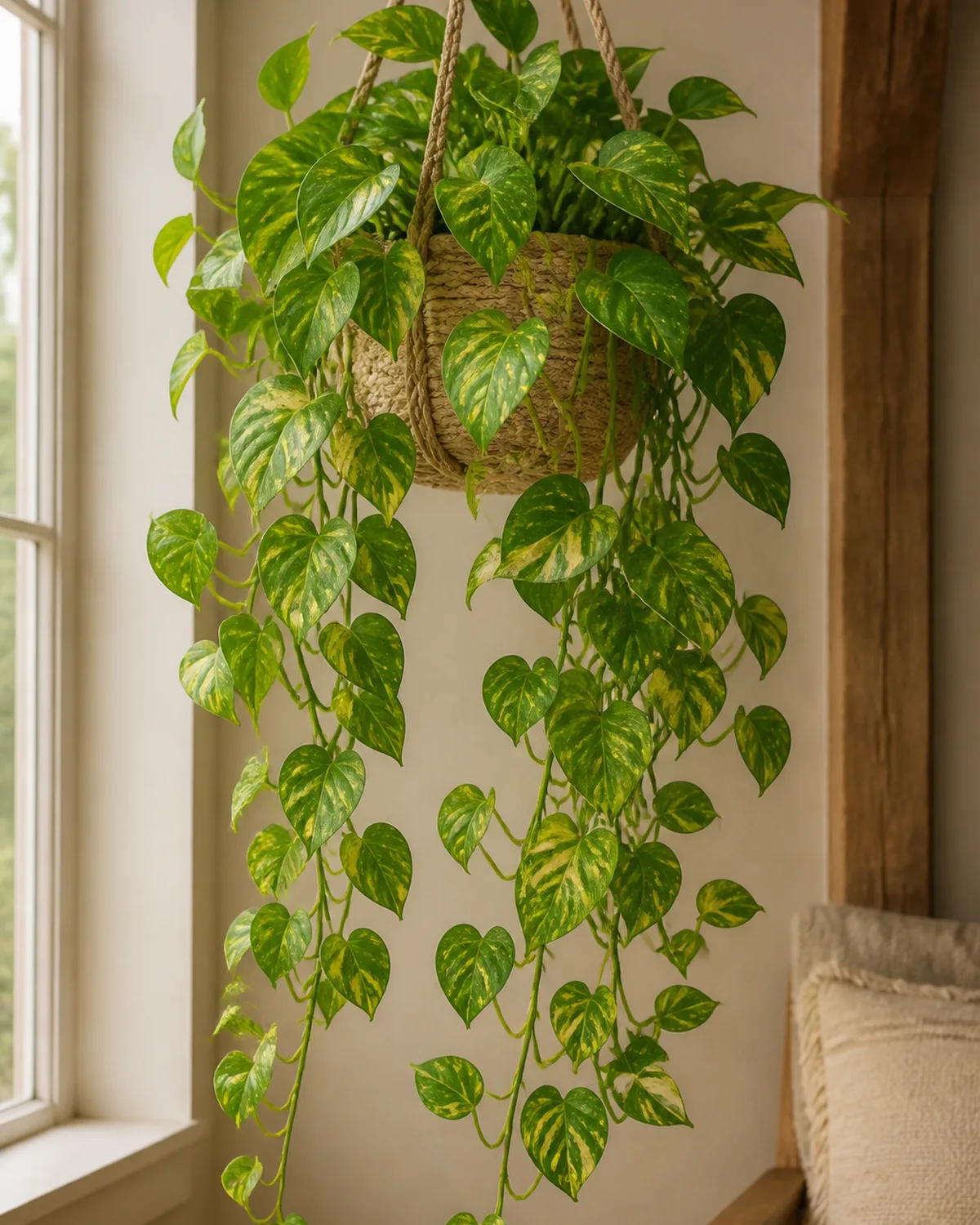
Epipremnum aureum is the original. The golden-yellow marbling on green heart-shaped leaves is what most people picture when they hear the word pothos, and there is a reason it is the most common houseplant in the world.
Golden pothos tolerates low light, drought, neglect, and still trails beautifully from a shelf or hanging basket. It earned the nickname "devil's ivy" because it refuses to die in conditions that would end most plants.
- Light behavior: Brighter indirect light produces more golden marbling — low light shifts leaves toward solid green, but the plant still grows well
- Water tolerance: Let the soil dry between drinks — golden bounces back from a slight wilt within hours of watering
- Growth rate: One of the fastest traiilers — ten feet or more in a single growing season with decent light
- Water culture: Grows in water indefinitely as a permanent display, not just temporary propagation
- Price: Three to eight dollars at virtually any store
The Brasil cultivar of heartleaf philodendron gets confused with golden pothos constantly. The difference: pothos leaves are thicker and waxy with a grooved petiole, while philodendron leaves are thinner and matte with a smooth round stem.
Golden is the benchmark every other variety on this list is measured against. If you want one plant that simply will not fail, this is it.
Marble Queen pothos — white brushstrokes on every leaf
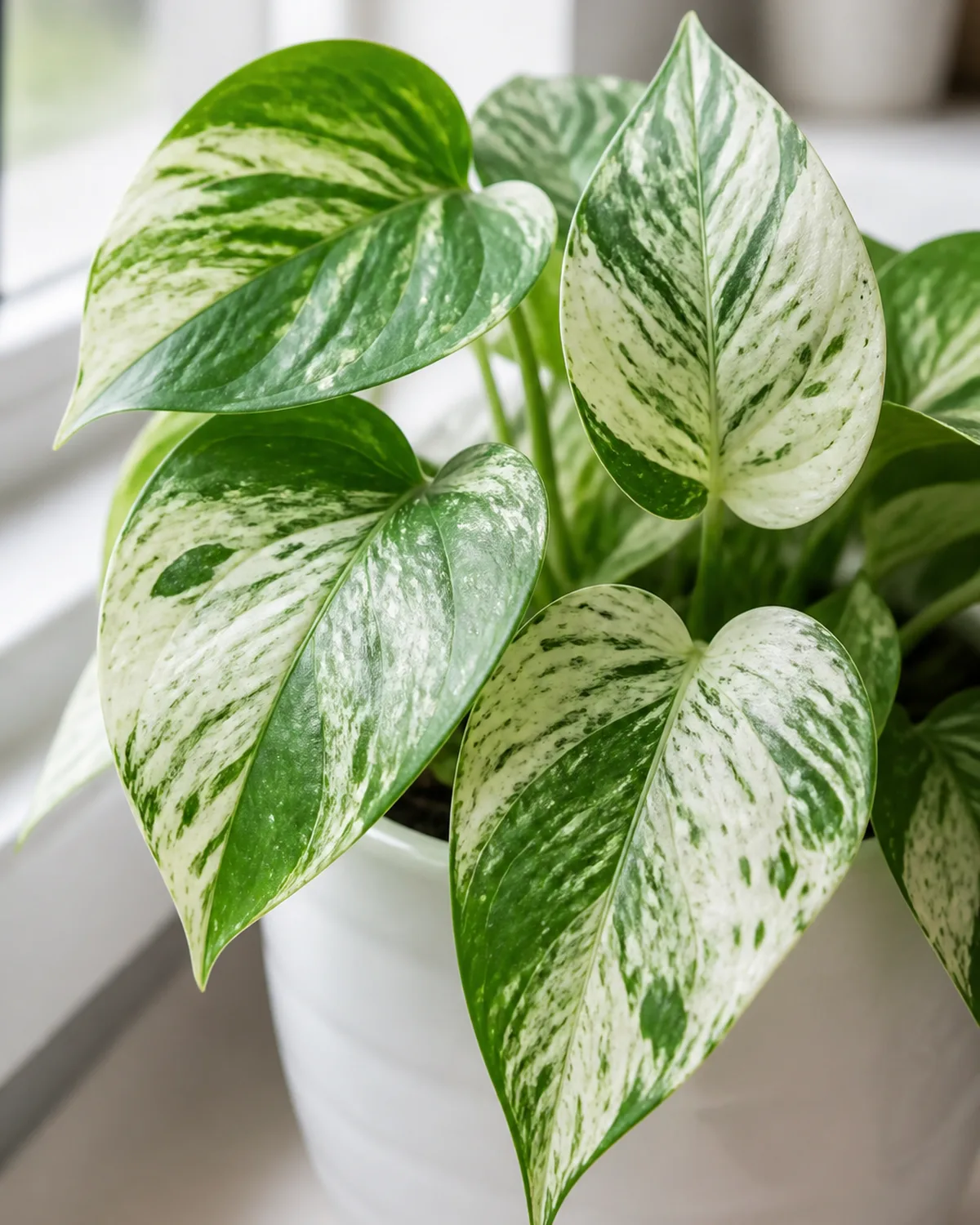
Epipremnum aureum 'Marble Queen' is golden pothos with the variegation turned toward white. The leaves display heavy white-and-green marbling that can cover fifty to eighty percent of each leaf's surface.
Each leaf is genuinely unique — the ratio and pattern of white to green varies with no two identical. The effect reads as sophisticated rather than tropical, which is why marble queen shows up in minimalist interiors more than golden does.
The trade-off is real. More white means less chlorophyll, which means less photosynthetic energy:
- Light is non-negotiable: Bright indirect light maintains the high white ratio — low light triggers reversion toward more green as the plant prioritizes survival
- Slower growth: Expect roughly half the trailing speed of golden pothos
- Watering adjustment: Less efficient water use from the heavy variegation — let the top inch dry but do not drought-stress it the way you might a golden
Marble queen is the natural second pothos after golden. Same trailing habit, same water-rooting ease, but it demands a brighter spot in exchange for the dramatically more striking foliage.
Neon pothos — electric chartreuse that glows in dim rooms
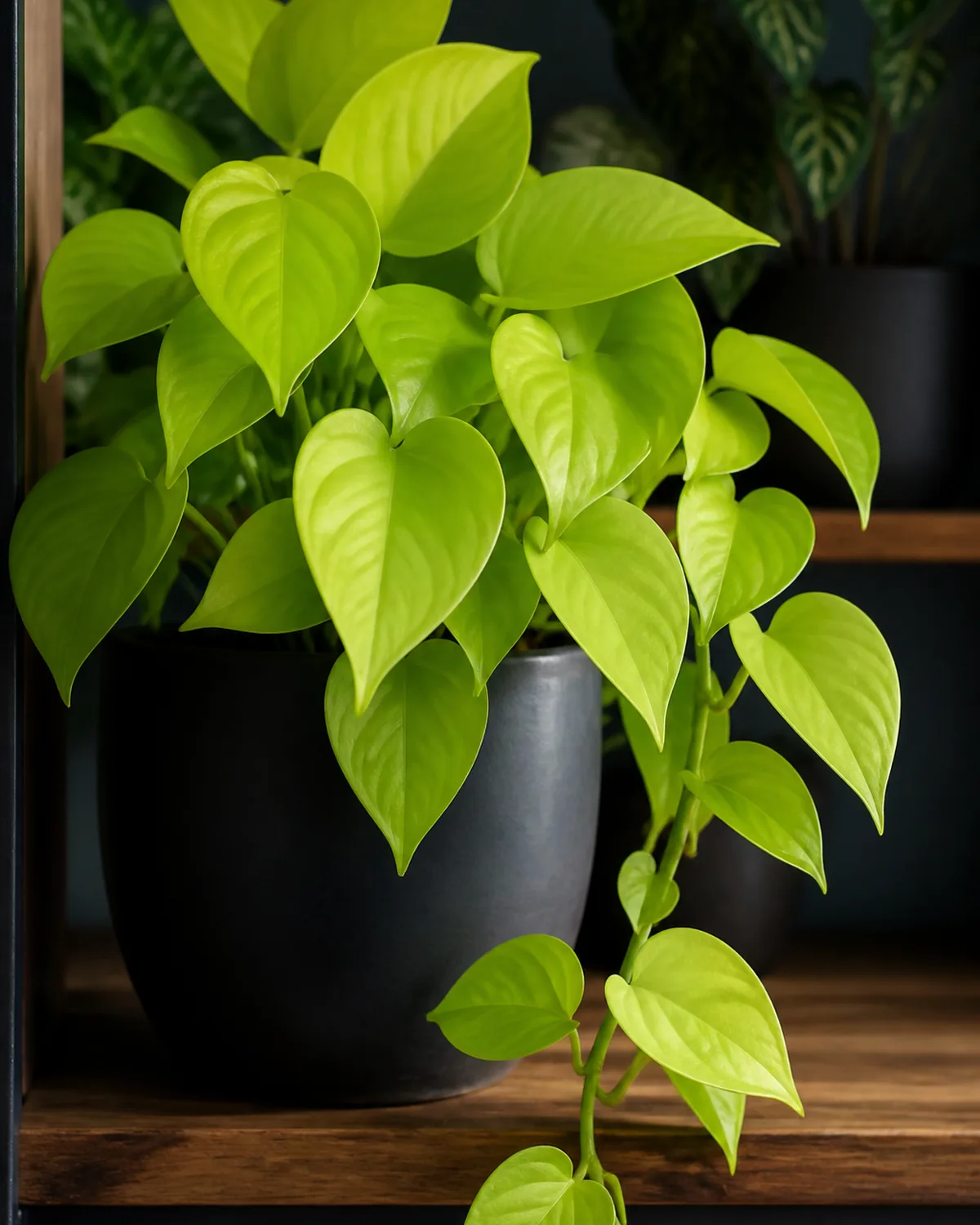
Epipremnum aureum 'Neon' does something unusual for a colorful plant: it stays vivid without bright light.
The leaves are solid chartreuse-to-lime-green with no variegation pattern — every leaf is uniformly neon, so there is zero reversion risk. New leaves emerge bright yellow-green that practically glows, maturing to a still-vivid lime.
That solid-color mutation is the key difference. Because every cell contains chlorophyll (just a modified form that appears chartreuse), neon photosynthesizes efficiently without needing the intense light that white-variegated varieties demand.
- Low to medium light works: One of the few colorful plants that stays vivid in a dim room — no bright window required
- Same bulletproof care as golden: Identical watering, soil, and temperature tolerance
- Stunning contrast plant: Place it next to a dark-green jade pothos or a heartleaf philodendron for maximum visual pop
The confusion to watch for: neon pothos versus philodendron 'Lemon Lime.' Both are chartreuse trailers. The pothos has thicker, waxier leaves with a grooved petiole. The philodendron has thinner, matte leaves with a smooth round stem and a papery cataphyll sheath on new growth.
Njoy pothos — compact patches of green and white
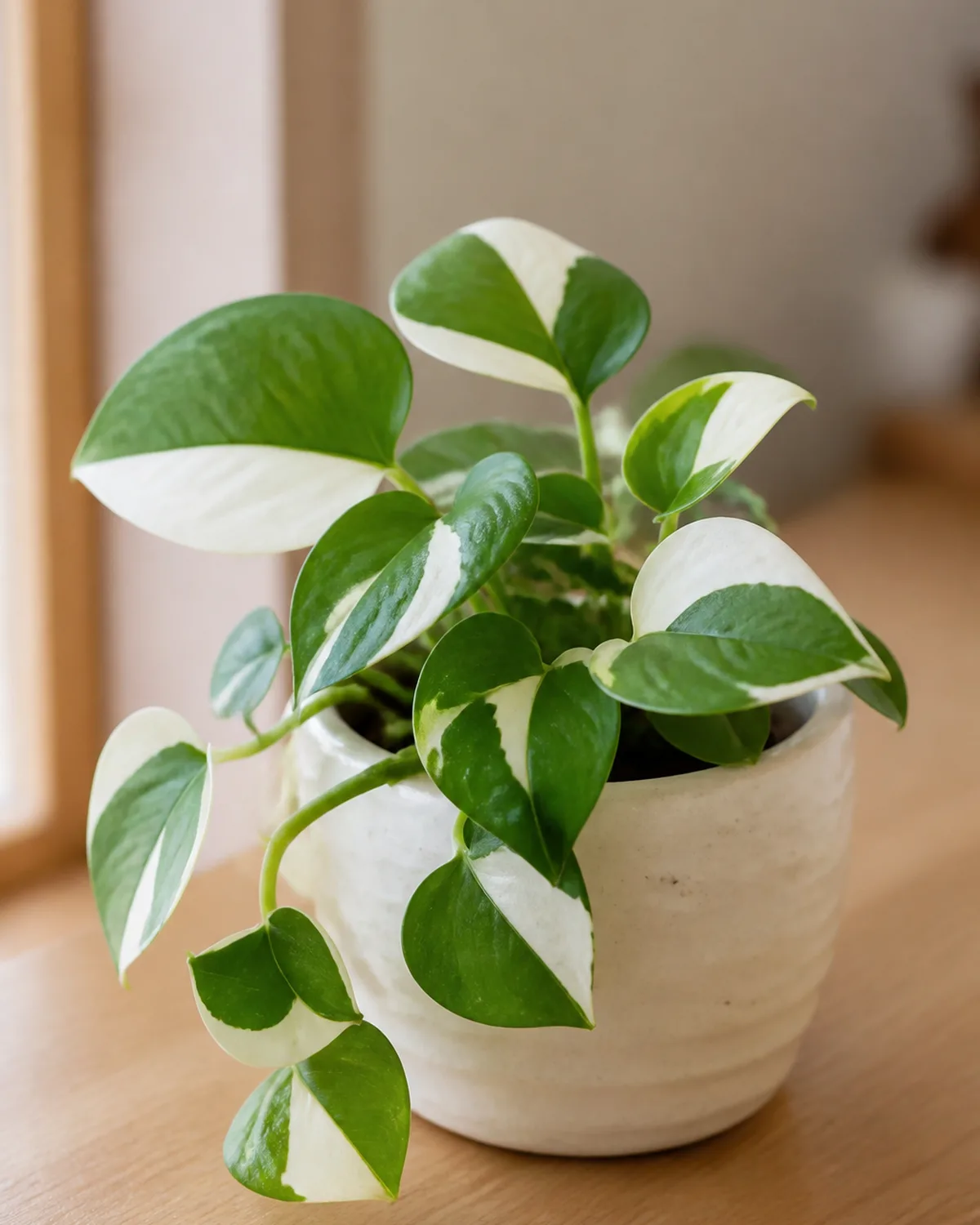
Epipremnum aureum 'Njoy' gets confused with marble queen constantly, but the pattern is fundamentally different. Where marble queen has diffused streaky marbling, Njoy has sharply defined blocks — solid green patches next to solid white patches with clear boundaries between zones.
The plant itself is also different:
- Smaller leaves and shorter internodes than standard pothos — naturally denser and more compact on the vine
- Slower growth than golden or neon — the heavy white sections and compact habit mean it does not trail as aggressively
- Slightly papery texture compared to the waxy thickness of golden — handle the leaves more gently during propagation
Njoy holds its pattern better than marble queen in moderate light because the green sections are pure concentrated green — dense chlorophyll packed into smaller areas rather than diffused across the whole leaf.
It is one of the best pothos varieties for small spaces and tight shelves where a full-size golden would overwhelm the spot.
Snow Queen pothos — marble queen turned up to maximum white
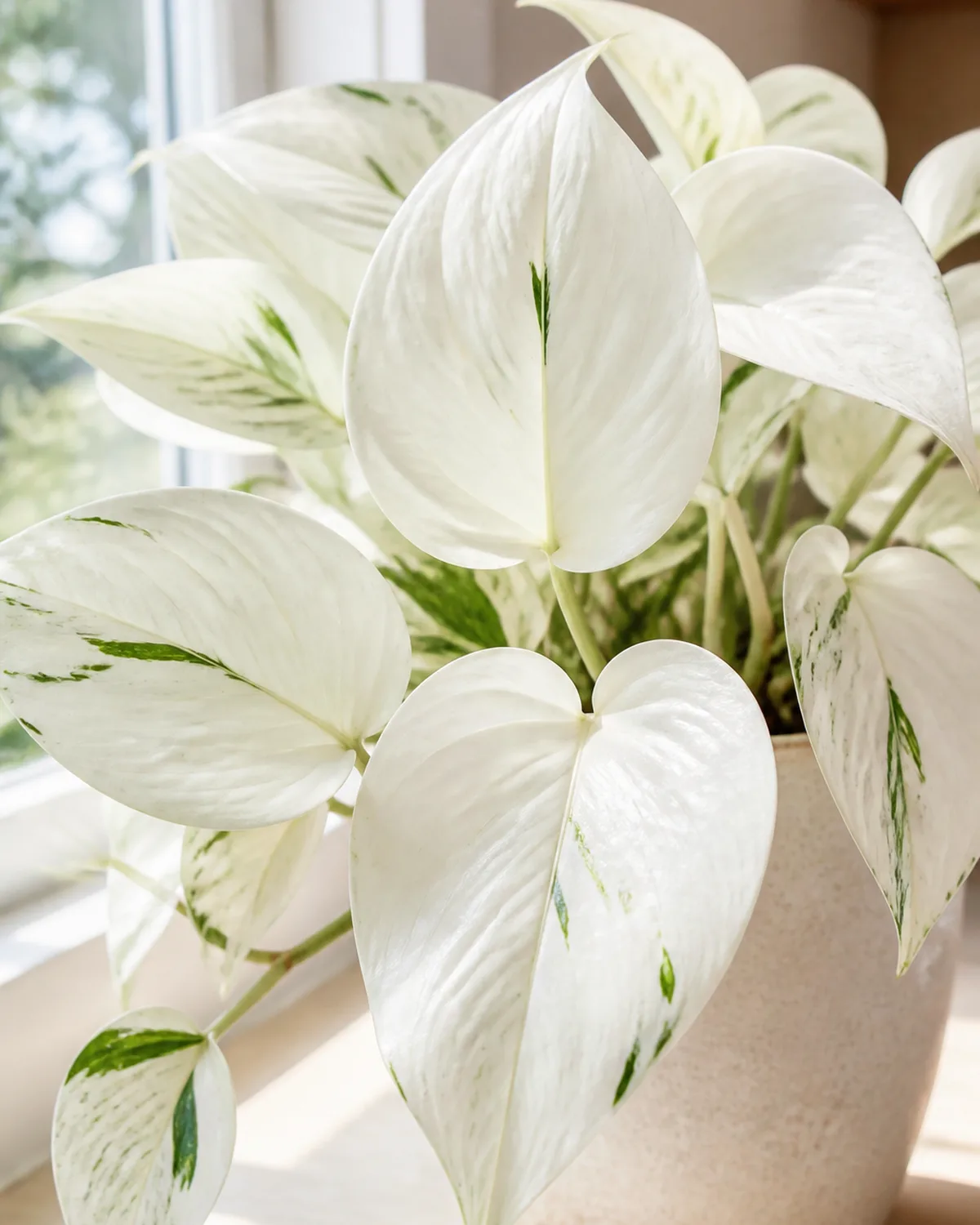
Epipremnum aureum 'Snow Queen' is marble queen with the white dial turned to maximum. The leaves are eighty to ninety percent white with only small streaks of green — nearly albino foliage with artistic green brushstrokes.
The marble queen versus snow queen debate is simple: they are the same species with different variegation intensity. If your marble queen sits in a very bright spot, its newest leaves might approach snow queen territory. If your snow queen gets too little light, it reverts toward marble queen levels of green.
The consequences of extreme variegation are real:
- Very slow growth — so little chlorophyll is available that expect half the growth rate of marble queen, which is already half of golden
- Light is absolutely non-negotiable — this variety needs the brightest indirect light you can provide, or consider supplementing with a grow light
- More sensitive to overwatering — the white leaf tissue is less robust and more prone to rot damage than green tissue
The visual payoff is striking when conditions are right. But snow queen is the first variety on this list where the care demands a specific commitment rather than casual tolerance. If you cannot guarantee a bright spot, marble queen delivers ninety percent of the visual impact with half the fussiness.
Manjula pothos — the wavy one with three colors
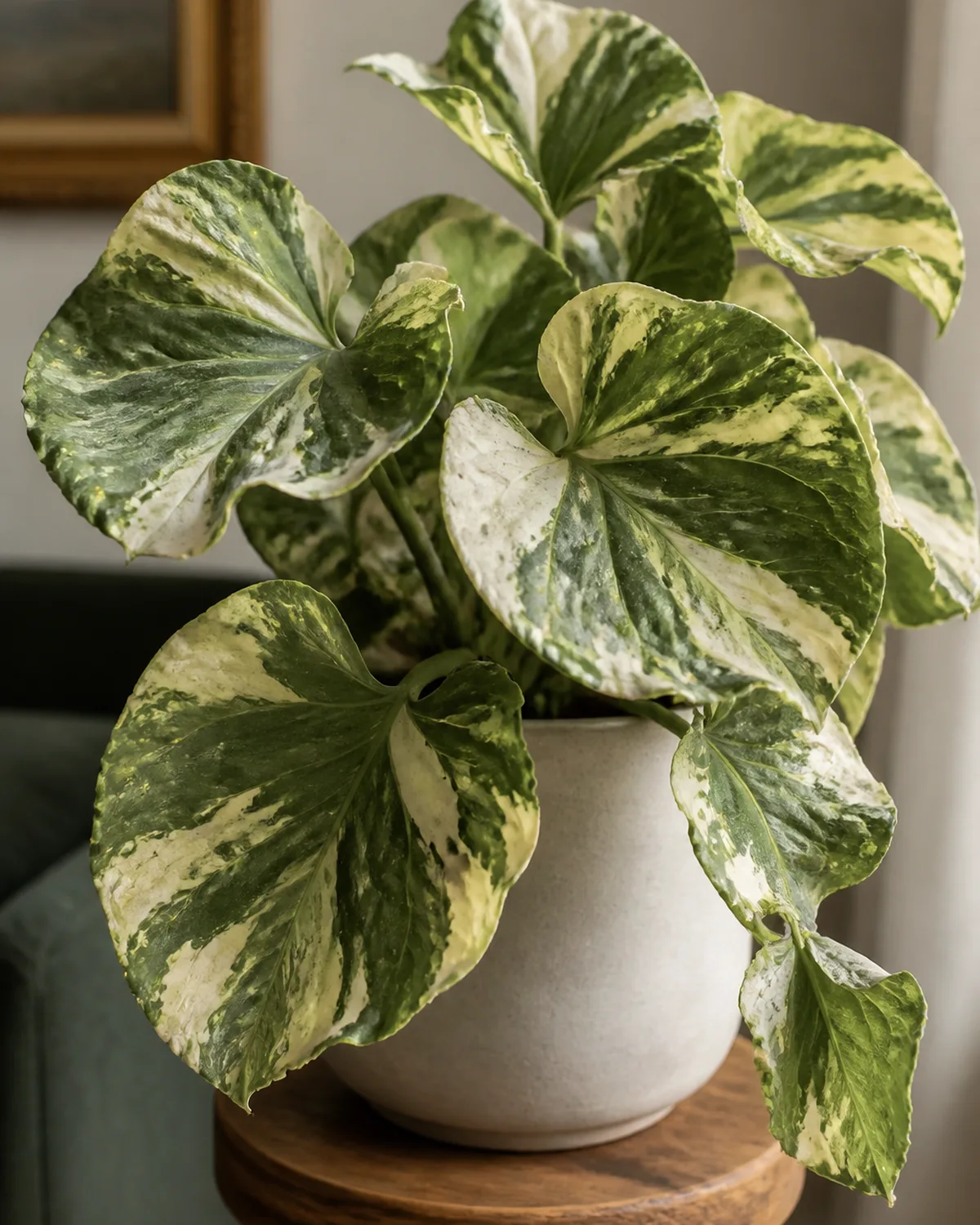
Epipremnum aureum 'Manjula' is a patented University of Florida cultivar, and the leaf shape alone sets it apart from every other variety on this list.
The leaves are wider and rounder than standard pothos with wavy, slightly ruffled edges. Most pothos have flat, smooth-edged leaves — manjula's gentle undulation creates a softer, more refined look that reads less "wild vine" and more "designed houseplant."
The color adds another layer. Each leaf blends cream, light silver-green, and dark green in unpredictable swirls. The palette is softer and more pastel than marble queen's high-contrast white-and-green:
- Shorter internodes mean it stays bushier and more compact than golden or marble queen
- Bright indirect light brings out the best color expression — low light mutes the cream tones and shifts toward solid green
- Slower trailing habit than the common varieties
Manjula is harder to find than golden or marble queen. Specialty nurseries and online sellers are the usual sources — big box stores rarely carry it. But the combination of wavy edges, pastel coloring, and compact habit makes it one of the most aesthetically refined pothos varieties available.
A strong choice for a kitchen windowsill or corner shelf where you want texture and subtlety rather than the bold statement of a neon or marble queen.
Pearls and Jade pothos — speckled green on a white canvas
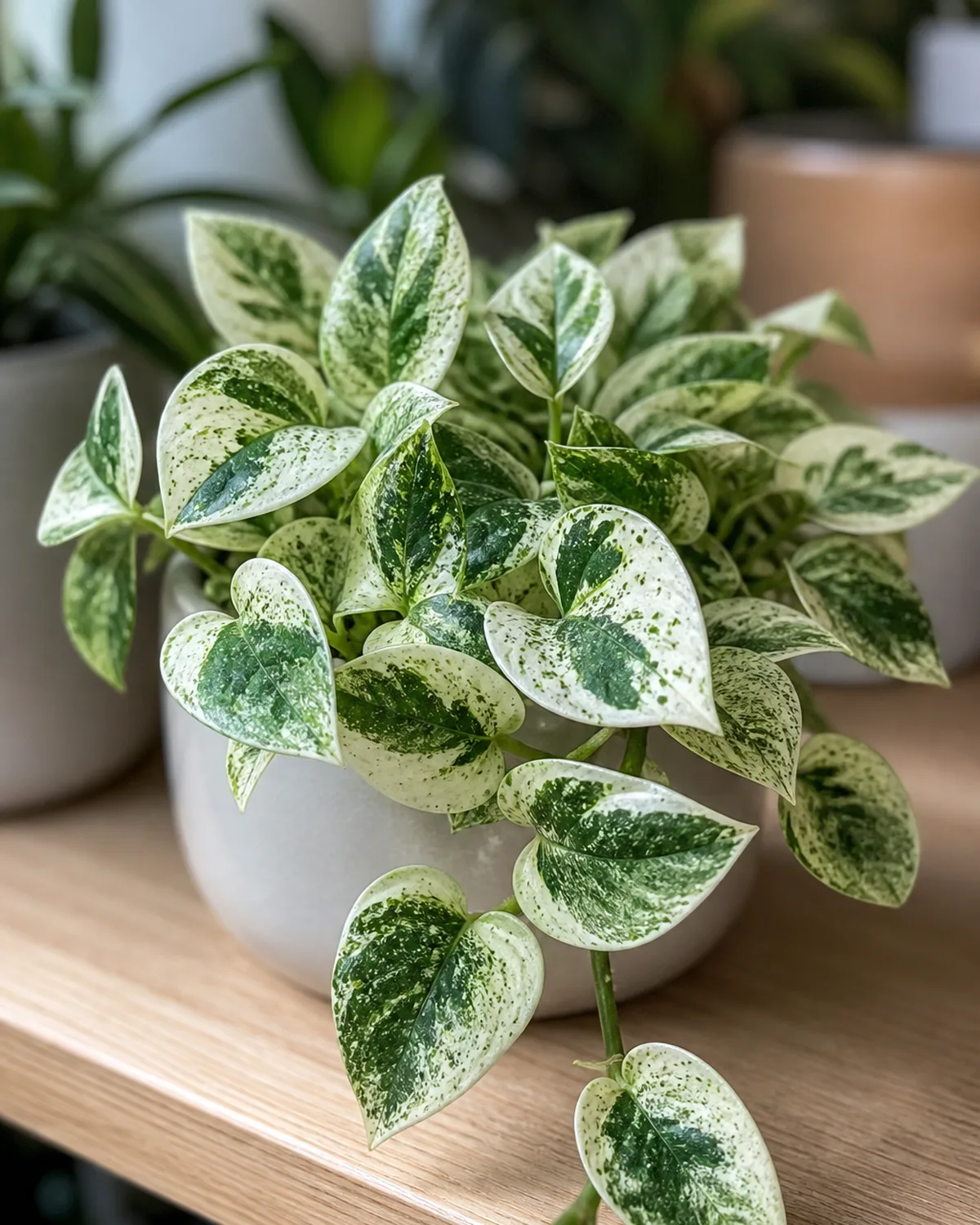
Epipremnum aureum 'Pearls and Jade' is another University of Florida cultivar, and the pattern difference from Njoy is subtle but specific.
Where Njoy has solid blocks of green and white, pearls and jade has green patches with lighter green and white speckling inside them. The green is not uniform — it contains its own internal variegation, creating a more complex and textured pattern.
The leaves are among the smallest of any pothos variety — individual leaves stay under three inches, creating a delicate cascading effect rather than the bold trailing of a golden or marble queen.
- Perfect for small containers: The compact leaf size makes it one of the best pothos varieties for terrariums, small pots, and tight shelf spaces
- Slow-to-moderate growth: Faster than snow queen but noticeably slower than golden
- Light: Bright indirect maintains the speckle detail — low light does not kill the plant, but the speckling becomes less defined and harder to appreciate
The practical distinction between pearls and jade and Njoy: if the green sections have internal speckling, it is pearls and jade. If the green sections are solid and uniform, it is Njoy. Both are compact, both are slow-growing, and both need similar bright indirect light.
Cebu Blue pothos — the silvery shape-shifter
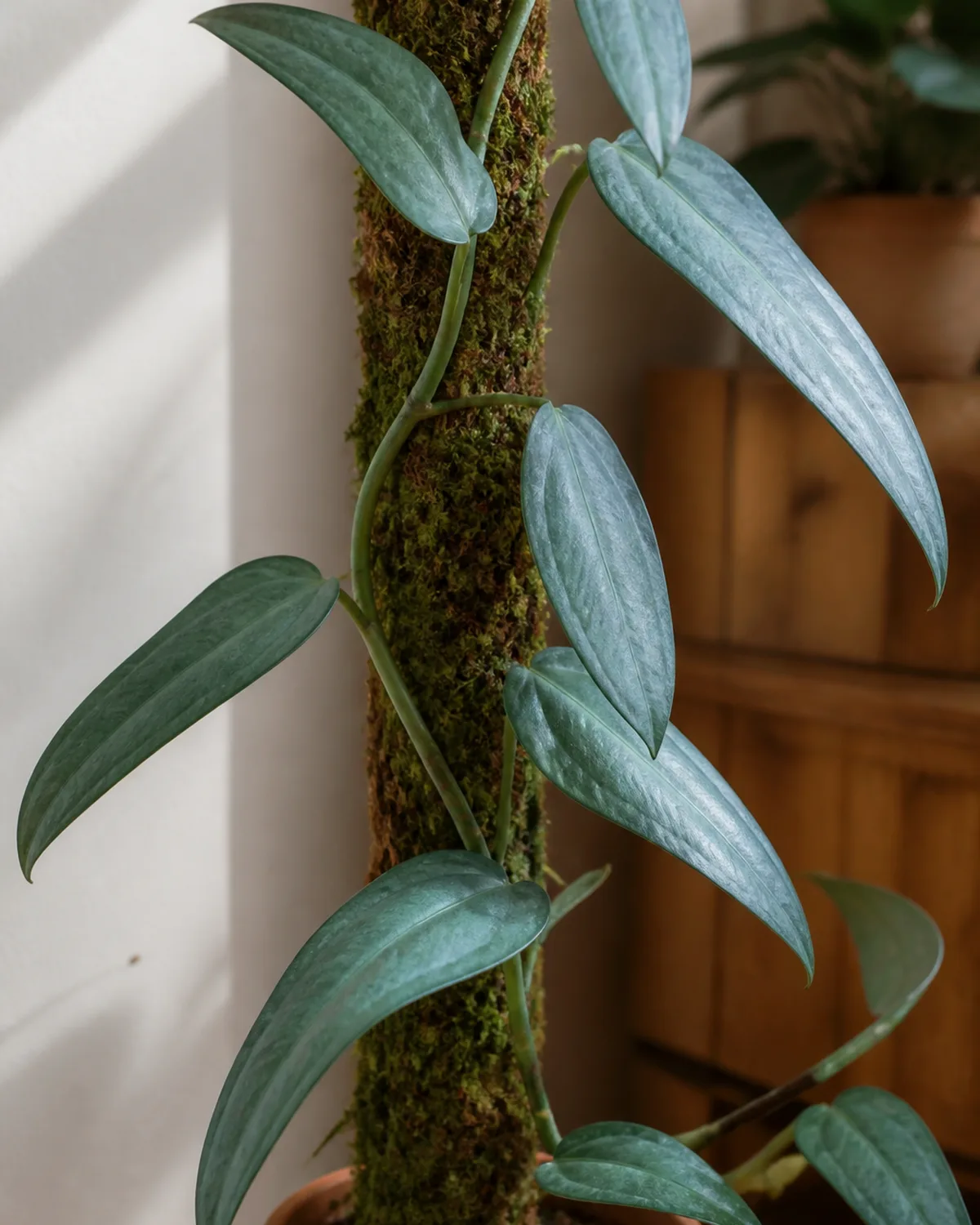
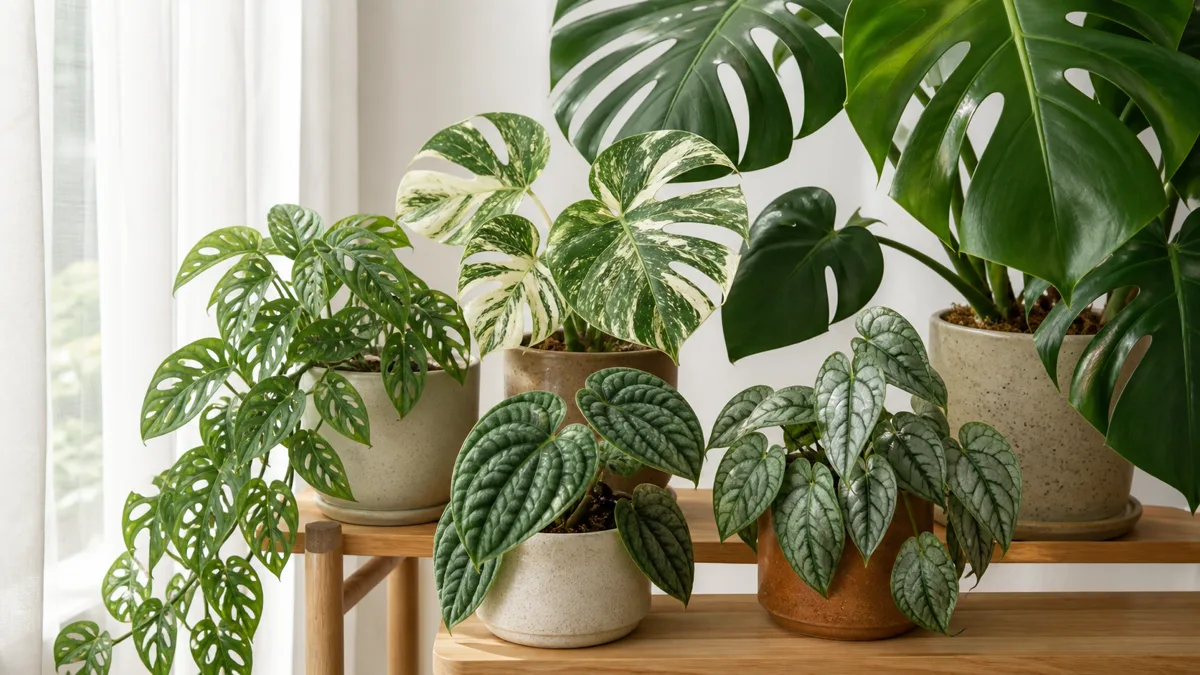
Epipremnum pinnatum 'Cebu Blue' is technically a different species from every other variety on this list. Standard pothos varieties are Epipremnum aureum — cebu blue is Epipremnum pinnatum, which explains why it looks and behaves differently.
The leaf shape breaks pothos convention entirely. Instead of the classic heart, cebu blue produces narrow, elongated, lance-shaped leaves in a metallic blue-silver sheen. The silvery color comes from reflective cells on the leaf surface — unlike the matte or waxy finish of aureum types.
The real drama happens on a climbing support. Like climbing philodendrons, cebu blue must climb a moss pole or trellis to produce its mature form. The mature leaves develop fenestrations — splits similar to a monstera — that the trailing juvenile form never produces.
- Humidity preference: Slightly more than standard pothos — fifty percent or higher keeps the metallic sheen bright
- Soil: Benefits from a chunkier aroid mix rather than standard potting soil
- Growth: Faster climber than ground-trailer — vertical support rewards with increasingly dramatic leaves
Once rare and expensive, cebu blue is now widely available at ten to twenty dollars through tissue culture. It is the most "aroid collector" pothos variety — the natural bridge between casual pothos owners and the deeper world of aroids.
A natural companion for tall plant displays where the climbing habit and fenestrated mature leaves create genuine architectural interest.
Hawaiian pothos — golden pothos supersized
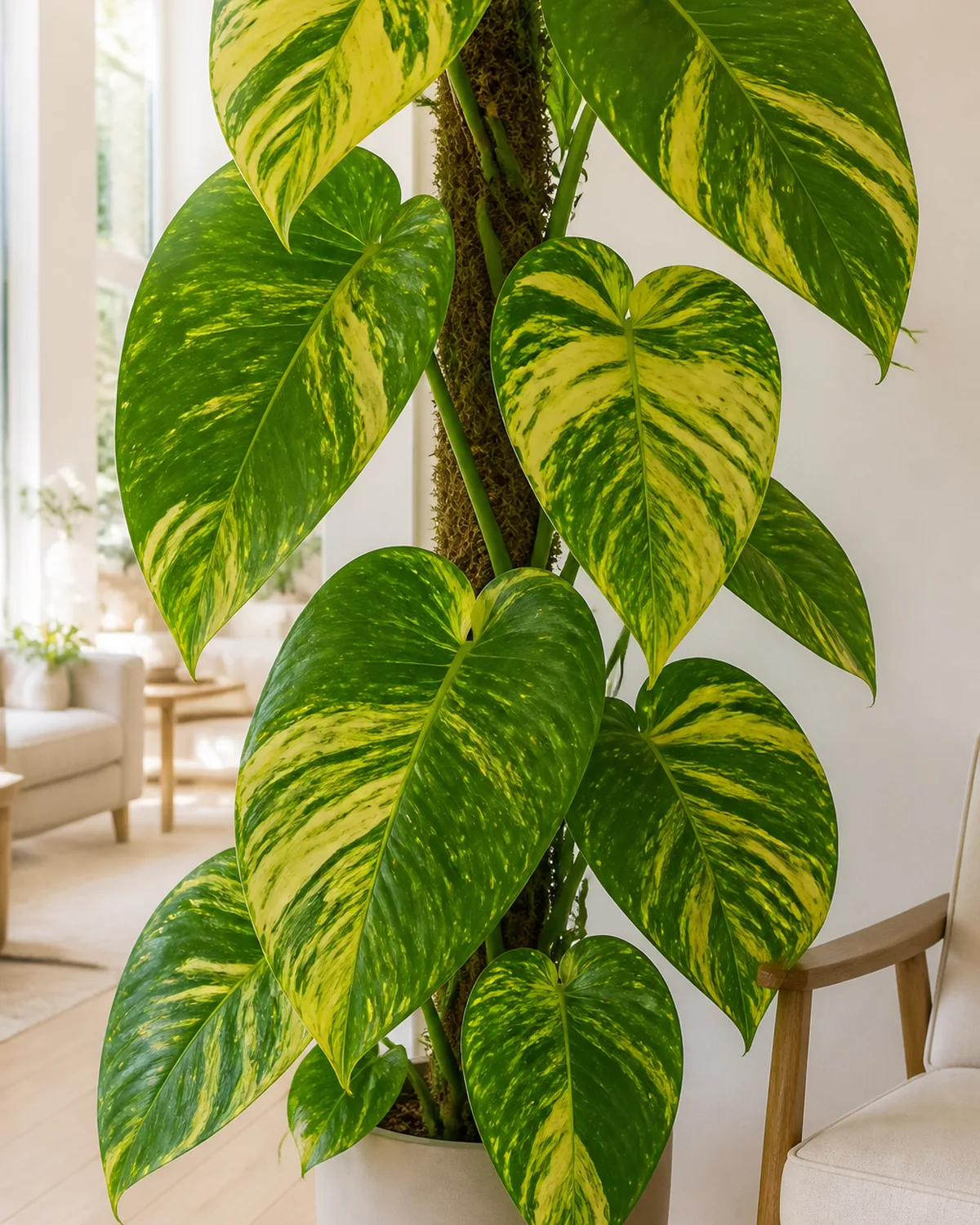
Epipremnum aureum 'Hawaiian' is exactly what it sounds like: golden pothos with everything scaled up. The same golden-yellow variegation on green, but on leaves that can reach twelve inches or more indoors.
The "giant golden" effect is entirely about leaf size. The coloring and pattern are identical to standard golden — more light equals more yellow marbling, less light equals more green. But everything is bigger: larger leaves, thicker stems, more vigorous growth.
The size trigger works the same way as cebu blue:
- On a climbing support: Leaves grow three to four times the size of the same plant trailing in a hanging basket
- Without support: Stays closer to standard golden proportions
- Care is identical to golden: Same watering, soil, and temperature tolerance — the larger size adds visual impact without adding difficulty
The visual impact of a large-leaved pothos climbing a tall pole in a living room rivals tropical statement plants costing ten times more. A six-foot moss pole with a mature hawaiian pothos is one of the highest-impact, lowest-effort indoor plant displays you can build.
Availability note: Hawaiian pothos is less commonly labeled than golden. It sometimes appears as "giant pothos" or ships unlabeled from big box stores. If your golden pothos cuttings are producing unusually large leaves, you may already have one.
Pothos variety care cheat sheet
- 1Golden: any light, dry between waterings, fastest trailerThree to eight dollars at any store. The benchmark — tolerates everything, trails everywhere, grows in water indefinitely. More light brings out more golden marbling.
- 2Marble Queen: bright indirect, moderate water, elegant whiteEight to fifteen dollars. Heavy white-and-green marbling that needs consistent bright light. Grows at about half the speed of golden. Each leaf pattern is unique.
- 3Neon: any light, standard water, chartreuse that stays vividEight to fifteen dollars. The rare colorful plant that performs in medium to low light. No reversion risk because the color is a stable mutation, not variegation.
- 4Snow Queen: brightest spot only, careful water, very slowFifteen to thirty dollars. Marble queen at maximum white — ninety percent albino leaves. Needs the most light and patience of any common variety.
- 5Cebu Blue: bright plus humid, chunky soil, fenestrations on a poleTen to twenty-five dollars. Different species entirely. Metallic blue-silver sheen, lance-shaped leaves, and monstera-like splits when climbing vertically.
- 6Satin (Scindapsus): medium-bright, consistent moisture, not a true pothosEight to fifteen dollars. Different genus. Matte velvety texture with silver spots. Slightly less drought-tolerant and needs more humidity than true Epipremnum pothos.
Kultivy — www.kultivy.com
Global Green pothos — the newest marbled green
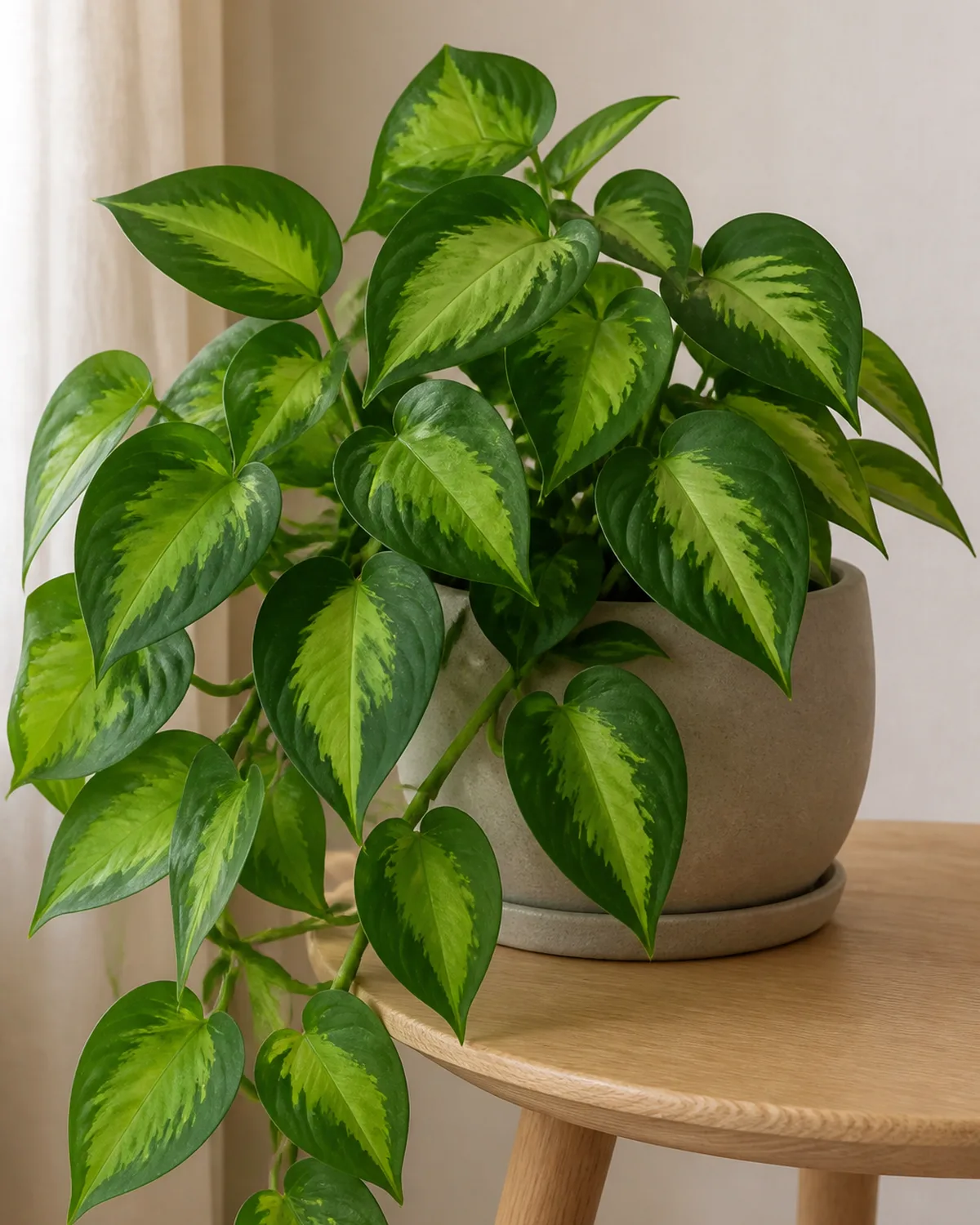
Epipremnum aureum 'Global Green' is a relatively recent cultivar — patented in the early 2020s — and the variegation is entirely green-on-green. Dark green leaf edges surround a lighter chartreuse center, with no white, cream, or yellow anywhere.
The effect is subtle compared to marble queen's bold contrast. But that subtlety is the point. The green-on-green pattern reads as refined and natural — more "forest canopy" than "painted leaves."
The practical advantage of no white variegation:
- Efficient photosynthesis: Grows faster than marble queen or snow queen because every part of the leaf can produce energy
- Better pattern retention in moderate light: Maintains its two-tone green patterning in medium light conditions where white-variegated varieties would revert
- Moderate growth rate: Between the fast golden and the slow marble queen
The pattern can be confused with a jade pothos receiving uneven light. The distinction: global green's center marbling is consistent and defined on every leaf. A jade pothos with variable lighting shows random light-induced variation, not a repeating center-margin pattern.
A quiet, sophisticated variety for a bedroom or reading corner where bold variegation would feel too loud.
Jade pothos — pure green simplicity
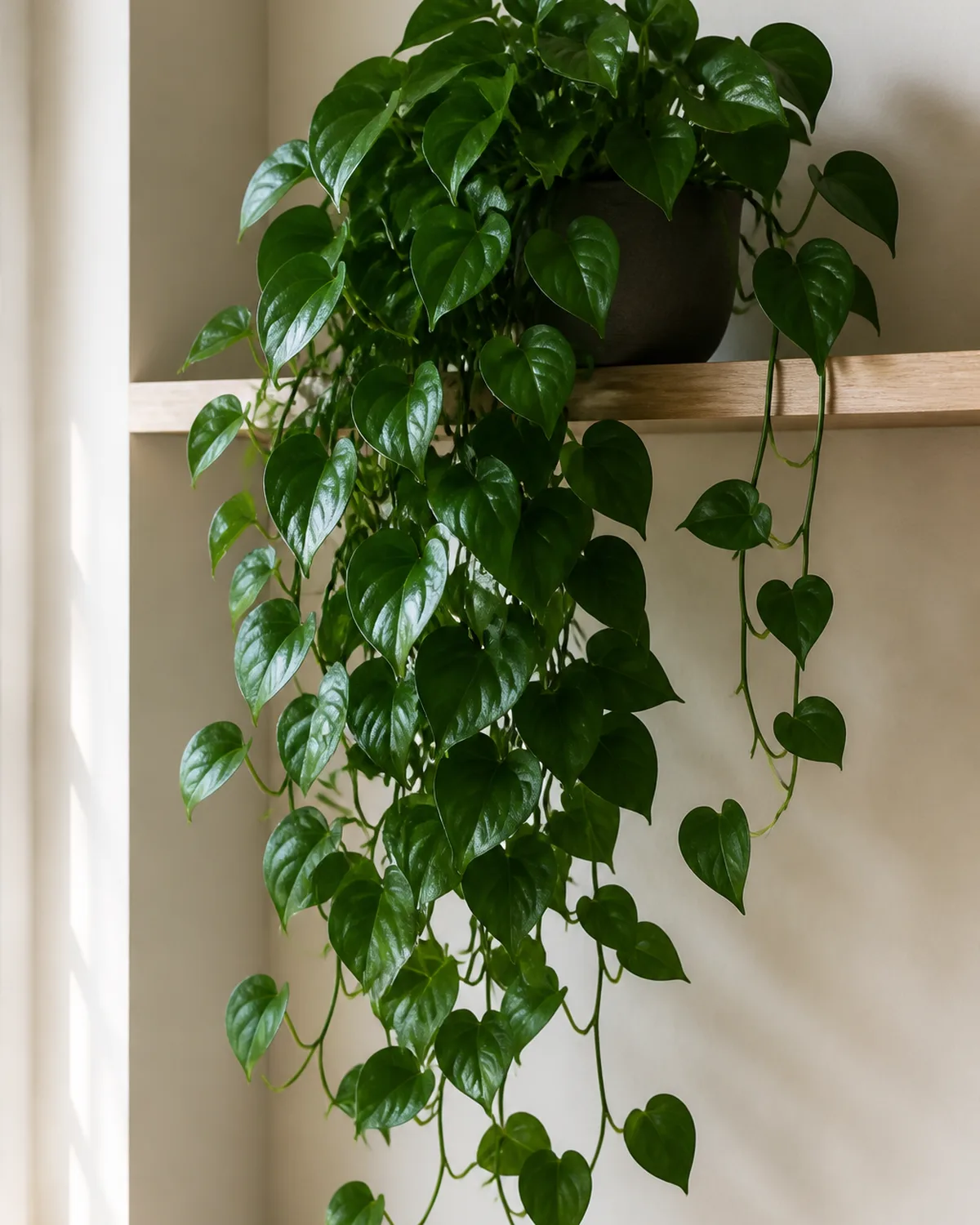
Epipremnum aureum 'Jade' is the one most people overlook. Solid dark green leaves, no variegation, no special coloring — just dense, glossy, uniform green trailing from a pot.
The irony: jade is the most efficient pothos variety precisely because it has nothing extra. Maximum chlorophyll means maximum photosynthesis, which translates into:
- True low-light performance: While golden pothos tolerates low light by losing its variegation, jade is already solid green — it performs identically in dim conditions without any visual trade-off
- Fastest growth: No energy diverted to maintaining variegation patterns means the most aggressive trailing and climbing speed of any variety
- Best for water culture: The efficient photosynthesis compensates for reduced nutrient access in water-only setups
Jade is the best pothos for a dark bathroom or hallway where other varieties would lose their appeal. It is also the cheapest — three to five dollars in most stores — but that low price reflects supply, not quality.
The minimalist case for jade: a deep uniform green trailing vine creates a clean, intentional look that variegated varieties cannot match. In the right setting, simplicity outperforms novelty.
Satin pothos — technically not a pothos at all
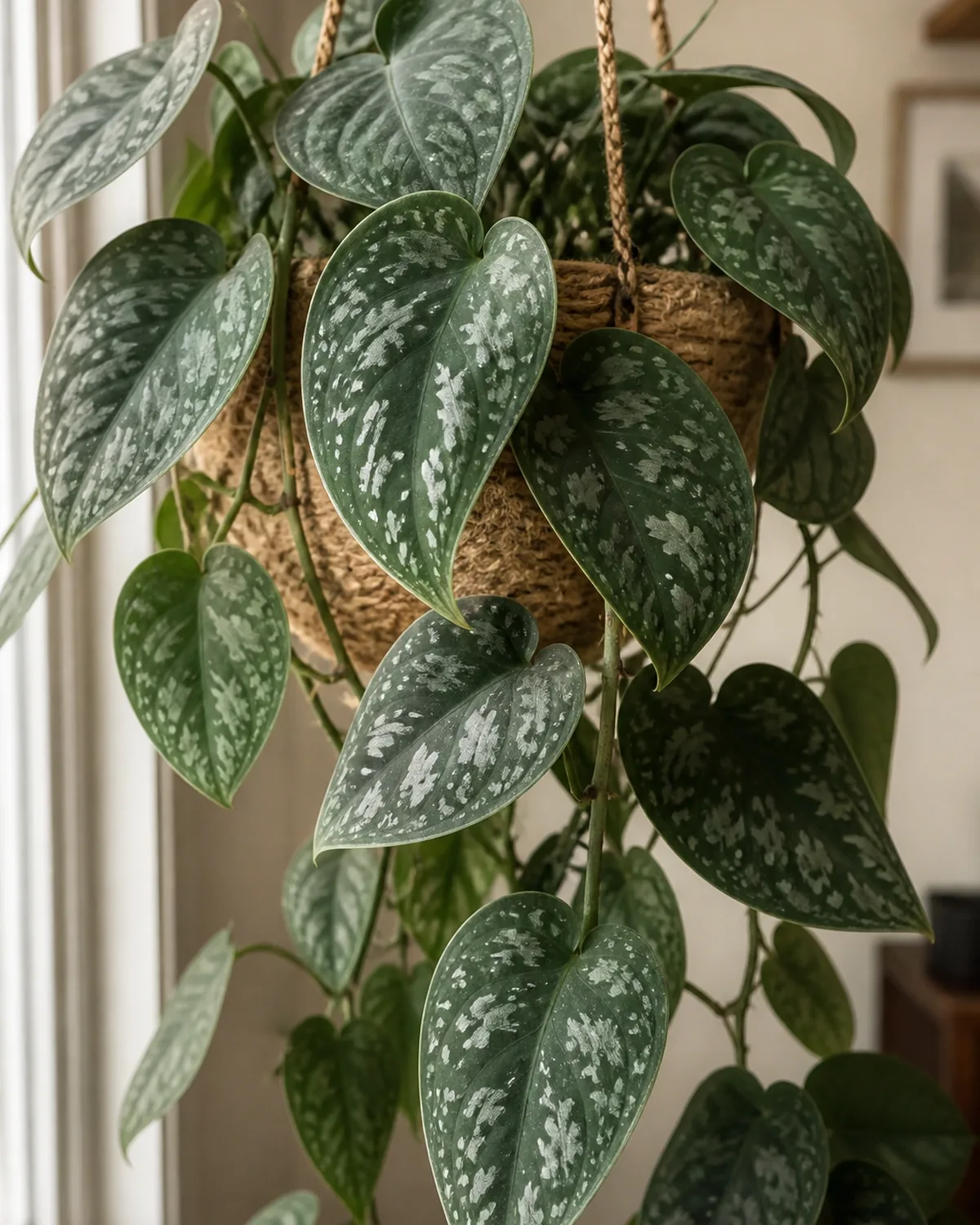
Scindapsus pictus is sold universally as "satin pothos" or "silver pothos" despite belonging to a completely different genus. It is not Epipremnum at all. But every garden center shelves it with pothos, every care guide covers it under pothos, and ignoring it here would leave a hole that confuses more than it clarifies.
The silver spots are the signature: dark green matte leaves covered in irregular silvery-metallic patches that catch light. The pattern looks like someone flicked silver paint onto each leaf.
The texture is the immediate giveaway that this is a different plant. Satin pothos leaves have a matte, velvety finish — "satin" is not a marketing name but a genuine description. True Epipremnum pothos leaves are glossy and waxy. The tactile difference is obvious the first time you touch both.
Three common cultivars circulate under the Scindapsus umbrella:
- Argyraeus: Smaller, scattered silver spots — the classic "satin pothos" at most stores
- Exotica: Larger silver patches covering more leaf surface — bolder pattern
- Silver Lady: Nearly all-silver leaves — the most dramatic but least common
The care differences from true pothos matter if you are buying one expecting golden pothos behavior:
- Less drought-tolerant — prefers consistent moisture rather than the deep dry-out that golden handles casually
- Appreciates higher humidity — fifty percent or higher
- Less forgiving in low light — the silver markings fade and leaves stay small in dim conditions
Satin pothos is a beautiful trailing plant on its own terms. Just adjust expectations from "indestructible golden pothos" to "slightly more attentive hanging plant."
Choosing the right pothos for your space
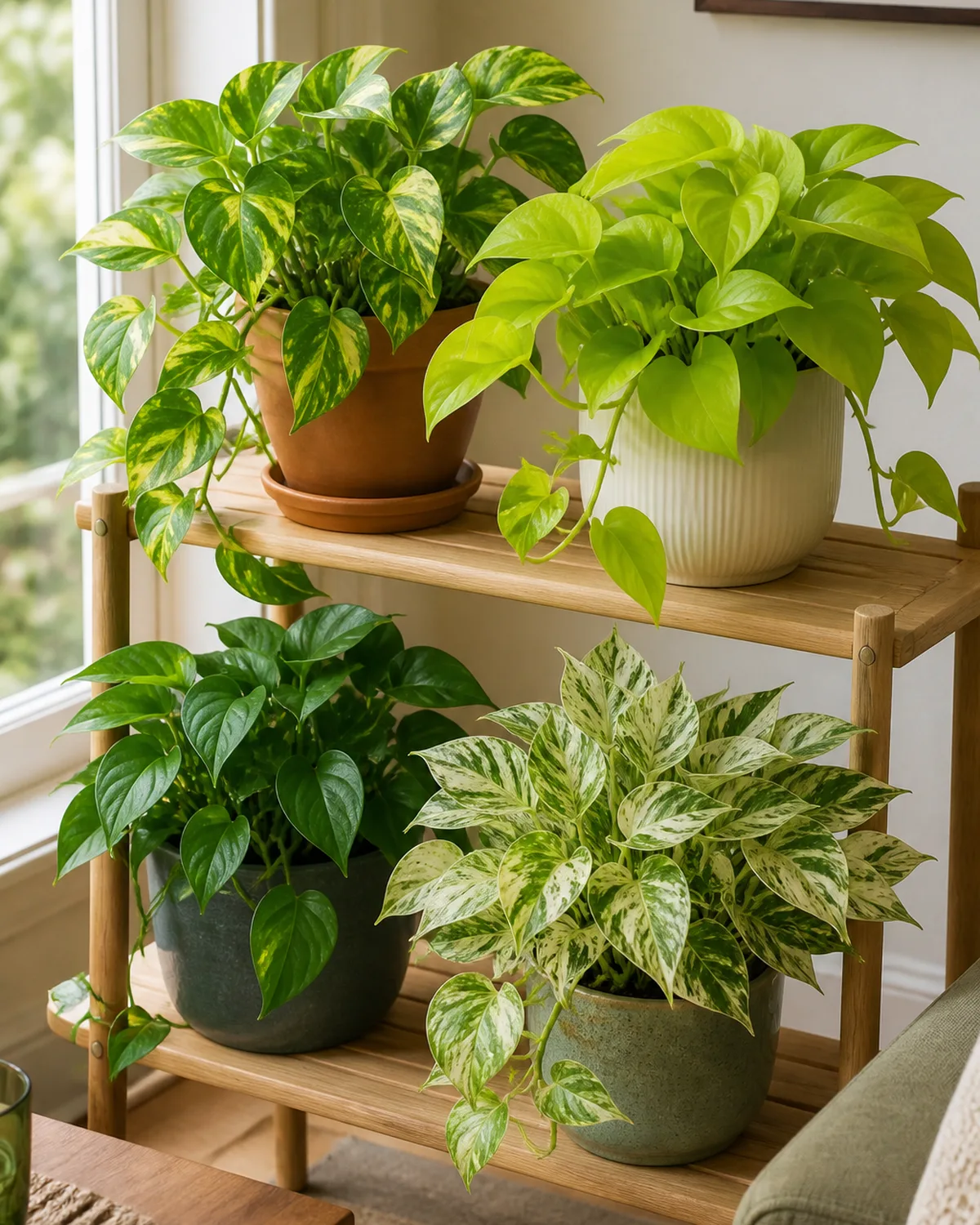
The thirteen varieties above collapse into three practical tiers based on what they actually demand from you.
Hands-off tier — water when you remember, any light, any humidity:
- Golden, jade, neon — these three thrive on casual neglect. Golden and jade work in dim rooms. Neon adds bold color without adding effort. If you travel frequently or forget to water, start here.
Moderate tier — consistent light and watering, basic attention:
- Marble queen, Njoy, pearls and jade, global green, hawaiian — these need a reasonably bright spot and a somewhat regular watering schedule. None are difficult, but none tolerate the deep neglect that the first tier handles.
Attentive tier — specific light, humidity, and watering commitments:
- Snow queen, cebu blue, satin (Scindapsus), manjula — these reward care and punish inconsistency. Snow queen demands the brightest spot in the house. Cebu blue needs humidity and chunky soil. Satin wants consistent moisture that golden would consider overwatering.
The cost ladder roughly follows the same tiers: golden and jade cost three to eight dollars at any store. Marble queen and neon run eight to fifteen. Njoy, pearls and jade, and global green sit at ten to twenty. Manjula, cebu blue, and hawaiian range from twelve to twenty-five. Snow queen climbs to fifteen to thirty at specialty nurseries.
If you love your pothos collection and want to branch out, trailing philodendrons — heartleaf, Brasil, micans — are the natural next step. Similar care rhythm, different leaf texture, and a genus with hundreds more varieties to explore.

Mara writes plant care guides grounded in published botany and first-hand growing experience, not recycled social-media advice. Every recommendation on Kultivy is tested against real-world conditions before it reaches your screen. More about our editorial standards.