Monstera is not one look. The genus spans roughly fifty species, from the massive fenestrated deliciosa to monsteras that never develop a single hole.
They all climb, they all produce aerial roots, and they are all toxic to pets. Beyond that, the differences matter more than most growers expect.
Here are the varieties worth growing and the care details that actually separate them.
Monstera Deliciosa — the one everyone recognizes
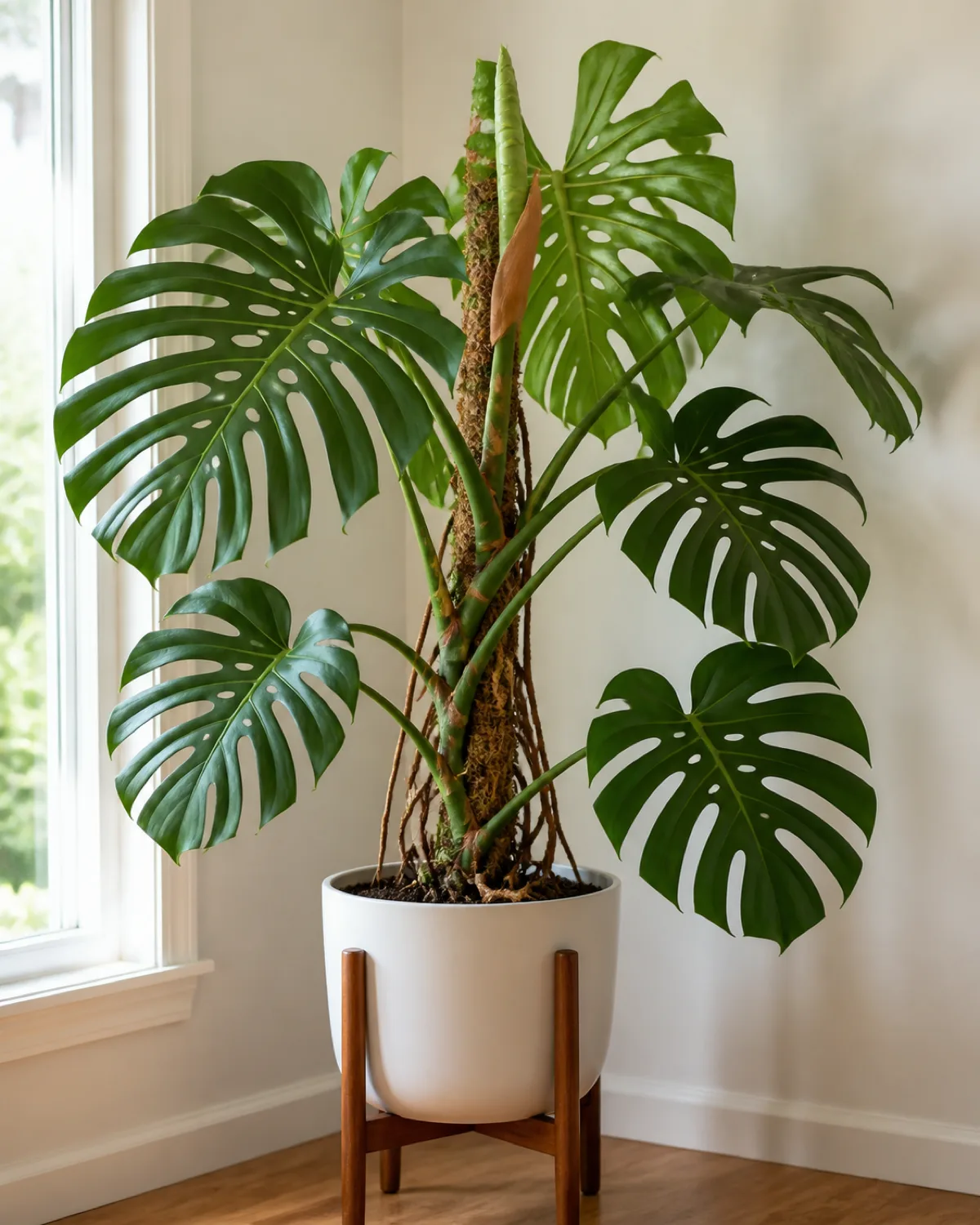
Monstera deliciosa is the plant that made the entire genus famous. The massive split leaves show up on throw pillows, wallpaper, and phone cases — but the real plant is more interesting than any of those patterns suggest.
Juvenile deliciosa leaves are entire — solid ovals with no holes or splits at all. Fenestrations develop only as the plant matures and climbs, which means the iconic Swiss cheese look requires two things most apartment growers skip: vertical support and patience.
- Leaf size indoors: Eighteen to thirty-six inches on a climbing support — dramatically smaller when trailing without one
- Fenestration trigger: Climbing height plus maturity — a plant trailing in a hanging pot may never split its leaves
- Light: Bright indirect produces the most fenestrations — medium light sustains growth but smaller, less dramatic leaves
- Growth rate: Moderate — one to two new leaves per month in growing season with good conditions
- Aerial roots: Functional, not decorative — they grip supports and absorb moisture from the air
The difference between a deliciosa and a pothos confuses beginners more than it should. Deliciosa leaves are thick and leathery with deep splits that reach the midrib. A large pothos on a moss pole develops holes that stay within the leaf margins. The splits never cut all the way through.
For complete growing details — watering, light, soil, and troubleshooting — see the full monstera care guide.
Monstera Adansonii — the Swiss cheese vine
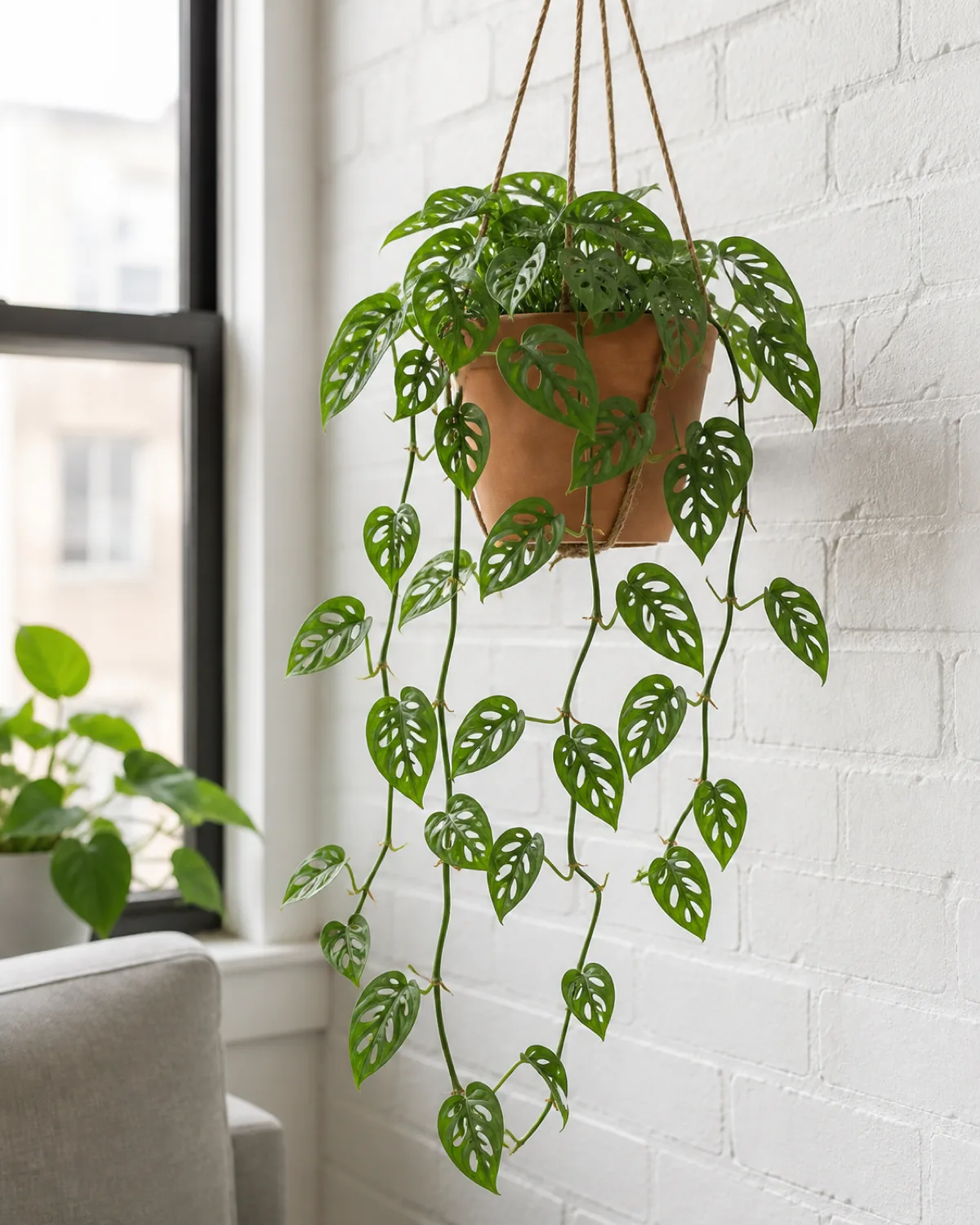
Monstera adansonii is smaller, thinner, and faster-growing than deliciosa. The fenestration pattern is the clearest identification tool between them.
Adansonii holes are oval perforations that stay within the leaf blade. They do not reach the leaf margin or split it open. Deliciosa fenestrations are deeper cuts that split from the margin inward and often connect to form separate leaflets on mature leaves. The distinction holds at every growth stage.
The plant itself has a true vining habit rather than the stiff-stemmed climbing of deliciosa:
- Leaf size: Three to eight inches, roughly a quarter the size of mature deliciosa leaves
- Growth habit: Fast trailing vine. Five to eight feet of growth in a single season is typical
- Wide-form vs narrow-form: Two leaf shapes circulate in the trade: wide ovals and narrower lance shapes. Both are adansonii
- Humidity sensitivity: More demanding than deliciosa. Brown crispy leaf edges signal humidity below fifty percent
Adansonii is the natural monstera for hanging baskets and trailing from shelves. Where deliciosa commands a floor corner, adansonii fills vertical space elegantly from above.
Monstera Thai Constellation — the variegated statement
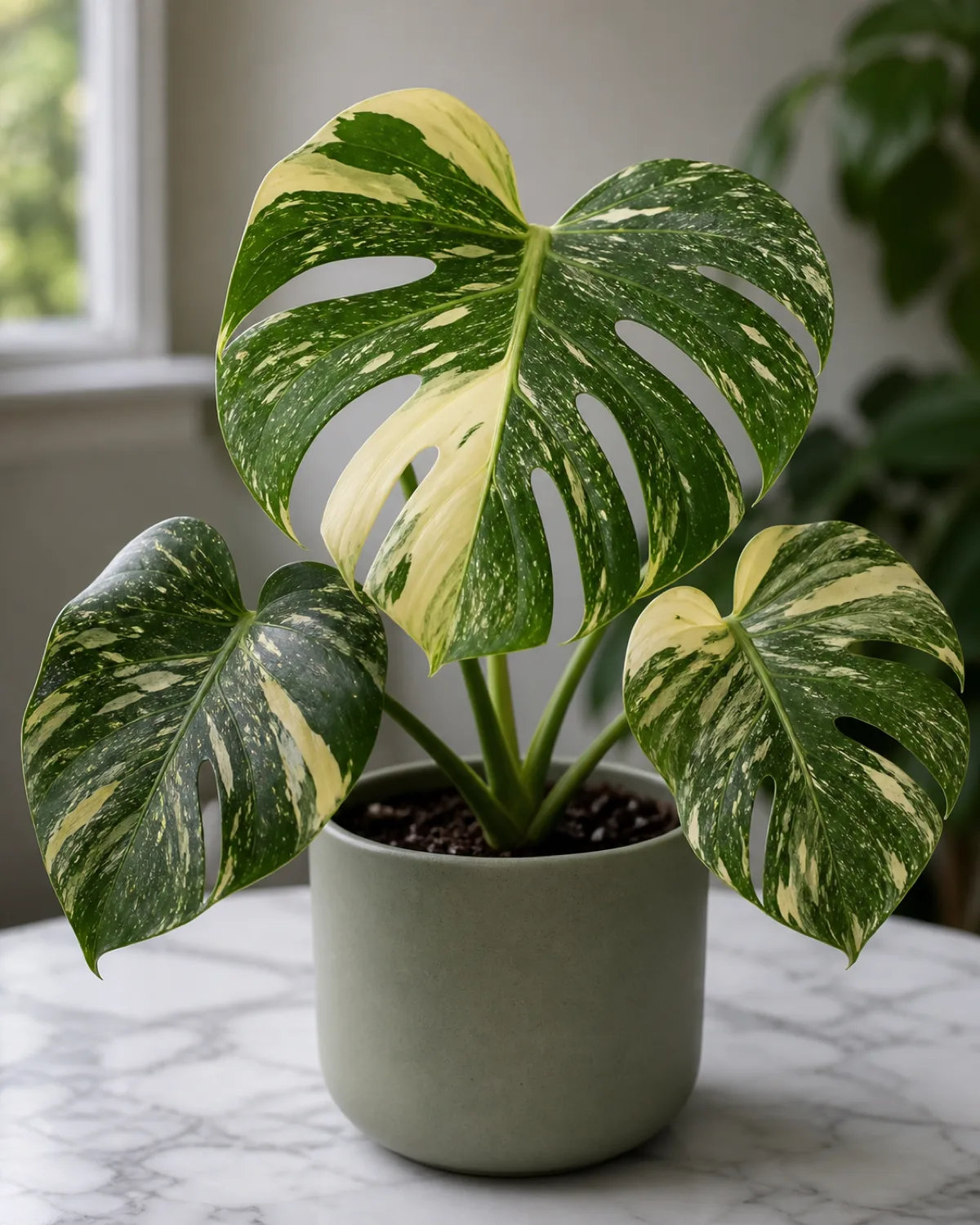
Monstera deliciosa 'Thai Constellation' is a tissue-cultured cultivar with stable cream-and-yellow variegation splashed across the dark green leaves. The cream speckles and streaks that give it the "constellation" name are consistent from leaf to leaf — they do not revert to all-green the way unstable sport mutations can.
That stability separates Thai Constellation from the far more expensive Albo Borsigiana. Albo variegation comes from a somatic mutation that can revert or dominate unpredictably. Thai Constellation holds its pattern because the variegation was stabilized through tissue culture before mass production.
- Growth rate: Two to three times slower than green deliciosa. Each leaf has less chlorophyll to power growth
- Light: Needs brighter conditions than green deliciosa, but direct sun scorches the cream tissue before it damages the green
- Soil and water: Same as standard deliciosa — well-draining aroid mix, water when the top two inches dry
- Price: Fifty to two hundred dollars depending on size, down dramatically from the thousand-dollar peaks of the early 2020s
The cream tissue on each leaf is functionally dead weight — it cannot photosynthesize. That means every Thai Constellation is working harder than a green deliciosa to produce the same energy. Growth is noticeably slower and light demands are higher.
A beautiful plant that earns its reputation, but not a first monstera. Start with a green deliciosa or adansonii, learn the care rhythm, then graduate to this one with confidence.
Monstera Peru — the one that doesn't look like a monstera
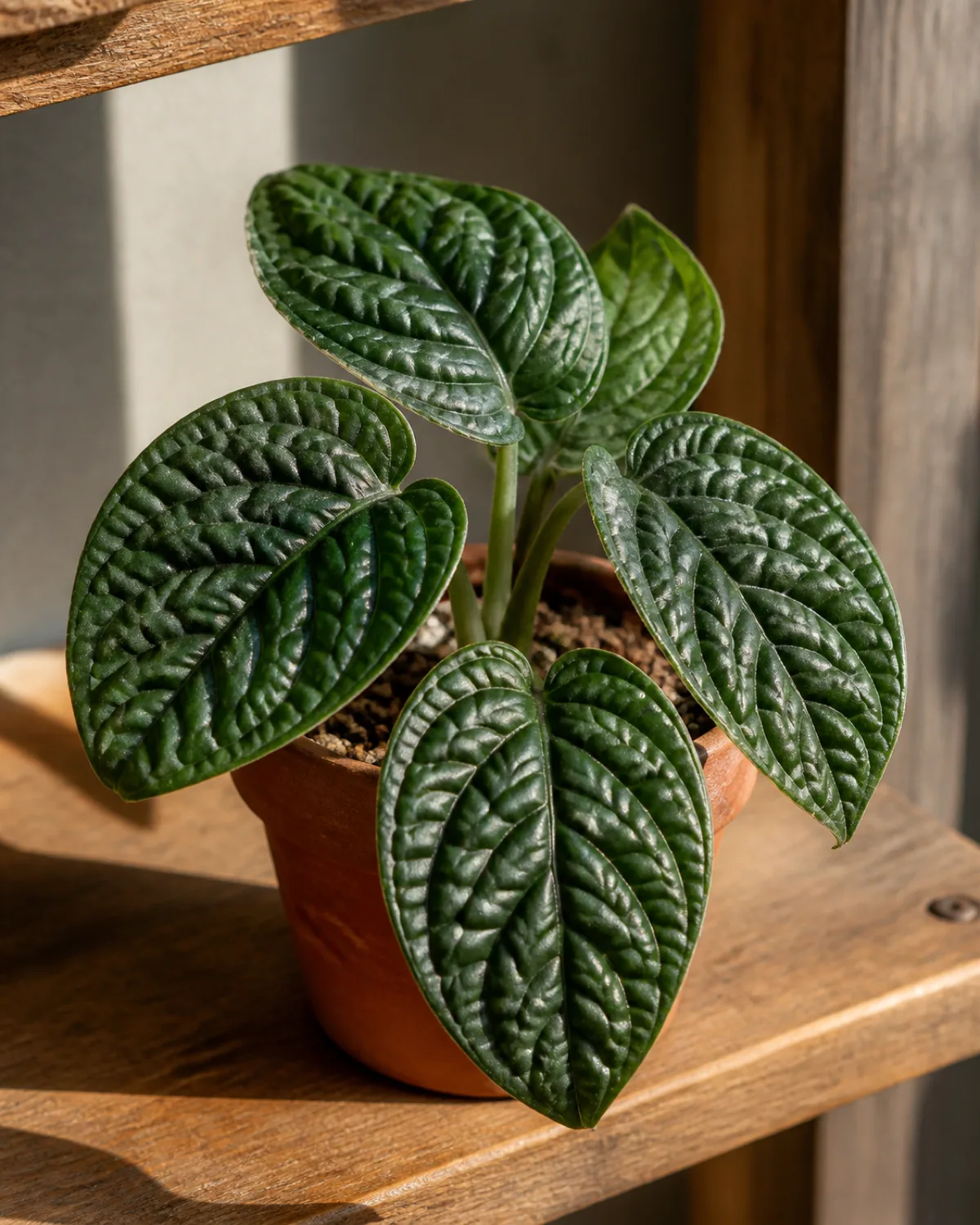
Monstera karstenianum, sold as Monstera peru, breaks every visual expectation of what a monstera should look like. No fenestrations, no splits, no holes. Just thick, deeply puckered leaves with a texture that resembles quilted leather more than tropical foliage.
The bullate surface is what makes this plant distinctive. Each cell cluster on the leaf surface swells independently, creating a three-dimensional quilted or corrugated texture that catches light in rippled patterns. No other commonly available monstera has anything similar.
- No fenestrations: Unlike adansonii or deliciosa, peru does not develop holes or splits at any stage of maturity
- Semi-succulent leaves: The thick, textured foliage stores more water than typical monstera leaves — tolerates missed waterings better
- Compact growth: Stays manageable on a shelf or small trellis without the spreading ambition of deliciosa
The textural similarity to peperomia is striking. First-time buyers often confuse the two, especially the deeply corrugated peperomia caperata varieties. The difference: peru leaves are larger, darker green, and grow on a climbing vine with aerial roots — peperomia caperata forms a compact rosette.
Peru is the monstera for growers who love the genus but want something unexpected — the conversation piece that makes visitors ask "that's really a monstera?"
Monstera Standleyana — the painted monstera
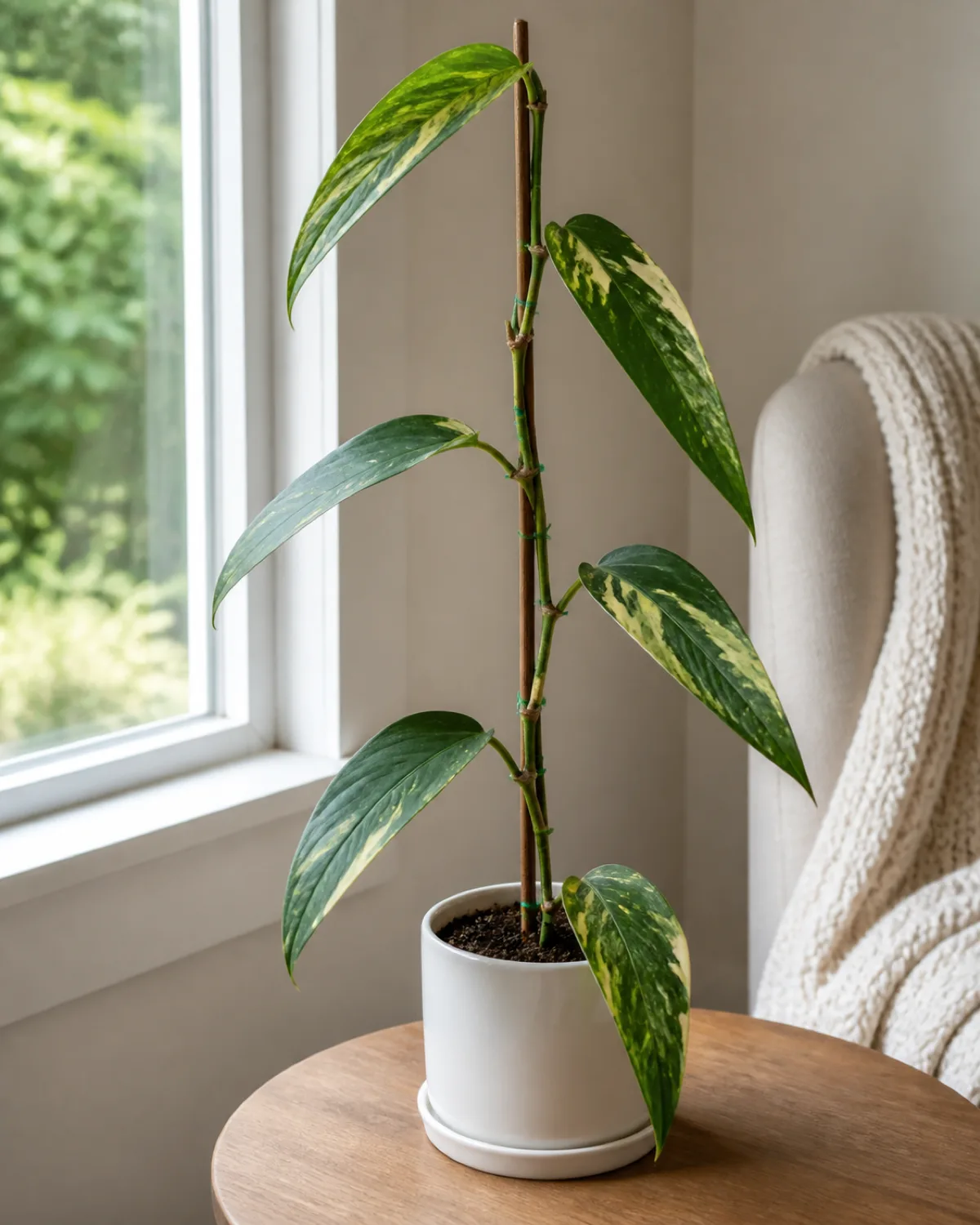
Monstera standleyana is another variety that breaks the fenestration expectation. The elongated, lance-shaped leaves are painted with vertical cream and yellow streaks against dark green, but no holes develop at any stage of growth.
The variegation pattern is natural and relatively stable, though individual leaves vary in how much cream they carry. Some emerge heavily striped, others lean toward mostly green with a few thin streaks:
- Leaf shape: Narrow and elongated, closer to a philodendron than a classic monstera shape
- Climbing habit: Attaches to supports with aerial roots but stays more compact than deliciosa
- Light response: Brighter indirect light produces more variegation — low light triggers a shift toward solid green leaves
- Growth rate: Moderate. Slower than adansonii but faster than Thai Constellation
The all-green reversion that sometimes appears on lower leaves is a light response, not a genetic failure. Moving the plant to a brighter spot usually restores variegation on new growth. If an entire stem reverts to solid green, pruning back to the last variegated node encourages the plant to branch from a point that still carries the pattern.
Standleyana is an excellent mid-shelf monstera — the compact climbing habit and painted leaf pattern create visual interest without the floor space that deliciosa demands.
Monstera Siltepecana — the silver monstera
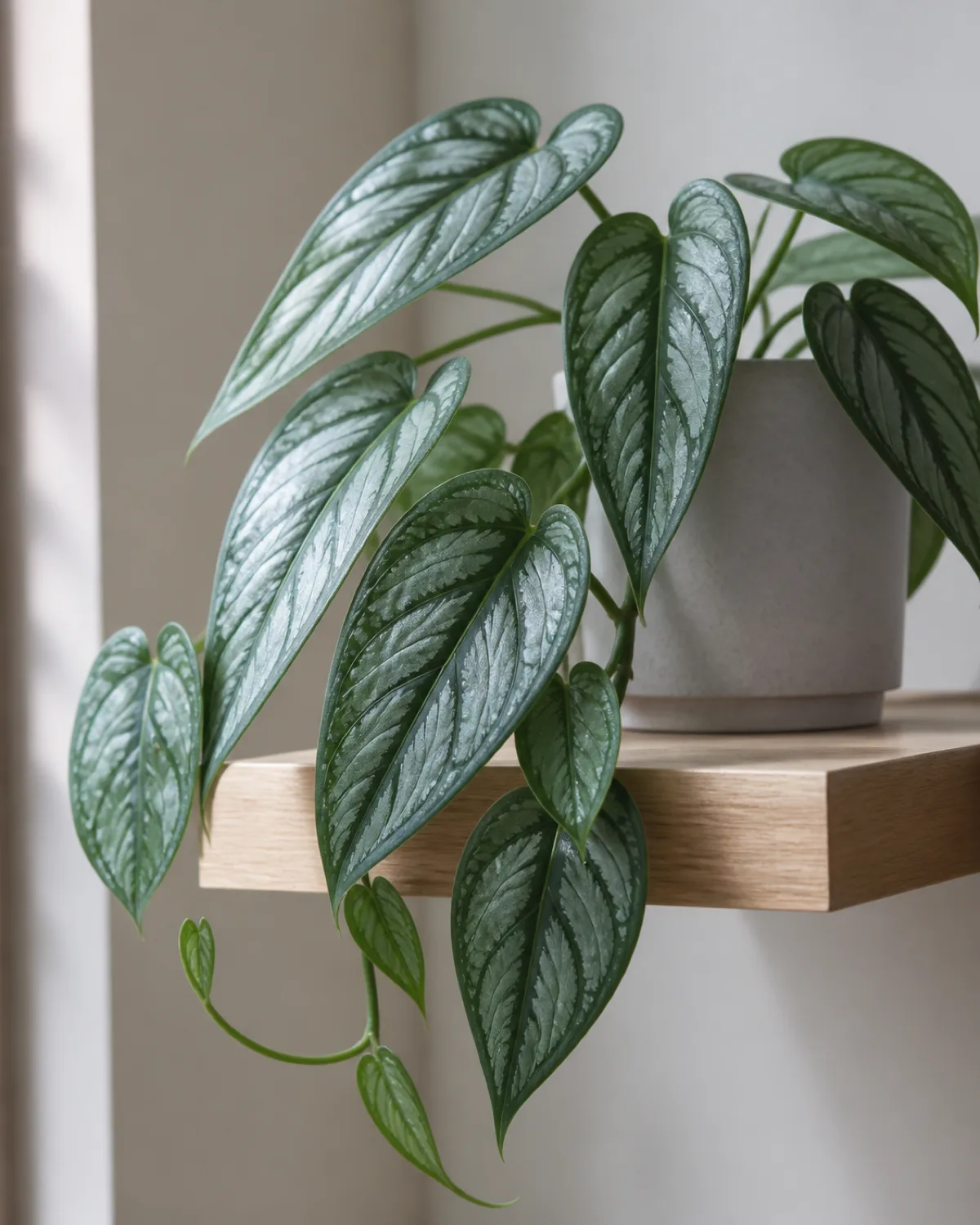
Monstera siltepecana puts on one of the most dramatic transformations in the entire genus. The juvenile leaves have a striking silver overlay pattern with dark veins that looks nothing like any other monstera — it reads more like a satin pothos than a relative of the Swiss cheese plant.
Then, if the plant climbs high enough, the transformation is complete. Mature climbing leaves lose the silver pattern entirely, turn solid green, grow significantly larger, and develop fenestrations. The juvenile and mature forms look like entirely different species.
- Juvenile form: Silver-patterned, small leaves — the form sold in nurseries and the one most people recognize
- Mature form: Large, green, fenestrated — achieved only with a tall climbing support
- Transitional leaves: The shift happens gradually over multiple leaves as the plant gains height
The practical implication: if you bought siltepecana for the silver pattern, let it trail or keep it on a short support. The silver is a juvenile adaptation to lower light on the forest floor. Once the plant climbs into brighter canopy light, it abandons the silver and switches strategies.
One of the most affordable uncommon monsteras at ten to twenty dollars. It bridges the gap between casual houseplant owner and monstera collector more gracefully than any variety except adansonii.
A natural pairing with cebu blue pothos on adjacent shelves — both feature silvery juvenile foliage that transforms with climbing maturity.
Monstera Pinnatipartita — the deeply split one
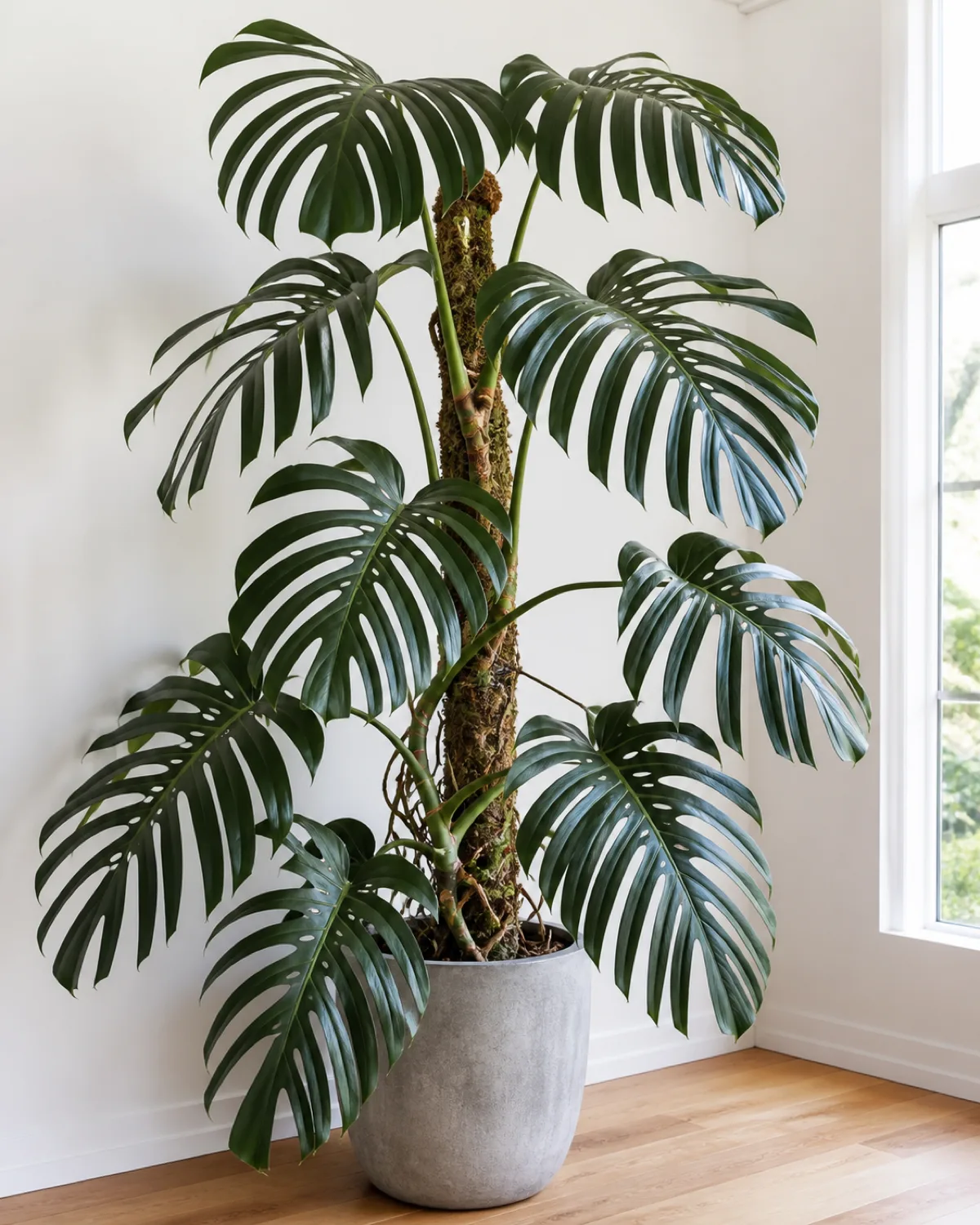
Monstera pinnatipartita takes fenestration to its extreme. Where deliciosa develops splits and holes, pinnatipartita's mature leaves divide into completely separate leaflets. Each "finger" of the leaf is its own distinct blade connected only at the central midrib.
The result looks more like a palm frond or a deeply cut philodendron than a typical monstera. But the transformation is entirely age and support dependent:
- Juvenile leaves: Entire, solid ovals with no splits, indistinguishable from a generic tropical vine
- Intermediate leaves: Shallow lobes begin forming along the margins
- Mature leaves: Deep pinnate divisions creating separate leaflets — the dramatic form requires a tall sturdy support
The confusion with Monstera deliciosa subsp. sierrana (sometimes sold as 'Borsigiana') is widespread in the trade. Both produce deeply split leaves, but pinnatipartita's mature splits are narrower and more palm-like. The leaflets separate more completely with less remaining leaf blade between them.
The practical demand is structural. Pinnatipartita is a vigorous, fast-climbing species that needs a support capable of bearing real weight. Flimsy moss poles and thin stakes cannot trigger the mature leaf form. The plant reads the instability and stays juvenile. A thick plank, heavy-duty moss pole, or wall trellis is necessary to unlock the pinnate leaves.
A striking choice for growers who want tall indoor plant impact from something more unusual than a standard deliciosa.
Monstera Dubia — the shingling monstera
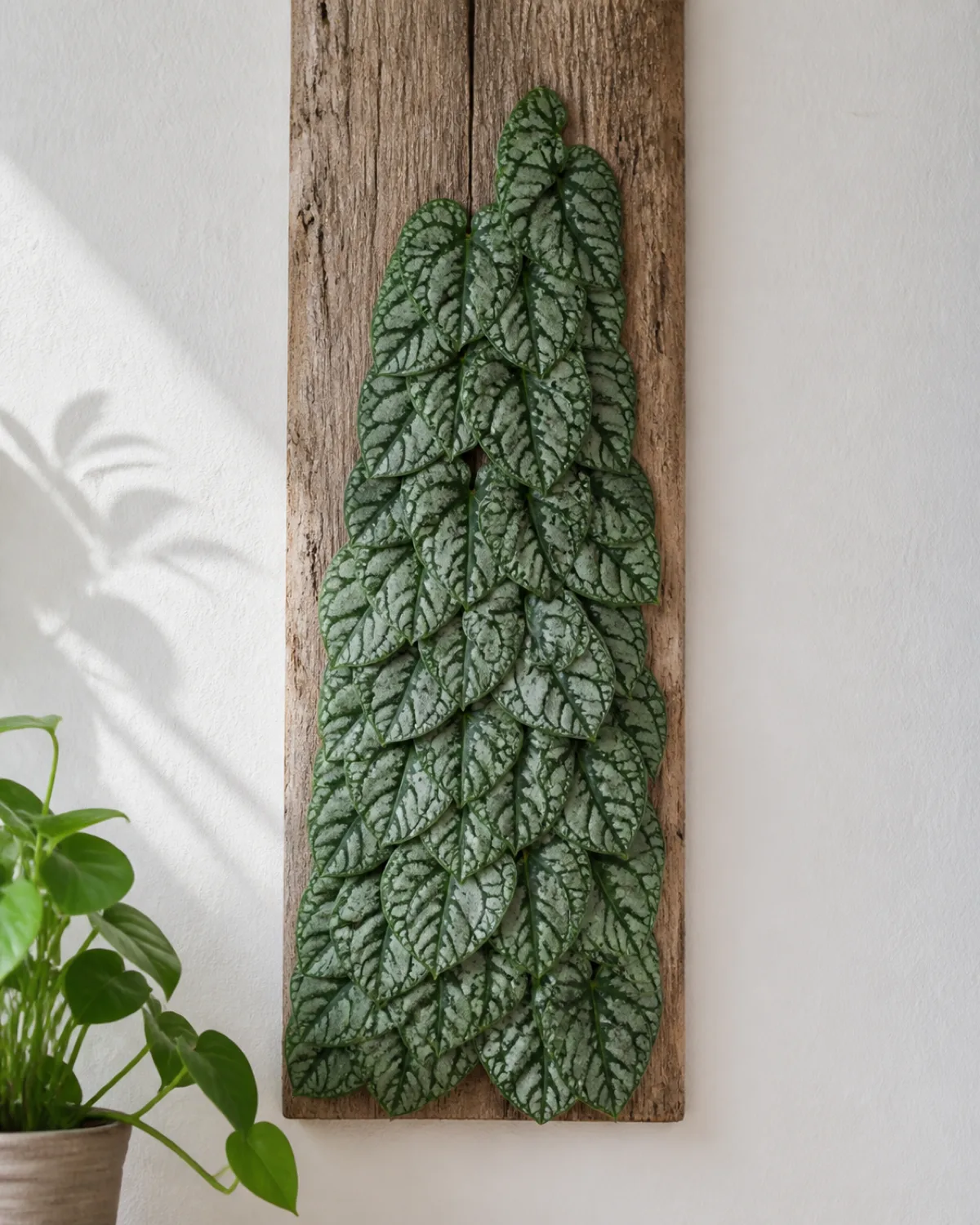
Monstera dubia is the most visually unusual variety on this list. The juvenile leaves press flat against tree bark — or in cultivation, a wooden board, creating an overlapping shingle pattern called appressed growth. Each small, heart-shaped leaf lies flush to the surface, creating a tiled mosaic up the support.
The shingling behavior is an adaptation. In the wild, juvenile dubia climbs tree trunks by pressing its leaves against the bark to maximize surface contact and minimize wind resistance. The silvery-green coloring with dark veins helps the leaves blend with the bark — camouflage, not decoration.
- Board, not pole: Dubia needs a flat surface to shingle against. Round moss poles do not trigger the appressed growth pattern
- Juvenile display: The shingling form is what most growers cultivate and admire. It reads as living wall art
- Mature transformation: Rarely achieved indoors. Mature dubia leaves are large, fenestrated, and look nothing like the juvenile shingles
- Slow growth: One of the slower monstera species. Patience is part of the commitment
The display potential is distinctive. A dubia board mounted on a bright wall functions as a living art piece — each new leaf adds another tile to the expanding mosaic. No other commonly available monstera creates this effect.
The care is straightforward for anyone comfortable with aroids — bright indirect light, high humidity, well-draining soil. The challenge is not difficulty but patience. Dubia grows slowly and rewards growers who appreciate gradual geometric progress.
Monstera variety cheat sheet
- 1Deliciosa: bright indirect, moss pole, the classic split-leafFifteen to thirty dollars. The original — massive fenestrated leaves on a climbing support. Juvenile leaves have no holes. Most forgiving monstera for beginners.
- 2Adansonii: bright, higher humidity, fast trailing vineEight to fifteen dollars. Smaller Swiss cheese leaves with holes that do not reach the edge. Best monstera for hanging baskets and shelves. Needs fifty percent or higher humidity.
- 3Thai Constellation: bright indirect only, slow, stable variegationFifty to two hundred dollars. Tissue-cultured cream splashes that do not revert. Grows two to three times slower than green deliciosa. Direct sun scorches the cream tissue first.
- 4Peru: medium-bright, semi-succulent, no fenestrationsFifteen to twenty-five dollars. Thick quilted texture with no holes at all. Tolerates missed waterings. Compact shelf-sized monstera that surprises everyone.
- 5Standleyana: bright indirect, compact climber, painted streaksFifteen to twenty-five dollars. Lance-shaped leaves with cream variegation streaks. No fenestrations. Low light triggers green reversion — prune to last variegated node.
- 6Siltepecana: medium-bright, affordable, silver juvenile formTen to twenty dollars. Silver overlay pattern that vanishes when the plant climbs into maturity. Best collector entry point after adansonii. Trail it to keep the silver.
- 7Pinnatipartita: bright, sturdy support, palm-like splitsTwenty to forty dollars. Leaves divide into separate leaflets like a palm frond. Needs a heavy support — flimsy stakes keep it juvenile. Fast climber once established.
- 8Dubia: bright, flat board, living wall shingle artTwenty to thirty-five dollars. Juvenile leaves press flat against a board in a tiled pattern. Slow grower. Round moss poles do not work — needs a flat surface to shingle.
- 9Obliqua: greenhouse only, eighty percent humidity, extremely rareOne thousand dollars and up. More hole than leaf — paper-thin tissue connecting fenestrations. Almost every sold obliqua is actually adansonii. Not a houseplant.
- 10Lechleriana: bright, tall support, scattered oval holesTwenty to thirty dollars. Large elongated leaves with fewer holes than adansonii. Often mislabeled as large-form adansonii. Impressive climbing height on a tall pole.
Kultivy — www.kultivy.com
Monstera Obliqua — the rarest and most misidentified
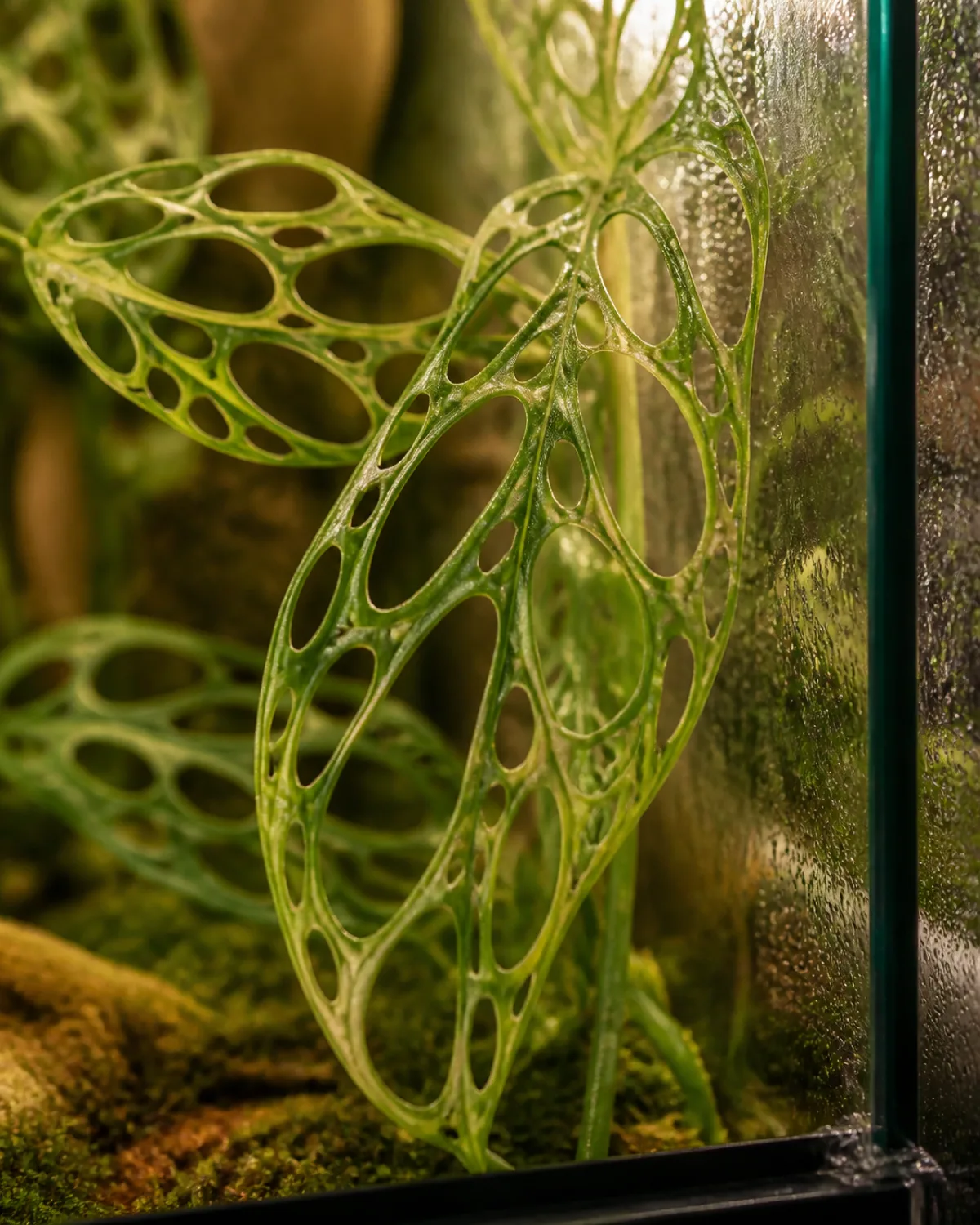
Monstera obliqua is the most misidentified houseplant in the trade. The real plant is so extremely fenestrated that the leaf is mostly holes — thin green tissue connects the perforations like lacework.
The reality check is blunt: almost every "obliqua" sold online, in nurseries, and in social media posts is actually adansonii. The visual difference is not subtle:
- Real obliqua: Paper-thin leaf tissue with fenestrations covering seventy to ninety percent of the surface. The leaf feels fragile because it is
- Adansonii mislabeled as obliqua: Thicker leaves with oval holes that leave significant solid leaf surface between them
The care demands eliminate obliqua as a houseplant for anyone without a controlled environment:
- Humidity: Eighty percent or higher, non-negotiable. The paper-thin tissue desiccates rapidly in standard home humidity
- Temperature: Consistently warm, seventy to eighty degrees, no drafts
- Enclosure: Glass cabinets, terrariums, or dedicated greenhouse setups. Open-air shelf growing is not viable
The price confirms the rarity. Genuine obliqua sells for one thousand dollars and up through verified collectors. Any listing advertising "monstera obliqua" for twenty to fifty dollars is almost certainly adansonii — and adansonii is a beautiful plant in its own right.
Obliqua exists on this list because understanding it is part of understanding the monstera genus. Knowing it exists and knowing how to spot the fake listings protects growers from the most common and most expensive monstera misidentification in the hobby.
Monstera Lechleriana — the understated climber
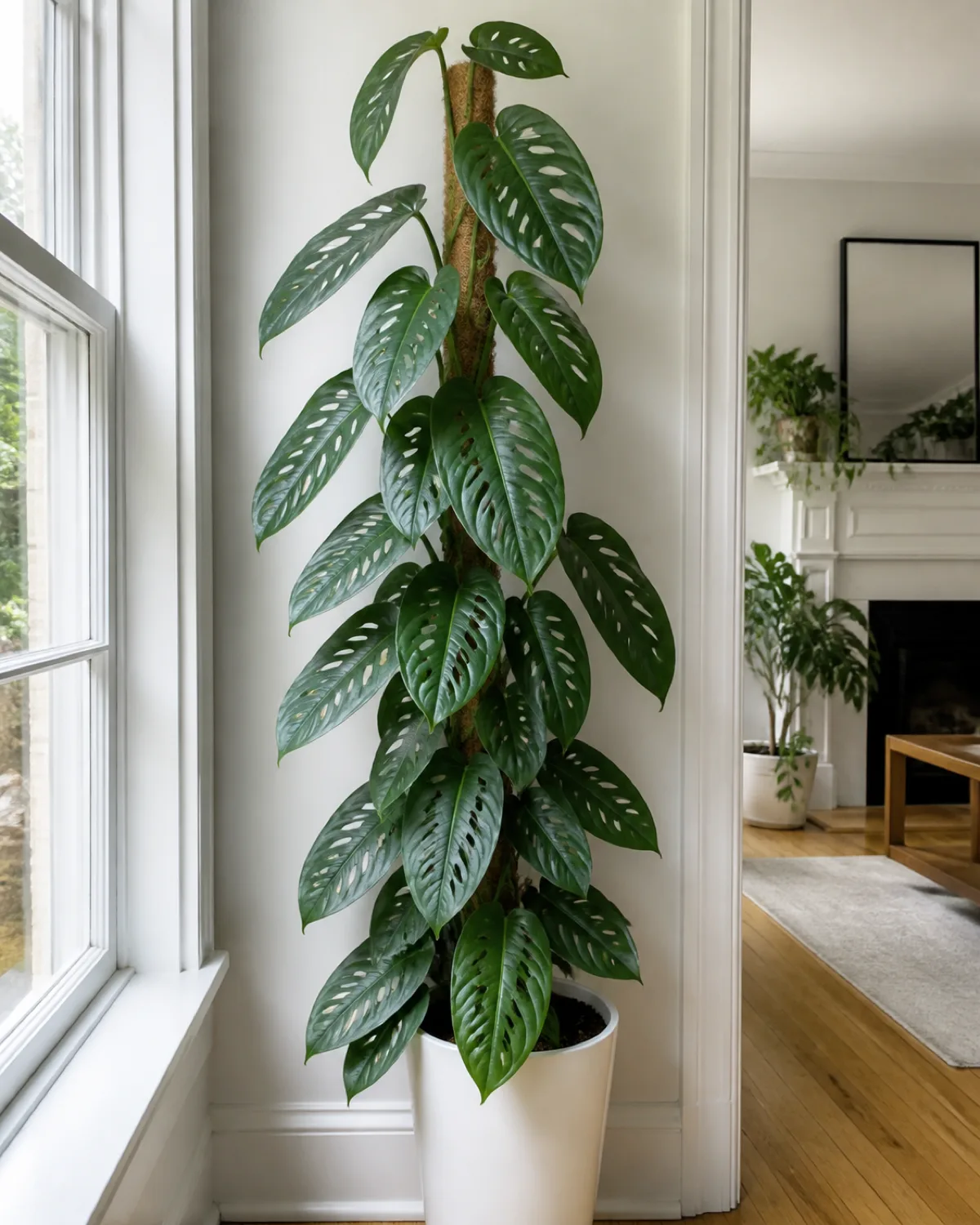
Monstera lechleriana is the variety that collectors appreciate and casual growers walk past. The large elongated oval leaves have scattered fenestrations, fewer and more widely spaced than adansonii, creating an understated pattern that reads as elegant rather than dramatic.
The trade confusion is real. Lechleriana circulates frequently as "large-form adansonii" because the leaf shape and fenestration style overlap. The distinguishing features:
- Leaf size: Lechleriana produces noticeably larger leaves than adansonii — eight to fifteen inches versus three to eight
- Fenestration pattern: Fewer, more oval holes scattered across the blade. Adansonii has more numerous, more closely spaced perforations
- Leaf texture: Slightly thicker and more leathery than adansonii, closer to deliciosa in feel
- Growth habit: Strong climber that matures impressively on a tall support, one of the best monstera species for vertical displays
The drought tolerance is a practical advantage. Lechleriana's thicker leaves retain moisture longer than adansonii, making it more forgiving of inconsistent watering — a useful trait for growers who tend to underwater.
Lechleriana pairs well in a tall plant display alongside a deliciosa — the size contrast between lechleriana's elongated ovals and deliciosa's broad, deeply split leaves demonstrates the visual range within a single genus.
For growers expanding beyond deliciosa and adansonii, lechleriana offers genuine monstera character — climbing habit, aerial roots, fenestrations, in a form that is less common but no more difficult to grow. It is the quiet member of the genus that rewards the growers who notice it.

Mara writes plant care guides grounded in published botany and first-hand growing experience, not recycled social-media advice. Every recommendation on Kultivy is tested against real-world conditions before it reaches your screen. More about our editorial standards.