Oxalis is the houseplant that folds shut at sunset, dies to the soil twice a year, and comes back from underground bulbs every time. The vivid purple varieties produce a color intensity that makes most foliage plants look washed out.
It belongs to the Oxalidaceae family, not clovers. Everything about its care revolves around the corms buried in the top inch of soil. Most oxalis sold in nurseries dies within weeks because owners mistake dormancy for death and throw it away.
Why oxalis folds its leaves — and why that matters for care
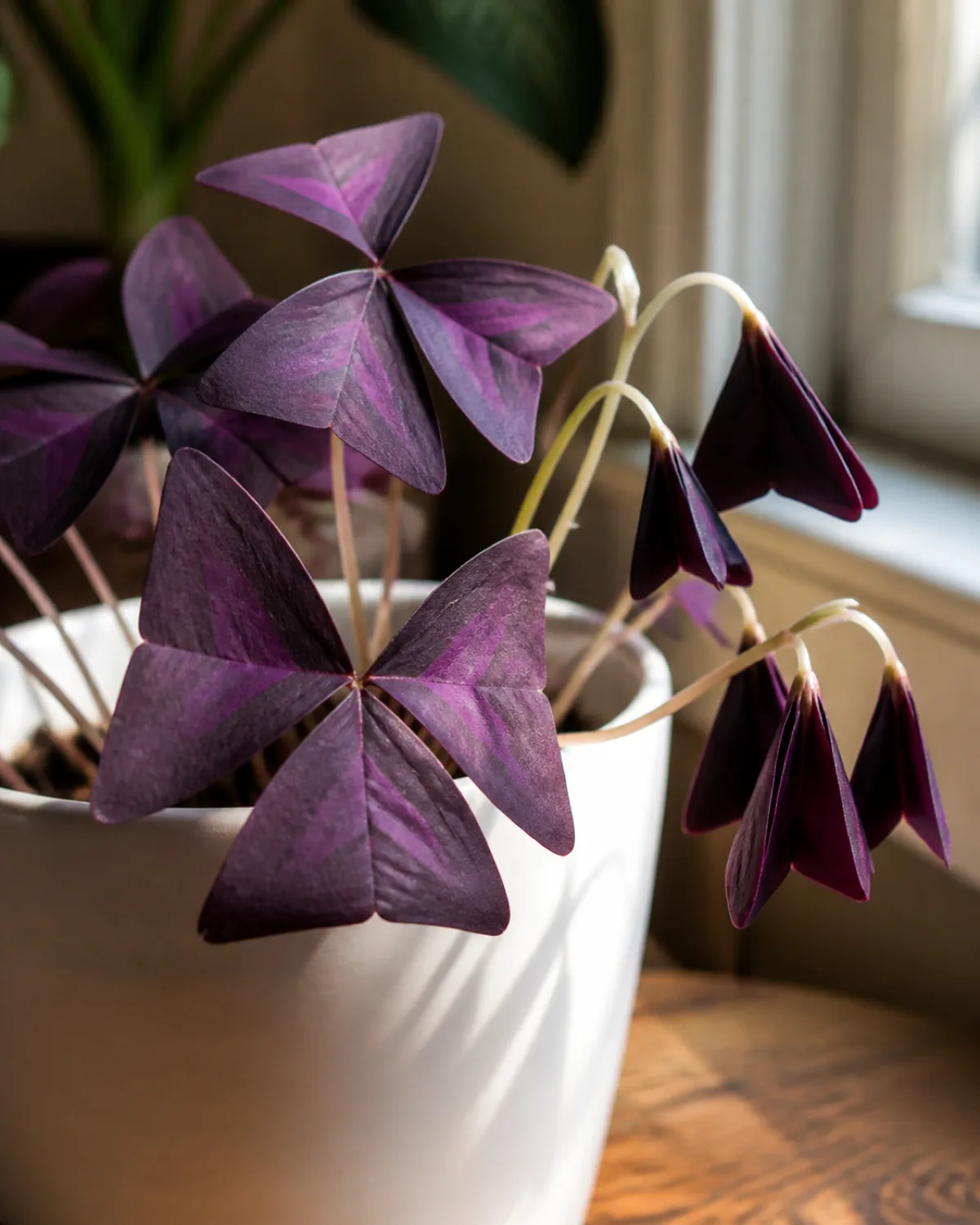
The first thing every oxalis owner notices is the folding. At dusk, each trifoliate leaflet rotates downward on its petiole until the three leaves press together like a closed umbrella. At dawn, they open flat again. This cycle happens every single day, reliably, as long as the plant is healthy.
The mechanism is nyctinasty, movement driven by light changes, powered by a pulvinus at the base of each leaflet. The pulvinus is a swollen joint that responds to turgor pressure changes triggered by the circadian clock and light intensity.
Prayer plants use the same pulvinus mechanism, but oxalis belongs to an entirely different family (Oxalidaceae), which makes the convergent evolution striking.
- Daytime folding: If leaves stay folded during bright daylight hours, the light level is too low — the plant is telling you it needs a brighter spot
- Speed: Oxalis leaf movement is faster and more dramatic than calathea or maranta — the thin petioles amplify each degree of rotation
- Not wilting: New growers see folded leaves in late afternoon and panic-water, which is the beginning of overwatering problems
- Cloud response: Leaves partially close during heavy overcast and reopen when the sun returns — real-time light feedback
The folding is not a novelty. It is the single best diagnostic signal the plant gives you about whether its light levels are adequate.
The best oxalis varieties for indoor growing
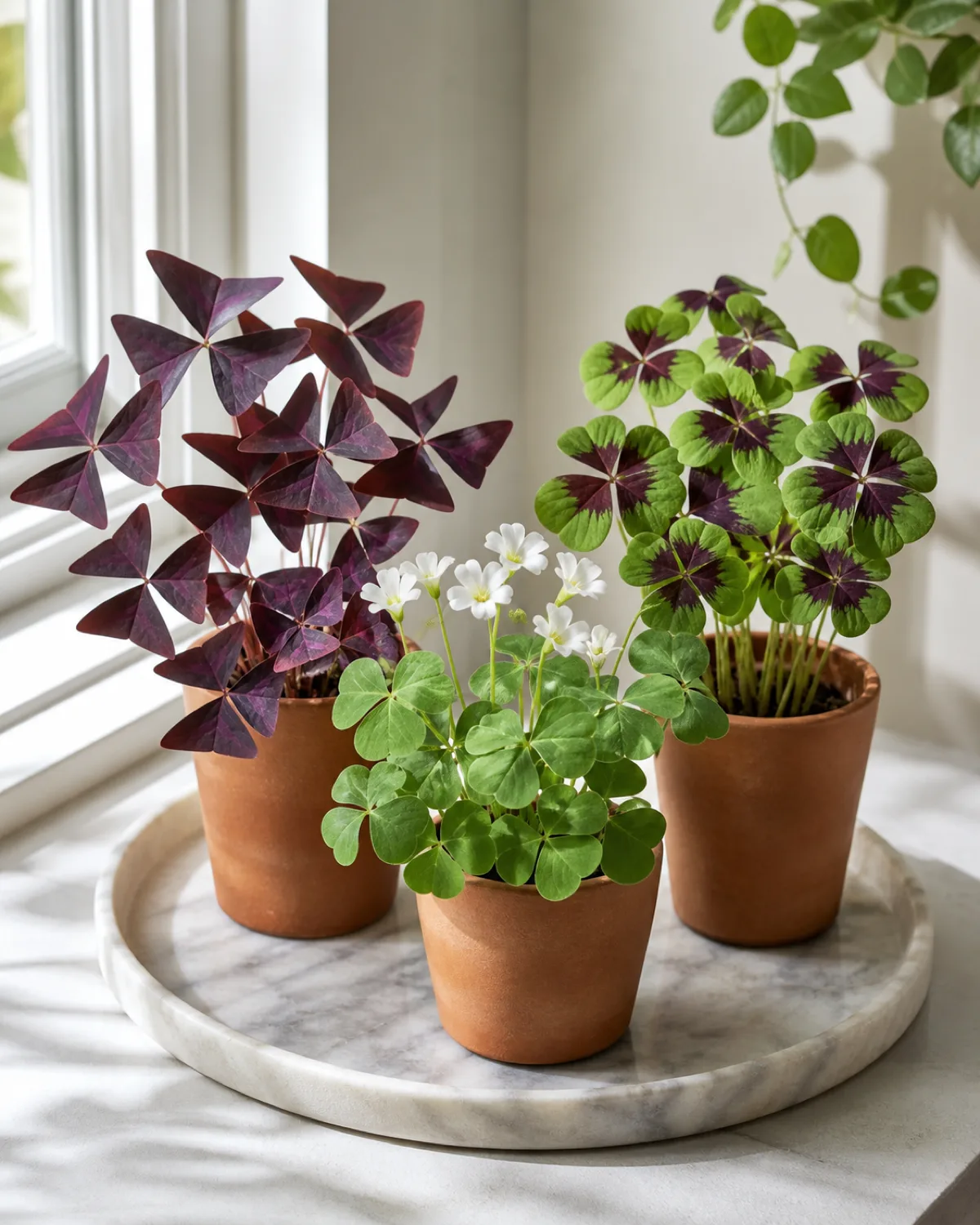
Most nurseries sell one or two species labeled generically as "shamrock plant." There are actually several distinct species worth growing indoors, and they differ more than the labels suggest.
Oxalis triangularis is the dominant houseplant species. Deep burgundy-purple triangular leaflets on thin wiry petioles, with small pink-lavender flowers rising above the foliage. The color intensity is the draw — few houseplants produce a purple this saturated without supplemental lighting. The subspecies papilionacea has green leaves with dark butterfly-shaped markings at the center.
Oxalis regnellii is the classic green shamrock. Rounded trifoliate leaves, pure white flowers, and the more traditional clover look. This is the species most commonly sold as a St. Patrick's Day gift plant. Less dramatic than triangularis but equally easy to grow.
- Oxalis tetraphylla (Iron Cross): Four leaflets instead of three, each marked with a dark cross-shaped pattern at the base — the "lucky clover" that gets confused with four-leaf clover
- Oxalis spiralis vulcanicola 'Zinfandel': Compact trailing form with tiny burgundy leaves, better for hanging pots than the upright species
- Key distinction: Indoor cultivars are well-behaved pot plants — they are not the invasive weedy oxalis species that spread through lawns and cracks in pavement
Light that keeps the colors vivid
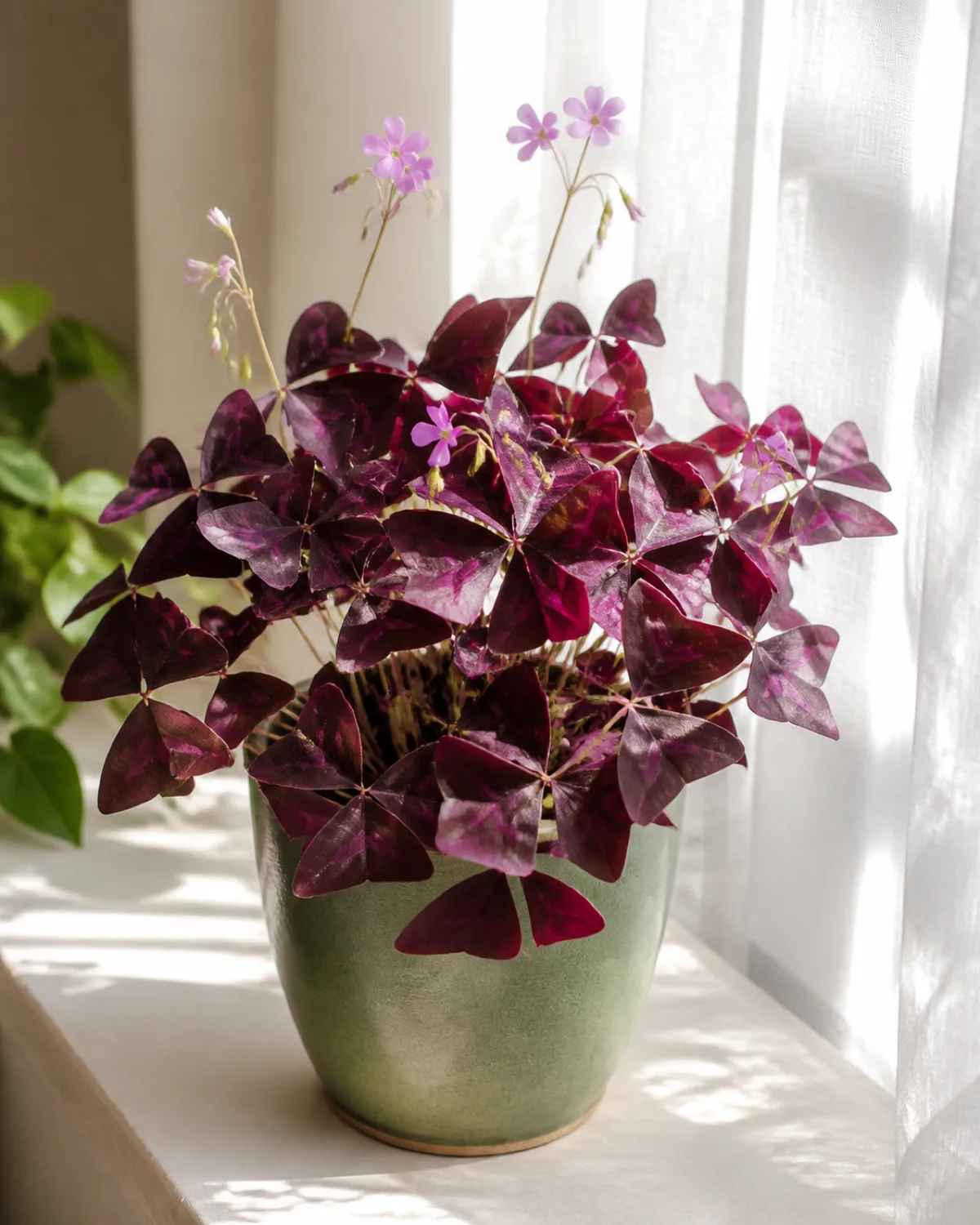
Oxalis wants four to six hours of bright indirect light per day. That is the window that keeps the foliage compact, the colors vivid, and the leaf-folding cycle on a reliable schedule.
Purple varieties respond to light the same way croton and tradescantia do: more light produces deeper, more saturated color. An O. triangularis in a dim corner gradually shifts from burgundy to muddy green as the plant redirects energy toward chlorophyll at the expense of anthocyanin pigments.
That color loss is not reversible on existing leaves. Only new growth in better light will restore the purple.
- East window: Ideal — gentle morning sun with bright indirect light through midday
- West window: Works well, but watch for late afternoon direct sun that can scorch the thin leaves
- South window: Too intense without a sheer curtain — oxalis leaves are thinner than most houseplants and lack the waxy cuticle that protects thicker-leaved species
- North window: Usually insufficient — the plant will stretch and fold prematurely
Direct afternoon sun is the one hard boundary. Oxalis leaves are delicate enough that even an hour of unfiltered western sun can produce brown papery scorch marks. The houseplant light guide covers the shadow test and window assessment if you are unsure about your spot.
Watering an oxalis without rotting the bulbs
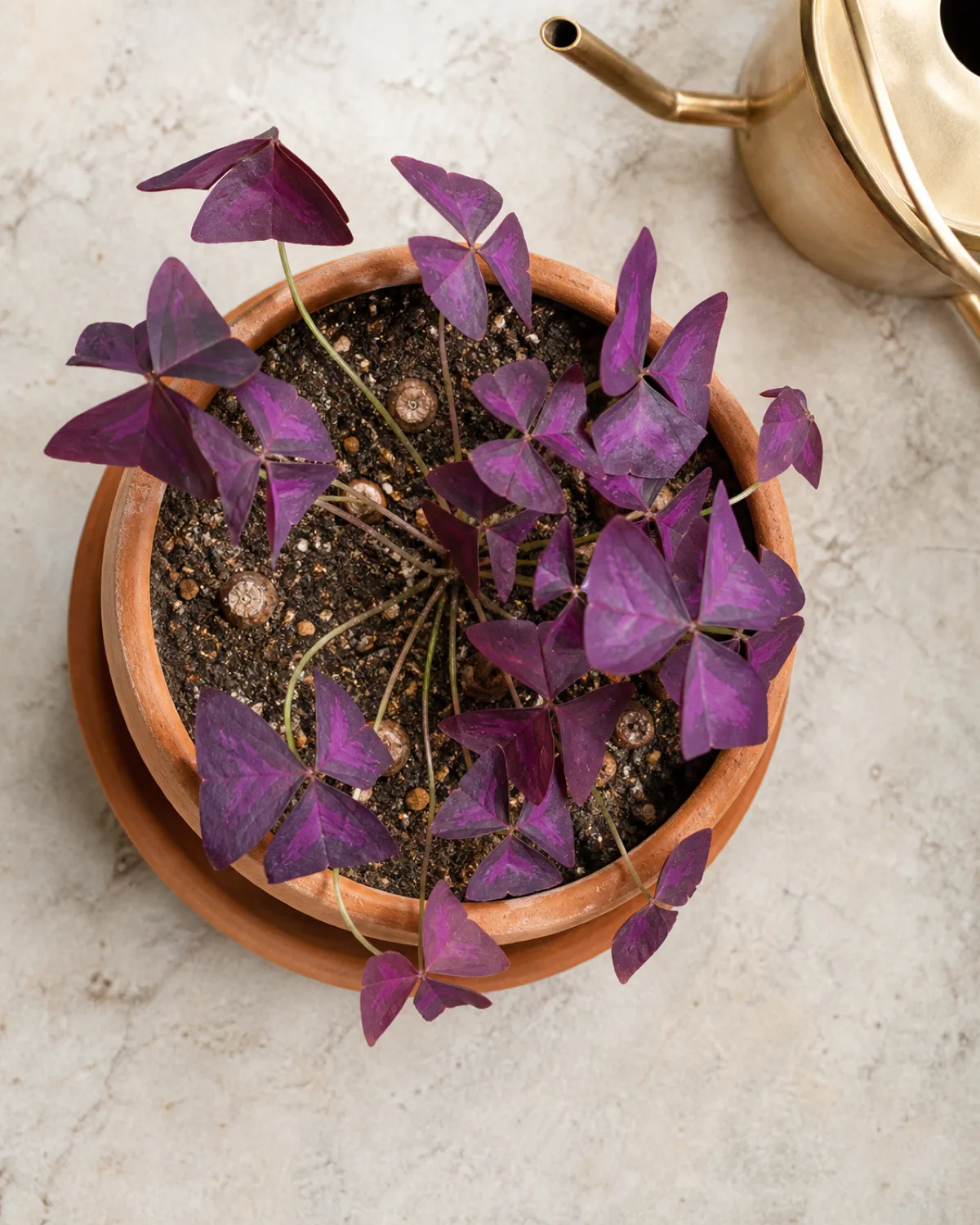
Water when the top inch of soil has dried. That is the standard tropical houseplant rhythm — not the deep soak-and-dry cycle that succulents use, but not consistently moist either.
The critical difference with oxalis is what sits just below the surface. The plant grows from corms — small, bulb-like storage organs packed in the top one to two inches of soil. Corms that stay wet too long rot from the outside in. By the time you notice soft, dark tissue at the base of the stems, the damage is usually irreversible.
- Drainage is non-negotiable: Always use a pot with a drainage hole — decorative pots without one trap water at the corm level
- Water temperature: Room temperature only — cold water shocks the shallow root system emerging from the corms
- Dormancy reduction: When the plant begins to yellow and die back, reduce watering to almost nothing — see the dormancy section below
- Saucer check: Empty saucers within thirty minutes after watering — standing water wicks back up through the drainage hole
The overwatering pattern is specific to oxalis. Most houseplants show overwatering as yellow lower leaves. Oxalis shows it as stems collapsing at the soil line because the corm has rotted at the point where the stem emerges.
Soil mix for bulb health
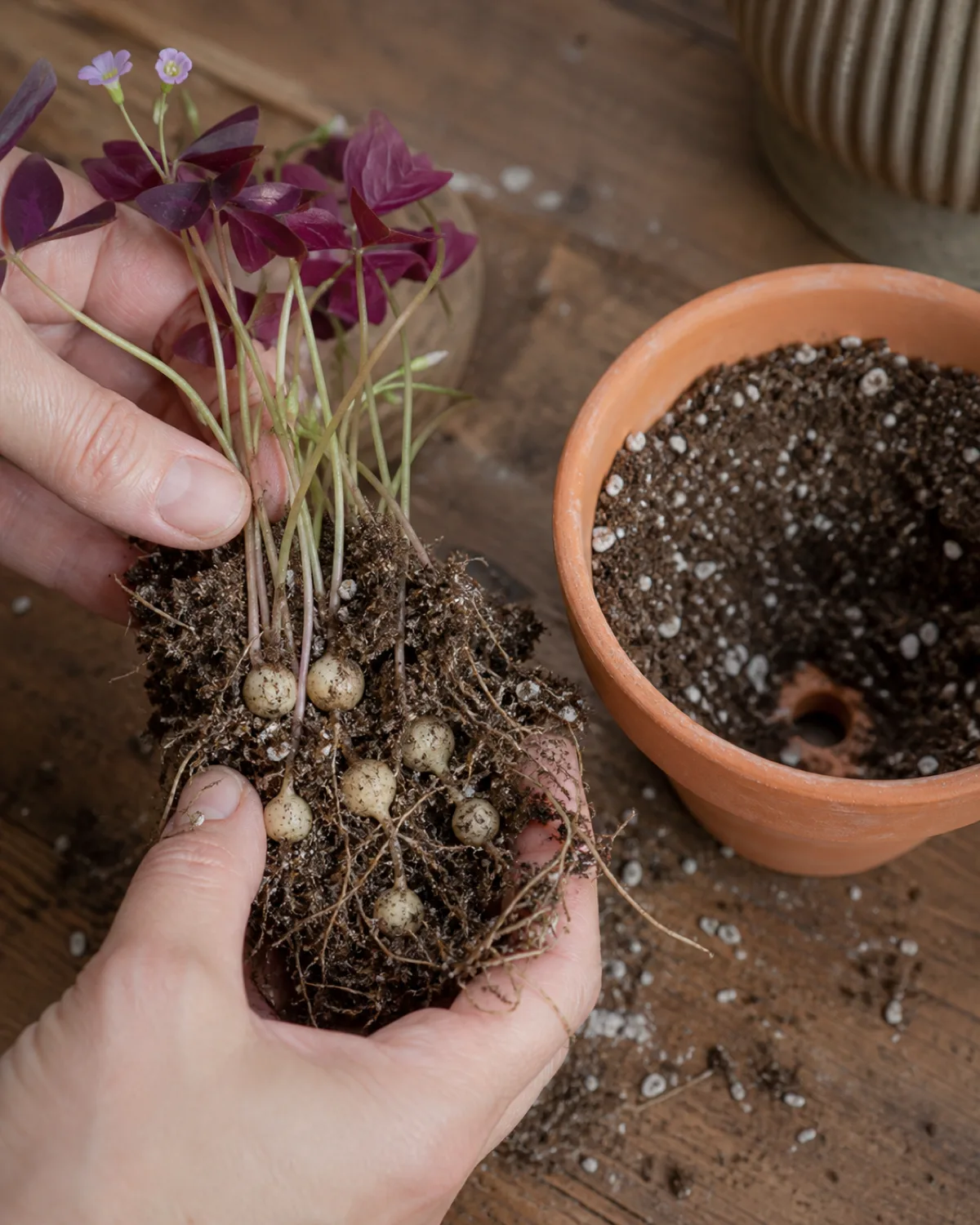
The soil needs to drain fast enough that the corms never sit in saturated conditions for more than a few hours after watering. Standard potting mix works as a base, but it needs amendment.
A sixty-forty ratio of peat-based potting mix to perlite provides the right balance. The peat holds enough moisture for the fine roots while the perlite creates air channels that prevent waterlogging at the corm level.
- pH: Slightly acidic, around 5.5 to 6.5 — peat-based mixes naturally fall in this range without adjustment
- Corm depth: Plant corms one to two inches deep — burying them deeper traps moisture around the crown
- Avoid: Heavy garden soil, pure coco coir, and any mix marketed as moisture-retaining — all hold too much water around the corms
- Repotting frequency: Every one to two years — the corms multiply rapidly and crowd themselves into a dense mat that restricts drainage
When you unpot an established oxalis, the density of corms is startling. A three-year-old plant in a four-inch pot can produce fifty or more individual corms pressed together. That crowding eventually restricts water flow and air circulation, which is why periodic repotting matters even when the plant looks healthy.
Temperature and humidity: the cool-room advantage
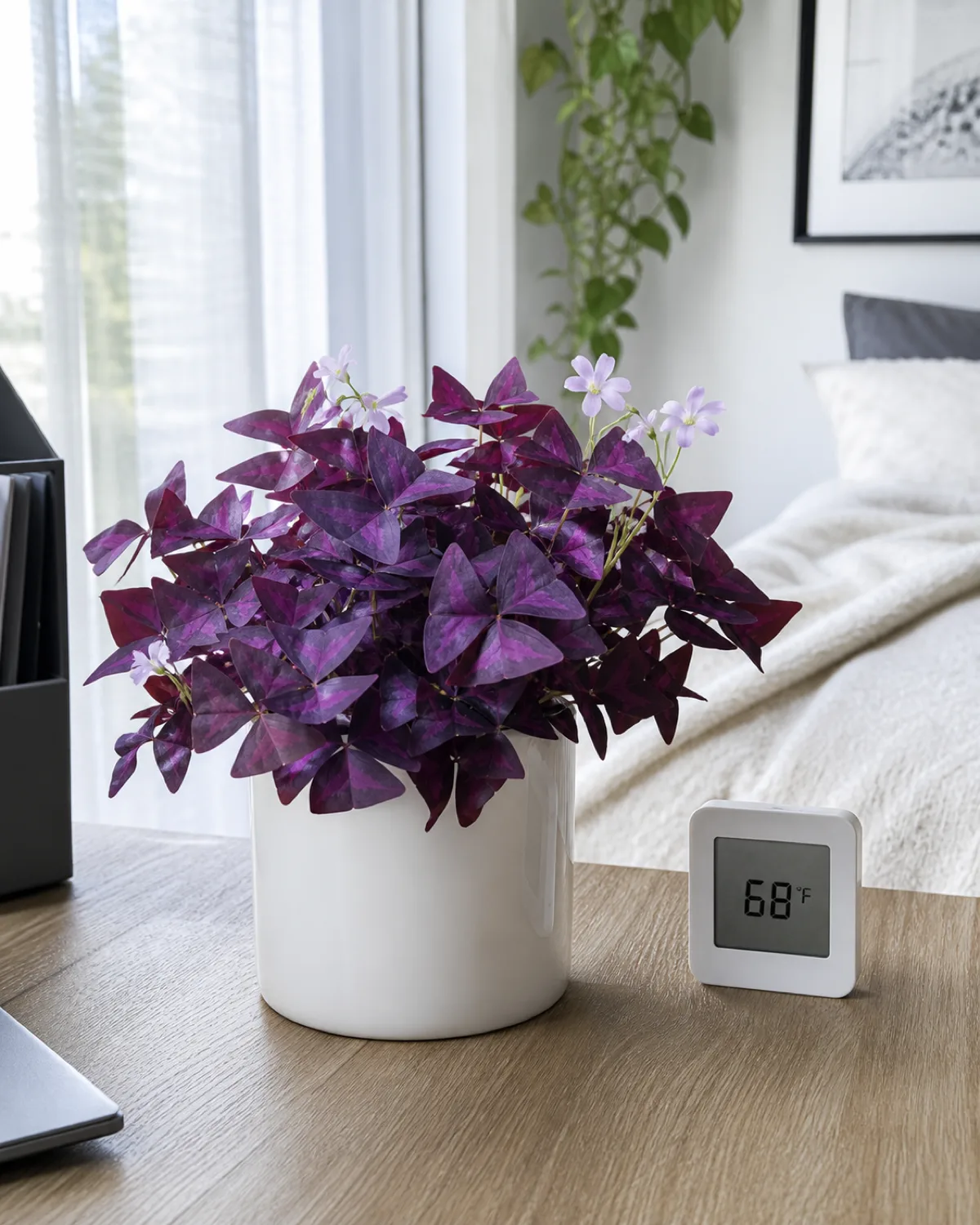
Oxalis prefers sixty to seventy-five degrees Fahrenheit, which makes it one of the few houseplants that actually performs better in cooler rooms where most tropicals stall or stop growing.
That cool-room tolerance is a genuine advantage. Spaces like unheated bedrooms, offices with aggressive air conditioning, and sunrooms with nighttime temperature drops — environments that stress calathea, anthurium, and most aroids — are fine for oxalis. The plant originates from South American forests and woodlands where temperatures are moderate year-round, not the steamy tropics.
- Heat trigger: Temperatures above eighty degrees can trigger premature dormancy — the plant reads heat as summer drought and shuts down to conserve energy in the corms
- Cold tolerance: Handles down to fifty degrees without damage, though growth slows significantly below sixty
- Humidity: Average household humidity of forty to fifty percent is perfectly adequate — oxalis is not a humidity-demanding plant
- Air circulation: Good airflow matters more than humidity — stagnant air around the dense foliage creates conditions for powdery mildew
The humidity indifference is unusual for a plant with such thin leaves. Most thin-leaved houseplants (ferns, calathea, prayer plants) need elevated humidity to prevent crispy edges. Oxalis manages because its rapid dormancy cycle lets it shed leaves before drought stress accumulates — it simply goes dormant rather than fighting dry air with damaged foliage.
The dormancy cycle that scares new owners
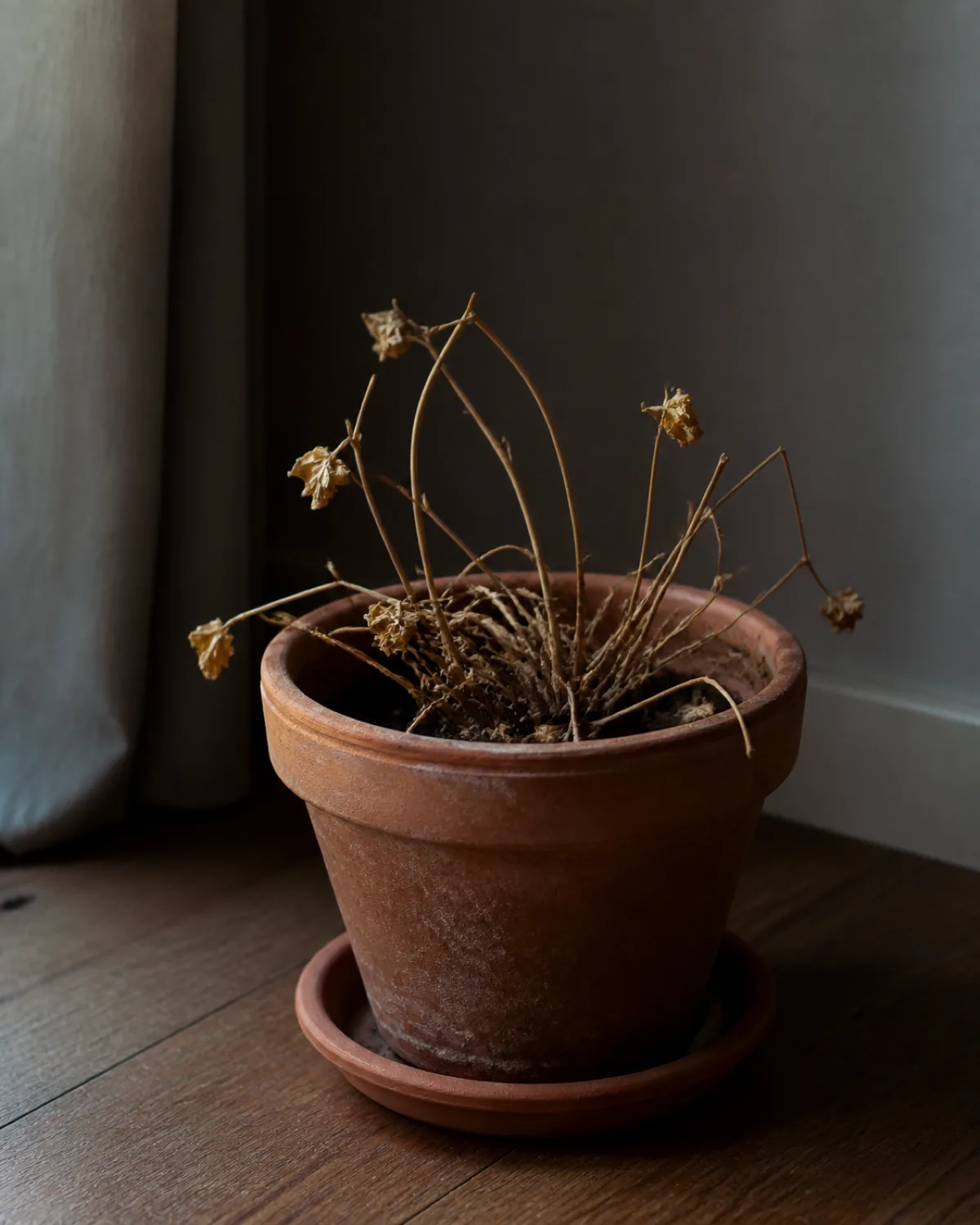
This is the section that saves the most plants. Oxalis goes dormant one to two times per year, and when it does, every leaf yellows, withers, and collapses. The pot looks completely empty. There is nothing green above the soil.
The plant is not dead. The corms underground are resting and storing energy for the next growth cycle. This is a scheduled, biological process — as normal for oxalis as shedding leaves is for a deciduous tree. The corms are firm, pale, and very much alive under the soil surface.
- Triggers: Seasonal light changes (shorter days or longer days depending on species), temperature shifts, or the plant's internal circadian clock — sometimes it happens with no obvious environmental trigger at all
- Duration: Two to six weeks of complete rest — shorter in consistently warm indoor environments, longer in cool dark storage
- What to do: Stop watering almost completely — the corms cannot absorb water without active roots. Move the pot to a cool, dim spot. Leave it alone.
- What not to do: Do not water the bare soil. Do not repot during dormancy. Do not put it in the freezer. Do not throw it away.
The comeback is fast and dramatic. When the rest period ends, pale green or purple shoots appear at the soil surface within days. Resume watering gradually — light water the first week, then normal cadence once several stems have unfurled. Move the pot back to its bright spot.
The number one killer of healthy oxalis is a well-meaning owner who sees the die-back, assumes the plant is gone, and discards a pot full of perfectly viable corms.
Fertilizing during active growth only
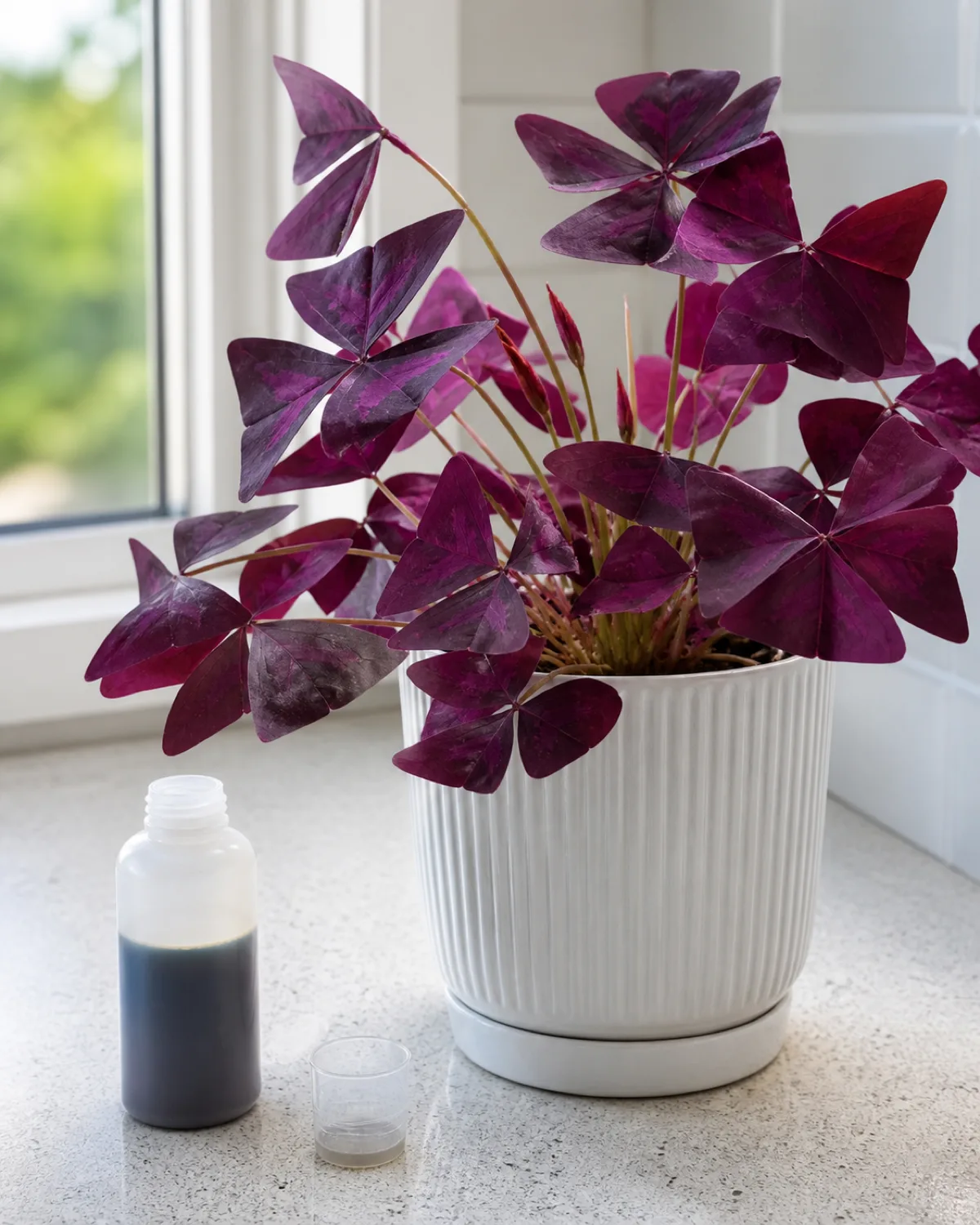
Feed every two to four weeks during active growth with a balanced liquid fertilizer diluted to half the recommended strength. The feeding window is strictly tied to the growth cycle — active foliage means active roots that can absorb nutrients.
Stop feeding completely when the plant enters dormancy. Fertilizer applied to dormant corms sits in the soil as salt. When the roots re-emerge, they grow into a concentrated salt solution that damages the delicate root tips before they have a chance to establish.
- Formula: Balanced 10-10-10 or 20-20-20 liquid fertilizer at half strength
- Frequency: Every two to four weeks during active growth only — roughly six to ten months of the year depending on how long dormancy lasts
- Over-feeding signs: Brown leaf tips, white crusty residue on the soil surface, leaf edges that look burned despite adequate watering
- Resume timing: Wait until at least four to six stems are actively growing after dormancy before the first feeding — early shoots need to establish roots first
The fertilizing houseplants guide covers the salt-flush technique for resetting over-fertilized soil. For oxalis specifically, flushing is less effective than for most houseplants because the corms sit right at the surface where salt concentration is highest — prevention is significantly better than correction.
Propagation by bulb division — the easiest method
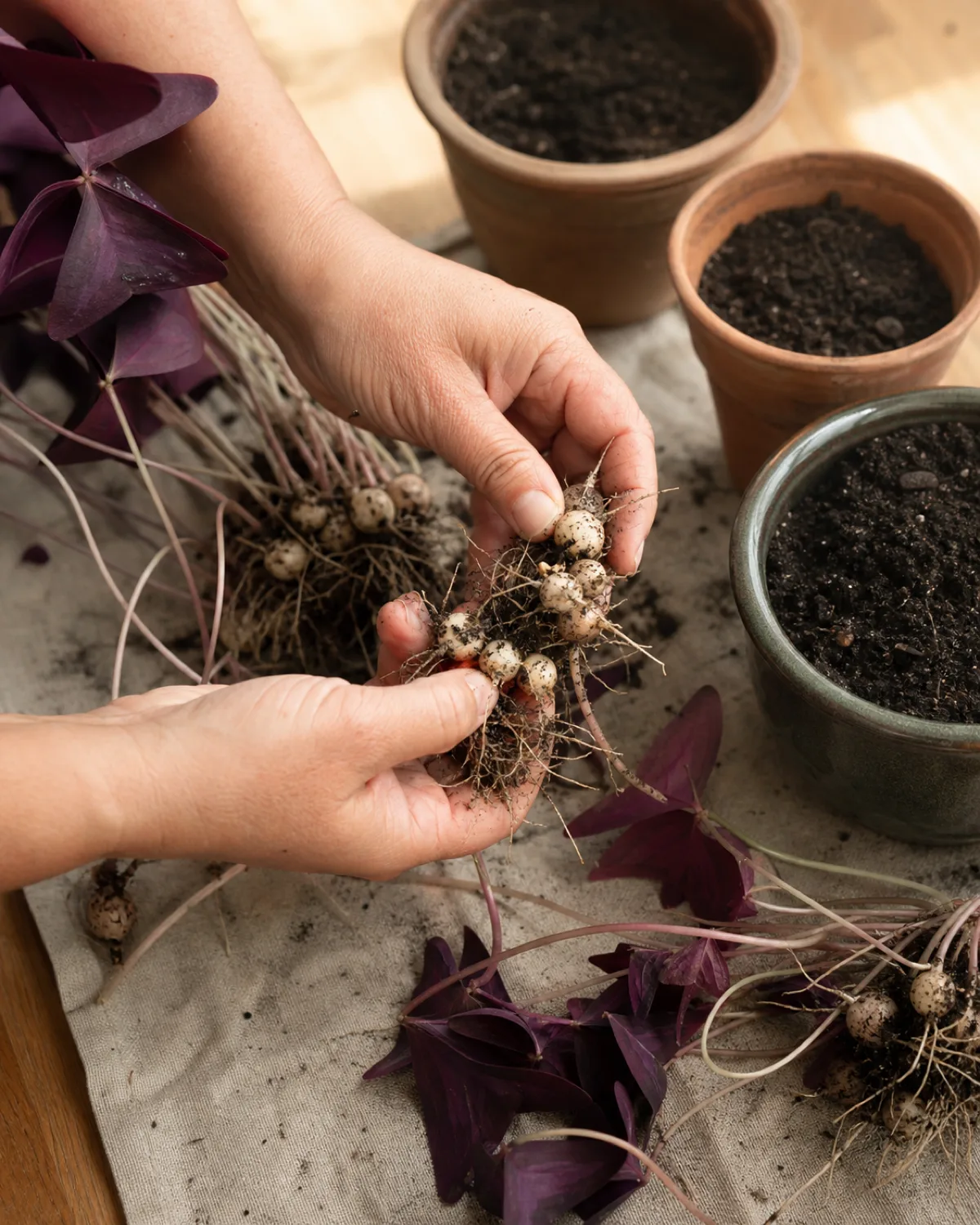
Oxalis is one of the easiest houseplants to propagate because the plant does almost all the work underground. Each mother corm produces dozens of offset corms over a growing season. Separating them is as simple as pulling apart clumps by hand.
The best time to divide is when the plant emerges from dormancy or when you are repotting. The corms are dormant or just waking up, which minimizes transplant shock. But divisions taken during active growth also succeed — the corms are robust enough to handle the disturbance.
- Method: Unpot the plant, gently shake off excess soil, and separate clumps of three to five corms. They come apart easily by hand — no knife needed.
- Planting depth: One inch deep in fresh potting mix with the growing point (tiny bump on the corm) facing up
- Sprouting time: One to two weeks in warm, bright conditions — sometimes faster for corms taken from an actively growing colony
- Yield: A single four-inch pot of established oxalis can produce enough divisions to fill four to six new pots
Each clump of corms becomes a full, dense plant within one growing season. The propagation guide covers the division method in the context of other houseplants — oxalis is the fastest and most generous producer of all the division-propagated species on the site.
Unlike stem-cutting propagation, there is almost no failure rate with corm division. Each corm already contains a complete set of growth points and stored energy. As long as the corm is firm and healthy, it will sprout.
Why oxalis gets leggy — and how to fix it
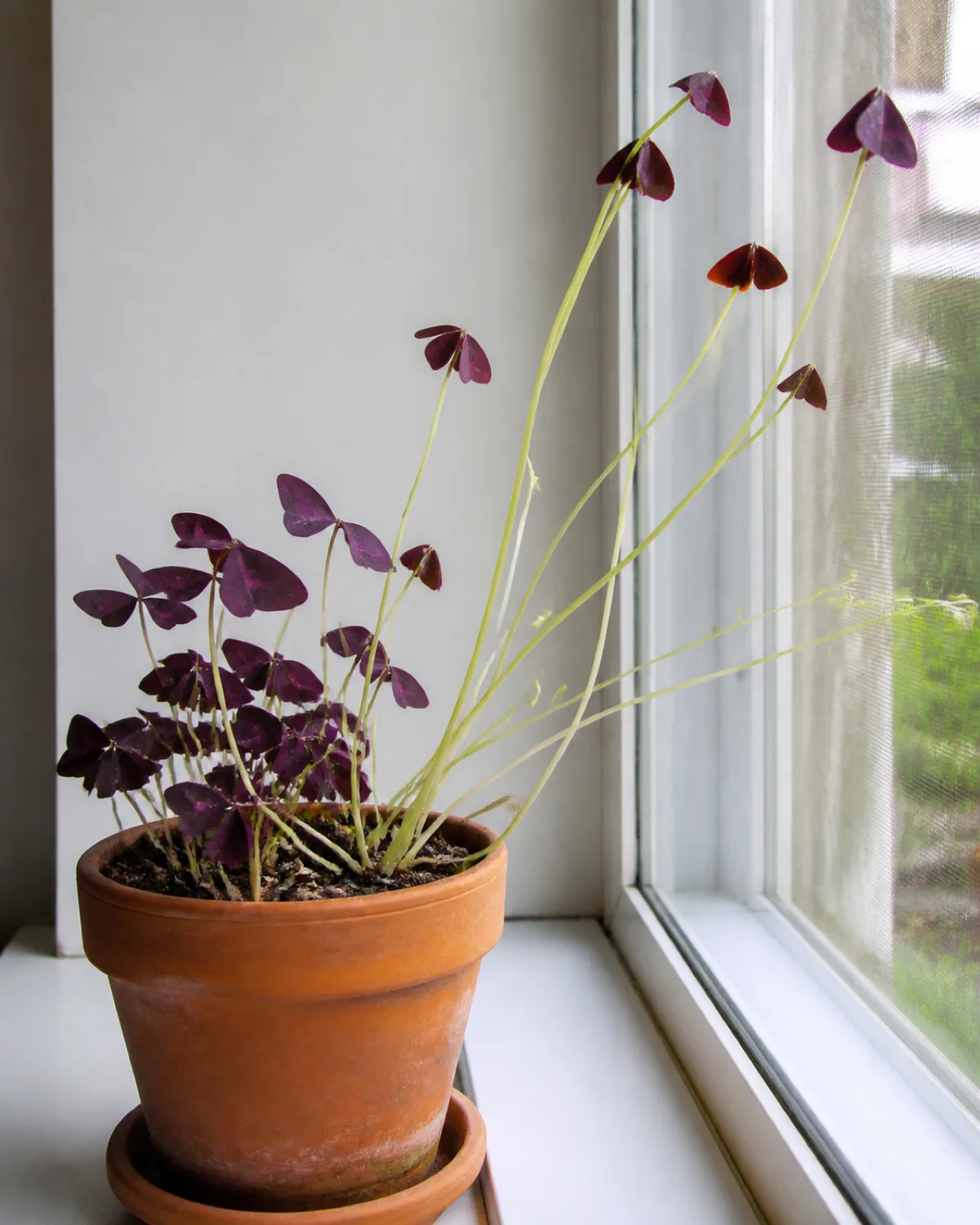
Leggy, stretched stems are the most common aesthetic problem with indoor oxalis. The petioles elongate and lean dramatically toward the nearest light source, and the leaves at the top end up smaller than they should be.
The cause is always insufficient light. Oxalis petioles are programmed to extend toward light more aggressively than most houseplants — even a minor light deficit produces visible stretching within a week or two.
The fix is drastic but effective: cut all the stretched stems down to the soil line. Every one of them. This is possible because the plant's energy is stored in the corms underground, not in the stems. Within days, fresh compact growth will emerge from the corms.
- After cutting: Move the pot to a significantly brighter location before the new growth appears — if the light conditions do not change, the new stems will stretch the same way
- Rotation: Turn the pot a quarter turn every week to prevent one-sided lean
- Why pruning individual stems does not work: Each oxalis stem grows directly from a corm and does not branch. Cutting one stem does not trigger side shoots — it simply dies, and a new one grows from the corm. The cut-all approach forces a full reset.
- Prevention: Bright indirect light from the start, and quarterly rotation
The total cut-back can look alarming — you are left with a pot of bare soil for a few days. But the regrowth is one of the fastest of any houseplant. New shoots typically appear within three to five days and reach full height within two weeks.
Pests and problems: what actually threatens oxalis
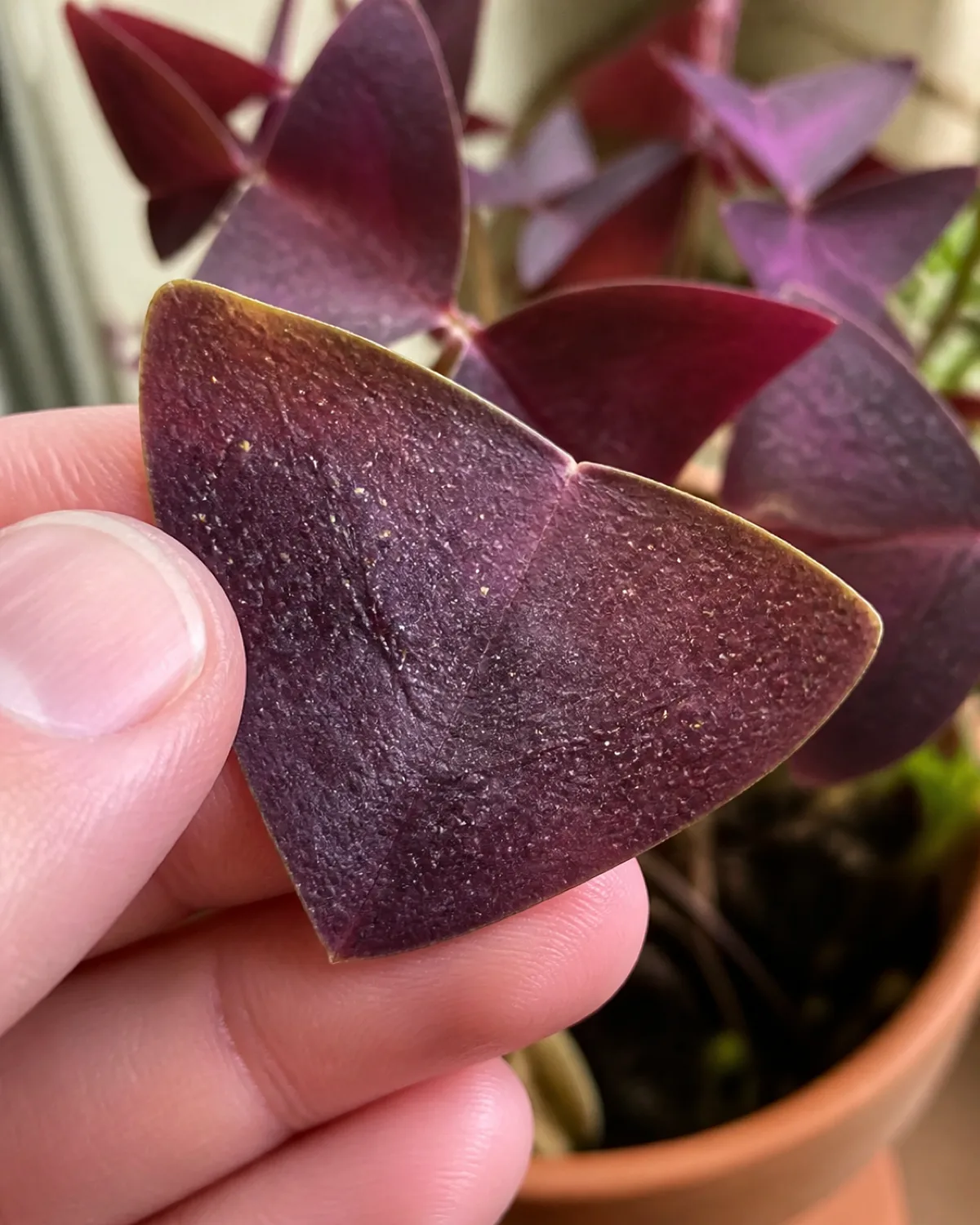
Oxalis is not especially pest-prone, but its thin leaves and dense growth habit create specific vulnerabilities that differ from most houseplants.
Spider mites are the primary insect threat. They thrive in the dry, warm conditions that indoor environments provide, and oxalis leaves are thin enough that mite feeding damage shows quickly as pale stippling dots on the upper leaf surface. Regular inspection of the undersides — where mites cluster and spin fine webs — catches infestations early.
- Fungus gnats: Attracted to moist soil surfaces — let the top inch dry between waterings and the gnat population collapses
- Powdery mildew: White powdery coating on leaves, favored by stagnant air at cool temperatures — improve air circulation before reaching for fungicide
- Bulb rot: The number one killer, caused by overwatering or not reducing water during dormancy — symptoms are stems collapsing at the soil line and a foul smell from the soil
The diagnostic that matters most with oxalis is distinguishing bulb rot from dormancy. Both produce dying foliage and eventually bare soil.
| Signal | Dormancy | Bulb Rot |
|---|---|---|
| Leaf decline speed | Gradual over one to two weeks | Rapid, sometimes overnight |
| Stem base | Firm, dry, clean | Soft, dark, mushy |
| Smell | None | Sour, foul |
| Corm condition | Firm and pale when squeezed | Soft, dark, collapsed |
The pest and disease guide covers treatment protocols for spider mites and fungus gnats. For oxalis specifically, the neem oil spray approach works — but spray the undersides of leaves where mites actually live, not just the tops.
Toxicity and pet safety
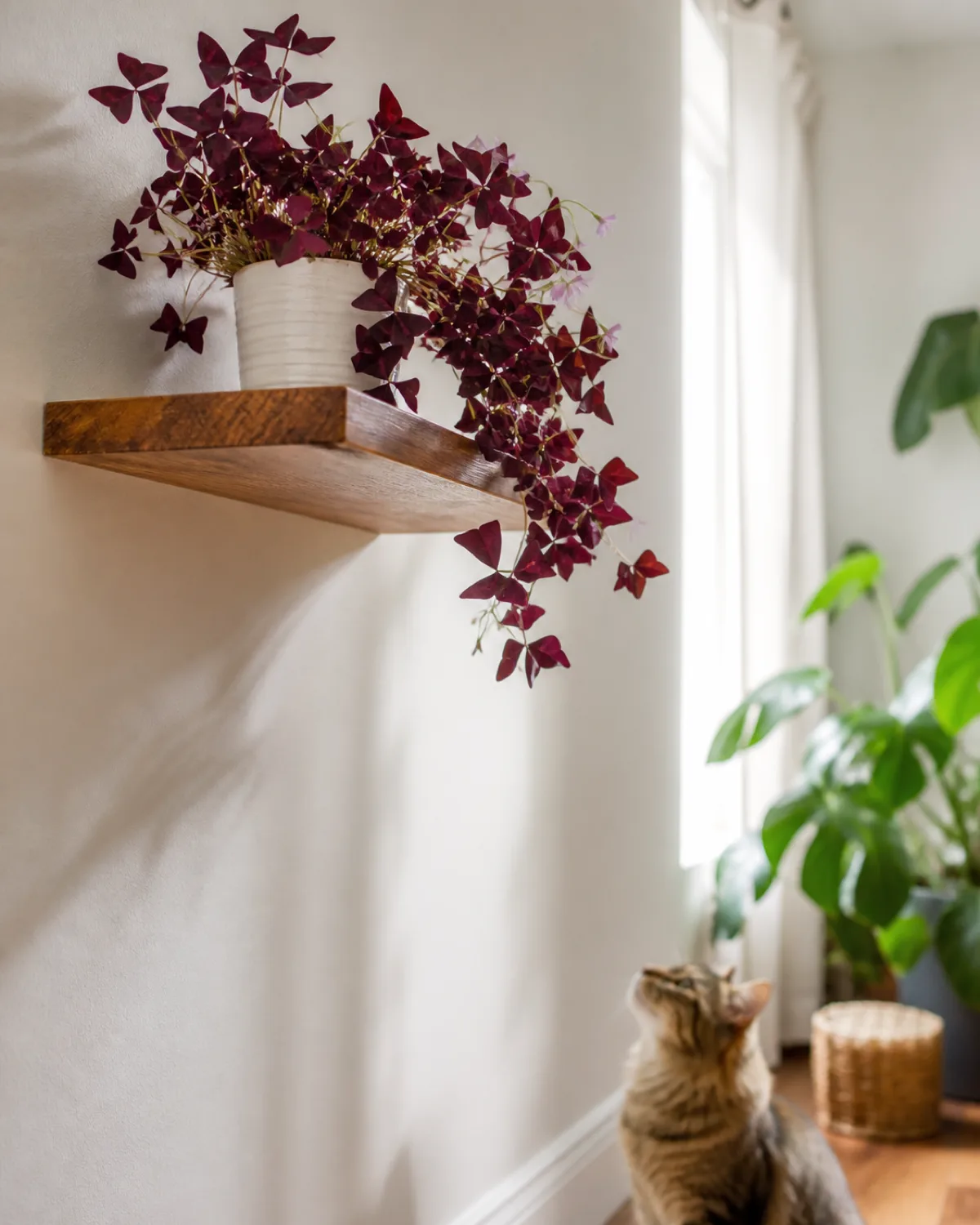
All parts of the oxalis plant — leaves, stems, flowers, and corms — contain oxalic acid, the compound the genus is literally named after. This makes it toxic to cats, dogs, and humans in sufficient quantities.
The toxicity mechanism is different from most houseplant toxins. Aroids like philodendron and dieffenbachia contain calcium oxalate raphides, microscopic needle-shaped crystals that physically puncture mouth tissue. Oxalis toxicity is chemical rather than mechanical: oxalic acid binds to calcium in the body, potentially causing kidney damage with large ingestion.
- ASPCA listing: Toxic to cats and dogs — symptoms include drooling, vomiting, decreased appetite, and in severe cases kidney issues
- Human toxicity: The sour taste (identical to the compound in rhubarb leaves) acts as a natural deterrent — most people and animals spit it out immediately
- Historical use: Wild oxalis species (wood sorrel) were historically eaten in small amounts as a salad green — the sour flavor was valued — but modern indoor cultivars are grown for ornament, not consumption
- Cat risk: The thin dangling stems and moving leaves attract playful cats more than sturdy upright plants — elevated placement is essential
For households with cats or dogs, the pet-safe plant list covers alternatives that provide similar visual impact without the toxicity concern. Prayer plants offer comparable leaf movement and are completely non-toxic.
The St. Patrick's Day plant — and what happens after March
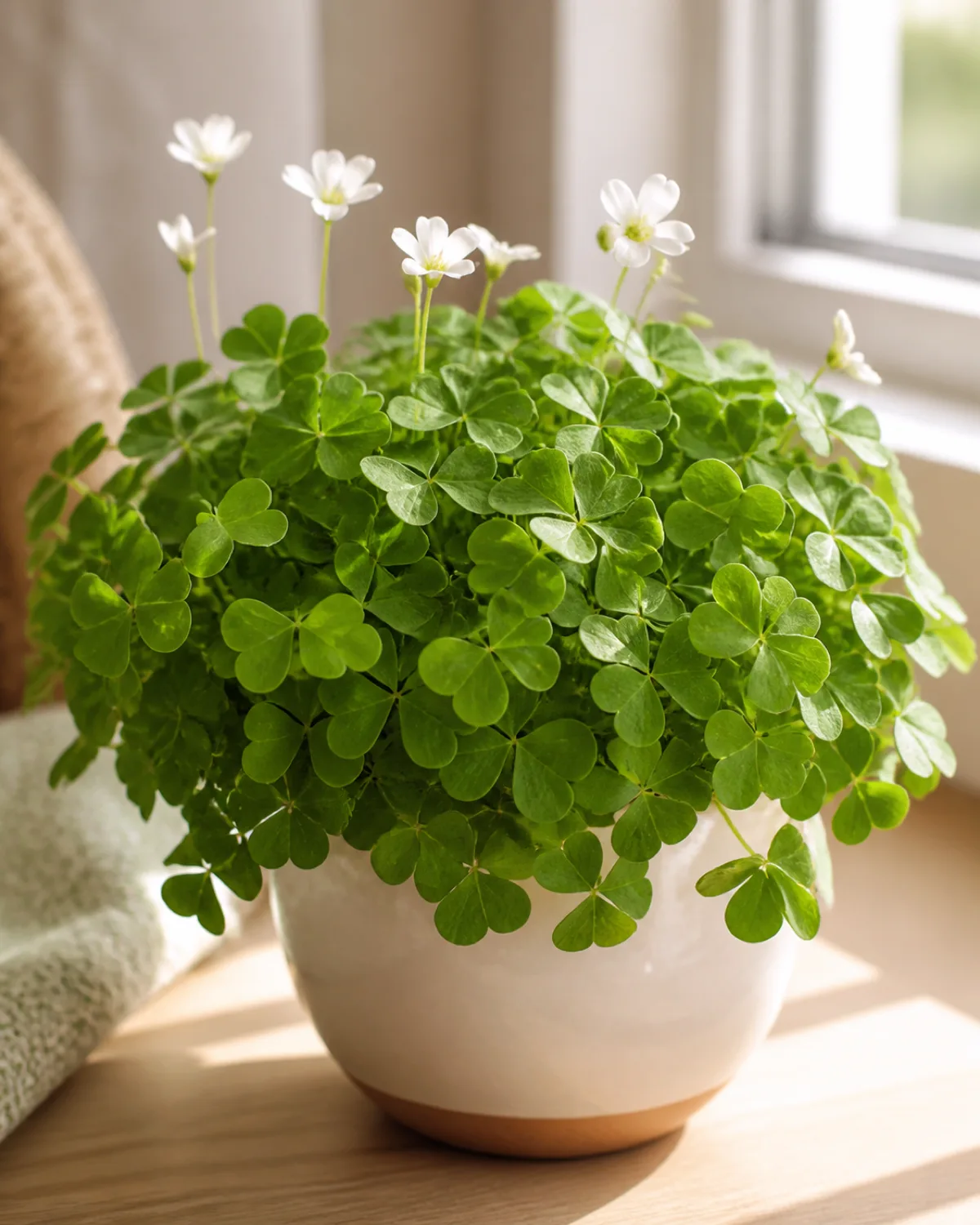
Millions of oxalis plants are sold as seasonal St. Patrick's Day decorations every March. Most of them are in landfills by April. Not because the plants failed, but because the buyers were never told that oxalis goes dormant — and a dormant oxalis looks exactly like a dead one.
The gift plant is usually O. regnellii (green shamrock) or O. triangularis (purple shamrock) in a cheap nursery pot with no drainage hole and a foil wrapper. The soil is often pure peat that compacts into a brick when it dries. The care card, if there is one, rarely mentions dormancy.
After the holiday, the plant needs three things to survive long-term:
- Repot immediately: Remove the foil wrapper and nursery pot. Plant in well-draining soil (sixty-forty peat-perlite) in a pot with drainage holes. The nursery pot setup is designed to look good on a shelf for two weeks, not to sustain a plant for years.
- Find a bright spot: Four to six hours of indirect light keeps the plant compact and colorful. A windowsill with morning sun is ideal.
- Expect dormancy: Within two to three months of purchase, the plant will begin its first dormancy cycle. Follow the protocol from section seven — reduce water, move to a cool dark spot, wait.
With proper care, these "disposable" seasonal plants live for decades. Some oxalis bulb colonies have been maintained for twenty years or more, producing hundreds of offset corms along the way. The plant's real value is not as a holiday decoration — it is as a perpetual houseplant that reinvents itself with every dormancy-and-regrowth cycle, season after season.
Oxalis care cheat sheet
- 1Leaf folding: normal daily cycle, not wiltingLeaves fold at dusk, open at dawn. Daytime folding means not enough light. Do not panic-water folded leaves.
- 2Varieties: triangularis for purple, regnellii for greenPurple shamrock has the most drama. Green shamrock is the classic St. Patrick's Day plant. Iron Cross has four leaflets.
- 3Light: bright indirect, four to six hoursPurple varieties need bright light for deep color. Direct afternoon sun scorches thin leaves. East window is ideal.
- 4Water: top inch dry, drain completelyCorms rot fast in standing water. Always use drainage holes. Reduce to almost nothing during dormancy.
- 5Soil: sixty-forty potting mix and perliteFast drainage protects bulbs. Corms sit in the top two inches. Repot every one to two years as corms multiply.
- 6Temperature: prefers cool, sixty to seventy-five degreesThrives where tropicals stall. Heat above eighty triggers premature dormancy. Average humidity is fine.
- 7Dormancy: looks dead, is not deadAll leaves die back one to two times per year. Stop watering, cool dark spot, wait two to six weeks for regrowth.
- 8Fertilizer: half-strength every two to four weeksFeed only during active growth. Stop completely during dormancy. Resume when four to six stems are growing.
- 9Propagation: divide bulb clumps by handSeparate corms when repotting. One inch deep, growing point up. Sprouts in one to two weeks. Near-zero failure rate.
- 10Leggy fix: cut all stems to soil levelEnergy is in the bulbs, not the stems. Fresh compact growth in three to five days. Move to brighter light first.
- 11Pests: spider mites and bulb rotCheck leaf undersides for mites. Bulb rot smells foul and collapses stems. Dormancy smells like nothing.
- 12Toxic to cats, dogs, and humansOxalic acid in all parts. ASPCA listed. Sour taste deters eating. Keep elevated away from playful cats.
- 13Gift plants live for decades with careRepot out of nursery pot. Bright indirect light. Expect dormancy in two to three months. Do not throw it away.
Kultivy — www.kultivy.com

Mara writes plant care guides grounded in published botany and first-hand growing experience, not recycled social-media advice. Every recommendation on Kultivy is tested against real-world conditions before it reaches your screen. More about our editorial standards.