Most houseplants ask you to remember them. A ponytail palm asks you to forget about it for a few weeks and come back when you remember.
That tolerance comes from the swollen base called a caudex, a water tank built from years of slow growth in eastern Mexico's semi-arid scrublands. The curling leaves reduce surface area. Every part of this plant is designed to survive on less.
These fourteen sections cover everything from the light that keeps the caudex firm to the single pruning cut that turns one crown into two.
From caudex anatomy to offset propagation, pet safety, and the single pruning cut that creates multiple heads. Jump to what you need.
- 1What Makes It Different
- 2Light Requirements
- 3Watering the Caudex
- 4Soil and Drainage
- 5Temperature and Humidity
- 6Feeding Schedule
- 7Pots and Repotting
- 8Pruning the Crown
- 9Offset Propagation
- 10Pests and Leaf Signals
- 11Caudex Health Check
- 12Aging Into a Statement
- 13Ponytail vs Yucca vs Dracaena
- 14Pet and Child Safety
What Makes Ponytail Palm Unlike Any Other Houseplant
The name is misleading twice. Ponytail palm is not a palm. It is not even remotely related to palms. Beaucarnea recurvata belongs to Asparagaceae, the same family as yucca and agave.
The common name comes from the cascading fountain of long, thin leaves that hangs from the top of the trunk like a ponytail, and the vaguely tropical silhouette that suggests a palm to anyone who does not look closely.
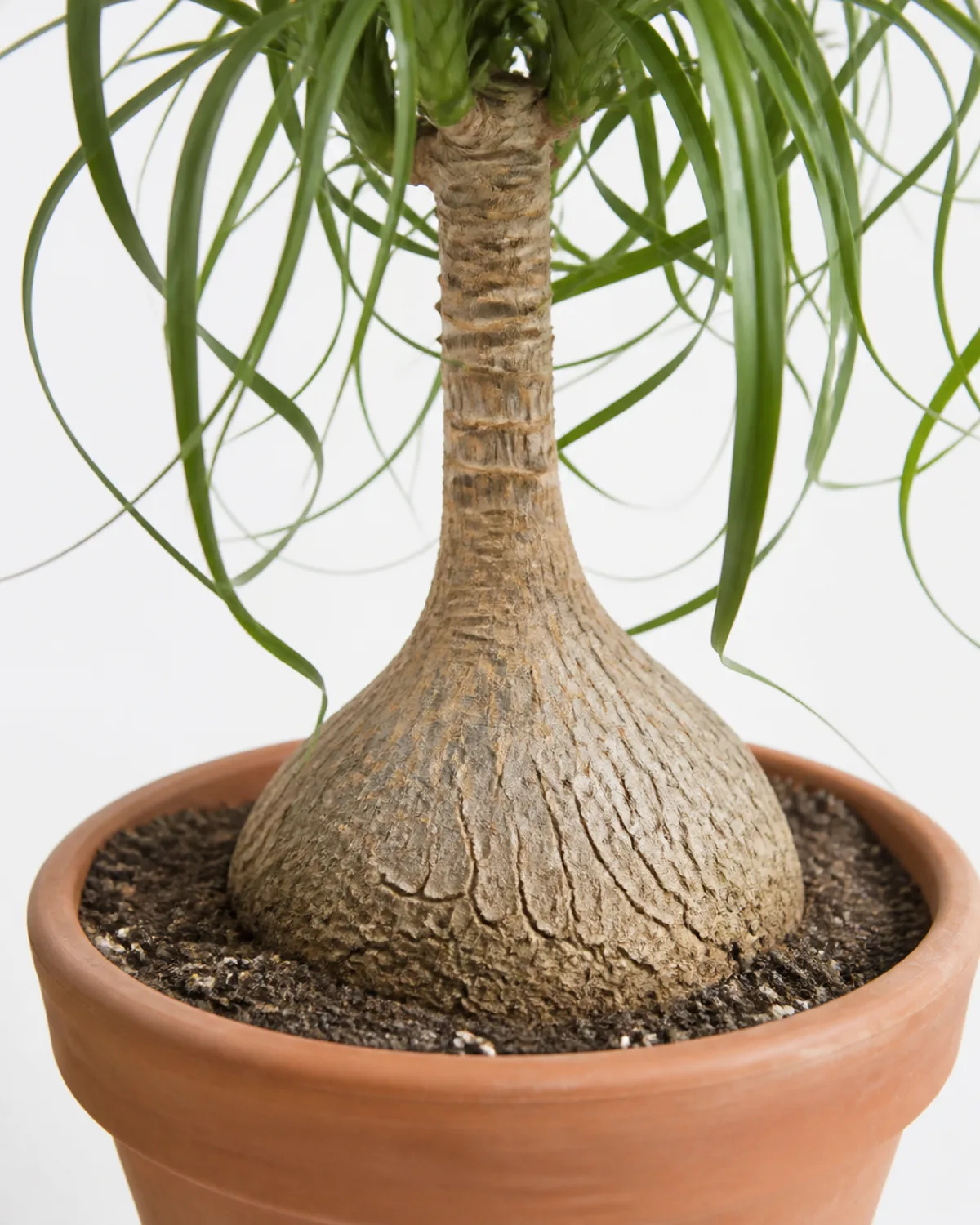
What makes it genuinely unusual among houseplants is the caudex. That swollen, bulbous base at the bottom of the trunk is a water storage organ, an evolutionary adaptation to the semi-arid scrublands of Tamaulipas and Veracruz in eastern Mexico. The caudex can hold enough moisture to sustain the plant through weeks of drought.
- Family: Asparagaceae (same as yucca, agave, and asparagus fern)
- Origin: eastern Mexico, semi-arid rocky slopes
- Other names: Elephant Foot Tree, Bottle Palm, Nolina recurvata
- Growth rate: extremely slow, may gain only two to four inches of trunk height per year indoors
The caudex is also why ponytail palm tolerates neglect that would kill most tropical houseplants. Forget to water for three weeks and the caudex slowly releases its reserves. The leaves may curl a little tighter, but the plant survives. That built-in buffer makes it one of the most forgiving large-format houseplants you can own.
Light That Brings Out the Best in a Ponytail Palm
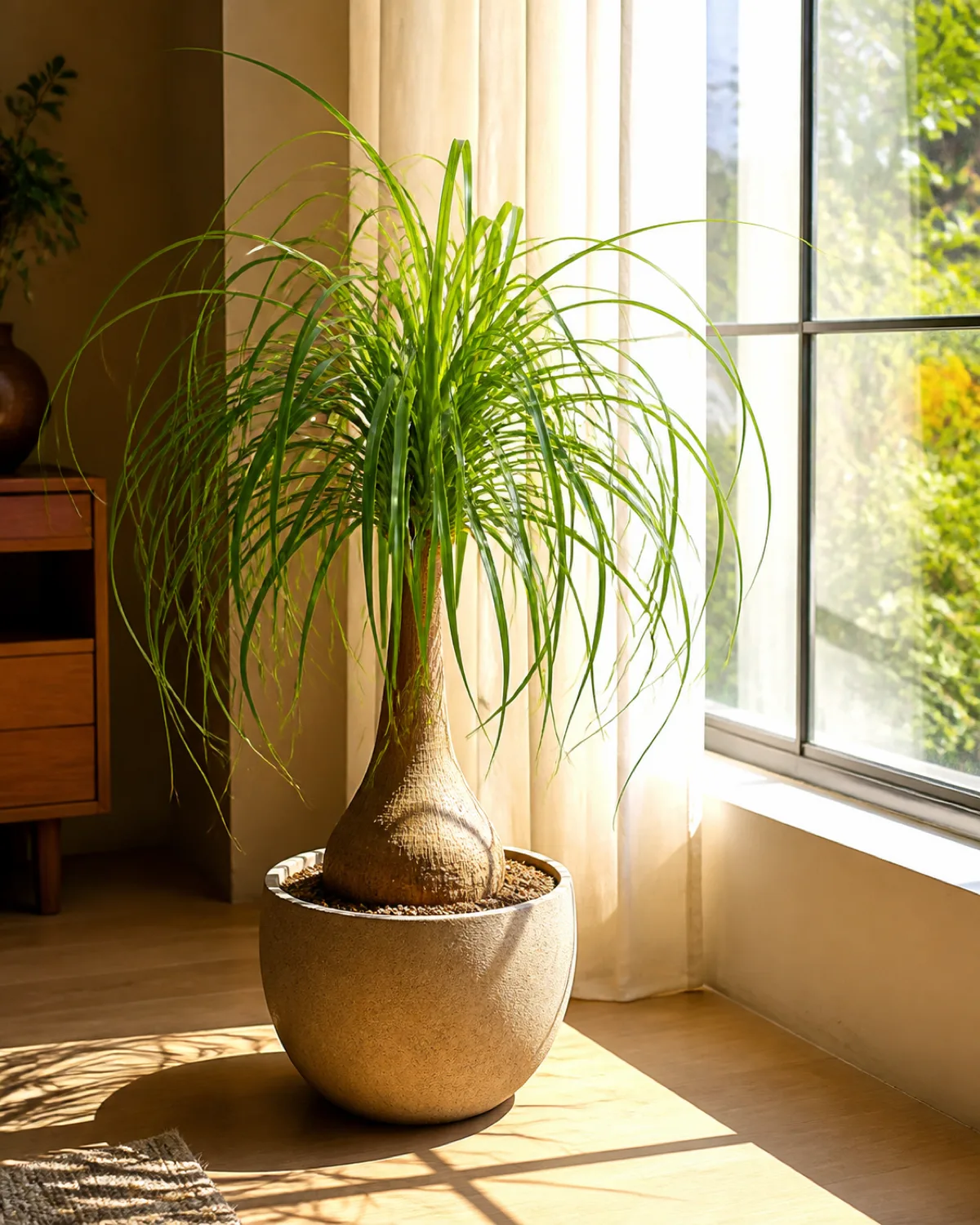
Ponytail palm is a full-sun plant living in your living room. In its native habitat it grows in open, rocky terrain with unobstructed sky exposure for most of the day. Indoors, it wants the brightest spot you can give it.
A south-facing window with four to six hours of direct sun is ideal. West-facing works nearly as well, especially in summer when afternoon light is intense. East-facing delivers enough morning sun to keep the plant healthy but may not produce the tight, compact leaf fountain that bright light encourages.
- Best position: within three feet of a south or west window
- Acceptable: east window or bright indirect light
- Signs of too little light: leaves stretch and thin out, the ponytail shape loosens, new growth slows further
The difference between adequate light and ideal light shows in the leaf architecture. In bright conditions, the leaves grow in a dense, tight cascade that holds its fountain shape. In lower light, the leaves elongate and spread apart, and the whole crown looks sparse and leggy instead of lush.
One transition note matters. If you move a ponytail palm from a dim corner to a bright window, do it gradually over two weeks. A sudden jump from low light to direct sun can scorch the leaf tips, leaving brown patches that do not heal. The plant adapts, but it needs time.
Watering the Built-In Water Tank
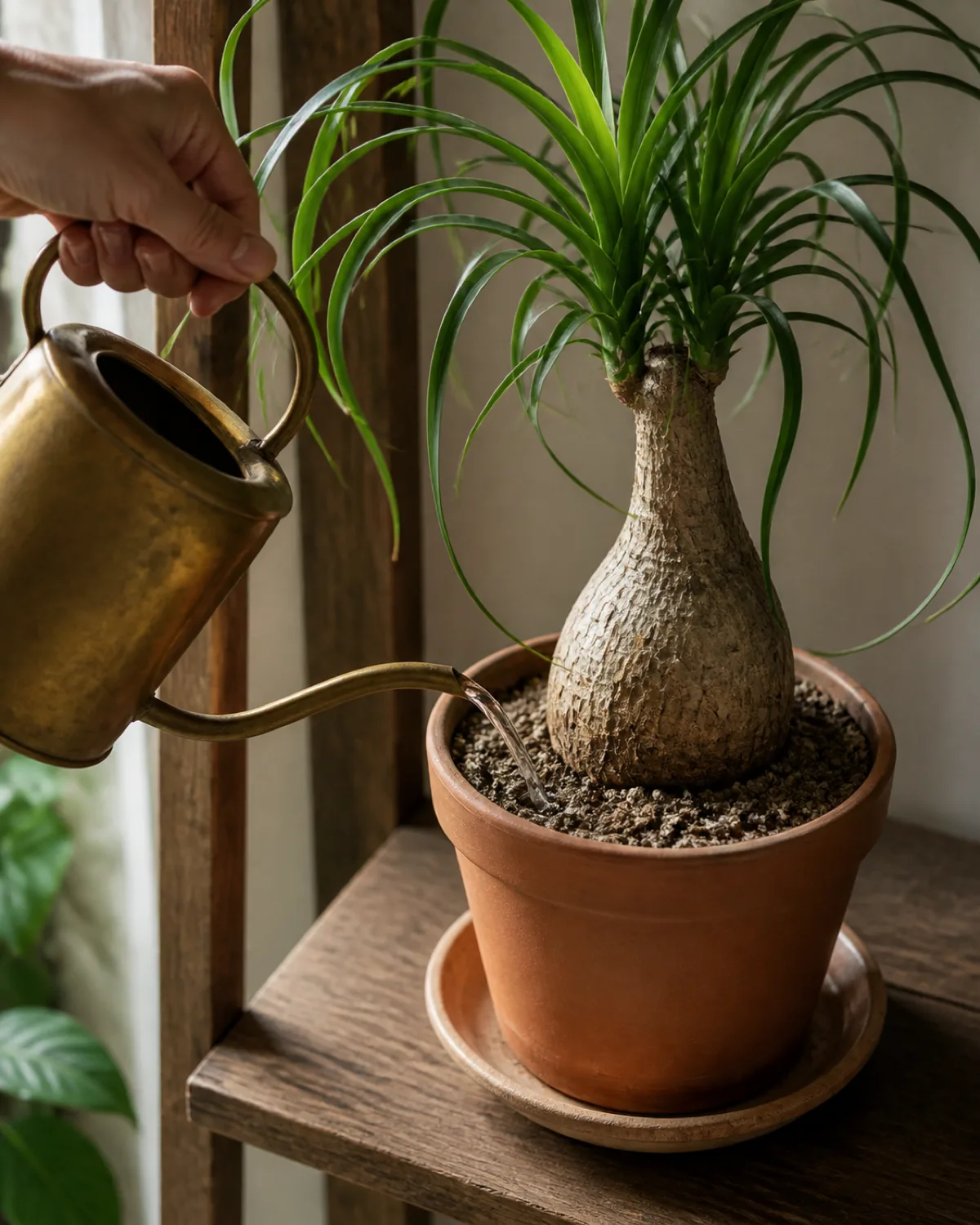
The caudex changes everything about how you water this plant. Where most tropical houseplants want the top inch of soil to dry between waterings, ponytail palm wants the entire pot to go bone dry before you add a single drop.
The method is the same soak-and-dry approach that works for succulents. Wait until the soil has been completely dry for several days. Then water thoroughly until it runs out the drainage holes. Let the pot drain completely, empty the saucer, and do not water again until the soil dries all the way through.
- Spring and summer: every two to three weeks, depending on pot size, light, and temperature
- Fall and winter: every three to four weeks, sometimes longer
- The test: stick your finger deep into the soil or lift the pot. If there is any moisture at all, wait.
Overwatering is the fastest way to kill a ponytail palm. Root rot begins in the interior of the caudex where you cannot see it, and by the time the outside of the caudex feels soft or mushy, the damage is often irreversible. A firm, solid caudex means the plant is healthy. A spongy caudex means water has been sitting in the soil too long.
The seasonal difference is significant. In winter, when growth slows and light drops, the plant uses almost no water. Watering on the same schedule you used in July will waterlog the soil by November.
Several plants share the drought tolerance, but each suits a different space and lifestyle.
Soil That Drains Like Desert Gravel
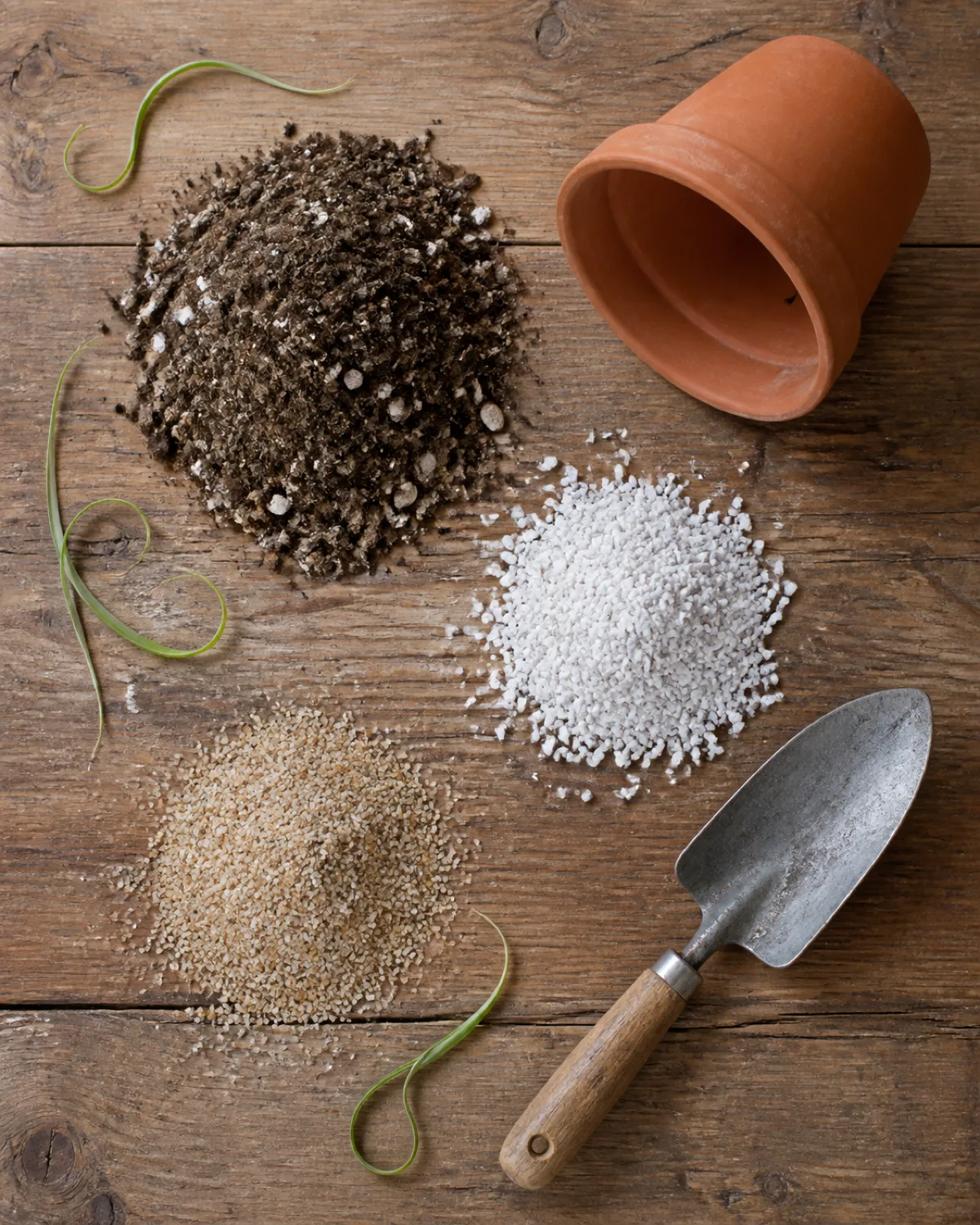
Standard potting soil holds too much moisture for a ponytail palm. The roots sit in dampness between waterings, and the caudex — which is designed to be the water source, not the soil — starts absorbing moisture from the wrong direction. That leads directly to the internal rot that kills these plants.
The target is a fast-draining, gritty mix that dries within a few days after a thorough soaking.
- Base: fifty percent cactus and succulent potting mix
- Amendment 1: thirty percent perlite for aeration and drainage speed
- Amendment 2: twenty percent coarse sand (horticultural grade, not beach sand)
Test the mix before planting. Fill the pot with the blend, pour water in, and time how quickly it runs out the bottom. If water exits within fifteen to twenty seconds, the drainage is fast enough. If it pools on the surface or takes more than a minute, add more perlite.
Organic matter in the soil is not your friend here. Peat, coconut coir, and compost all hold water. A small amount in the cactus mix base is fine, but do not add extra. The goal is a mix that mimics the rocky, mineral-heavy substrate this plant grows in naturally.
Temperature and Humidity That Match Desert Comfort
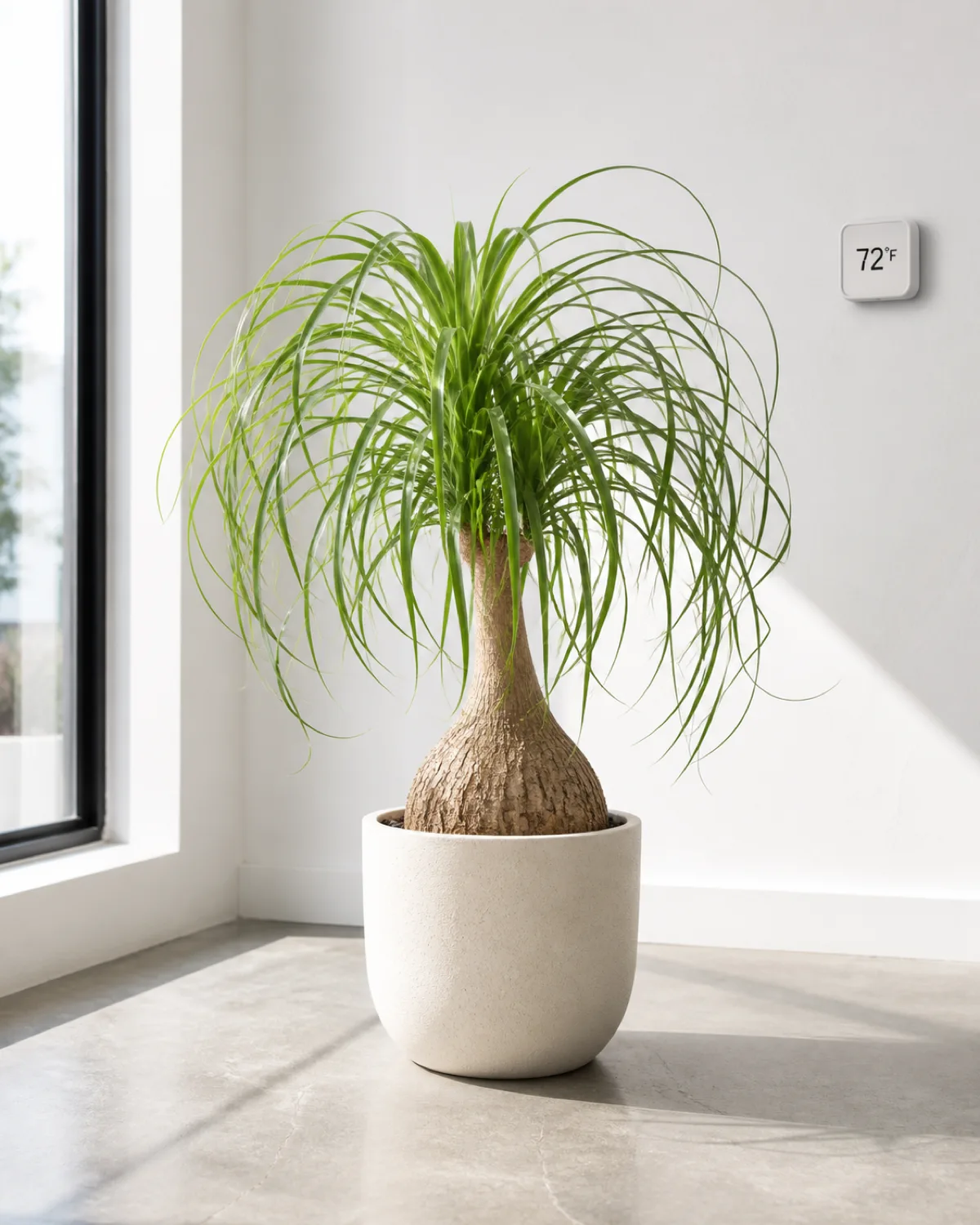
Standard indoor temperatures are perfect for ponytail palm. The sweet spot is sixty to eighty degrees Fahrenheit, which is exactly where most homes stay year-round. No special accommodations needed.
Cold tolerance is surprisingly good. Ponytail palm handles brief dips to fifty degrees without damage, and some outdoor specimens survive light frosts. That makes it one of the few houseplants you can leave on an unheated porch in fall without panic.
Humidity is where ponytail palm diverges sharply from the tropical houseplants that dominate most indoor collections.
- Ideal humidity: thirty to fifty percent — standard indoor air
- Humidifier: not needed, and can actually cause problems
- Misting: never. Water on the leaves and at the crown base promotes fungal issues
- Pebble tray: unnecessary. Save it for your fern or calathea
The plant evolved in semi-arid conditions where relative humidity drops below twenty percent for months at a time. Indoor air that feels dry to you feels normal to a ponytail palm. If you run a humidifier for other plants in the room, position the ponytail palm as far from it as possible.
One placement warning: avoid heating vents that blow directly on the plant. The heat itself is not the problem — the constant airflow dries the leaf tips unevenly and accelerates the brown-tip issue that most ponytail palms develop indoors.
Feeding a Slow Grower Without Burning the Roots
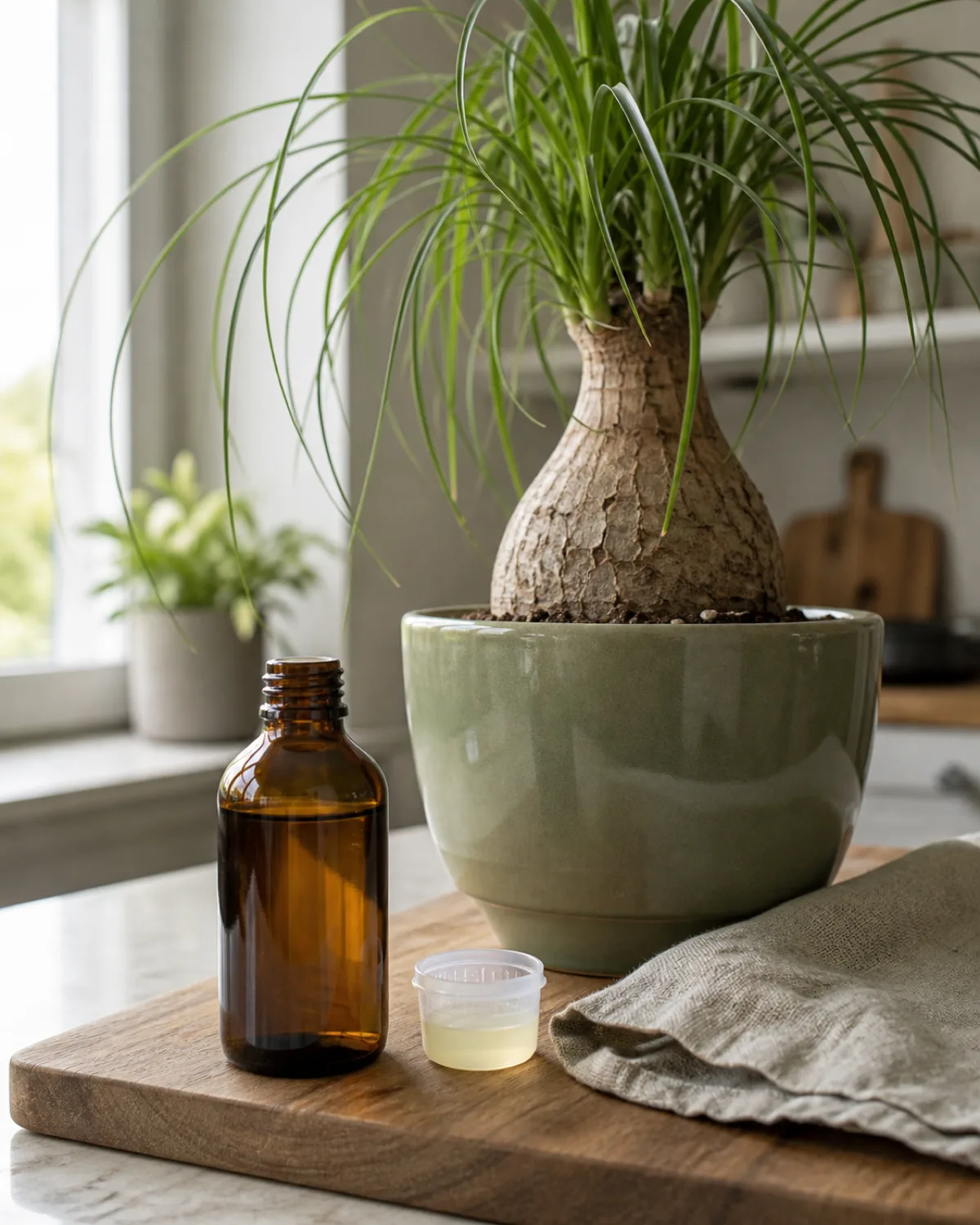
Ponytail palm grows slowly even under ideal conditions. It does not need — and cannot efficiently use — the same fertilizer schedule that a fast-growing pothos or monstera thrives on.
Feed once a month during the growing season with a balanced liquid houseplant fertilizer diluted to half the label strength. Start in April when new leaf growth appears and stop in October when the plant shifts into its winter rest.
- Formula: balanced 10-10-10 or 20-20-20, diluted to half strength
- Frequency: monthly, April through September
- Winter: no fertilizer at all
- Warning sign: brown, crispy leaf tips appearing shortly after feeding
The leaf tip issue deserves emphasis. Fertilizer salts travel through the plant and accumulate at the very tips of the long, thin leaves — the furthest point from the roots. Overfertilizing shows up as brown, dried tips that work their way inward. If you see this, flush the soil with plain water two or three times to wash out excess salts, and cut the fertilizer concentration in half next time.
Under-fertilizing a ponytail palm causes almost no visible harm. The growth rate drops from slow to slightly slower. Over-fertilizing causes permanent cosmetic damage that takes months to grow out. When in doubt, skip the feeding.
Why Ponytail Palm Loves a Tight Pot
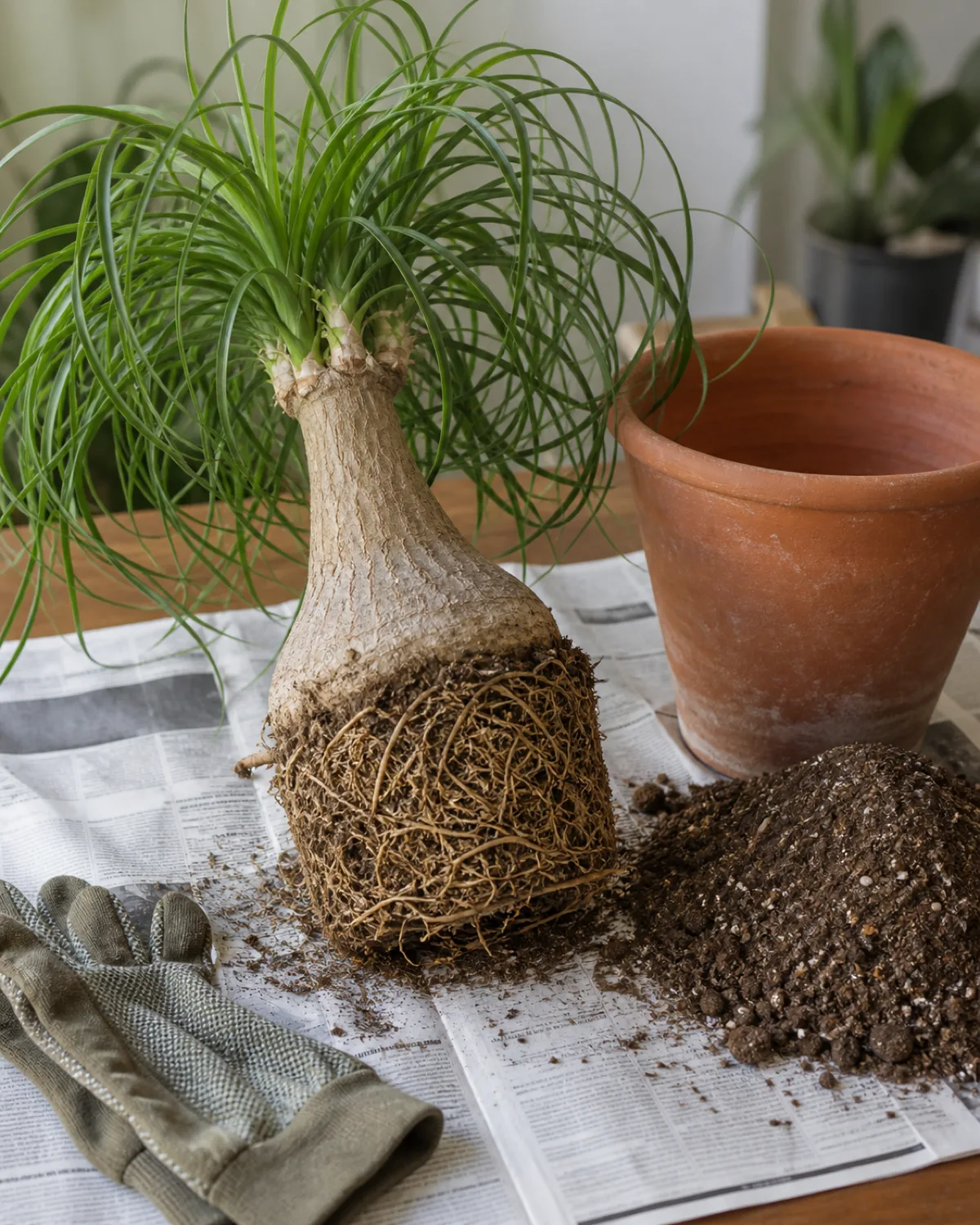
Most houseplant advice tells you to repot when roots circle the bottom of the pot. Ponytail palm rewrites that rule. This plant actually performs better in a snug pot than a roomy one, for three reasons.
A tight pot limits the volume of soil around the roots, which means less moisture sitting between waterings. Less moisture means lower rot risk.
The caudex naturally sits above the soil line — it should look like a ball perched on top of the pot rim, not buried in dirt. A too-large pot tempts you to bury the caudex deeper, trapping moisture around the base. And the weight distribution matters: a top-heavy ponytail palm in an oversized lightweight pot tips over.
Repot only when you see clear signals.
- Roots pushing hard out of every drainage hole — not just a few roots peeking out, but a mass of roots escaping
- Caudex physically distorting the pot — plastic pots bulge, terra cotta may crack
- Growth stalling completely despite adequate light and seasonal feeding
- Pot tipping over because the plant has outgrown the base weight
When you do repot, go up only one pot size — one to two inches wider. Use dry soil mix, not pre-moistened. Wait a week after repotting before the first watering so any root damage from handling can callous over.
Pruning the Ponytail: What You Can Cut and What You Cannot
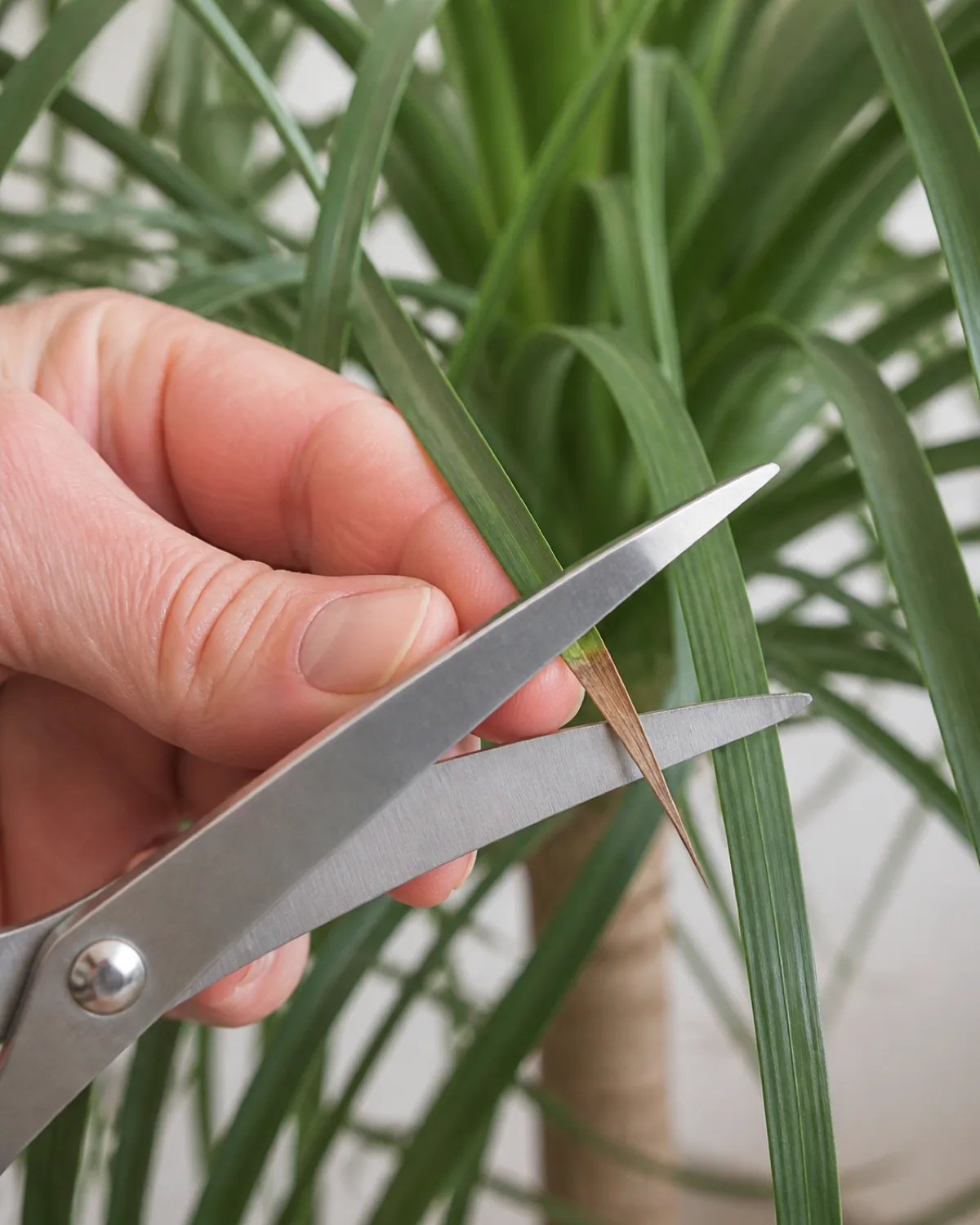
Ponytail palm requires almost no pruning. The plant grows in a self-regulating fountain shape where older leaves at the bottom dry and fall off naturally while new leaves emerge from the center of the crown. Most of the time, your only job is to clean up the dried leaves that drop.
The one pruning action worth knowing about is the leaf-tip trim. Brown tips are nearly universal on indoor ponytail palms, caused by dry indoor air, fertilizer salt buildup, or minor stress. Cut the browned portion at a diagonal angle with sharp, clean scissors to mimic the natural pointed leaf shape. A straight, blunt cut looks artificial.
- Brown tips: trim at a diagonal, cut only the brown portion, leave green tissue intact
- Dried lower leaves: peel off gently by hand, they should release with a light tug
- Crown removal: an irreversible decision — see below
The dramatic option is crown removal. If you cut the main growing point — the top of the trunk where the leaf fountain emerges — the plant responds by pushing out two or more side buds from dormant nodes below the cut. This creates a multi-headed specimen with multiple cascading leaf fountains growing from branching arms.
The result can be stunning, and mature multi-headed ponytail palms are highly valued. But the decision is permanent. You cannot undo it, and there is always a risk the plant fails to push new growth from the cut point.
If you attempt this, use a clean, sharp saw during the active growing season and seal the cut surface with horticultural wax to reduce moisture loss and infection risk.
Propagation Through Offsets and Patience
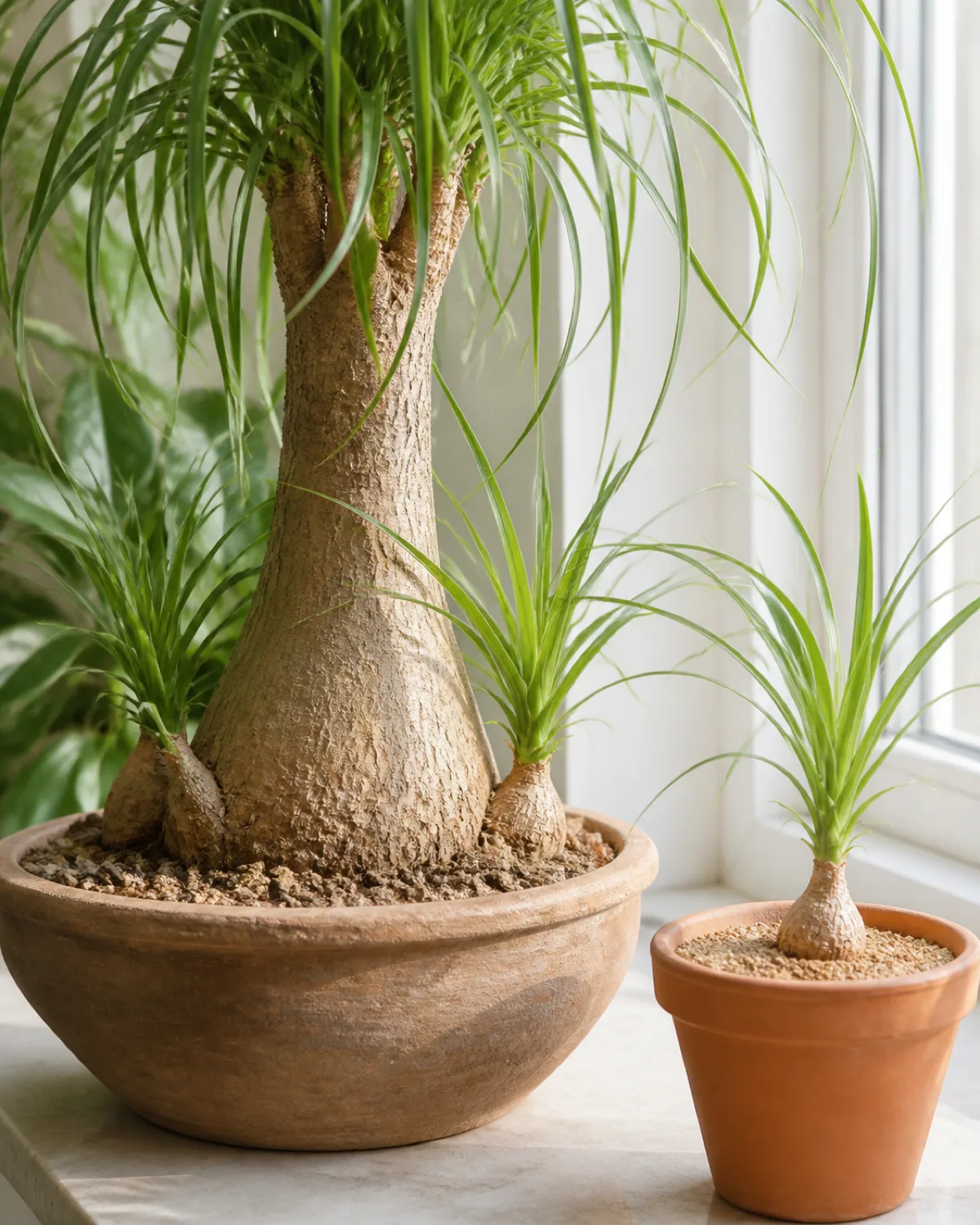
Ponytail palm cannot be propagated from leaf cuttings. It cannot be propagated from stem cuttings. The only reliable method for home growers is offset division, and even that requires a mature plant and considerable patience.
Mature ponytail palms occasionally produce small pups — miniature rosettes that emerge from the base of the caudex. These offsets develop their own tiny caudex and root system while still attached to the mother plant.
The separation process is straightforward but slow to reward.
- Wait for size: the offset should be at least four inches tall with its own visible caudex bump before separation
- Separation method: twist gently at the base or cut with a clean, sharp knife. Include as much root as possible
- Callous period: let the cut surface dry for two to three days before planting
- Potting: plant in dry, fast-draining cactus mix. Do not water for the first week
- Rooting timeline: four to eight weeks before new root growth establishes — do not overwater during this period
The success rate improves dramatically if the offset already has its own roots when you separate it. An offset with roots establishes in weeks. An offset without roots may take months and has a higher failure rate.
Seed propagation is technically possible but impractical for home growers. Ponytail palm rarely flowers indoors, seeds take weeks to germinate, and seedlings grow so slowly that reaching a recognizable size takes years.
Pests, Problems, and What the Leaves Are Telling You
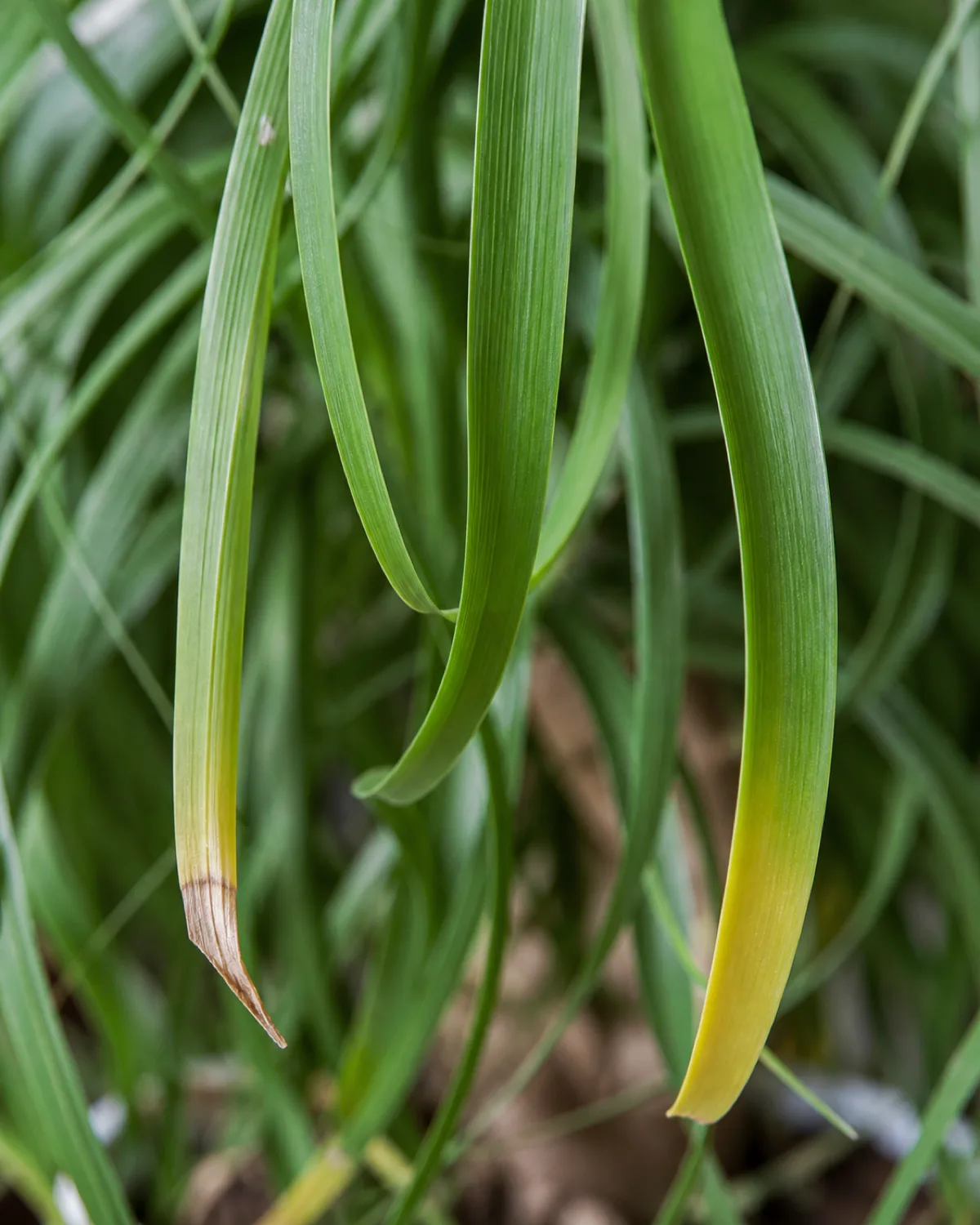
Ponytail palm's thick, dry leaves and low-moisture environment make it less attractive to pests than most tropical houseplants. The two pests that do show up are spider mites and scale, both of which thrive in the dry conditions this plant prefers.
Spider mites appear as fine webbing between the curling leaves, with tiny dots visible on the undersides. Scale looks like small brown bumps adhered to the leaf surface or trunk. Both respond to the same treatment.
- First response: wipe affected areas with a cotton swab dipped in rubbing alcohol
- Follow-up: spray with neem oil solution, repeating weekly for three weeks to catch hatching cycles
- Prevention: inspect the leaf bases and crown monthly, especially in winter when dry indoor air peaks
Leaf symptoms tell you more than any pest inspection.
- Brown, crispy tips signal dry air, salt buildup, or fertilizer excess. Trim at a diagonal, flush the soil, cut fertilizer.
- Yellowing lower leaves mean natural aging if the caudex is firm. Soft caudex means overwatering.
- Tighter curling points to under-watering or heat stress. Water if dry, move away from vents.
- Limp, uncurled leaves suggest overwatering or root rot. Check caudex firmness immediately.
- Brown patches mid-leaf follow a sudden light change. Ease back to indirect light for two weeks.
The bottom leaves on a ponytail palm brown and dry as a normal part of growth. The plant sheds its oldest leaves as new ones emerge from the crown. Peeling off dried lower leaves is maintenance, not treatment.
Why the Caudex Shrinks and When That Signals Trouble
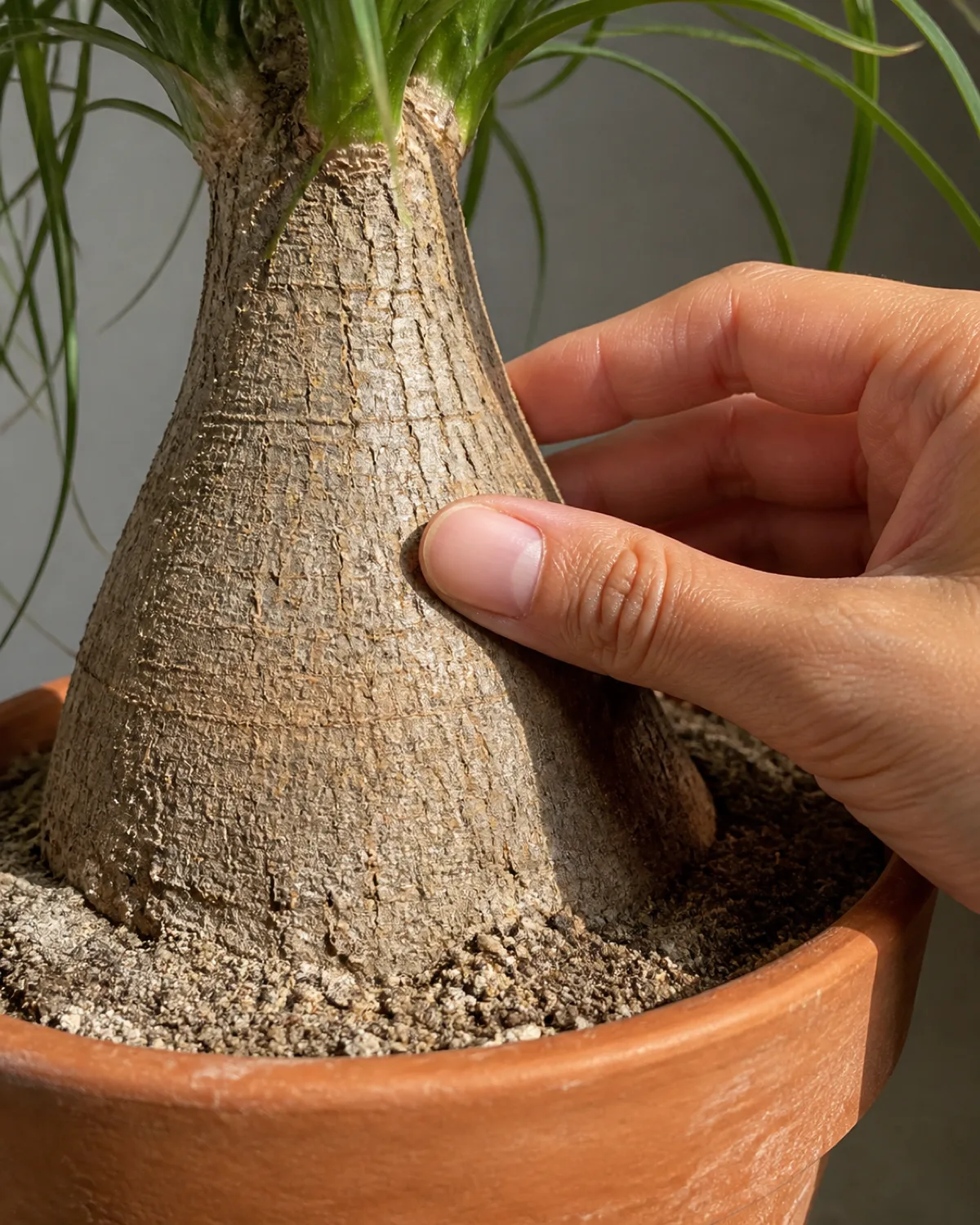
The caudex is the single most important indicator of your ponytail palm's health. It should feel firm, solid, and unyielding when you press it — like pressing the side of a coconut, not a grapefruit.
A healthy caudex fluctuates slightly in girth over the watering cycle. After a thorough soaking, it absorbs water and swells fractionally. As weeks pass without water, it slowly releases its reserves and may shrink by a small amount. This is normal and expected. It is exactly what the caudex is designed to do.
The difference between a normal fluctuation and a warning sign comes down to firmness.
- Firm and slightly wrinkled after weeks without water = normal, the caudex is doing its job. Water thoroughly and the wrinkles smooth out within days
- Soft, spongy, or mushy to the touch = rot has set in. The interior tissue is breaking down
- Firm but deeply wrinkled with curling leaves = severe dehydration. The plant has exhausted its reserves
If you catch rot early, the rescue protocol is aggressive but sometimes effective.
- Unpot immediately and remove all soil from the roots
- Cut away any brown or mushy root tissue with a sterile blade
- If the caudex itself has soft spots, cut into the firm tissue below the rot until you see clean, white interior
- Let all cut surfaces dry for three to five days in a shaded, well-ventilated spot
- Repot in completely dry, fast-draining mix and wait two weeks before the first light watering
The success rate depends on how much healthy caudex tissue remains. If more than half the caudex has gone soft, survival is unlikely. Regular squeeze checks — once a month, gently — catch problems before they reach that point.
How Ponytail Palm Ages Into a Living Sculpture
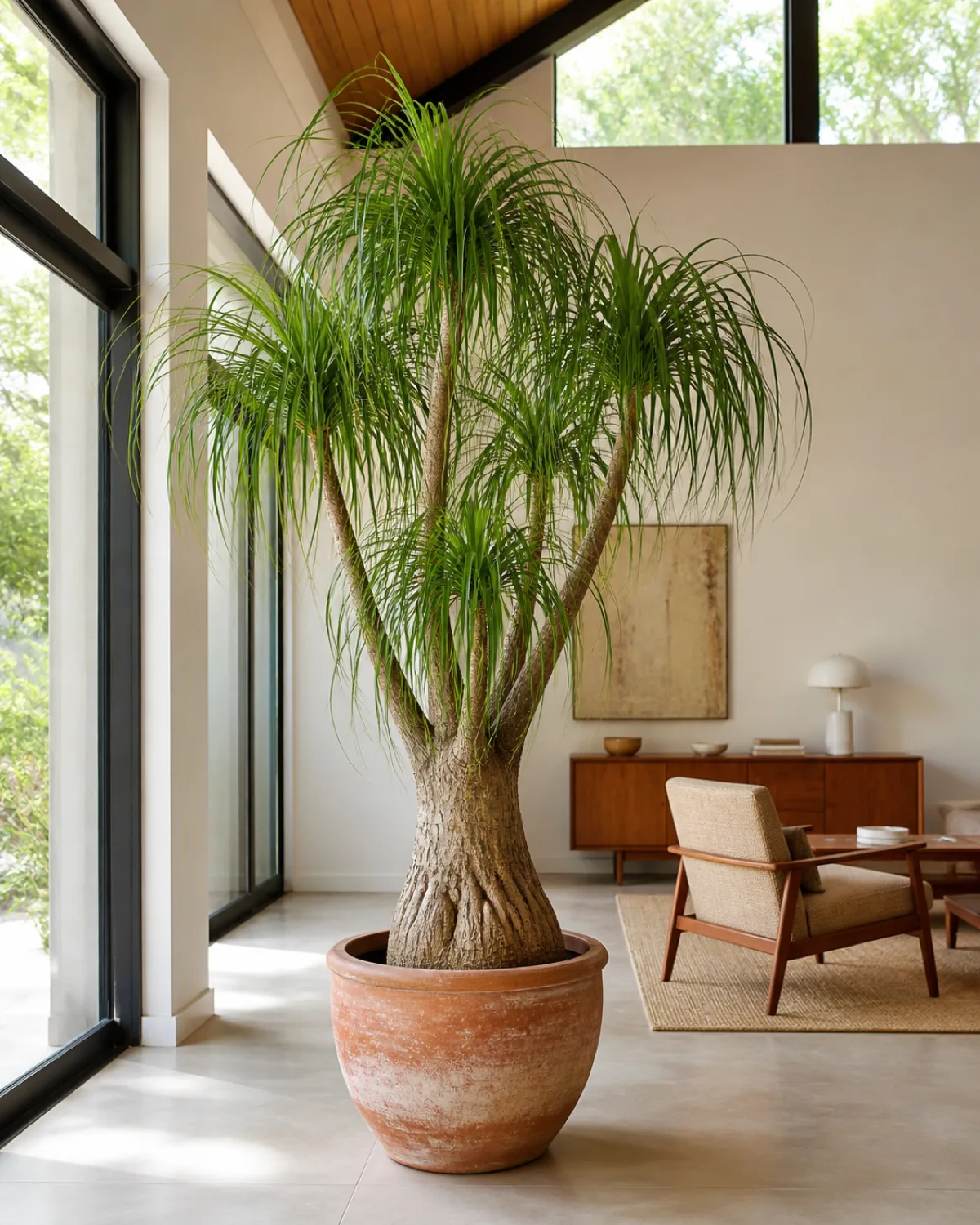
Most houseplants peak within a few years and then plateau or decline. Ponytail palm does the opposite. It gets better with time, but that time is measured in decades, not seasons.
A young ponytail palm from the nursery typically has a two-to-four-inch caudex and a single crown of leaves sitting low on a short trunk. Within five years of good care, the trunk elongates several inches and the caudex thickens noticeably. Within ten years, the trunk may reach two to three feet with a caudex the size of a bowling ball.
The most dramatic specimens come from plants that have been grown for twenty to thirty years.
- Trunk height: three to four feet indoors after decades (wild specimens reach fifteen to twenty feet)
- Caudex diameter: can exceed twelve inches in a mature indoor specimen
- Multi-headed forms: created by crown pruning or natural branching over many years
- Market value: large, multi-headed specimens command significant prices — a four-foot multi-head can sell for several hundred dollars
The bark develops character over time, shifting from smooth and pale green to rough, cork-like, and grey-brown. The transition happens gradually and adds to the sculptural quality. A thirty-year-old ponytail palm does not look like a plant on a shelf. It looks like a piece of living architecture.
This longevity means a ponytail palm can be a genuinely long-term companion. Plants purchased in the 1990s are still alive in living rooms today, passed between roommates, carried through moves, survived in office corners through ownership changes. The plant outlasts almost everything around it.
Ponytail Palm vs Yucca vs Dracaena: Sorting the Look-Alikes
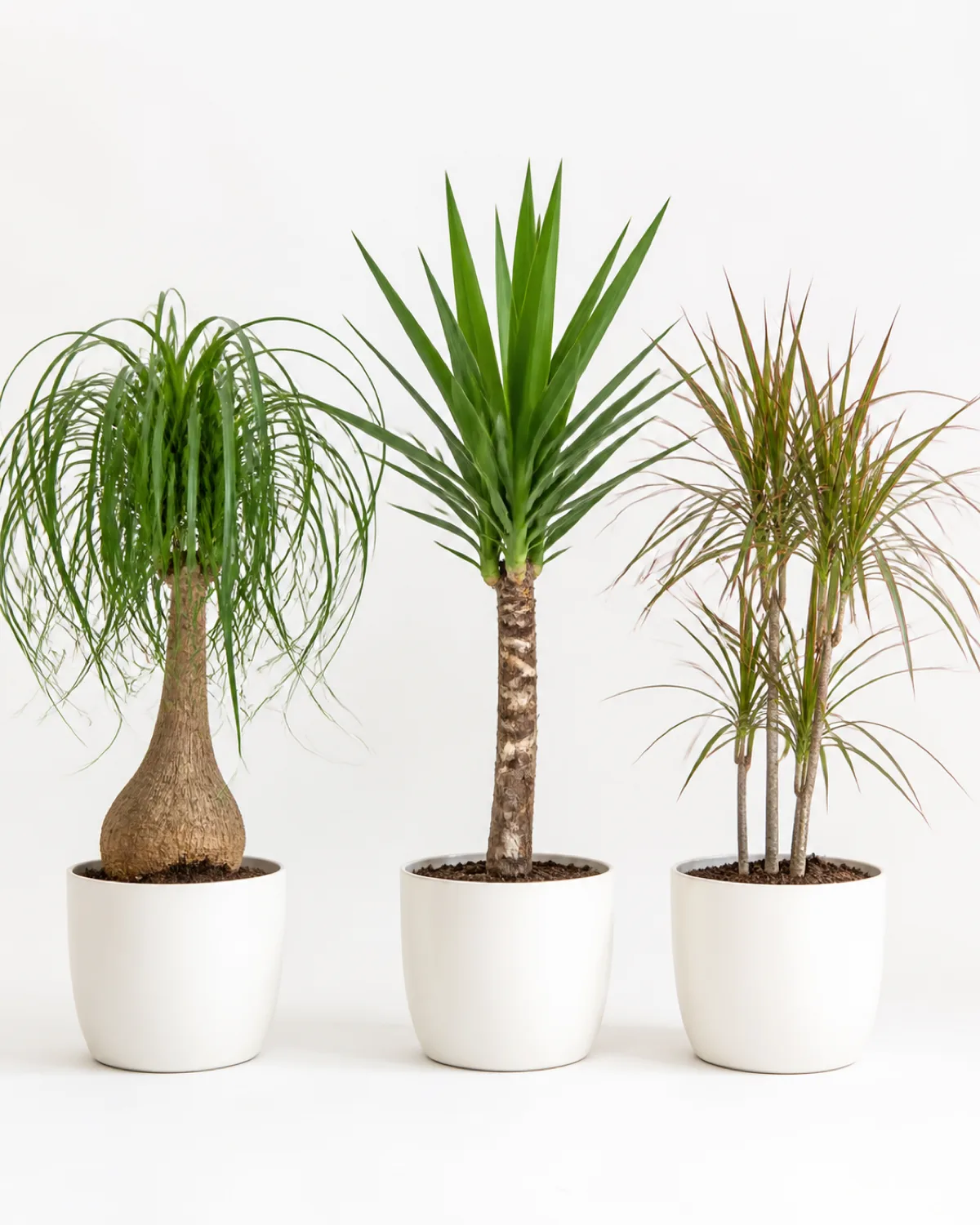
These three plants get confused constantly. They all have a trunk-and-rosette silhouette, they all sit in living room corners, and their care instructions share a few keywords. But the differences matter, especially if you have pets.
The quick identification checklist:
- Caudex present (swollen bulb at base) = ponytail palm. No other common houseplant has this structure
- Rigid, sword-like leaves that can puncture skin on a straight trunk = yucca
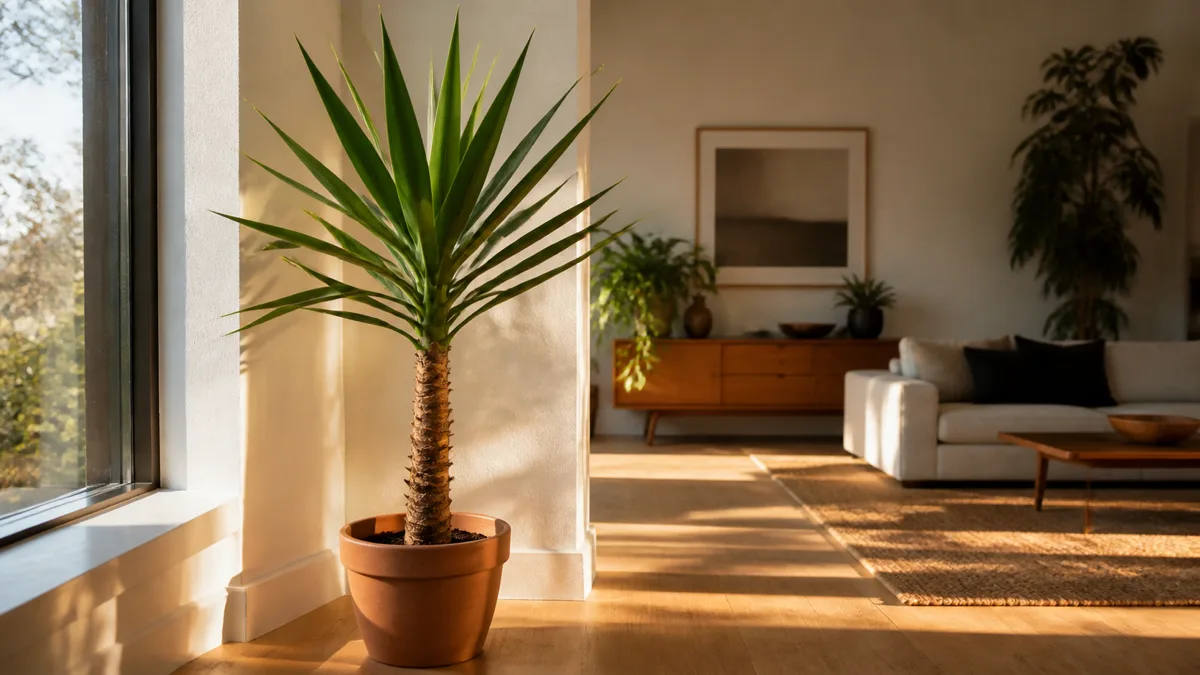
- Thin, red-edged arching leaves on a flexible cane = dracaena marginata
Ponytail palm and yucca share the same watering rhythm (bone dry between soakings) and light preference (bright direct), but dracaena needs more frequent watering (top inch dry) and tolerates moderate indirect light.
The toxicity difference is the practical divider for pet owners. Ponytail palm is non-toxic (ASPCA). Yucca is mildly toxic. Dracaena is toxic to cats and dogs. If you want the architectural trunk-and-rosette look but have pets, ponytail palm is the safe choice.
Save for Later
Ponytail Palm Care in 14 Takeaways
- 1Not a palm at allBeaucarnea recurvata belongs to Asparagaceae with yucca and agave. The swollen caudex stores water for weeks of drought.
- 2Give it the brightest spot in the roomSouth or west window with four to six hours of direct sun. Low light thins the leaf fountain and slows growth.
- 3Bone dry before every wateringSoak-and-dry only. The caudex handles drought. Overwatering rots it from the inside where you cannot see the damage.
- 4Gritty, fast-draining soil is essentialFifty percent cactus mix, thirty percent perlite, twenty percent coarse sand. Water should exit the pot in seconds.
- 5Normal indoor air is perfectThirty to fifty percent humidity, sixty to eighty degrees. No humidifier, no misting, no pebble tray needed.
- 6Half-strength fertilizer, growing season onlyMonthly April through September. Over-fertilizing burns the thin leaf tips with salt buildup. Skip if uncertain.
- 7Keep the pot snug on purposeTight pots limit moisture, display the caudex above the rim, and prevent tipping. Repot only when roots force the issue.
- 8Crown removal creates multi-head specimensCutting the top triggers side buds. Stunning result but permanent and risky. Use a clean saw in growing season.
- 9Offsets are the only home propagation methodWait for pups at the caudex base, separate at four inches with roots attached. No leaf or stem cuttings work.
- 10Spider mites and scale are the main pestsBoth thrive in dry conditions. Rubbing alcohol on contact, neem oil weekly for three cycles to clear them.
- 11Squeeze the caudex monthlyFirm is healthy. Slightly wrinkled after drought is normal. Soft or mushy means rot has started — unpot and cut immediately.
- 12Gets better with age, not worseDecades of slow growth build a sculptural trunk and thick caudex. Multi-headed old specimens are living architecture.
- 13Not the same as yucca or dracaenaBulbous caudex is the instant identifier. Soft curly leaves versus rigid swords or thin red-edged arches.
- 14Safe around cats, dogs, and childrenASPCA non-toxic. No sharp leaf tips, no irritating sap. One of the safest large-format houseplants for pet homes.
kultivy.com
Is Ponytail Palm Safe Around Pets and Children
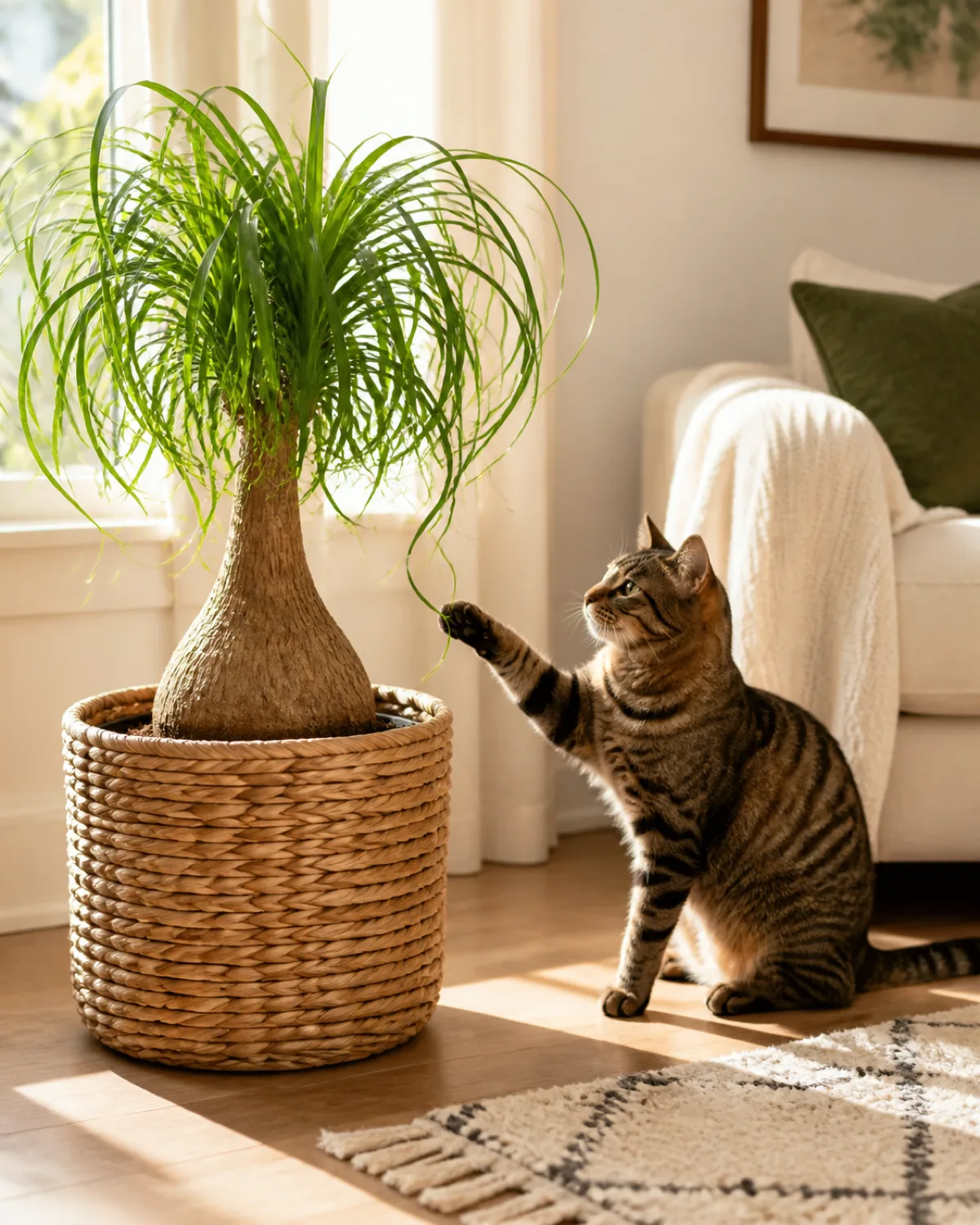
Ponytail palm is listed as non-toxic to both cats and dogs by the ASPCA. No part of the plant — leaves, trunk, caudex, or roots — contains compounds that cause poisoning if chewed or ingested.
This makes it a standout in the large-houseplant category. Most architectural floor plants that share its size range carry some level of toxicity.
- Yucca: mildly toxic, saponins cause vomiting and diarrhea in pets
- Dracaena: toxic, saponins affect cats and dogs
- Fiddle leaf fig: toxic, calcium oxalate crystals irritate mouth and stomach
- Dieffenbachia: toxic, calcium oxalate raphides cause oral pain and temporary difficulty swallowing
Ponytail palm has none of these issues. A cat batting at the dangling leaves or a toddler grabbing a handful of the thin strands faces no chemical risk.
The only physical consideration is stability. A large ponytail palm in a lightweight pot can be top-heavy. A curious pet or a pulling toddler could tip the plant, and a heavy clay pot falling from a table creates an impact hazard. Anchor large specimens in heavy terra cotta pots, and position floor plants where they cannot be pulled down.
For households that want a floor-scale, sculptural, drought-tolerant plant and also have cats, dogs, or small children, ponytail palm checks every box that its look-alikes cannot.

Mara Quinn edits Kultivy, where she shares houseplant care, propagation, beginner-friendly plant picks, and plant-styling ideas for anyone who wants their indoor plants to actually thrive. Every guide is image-led and reviewed for clarity, usefulness, image accuracy, and Pinterest-to-page alignment before it goes live. Visit the About page.