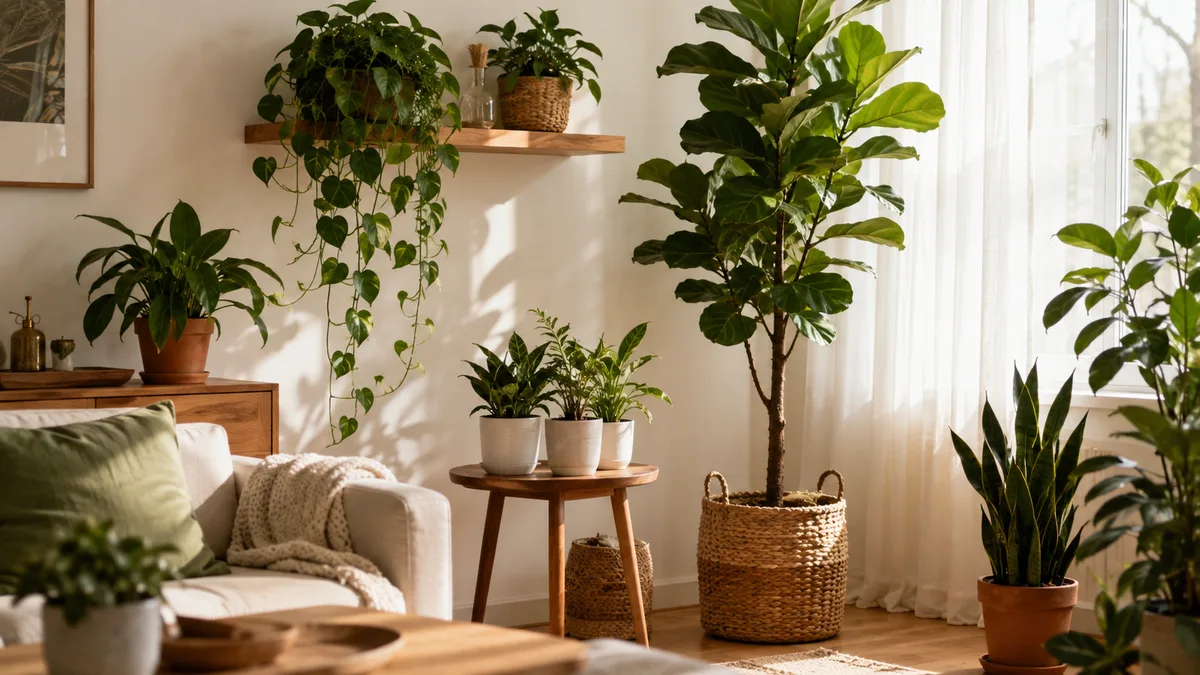
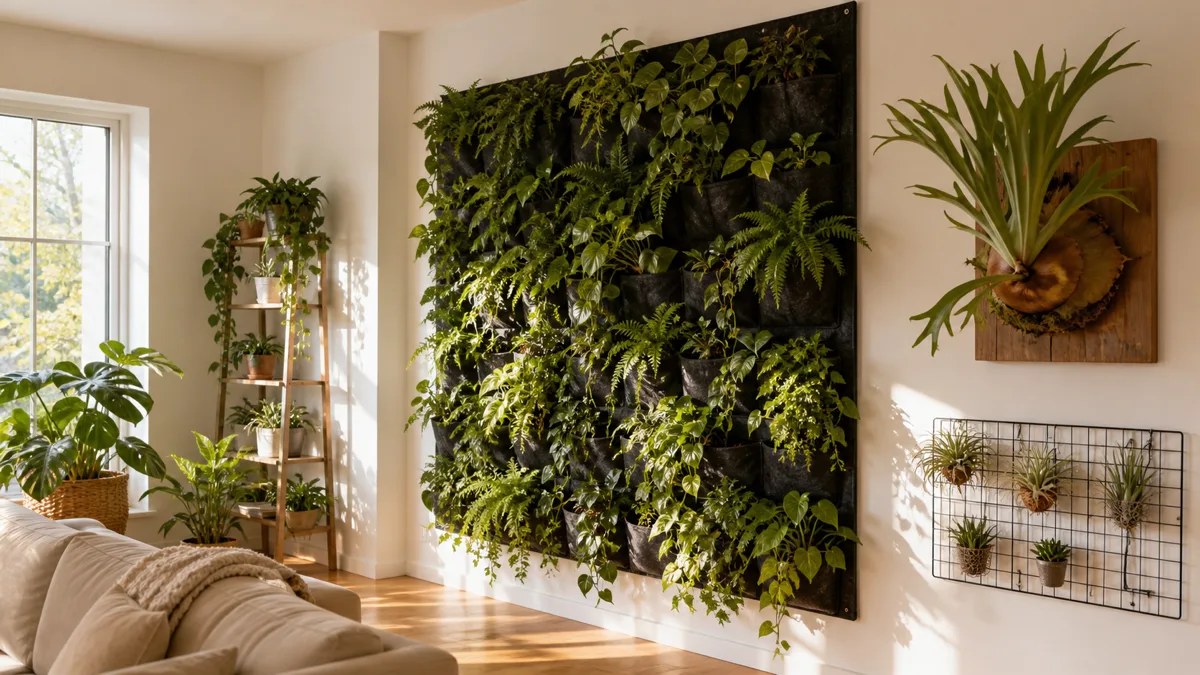
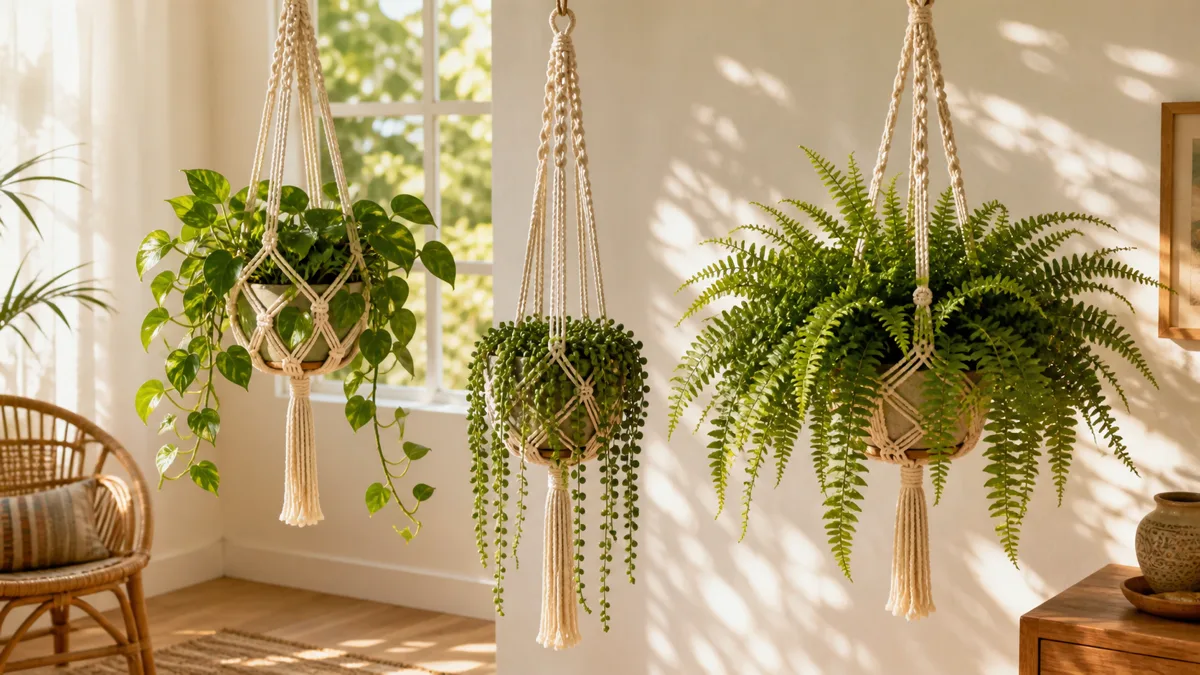
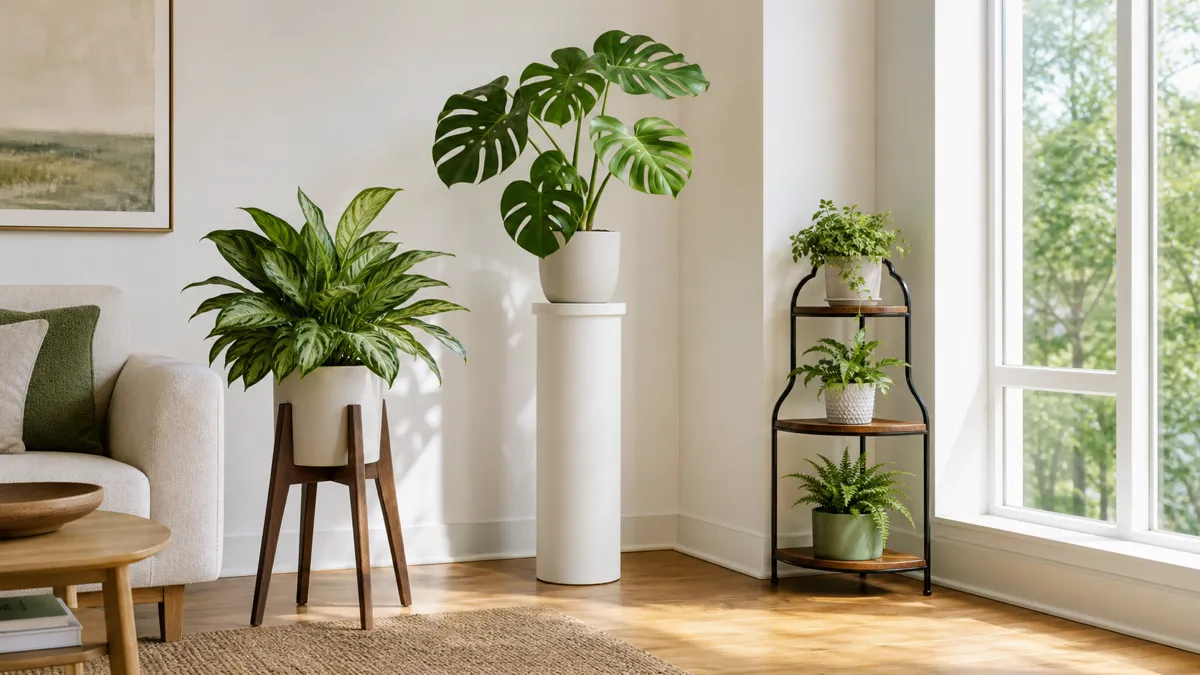
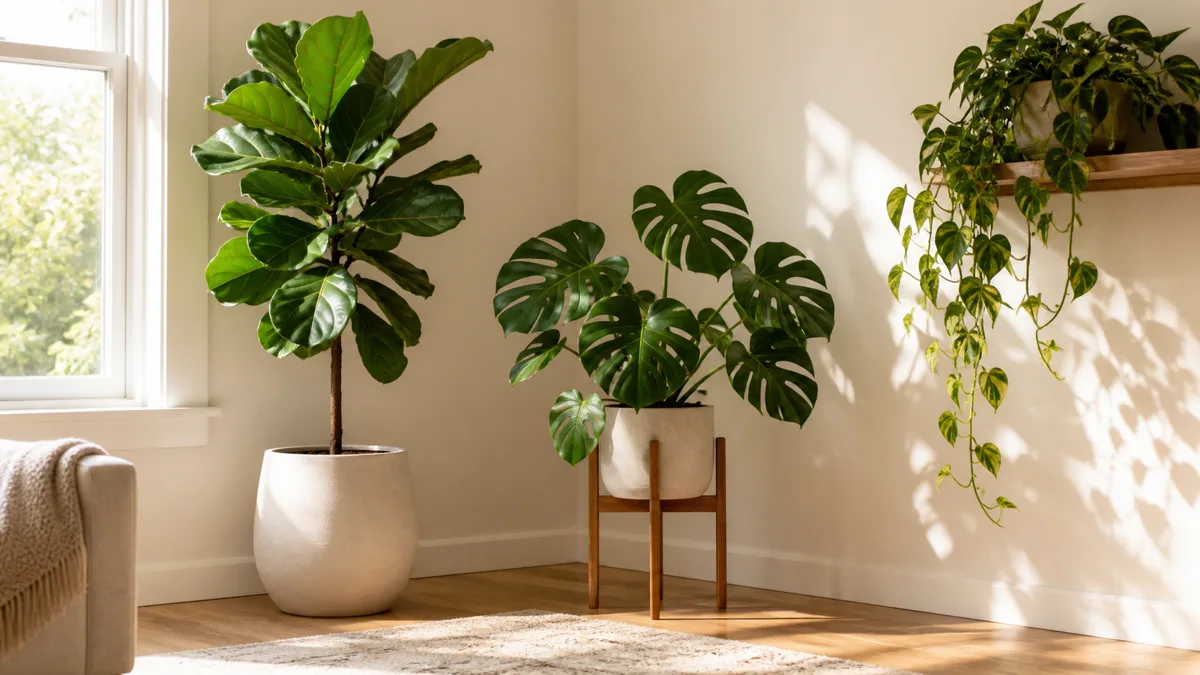
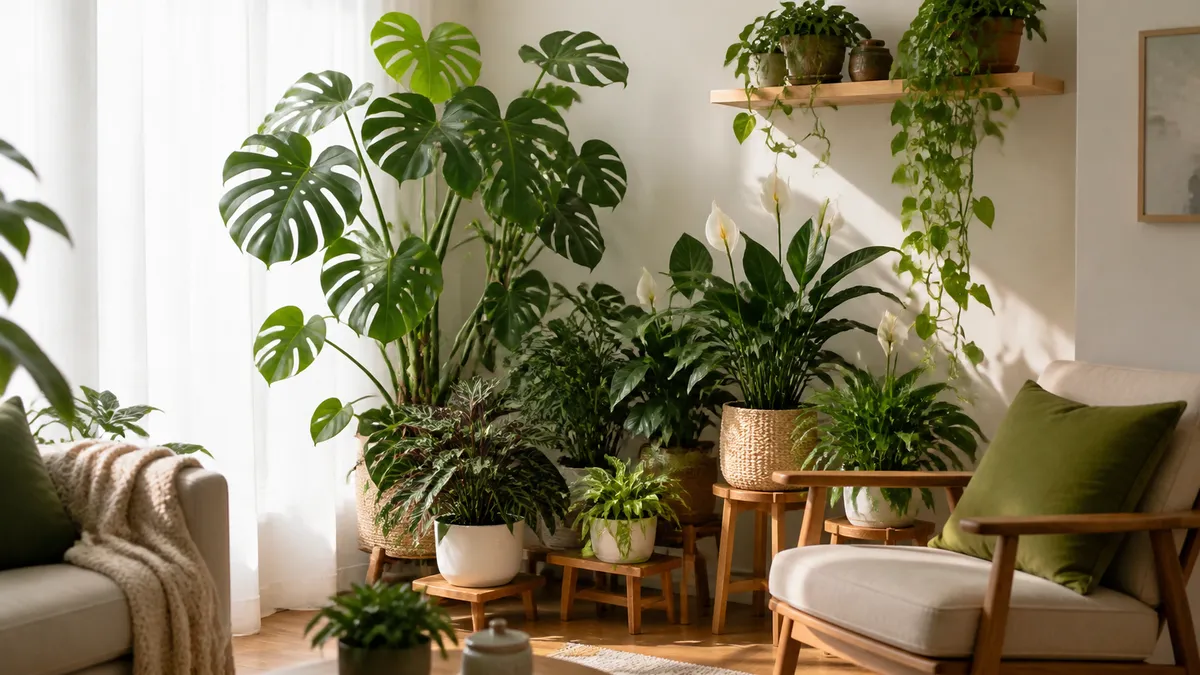
A single large floor plant makes a room feel alive. A cluster of small plants on a shelf, desk, or windowsill makes a room feel like someone actually lives there.
Small indoor plants fill the gaps large plants cannot reach — the narrow ledge, the desk corner, the bathroom shelf. They cost less to replace and group into arrangements that look intentional.
These fourteen compact picks cover every light level and room, each staying under twelve inches.
Twelve compact picks for every light condition and room, plus placement logic and pot-sizing rules to pull them together into a finished display. Jump to the plant or the problem you want to solve first.
Why Small Plants Change a Room Without Taking It Over
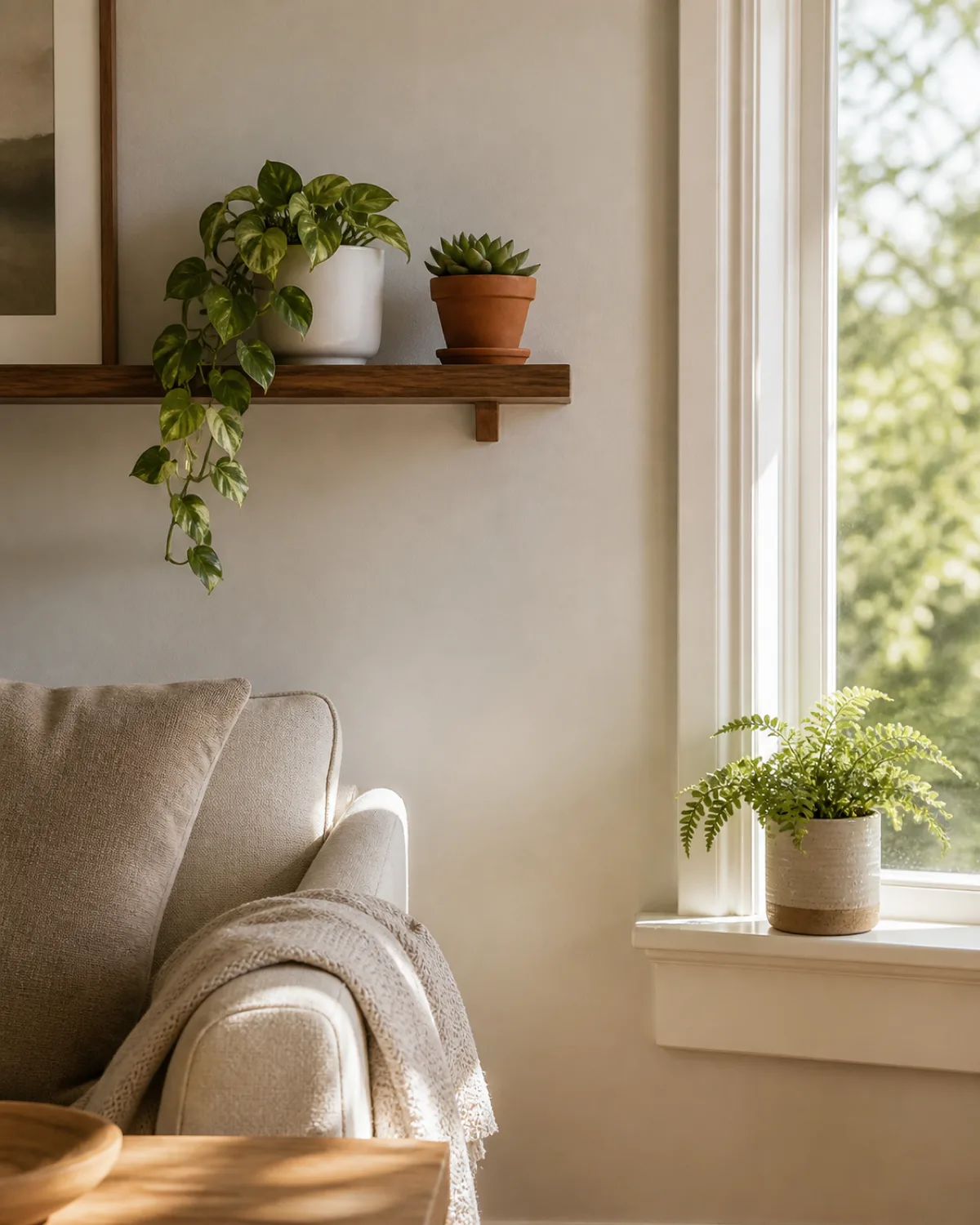
Large plants claim territory. A fiddle leaf fig in a corner says one thing about a room and leaves no debate. Small plants are more like punctuation. They fill the shelf between the books and the candle, the desk corner beside the monitor, the windowsill that catches three hours of morning sun and nothing else.
The practical advantages stack up fast when you commit to plants that stay under twelve inches.
- Weight and portability let you rearrange on a whim. A four-inch pot of pilea weighs less than a coffee mug.
- Replacement cost drops to pocket change. If a three-dollar fittonia dies while you figure out its humidity needs, the experiment cost you almost nothing.
- Grouping potential is the real payoff. Three to five small plants clustered on a tray look intentional in a way that a single medium plant on the same surface never quite achieves.
- Light flexibility improves because small pots fit on narrow sills and under reading lamps where a standard nursery pot cannot reach.
The twelve plants that follow cover every common light condition, every room, and every budget. The final two sections handle the placement logic and pot choices that turn a handful of plants into an actual display.
Pothos N'Joy on a Floating Shelf
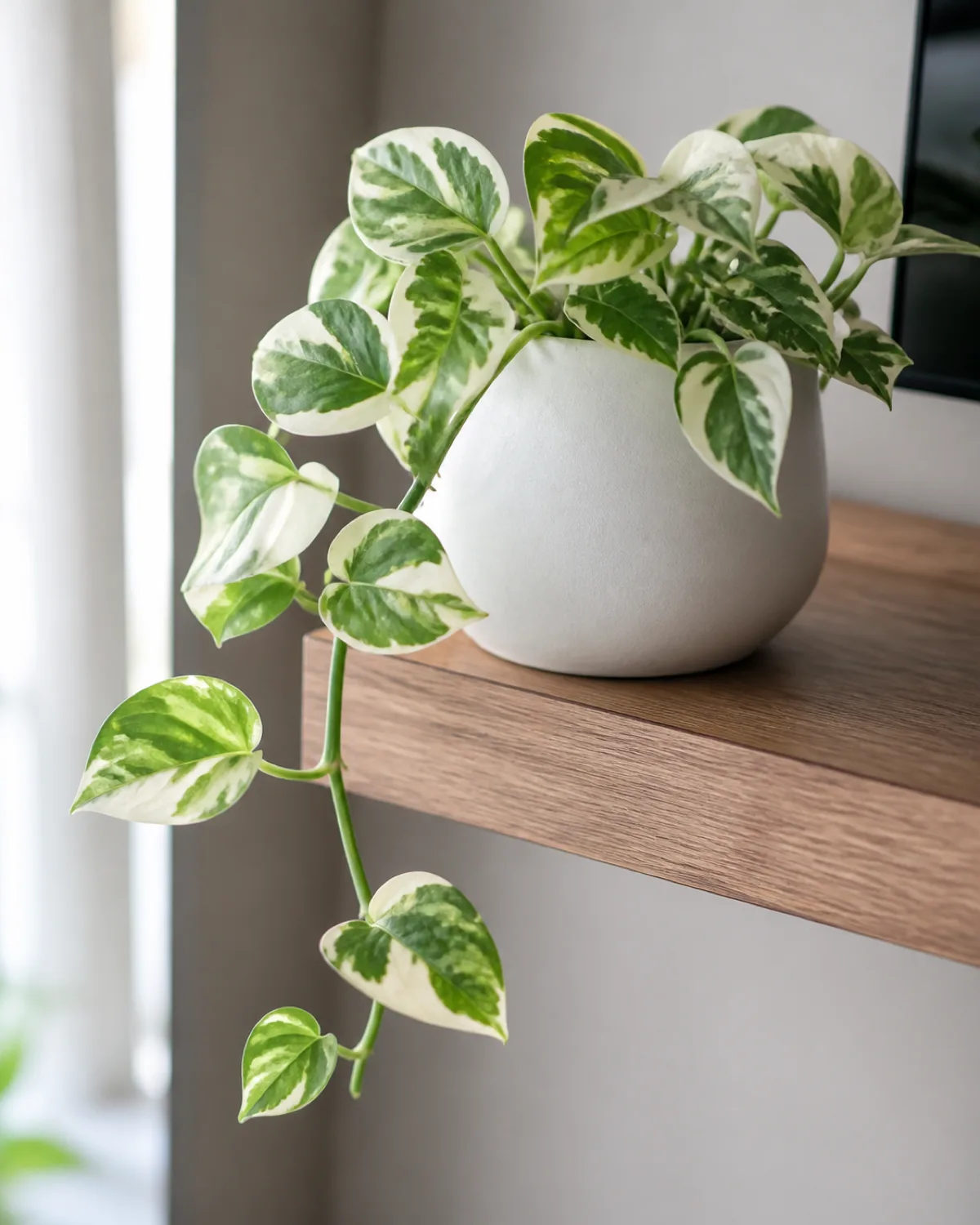
Golden pothos can trail eight feet and fill a wall. N'Joy stays compact. The leaves are smaller, the internodes shorter, and the vines rarely reach more than eighteen inches before the plant naturally branches back on itself. That makes it the pothos for a floating shelf where you want a little trailing without the vine reaching the floor.
The variegation is sharper than golden pothos, with blocky patches of pure white against dark green rather than the soft yellow marbling of the original. Bright indirect light keeps those white patches crisp. Move it to a dim shelf and the white slowly reverts to green as the plant compensates for lower photosynthesis.
- Mature size: eight to twelve inches in a small pot
- Light: bright indirect, tolerates medium
- Water: when the top inch of soil dries
- Toxicity: toxic to cats and dogs — keep on a high shelf away from pets
Echeveria Rosette as a Desktop Centerpiece
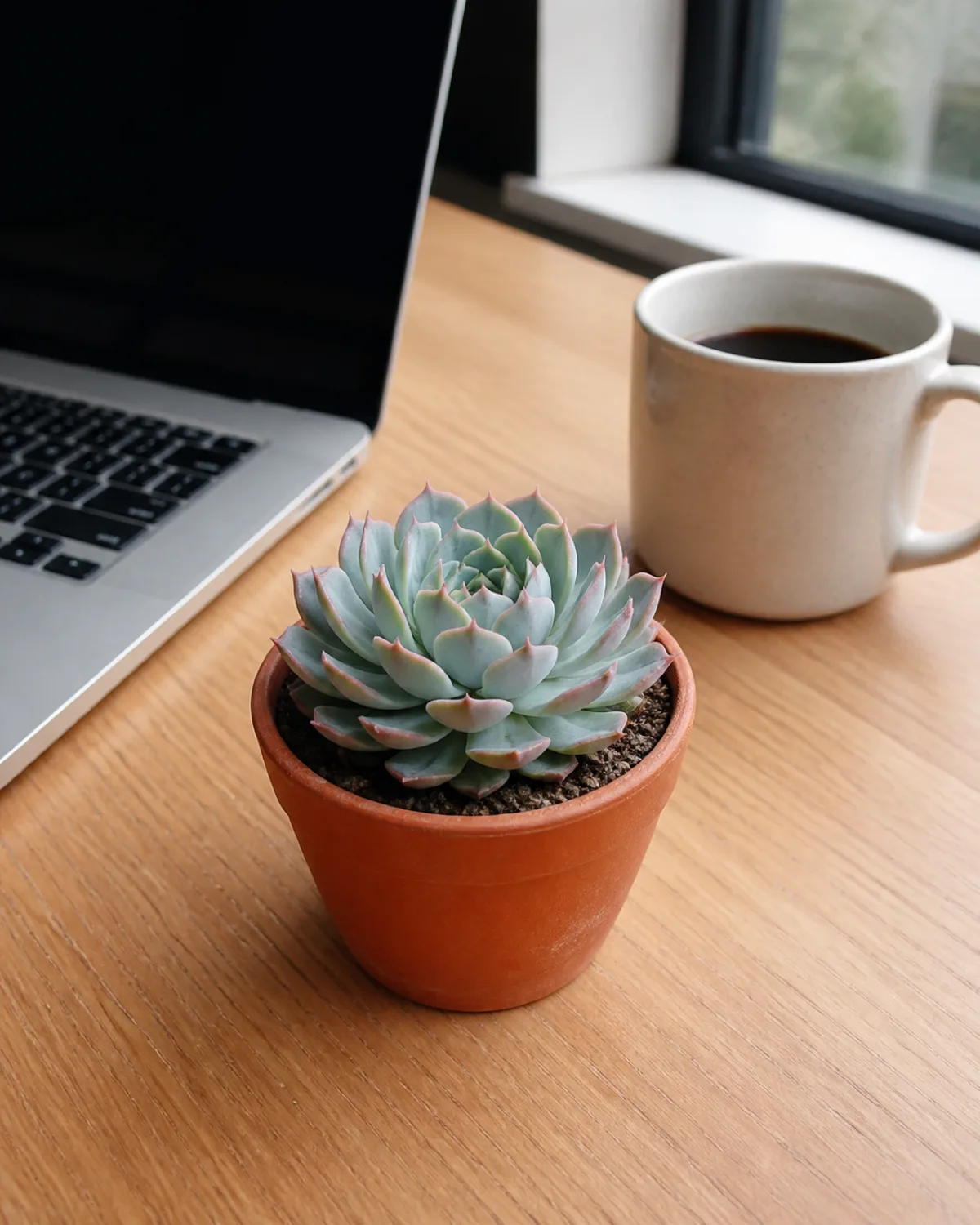
An echeveria on a desk works the way a small sculpture does. The rosette is perfectly symmetrical, the leaves layer in a fibonacci spiral, and the whole plant rarely exceeds four inches across. It asks for almost nothing in return except bright light and very little water.
The pastel color range is what makes echeveria feel more like an object than a plant. Pale blue-green, dusty lavender, peach-pink edges — colors that shift with light intensity and season. More direct sun deepens the pink stress coloring on the leaf tips, a response called sun stressing that growers deliberately trigger for display.
- Mature size: three to five inches across
- Light: bright direct, four or more hours daily
- Water: soak and dry — wait until the soil is completely dry, then drench (succulent watering method)
- Toxicity: non-toxic to cats and dogs (ASPCA)
One note on placement. Echeveria needs more light than most desk plants. If your desk sits in the middle of a room far from windows, a small LED grow light clipped to the monitor keeps the rosette tight and colorful instead of stretching toward the ceiling.
Every plant here fits a specific type of small space. Start with where you want greenery, and the right plant follows.
Pilea Peperomioides on a Windowsill
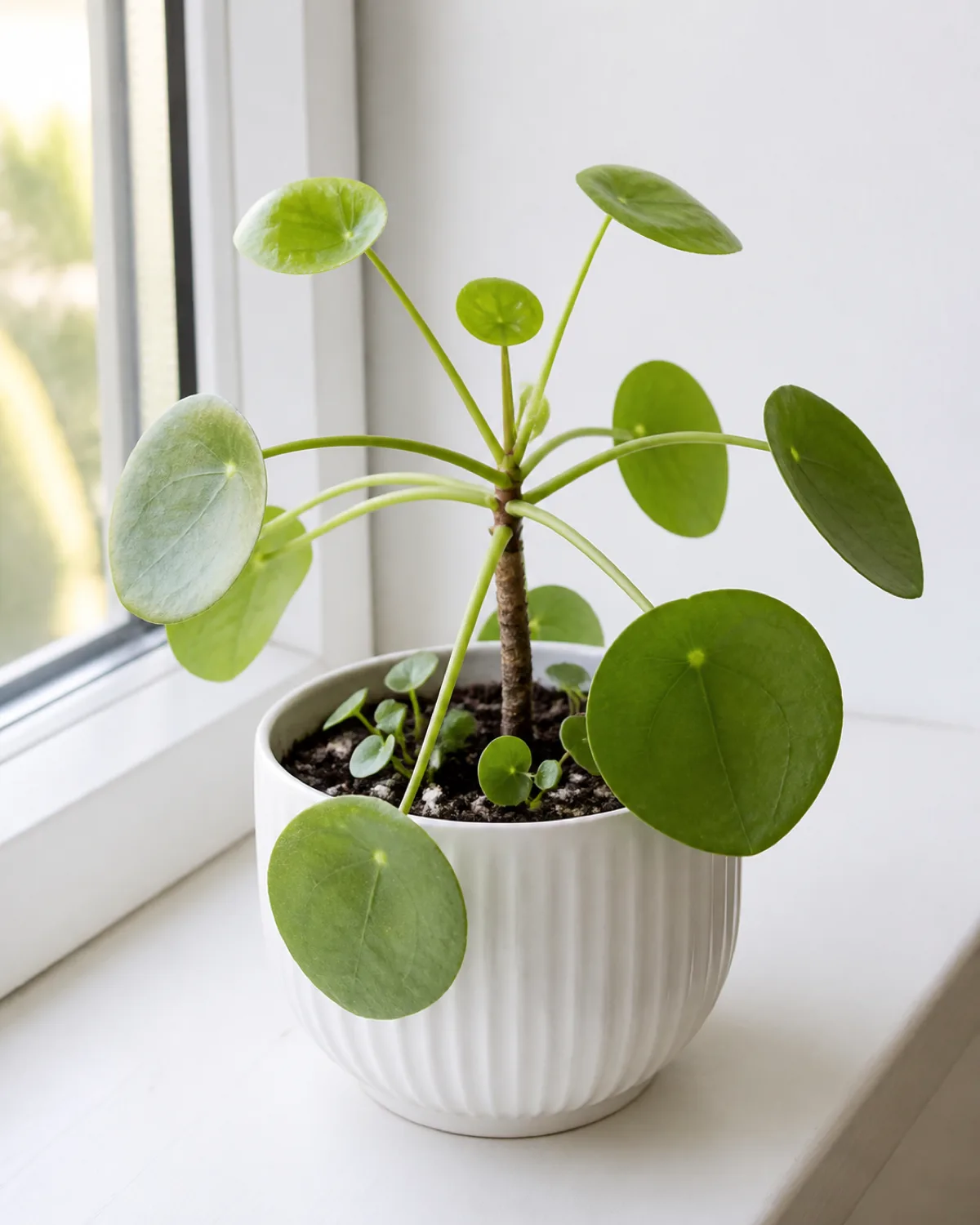
The Chinese money plant earned its popularity through a shape no other houseplant quite copies. Each leaf is a flat, nearly perfect disc on a thin straight stem, and the whole plant arranges itself into a tidy umbrella that rarely exceeds ten inches. On a windowsill it looks like a miniature tree from a children's book illustration.
Quarter-turn the pot weekly. Pilea leans hard toward the light source, and within a few days the entire canopy tilts sideways like a satellite dish tracking the sun. A weekly rotation keeps it upright and symmetrical.
- Mature size: eight to ten inches
- Light: bright indirect — north or east window ideal
- Water: when the top inch dries, roughly weekly
- Toxicity: non-toxic to cats and dogs (ASPCA)
The pups are the bonus. Small offsets push up through the soil every few weeks during the growing season. Cut them free with a clean blade once they have three or four leaves of their own, pot them in fresh mix, and you have a plant to give away or cluster on the same sill.
Haworthia on a Sunny Bathroom Shelf
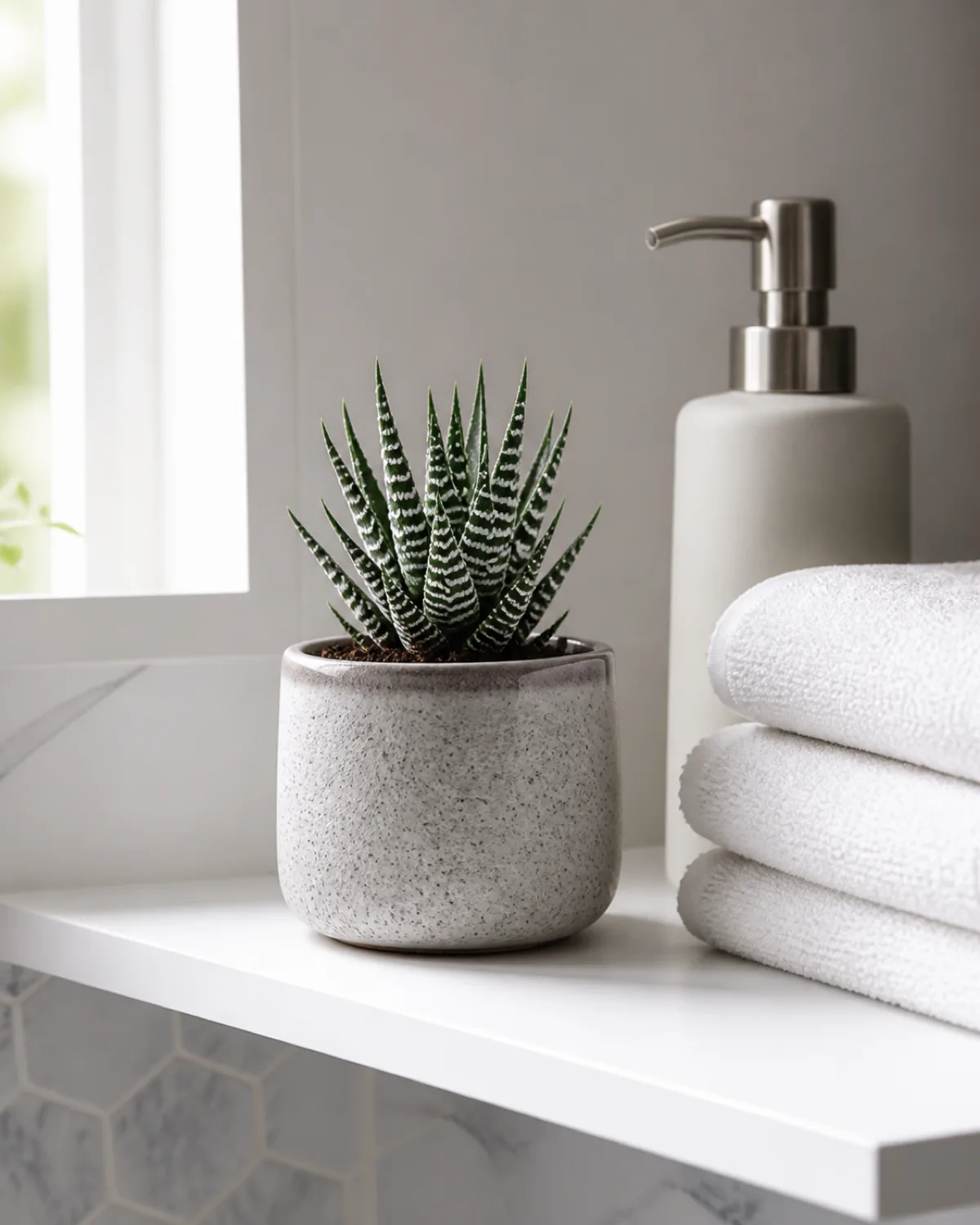
Haworthia fasciata — the zebra plant — stays so small that it almost disappears in a room full of larger plants. That is exactly where it belongs: tucked onto a bathroom shelf or a narrow windowsill where nothing bigger fits.
The raised white stripes on dark green leaves give it a graphic, almost architectural look. At the tip of each leaf is a translucent window, a structure that lets light penetrate into the leaf interior for photosynthesis even when the plant is partially buried in its native habitat. That adaptation translates to excellent tolerance of bright indirect light indoors.
- Mature size: three to five inches
- Light: bright indirect to gentle morning direct
- Water: every two to three weeks — let soil dry completely
- Toxicity: non-toxic to cats and dogs (ASPCA)
Haworthia is one of the few succulents that actually prefers indirect light over full sun. That makes it the rare succulent choice for a shelf that does not sit right next to a window.
Fittonia in a Shaded Corner
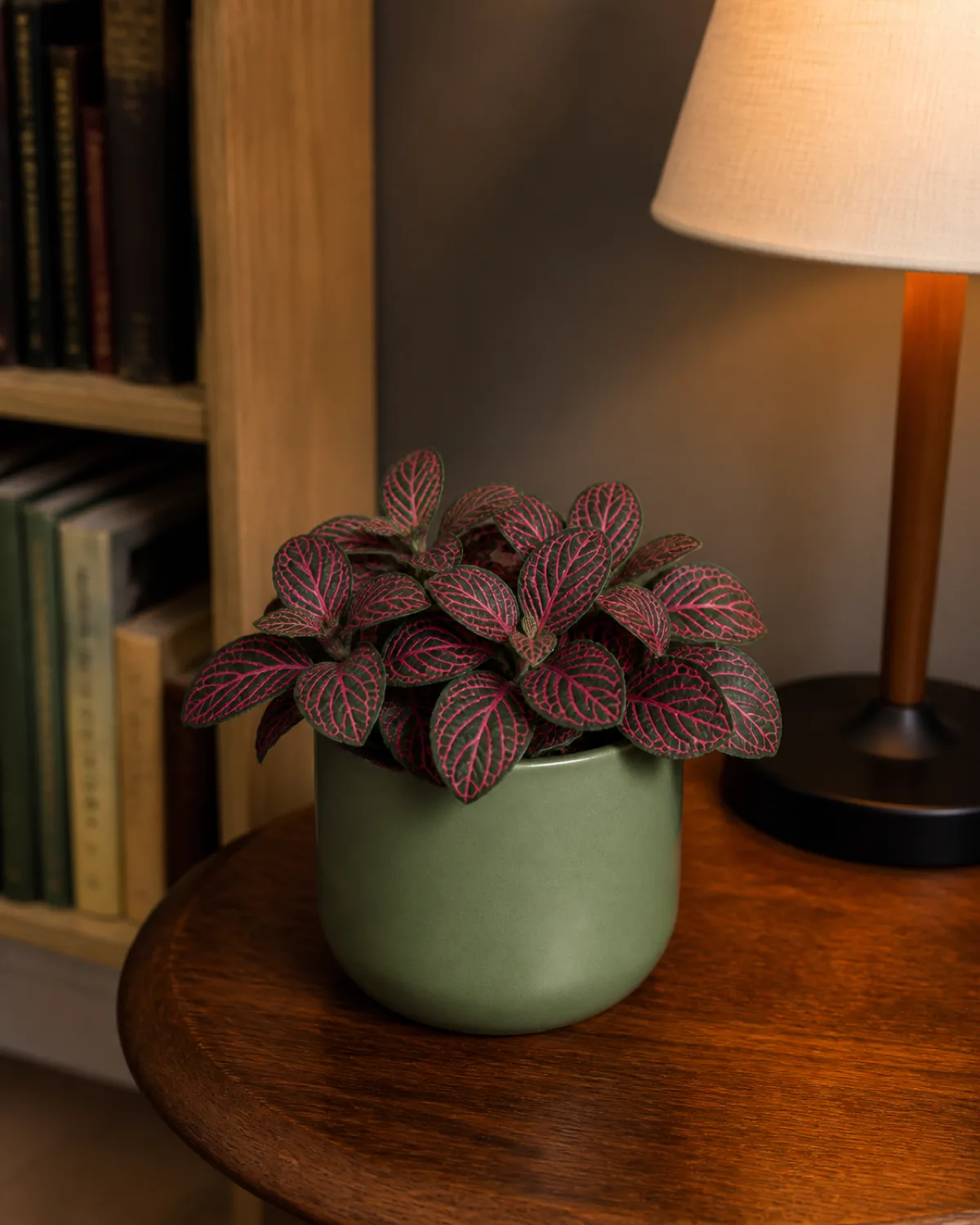
Most low-light plants compensate for dim conditions by being green. Dark, uniform, unremarkable green. Fittonia ignores that rule entirely. The nerve plant delivers neon-bright veining — pink, white, or red depending on the cultivar — in conditions where most plants lose all their color.
The trade-off is drama. Fittonia is the most theatrically expressive houseplant you can own. When it gets thirsty, the entire plant collapses flat like a deflated balloon. Water it, and within an hour it stands back up as if nothing happened. The first time this happens it looks like the plant died. It did not.
- Mature size: six to eight inches across
- Light: low to medium indirect — too much direct sun bleaches the veins
- Water: keep the soil consistently moist, never waterlogged
- Toxicity: non-toxic to cats and dogs (ASPCA)
Fittonia thrives in terrariums because the enclosed humidity stays high. If your room runs dry, grouping several small pots together on a pebble tray raises the local moisture around the plants without affecting the rest of the room.
String of Pearls Trailing From a Hanging Pot
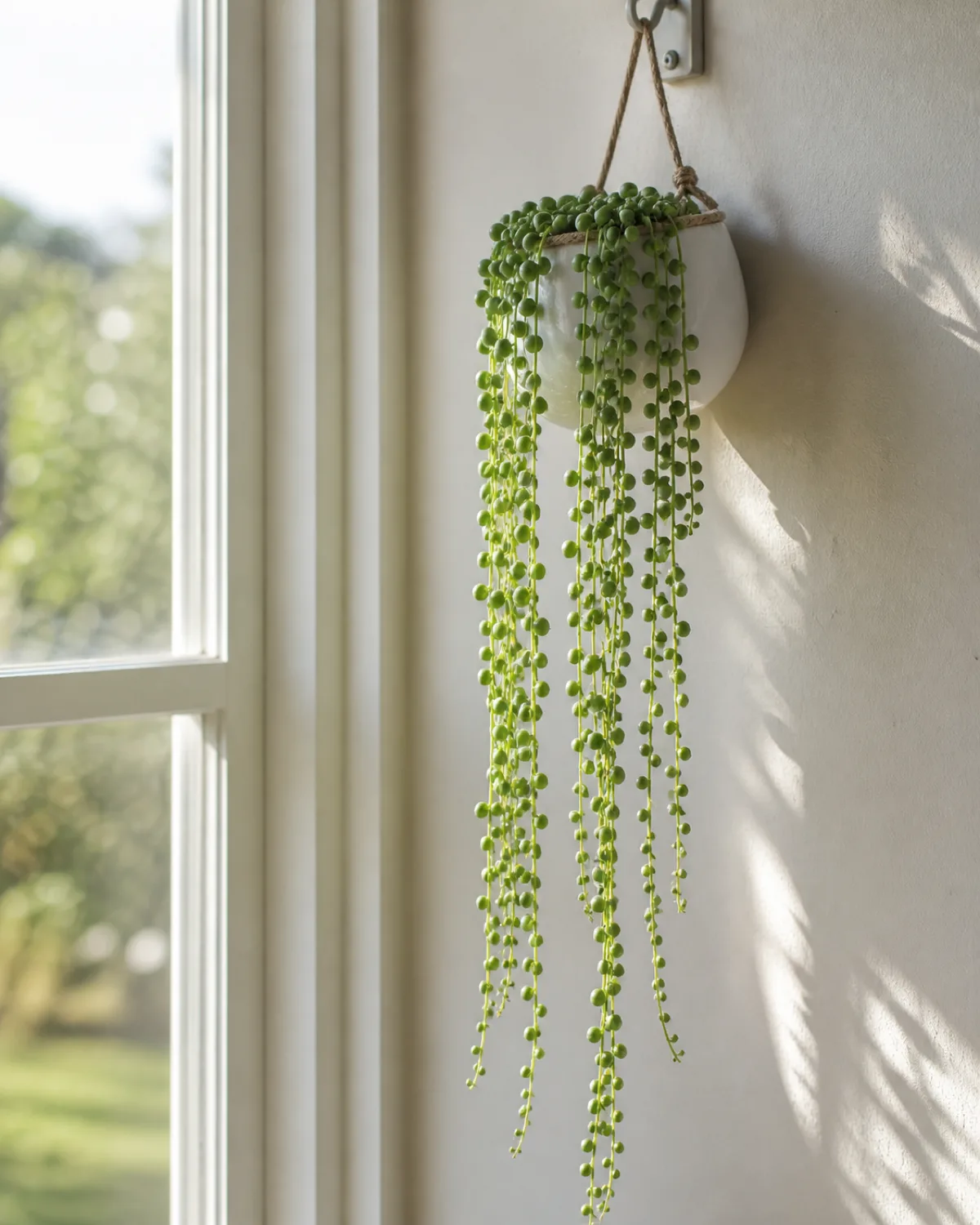
A string of pearls pot is small. The plant itself is small. But the visual effect is not small at all. Strands of green beads cascade two to three feet from a pot that barely fills your palm, covering a big stretch of wall for the price of a single four-inch planter.
Each pearl is a modified leaf with a translucent window stripe along one side. That stripe lets light reach the chlorophyll inside the bead's round shape, which evolved to minimize surface area and retain water in dry South African habitats. The whole plant is semi-succulent, meaning it stores water in those beads and needs far less frequent watering than it looks like it should.
- Mature size: pot stays under six inches, trails two to three feet
- Light: bright indirect with three to four hours of direct morning sun
- Water: soak and dry — water only when the pearls look slightly deflated
- Toxicity: toxic to cats and dogs — hang high and out of reach
The most common mistake is overwatering. Shriveled pearls mean thirst, but mushy translucent pearls mean rot. When in doubt, wait another two days.
African Violet Under a Reading Lamp
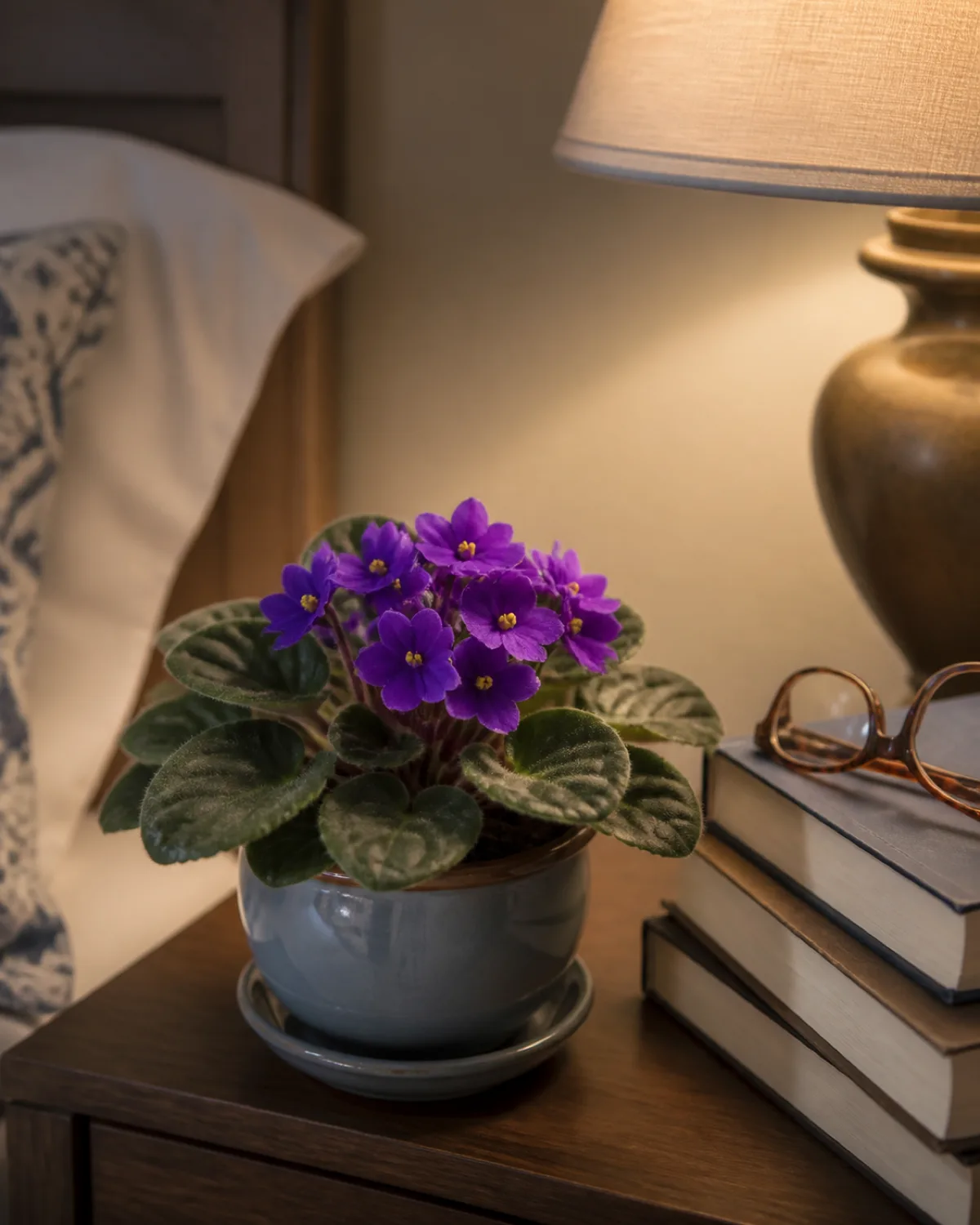
African violets bloom in conditions that keep most flowering plants stuck in foliage mode. A bedroom nightstand with a reading lamp overhead is enough to trigger flowers that last weeks at a time. The compact rosette stays six to eight inches across and produces clusters of purple, pink, or white blooms almost continuously if the light stays consistent.
Bottom-watering is the one non-negotiable care rule. Water that sits on the fuzzy leaves causes brown spots and rot. Fill the saucer, let the soil wick moisture upward for thirty minutes, then dump the excess.
- Mature size: six to eight inches across
- Light: bright indirect or artificial — twelve to fourteen hours under a lamp triggers flowering
- Water: bottom-water only, when the soil surface feels dry
- Toxicity: non-toxic to cats and dogs (ASPCA)
The lamp trick is worth knowing. African violets respond to consistent photoperiod more than intensity. A desk lamp with a daylight-temperature bulb left on during working hours often produces more reliable blooming than a windowsill where the light shifts with the seasons.
The difference between a cluster that looks styled and one that looks like leftover nursery pots is height, grouping, and one simple proportion rule.
Tillandsia on a Wire Display
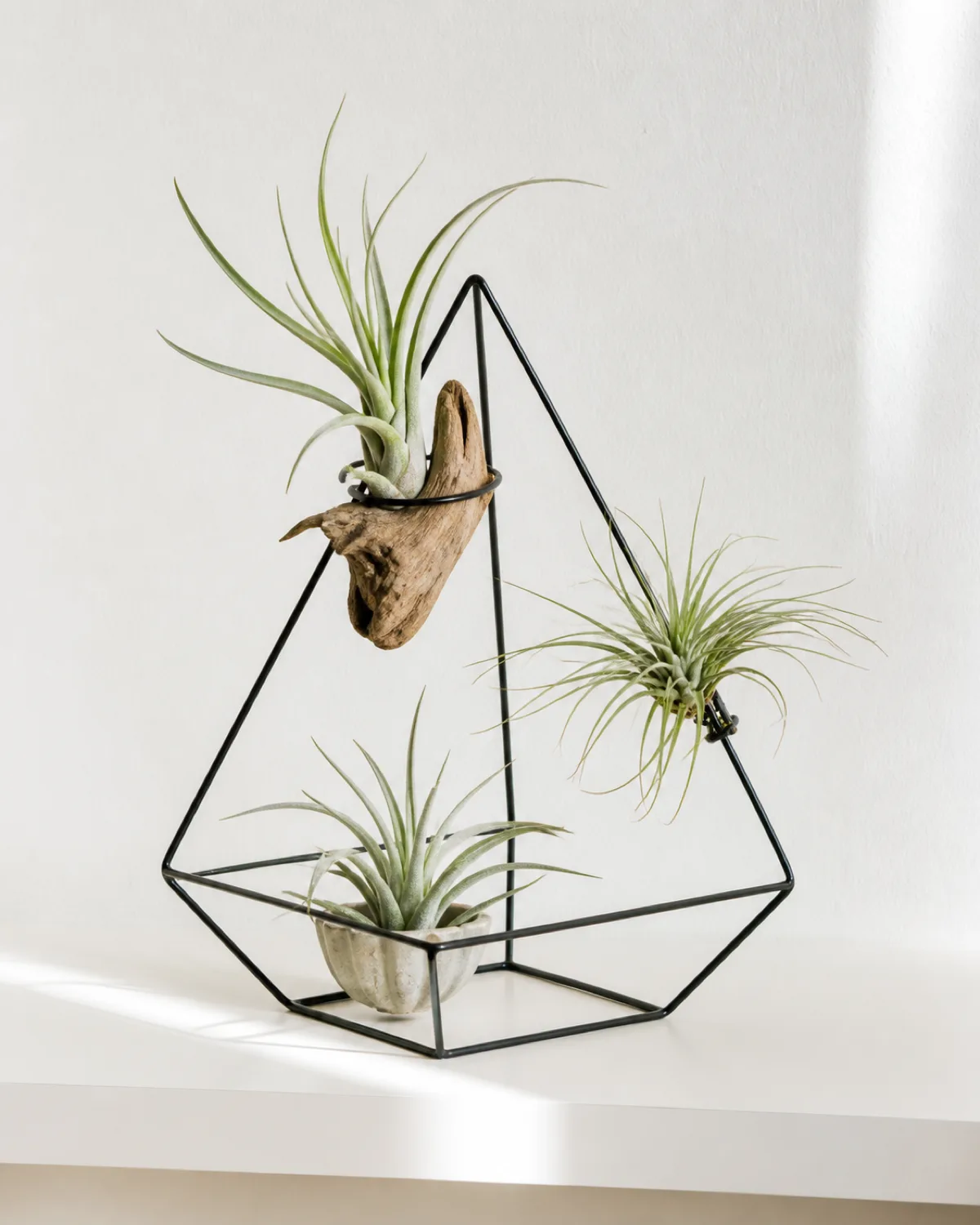
Air plants are the only plants in this list that need no pot, no soil, and no saucer. Tillandsia absorbs water and nutrients through microscopic scales called trichomes that cover the leaf surface. Mount them on driftwood, nestle them into shells, clip them to a wire grid, or set them in a terrarium — the display options are wider than any soil-bound plant.
Watering is a soak, not a pour. Submerge the entire plant in room-temperature water for twenty to thirty minutes once a week, shake off the excess, and set it upside down on a towel until the base is dry. Water trapped in the center of the rosette causes rot faster than underwatering ever will.
- Mature size: two to eight inches depending on species
- Light: bright indirect, tolerates some direct morning sun
- Water: weekly soak for twenty to thirty minutes, shake dry
- Toxicity: non-toxic to cats and dogs (ASPCA)
The trichome coverage tells you about light tolerance. Silvery-white air plants (T. xerographica, T. tectorum) have dense trichomes and handle more sun. Greener species (T. bulbosa, T. butzii) have fewer trichomes and prefer filtered light.
Polka Dot Plant in a Bright Spot
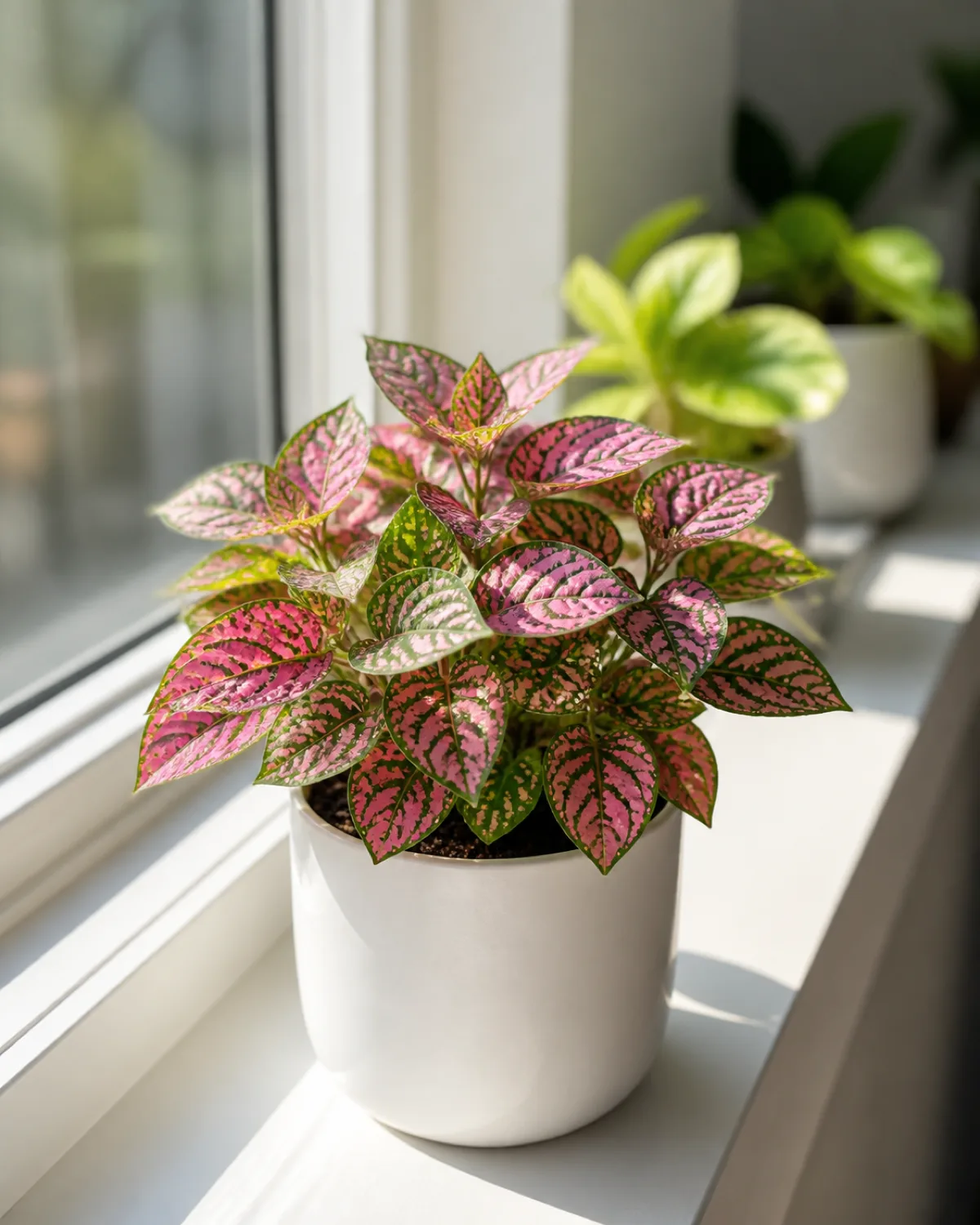
Hypoestes phyllostachya earns its common name honestly. Every leaf is spattered with pink, red, or white spots on a dark green background, like someone flicked a loaded paintbrush at it. In bright indirect light, the spots intensify until the green almost disappears. In low light, the green takes over and the spots fade to a faint blush.
The plant grows fast and gets leggy without regular pinching. Snip the growing tips every few weeks to keep it bushy and under ten inches. Each pinched stem branches into two, doubling the leaf density and keeping the plant compact enough for a windowsill cluster.
- Mature size: eight to twelve inches, kept shorter with pinching
- Light: bright indirect — more light means more vivid spots
- Water: keep evenly moist, wilts dramatically when dry
- Toxicity: non-toxic to cats and dogs (ASPCA)
Polka dot plant is technically a short-lived perennial indoors. After a year or two it tends to get woody and sparse. The easy fix is stem propagation — snip four-inch cuttings, root them in water, and start fresh plants to replace the aging parent.
Compact Spider Plant on a Kitchen Counter
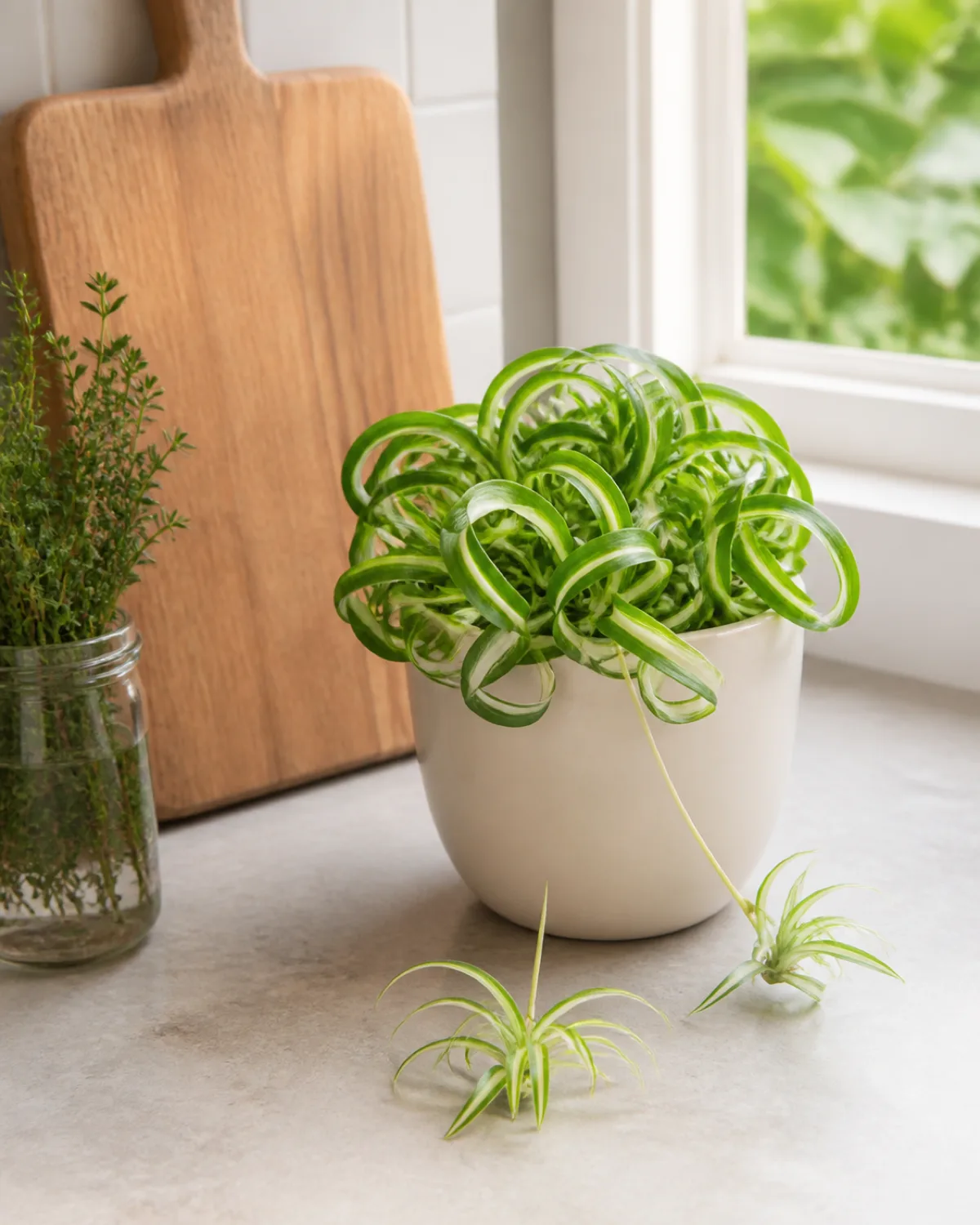
The standard spider plant spreads wide and sends out arching stolons that can reach three feet. The Bonnie cultivar does the same thing in miniature. Its leaves curl tightly instead of arching straight, the entire plant stays eight to ten inches across, and the spiderettes that dangle from the mother plant are small enough to look like ornaments rather than unruly offshoots.
Spider plants are among the most forgiving kitchen plants you can keep. They tolerate temperature swings from cooking, handle the fluorescent light above the sink, recover from missed waterings without permanent damage, and are completely non-toxic to every pet in the house.
- Mature size: eight to ten inches (Bonnie cultivar)
- Light: bright indirect to medium — tolerates low light but grows slower
- Water: when the top inch dries, roughly weekly
- Toxicity: non-toxic to cats and dogs (ASPCA)
The spiderettes are free plants waiting to happen. Let them develop small roots while still attached, then snip the stolon and press the plantlet into moist soil. Roots establish within a week.
Mini Jade on a Bedside Table
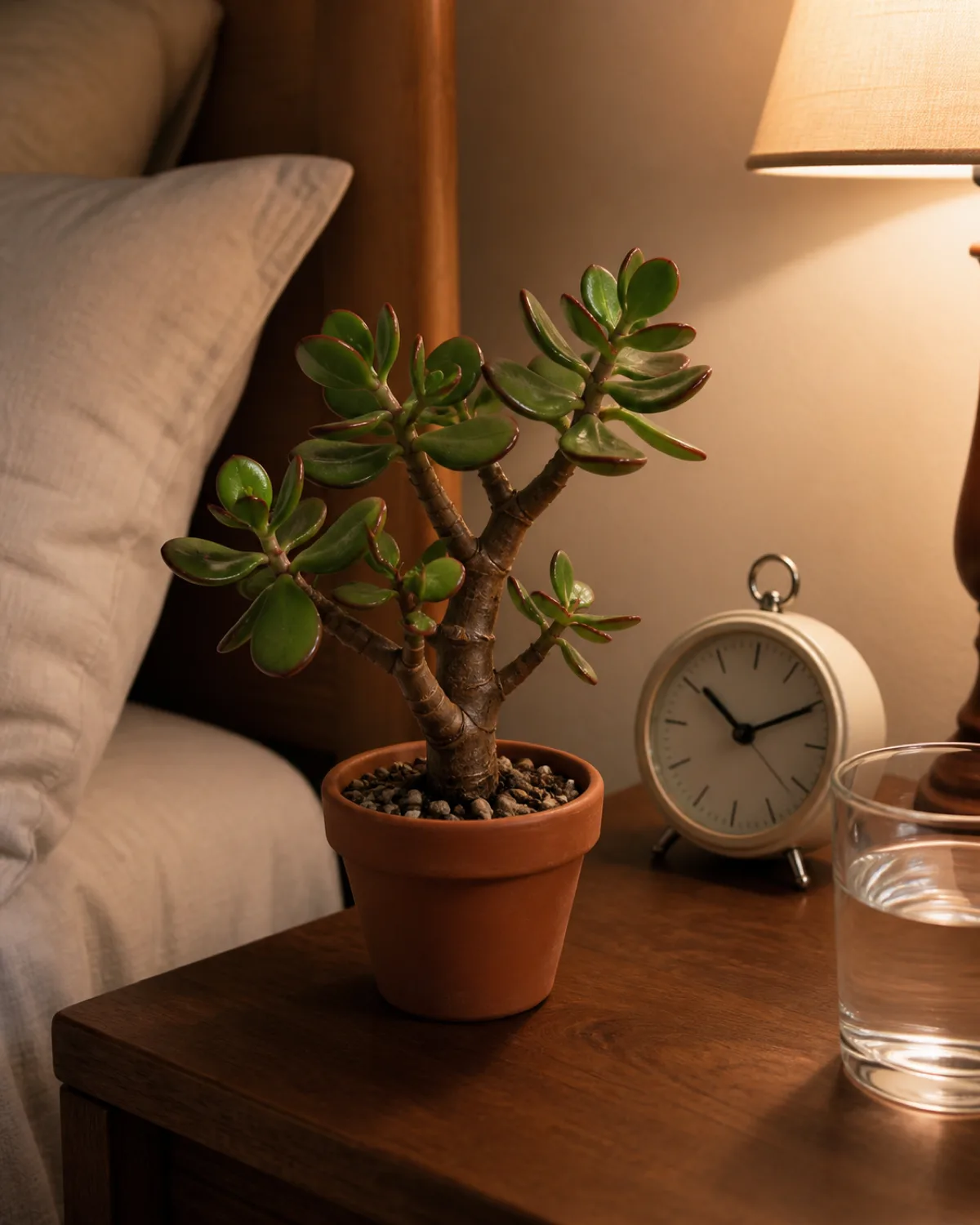
A jade plant grown small and pruned deliberately looks like a bonsai without any of the bonsai skill. The trunk thickens and develops bark texture within a year or two, the branches fork predictably when you pinch the growing tip, and the plump oval leaves stay green year-round with minimal attention.
Jade stores so much water in its leaves and stems that it tolerates neglect better than almost any other plant on this list. Water it every two to three weeks when the leaves start to lose their firmness, and let the soil dry completely between soakings.
- Mature size: six to eight inches when kept in a small pot (can grow much larger over years)
- Light: bright direct, four or more hours — red leaf edges intensify with more sun
- Water: every two to three weeks, soak and dry
- Toxicity: toxic to cats and dogs — keep on a shelf away from pets
The slow growth is a feature, not a limitation. A jade plant in a four-inch pot stays bedside-table sized for years. When it finally outgrows the pot, graduate it to a six-inch and the whole timeline resets.
Save for Later
14 Small Indoor Plants for Every Shelf, Desk, and Sill
- 1Small plants fill gaps large plants cannot reachNarrow sills, desk corners, bathroom shelves. Light weight, low cost, easy to group and rearrange on a whim.
- 2Pothos N'Joy stays compact on a floating shelfWhite-and-green blocky variegation, trails under eighteen inches. Bright indirect light keeps the white patches sharp.
- 3Echeveria rosette is a natural desk sculpturePastel succulent barely four inches across, needs bright direct light and very little water. Non-toxic.
- 4Pilea peperomioides fills a windowsill with disc leavesEight to ten inches, quarter-turn weekly to stay upright. Produces pups you can share or cluster. Non-toxic.
- 5Haworthia belongs on a bathroom shelfZebra-striped succulent at three to five inches. Prefers indirect light over full sun. Non-toxic.
- 6Fittonia brings neon color to shaded cornersPink, white, or red veins in low light. Collapses dramatically when thirsty, bounces back in an hour. Non-toxic.
- 7String of pearls cascades from a hanging potBead-shaped leaves trail two to three feet from a tiny pot. Soak and dry only. Toxic — hang high.
- 8African violet blooms under a reading lampCompact rosette flowers year-round with consistent light. Bottom-water only to avoid leaf spots. Non-toxic.
- 9Tillandsia needs no pot and no soilAir plants mount on driftwood, wire, or shells. Weekly soak, shake dry. Display anywhere light reaches. Non-toxic.
- 10Polka dot plant pops on a bright windowsillPink-spotted leaves intensify with more light. Pinch tips every few weeks to stay bushy and compact. Non-toxic.
- 11Bonnie spider plant curls up on a kitchen counterCurly compact cultivar at eight to ten inches. Tolerant of temperature swings, kitchen light, and neglect. Non-toxic.
- 12Mini jade grows like a pocket bonsaiWoody trunk, plump oval leaves, slow-growing. Water every two to three weeks. Toxic to pets — keep on a shelf.
- 13Match each plant to the right small spaceSucculents on bright sills, fittonia in shaded corners, trailers up high, spider plant in the kitchen. Light first, looks second.
- 14Right pot makes or breaks a small displayPot diameter about one-third of plant spread. Drainage hole mandatory. Coordinated earth tones unify mixed species.
kultivy.com
Matching Small Plants to the Right Small Space
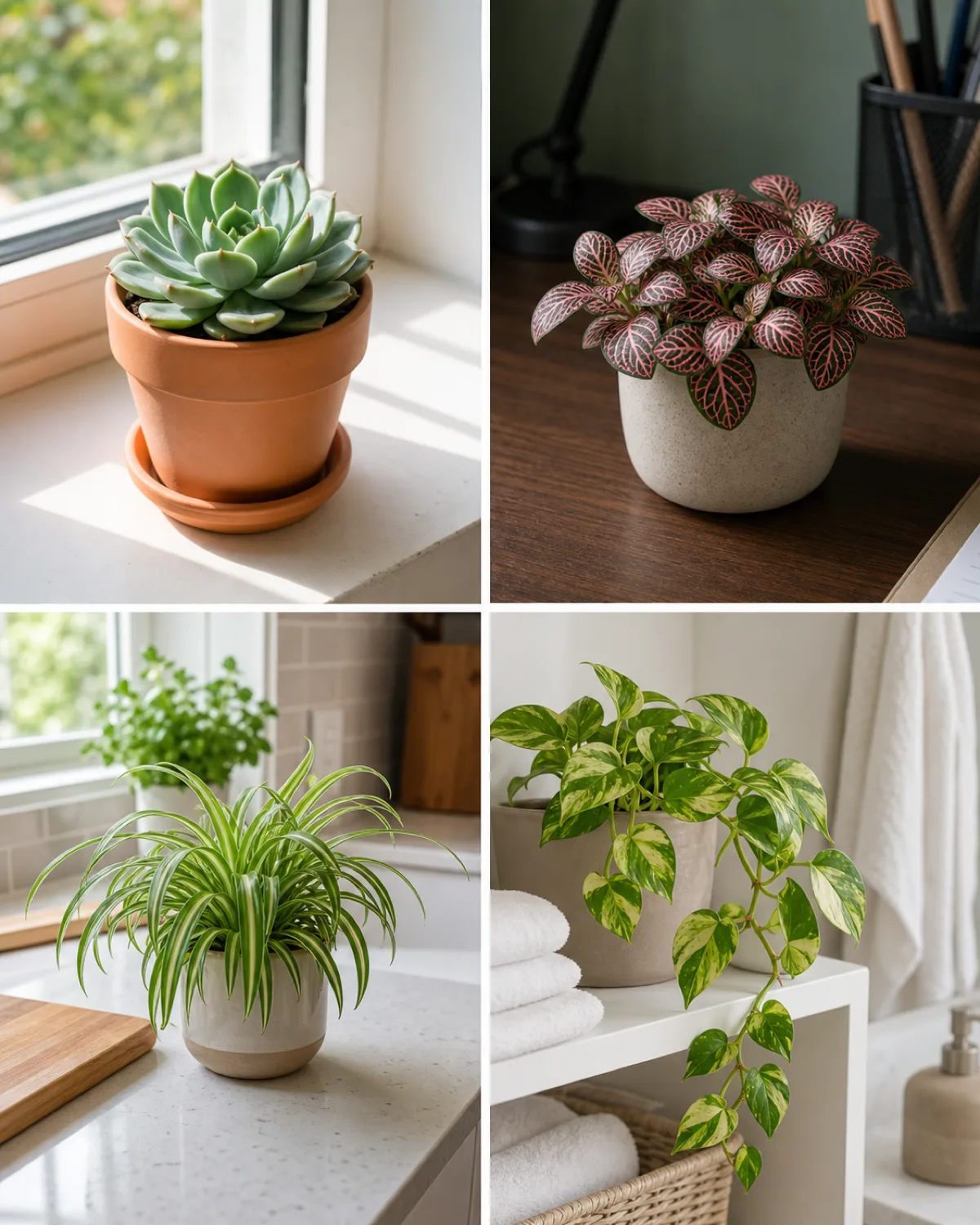
Putting the right plant in the right spot is the difference between a display that thrives and one that slowly dies while looking worse each week. Light comes first. Everything else — pot size, watering schedule, humidity — adjusts around the light each spot actually receives.
Here is the shortcut that matches plant to space.
- South or west windowsill (bright direct) — echeveria, jade, polka dot plant. They need four or more hours of sun to hold color.
- East windowsill (bright indirect) — pilea, haworthia, pothos N'Joy. Morning sun without afternoon burn.
- Office desk (medium to low) — fittonia, spider plant, African violet. Tolerant of fluorescent light and steady temps.
- Bathroom shelf (medium, humid) — haworthia, fittonia. Humidity lovers that stay small enough for a narrow ledge.
- High shelf or hanging spot (varies) — string of pearls, pothos N'Joy, tillandsia. Trailing or mountable plants that use vertical space.
- Kitchen counter (medium, variable) — spider plant, pilea. Handle temperature swings and steam without complaint.
One rule overrides the list: if the plant starts stretching toward the light, leaning hard, or losing color, it needs a brighter spot. Move it before the leggy growth becomes permanent.
Pots and Display Pieces That Complete the Look
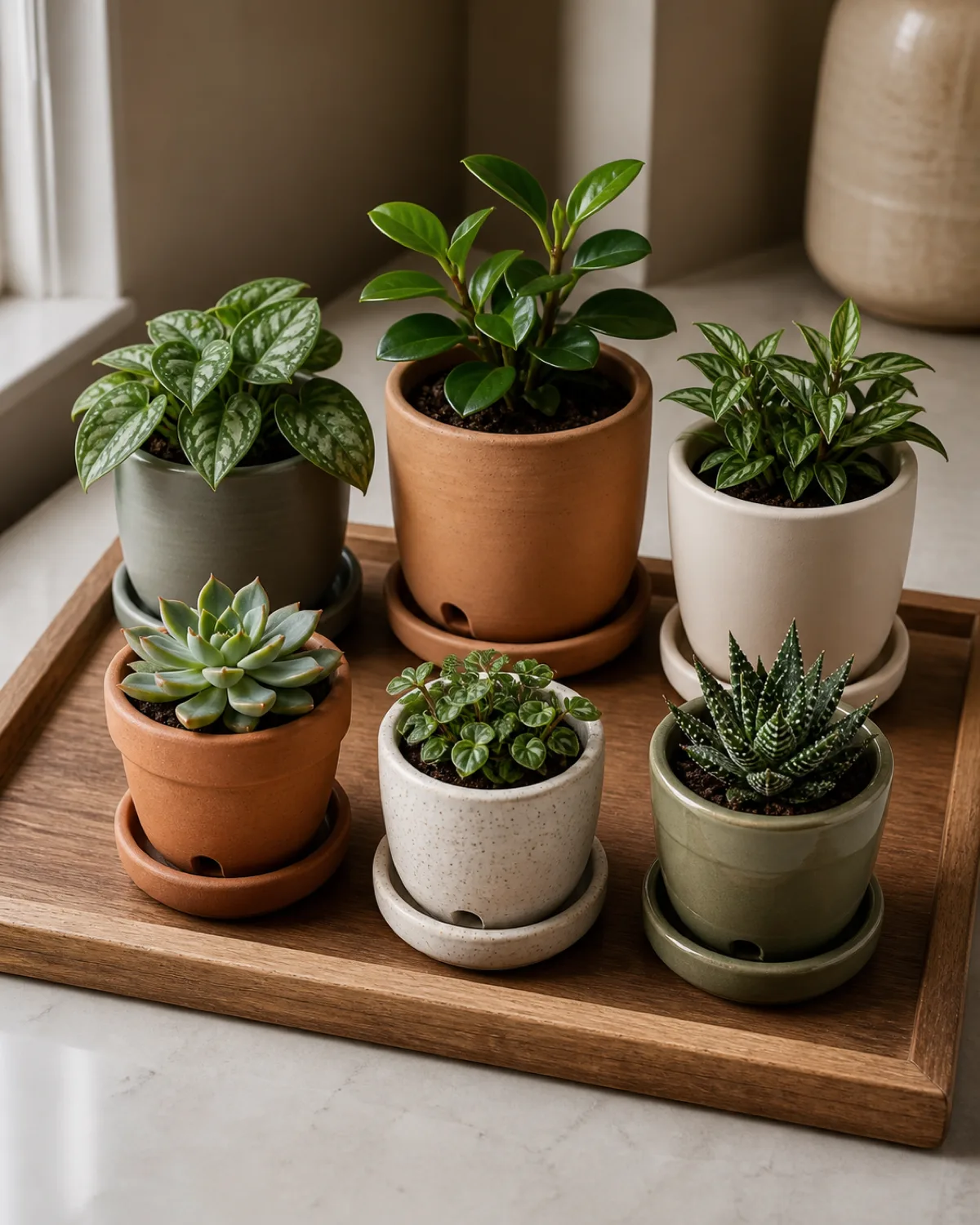
The pot does half the work in a small-plant display. A beautiful plant in a stained plastic nursery pot looks temporary. The same plant in a ceramic pot with a matching saucer on a wooden tray looks like it belongs there.
The proportion rule is simple. The pot diameter should be roughly one-third of the plant's total spread. A pilea with an eight-inch canopy looks right in a three-inch pot. The same pilea drowning in a six-inch pot looks lost, and the extra soil stays wet long enough to invite root rot.
- Terracotta breathes through its walls, pulling moisture away from roots. Ideal for succulents, jade, and anything that likes to dry fast.
- Glazed ceramic holds moisture longer. Better for fittonia, African violet, and other plants that prefer consistently moist soil.
- Concrete and stone are heavy but visually grounding. Use them for the anchor plant in a group — the one in the center or at the tallest position.
Drainage holes are not optional. If you find a beautiful cachepot without drainage, use it as a sleeve around the plastic grow pot. Lift the grow pot out to water, let it drain, and drop it back into the decorative cover.
A tray underneath the group ties the display together. A wooden tray, a stone slab, or even a simple ceramic plate gives five different pots a shared stage that reads as one intentional arrangement instead of five separate plants that happen to sit near each other.
Mara Quinn edits Kultivy, where she shares houseplant care, propagation, beginner-friendly plant picks, and plant-styling ideas for anyone who wants their indoor plants to actually thrive. Every guide is image-led and reviewed for clarity, usefulness, image accuracy, and Pinterest-to-page alignment before it goes live. Visit the About page.