Most trailing houseplants give you leaves and nothing else. The lipstick plant gives you leaves and clusters of bright red flowers that look like tiny tubes of lipstick pushing out of dark cases.
It is one of the few hanging plants that blooms reliably indoors without a greenhouse. These fifteen sections cover everything from choosing the right variety to triggering blooms, pruning for density, and propagating new plants from cuttings.
From why the flowers look like lipstick tubes to triggering blooms indoors, pruning for a full cascade, propagating cuttings, and picking the best display spot. Jump to what you need.
Why the Lipstick Plant Earned Its Name
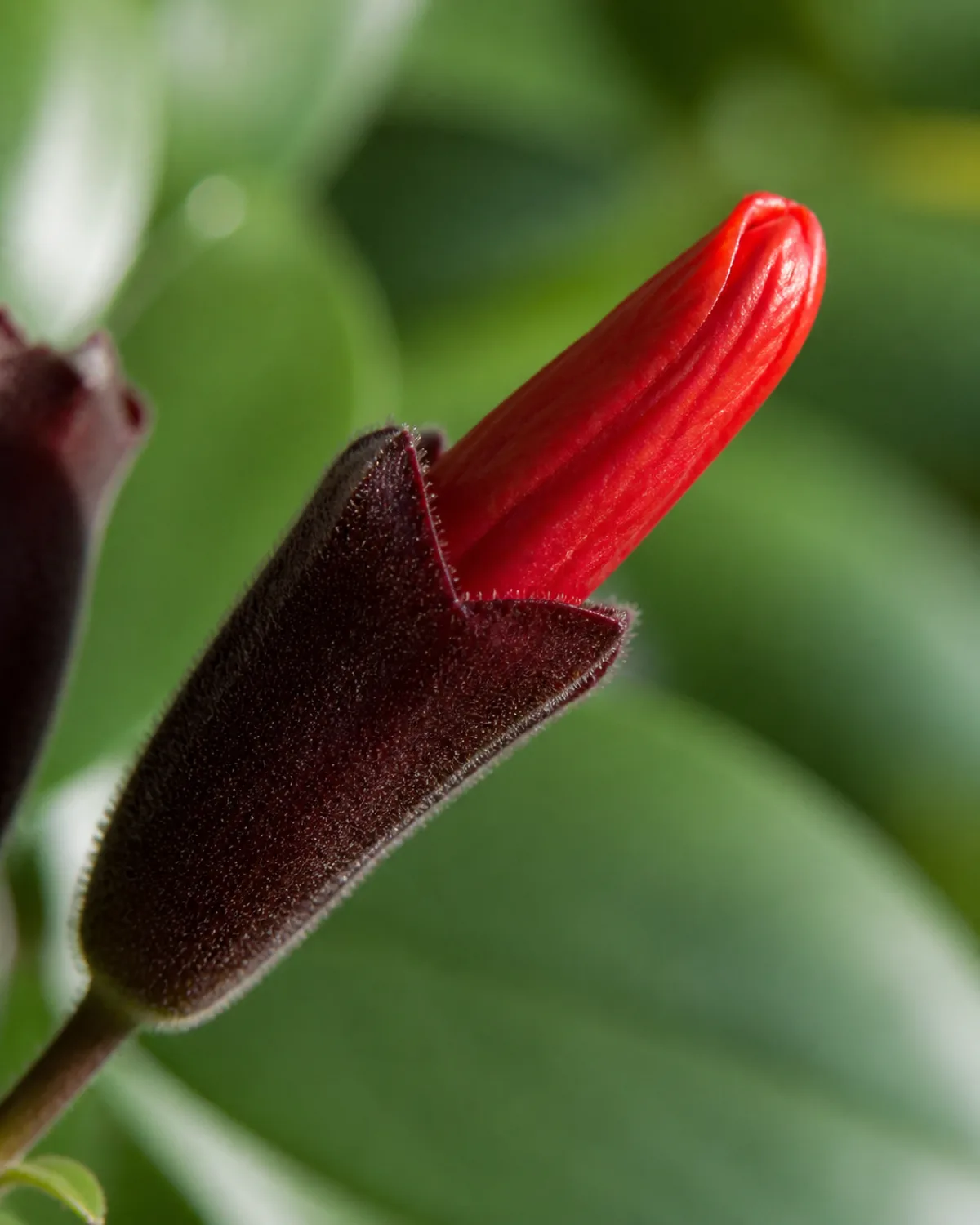
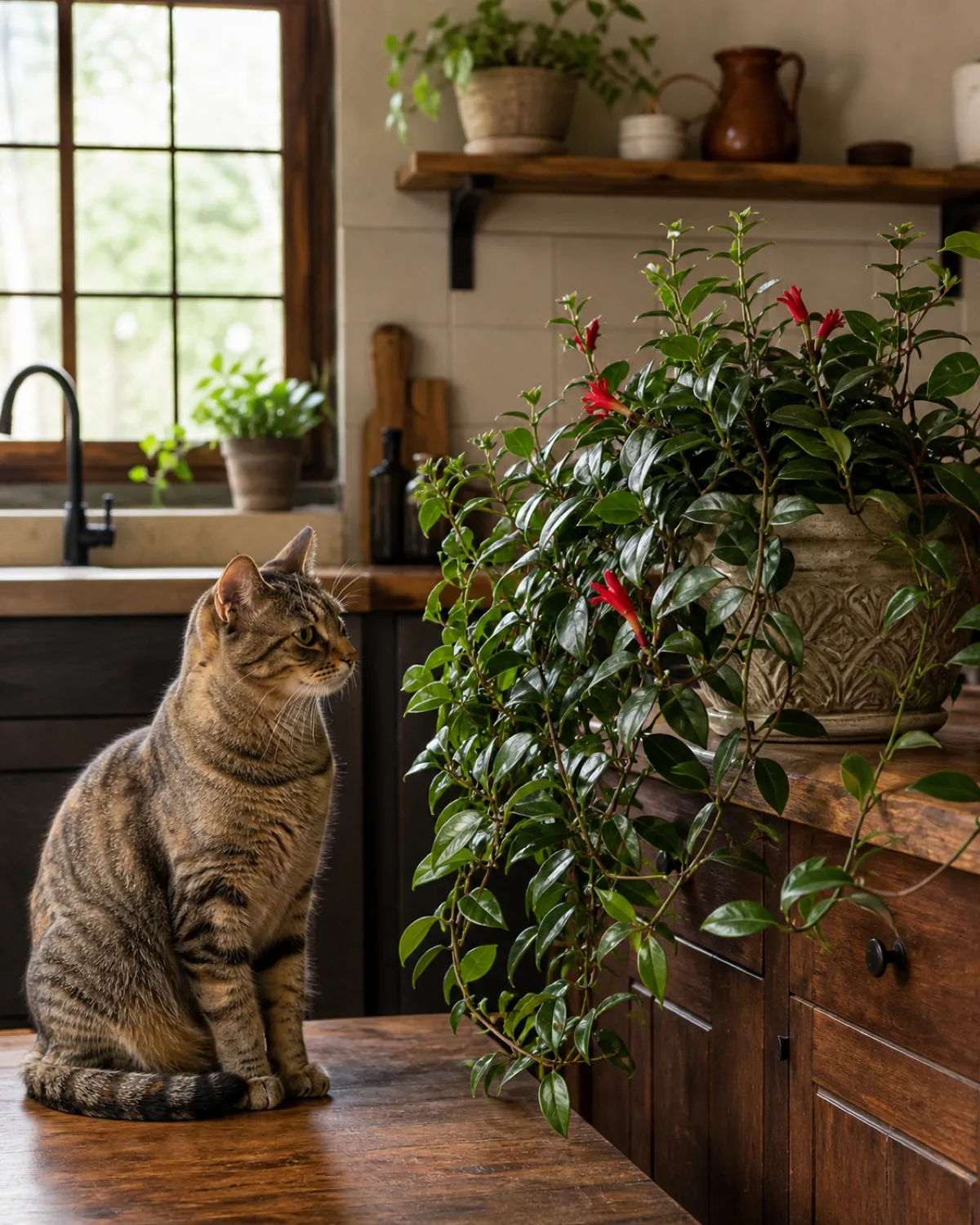
The common name comes from the flower. Each bloom starts as a dark maroon or burgundy tubular calyx at the tip of a stem. As the flower matures, a bright red tubular corolla pushes out from inside that dark tube, looking exactly like a lipstick being twisted up from its case.
The botanical name is Aeschynanthus radicans, and it belongs to the family Gesneriaceae. That makes it a relative of African violets, another group known for flowering indoors. The plant is native to the humid rainforests of Southeast Asia, where it grows as an epiphyte clinging to tree branches in the canopy layer.
Indoors, the lipstick plant is a trailing vine that can reach two to three feet long. The stems carry pairs of thick, waxy, dark green leaves, and flower clusters form at the stem tips when conditions are right.
- Family: Gesneriaceae (same as African violet, goldfish plant)
- Native habitat: Southeast Asian tropical rainforest canopy, epiphytic
- Growth form: trailing vine with semi-succulent leaves
- Flower structure: red tubular corolla emerging from a darker tubular calyx
What makes this plant unusual among trailing houseplants is that it actually flowers. Most popular trailing plants, like pothos, string of pearls, or tradescantia, rarely bloom indoors. The lipstick plant blooms reliably when given the right light and a brief cool phase.
Popular Lipstick Plant Varieties Worth Growing
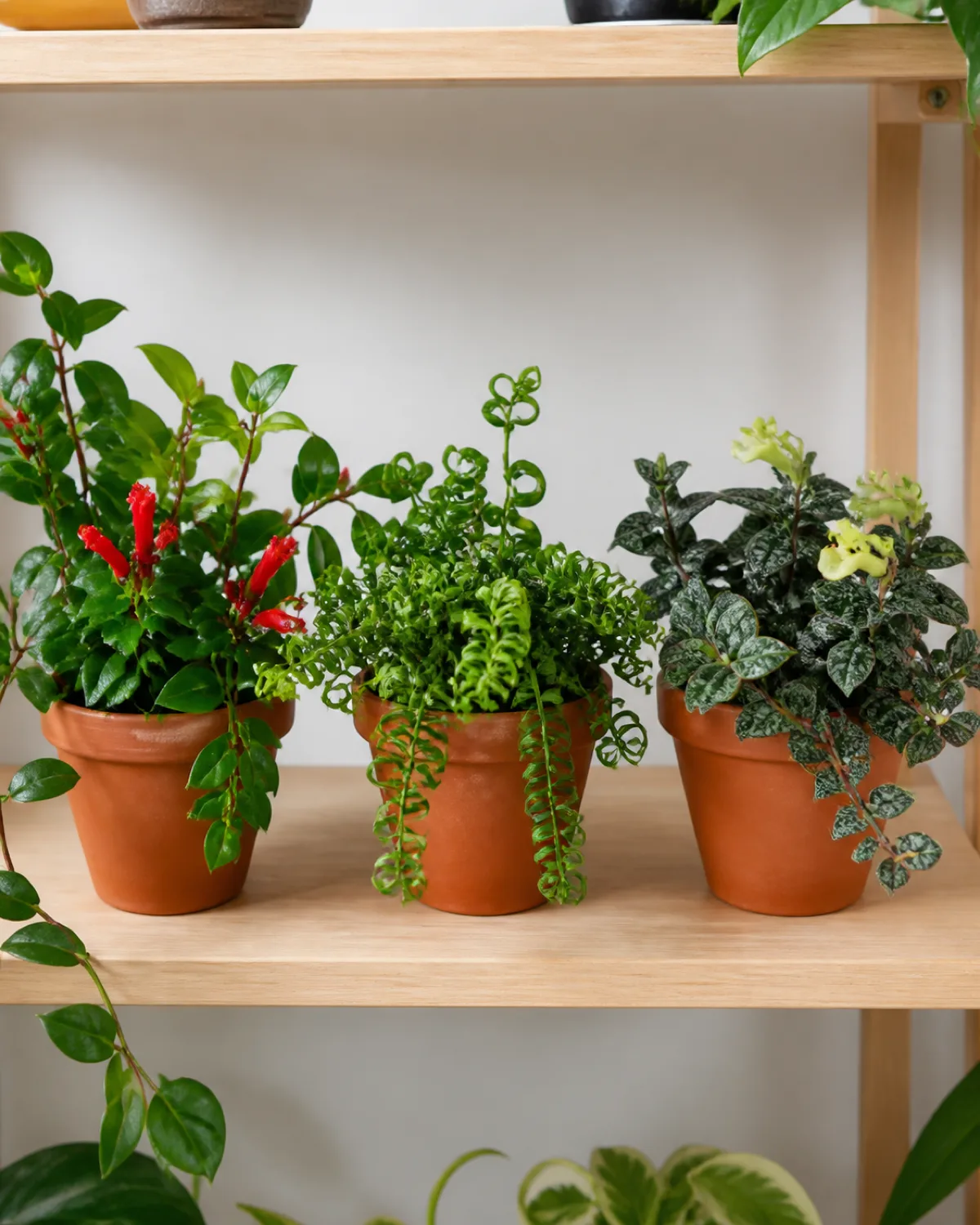
All lipstick plants share the same basic care, but the varieties differ in leaf shape, flower color, and how easily they bloom.
Aeschynanthus radicans is the classic species. Glossy dark green oval leaves on arching stems, and the signature bright red flowers emerging from dark calyces. It is the most widely available and the variety that most care guides reference.
Aeschynanthus 'Mona Lisa' is the best pick for a first lipstick plant. It blooms more freely than the straight species, tolerates slightly lower light, and produces flowers without needing as strict a cool phase. If your goal is indoor flowers with minimal fuss, start here.
Aeschynanthus 'Rasta' (also sold as 'Curly') has leaves that twist and curl along the stem, creating a dense, textured look that stands out even when the plant is not flowering. Same care requirements as radicans.
- Aeschynanthus 'Black Pagoda': dark green leaves with a distinctive marbled or mottled pattern on the upper surface and deep purple undersides. Flowers are yellow-green rather than red. Grown primarily for its foliage
- Aeschynanthus longicaulis 'Twister': elongated narrow leaves on long trailing stems. More delicate-looking than radicans, with the same red flowers
- Aeschynanthus lobbianus: slightly smaller flowers but blooms prolifically. Sometimes sold as lipstick plant interchangeably with radicans
The choice comes down to whether you want flowers (radicans or 'Mona Lisa'), unusual foliage ('Rasta' or 'Black Pagoda'), or both.
Light Needs That Actually Trigger Blooming
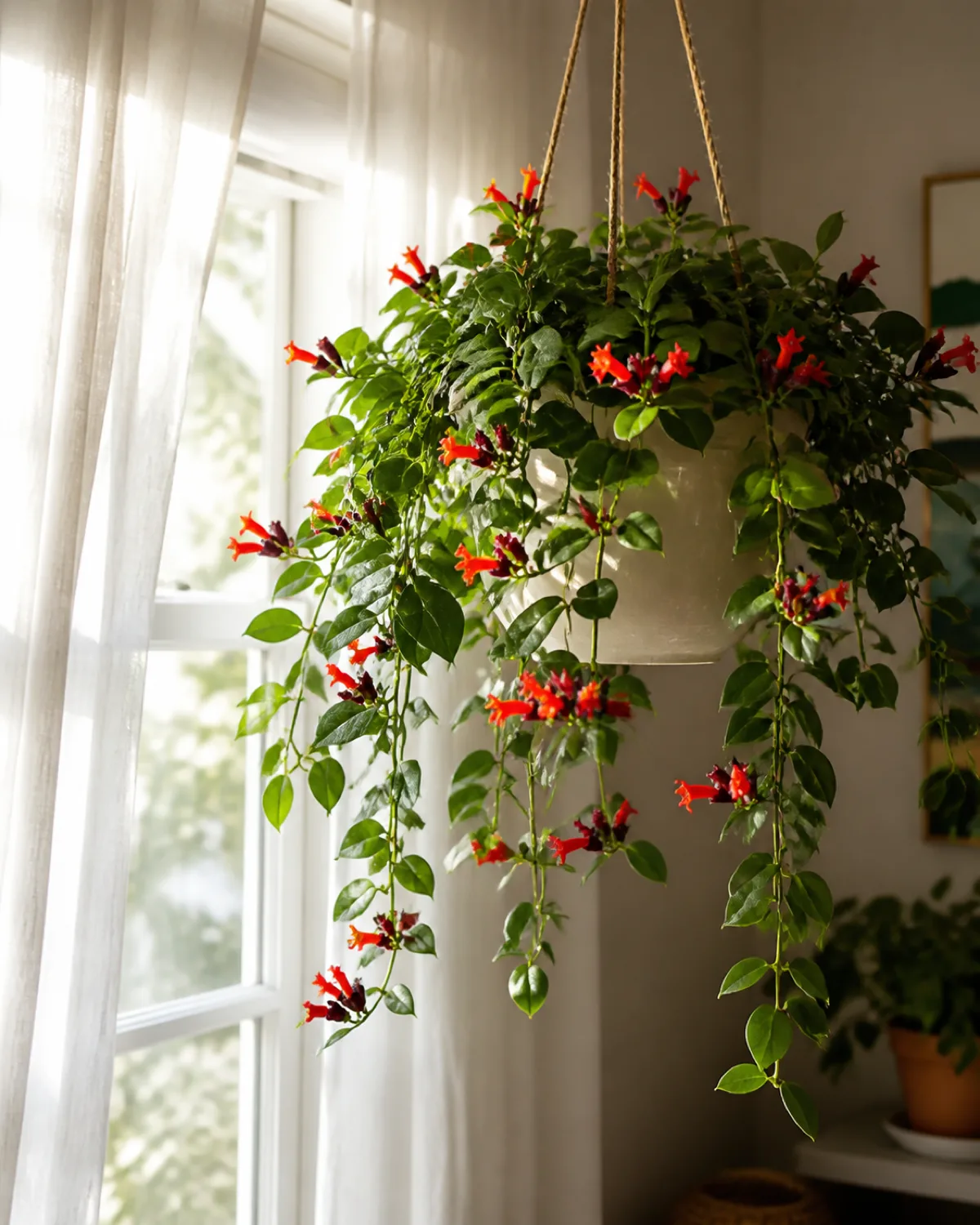
Bright indirect light is the baseline for healthy growth. Six or more hours of it daily is the target. An east-facing window gives gentle morning sun. A south or west window works with a sheer curtain to block the harshest midday rays.
The gap between survival and flowering is almost entirely about light intensity. A lipstick plant in moderate light grows fine but produces few or no flowers. Move that same plant closer to a bright window, and buds appear within weeks.
- Too little light: stems stretch, leaves space out (leggy growth), no flowers at all
- Right amount: compact growth, dark green leaves, flower buds forming at stem tips
- Too much direct sun: brown scorched patches on leaves, especially in summer afternoon sun
Supplemental grow lights can compensate in darker rooms. Position the light twelve to fourteen inches above the canopy and run it ten to twelve hours daily to mimic the bright conditions that trigger flowering.
The relationship between light and blooming works the same way as croton leaf color — more light produces more of the visible payoff. In croton it is leaf vibrancy; in lipstick plant it is flower count.
Watering a Lipstick Plant Without Root Rot
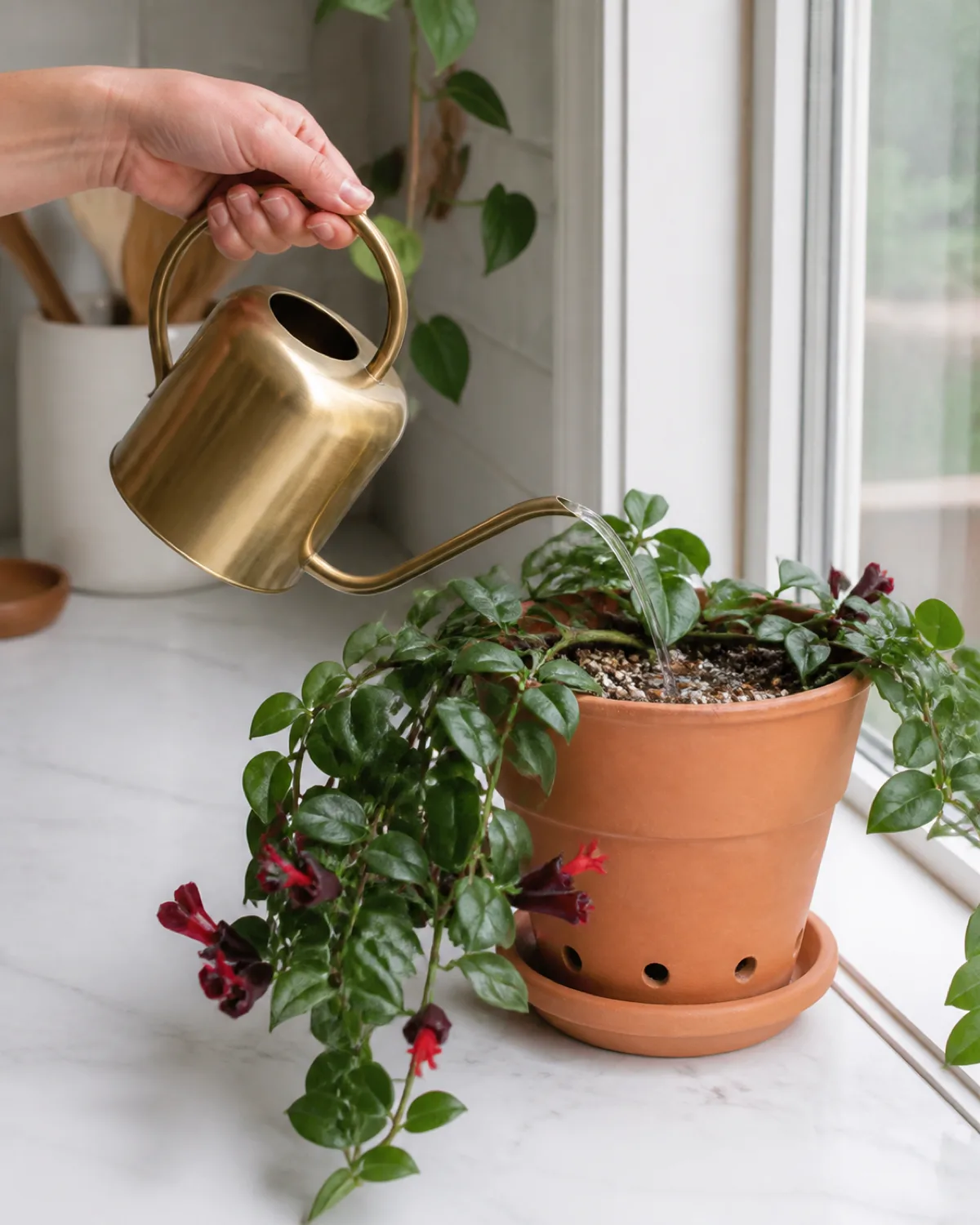
The lipstick plant is an epiphyte. In the wild, its roots grip tree branches and dry out quickly between rain showers. Indoor watering needs to mimic that cycle: a thorough soak followed by a drying interval.
Check the top inch of soil with your finger. When it feels dry, water slowly until liquid drains from the bottom of the pot. Empty the saucer after fifteen minutes so the roots are not sitting in standing water.
The watering frequency sits between two extremes already covered on this site. It needs more water than succulents or cacti, which want bone-dry soil between drinks. It needs less water than ferns or calathea, which prefer consistently moist soil.
- Spring and summer (active growth): water when the top inch is dry, roughly once a week in most indoor conditions
- Fall and winter (slower growth): let the soil dry a bit deeper, roughly the top inch and a half, before watering. Reduce frequency but do not let the entire pot go completely dry
- Overwatering signals: soft, mushy stems at the base (stem rot), yellowing leaves from the bottom up, a sour smell from the soil
- Underwatering signals: wrinkled or shriveled leaves, dry crispy leaf edges, leaves dropping from the stem tips first
The leaves are slightly thick and semi-succulent, which gives the plant a brief buffer against underwatering. That buffer does not extend to weeks of neglect. Prolonged drought causes bud drop and leaf loss that takes months to recover.
Humidity and Temperature for Healthy Growth
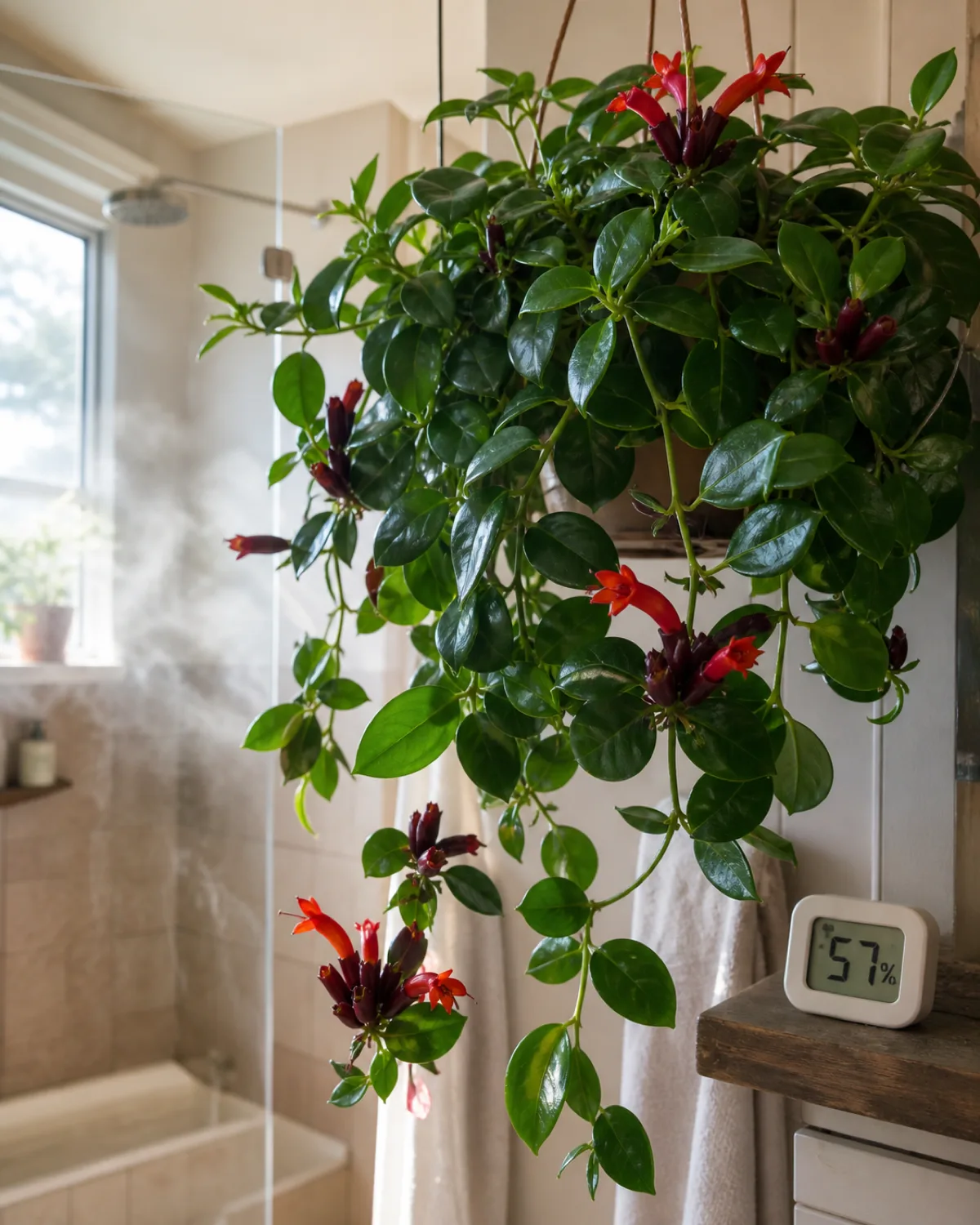
The ideal humidity range is fifty to sixty percent or higher. Standard indoor humidity of thirty to forty percent works for basic survival, but the plant performs noticeably better when humidity rises above fifty.
Low humidity causes two visible problems. Leaf tips and edges turn brown and crispy. Flower buds dry up and drop before opening, a condition called bud blast. Both are reversible once humidity improves.
- Pebble tray: set the pot on a tray of wet pebbles so evaporating water raises the local humidity around the plant
- Grouping: cluster the lipstick plant with other humidity-loving plants like ferns and calathea to create a shared microclimate
- Humidifier: the most reliable option for consistently dry rooms, especially in winter when heating systems strip moisture from the air
- Avoid misting flowers directly: water sitting on open blooms promotes gray mold (botrytis). Mist the leaves instead, or raise ambient humidity without wetting the plant
Temperature should stay between sixty-five and eighty degrees Fahrenheit during the day. The plant tolerates a modest nighttime drop but should not go below fifty degrees. Cold drafts from windows or air conditioning vents cause sudden leaf drop, and temperatures below fifty degrees cause tissue damage.
A bright bathroom with a window is one of the best natural spots. Shower steam raises humidity, the warmth stays consistent, and the plant gets a daily misting cycle without any effort.
Why Standard Potting Soil Suffocates Lipstick Plant Roots
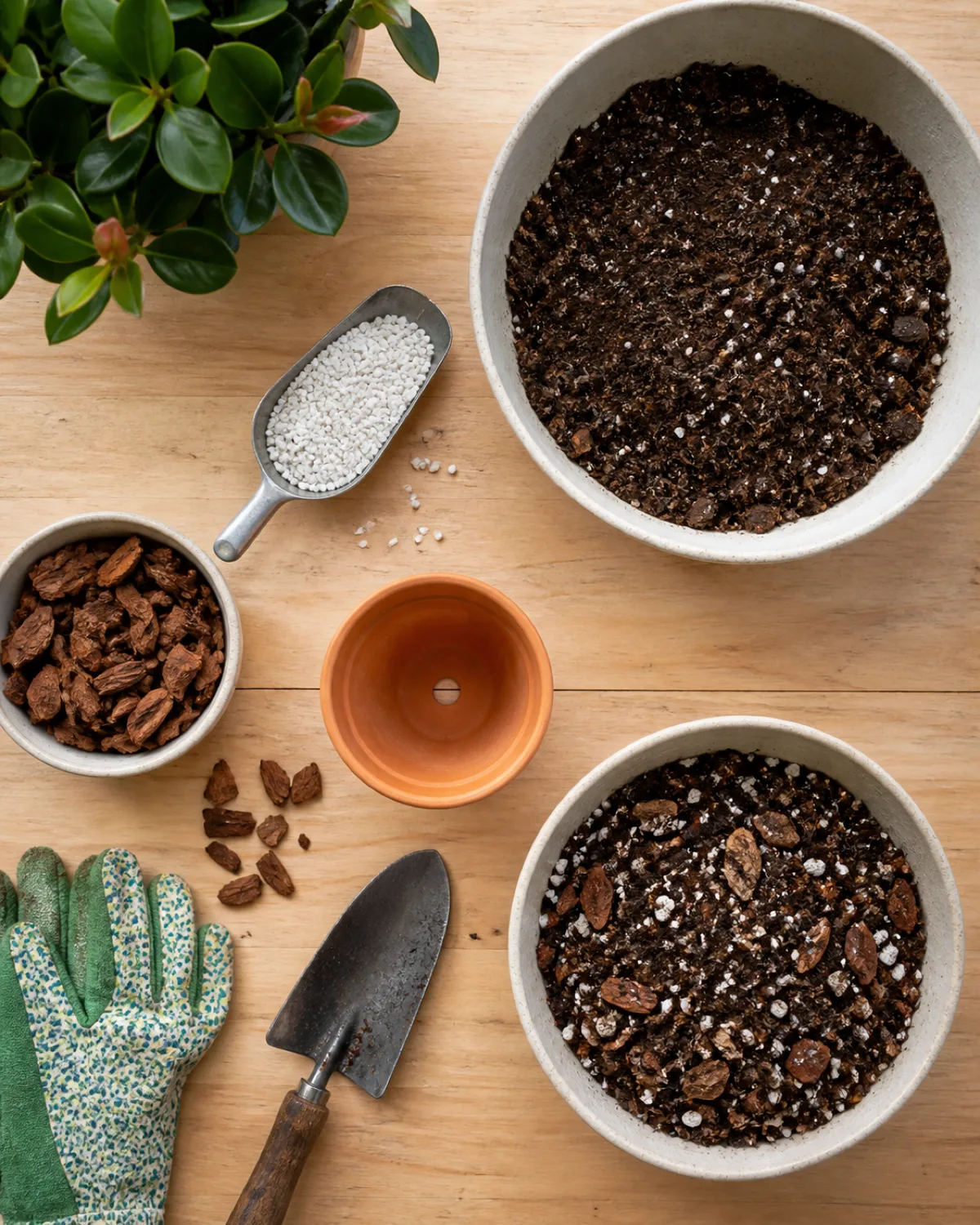
In the canopy of a Malaysian rainforest, Aeschynanthus roots cling to rough branch surfaces where rainwater passes through in seconds. No standing water, no dense substrate, no compacted medium. That is the benchmark for what goes in the container.
Dense, moisture-heavy blends designed for bedding annuals or vegetables stay wet for days after a single watering. The fine particles collapse around the root zone, sealing off oxygen. Lipstick plant roots, adapted to constant airflow, cannot exchange gases through saturated media and begin to decay within a week of prolonged wetness.
A three-part blend solves this:
| Ingredient | Share | Role |
|---|---|---|
| Houseplant blend | 1 part | Moisture bridge between waterings |
| Pumice or perlite | 1 part | Rigid air channels that resist collapse |
| Bark chips ¼–½ inch | 1 part | Rough texture for root grip |
The same structural philosophy applies to other canopy species covered on this site — orchids, hoyas, and bromeliads — though each tolerates a slightly different moisture-to-air ratio.
- Acidity target: pH 6.0 to 6.5, slightly below neutral. Most bark-based blends land here naturally
- Avoid: coconut coir or peat-only blends that compact within six months, cutting off the air channels the roots need
- Container rule: every vessel must have a bottom opening. Outer decorative sleeves without openings are fine as cachepots, but the inner vessel must let excess water exit freely
Unglazed clay vessels absorb residual moisture through the walls, adding an extra safety margin against overwatering. Glazed ceramic or plastic works if the blend itself moves water out quickly.
Feeding Schedule for More Flowers
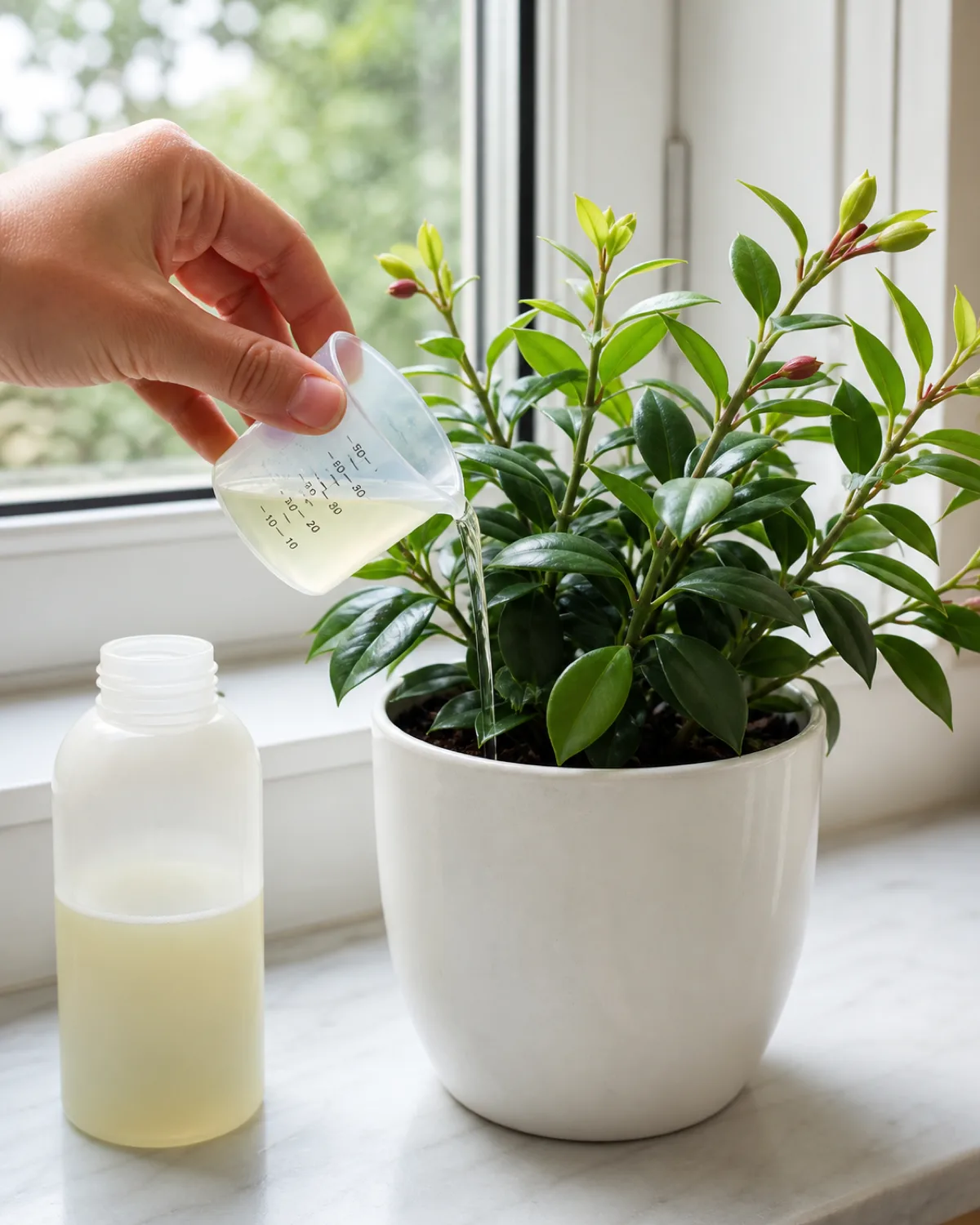
During the growing season from spring through fall, feed every two weeks with a balanced liquid fertilizer diluted to half the label strength. The weakly-weekly approach works well here — a small amount at every watering rather than a full dose monthly.
The shift that matters for flowering is phosphorus. In early spring, when you want to encourage bud formation, switch to a bloom booster fertilizer with a higher middle number (something like 10-30-20). Phosphorus promotes flower development over leaf growth.
- Spring through fall: half-strength balanced liquid fertilizer (such as 10-10-10 or 20-20-20) every two weeks
- Early spring bloom push: switch to a high-phosphorus formula for four to six weeks as buds form
- Winter: stop feeding entirely, or give a quarter-strength dose once a month at most
Too much nitrogen tilts the plant toward foliage at the expense of flowers. A lipstick plant fed heavily with high-nitrogen fertilizer produces long, leafy vines but fewer blooms. This is the same tradeoff seen in many flowering houseplants, including anthurium and peace lily.
Signs of overfertilizing include salt crust on the soil surface, brown leaf tips (chemical burn), and soft rapid growth that looks pale. If that happens, flush the soil with plain water several times and skip the next two feedings.
How to Get a Lipstick Plant to Bloom Indoors
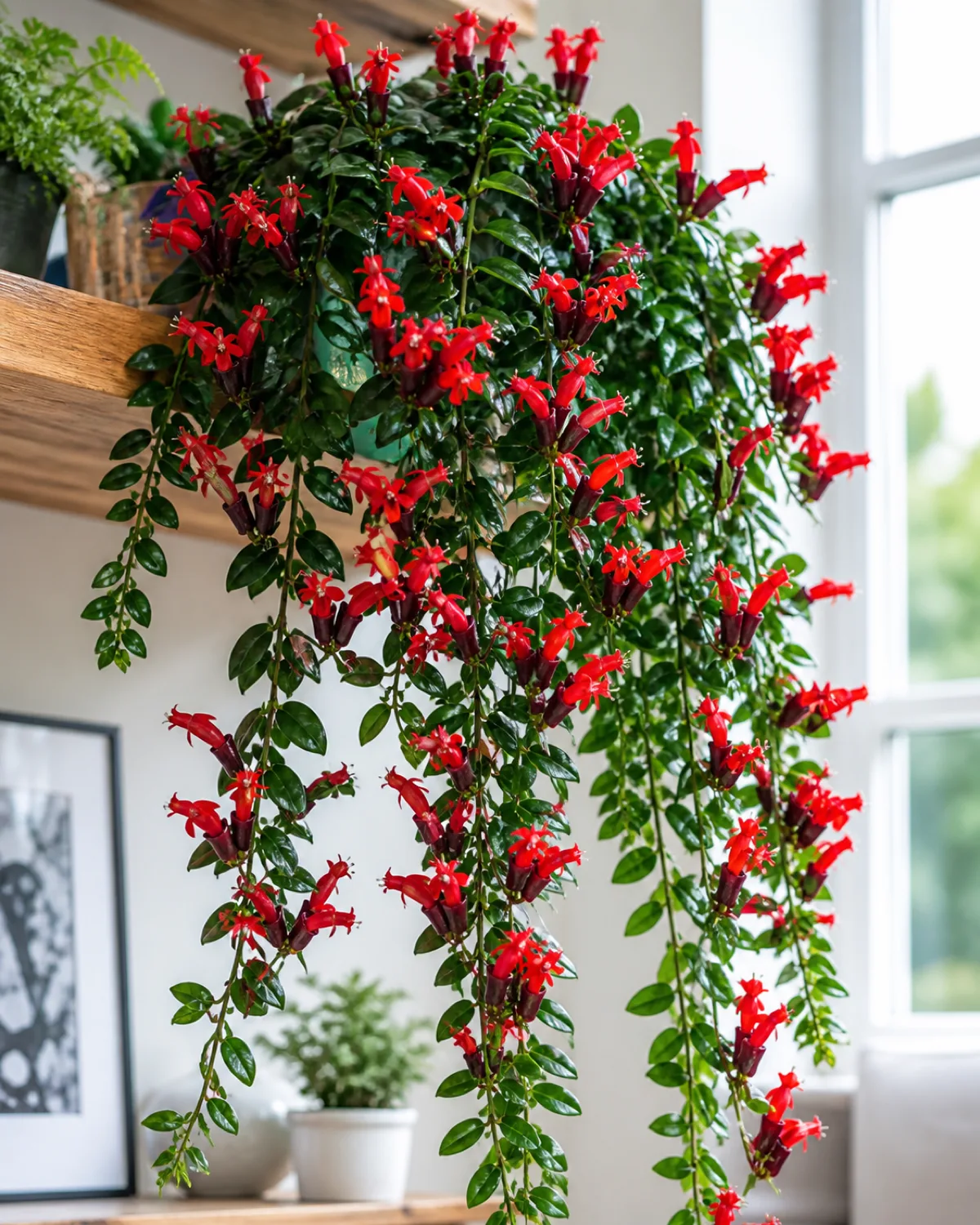
Getting a lipstick plant to flower indoors is not difficult, but it requires four conditions to line up. Miss any one and the plant stays green and flowerless.
Condition one: bright light. Six or more hours of bright indirect light daily. This is the most common reason lipstick plants fail to bloom. A room that feels bright to your eyes may still be too dim for flowering. If you are unsure, the shadow test gives a quick read on actual light levels.
Condition two: a cool rest window. For four to six weeks in late winter, expose the plant to nighttime temperatures of fifty-five to sixty-five degrees Fahrenheit. This simulates the mild dry season of its native habitat and triggers flower bud initiation. A cool windowsill or an unheated room works.
Condition three: slightly reduced watering during the cool phase. Do not drench the plant. Let the soil dry a little more than usual between waterings. The combination of cooler temperatures and drier soil signals the plant to shift from vegetative growth to reproductive mode.
- Condition four: avoid repotting near bloom time. Root disturbance during bud formation causes bud drop. A slightly root-bound plant actually blooms more freely because the confined roots signal the plant to reproduce
- Best variety for easy blooming: 'Mona Lisa' — it tolerates imperfect conditions and still produces flowers
- Timing: flowers typically appear in spring and summer, but a healthy plant in good light can produce sporadic blooms at other times
- After flowering: deadhead spent blooms by pinching them off at the base. This tidies the plant and redirects energy to new buds rather than seed production
The cool phase is the step that most indoor growers skip. A lipstick plant kept at a steady seventy-two degrees year-round often grows well but never flowers. That four-to-six-week chill is the key trigger.
Cutting Back After Bloom Cycles for a Fuller Cascade
Left unpruned, a lipstick plant grows long, sparse stems with most of the foliage concentrated at the tips. The base thins out, the trailing effect looks stringy, and the plant produces fewer flowers because there are fewer growing tips.
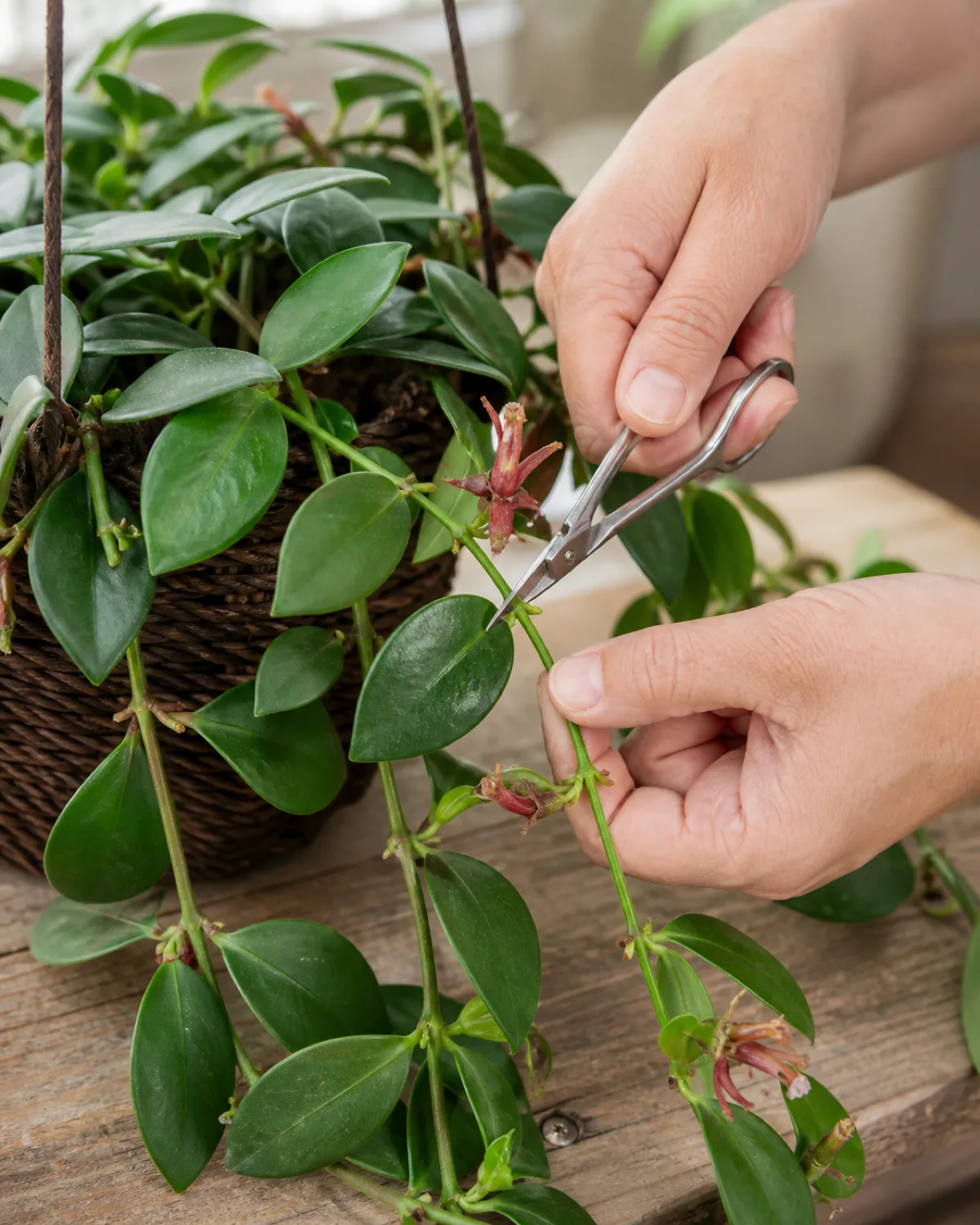
Pruning fixes all three problems at once. Cut each stem back by about a third, making the cut just above a leaf node. Two or more side shoots emerge from that node, doubling the number of stem tips. More tips means more potential flower sites and a denser, fuller cascade.
The best time to prune is immediately after a flowering cycle ends. Flowers form on new growth, so pruning before buds develop wastes potential blooms.
- Tools: clean, sharp scissors or pruning shears. Wipe blades with rubbing alcohol between plants to prevent disease transfer
- How much to remove: one third of each stem's length. Cutting back further is safe but delays the next bloom cycle
- What to do with cuttings: use them for propagation — every pruned piece is a potential new plant
Regular pruning once or twice a year keeps the plant compact and productive. A lipstick plant that has been pruned consistently for a few years develops a thick, bushy canopy with dozens of stem tips, each capable of producing a flower cluster.
The pruning-and-propagation cycle is a three-in-one maintenance step: you shape the mother plant, increase flower potential, and get free starter plants from the cuttings.
Propagating Lipstick Plant from Stem Cuttings
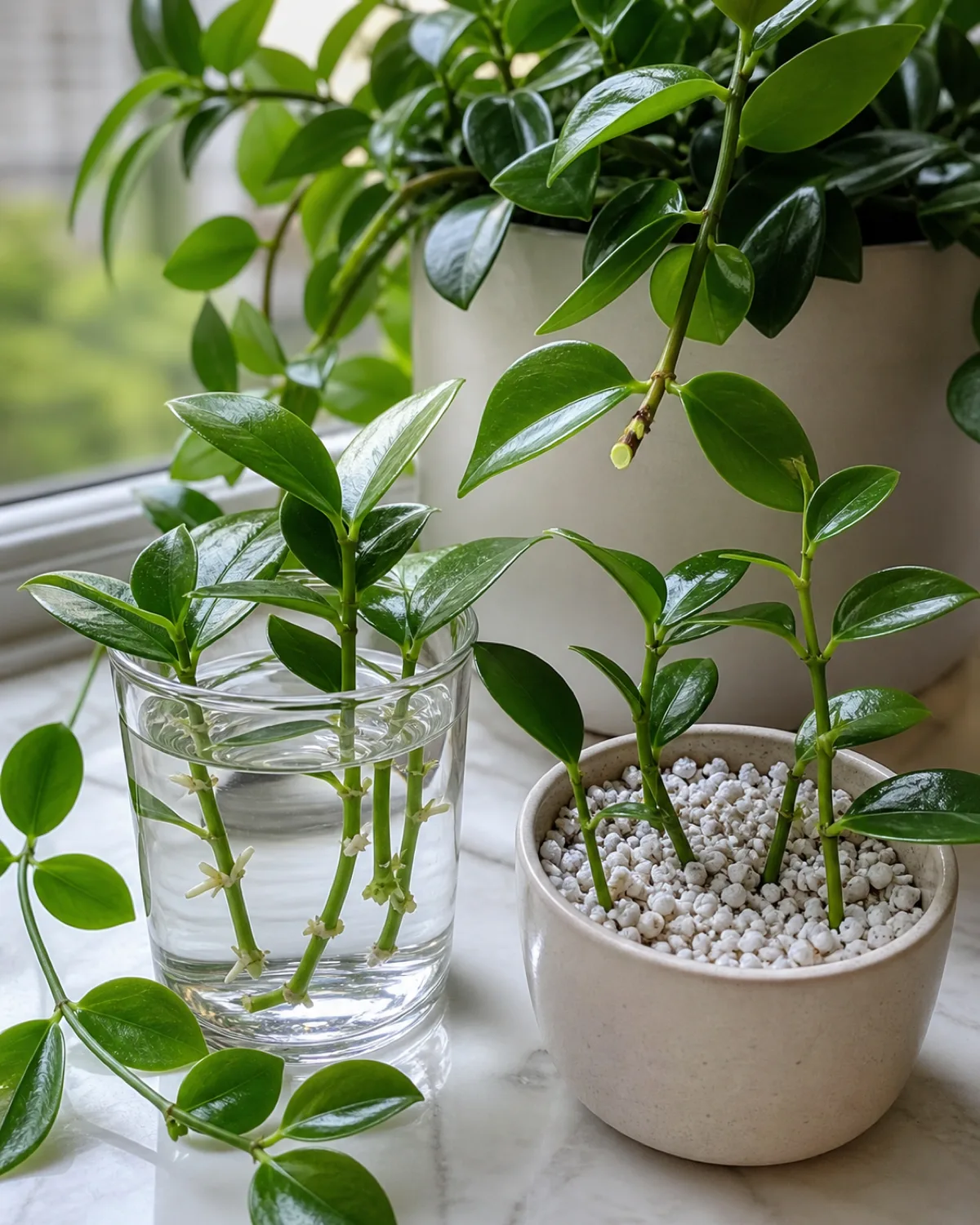
Stem tip cuttings are the simplest and most reliable method. Take cuttings four to six inches long from healthy, non-flowering stems. Remove the leaves from the bottom two nodes.
Water propagation is the easiest way to watch roots form. Place the cuttings in a clear glass of water with the stripped nodes submerged. Change the water every few days to prevent bacterial buildup. White root nubs appear in two to three weeks, and the cuttings are ready to pot up when roots reach about an inch long.
Soil propagation works slightly faster in warm conditions. Insert cuttings into damp perlite or a fifty-fifty perlite-and-peat mix. Cover with a clear plastic bag or dome to maintain humidity. Roots form in three to four weeks.
- Best timing: spring or early summer, when the plant is actively growing and cuttings root fastest
- Rooting hormone: optional but speeds things up. Dip the cut end in rooting powder before inserting into soil
- Multiple cuttings per pot: plant three to five cuttings in a single pot to create a full-looking plant from the start, rather than waiting for a single cutting to branch out
- Temperature: warmth accelerates rooting. Aim for seventy to seventy-five degrees. A heat mat under the pot helps in cooler rooms
Compared to the specialized propagation methods of other trailing plants on this site — string of hearts with its aerial tubers, string of pearls with its butterfly cut — the lipstick plant uses straightforward stem cuttings that any beginner can manage.
Repotting: When and How
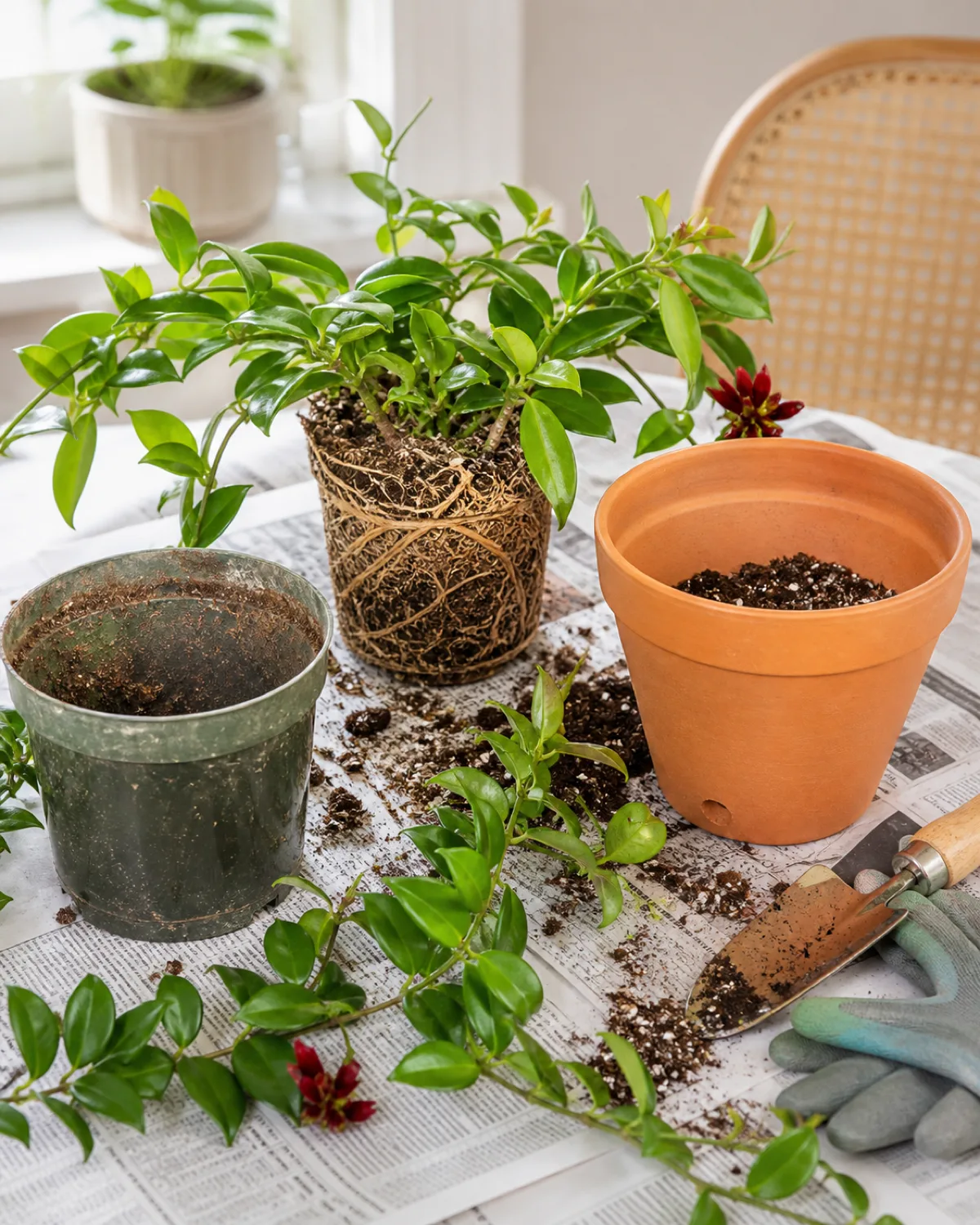
Repot every two years, or when roots start growing out of the drainage holes. The lipstick plant does not mind being slightly root-bound, and a tight pot can actually encourage flowering. There is no rush to upsize.
When you do repot, choose a new pot only one inch wider in diameter than the current one. A pot that is too large holds excess moisture around roots that cannot absorb it yet, creating the exact conditions for root rot.
| Signal | Action |
|---|---|
| Roots visible from drainage holes | Time to repot into a pot one inch larger |
| Water runs straight through without absorbing | Root-bound; soil is compacted and roots fill the pot |
| Flower buds present | Wait until flowering finishes, then repot |
| Plant recently purchased | Let it acclimate for at least two weeks before repotting |
The repotting basics apply here with one addition: handle the trailing stems gently. Lay them across the table while you work on the root ball, and avoid bending or kinking the main vines.
- Best pot type: hanging baskets or pots with built-in hangers, since the trailing growth is the main display feature. Terracotta suits the fast-draining soil mix
- Timing: spring, before the growing season ramps up. Avoid repotting during or right before flowering
- Soil refresh: even if the pot size stays the same, replace the old soil every two years to prevent compaction and salt buildup from fertilizers
Mealybugs, Aphids, and Spider Mites on Lipstick Vines
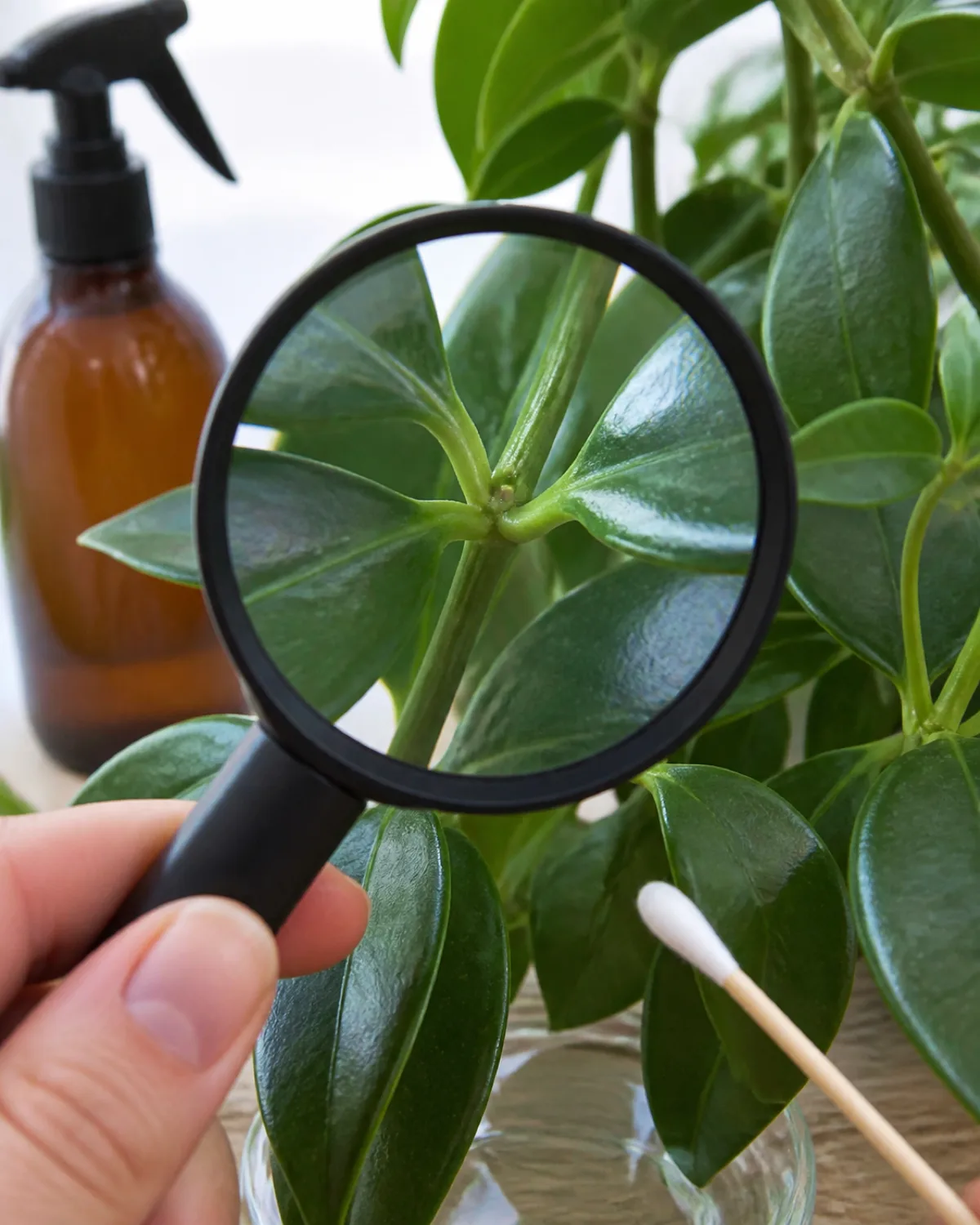
Lipstick plants are not especially pest-prone, but three culprits show up regularly.
Mealybugs are the most common. They appear as small cottony white clusters in leaf axils and at the base of flower buds, exactly the sheltered spots that are hardest to see. Check these areas during every watering session. A cotton swab dipped in rubbing alcohol kills them on contact.
Aphids cluster on new growth at stem tips, drawn to the soft tissue and the developing flower buds. A strong stream of water from the sink or shower dislodges most of them. Persistent infestations respond to neem oil spray.
Spider mites thrive in dry conditions. If humidity drops below forty percent for extended stretches, check the undersides of leaves for fine webbing and tiny moving dots. Raising humidity is both the treatment and the prevention.
- Neem oil: effective against all three pests. Apply as a foliar spray every seven days for three consecutive weeks to break the reproductive cycle. Avoid spraying directly on open flowers, which can cause petal damage
- Isolation: any plant with visible pests should be moved away from other houseplants immediately
- Sticky traps: yellow sticky cards catch flying adults (fungus gnats, whiteflies) before they colonize the soil
- Systemic granules: for severe recurring infestations, soil-applied systemic insecticide provides longer-lasting protection from within the plant
The general pest and disease guide covers the identification and treatment cycle in more detail.
Troubleshooting Leaf Drop and Leggy Growth
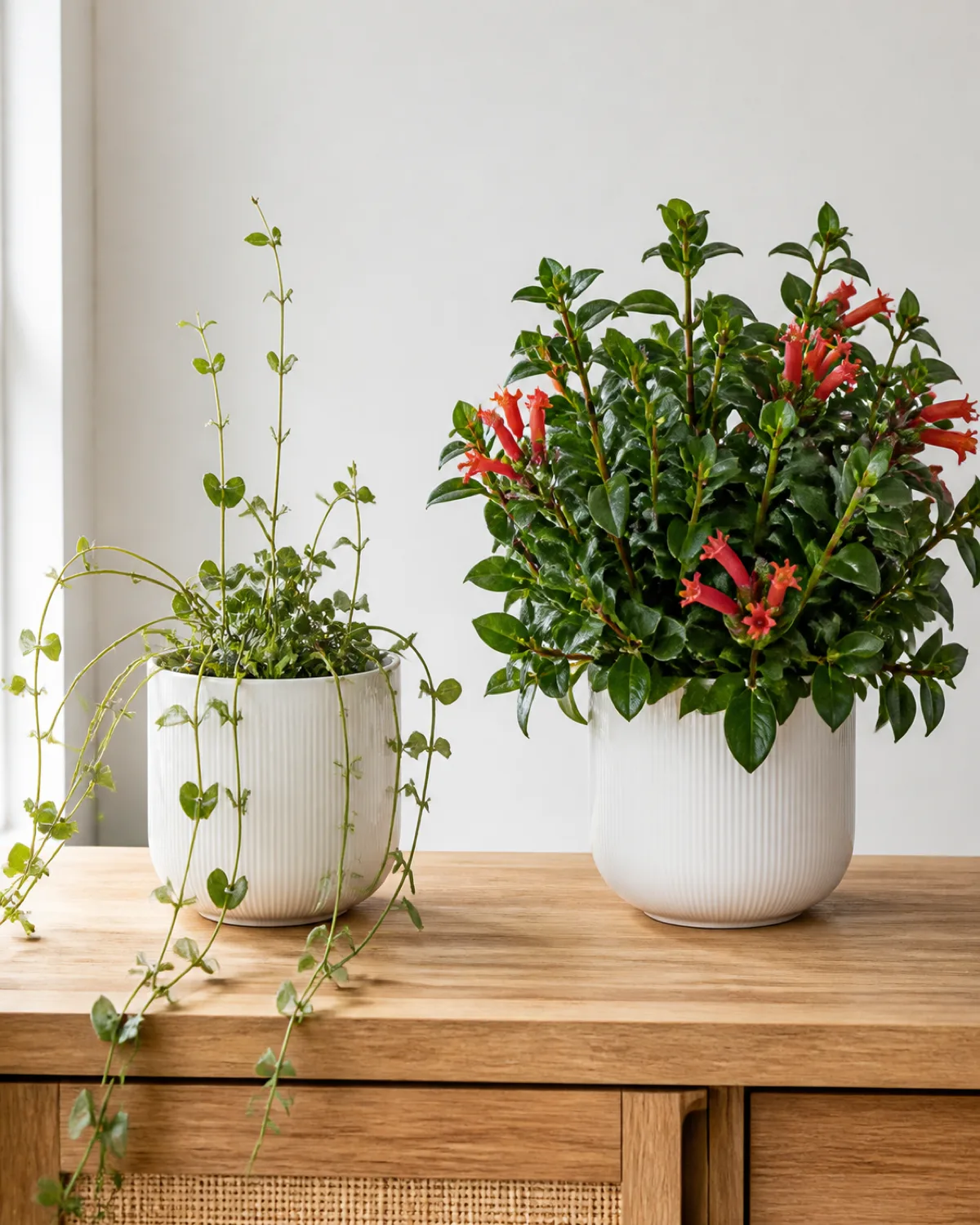
Leaf drop and leggy growth are the two most common complaints. Both are symptoms with multiple possible causes, and the fix depends on which cause is in play.
Leaf drop from overwatering starts at the bottom of the plant. Lower leaves turn yellow, then soft, and fall off. The stems near the soil line may feel mushy. If this is happening, check the roots for rot. Brown, mushy roots need to be trimmed away, and the plant should be repotted in fresh, fast-draining soil.
Leaf drop from underwatering starts at the stem tips. Leaves wrinkle, turn dry and crispy at the edges, and drop off. The soil surface looks cracked and pulls away from the pot sides. Resume regular watering and the plant recovers within a few weeks, though lost leaves do not grow back on bare stem sections.
Quick diagnosis by symptom:
- Yellow leaves from the base up → overwatering or root rot. Let the soil dry, check roots, repot if needed
- Crispy leaves falling from tips → underwatering or low humidity. Water more often, raise humidity
- Sudden mass leaf drop → cold draft or temperature shock. Move away from cold windows or vents
- Long bare stems, tiny leaves → insufficient light. Move to a brighter spot or add a grow light
- No flowers for over a year → not enough light or no cool rest. Increase light and provide a four-to-six-week chill
Leggy growth — long stems with wide gaps between leaves — is almost always a light problem. The plant stretches toward the nearest light source, spacing leaves farther apart to maximize what little light each leaf can catch. The fix is more light, and the cosmetic fix is pruning the leggy stems back so new, compact growth replaces them.
Displaying Your Lipstick Plant for Maximum Impact
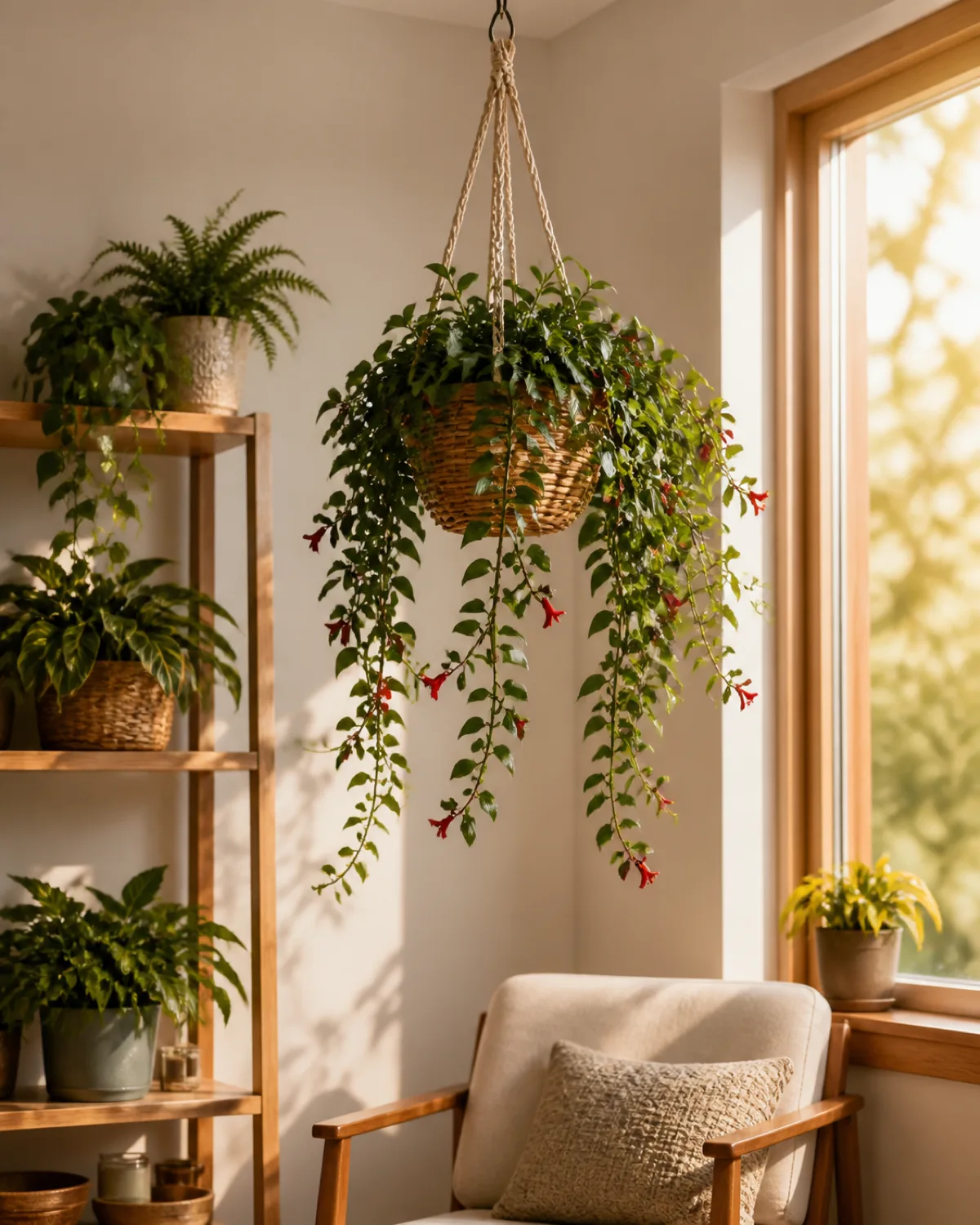
The trailing growth and downward-facing flowers make hanging displays the natural showcase. When the plant is above eye level, you look up into the cascade and see the flowers from below, which is the angle where the lipstick-from-tube effect is most visible.
Hanging basket from a ceiling hook is the classic choice. A macrame plant hanger adds texture and softens the industrial look of a plain hook. Position the basket within two feet of a bright window so light reaches the stems at every level.
High shelf with stems trailing over the edge works in rooms where ceiling hooks are not practical. The plant drapes over the shelf lip, and the flowers dangle at face height or just above. Plant shelves near windows are ideal.
- Bathroom with a window: natural humidity from showers, consistent warmth, and decent light combine to make bathrooms one of the best spots for a lipstick plant. It functions as living decor that actually thrives on the moisture you are already creating
- Kitchen windowsill or above-sink shelf: bright light and some ambient humidity from cooking. Avoid placing it directly above a hot stove
- Paired with other trailing plants: combine a lipstick plant with string of hearts and tradescantia for a mixed hanging display with different textures, leaf shapes, and colors cascading at different rates
The red flowers add a color accent that most green-only trailing plants cannot. Position the plant where the blooms catch natural light, and the contrast between the dark calyces and the bright red corollas becomes the focal point of the display.
Save for Later
Lipstick Plant Care in 15 Takeaways
- 1Red flowers from dark tubesThe bright red tubular corolla pushes out of a dark maroon calyx like a lipstick twisting from its case. Gesneriaceae family, related to African violets.
- 2'Mona Lisa' blooms easiestMore forgiving of imperfect light and skipped cool phases. The best first lipstick plant for indoor flowering.
- 3Bright light triggers flowersSix or more hours of bright indirect light daily is the threshold. Below that, the plant grows but does not bloom.
- 4Top inch dry, then soakEpiphytic roots rot in soggy soil. Let the top inch dry between waterings and always drain the saucer.
- 5Fifty percent humidity minimumBelow forty percent, leaf tips brown and buds drop before opening. Pebble tray, grouping, or humidifier.
- 6Chunky epiphyte soil mixOne part potting mix, one part perlite, one part orchid bark. Fast drainage with some moisture retention.
- 7High-phosphorus for bloom pushSwitch to a bloom booster in early spring to encourage flower bud formation over leaf growth.
- 8A cool rest triggers bloomingFour to six weeks of nighttime temperatures at fifty-five to sixty-five degrees in late winter initiates bud development.
- 9Prune after flowering for densityCut stems back by a third after blooms fade. Two or more side shoots replace each cut, doubling flower potential.
- 10Stem cuttings root in weeksFour-to-six-inch tip cuttings in water or perlite. Roots in two to four weeks. Plant multiple cuttings per pot for instant fullness.
- 11Slightly root-bound is fineA tight pot encourages flowering. Repot only every two years, one inch larger, and never during bud formation.
- 12Mealybugs hide in leaf axilsCheck the junction where leaves meet stems during every watering. Cotton swab with rubbing alcohol for spot treatment.
- 13Diagnose drop by locationBottom-up yellowing means overwatering. Tip-first crisping means underwatering or low humidity. Sudden mass drop means cold shock.
- 14Hang it high for the best viewFlowers face downward. A hanging basket near a bright window lets you look up into the blooms from the angle where they look most like lipstick.
- 15Non-toxic to cats and dogsAeschynanthus radicans is not listed as toxic by the ASPCA. Safe for households with curious pets.
kultivy.com
Lipstick Plant FAQ
Quick-reference answers:
- Toxic to pets? No. Aeschynanthus radicans is not listed as toxic by the ASPCA, making it safe for households with cats and dogs. This puts it in the same category as spider plant, prayer plant, and the plants in our cat-safe guide
- How often does it bloom? Typically once or twice a year, primarily in spring and summer. Healthy plants in excellent light can produce sporadic blooms at other times
- Should I cut off dead flowers? Yes. Pinch or snip spent blooms at the base of the calyx to redirect energy toward new bud production
More common questions:
- Leaves feel sticky — is that normal? No. Sticky residue on leaves is honeydew, a waste product secreted by sap-sucking pests like mealybugs, aphids, or scale. Inspect the stems and leaf axils closely and treat any pests you find
- Can I grow it in low light? The plant survives but becomes leggy and does not flower. If low-light conditions are unavoidable, low-light plants are a better choice for that spot
- Can I keep it outdoors in summer? Yes, in a shaded spot protected from direct afternoon sun and heavy rain. Bring it back inside when nighttime temperatures drop below fifty-five degrees
- Why are the leaves curling inward? Usually underwatering or very low humidity. The leaves curl to reduce moisture loss through their surface. Water thoroughly and check humidity levels
- Can I water-propagate indefinitely? Cuttings can live in water for months, but they grow faster and stronger once transferred to soil. Long-term water culture limits root development and nutrient access

Mara Quinn edits Kultivy, where she shares houseplant care, propagation, beginner-friendly plant picks, and plant-styling ideas for anyone who wants their indoor plants to actually thrive. Every guide is image-led and reviewed for clarity, usefulness, image accuracy, and Pinterest-to-page alignment before it goes live. Visit the About page.