Every begonia leaf is lopsided. One half of the blade is always larger than the other where it meets the stem. Once you notice it, you can spot a begonia across a room.
Over two thousand species, three indoor types, and between them they cover painted foliage, nonstop flowers, or both at once.
Begonias split into three indoor types — rex for painted foliage, cane for spotted leaves plus flowers, and wax for nonstop blooms. The thirteen sections below cover what they share, where they differ, and the leaf-wedge propagation trick that turns one rex leaf into a dozen new plants.
What makes a begonia a begonia
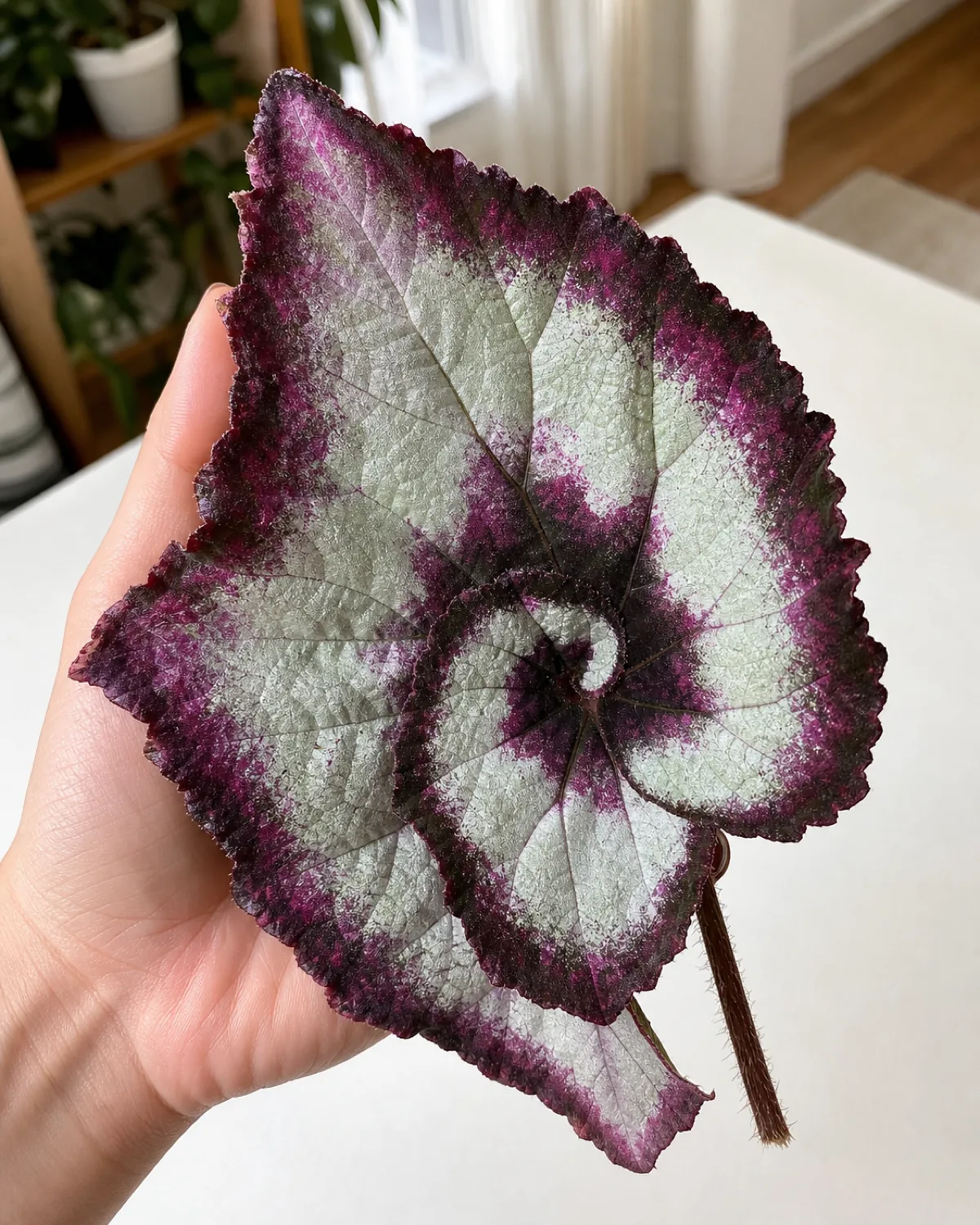
The Begoniaceae family contains over two thousand species, nearly all native to tropical and subtropical understory forests across Central and South America, Africa, and Southeast Asia. The one trait every begonia shares is an asymmetric leaf — one side of the blade is always distinctly larger than the other at the base where it meets the petiole.
This oblique shape is the family signature. Once you notice it you can identify any begonia instantly, regardless of leaf color, size, or pattern.
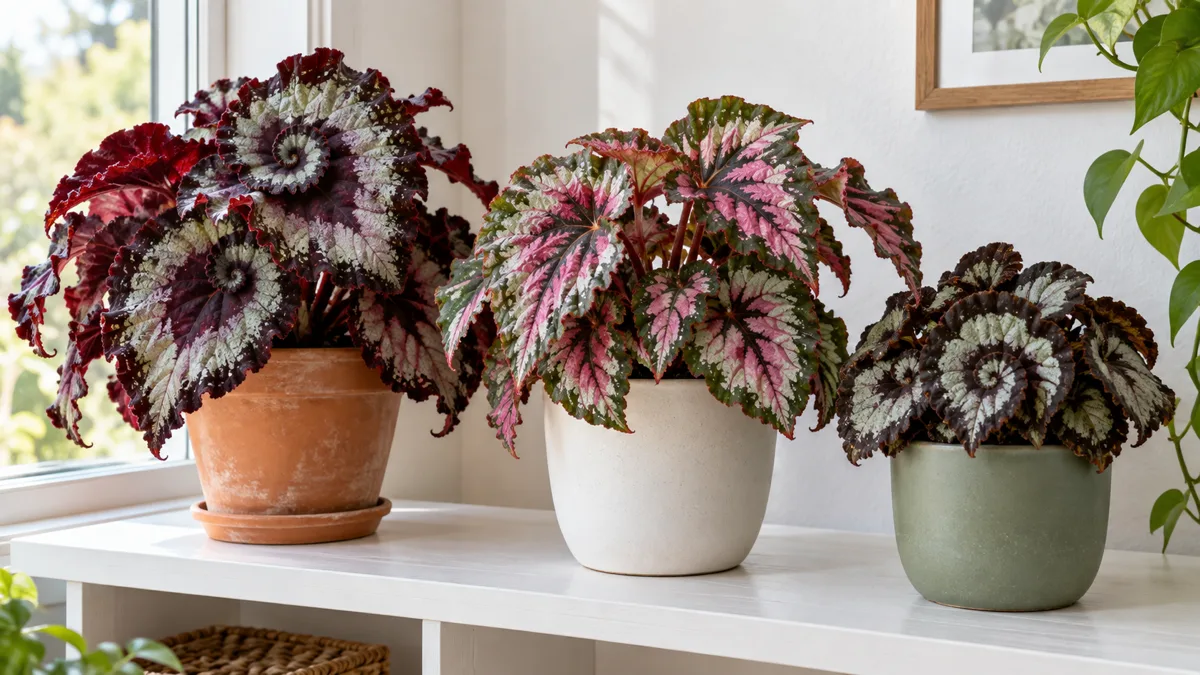
Three main types dominate indoor growing. Rex begonias are grown entirely for foliage — their leaves come in extraordinary combinations of silver, purple, pink, burgundy, and metallic patterns that shift in different light. Cane begonias, often called angel wings, grow on upright bamboo-like stems and combine polka-dotted wing-shaped leaves with dangling clusters of small bell-shaped flowers.
Wax begonias are compact, glossy-leaved everblooming machines that produce small flowers in pink, red, and white without ever taking a break.
All three share the same fundamental care requirements with tweaks for each type. This guide covers what they have in common and flags where they differ.
Light: the universal begonia rule
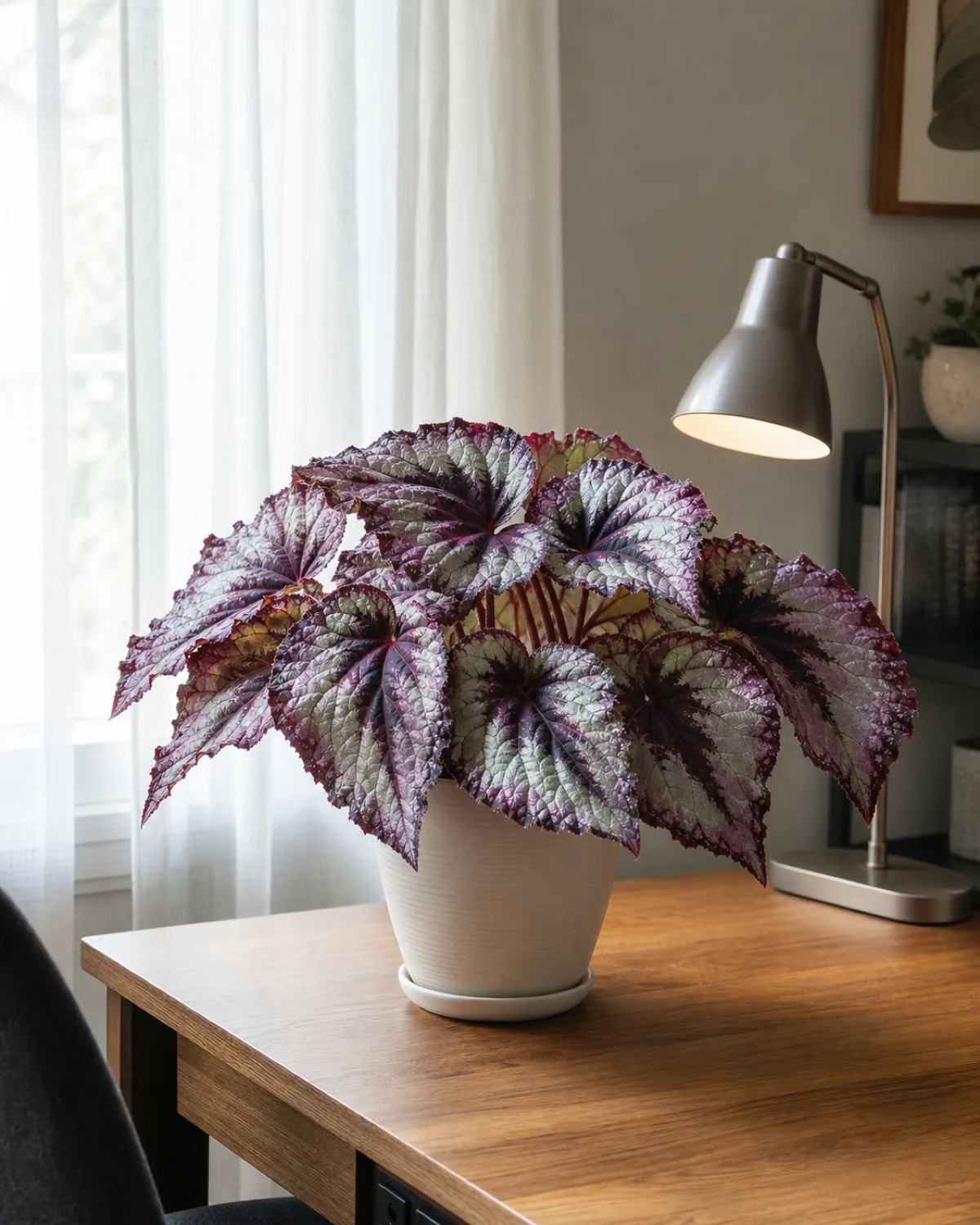
Bright indirect light is the one requirement all begonias agree on. An east-facing window provides the ideal morning sun — gentle enough not to scorch but strong enough to maintain color and flowering.
Rex begonia leaves are especially burn-prone because the heavily pigmented areas absorb more heat than plain green tissue. Hot afternoon direct sun bleaches the patterns and leaves brown scorch marks that do not recover. Cane and wax types tolerate slightly more direct light than rex, but none of them want sustained midday sun.
Too little light shows up differently depending on the type: rex colors fade to plain green, cane stems get leggy and stop flowering, wax begonias stretch and drop buds.
Two to three feet from a south or west window with a sheer curtain works for all three. Our houseplant light guide covers how to measure brightness without special equipment — the shadow test works well for finding begonia-friendly spots.
Grow lights are excellent for rex begonias in dark apartments, since you can dial in consistent twelve-to-fourteen-hour days without any scorching risk.
Watering: always the soil, never the leaves
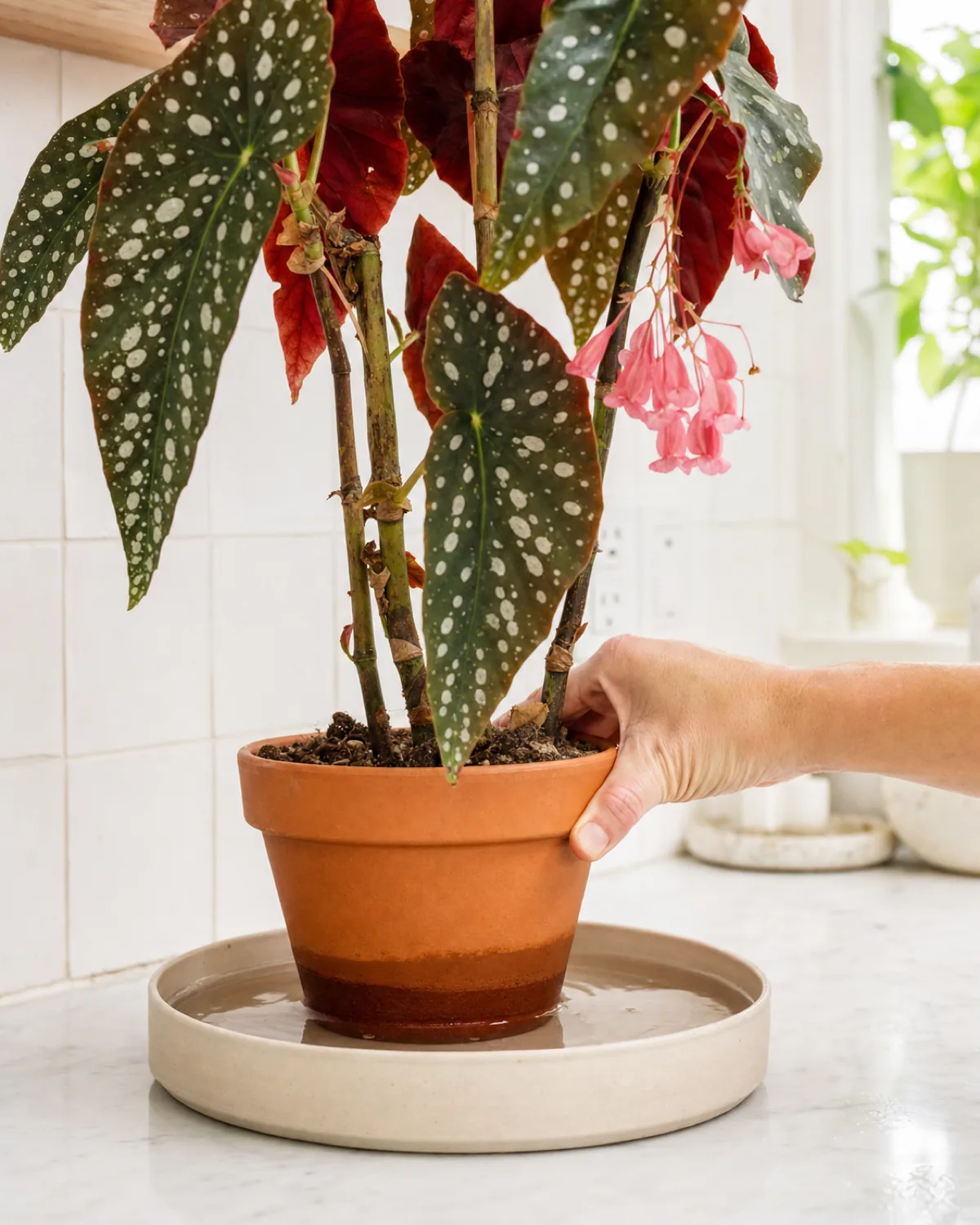
Begonia stems are semi-succulent — fleshy and capable of storing water in their tissues. This means they tolerate brief dry spells better than you might expect from a tropical plant. Water when the top inch of soil feels dry to your finger.
The critical rule that separates begonia care from nearly every other houseplant: water the soil directly and never pour water over the leaves. Wet begonia foliage is a fast track to powdery mildew and bacterial leaf spot. This is not a mild preference — it is the single most common cause of begonia disease.
Bottom watering eliminates splash risk entirely. Set the pot in a shallow tray of water for twenty to thirty minutes and let the soil wick moisture up through the drainage hole. When the soil surface darkens, the pot is saturated. Lift it out, let it drain, and the leaves stay completely dry.
Overwatering shows as mushy stems near the soil line. Stem rot is the number one killer of begonias, and once the base turns soft and translucent the damage is irreversible. Prevention — proper drainage plus letting the soil partially dry between waterings — is the only option.
Begonias are more forgiving than their dramatic leaves suggest — but they do have non-negotiables worth checking before you buy.
Humidity without wet leaves: the begonia paradox
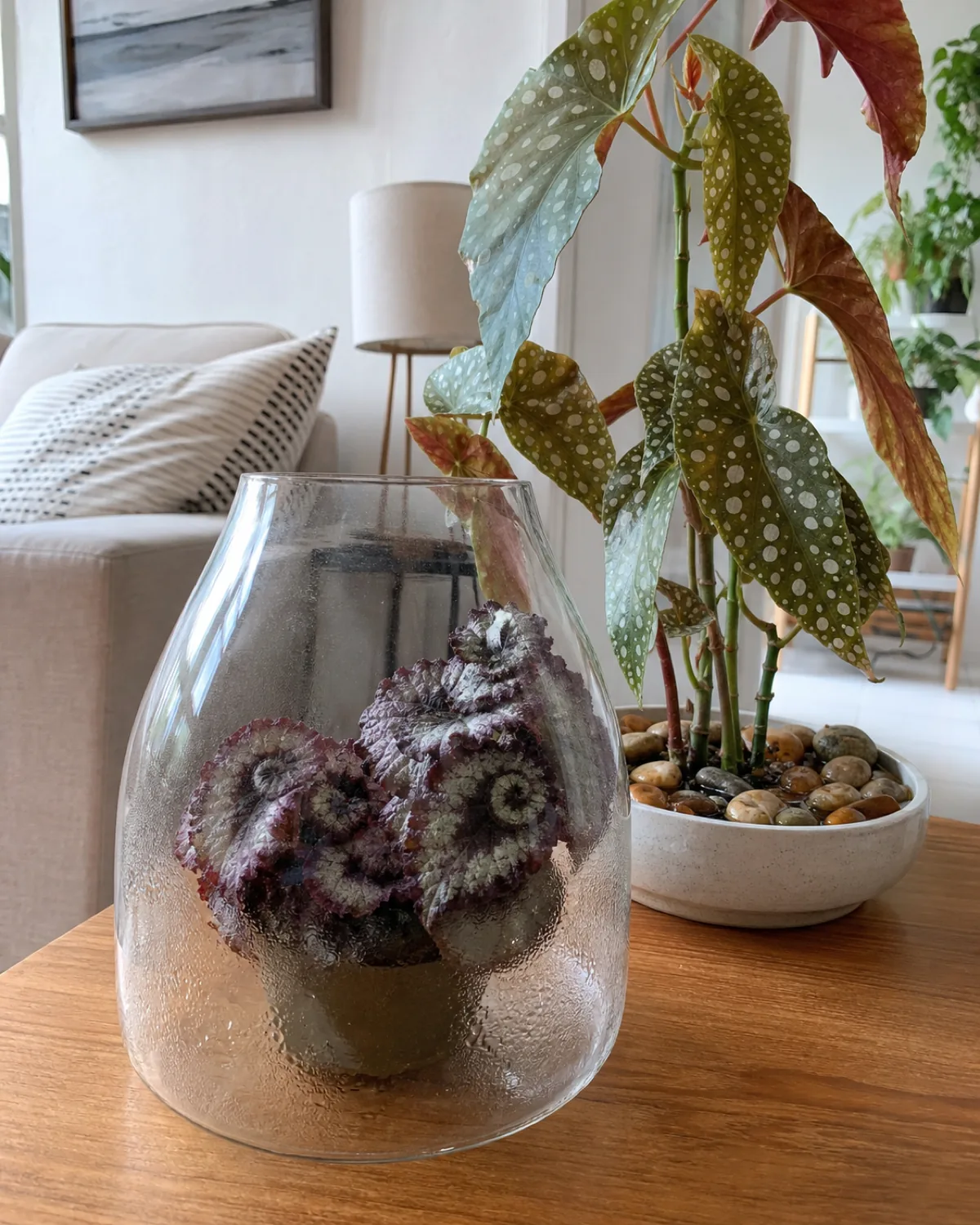
Begonias present a paradox that no other common houseplant shares quite as sharply. They crave fifty to sixty percent humidity like any tropical understory plant, yet their leaves are uniquely vulnerable to moisture sitting on the surface. Wet begonia foliage develops powdery mildew faster than any other genus in the typical houseplant collection.
Misting is actively harmful. It deposits water droplets directly on leaves while raising ambient humidity for less than five minutes — the worst of both worlds. The begonia-specific solution is enclosed humidity. Small rex begonias thrive inside glass cloches or open terrariums where trapped transpiration holds seventy percent humidity without any water touching the leaf surface.
For larger cane and wax begonias that do not fit under glass, use a pebble tray or room humidifier positioned so airflow carries moisture around the plant, not onto it. Grouping several plants together raises local humidity through collective transpiration.
Rex metallic sheen pigments visibly dull below forty percent humidity, which is a reliable visual indicator that your setup needs adjustment. Bathrooms with good natural light are natural begonia spots — the daily shower steam provides free humidity without directly wetting the plants.
Temperature: steady warmth, no extremes
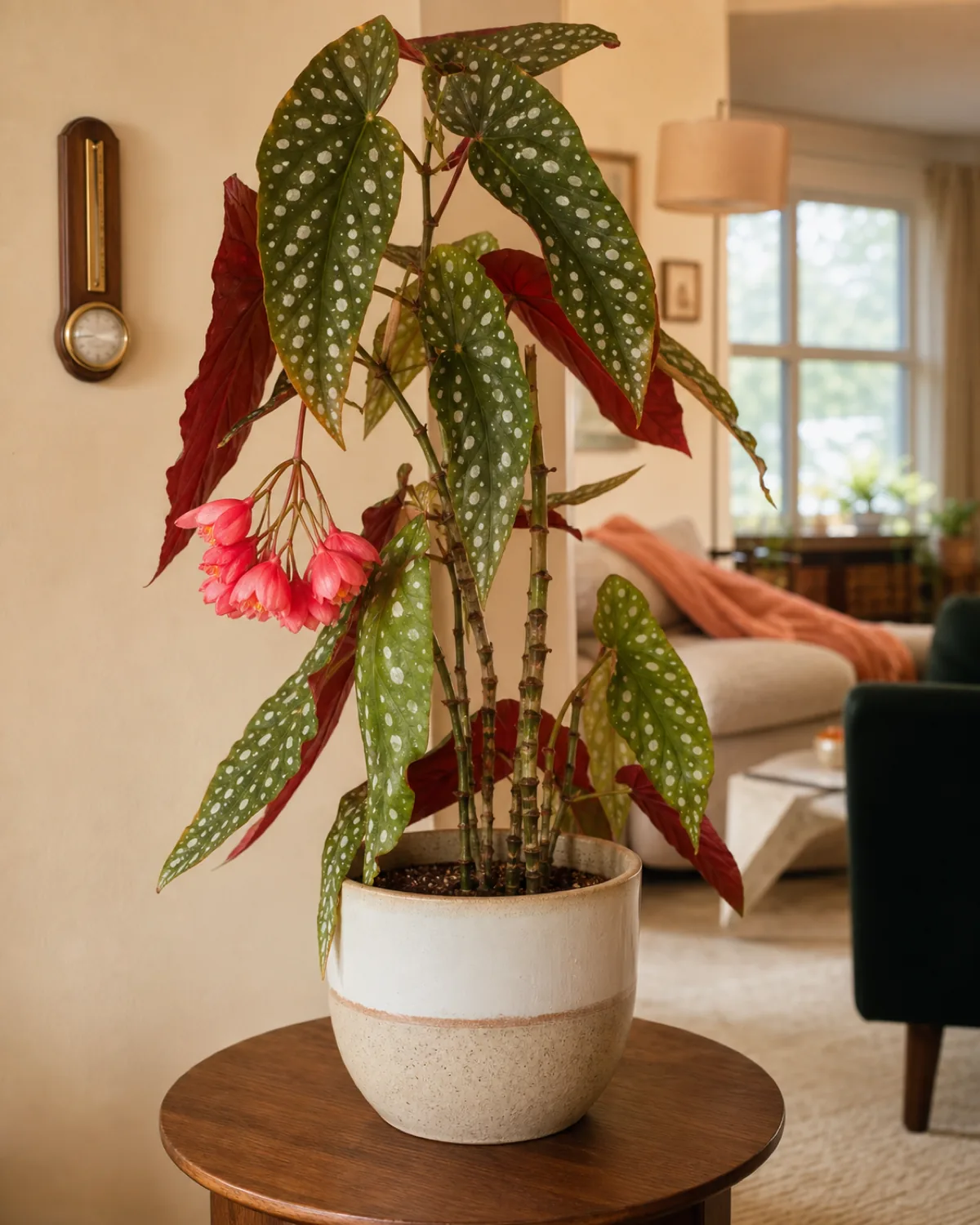
The comfort zone is sixty to seventy-five degrees Fahrenheit (fifteen to twenty-four Celsius). Begonias dislike extremes in either direction — above eighty degrees growth slows and flowers drop, below fifty degrees leaves darken and tuberous types go dormant.
Stable temperature matters more than hitting a specific number. Keep begonias away from cold drafts at winter windows, AC vents, and hot radiators. Rex begonias are slightly less cold-hardy than cane types.
Unlike orchids that need a ten-to-fifteen-degree night temperature drop to trigger blooming, begonias need no such stimulus. Cane and wax types flower on day length and feeding alone, making them significantly simpler to keep in bloom indoors.
Soil mix: fine-rooted plants need a different approach
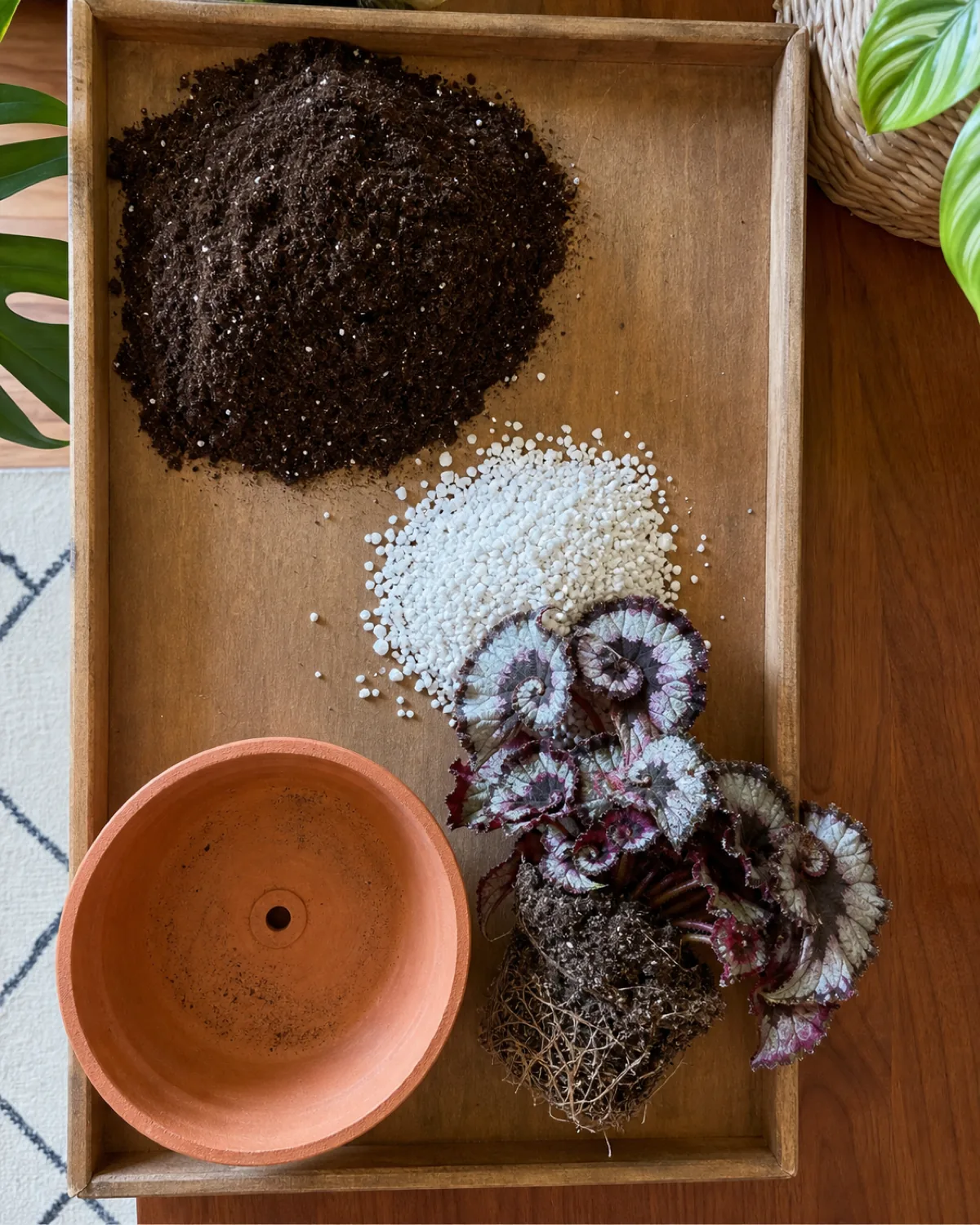
Two parts peat-based potting mix plus one part perlite is the begonia standard. The goal is well-draining but moisture-retentive — different from the chunky aroid mixes that anthuriums and philodendrons need.
The distinction matters because begonia roots are fine and fibrous, not thick epiphytic cables. Fine roots need consistent contact with moist soil particles to absorb water.
Chunky bark mixes designed for aroids create too many air gaps for begonia roots to bridge, causing them to dry out between the chunks even when the mix feels damp. Heavy garden soil has the opposite problem — it compacts around fine roots and suffocates them.
Rex begonias have particularly shallow root systems. Wide, shallow pots — called azalea pots in the nursery trade — work better than tall deep containers. The shallow profile keeps the root zone moist without the waterlogged dead zone that forms at the bottom of a deep pot.
Repot every one to two years in spring when roots fill the current container. Go up only one inch in diameter — begonias, especially wax types, bloom better when slightly rootbound.
Fertilizing by begonia type
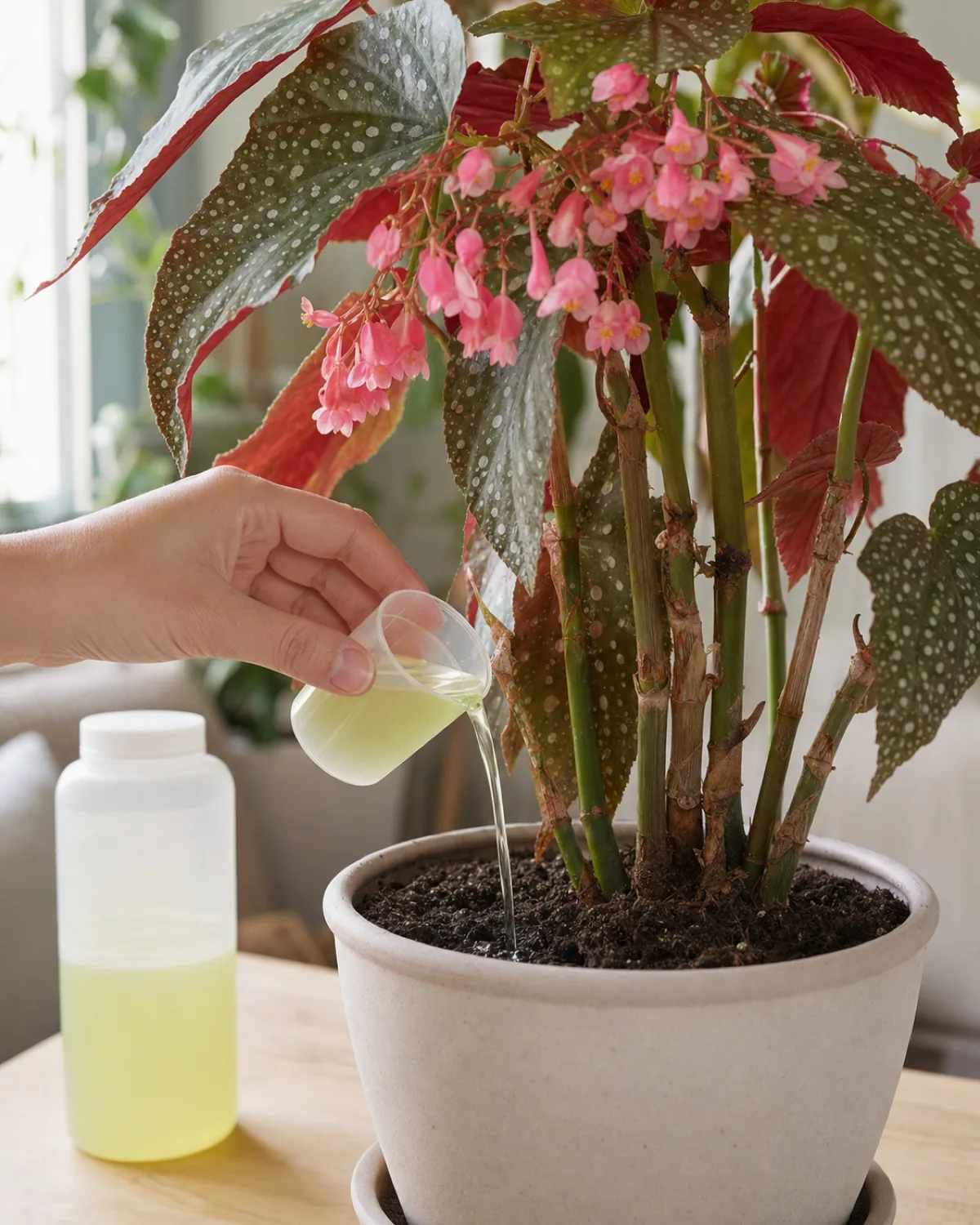
Begonias split into two feeding strategies that no other genus requires you to juggle simultaneously. Rex begonias are pure foliage plants where nitrogen drives the leaf size and pigment intensity that is the entire point of growing them. Feed rex types a balanced formula like 20-20-20 diluted to quarter strength every two weeks during the growing season.
Cane and wax begonias need a phosphorus push to flower. Switch them to a bloom-booster formula with a higher middle number — like 10-30-20 — once monthly when buds form. Our fertilizing guide explains how the three NPK numbers work and why the middle one matters for flowering.
The genus-wide rule is that begonias have exceptionally fine fibrous roots that burn easily from salt accumulation. Quarter strength applied more frequently is safer than half strength less often.
Brown leaf margins that mimic humidity damage are the telltale sign of fertilizer burn in begonias — their fine root hairs absorb salts faster than the chunky roots of aroids or palms. Flush the pot with plain water monthly to prevent buildup. Stop all feeding in winter.
Why begonia leaves lose their color
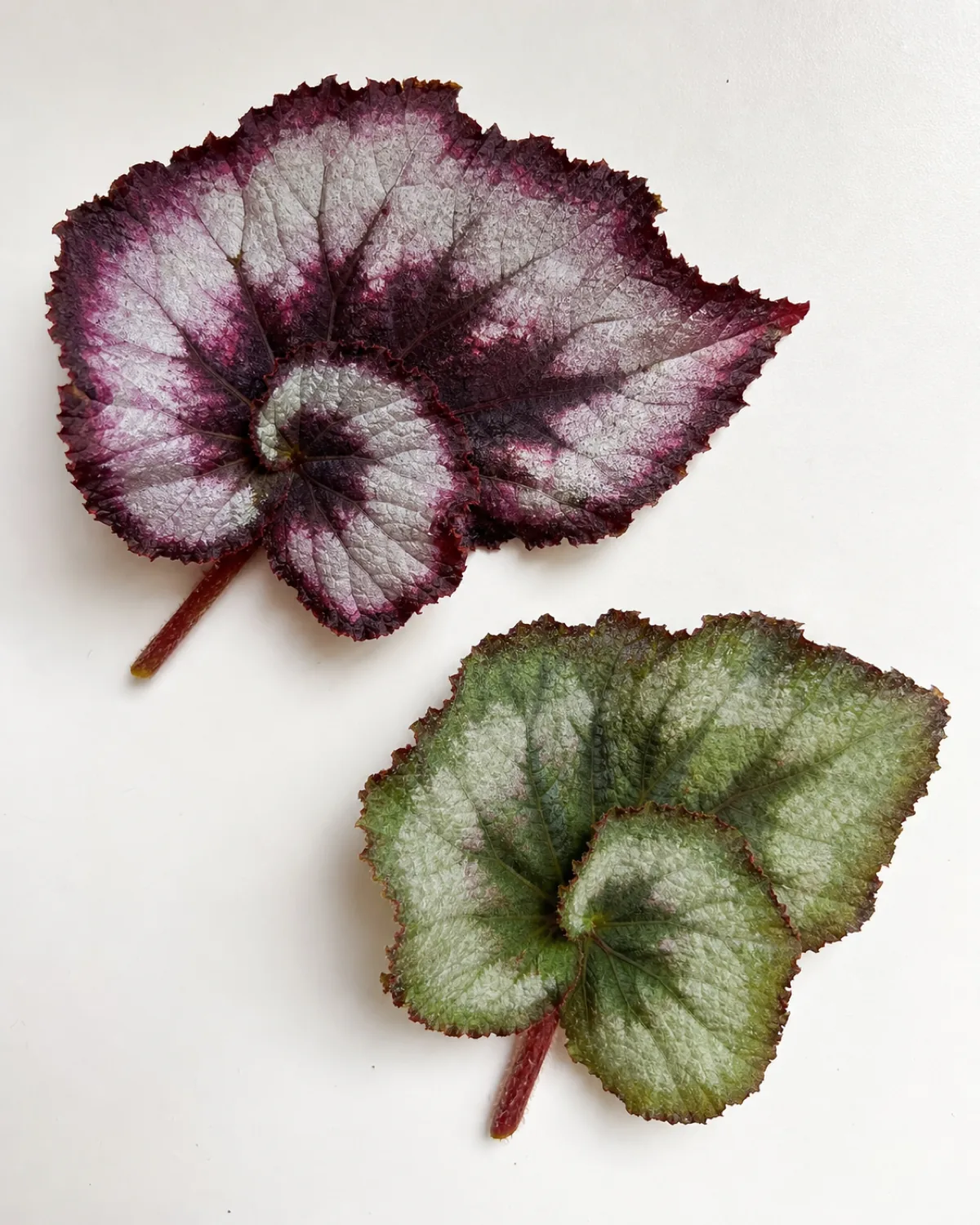
This is the number one rex begonia frustration. A plant bought with stunning silver-purple spiral leaves slowly fades to plain green over a few weeks in its new home. The cause is almost always light.
Rex begonia leaf pigments — anthocyanins for the purples and reds, plus microscopic reflective structures for the silver and metallic effects — develop in response to bright indirect light. In dim conditions the plant produces more chlorophyll to compensate, and the green overwhelms the decorative pigments.
The dramatic patterns are still genetically present. The plant just cannot afford to display them when it needs every photon for survival.
The fix is to move the plant to brighter indirect light gradually. A sudden shift from dim corner to bright window can shock leaves adapted to low light. Increase exposure over a week or two.
Some color fading is normal as individual leaves age — the oldest leaves naturally lose vibrancy before dying back. The diagnostic check is whether the newest emerging leaves show full color. If new growth is vivid, light is adequate. If new leaves are dull, move the plant closer to the window or add a grow light running twelve to fourteen hours daily.
Pruning and shaping
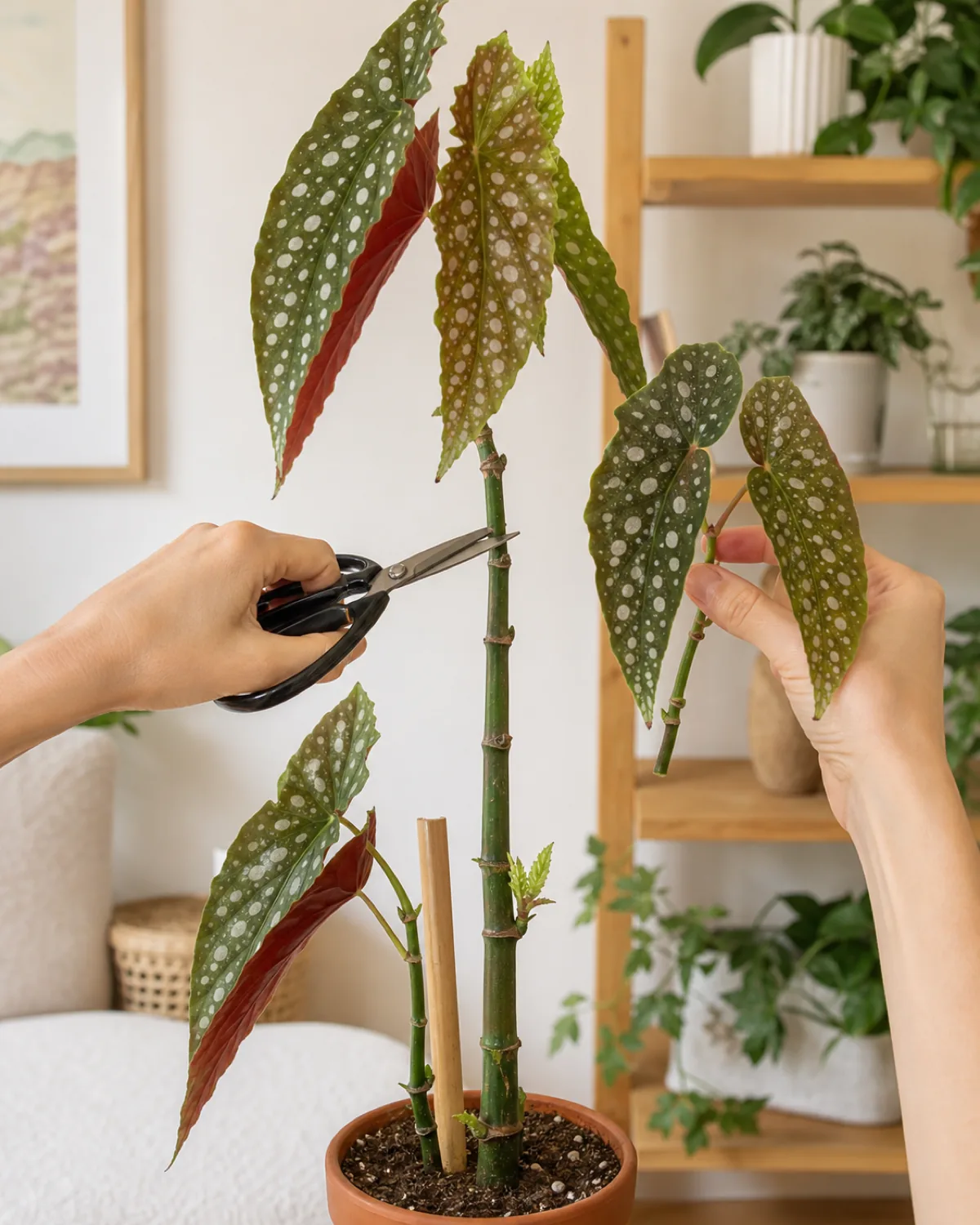
Cane begonias naturally grow tall and leggy on a single stem if left unchecked. Pinch or cut the growing tip just above a node to force the plant to push side shoots from lower nodes. This creates the bushy, multi-stemmed shape that looks dramatically better than a single bare cane with a tuft of leaves at the top.
Remove spent flower clusters on cane and wax types to redirect energy into new blooms. Cut the flower stem back to the nearest leaf node.
Rex begonias rarely need pruning. They grow in a low rosette pattern that stays naturally compact. Just remove dead or dying leaves at the base to keep things tidy and prevent fungal issues in the decaying tissue.
Leggy cane begonias that have lost their lower leaves can be cut back hard to three or four nodes above the soil in early spring. They resprout vigorously from the remaining nodes within a few weeks. The cut tips root easily in water or moist potting mix, giving you free new plants from routine maintenance.
Propagation: one rex leaf can produce a dozen plants
Three methods work depending on the begonia type, and each exploits a different aspect of begonia biology.
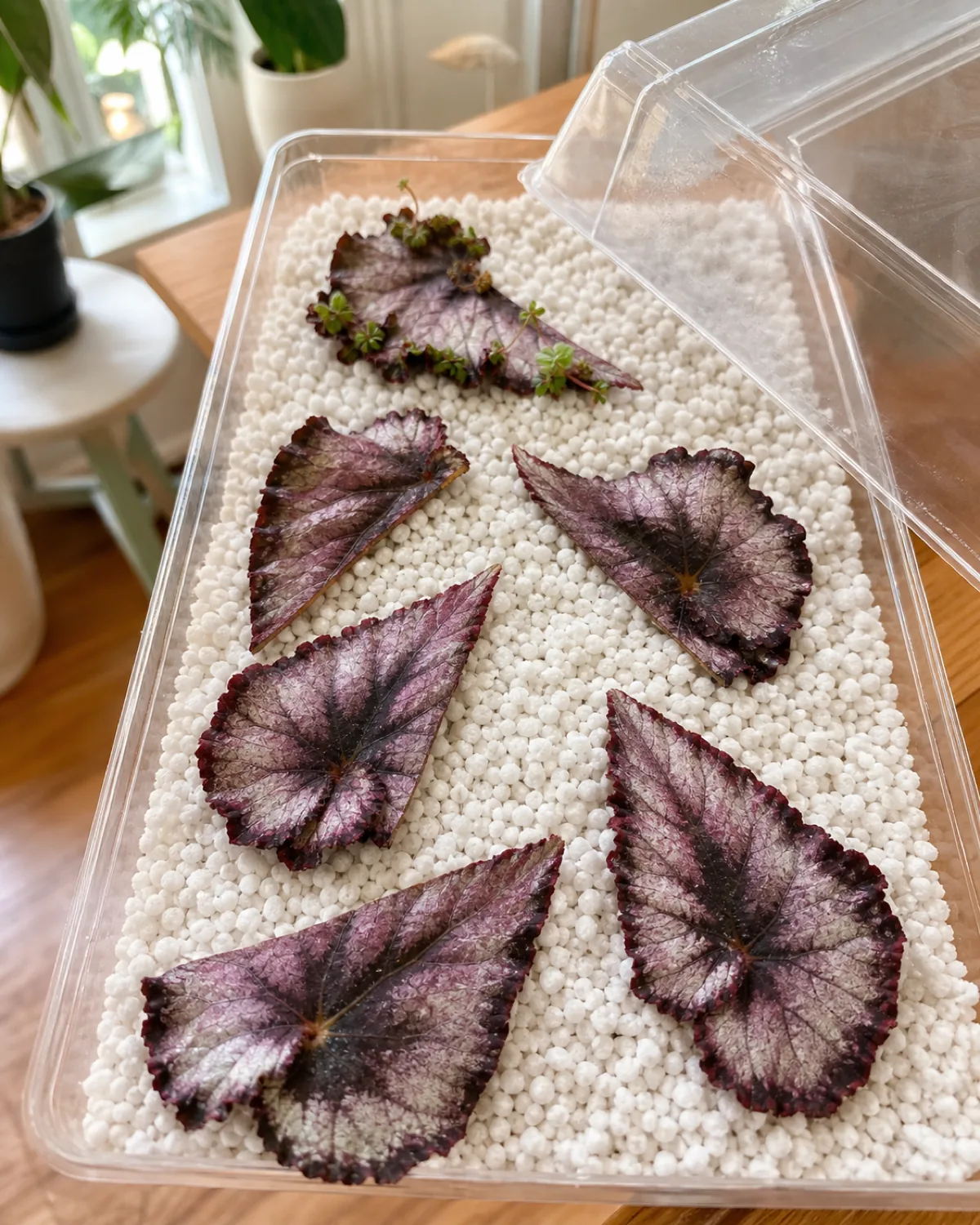
Rex begonias — leaf-wedge cuttings. Cut a healthy mature leaf into wedge-shaped sections, each wedge containing a major vein intersection. Press the wedges cut-side-down into moist perlite or vermiculite and cover with a clear plastic dome to maintain humidity.
New plantlets sprout from each vein junction in four to six weeks. A single large rex leaf can produce a dozen independent plants — each one a genetic clone with the same dramatic leaf patterns as the parent. Our propagation guide covers the leaf-cutting method in broader context.
Cane and angel wing begonias — stem cuttings. Cut three-to-four-inch tip cuttings with two to three nodes. Remove the lower leaves, and root them in water or moist potting mix. Roots appear in two to three weeks. This is the same standard stem-cutting method that works for most houseplants, but begonias root faster than average.
All types — division. When repotting, separate clumps that have multiple stems with their own root systems. Each division becomes an independent plant immediately. Division works for every begonia type but is most practical for rex and rhizomatous types that spread laterally.
Pests and diseases: powdery mildew is the begonia nemesis
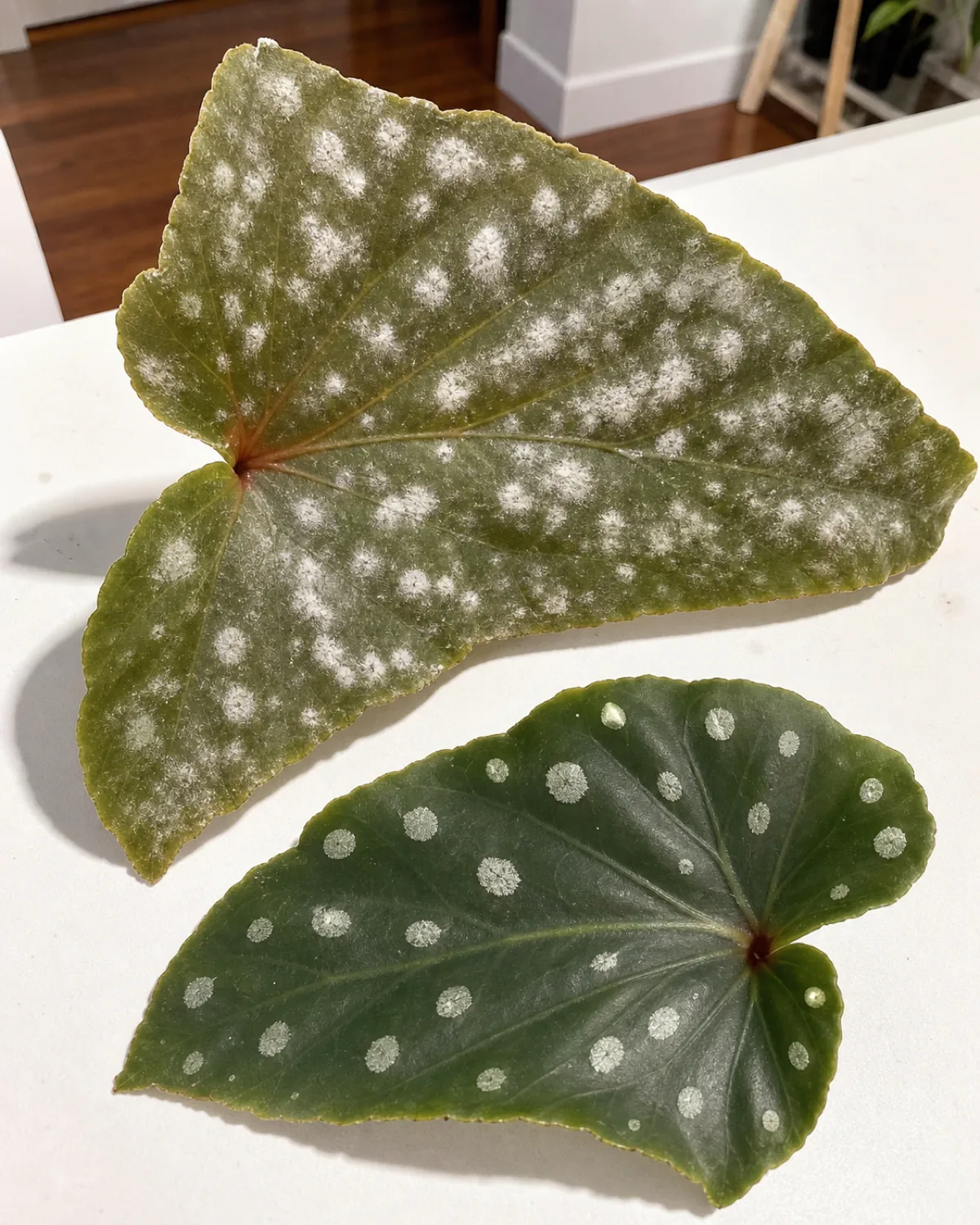
Powdery mildew is to begonias what spider mites are to alocasias — the species-specific pest that strikes first and hardest. White fuzzy patches appear on the leaf surface when fungal spores land on wet foliage in stagnant air.
This is precisely why the "water soil only, never leaves" rule exists. It is not about preference — it is about preventing the genus-defining disease.
Prevention requires three things working together: good air circulation around the plant, consistently dry leaf surfaces, and not overcrowding plants so closely that airflow dies between them. A small fan on low, pointed near but not directly at the plants, helps enormously.
If mildew appears, remove every affected leaf immediately and improve airflow. Treat remaining foliage with neem oil spray — the irony is that the treatment requires getting the leaves wet, so apply it in the morning so leaves dry quickly. Our pests and diseases guide covers neem application timing and the three-week treatment cycle.
Other issues include mealybugs as white cottony clusters hiding in leaf joints, aphids clustering on new growth tips, and botrytis (gray mold) in cold damp conditions. Stem rot from overwatering is fatal once the base turns mushy — proper drainage and partially drying between waterings is the only prevention.
Toxicity: keep begonias out of reach
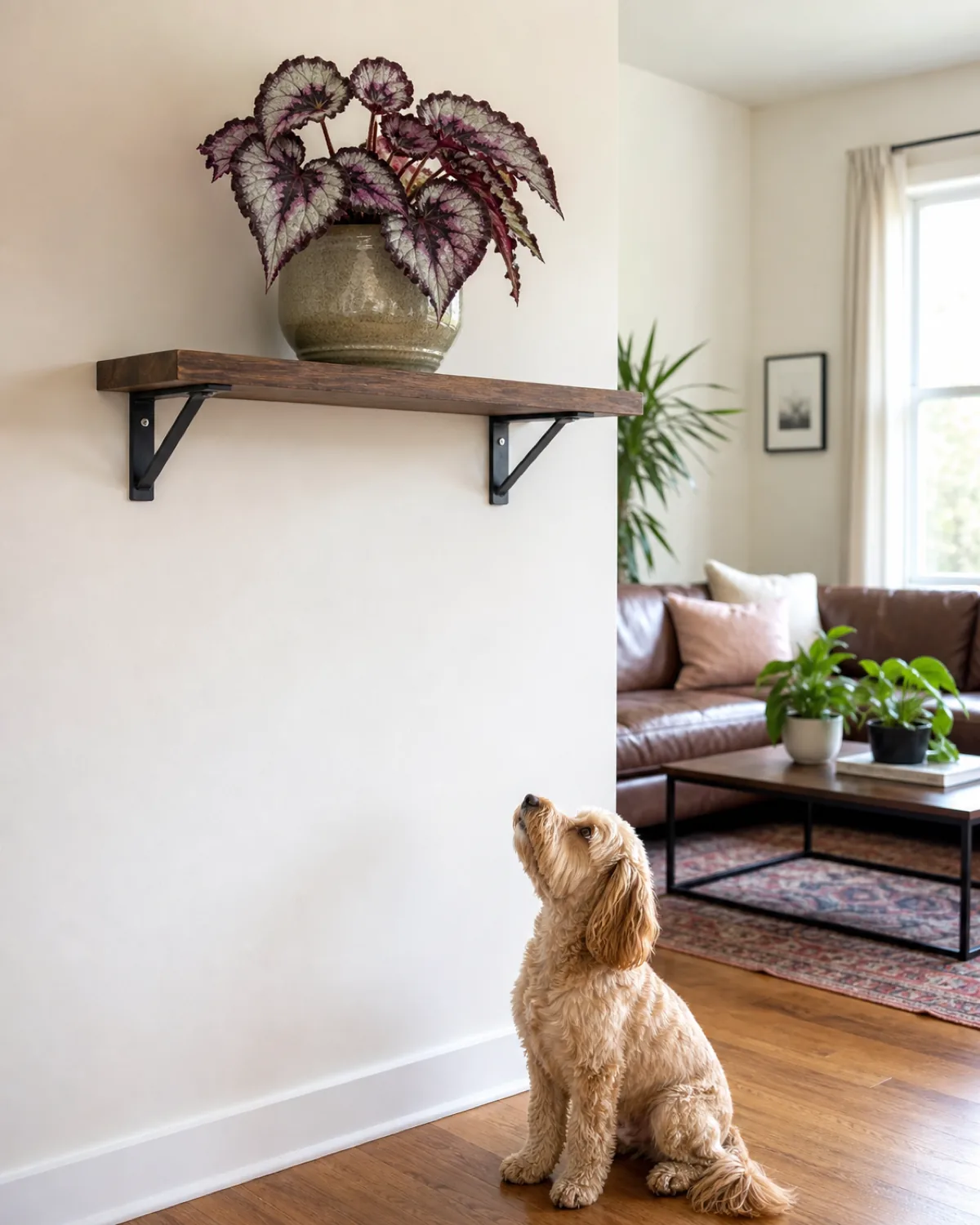
Begonias contain soluble calcium oxalates concentrated in the roots and stems, with lower concentrations in the leaves. The ASPCA classifies begonias as toxic to cats, dogs, and horses. The underground tubers in tuberous types are the most toxic part.
Ingestion causes oral irritation, drooling, vomiting, and difficulty swallowing. It is not typically fatal but causes significant discomfort that requires veterinary attention if symptoms persist. Puppies and kittens that chew exploratorily are the highest-risk pets.
The severity is generally milder than anthurium or peace lily, which contain insoluble calcium oxalate crystals that cause more intense and immediate mouth pain. Begonia's soluble form is still unpleasant but less aggressively irritating on contact.
Keep begonias on high shelves, in hanging planters, or in rooms that pets cannot access. Rex begonias in glass cloches serve double duty — the enclosure maintains humidity and prevents pet contact simultaneously.
Begonia Care: The Quick Reference
- 1Every begonia leaf is asymmetricOne side of the blade is larger than the other at the base. The family signature across 2000+ species.
- 2Three types: rex, cane, waxRex for painted foliage. Cane/angel wing for spotted leaves + flowers. Wax for nonstop compact blooming.
- 3Bright indirect light for allEast window or filtered south. Rex burns in direct sun. Dim corners = faded colors.
- 4Water the soil, never the leavesBottom watering is safest. Wet leaves = powdery mildew. Top inch dry = time to water.
- 550-60% humidity, enclosed for rexGlass cloche or terrarium for rex. Pebble tray for cane/wax. Never mist.
- 660-75°F, steady and stableNo temperature drop needed for blooming (unlike orchids). Avoid drafts and extremes.
- 7Fine mix, not chunky aroid2 parts peat potting mix + 1 part perlite. Shallow azalea pots for rex.
- 8Feed by typeBalanced for rex (foliage). Bloom-booster for cane/wax (flowers). Quarter strength, biweekly.
- 9Faded rex = not enough lightMove to brighter spot gradually. New leaves should show full color if light is right.
- 10One rex leaf = a dozen new plantsWedge cuttings pressed into perlite sprout from each vein junction in 4-6 weeks.
- 11Powdery mildew is the nemesisDry leaves + airflow = prevention. Neem oil + remove affected leaves = treatment.
- 12Toxic to cats and dogsSoluble calcium oxalates cause mouth irritation. High shelves or glass cloches keep pets safe.
- 13Start with wax or maculataWax is nearly indestructible. Maculata (polka dot) is the statement piece. Rex Escargot for foliage drama.
kultivy.com
Best begonia varieties for beginners
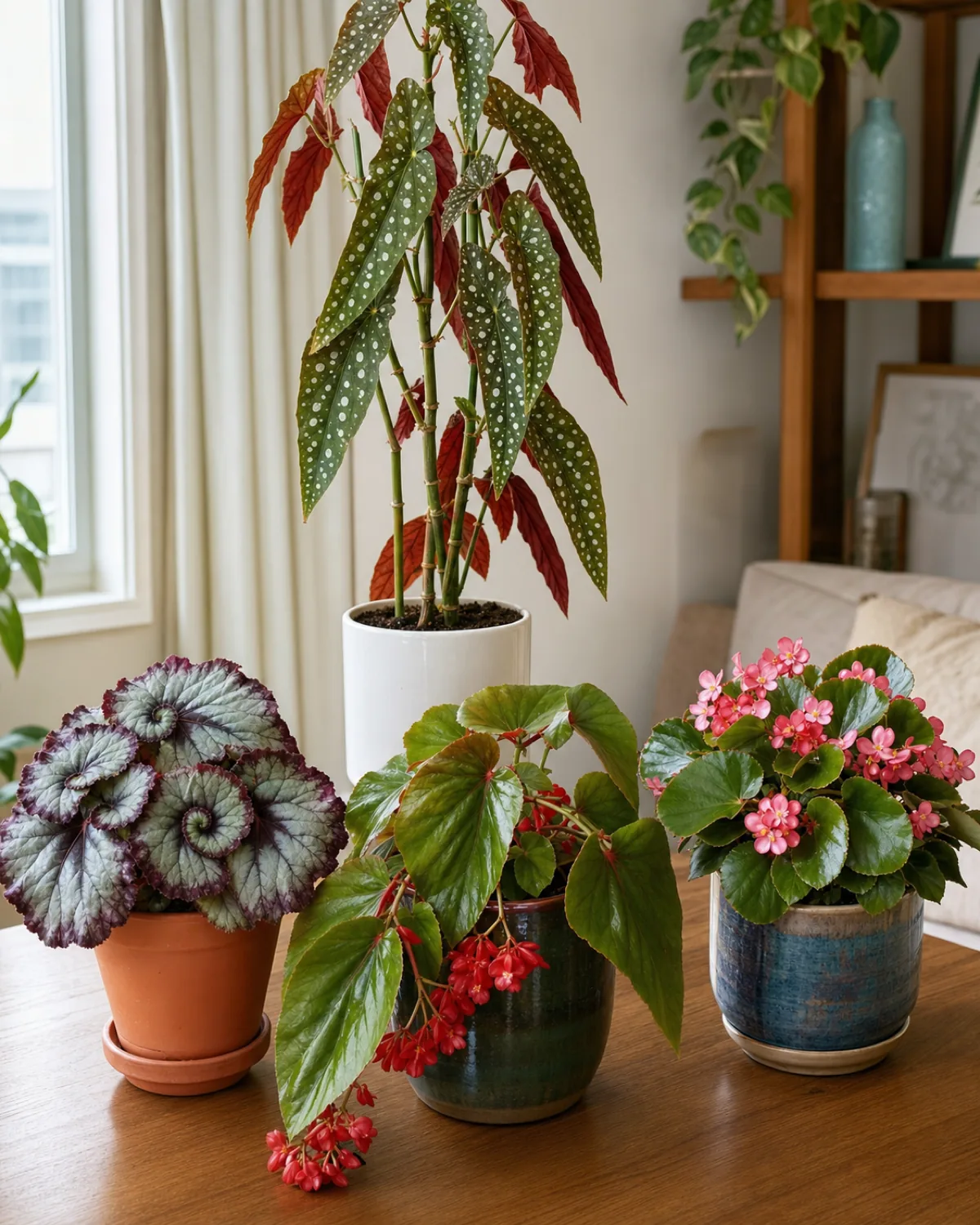
Rex 'Escargot' features a silver spiral pattern that looks exactly like a snail shell unfurling. It is one of the most dramatic rex varieties and also one of the most forgiving — a good first rex if you have never grown one. The spiral stays vivid in bright indirect light and fades predictably when light drops, making it a useful diagnostic plant.
Begonia maculata 'Wightii' is the Instagram-famous angel wing with olive leaves covered in perfect silver polka dots and deep red undersides. It grows upright on bamboo-like canes and produces clusters of white flowers. Give it bright light and pinch the tips to keep it bushy rather than letting it shoot up tall and leggy.
Begonia 'Dragon Wing' has large glossy angel wing leaves with a cascading habit that makes it excellent in hanging pots. It blooms heavily in red or pink and tolerates more light than most begonias, including some direct morning sun. One of the easiest flowering begonias.
Wax begonia in any variety is the safest starting point. Nearly indestructible, compact, everblooming, tolerant of light and watering inconsistency. If you can keep a wax begonia alive for six months, you are ready for rex. Available everywhere for a few dollars, which removes the risk of experimenting.
Rex 'Fireworks' displays a purple-silver starburst pattern and stays more compact than many rex varieties. It makes a striking desk plant under a grow light.
Start with wax or Dragon Wing if you want flowers. Start with maculata or Escargot if you want statement foliage. Graduate to rarer rex varieties once you have the humidity and light dialed in.

Mara Quinn edits Kultivy, where she shares houseplant care, propagation, beginner-friendly plant picks, and plant-styling ideas for anyone who wants their indoor plants to actually thrive. Every guide is image-led and reviewed for clarity, usefulness, image accuracy, and Pinterest-to-page alignment before it goes live. Visit the About page.