A dim hallway, a windowless bathroom, a basement office with one overhead bulb. These spaces are not just "low light" — they are dark rooms where photosynthesis barely happens.
The advice that works for a north-facing window breaks down completely when there is no window at all. Most plant care guides stop at "low light tolerant" and leave you guessing from there.
This guide covers what actually keeps plants alive in rooms where sunlight cannot reach — and why the standard low-light playbook fails the moment you cross into truly dark territory.
From defining a truly dark room to choosing plants, adding grow lights, adjusting watering, and making the most of minimal greenery.
What Counts as a Dark Room (and Why It Matters for Plants)
A dark room is not the same as a low-light room. Low light means a north-facing window, a spot several feet from an east window, or a room with indirect light that still registers 50 to 100 foot-candles on a light meter. Plants like pothos and snake plants genuinely grow there.
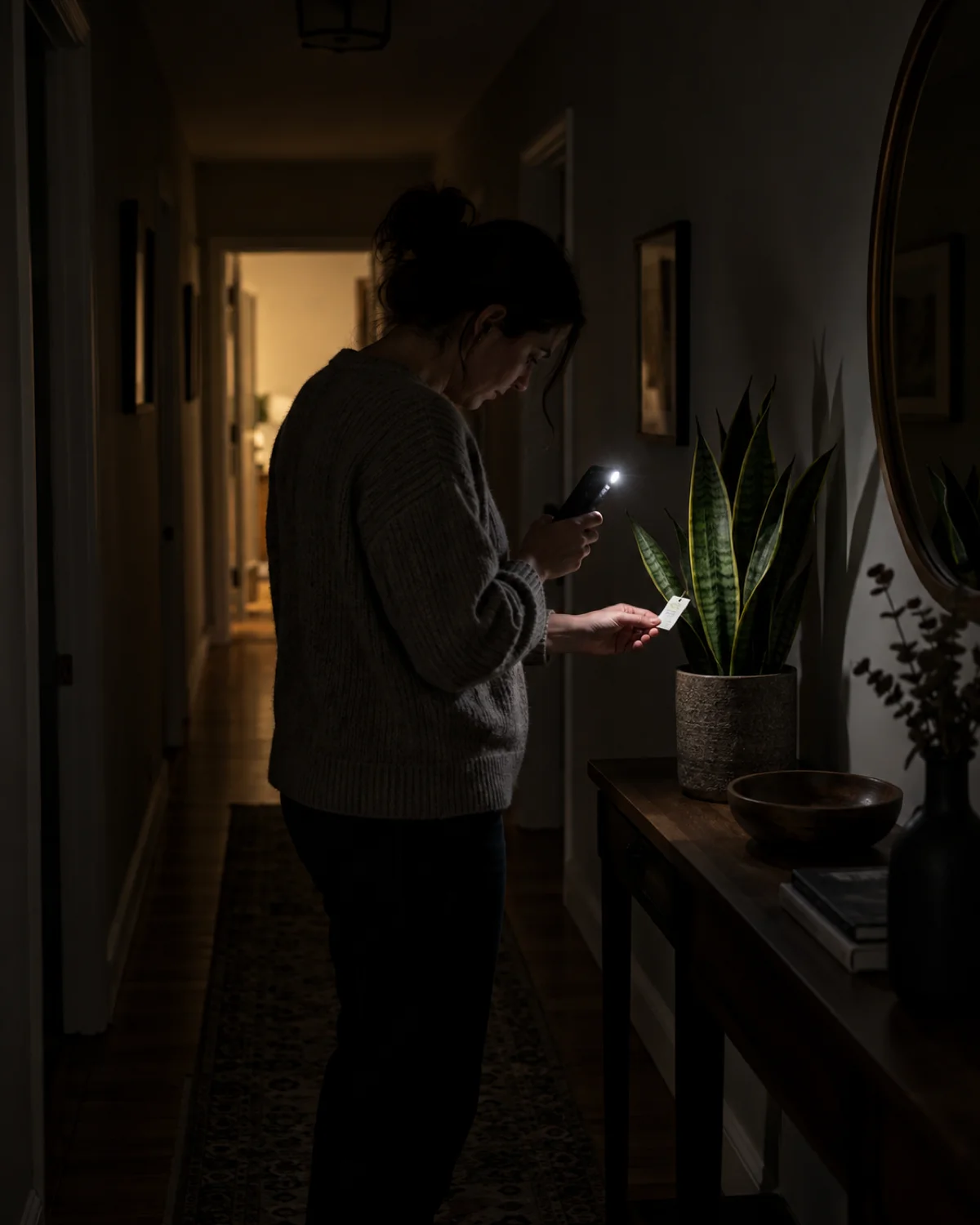
A dark room registers under 25 foot-candles — often close to zero. Windowless bathrooms, interior hallways, basement offices, walk-in closets, rooms with one small frosted window blocked by an overhang. Hold your hand a foot above a surface: if you cannot see a shadow at all, the room is dark.
The shadow test is the fastest diagnostic. A clear shadow at arm's length means low light. A fuzzy shadow means very low light. No shadow at all means the room is dark and no plant will photosynthesize without help.
Low light is under 100 foot-candles — a north window or a spot far from glass. Dark is under 25 foot-candles, usually zero natural light. The strategies for each are fundamentally different. Low-light rooms can support plants on their own. Dark rooms cannot.
- Low light (50–100 fc): north window, deep in a room with east/west exposure — plants survive with adjusted care
- Very low light (25–50 fc): far corner, small high window — limited species survive, growth is minimal
- Dark (<25 fc): windowless, blocked window, basement — no plant survives long-term without supplemental light
Understanding where your room falls on this scale determines everything: which plants to try, whether a grow light is optional or mandatory, and how aggressively to adjust watering and feeding.
For rooms that fall in the low-light category rather than truly dark, the low-light plants guide covers species that thrive there without grow lights. This guide is specifically for the rooms where that approach is not enough.
Why Most Low-Light Plant Lists Won't Help You Here
Every plant care article on the internet includes a "tolerates low light" label on snake plants, pothos, and ZZ plants. That label is not wrong — it is incomplete. "Tolerates" means the plant will not die immediately. It does not mean the plant will grow, stay healthy, or look good over months and years.
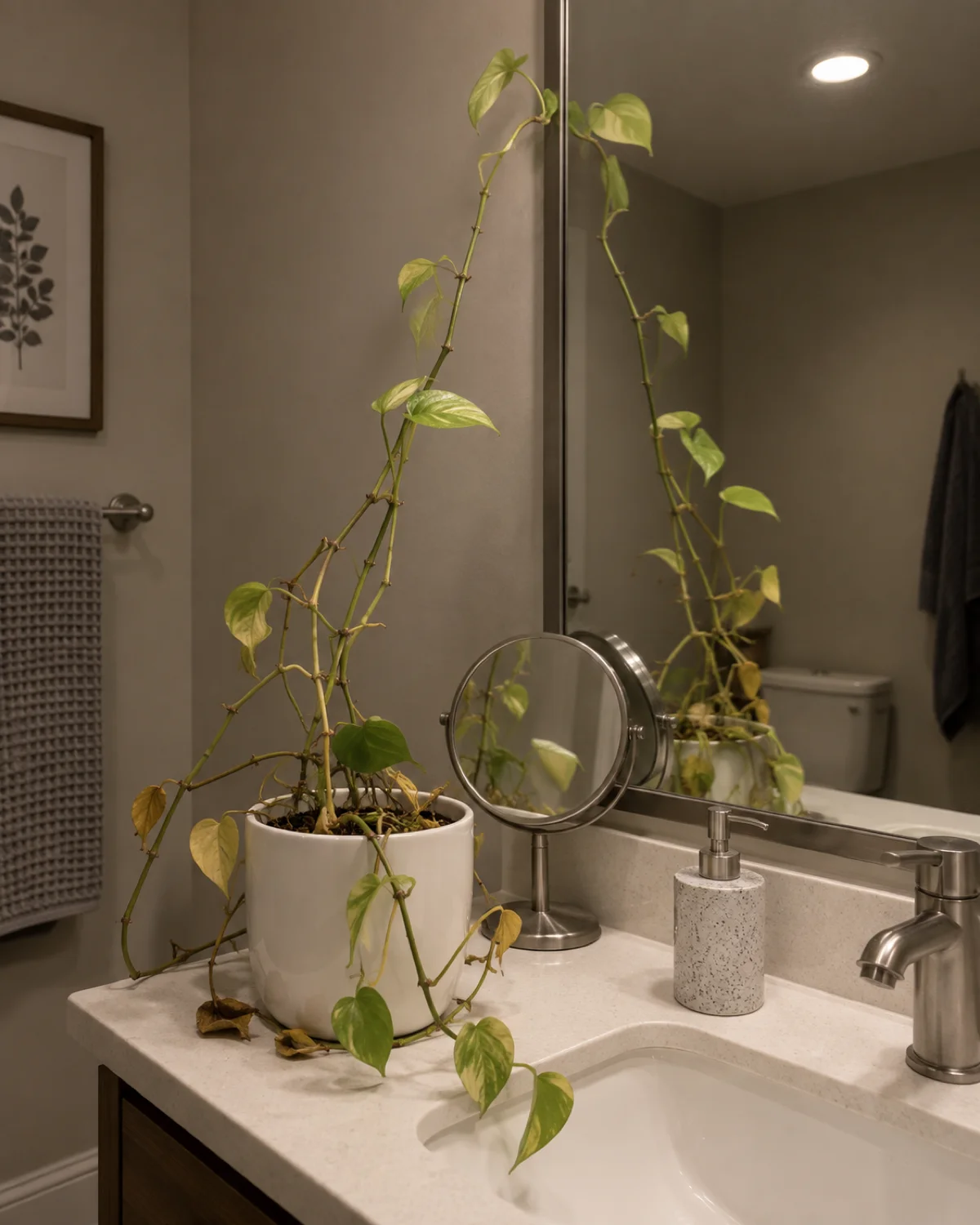
In a truly dark room, a "low-light tolerant" plant does this: it stops producing new leaves. Existing leaves slowly pale and shrink. Stems elongate toward the nearest light source, even if that source is a bathroom vanity bulb. Over three to six months, the plant transforms from the full, healthy specimen you bought into a leggy, pale ghost of itself.
The decline happens slowly enough that most people blame themselves for overwatering or underwatering. The real problem is zero photosynthesis.
- What "tolerates low light" actually means: the plant will survive for several months without collapsing, but it is slowly burning through its stored energy reserves
- What happens at zero natural light: no new growth, gradual leaf loss, etiolation (stretching toward any light source), eventual death
- The timeline: most "tolerant" plants visibly decline within three months in a truly dark room; death follows within six to twelve months
This is why a dark-room plant strategy must include supplemental light. There is no species tough enough to photosynthesize at zero foot-candles indefinitely. The question is not "which plant can handle the dark" — it is "how do I bring enough light into this room to keep any plant alive."
The Grow Light Non-Negotiable
In a dark room, a grow light is not a nice-to-have upgrade. It is the only light source your plant will ever see. Without it, you are watching a slow-motion death.
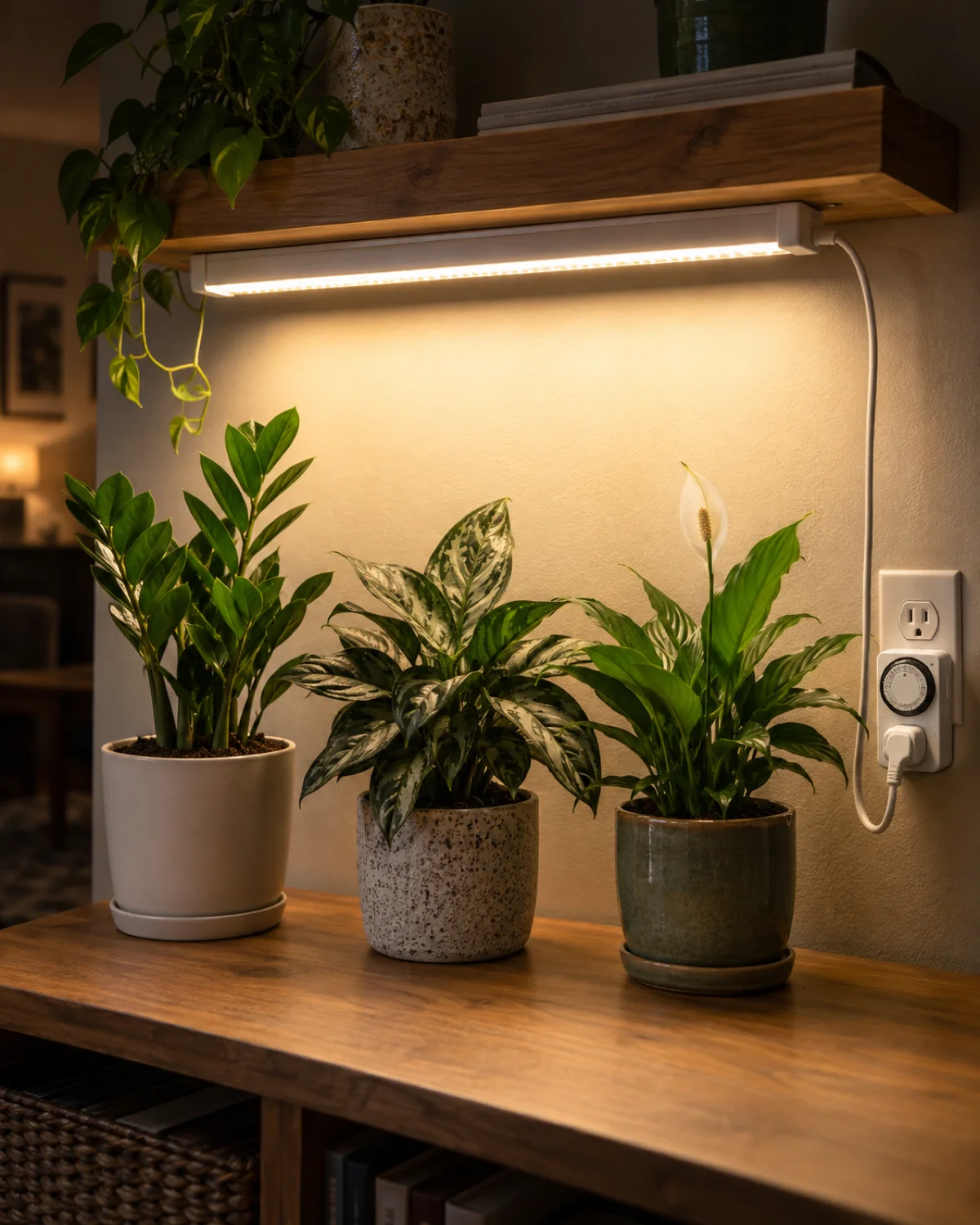
The minimum output for sustaining tough foliage plants is around 50 PPFD (photosynthetic photon flux density) at the leaf surface. That translates to a basic LED bar or bulb positioned 12 to 18 inches from the plant. The further the light, the weaker the effect — light intensity drops with the square of the distance, so double the distance means one-quarter the light.
A plug-in timer set to 12 to 14 hours per day simulates the photoperiod that a window would provide. Consistency matters more than intensity for maintenance-level survival. For more details on choosing, positioning, and timing grow lights, see the full grow lights guide.
Three decisions get your dark room from zero usable light to a functional growing environment.
- Budget option: a full-spectrum LED bulb (around 10–15 watts) in a desk lamp aimed at the plant — enough for one to two small plants
- Mid-range: an LED light bar mounted under a shelf — covers a row of three to four small plants
- Best for multiple plants: a two-foot LED strip light panel mounted overhead — covers a small plant station
The electricity cost for running a 15-watt LED grow light 14 hours a day is roughly the same as a nightlight. The investment is minimal compared to replacing dead plants every few months.
Seven Plants That Handle the Lowest Light Indoors
Even with a grow light, you want species that need less light to begin with. These seven tolerate the weakest supplemental light and bounce back from periods of neglect.
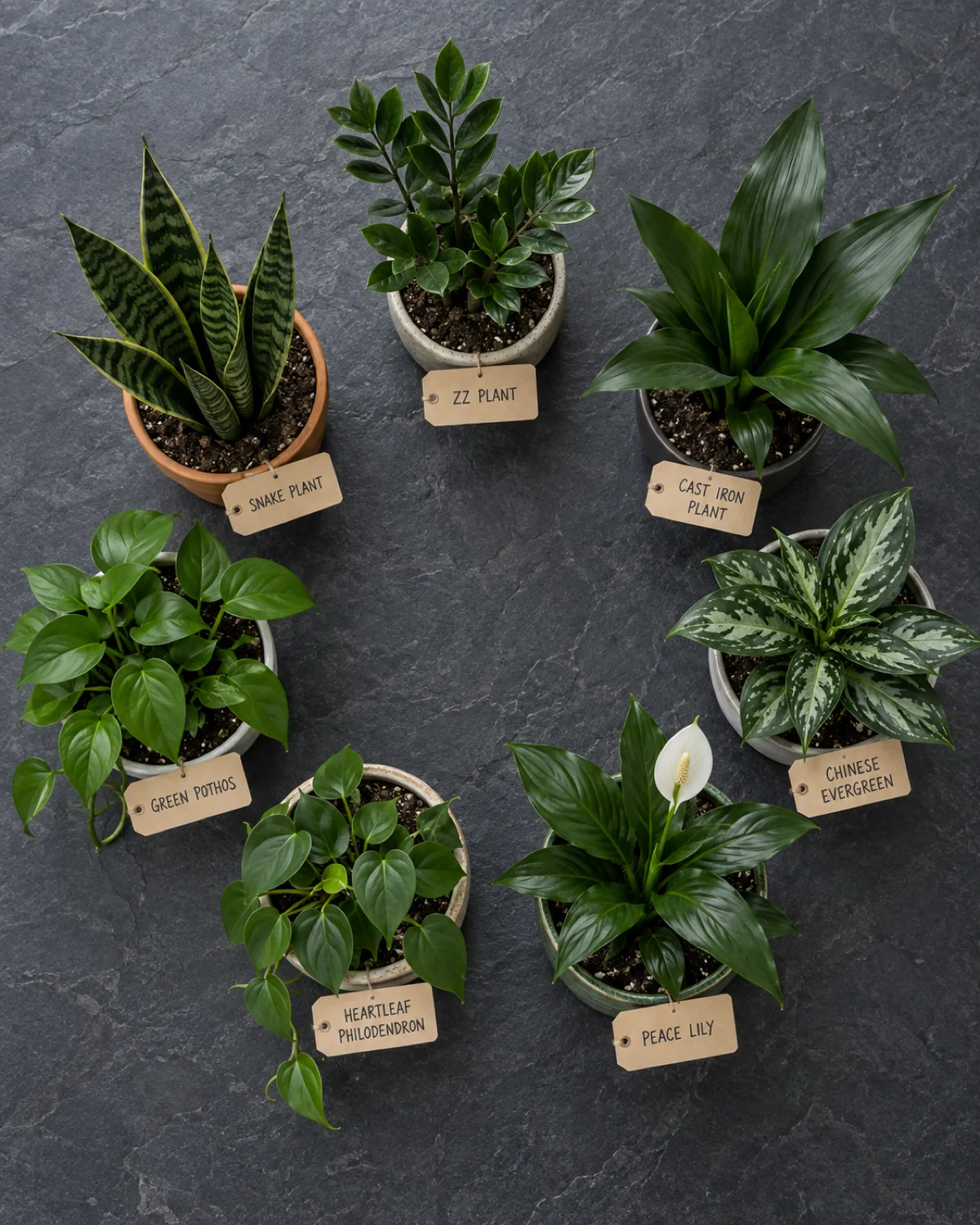
ZZ Plant (Zamioculcas zamiifolia) stores water and energy in thick underground rhizomes, which means it can coast through weeks of darkness without visible damage. In a dark room with a grow light, a ZZ plant holds its shape indefinitely and puts out a few new shoots per year.
The dark-room warning sign is new stems that come in pale and lean sharply toward the light. Full care details in the ZZ plant guide.
Cast Iron Plant (Aspidistra elatior) earned its common name by surviving Victorian parlors lit by gas lamps and coal-dust-filtered windows. It is the single toughest species for extreme low light. Growth is glacially slow even in good conditions, so the difference between "thriving" and "surviving" is hard to spot. If the leaf tips brown, it is too dry — not too dark.
- ZZ plant dark-room lifespan without grow light: three to six months before visible decline
- Cast iron plant dark-room lifespan without grow light: six to twelve months — the longest of any species
Chinese Evergreen (Agathea, dark-leaf varieties) with darker leaves tolerate less light because the higher chlorophyll concentration extracts more from what little light is available. Avoid variegated or pink-splashed cultivars — those need brighter light to maintain their color.
The dark-room warning sign is loss of pattern contrast. See the Chinese evergreen care guide for variety-specific details.
Quick Reference
7 plants for dark rooms at a glance
- 1ZZ PlantRhizome energy storage. Tolerates weeks of neglect. Pale leaning stems signal too little light.
- 2Cast Iron PlantVictorian parlor survivor. Glacially slow growth. Brown tips mean dry air, not darkness.
- 3Chinese Evergreen (dark-leaf)High chlorophyll absorbs more from minimal light. Avoid variegated cultivars in dark rooms.
- 4Peace LilyBlooms stop without light, but foliage holds. Dramatic wilt signals thirst. Non-fatal if you forget.
- 5Heartleaf PhilodendronFast trailer that slows to a crawl in dark rooms. Leggy growth is the first warning sign.
- 6Pothos (solid green)Only solid green — variegated types lose markings without light. Leggy spacing means move closer to light.
- 7Snake PlantStores water in thick leaves. Tolerates extended darkness. New growth in dark rooms is thin and floppy.
kultivy.com — save for your next plant-shopping trip
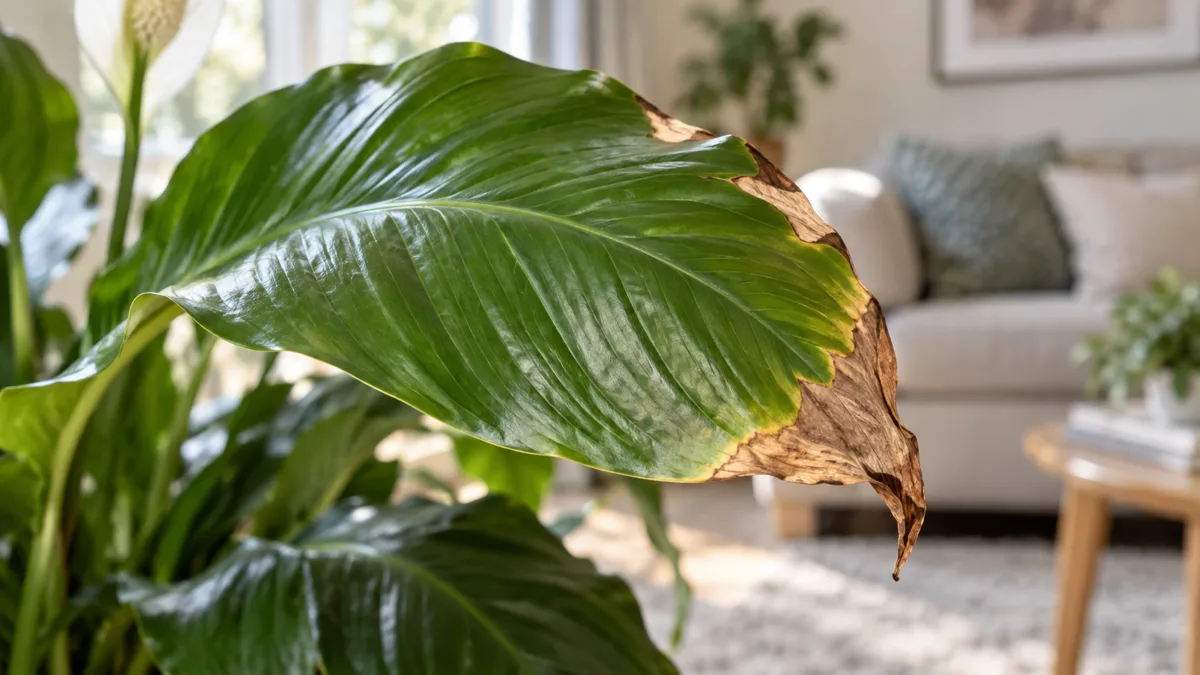
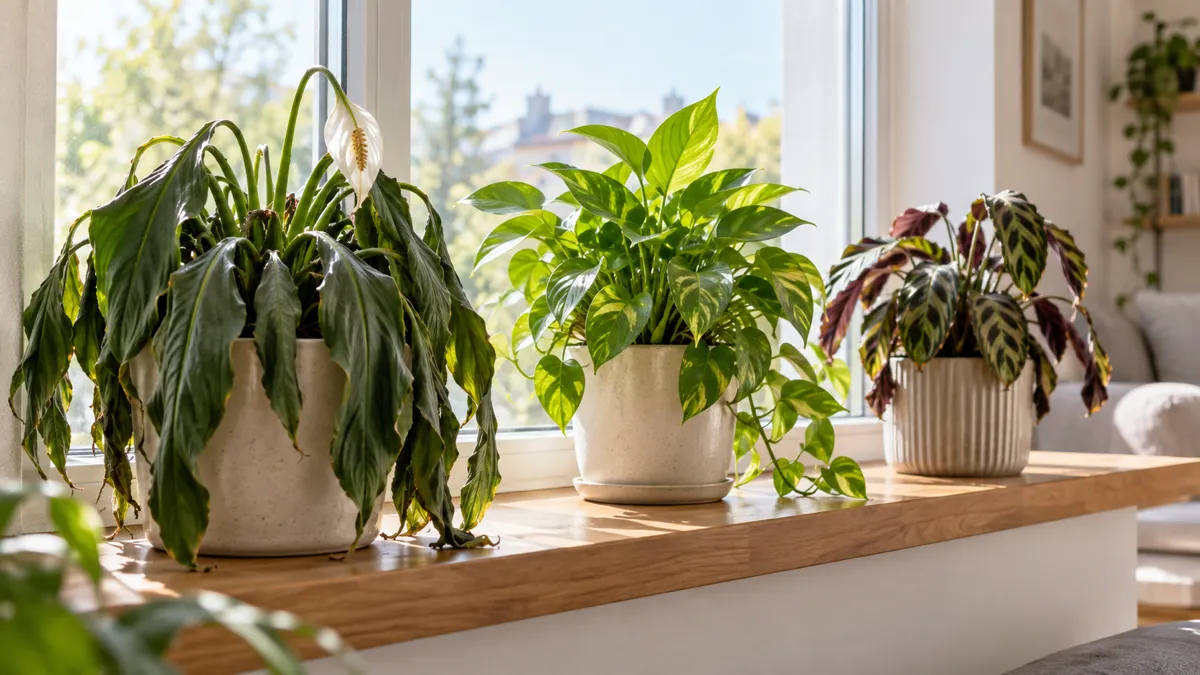
Peace Lily (Spathiphyllum) will not bloom in a dark room, but the foliage holds up better than most flowering plants. The dramatic wilt when it needs water is actually useful — it tells you exactly when to act, removing the guesswork that kills most dark-room plants. See the peace lily care guide.
Heartleaf Philodendron (Philodendron hederaceum) normally grows fast and trails aggressively. In a dark room, it slows to a crawl, which is the point — you want a plant that downregulates rather than dies. The first warning sign is wider spacing between leaves on new growth.
- Solid green pothos only: variegated types (marble queen, neon, manjula) lose their markings and revert to pale, sickly green without adequate light — the pothos care guide covers light requirements per variety
- Snake plant tolerance limit: new leaves in dark rooms grow thin and floppy instead of rigid and upright — the plant is alive but structurally compromised
All seven of these plants will decline eventually in a room with zero light. A grow light turns "surviving for a few months" into "living indefinitely." The species choice determines how much grow light you need — a ZZ plant needs less than a peace lily.
Rotation Strategies: Giving Dark-Room Plants a Light Holiday
If adding a permanent grow light is not possible, a rotation system is the next best approach. The idea is simple: no single plant lives in the dark room permanently. Instead, you cycle two or more plants between the dark room and a brighter spot on a regular schedule.
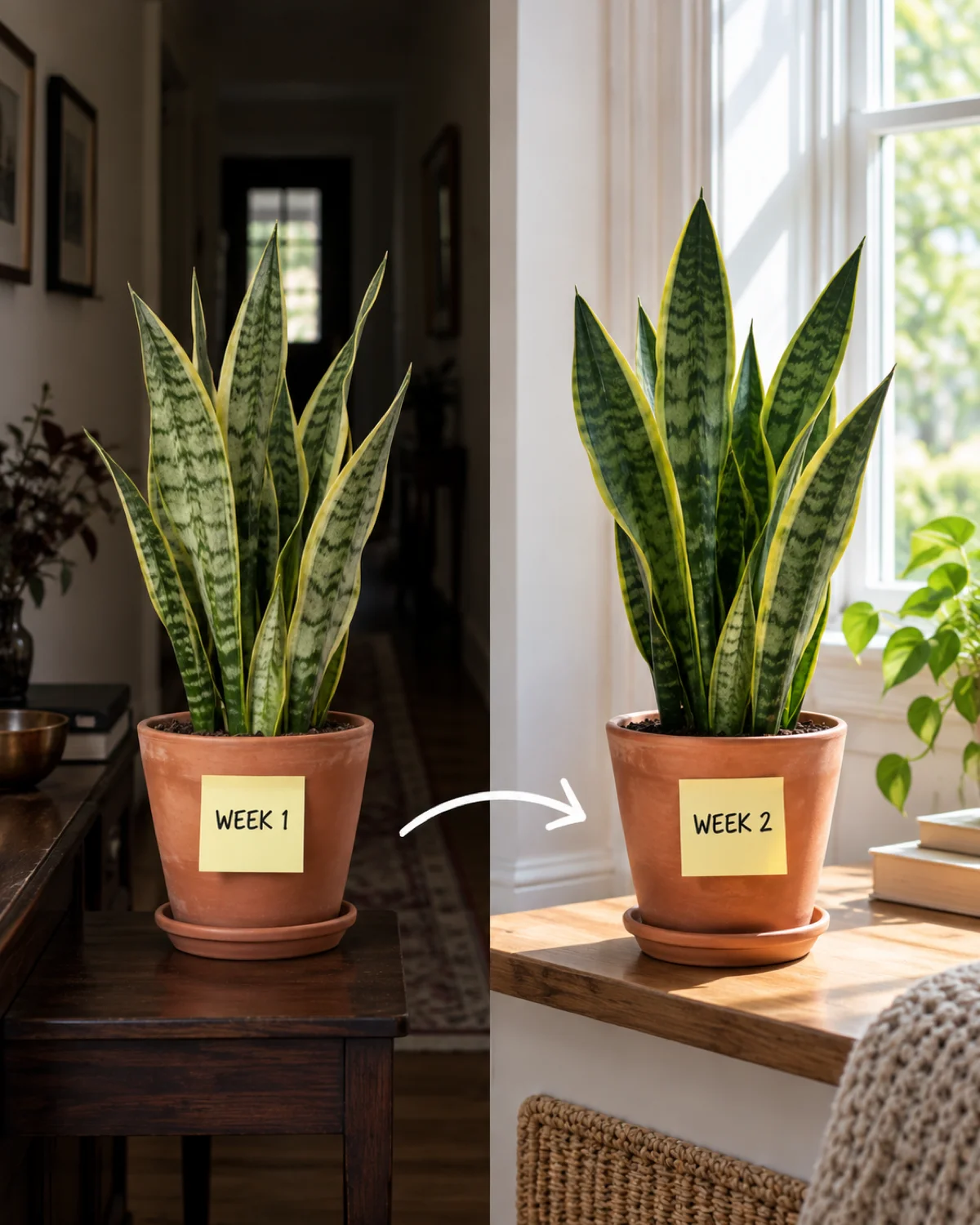
A two-week rotation works for most tough foliage plants. Plant A spends two weeks in the dark room while plant B recovers in a bright window. Then they swap. Each plant gets two weeks of real photosynthesis to recharge before going back into the dark.
Label each pot clearly — a strip of masking tape with "A" and "B" prevents confusion. Set a recurring phone reminder for swap day. The system breaks down the moment you forget a rotation.
- Minimum rotation period: two weeks in dark, two weeks in light — shorter is better for the plants but harder to maintain
- Number of plants needed: two identical plants per dark-room display spot — one on duty, one recovering
- Best candidates for rotation: ZZ plant, snake plant, cast iron plant — all tolerate the transition without shock
- Species to avoid rotating: peace lily (wilts dramatically during adjustment), ferns (hate being moved)
The recovery spot does not need to be a south-facing window. Any room with a real window and indirect light works. The goal is to give the plant two weeks of actual photosynthesis, not to sunbathe it.
Rotation is more work than a grow light and more expensive since you need two plants instead of one. But it works in situations where electrical access, aesthetics, or rental restrictions rule out a permanent grow light.
Watering in the Dark: Why Overwatering Is the Real Killer
Dark rooms kill more plants through overwatering than through darkness itself. The chain of events is straightforward: less light means less photosynthesis means less water consumption means soil stays wet longer means roots rot.
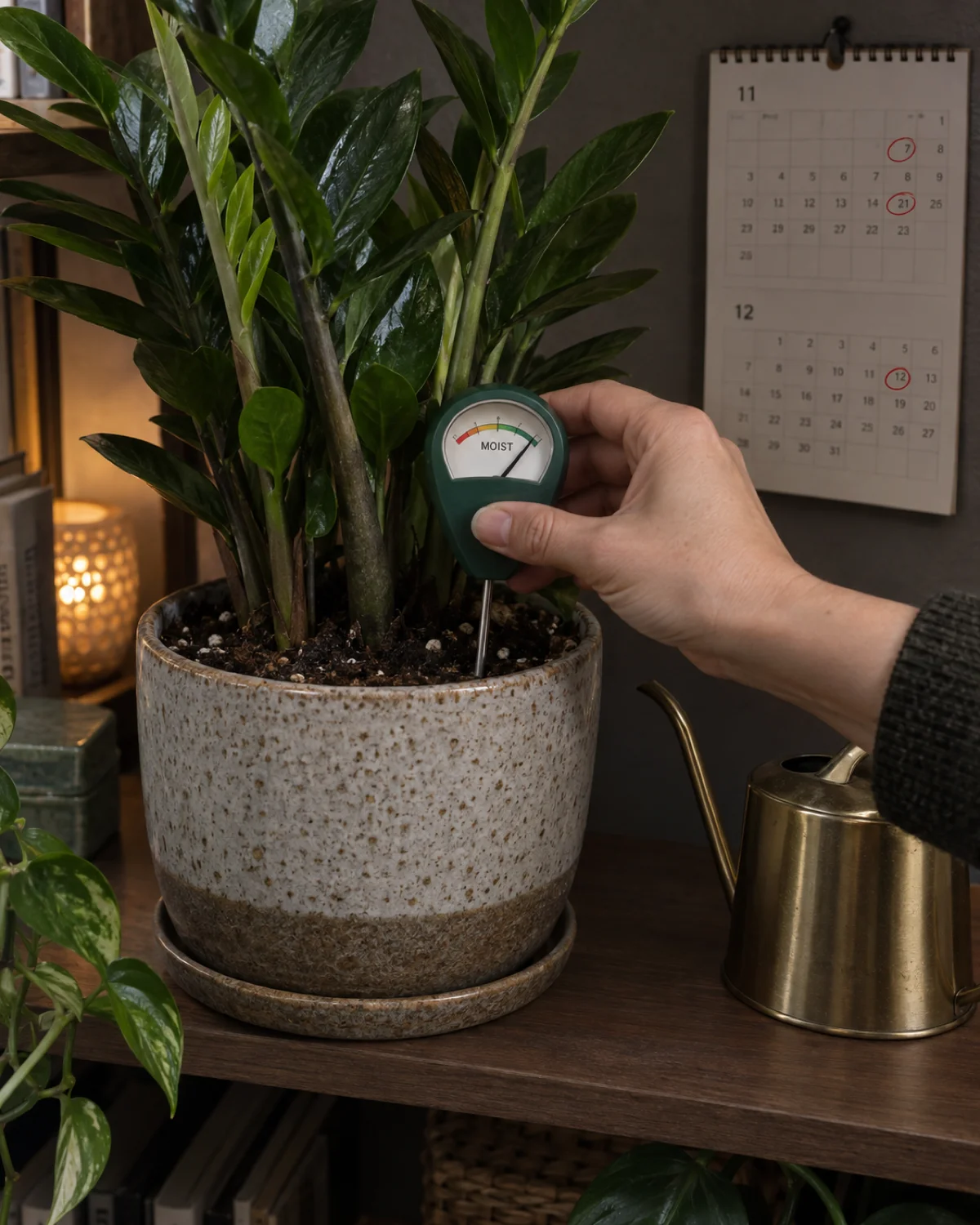
A plant in a bright window might dry out in five to seven days. The same plant in a dark room can stay moist for three to four weeks. If you water on the same schedule, the roots sit in wet soil for weeks, oxygen gets cut off, and root rot sets in.
The fix is aggressive: cut your watering frequency by at least half, and verify moisture before every single watering. A moisture meter pushed into the bottom third of the pot is the most reliable tool. The finger test works too — push your finger two inches into the soil and water only if it feels dry that deep.
- Moisture meter: push the probe to the bottom third of the pot — water only when the reading hits "dry"
- The finger test: two inches deep, bone dry = water; any moisture at all = wait another week
- Bottom watering: set the pot in a tray of water for 20 minutes, then drain — prevents crown rot and ensures even saturation
- Frequency in dark rooms: expect to water most plants once every three to four weeks, not weekly
For a deeper dive into diagnosing and fixing overwatering damage, see the overwatering guide. The symptoms — yellow mushy leaves, soft stems, sour-smelling soil — are the same regardless of lighting, but they happen faster in dark rooms because the excess moisture has nowhere to go.
Soil and Potting for Zero-Sun Conditions
Standard potting soil holds too much moisture for dark-room plants. Since the soil dries out so slowly without sunlight driving evaporation, you need a mix that drains faster and holds less water.
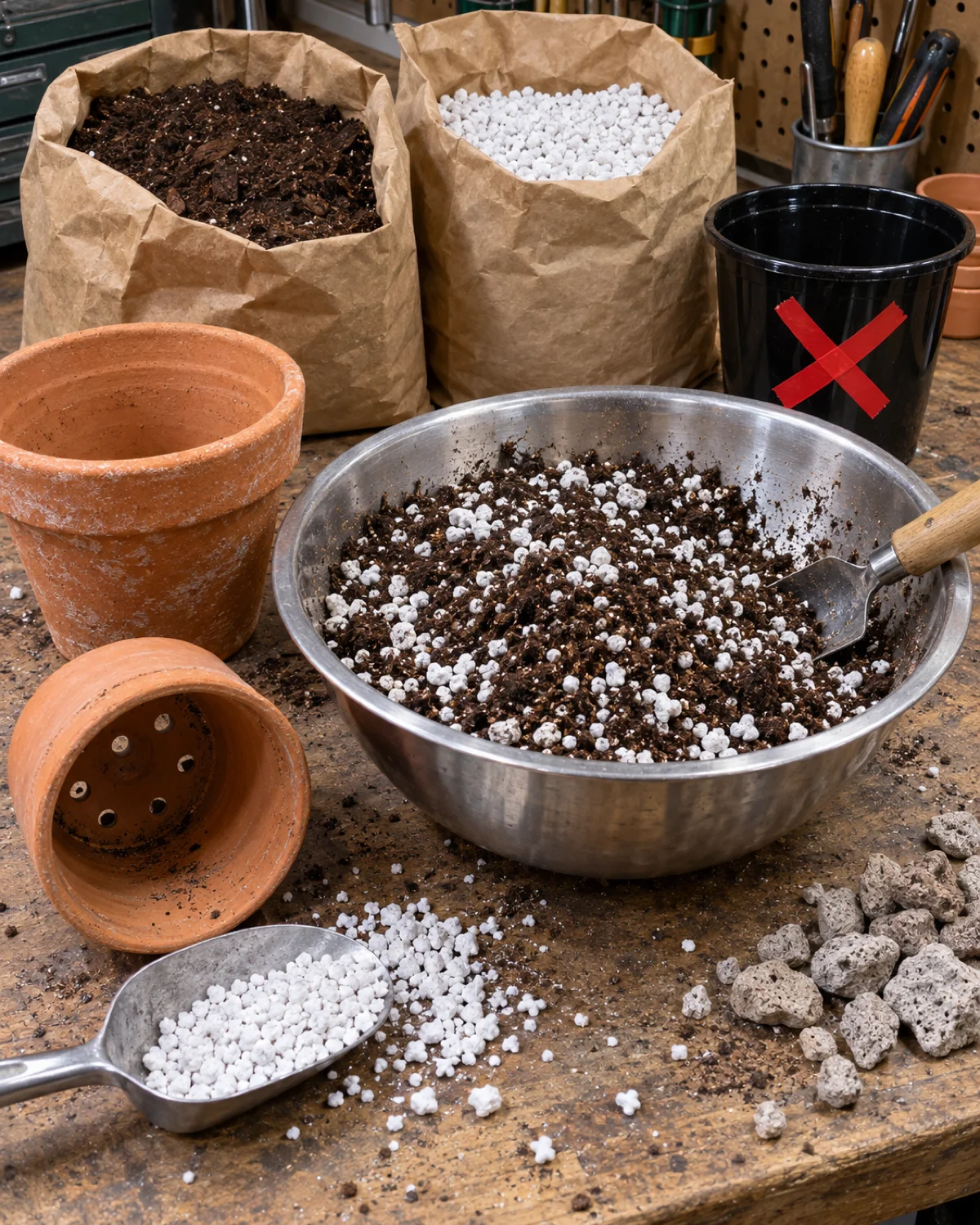
Add extra perlite or pumice to your standard potting mix — a ratio of roughly 40 percent perlite to 60 percent potting soil creates the airflow that dark-room roots need. The visible white chunks in the soil are not decoration; they create air pockets that keep oxygen around the roots even when the soil is moist.
Pot choice matters more here than in a sunny room. Terracotta is porous and breathes — moisture passes through the walls and evaporates from the exterior. Plastic and glazed ceramic trap all moisture inside, which is fine in a bright window but dangerous in the dark.
- Ideal mix: 60% standard potting soil + 40% perlite or pumice
- Pot material: unglazed terracotta over plastic or glazed ceramic — the breathability accelerates drying
- Pot size: go one size smaller than you normally would — less soil volume means less trapped moisture and faster dry-out
- Drainage: no saucer, or empty the saucer immediately after watering — standing water is the fastest path to root rot in a dark room
If you already have plants in plastic pots and standard soil, the single most impactful change you can make is repotting into terracotta with the perlite-heavy mix. Do this before adjusting anything else. The soil and pot work 24 hours a day to manage moisture — no amount of careful watering compensates for soil that holds water like a sponge.
Signs Your Dark-Room Plant Is Struggling (and What to Do)
Plants in dark rooms fail gradually, and the early warning signs are easy to miss if you do not know what to look for. Catching the first signal — not the third — is the difference between a save and a replacement.
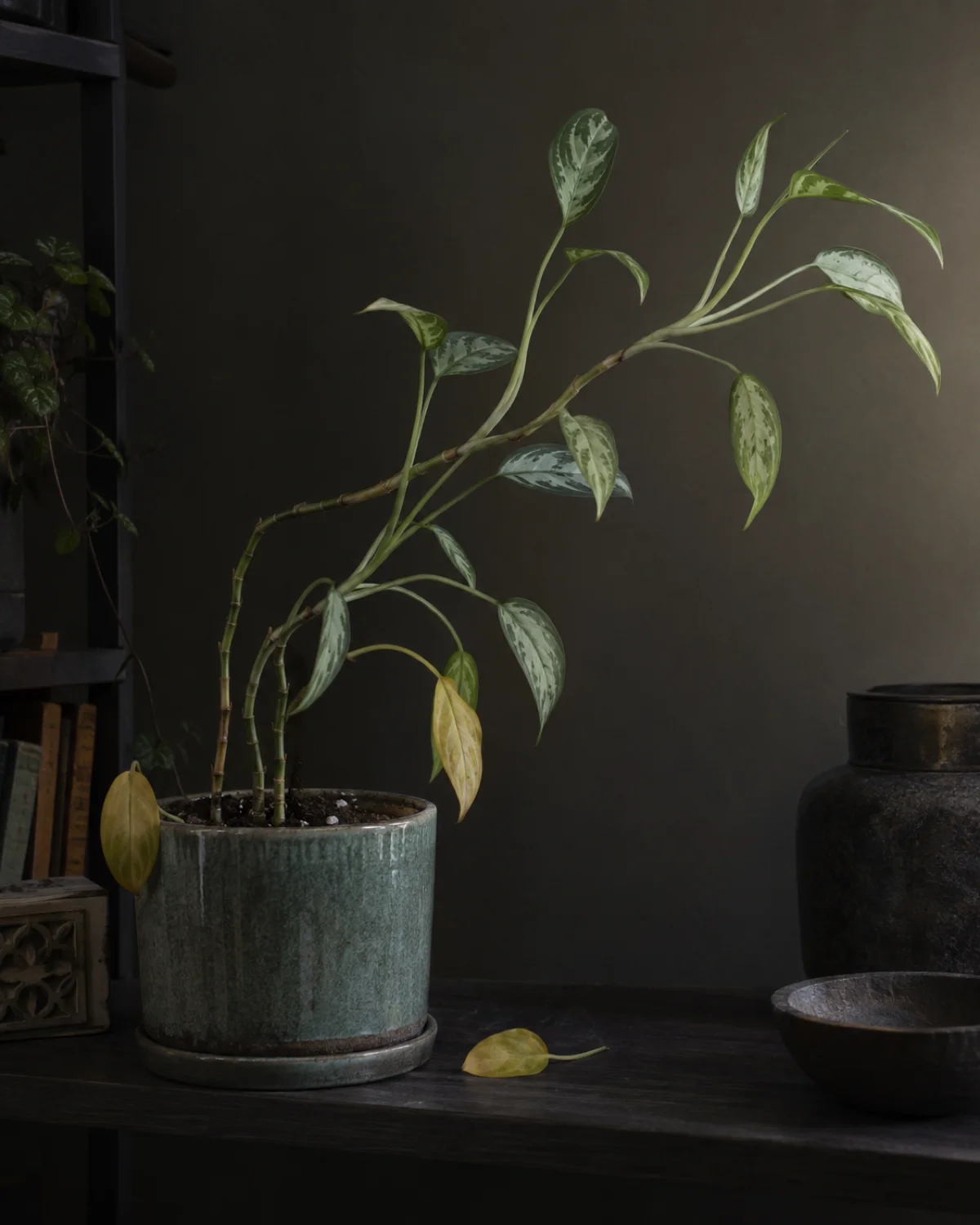
Etiolation is the first and most reliable sign. Stems stretch toward whatever faint light exists — a hallway bulb, a crack under a door, light from an adjacent room. New growth comes in elongated with wide spacing between leaves. The plant is literally reaching for survival.
Pale or yellowing leaves follow etiolation. Without light to drive chlorophyll production, leaves lose their deep green and fade to a washed-out yellow-green. This is different from nitrogen deficiency (which starts with the oldest leaves and moves up) — light starvation affects the whole plant at once.
Match the symptom to the action. The sooner you respond, the better the recovery odds.
- Zero new growth for three or more months: the plant is alive but not photosynthesizing enough to grow — increase light
- Leaf drop without yellowing first: cold drafts, temperature swings, or transplant shock rather than light issues — check placement
- Crispy brown leaf edges: low humidity, not low light — dark rooms in basements or near HVAC vents often have dry air
The key diagnostic question is always: did the light situation change, or did the watering situation change? In dark rooms, both problems look similar from the outside. Check soil moisture first — if the soil is soggy, overwatering is the primary issue regardless of light level.
Rooms That Trick You: Seemingly Bright Spaces That Are Actually Dark
Some rooms feel bright to your eyes but register as dark for plants. Human eyes adjust to low light automatically — your brain brightens dim rooms so effectively that you often cannot tell the difference between 50 foot-candles and 500 without a measurement.
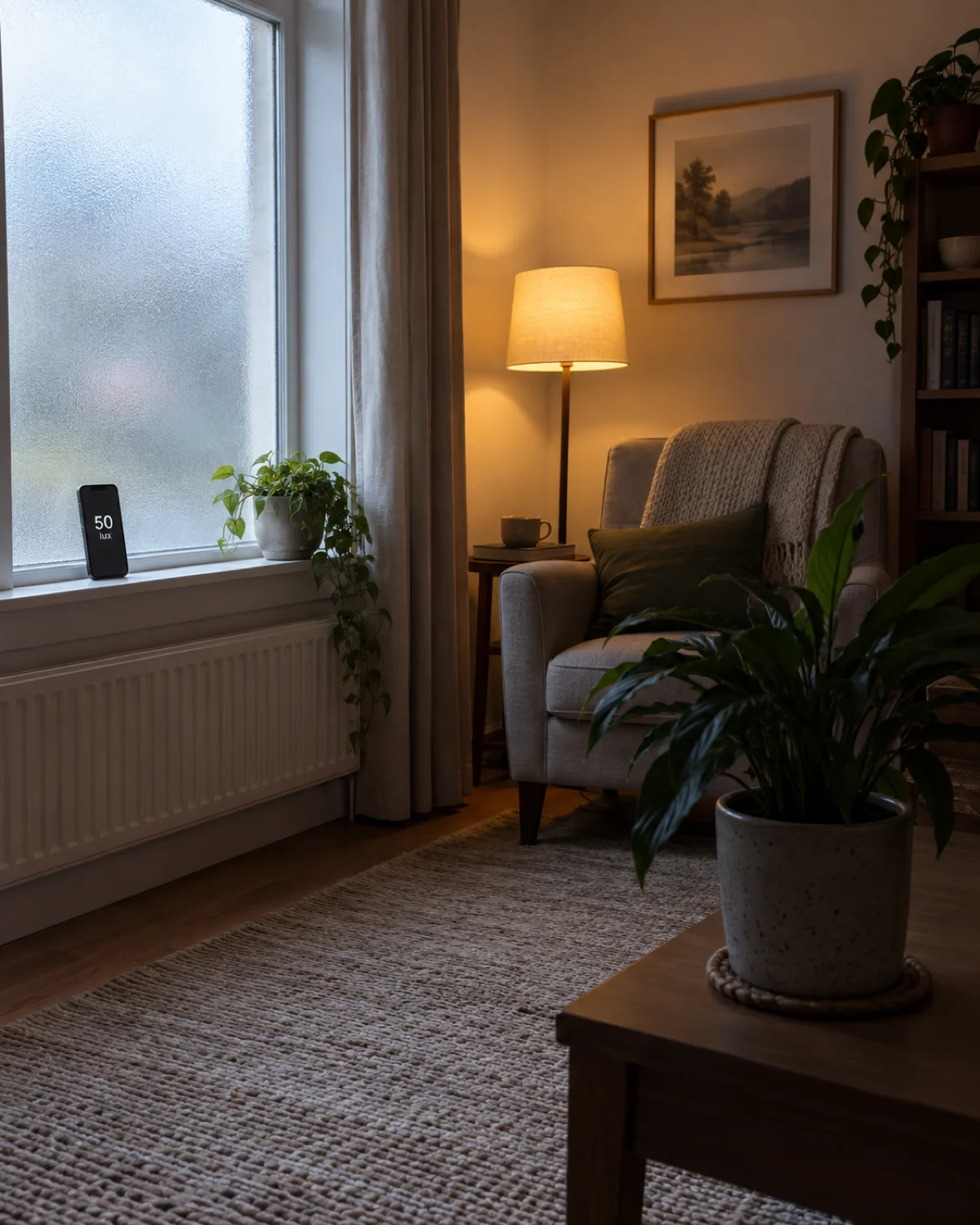
North-facing rooms in winter are the most common trap. In summer, indirect bounced light from the sky might push a north window to 100–200 foot-candles. In winter, with shorter days and a lower sun angle, the same window can drop to 25–50 foot-candles for months. Plants that did fine from June to September start declining in November.
Frosted or tinted glass cuts light transmission dramatically. A frosted bathroom window that looks bright lets through 30 to 50 percent of available light. A tinted office window can cut even more.
- Distance from window: usable plant light drops off within three to four feet of any window — a plant six feet from a north window is effectively in a dark room
- Building shadows: an adjacent building, tall fence, or covered porch that blocks the sky above 30 degrees reduces a window from "low light" to "dark"
- Overhead-only artificial light: a ceiling light that illuminates the room for human comfort delivers almost no usable light at plant height — the intensity at table level is far below the photosynthesis threshold
- Phone apps for measuring: free lux meter apps on smartphones give rough readings — anything below 200 lux (roughly 20 foot-candles) at the plant location means you are in dark-room territory
The only reliable diagnostic is measurement. Do the shadow test, use a light meter app, or simply watch whether a new plant holds its shape over the first month. If it starts leaning, stretching, or paling, the room is darker than it looks. Check your light requirements against the actual measurement, not your perception.
Making Dark Rooms Look Greener Without More Plants
Once you accept that dark rooms have a hard limit on how many living plants they can sustain, the question shifts from "how many plants can I fit" to "how do I make one or two plants feel like more."
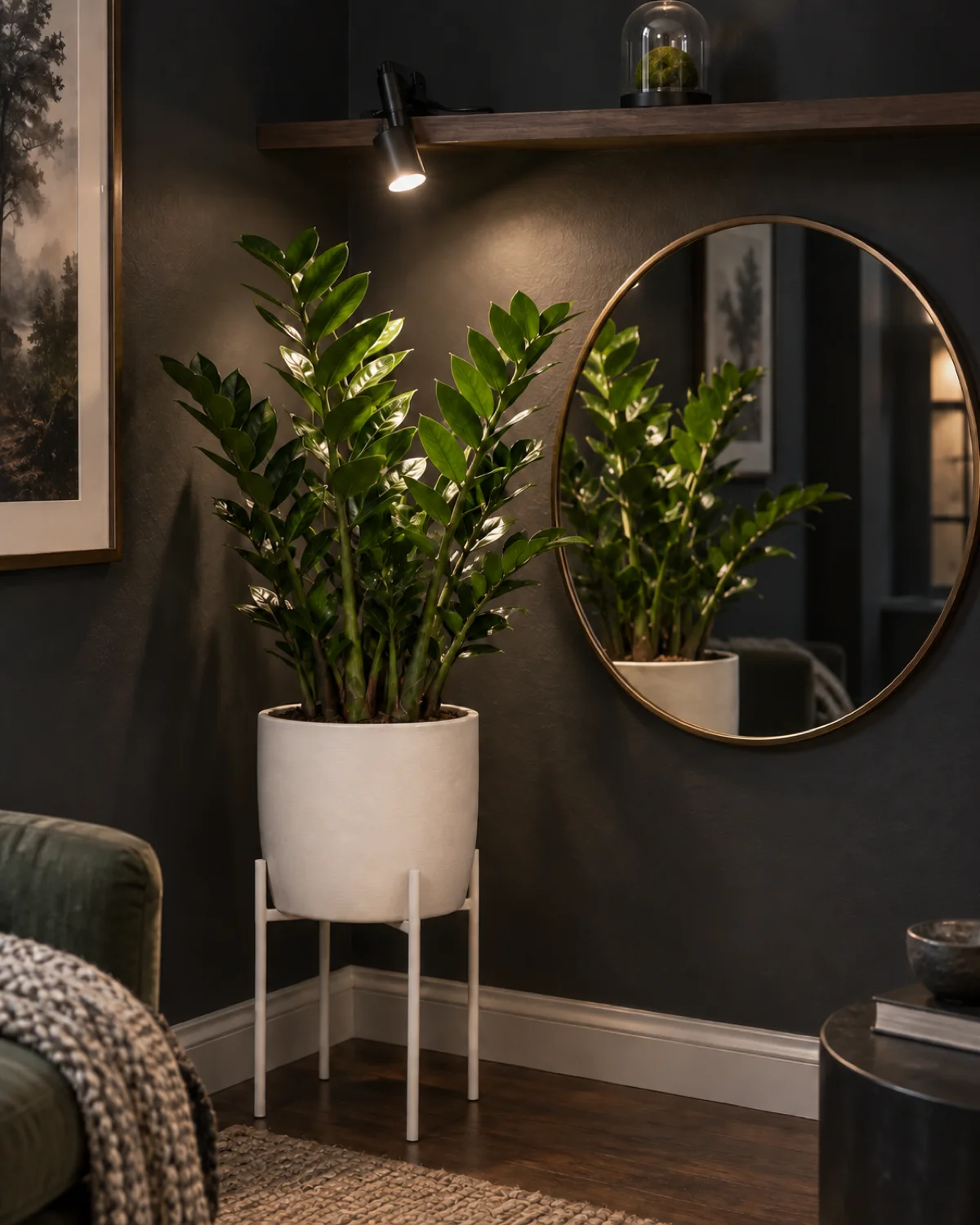
A mirror placed behind or beside a plant reflects both the plant itself and whatever grow light you are using, creating the visual impression of more greenery while also bouncing a small amount of additional light back onto the leaves. The light benefit is marginal, but the aesthetic impact is real.
Light-colored pots and plant stands pop against dark walls. A white or cream ceramic pot on a light wood stand draws the eye to the plant and makes it a focal point instead of a shadow. Dark pots in dark rooms disappear — the plant becomes invisible.
- One statement plant with proper light beats three struggling plants spread thin: concentrate your grow light budget on one healthy specimen rather than dividing inadequate light among several
- Preserved moss and dried arrangements require zero light and zero water — a glass dome with preserved moss on a shelf adds texture without any maintenance burden
- Trailing dried eucalyptus or preserved ferns on a high shelf create a green-adjacent aesthetic that needs no light at all
- Plant-themed art or botanical prints satisfy the desire for greenery in spaces where living plants simply cannot work
The hardest truth about plants for dark rooms is that some rooms should not have living plants at all. A windowless interior hallway with no electrical outlet for a grow light and no rotation plan is not a viable plant location. Putting a plant there is not giving it a home — it is giving it a death sentence on a slow timeline.

Mara writes about houseplant care, propagation, and indoor styling at Kultivy. She believes every windowsill deserves at least one plant that earns its spot.
Frequently Asked Questions
Can plants survive in a room with no windows at all?
Not indefinitely without supplemental light. Even the toughest species — ZZ plant, cast iron plant — slowly decline in zero natural light because there is no photosynthesis happening at all.
A grow light running 12 to 14 hours per day changes the equation completely. With a basic LED grow light, all seven plants listed in this guide will survive and even grow slowly in a windowless room.
- Without grow light: survival measured in months, not years
- With grow light: indefinite with proper watering and soil
How many hours of grow light replace sunlight?
It depends on intensity, but a general rule is 12 to 14 hours of moderate LED grow light (50+ PPFD at the leaf surface) provides enough energy for maintenance-level survival of low-light-tolerant species.
This is longer than a natural day because grow lights are typically weaker than actual sunlight.
- South-facing window in summer: 500+ PPFD for six to eight hours — high daily light total in a short period
- Budget grow light: 50–100 PPFD for 12–14 hours — lower intensity compensated by longer exposure
Do dark rooms need different fertilizer?
Yes — less of it, and less often. Plants in dark rooms grow slowly, and feeding a slow-growing plant at normal rates pushes weak, leggy growth and risks salt buildup in the soil.
- Frequency: once every two to three months during spring and summer, none in fall and winter
- Strength: dilute to half the label recommendation
- Type: balanced liquid fertilizer (10-10-10 or similar)
Is it better to rotate plants or add a grow light?
A grow light is simpler, more reliable, and usually cheaper over time. One LED bulb in a desk lamp costs less than buying a second plant for a rotation system.
Rotation works when you cannot install a light — rental restrictions, no nearby outlet, or aesthetic reasons. But it requires discipline (remembering to swap on schedule) and double the plants.
- Best for reliability: grow light
- Best for no-electricity situations: rotation with two tough species