Most rare houseplants are not expensive because they are fragile. They propagate slowly, demand conditions retail growers cannot scale, or carry variegation that a single bad cutting can erase.
This guide covers ten uncommon indoor plants worth the hunt, where to find them without getting scammed, and the care shifts that keep rare foliage alive.
From what makes a plant rare to building a collection on a budget. Jump to what you need.
What Actually Makes a Houseplant Rare
The word "rare" gets applied to any plant that costs more than twenty dollars, but actual rarity comes down to a few specific bottlenecks.
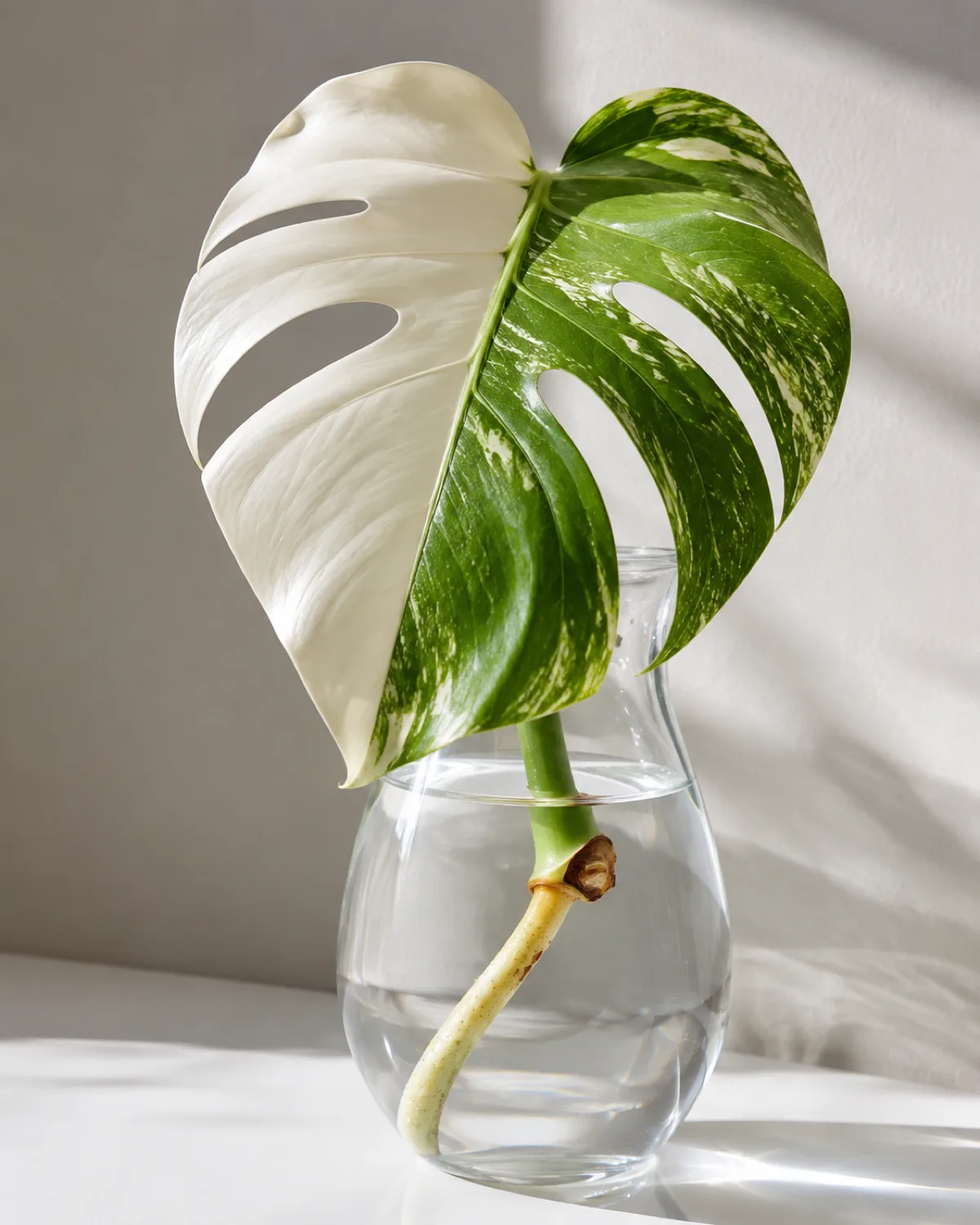
Slow propagation is the biggest one. A plant like Monstera deliciosa grows fast enough that every garden center carries it. Monstera deliciosa 'Albo Variegata' cannot be mass-produced by tissue culture because the variegation is chimeral — unstable in lab conditions. Every new plant comes from a cutting, and each cutting takes months to root and establish.
Limited natural habitat matters too. Some alocasias grow only on specific mountainsides in Borneo. Collectors can propagate them, but the starting stock is tiny.
- Unstable variegation — the white or pink sectors in chimeral plants can revert to all-green at any time, so growers lose a percentage of their stock to reversion
- High demand against low supply — social media drives demand faster than propagation can respond
- Legal collection restrictions — CITES-listed species cannot be wild-harvested, so supply depends entirely on nursery propagation
A plant being uncommon at your local garden center does not make it rare in an absolute sense. Hoya compacta is uncommon in big-box stores but readily available online for twenty dollars. True rarity means the global supply of propagated plants is genuinely small.
Variegated Monstera: The Plant That Started the Collector Craze
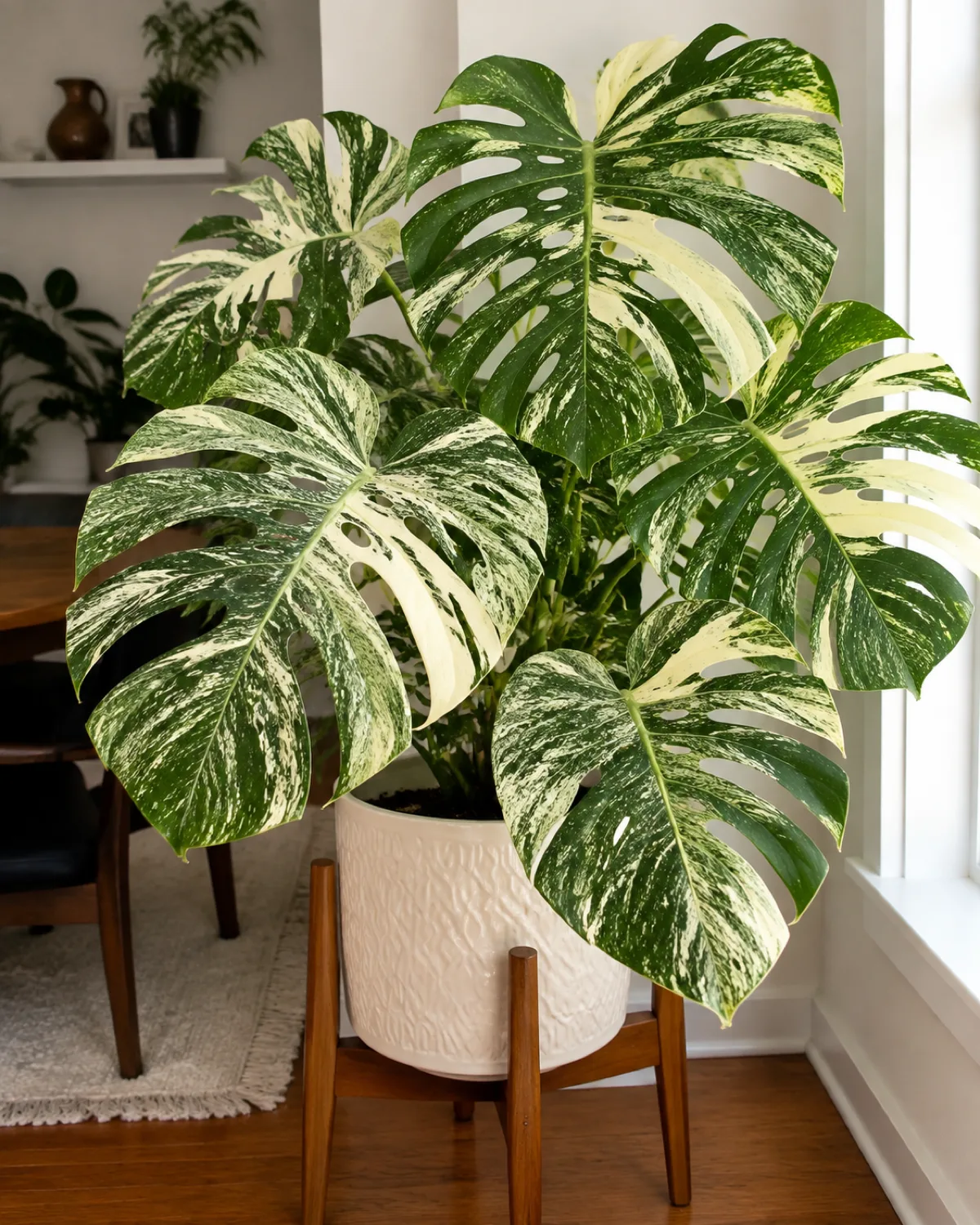
Two variegated forms of Monstera deliciosa dominate the collector market, and understanding the difference between them saves hundreds of dollars and a lot of disappointment.
Thai Constellation carries speckled cream-and-green variegation that is relatively stable. It was developed through tissue culture in Thailand, and large-scale labs have been ramping production since 2023. Prices have already dropped from four figures to the low hundreds for a rooted plant. The variegation pattern stays consistent from leaf to leaf because it is bred into the cell line.
Albo Variegata is the one that still commands high prices. Its variegation is chimeral — the white sectors exist only in certain cell layers, and every new growth point is a gamble.
- A cutting with a half-moon leaf (half white, half green) is the most sought-after form
- The next leaf could come out fully green (reversion) or fully white (unable to photosynthesize and will die)
- Tissue culture attempts mostly produce all-green plants, so propagation stays cutting-by-cutting
Leaf-only cuttings do not work. A variegated monstera cutting needs at least one node with an active growth point. Sellers offering a single leaf in water are selling a decorative cut flower, not a plant that will grow.
If you want the look without the gamble, Thai Constellation gives you stable variegation at a fraction of the Albo price — and that price keeps falling as production scales.
Pink Princess Philodendron and the Color That Fades
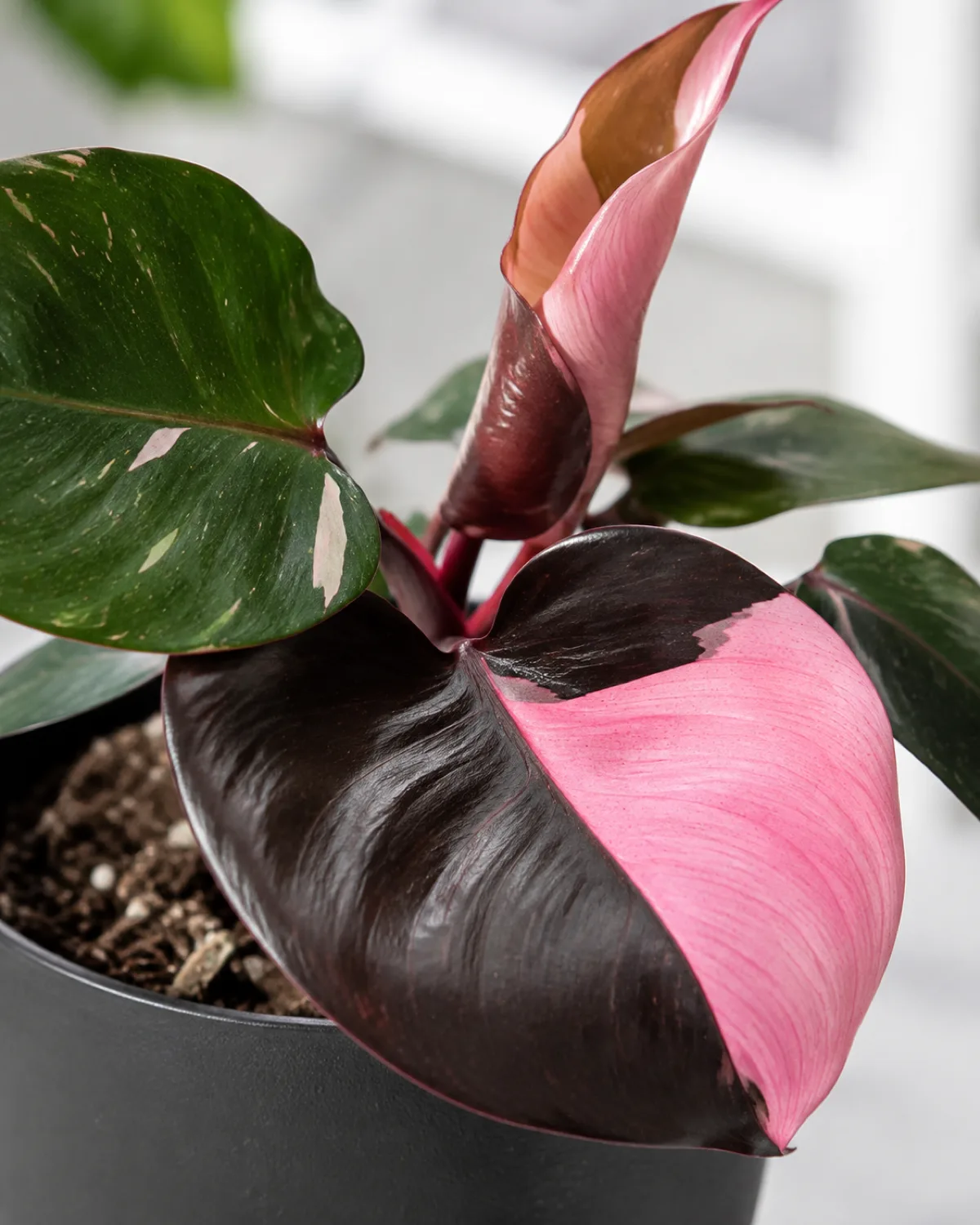
The Pink Princess Philodendron (Philodendron erubescens 'Pink Princess') is one of the most visually dramatic houseplants in cultivation. The dark burgundy-black leaves splashed with bubblegum pink make it instantly recognizable.
The pink is not a stable trait. It is anthocyanin pigment in cell layers that can shift based on light, genetics, and plain luck.
- Half-moon leaves — one side green/black, one side solid pink — are the collector's prize, but the plant does not produce them reliably
- Splash variegation — scattered pink flecks across a dark leaf — is more common and still striking
- Reversion — new growth comes out entirely dark green with no pink, meaning the chimeral mutation has been lost in that growth point
Bright indirect light is the single most important factor for maintaining pink coloring. In low light, the plant pushes out more chlorophyll to compensate, and new leaves trend toward all-green.
- Give it the brightest indirect light you can manage without direct midday sun
- A south or west window with a sheer curtain is ideal
- If a growth point reverts, cut back to the last node that produced pink — the next shoot from that node sometimes recovers the variegation
A leaf with zero green has zero chlorophyll and cannot photosynthesize. The plant keeps it alive by feeding it from other leaves, but it is a net drain on energy. Too many all-pink leaves in a row and the plant weakens. The ideal is a balance of pink and green on every leaf — that is what half-moon collectors are after.
A fully pink leaf is beautiful for a photo, but it is not what you want if the goal is a healthy long-term plant. Balance is the point.
Alocasia Dragon Scale and Other Jewel Alocasias
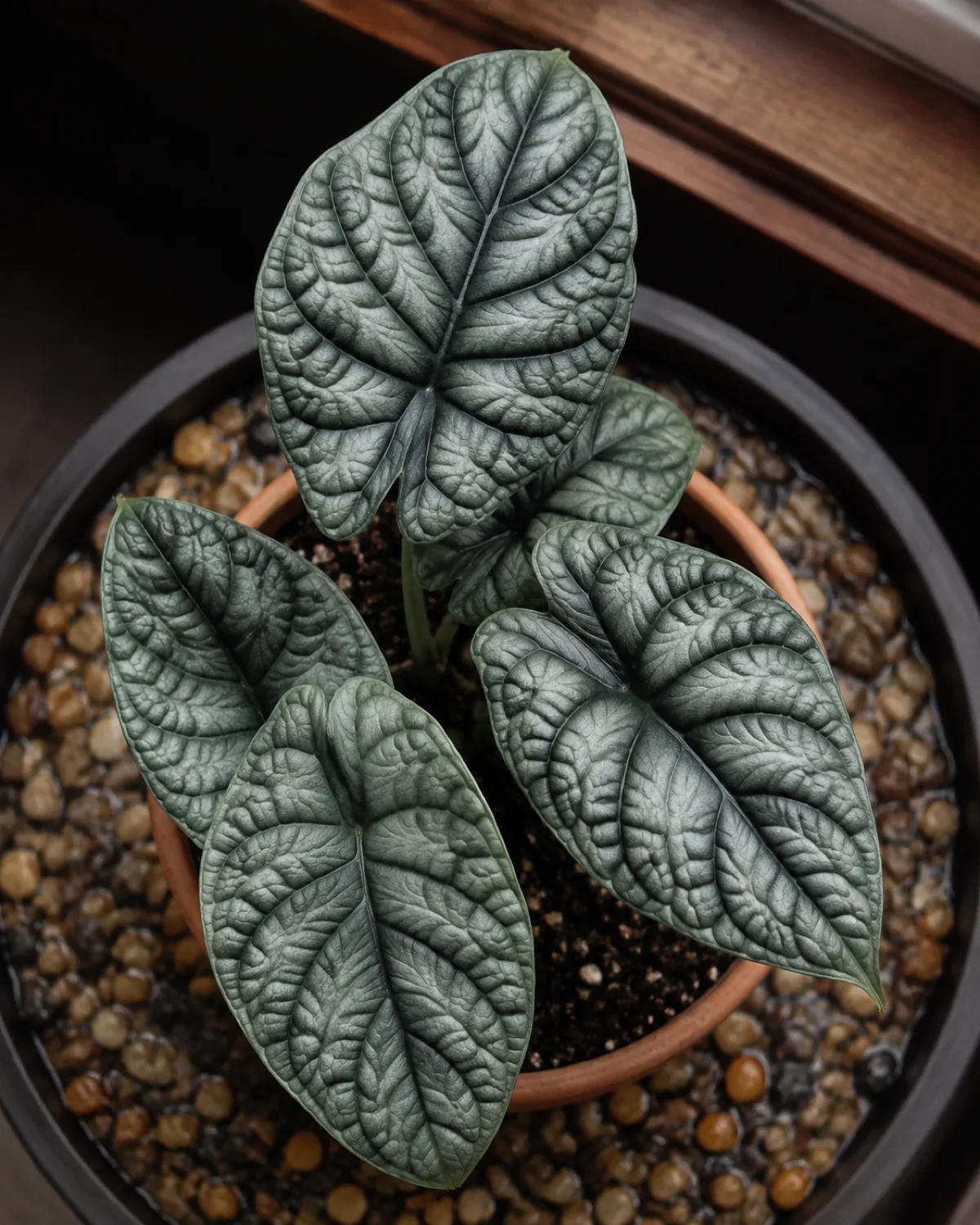
The jewel alocasias are some of the most texturally dramatic houseplants alive. Their leaves look like they were pressed from metal or carved from stone.
The three most sought-after species:
- Dragon Scale (Alocasia baginda 'Dragon Scale') — thick, stiff leaves with deeply embossed veining. The surface is silvery green between dark veins, and the texture genuinely resembles reptile scales. Compact and upright in good conditions.
- Silver Dragon (Alocasia baginda 'Silver Dragon') — a paler cousin with lighter silvery leaves and less pronounced veining. Stays smaller than Dragon Scale and wants slightly less light.
- Cuprea (Alocasia cuprea) — a metallic sheen that shifts between copper and dark green depending on the angle. The texture is rigid and almost plastic-looking.
All three share the same care profile, and it is not forgiving:
- Humidity above 60 percent is non-negotiable — below that, leaf edges crisp and new growth stalls
- Chunky, fast-draining aroid mix — these are not standard potting soil plants
- Bright indirect light, no direct sun (the metallic leaf surfaces scorch quickly)
- Winter dormancy is common — the plant drops leaves and goes quiet for weeks or months, then pushes new growth from the bulb
That dormancy panics new owners. The plant looks dead. It is not. The corm (underground storage bulb) is alive and will regrow when warmth and humidity return. Keep the soil barely moist and wait.
Hoya Varieties Collectors Hunt For
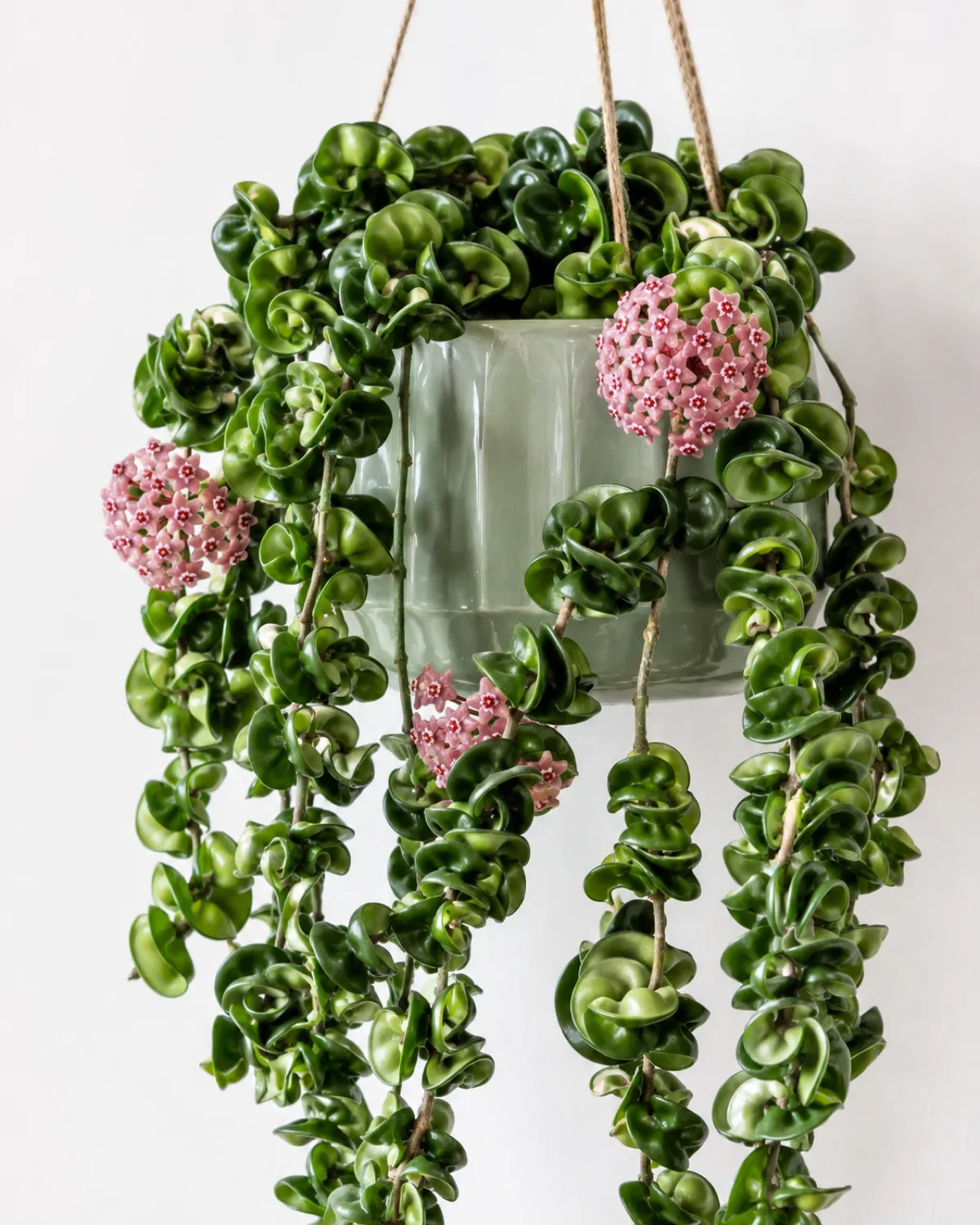
Hoyas are the sleeper hit of the collector world. They are forgiving, they bloom with spectacular fragrant flower clusters, and the genus contains hundreds of species with wildly different leaf shapes.
The most hunted varieties right now:
- Hoya compacta (Hindu Rope) — thick, tightly curled leaves bunched along rope-like vines. Slow-growing but extremely long-lived. The variegated form with cream edges commands higher prices.
- Hoya linearis — thin, soft, needle-like leaves that cascade in curtains. Looks nothing like a typical hoya. Wants slightly more water than most.
- Hoya curtisii — tiny spade-shaped leaves with silver splashes, trails beautifully from a small pot. One of the more affordable collector hoyas.
- Hoya kerrii — the sweetheart plant. Sold as single heart-shaped leaves around Valentine's Day, but a single leaf rarely grows into a full plant. Buy one with a vine and node if you want actual growth.
All collector hoyas share one critical rule: never cut the peduncle (the woody flower stalk). Hoyas bloom from the same peduncle year after year. Cut it and you remove future flowers from that spot permanently.
- Bright indirect light promotes blooming — a few hours of gentle morning direct sun is fine
- Let the soil dry almost completely between waterings
- Use a well-draining mix with perlite and orchid bark
- Fertilize lightly during the growing season with a bloom-promoting formula (higher phosphorus)
Once established, hoyas are remarkably low-maintenance. The collector appeal is that there are always more species to hunt — the genus has over 500 described species and new ones still being discovered.
Anthurium Clarinervium and Velvet-Leaf Anthuriums
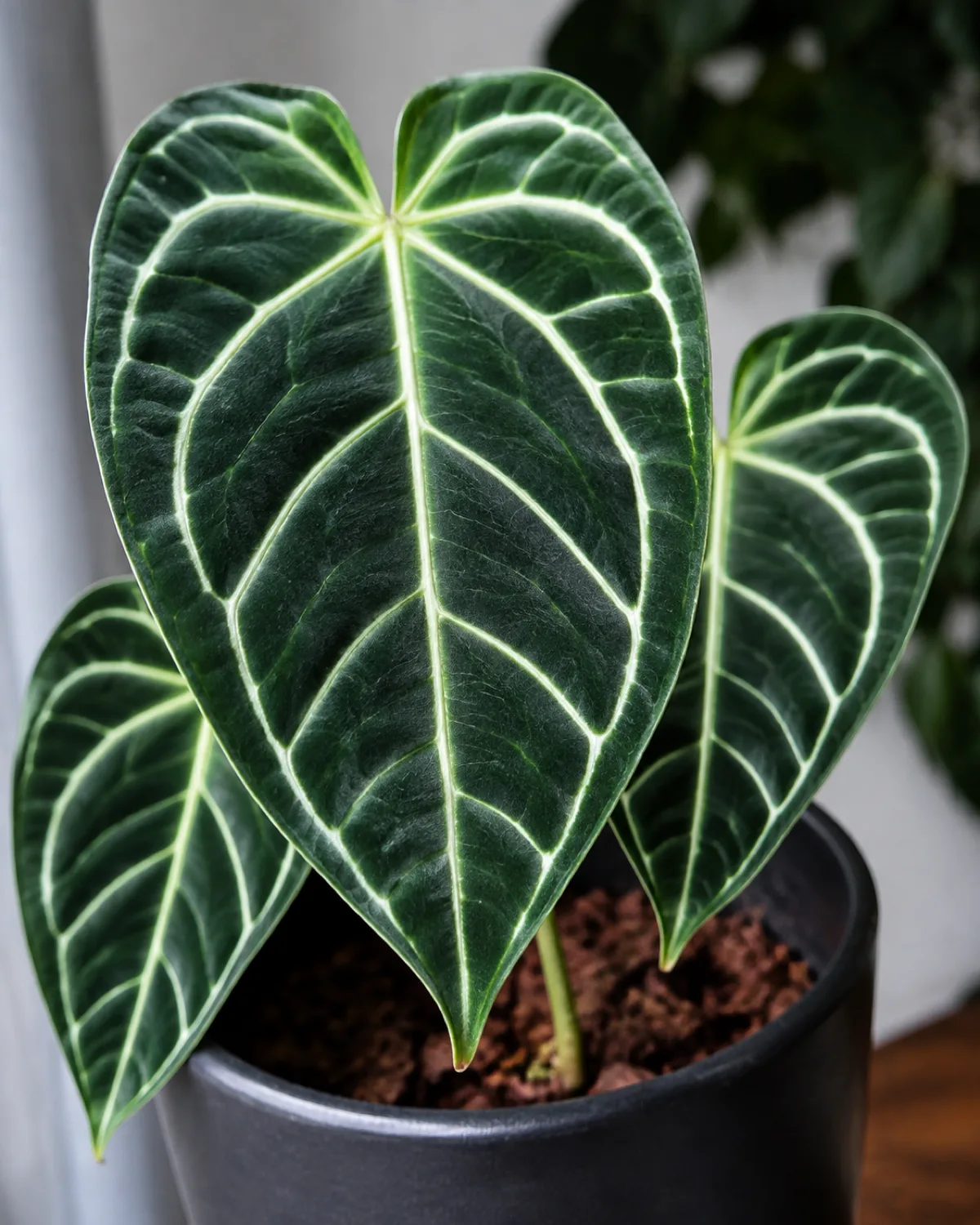
The standard Anthurium that garden centers sell is Anthurium andraeanum — the red-spathed flowering type. Collector anthuriums are a different universe. They are grown for foliage, not flowers, and the leaves have textures that photographs barely capture.
Anthurium clarinervium is the gateway. Heart-shaped leaves with a dark velvety surface crossed by dramatic white veins that look painted on. The leaf texture is thick and leathery, almost cardboard-like.
Anthurium crystallinum looks similar but has a key difference: narrower leaves, thinner texture, and veins that are slightly less white and more silvery. The two hybridize freely, so many plants sold as one are actually the other or a cross.
Care for velvet-leaf anthuriums differs meaningfully from the standard flamingo flower:
- Humidity above 60 percent — the velvet leaf texture traps moisture, and in dry air the leaves curl and brown at edges
- Chunky aroid mix — bark, perlite, charcoal, sphagnum. No standard potting soil.
- No direct sun — the dark velvet surface absorbs heat and scorches quickly
- Slow growth is normal — these put out one leaf every few weeks to months, not the rapid growth of a pothos
- Gentle air circulation — stagnant humid air invites fungal issues on those velvety surfaces
These are not beginner plants. But if you have the humidity dialed in — a humidifier, a bathroom with a window, or a cabinet setup — they reward patience with some of the most beautiful foliage in the plant world.
String of Turtles, String of Dolphins, and Other Trailing Oddities
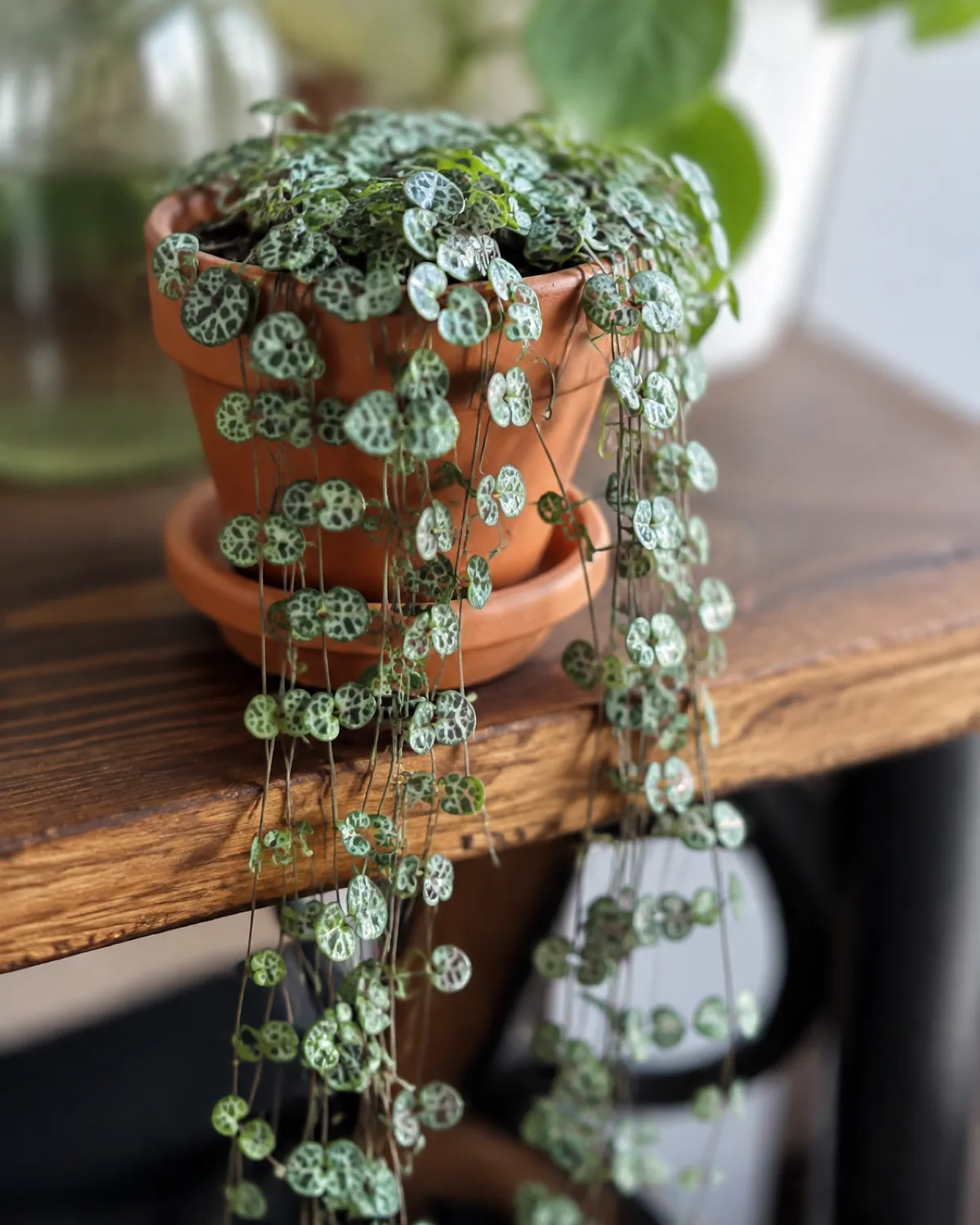
The "string of" plants have become a collector category of their own. Each one grows tiny leaves along trailing stems, and each one has a leaf shape so specific it earned a zoological nickname.
The three most popular trailing oddities:
- String of Turtles (Peperomia prostrata) — thumbnail-sized round leaves with dark veining that looks exactly like a turtle shell pattern. The slowest grower in the group and the most sensitive to overwatering. Semi-succulent leaves, so let the soil dry almost completely. Related to the broader Peperomia family.
- String of Dolphins (Senecio peregrinus) — each leaf is shaped like a leaping dolphin, complete with a dorsal fin and snout. A hybrid of string of pearls and candle plant, and it wants the same care: bright light, infrequent deep watering, very fast-draining soil.
- String of Hearts (Ceropegia woodii) — heart-shaped leaves with silver markings on fine, almost thread-like stems. Technically a semi-succulent vine. Grows fast compared to the others and propagates easily from aerial tubers or stem cuttings.
What they share:
- All hate sitting in wet soil — root rot is the number one killer
- Small pots work better than big ones (less excess moisture around tiny root systems)
- Bright indirect light keeps the trailing stems from going leggy
- They look best trailing from a high shelf or hanging planter
String of turtles is genuinely uncommon and worth hunting for. String of hearts has become common enough to appear in garden centers. String of dolphins sits in between — findable online but rarely in stores.
Where to Find Rare Houseplants Without Getting Scammed
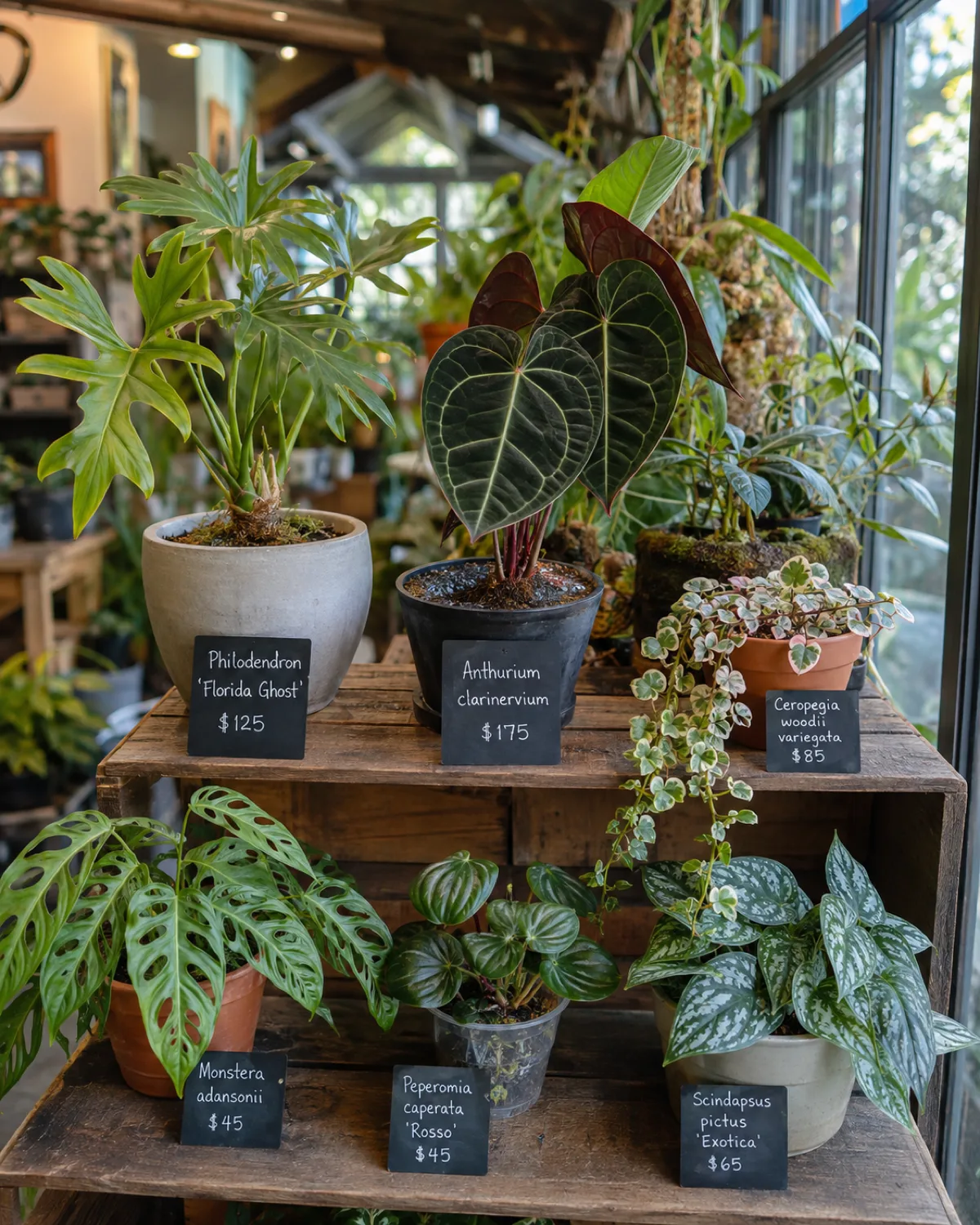
The rare plant market has real scammers. Some sell photos of plants they do not own. Others ship sick plants, unrooted cuttings labeled as "established," or misidentified species. Knowing where and how to buy protects both your money and your growing confidence.
Best sources, in order of reliability:
- Local specialty nurseries — you see the plant before you buy. Staff can tell you exactly how long it has been in their care. This is the safest entry point.
- Plant shows and swaps — sellers bring plants in person, and reputations matter in small communities. Great for finding uncommon species at fair prices.
- Established online nurseries with a verifiable track record — look for nurseries that show their own growing facilities, have consistent reviews over years (not just a burst of five-star reviews in one month), and offer replacement guarantees.
- Etsy and eBay — viable but riskier. Individual sellers vary wildly in quality.
Red flags when buying online:
- Stock photos instead of photos of the actual plant you will receive
- No reviews, or reviews that are obviously fake (generic praise, no plant specifics)
- "Node only" or "wet stick" listings that charge full-plant prices for a bare stem cutting
- Sellers who refuse to show roots or the underside of leaves
- Shipping without heat packs in winter or insulation in summer
When your new rare plant arrives, quarantine it for two weeks before placing it near your existing collection. Online plants can carry pests — mealybugs, spider mites, thrips — that you do not want spreading to your other plants.
Red Flags When Buying Rare Plants Online
- 1Stock photos instead of the actual plantIf the seller cannot photograph the exact plant shipping to you, they may not have it.
- 2No reviews or suspiciously generic reviewsLook for buyers who mention the specific species, shipping condition, and root health.
- 3Node-only listings at full-plant pricesA bare node with no leaf is a gamble that can take months to sprout, if it sprouts at all.
- 4Refusing to show roots or leaf undersidesHealthy sellers are proud of root systems. Hidden roots usually mean root rot or no roots at all.
- 5No heat pack option for winter shippingTropical plants die in cold transit. A seller who skips this does not care about arrival condition.
- 6Pressure language like limited stock or last oneReal nurseries restock. Artificial urgency is a manipulation tactic, not a supply signal.
- 7Price far below market for a high-demand speciesA Thai Constellation listed at thirty dollars is either misidentified, sick, or does not exist.
- 8No return or replacement policyReputable sellers guarantee live arrival and replace plants that arrive damaged.
- 9Vague species names like rare monsteraReal sellers name the cultivar. Vague labels hide misidentification or deliberate deception.
- 10Account created in the last three monthsNew accounts with no history are the highest-risk sellers on any marketplace platform.
kultivy.com
How Rare Plant Care Differs From Standard Houseplant Care
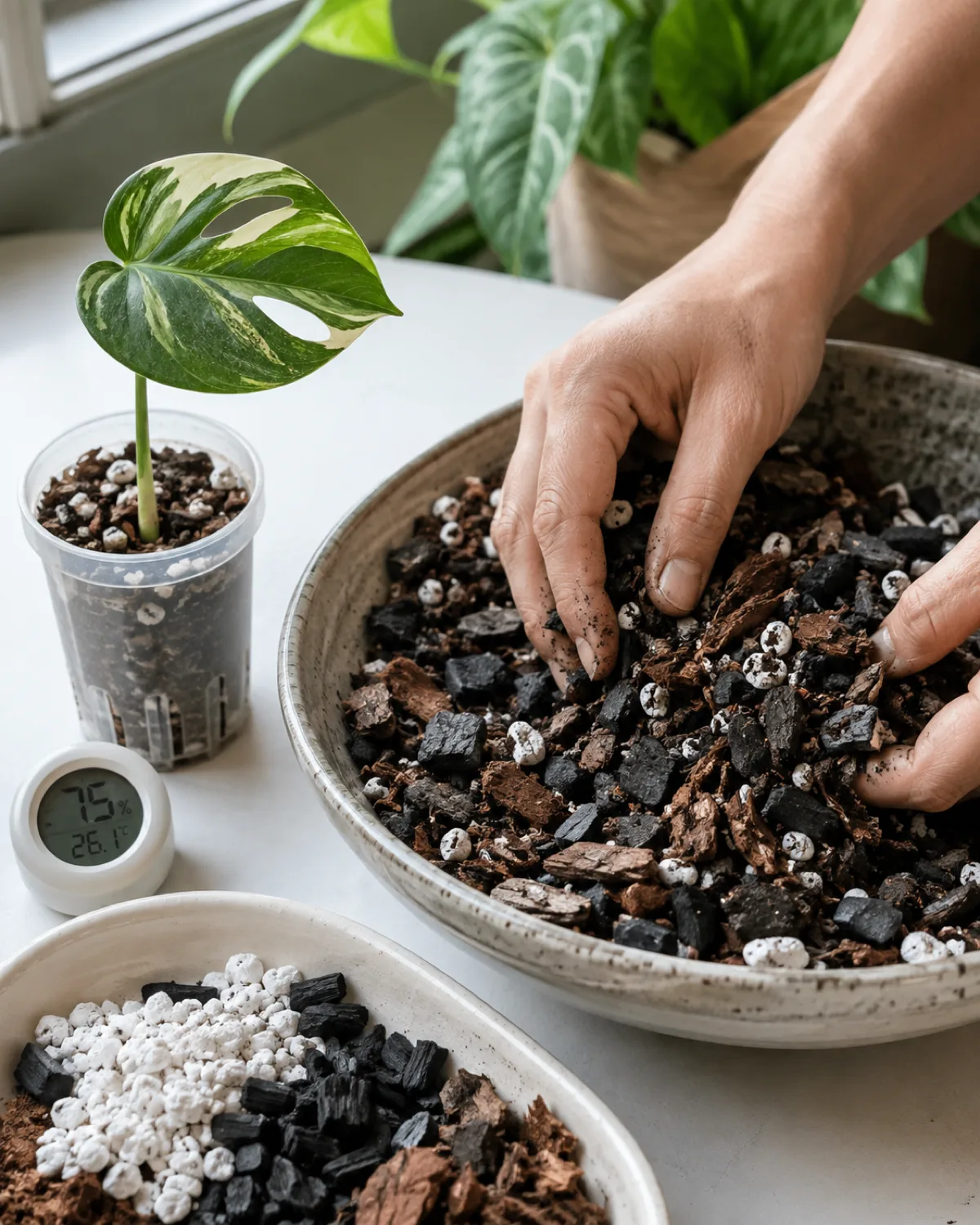
If you can keep a pothos alive, you already have the instincts. Rare plant care is not harder — it is more specific. The margin for error shrinks because the plant cost means every mistake hurts more, and because many collector species come from environments that standard indoor conditions do not replicate well.
Humidity is the biggest shift. Most common houseplants tolerate 30 to 50 percent humidity without complaint. Many rare aroids, anthuriums, and alocasias need 60 percent or higher. A hygrometer is not optional at this level.
- A small humidifier near the plants is the most reliable solution
- Pebble trays help slightly but rarely raise humidity enough on their own
- Grouping plants together creates a microclimate — the collective transpiration raises local humidity
- Cabinet or greenhouse setups give the most control for truly demanding species
Soil needs to be chunkier. Many rare houseplants are epiphytes or semi-epiphytes in the wild. Their roots evolved to grip bark and absorb moisture from humid air, not sit in dense wet soil.
A basic collector aroid mix:
- One part orchid bark (medium grade)
- One part perlite
- One part sphagnum moss or coco coir
- A handful of horticultural charcoal
Light for variegated plants is counterintuitive. Less chlorophyll means less ability to photosynthesize, so variegated plants need more light to produce the same energy as an all-green version — but they are also more susceptible to sunburn on the white or pink tissue. Bright indirect light all day is the balance.
Fertilize more gently than you would common houseplants. Rare plants tend to grow slowly, and their root systems are often smaller relative to their leaf size. Overfertilizing causes salt buildup and root burn faster.
Building a Collection Without Burning Through Your Budget
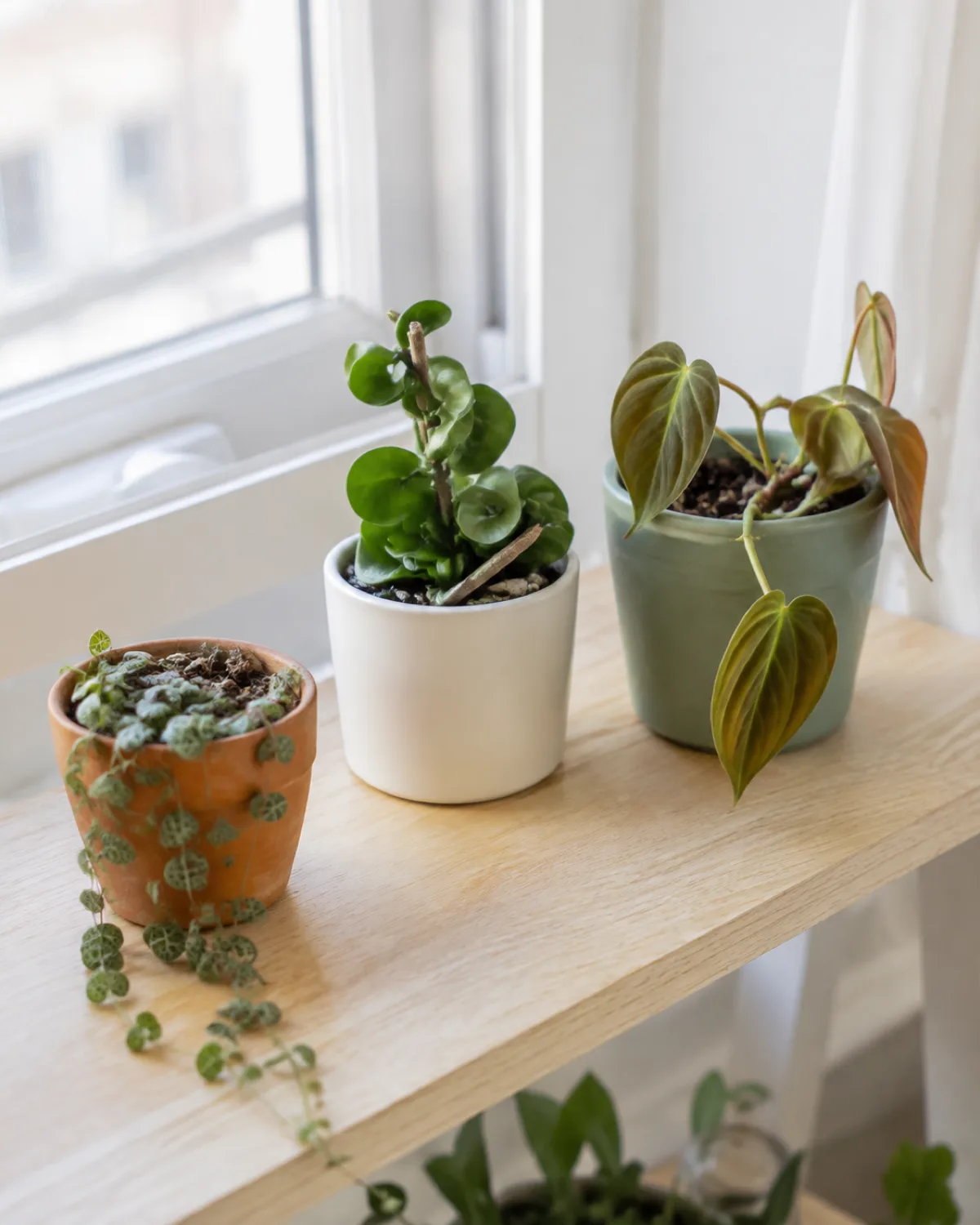
The collector market rewards patience and punishes impulse. The fastest way to waste money on rare houseplants is to buy everything at once, before you know whether your space can support the humidity, light, and attention these plants need.
Start with gateway rares. These are plants that are uncommon enough to feel like collector pieces but forgiving enough to survive learning mistakes:
- Philodendron micans — velvety bronze-green leaves on a trailing vine. Uncommon in stores, affordable online, and nearly as easy as standard pothos.
- Hoya compacta — slow-growing but tolerant of neglect once established. The twisted rope leaves look exotic but the care is standard hoya care.
- String of turtles — tiny and slow but not demanding. Overwatering is the main risk, and you learn to feel soil moisture with small pots.
- Rhaphidophora tetrasperma — sometimes called "mini monstera" (it is not a monstera). Fast-growing, fenestrated leaves, easy propagation.
Propagate to trade. Once a plant is growing well, take cuttings and trade them with local collectors or online communities. This is how most serious collectors build their collections — trading a rooted cutting of something you have for a cutting of something you want, with no money changing hands.
- Local plant swap groups (Facebook, Meetup) are the easiest entry
- Online trade forums let you reach across regions
- Always trade rooted cuttings, not unrooted stems — both parties benefit more
Do not buy the next rare plant until the last one has pushed at least one new leaf or root. That new growth proves your conditions work for that species. Stacking three new arrivals at once means three plants in shipping stress, three unknowns in your space, and three potential losses if humidity or light is off. One at a time, settled before the next — that is how collectors who keep their plants alive for years actually build.
The collector world will always have a new must-have plant. Prices will spike and crash. Species that cost hundreds today will cost thirty in five years as tissue culture scales. The plants that reward patience — the ones you grow from a small cutting into a mature specimen — are worth more than anything you could impulse-buy at peak hype.

Mara Quinn edits Kultivy, where she shares houseplant care, propagation, beginner-friendly plant picks, and plant-styling ideas for anyone who wants their indoor plants to actually thrive. Every guide is image-led and reviewed for clarity, usefulness, image accuracy, and Pinterest-to-page alignment before it goes live. Visit the About page.