Every fern gets filed under "likes shade and moisture," which is practically useless. A maidenhair punishes one missed watering day; a blue star shrugs off a week of neglect.
This guide breaks down sixteen indoor fern types by what makes each one distinct and which space it fits. If you already know the general care rules, this is the next step.
From anatomy and identification to fourteen indoor fern varieties with care notes, display tips, and difficulty ratings.
What Makes a Fern a Fern and How to Match One to Your Space
Ferns reproduce by spores, not seeds. That single fact separates them from every flowering houseplant on your shelf and explains most of their quirks.
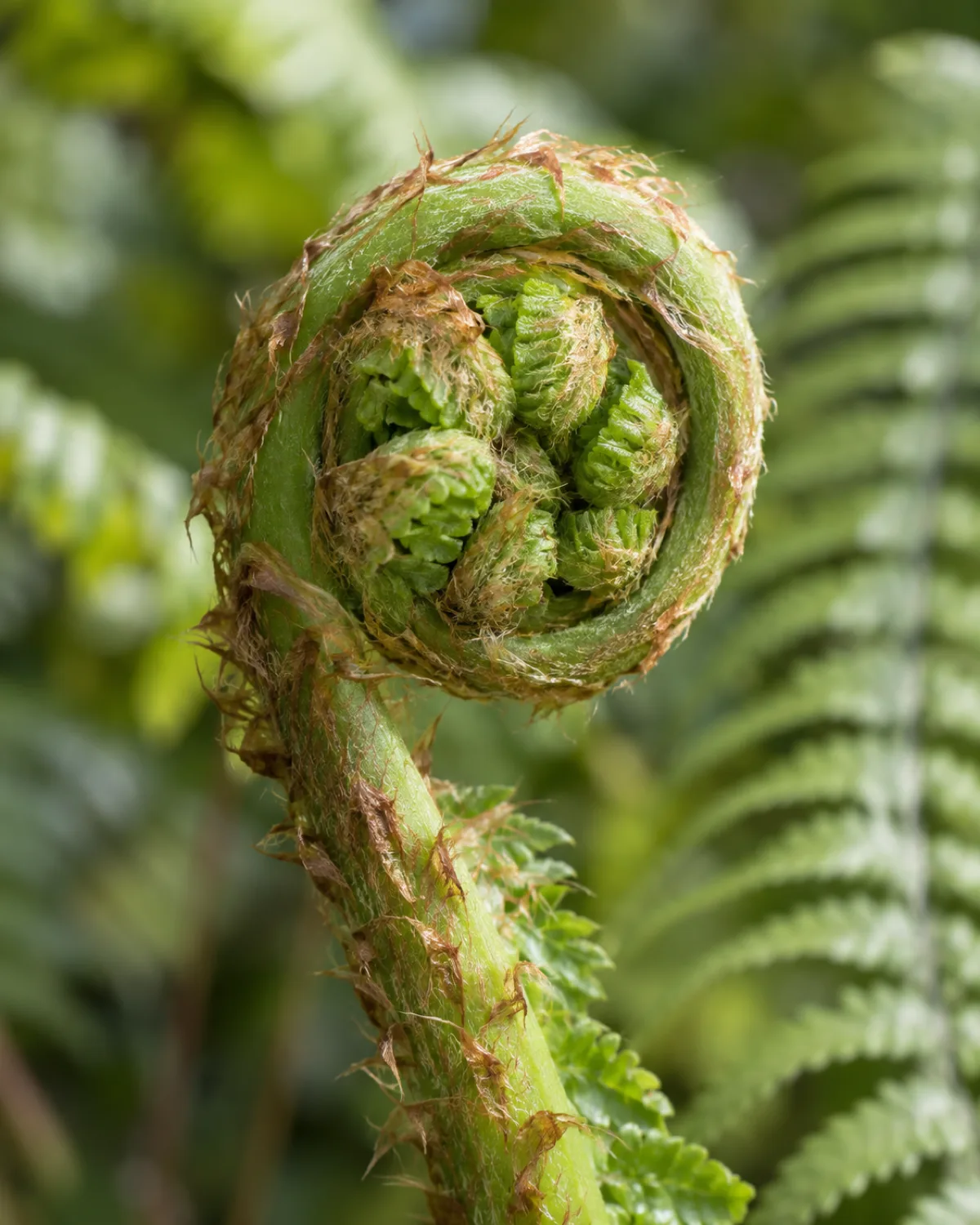
A fern frond starts life as a fiddlehead — a tightly coiled spiral that unfurls over days or weeks. That unfurling crozier is one of the most reliable identification cues: if it uncurls from a spiral, it is almost certainly a fern.
- Fiddlehead unfurling: tight spiral uncoils slowly — unique to ferns and a few close relatives
- Sori on undersides: brown or orange dots in regular patterns — spore structures, not pests
- No flowers ever: ferns never bloom, never fruit, never set seed — any "fern" that flowers is not a true fern
The leaf structure varies dramatically. Some produce lacy, finely divided fronds with hundreds of tiny pinnae. Others grow wide, undivided leaves that look nothing like the stereotypical fern.
Humidity tolerance is the single biggest variable between indoor fern types. It determines which ones survive in a normal living room and which ones need a bathroom or a pebble tray.
At one end of the spectrum, the maidenhair fern demands consistent humidity above 60 percent and punishes a single day of dry air with crispy brown edges. At the other end, the blue star fern, holly fern, and kangaroo paw fern tolerate normal household humidity without drama.
Four scenarios, four starting points.
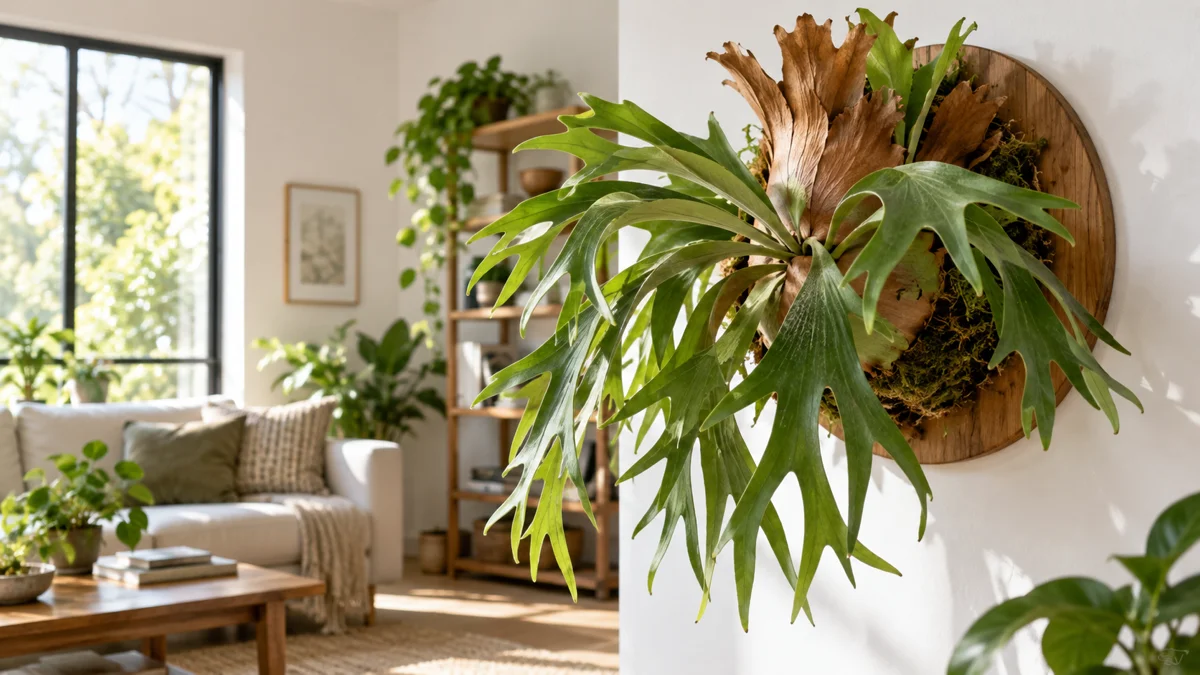
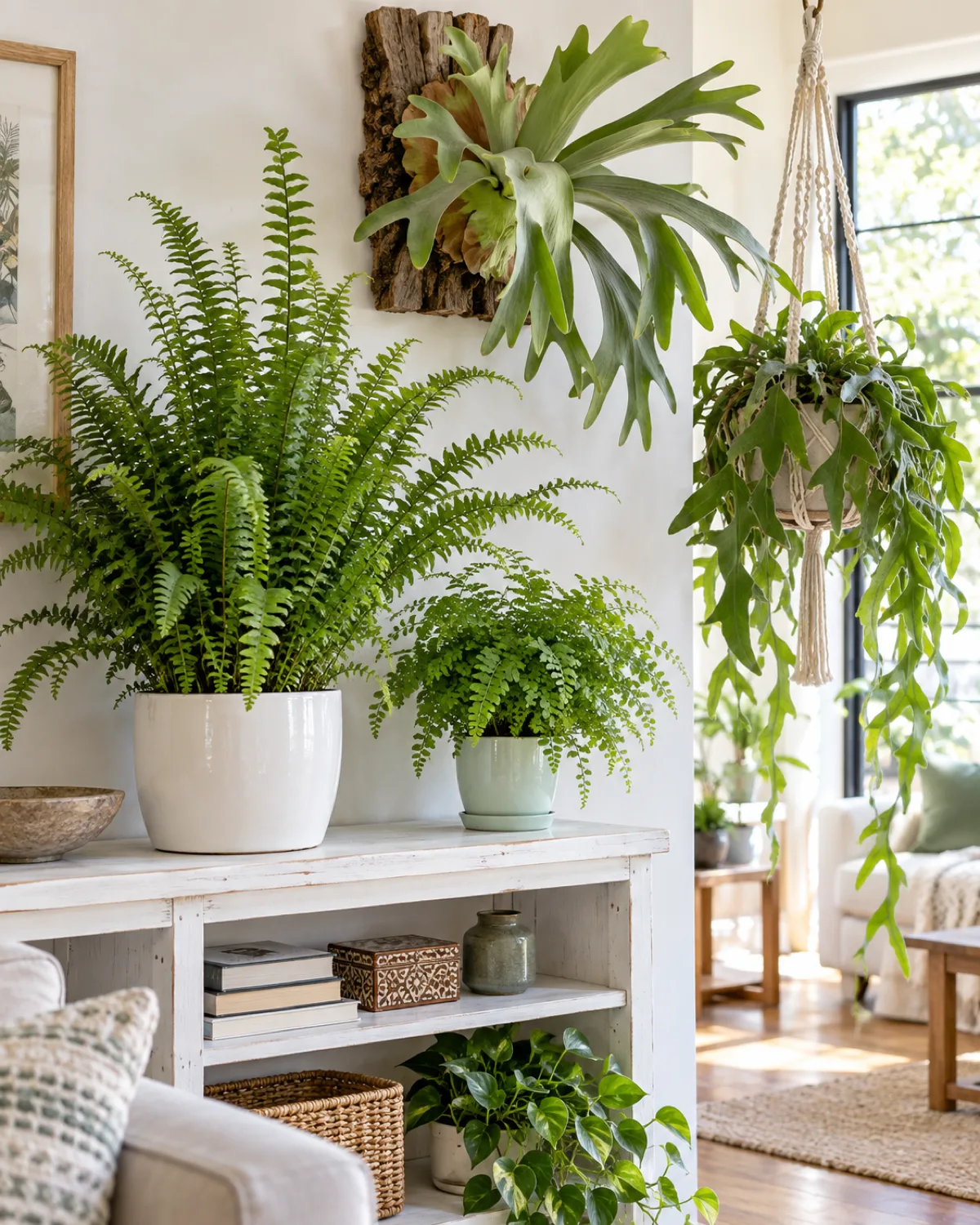
Growth habit determines your display strategy. Boston ferns and kangaroo paw ferns trail and cascade — they belong in hanging baskets or on high shelves. Kimberly Queen and holly ferns grow upright and tidy, suited for tabletops and plant stands. Staghorn ferns mount on boards for a living wall effect.
- Trailing/arching: Boston fern, kangaroo paw fern, button fern — hanging baskets, shelf edges
- Upright/compact: Kimberly Queen, holly fern, silver brake, bird's nest — tabletops, plant corners
- Mounted: staghorn fern — wall boards, driftwood, wire baskets
- Miniature: lemon button fern, button fern — terrariums, small pots, desk-sized spaces
Think about watering commitment too. Most ferns want consistent moisture — not soaked, not dry. But the kangaroo paw fern and holly fern tolerate mild drought, while the maidenhair punishes any lapse. Match the fern to your watering habits, not the other way around.
Boston Fern
The Boston fern (Nephrolepis exaltata) is the one most people picture when they hear the word fern. Long arching fronds cascade from a central crown in a fountain shape that can span three feet or more.
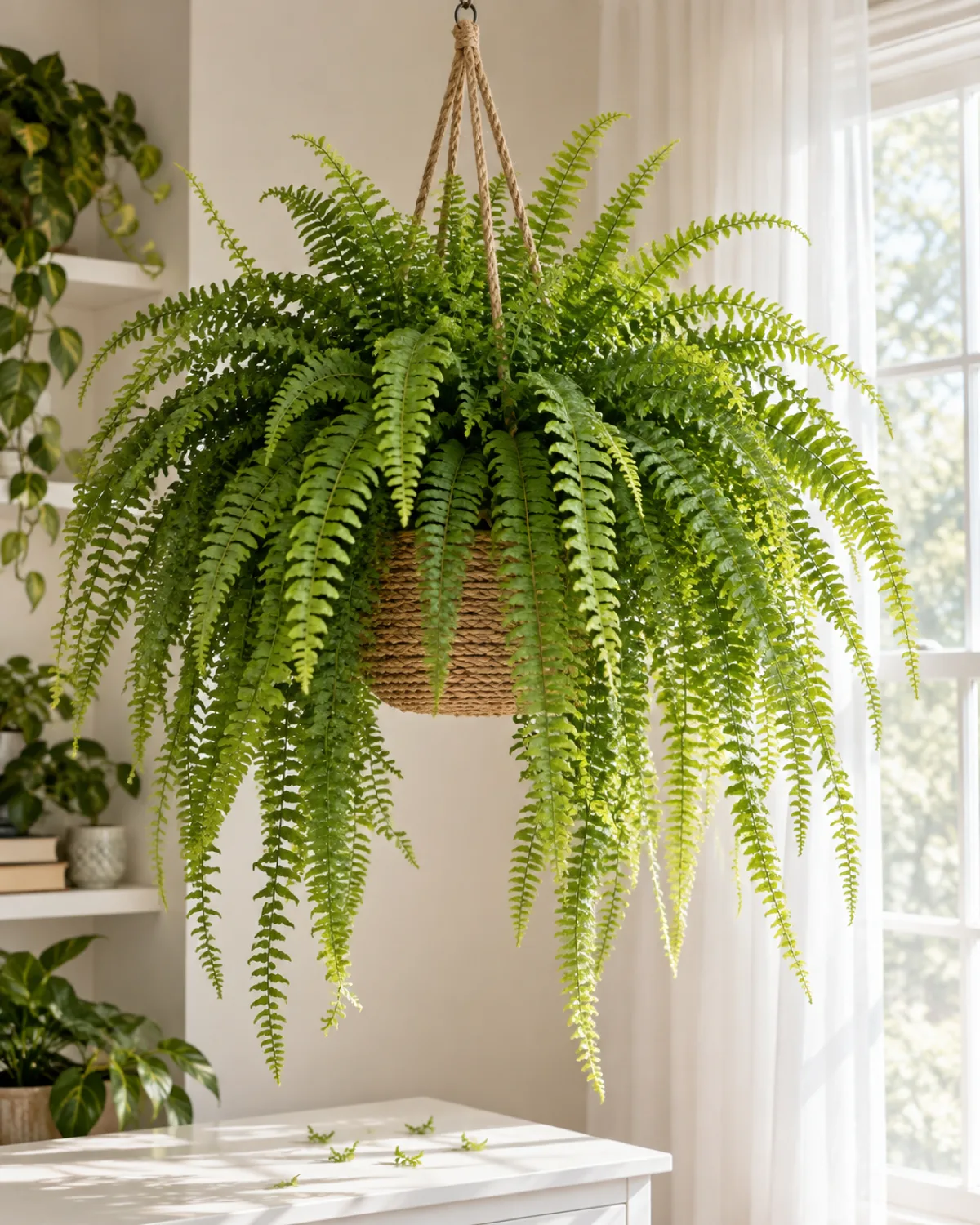
The frond shedding is real. Boston ferns drop tiny leaflets (pinnae) constantly, and this is normal behavior — not a sign of distress. If you cannot tolerate finding small green confetti on the floor, choose a different fern type.
Bright indirect light is ideal. A spot near a north or east-facing window works well. Direct afternoon sun scorches the fronds, turning tips brown and crispy within days.
- Light: bright indirect; no direct sun
- Humidity: 50%+ preferred; mist or use a pebble tray
- Watering: keep soil consistently moist, never waterlogged
- Size: fronds reach 2–3 feet; spread can exceed 3 feet
- Display: hanging baskets, pedestals, high shelves where fronds can cascade
The watering rhythm matters more than the amount. Consistent light moisture beats alternating droughts and floods. If the frond tips turn brown, the air is too dry or watering is too irregular.
Whether you found an unlabeled fern at the garden center or inherited one from a friend, these three checks narrow the field fast.
Maidenhair Fern
The maidenhair fern (Adiantum raddianum) earns its reputation as the most demanding indoor fern — and also the most beautiful. Delicate fan-shaped leaflets on wire-thin black petioles create an ethereal, trembling canopy.
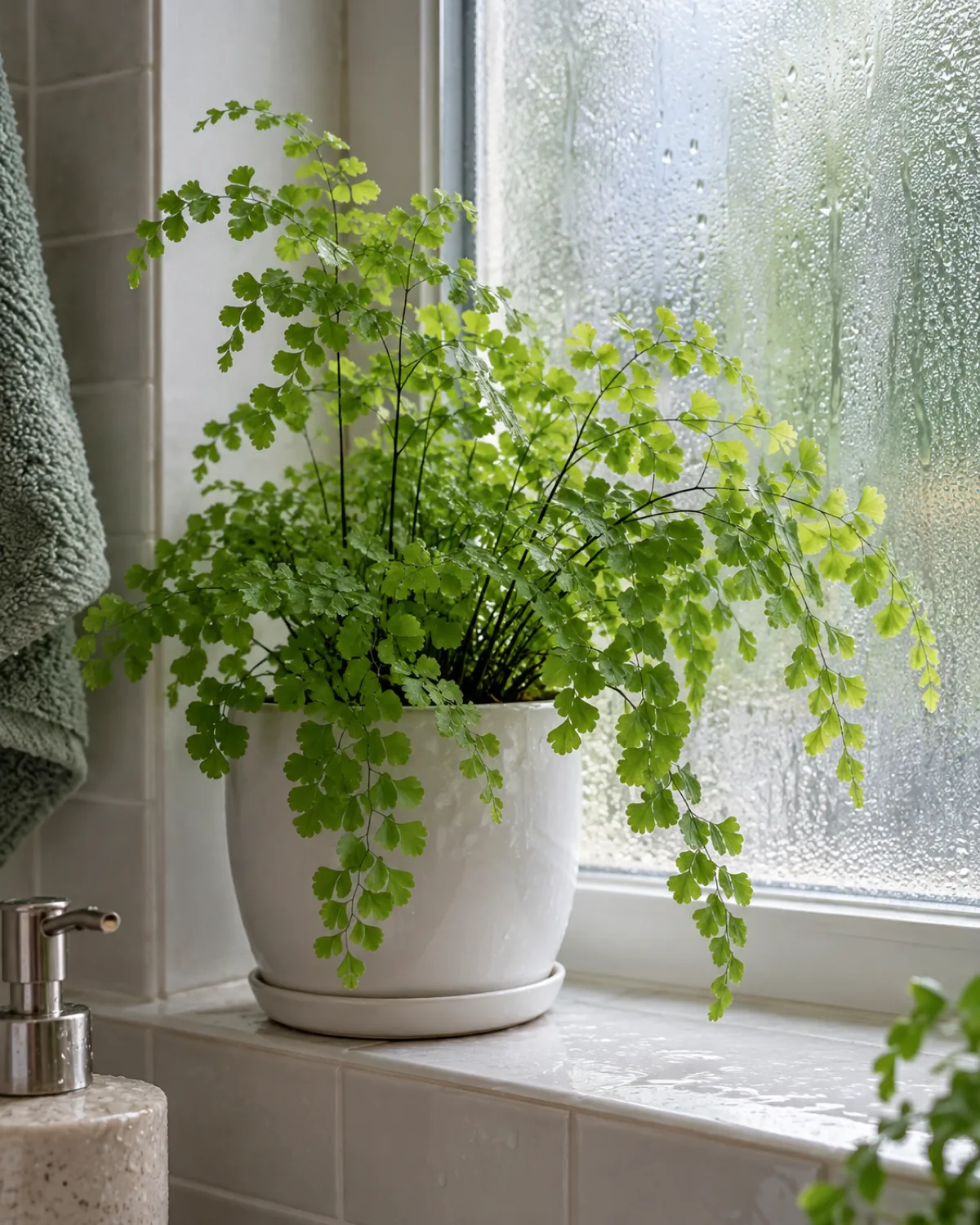
Humidity is the make-or-break factor. Below 60 percent, the leaflets dry from the edges inward within hours. A bathroom windowsill is the ideal location, combining the humidity from showers with the bright indirect light the plant needs.
The black petioles are the identification giveaway. No other common indoor fern has petioles this dark and wire-thin. If the stems are black and the leaflets are tiny fans, it is a maidenhair.
- Light: bright indirect; never direct sun — the delicate leaflets scorch instantly
- Humidity: 60%+ non-negotiable; bathroom, terrarium, or constant pebble tray
- Watering: never let the soil dry out completely — even one full dry-out kills fronds
- Size: typically 12–18 inches; can reach 24 inches in ideal conditions
- Difficulty: advanced — not recommended as a first fern
If a maidenhair fern dies back to bare stems, cut all the dead fronds at the base and keep watering. The rhizome is often still alive and will push new fiddleheads if conditions improve. This resurrection ability is real and worth trying before discarding the plant.
Bird's Nest Fern
The bird's nest fern (Asplenium nidus) looks nothing like the stereotypical fern. Wide, glossy, undivided fronds radiate from a central fibrous rosette that resembles a bird's nest, which is the easiest identification cue.
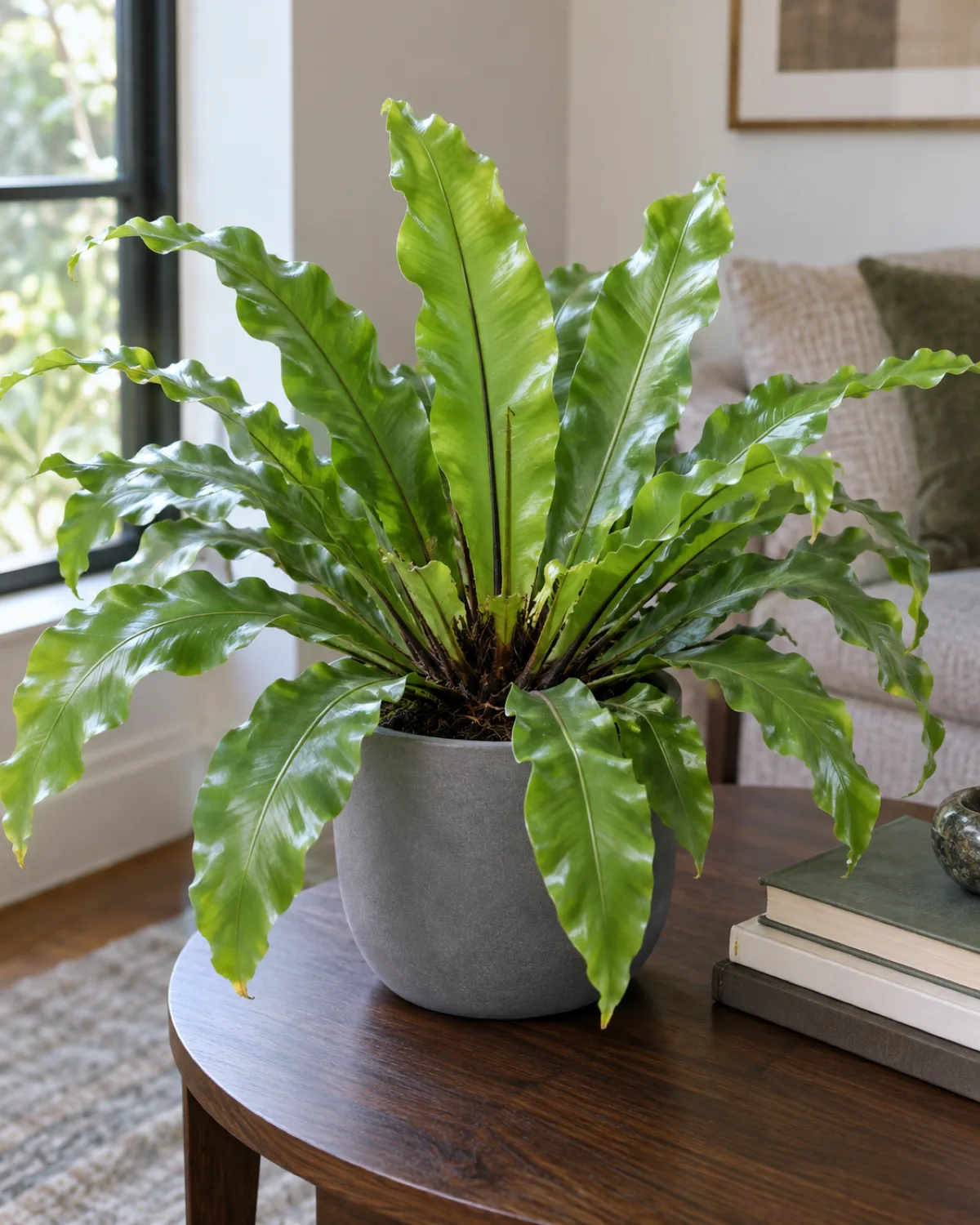
The central crown is both the identification feature and the care vulnerability. Water that pools in the center causes crown rot — a bacterial infection that spreads fast and kills the growing point. Always water around the edge of the soil, never directly into the rosette.
This is one of the more low-light-tolerant fern types, making it a strong choice for rooms that would be too dim for a Boston or maidenhair.
- Light: low to medium indirect; tolerates north-facing windows
- Humidity: moderate; 40%+ works — more adaptable than most ferns
- Watering: keep soil evenly moist; water at the base, never into the crown
- Size: fronds reach 2–3 feet in mature plants
- Display: tabletop, plant stand, or floor — the rosette shape looks best viewed from above or straight on
Two cultivars are common. The standard Asplenium nidus has flat, smooth-edged fronds. The 'Osaka' or 'Crissie' cultivar has ruffled, crinkled edges that add texture. Both have the same care requirements.
Staghorn Fern
The staghorn fern (Platycerium bifurcatum) is the most architecturally dramatic indoor fern type. It grows as an epiphyte — no soil, mounted on a board or tucked into a wire basket with sphagnum moss.
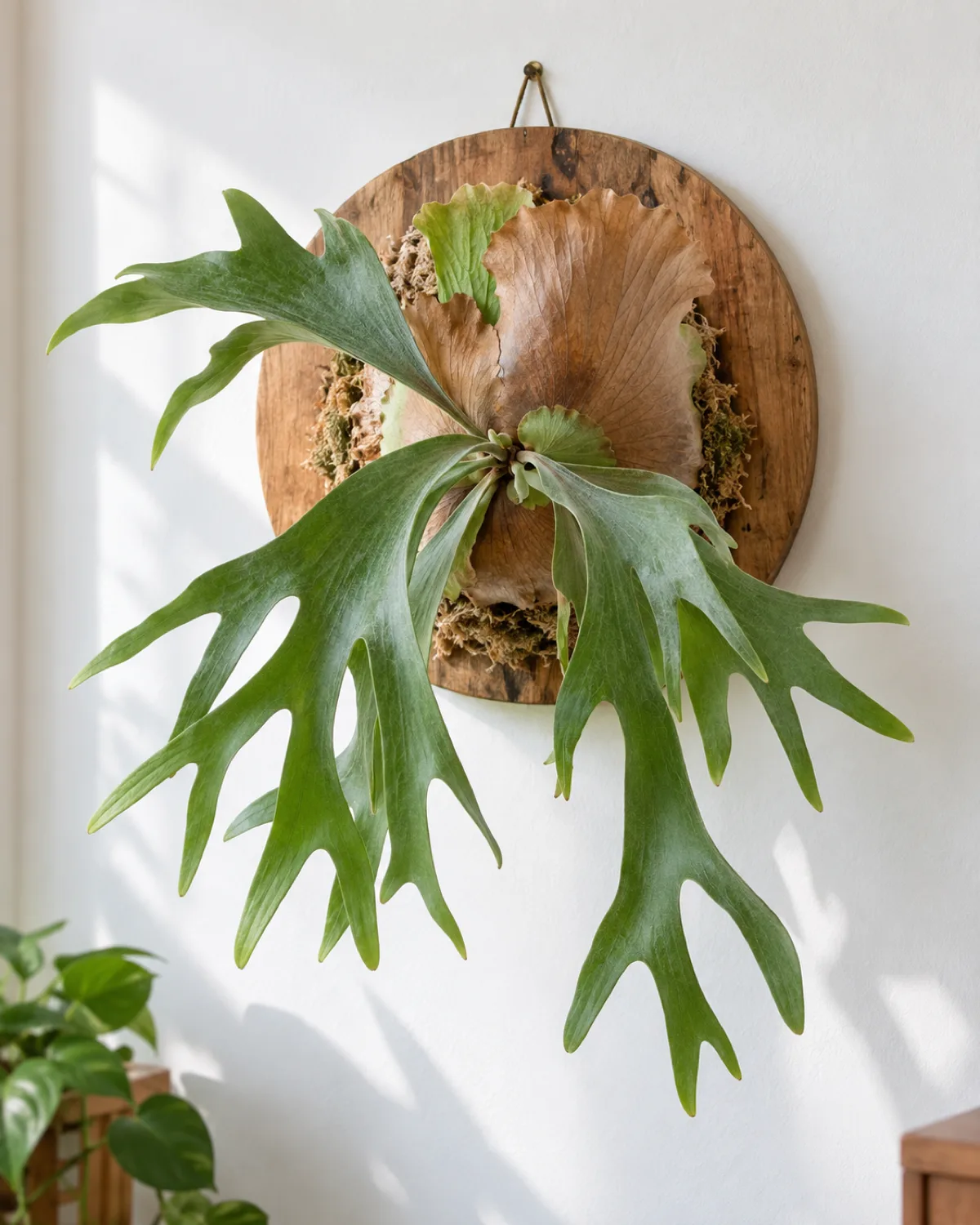
Two distinct frond types make the staghorn instantly recognizable. The flat, round shield fronds press against the mounting surface and turn brown as they age — this is normal and essential. The antler-shaped fertile fronds extend outward and handle photosynthesis.
The brown shield fronds are alive and functional even when they look dead. They protect the root ball, hold moisture, and trap nutrients from falling debris. Removing them weakens the plant.
- Light: bright indirect; some morning direct sun is tolerable
- Humidity: 50%+ preferred; misting the root ball helps
- Watering: soak the entire root ball in water for 10–20 minutes, then let it drain and dry slightly before the next soak
- Size: fronds can reach 2–3 feet; the whole mount can span 4 feet over years
- Display: wall-mounted on wood boards, hanging wire baskets, driftwood — never in a standard pot with soil
Mounting is simpler than it looks. Wrap the root ball in sphagnum moss, press it against a board, and secure it with fishing line or plant ties. The shield fronds eventually grow over the fastening material and hide it.
Blue Star Fern
The blue star fern (Phlebodium aureum) is the beginner's fern. It tolerates lower humidity, less-frequent watering, and dimmer light than most fern types — and it happens to be one of the most visually distinctive.
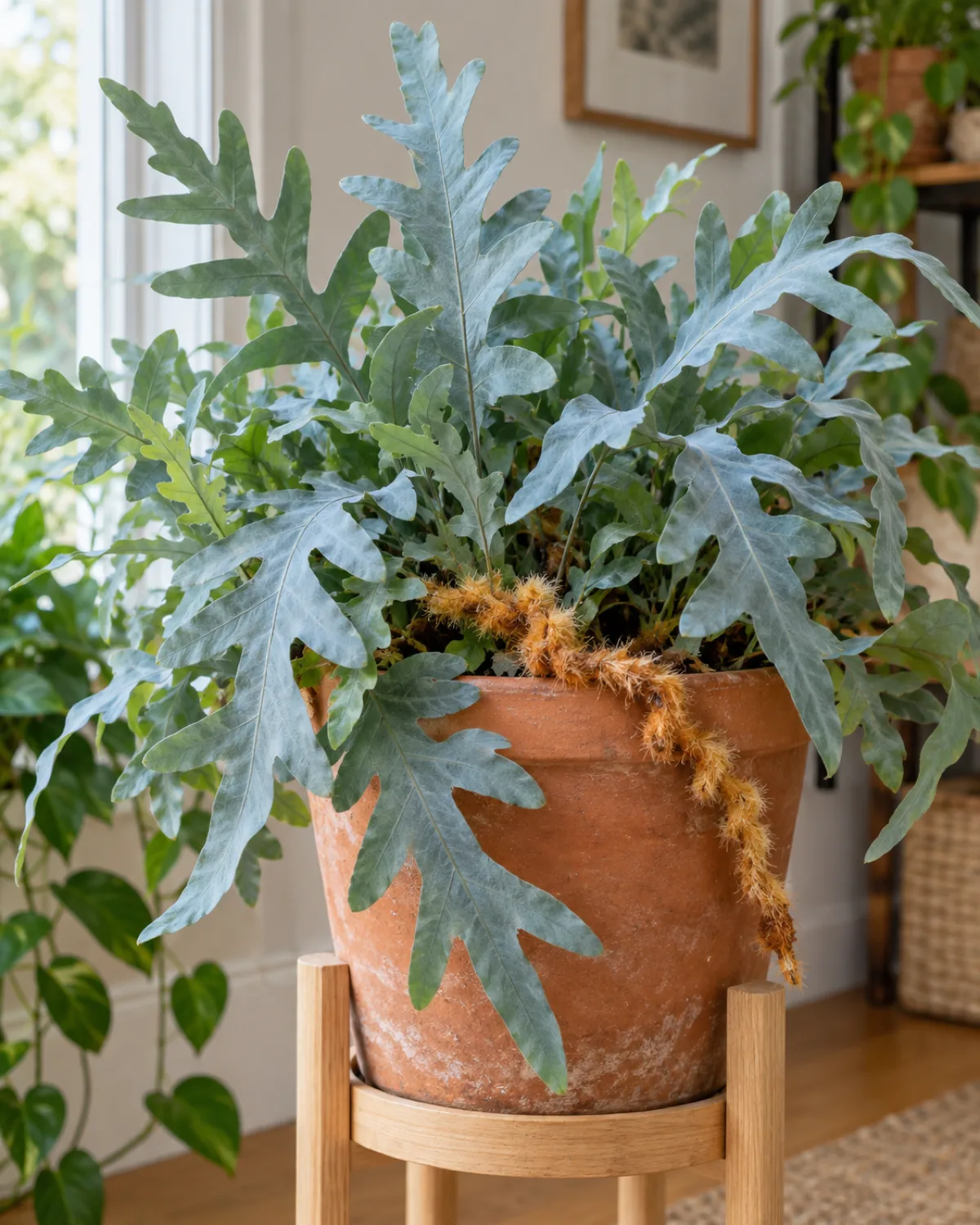
The fronds are a powdery blue-grey with deep, simple lobes — completely different from the finely divided lace of a typical fern. The golden-orange creeping rhizome grows over the pot edge and is a normal growth habit, not a sign of being rootbound.
This is the fern to start with if previous ferns have died on you. It forgives the mistakes that kill maidenhairs and Boston ferns.
- Light: low to bright indirect; genuinely versatile
- Humidity: normal household humidity works; no pebble tray needed
- Watering: allow the top inch to dry between waterings — more drought-tolerant than most ferns
- Size: fronds reach 1–2 feet; spreading habit via creeping rhizome
- Display: tabletop, shelf, or hanging — the blue color pairs well with terracotta and warm wood
The exposed rhizome is a conversation starter. Visitors unfamiliar with ferns will ask about the "orange caterpillar" growing over the pot rim. It is the growing point of the plant, and burying it in soil can cause rot.
Kangaroo Paw Fern
The kangaroo paw fern (Microsorum diversifolium) is an Australian native with leathery, irregularly shaped fronds that look different from any other fern on this list.
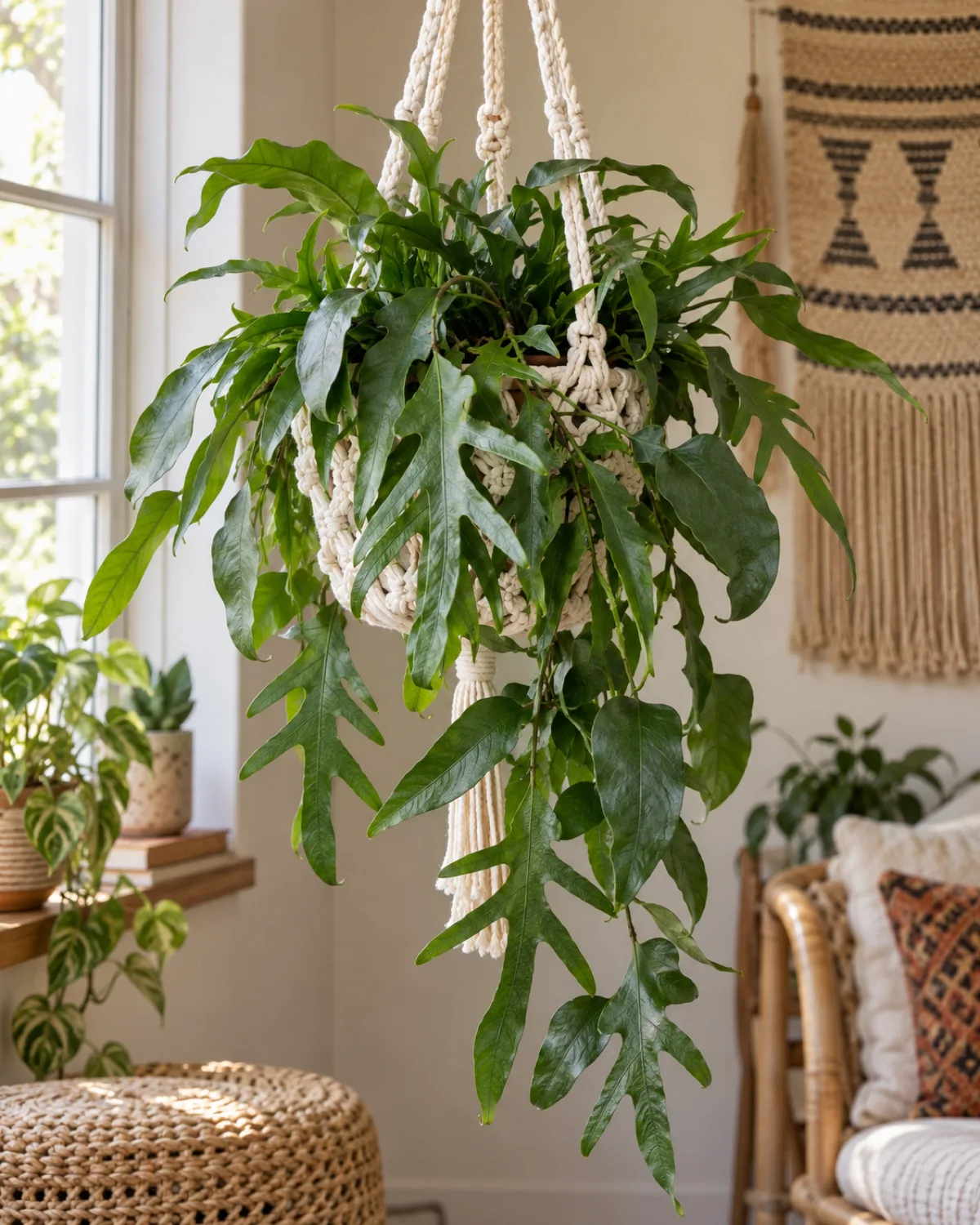
The frond shape is the identification puzzle. Individual fronds range from simple ovals to deeply lobed shapes, sometimes on the same plant. This variable leaf morphology confuses people who expect uniform fronds, but it is a defining feature of the species.
Leathery frond texture makes this one of the most drought-tolerant fern types. Where most ferns wilt within a day or two of drying out, the kangaroo paw fern handles a week of neglect without visible damage.
- Light: medium to bright indirect; tolerates some shade
- Humidity: normal household humidity; adapts to 30–40% without stress
- Watering: let the top inch dry; more drought-tolerant than most ferns
- Size: fronds reach 1–2 feet; trailing habit works in hanging baskets
- Display: hanging planters, shelf edges, macramé hangers — anywhere the trailing fronds can cascade
This fern rarely appears in big-box garden centers. You are more likely to find it at specialty nurseries or online plant shops. It is worth seeking out if you want a low-maintenance hanging plant with an unusual look.
Lemon Button Fern
The lemon button fern (Nephrolepis cordifolia 'Duffii') is the Boston fern's miniature cousin. Tiny, perfectly round leaflets line delicate arching stems, creating a compact plant that rarely exceeds 12 inches.
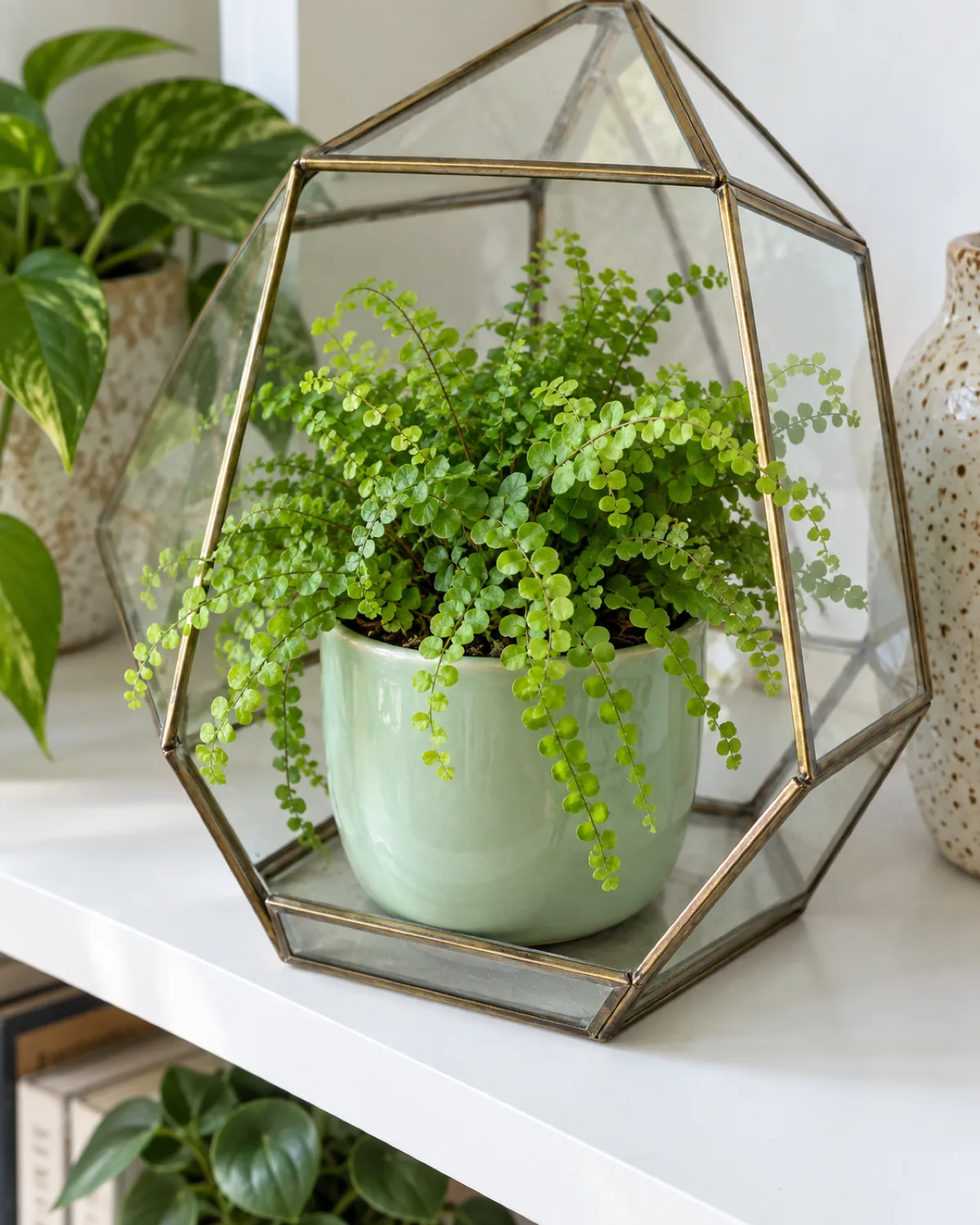
The round button shape of each leaflet is the instant identifier. No other common fern has pinnae this uniformly circular. Brush the fronds and you will notice a subtle citrus scent — faint, not perfume-strength, but unmistakable once you know to look for it.
This is a terrarium champion. The compact size, humidity preference, and slow growth rate make it ideal for closed or semi-closed glass containers where bigger ferns would outgrow the space within months.
- Light: medium indirect; tolerates lower light than the standard Boston fern
- Humidity: 40%+ preferred; thrives in terrariums and bathrooms
- Watering: keep soil evenly moist; small pot dries faster — check every 2–3 days
- Size: stays under 12 inches; perfect for small spaces
- Display: terrariums, windowsills, desks, small shelves — anywhere space is tight
The compact size makes it ideal for apartment dwellers who want a fern but lack space for a full-size Boston fern cascading from a ceiling hook.
Rabbit's Foot Fern
The rabbit's foot fern (Davallia fejeensis) grows furry rhizomes that creep over the pot edge and dangle down like animal paws. The rhizomes are covered in soft brown scales that look and feel like fur.
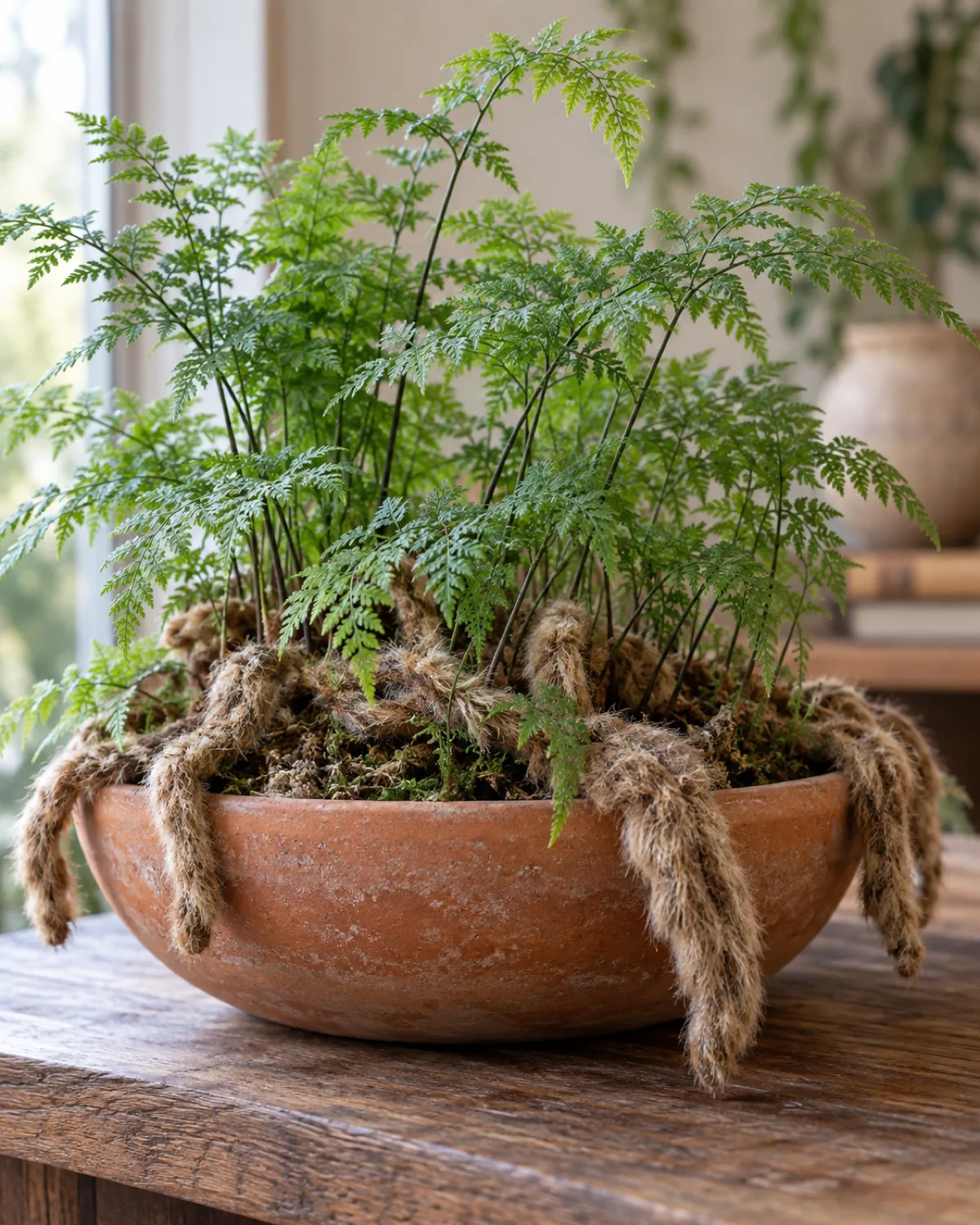
The furry rhizomes are the entire point of this fern. The lacy fronds above are attractive but standard-looking. It is the creeping "feet" below that make this a conversation starter and a favourite with children.
Do not bury the rhizomes in soil. They are aerial structures designed to grow along the surface and over edges. Burying them invites rot and removes the plant's most distinctive feature.
- Light: medium to bright indirect; avoid direct sun
- Humidity: moderate; 40–50% works — less demanding than maidenhair
- Watering: let the top half-inch dry slightly; the rhizomes store some moisture
- Size: fronds reach 12–18 inches; rhizomes can trail 12 inches or more
- Display: shallow bowls, hanging baskets, or any pot where the rhizomes can grow over the edge and be visible
Propagation is straightforward. Cut a section of rhizome with at least one frond attached, pin it to the surface of moist potting mix, and mist regularly. New roots emerge from the underside of the rhizome within weeks.
Kimberly Queen Fern
The Kimberly Queen fern (Nephrolepis obliterata) is the tidy alternative to the Boston fern. Instead of arching fronds that cascade and scatter leaflets everywhere, the Kimberly Queen grows upright and compact.
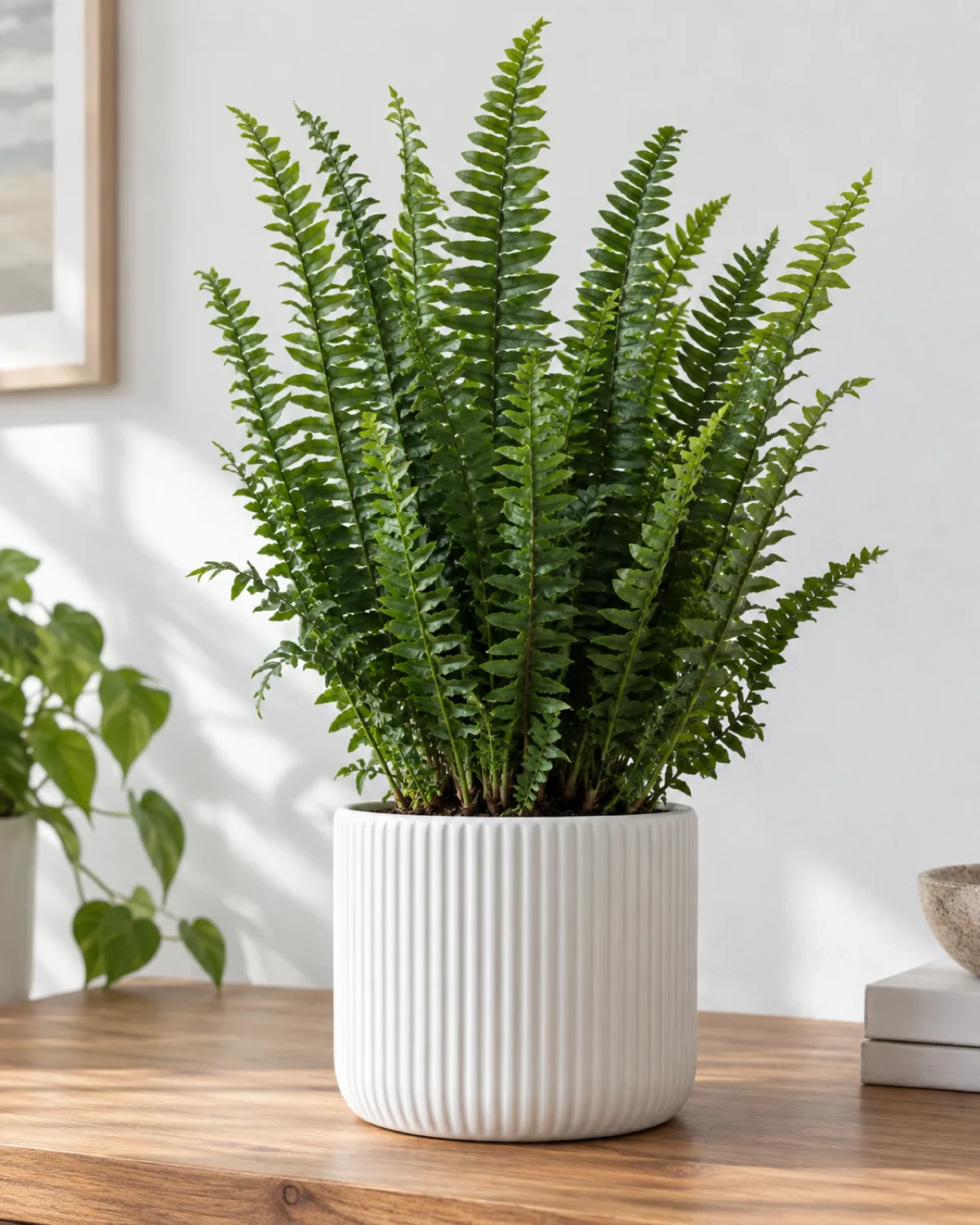
The upright growth habit is the key difference from the Boston fern. Where a Boston fern's fronds droop and fountain outward, the Kimberly Queen holds its fronds more vertically, creating a vase-shaped silhouette that takes up less horizontal space.
Less shedding is the practical advantage. The Kimberly Queen drops fewer leaflets than the Boston fern, which matters if cleaning up plant debris is a regular frustration.
- Light: bright indirect to some direct morning sun; more light-tolerant than most ferns
- Humidity: moderate; adapts to 40%+ without drama
- Watering: keep soil consistently moist; slightly more drought-tolerant than Boston
- Size: fronds reach 2–3 feet; overall footprint stays more compact than Boston
- Display: tabletops, floor pots, plant stands — works where the Boston fern would be too messy
This fern handles heat and wind better than the Boston fern, which is why it appears frequently on covered patios and porches in warm climates. Indoors, that heat tolerance translates to better performance near heating vents — a spot that would stress most fern types.
Holly Fern
The holly fern (Cyrtomium falcatum) is a dark horse among indoor ferns. Thick, glossy, dark green pinnae shaped like holly leaves give it a leathery appearance that looks more like a broadleaf shrub than a traditional fern.
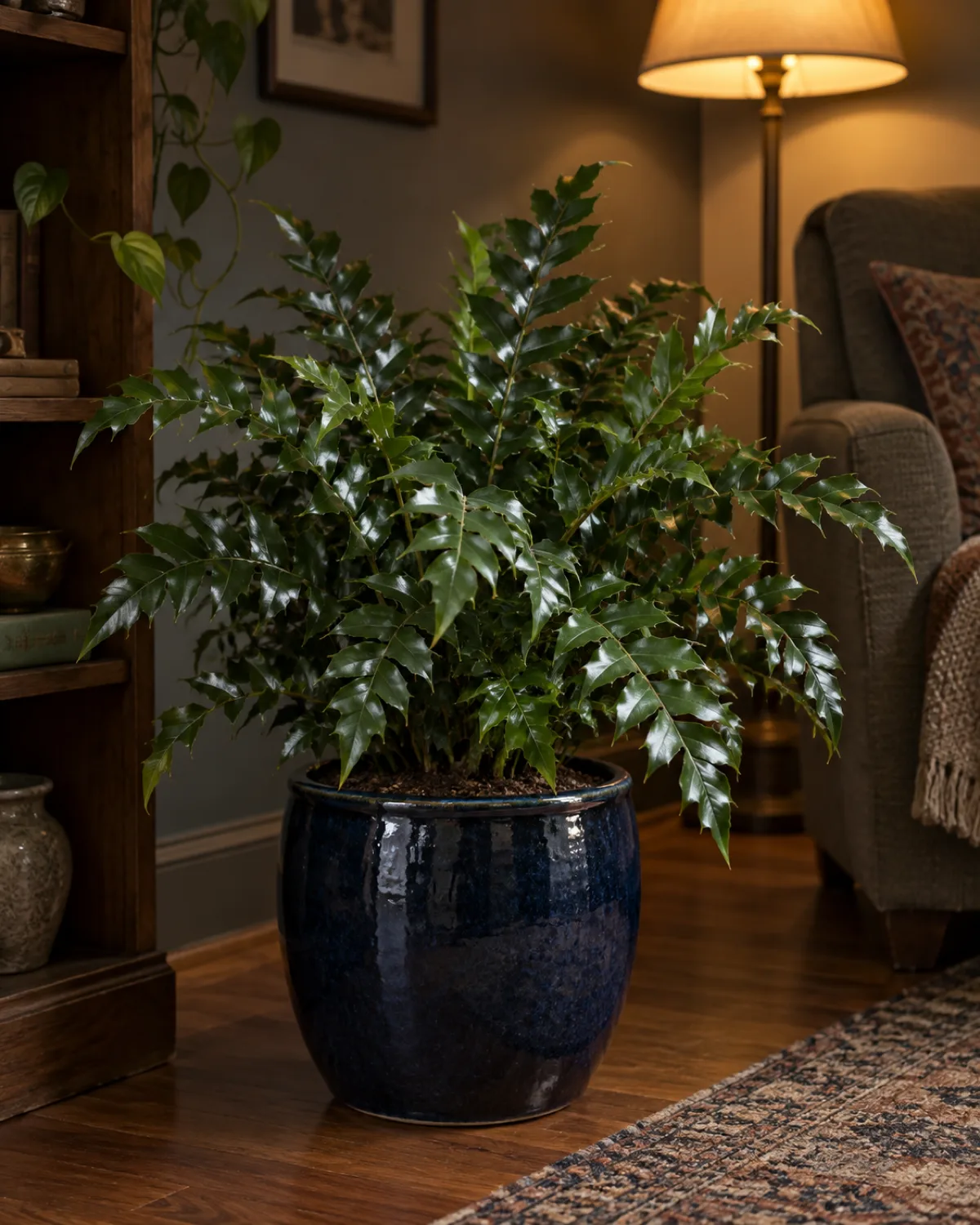
The glossy leaf surface is the identification giveaway. Most fern fronds have a matte texture. The holly fern's pinnae catch and reflect light like polished leaves, creating a sheen that is visible from across the room.
This is one of the most tolerant indoor fern types overall. Low light, dry air, cool temperatures, occasional drought — the holly fern handles conditions that would kill a maidenhair in days.
- Light: low to medium indirect; thrives in the darkest rooms where other ferns struggle
- Humidity: tolerates normal household humidity; no special measures needed
- Watering: allow the top inch to dry between waterings; mild drought tolerance
- Temperature: tolerates cool conditions down to 50°F — one of the most cold-hardy indoor ferns
- Display: dim corners, north-facing rooms, offices, any space that is too dark for most plants
If you want a fern for a room that gets minimal natural light, the holly fern and the bird's nest fern are your two strongest options. The holly fern is the tougher of the two.
Crocodile Fern
The crocodile fern (Microsorum musifolium 'Crocodyllus') earns its name from the texture on its frond surface. A raised network of veining creates a pattern that genuinely resembles crocodile or alligator skin.
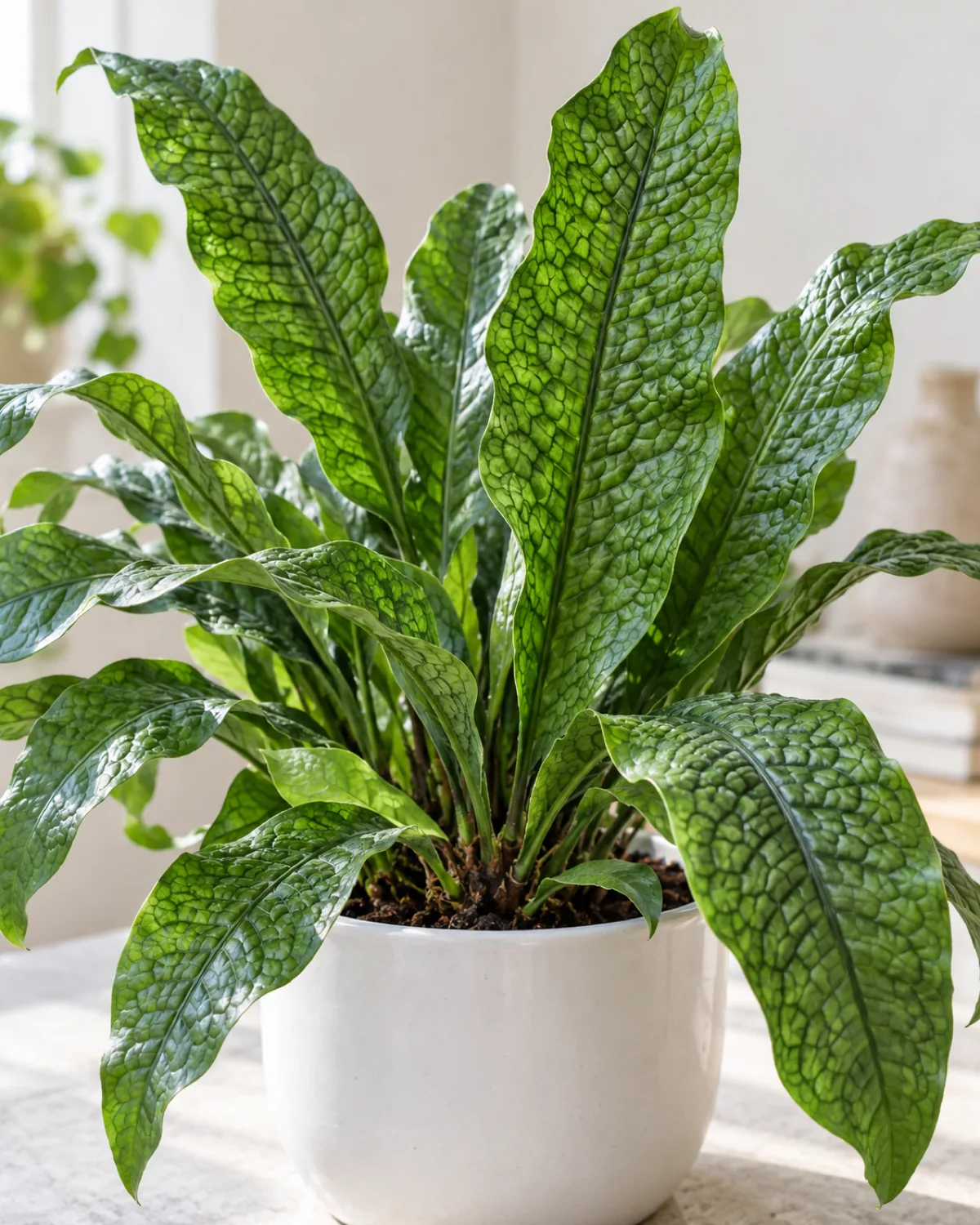
The texture is the entire selling point. Hold a frond at an angle in good light, and the raised veining casts tiny shadows that create a three-dimensional reptile-skin effect. No other common houseplant produces this pattern.
Like the bird's nest fern, the crocodile fern has wide, undivided fronds — not the lacy, finely divided type. This makes it easy to clean (wipe individual fronds with a damp cloth) and gives it a more modern look than traditional fern types.
- Light: medium indirect; avoid direct sun, which bleaches the texture pattern
- Humidity: 50%+ preferred; benefits from regular misting
- Watering: keep soil evenly moist; this fern does not tolerate drought well
- Size: fronds reach 2–3 feet in mature plants
- Display: tabletop or plant stand where people can examine the texture up close — the crocodile pattern is the point
This fern is less commonly available than Boston or bird's nest types. Check specialty plant shops or online retailers. Once you find one, it is not difficult to grow — intermediate difficulty, closer to the blue star fern end of the spectrum than the maidenhair end.
Silver Brake Fern
The silver brake fern (Pteris cretica) is the variegated fern. A white-to-silver central stripe runs down each frond, creating a two-tone effect that is unusual in ferns and adds visual interest without the fussiness of variegated houseplants that need intense light to maintain their patterns.
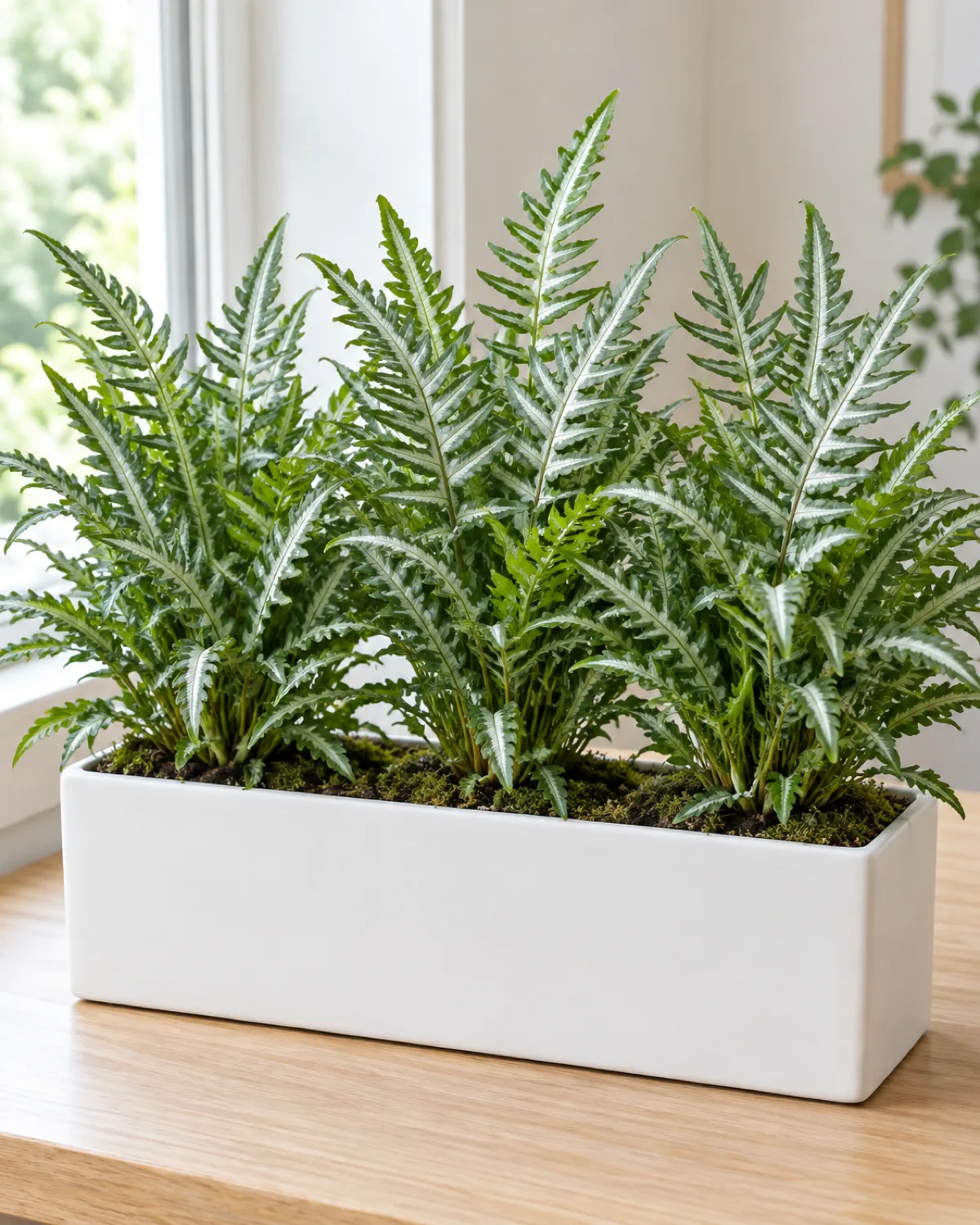
Group three plants together in a single container for an architectural effect. The upright habit and consistent variegation create a display that reads as intentional design rather than random greenery.
The variegation is stable — it does not fade in lower light the way many flowering plant variegations do. The silver stripe is structural, built into the frond architecture, not dependent on light-triggered pigment production.
- Light: medium to bright indirect; the variegation holds in moderate light
- Humidity: moderate; 40%+ works without supplementation
- Watering: keep soil evenly moist; similar to most mid-range ferns
- Size: compact, reaching 12–18 inches; upright habit
- Display: tabletops, windowsills, bedroom plants — the silver stripe works well in light-colored interiors
Several cultivars exist with varying stripe widths and frond shapes. The 'Albolineata' cultivar has the widest, most dramatic silver stripe. The 'Mayi' has ruffled frond edges.
Button Fern
The button fern (Pellaea rotundifolia) has round, dark green leaflets on wiry arching stems — a look that is completely different from the typical lacy fern.
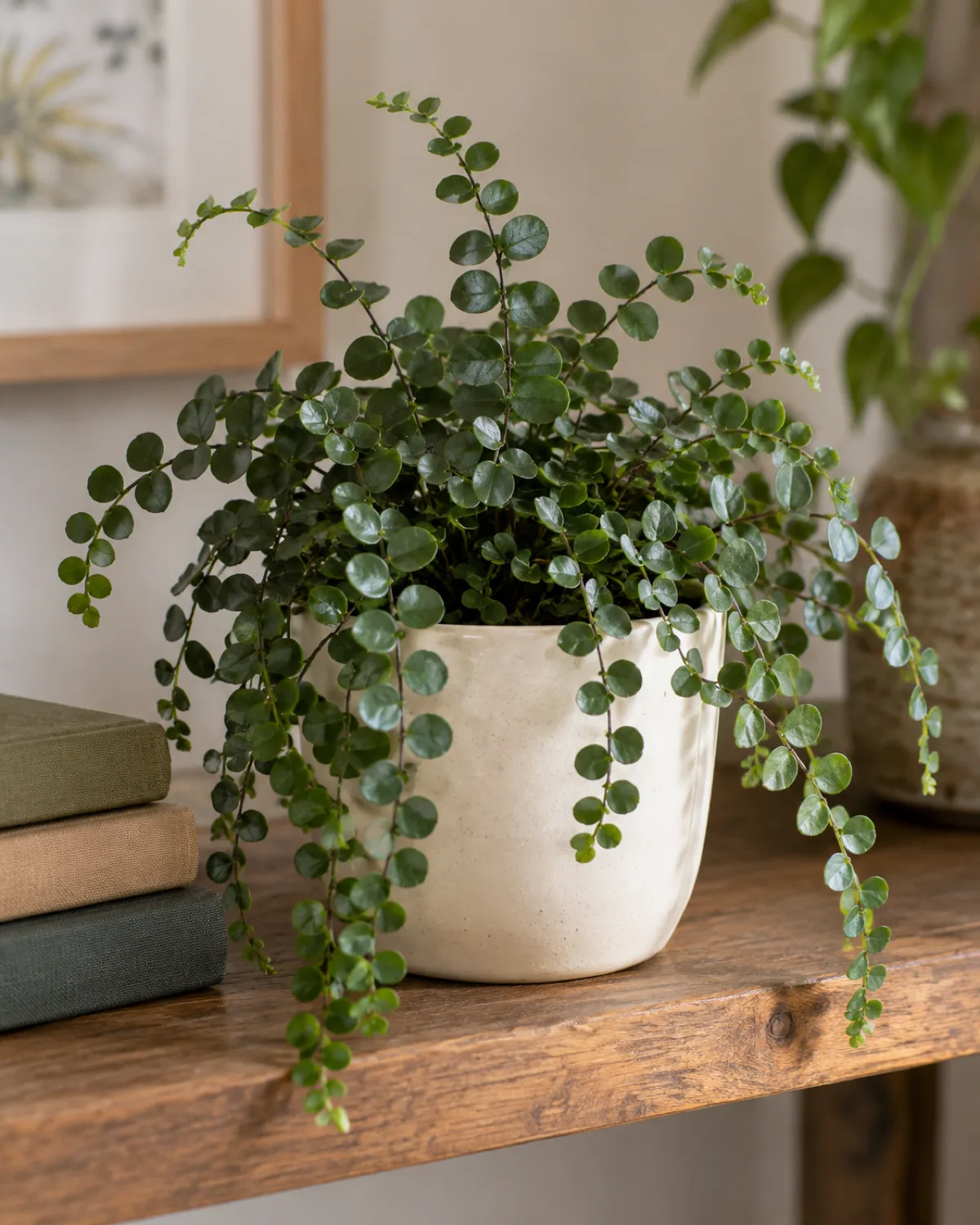
Do not confuse it with the lemon button fern. The button fern (Pellaea) has darker, flatter leaflets on darker stems and grows in a more cascading habit. The lemon button fern (Nephrolepis) has lighter green, rounder leaflets and a more upright form. They are in different genera entirely.
The button fern is drier-leaning for a fern. It comes from New Zealand where it grows on rocky outcrops, and it handles slightly drier conditions than most fern types — a trait that makes it more forgiving for people who forget to water.
- Light: medium indirect; tolerates some shade
- Humidity: moderate; adapts to normal household levels
- Watering: allow the top half-inch to dry; drier than most ferns
- Size: stays compact at 12–18 inches; cascading habit
- Display: shelves, terrariums, small pots, anywhere the round leaflets can be appreciated up close
The cascading growth makes this a good candidate for the front edge of a shelf arrangement, where the wiry stems can arch over the edge without taking up vertical space.
Asparagus Fern
The asparagus fern (Asparagus setaceus) is not a fern at all. It belongs to the Asparagaceae family — the same family as the asparagus you eat — and it reproduces by flowers, berries, and seeds, not spores.
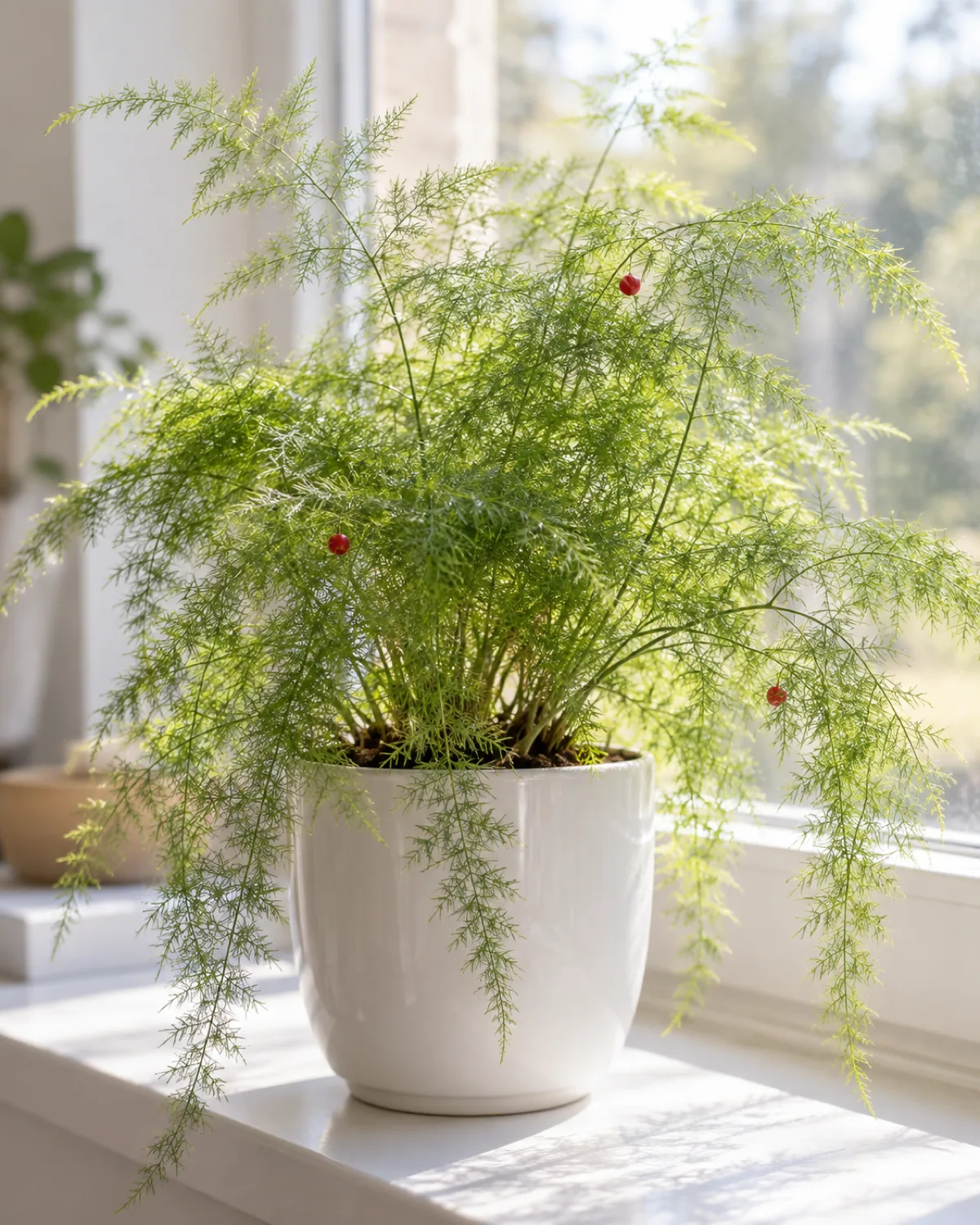
It looks feathery and fern-like because its leaf-like structures (cladodes) are needle-thin and arranged in flat, triangular sprays. But look closely and you will find tiny white flowers, small red berries, and sharp thorns on the stems — none of which a true fern ever produces.
This distinction matters for care and for pet safety. True ferns are ASPCA non-toxic across the board. The asparagus fern is toxic to cats and dogs, causing skin irritation on contact and digestive issues if eaten.
- Light: bright indirect to some direct morning sun; more light-tolerant than most true ferns
- Humidity: moderate; 40%+ works
- Watering: keep soil evenly moist; somewhat drought-tolerant due to tuberous roots
- Size: fronds reach 2–3 feet; can trail or climb with support
- Toxicity: toxic to cats and dogs — unlike true ferns
- Display: hanging baskets, high shelves, or windowsills where pets cannot reach
If you want the feathery fern look without the humidity demands of true ferns, the asparagus fern delivers. Just remember it is a pretender, not a member of the fern family, and treat it accordingly — more light, less humidity, and keep it away from pets.
Quick Reference
14 fern types at a glance
- 1Boston FernClassic arching fountain shape. Needs humidity and bright indirect light. Drops leaflets constantly — expect confetti.
- 2Maidenhair FernDelicate fan leaflets on black petioles. Demands 60%+ humidity. The hardest indoor fern but the most beautiful.
- 3Bird's Nest FernWide glossy undivided fronds in a rosette. Tolerates low light. Never pour water into the crown center.
- 4Staghorn FernMounted epiphyte with antler fronds. Brown shield fronds are alive — never remove them. Soak, don't water.
- 5Blue Star FernBlue-grey lobed fronds on a golden rhizome. The beginner fern. Tolerates dry air, low light, and missed waterings.
- 6Kangaroo Paw FernLeathery irregular fronds. Most drought-tolerant true fern. Trailing habit suits hanging baskets.
- 7Lemon Button FernTiny round leaflets on a compact plant. Boston fern's miniature cousin. Perfect for terrariums and small pots.
- 8Rabbit's Foot FernFurry rhizomes creep over the pot like animal paws. Conversation starter. Don't bury the rhizomes.
- 9Kimberly Queen FernUpright, tidy Boston alternative. Less shedding, more compact. Handles heat better than most ferns.
- 10Holly FernGlossy dark holly-shaped pinnae. Tolerates low light, dry air, and cool temps. The toughest indoor fern.
- 11Crocodile FernReptile-scale texture on wide fronds. Unique among houseplants. Needs consistent moisture and humidity.
- 12Silver Brake FernWhite-silver central stripe on each frond. Stable variegation that holds in moderate light. Compact and architectural.
- 13Button FernRound dark buttons on wiry stems. Drier-leaning for a fern. Not the same as lemon button fern.
- 14Asparagus FernNot a real fern — Asparagaceae family. Has flowers, berries, and thorns. Toxic to pets unlike true ferns.
kultivy.com — save for your next plant shop visit
Frequently Asked Questions
Can ferns grow in low light?
Most fern types tolerate lower light than the average houseplant, but "low light" still means some indirect natural light — not a windowless room. The holly fern and bird's nest fern are the strongest performers in genuinely dim conditions, tolerating dark rooms that would thin out a Boston fern within weeks.
- Best for low light: holly fern, bird's nest fern, blue star fern
- Need brighter indirect: Boston, maidenhair, staghorn, silver brake
- No light at all: no fern survives without light — add grow lights for windowless rooms
Are ferns safe for pets?
True ferns are non-toxic to cats and dogs according to the ASPCA. They are one of the safest plant groups for pet owners.
- Non-toxic (true ferns): Boston, maidenhair, bird's nest, staghorn, blue star, and every other genuine fern on this list
- Toxic (not a true fern): asparagus fern — causes skin irritation and digestive issues in cats and dogs
Why does my fern keep dropping leaves?
Leaflet shedding is normal for many fern types, especially the Boston fern. If the shedding is excessive or the fronds are turning brown before dropping, the issue is usually dry air, inconsistent watering, or too much direct sun.
- Brown crispy tips → air too dry or underwatering
- Yellow fronds → overwatering or too much direct sun
- Entire fronds dropping while still green → cold draft or sudden environmental change
For a deeper dive into fern shedding and why it happens, see the fern care guide.
Do ferns clean the air?
NASA's 1989 Clean Air Study included the Boston fern and found it effective at removing formaldehyde. However, the study used sealed chambers — real rooms have too much air exchange for a few plants to make a measurable difference.
- Realistic benefit: ferns add humidity through transpiration, and that modest boost is more practical than air purification
- Best humidity contributors: Boston fern, maidenhair fern, and other large-frond types with high transpiration rates
Can I grow ferns in a bathroom?
A bathroom with a window is one of the best locations for moisture-loving fern types. The steam from showers raises humidity naturally, and most bathrooms have the diffused light that ferns prefer.
- Best bathroom ferns: maidenhair fern (thrives in the humidity), bird's nest fern, lemon button fern
- Skip for bathrooms: staghorn fern (needs mounting and good air circulation), asparagus fern (prefers brighter light)

Mara writes about houseplant care, propagation, and indoor styling at Kultivy. She believes every windowsill deserves at least one plant that earns its spot.