Rex begonias are the houseplants that make every other foliage plant look plain. Their leaves spiral open in metallic silver, deep burgundy, electric pink, and patterns so intricate they look hand-painted — because in a sense they are.
The colors come from the physical structure of the leaf cells, not just pigments. Air pockets between cell layers reflect light like tiny mirrors, creating that unmistakable metallic shimmer no other genus replicates.
This guide covers fourteen care essentials for keeping those painted leaves alive and unfurling, from the rhizome watering trick that prevents the number-one killer to the leaf-wedge propagation method that turns one leaf into a dozen new plants.
From what makes rex begonias different to leaf-wedge propagation, dormancy, and the five most common problems. Jump to what you need.
What Makes Rex Begonias Different from Every Other Begonia
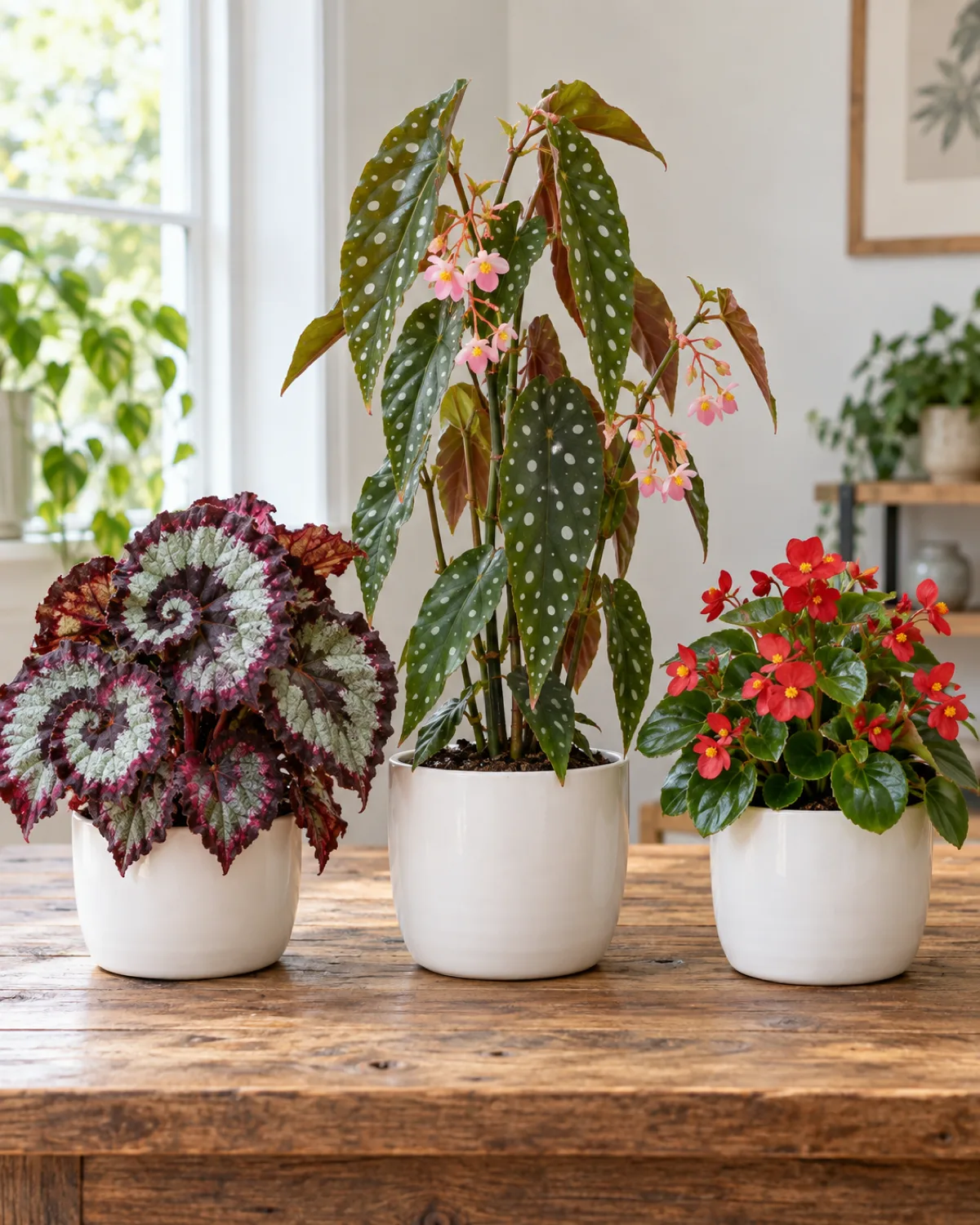
Rex begonias belong to the hybrid group Begonia rex-cultorum, a collection of crosses bred almost exclusively for foliage. While cane begonias grow tall and flower freely and wax begonias cover themselves in blooms, rex types stay compact and put all their energy into leaves that look like living paintings.
The growth habit is rhizomatous. Instead of upright stems, a thick horizontal rhizome creeps across the soil surface, sending up leaves on individual petioles. This makes the plant naturally low and mounding rather than tall and leggy.
- Hybrid group: Begonia rex-cultorum (not a single species but hundreds of named cultivars)
- Growth form: rhizomatous — horizontal stem at or just below soil surface
- Bred for: foliage color and pattern, not flowers
- Leaf shape: asymmetric (one half always larger), spiral unfurling, often with a pronounced curl at the center
- Related care guides: general begonia care covers cane, wax, and rex side by side
Rex begonias do flower, but the small pink blooms are unremarkable compared to the foliage. Many growers pinch flowers off to redirect energy back into leaf production.
The Spiral Leaf Anatomy That Creates Those Metallic Colors
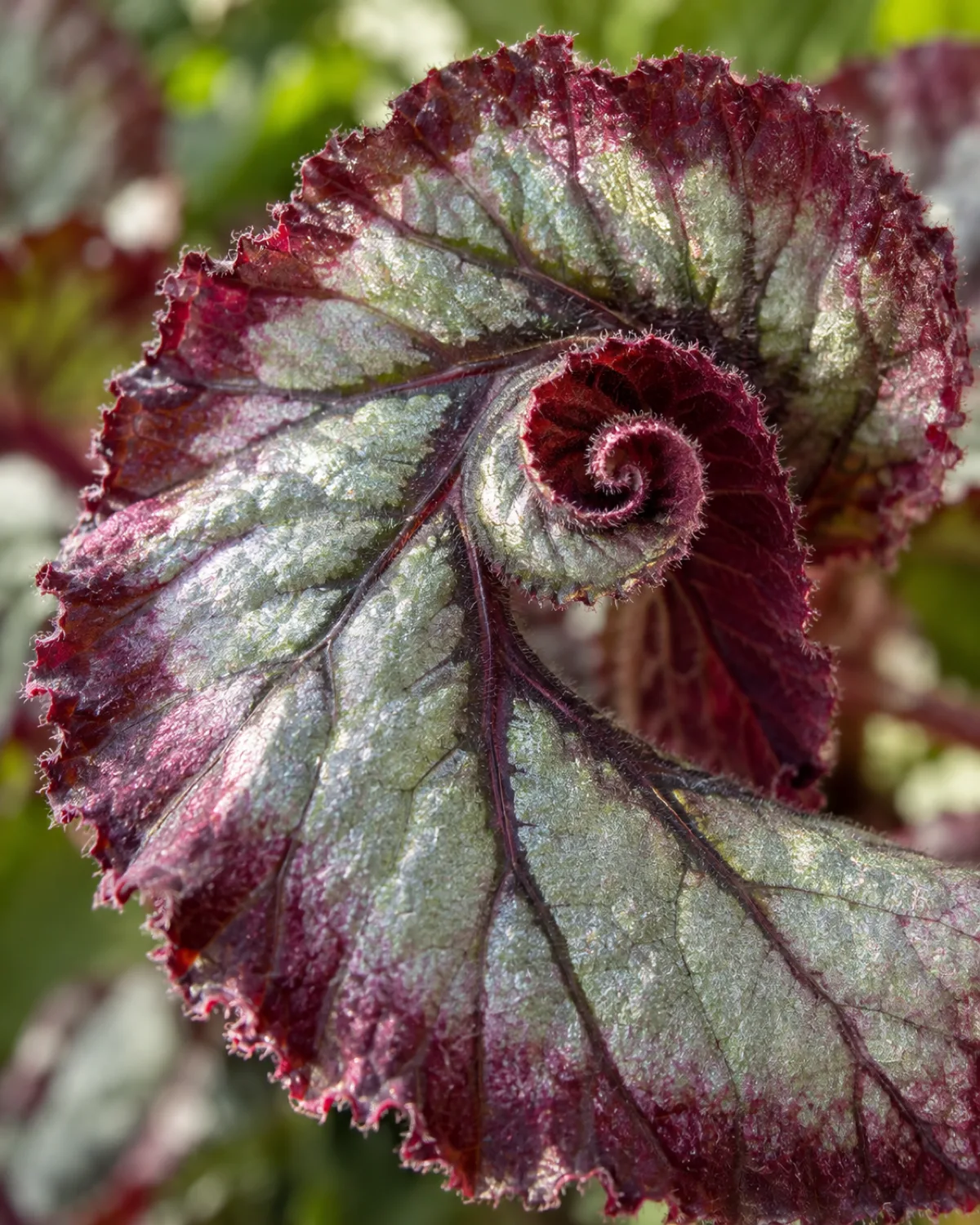
The metallic shimmer on a rex begonia leaf is structural color, not pigment alone. Between the upper and lower cell layers of the leaf sit tiny air pockets that reflect light the way a soap bubble does. When light hits those pockets at certain angles, the surface flashes silver, and the effect intensifies under bright indirect light.
The reds, purples, and near-black tones come from anthocyanin pigments concentrated in specific cell layers. Different cultivars arrange these pigment zones in spirals, bands, spots, or full-leaf washes, which is why the range of patterns is so wide.
- Silver shimmer: caused by air spaces between mesophyll cells reflecting light, not by a surface coating
- Red and purple tones: anthocyanin pigments concentrated in upper or lower epidermis
- Pattern variation: genetics determine where pigment zones overlap with reflective air layers, creating spirals, bands, or stippling
- Spiral unfurling: new leaves emerge tightly coiled at the center of the rosette, unrolling over several days as cells expand
The metallic effect fades under low light because the reflective layers need incoming light to create the shimmer. A rex begonia in a dim corner will gradually shift toward plain green as the plant compensates with more chlorophyll.
Light Requirements — Bright but Never Direct
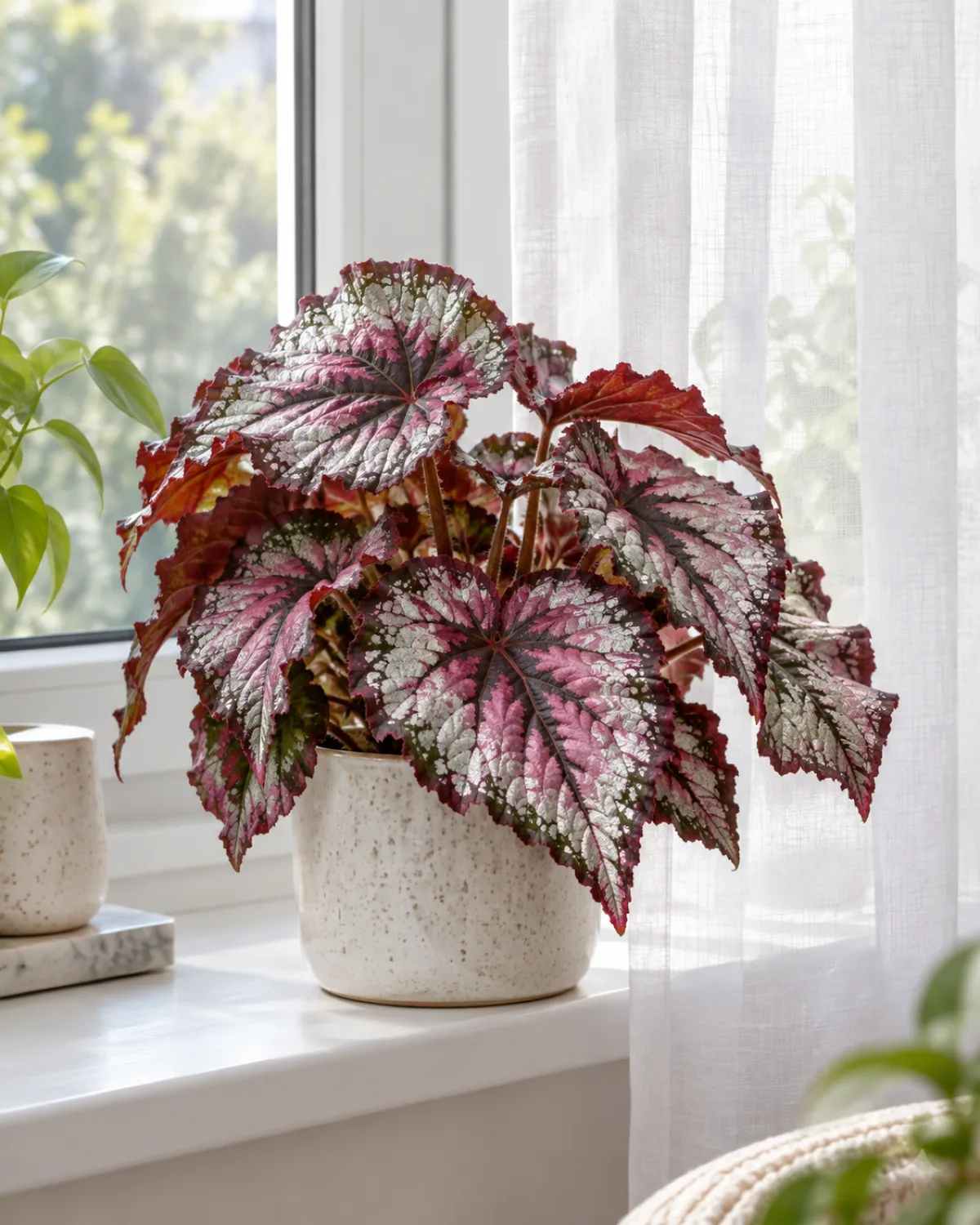
Rex begonias want bright indirect light in the 200 to 400 foot-candle range. An east-facing window with morning sun or a north-facing window with consistent ambient light is ideal.
Direct sun bleaches the metallic patterns and scorches the thin leaves within hours. The damage shows as dry tan patches that do not recover, and a leaf that loses its color pattern does not regain it — you wait for the next leaf.
- Best windows: east (gentle morning light) or north (consistent ambient)
- Acceptable: west or south with a sheer curtain filtering direct rays
- Too much light: faded metallic patterns, tan scorch patches, crispy edges
- Too little light: silver fades to green, leggy petioles stretching toward the window, slower leaf production
- Rotation: quarter-turn weekly keeps the rosette symmetrical instead of leaning one direction
A simple test: hold your hand a foot above the plant at midday. A soft shadow with blurry edges means the light is filtered correctly. A crisp dark shadow means direct sun is hitting the leaves and you need a sheer curtain or a move back from the window.
Rex begonias are rhizomatous, and the rhizome sitting in wet soil is how most of them die. These three rules prevent that.
How to Water a Rhizome Without Rotting It
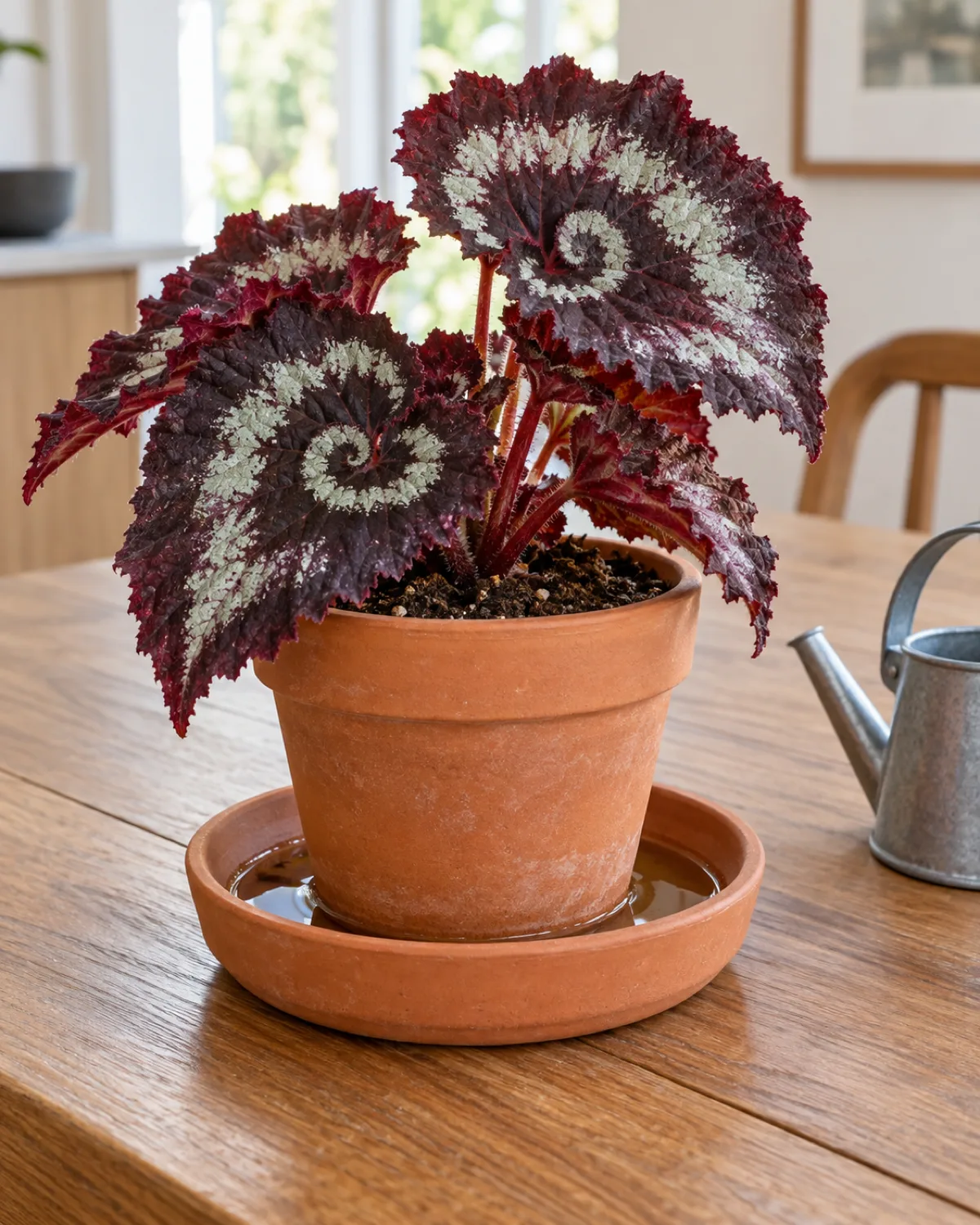
The rhizome is the most vulnerable part of a rex begonia. It sits at the soil surface or just below it, and water pooling around it for even a few hours can trigger crown rot that kills the entire plant before you notice anything wrong above ground.
Bottom watering solves this. Set the pot in a shallow tray of room-temperature water for fifteen to twenty minutes and let the soil wick moisture upward through the drainage hole. The root zone gets thoroughly soaked while the rhizome and leaf surfaces stay dry.
- Watering method: bottom watering preferred, top watering at pot edge acceptable if you keep the crown dry
- Frequency: when the top inch of soil feels dry to the touch
- Water temperature: lukewarm or room temperature — cold water causes leaf spotting
- Winter adjustment: reduce frequency significantly, especially during dormancy when the plant may drop most leaves
If the rhizome feels mushy when you touch it gently, rot has already started. Cut away the soft section with a clean blade, let the wound dry for several hours, dust with cinnamon or sulfur powder, and repot into fresh dry mix. Save any firm sections with visible growth buds — those can regrow the entire plant.
Humidity: The One Factor That Makes or Breaks Rex Begonias
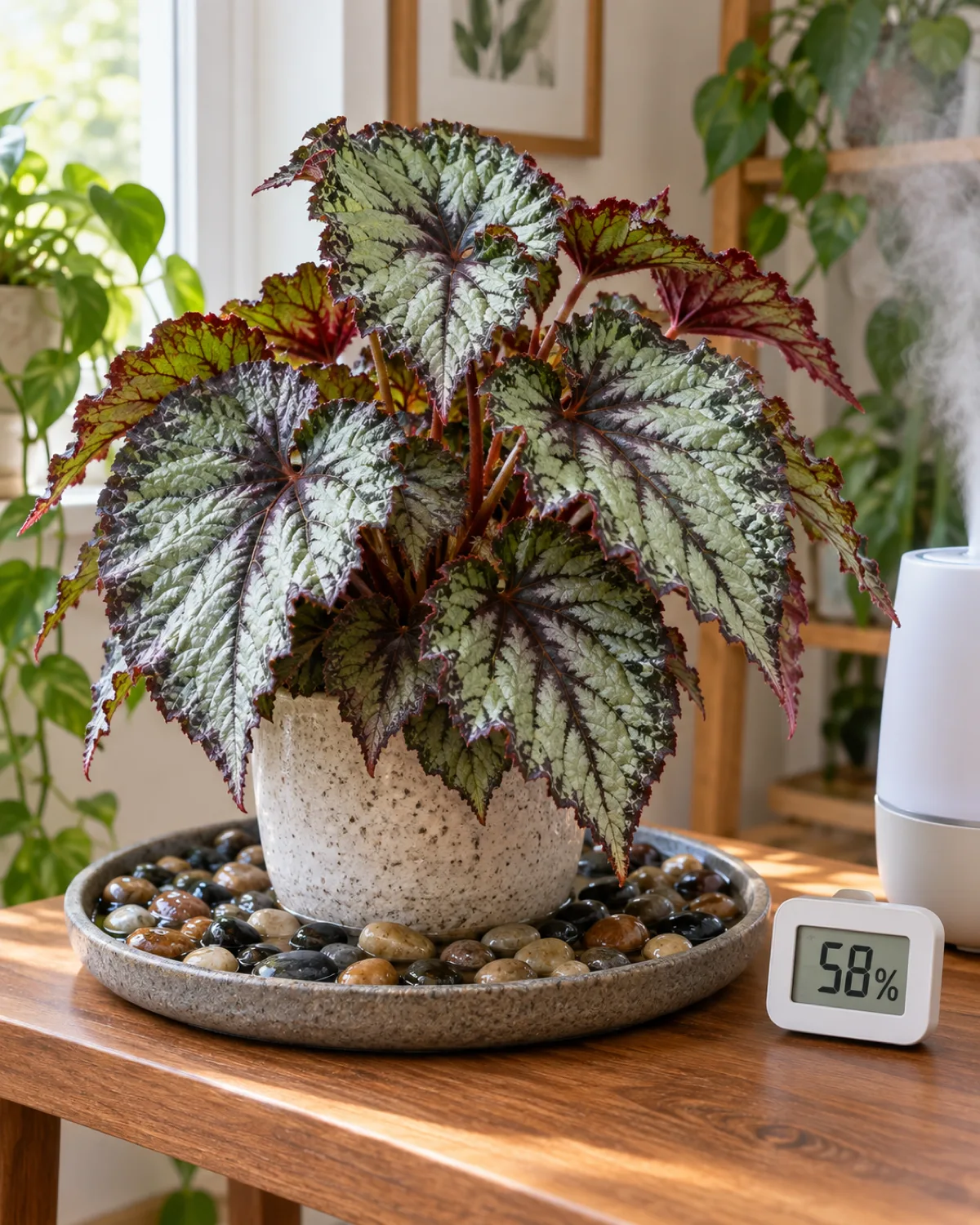
Rex begonias need 50 to 60 percent humidity as a baseline. Below that, the thin leaves develop crispy brown edges that gradually eat inward, and the plant stops producing new leaves entirely.
The catch: rex begonias need humid air but hate wet foliage. Misting the leaves is the worst approach because the fine hairs on rex begonia leaves trap water droplets, creating the perfect conditions for powdery mildew.
- Target range: 50–60% relative humidity minimum
- Pebble tray: fill a shallow tray with clean pebbles, add water to just below the pebble tops, set the pot on the pebbles — evaporation raises local humidity without wetting the leaves
- Humidifier: the most reliable method, especially in winter when heating systems dry the air to 20–30%
- Grouping plants: clustering several tropical houseplants together creates a shared humidity microclimate through collective transpiration
- Never mist: the hairy leaf surface traps water droplets, promoting powdery mildew and bacterial leaf spot
A digital hygrometer next to the plant costs a few dollars and takes the guesswork out entirely. If the reading consistently drops below 45 percent, a small humidifier running nearby during the day makes the difference between a thriving rex begonia and one that slowly crisps.
The Soil Mix That Keeps Rhizomes Alive
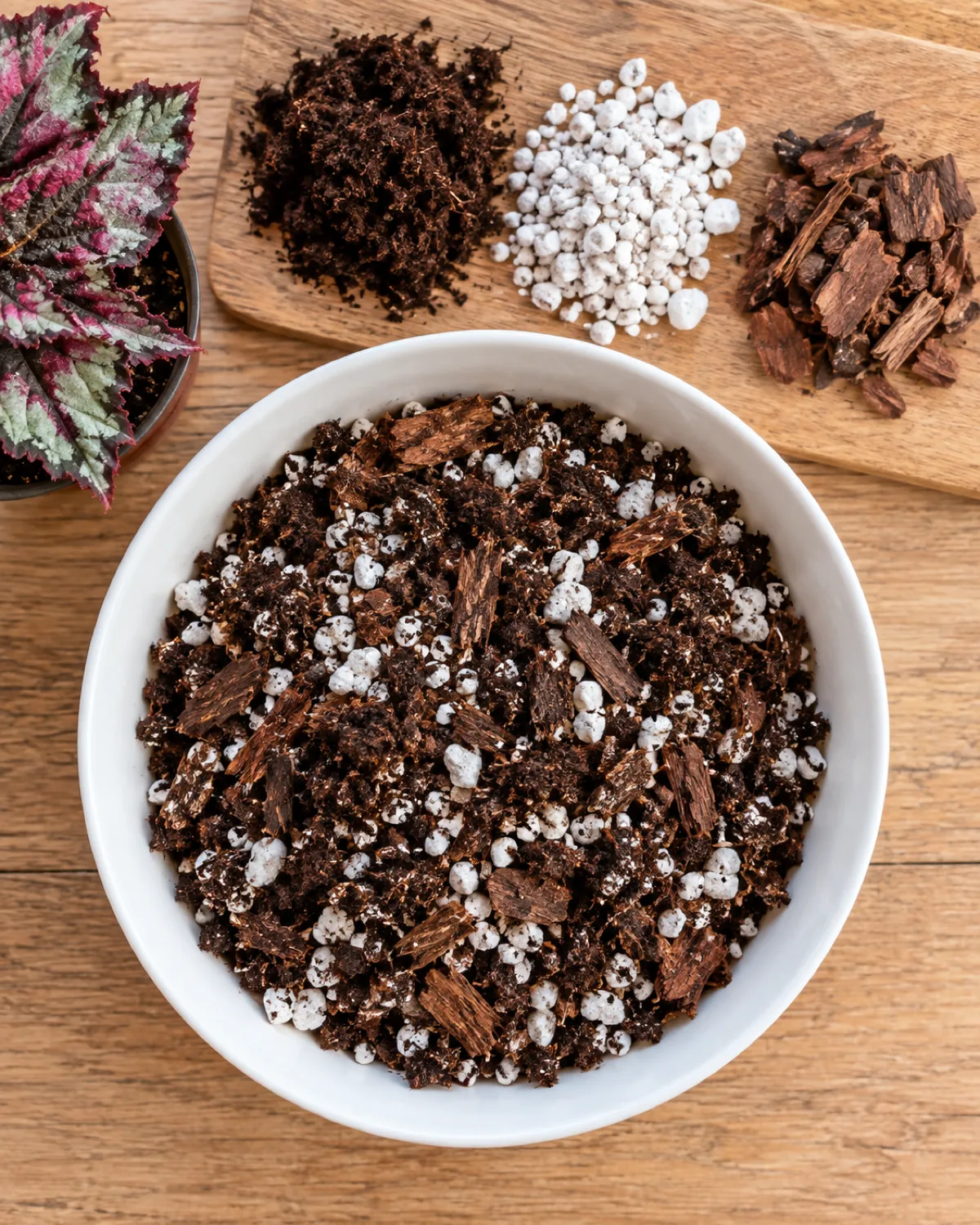
Rex begonias need a mix that drains fast but holds enough moisture to keep the fine roots from drying out completely between waterings. Standard potting soil retains too much water around the rhizome, and pure bark drains too fast for the shallow root system to absorb anything.
The ratio that works: two parts peat moss (or coco coir), one part perlite, one part orchid bark. The peat holds consistent moisture, the perlite creates air pockets that prevent compaction, and the bark chunks keep the mix open so water flows through instead of sitting.
- Base ratio: 2:1:1 peat (or coco coir) to perlite to bark
- Shortcut: African violet potting mix makes a reasonable base — it is already formulated for shallow-rooted plants that want moisture without saturation
- pH: slightly acidic, 5.5 to 6.5
- Avoid: heavy garden soil, straight coco coir without amendments, any mix described as moisture-retaining
Replace the mix every twelve months even if you do not repot into a larger container. Old mix breaks down, compacts, and holds water longer than fresh mix — exactly the conditions that rot a rhizome.
All three bases work when mixed correctly. Pick based on what matters most to you right now.
Temperature and Airflow — The Goldilocks Zone
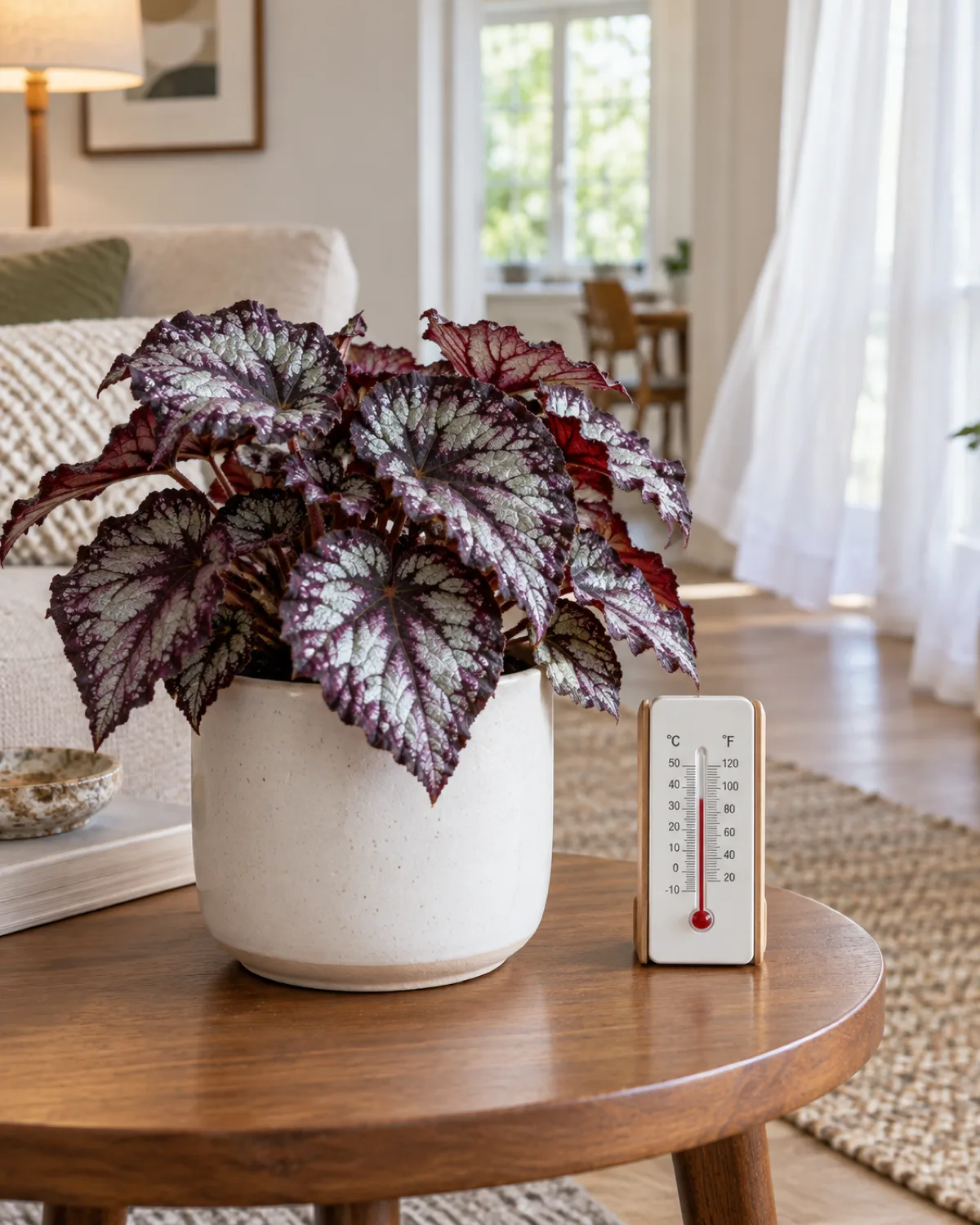
Rex begonias are tropical plants that want stable warmth. The sweet spot is 65 to 75 degrees Fahrenheit during the day, and they tolerate a slight drop at night as long as temperatures never fall below 55 degrees.
Cold is the fastest way to damage a rex begonia. A single night near a drafty window in winter can cause every leaf to drop overnight, and while the rhizome may survive, recovery takes months.
- Ideal daytime range: 65–75°F (18–24°C)
- Nighttime minimum: never below 55°F (13°C)
- Cold draft danger zones: near single-pane windows, exterior doors, air conditioning vents
- Heat danger zones: directly above radiators, near heating vents that blow dry hot air
- Airflow: gentle circulation prevents fungal problems, but direct fan blast on the leaves causes rapid dehydration
Good airflow matters as much as temperature. Stagnant air around the damp soil surface and humid leaf canopy creates ideal conditions for powdery mildew and botrytis. A ceiling fan on low, or simply leaving the room door open, provides enough circulation without drying the leaves.
Fertilizing Rex Begonias Without Burning Delicate Roots
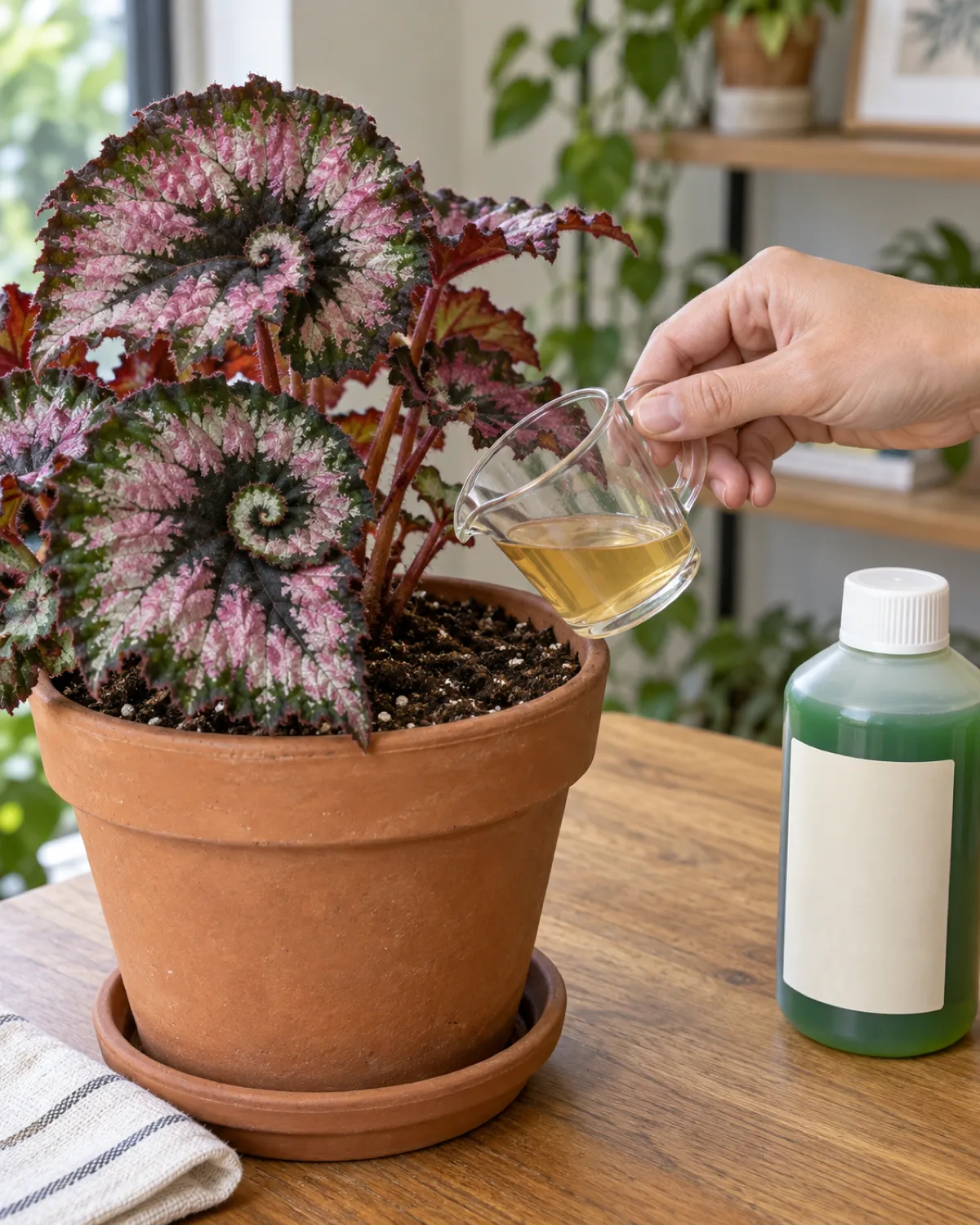
Rex begonias are moderate feeders during the growing season and need nothing at all in winter. A balanced liquid fertilizer diluted to half the label strength once a month from spring through early fall covers their needs without risking the salt buildup that burns their fine, shallow roots.
The formula does not need to be complicated. A balanced 10-10-10 or 20-20-20 liquid concentrate diluted to half strength provides enough nitrogen for leaf production without pushing the kind of leggy growth that weakens the plant.
- Formula: balanced liquid (10-10-10 or 20-20-20) at half label strength
- Frequency: monthly, April through September
- Winter: stop entirely — the plant is dormant or semi-dormant and cannot use nutrients
- Signs of over-fertilizing: crispy brown leaf margins, white salt crust on soil surface, stunted new growth
- Soil flush: run plain water through the pot until it drains freely every three months to dissolve accumulated salts
Always water the soil before fertilizing. Applying fertilizer to dry soil concentrates the salts at the root zone and burns the fine root hairs that the plant depends on for water uptake.
Repotting: Why Shallow Pots Beat Deep Ones
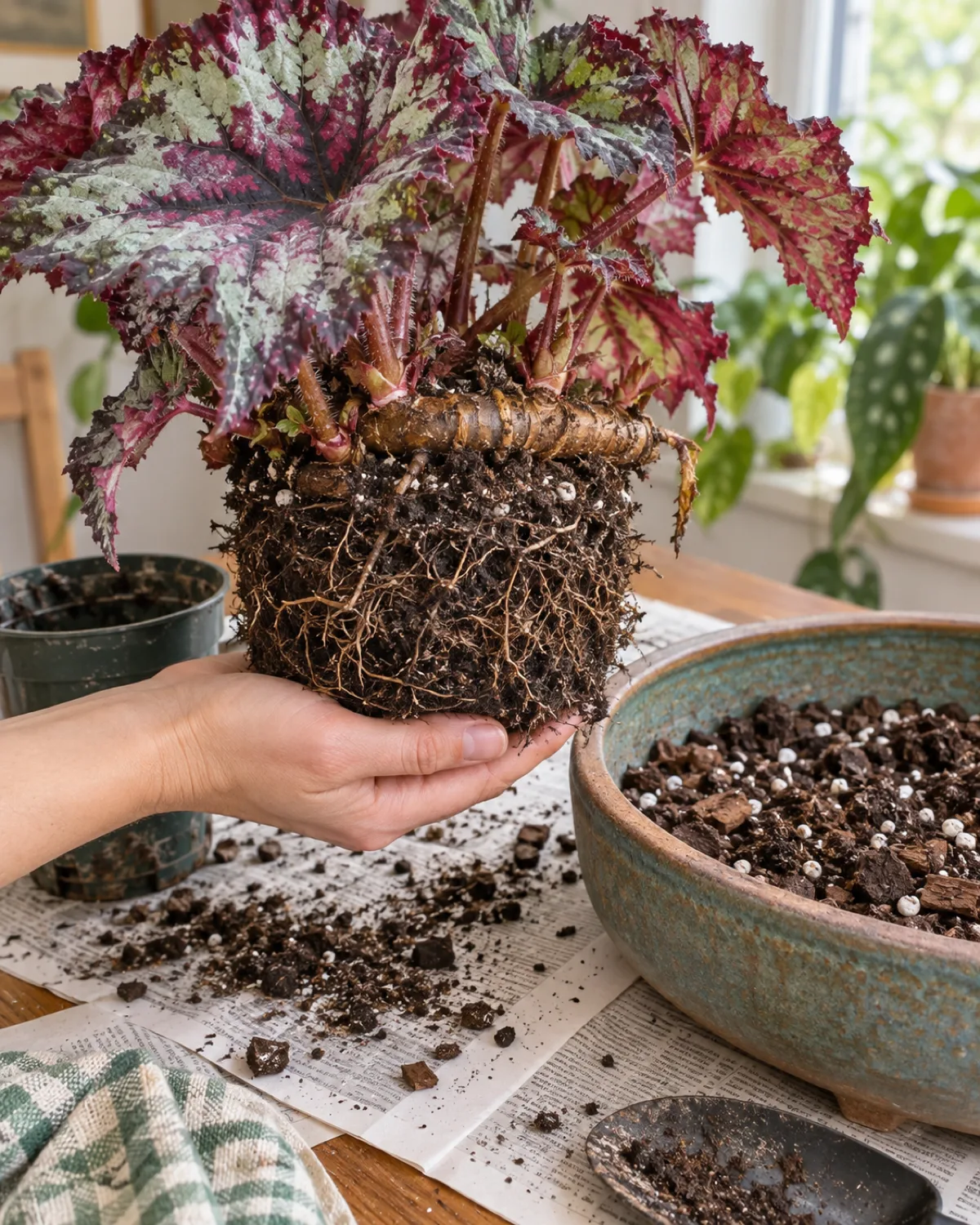
Rex begonia roots are shallow. The rhizome grows horizontally across the soil surface, and the fine feeder roots below it rarely extend deeper than three or four inches. A standard deep pot leaves a thick layer of perpetually wet soil at the bottom that the roots never reach, creating a moisture reservoir that eventually rots the rhizome from below.
An azalea pot — the squat, wide style about two-thirds the height of a standard pot — matches the root system much better. The wider diameter gives the rhizome room to spread, and the shallower depth means the soil dries more evenly from top to bottom.
- Pot style: wide and shallow (azalea pot or bulb pan) with drainage holes
- When to repot: when the rhizome reaches the pot edge, typically every 18–24 months
- Pot size increase: one inch larger in diameter, no more — excess soil holds excess moisture
- Fresh soil: replace the mix even if you do not size up, because old mix compacts and retains water longer
- Root handling: disturb fine roots as little as possible — shake off the old soil gently rather than pulling roots apart
The best time to repot is early spring just as new growth begins. The plant recovers fastest when it is already ramping up and can push new roots into the fresh mix within weeks.
Propagation by Leaf Wedge — One Leaf Becomes a Dozen Plants
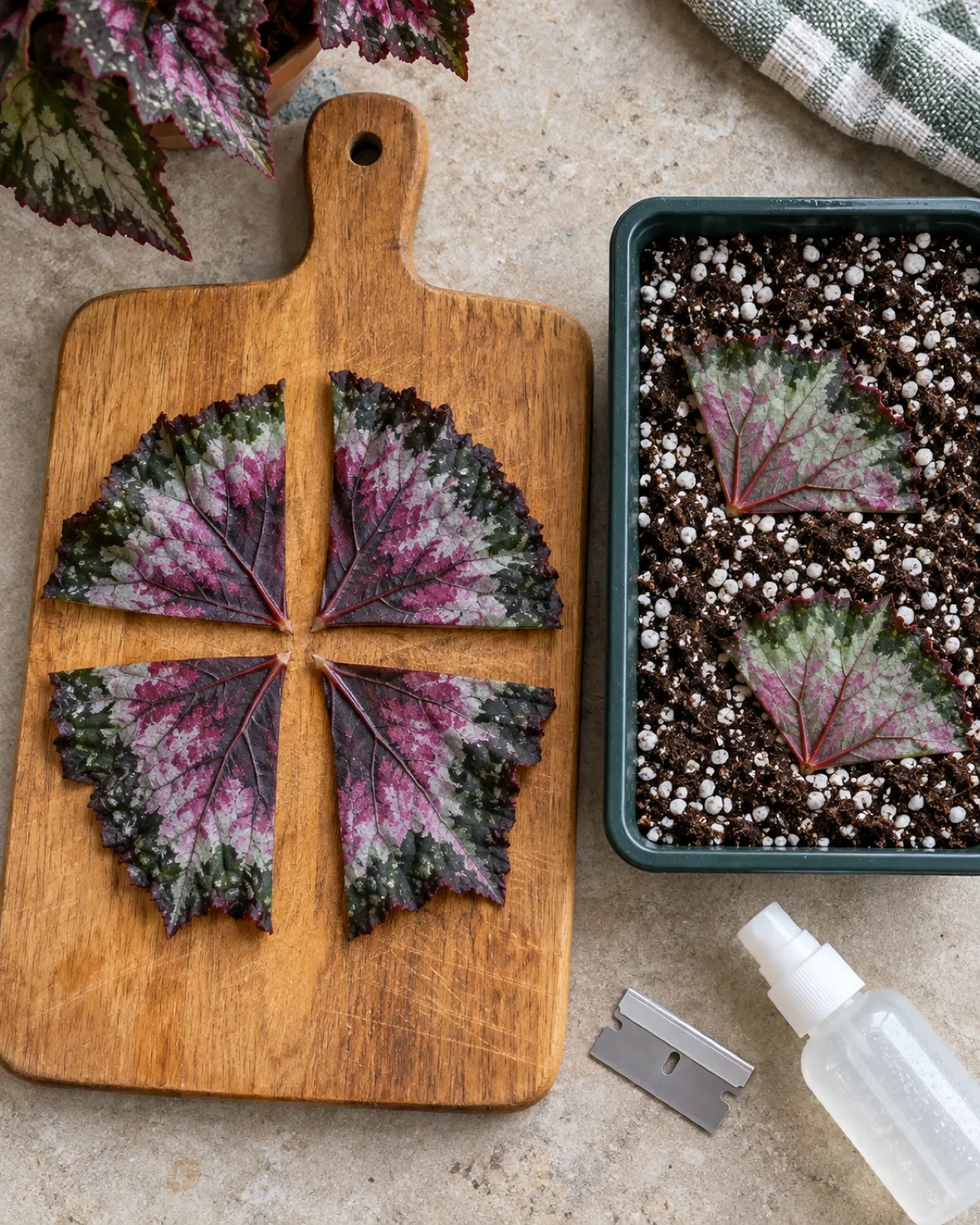
Leaf-wedge propagation is the rex begonia party trick. Take one healthy leaf, cut it into wedges, and each wedge can produce a new plantlet from the cut vein. It is slower than rhizome division but produces far more plants from a single mother leaf.
The method works because rex begonia veins contain meristematic tissue capable of generating new roots and shoots. Every wedge that includes a section of main vein has the raw material to become a complete new plant.
- Step 1: select a healthy, mature leaf with no damage or disease
- Step 2: cut the leaf into wedge-shaped pieces using a clean razor blade, making sure each wedge contains at least one main vein running from the center to the edge
- Step 3: press each wedge vein-side down into a tray of damp perlite-peat mix (50/50), pushing the cut vein gently into the surface
- Step 4: cover the tray with a clear dome or plastic wrap to hold humidity above 70%
- Step 5: place in bright indirect light at 70–75°F, misting the inside of the dome if condensation disappears
Tiny plantlets emerge from the vein cuts in four to six weeks. Once each plantlet has two or three leaves and visible roots, pot it individually into a small container with the standard 2:1:1 rex begonia mix.
Rhizome division is faster: when repotting, simply cut the rhizome into sections that each have at least two growth buds and pot them separately. Each section grows into a full plant within one growing season.
The Dormancy Question — When Your Rex Begonia Looks Dead but Isn't
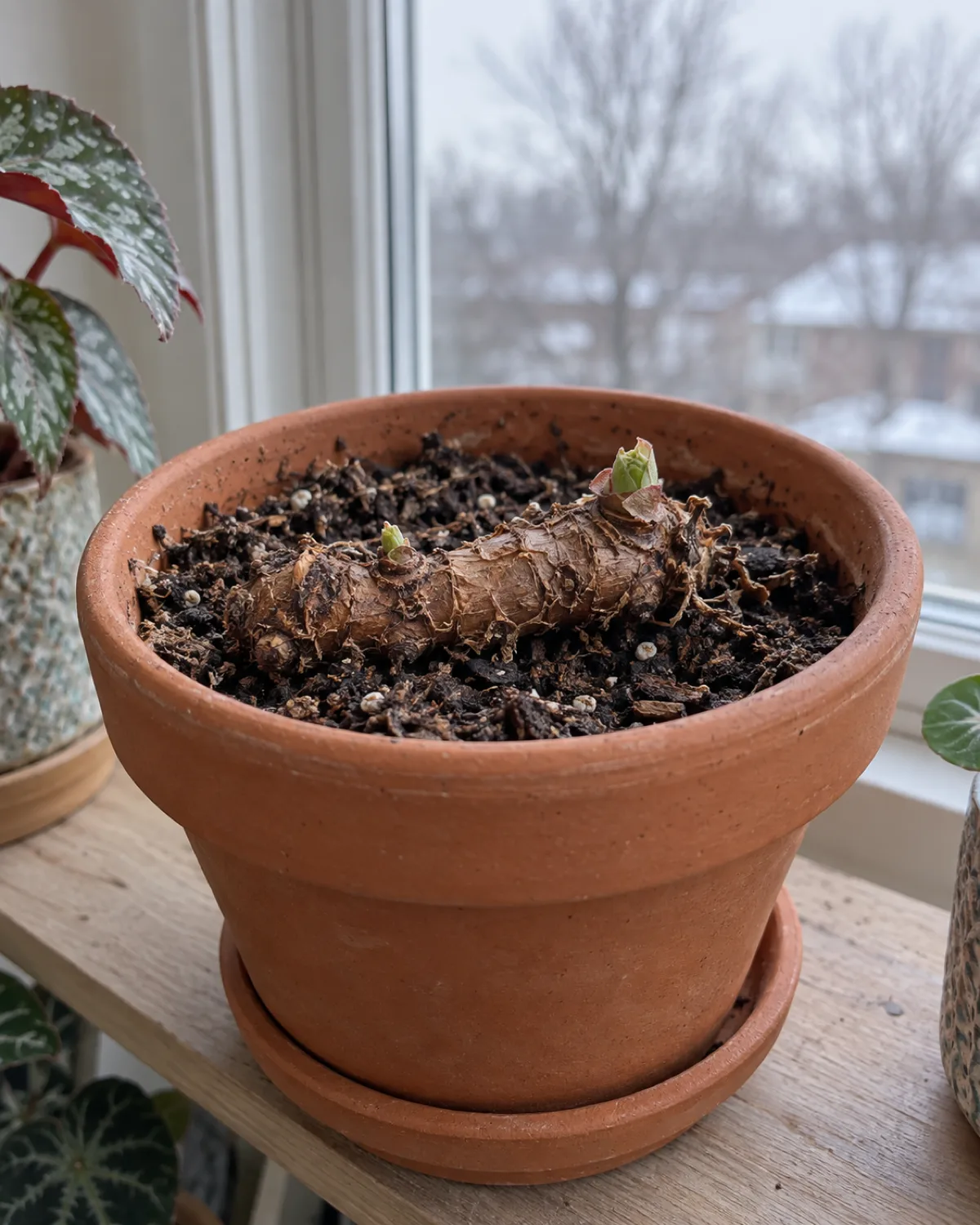
Rex begonias can go dormant in winter, and the first time it happens is terrifying. The leaves yellow, droop, and drop one by one until the pot contains nothing but bare soil and a thick rhizome sitting on top of it.
This is normal for rex types. Cane begonias and wax begonias do not do this — they keep growing through winter under adequate light. But many rex cultivars inherited a dormancy response from their wild ancestors, triggered by shorter days and cooler temperatures.
- Trigger: short days and temperatures below 65°F for extended periods
- What it looks like: progressive leaf drop over two to four weeks until only the rhizome remains
- Watering during dormancy: reduce to barely moist — just enough to keep the rhizome from shriveling, roughly once every two to three weeks
- Fertilizing: stop completely until new growth appears
- Recovery: new leaves emerge from the rhizome in spring as days lengthen and temperatures rise
The single most common mistake during dormancy is panic watering. An owner sees the bare rhizome, assumes the plant is dying of thirst, and soaks the soil — which rots the dormant rhizome because it is not actively taking up water. If the rhizome feels firm when you press it gently, the plant is alive. Leave it alone.
Common Pests That Target Rex Begonias
Rex begonias are not especially pest-prone, but the textured leaf surfaces and humid growing conditions that the plant needs can attract a few specific visitors.
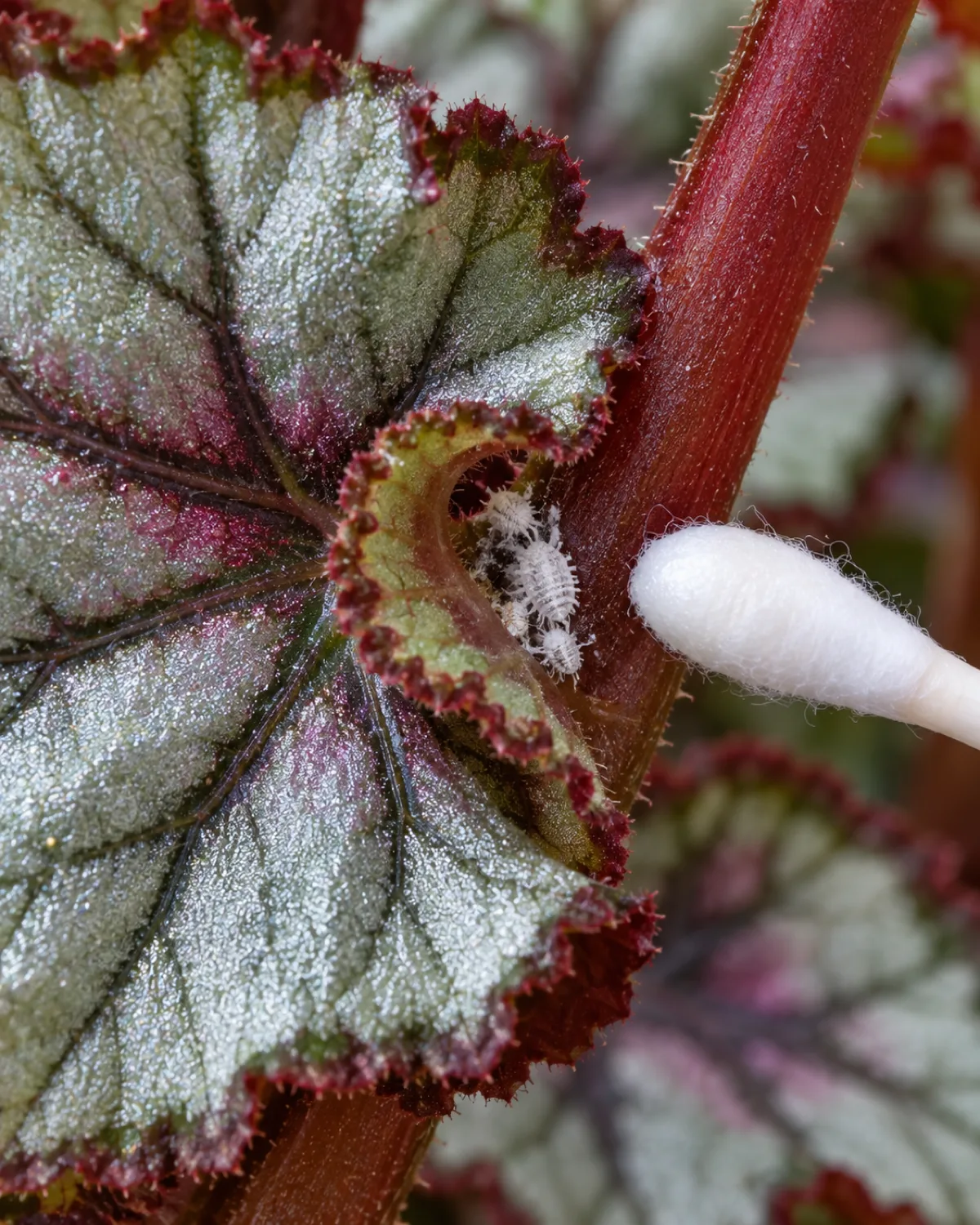
Mealybugs are the most common. They hide in the tight crevices where the spiral leaf unfurls from the center, making them hard to spot until the colony is established. The white cottony clusters are visible against the dark metallic leaf surface if you look closely.
- Mealybugs: cottony white clusters in leaf crevices and along the rhizome — dab individual insects with a cotton swab dipped in rubbing alcohol, treat heavy infestations with insecticidal soap
- Spider mites: tiny dots on leaf undersides with fine webbing, most common when humidity drops below 40% — raise humidity and spray with neem oil
- Fungus gnats: small flying insects around the soil, larvae feed on fine roots in overwatered soil — let the soil dry more between waterings, apply BTI (Bacillus thuringiensis israelensis) to the soil surface
- Powdery mildew: white dusty coating on leaves, caused by water on foliage combined with poor airflow — improve ventilation, stop misting, remove affected leaves
Inspect the center of the leaf rosette every time you water. That tight spiral where new leaves emerge is where mealybugs and fungal problems start, and catching them early is the difference between a quick fix and losing the plant.
Toxicity and Pet Safety
Rex begonias contain calcium oxalate crystals in all parts of the plant — leaves, stems, rhizome, and roots. These microscopic needle-shaped crystals cause immediate oral pain, swelling, and irritation if chewed or ingested by cats, dogs, or humans.
The reaction is mechanical, not chemical. The crystals physically puncture the soft tissue of the mouth and throat, causing intense burning, drooling, and difficulty swallowing. Most pets drop the leaf immediately after the first bite, but the irritation can last for hours.
- ASPCA classification: toxic to cats and dogs
- Toxic compound: insoluble calcium oxalate crystals (raphides)
- Symptoms in pets: excessive drooling, pawing at mouth, difficulty swallowing, oral swelling
- Symptoms in humans: burning sensation in mouth and throat, skin irritation from sap contact
- Emergency contact: ASPCA Poison Control at (888) 426-4435 or your veterinarian
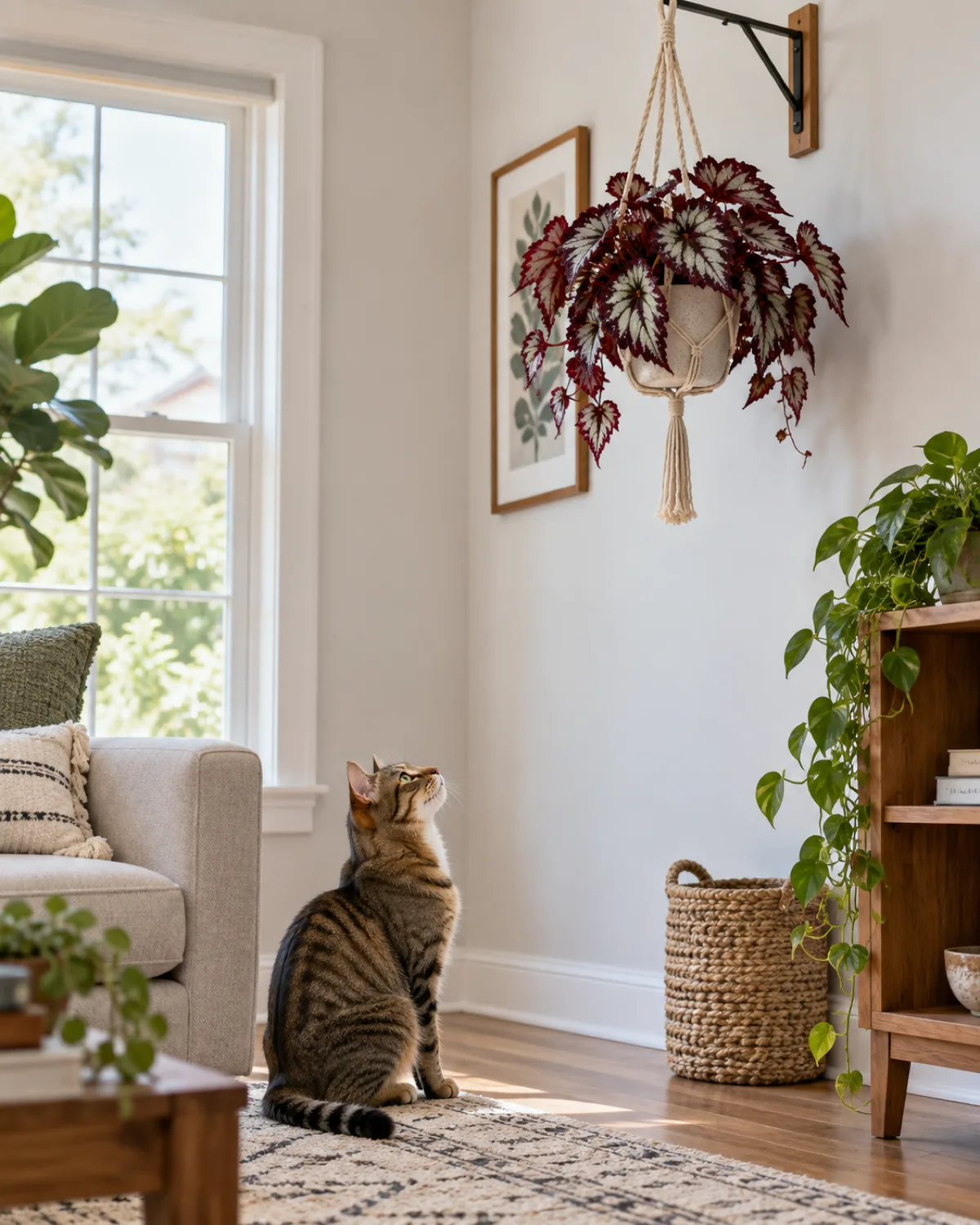
The simplest solution is height. A hanging planter, a high shelf, or a room with a closed door keeps the plant accessible to you and inaccessible to pets. For a list of houseplants that are safe around animals, see our guide to plants safe for cats and pet-safe plants.
14 Rex Begonia Care Essentials to Keep Those Painted Leaves Thriving
- 1Rex begonias are grown for foliage, not flowersBred for metallic spirals, not blooms — pinch off flowers to redirect energy into leaves.
- 2The metallic shimmer is structural color from air layers in the leafAir pockets between cells reflect light like mirrors — the effect fades in low light.
- 3Bright indirect light, never direct sunEast or north window, 200–400 foot-candles — direct sun bleaches the patterns permanently.
- 4Bottom water to keep the rhizome drySet the pot in a saucer of water and let it wick up — never pour water over the crown.
- 5Humidity 50–60% minimum, but never mist the leavesPebble tray or humidifier — misting hairy leaves causes powdery mildew.
- 6Fast-draining mix: 2 parts peat, 1 perlite, 1 barkStandard potting soil stays too wet for the surface rhizome.
- 7Keep temperatures between 65–75°F and away from cold draftsOne cold night near a drafty window can cause total leaf drop.
- 8Half-strength balanced fertilizer monthly in growing seasonStop in winter — dormant roots cannot use nutrients and salts accumulate.
- 9Repot into wide shallow pots, not deep onesAzalea pots match the horizontal rhizome — deep pots hold wet soil the roots never reach.
- 10Propagate by cutting one leaf into vein wedgesEach wedge with a main vein can grow a new plantlet in four to six weeks.
- 11Winter dormancy is normal — do not panic waterLeaves may drop entirely but a firm rhizome means the plant is alive and resting.
- 12Check the leaf spiral center for mealybugs every wateringThat tight crevice is where pests hide — dab with alcohol before they colonize.
- 13Toxic to cats, dogs, and humans — keep it out of reachCalcium oxalate crystals cause oral pain and swelling on contact.
- 14Crispy edges mean dry air, faded color means too little lightMost rex begonia problems trace back to humidity or light — fix those first.
kultivy.com
Troubleshooting the Five Most Common Rex Begonia Problems
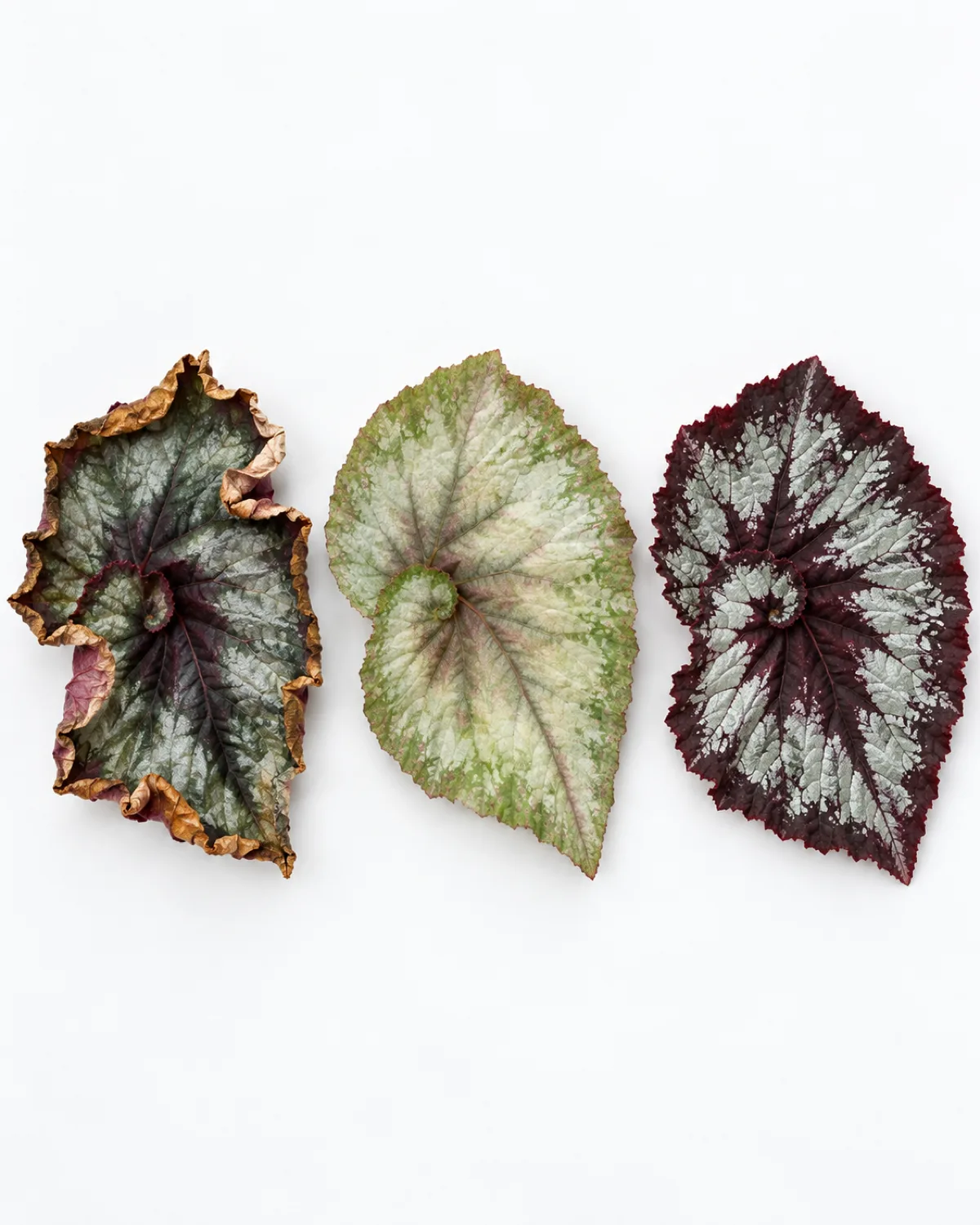
Most rex begonia problems come back to two things: humidity and light. Fix those and you fix the majority of complaints.
Crispy brown leaf edges almost always mean the air is too dry. Check the hygrometer — if humidity is below 45 percent, add a pebble tray or humidifier. Over-fertilizing also causes brown margins, so if humidity is fine, flush the soil with plain water.
- Leaf curl and crispy edges: low humidity (below 45%) or fertilizer salt buildup — raise humidity first, flush soil if that does not resolve it
- Faded metallic patterns: too much or too little light — move to brighter indirect light if patterns are turning green, move away from the window if patterns are bleaching to tan
- Leggy, stretching petioles: insufficient light — the plant reaches toward whatever light source is available, producing long weak stems with small leaves
- Mushy rhizome: overwatering or poor drainage — cut away soft sections, dust with cinnamon, repot into dry fresh mix, and reduce watering frequency
- Sudden total leaf drop: cold draft, temperature shock, or the beginning of winter dormancy — check for drafts, confirm temperatures above 55°F, and if conditions are correct, wait for spring regrowth
When in doubt, check the rhizome. If it feels firm and has visible growth buds, the plant is alive regardless of what the leaves look like. Rex begonias can regrow from a bare rhizome as long as the root system stays intact and the growing conditions improve.
FAQ
Do rex begonias flower indoors?
They can, but the flowers are small and unremarkable compared to the foliage. Many growers remove flower stalks when they appear to keep the plant's energy focused on producing new painted leaves instead.
What to do when flower stalks appear:
- Pinch or snip the stalk at its base as soon as you spot it
- Redirect the energy into the next leaf, which will unfurl faster without competing with a bloom
Why are my rex begonia leaves losing their silver color?
The metallic shimmer depends on bright indirect light hitting the reflective air layers inside the leaf. In low light, the plant produces more chlorophyll to compensate, which masks the silver with plain green.
Quick fixes for fading silver:
- Move the plant one foot closer to the window
- Switch from a north window to an east window for brighter ambient light
- Add a grow light if no bright window is available
Can rex begonias grow in a terrarium?
Small cultivars thrive in terrariums because the enclosed environment naturally maintains the high humidity rex begonias crave. Choose compact varieties and provide ventilation by opening the lid periodically to prevent fungal problems from stagnant air.
Best compact rex begonia cultivars for terrariums:
- Begonia rex 'Fairy' — stays under six inches with silver-pink leaves
- Begonia rex 'Kit Kat' — narrow leaves, compact rosette, tolerates enclosed humidity well
- Begonia rex 'Escargot' — tightly spiraled leaves, needs occasional lid opening for airflow
How long do rex begonia leaves live before dropping?
Individual leaves typically last several months to a year before aging out naturally. The plant constantly produces new leaves from the center of the rosette as older outer leaves yellow and drop.
Signs a leaf is aging out naturally versus signaling a problem:
- Natural aging: outer leaves yellow evenly and drop while new leaves keep emerging from the center
- Problem signal: multiple leaves drop suddenly, or inner leaves yellow before outer ones
Is rex begonia the same as painted-leaf begonia?
Painted-leaf begonia is a common name for the same group — Begonia rex-cultorum. They all refer to the rhizomatous hybrid group bred for colorful, patterned foliage rather than flowers.

Mara Quinn edits Kultivy, where she shares houseplant care, propagation, beginner-friendly plant picks, and plant-styling ideas for anyone who wants their indoor plants to actually thrive. Every guide is image-led and reviewed for clarity, usefulness, image accuracy, and Pinterest-to-page alignment before it goes live. Visit the About page.