My first bathroom plant was a maidenhair fern that died in my living room within a week. I moved the next one to the shelf beside the shower, and it has been throwing out new fronds for two years. The bathroom is the easiest room in the house for fussy plants.
A bathroom is warm, humid, and dim. Most living-room failures (crisp fern tips, dropping calatheas, sulking begonias) reverse the moment you move the plant into a steamy bathroom with even a small window or a vent. These thirteen picks all earn the spot, and several of them only really thrive here.
If low-light feels intimidating, our easy houseplants guide covers the most forgiving starter picks before you graduate to humidity divas.
A bathroom is warm, humid, and usually dim. The right plants are the ones that turn those conditions into a feature instead of a struggle. Jump to whatever fits your bathroom.
Boston fern

A Boston fern dies in a typical living room because indoor air sits around 30 percent humidity all winter. A bathroom that gets one shower a day spikes to 70 or 80 percent for half an hour, then settles in the 50s, which is the exact range the species grew up in. The fronds that crisp on a fireplace mantel stay soft on a stool beside the tub.
- Skip the misting bottle entirely. Five minutes of shower steam delivers more humidity than ten manual sprays.
- Wipe shower spray off any fronds inside the splash zone. Soap residue clogs the tiny breathing pores along each pinna.
- Trim crispy outer fronds the day after a missed shower week. They will not green back up, and removing them pushes new fiddleheads from the crown.
Pothos

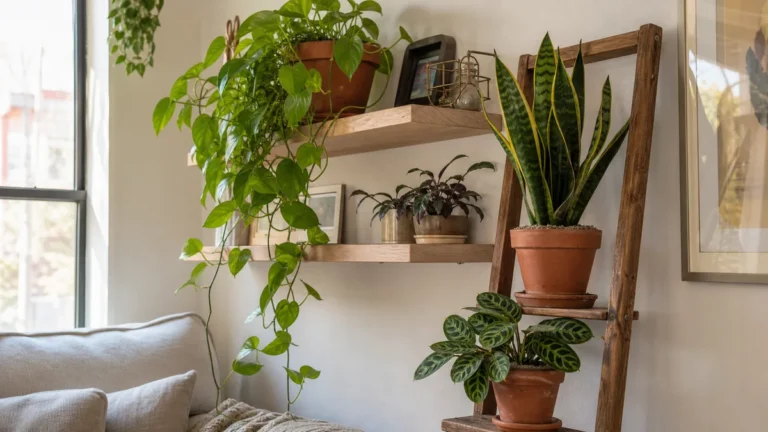
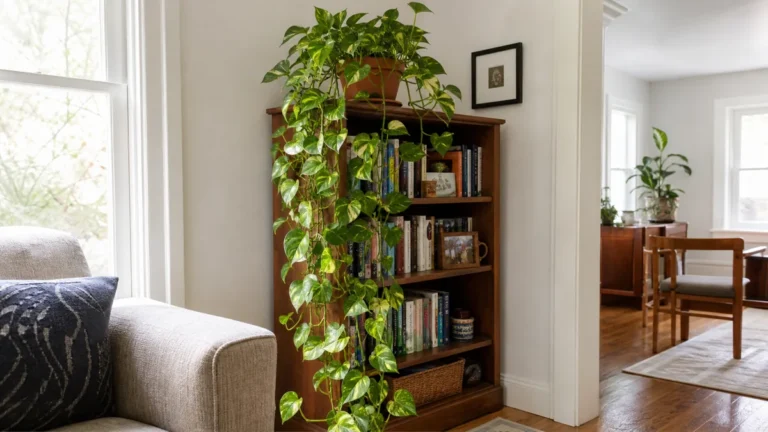
Pothos is the rare houseplant that handles a bathroom with no natural light at all. A vanity light bar gives off enough yellow-spectrum glow to keep the variegated heart leaves green, and the consistent humidity means even the runners that hang two feet down stay plump instead of shriveling. Above a toilet shelf or trained along the top of a shower frame, it covers tile fast.
- Stretch waterings by a week in a humid bathroom. What is a weekly drink in a dry living room becomes every ten to twelve days here; the soil dries that much slower.
- Wipe the leaves after a long hot shower. Mineral spots from steam dry as a chalky film that blocks photosynthesis over time.
- See our full pothos care guide for varieties, propagation, and how to grow a long full trail.
Snake plant

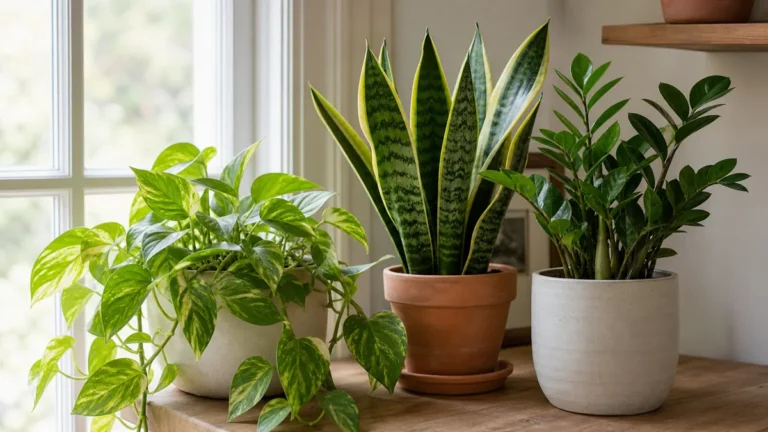
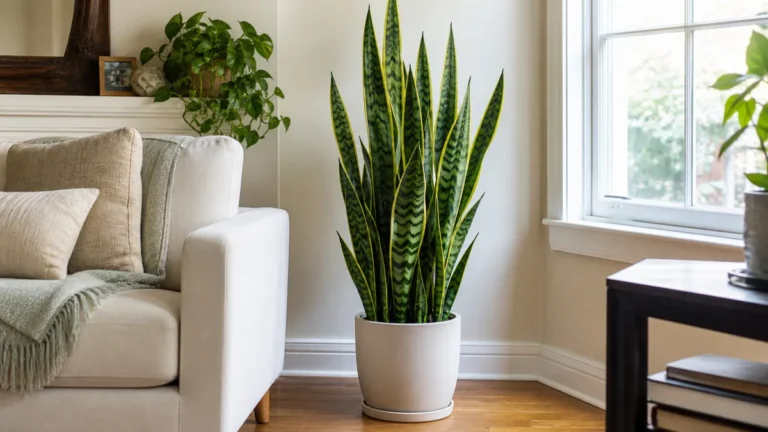
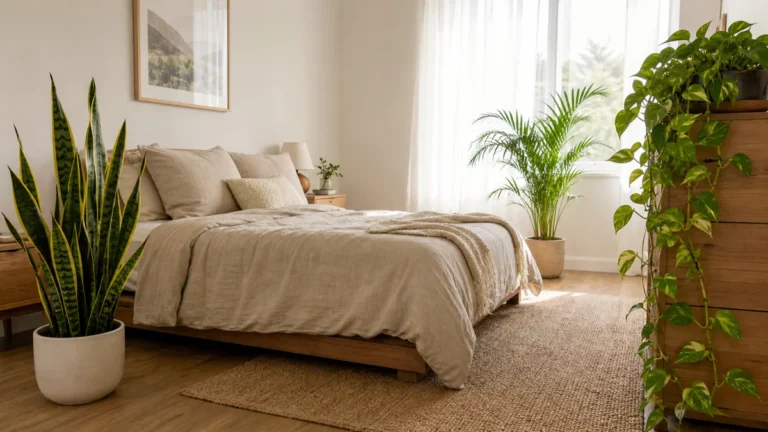
Most bathrooms have one stubbornly dead corner where the wall meets the floor away from the window, and the snake plant is the one upright pick that survives there. The CAM photosynthesis it uses means it can keep its breathing pores closed during the muggy peak of a hot shower and reopen them at night, which protects it from the rot that kills other plants in standing humidity.
- Stretch waterings to monthly. A humid bathroom evaporates almost nothing from the soil, so a snake plant here drinks half as often as one in a heated bedroom.
- Lift the pot off a wet tile floor. A small stand or a tray with felt feet stops the rhizome from sitting in puddled shower runoff.
- Wipe sword leaves quarterly. Bathroom dust mixed with hairspray builds into a dull film much faster than household dust on its own.
A bathroom is not a sunroom. The right plants are the ones that match how much light you have, whether the room is used daily for hot showers, and how much fuss you want to do. Pick the bathroom that sounds like yours.
Peace lily

The peace lily is the bathroom plant that genuinely loves it here. The arching glossy leaves and white spathe flowers ask for the warm humid air and filtered light that most bathrooms have on tap. It also flags thirst dramatically by collapsing all at once, which removes the guesswork from a room you might not check daily.
- Water when the leaves start to flag. The plant rebounds within a few hours of a deep drink.
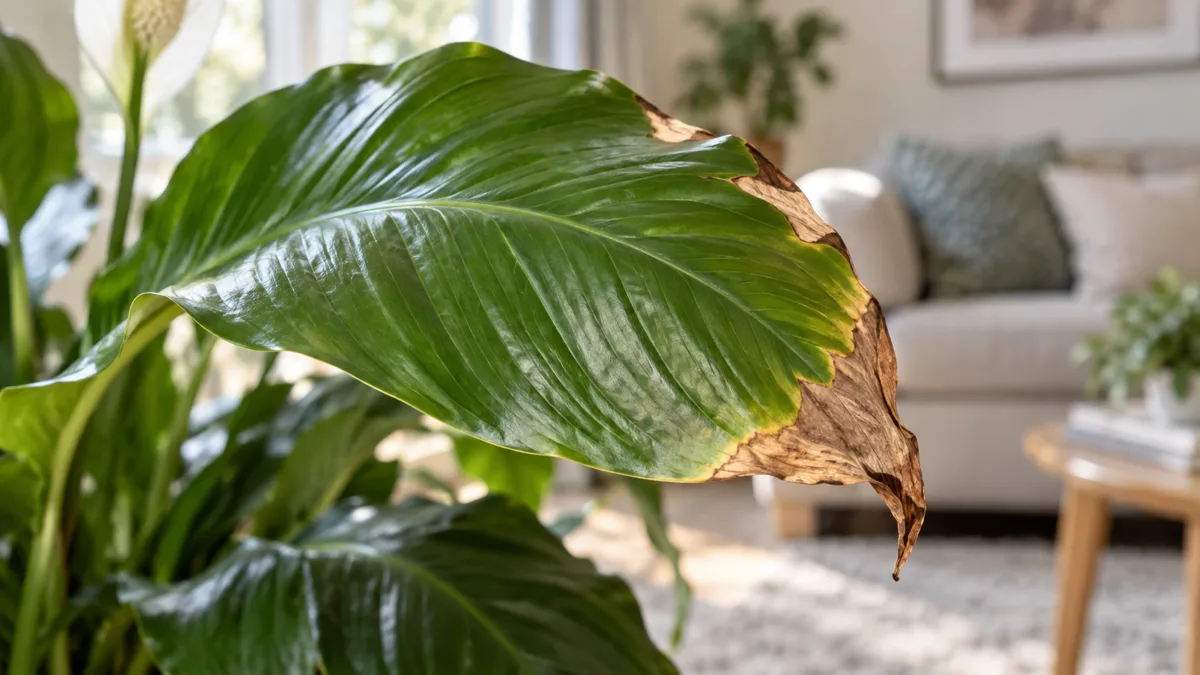
- Keep it out of cold drafts. A bathroom fan or a leaky window across the leaves browns the tips fast.
- See our full peace lily care guide for blooms, droop rescue, and pets.
Bird’s nest fern

The bird’s nest fern is the fern that grows best as a houseplant, and it grows best of all in a bathroom. The rippling bright-green fronds rise from a central nest-like crown, and the plant wants exactly the warm humid air and indirect light a steamy bathroom delivers. It looks soft and architectural beside a tiled shower.
- Water around the base, never into the crown. Water sitting in the nest rots the new fronds.
- Keep the soil evenly moist. Bathroom humidity helps, but the soil should never dry out completely.
- Skip direct sun. A bright shaded shelf near the shower is ideal; harsh sun bleaches the fronds.
Maidenhair fern

The maidenhair fern is famously almost impossible in a dry living room and surprisingly easy in a humid bathroom. The fan-shaped leaflets on wiry black stems crisp the moment the air drops below comfortable humidity, but a daily shower keeps it lush. It rewards a small ledge above a sink or beside the tub with a steady stream of soft new fronds.
- Keep the soil moist at all times. One dry-out and the leaflets crisp; recovery is slow and partial.
- Prize the steam. This is the plant that genuinely needs the humid bathroom air more than any other on the list.
- Avoid drafts. A vent or an open window in winter dries the fronds faster than the plant can refill.
A bathroom solves humidity for free but throws three new problems at a plant: surfactants from soap and shampoo, hairspray and aerosol residue, and a wet floor that rots a pot from below. These four rules are what keep these picks alive in a real bathroom.
Calathea (prayer plant)

Calatheas crave the high humidity and filtered light a bathroom naturally provides, and the boldly patterned leaves earn a starring spot on the vanity. The leaves fold up at night, which is a quiet bonus if you keep the bathroom door open at bedtime. Out in a dry living room a calathea crisps and curls; in a humid bathroom it relaxes.
- Use filtered or rainwater. Calatheas are sensitive to the chlorine and fluoride in tap water; the leaf tips brown fast.
- Keep the soil lightly moist. Never let it dry out completely, and never let it sit in standing water either.
- Skip direct sun. Filtered or indirect light keeps the patterned leaves crisp and saturated.
Begonia rex

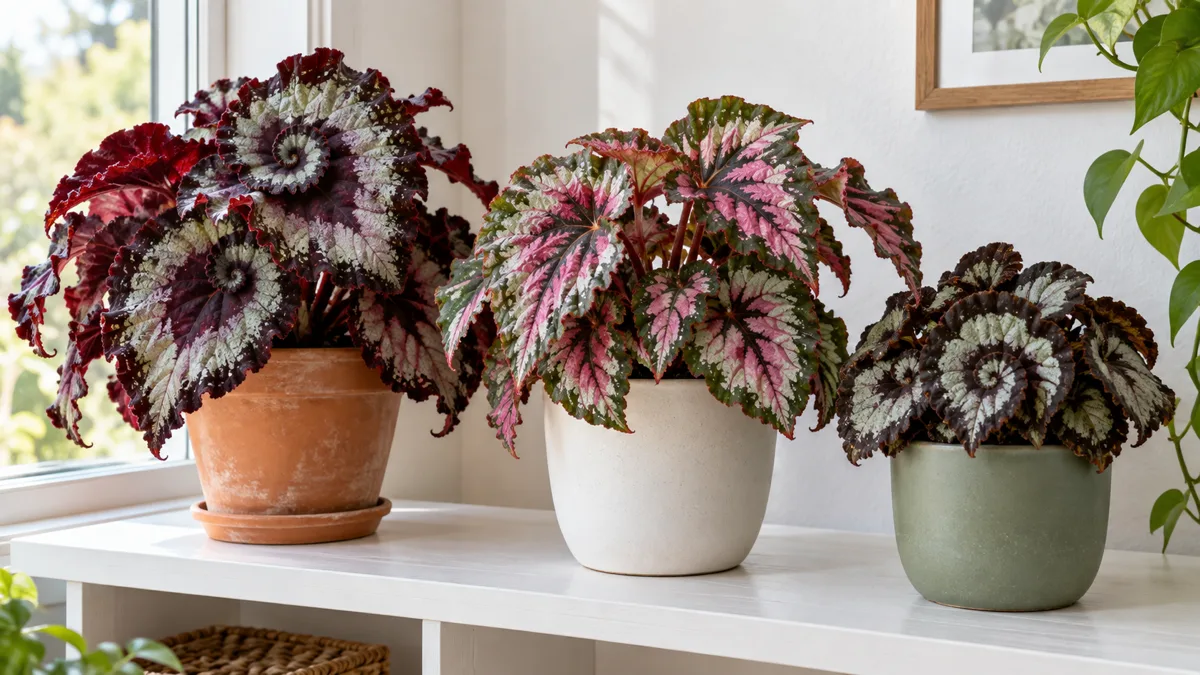
The begonia rex is the show-stopper of this list. The asymmetrical heart-shaped leaves come marbled in silver, plum, and emerald with a faint metallic sheen, and the bathroom humidity replaces the cover this fussy plant would otherwise demand. A small one on a wood vanity tray reads like a painting.
- Give it bright indirect light. A frosted window or a north-facing bathroom is perfect; harsh sun fades the color.
- Water when the top inch is dry. Soggy soil rots the shallow rhizome, so let the pot drain fully.
- Never wet the leaves directly. Water on the leaves invites powdery mildew; aim for the soil.
Air plant (Tillandsia)

Air plants pull moisture straight from the air through tiny scales on their leaves, and a humid bathroom is the one room where they get what they need without a weekly soak ritual. A single Tillandsia in a glass orb on the counter or hanging beside a small window adds texture and zero pot mess.
- Soak once a week. A fifteen-minute dunk in a bowl of room-temperature water keeps it plump; soak twice in dry winter weeks.
- Shake out the water afterwards. Trapped water at the base rots the plant; always upend it and let it drip dry.
- Give it bright indirect light. Filtered daylight is ideal; a windowless bathroom needs a small grow light.
Bathroom Plants: The Quick Checklist
- 1Boston fern beside the tubShower steam mimics its native humid understory; soft cascading fronds finally stay full instead of crisping.
- 2Pothos above the toiletHandles a vanity-bulb-only bathroom with no window, and the variegated heart leaves drape down a tile wall.
- 3Snake plant in a windowless cornerCAM photosynthesis closes its pores during muggy shower peaks; one of the few uprights that survives no daylight.
- 4Peace lily on the vanityLoves the filtered light and warm humid air, and the whole plant collapses dramatically when thirsty.
- 5Bird’s nest fern on a shower shelfRippling bright-green fronds rise from a central crown; thrives on the warm humid air a steamy shower delivers.
- 6Maidenhair fern on a small ledgeAlmost impossible in a dry living room, surprisingly easy in a daily-shower bathroom; the fan leaflets stay soft.
- 7Calathea by the sinkBoldly patterned leaves crave high humidity and filtered light; folds up at night for a quiet bonus.
- 8Begonia rex on a vanity traySilver-plum-emerald marbled leaves that fail in dry rooms and thrive on bathroom steam.
- 9Air plant in a glass orbPulls moisture straight from humid air; no soil, no pot, no weekly soak ritual.
- 10Lucky bamboo in a glass vase of waterSlim green canes tolerate fluorescent vanity light and the bathroom’s reliable humidity.
- 11Staghorn fern mounted on the wallAntler-shaped fronds on a wood plaque; humidity replaces the weekly dunking dry rooms demand.
- 12Chinese money plant on a vanity shelfRound coin leaves on slim stalks; small enough for a tight footprint, unfazed by north-window light.
- 13Heart-leaf philodendron along the shower rodVelvety dark heart leaves trail beautifully along brushed brass; better at very low light than pothos.
kultivy.com
Lucky bamboo

Lucky bamboo (which is a slim Dracaena, not true bamboo) grows in a glass vase of water on the bathroom counter and asks for almost nothing. It tolerates fluorescent vanity light, the bathroom’s reliable humidity, and weeks of forgetting it exists. The slim green canes read calm and minimal beside a porcelain sink.
- Change the water every two weeks. Stale water yellows the leaves and breeds gnats; fresh water keeps it green.
- Keep the roots fully submerged. A layer of pebbles holds the canes upright and anchors the water level.
- Use distilled or filtered water. Lucky bamboo browns at the leaf tips with chlorinated tap water.
Staghorn fern

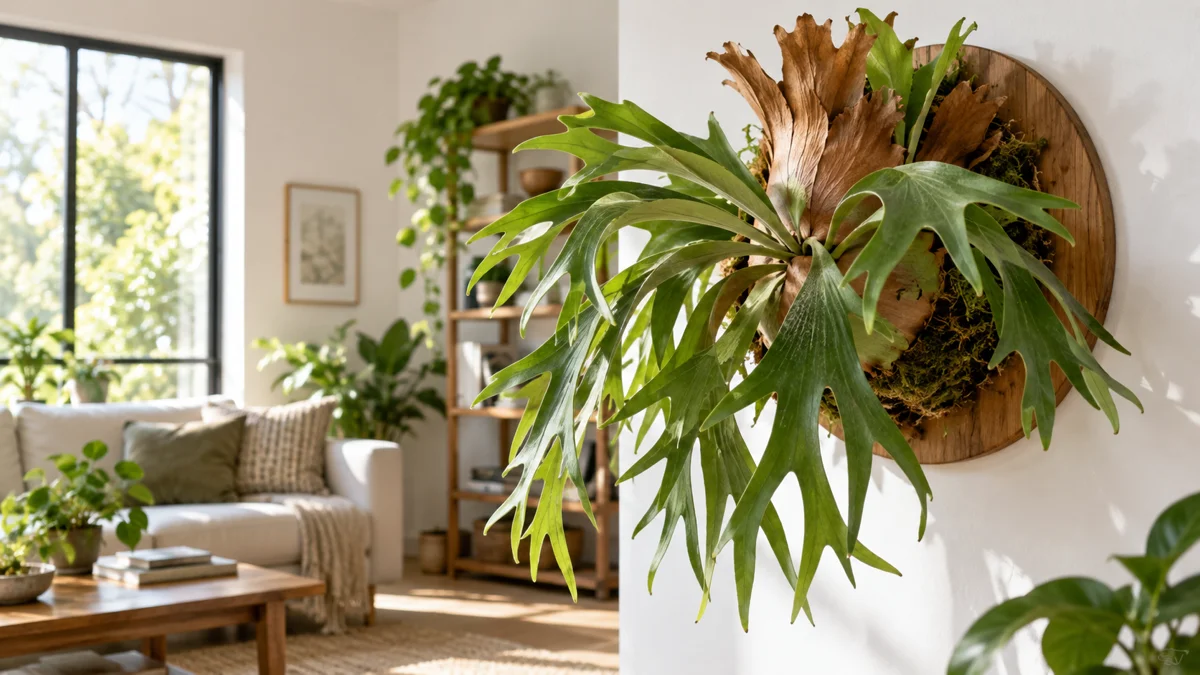
A staghorn fern mounted on a round wood plaque looks like living art on a bathroom wall, and the bathroom humidity solves the watering routine that scares most people away. In a dry room a staghorn needs weekly dunking; in a humid bathroom it sips moisture from the air between waterings.
- Mist or dunk weekly. A two-minute soak of the wood backing in a sink of water is the easiest schedule.
- Bright indirect light. A spot beside a frosted window keeps the antler fronds upright and full.
- Never wet the round shield frond at the base. That flat brown frond is the anchor; soggy water under it rots the mount.
Chinese money plant

The Chinese money plant (Pilea peperomioides) is small enough for a vanity shelf and unbothered by bathroom humidity or a north-facing window. The round coin-shaped leaves on slim stalks read playful and clean, and the plant readily makes pup offsets you can pot up for friends. It is one of the easiest humidity-loving picks for a small bathroom.
- Give it bright indirect light. A small frosted window is fine; deep shade makes the stem stretch and lean.
- Water when the top inch is dry. Soggy soil rots the stem from the base.
- Rotate the pot weekly. Even quarter-turns keep the stem straight instead of leaning to the brightest side.
Heart-leaf philodendron

In a windowless interior bathroom with nothing but a vanity bulb and an exhaust vent, the heart-leaf philodendron stays photosynthetically active where almost every other trailer slows to a crawl.
The smaller velvety foliage absorbs the warm yellow vanity spectrum efficiently, and the matte surface holds steam droplets long enough for the cuticle to reabsorb them between waterings.
- Train the vine, never let it dangle into the shower box. A free-hanging tip catches hot soap spray, and the velvety surface scars where waxy pothos would shrug it off.
- Wipe the matte foliage after a hairspray session. Aerosol propellants settle on the leaf surface and dull the dark green within a week or two.
- Keep the trailing tips above pet height. Heart-leaf philodendron is mildly toxic if chewed.
Pick two or three of these to start, set them where they get the warm steam without sitting directly under the showerhead, and check the soil once a week. If you want to extend the same room-by-room approach to the rest of the house, our bedroom plants guide covers the calm picks that match a quiet sleep space.