Snake Plant Care: How to Keep a Sansevieria Thriving

The snake plant I almost killed was the one I finally decided to take care of. For months it sat ignored on a bookshelf and looked perfectly happy. Then I started watering it every week like a responsible plant parent, and within a month the leaves went soft and yellow at the base.

That is the whole secret to snake plant care, and it runs backwards from most plants: a snake plant, or sansevieria, wants less attention, not more. It is one of the most forgiving houseplants you can grow, which is exactly why overwatering is the one thing that reliably kills it.

Here is everything it actually needs, from light and water to fixing droopy or rotting leaves to splitting one plant into several for free.

Jump to a care step
Everything a snake plant needs, step by step

Snake plant care really comes down to one rule: water it less than you think. Jump to whatever you are dealing with right now.

How much light a snake plant needs

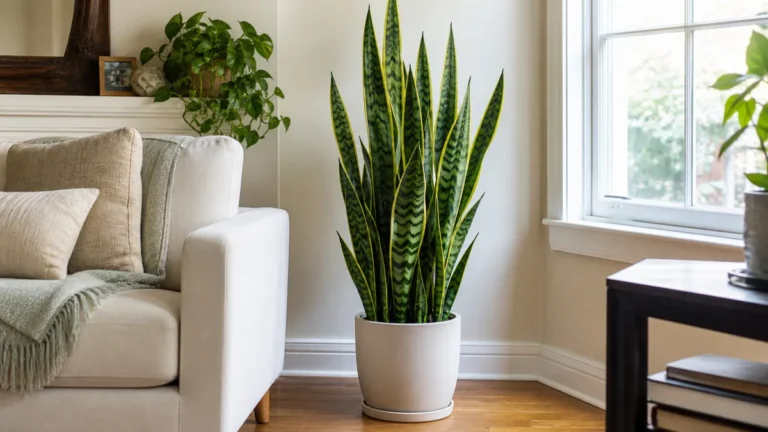
A snake plant standing a few feet from a window in soft indirect daylight in a real living room

Light is where the snake plant earns its reputation, and only half deserves it. It is famous for surviving low light, and it will, but surviving and thriving are two different things. In a dim corner it holds steady for months without doing much; in bright indirect light it actually pushes out new leaves.

  • Bright indirect light is the sweet spot. A few feet from a window grows the fullest, most colorful plant.
  • A low-light corner is fine for survival. It will coast there happily, just slowly, with little new growth.
  • Keep it off a hot, direct sill. Harsh midday sun through glass can bleach or scorch the leaves.

How often to water (less than you think)

A hand checking that the soil of a potted snake plant is bone dry, a watering can nearby

If you remember one thing about snake plant care, make it this: water it less than feels right. It stores water in its thick leaves and rhizomes, so it would far rather be bone dry than damp. Soggy soil is what rots it, and it is the mistake nearly everyone makes out of kindness.

  • Let the soil dry out completely. Wait until it is dry all the way to the bottom before watering again.
  • Water every two to three weeks. Stretch that to about once a month in winter when growth stalls.
  • When you are unsure, skip it. A thirsty plant bounces back in a day; a waterlogged one may not at all.

The best soil and pot

A snake plant being potted into a gritty fast-draining mix in a terracotta pot with a drainage hole

The right soil and pot quietly do half of your watering for you. Because this plant hates sitting wet, the goal is a mix and a container that let water rush straight through instead of pooling around the roots.

  • Use a gritty, fast-draining mix. Cactus or succulent soil, or regular mix cut with perlite, drains the way it likes.
  • Pick a pot with a drainage hole. Without one, water collects at the bottom and slowly rots the roots.
  • Reach for terracotta. The unglazed clay wicks moisture out and is genuinely hard to overwater in.
Find what your snake plant needs right now, fix that first, and the rest follows
Where should you start?

Almost every snake plant problem traces back to one thing: too much water. Pick what is happening with yours and start there.

You just brought one homeGet the basics right. Start with Idea 1 Light, then Idea 2 Watering, and pot it in Idea 3 the Right Soil.
The leaves are drooping or yellowCheck the water. Start with Idea 5 Drooping Leaves, rule out Idea 6 Root Rot, and ease off Idea 2 Watering.
You want to make more plantsIt is easy and free. Start with Idea 8 Division, or try Idea 9 Leaf Cuttings for a slower batch.
You want to style itShow it off. Browse Idea 13 Varieties, then pick Idea 4 the Best Spot for it.

The best spot for it (and the neglect it tolerates)

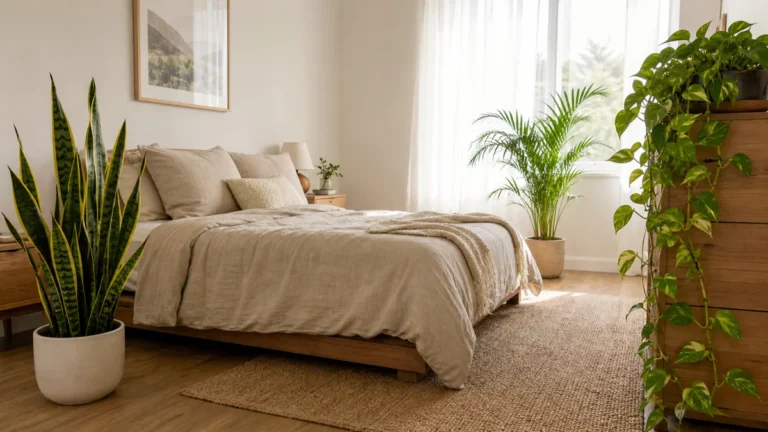
A snake plant on a bedroom nightstand in low light, calm and architectural

This is the plant for the spots where nothing else will grow. A snake plant shrugs off the dim, dry, forgotten corners of a home, which is why it ends up in bedrooms, hallways, and on office desks. The only places it genuinely dislikes are cold ones.

  • Park it almost anywhere with some light. Bedrooms, bathrooms, hallways, and desks all suit it fine.
  • It handles real neglect. A couple of weeks away on vacation will not faze an established plant.
  • Keep it away from cold drafts. Temperatures below the low fifties can damage the leaves.

Why the leaves are drooping or falling over

A snake plant whose stiff leaves are splaying outward and flopping, a sign of trouble

Healthy snake plant leaves stand up straight and stiff, so when they start splaying outward and flopping over the pot edge, the plant is telling you something is off. It is almost always too much water, too little light, or a pot that is far too big.

  • Check for overwatering first. Soft, falling leaves usually trace back to soggy soil and weak roots.
  • Give it more light. Leaves that stretch and lean are reaching for a brighter spot.
  • Right-size the pot. A pot much larger than the roots stays wet and leaves the plant floppy.

How to spot and fix root rot

A snake plant with a soft, mushy, yellowing leaf base being inspected, a sign of root rot

Root rot is the single most common way a snake plant dies, and it almost always traces back to too much water. The early signs are lower leaves that turn soft at the base, wrinkle, or suddenly topple over. Caught early, the plant is usually saveable.

  • Look for a soft, mushy base. Squishy lower leaves and a sour smell from the soil point straight to rot.
  • Unpot it and cut the rot away. Slice off mushy roots and leaves back to firm, pale tissue with clean scissors.
  • Dry it out, then replant. Repot in fresh dry mix and wait a week or two before the first light watering.
What separates a tall, healthy snake plant from a soft, rotting one
A 4-rule system for snake plant care

A snake plant is almost impossible to kill once you get four things right. These four rules are what make the steps below actually work instead of leaving you guessing.

Water far less than you thinkOverwatering is the number one way people kill a snake plant. It stores water in its thick leaves, so let the soil dry out completely, then water every two to three weeks, or monthly in winter. When in doubt, wait: a thirsty plant recovers, a soggy one rots.
Almost any light worksThis is the plant for dim corners. It survives low light better than nearly anything, and grows fullest in bright, indirect light. Just keep it off a hot, direct windowsill, where harsh midday sun can bleach or scorch the leaves.
Use gritty soil and a pot that drainsSoggy soil is what rots the roots, so plant it in a fast-draining cactus or succulent mix in a pot with a drainage hole. Terracotta helps even more, because the unglazed clay wicks extra moisture away and is genuinely hard to overwater in.
Leave it a little root-boundSnake plants actually like being snug, so repotting is rare. Only move it up a size every two to three years, or when the rhizomes start to crack the pot. Go wider rather than deeper, since the rhizomes spread sideways as the plant multiplies.

Fixing brown crispy tips

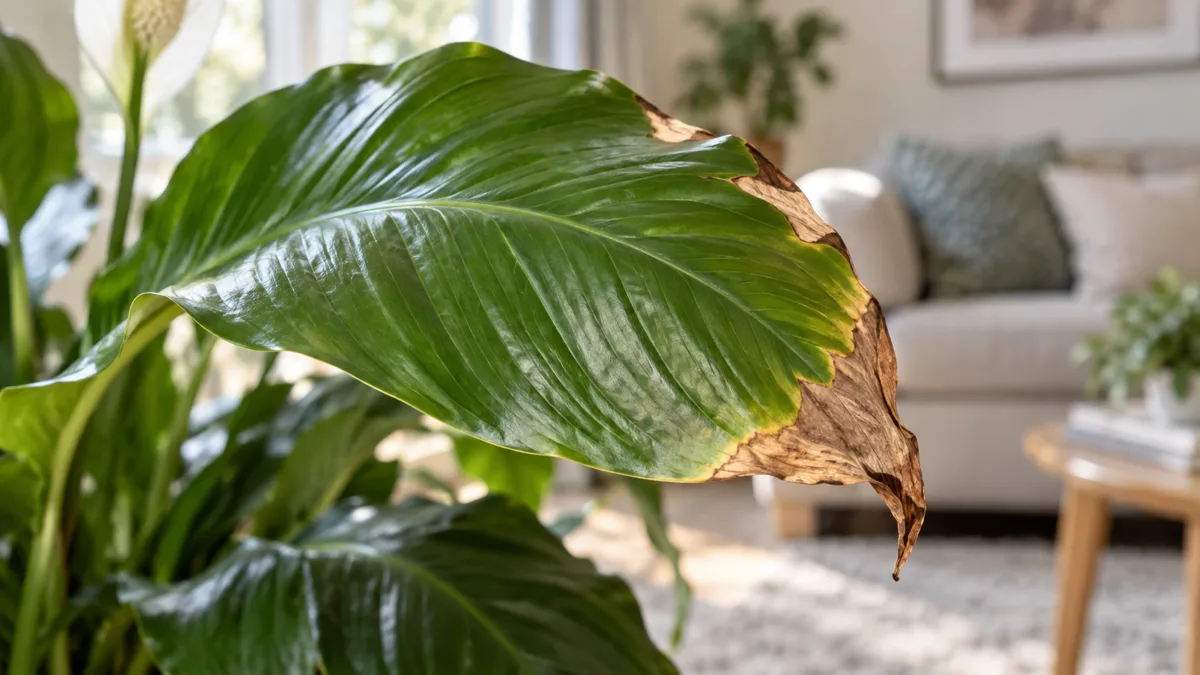
A close shot of a snake plant leaf with a brown crispy tip on otherwise healthy green tissue

Brown, crispy tips are more cosmetic than dangerous, but they are still worth reading. They usually point to the minerals in tap water, a stretch of being too dry, or cold air blowing across the leaves.

  • Try filtered or rainwater. Snake plants are sensitive to the fluoride and salts in some tap water.
  • Trim the tip at an angle. Cut just the brown part to keep the leaf’s natural point, not into green.
  • Move it from cold drafts. Dry air from a vent or a leaky window browns the edges over time.

How to propagate by division

Two clumps of a snake plant being separated at the rhizome at repotting time

The fastest way to turn one snake plant into several is division, and repotting day is the perfect time to do it. The plant grows from rhizomes, those thick underground stems, and any cluster of leaves with its own roots can become a whole new plant in minutes.

  • Pull the plant apart at the rhizome. Separate clumps by hand, or slice through them with a clean knife.
  • Keep roots on every piece. Each division needs its own roots to survive once it is on its own.
  • Pot each one up dry. Settle the new plants in fresh mix and hold off watering for several days.

How to propagate from leaf cuttings

Sections of a snake plant leaf rooting cut-side down in a glass of water on a windowsill

Leaf cuttings are the slower, more hands-off way to propagate, and they are oddly satisfying to watch over a few patient months. One leaf becomes several little plants. There is one catch worth knowing before you cut anything.

  • Cut a leaf into a few sections. Mark which end points down, because sections only root the right way up.
  • Root them in water or soil. Stand them cut-side down and wait; roots and pups take weeks to months.
  • Skip this for variegated types. Leaf cuttings of yellow-edged laurentii grow back plain green.
Save this for later

Snake Plant Care: The Quick Checklist

  1. 1Almost any light worksIt survives low light better than nearly any plant and grows fullest in bright, indirect light.
  2. 2Water every 2 to 3 weeksLet the soil dry out completely first; overwatering is the number one snake plant killer.
  3. 3Gritty soil and a drainage holeA fast-draining cactus mix in a pot that drains keeps the roots from sitting wet and rotting.
  4. 4It tolerates almost any spotBedrooms, desks, and dim hallways all work; just keep it away from cold drafts.
  5. 5Drooping leaves signal troubleSplaying, floppy leaves usually mean overwatering, too little light, or too big a pot.
  6. 6A soft mushy base means root rotUnpot it, cut the rot back to firm pale tissue, and replant in fresh dry mix.
  7. 7Brown crispy tips are about waterBlame tap-water minerals, dryness, or cold air; trim at an angle and try filtered water.
  8. 8Divide it to multiply fastPull it apart at the rhizome at repotting; each clump with roots becomes a new plant.
  9. 9Or root leaf cuttingsCut a leaf into sections and root in water or soil; variegated types grow back plain green.
  10. 10Repot every 2 to 3 yearsIt likes being root-bound; go wider, not deeper, when the rhizomes crack the pot.
  11. 11Pests are rareWatch for fungus gnats over wet soil and the odd mealybug; wipe the leaves and isolate.
  12. 12Mildly toxic to petsKeep it up high; the saponins can upset a cat or dog that chews the leaves.
  13. 13Then style itA tall snake plant anchors a corner; see our plant styling guide for ideas.

kultivy.com

When and how to repot

A root-bound snake plant lifted from its pot showing rhizomes and a dense root ball

Snake plants are one of the few houseplants that actually like being a little root-bound, so repotting is a rare chore. You only need to move it once the roots have completely filled the pot or are starting to push it out of shape.

  • Repot every two to three years. Or wait until the rhizomes visibly crack or bulge the container.
  • Go wider, not deeper. Rhizomes spread sideways, so a shallow, wide pot suits them best.
  • Only size up one pot. Too much fresh soil holds water the plant does not want.

Pests are rare, but watch for these

A hand gently wiping a snake plant leaf clean with a soft cloth

Here is more good news: bugs barely bother a snake plant. Its tough, low-humidity leaves are not appealing to most of them. When trouble does show up, it tends to rise from the soil rather than the air, especially when the pot has been staying too wet.

  • Watch for fungus gnats over damp soil. Little flies circling the pot mean the soil is too wet, so let it dry out.
  • Wipe off the odd mealybug. Small white cottony spots come away with a cloth and a dab of soapy water.
  • Isolate any buggy plant. Keep a new or infested plant apart from the others until it is clearly clean.

Are snake plants toxic to pets?

A snake plant placed up high on a plant stand, out of reach of pets, in a bright room

One honest note before you set it somewhere a pet can reach: snake plants are mildly toxic to cats and dogs. The leaves contain saponins, which can cause drooling, vomiting, or an upset stomach if a pet chews on them. It is rarely an emergency, but it is worth planning around.

  • Set it up high. A shelf, a tall stand, or a hanging spot keeps the leaves away from curious pets.
  • Watch young pets the most. Kittens and puppies are the ones that test-chew everything in reach.
  • Call your vet if a pet eats some. Better to ask than to guess, even with a mild toxin.

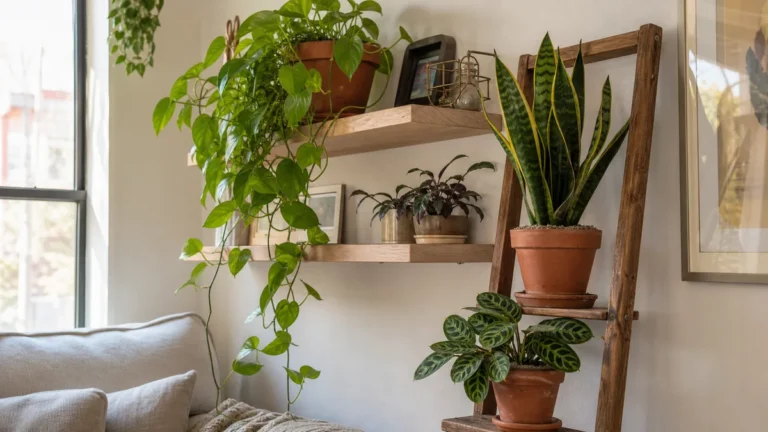
Snake plant varieties and how to style it

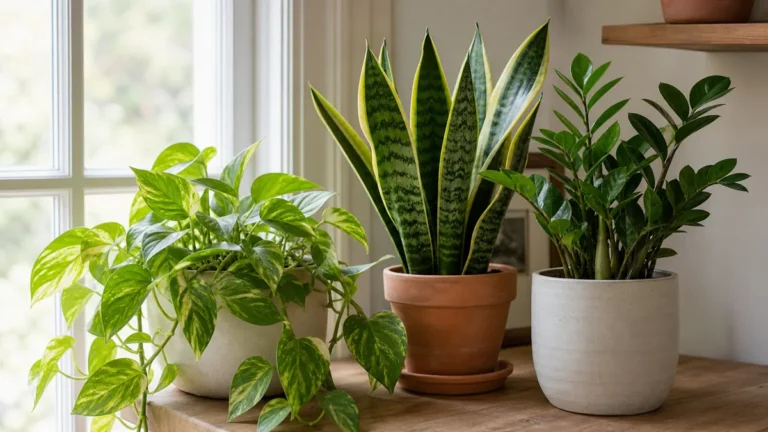
A row of different snake plant varieties together, tall yellow-edged spears beside a low round rosette

Once you can keep one alive, the fun part is that “snake plant” covers a whole family of looks. From tall yellow-edged spears to silvery swords to little round rosettes, there is a variety for almost any spot, and they all share the same easy care.

  • Know the main varieties. Laurentii has yellow edges, zeylanica is dark green, cylindrica grows round spears, and ‘Moonshine’ is pale silver.
  • Group a few sizes together. A tall variety behind a low ‘Hahnii’ rosette makes an easy, layered display.
  • Style it once it’s thriving. See our plant shelf and corner ideas for ways to show it off.

Get the light bright-ish, water it half as often as you think, and a snake plant will quietly outlast almost everything else on your shelf. Once you have this one figured out and want a leafier, faster grower to fuss over, our monstera care guide is a natural next step.

About the author
Mara Quinn

Mara Quinn edits Kultivy, where she shares houseplant care, propagation, beginner-friendly plant picks, and plant-styling ideas for anyone who wants their indoor plants to actually thrive. Every guide is image-led and reviewed for clarity, usefulness, image accuracy, and Pinterest-to-page alignment before it goes live. Visit the About page.

Similar Posts

Leave a Reply

Your email address will not be published. Required fields are marked *