13 Best Low-Light Plants That Thrive in Dim Corners and North Windows

Most low-light lists hand you the same five names. Put a “tolerates low light” pick in a true interior corner ten feet from any window, and it usually sulks for six months and dies anyway.

The thirteen below actually thrive in dim conditions, because of how they evolved (rainforest understory) or how they store energy (CAM photosynthesis, thick rhizomes, water-storing canes), not because a plant label says so.

If forgetting to water is the bigger problem than dim light, the easy houseplants list is a better starting point.

Jump to a low-light plant pick
Thirteen low-light plants that thrive where most plants give up

North windows, interior corners ten feet from any window, dim hallways, and windowless bathrooms each have a small set of plants that actually thrive there. Each section below names the species, the mechanism that lets it cope with low light, the signal that a corner has tipped past too dim, and roughly how far from a window it will still hold up.

ZZ Plant: the true windowless-room champion

A mature 3-foot ZZ plant in a plain pale-cream ceramic floor pot standing in a true interior corner of a calm modern living room 10 feet from any window with only soft cool ambient daylight and a warm floor-lamp glow, upright stiff zigzag pinnate waxy dark-green compound stems clearly thriving

The ZZ plant (Zamioculcas zamiifolia) is the plant for an interior corner ten feet from any window, a hallway with one overhead bulb, or a windowless office with fluorescent ceiling lights. The waxy upright zigzag pinnate stems grow from a fat underground rhizome that stores months of water and slows the plant’s energy use to a crawl, which lets it idle in dim rooms most plants would give up on.

The signal that even a ZZ has hit a wall is when new stems come in tall and visibly lean toward the brightest off-window source in the room. Old stems stay glossy dark green for years regardless. Water only when the top two inches are bone dry, which in a true low-light corner usually means every three to four weeks.

  • Survives ten feet from any window, including fully windowless rooms with only overhead bulbs.
  • Low-light signal: new stems grow taller and lean toward the brightest light source.
  • Water every 3 to 4 weeks only when bone dry; root rot is the bigger killer here than dim light.

For a full ZZ care walkthrough, see the ZZ plant care guide. Toxic to pets if chewed.

Snake Plant: the CAM-photosynthesis low-light tank

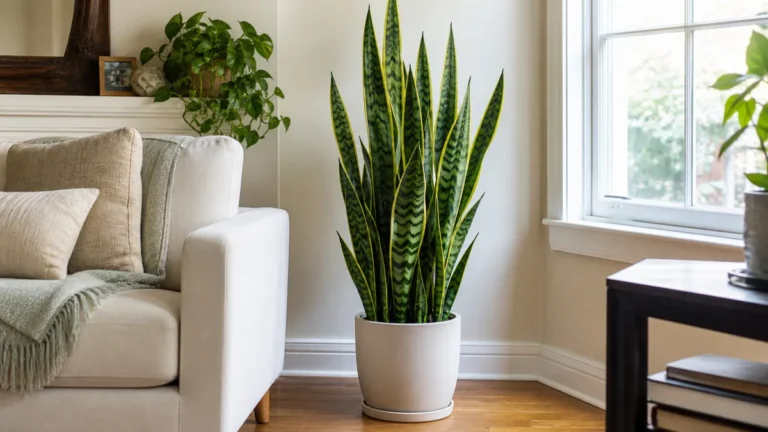
A mature snake plant in a plain terracotta pot on a low wood shelf in a calm modern living room with a tall north-facing window in soft focus 6 feet to the right and only cool overcast ambient daylight, upright stiff single sword leaves with light horizontal banding

Snake plant (Dracaena trifasciata, formerly Sansevieria) does its gas exchange at night using CAM photosynthesis, the same trick succulents use. That means its leaves are not racing to grab daytime light the way most foliage plants do, which is why it copes with dim daytime conditions better than almost any other foliage plant on this list.

Bright indirect is technically its happy place, but a north window six feet away or an interior bathroom corner with only ambient ceiling light will keep a snake plant alive and slowly growing for years. The low-light signal here is specific: new leaves come in floppy and pale instead of the usual stiff, dark, upright sword shape.

  • North window 6 feet away or interior corner with ambient ceiling light is fine long term.
  • Low-light signal: new leaves come in floppy and pale instead of stiff and dark.
  • Water every 3 to 4 weeks, never let the pot sit in standing water.

Mildly toxic to pets if chewed.

Monstera Deliciosa: the big-leaf low-light tolerator most people underestimate

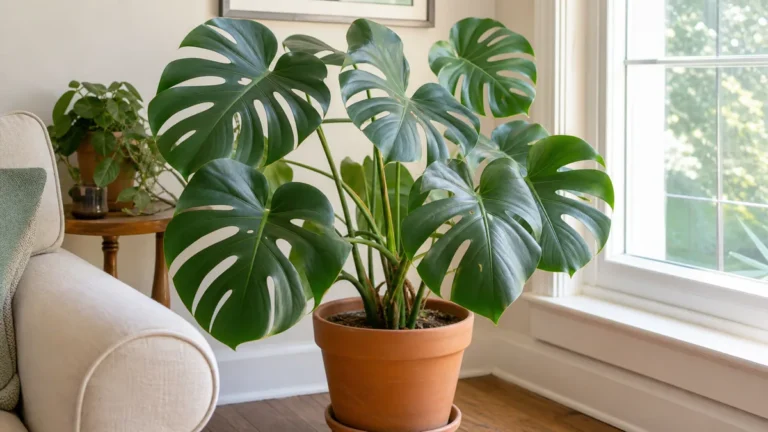
A mature monstera deliciosa in a plain pale-cream ceramic floor pot in a real living-room corner 4 feet from a tall north-facing window in soft focus, only cool overcast ambient daylight, large heart-shaped fenestrated leaves and 1-2 newer smaller solid leaves communicating the low-light growth signal

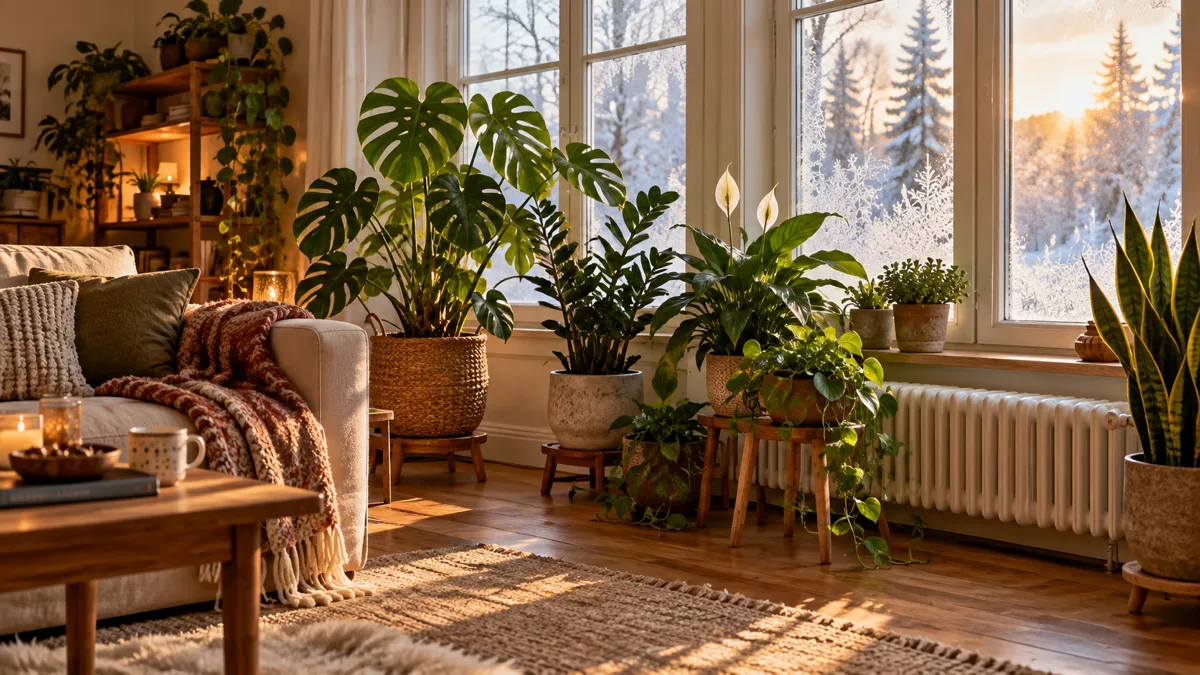
Monstera deliciosa is on this list because most articles get it wrong. Those big fenestrated heart leaves evolved on the dim rainforest understory under thick canopy, which is why a monstera will hold up in a north window or an interior bright spot four to six feet from a window far better than people expect.

It will not fenestrate as deeply in low light, which is the honest trade-off. New leaves come in smaller, with fewer holes or none at all, while older leaves keep their full splits. If you want the dramatic fenestrated look, a brighter spot is needed. If you want a healthy plant that grows steadily in a dim corner with solid heart leaves, monstera does that.

  • Best 4 to 6 feet from a north or east window, not a true interior 10-foot corner.
  • Low-light signal: new leaves come in smaller and solid (no fenestration holes).
  • Water when the top 2 inches are dry, which in low light usually means every 10 to 14 days.

For a full monstera care walkthrough, see the monstera care guide. Toxic to pets.

Where to start with a low-light corner
What kind of low-light spot are you trying to fill?

Most low-light disappointments come from picking the wrong species for the wrong kind of dim. Start with whichever spot sounds like yours, then jump to the right section.

An interior corner 10 feet from any windowThis is true low light. See ZZ plant, heart-leaf philodendron, or cast iron first.
A north-facing window or 4 to 6 feet from oneThis is medium-low light. See monstera, peace lily, or parlor palm.
A windowless bathroom that gets daily showersThe steam buys you fern territory. See Boston fern and calathea.
You have a curious cat or dogSeveral picks here are toxic. Stick to cast iron, parlor palm, spider plant, Boston fern, or calathea.

Pothos: the trailing low-light classic (skip the variegated ones)

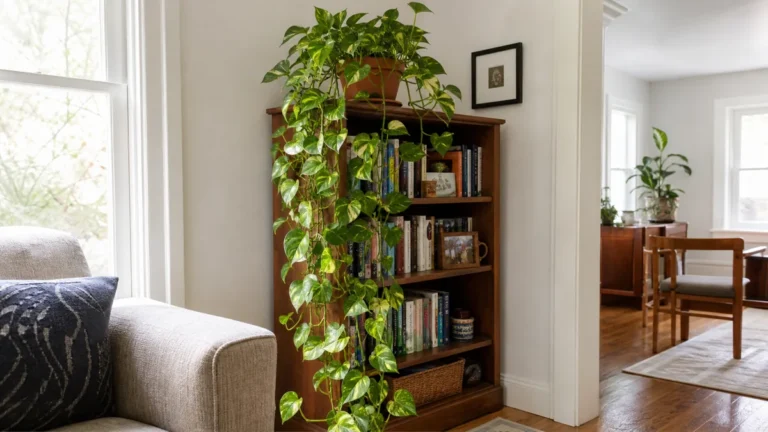
A solid jade-green pothos in a plain pale-cream ceramic pot on top of a tall bookcase in a dim real living room with long heart-leaf trailing vines cascading 2-3 feet down the front, only soft cool ambient daylight and a warm floor-lamp glow

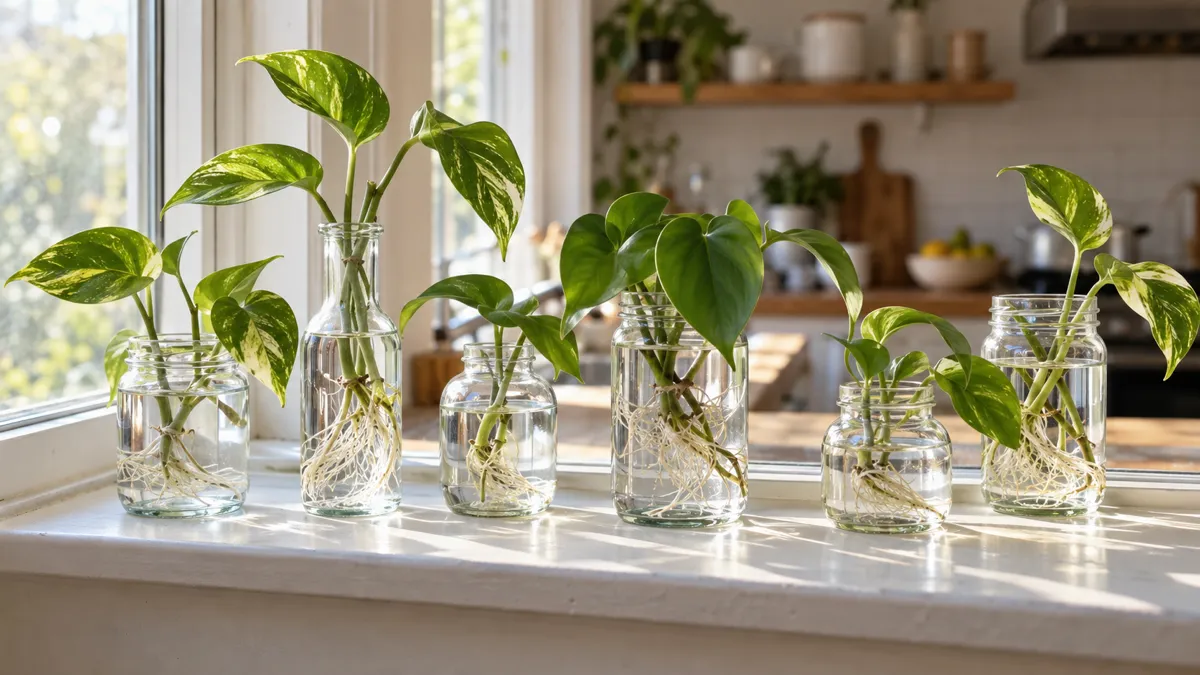
Pothos (Epipremnum aureum) is the trailing low-light classic, and the catch nobody warns you about is variegation. A marble queen, neon, or N’Joy pothos in true low light slowly reverts to mostly solid green because the plant compensates for low light by making more chlorophyll. You buy a pretty cream-and-green vine and three months later it looks like a regular jade pothos.

If a low-light corner is the goal, start with a solid jade pothos (the green one with no variegation) so there is nothing to lose. It tolerates a north window, an interior corner six to eight feet from any window, and a bathroom with only ambient light without complaint.

  • Pick solid jade pothos for low light, not marble queen, neon, or N’Joy.
  • Low-light signal: new leaves come in smaller and farther apart along the vine.
  • Water when the top inch dries, less often in dim rooms; every 10 days is typical.

Mildly toxic to pets.

Heart-leaf Philodendron: the deeper-shade-tolerant pothos cousin

A mature heart-leaf philodendron in a plain charcoal ceramic pot on a low console table in a true interior hallway 8 feet from any window with dim soft ambient daylight and a faint warm wall sconce glow, smaller deeper-uniform-green solid heart leaves on long thin trailing vines

Heart-leaf philodendron (Philodendron hederaceum) has smaller, darker, uniformly green heart leaves on thinner vines than a pothos. There is no variegation to lose, which is why it holds a normal growth rate in dim hallways and interior corners eight feet from any window where a variegated pothos would go drab.

The low-light signal here is leggy growth, not poor color. Vine internodes get longer and individual leaves get smaller (the plant is stretching to find more light), but the color stays deep green. Pinch the tips every few weeks if a bushier vine is the goal.

  • True dim hallways and 8-foot interior corners are fine for this one.
  • Low-light signal: leggier vines with longer internodes and smaller leaves, but deep green color stays.
  • Water when the top inch is dry, pinch tips monthly to prevent legginess.

Toxic to pets.

Chinese Evergreen (Aglaonema): the only colorful plant that holds up in low light

A mature Chinese evergreen aglaonema silver-bay variety in a plain cream ceramic pot on a small side table in a dim real living room corner with soft cool ambient daylight, compact clumping rosette of patterned silver-and-green oval leaves clearly holding pattern

If a dim corner needs a pop of color rather than another green plant, aglaonema is the one pick that delivers. The silver-and-green patterning on a silver-bay or maria aglaonema is genetic, not the kind of variegation that needs bright sun to express. That is why it holds up in fluorescent-lit offices and north-window corners where a calathea or a tradescantia would fade.

Pink-veined or red-edged aglaonema varieties (Siam, lipstick, red valentine) need a bit more light to hold the warm color, so for true low-light corners stick to silver-bay or maria. The signal that even a silver aglaonema is too dim is new leaves coming in nearly solid green with the silver barely visible.

  • Silver-bay or maria for true low light, pink and red varieties need more brightness.
  • Low-light signal: new leaves come in solid green with less silver.
  • Water when the top inch dries, dust the leaves monthly to keep the silver pattern bright.

Toxic to pets.

What separates a thriving low-light corner from a dying one
A 4-rule system for low-light plants

The species above only thrive when the room around them is set up for low light too. Hold these four rules and any of the picks will hold up for years.

Measure the corner before you buy a plantStand at noon on a bright day and try to read a book. If you can read without a lamp, the spot is true low light (roughly 50 to 100 foot-candles). If you need a lamp at noon, even these picks need a 20W LED grow bulb on a timer to make it.
Water less in low light, not moreSlower light means slower growth means slower water uptake. A sunny-room watering schedule will rot the roots of a low-light plant. Wait until the top inch or two of soil is bone dry before each drink.
Rotate the pot a quarter turn weeklyIn a dim corner the side facing the room gets noticeably less light than the side facing the (already weak) light source. A weekly quarter turn keeps growth even and prevents the back of the plant from going bald.
Add a grow bulb if the corner is fully windowlessA single 20W full-spectrum LED grow bulb on an 8-hour timer turns a windowless interior room into a viable low-light spot for any plant on this list. The bulb fits a standard floor or table lamp.

Cast Iron Plant: the Victorian dim-parlor original

A mature cast iron plant in a plain pale-cream ceramic pot on the floor of a dim real entryway corner 3 feet from a small north-facing window in soft focus, only cool overcast ambient daylight, clumping rosette of broad dark matte-green long strap leaves rising straight up about 18 inches

Cast iron plant (Aspidistra elatior) earned its name surviving gas-lit Victorian parlors and unheated dim hallways with almost no light or attention. The broad dark-green strap leaves rise straight up from a clumping rhizome and tolerate dim entryways, unheated corners, and three-feet-from-a-north-window spots better than any other broadleaf foliage plant.

The trade-off is speed. Cast iron grows about one to three new leaves a year. That is not a problem in low light, where the goal is a plant that holds up steadily rather than fills the corner. The signal it is unhappy is old leaves slowly yellowing, but new ones still emerging from the rhizome.

  • Dim entryways, north-window corners 3 feet away, even unheated hallways.
  • Low-light signal: old leaves slowly yellow but new ones still emerge from the rhizome.
  • Water when the top 2 inches dry, accept slow growth; that is the point.

Non-toxic to pets.

Peace Lily: the shade-loving aroid that still flowers

A mature peace lily in a plain charcoal ceramic pot on a small side table in a calm dim real living room corner 5 feet from an off-frame north-facing window with soft cool ambient daylight, glossy dark lance leaves and one clearly visible white spathe flower

Peace lily (Spathiphyllum) is on this list because it is one of very few houseplants that blooms in low light. The reason is botanical: the white spathe is a modified leaf wrapped around the actual spadix, not a true petal-flower, so it does not need the bright sun a true flowering plant would.

Best placement is four to six feet from a north or east window. The signal the spot is too dim is no new spathes for months, even though the dark glossy lance leaves keep growing fine. The watering signal is dramatic and useful: peace lily leaves visibly droop the day the soil dries out, which is a built-in timer for when to water.

  • 4 to 6 feet from a north or east window for steady blooms.
  • Low-light signal: no new spathes for months (foliage still grows).
  • Water the day leaves first droop, never let it stay limp overnight.

Toxic to pets.

Parlor Palm: the rainforest-understory palm that takes dim corners

A mature 3-foot parlor palm in a plain pale-cream ceramic floor pot standing in a real living-room corner 6 feet from a tall north-facing window in soft focus, only cool overcast ambient daylight, slim arching pinnate fronds on slender bamboo-like green canes

Parlor palm (Chamaedorea elegans) is the only palm worth putting in a true low-light corner. Most indoor palms (kentia, areca, majesty) want bright indirect at minimum. Parlor palm evolved as a Central American rainforest understory plant, which is why it tolerates a north window six to eight feet away or a dim hallway better than the rest of the palm family.

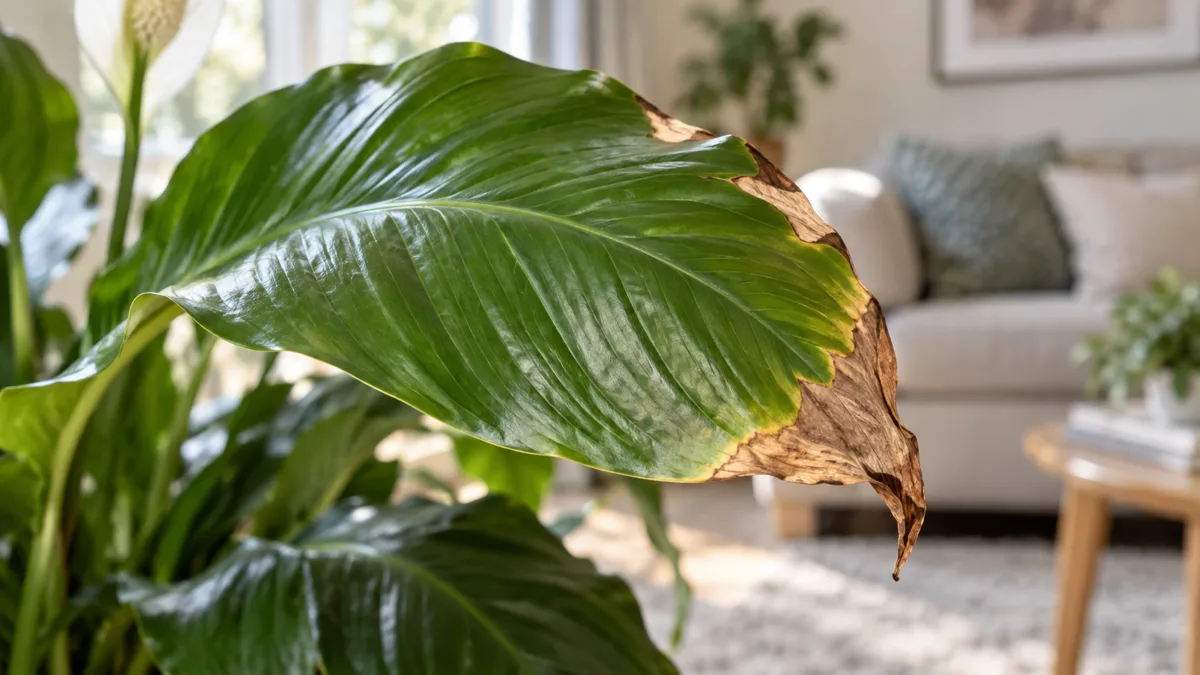
The signal it has been pushed too far is lower fronds yellowing and dropping faster than the top fronds replace them. New fronds in too-low light come in noticeably smaller and paler. The other catch is consistent moisture: let parlor palm bone dry and the frond tips crisp brown within days.

  • 4 to 8 feet from a north window or a dim hallway with a single sconce.
  • Low-light signal: lower fronds yellow and drop, new fronds come in smaller and paler.
  • Water when the top inch dries, never let it bone dry.

Non-toxic to pets.

Save this for later

Low-Light Plants: The Quick Reference

  1. 1ZZ plant: 10 feet from any window, even windowless roomsRhizome stores months of water. Signal: new stems lean toward the brightest source. Water every 3 to 4 weeks.
  2. 2Snake plant: CAM photosynthesis tolerates dim daytimeNorth window 6 ft away or ambient ceiling light. Signal: new leaves come in floppy and pale, not stiff and dark.
  3. 3Monstera: rainforest understory means dim is fine, just no fenestration4 to 6 ft from a north or east window. Signal: new leaves come in smaller and solid (no holes).
  4. 4Pothos: pick solid jade, never variegated for low lightVariegated cultivars revert to green in dim light. Signal: smaller leaves with longer gaps along the vine.
  5. 5Heart-leaf philodendron: no variegation to loseDim hallways 8 ft from any window. Signal: leggier vines but color stays deep green.
  6. 6Chinese evergreen (silver-bay or maria): only colorful low-light pickSilver pattern is genetic, not light-dependent. Pink and red varieties need more light. Signal: silver fades on new leaves.
  7. 7Cast iron: the Victorian dim-parlor originalDim entryways and unheated corners. Grows only 1 to 3 new leaves a year. Pet-safe.
  8. 8Peace lily: the only flowering low-light pickWhite spathe is a modified leaf, not a true petal. Visibly droops the day soil dries out, a built-in watering timer.
  9. 9Parlor palm: the rainforest understory palm4 to 8 ft from a north window. Pet-safe. Never let it bone dry or fronds crisp brown within days.
  10. 10Spider plant: leaves thrive, baby plantlets slow down6 ft from a north window. Solid green uses less light than variegated. Pet-safe per ASPCA.
  11. 11Boston fern: low light is fine if humidity is highWindowless steamy bathroom is its happy place. Brown frond tips are usually a humidity problem first.
  12. 12Dracaena marginata: vertical pick for tight dim cornersSlim woody canes buffer slow photosynthesis. Signal: red leaf edge fades to dull green; filtered water prevents tip browning.
  13. 13Calathea: bold pattern is a shade adaptation, not sun tolerancePulvinus hinge cells lift leaves at dusk. Signal: prayer motion stops and leaves stay flat all day. Pet-safe.

kultivy.com

Spider Plant: low-light tolerant, though the babies slow down

A mature spider plant in a plain cream ceramic pot on a low shelf in a dim real living room corner about 6 feet from a north-facing window in soft focus, only soft cool ambient daylight, arching grass-like longitudinally-striped leaves with a baby plantlet dangling on a long wiry stolon

Spider plant (Chlorophytum comosum) handles a six-foot setback from a north window or a desk-lamp interior corner without losing its arching grass-like striped foliage. The honest trade-off in low light is that the stolons (the wiry runners that throw baby plantlets) slow way down or stop entirely. The leaves keep growing, the babies do not.

For a true low-light corner where the babies are not the point, a solid-green spider plant uses less light than a variegated one and keeps growing slowly without complaint. Leaf tips going pale rather than green is the signal the spot has gotten too dim even for this one.

  • 6 feet from a north window or a desk with a single lamp is fine for the leaves.
  • Low-light signal: no new stolons or babies; leaf tips go pale.
  • Water when the top inch dries, snip pups to root in water if you get any.

Non-toxic to pets per ASPCA.

Boston Fern: low-light is fine if humidity is also high

A mature Boston fern in a plain cream ceramic pot on a small wood stool in a real dim windowless bathroom with light tile background and a faint steam haze from a recent shower, soft warm ambient light from a ceiling fixture, bright-green fluffy pinnate arching fronds

Boston fern (Nephrolepis exaltata) is on this list with one condition: humidity has to be high. A Boston fern in a dim dry corner crisps to brown frond tips within a week. A Boston fern in a windowless bathroom that gets a daily shower thrives in the same dim light because the steam keeps the fronds happy.

The frond-tip browning is almost always a humidity problem first, not a light problem. If a low-light corner is also a dry corner, this is the wrong pick: go back to a ZZ or a cast iron. If a windowless steamy bathroom or a north window with a humidifier nearby is the spot, Boston fern is one of the lushest things that will thrive there.

  • Pair low light with high humidity, a dim windowless bathroom is its happy place.
  • Low-light signal: crispy brown frond tips (the humidity, not the light, is the first issue).
  • Water when the top inch is slightly dry, never bone dry.

Non-toxic to pets.

Dracaena Marginata: the slim low-light floor plant for tight dim corners

A mature 5-foot Dracaena marginata in a plain pale-cream ceramic floor pot standing in a tight dim corner of a real small apartment 6 feet from a north-facing window in soft focus, only cool overcast ambient daylight, slim woody canes with tufts of thin red-edged green leaves at the top

Dracaena marginata (dragon tree) is the pick when the dim corner is tall and narrow rather than wide. The slim woody canes can be staggered to fill vertical space, and the thin red-edged leaves at the top tufts give the plant a sculptural look at six to eight feet from a north window or in a dim apartment corner where a wider plant would not fit.

The mechanism that lets it cope is in the canes themselves: they store water and buffer the slow energy production of low-light photosynthesis. The signal the corner is too dim is the red edge on the leaves fading toward dull green, and lower leaves yellowing and dropping faster than the top ones replace them.

  • Tight dim corners 6 to 8 feet from a north window, where vertical space matters.
  • Low-light signal: red leaf-edge color fades to dull green; lower leaves drop faster than top.
  • Water when the top 2 inches dry, filtered water prevents leaf-tip browning.

Toxic to pets.

Calathea / Prayer Plant: the forest-floor pick built for shade

A mature calathea prayer plant in a plain charcoal ceramic pot on a low wood table in a dim real interior corner, bold feather-stripe-patterned oval leaves slightly lifted at the petiole showing the prayer motion

Calathea and the related Maranta and Goeppertia genera belong on a low-light list because they grew up on the deep rainforest understory beneath several stories of canopy, where photon density is a fraction of what hits the top of the forest.

The bold feather-patterned leaves are a low-light adaptation, not a sun-tolerance trait, which is why bright spots scorch the pattern and dim interior corners actually saturate it.

What makes this pick worth the difficulty is the nightly prayer motion. The leaves lift and fold upward at dusk through a specialized hinge cell at the base of each petiole (a pulvinus), and unfurl flat by dawn.

When the prayer rhythm runs on schedule, the plant is reading enough light cycle. When leaves stay flat all day with curling edges, the corner has tipped past low into too dark even for this species.

  • Pick a deep interior corner over a sunny windowsill: bright spots burn the pattern faster than dim ones starve it.
  • Low-light signal: the prayer motion stops and the leaves stay flat all day with curling edges.
  • The pulvinus rhythm is the diagnostic: a calathea that prays nightly is reading the room correctly.

Non-toxic to pets.

About the author
Mara Quinn

Mara Quinn edits Kultivy, where she shares houseplant care, propagation, beginner-friendly plant picks, and plant-styling ideas for anyone who wants their indoor plants to actually thrive. Every guide is image-led and reviewed for clarity, usefulness, image accuracy, and Pinterest-to-page alignment before it goes live. Visit the About page.

Similar Posts

Leave a Reply

Your email address will not be published. Required fields are marked *