13 Best Office Plants for Low-Light Desks and Windowless Cubicles

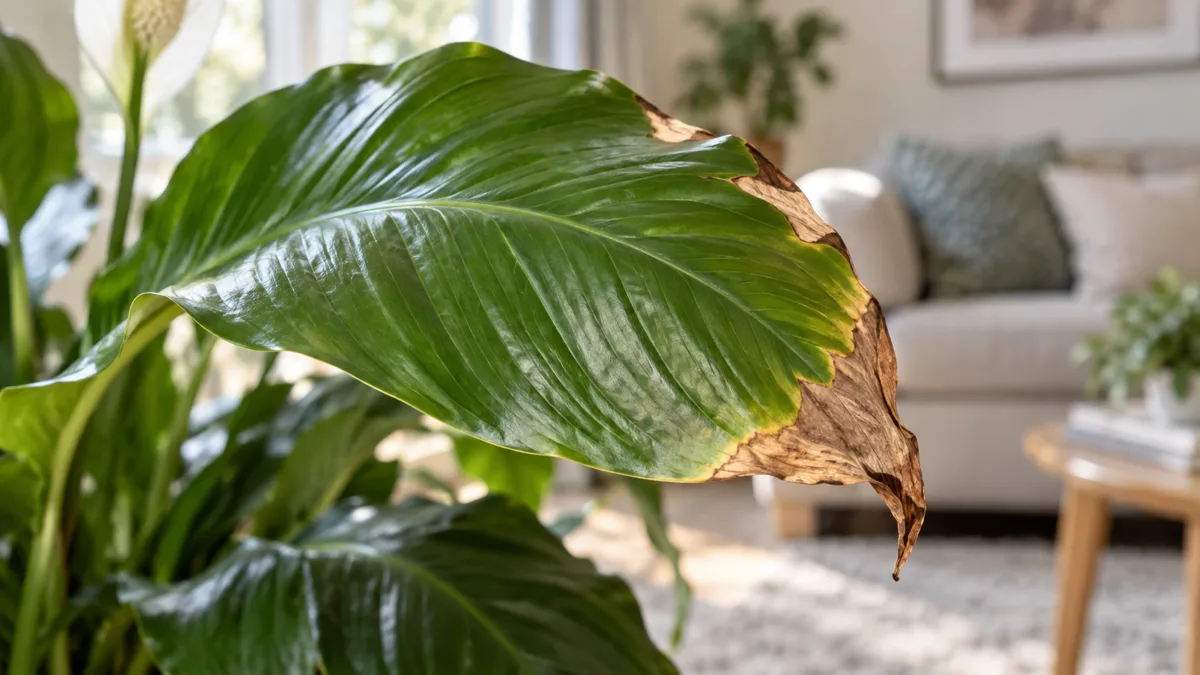
My first office plant was a fern that lasted nine days. The second was a peace lily that drooped every Monday. The third was a ZZ plant, and three years later it is still there, two fronds taller and unbothered by the fluorescent strip overhead.

The office is a strange room for a plant. The light is wrong, the air is dry, and nobody is around on weekends to remember the watering can. The plants that thrive in this room are the ones built for neglect, not the ones built for jungle humidity.

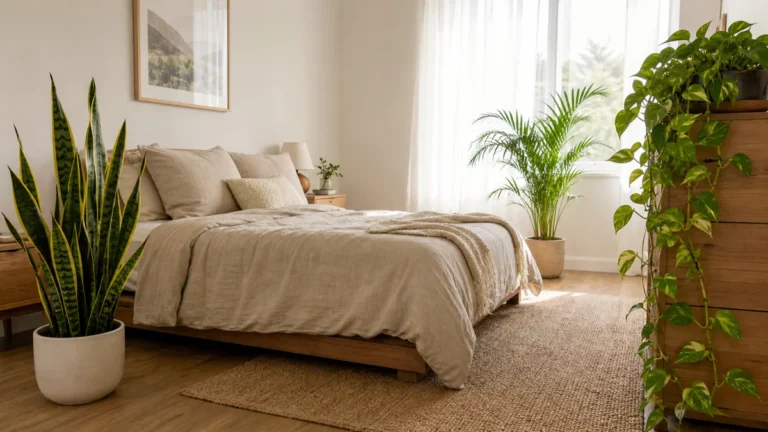
These 13 picks all survive fluorescent ceiling lights, windowless cubicles, and long stretches without care. For other rooms, our bedroom plants guide and bathroom plants list cover the calmer and more humid corners of the house.

Jump to a desk-plant pick
13 office plants that survive fluorescent light and weekend neglect

A good office plant is built for two things most living-room plants are not: cool overhead fluorescent light and the weekends nobody is around to water. These 13 picks all handle one or both, and a few handle every cubicle constraint at once. Jump to whichever fits your desk.

ZZ plant: the cubicle workhorse for fluorescent strips

A potted ZZ plant on a corner desk under a fluorescent ceiling light in a windowless office, glossy waxy pinnate fronds standing upright

The cubicle workhorse. The reason a ZZ keeps its sheen under a humming fluorescent ceiling strip is that the wax coating on each leaflet bounces the limited light back into the leaf, so the plant photosynthesizes faster than most foliage in the same overhead lighting.

Hidden under the soil, a fist-sized cluster of potato-like rhizomes carries the watering buffer through business travel and the quiet weekends that follow.

  • Built for fluorescent overhead lighting. A windowless cubicle, an interior server-room office, or a corner desk far from any window all hold growth for years.
  • Drinks every 3 to 4 weeks. A back-of-the-quarter watering schedule beats a weekly one; the rhizome rots faster than it dries.
  • Travel-proof for two-week trips. Set the pot off the floor before you leave so cleaning crews do not over-water in your absence. (full ZZ plant care guide)

Snake plant: the drought-tolerant desk hero

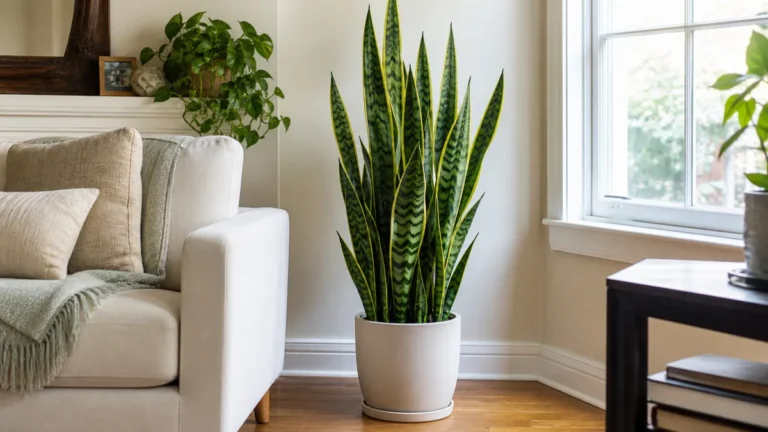
A snake plant with upright sword leaves in a small ceramic pot on a metal filing cabinet beside a desk, soft office lighting

A snake plant is the desk hero for anyone who forgets the watering can. The stiff upright sword leaves store water inside the blade, and the plant uses CAM photosynthesis to open its pores at night and conserve moisture during the dry workday. The result is a houseplant that takes fluorescent overhead light, dry office air, and three-week watering gaps without flinching.

  • Forgives weeks of neglect. A four-week gap between drinks is normal for a mature plant in an office.
  • Fits a small footprint. Vertical sword leaves work on a desk corner, a filing cabinet, or a narrow window ledge.
  • Never let it sit in water. Empty the saucer after every watering; soggy soil rots the rhizome fast. (full snake plant care guide)

Pothos: a trailing vine for the top of a tall cabinet

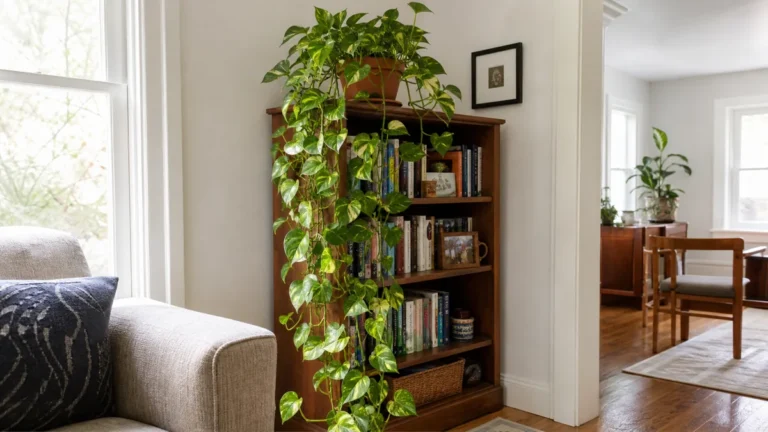
A golden pothos trailing from the top of a tall bookcase in a home office, heart-shaped leaves cascading down beside a desk

Pothos is the easiest trailing vine for an office with vertical space. The heart-shaped leaves stay glossy under cool fluorescent lights, and the vine handles long stretches without water because the leaves and stems hold their own buffer. A single trailing runner cascading from a filing cabinet or a tall bookshelf does more to soften an office than three small desk plants combined.

  • Trails from a high spot. The top of a filing cabinet, a wall shelf, or a tall bookcase gives the vine room to fall.
  • Water when the top inch dries. Usually every 10 to 14 days indoors, a little less in winter.
  • Pinch leggy runners. Trimming the longest vine just above a leaf node forces fuller growth back toward the pot.
Pick the right office plant for your specific desk constraint
Where should you start?

A desk plant only survives if it matches the room. Pick the constraint that defines your office, and start with the pick that was built for it.

Your desk has no windowStart with Pick 1 ZZ plant or Pick 4 cast iron plant. Both hold their leaves under fluorescent strips for years.
You travel and forget to waterStart with Pick 2 snake plant or Pick 9 ponytail palm. Both store weeks of water and shrug off business trips.
The desk itself is tinyStart with Pick 12 peperomia or Pick 13 lucky bamboo. Both stay small and clear of the keyboard.
You want height without floor footprintStart with Pick 3 pothos or Pick 11 spider plant. Both cascade from the top of a tall cabinet and leave the floor clear.

Cast iron plant: the Victorian office original

A cast iron plant with broad dark green strap leaves in a plain pot in a windowless interior office corner, soft overhead light

The cast iron plant earned its name in Victorian parlors lit by smoky gas lamps and never got around to losing it. Broad dark-green strap leaves rise straight from the soil and survive dim corners, dry indoor air, and infrequent watering without complaint. It is one of the slowest plants on this list, which is a feature in an office, where nobody wants a plant outgrowing its corner every season.

  • Built for the dimmest corner. A genuinely shadowed interior office wall is fine; bright direct sun will scorch the leaves.
  • Water when the top 2 inches are dry. A long, slow drink every 2 to 3 weeks is plenty.
  • Wipe the leaves monthly. Office dust settles on the broad blades faster than you would think and dulls them.

Parlor palm: a soft frond for a hard desk edge

A parlor palm with slim arching fronds in a terracotta pot beside an office desk, soft indirect light from a side window

A parlor palm is the rare palm that handles a real office. Most palms ask for humidity and a bright window, but the parlor palm settles for dim indirect light and the drier air that comes with air conditioning. The slim arching fronds soften the hard rectangles of a desk and a monitor without taking up much footprint.

  • Skip the south-facing window. Bright indirect from a few feet back is the sweet spot; direct sun crisps the fronds.
  • Water when the top inch dries. Steady, modest watering every 7 to 10 days keeps the fronds soft.
  • Keep it away from vents. Hot or cold forced air from a ceiling vent browns the frond tips quickly.

Chinese evergreen: color that survives fluorescents

A Chinese evergreen aglaonema with silver-patterned dark green leaves in a ceramic pot on a windowless cubicle shelf

A Chinese evergreen is one of the few colorful houseplants that holds its pattern under fluorescent ceiling lights. The silver-on-green leaves stay bright in dim rooms because the variegation does not depend on strong light to develop, unlike most variegated tropical foliage. It also handles the dry recirculated air of a closed office better than most aroids.

  • Holds color in a windowless cubicle. Dim interior light keeps the silver pattern intact for years.
  • Water when the top inch dries. Modest watering every 10 to 14 days suits the office rhythm.
  • Dust the leaves to keep the pattern bright. A gentle wipe every few weeks brings the silver back from a settled gray.
What separates an office plant that survives from one that does not
A 4-rule system for office plants

The picks above are the easy ones, but the office itself fights every plant on the desk. Four small habits keep almost any of them alive longer than a typical houseplant guide assumes.

Match the pick to the actual light, not the wishMeasure the light at the spot the pot will sit. If it is a windowless cubicle under a fluorescent strip, only the truly low-light picks (ZZ, snake, cast iron, Chinese evergreen) will hold. Skip jade and ponytail palm for that desk.
Water on the way out, not the way inOffice watering should happen Friday afternoon, not Monday morning. Soak the pot fully, let it drain in the sink, then return it to the desk dry on the outside so weekend neglect is not the first thing it hits.
Lift the pot off papers and electronicsA small cork or felt coaster under every pot turns one inevitable spill from a laptop disaster into a paper-towel cleanup. It also lets the pot dry from below between waterings.
Wipe leaves once a month for the dust that fluorescents do not showOffice air is dustier than home air, and a film of dust dulls foliage and slows growth. A damp cloth wipe of the broad leaves (ZZ, snake, cast iron, Chinese evergreen) every 4 to 6 weeks brings the sheen back.

Heart-leaf philodendron: a trainable desk vine

A heart-leaf philodendron with small dark heart-shaped leaves trailing along a monitor stand on an office desk, soft lamp light

A heart-leaf philodendron is the desk-scale trailing vine that thrives where pothos would be too long. The smaller dark-green leaves stay tight to the stem, so a single plant trains beautifully along the back of a monitor or down the arm of a desk lamp. It forgives a missed watering and handles the cool overhead light of a typical office without complaint.

  • Trains along a desk fixture. A monitor stand, a lamp arm, or a small wall shelf are all natural runs for the vine.
  • Water when the top inch is dry. A weekly or bi-weekly drink is the usual rhythm in an office.
  • Pinch tips to keep it bushy. Snipping the longest runner forces side shoots and a fuller plant on the desk.

Jade plant: a sunny-window desk succulent

A jade plant with glossy oval leaves on a thick woody trunk in a small terracotta pot on a sunny office windowsill

A jade plant is the desk pick for the rare office that has a south or west window. The glossy oval leaves store water on a thick woody trunk, which lets the plant ride out the dry air of a heated or air-conditioned office and the weekends nobody is around to water. It looks small, tidy, and slightly sculptural, which suits a desk that is not trying to become a jungle.

  • Wants real sun. A south or west office window is ideal; without one, the plant gets leggy and pale.
  • Water by leaf feel, not calendar. Drink only when the leaves are slightly soft to the touch; usually every 2 to 3 weeks.
  • Use gritty cactus mix. Office floor humidity and slow watering rhythms can rot jade in regular potting soil.

Ponytail palm: a sculptural desk succulent

A small ponytail palm with slim arching strap leaves over a swollen water-storing trunk in a terracotta pot on an office desk corner

A ponytail palm is not really a palm. It is a succulent with a swollen water-storing trunk and slim arching leaves that cascade like a fountain. That swollen base is the office-friendly part: the trunk holds enough water to ride out three- and four-week watering gaps, and the slim leaves take any bright office light without scorching.

  • Wants bright indirect light at minimum. Direct sun from a desk window is welcome; a dim interior office is too low.
  • Water every 3 to 4 weeks. The trunk holds the buffer; soggy soil rots the base.
  • Keep the pot small. A snug pot dries faster between waterings and keeps the trunk visible.
Save this for later

Office Plants: The Quick Checklist

  1. 1ZZ plant for the windowless cubicleGlossy waxy fronds hold their sheen under fluorescent strips for years and the rhizome rides out 3 to 4 week watering gaps.
  2. 2Snake plant for the desk that forgets to drinkUpright sword leaves store their own water and tolerate fluorescent overhead light without complaint.
  3. 3Pothos for the top of a tall cabinetTrailing heart-leaf vine that handles dim overhead light and long stretches without water.
  4. 4Cast iron plant for the truly dim cornerBroad dark strap leaves built for Victorian parlors and modern interior offices alike.
  5. 5Parlor palm for a soft frond beside the deskTolerates lower light and drier office air better than most palms; keep it away from vents.
  6. 6Chinese evergreen for color under fluorescentsSilver-patterned leaves stay bright in dim cubicles where most variegation fades.
  7. 7Heart-leaf philodendron along the monitor standSmaller dark heart-shaped vine that trains neatly along a desk lamp or monitor back.
  8. 8Jade plant for the sunny office windowGlossy succulent leaves on a woody trunk that thrives on neglect plus real sun.
  9. 9Ponytail palm for a sculptural desk cornerSwollen water-storing trunk stores weeks of drinks; bright indirect at minimum.
  10. 10Dracaena marginata for vertical floor spaceSlim canes grow up not out, tolerate fluorescent light, prefer filtered water.
  11. 11Spider plant on top of the filing cabinetCascading striped leaves and dangling pups that handle dry recirculated office air.
  12. 12Peperomia for a tiny desk plantSmall thick rounded leaves on short stems that stay tidy under a desk lamp.
  13. 13Lucky bamboo in a glass of waterNo soil, no rot, and a 2-week water change is the whole care routine.

kultivy.com

Dracaena marginata: a slim floor plant beside a small desk

A tall slim Dracaena marginata with thin red-edged leaves at the top of bare canes in a floor pot beside an office desk

A Dracaena marginata is the floor plant for an office that has vertical space but not much floor space. The slim canes grow up, not out, so the plant fits beside a desk or in a corner where a fiddle leaf fig would crowd the room. Thin red-edged leaves spray from the top of the canes and tolerate the cool fluorescent light most offices run on overhead.

  • Tolerates fluorescent ceiling light. A few feet from a desk lamp is enough supplemental light to keep the leaves dark.
  • Water when the top 2 inches are dry. Usually every 10 to 14 days, less in winter.
  • Use filtered water for brown tips. Dracaena marginata reacts to fluoride and salts in tap water by browning leaf tips.

Spider plant: a cascading filing-cabinet pick

A spider plant with arching striped leaves and cascading baby plantlets in a hanging pot on top of a tall filing cabinet in a home office

A spider plant is the easiest cascading pick for the top of a filing cabinet. The arching striped leaves take fluorescent overhead light and the dry recirculated air that comes with most offices, and the dangling baby plantlets are a small ongoing reward you can snip off and root in water on the desk. It is also one of the most forgiving plants if a watering is skipped.

  • Cascades from a high pot. The top of a tall filing cabinet or a small wall shelf gives the leaves room to drape.
  • Water when the top inch dries. A weekly drink is the usual rhythm; the plant tells you with curled leaves if it is past due.
  • Snip pups to share. The baby plantlets root in a glass of water on the desk in a week or two.

Peperomia: a tidy little desk plant

A peperomia raindrop with small rounded glossy leaves in a small ceramic pot on an office desk under a soft lamp

A peperomia is the desk plant for someone who wants a green corner but does not want a plant that grows past the keyboard. Most peperomias stay compact, with small rounded leaves on short stems, and the thick foliage holds enough of its own water to survive forgotten weeks. Raindrop and watermelon are the two most office-friendly varieties because both stay neat and shiny under a desk lamp.

  • Stays small and tidy. A six-inch peperomia in a small pot suits a desk that needs to keep its working area clear.
  • Water when the soil dries fully. A drink every 2 to 3 weeks is plenty; soggy soil rots the stems.
  • Wants bright indirect. A desk lamp on for the working day is enough light in a windowless cubicle.

Lucky bamboo: the no-soil desk plant

A lucky bamboo with slim green canes in a clear glass vase of pebbles and water on an office desk under a lamp

Lucky bamboo skips the watering routine entirely by living in a vase of water on the desk. The slim green canes are not bamboo at all; they are Dracaena sanderiana, which tolerates fluorescent office light and removes any chance of overwatering because there is no soil to rot. A single arrangement on a desk corner stays neat for years with almost no fuss.

  • Lives in water, not soil. A glass vase with pebbles and clean water is the whole setup.
  • Change the water every two weeks. Replace with room-temperature filtered water; cloudy water grows algae fast.
  • Keep the canes shaded from direct sun. Bright indirect from a desk lamp or a few feet from a window is the sweet spot.

A good office plant is the one that lives where you work, not the one that turns the desk into a project. The picks on this list all survive fluorescent light, dry recirculated air, and the weekends nobody is around. Once you have one or two settled, our plant shelf and corner ideas is a nice next read for finding them the right perch.

About the author
Mara Quinn

Mara Quinn edits Kultivy, where she shares houseplant care, propagation, beginner-friendly plant picks, and plant-styling ideas for anyone who wants their indoor plants to actually thrive. Every guide is image-led and reviewed for clarity, usefulness, image accuracy, and Pinterest-to-page alignment before it goes live. Visit the About page.

Similar Posts

Leave a Reply

Your email address will not be published. Required fields are marked *